FEB

Penulis: admin

  • Prodi S1 Manajemen Hadirkan Prof. Franco Fiordelisi dalam Financial Management, Recent Issues in Finance

    Prodi S1 Manajemen Hadirkan Prof. Franco Fiordelisi dalam Financial Management, Recent Issues in Finance

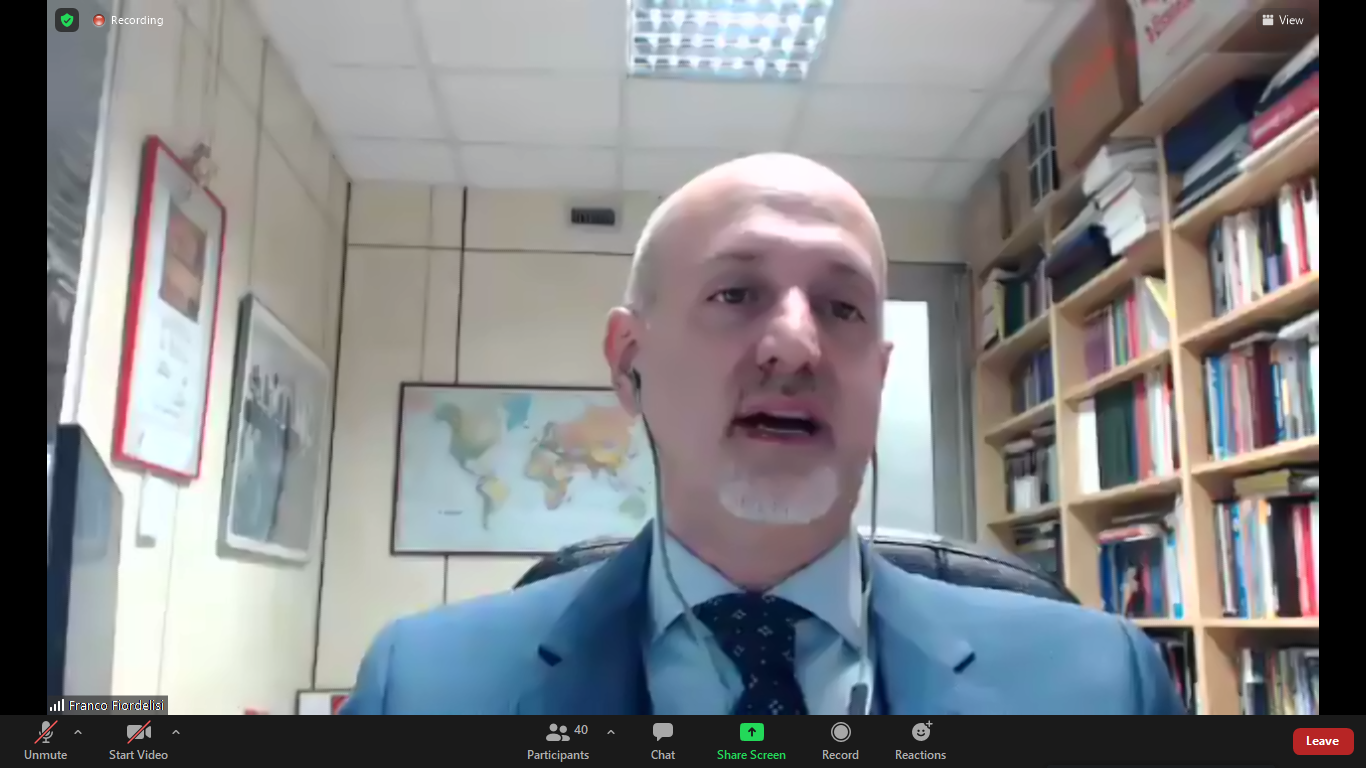
    Program Studi Manajemen, Fakultas Ekonomi dan Bisnis (FEB) Universitas Sebelas Maret (UNS) Surakarta kembali mengundang Profesor ternama dalam rangkaian kegiatan Program Kompetisi Kampus Merdeka (PKKM) 2021.

    Kali ini,  Prodi Manajemen mengundang Prof. Franco Fiordelisi yang merupakan profesor di bidang keuangan dan perbankan dari University or Rome III, Italia, dan University of Essex, Inggris. Di bidang professional, Prof. Fiordelisi juga menjabat sebagai President of the Financial Intermediation Network of European Studies (FINEST).

    Pada gelaran kuliah tamu yang diadakan secara daring melalui Zoom Cloud Meeting, Selasa (12/10/2021), Prof. Fiordelisi menyampaikan materi terkait manajemen keuangan utamanya dalam hal manajemen risiko.

    Di awal paparan, Prof. Fiordelisi menjelaskan mengenai pengertian manajemen risiko di sektor perbankan yang mencakup dua jenis risiko yaitu risiko suku bunga (interest risk) dan risiko kredit (credit risk).

    Dijelaskan juga mengenai perbedaan antara risiko dan ketidakpastian (uncertainty) yang seringkali dianggap memiliki makna yang sama. Dalam hal ini Prof. Fiordelisi menyatakan bahwa terdapat sedikit perbedaan antara risiko dan ketidakpastian.

    “Risiko adalah kondisi masa depan yang kemungkinan terjadinya dapat diukur, sementara dalam uncertainty (ketidakpastian) kemungkinan ini bersifat tidak terbatas atau tidak dapat diukur,” ungkap Prof. Fiordelisi .

    Penjelasan materi dilanjutkan dengan definisi dari manajemen risiko yang secara umum dapat diartikan sebagai proses logis yang dilakukan untuk mengurangi kemungkinan kerugian.

    Disela-sela paparan materinya, Prof. Fiordelisi memberikan pertanyaan pada peserta mahasiswa terkait risiko terbesar yang dihadapi oleh sektor perbankan saat ini. Sesi tersebut memberikan kesempatan bagi mahasiswa untuk dapat berinteraksi secara langsung dengan Prof. Fiordelisi.

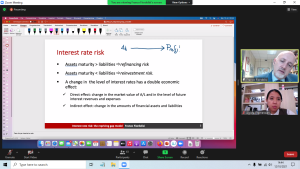
    Selanjutnya Prof. Fiordelisi menjelaskan mengenai tahapan/langkah-langkah dalam manajemen risiko dan risiko suku bunga. “Risiko suku bunga terjadi akibat adanya ketidaksesuaian nilai antara aset (maturity) dan laba,” jelas Prof. Fiordelisi.

    Terkait risiko suku bunga, terdapat dua efek dari perubahan tingkat suku bunga, yaitu perubahan nilai pasar dari aset/utang yang merupakan efek langsung dari perubahan tingkat suku bunga, dan perubahan kuantitas aset finansial/utang, yang merupakan efek tidak langsung dari perubahan tingkat suku bunga.

    Reporter: Aulia

    Editor: Humas

  • Entrepreneurship Startup Training for FEB UNS Students

    Entrepreneurship Startup Training for FEB UNS Students

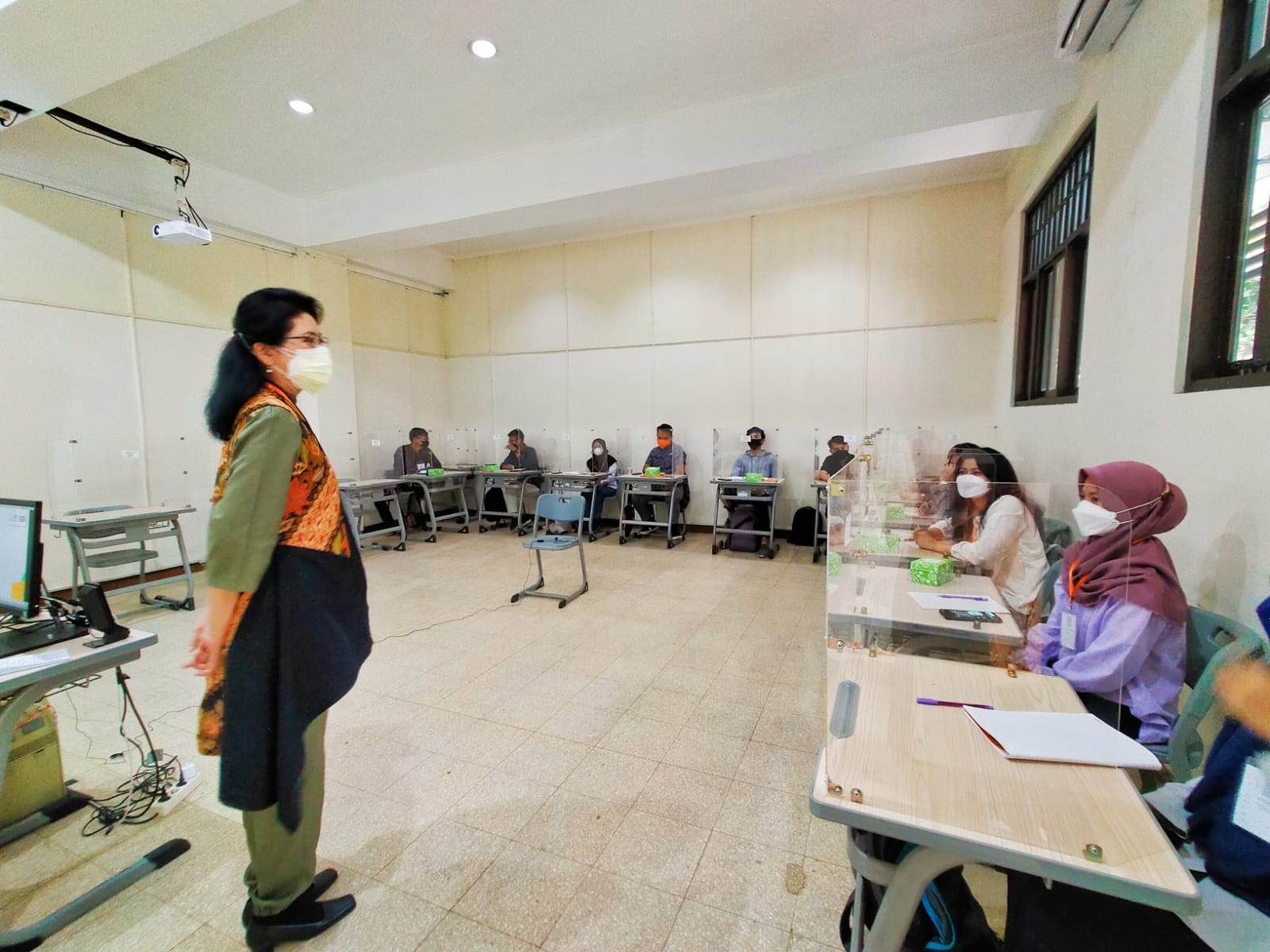
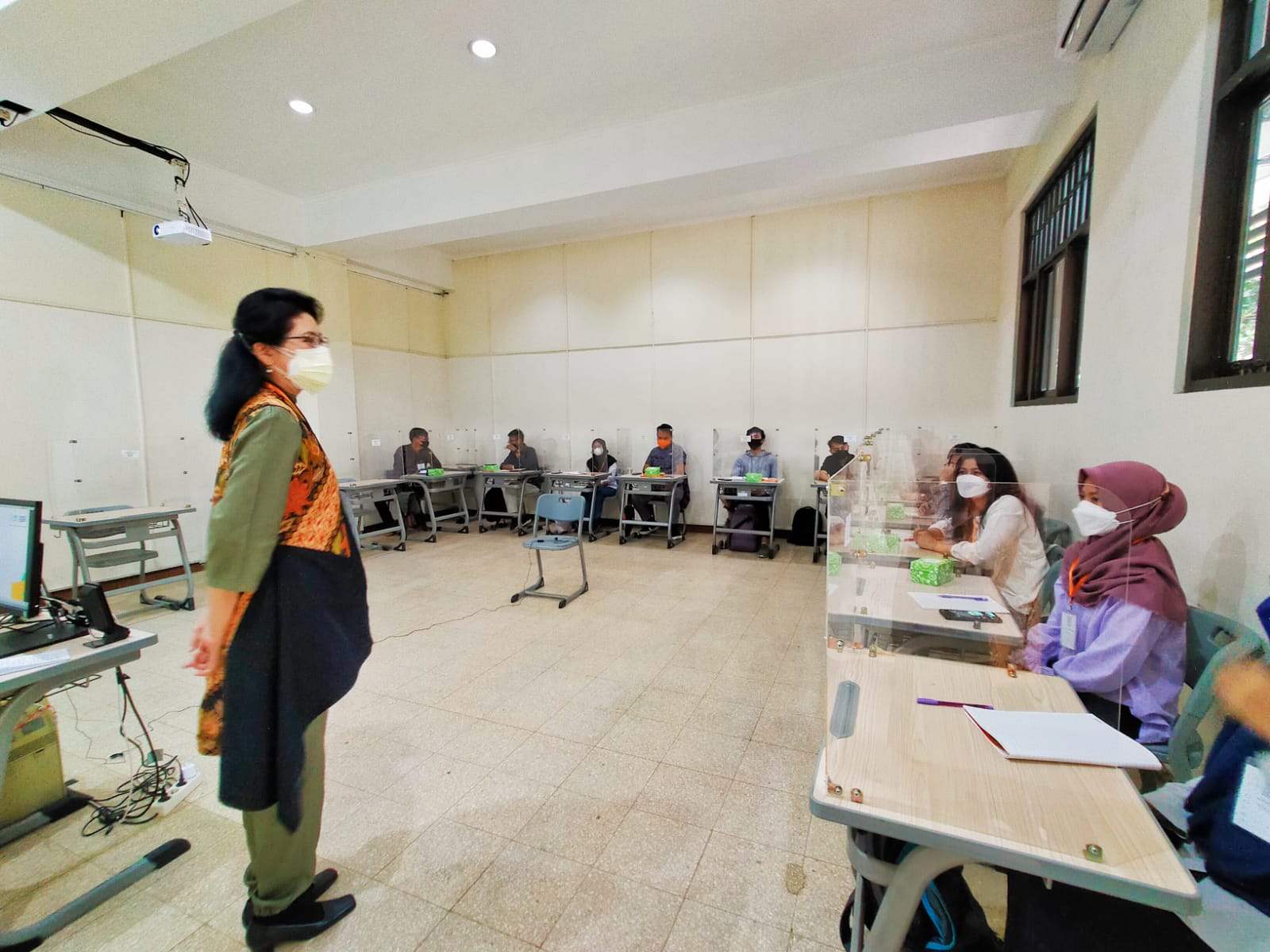
    Students of the Faculty of Economics and Business (FEB UNS), who are divided into two classes, are participated in a hybrid Entrepreneurship Startup Training. The on-site training was conducted in two classrooms, room no 2202 and 2203 FEB UNS, while the online sessions are available through a Zoom Cloud Meeting, Thursday (14/10/2021).

    Prof. Asri Laksmi Riani, M.Si., as the Chairman of the Entrepreneurship Laboratory (KWU Lab), in her report, states that the training is part of the training series organized by KWU Lab. “The Entrepreneurship training will last until mid-November 2021. The training began with the recruitment of Entrepreneurship trainers from FEB lecturers, which were selected from each study program. The recruitment is followed by Training of Trainer (TOT) that invites several speakers, preparation of modules, training implementation, preparation of business proposals, presentations, mentoring and evaluation,” said Prof. Asri.

    Further, Prof. Asri said that the training involves 18 FEB UNS lecturers as training instructors, 8 Academic Support Staff, and 29 students. Out of the 29 students who took the training, 24 students joined the on-site session, and five others are joining through an online meeting platform. Students are divided into six groups within three business sectors, namely fashion, culinary, and craft.

    The main objective of this activity is the achievement of UNS’ Main Performance Indicator (IKU), which specifies the number of students who start new businesses. Hence, this training is likely to be a pilot project for the upcoming training.

    In line with Prof. Asri, the Vice Dean of Academic, Research and Student Affairs, FEB UNS, Prof. Dr. Izza Mafruhah, SE, M.Si. in her speech states that a higher education institution has eight tasks within the IKU accomplishment, which includes graduates with decent jobs, entrepreneurship initiative, or further studies. Entrepreneurship is one of the schemes under the Merdeka Belajar Kampus Merdeka (MBKM) Program to prepare students with an entrepreneurial spirit.

    Prof. Izza hopes that the training facilitated by FEB UNS can be beneficial and creating added value for the students. The benefit should not be limited to the Certificates of Diploma Companion (SKPI) that will be given to all participants but also the knowledge and the strategies or tricks in entrepreneurship. To develop entrepreneurship, students need to collaborate with students from other faculties in order to get better results.

    Meanwhile, Drs. Rohman Agus Pratomo, the Head of Academic and Student Affairs Bureau in UNS, appreciates the entrepreneurship training conducted by FEB UNS through a hybrid system. With this training, students are expected to compete at the university level as well as at the national level.
    “With an early start in entrepreneurship activities, in the following year, students can participate in competitions at the university, and also the national level. Business planning prepared (by the students) was cool, can be implemented and developed. After the students are graduated, they can become entrepreneurs, so they will create jobs and employment and are not looking for jobs. Therefore, they can recruit their friends, neighbors, and many others. It will also certainly contribute to their alma mater university achievement,” he concluded. (Humas FEB)

  • Sejumlah Mahasiswa Ikuti Pelatihan Startup Kewirausahaan

    Sejumlah Mahasiswa Ikuti Pelatihan Startup Kewirausahaan

    Mahasiswa Fakultas Ekonomi dan Bisnis (FEB UNS) yang terbagi dalam 2 kelas mengikuti Pelatihan Startup Kewirausahaan secara hybrid, luring di kelas 2202 dan 2203 serta daring melalui zoom meeting, Kamis 14/10/2021.

    Prof. Asri Laksmi Riani, M,Si, Ketua Laboratorium Kewirausahaan (Lab KWU)  dalam laporannya menyampaikan, kegiatan pelatihan ini  merupakan rangkaian kegiatan yang diselenggarakan oleh Lab KWU.

    “Pelatihan KWU akan berlangsung hingga pertengahan bulan November 2021. Aktifitas dimulai dengan perekrutan pelatihan KWU dari dosen FEB per program  studi, dilanjutkan kegiatan Trianing Of Trainer (TOT) dengan mengundang beberapa narasumber, penyusunan modul, pelaksanaan pelatihan, penyusunan proposal bisnis,  presentasi, pendampingan dan evaluasi”, ungkap Prof. Asri.

    Dikatakannya, dalam pelaksanaan pelatihan, ada 18 instruktur dari dosen  FEB UNS, 8 orang Tenaga Kependidikan dan mahasiswa yang berjumlah 29 orang. Dari 29 mahasiswa yang mengikuti pelatihan, 24 mahasiswa mengikuti secara luring dan 5 lainnya mengikuti secara daring. Mahasiswa terbagi dalam 6 kelompok dengan 3 bidang usaha yaitu fashion, kuliner dan kriya.

    Target kegiatan ini adalah pencapaian Indikator Kinerja Utama (IKU) UNS yaitu terdapatnya beberapa mahasiswa yang melakukan rintisan usaha baru dan kegiatan ini merupakan pilot project bagi kegiatan yang akan datang.

    Senada dengan Prof. Asri, Wakil Dekan Akademik, Riset dan Kemahasiswaan FEB UNS, Prof. Dr. Izza Mafruhah, SE, M.Si. dalam sambutannya menyampaikan, perguruan tinggi mendapatkan 8 tugas untuk pencapaian IKU, diantaranya adalah lulusan yang mendapatkan pekerjaan yang layak atau berwirausaha atau melanjutkan studi. Dalam Merdeka Belajar Kampus Merdeka (MBKM), salah satu programnya adalah KWU agar mahasiswa menjadi lulusan yang menciptakan lapangan kerja.

    Prof. Izza berharap, pelatihan yang difasilitasi oleh FEB UNS memberikan manfaat kepada mahasiswa,  membawa nilai plus, bukan hanya Surat Keterangan Pendamping Ijazah (SKPI) yang akan diberikan kepada seluruh peserta tapi nilai plus yang berkaitan dengan keilmuan, bagaimana strategi atau trik dalam berwirausaha. Untuk mengembangkan KWU, mahasiswa perlu berkolaborasi dengan fakultas-fakultas lain agar mendapatkan hasil yang  lebih baik.

    Sementara itu, Drs. Rohman Agus Pratomo, Kepala Biro Akademik dan Kemahasiswaaan UNS mengapresiasi pelatihan KWU yang dilaksanakan FEB UNS secara hybrid. Dengan pelatihan KWU ini, mahasiswa diharapkan bisa berkompetisi di tingkat universitas dan juga di tingkat nasional.

    “Aktifitas KWU dirintis mulai dari sekarang, tahun depan mahasiswa ikut kompetisi di universitas, dan juga ke tingkat nasional. Perencanaan bisnisnya dibuat yang keren, diimplementasikan dan dikembangkan.  Setelah mahasiswa lulus bisa menjadi usahawan, jadi job creator bukan job seeker sehingga bisa menggandeng kawan, tetangga  dan seterusnya. Hal ini juga tentunya akan membanggakan institusi tempat belajar” pungkasnya. (Humas FEB)

  • After 41 Years of Service, Prof. JJS Dedicates His Expertise in Macroeconomics and Development Economics

    After 41 Years of Service, Prof. JJS Dedicates His Expertise in Macroeconomics and Development Economics

    The Dean and all of the Faculty of Economics and Binis (FEB) Universitas Sebelas Maret (UNS) academic members expressed their highest gratitude and appreciation to Prof. Dr. Julius Jhonny Sarungu, MS or commonly known as Prof. JJS, for his contributions and devotion during his service at FEB UNS. “We hope Prof. JJS to stay healthy even after retirement, continues his craft, and stay happy with his beloved family.”

    Dean of FEB UNS Thanked Prof. JJS

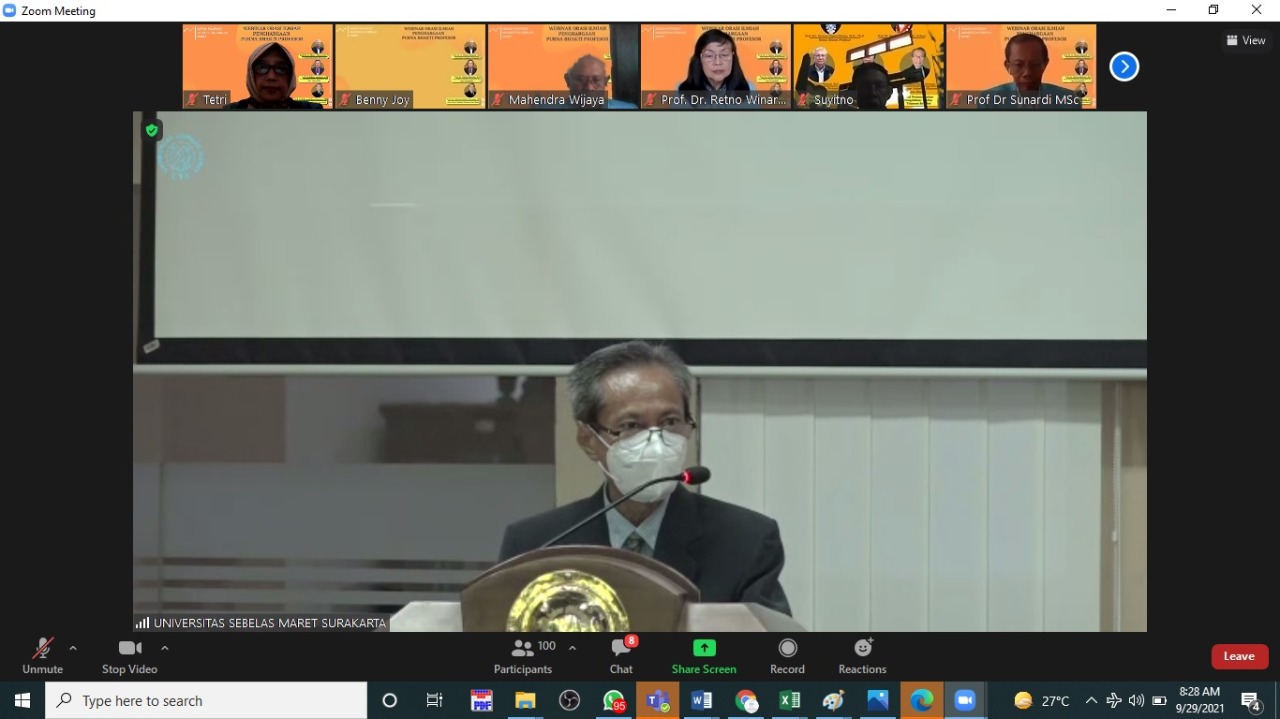
    The statement was delivered by the Dean of FEB UNS, Prof. Drs. Djoko Suhardjanto., M.Com. (Hons), Ph.D. Ak. at the hybrid “Webinar of Scientific Oration Award for Professor Retirement.” The on-site event was held in FEB UNS Assembly Room IV, while the online event is available through Zoom Cloud Meeting, Wednesday, September 29, 2021.

    Prof. Djoko said that, since being appointed as a Civil Servant in 1980, Prof. JJS, has done extraordinary service for UNS for the last 41 years.

    “The special characteristic of him who was born in Makale, Tana Toraja, South Sulawesi, July 11, 1959, is his black jacket, and always having a cup coffee or warm tea with him during lecture. Prof. JJS is a disciplined, friendly, and patient lecturer. According to his students, this professor in black jackets always appreciates the opinions of students in teaching. His speech and improvisation while teaching help students to understand the teaching material easily. When supervising students’ final assignment, he patiently explains the theory and the flow of writing,” he explained.

    Prof. JJS is graduated from Universitas Kristen Satya Wacana Salatiga in the field of economic studies in 1977. He earned his Master’s Degree at the University of Indonesia in Population and Employment studies in 1991. He completed his Doctoral study in 2001, and receiving his Ph.D. in Economics studies from Universitas Airlangga Surabaya.

    Welcoming Prof. JJS at FEB UNS

    As one of the founding fathers of the Faculty of Economics, especially in the Development Economics Study Program, Prof. JJS has served as Secretary of the Department of Development Economics, Vice Director of Academic Affairs for the Master Program in Management, and Secretary II of the Doctoral Program in Economic Studies, UNS Postgraduate School.

    Prof. JJS is an inspiring person to his juniors. He has made numerous contributions to the development of science, dozens of textbooks and articles published in reputable international journals, accredited National Journals, and proceedings. His work demonstrates expertise in macroeconomics and development economics. He is also active in scientific organizations, including the Indonesian Bachelor of Economics Association and the Member of The Australian Development Studies Network (ANU), Australia. (Humas FEB).

  • 41 Tahun Mengabdi di UNS, Prof JJS Kontribusikan Kepakarannya  Dibidang Ekonomi Makro dan Ekonomi Pembangunan

    41 Tahun Mengabdi di UNS, Prof JJS Kontribusikan Kepakarannya  Dibidang Ekonomi Makro dan Ekonomi Pembangunan

    Dekan dan segenap Civitas Akademika Fakultas Ekonomi dan Binis (FEB) Universitas Sebelas Maret (UNS) mengucapkan terima kasih dan penghargaan setinggi-tingginya kepada Prof. Dr. Julius Jhonny Sarungu, MS atau yang biasa disapa akrab dengan Prof. JJS atas kontribusi dan darmabaktinya selama mengabdi di FEB UNS.  Kami berharap dalam memasuki purnabakti, Prof.  JJS selalu sehat, tetap terus berkarya, dan bahagia bersama keluarga tercinta.

    Pernyataan itu disampaikan Dekan FEB UNS, Prof. Drs. Djoko Suhardjanto., M.Com. (Hons), Ph.D, Ak. pada kegiatan Webinar Orasi Ilmiah Penghargaan Purnabakti Profesor yang diselenggarakan luring di Ruang Sidang IV UNS dan daring melalui Zoom Cloud Meeting,  Rabu, 29 September 2021.

    Dekan FEB Mengucapkan Terimakasih atas Pengabdian Prof. JJS

    Dikatakannya, sejak diangkat menjadi Pegawai Negeri Sipil pada tahun 1980, Prof. JJS melakukan pengabdian luar biasa terhadap UNS selama 41 tahun.

    “Ciri khas pria kelahiran Makale, Tana Toraja, Sulawesi Selatan, 11 Juli 1959 ini adalah jaket hitam dan saat mengajar selalu membawa kopi atau teh hangat. Prof JJS adalah dosen yang disiplin, ramah dan sabar. Menurut mahasiswanya, dalam mengajar pria berjaket hitam ini selalu menghargai pendapat dari mahasiswa. Tutur kata dan improvisasi saat mengajar membuat mahasiswa mudah paham dengan materi ajar. Pada saat membimbing tugas akhir, dengan sabar menjelaskan teori serta alur penulisan” jelasnya.

    Prof. JJS  lulus pendidikan Strata 1 dari Universitas Kristern Satya Wacana Salatiga di bidang studi ekonomi pada tahun 1977. Lulus pendidikan Strata 2 di Universitas Indonesia dengan bidang studi Kependudukan dan ketenagakerjaan di tahun 1991. Lulus pendidikan Strata 3 di Universitas Airlangga Surabaya di bidang studi Ilmu Ekonomi pada tahun 2001.

    Sebagai salah satu peletak dasar Fakultas Ekonomi khususnya di Program Studi Ekonomi Pembangunan, Prof. JJS pernah menjabat sebagai Sekretaris Jurusan Ekonomi Pembangunan, Asisten Direktur Bidang Akademik Program Studi MM (S2) dan Sekretaris II Program Doktor Ilmu Ekonomi (S3) Pascasarjana FEB UNS.

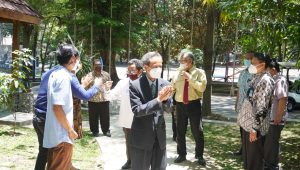
    Penyambutan Prof. JJS di Taman FEB Jaya


    Prof. JJS sangat menginspirasi yuniornya, telah berkontribusi di bidang keilmuan dan, puluhan tulisannya baik berupa buku text, artikel yang dimuat dalam jurnal Internasional Bereputasi, Jurnal Nasional terakreditasi maupun dalam bentuk prosiding. Karyanya menunjukkan kepakaran di bidang Ekonomi Makro dan Ekonomi Pembangunan. Dia juga aktif dalam organisasi keilmuan antara lain Ikatan Sarjana Ekonomi Indonesia dan Member of The Australian Development Studies Network, The ANU, Autralia. (Humas FEB).

  • Ketua OJK, Rektor UNS dan Dekan FEB UNS Tandatangani Prasasti, Resmikan Masjid Al-Latief FEB UNS

    Ketua OJK, Rektor UNS dan Dekan FEB UNS Tandatangani Prasasti, Resmikan Masjid Al-Latief FEB UNS

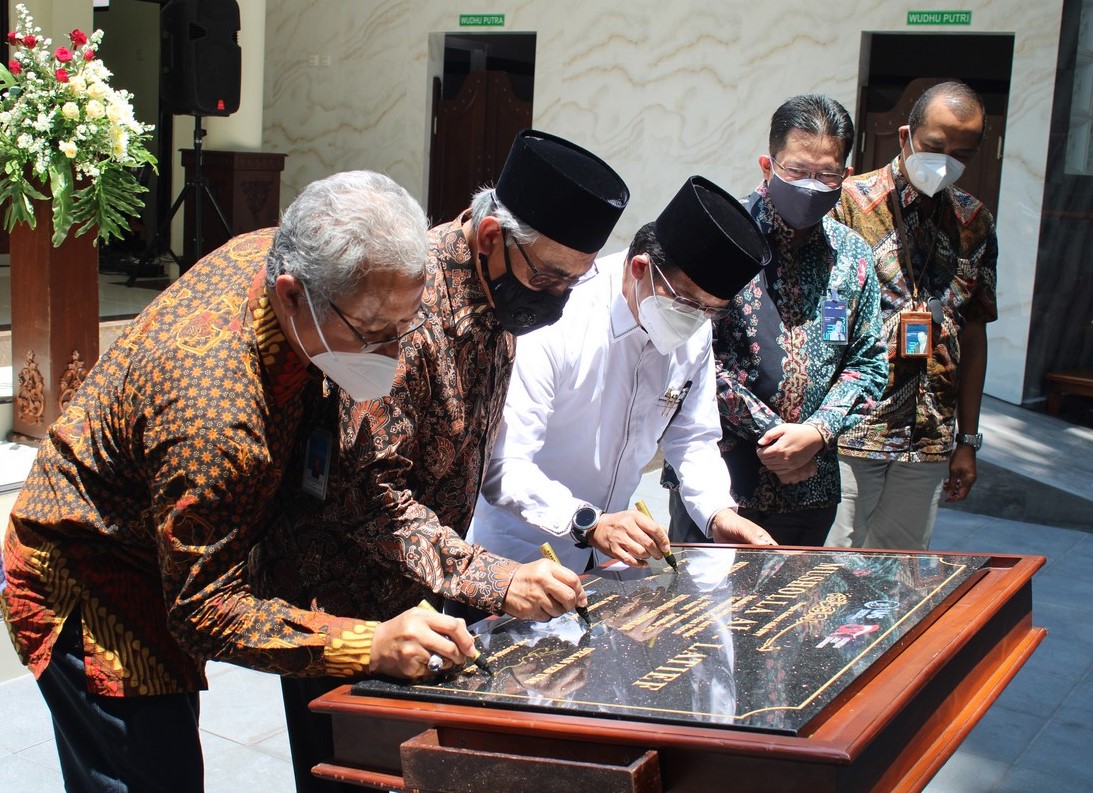
    Ketua Dewan Komisioner (DK) Otoritas Jasa Keuangan (OJK) Republik Indonesia, Prof. Wimboh Santoso, Rektor Universitas Sebelas Maret (UNS) Surakarta Prof. Jamal Wiwoho dan  Dekan Fakultas Ekonomi dan Bisnis (FEB) UNS Prof. Djoko Suhardjanto menandatangani prasasti sebagai tanda diresmikannya Masjid Al-Latief FEB UNS, Jumat (1/10/2021).

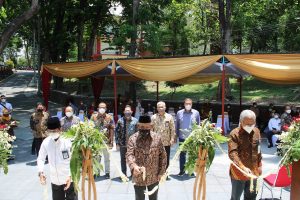
    Dalam peresmian masjid itu, Prof. Wimboh, Prof. Jamal dan Prof. Djoko juga melakukan pengguntingan pita sebagai tanda bahwa Masjid Al-Latief sudah mulai bisa digunakan sebagai tempat beribadah khusus seperti sholat maupun aktifitas-aktifitas lain yang mendukung kepada peningkatan ibadah dan juga kesejahteraan masyarakat.

    Pengguntingan pita: Prof. Jamal, Prof. Wimboh, Prof. Djoko (dari kiri ke kanan)

    Dekan FEB UNS dalam laporannya menyampaikan, Masjid Al-Latief yang diresmikan saat ini sebelumnya merupakan sebuah musala. Renovasi terhadap bangunan sangat perlu dilakukan agar jamaah bisa lebih nyaman dalam menjalankan ibadahnya.

    Dekan juga mengucapkan terima kasih kepada Bank Mandiri, Bank BRI, Bank BNI dan OJK yang telah memberikan bantuan sehingga Masjid Al-Latief bisa lebih bagus dan memberikan kenyamanan jamaah dalam menjalankan aktifitas ibadah maupun lainnya.

    “Bangunan masjid kita desain dengan memenuhi filosofi  syariat, tarekat, hakikat, dan juga makrifat. Pilar-pilarnya gilig sebagai simbol manembah kepada gusti” ungkapnya.

    Dekan juga telah menunjuk dosen muda FEB, Ibrahim Fatwa Wijaya, Ph.D sebagai Takmir Masjid  Al-Latief untuk bisa lebih memakmurkan masjid. Takmir yang baru diharapkan mampu menjadikan masjid sebagai center of excellent. Lebih menggerakkan aktifitas masjid dengan kajian-kajian Ekonomi Islam, Sejarah Islam sehingga memberikan kemanfaatan bagi masyarakat  dan turut mengharumkan nama UNS.

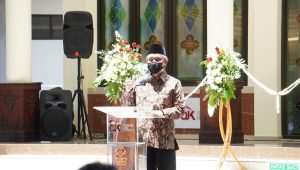
    Prof. Wimboh saat memberikan sambutan

    Hampir senada, Prof. Wimboh dalam sambutannya menekankan bahwa  fungsi masjid bukan sekedar tempat beribadah namun juga sebagai tempat mengembangkan ilmu yang memberikan manfaat kepada masyarakat. Di masjid harus ada kajian-kajian, inovasi-inovasi dalam pengembangan pemikiran syariah.

    “Alhamdulillah bangunan Masjid Al-Latief yang sebelumnya sebuah Musala sekarang sudah lebih baik, lebih nyaman dan bisa dimanfaatkan, baik oleh sivitas akademika FEB maupun masyarakat luas. Masjid Al-Latief dapat menjadi center of excellent. Masjid bukan hanya untuk sholat, bukan hanya untuk beribadah tapi untuk sinergi menggalang inovasi pemikiran syariah,” kata Prof. Wimboh.

    Menurutnya, hal itu sangat penting sebab dari 275 juta penduduk Indonesia yang mayoritas beragama Islam harusnya porsi masyarakat untuk menikmati produk perbankan syariah menjadi besar.

    “Potensi syariah masih sangat kecil, hanya 9 persen. Sekarang bagaimana kita bisa meningkatkan porsi itu. Produk-produk syariah harus kita perbanyak, aset-aset syariah masyarakat juga diperbanyak. Pengurus masjid harus menggerakkan diskusi-diskusi soal inovasi bagaimana mengembangkan hal ini,” tegas Prof. Wimboh.

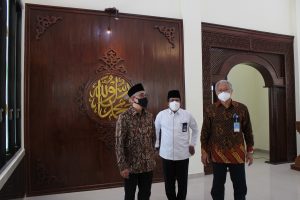
    Peninjauan arsitektur dan fasilitas masjid

    Usai peresmian, Prof. Wimboh, Prof. Jamal, dan Prof. Djoko diikuti oleh sejumlah tamu undangan  langsung meninjau arsitektur dan fasilitas yang ada di Masjid Al-Latief FEB UNS. (Humas FEB)

  • The Chairman of OJK, Rector of UNS, and Dean of FEB UNS Inaugurated Al-Latief Mosque FEB UNS

    The Chairman of OJK, Rector of UNS, and Dean of FEB UNS Inaugurated Al-Latief Mosque FEB UNS

    The Chairman of the Board of Commissioners (DK) of the Financial Services Authority (OJK) of the Republic of Indonesia, Prof. Wimboh Santoso, the Rector of Universitas Sebelas Maret (UNS) Surakarta, Prof. Jamal Wiwoho, and the Dean of the Faculty of Economics and Business (FEB) UNS, Prof. Djoko Suhardjanto signed an inscription to mark the inauguration of Al-Latief Mosque FEB UNS, Friday (1/10/2021).

    The inauguration ceremony by Prof. Jamal, Prof. Wimboh, and Prof. Djoko (left to right)

    During the inauguration of the new Mosque, Prof. Wimboh, Prof. Jamal, and Prof. Djoko also did the ribbon-cutting ceremony symbolizing the readiness Al-Latief Mosque as a special place of worship and other supporting activities to improve the quality of worship and also the community welfare.

    The Dean of FEB UNS, in his report, states that the Al-Latief Mosque was previously a prayer room (mushola). A critical renovation of the building is essential to provide a more comfortable prayer.

    The Dean also thanked Bank Mandiri, Bank BRI, Bank BNI, and OJK for providing assistance in the Al-Latief Mosque renovation. Thus, establishing a comfortable praying site for worshipers in carrying out prayer and other activities.

    “The design of our Mosque follows the philosophy of sharia, tarekat (order), hakikat (nature), and makrifat (knowledge). The pillars are ‘gilig (round in shape)’ as a symbol of ‘manembah kepada Gusti‘ (worshiping the God almighty),” he said.

    Prof. Wimboh delivers inauguration speech

    The Dean has also appointed a young lecturer from FEB UNS, Ibrahim Fatwa Wijaya, Ph.D., as the Takmir (manager) of the Al-Latief Mosque to maintain the Mosque further. The new Takmir is expected to transform the Mosque into a center of excellence. Prof. Djoko also wishes for more religious activities in the Mosque such as Islamic economic studies and Islamic history for the greater benefit of the community and contribute to UNS achievement.

    Similarly, Prof. Wimboh emphasized that a mosque is not only a worship place but also a center for knowledge development, which can be beneficial to the community. There must be studies, innovations in the development of Shariah values.

    “Alhamdulillah, the Al-Latief Mosque, which was previously a mushola, is now better, more comfortable, and beneficial for both of FEB academic community and the general community. The Al-Latief Mosque can be a center of excellence. Not only for prayer, not only to worship but to establish synergy in raising innovation for sharia values,” said Prof. Wimboh.

    Reviewing the Mosque architecture and facilities

    According to Prof. Wimboh, the significance of sharia and Islamic studies is mainly because the majority of the Indonesian population is Muslim. Therefore, increasing the percentage of community members who wish to enjoy Islamic banking products.

    “The potential for Sharia banking is still very small, with only 9 percent. Now, how can we increase that portion? Shariah products must be propagated. The community sharia assets must also be propagated. Mosque administrators should set in discussions regarding the innovations on how to develop the Mosque,” said Prof. Wimboh.

    After the inauguration, Prof. Wimboh, Prof. Jamal, and Prof. Djoko, alongside a number of invited guests, were reviewing the architecture and facilities at Al-Latief Feb UNS Mosque. (Humas FEB)

  • PDIE FEB UNS Adakan Colloquium on Business Economics

    PDIE FEB UNS Adakan Colloquium on Business Economics

    Program Doktor Ilmu Ekonomi (PDIE) Fakultas Ekonomi dan Bisnis (FEB) Universitas Sebelas Maret (UNS) mengadakan the 3rd International Seminar and Colloquium on Business Economics (ICBE) dengan tema Rethinking Innovation and Research in Small and Medium Enterprises Under High Uncertainty pada 4-5 Oktober 2021.

    Seminar dan kolokium internasional tersebut terselenggara atas kerjasama dengan empat universitas mitra yaitu Universitas Garut, STIE Widya Gama Lumajang, Universitas Tidar, dan Universitas Slamet Riyadi (UNISRI).

    Di acara yang dihadiri oleh lebih dari 100 peserta dan 43 presenter itu, Kaprodi PDIE FEB UNS, Prof. Rahmawati mengucapkan terima kasih kepada universitas yang telah mendukung terlaksananya acara. Harapannya, kolokium tersebut dapat membantu dan memperlancar proses publikasi artikel riset mahasiswa program PDIE yang menjadi salah satu syarat kelulusan.

    Harapannya, kolokium tersebut dapat membantu dan memperlancar proses publikasi artikel riset mahasiswa program PDIE yang menjadi salah satu syarat kelulusan.

    Sementara itu, Prof. Izza Mafruhah, Wakil Dekan Bidang Akademik, Riset dan Kemahasiswaan mewakili Dekan Fakultas Ekonomi dan Bisnis, saat membuka acara mewakili Dekan mengucapkan terima kasih kepada keempat pembicara yang telah berkenan hadir dalam acara kolokium internasional tersebut.

    “Kegiatan ini bertujuan untuk meningkatkan kemampuan mahasiswa program doktor untuk dapat melakukan publikasi pada tingkat nasional maupun internasional, serta untuk meningkatkan reputasi PDIE di bidang publikasi,” ungkap Prof. Izza.

    Dalam agenda Kolokium internasional yang ketiga tersebut terdapat dua sesi yaitu sesi plenary, peserta akan mendengarkan paparan materia dan keynote speech dari pembicara, dan di sesi paralel, peserta presenter akan mempresentasikan artikel riset yang telah melalui proses seleksi.

    The 3rd ICBE kali ini menghadirkan empat pembicara internasional antara lain Prof. Indah Susilowati dari Universitas Diponegoro, Dr. Kwabena G. Boakye dari Georgia Southern University, Prof. Budy Resosudarmo dari Australian national University, dan Prof. Benny Tjahjono dari Coventry University.

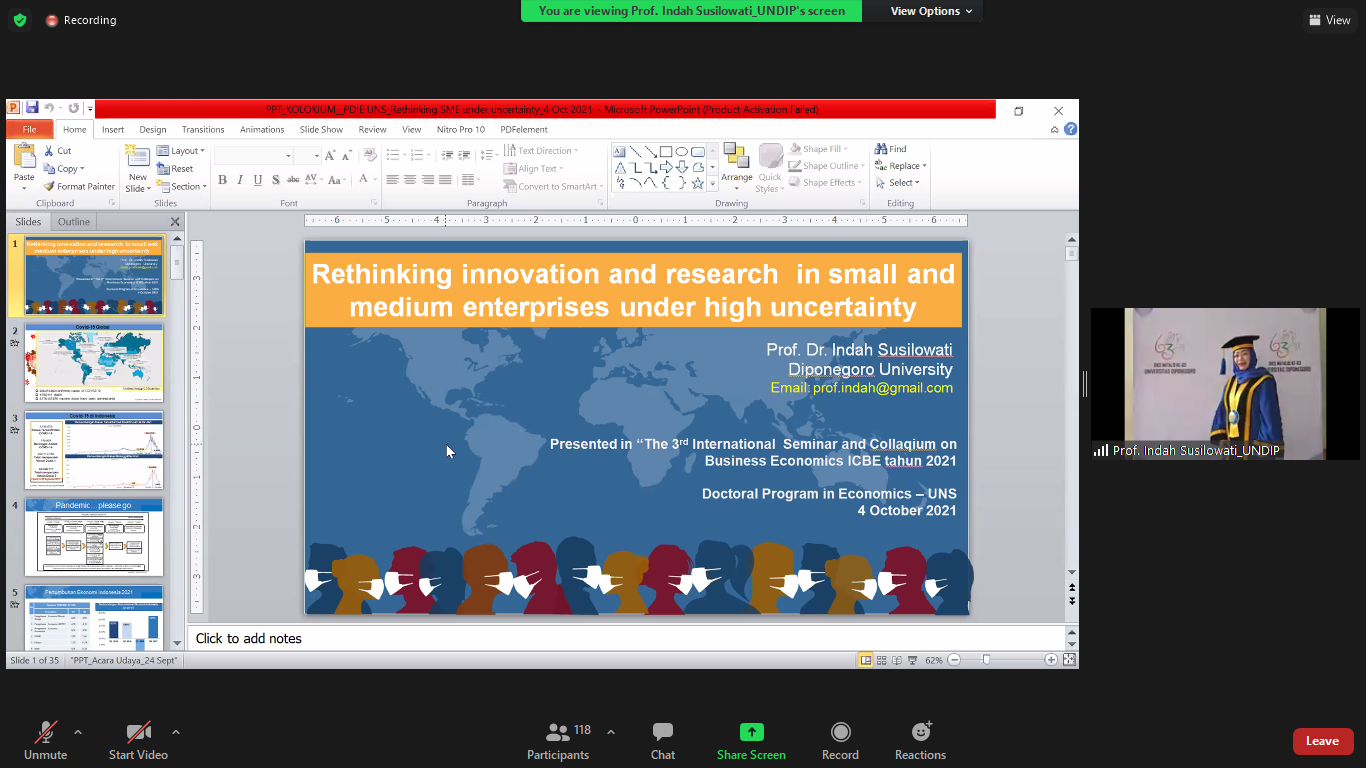
    Peserta mengikuti jalannya sesi plenary bersama dengan dua pembicara yaitu Prof. Indah Susilowati dan Dr. Kwabena G. Boakye. Dalam paparannya Prof. Indah menyampaikan materi berjudul ‘Rethinking Innovation and Resarch in Small and Medium Enterprises under High Uncertainty.’

    Prof. Indah menjelaskan bagaimana pandemi Covid-19 mempengaruhi kondisi perekonomian. Untuk sektor UMKM terdapat beberapa kendala yang dihadapi seperti menurunnya modal dan pelanggan, serta penurunan harga barang. Meskipun begitu, Prof. Indah mengungkapkan bahwa pemerintah Indonesia telah cukup proaktif dalam usaha pemulihan ekonomi.

    “Dengan gotong-royong, kerja sama, kita akan bisa menghadapi pandemi ini. Pemulihan ekonomi tentu akan membutuhkan waktu untuk dapat diterapkan dengan sukses,” ungkap Prof. Indah.

    Dr. Kwabena G. Boakye dengan materi yang berjudul Small and Medium Enterprises from Crisis to Growth mengatakan bahwa sumbangan sektor UMKM pada kondisi ekonomi cukup signifikan.

    “Dalam hal ini pemerintah dapat mendukung keberadaan UMKM melalui pelatihan keuangan, mendorong kemajuan riset, dan memberikan bantuan yang bersifat sector-specific,” jelasnya.

    Pada sesi plenary tersebut peserta diberikan kesempatan untuk menyampaikan pertanyaan secara interaktif kepada pembicara. Setelah sesi plenary selesai, peserta diundang untuk dapat mengikuti sesi paralel.

    Reporter: Aulia

    Editor: Humas

  • PDIE FEB UNS Hosted the Third Colloquium on Business Economics

    PDIE FEB UNS Hosted the Third Colloquium on Business Economics

    The Doctoral Program in Economics (PDIE), Faculty of Economics and Business (FEB), Universitas Sebelas Maret (UNS), held the 3rd International Seminar and Colloquium on Business Economics (ICBE), taking on the theme of “Rethinking Innovation and Research in Small and Medium Enterprises Under High Uncertainty,” October 4-5, 2021. The international seminar and colloquium was held in collaboration with four partner universities, namely, Universitas Garut, STIE Widya Gama Lumajang, Universitas Tidar, and Universitas Slamet Riyadi (UNISRI).

    During the event attended by more than 100 participants and 43 presenters, The Director of PDIE FEB UNS, Prof. Rahmawati, expressed her gratitude to the partner universities for supporting the 3rd ICBE 2021. Prof. Rahma also wishes for the colloquium to help and facilitate PDIE students in their research article publication process, which becomes one of the graduation requirements. Furthermore, Prof. Rahma hopes that the colloquium can help and facilitate PDIE students in their research article publication process as one of the graduation requirements.

    Meanwhile, Prof. Izza Mafruhah, the FEB UNS Vice Dean for Academic, Research, and Student Affairs, representing the Dean of the Faculty of Economics and Business, thanked the four speakers for attending the international colloquium.

    “This event aims to improve the competency of the Doctoral program students to publish their research articles at national and international levels, as well as to improve the reputation of the PDIE UNS in the publication aspects,” said Prof. Izza.

    The ICBE 2021 consists of two sessions: the plenary session, where the participants will listen to the material presentation and keynote speech from speakers, and parallel sessions, where the presenter participants will present their submitted research articles that have gone through the selection process.

    This year ICBE 2021 invited four international speakers, namely, Prof. Indah Susilowati from Diponegoro University, Dr. Kwabena G. Boakye from Georgia Southern University, Prof. Budy Resosudarmo from the Australian National University, and Prof. Benny Tjahjono from Coventry University.

    On the first day of the colloquium, the participants join the plenary session with two speakers, Prof. Indah Susilowati and Dr. Kwabena G. Boakye. In her keynote speech, Prof. Indah delivered material entitled ‘Rethinking Innovation and Research in Small and Medium Enterprises under High Uncertainty.’

    Prof. Indah explained how the Covid-19 pandemic had affected economic conditions. For the MSME sector, there are several obstacles arise, such as decreased capital and customers, as well as a decrease in the goods’ price. However, Prof. Indah revealed that the Indonesian government has been quite proactive in economic recovery efforts.

    “With collaboration and cooperation, we will be able to deal with this pandemic. Economic recovery will certainly take time to be applied successfully,” said Prof. Indah.

    After the Keynote Speech, Dr. Kwabena G. Boakye presented material entitled ‘Small and Medium Enterprises from Crisis to Growth,’ where he states that the contribution of the MSME sector to economic conditions is quite significant.

    “In this case, the government can support the existence of MSMEs through financial training, encouraging research progress, and provide sector-specific assistance,” he explained.

    During the plenary session, participants were given the opportunity to submit questions interactively to the invited speaker. After the plenary session, participants are invited to join s specific parallel session according to their research interest.

    Reporter: Aulia

    Editor: Humas FEB

  • Internal Announcement

    Internal Announcement

    30th September 2021

    Indonesia’s impressive socio-economic development over the past two decades has brought with it a substantial negative impact on the environment. The continuing lack of urban infrastructure leads to widespread congestion, excessive pressure on electricity and water supplies and causes significant environmental impacts and further increased of emissions due to pollution in urban areas. The profound need for further policy reforms and increased investment in urban infrastructure to improve the provision of public services, reduce pollution and reduce CO2 emissions will be medium-term development plan for the years 2020-2024.

    Against this background, the German Ministry for Economic Cooperation and Development (BMZ) and the Indonesian Ministry for National Development Planning (BAPPENAS) agreed to launch the Indonesian – German Green Infrastructure Initiative in the framework of the bilateral government negotiations on 01.and 02. 10.2019. As part of the initiative, an additional EUR 2.5 billion will be made available for subsidized loans via the German Development Bank KfW for investments to promote environment- and/or climate-relevant infrastructure in Indonesia (Urban Public Transport, Solid Waste Management, Water and Wastewater Management). GIZ has been commissioned by BMZ with the implementation of the project Green Infrastructure Development (GID) as a Technical Cooperation assignment complimentary to the Financial Cooperation. In this context, the project aims to strengthen the Indonesian Government’s approach to the coherent identification and development of investment projects in the fields of support for the Indonesian – German Green Infrastructure Initiative.

    To this end, the planning agencies of selected provincial governments, under the coordination of Ministry of National Development Planning (BAPPENAS) and the Committee for the Acceleration of Priority Infrastructure Delivery (KPPIP) under Coordinating Ministry of Maritime Affairs and Investment (CMMAI) and the Coordinating Ministry of Economic Affairs (CMEA), in close coordination with key infrastructure financing institutions, will be supported in project development and implementation in the areas of future-oriented, climate-friendly transport turnaround, implementation of the national waste and marine waste strategy as well as in the area of climate and environmental protection in municipal of urban infrastructure.

    The first stage of implementation will take place at the following provinces that have been selected by the Steering Committee namely West Java, Central Java, East Java and Bali.

    To support the Provincial Advisor for the implementation of the Green Infrastructure Development (GID), we are seeking 4 (four) trainees for the following position:

    Trainee Program for
    West Java Province, Central Java Province, East Java Province, Bali Province

    A. Responsibilities
    During the trainee, participants will be mentored by Provincial Advisor and will be given specific assignments such:
    • Support preparation of various GID activities carried out online and offline, including joint activities with GID Counterparts
    • Collecting and processing data (legal, numeric, and graphic) related to urban infrastructure development in the respective Province
    • Supporting Project list and Process of Project dossiers
    • Supporting Sector Workshops Program conducted by GID and Counterparts
    • Supporting Presentation materials and materials of press release of social media publications
    • Study on green infrastructure development with 3 sectors including water and wastewater management, waste management, and urban public transport.

    B. Tasks

    • Assist the Provincial Advisor in compiling data needed
    • Assist the Provincial Advisor in collecting baseline survey data and radical listening at priority locations
    • Assist the Provincial Advisor in compiling pre-survey and survey reports including preparation for the presentation materials
    • Assist the Provincial Advisor in providing the content for the social media publications for GII website or Provincial website respectively
    • Support to carry out activities or work in the field according to the direction of the Provincial Advisor
    • Support Logistic preparation for the workshop/meeting
    • Assist the Provincial Advisor to provide update report to the Provincial Advisor
    • Assist the Provincial Advisor to provide activity report (and financial report if needed) for administrative purpose in GID.

    C. Required qualifications and competences

    • Fresh graduate or last semester master student in in Economics/Business, Social Science, Development Studies, Urban/Regional Development, or other related academic fields
    • Have a laptop and familiar using the platform for online meetings
    • Good communication, organization, writing skills, and information management skills,
    • Intercultural understanding is additional advantages
    • Self-motivated with time management skills and ability to work with minimum supervision, and strong willingness to learn
    • Good command of Ms. Office (Excel, PowerPoint, Word, Teams) and graphic software
    • Good command of English skills (both written and spoken)
    • Experience in literature research and expert interviews
    • Have an interest in engaging in local, national and international cooperation
    • Preferably active in student/public organizations or activities in Social or Urban/ Regional Development or Environment (climate change).

    Please note that you can only apply for this traineeship if you are currently enrolled as a student or your graduation was no longer than one year ago.

    Duty Station: Bandung / Semarang / Surabaya / Denpasar (during COVID-19 pandemic mostly conducted virtual)
    Working Hours: 5 working days per week, 8 working hours per day
    Expected Joining Date: October 2021
    Period of Traineeship: 3 months
    Direct Supervisor: Provincial Advisor of GID

    Interested candidates shall submit comprehensive resume and a motivation letter to: recruitment-indo@giz.de before October 14th, 2021.

    Please put: GID Trainee EJ or GID Trainee WJ or GID Trainee CJ or GID Trainee Bali as your email subject and name the files using following format:
    [Your Complete Name]_[Motivation Letter/CV]

    Only short-listed candidates will be notified

    GIZ Office Jakarta – HR Department
    Menara BCA, 46th Floor, Jl. MH Thamrin No. 1, Jakarta 10310, Indonesia
    www.giz.de