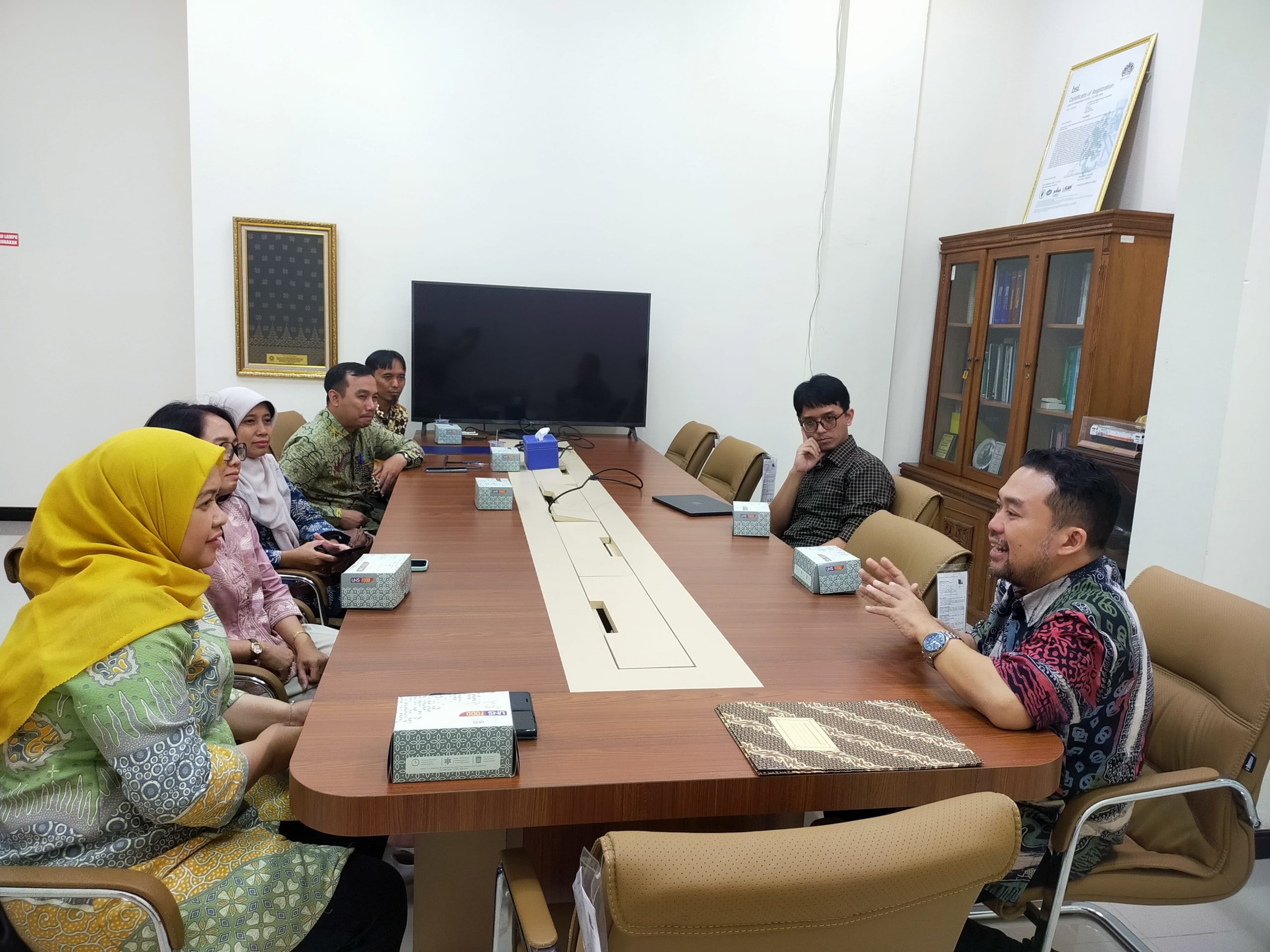
Fakultas Ekonomi dan Bisnis (FEB) Universitas Sebelas Maret (UNS) menerima kunjungan dari FEB Universitas Terbuka (UT) untuk melakukan diskusi dan juga sekaligus penandatanganan kerja sama, Kamis, 13 Februari 2025 di Ruang Sidang Dekan FEB UNS.
Kehadiran Pimpinan UT dan dosen disambut oleh Prof. Bhimo Rizky Samudro, S.E., M.Si,. Ph.D, Dekan FEB UNS dan juga Tastaftiyan Risfandy, S.E., M.Sc., Ph.D Wakil Dekan Kemahasiswaan dan Alumni FEB UNS.
Pimpinan FEB UT yang hadir yakni Dr. Meirani Harsasi, M.Si., Dekan; Olivia Idrus, S.E., M.Sc., Wakil Dekan Bidang Kemahasiswaan, Layanan Pembelajaran dan Kerjasama; Akhmad Syafaat, S.Kom., M.TI, Kasubbag Akademik; Ratih Paramitasari, S.E., M.Si., Manajer Marketing dan Registrasi; serta dosen Halim Dedy Perdana, S.E., M.SM., M.Rech., PhD., Ak., CFrA.
Dalam sambutannya, Dekan dan Wakil Dekan FEB UNS menyampaikan terima kasih atas kehadiran pimpinan FEB UT dan menyambut baik adanya kerja sama dari UT terutama terkait tutor pembelajaran daring.
Sementara itu, Dekan FEB UT, Dr. Meirani sangat berterima kasih bisa menjalin kerja sama dengan FEB UNS, sebelumnya juga telah menemui Wakil Rektor Bidang Perencanaan, Kerja sama, Internasionalisasi, dan Informasi UNS dan ada beberapa yang bisa dikerjasamakan.
Terkait tutor Karil (Karya Ilmiah) di UT, Dr. Meirani mengatakan bahwa UT memerlukan banyak tutor matakuliah tersebut, karena 1 kelas virtual ada 15 mahasiswa dan matakuliah biasa ada 50 mahasiswa.

“Sebagai syarat kelulusan, mahasiswa harus lulus tugas akhir dan juga Karil. Karil merupakan matakuliah tambahan, bukan skripsi karena di UT tidak ada skripsi. Karil seperti mini riset, harapannya mahasiswa punya experience menulis karya ilmiah, kami butuh pembimbing (tutor). Di Karil ada 4 kali tutorial webinar dengan mahasiswa, waktunya diserahkan ke tutor masing-masing, karena kebanyakan mahasiswa bekerja, biasanya dilakukan malam hari dan mudah-mudahan tidak mengganggu jam kerja”, paparnya.


Usai berdiskusi, acara dilanjutkan dengan penandatanganan kerja sama antara FEB UNS dan FEB UT.
Adapun kerja sama tersebut meliputi, kegiatan bersama dalam penelitian dan pengabdian kepada masyarakat; Kegiatan pembelajaran di luar kampus (Merdeka Belajar Kampus Merdeka); sharing artikel jurnal penelitian; Kerja sama aktivitas akademis (seminar, workshop, kuliah umum, diskusi, dialog, dan lain-lain); Bantuan tenaga pengajar/dosen; Bantuan tenaga ahli/professional; Studi banding dalam rangka kegiatan akademik, kegiatan kemahasiswaan dan pengembangan kurikulum; Pertukaran mahasiswa.
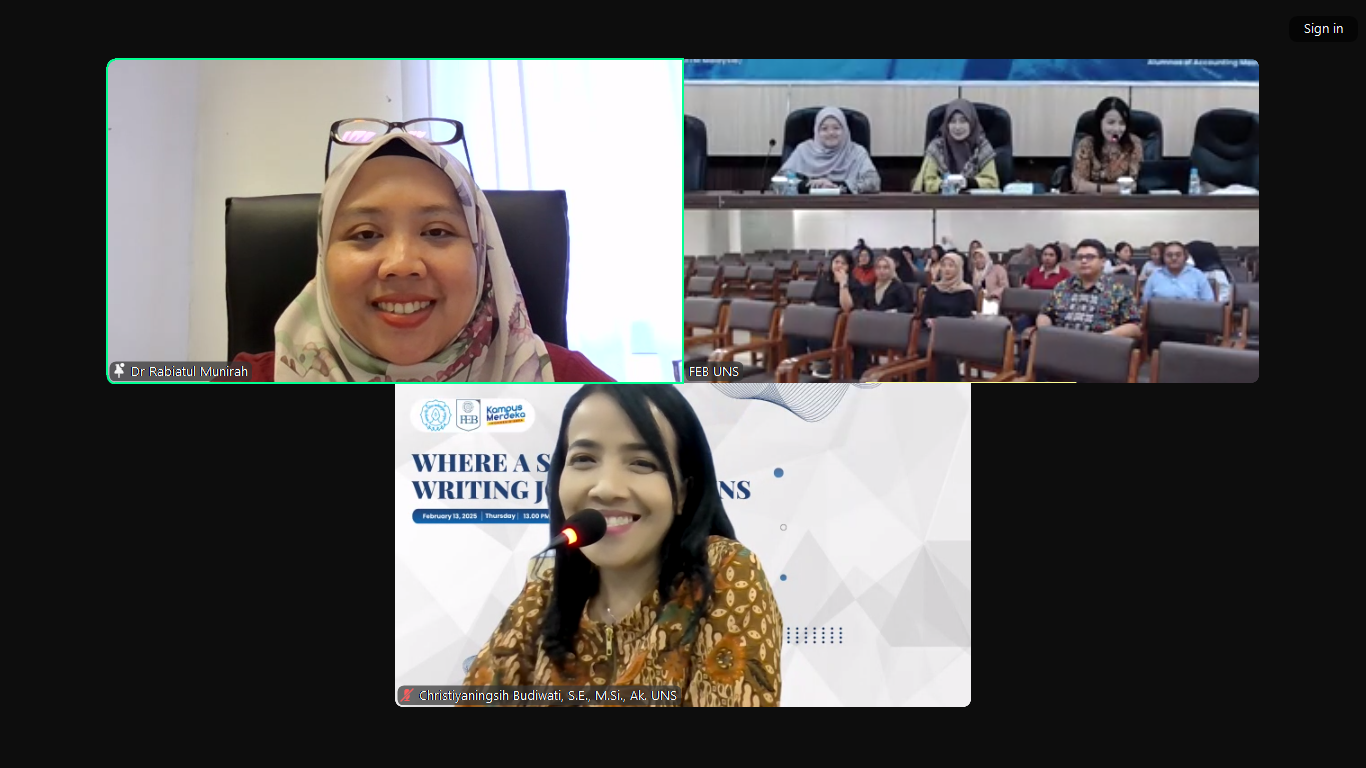
 The two speakers featured in the webinar were Dr. Rabiatul Munirah Alpandi from Universiti Teknologi MARA (UiTM), Malaysia, and Nadifa Salsabila Nizar, S.Ak., M.Ak., a MAKSI FEB UNS alumnae who currently serves as Director of General Affairs and Finance at RS Ortopedi Siaga Utama.
 Regarding the research and publication process, she highlighted the importance of identifying a problem to solve, once the student has determined their field of interest. Such problems can often be discovered through literature reviews. This process helps formulate the problem statement and identify research gaps from previous studies. Based on that, students can then define the purpose of their research and its contribution.
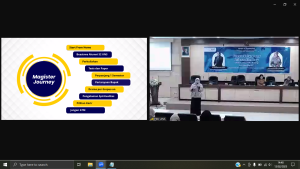 In contrast to Dr. Rabiatul’s theoretical presentation, the second speaker, Nadifa Salsabila Nizar, S.Ak., M.Ak., shared her personal academic journey during her time in the MAKSI program. She described the beginning of her studies, her successful application for the alumni scholarship, and the challenges she faced during the publication process, which eventually led her to extend her period of study. Alongside her story, Nadifa offered motivation and advice to current students of the program.




 “We are looking forward to see substantial progress at UNS, particularly within FEB. I would like to express my appreciation to the FEB leadership for drafting the AACSB Eligibility Application. In 2025, we must accelerate our efforts, and the university has already allocated budgetary support for this initiative. Hopefully, within the next three to four years, we can achieve AACSB accreditation and make FEB as a globally recognized faculty,” he stated.
 Through these historical reflections, hopefully, FEB faculty members will draw inspiration from the challenges, achievements, and valuable lessons of the past leaders. These insights serve as a reminder of the faculty’s long and dynamic journey, and offer lessons to be embraced in facing future transformations.
 Tax avoidance presents a major challenge to governments worldwide, particularly in developing countries that heavily rely on tax revenue as a primary source of state income. In response, governments have continued to improve their tax systems through digital transformation, expansion of the tax base, and increased public awareness to build fiscal independence and promote economic growth. One of the primary ethical implications of tax avoidance is the reduction in government revenue that could otherwise be allocated to public services such as healthcare, education, and infrastructure. Stakeholders—especially shareholders—may support such practices due to their potential to enhance corporate profits and returns. However, from the perspective of the government and society at large, these actions represent a disregard for corporate social responsibility.