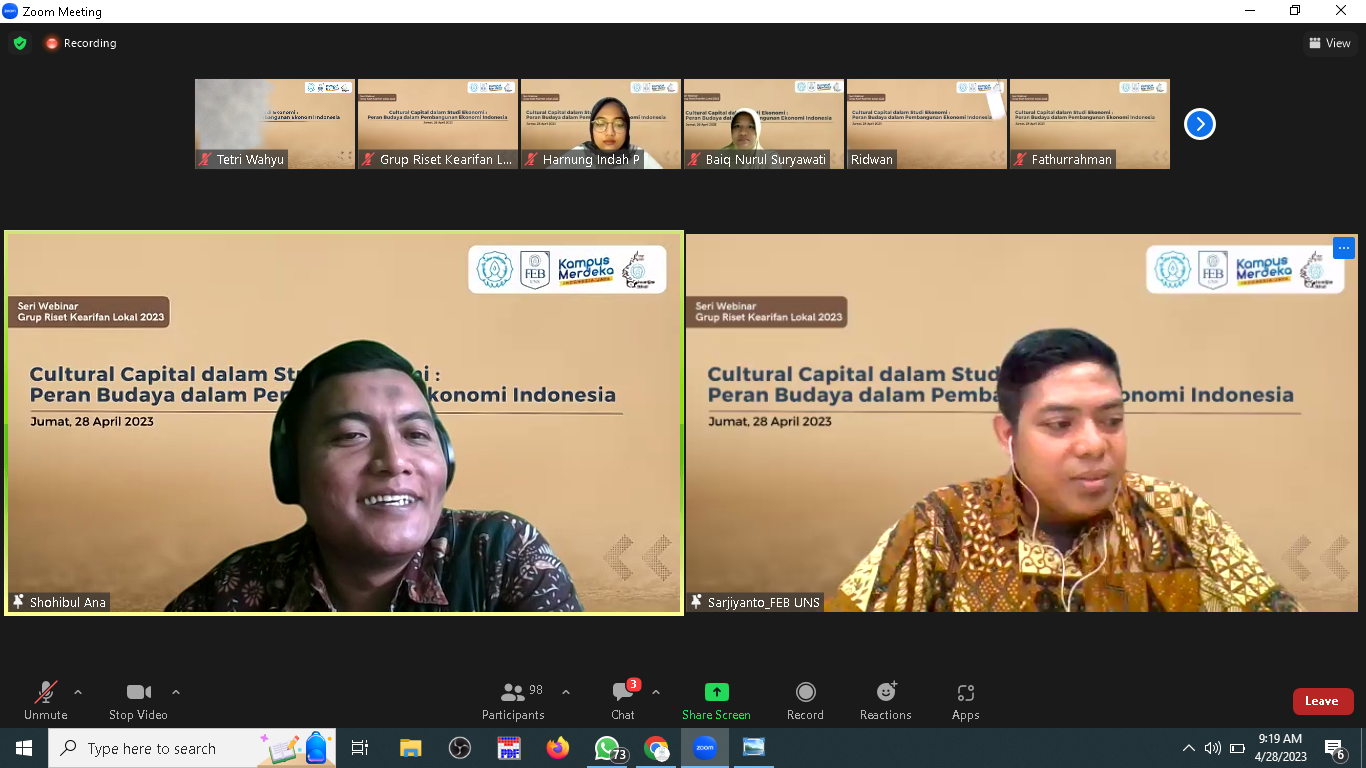
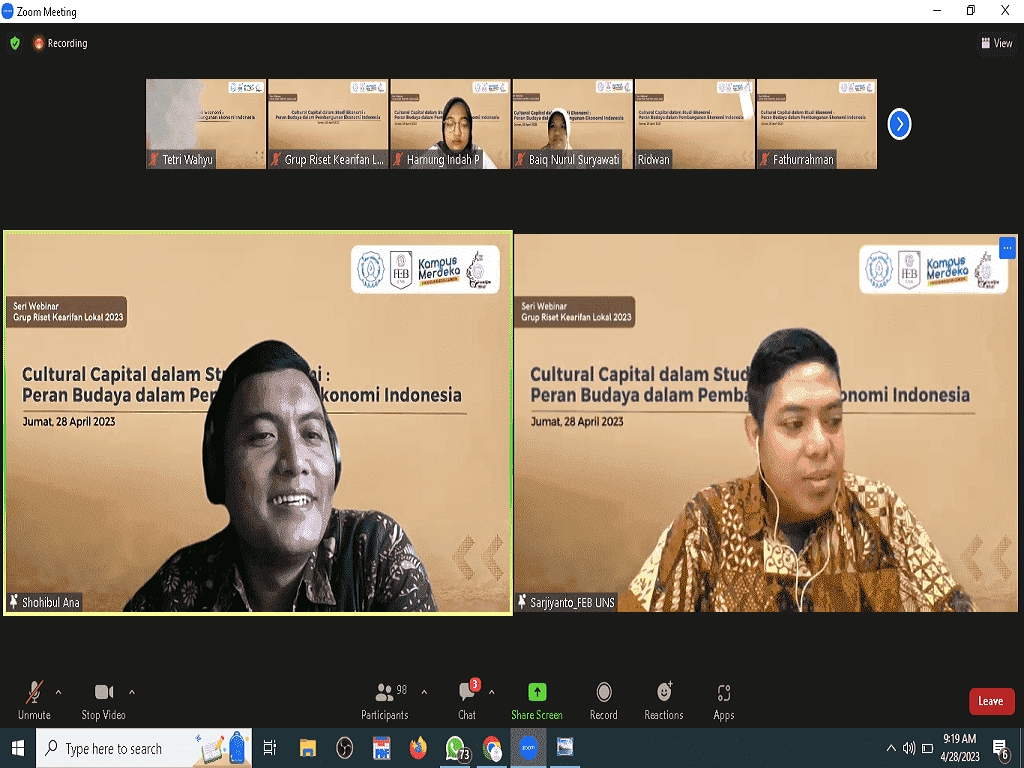
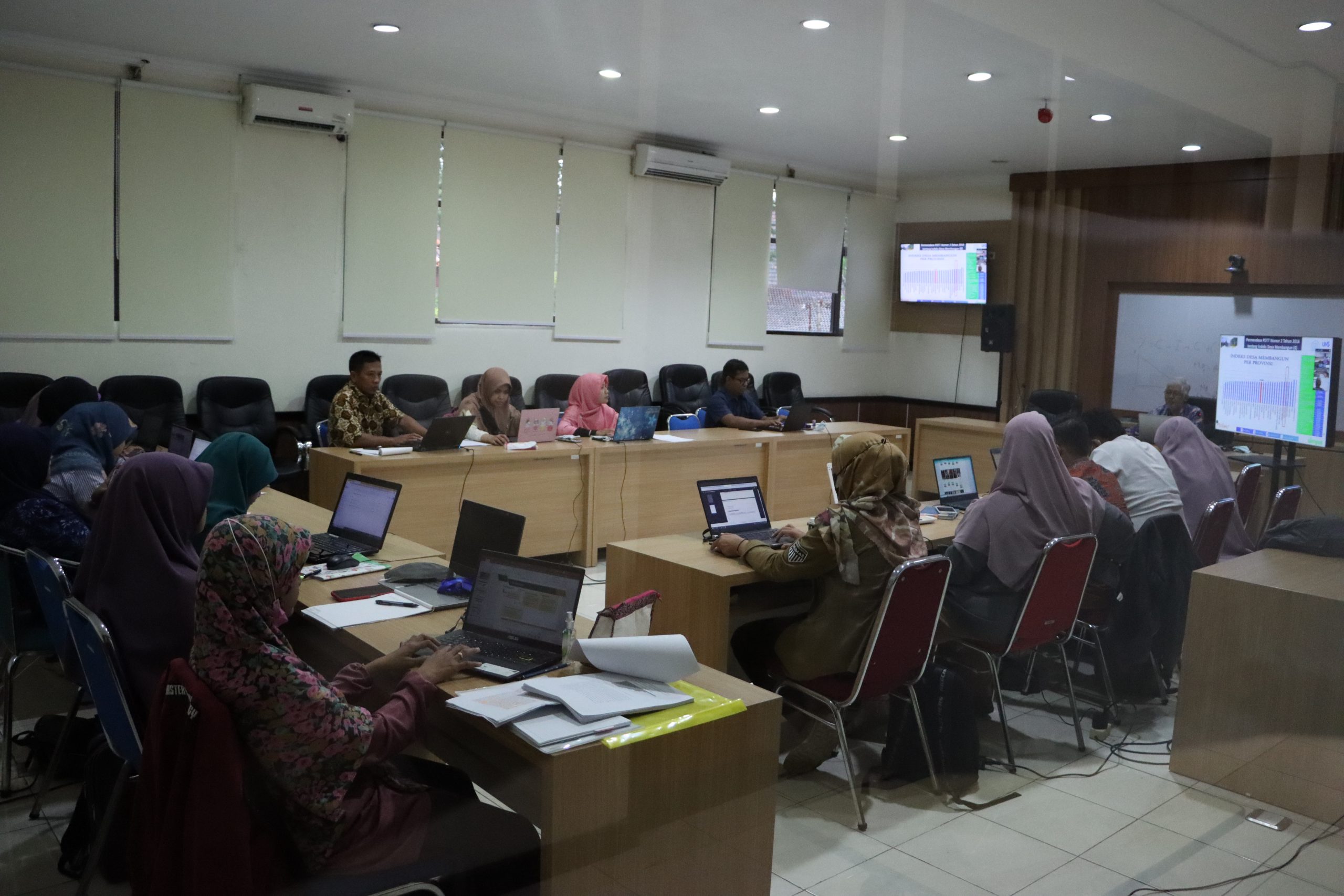
“In our daily life, we have understood how biodiversity contributes to economic activity, meanwhile, there is limited study on the role of cultural diversity or cultural diversification in the economic sectors. Our Research Group (RG) sees culture as capital in development process, in this context is economic development.” This statement was delivered by Sarjiyanto S.E., MBA., Ph.D., FEB UNS lecturer, in a Workshop by Local Wisdom Research Group entitled ‘Cultural Capital in Economics Study: The Role of Culture in Indonesia Economy Development,’ Friday, 28 April 2023.
 Further, he explains that Indonesia as a country with rich cultural diversity can have a unique cultural capital in its development.
“In fact, the International Culture and Development Commission states that economic development should also involve cultural aspects. A development that no longer considers the community and culture is a soulless development. Rapid economic development is part of community culture, as it should be,” he explains.
Sajiyanto invites webinar participants to discuss how this cultural diversity becomes a spirit in economic activities and development, similar to biodiversity.
The cultural economy according to the index determined by the Ministry of Education and Culture consists of several indicators such as the percentage of the population involved as performing arts supporters or performers, whose involvement in the cultural acts becomes their source of income. Based on recent data, some regions in Indonesia have had a very high cultural economy such as Yogyakarta Special Region (DIY) and Nusa Tenggara.
In fact, the cultural economy has a significant contribution to the economic development of a region. This sector revolves around how residents get their source of income from cultural activity. This disparity becomes the role of academicians to discuss. Academicians need to determine whether this dimension should be a single measure as well as to establish better proxies in measuring cultural economy to be factually measured and predicted.
Based on previous research, culture can contribute to the sustainable development goals (SDGs) accomplishment. Culture is found to have a mediating role in 17 SDGs’ role accomplishment, where 70% represent the SDGs target and 25% represent cultural values.
In development economics study, there is still room for measurement mechanisms and modeling, especially for novel development.
This occasion opens up the discussion on how cultural capital can be included in the development of economic models or research. The academic community shall provide supporting data and conduct research to prove that cultural capital can have a significant contribution to economic development, especially in Indonesia.





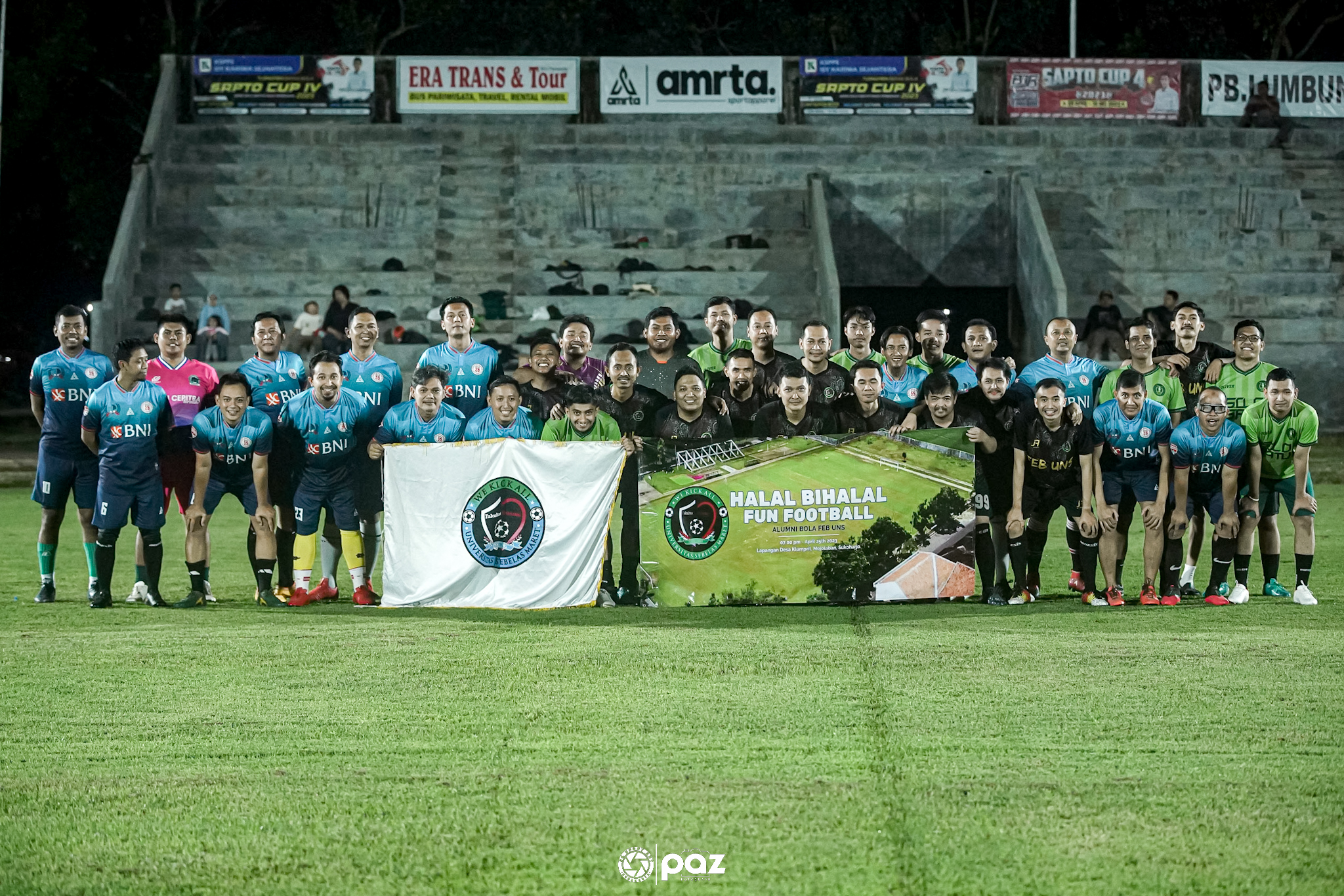
 The match was held on April 25, 2023, starting at 19.00 WIB at Klumprit Football Field, Mojolaban District, Sukoharjo.
 As the host, Sapto, an alumnus of the Class of 2003 who is currently also the Deputy of the Sukoharjo Regency DPRD, conveyed this event not only to maintain personal health but also aims to introduce the potential of football fields located in the village area. These football fields are now professionally managed, one of them is the Klumprit Village football field. This field is equipped with standardized lights, thus, it can be used for night matches.
 Ariyanto Adhi Nugroho, Supervisor of FEB UNS Football UKM, who is also an alumnus of the class of 2002, encourages this type of activity. He considers these activities very beneficial for fellow FEB UNS alumni to expand their network. This event not only serves as a sports game but also to strengthen the FEB UNS Alumni network.
 The final results of the match were 2-1 for the Legend vs Oldstar match; 3-0 score for the Oldstar vs Youngstar match, and lastly the Youngstar vs Legend match with a score of (5-4) on penalties. Overall the match was won by Youngstar Team. The ranking order for these matches was Youngstar Team on the 1st rank, followed by Legend Team on the 2nd rank, and Oldstar Team on the 3rd rank.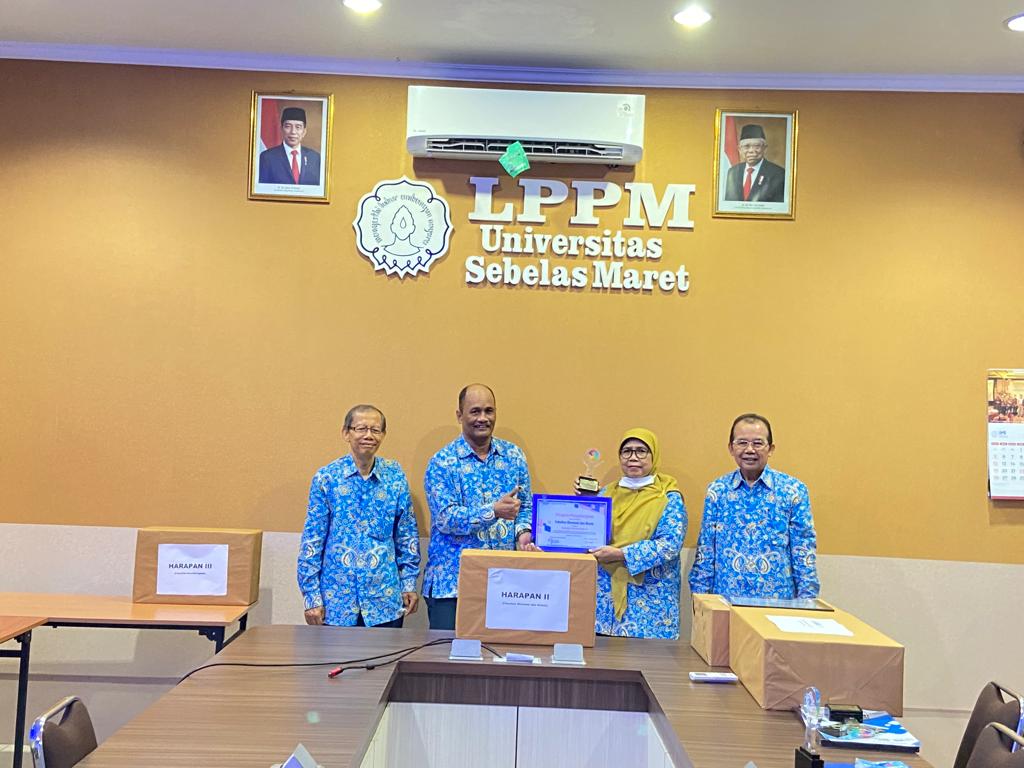


 Two students, Johan Wahyu Utomo and Era Miftakhul Jannah, who have the best grades get a chance to receive certificates earlier.
 Previously, dissemination on the Prevention and Handling of Sexual Violence (PPKS) had been carried out. In the future, there will be another dissemination on PSA on scientific autonomy and academic tribune.
 According to her, each campus has its own code of ethics that must be fulfilled and implemented and must not be violated by the Academic community. Every university has a code of ethics that is not necessarily the same.