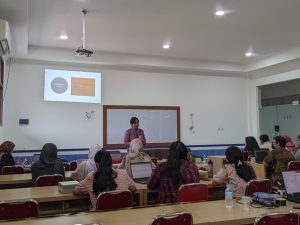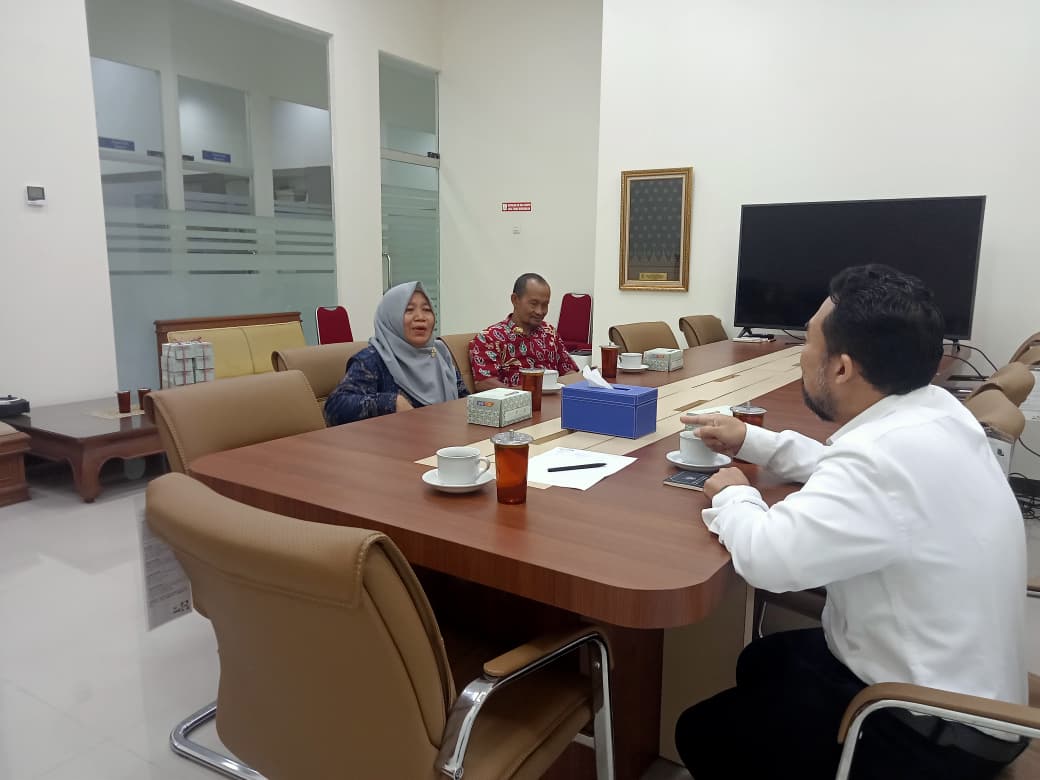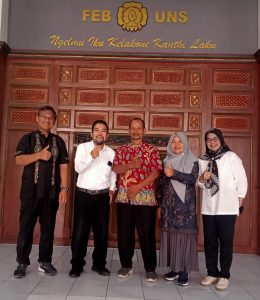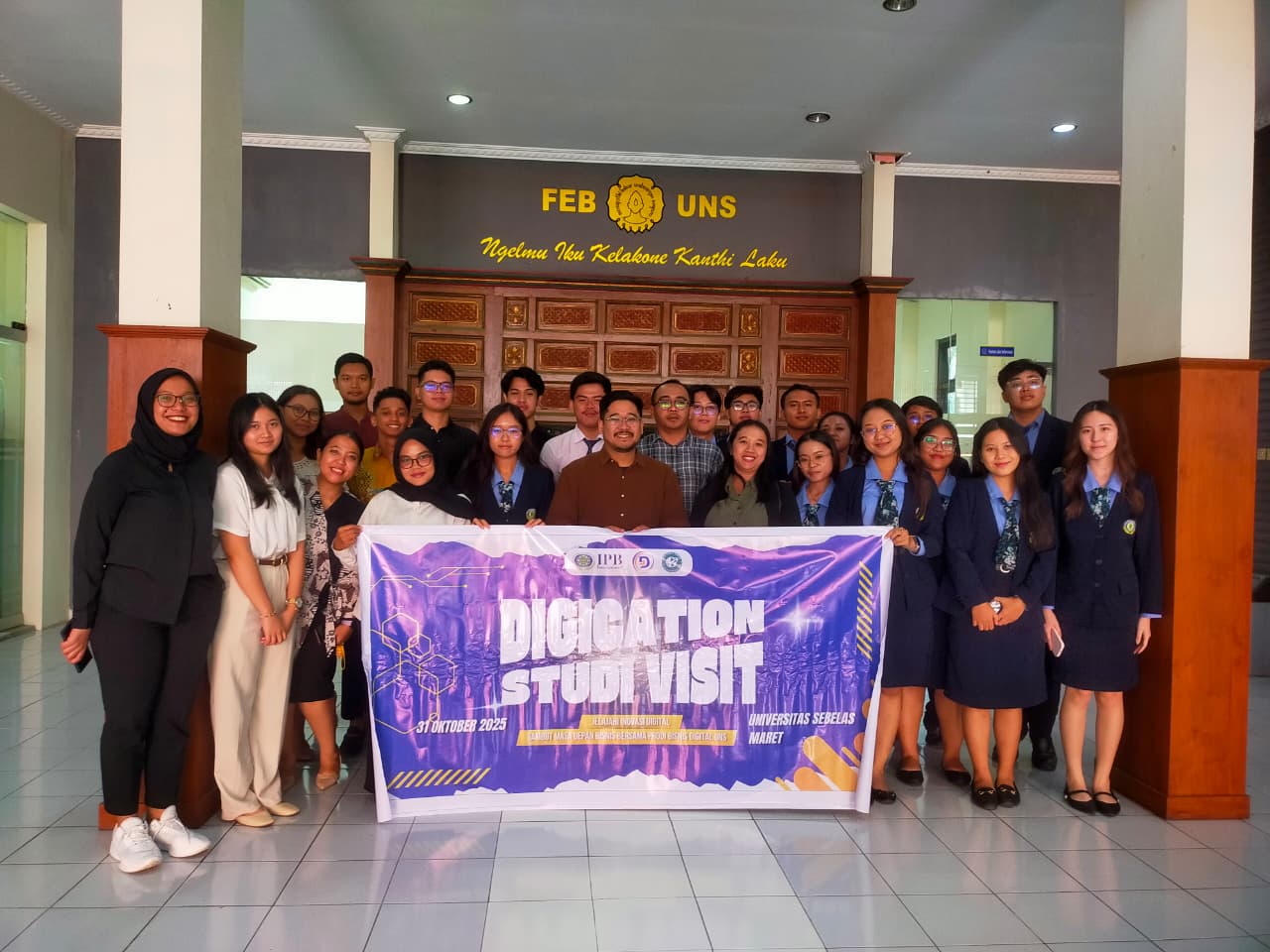
Faculty of Economics and Business (FEB), Universitas Sebelas Maret (UNS) receives a benchmarking visit and sharing session from the Digital Business Study Program, Institut Pariwisata dan Bisnis Internasional (IPB Internasional), Denpasar, on Friday, 31 October 2025. Held at the FEB UNS campus, this occasion aims to exchange best practices in study program management, digital-based curriculum development, and potential research collaboration. The delegation from IPB Internasional, consisting of 14 members, includes lecturers, study program leaders, and fifth-semester students.
In his remarks, Aldy Fariz Achsanta, S.E., M.Rech., Ph.D., Head of the Digital Business Study Program FEB UNS, introduces the program’s profile, accreditation achievements, and future development agenda. He also highlights various learning support facilities, including the financial technology laboratory and research collaborations established with several institutions, including the Financial Services Authority (OJK) and the Deposit Insurance Corporation (LPS). “We are committed to strengthening the digital business ecosystem through research-based learning and collaboration with various partners. FEB UNS is also preparing for the AACSB international accreditation process,” he states.
Ni Made Ayu Natih Widhiarini, S.Tr.Par., M.M., Secretary of the Digital Business Study Program of IPB Internasional, conveys her appreciation for the warm welcome from FEB UNS. The visit is part of IPB Internasional’s annual academic program called Digication (Digital Vacation), a learning activity that integrates the courses e-Tourism, e-Travel, and e-Tour Operator. Through this program, students are tasked with designing and conducting an academic excursion while expanding their knowledge in digital business.
“We gained extensive insights into digital learning practices, study program management, and opportunities for collaborative research publication. We hope this visit will lead to future cooperation between students and lecturers of both institutions,” she notes.
The discussion went interactively and concludes with a sharing session between students of both study programs. Through this activity, FEB UNS continues to strengthen its role as a strategic academic partner for other higher education institutions in advancing digital education innovation and applied research. This program also aligns with FEB UNS’s commitment to the Sustainable Development Goals (SDGs), particularly SDG 4 (Quality Education) and SDG 17 (Partnerships for the Goals), through efforts to enhance educational quality and foster cross-institutional collaboration.


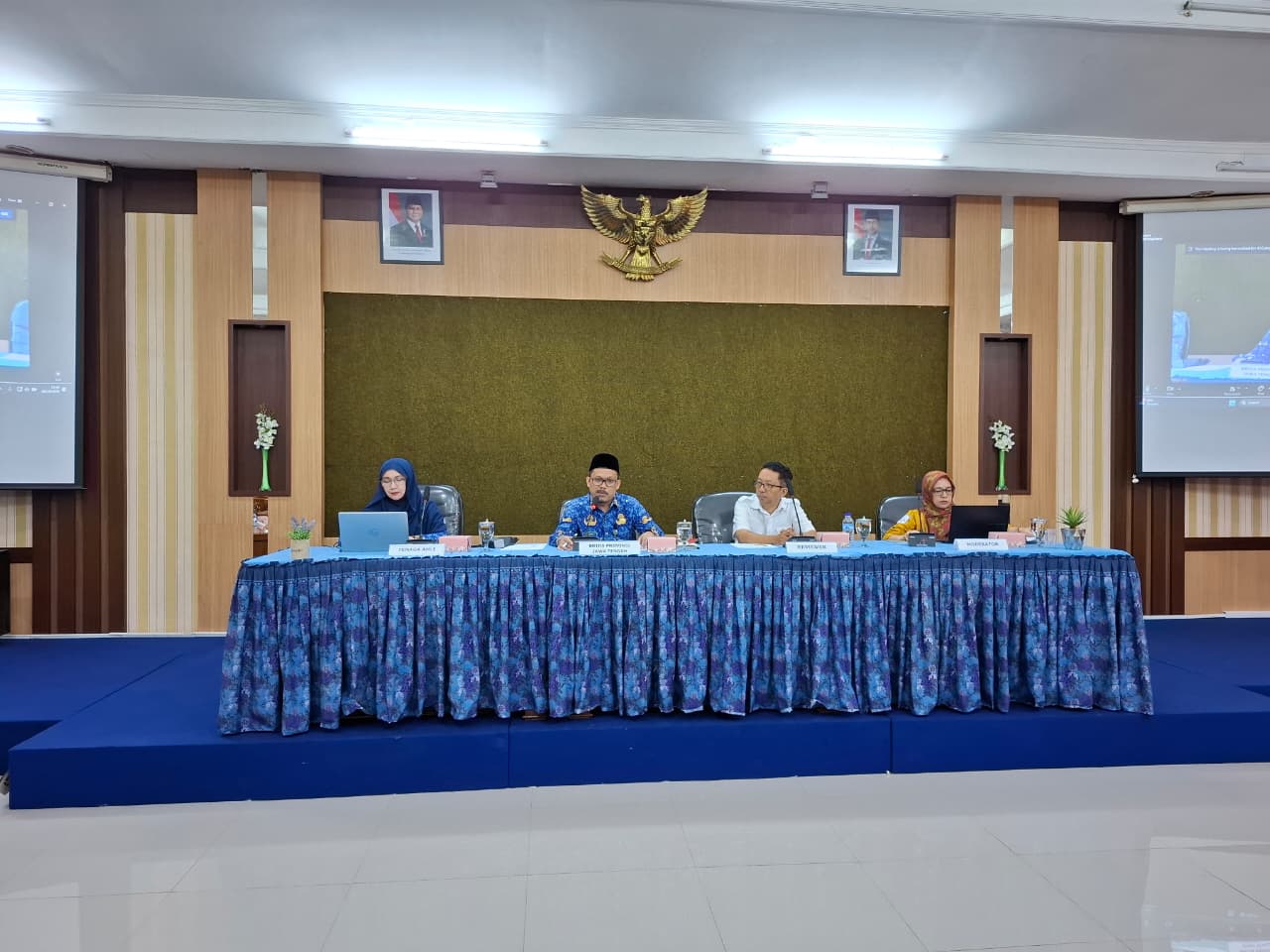
 The research team from FEB UNS was led by Prof. Dr. Izza Mafruhah, S.E., M.Si., together with Dewi Ismoyowati, S.E., M.Ec.Dev., Dr. Nurul Istiqomah, S.E., M.Si., and several students. The study examined three selected regions—Demak Municipality, Wonosobo Municipality, and Pekalongan City—using a comprehensive academic approach to observe how the MBG Program operates in practice, particularly in relation to the availability of local food resources and the dynamics of fulfilling the nutritional needs of targeted beneficiaries.
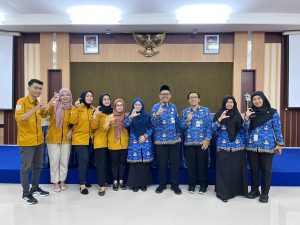 The research illustrates the ongoing progress of MBG implementation in Central Java. As of October 2025, a total of 1,596 Food and Nutrition Provision Units (SPPG) have been established, representing 49.4 percent of all districts and cities. These data provide an essential foundation for local governments to refine implementation strategies, particularly in strengthening regional independence in providing nutritious food.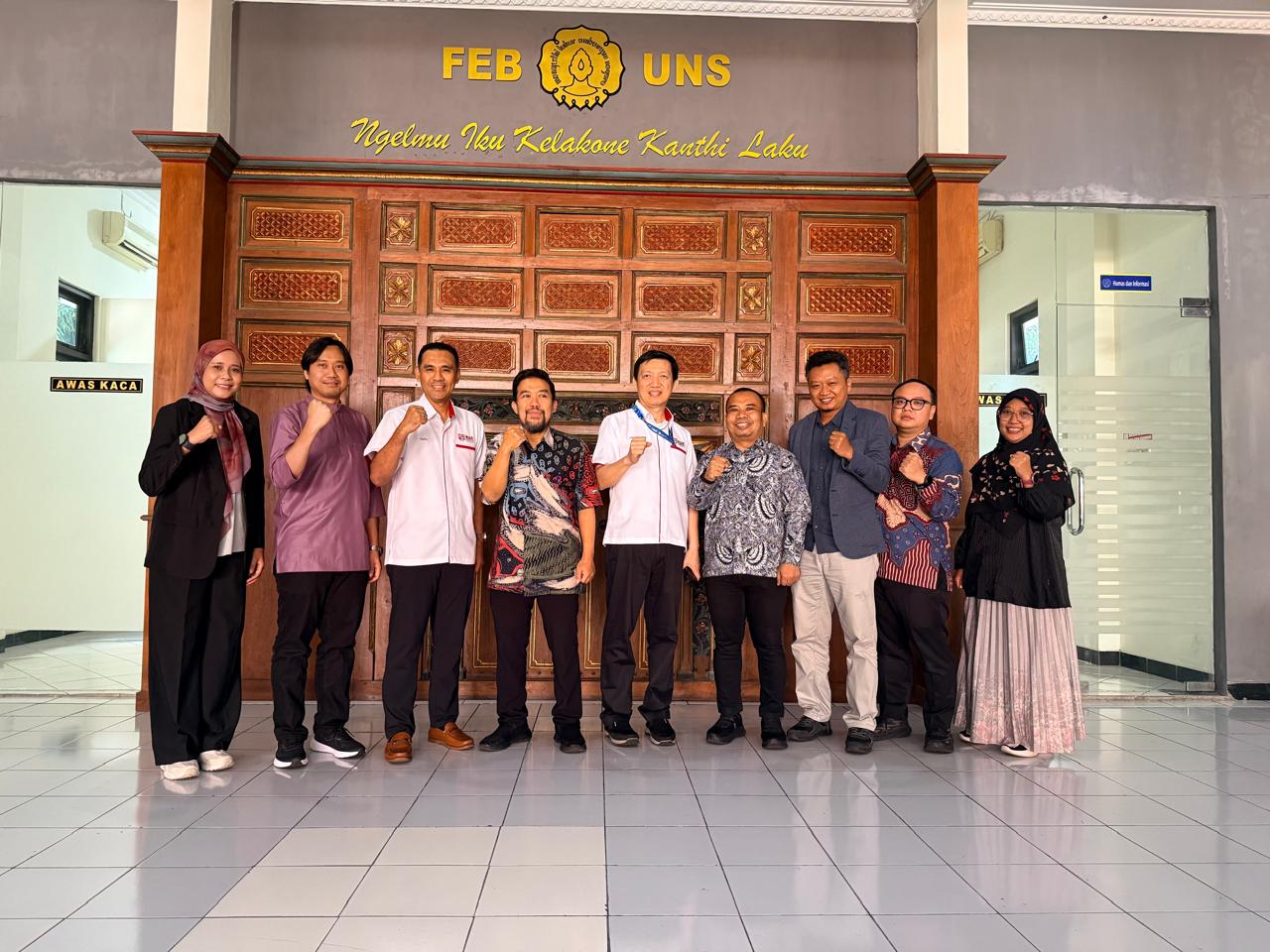
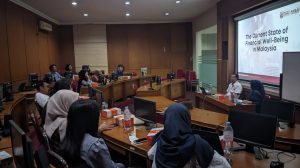 The delegation was welcomed by the Dean of FEB UNS, Prof. Bhimo Rizky Samudro, alongside with the Vice Dean for Non-Academic Affairs, Sutaryo, Ph.D., Head of the Center for Fintech and Banking, Putra Pamungkas, Ph.D., Arum Setyowati, Ph.D., and Linggar Ikhsan Nugroho, M.Ec.Dev.
 In the AACSB preparation process, FEB UNS requires international partners who can provide feedback, informal advisory support, and document review. The presence of UPM scholars, who have frequently engaged with FEB UNS, creates opportunities for such support. “They have visited FEB UNS multiple times and have been involved in numerous joint researches with our faculty. Informally, we receive valuable input for the preparation of AACSB documents, including the review of processes,” Prof. Bhimo added.