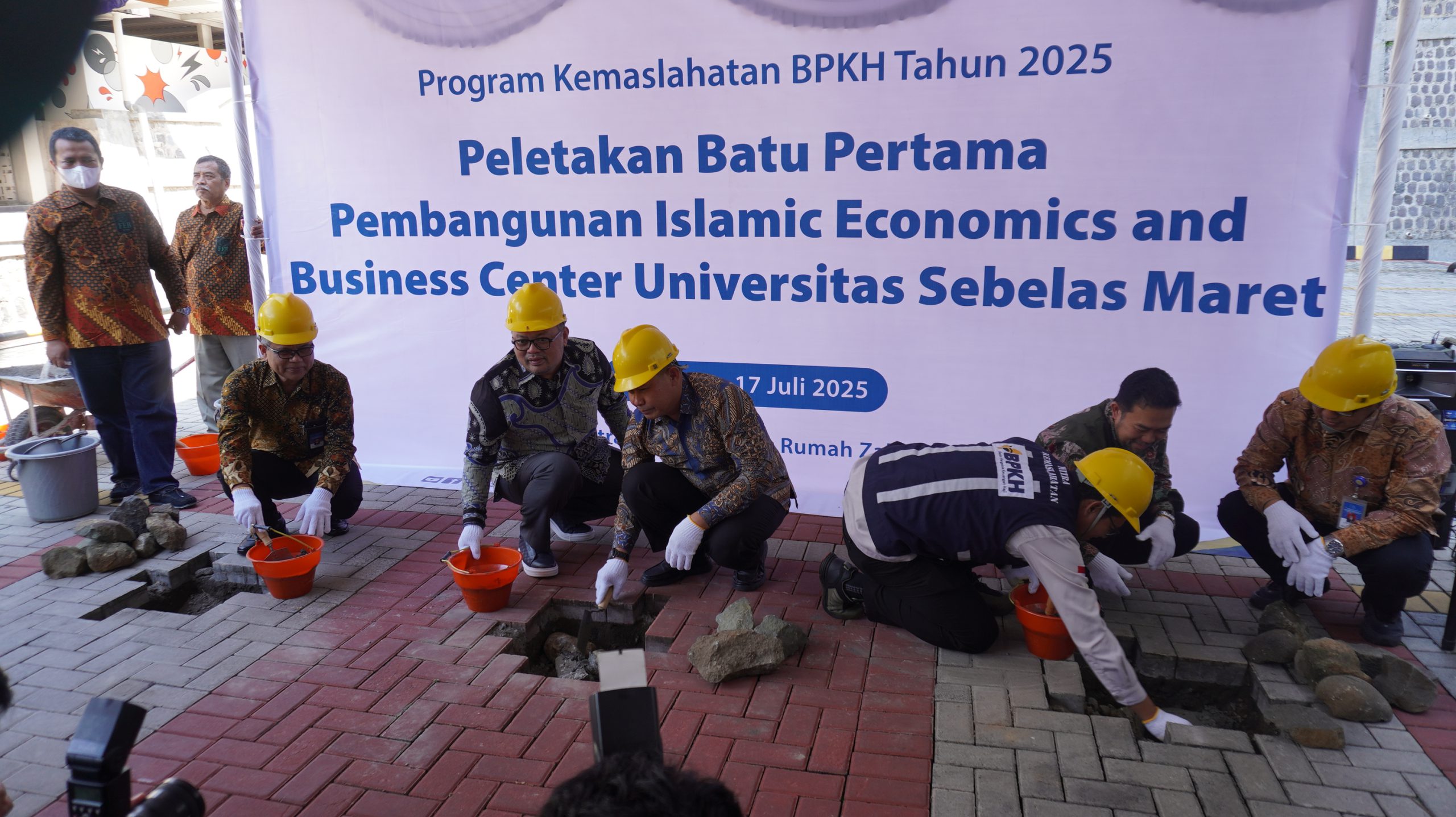
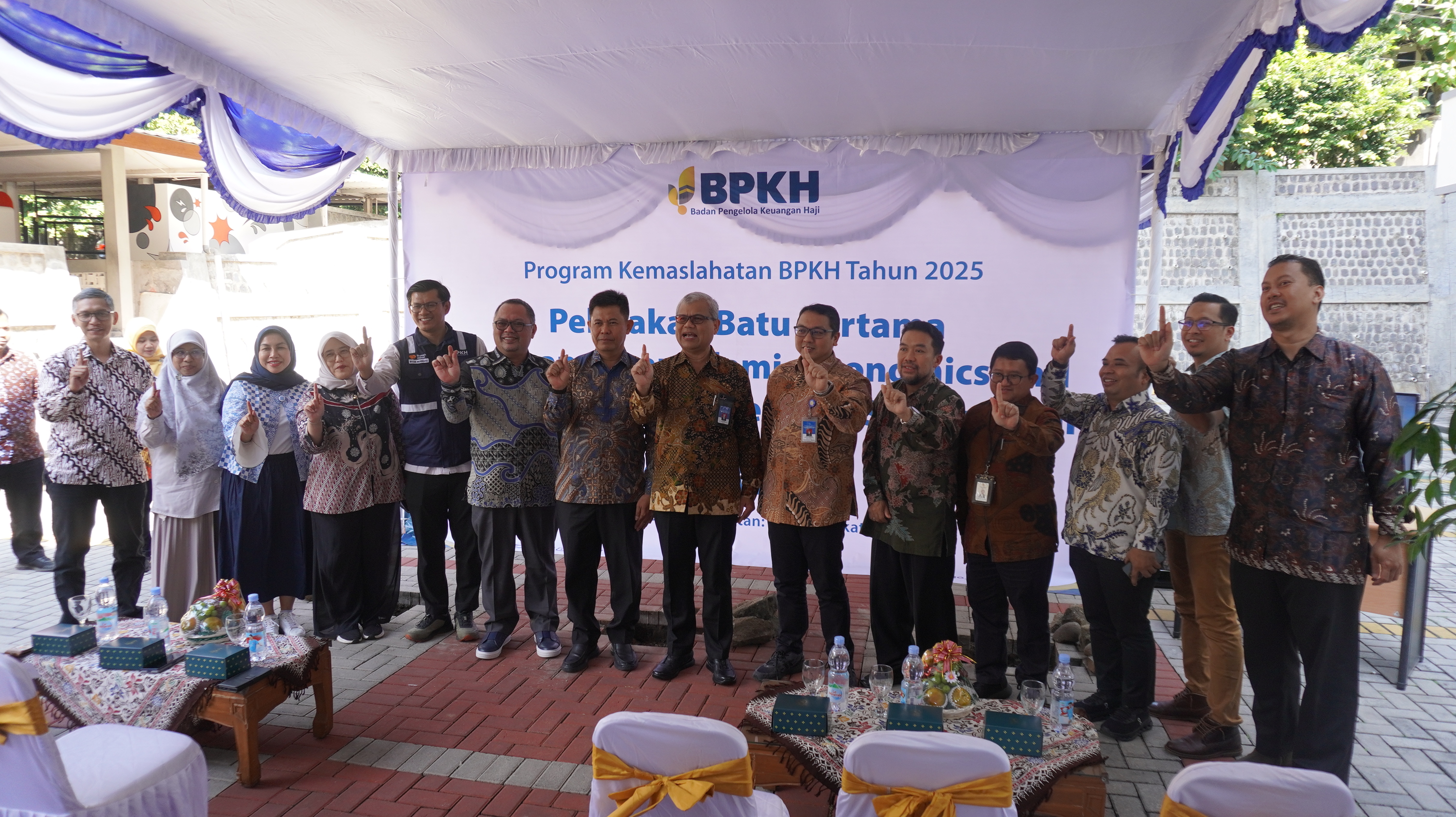
The Hajj Financial Management Agency (BPKH), in collaboration with Universitas Sebelas Maret (UNS) Surakarta, has officially commenced the construction of the Islamic Economics and Business Center Building at the Faculty of Economics and Business (FEB) UNS. The groundbreaking ceremony took place on Thursday, 17 July 2025, in the courtyard of Soedarah Soepono Building, FEB UNS.
 The ceremony was attended by the Rector of UNS, Prof. Dr. dr. Hartono, M.Si.; Vice Rector for Planning, Partnership, Internationalization, and Information Affairs, Prof. Irwan Trinugroho, S.E., M.Sc., Ph.D.; Director of Finance, Assets, and General Affairs UNS, Taufiq Arifin, S.E., M.Sc., PhD., Ak.; Supervisory Board Member of BPKH, Dr. Mulyadi; CEO of Rumah Zakat, Irvan Nugraha; Dean of FEB UNS, Prof. Bhimo Rizky Samudro, S.E., M.Si., Ph.D.; and Vice Dean for Non-Academic Affairs FEB UNS, Sutaryo, S.E., M.Si., PhD., Ak., CA., CRA., CRP., ACPA.
This establishment marks a significant milestone in advancing education, academic research, and community engagement, as well as the practical implementation of Islamic economics and business in Indonesia. The groundbreaking serves as a symbol of BPKH’s commitment to supporting education and fostering a sustainable Islamic economic ecosystem that delivers tangible benefits for Indonesian society.
In his remarks, Dr. Mulyadi stated that the initiative is part of BPKH’s Program Kemaslahatan (Welfare Program), funded by the financial returns of the Dana Abadi Umat (Community Endowment Fund-DAU), not the initial deposits of Hajj pilgrims. For this program, BPKH collaborates with Rumah Zakat as its implementing partner. “Currently, BPKH manages approximately IDR 3.9 trillion DAU, which is invested in various sharia-compliant instruments. The principal is preserved, and only the returns are allocated to support beneficial programs across Indonesia. The construction of this Islamic Economics and Business Center falls under the ‘Education and Da’wah’ category and is part of our broader mission to uplift Indonesian society,” Dr. Mulyadi explained.
 The Islamic Economics and Business Center is expected to serve as a platform for developing academic knowledge and practical skills in Islamic economics and business. Its programs aim to nurture talents and practitioners who are capable of addressing global economic challenges through values-based Islamic approaches that benefit the progress of the nation. “In addition, the center will offer public education on Islamic economic and business concepts, promoting the adoption of fair, sustainable, and inclusive Islamic principles both at the individual and community levels,” Dr. Mulyadi added.
He also expressed optimism that the collaboration between BPKH and UNS will continue to grow and contribute significantly to education, research, and community engagement. The center is envisioned to foster future leaders and professionals in Islamic economics and business who possess both excellence and integrity, thus advancing Indonesia’s development.
 Rector of UNS, Prof. Dr. dr. Hartono, M.Si., warmly welcomed the initiative. In his remarks, he emphasized that the establishment of the center represents a long-awaited milestone for the academic community and the broader public. “This is a highly anticipated development, and we extend our deepest gratitude to BPKH and Rumah Zakat for their instrumental roles in realizing the Islamic Economics and Business Center at UNS,” he stated.
Prof. Hartono further remarked that the building symbolizes a shared aspiration and responsibility that must be nurtured collectively. “This is more than a physical structure—it is a legacy. May it become a model, and more importantly, a place where impactful activities are carried out for the benefit of UNS, the surrounding community, the nation, and especially the Muslim community in advancing Islamic economics and business,” he affirmed.
The construction of the Islamic Economics and Business Center reflects the solid synergy between UNS and BPKH in promoting inclusive development in Indonesia through education, research, and community engagement rooted in applicable, sustainable, and impactful Islamic economic practices.





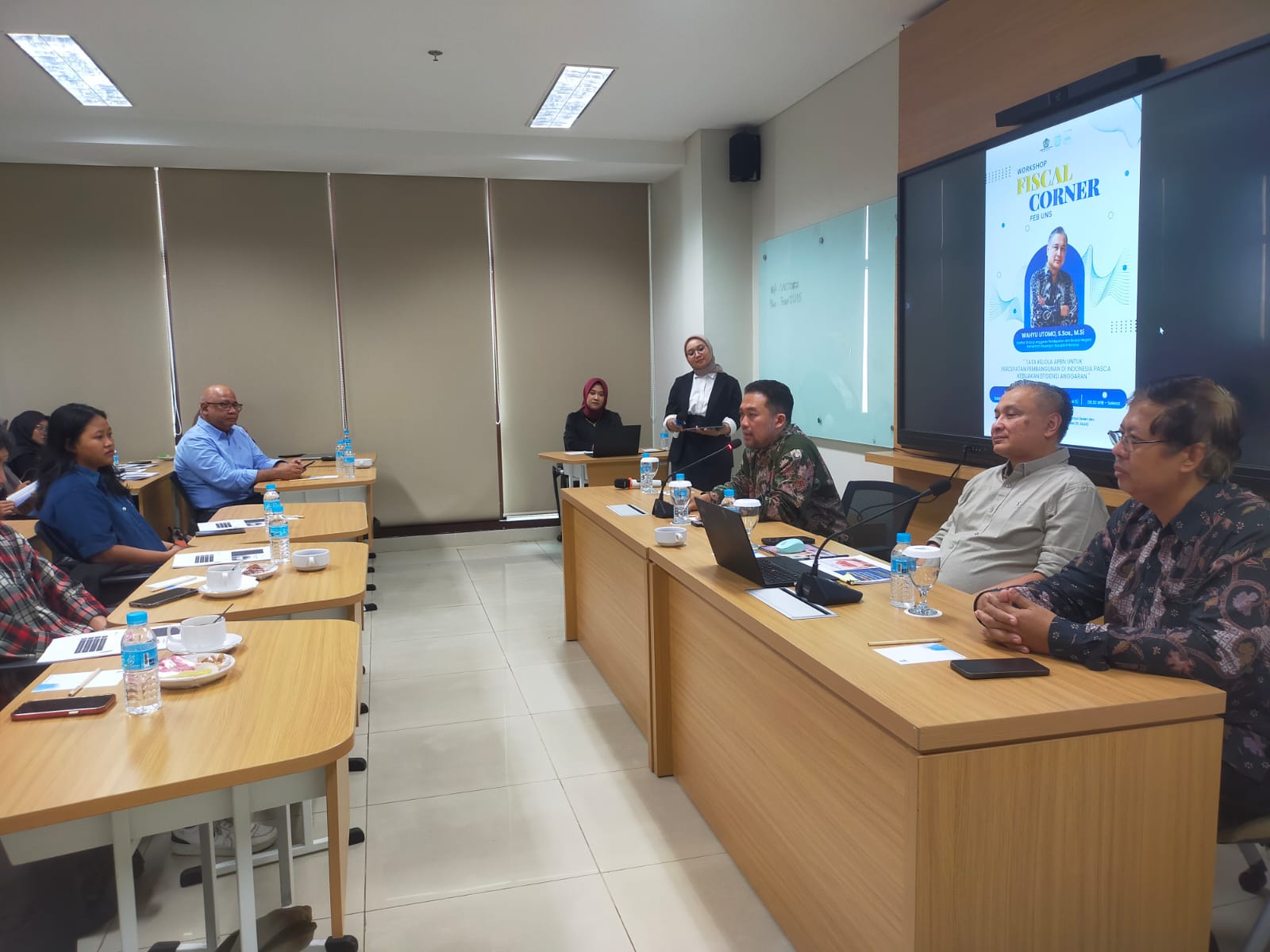
 Based on this objective, the APBN, as an instrument of fiscal policy, must be designed to respond effectively to economic dynamics, address challenges, and optimally support development agendas, so the APBN itself must remain healthy. The APBN is an instrument—if it is not healthy, it is impossible for a country to strongly stimulate the economy and foster widespread prosperity. For this reason, the APBN has three functions: stabilization, allocation, and distribution.
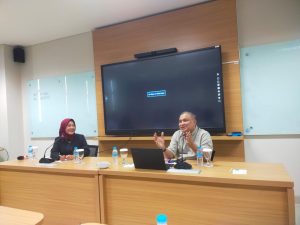 “In the midst of limited fiscal space, how can we continue to stimulate the economy and support various development agendas for public welfare? The APBN must remain healthy. Indeed, there must now be innovation and adaptation to new work patterns—collaboration with enterprises, leveraging the role of Regional Public Service Agencies (BLU), and the role of State-Owned Enterprises (BUMN),” he conveyed.
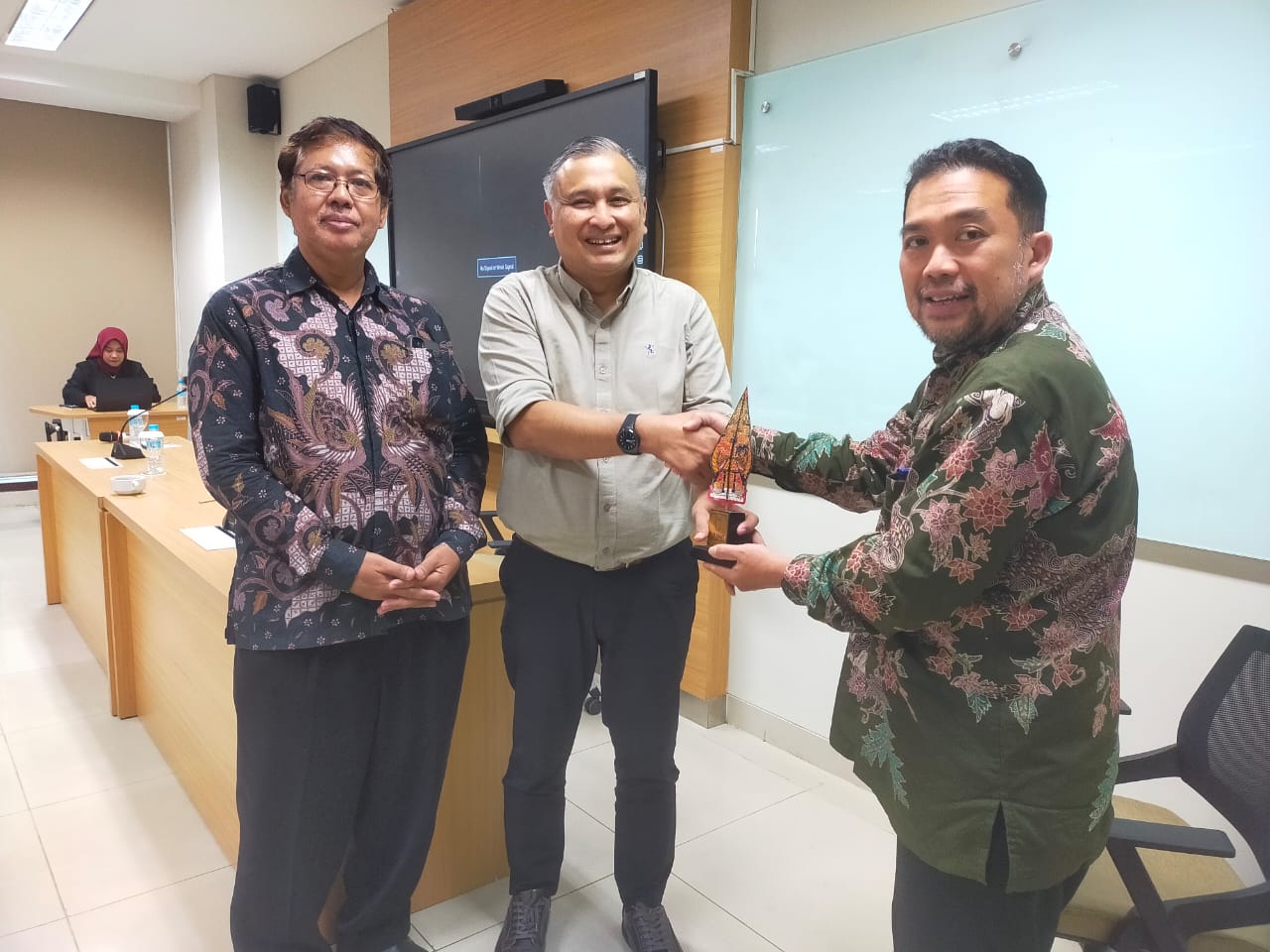 The second principle is that fiscal policy must serve as an oversight instrument to ensure policy consistency so that short-term, medium-term, and long-term policies are implemented properly. Policymaking should not only focusing on short-term policy, since pragmatism will undermine long-term strategies instead.
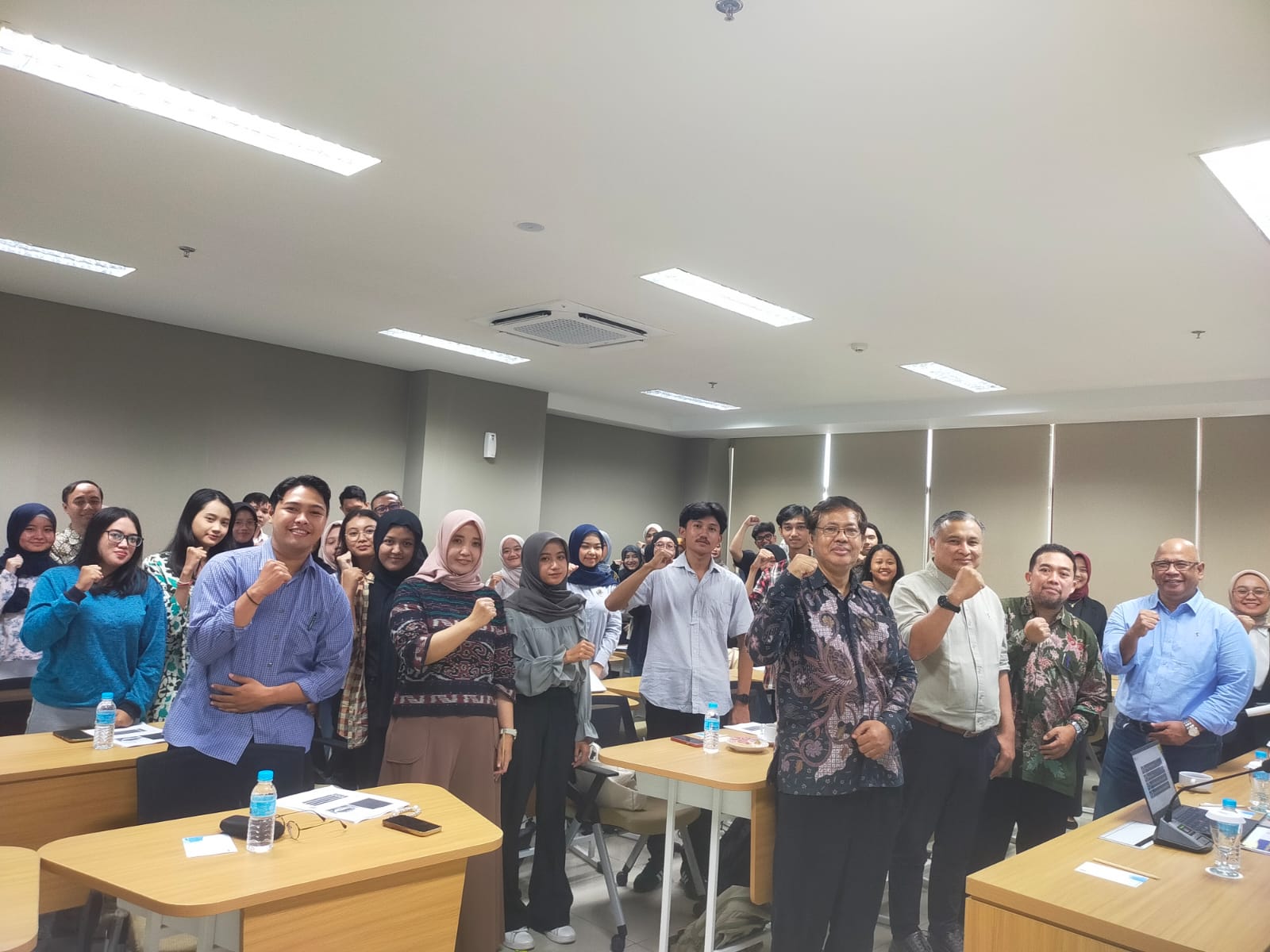 Tax reform and strengthening the financial system are also key priorities, aimed at broadening the tax base and increasing tax compliance. In addition, the government will develop innovative and sustainable financing schemes to support priority programs.