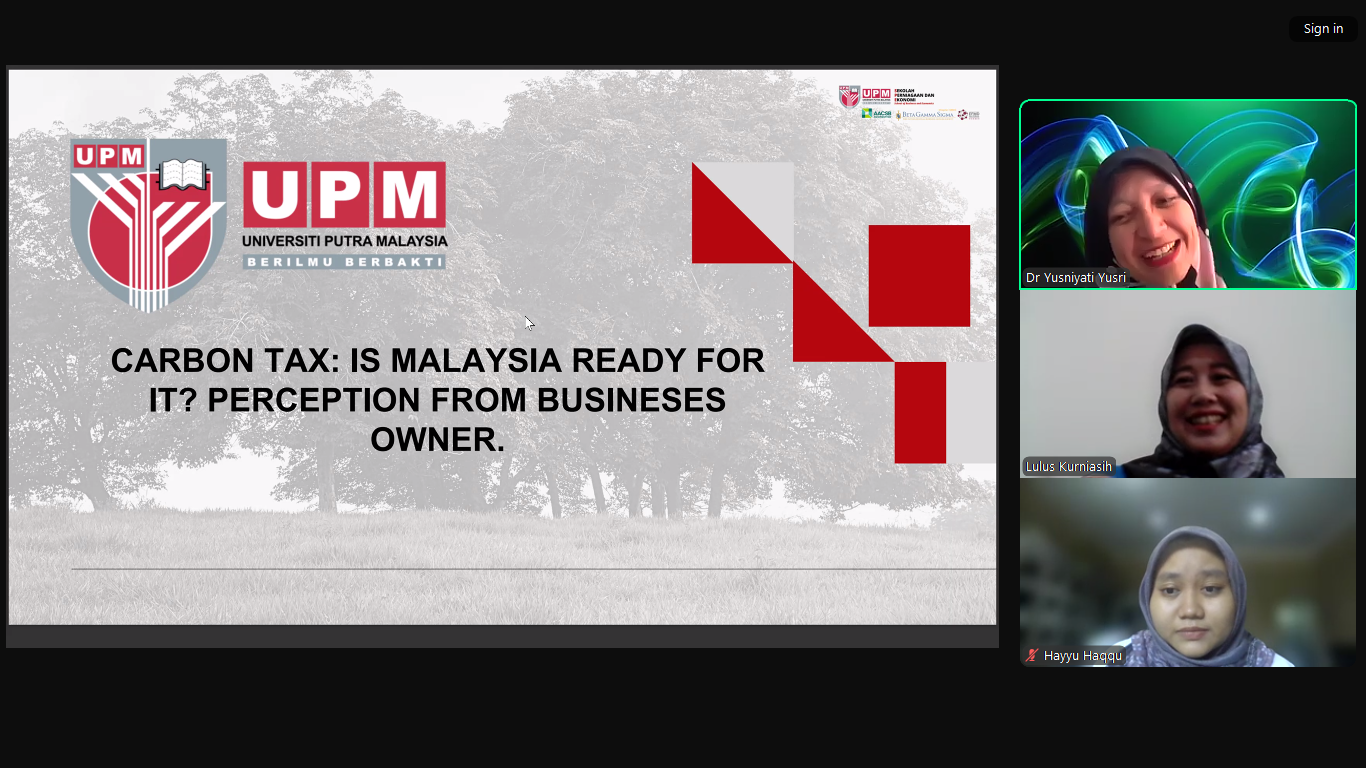
Carbon tax atau pajak karbon menjadi salah satu kebijakan yang dapat diambil oleh sebuah negara dalam menurunkan emisi gas karbon. Pajak ini pada dasarnya serupa dengan pajak lain yang dikenakan ataupun dibebankan atas produk atau kegiatan tertentu, dimana perhitungannya didasarkan pada besarnya kontribusi pada emisi gas karbon yang berasal dari kegiatan bisnis atau industri manufaktur.
Keterangan tersebut disampaikan oleh Dr. Yusniyati Yusri dalam gelaran Journal of Accounting, Governance and Organization Working Paper Forum yang diselenggarakan secara daring pada Jum’at 6 Desember 2024.

Pada kesempatan tersebut, Dr. Yusniati Yusri menyampaikan hasil riset berjudul “Carbon Tax: Is Malaysia Ready for it? Perception from Business Owner” yang membahas terkait kesiapan pemilik bisnis di Malaysia menjelang penerapan pajak karbon di negara tersebut.
“Pajak karbon berkaitan dengan emisi gas karbon di sebuah negara, pajak ini ditetapkan untuk mengatur emisi karbon, dimana biaya yang dikenakan dibayarkan oleh emitter (perusahaan manufaktur ataupun pemilik bisnis) yang besarannya ditetapkan oleh tiap-tiap negara,” jelas Dr. Yus.
Meskipun begitu pengetahuan mendalam terkait pajak karbon perlu dimiliki oleh warga negara khususnya pelaku usaha yang kemudian akan menjadi objek dari pajak karbon. Pertanyaan yang perlu dijawab kemudian adalah apakah sebuah negara siap untuk menerapkan pajak karbon?
Pertanyaan tersebut kemudian menjadi latar belakang dari riset deskriptif kuantitatif yang disampaikan oleh dosen dari University Putra Malaysia tersebut.
Dalam risetnya, Dr. Yus menggunakan instrumen kuesioner yang ditujukan kepada pemilik bisnis di area Petailing Jaya Malaysia. Hasilnya menunjukkan bahwa sekitar 50% dari responden menyatakan bahwa mereka merasa khawatir akan isu lingkungan.
“Sekitar 50% responden berpendapat bahwa pemerintah adalah pihak yang berkewajiban dan harus berperan aktif untuk mengurangi dampak lingkungan, sementara 32% berpendapat bahwa rumah tangga/individu adalah pihak yang bertanggungjawab untuk mengurangi dampak lingkungan,” jelas Dr. Yus.
Lebih lanjut, hasil dari riset menunjukkan bahwa 55% responden sudah mengetahui tentang pajak karbon namun hanya sekitar 44% responden yang menyadari terkait pajak karbon. Dalam hal penerapan pajak karbon di negara berkembang 50% responden telah menyadari fakta tersebut, namun hanya 25% responden yang menyatakan bahwa mereka mengetahui efektivitas penerapan pajak karbon, dan sisanya menyatakan tidak yakin akan efektivitas penerapan pajak karbon ataupun tidak mengetahui.
Ini menunjukkan apakah mereka (responden) akan menerima penerapan pajak karbon atau tidak, dimana mayoritas responden menyatakan bahwa pelaku bisnis harus mendukung rencana program pemerintah,” ungkap Dr. Yus.
Di akhir sesi acara Dr. Yus menyampaikan ungkapan terima kasih kepada komite pelaksana acara.
“Terima kasih kepada panitia yang telah mengundang saya dalam acara working paper ini, saya berharap agar hasil riset ini dapat bermanfaat bagi proses belajar di Indonesia,” ujar Dr. Yus.
Senada dengan harapan Dr. Yus, Dr. Lulus Kurniasih selaku Kepala Program Studi Magister Akuntansi (MAKSI) juga menyampaikan harapannya di pidato pembukaan.
“Terima kasih kepada Dr. Yusniati dan juga Prof. Agung Nur Probohudono, agenda working paper pada hari ini bertujuan untuk mendapatkan wawasan terkait bagaimana menulis artikel ilmiah serta untuk mengetahui tren terkini di bidang riset perpajakan. Topik ini (pajak karbon) masih sangat baru sehingga bisa menjadi bahan diskusi dan riset yang menarik serta memiliki tingkat kebaharuan yang tinggi,” ungkap Dr. Lulus.
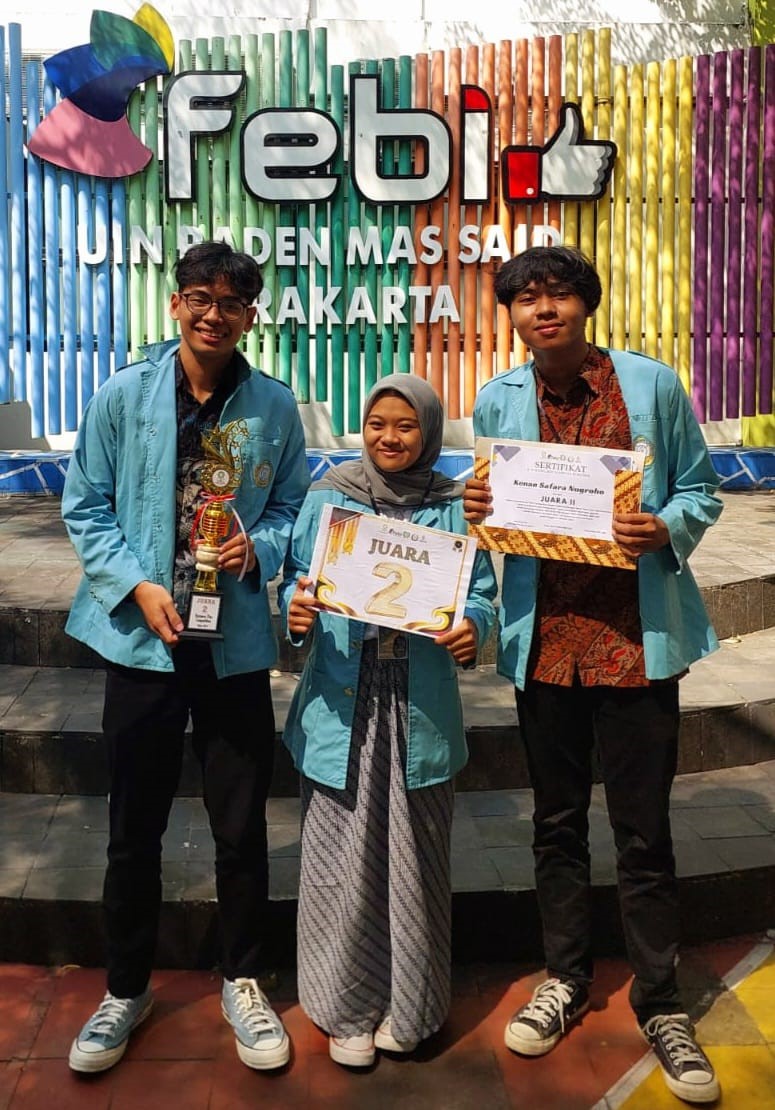
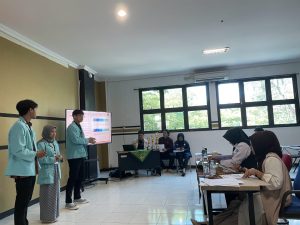 The competition process involved several stages, beginning with the submission and selection of business plan proposals that were required to present innovative and relevant ideas. Teams that passed the proposal stage advanced to the final round, which consisted of pitching sessions before a panel of judges. Throughout these stages, the FEB UNS team, led by Erlangga, gained substantial experience in developing and presenting a well-structured business plan.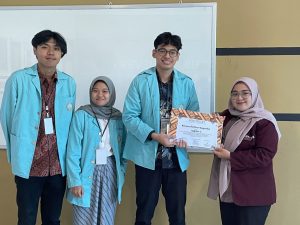
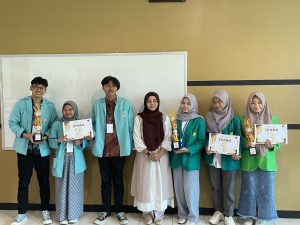 He also emphasized the intensity of the preparation process, which involved research, proposal development, and pitching before the judges. Despite the demanding process, the experience was considered highly rewarding due to the learning outcomes, networking opportunities, and constructive feedback received.
 Prof. Tri Mulyaningsih, S.E., M.Si., Ph.D., Vice Dean for Academic and Research Affairs, expressed gratitude to the RUDN delegation for their visit, considering the distance and travel time from Russia to Indonesia. She introduced the academic programs offered at FEB UNS, which include four undergraduate (S1) study programs. She then focused on potential collaboration in academic and research activities, particularly joint programs such as online teaching, academic partnerships, and double-degree opportunities.
 Meanwhile, Konstantin Gomonov, representing the RUDN delegation, provided an overview of RUDN University during the meeting. “At RUDN, we have more than 2,000 alumni and a wide range of faculties, including the Faculty of Economics. Additionally, we offer various academic programs such as Higher Schools, academies, and institutes. We also provide opportunities for FEB UNS students to apply for international student research grants,” he explained.
 “In terms of rankings, our university is currently ranked 316 in the QS University World Ranking and holds the third position in Russia. We have strong rankings in Mathematics and Econometrics, making our university open to international collaboration,” he concluded.
 She further introduced several programs under the Department of Economic and Mathematical Modeling, including an undergraduate program specializing in ‘Project Analysis’ and ‘Modeling in Economics,’ as well as two master’s programs.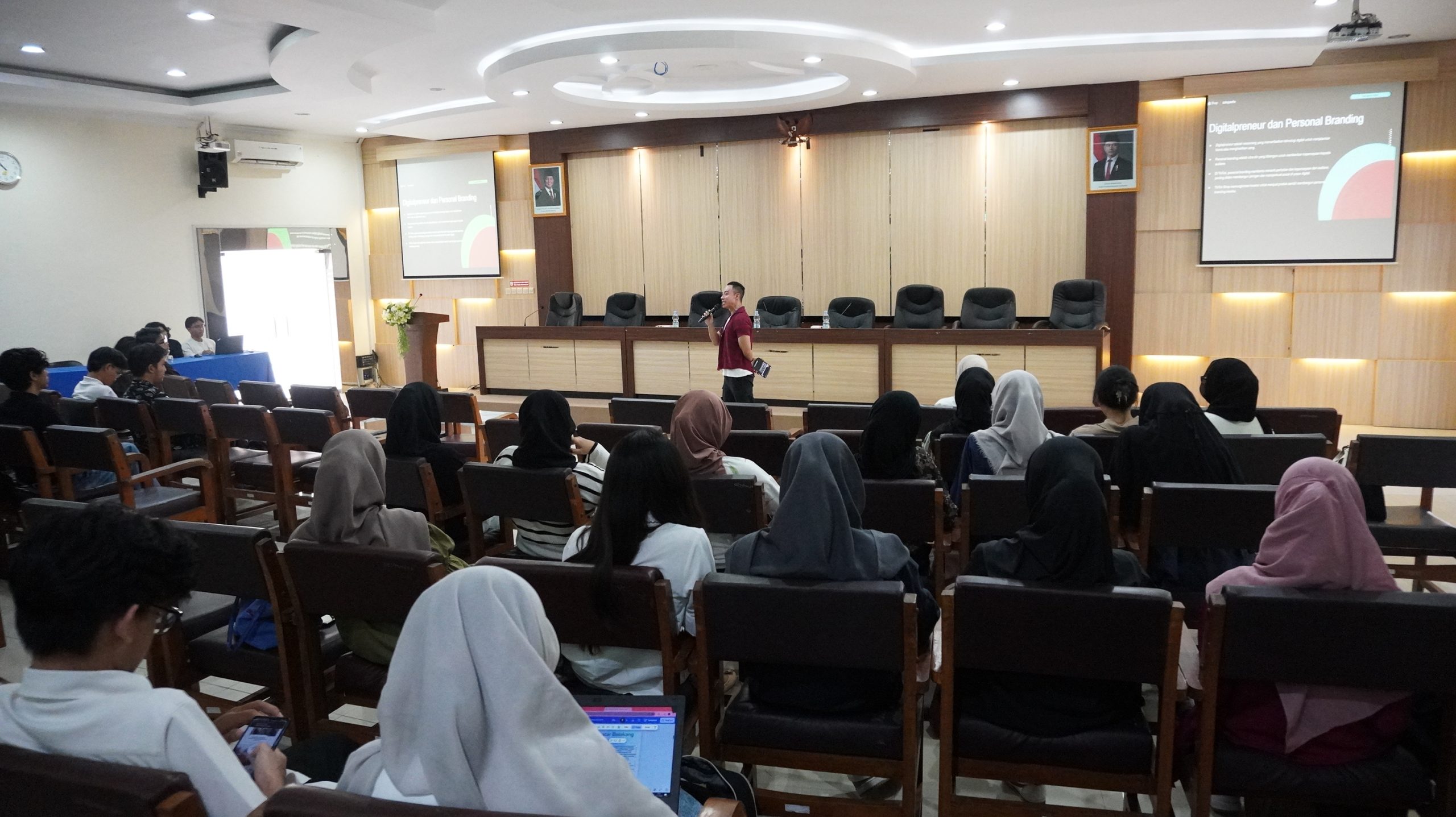


 Further, the two speakers explained that TikTok is a powerful platform because of its three essential elements: community, entertainment, and commerce. Community serves as the strong foundation of TikTok. The platform encourages interaction through comments, likes, and sharing videos, creating an active social ecosystem where users can collaborate, exchange ideas, and connect globally.
 While Entertainment remains the most visible element on TikTok, with the platform centered around providing engaging and easily consumable short-form video content, commerce is becoming an increasingly significant component. TikTok now functions not only as an entertainment and social platform but also as a marketing and sales channel for brands and content creators. During the session, the speakers invited participants to share their experiences in content creation on TikTok. They also shared practical strategies on how to use the platform for business development.
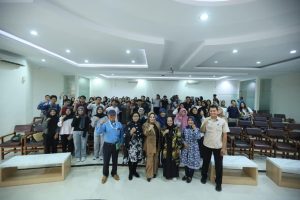

 The program draws from the participants’ internship experiences in BEM FEB UNS. APM consists of several key components: Grand Opening, Major Class Sessions, a Project Phase, and a Company Visit. One of the latest APM activities was the Company Visit, held on November 19, 2024, at the Financial Services Authority (OJK) Solo Office.
 The visit was attended by all APM internship participants, the organizing committee, BEM FEB UNS 2024 President and Vice President Surya Azhar and Faiq Aqil Murtadlo, as well as Tastaftiyan Risfandy, S.E., M.Sc., Ph.D., Vice Dean for Student Affairs and Alumni of FEB UNS, who also accompanied the group.
 It also inspires them to become adaptive and visionary young leaders who can advance financial inclusion in Indonesia. The interactive discussions with experts from OJK enriched their understanding of how financial institutions contribute to a sustainable digital economy,” she explained.
 This initiative provided a meaningful experience for building leadership competencies grounded in a solid understanding of the modern financial sector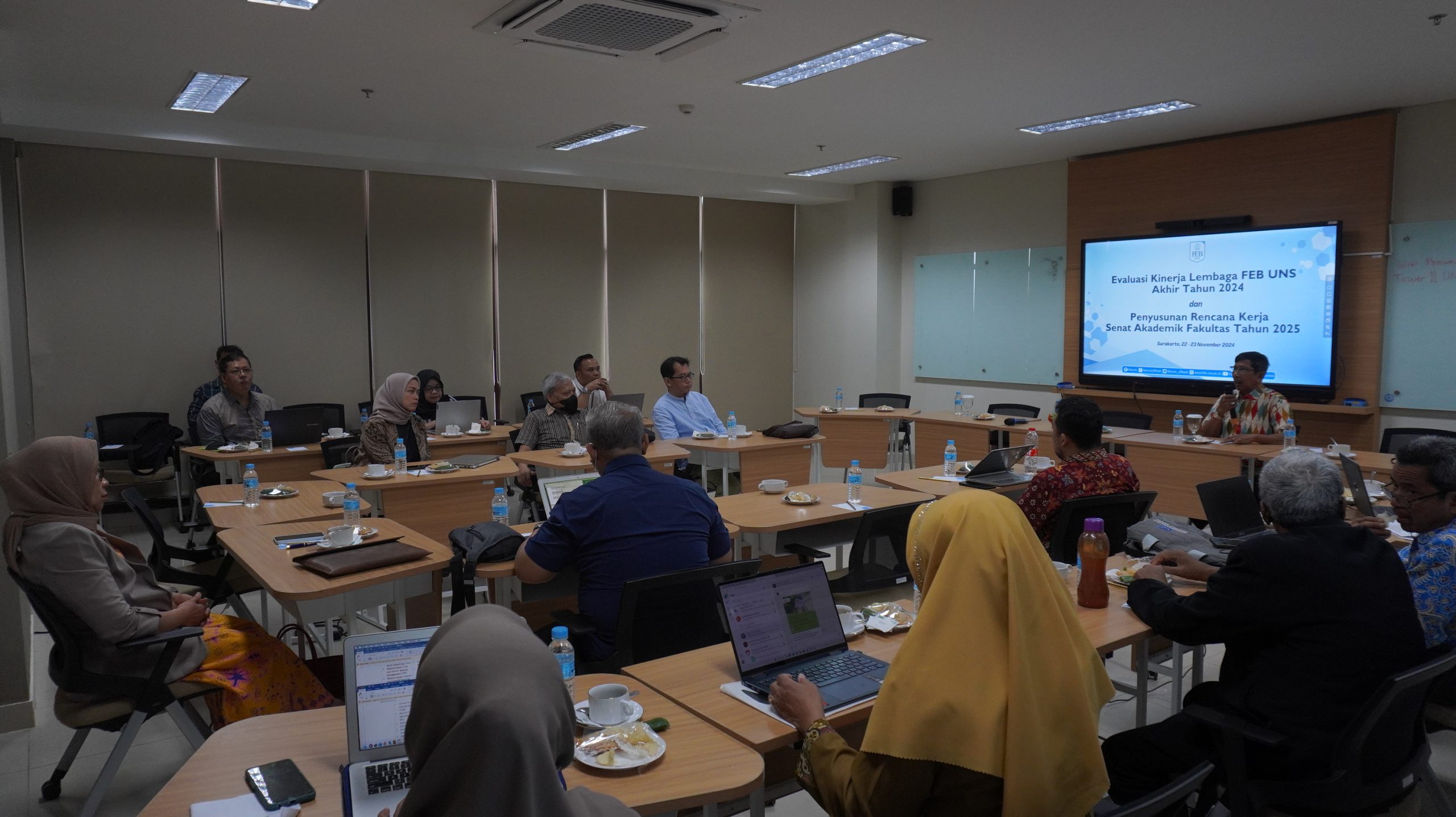
 In his opening remarks, Prof. Dr. Tulus Haryono, M.Ek., Chair of the FEB Academic Senate, emphasized that one of the key responsibilities of the Academic Senate is to review reports from the faculty and its supporting units. This process provides a comprehensive overview of institutional management. He further stated that the Senate’s role is to offer recommendations to drive FEB UNS toward continuous improvement.
 The session concluded with discussions and performance evaluations by the Senate.

 Prof. Doddy Setiawan, S.E., M.Si., Ak., Ph.D., was appointed as Chair of Commission A, which focuses on academic and research affairs. Prof. Dr. Yunastiti Purwaningsih, M.P., was assigned to lead Commission B, which oversees non-academic matters. Prof. Dr. Budi Haryanto, M.M., took on the role of Chair for Commission C, responsible for student affairs and alumni engagement. Meanwhile, Prof. Dr. Hunik Sri Runing Sawitri, M.Si., was designated as Chair of Commission D, which handles matters related to professors and senior scholars.
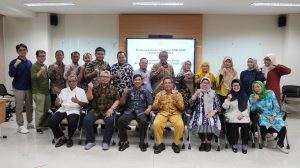 At the closing session, Prof. Tulus stressed the importance of translating the commissions’ final recommendations into actionable steps by the faculty leadership and Study Programs.