Di era Industri 4.0, perkembangan teknologi yang pesat telah mengubah berbagai aspek kehidupan, termasuk dalam bidang kewirausahaan. Digitalisasi, otomatisasi, kecerdasan buatan, dan teknologi berbasis data telah membawa perubahan yang signifikan dalam cara bisnis dijalankan.
Dalam konteks ini, penting bagi para calon wirausahawan untuk memahami bagaimana mereka dapat memanfaatkan teknologi untuk menciptakan peluang bisnis yang inovatif dan berkelanjutan.
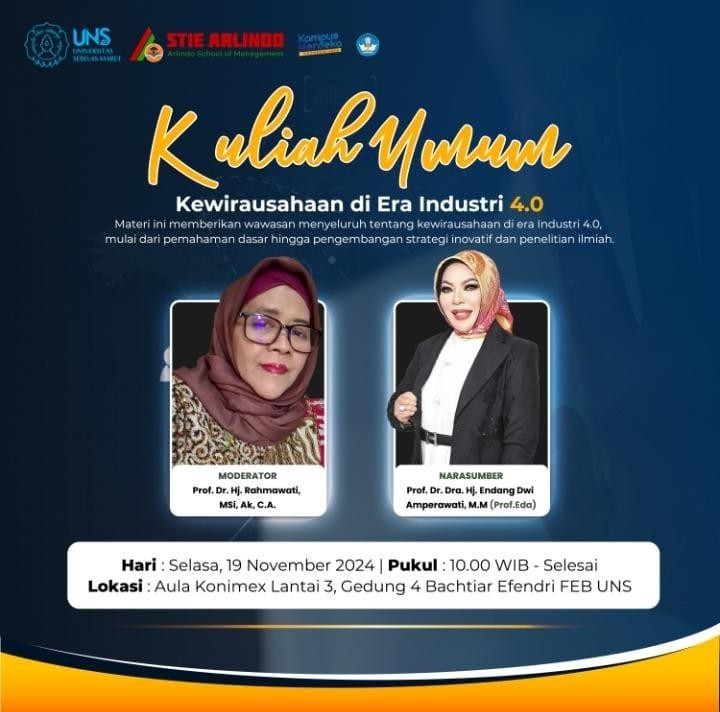
Program Doktor Ilmu Ekonomi (PDIE) Fakultas Ekonomi dan Bisnis (FEB) Universitas Sebelas Maret (UNS) menyelenggarakan Kuliah Umum, Selasa 19 November 2024 di Aula Konimex Gedung Bachtiar Effendi FEB UNS.
Dalam kuliah umum itu menghadirkan Prof. Dr. Dra. Endang Dwi Amperawati, M.M sebagai narasumber dan dimoderatori oleh Prof. Dr. Rahmawati, M.Si., Ak.
Kegiatan ini dirancang untuk memberikan pemahaman yang mendalam mengenai kewirausahaan di era Industri 4.0 dan bagaimana para mahasiswa dapat mempersiapkan diri untuk sukses di dunia bisnis yang semakin digital dan terhubung.
Materi yang diangkat dalam kuliah umum ini mencakup berbagai topik yang relevan dengan kewirausahaan dan perkembangan teknologi.
Narasumber menjelaskan konsep dan perkembangan kewirausahaan, definisi kewirausahaan serta evolusinya dalam menghadapi perkembangan teknologi dan digitalisasi.
Ia menjelaskan teknologi dan inovasi dalam bisnis, yang membahas berbagai teknologi yang mendukung perkembangan bisnis, seperti kecerdasan buatan, Internet of Things (IoT), big data, dan blockchain.
Lebih lanjut peluang bisnis di era industri 4.0, mengidentifikasi sektor-sektor yang berkembang pesat akibat teknologi baru, seperti e-commerce, fintech, dan startup teknologi.
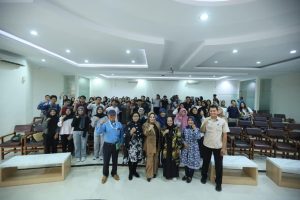
Juga menerangkan strategi bisnis digital, pembahasan mengenai penerapan strategi pemasaran digital, model bisnis berbasis platform, dan pengelolaan sumber daya digital.
Dan terakhir, menguraikan tentang keterampilan wirausahawan di era digital, Keterampilan yang perlu dimiliki oleh wirausahawan untuk sukses di dunia bisnis modern, seperti keterampilan analisis data, kreativitas, dan kemampuan beradaptasi.
Usai paparan materi, narasumber memberikan kesempatan kepada peserta untuk berdiskusi terkait tema kuliah umum.


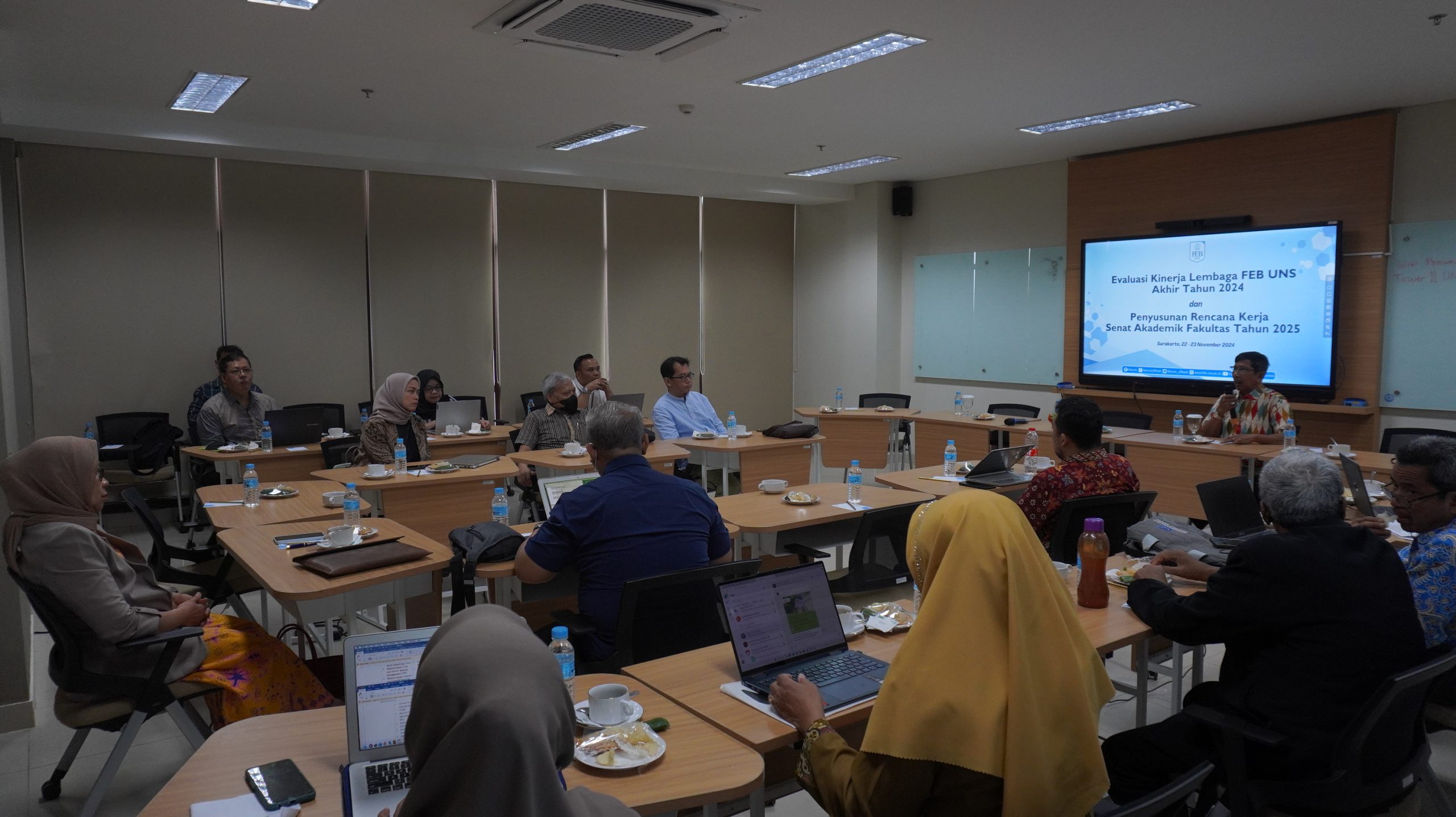


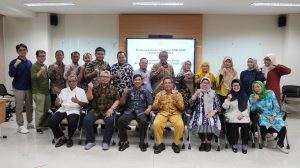
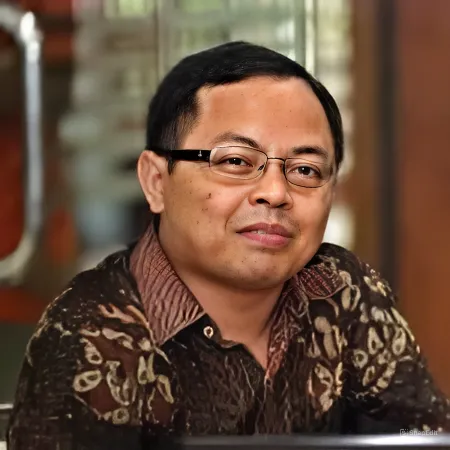

 Tastaftiyan Risfandy, S.E., M.Sc., PhD., Vice Dean for Student Affairs and Alumni of FEB UNS, expressed appreciation to the accompanying teachers and students for joining the program, particularly in the S-1 Study Programs of Accounting, Management, and Digital Business.
 Following the Vice Dean’s remarks, the heads of the participating Study Programs provided an introduction to each program at FEB UNS. Meanwhile, Siyami Koestimawati, the supervising teacher from SMA Muhammadiyah PK Kota Barat, expressed gratitude for the opportunity given to her students. “We are very thankful to FEB UNS for allowing our students to learn and explore what FEB is like. The students joined the program voluntarily, and we truly appreciate the guidance provided,” she stated.
 In addition to attending lectures, the 18 students were assigned to keep daily journals and observe student associations relevant to their chosen Study Programs. She added that since its first cohort, SMA Muhammadiyah PK has consistently participated in the ‘Sit-in University’ program each year, with FEB UNS being a constant destination due to high interest from students.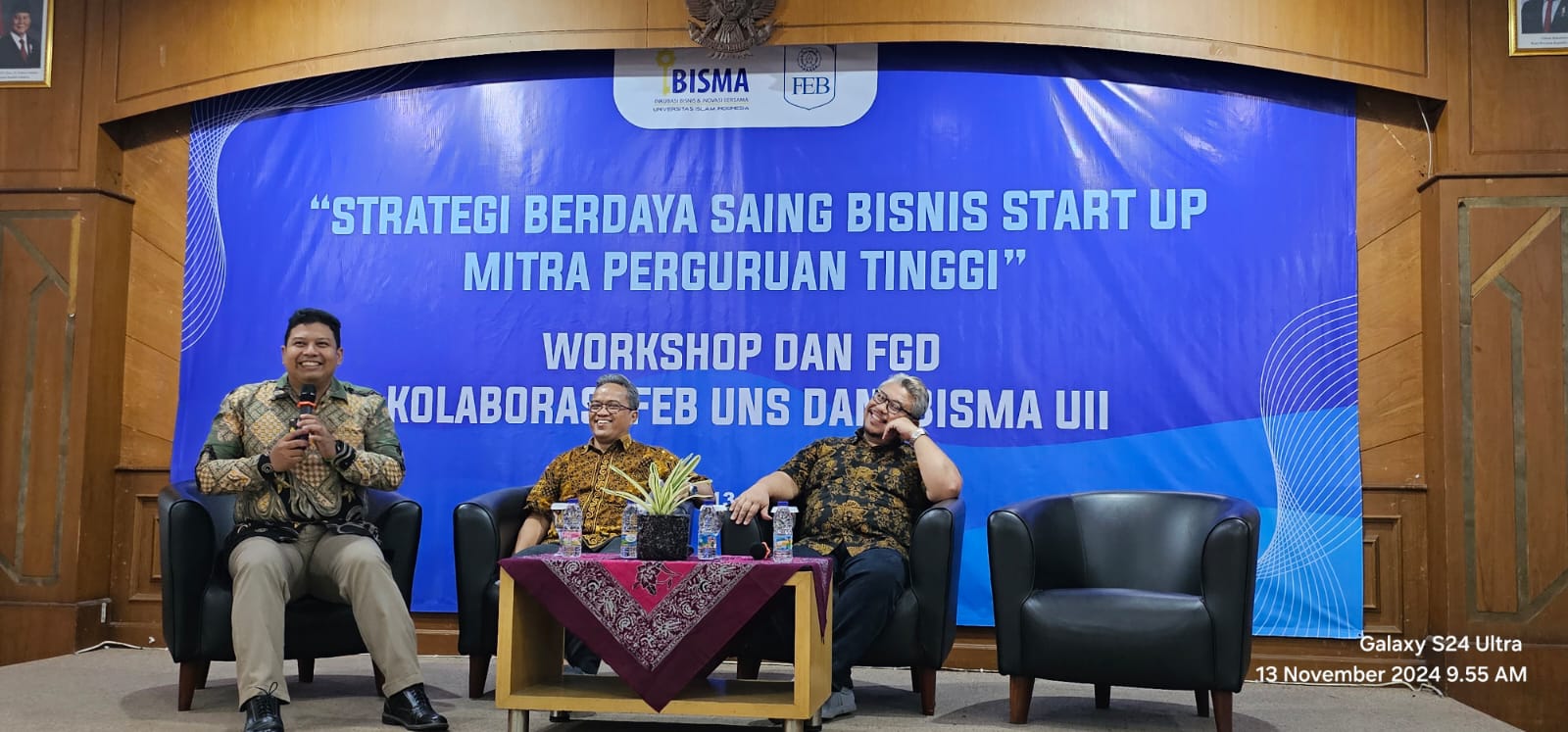
 According to Dr. Ahmad Ikhwan Setiawan, S.E., M.T., Chair of the Behavioral Marketing Research Group, the low success rate of startups presents a significant challenge. He emphasized that only business models with specific characteristics can sustain themselves in an increasingly competitive environment. Meanwhile, Prof. Dr. Budhi Haryanto, M.M., highlighted in his presentation that scaling up a startup requires technological excellence, strong competencies, and well-structured organizational capabilities.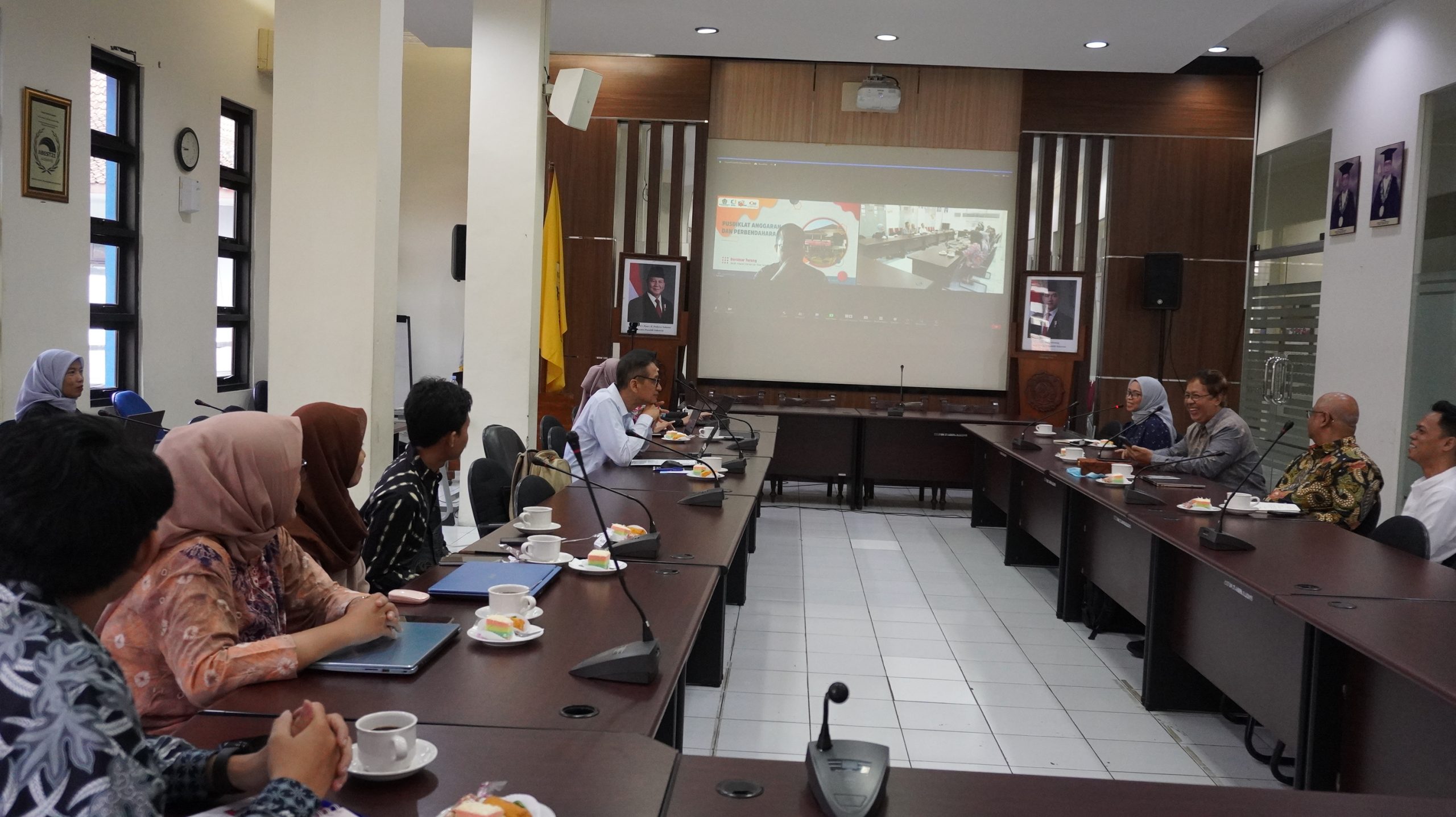


 Second, as already outlined, is the development of integrated RPS content. Currently, four prototype courses are being developed: Regional Financial Analysis and Development Planning and Budgeting for the Development Economics Study Program, and Government Accounting and Public Accounting for the Accounting Study Program. In the future, similar efforts will be extended to the Management and Digital Business Programs.
 “We hope for the support of all colleagues so that together we can advance FEB by expanding external partnerships. This activity is only the beginning and not the end—there will be continuous improvements and positive developments, with benefits that extend to many parties,” he concluded.