
The Chair of the Islamic Economics and Finance Research Group (RG), Faculty of Economics and Business (FEB), Universitas Sebelas Maret (UNS) served as the keynote speaker at the Seminar (Halaqah) organized by the Islamic Economics Student Unit (KEI) of FEB UNS on Monday, August 19, 2024.
This seminar, themed “Halal Industry for a Sustainable Economy,” was conducted in collaboration with the Regional Board (PD) of the Sharia Economic Society (MES) of Surakarta, the Regional Executive Board of the Indonesian Association of Islamic Economists (DPW IAEI) Central Java Province, and the Regional Board of the Forum Alumni HMI Wati (PD Forhati) Solo Raya.
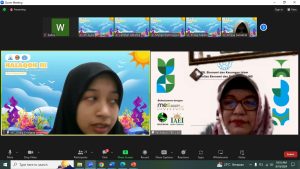 The event, attended by a total of 37 students from the 2024 KEI FEB UNS board and members, featured Dr. Falikhatun, M.Si., Ak., SAS., the Chair of the Islamic Economics and Finance Research Group, as the main speaker.
During her speech, Dr. Falikhatun emphasized the significance of the halal industry in the development of a sustainable economy, particularly focusing on the circular economy model. This model aims to achieve economic growth while maintaining the value of products, materials, and resources in the economy for as long as possible, and pursuing a zero-waste agenda.
Dr. Falikhatun further explained that “to promote the halal industry—which includes Islamic Finance, Halal Food, Muslim Friendly Travel, Modest Fashion, Halal Pharmaceuticals and Cosmetics, and Halal Media & Recreation—several key strategies are needed. These include enhancing productivity and competitiveness, implementing and strengthening regulations, boosting halal brand awareness, and reinforcing financial and infrastructural support.”
The seminar is expected to bring inspiration and motivation to the students, especially the board and members of KEI, to delve deeper into Islamic economics concepts, particularly those related to the halal industry both in Indonesia and globally.
Additionally, in the long term, the seminar aims to motivate students to engage in developing the circular economy, which incorporates the 5R concept: reuse, reduce, recycle, repair, and recover. This concept seeks to ensure that waste or by-products are either transformed into new products or used as raw materials for other products, thereby minimizing economic resource wastage.
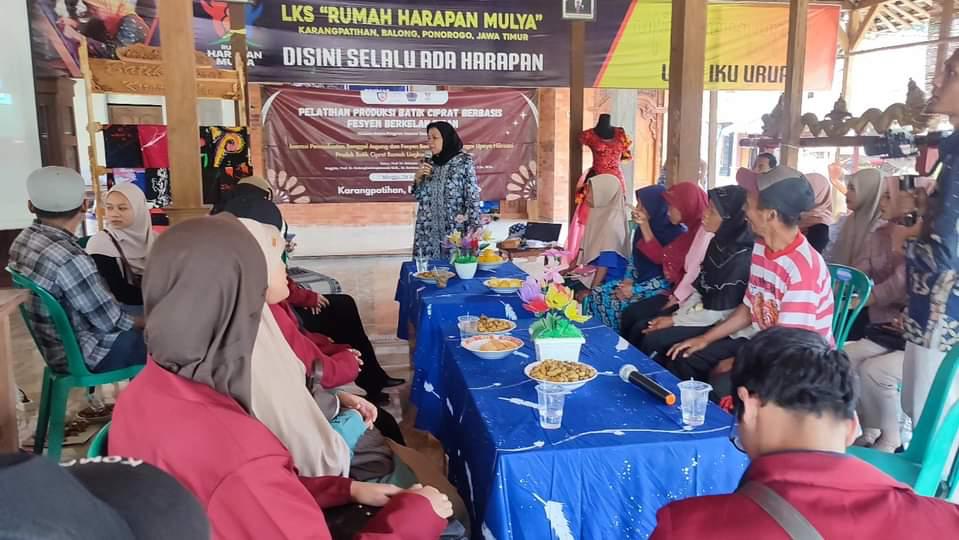
 The team provided training on sustainable fashion through the production of Batik Ciprat using corn cobs to workers with disabilities in Karangpatihan Village and disabled students from Universitas Muhammadiyah Ponorogo (UMPO).
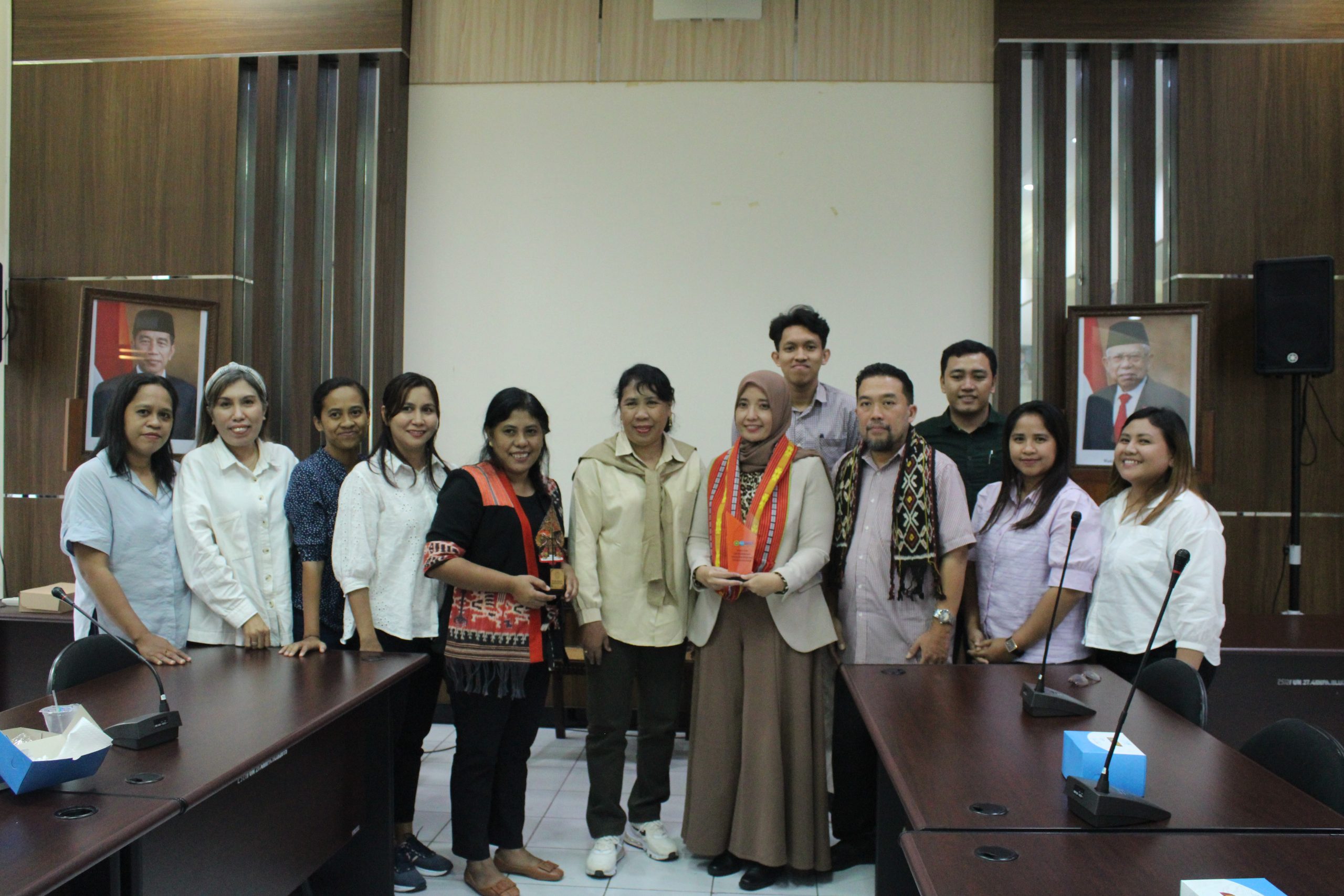
 In his welcome remarks, Tastaftiyan Risfandy, S.E., M.Sc., Ph.D., Vice Dean for Planning, Business Partnership, and Information, extended his greetings and thanks to Dr. Apriana and her team for their visit to FEB UNS.
 Consequently, FEB UNDANA chose FEB UNS as their benchmark. Dr. Apriana also introduced the members of her delegation, including the Vice Dean 1, Program Coordinators, Quality Control Team, and lecturers from the S1 Development Economics Program at UNDANA.
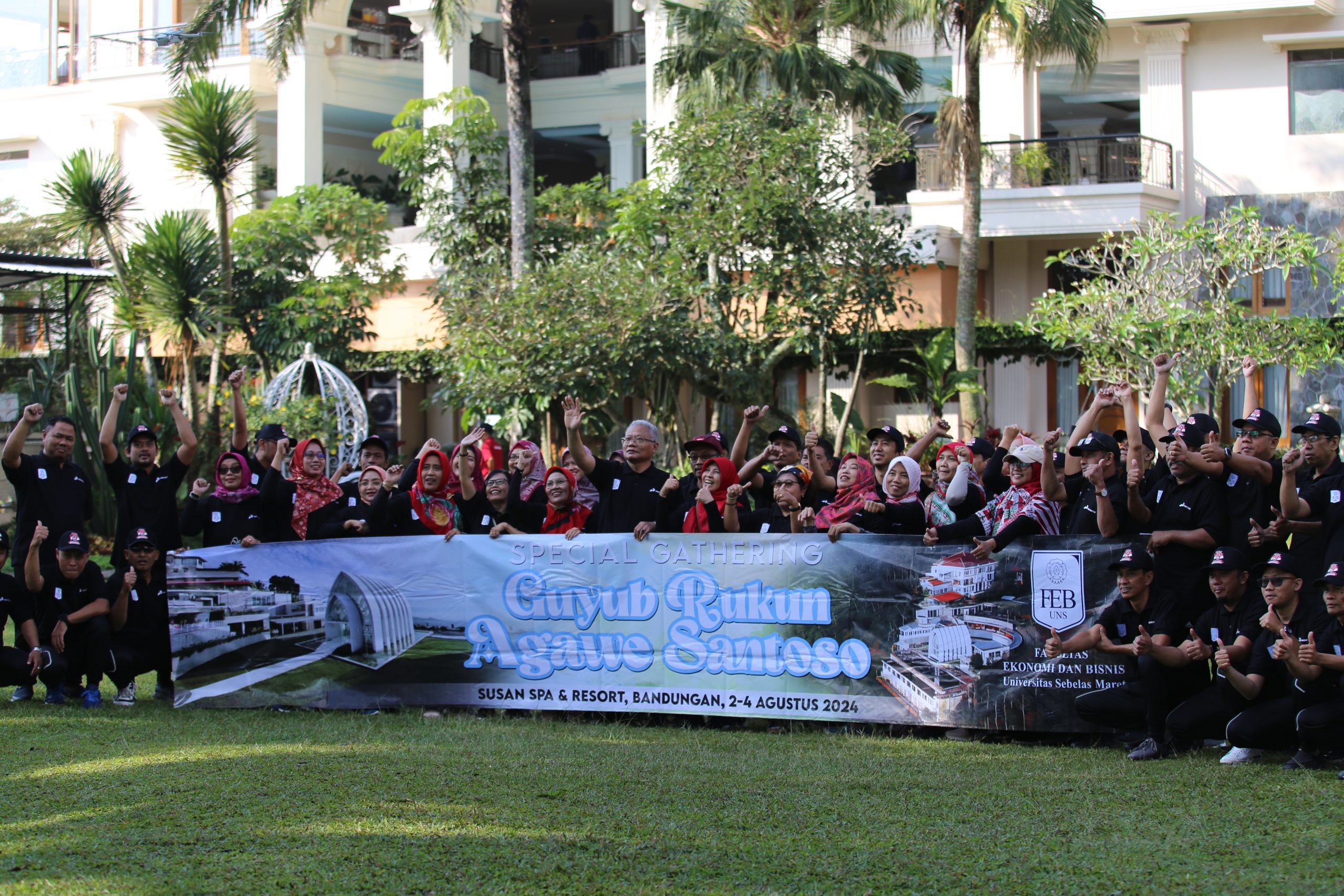

 In his opening remarks, the Dean of FEB UNS, Prof. Djoko Suhardjanto, M.Com(Hons), Ph.D., Ak., extended his gratitude to Pertamina for their support in making the gathering possible. Prof. Djoko also expressed his thanks to the attending leaders, lecturers, support staff, students, and Dharma Wanita FEB. He acknowledged that his tenure as Dean was coming to an end in a few weeks and apologized for any shortcomings during his leadership. “These are the final weeks of our leadership at FEB. I apologize if there have been any words or actions that did not meet your expectations,” he said.
 Prof. Djoko encouraged FEB academic members to maintain harmony and to support each other, emphasizing the need to unite and support the future Dean to ensure further progress for FEB.
 In response, Dr. Atmaji thanked the Dean and his team for the invitation to the retirement gathering. “Thank you for the invitation, Dean. On behalf of myself and my family, I apologize for any mistakes during our interactions,” he said.

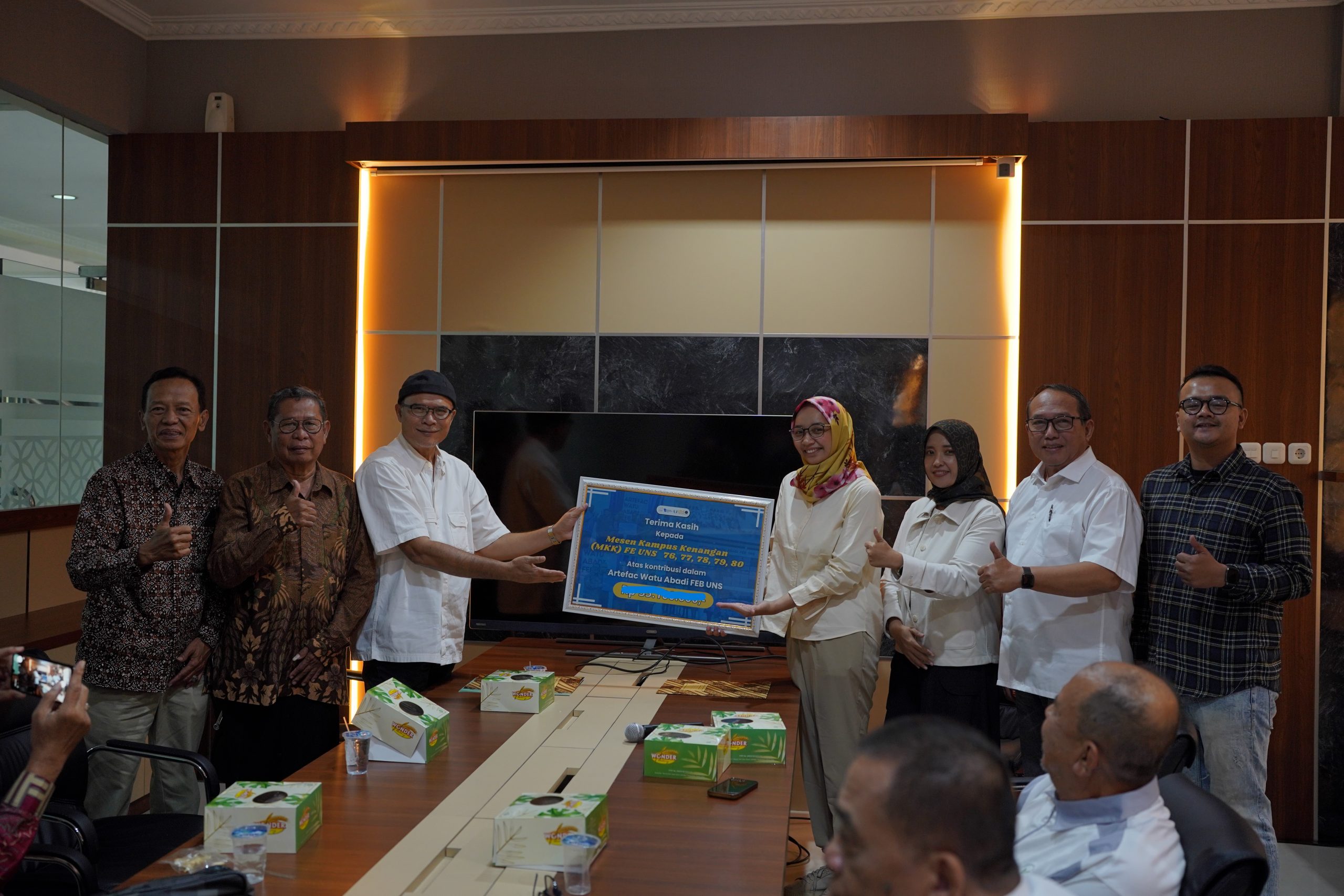
 In his remarks, Sonny said that the funds were collected from all members of MKK, the 1976 to 1980 class. Sony also recounted that the MKK 76-80 Community was born in September 2011. At that time, only a few were incorporated, but now there are many more, all students who have studied at the Mesen campus are members of MKK.
 On this occasion, Dr. Dwi Prasetyani also conveyed various achievements of FEB. On a national scale, FEB is ranked 4th for the best Economics Faculty in Indonesia. Currently, with the seamless cooperation with alumni, the Faculty strives to improve FEB to get a better position and ranking and, hopefully, to be the number 1 university in Indonesia. On the international scale of the World Class Ranking (WUR), FEB UNS is ranked 301-350 for Accounting & Finance and also Economics & Econometrics.
 For example, the establishment of the Fiscal Corner at FEB UNS, a specific function as part of the partnership between FEB and the Ministry of Finance. Regular meetings and joint programs between alumni in the ministry and lecturers in FEB are initiated and gradually implemented. Collaboration with alumni also makes it easier to access research and community service activities abroad.
 The Chairman of the Faculty Senate, Prof. Dr. Tulus Haryono, M.Ek., added that the effort to improve FEB UNS cannot be done individually but must be achieved through collaboration and partnership with alumni. After the handover ceremony for the scholarship funds by MKK 76-80, the representatives of MKK 76-80 took a group photo in front of “Artefac Watu Abadi FEB UNS,” a symbol of alumni’s continuous charity, adopting the concept of Endowment Funds.