Collaborative effort to improve legal protection and the economic value of regional flagship products continue through the Applied Research with Prototype Output – Kemdiktisaintek 2025 entitled “A Regulatory Model for Regional Flagship Products Based on Sustainable Tourism.” This study represents a cross-disciplinary collaboration between Sarjiyanto, S.E., MBA., Ph.D., from the Faculty of Economics and Business (FEB) and Dr. Abdul Qodir Jaelani, SH., MH., from the Faculty of Law, Universitas Sebelas Maret (UNS).
According to the Directorate General of Intellectual Property (DJKI) of the Ministry of Law and Human Rights of the Republic of Indonesia, a Geographical Indication (GI) is a sign indicating the area of origin of a product that possesses a certain reputation, quality, or characteristics attributable to geographical environmental factors, including natural factors, human factors, or a combination of both. A GI may take the form of a place name, word, image, letter, or a combination of these elements attached to a product.

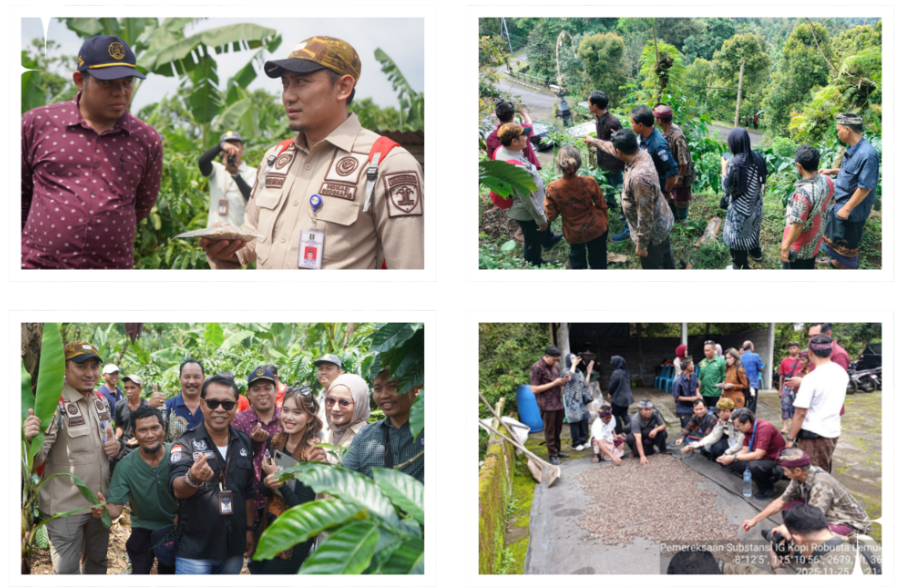
This research is driven by the need to enhance regional economic development through the protection of communal intellectual property, enabling regional flagship products to achieve stronger reputations and higher economic value. In 2025, the two UNS researchers completed a mentoring process for Robusta coffee farmer groups in Lemukih Village, Sawan Sub-district, Buleleng Municipality, Bali, to obtain GI recognition from the Ministry of Law and Human Rights of the Republic of Indonesia.
The assistance was conducted comprehensively, covering institutional development through the establishment of the Lemukih Buleleng Robusta Coffee Geographical Indication Protection Community (MPIG); mentoring in business management from production processes to marketing; preparation of the Geographical Indication Description Document outlining the product’s reputation, quality, and characteristics as a prerequisite for GI submission; and field verification by DJKI.

From 24–27 November 2025, the DJKI Geographical Indication Expert Team led by Gunawan, S.Si., carried out field verification. This activity was supported by both UNS research team members, Sarjiyanto, Ph.D., and Dr. Abdul Qodir Jaelani. The verification process also involved various regional stakeholders, including the Head of the Buleleng Municipality Agriculture Office, Gd. Melandrat; the Head of the Buleleng Municipality Tourism Office, Gede Dody Sukma Oktiva Askara, S.Sos., M.Si.; the Village Head of Lemukih, Drs. I Nyoman Singgih; and the leaders and members of Subak Gunung Sari and Subak Manik Galih.
Through this series of processes, Lemukih Robusta Coffee is now approaching official recognition as a Geographical Indication product. This recognition is expected to create broader opportunities for improving farmers’ welfare, supporting village-level economic development, and promoting local potential managed in a sustainable manner.

Sarjiyanto, Ph.D., as a member of the research team and Advisor to the Lemukih Coffee MPIG, stated that the involvement of FEB UNS lecturers reflects the university’s commitment to providing direct community assistance.
The involvement of undergraduate lecturers from the Development Economics Study Program, FEB UNS, in assisting the Lemukih Village community represents one of the commitments of the FEB UNS academic community in supporting the achievement of the Sustainable Development Goals (SDGs), particularly SDG 1 (No Poverty), SDG 8 (Decent Work and Economic Growth), SDG 9 (Industry, Innovation and Infrastructure), SDG 11 (Sustainable Cities and Communities), SDG 12 (Responsible Consumption and Production), and SDG 16 (Peace, Justice and Strong Institutions).

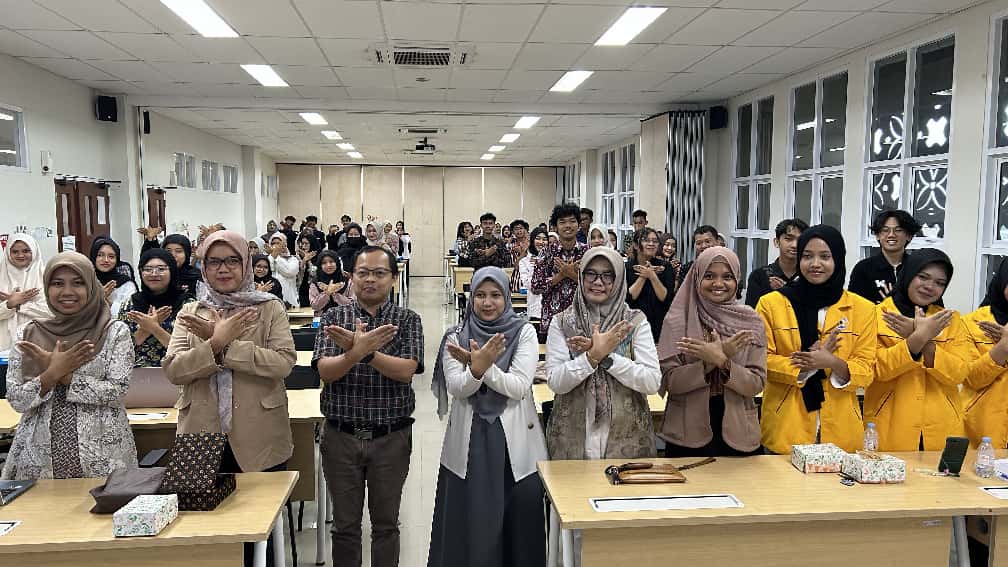
 Ika Alicia Sasanti, S.E., M.E., a lecturer of Development Economics at FEB UNS, in her presentation highlights the importance of accurate FinTech literacy for students in the digital era. She emphasizes that FinTech platforms currently operating are regulated by OJK and may serve as relevant topics for academic inquiry. “Students need to understand both the opportunities and risks of FinTech to make productive use of it. A repayment compliance rate exceeding 90 percent shows that the community is becoming more responsible in meeting its financial obligations,” she explained.
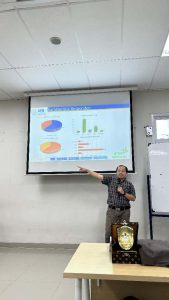 Following this, Malik Cahyadin, S.E., M.Si., Ph.D., a lecturer of Development Economics at FEB UNS, presents findings from his research on FinTech user behavior in the Province of Central Java, funded by the UNS Institute for Research and Community Engagement (LPPM) in 2025. The study is conducted from July to early August 2025 with 585 respondents consisting of formal workers and micro-entrepreneurs.
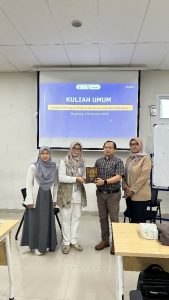 Survey results show that 61.03 percent of respondents are female, 56.41 percent are senior high school graduates, and the majority are aged 17–25 years. Malik explains that financial technology adoption, installment repayment ability, and trust level influence FinTech transaction intensity positively. In contrast, age and gender influence transaction levels negatively. “Beyond literacy, OJK and FinTech service providers must ensure that digital financial services operate in a trustworthy and secure manner. Bank Indonesia should also consider the implications of FinTech for money supply and inflation,” he noted.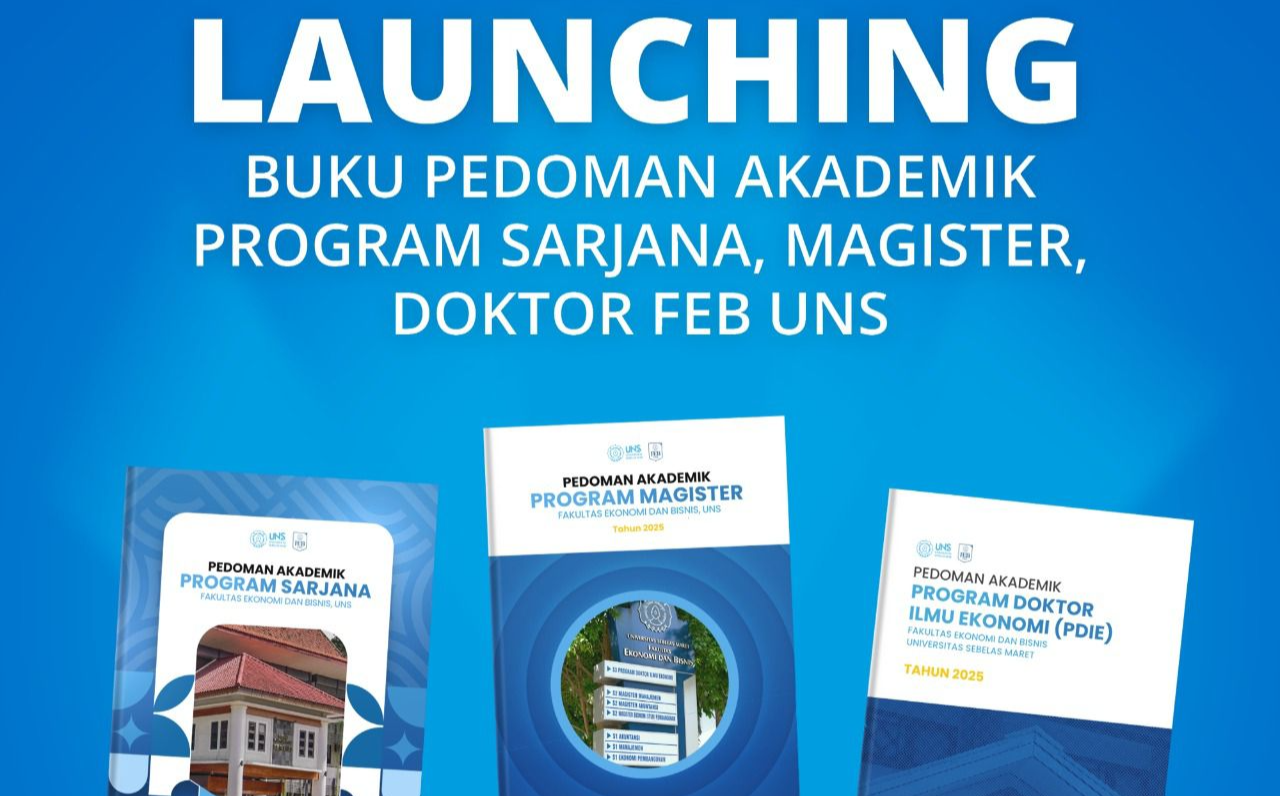
 “There are two main objectives of this activity: improving the quality of graduates and enhancing the quality of curriculum and learning experiences. The academic and curricular information presented in this handbook will help students to graduate on time, acquire knowledge and skills relevant to the job market, and ensure a meaningful and enjoyable learning experience at FEB UNS,” she explained.
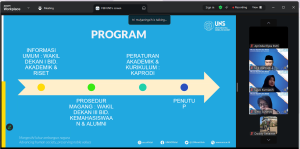
 Through the launch of this Academic Handbook, FEB UNS hopes that all students can follow a clearer academic path, understand their rights and responsibilities, and make full use of the available learning facilities. This initiative also reaffirms FEB UNS’s commitment to supporting the achievement of the Sustainable Development Goals (SDGs), particularly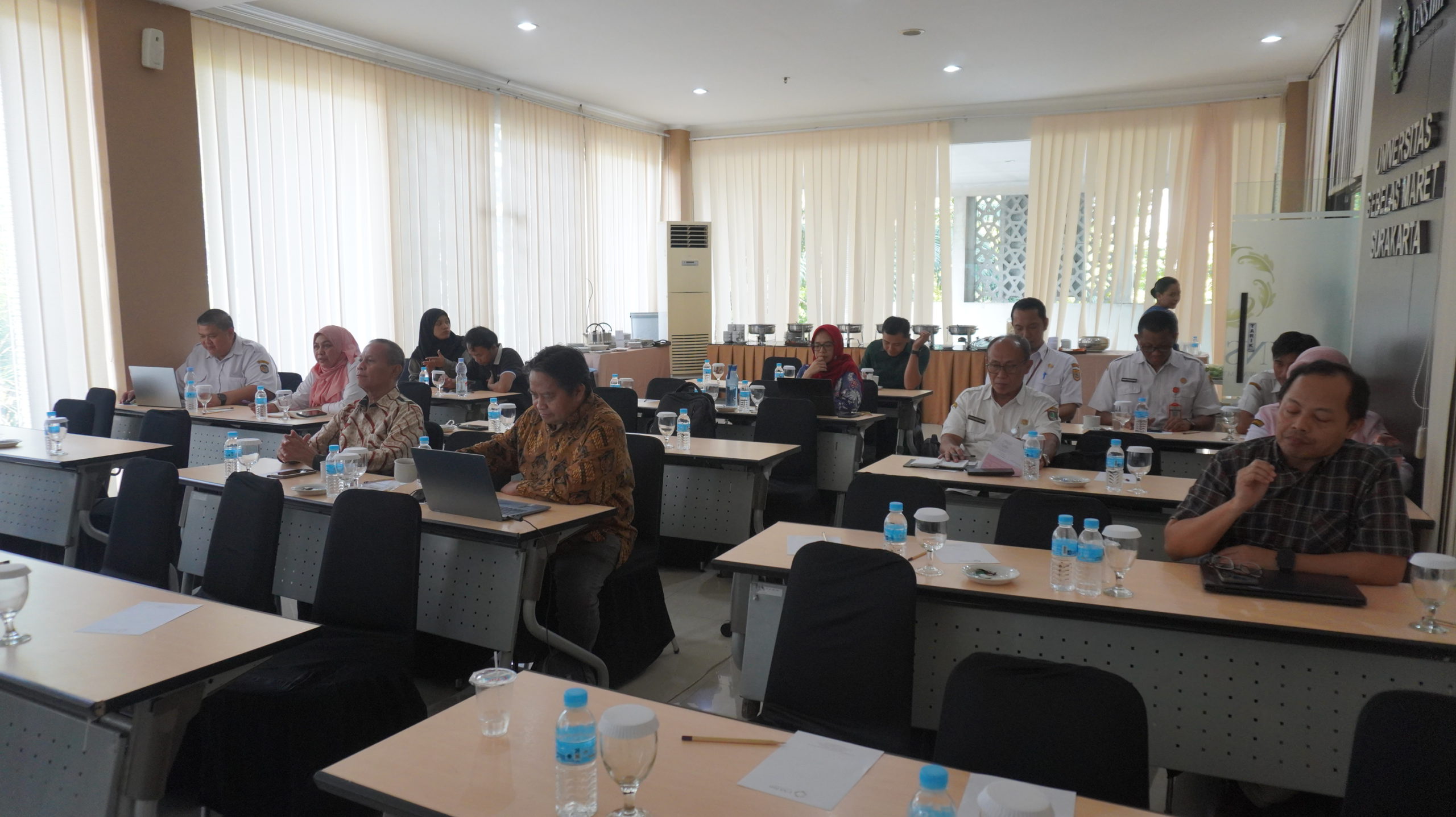
 The workshop opened with remarks from Johadi, S.E., M.Sc., Head of Cooperation at FEB UNS, who emphasized the importance of enhancing fiscal planning and public policy capacity amid regional financial constraints. “Hopefully, this workshop will bring new perspectives amid fiscal pressures. Our budget base will decline by about 19.9 percent in 2026 compared to 2025, which will have a major impact since intergovernmental transfers account for around 83 percent of our budget. Given this situation, research conducted by local governments in collaboration with BRIDA and Bappeda must propose policy recommendations that are effective, well-targeted, and outcome-oriented,” said Johadi.
 The event was attended by approximately 25 participants, including lecturers, researchers, and representatives from Bappeda and BRIDA across the Solo Raya region, including Surakarta, Sukoharjo, Karanganyar, Boyolali, Sragen, and Wonogiri. Discussions were active and productive, addressing various technical issues in data-based planning, budgeting, and policy evaluation.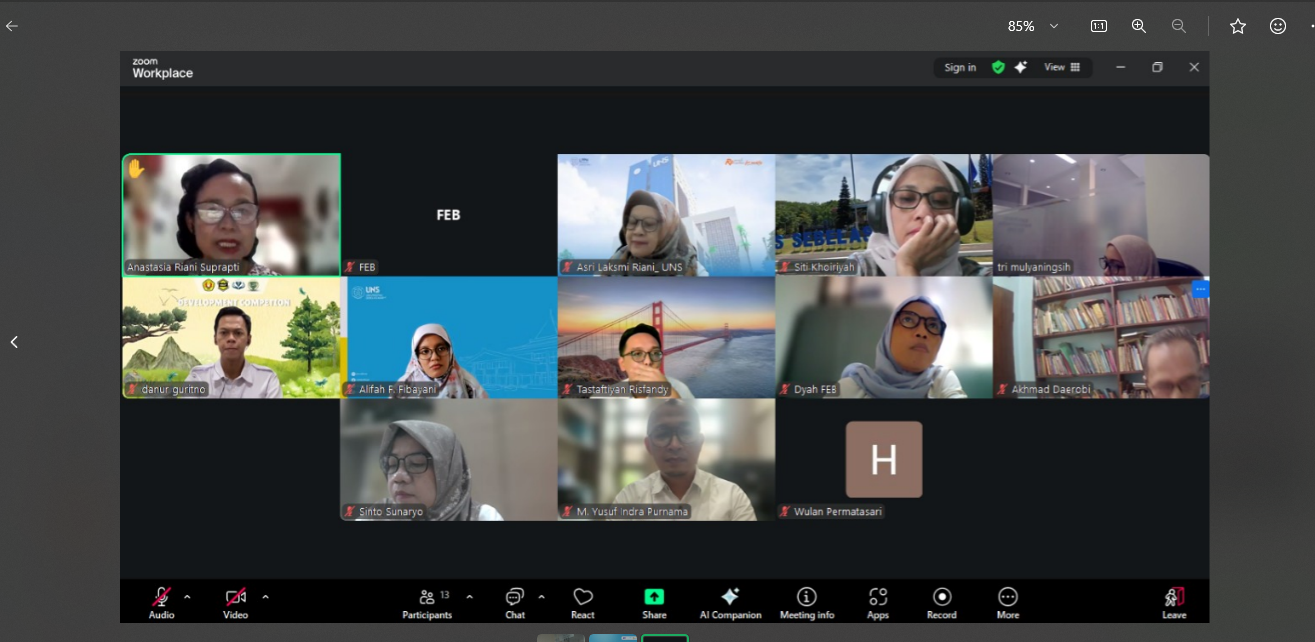
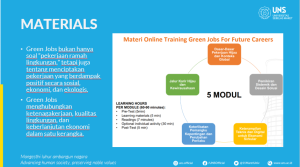 At FEB UNS, the LMS will be implemented in various courses such as Human Resource Management, Human Resource Economics, and Employment Economics. The customized materials cover topics including current labor issues, company case studies, labor migration, and trade unions. The LMS is expected to address global challenges in employment, the green economy, and environmental sustainability. Through this platform, students can access online, interactive, and flexible learning resources.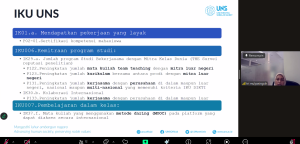
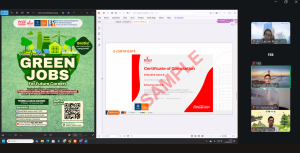 Participants will receive an international certificate from CCEP, free access to the five training modules, flexible online learning opportunities, and the chance to win cash prizes of up to IDR 5,000,000. During the discussion session, Muhammad Yusuf Indra Purnama, Ph.D., Head of the Development Economics Study Program, suggested that the independent learning process should remain under lecturer supervision to ensure student discipline and completion.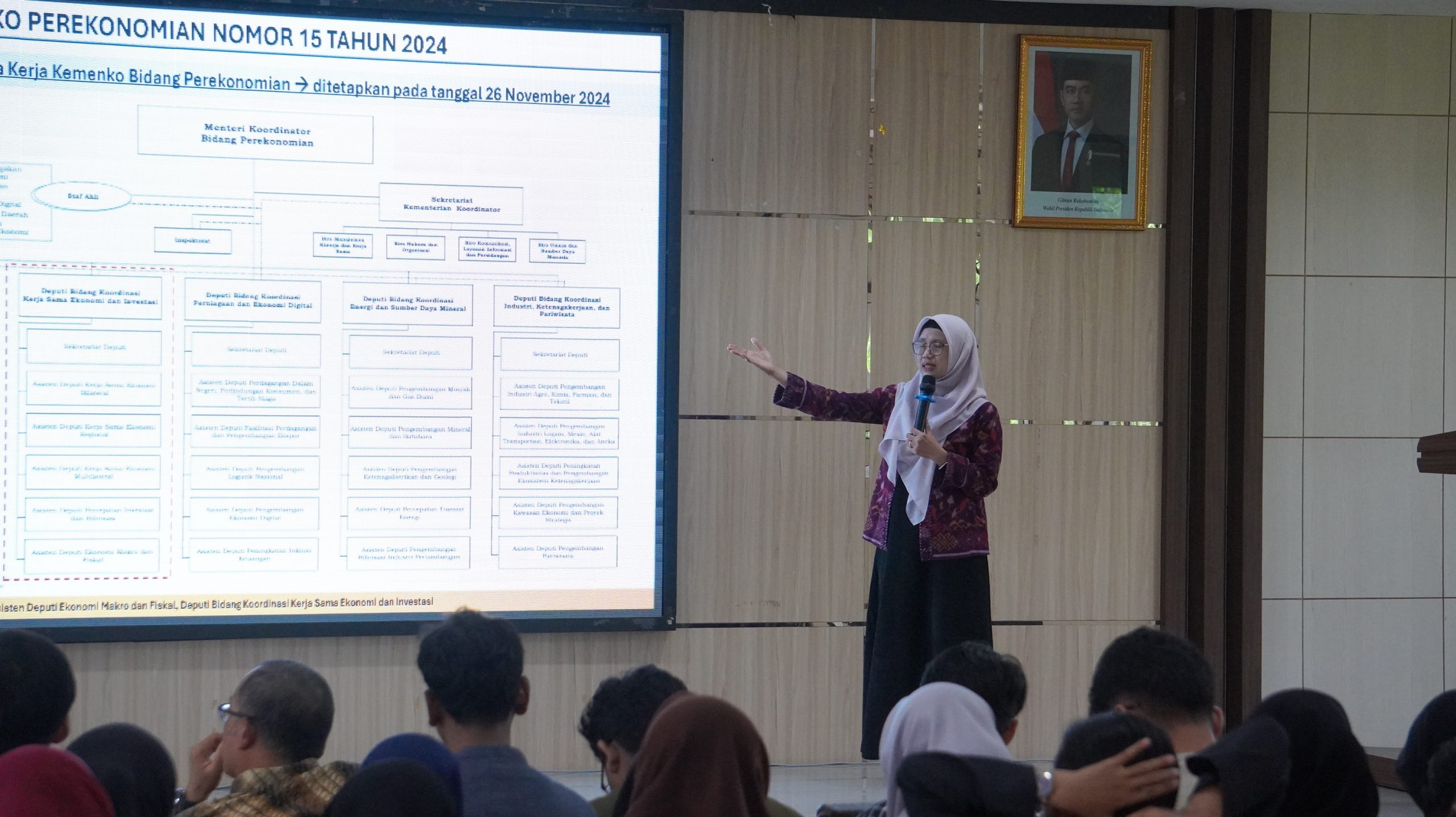
 In his opening remarks, Prof. Bhimo Rizky Samudro, S.E., M.Si., Ph.D., Dean of FEB UNS, emphasized that this activity is an important forum that provides students with in-depth insights, information, and up-to-date data, particularly on domestic and global economic developments. He highlighted its strategic importance for students, especially those entering their seventh semester.
 “This event is the right moment for students to ask questions, engage in discussions, and analyze current economic developments,” stated Prof. Bhimo.
 The Coordinating Ministry for Economic Affairs also offers internship opportunities for students. These internships not only provide practical experience but also broaden professional networks and deepen understanding of public policy formulation. Through this initiative, FEB UNS hopes students will gain not only academic insights but also motivation and readiness to pursue careers in economics while contributing to national development.
 This activity aligns with FEB UNS’s commitment to supporting the Sustainable Development Goals (SDGs), particularly

 This initiative is a joint-effort undertaken by the Academic Affairs Division (Division 1) and the Student and Alumni Affairs Division (Third Division). In its presentation, the Division highlighted the importance of structuring mandatory internships, which apply generally to all study programs and must be reported to each program. On the other hand, there are also independently managed internships by students within the MBKM framework, now known as Impactful Internships.
 It is important to understand that the current implementation of internships refers to Ministerial Regulation (Permendikbudristek) No. 63 of 2024 on the Implementation of Student Internships. FEB UNS, through Division 3, is committed to preparing and launching the Internship Handbook in the near future. One of the key discussions was the positioning and relationship between Mandatory Internships, MBKM Internships, and Impactful Internships within the curriculum structure and academic policies.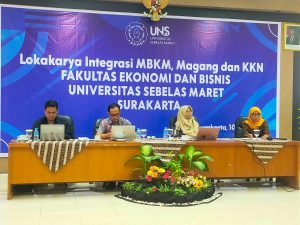
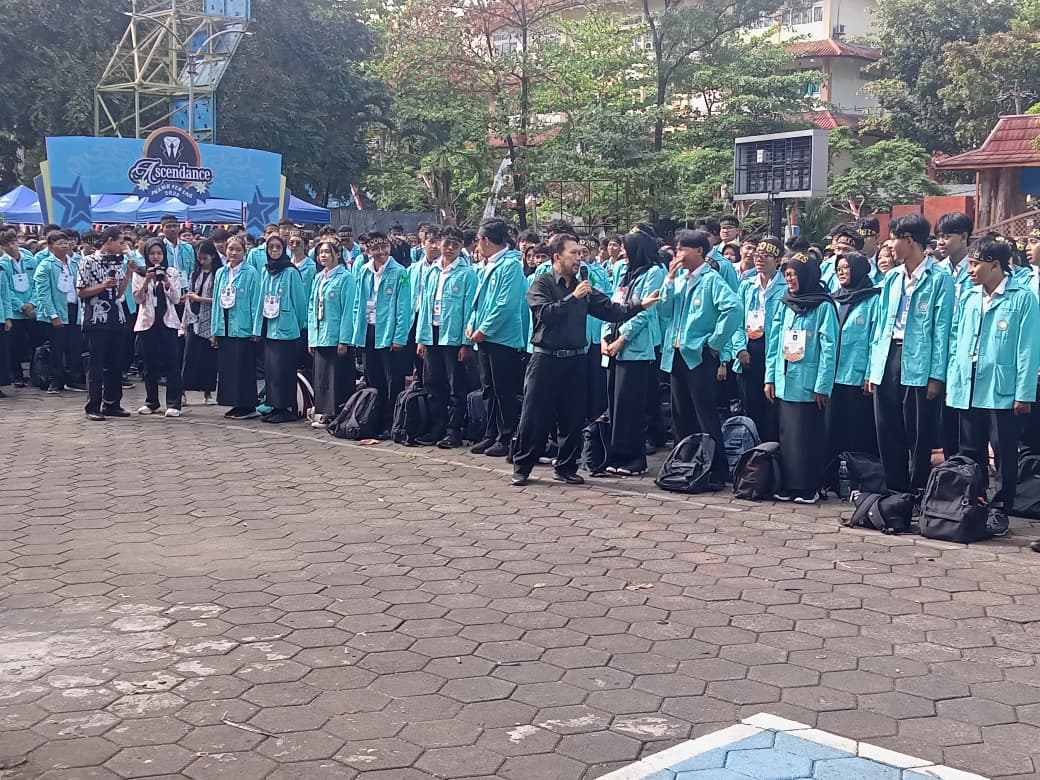
 Dean of FEB UNS, Prof. Bhimo Rizky Samudro, S.E., M.Si., Ph.D., conveyed three key messages in his address: the importance of ethics, building networks, and developing tolerance during the study period on campus. “I would like to remind you, your presence here is not solely due to your own efforts, but also because of the role of God Almighty and the prayers of your parents, especially your mother. A mother’s prayer is vital in your life journey,” said Prof. Bhimo.
 Following his speech, Prof. Bhimo introduced the Vice Deans, Heads of Study Programs, the Head of Administrative Office, and Heads of Subdivision of FEB UNS.