FEB

Kategori: s1_ep

  • FEB UNS Organizes Workshop in Budgeting Submission and SPJ Preparation

    FEB UNS Organizes Workshop in Budgeting Submission and SPJ Preparation

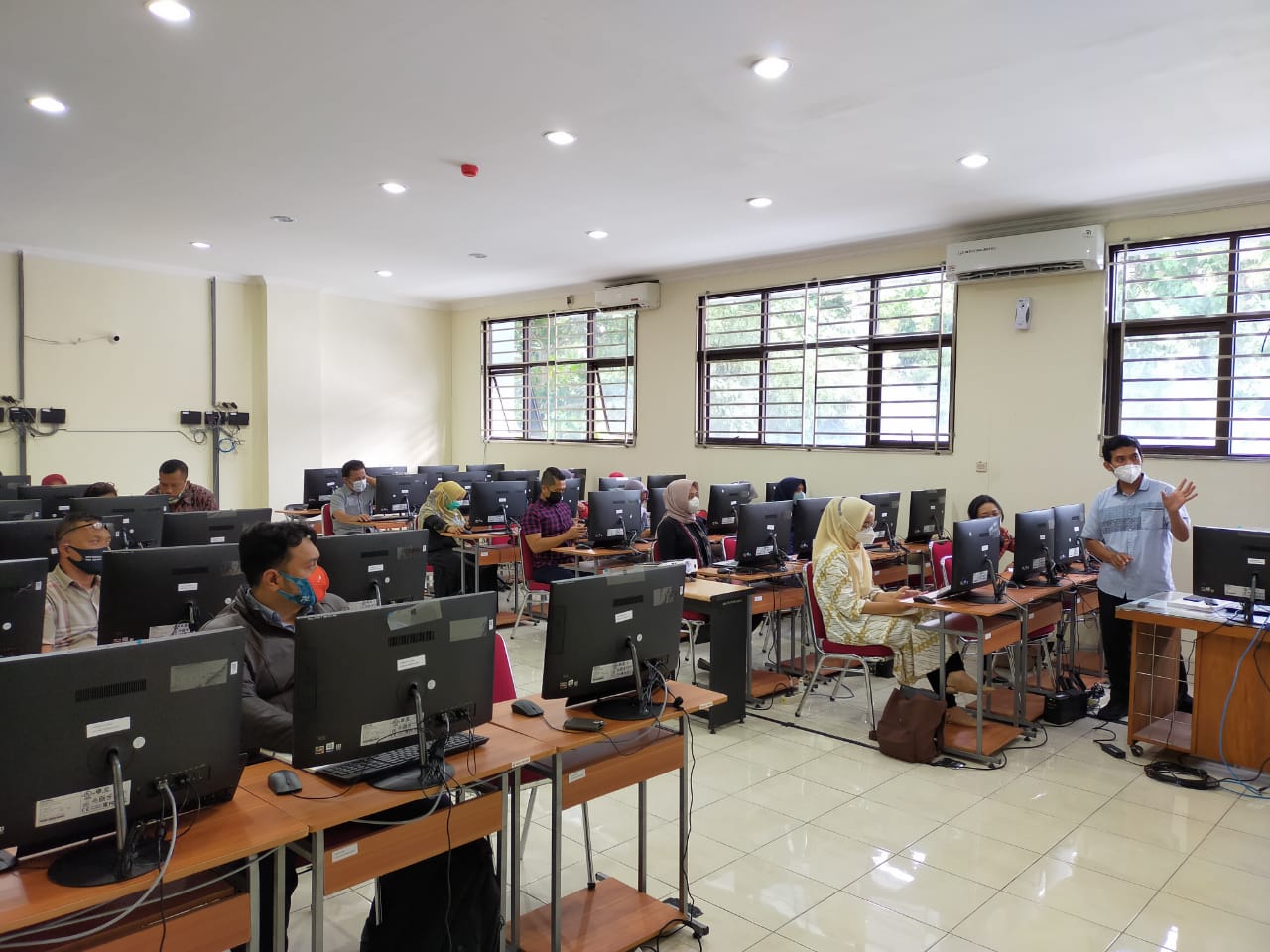
    The Faculty of Economics and Business (FEB) Universitas Sebelas Maret (UNS) Surakarta organizes a Workshop in Budgeting Submission and Accountability Report (SPJ) Preparation on Thursday (25/02/2021) in FEB UNS Computer Laboratory. The event was attended by 20 participants representing each study program in FEB UNS and Helpdesk administrator.

    The Coordinator of FEB UNS Administration Unit, Tunggul Ardhi, S.Si., in his remarks stated that the shift of UNS administration from Public Service Agency (BLU) into a State University as Legal Entity (PTN BH) need several adjustments in term of budget submission and SPJ preparation. The currently applicable guideline is the UNS Minimum Standard Cost (SBM).

    On this occasion, all technical staff will be introduced to the new guidelines, how to prepare SPJ, and the budget submission process. Through this training, it is expected that all technical staffs can adjust faster. Christiana Yulia, S.Pd., as the FEB UNS General Treasurer, and Gigih Fantriko, A.Md., from the FEB UNS Planning Unit, become the instructors for the workshop.

    Gigih Fantriko explains the general description of the service provided by FEB UNS Planning Affairs, such as uploading and supporting faculty data (KPI), the revision for budget submission, downloading faculty planning, and budget planning procedure. He also guides the participants on how the study program’s operator uses Budget Planning and Evaluation System (Sireva).

    Meanwhile, Christiana Yulia delivers the technical budgeting submission and SPJ preparation. Participants are expected to learn the new guidelines. In order to evaluate participants’ understanding, at the end of the session, Yulia delivers questions that need to be solved. The questions related to SPJ preparation, Payment Warrant (SPBY), payment receipt according to the rates used, and taxes according to the new regulations. (Humas FEB UNS)

  • UNS Economist on the Restrictions on Community Activities

    UNS Economist on the Restrictions on Community Activities

    A total of 23 Municipalities in Central Java are selected to implement the implementation of Restrictions for Community Activities (Pemberlakuan Pembatasan Kegiatan Masyarakat – PPKM), starting of January 11th, 2021 until January 25th. This policy is taken in response to the Central Government policy to limit the public activities in Java and Bali. Responding to this policy, the economist from the Faculty of Economics and Business (FEB) Universitas Sebelas Maret (UNS) Surakarta, Lukman Hakim, Ph.D., states that, this policy will affect people’s economic condition because it will reduce community economic activities.

    To uns.ac.id, Lukman stated that during PPKM, there is a limitation for restaurant activities. Dining is only allowed with a maximum of 25% of the dining room capacity, while delivery can be provided during the restaurant operational hours. The policy also limits the operational hours for a shopping center or mall until 19.00 Western Indonesia Time. Lukman Hakim stated that Based on the experience, the community’s transaction and consumption pattern has changed from the beginning of the pandemic. He also thinks that this policy will not bring a significant impact on community economic conditions.

    “Based on past experience, the public’s transaction and consumption pattern has changed, since the beginning of pandemic. I think this will not have a significant effect on the economic condition. For instance, a policy in Solo where all culinary transaction that is limited to 7 pm is canceled, and restaurants are allowed to open according to their operation hours while implementing health protocols. This means that there is no difference from the previous condition,” Lukman explained, Saturday (16/1/2021).

    According to him, the government will still consider the economic impact of their policies. As long as the availability of staple foods is secured, there will hardly be a problem. Moreover, the government will continue distributing financial aids through various schemes, both through cash and transfer. There is also financial aid for Civil Servants who generate income below IDR 5 million, which will increase community purchasing power.

    “Purchasing power is still okay. There is only a time limit. People are still purchasing goods at the designated time by applying health protocol,” he concluded.

  • Visiting Almamater, Lecturers from Development Economic Study Program FEB UNS Give Guidance to the Students of SMPN 8 Yogyakarta

    Visiting Almamater, Lecturers from Development Economic Study Program FEB UNS Give Guidance to the Students of SMPN 8 Yogyakarta

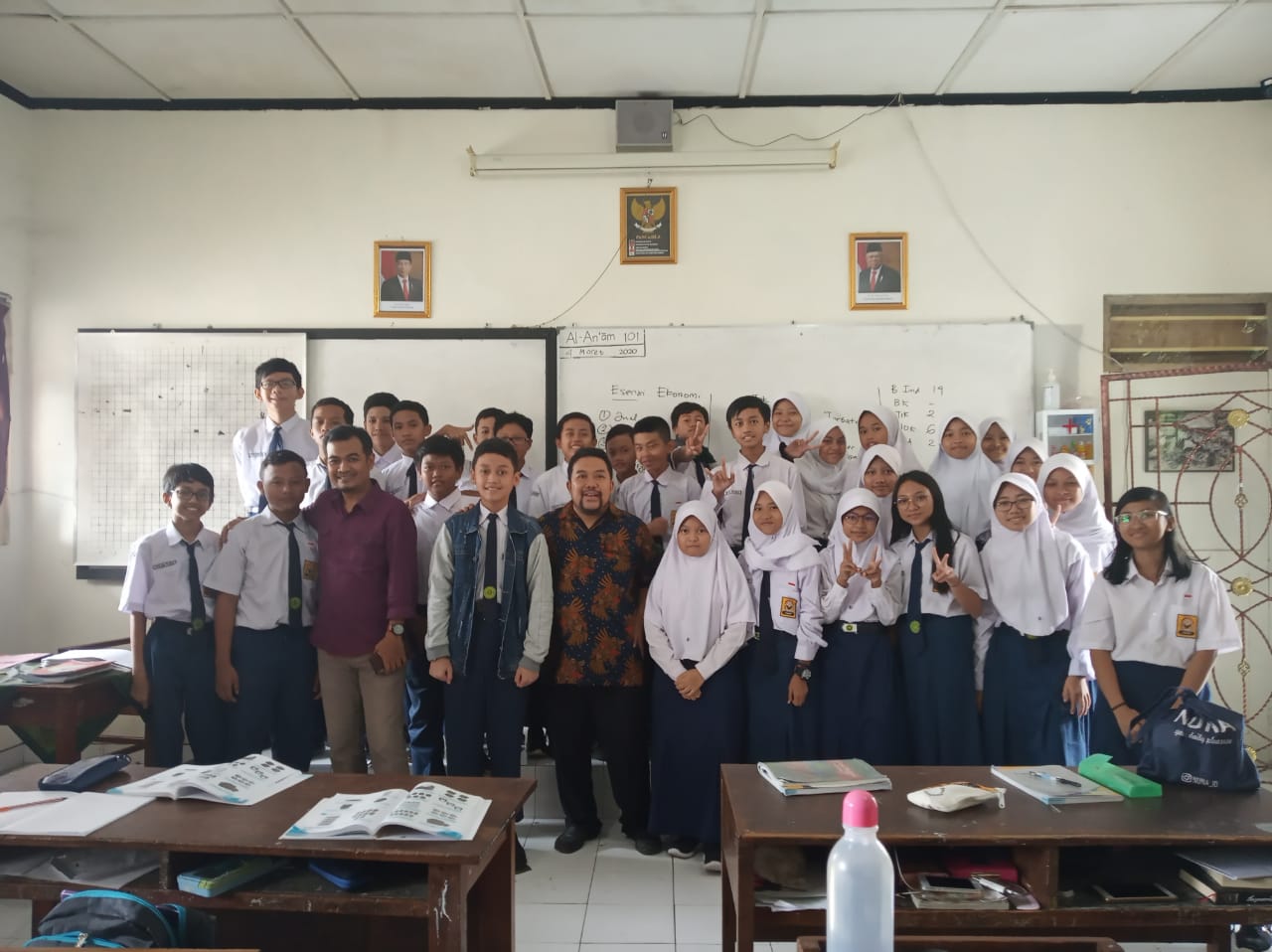
    Taking parts in the UNS Mengajar program, four lecturers from the Development Economic Study Program (DESP), the Faculty of Economics and Business, Universitas Sebelas Maret (FEB UNS) visited their Almamater in SMPN 8 Yogyakarta on Wednesday (4/3/2020). The four lecturers that consist of Bhimo Rizky Samudro, SE, M.Si. Ph.D., Dr. Tetuko Rawidyo Putro, S.E., M.Si., Dr. Suryanto, SE, M.Si., and Danur Condro Guritno, S.E., M.E., is welcomed directly by the Vice Principal of the SMPN 8 Yogyakarta and teachers representatives.

    DESP lecturer at SMPN 8 YogyakartaThe team from FEB UNS was delivering separated lecture on different topics in class 7C, 7D, 7E, and 7F. Dr. Bhimo delivers a lecture on the topic of the Basic of Economics and Nationality, Dr. Tetuko delivers a topic on the Concept of Rational Choice, Dr. Suryanto on the Health Simulation and Covid-19 Prevention, while Danur, M.E., on Self-Motivation.

    Dr. Bhimo explained to the students how to optimally manage the resources in the surrounding environment for the community welfare especially the national interest. “We have to instill more pride in using national products because it was made from local material, such as traditional food,” he explains to the students.

    The atmosphere in the classroom was lively, aside from delivering the material, Dr. Bhimo invites all students in the class to engage in a discussion. Occasionally the students were asked a question. Interestingly, each student who can answer the question received books as a gift. There are 4 (four) books provided as gifts in total. In the middle of the discussion, the students were asked to describe their dream and what would they contribute through the dreams.DESP Lecturers

    In separated classrooms, Dr. Tetuko and Dr. Suryanto provide discourse, simulation, and interesting games regarding rational choice, especially prevention on Covid-19.

    Dr. Bhimo and his team express their happiness for being able to teach in their former high school and transferring knowledge to students. For the FEB UNS lecturers team, SMPN 8 Yogyakarta is part of their education process that they follow to be able to reach current achievement. (Humas)

    Editor: Drs. BRM. Bambang Irawan, M.Si.

  • Ayya Agmulia Went to Singapore After Passing the IndonesianNEXT 2018 Competition

    Ayya Agmulia Went to Singapore After Passing the IndonesianNEXT 2018 Competition

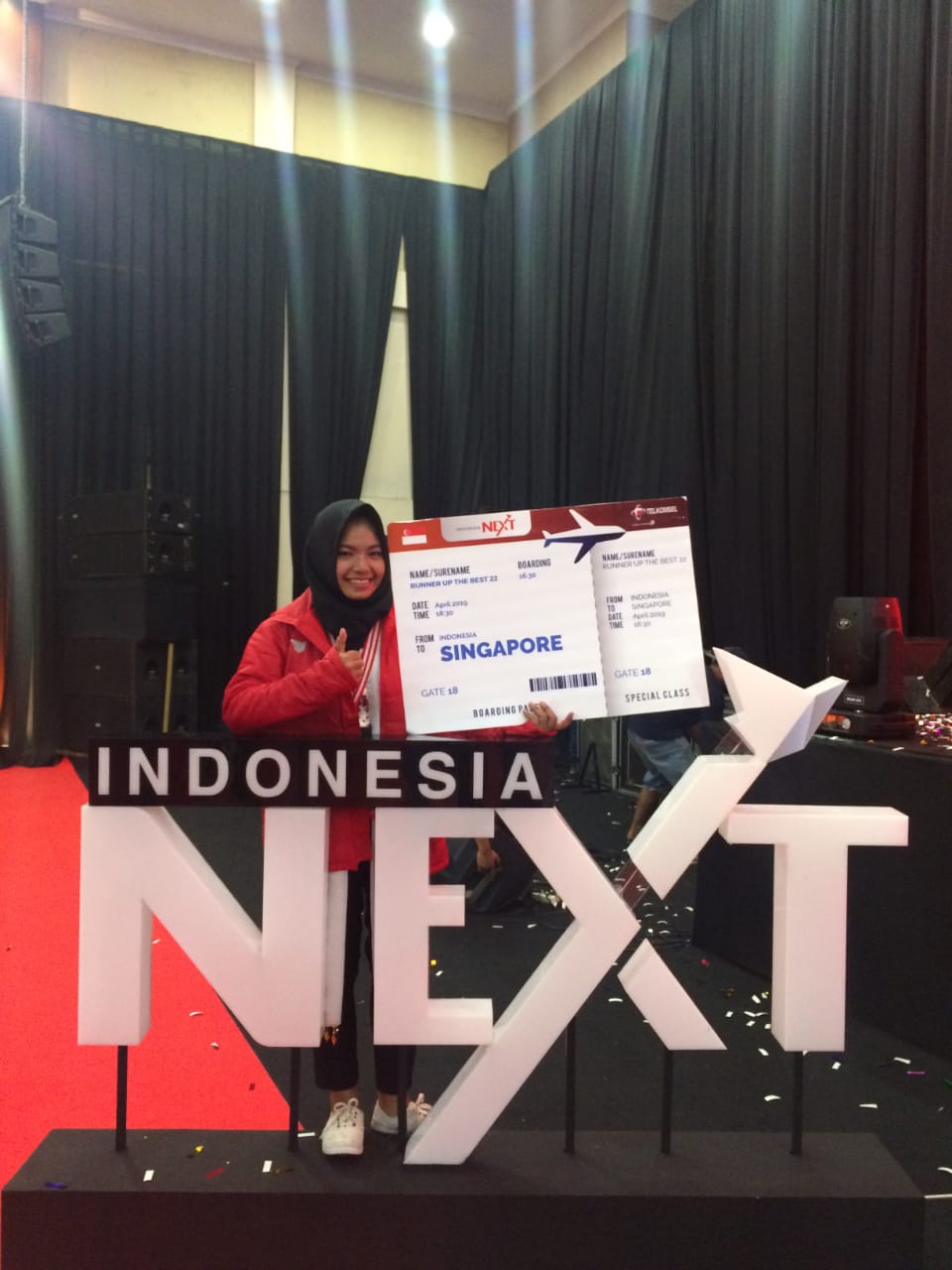
    Ayya Agmulia Asmarani Islam, a final year student of Bachelor in Economics Study Program, the Faculty of Economics and Business, Universitas Sebelas Maret (FEB UNS), has succeeded in reaching the top 32nd in the IndonesianNEXT 2018 after a tight competition with approximately 17,309 contestants from 21 universities in Indonesia. The best 32nd finalists are from 8 cities: Bogor, Padang, Lampung, Bandung, Makassar, Pontianak, Semarang, and Malang, and Ayya represents the Regional 3: Semarang. For this achievement, Ayya, earns an opportunity to follow a short course in DBS Asia office and the biggest telecommunication firm in Singapore, Singtel (Singapore Telecommunication) on April 2019. While the top 10 contestants follow a similar program to Japan.

    The Indonesia Next Competition is a Corporate Social Responsibility (CSR) education program from PT. Telkomsel Tbk, a biggest communication provider in Indonesia. This program gives opportunity to the university students to improve their competency by following an International Certification test, in order to prepare themselves in a global competition. The trainings provided are including Communication Skill (Talk Inc), Critical Thinking, Industry Insight, Digital Content Marketing using Hubspot, Technical Design Presentation using Microsoft Office Powerpoint 2013, and Visual Design and Communication using Adobe Photoshop CS6/CC. With a theme of “Yes, I’m the Next”, the IndonesiaNEXT present various seminars and talk-shows, international certifications, communication skills and digital marketing training, and finally the bootcamp program to select the best participant in IndonesiaNEXT 2018.

    “In IndonesiaNEXT we are competing to establish a creative idea to develop a better Indoensia through Telkomsel service,” she explained to FEB UNS PR staff during the breaks after her thesis consultation. She adds that for the competition, she chooses a topic on “Telkomsel for Millenials”, she chooses the topics because she found that many users that using the MyTelkomsel application is millennials, and she feels that MyTelkomsel has a potential to be developed as a super apps.

    “Initially, I thought the program is not user-friendly for millennial, therefore I proposed to introduce a special feature that can attract millennial user to make them more engaged with MyTelkomsel application,” she explains. “I did not expect that my idea would pass the selection process, or even made me reach the top 32nd position. There are many other excellent contestants with great ideas, but I am grateful to be able to contribute to this institution prestige and proved that UNS BISA (UNS Can),” she ended the interview with a bright smile.

  • UNS is Assessed by AUN-QA for the Second Time

    UNS is Assessed by AUN-QA for the Second Time

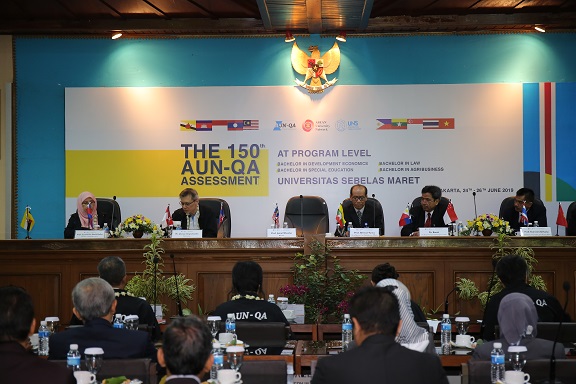
    The assessor team of the ASEAN University Network Quality Assurance (AUN-QA) appreciate the Universitas Sebelas Maret (UNS), especially for the assessed study programs on June 24th to 26th 2019. This was mentioned by the Vice Rector of Academic Affairs, Prof. Dr. Ir. Ahmad Yunus, MS, after the closing meeting on Wednesday, June 26th, 2019 in Dr. Prakosa Building UNS.

    The 150th AUN-QA Assessment at Program Level is the second assessment at program level by the AUN-QA for the study programs in UNS, after the first assessment conducted in 2018 for 4 (four) study programs namely, the Study Program of Bachelor in Management, Bachelor in Mechanical Engineering, Bachelor in Civil Engineering, and Bachelor in Biology. All the study programs are successfully accredited and certified by the AUN-QA.

    From the assessment result, Prof. Yunus is optimistic that UNS will obtain the certification for the four study programs being assessed this year. “This is the second opportunities for UNS to obtain an acknowledgement from an international accreditation organization at ASEAN level, thus UNS will be on the same level with other advanced study programs in ASEAN,” he explained. Further, he mentions that the assessor team found several areas of improvements for each study program. However, in general the assessment shows a positive result.

    Prof. Yunus congratulate the four study programs assessed on this opportunity, they are the Study Program of Bachelor in Development Economic, Bachelor in Special Education, Bachelor in Law, and Bachelor in Agribusiness, for conducting a series of activities in the 150th AUN-QA Program Assessment. He also expresses his gratitude to the Faculty of Economics and Business (FEB) for organizing the site visit and coordinating the whole assessment process.

    The assessment process took 3 (three) days to be completed. On the first day, Monday June, 24th 2019, the assessor team is welcomed by the Rector of UNS, Prof. Dr. Jamal Wiwoho, S.H., M.Hum, together with the Rectorate Officials, the Deanery of the assessed programs, and the Self-Assessment Report (SAR) Team from 4 (four) study programs, followed with Gambyong dance. This was followed with an Opening meeting. After the Opening Meeting the assessors follow an University site visit to several facilities such as Central Library, International Office, Taiwan Centre, UNS Museum, Medical Centre, Pusbangnis UNS, UNS Hospital, and UNS Medical Centre.

    The next assessment process after the University level site visit is centralized in FEB UNS and is conducted separately for each study program. Each study program is assessed by two assessors. Johnson Ong Chee Bin and Prof. Dr, Aleth Therese L. Dacanay serve as the assessor for the Bachelor in Development Economic; Prof. Dr. Suzeini Binti Abd Halim and Mrs. Siriluck Kiewkong as the assessor for Bachelor in Law; Assoc. Prof. Dr Kamulwan Lueprasert and Prof. Dr. Irfan Naufal Umar as the assessor for the Bachelor in Special Education; and lastly Assoc. Prof. Dr. Amalina M. Afifi and Asst. Prof. Dr. Thasaneeya Ratanaroutai Nopparatjamjomras as the assessor for the Bachelor in Agribusiness. The assessment process is accompanied by the Secretary of AUN-QA, Mr. Korn Ratagosoom.

    The assessors conduct several interviews with the Deanery, SAR Team, Academic staff, Support staff both at Faculty and University level, students, alumni, and user. All the interviews were conducted in consecutive manner. In between the interviews process, the assessors also conduct a Faculty level site visit. In FEB UNS there are some facilities visited by the assessors such as Students Activity Unit Room, Internship and Career Development Center, Computer Laboratory, Banking Simulation Laboratory, Export and Import Laboratory, Investment Gallery Room, and Teacher’s Transit Room.

    The Chief Assessor Johnson Ong Chee Bin expressed that he impressed with how the Assessment in UNS is being organized. “Since the time we arrived at the airport and the time we arrived at the assessment site today we are greeted with a very well organizing activities such as dancing, the assessment process, the document, the organization of the logistics were very well organized and efficient,” he said to the Public Relation team.

    Further he added that the campus is very green, and he finds it lovely that the campus has many trees and flowers. During the university site visit he saw some uniqueness of the campus such as of the inclusion of different religious buildings for example the mosque, the temple, the church.

    Humas FEB UNS