FEB

Kategori: s1_mnj

  • Menparekraf Encourages Millennials to be Entrepreneurs

    Menparekraf Encourages Millennials to be Entrepreneurs

    Currently, around 34 million Indonesians are dependent on the tourism sector and the creative economy. The government of Indonesia, through the Ministry of Tourism and Creative Economy, invites millennials to start a business, become entrepreneurs, and take opportunities to create jobs.
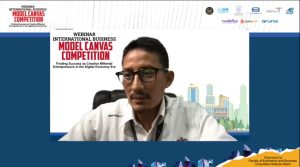
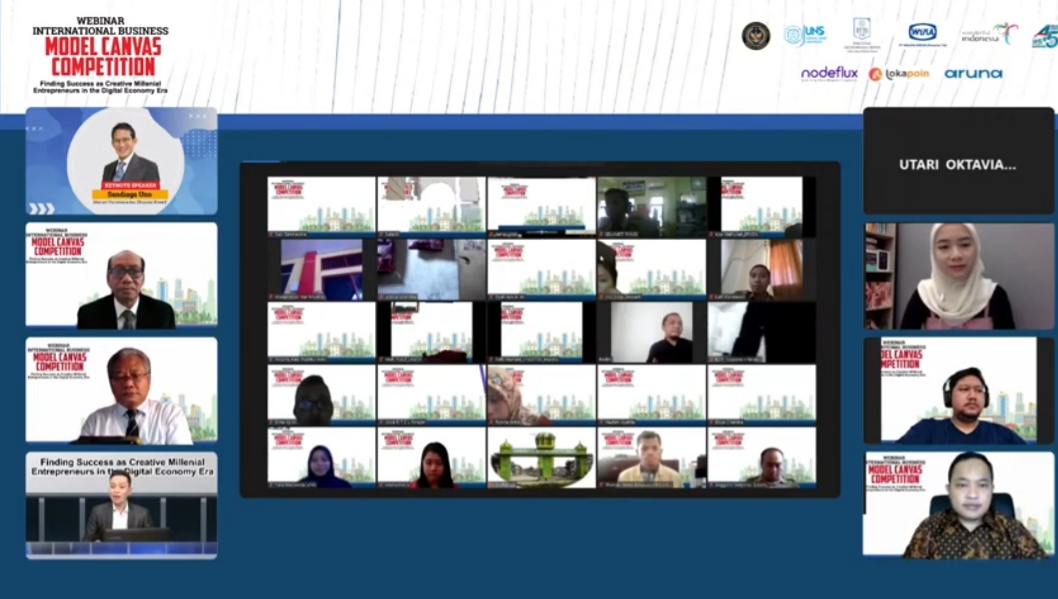
    Indonesia needs new entrepreneurs to stimulate SME’s recovery and development because tourism sectors and the creative economy are the spearheads of job creation. Currently, 97% of jobs are created by Micro, Small, and Medium Enterprises (MSMEs) and Start-ups businesses. This statement was mentioned by the Minister of Tourism and Creative Economy (Menparekraf), Sandiago Salahuddin Uno, as the Keynote Speaker in the International Business Model Canvas Competition Webinar, organized by the Faculty of Economics and Business, Universitas Sebelas Maret (UNS), Monday, April 26, 2021.

    During the pandemic, almost all creative economy sub-sectors are seeing a decline in their contribution to the Gross Domestic Product (GDP). There are only 2 (two) sub-sectors with a positive and steady GDP growth, namely mobile/computer application and game developers, as well as television and radio broadcasting. Including eSports, the economic values of these industries are more than IDR 16 trillion in total. These two sub-sectors relied on technology and digitalization in their application and targeted the technology-savvy consumers.

    “Normally, fashion, culinary, and crafts are the creative economy sub-sectors that contribute the most to the GDP. However, currently, those sectors experienced a significant decline, reaching up to 2.8% in fashion, 3.3% for crafts, and 3.89% for the culinary sector,” Sandiaga said.

    This situation happened because those subsectors have not optimally adapted to digitalization. E-commerce and other digital platforms, which support and facilitate MSME to improve their business, have not been optimally adopted by fashion, culinary, and craft businesses. Even though some MSMEs have initiated digital adoption, the implementation is still limited and needs further improvement.

    According to Sandiaga, in 2021 creative economy faced a challenge in the transformation of conventional MSMEs into digital-based businesses. Such condition is motivated by a change in global consumer behavior that prioritizes health, hygiene, and limited mobility.

    Development is crucial for digital businesses or any other businesses based on technology, big data, cloud computing, artificial intelligence, and the internet of things. This development will encourage creative economy actors to be more efficient and time-efficient in policies making based on real-time and accurate information because data science is getting more advanced each coming day.

    In front of more than 1,000 participants in the webinar ‘Finding Success as Creative Millennial Entrepreneurs in The Digital Economy Era,’ Sandiaga said that Indonesia currently has approximately 170.9 million young population (millennials and Generation Z) and is predicted to reach 187.6 million population in 2030. This demographic bonus is an opportunity but also a challenge, and if the current education does not equip the young generation with entrepreneurship, education, and leadership, they will become a burden in the future.

    These challenges must be solved through human resources development. The human resources in the creative economy sector must be established with an entrepreneurial, innovative, proactive, and risks taker millennial mindset. We must encourage innovation, adaptation, and collaboration with various stakeholders.

    “I hope that this International Business Model Canvas Competition can introduce new businesses and ideas from millennials, thus contributing to the Indonesian economic growth, supported by digital start-ups in various sectors,” Sandiaga concluded.

    The seminar, which was opened by the Vice-Rector for Academic and Student Affairs, Prof. Dr. Ir. Ahmad Yunus, MS and the Dean of FEB UNS, Prof. Drs. Djoko Suhardjanto, M.Com. Ph.D., Ak., invited four speakers, namely Utari Octavianty, the Co-Founder and General Director of Aruna, Keke Genio, the Co-Founder and CMO of Lokapoin Content Creator at Youtube, Meidy Fitranto, the Co-Founder and CEO of Nodeflux, and Agung Nur Probohudono, SE, M.Si. Ph.D., AK, CA, CFrA, as the Head of Accounting Study Program FEB UNS. (Humas FEB).
  • Coordinating Minister for Economic Affairs Encourages Academicians to Support UU Cipta Kerja

    Coordinating Minister for Economic Affairs Encourages Academicians to Support UU Cipta Kerja

    The ratification of the UU Cipta Kerja and its supporting law is a form of government’s commitment in realizing the structural reform. This become the effort to simplify, synchronize, and create more effective law from the many applicable regulations, which usually create investment problems.

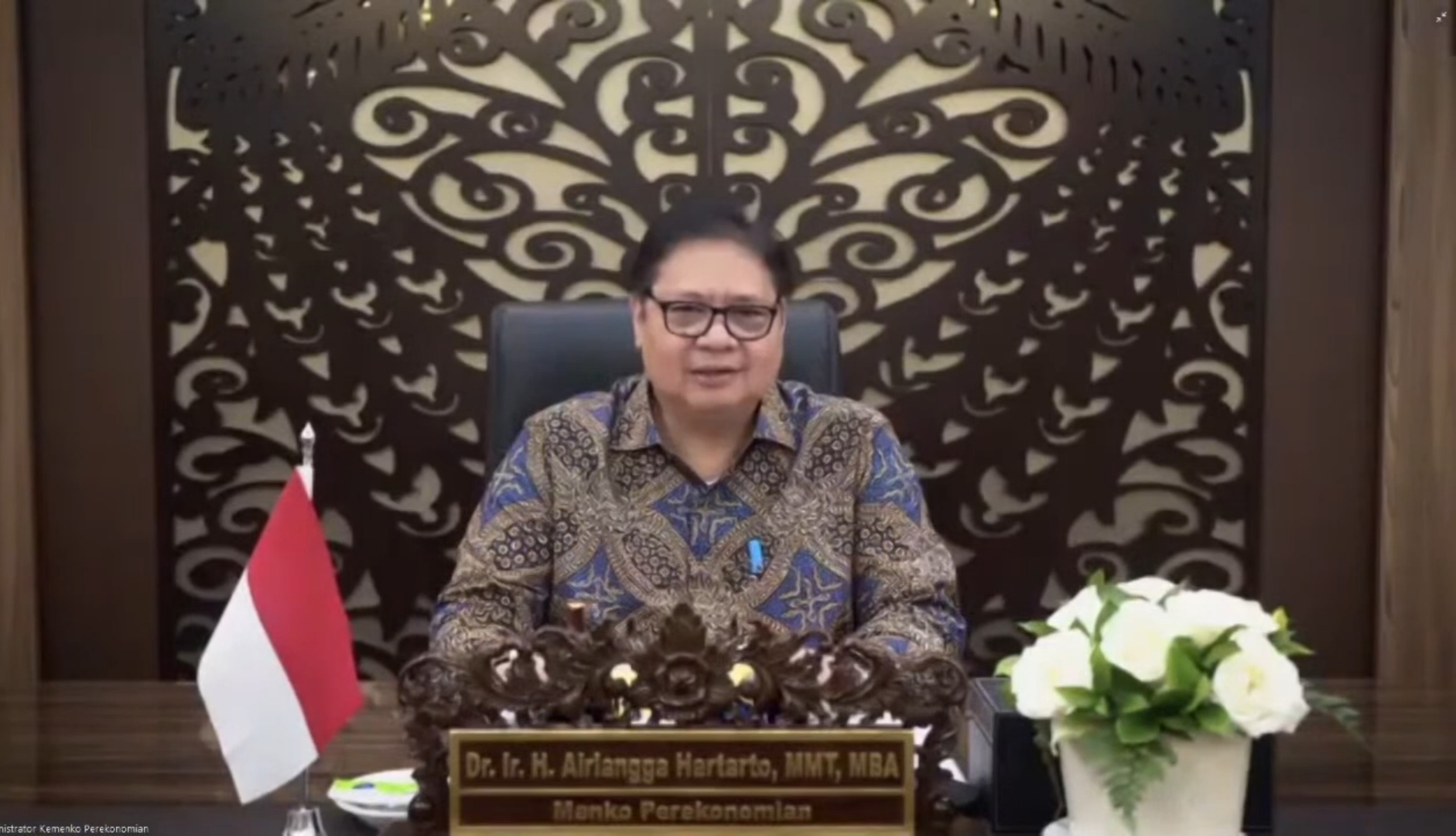
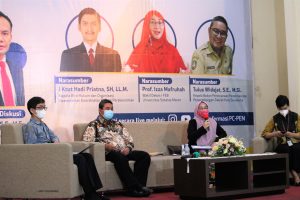
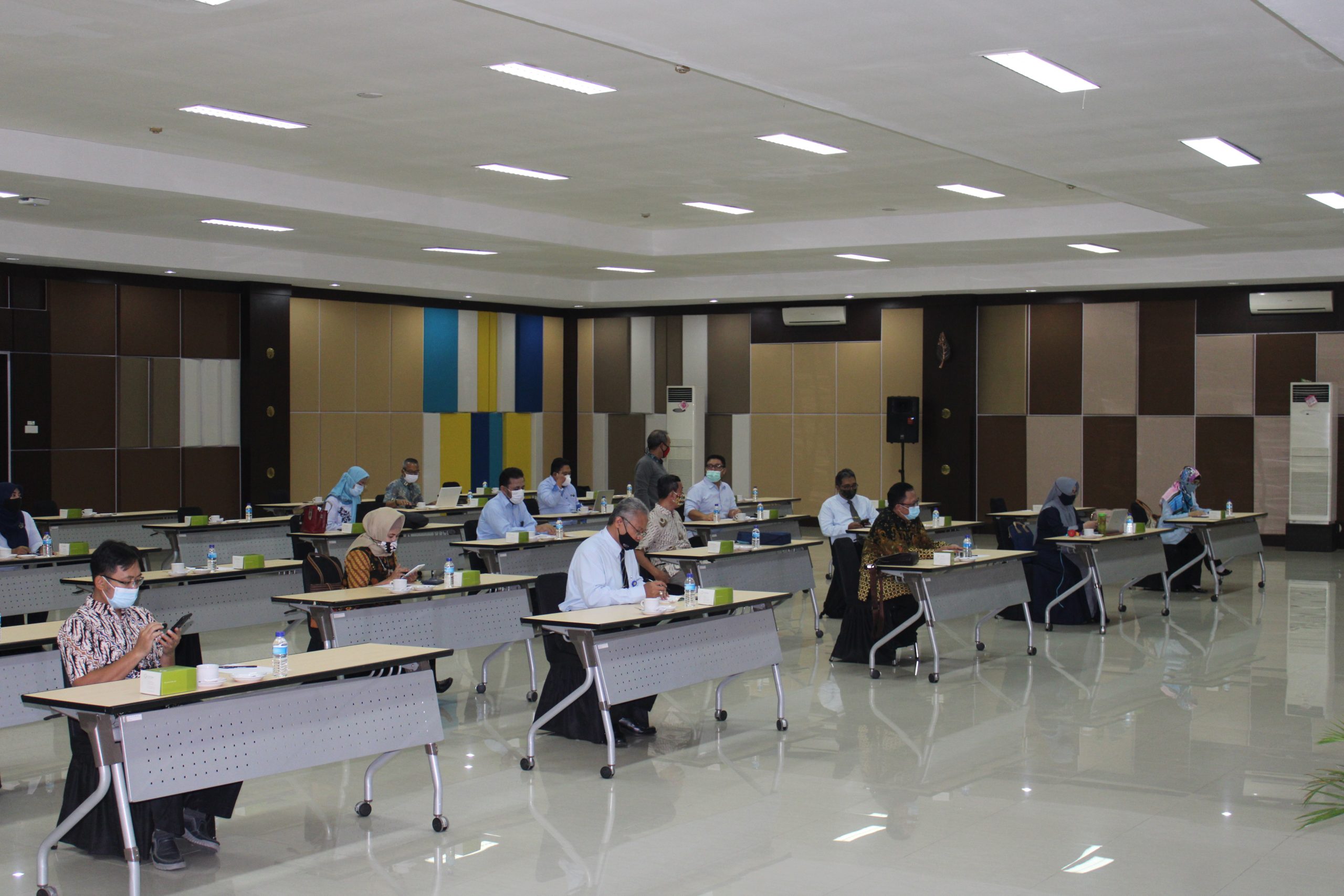
    This was delivered by the Coordinating Minister for Economic Affairs, Dr. (HC) Airlangga Hartarto, M.B.A., M.M.T., in the national seminar on Economic Transformation: Optimization of UU Cipta Kerja (Job Creation Law) as Key Strategy for Indonesia Investment Acceleration, organized by the Faculty of Economics and Business (FEB) Universitas Sebelas Maret (UNS) Surakarta, on Tuesday (30/3/2021). This event was held offline in Ruang Aula Seminar (Seminar Hall) FEB UNS and lived broadcasted on PC-PEN Information Center YouTube channel.

    The event’s keynote speaker was the Coordinating Minister for Economic Affairs, Dr. (HC) Airlangga Hartarto, M.B.A., M.M.T. The Rector of UNS, Prof. Dr. Jamal Wiwoho, opened the event led by Susiwijono, M.E., and other three speakers, I Ktut Hadi Priatna, S.H., LL.M., Prof. Izza Mafruhah, and Tulus Widajat, S.E., M.Si.

    In his remark, the Rector of UNS stated that the Covid-19 pandemic affects the health sector and economic sector alike. This disturbance can be observed from the increasing numbers of unemployment in Indonesia amid the pandemic. To solve this issue, the government needs to open job opportunities for the community. Inviting foreign investors to Indonesia is a means to achieve this objective. “The larger the number of investors entering (Indonesia), the more jobs will be available for the community,” Prof. Jamal said. Prof. Jamal also mentioned the role of MSME in post-Covid economic recovery and asked the government to support MSME in Indonesia to enter formal sectors, thus, facilitating the small business to achieve permit and bank loans.
    The Coordinating Minister for Economic Affairs, Dr. (HC) Airlangga Hartarto, M.B.A., M.M.T. stated that the Indonesian economy started to enter the recovery. “The signs of economic recovery are observable, reflected from PMI Manufacture above 50 or 50 plus 9 expansive level and investment realization and manufacture in 2020 was higher than previous years,” Dr. Airlangga said. He added that the proportion of consumption to saving continues to increase, and the Composite Stock Price Index (IHSG) and Foreign Exchange have returned to pre-pandemic level.

    Several international institutions, such as the World Bank, have predicted that economic growth in 2021 will reach 4.4% – 5.1% and in 2022 between 4.8% – 6.0%. This projection is in line with the government target in 4.5% – 5.3% level, supported by the mass vaccination program, national economic recovery program, and implementation of Law (UU) on Cipta Kerja (Job Creation) and Covid-19 handling. The government will take various efforts to reduce the pandemic impact, maintain health and economic condition to improve people’s trust, and increase consumption and investment in 2021.

    The government strategy in this matter is, first, acceleration in vaccination until 10.49 million dosages by 28 March 2021, with the first dosage for 7.25 million people and the second dosage for 3.2 million people. This program will be encouraged to achieve herd community in one year. Besides vaccination, the government applies the limitation for micro-community activities consistently to control the number of new Covid-19 infections by balancing social and economic aspects.

    The second strategy is the commitment to continue pouring funds for Covid-19 handling and national economic recovery in 2021 by allocating IDR 699.43 trillion funds, which increased from IDR 579.78 trillion last year (20%). As a form of commitment to structural reformation, the government has ratified UU Number 11 of 2020 that simplifies, synchronizes, and improves the effectiveness of large and complicated regulations that often hinder new businesses’ investment.

    UU Ciptaker grants business permits that initially licensing-based to risk-based. This reformation will create a more efficient and transparent government service. Dr. Airlangga said that all parties are open to capital investment, and it has protected MSME. The government also increase direct investment that forms sIndonesia’s investment authority. Concluding his material, Dr. Airlangga stated that the government needs collaboration from all stakeholders to implement the new regulation. He also congratulated UNS on the success of this national seminar.

  • FEB UNS Prepared Laboratory toward Revenue Generating

    FEB UNS Prepared Laboratory toward Revenue Generating

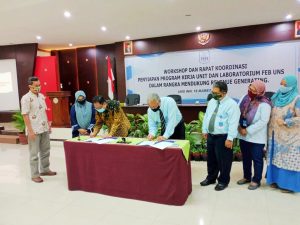
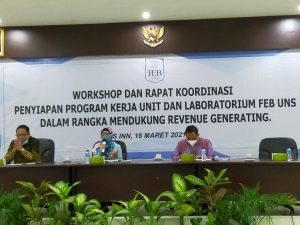
    The Faculty of Economics and Business (FEB) Universitas Sebelas Maret (UNS) Surakarta held a workshop on FEB UNS Laboratory Development toward Revenue Generating Efforts. The workshop was attended by the Board of Dean, Head of Programs, and the Chief of Unit and Laboratory FEB UNS. Ir. H. Utomo Putro, MM, Director of PT. Intan Pariwara and M. Wira Adibrata, Head of BEI Central Java II, were invited as speakers.

    The Dean of FEB UNS, Prof. Drs. Djoko Suhardjanto, M.Com (Hons), Ph.D, Ak, in his remark, mentioned that this event is FEB’s efforts to implement Kampus Merdeka Merdeka Belajar (KMMB) Program and to answer the demand of UNS new status as University with Legal Entity (PTNBH). “University need to form a partnership with the Business World, and Industrial World (DUDI) accelerate campus development,” Prof. Djoko mentioned Tuesday (16/3/2021) in UNS Inn. This effort can be applied by inviting practitioners as speakers, teaching, and training university students to be familiar with the workplace and ready to compete in the actual workplace.

    Prof. Djoko also mentioned that in UNS KMMB, many activities could be implemented in collaboration with DUDI to develop a link and match process. Students can take on-campus and off-campus activities through an industrial internship recognized in their credit semester (SKS).

    The event consists of a material presentation from the Director of PT. Intan Pariwara and the Head of BEI Central Java II, a discussion, and internal discussion on the Development of Laboratory with the Vice-Dean for Academic, Research, and Student Affairs FEB UNS, Prof. Dr. Izza Mafruhah, SE, M.Si and Vice-Dean for Planning, Partnership, Business, and Information Affairs FEB UNS, Dr. Mugi Harsono, SE, M.Si.

    In this event, FEB UNS and PT Intan Pariwara also signed a collaboration agreement which includes Management Trainee (MT) selection program from PT Intan Pariwara in which 54 FEB UNS alumni participated in the process.

  • Zero Percent Down Payment Policy, What Expert Says

    Zero Percent Down Payment Policy, What Expert Says

    The Covid-19 pandemic hit Indonesia in March 2020 brought multi-sector economic declines. After one year of struggling with the pandemic, the government took action to recover the economic condition, one of them is the Zero Percent Down Payment (DP 0%). The Central Bank of Indonesia (Bank Indonesia-BI) decides to implement a free down payment policy or popularly known as DP 0% for housing and vehicle purchase starting on March 1, 2021, until December 31, 2021. The government is optimistic that with the start of vaccination, the public will be more confident to resume their economic activities, thus recover the economic condition.

    Responding to this policy, Prof. Hunik Sri Runing Sawitri, M.Si., an economist from the Faculty of Economics and Business, Universitas Sebelas Maret (FEB UNS) Surakarta, states that the policy is, indeed, aiming to stimulate the declining automotive and property market. However, there is no clear signal toward that direction, there is still no significant effect.

    The government policy launched yesterday has not been able to make a significant impact, even though Bank Indonesia has seen the sign of economic recovery, but many factors are affecting the outcome, such as how small and medium enterprises (SME). The expectation is for the economic condition to return to normal and the public resuming their activities. In reality, the government still imposing social restrictions, which made us reconsider our decision to take debt, entrepreneurs will also rethink their decision for expansion,” Prof. Hunik explains during RRI Morning Talk, Tuesday (02/02/2021).

    Today, there is no significant impact, while the public is waiting for the result of vaccination. The DP 0% program attracts public interest for a moment, but they will be burdened with the installment. However, Prof. Hunik encourages the community to stay optimistic. The government has taken many efforts and providing great assistance to overcome the challenges during the pandemic. The DP 0% policy is expected to improve the community economy. Hopefully, the vaccination effort will be successful and the government will reduce the mobility restriction policy. Therefore, improving optimism and developing the Indonesian economic condition.

    On the other hand, Prof. Hunik finds unique phenomena during the Covid-19 pandemic. In this ongoing pandemic, there are many new entrepreneurs in online business that can support the household economy sufficiently. These online businesses offer various merchandise such as fashion, food, and even vegetable. The phenomena show the public creativity during this hard period.

    Prof. Hunik hopes that the community can find new opportunities when their past business failed during the Covid-19 pandemic. Indonesian people are expected to never give up, always come up with new business ideas, for example, online businesses. (Humas FEB)

  • FEB UNS Held RPS Workshop, Discussing Case Method-Based Learning

    FEB UNS Held RPS Workshop, Discussing Case Method-Based Learning

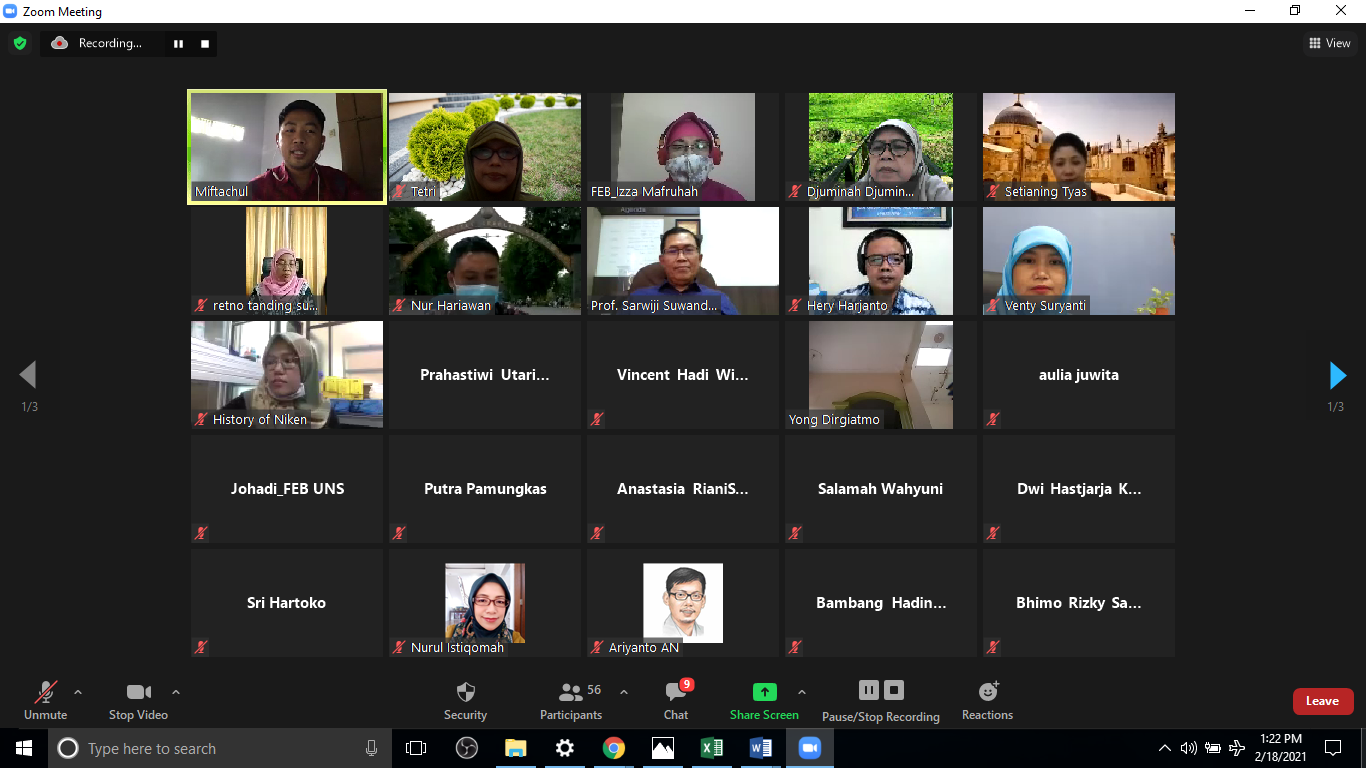
    Higher education must open new opportunities for students to develop their skills and actualizing their talent. This has become a great challenge for educators. Students must be facilitated to achieve great accomplishments and wasting their potential. Lecturers as an educator must reconstruct learning experience continuously. This was delivered by Prof. Dr. Sarwiji Suwandi, M.Pd., Chairman of the Institute of Educational Quality Assurance and Development (LPPMP) Universitas Sebelas Maret (UNS) Surakarta, when opening his material presented in the Worskhop of Case Method-Based Semester Course Plan (RPS) organized by the Faculty of Economics and Business (FEB) UNS, Thursday 18 February 2021.

    Prof. Sarwiji states that the learning paradigm has shifted. The learning process does not only require the students to learn but also the lecturers. Source of material become a crucial point. Lecturers must update their RPS periodically. The course plan must be adjusted if there is new literature or reference related to the current research.
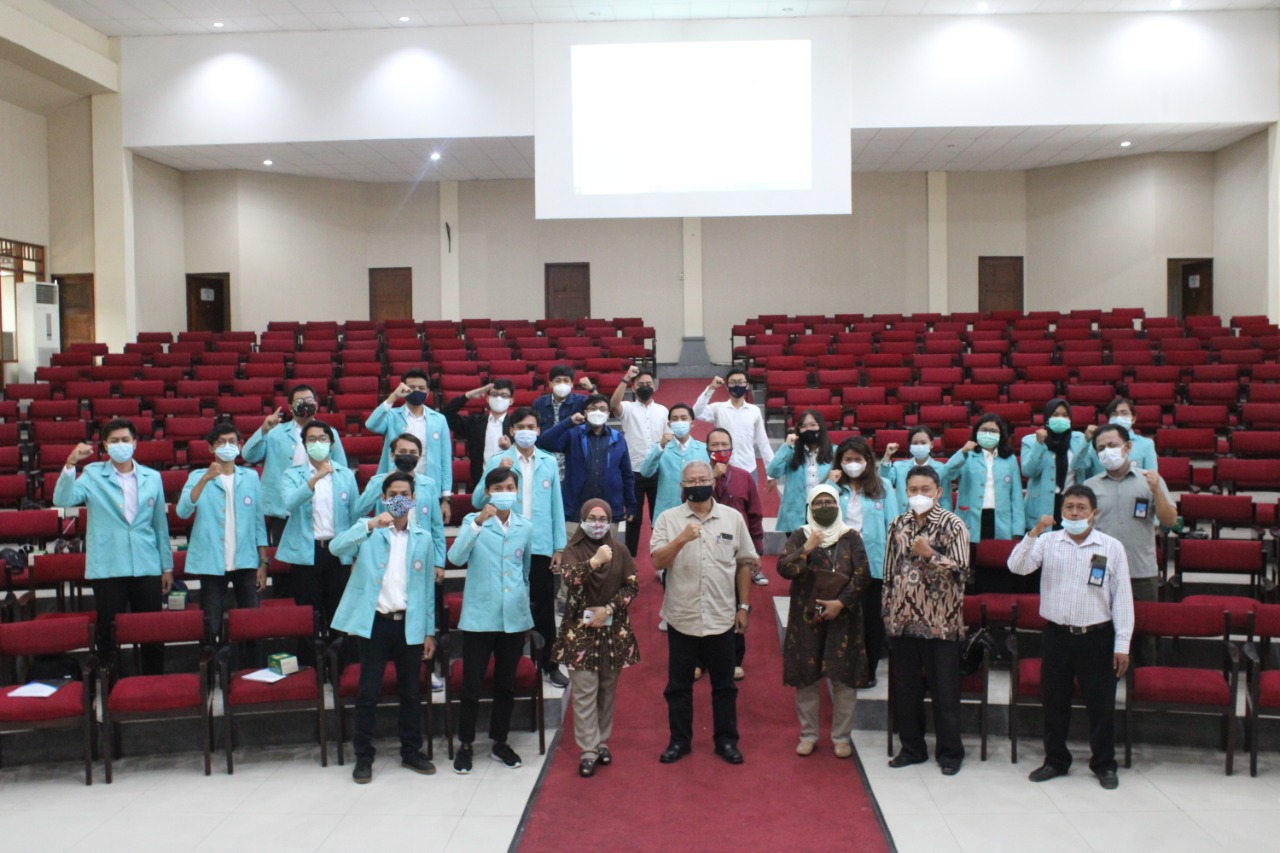
    “Lecturer as a true learner prepare course plan read many references, and research result to be included in the course plan (RPS). With this we can be more assured that the learning outcomes will be better,” he explains.

    Further, Prof. Sarwiji explains the learning method that must be applied according to the 7th Main Performance Indicator (IKU), the percentage of Bachelor and Diploma program that use case method or team-based project as evaluation assessment. The case method is participative learning based on a discussion process to solve a case or problem. The implementation of this method will hone and improve students’ critical thinking in problem-solving, communication skills, collaboration, and creativity.

    “Implementing the case method, students should not be given an individual assignment, but a group assignment. This is because the problem in real life requires us to solve a problem collectively, using a different perspective, and various strategies proposed by team members,” he explains.

    In the case method, students took the main role in problem-solving, while the lecturer only acts as a facilitator, who observe the discussion, inquiring, and leading the discussion. Using this method, students will be involved actively to improve their creative and critical thinking. Moreover, the insight from the solved cases will give them a real-life problem-solving experience. This method can also train students to instill a positive social attitude and helping students to receive others’ opinions.

    The weakness of this method is the need for extensive preparation including tools, problems, and complex concepts, and sometimes there are no relevant cases to be discussed. (Humas FEB)

  • The Dean of FEB UNS Inaugurates BEM, DEMA, and Student Association Administrator

    The Dean of FEB UNS Inaugurates BEM, DEMA, and Student Association Administrator

    The Dean of the Faculty of Economics and Business (FEB) Universitas Sebelas Maret (UNS) Surakarta, Prof. Drs. Djoko Suhardjanto, M.Com. (Hons), Ph.D., Ak. Inaugurates the administrator for the Student Executive Board (BEM), Student Supervisory Board (DEMA), and Student Organizations (ORMAWA) for 2021. The ceremony took place on Thursday, 25 February 2021 in FEB UNS Auditorium (Building 3).

    The ceremony was attended by the Vice-Dean, Head of Partnership Unit, and FEB UNS Administrative Leaders, where a signatory of Minutes of Management Handover also took place. The signatory was represented by the Chair of BEM and DEMA FEB UNS, which symbolizes the transfer of responsibility from the Administrator for the previous period (2020) to the new Administrator in 2021.

    The Dean of FEB UNS in his opening remarks congratulate the elected new administrator and thanking the previous administrator for their service and devotion. Prof. Djoko also requested that the previous leader will assist the new leader to accomplish even greater achievements. Further, regarding the shift of UNS status from a Public Service Agency (BLU) into a State University as Legal Entity (PTN BH), there are many adjustments, both in terms of organizational structure and working pattern, there must be a great leap. UNS is required to accomplish a target set by the government to enter the top 500 global universities.
    Prof. Djoko also encourages the students, especially the administrators for BEM, DEMA, and ORMAWA to actively engage, organize, and joining international events. The FEB UNS will assist the students to reach international achievements. “The designation of UNS as PTNBH, students’ activities both in academic and non-academic sector lead to international achievements. University, faculty, and study programs will support students’ activities. If there is any difficulty, we will solve it together. We must collaborate to reach the target,” he stressed while motivating the students.

    Concluding the event, the Dean delivers a message for the students that even though they are actively participating in the organization, they must maintain their academic achievement. (Humas FEB).

  • FEB UNS Organizes Workshop in Budgeting Submission and SPJ Preparation

    FEB UNS Organizes Workshop in Budgeting Submission and SPJ Preparation

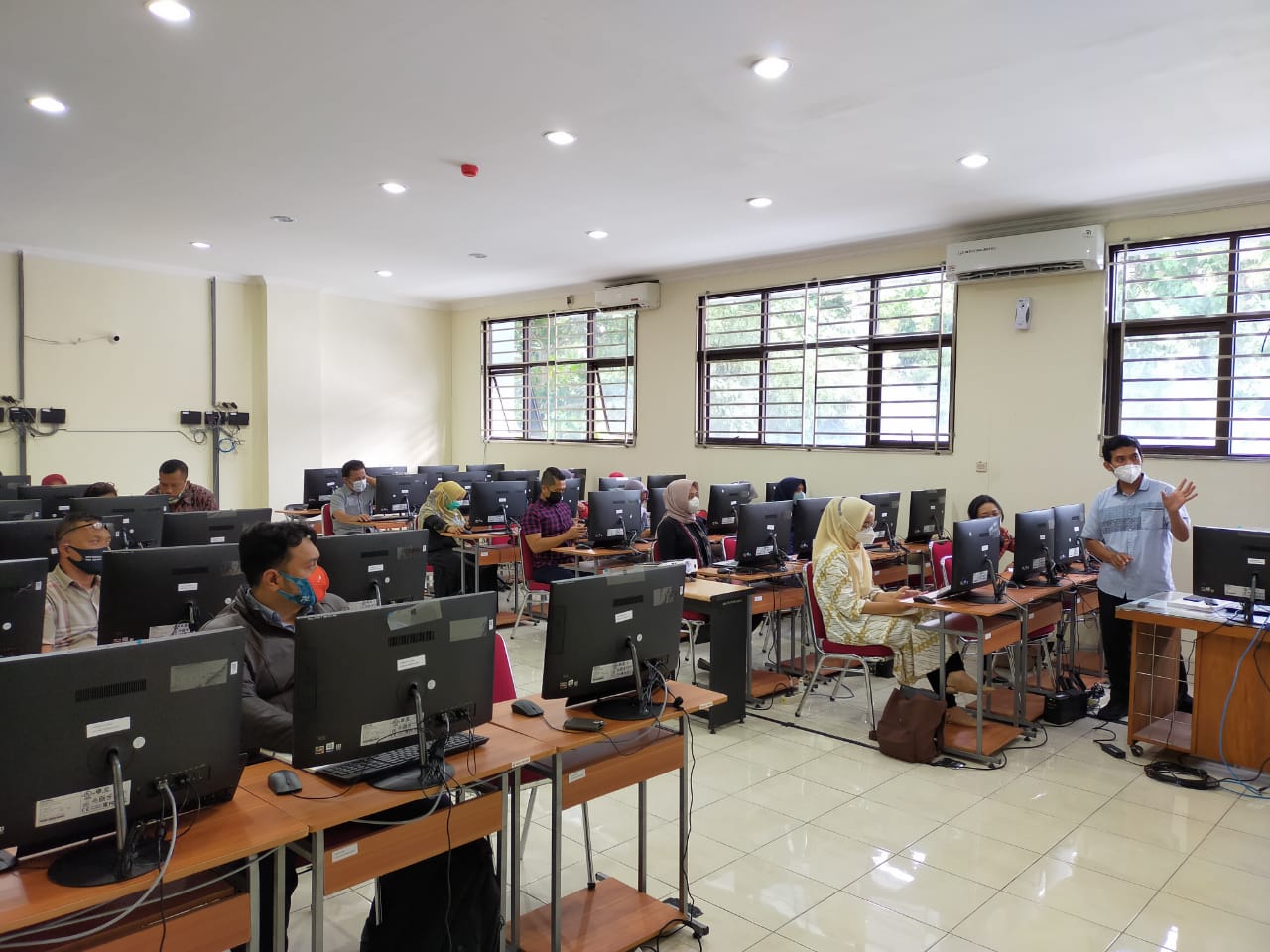
    The Faculty of Economics and Business (FEB) Universitas Sebelas Maret (UNS) Surakarta organizes a Workshop in Budgeting Submission and Accountability Report (SPJ) Preparation on Thursday (25/02/2021) in FEB UNS Computer Laboratory. The event was attended by 20 participants representing each study program in FEB UNS and Helpdesk administrator.

    The Coordinator of FEB UNS Administration Unit, Tunggul Ardhi, S.Si., in his remarks stated that the shift of UNS administration from Public Service Agency (BLU) into a State University as Legal Entity (PTN BH) need several adjustments in term of budget submission and SPJ preparation. The currently applicable guideline is the UNS Minimum Standard Cost (SBM).

    On this occasion, all technical staff will be introduced to the new guidelines, how to prepare SPJ, and the budget submission process. Through this training, it is expected that all technical staffs can adjust faster. Christiana Yulia, S.Pd., as the FEB UNS General Treasurer, and Gigih Fantriko, A.Md., from the FEB UNS Planning Unit, become the instructors for the workshop.

    Gigih Fantriko explains the general description of the service provided by FEB UNS Planning Affairs, such as uploading and supporting faculty data (KPI), the revision for budget submission, downloading faculty planning, and budget planning procedure. He also guides the participants on how the study program’s operator uses Budget Planning and Evaluation System (Sireva).

    Meanwhile, Christiana Yulia delivers the technical budgeting submission and SPJ preparation. Participants are expected to learn the new guidelines. In order to evaluate participants’ understanding, at the end of the session, Yulia delivers questions that need to be solved. The questions related to SPJ preparation, Payment Warrant (SPBY), payment receipt according to the rates used, and taxes according to the new regulations. (Humas FEB UNS)

  • HMJ Management FEB UNS Held Social Care

    HMJ Management FEB UNS Held Social Care

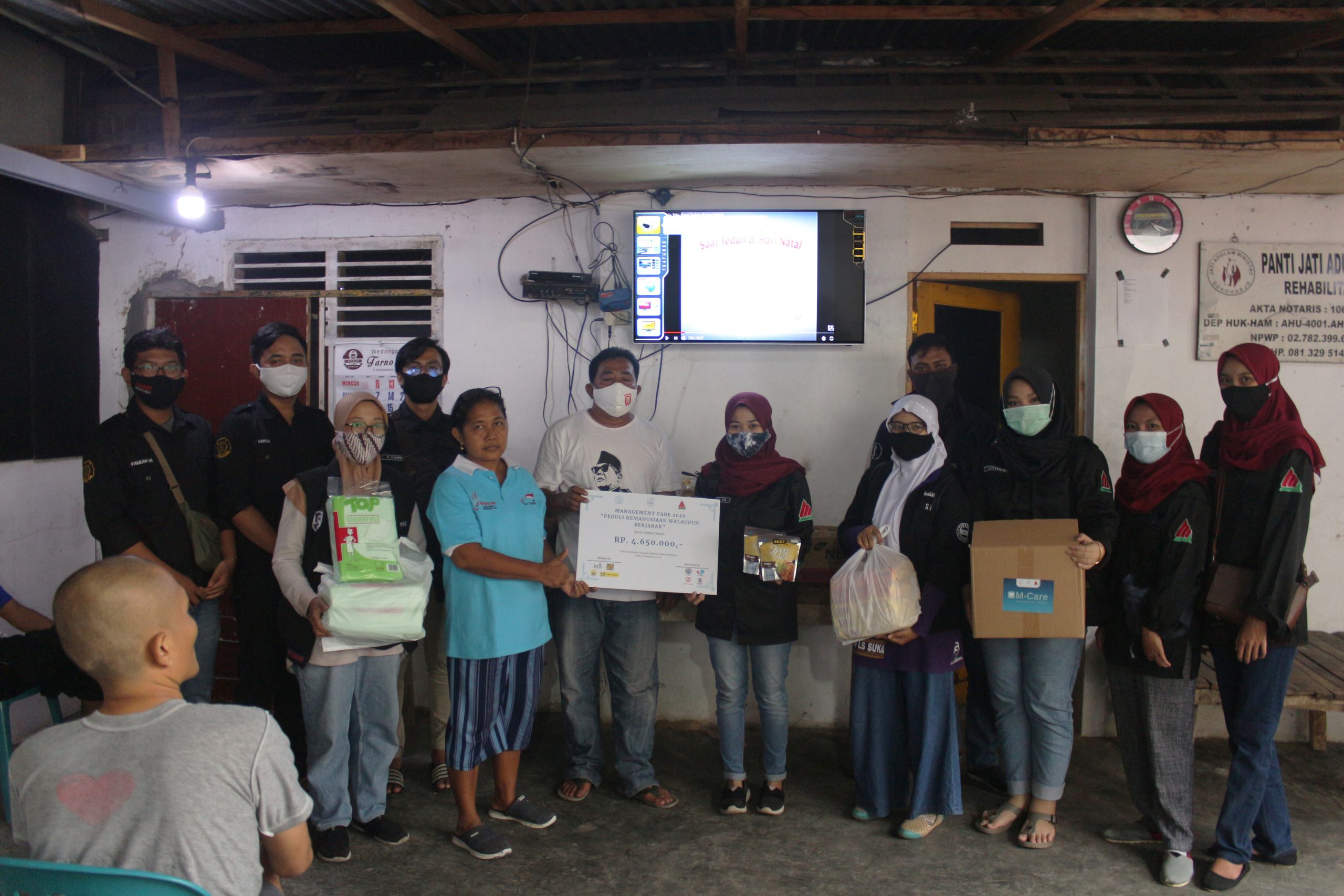
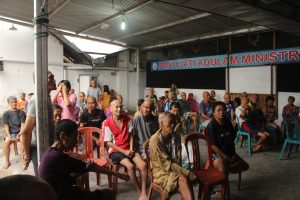
    Student Association of Undergraduate Program in Management (HMJ Manajemen) Faculty of Economics and Business (FEB) Universitas Sebelas Maret (UNS) Surakarta held Management Care (M-Care), a social service program, in Panti Jati Adulam Ministry, Pasar Kliwon, Solo.

    The person in charge of this program, Nanda Febrian Adyningsih stated that this program is a routine agenda of HMJ Manajemen that targets financially disadvantaged people. This program aims to develop social sensitivity, care, and a sense of love and belonging to each other. M-Care started with fundraising from the financially advantaged community in various forms, both cash and goods. The collected money and goods were then distributed to the disadvantaged community.

    “M-Care invites people to participate and lend a hand to help others. Alhamdulillah, in around two weeks, we succeed in raising funds from donors that exceed our target. This includes funds from FEB UNS Motorbike Club, EMC, and we are thankful for the support. And on 5 December 2020, we had conducted the Social Service,” Nanda explained, Thursday (17/12/2020).

    For 2020, Panti Jati Adulam Ministry becomes the target of the M-Care event because the institution has 70 residents with mental disorders and 10 elderly people. The relief in the form of cash, staple foods, and cleaning tools was handed symbolically to the management. After the ceremony, the students assisted the administration in preparing afternoon tea for all residents. The management conveyed their gratitude and was glad to receive such assistance. (Humas)

  • Serving in Their Previous School, the FEB UNS Lecturers and Alumni Teach in SMAN 1 Trenggalek

    Serving in Their Previous School, the FEB UNS Lecturers and Alumni Teach in SMAN 1 Trenggalek

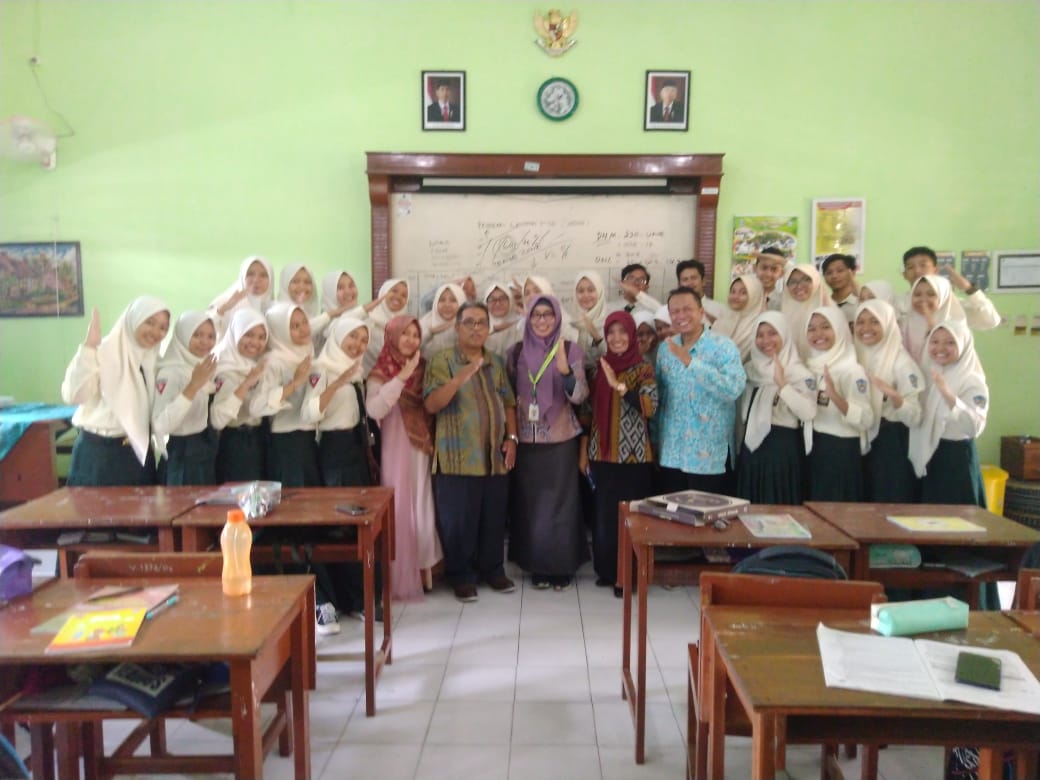
    Lecturers from the Faculty of Economics and Business, Universitas Sebelas Maret (FEB UNS), Dr. Mugi Harsono, M.Si. and Risgiyanti, SE., M.Si., together with the Alumni of Master in Medicine UNS, as well as the Head of Study Program in the Diploma of Nursing, Poltekes Negeri Malang, Rahayu Niningasih, S.Kep., Ners., M.Kes, held a community service by teaching in SMAN 1 Trenggalek, Friday, 6 March 2020.

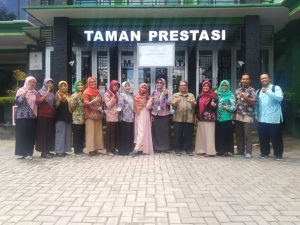
    FEB UNS Lecturers at SMA N 1 TrenggalekThe arrival of the lecturers to the SMAN 1 Trenggalek was welcomed by the Vice Principal together with the teachers. The school administrative welcomes the UNS Mengajar program and is planning to visit UNS to establish a partnership.

    In the teaching program, the team that was led by Dr. Mugi Harsono who currently is the Vice Dean of Students and Alumni Affairs in FEB UNS, the classes were divided into two sections. The social section with two materials in Family Business and Entrepreneurship was delivered by Dr. Mugi and Risgiyanti, M.Si., consecutively. Meanwhile, for the Biology section, the material in Reproductive Health is presented by Rahayu Niningasih. M.Kes.

    In the social section, Dr. Mugi who was the alumni of SMAN 1 Trenggalek in Program A3 (social) in 1988 teaches the importance of economics strengthening as part of national defense, its implementation in entrepreneurship, and initiation (start-up) in the form of a family business.

    Dr. Mugi also explained that family business usually can only last for 3 generations, following the famous proverb first generation starts, the second generation expands, and the third generation destroys. Therefore, an effort for succession planning is needed, thus the family business can sustain.

    Meanwhile, a young lecturer from FEB UNS, Risgiyanti, M.Si., strengthens the students’ interest using an entrepreneurship game, which represents how much the students dare to take risks.

    The materials were delivered seamlessly, started with the introduction of the material, follLecturers of FEB UNS at SMA N 1 Trenggalekowed by discussion and games. The students are enthusiastic to participate, asking questions, taking initiative, or answering questions.

    Related to his former school, Dr. Mugi mentioned that SMAN 1 Trenggalek is one of the oldest State high schools in Trenggalek, where most of its teachers now held a master’s degree. When visiting SMAN 1 Trenggalek, the lecturers felt the impression of the school management perception that the Universities in Jawa Tengah implement rayonisasi (restriction), thus it is difficult for the prospective students from outside Jawa Tengah.

    During this opportunity, Dr. Mugi Harsono explains the admission procedure in UNS, which is very open for all students from across Indonesia, including Jawa Timur Province. (Humas)


    Editor: Drs. BRM. Bambang Irawan, M.Si.

  • Dr. Hunik Inaugurated as a Professor in Human Resource Management

    The Rector of Universitas Sebelas Maret (UNS), Surakarta, Prof. Jamal Wiwoho, inaugurates Dr. Hunik Sri Runing Sawitri, S.E., M.Si., as a Professor in Human Resource Management of the Faculty of Economics and Business (FEB) and Dr. dr. Yulia Lanti Retno Dewi, M. Si as a Professor in the Science of Nutrition for the Faculty of Medicine, on Tuesday, 15th October 2019.

    During the open senate congress of the Universitas Sebelas Maret in UNS Auditorium G. P. H

    Haryo Mataram, Prof. Dr. dr. Yulia Lanti Retno Dewi, M. Si delivers an inauguration speech entitled “Lack of Iodine within Ecological Perspective and Its Prevention”. The speech was the result of a research of Prof. Yulia under the Research Group of Iodine Deficiency Disorders (Gangguan Akibar Kekurangan Iodium-GAKI). In her opening speech, Prof. Yulia mentions that Iodine deficiency is a global problem and in Indonesia it is estimated that the population living in Iodine deprived area approximately 54 million and is scattered all around Indonesia.

    “The Minister of Health has decided that iodine deficiency is one of the major nutritional problem, because it meets the criteria such as many people suffer from the problem, spread-out through out Indonesia region, and has a negative impact on the quality of Indonesia citizen in a long-term,” Prof. Yulia explains.

    Meanwhile, Prof. Dr. Hunik Sri Runing Sawitri, S. E., M. Si, delivers an inauguration speech entitle “Organizational Commitment, Culture, and Employees’ Performance”, which highlight the relationship between commitment and employee’s performance. “Many assumed that an employee with a high commitment will have a high performance. However, empirical research offers different result regarding this matter,” Prof. Hunik mentions the topic at the opening of her speech. She explains that various research is conducted to examine the relationship between the two constructs. But the result shows a varied and unclear relationship between the two.

    “Therefore, when conducting research on the relationship between commitment and performance, the construct of commitment should be defined clearly beforehand, which organizational commitment is examined in the research,” Prof. Hunik explains.

    With the inauguration of Prof. Hunik and Prof. Yulia in UNS; the Rector of UNS Prof. Jamal Wiwoho expect that Prof. Hunik and Prof. Yulia can maintain and develop scientific and academic values, as well as contribute to the development of UNS.