FEB

Kategori: s2_mesp

  • Zero Percent Down Payment Policy, What Expert Says

    Zero Percent Down Payment Policy, What Expert Says

    The Covid-19 pandemic hit Indonesia in March 2020 brought multi-sector economic declines. After one year of struggling with the pandemic, the government took action to recover the economic condition, one of them is the Zero Percent Down Payment (DP 0%). The Central Bank of Indonesia (Bank Indonesia-BI) decides to implement a free down payment policy or popularly known as DP 0% for housing and vehicle purchase starting on March 1, 2021, until December 31, 2021. The government is optimistic that with the start of vaccination, the public will be more confident to resume their economic activities, thus recover the economic condition.

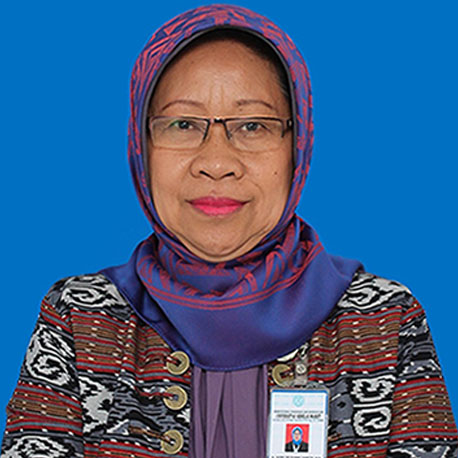
    Responding to this policy, Prof. Hunik Sri Runing Sawitri, M.Si., an economist from the Faculty of Economics and Business, Universitas Sebelas Maret (FEB UNS) Surakarta, states that the policy is, indeed, aiming to stimulate the declining automotive and property market. However, there is no clear signal toward that direction, there is still no significant effect.

    The government policy launched yesterday has not been able to make a significant impact, even though Bank Indonesia has seen the sign of economic recovery, but many factors are affecting the outcome, such as how small and medium enterprises (SME). The expectation is for the economic condition to return to normal and the public resuming their activities. In reality, the government still imposing social restrictions, which made us reconsider our decision to take debt, entrepreneurs will also rethink their decision for expansion,” Prof. Hunik explains during RRI Morning Talk, Tuesday (02/02/2021).

    Today, there is no significant impact, while the public is waiting for the result of vaccination. The DP 0% program attracts public interest for a moment, but they will be burdened with the installment. However, Prof. Hunik encourages the community to stay optimistic. The government has taken many efforts and providing great assistance to overcome the challenges during the pandemic. The DP 0% policy is expected to improve the community economy. Hopefully, the vaccination effort will be successful and the government will reduce the mobility restriction policy. Therefore, improving optimism and developing the Indonesian economic condition.

    On the other hand, Prof. Hunik finds unique phenomena during the Covid-19 pandemic. In this ongoing pandemic, there are many new entrepreneurs in online business that can support the household economy sufficiently. These online businesses offer various merchandise such as fashion, food, and even vegetable. The phenomena show the public creativity during this hard period.

    Prof. Hunik hopes that the community can find new opportunities when their past business failed during the Covid-19 pandemic. Indonesian people are expected to never give up, always come up with new business ideas, for example, online businesses. (Humas FEB)
  • FEB UNS Held RPS Workshop, Discussing Case Method-Based Learning

    FEB UNS Held RPS Workshop, Discussing Case Method-Based Learning

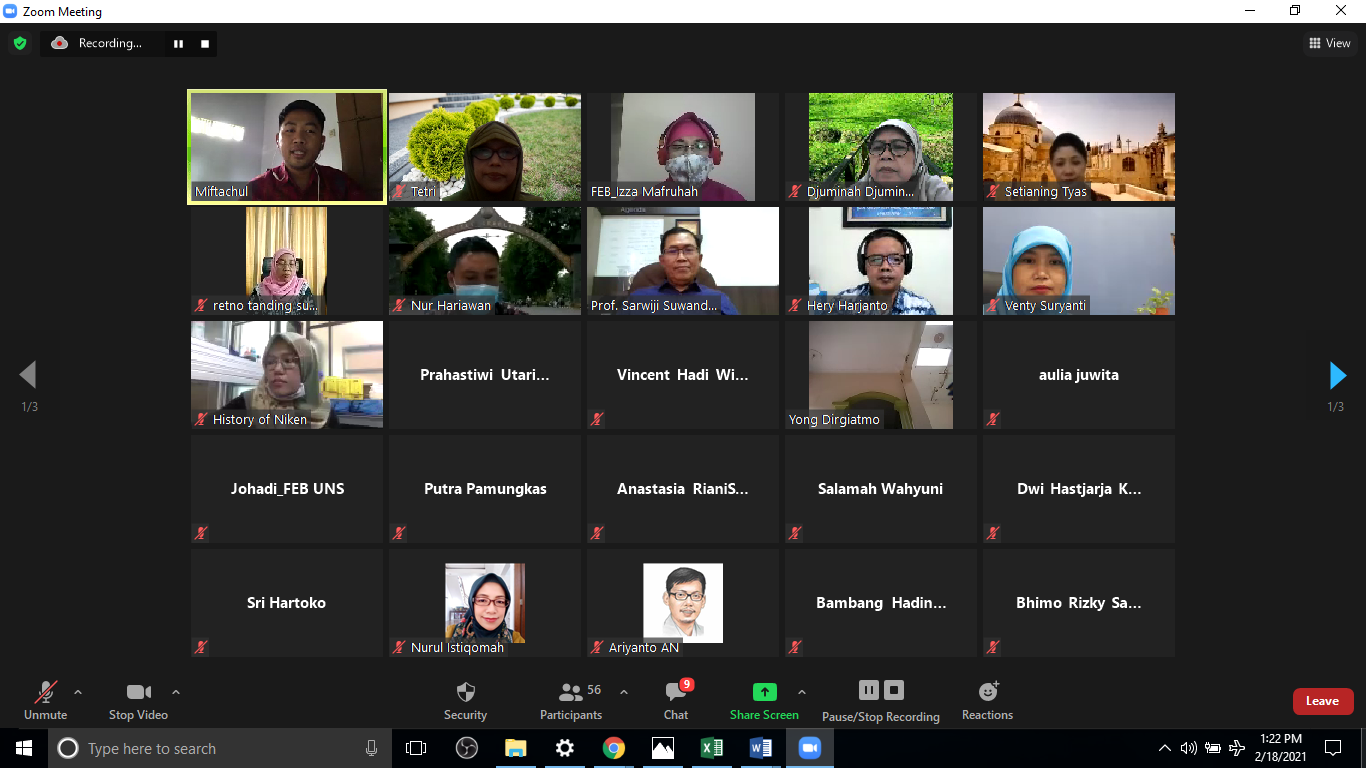
    Higher education must open new opportunities for students to develop their skills and actualizing their talent. This has become a great challenge for educators. Students must be facilitated to achieve great accomplishments and wasting their potential. Lecturers as an educator must reconstruct learning experience continuously. This was delivered by Prof. Dr. Sarwiji Suwandi, M.Pd., Chairman of the Institute of Educational Quality Assurance and Development (LPPMP) Universitas Sebelas Maret (UNS) Surakarta, when opening his material presented in the Worskhop of Case Method-Based Semester Course Plan (RPS) organized by the Faculty of Economics and Business (FEB) UNS, Thursday 18 February 2021.

    Prof. Sarwiji states that the learning paradigm has shifted. The learning process does not only require the students to learn but also the lecturers. Source of material become a crucial point. Lecturers must update their RPS periodically. The course plan must be adjusted if there is new literature or reference related to the current research.
    “Lecturer as a true learner prepare course plan read many references, and research result to be included in the course plan (RPS). With this we can be more assured that the learning outcomes will be better,” he explains.

    Further, Prof. Sarwiji explains the learning method that must be applied according to the 7th Main Performance Indicator (IKU), the percentage of Bachelor and Diploma program that use case method or team-based project as evaluation assessment. The case method is participative learning based on a discussion process to solve a case or problem. The implementation of this method will hone and improve students’ critical thinking in problem-solving, communication skills, collaboration, and creativity.

    “Implementing the case method, students should not be given an individual assignment, but a group assignment. This is because the problem in real life requires us to solve a problem collectively, using a different perspective, and various strategies proposed by team members,” he explains.

    In the case method, students took the main role in problem-solving, while the lecturer only acts as a facilitator, who observe the discussion, inquiring, and leading the discussion. Using this method, students will be involved actively to improve their creative and critical thinking. Moreover, the insight from the solved cases will give them a real-life problem-solving experience. This method can also train students to instill a positive social attitude and helping students to receive others’ opinions.

    The weakness of this method is the need for extensive preparation including tools, problems, and complex concepts, and sometimes there are no relevant cases to be discussed. (Humas FEB)

  • The Dean of FEB UNS Inaugurates BEM, DEMA, and Student Association Administrator

    The Dean of FEB UNS Inaugurates BEM, DEMA, and Student Association Administrator

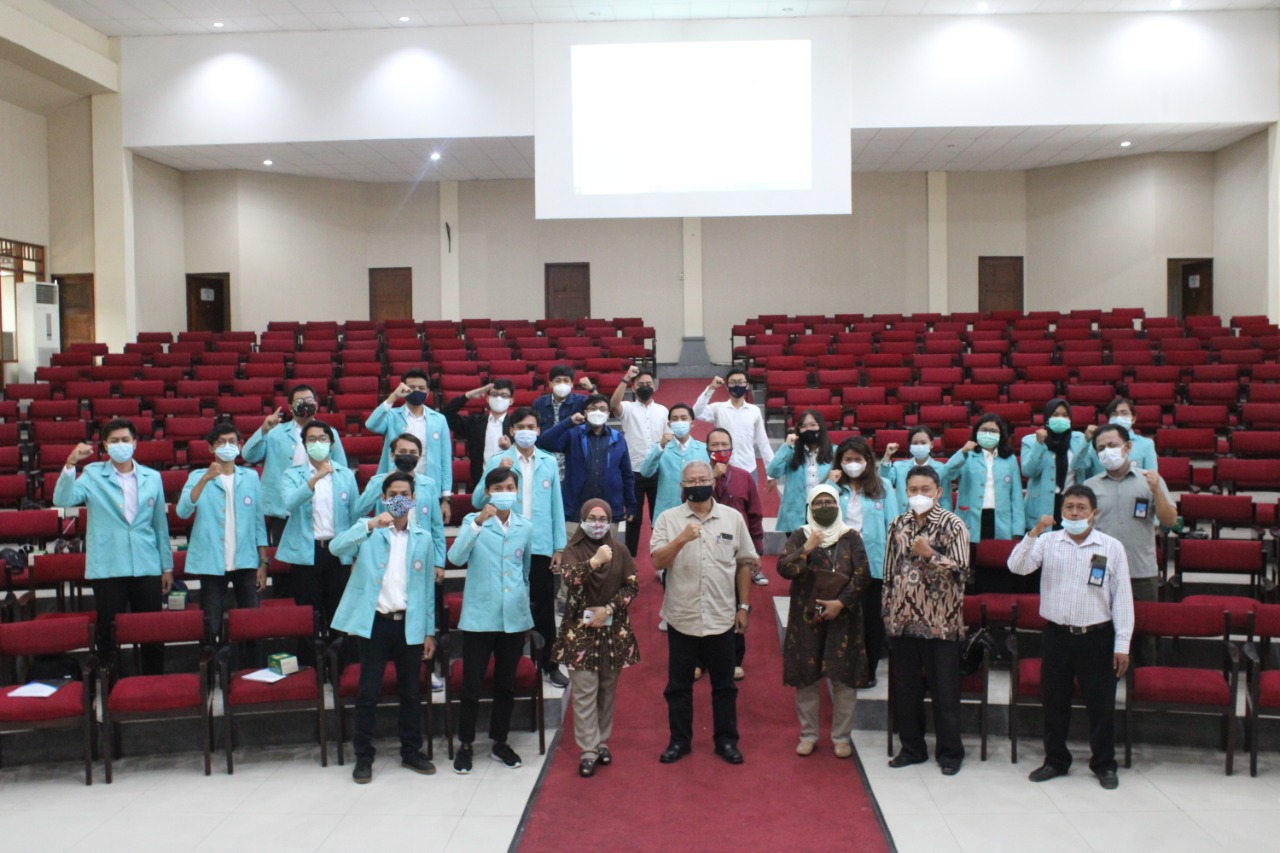
    The Dean of the Faculty of Economics and Business (FEB) Universitas Sebelas Maret (UNS) Surakarta, Prof. Drs. Djoko Suhardjanto, M.Com. (Hons), Ph.D., Ak. Inaugurates the administrator for the Student Executive Board (BEM), Student Supervisory Board (DEMA), and Student Organizations (ORMAWA) for 2021. The ceremony took place on Thursday, 25 February 2021 in FEB UNS Auditorium (Building 3).

    The ceremony was attended by the Vice-Dean, Head of Partnership Unit, and FEB UNS Administrative Leaders, where a signatory of Minutes of Management Handover also took place. The signatory was represented by the Chair of BEM and DEMA FEB UNS, which symbolizes the transfer of responsibility from the Administrator for the previous period (2020) to the new Administrator in 2021.

    The Dean of FEB UNS in his opening remarks congratulate the elected new administrator and thanking the previous administrator for their service and devotion. Prof. Djoko also requested that the previous leader will assist the new leader to accomplish even greater achievements. Further, regarding the shift of UNS status from a Public Service Agency (BLU) into a State University as Legal Entity (PTN BH), there are many adjustments, both in terms of organizational structure and working pattern, there must be a great leap. UNS is required to accomplish a target set by the government to enter the top 500 global universities.
    Prof. Djoko also encourages the students, especially the administrators for BEM, DEMA, and ORMAWA to actively engage, organize, and joining international events. The FEB UNS will assist the students to reach international achievements. “The designation of UNS as PTNBH, students’ activities both in academic and non-academic sector lead to international achievements. University, faculty, and study programs will support students’ activities. If there is any difficulty, we will solve it together. We must collaborate to reach the target,” he stressed while motivating the students.

    Concluding the event, the Dean delivers a message for the students that even though they are actively participating in the organization, they must maintain their academic achievement. (Humas FEB).

  • FEB UNS Organizes Workshop in Budgeting Submission and SPJ Preparation

    FEB UNS Organizes Workshop in Budgeting Submission and SPJ Preparation

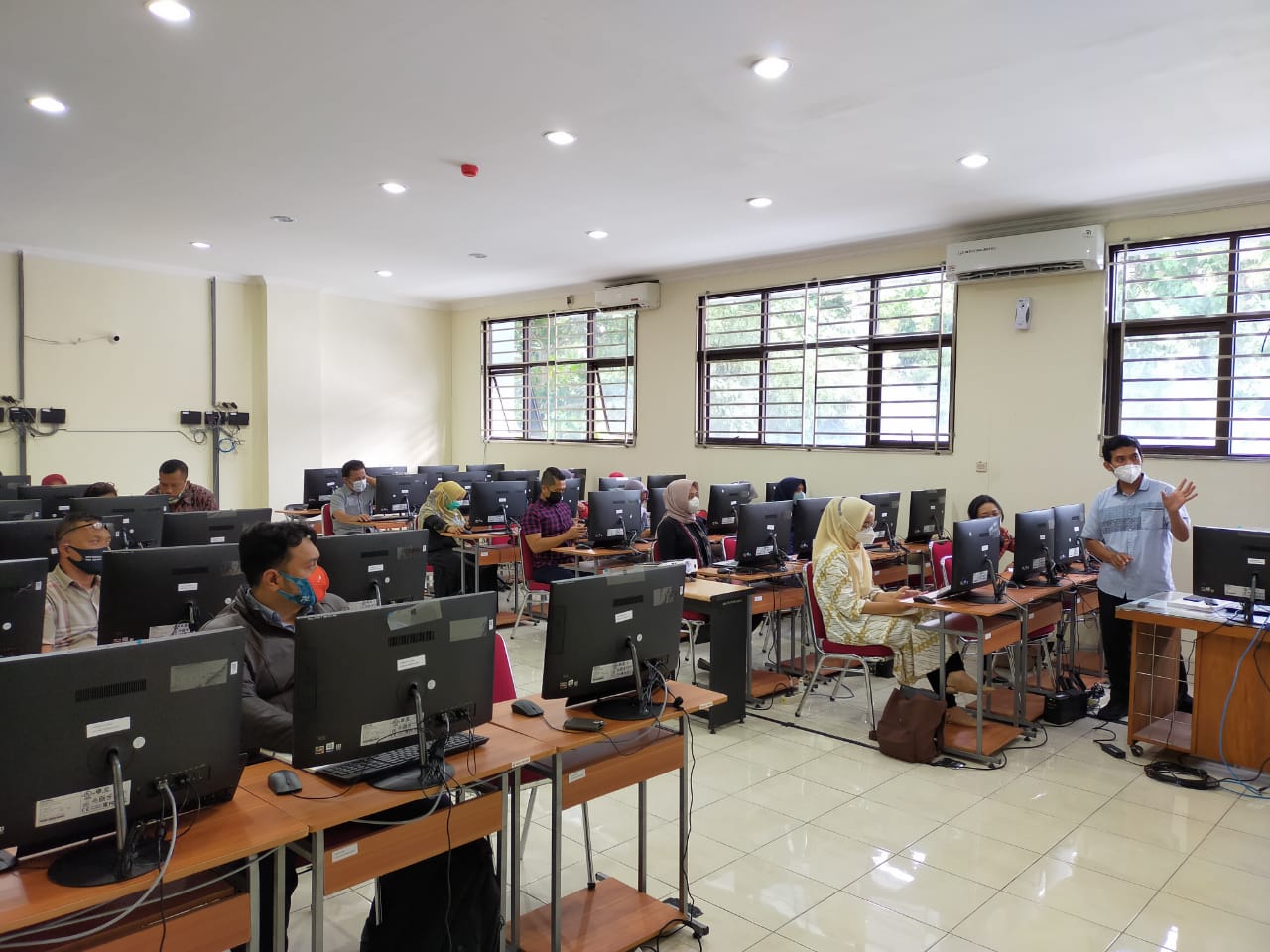
    The Faculty of Economics and Business (FEB) Universitas Sebelas Maret (UNS) Surakarta organizes a Workshop in Budgeting Submission and Accountability Report (SPJ) Preparation on Thursday (25/02/2021) in FEB UNS Computer Laboratory. The event was attended by 20 participants representing each study program in FEB UNS and Helpdesk administrator.

    The Coordinator of FEB UNS Administration Unit, Tunggul Ardhi, S.Si., in his remarks stated that the shift of UNS administration from Public Service Agency (BLU) into a State University as Legal Entity (PTN BH) need several adjustments in term of budget submission and SPJ preparation. The currently applicable guideline is the UNS Minimum Standard Cost (SBM).

    On this occasion, all technical staff will be introduced to the new guidelines, how to prepare SPJ, and the budget submission process. Through this training, it is expected that all technical staffs can adjust faster. Christiana Yulia, S.Pd., as the FEB UNS General Treasurer, and Gigih Fantriko, A.Md., from the FEB UNS Planning Unit, become the instructors for the workshop.

    Gigih Fantriko explains the general description of the service provided by FEB UNS Planning Affairs, such as uploading and supporting faculty data (KPI), the revision for budget submission, downloading faculty planning, and budget planning procedure. He also guides the participants on how the study program’s operator uses Budget Planning and Evaluation System (Sireva).

    Meanwhile, Christiana Yulia delivers the technical budgeting submission and SPJ preparation. Participants are expected to learn the new guidelines. In order to evaluate participants’ understanding, at the end of the session, Yulia delivers questions that need to be solved. The questions related to SPJ preparation, Payment Warrant (SPBY), payment receipt according to the rates used, and taxes according to the new regulations. (Humas FEB UNS)

  • The Head of MESP FEB UNS Deliver Encouragement to the New Students

    The Head of MESP FEB UNS Deliver Encouragement to the New Students

    Starting from January 14 to 16, 2020, for about three days, the Master in Economics and Development Study, Faculty of Economics and Business, Universitas Sebelas Maret (MESP FEB UNS), Surakarta, organized orientation for the new students of the study program. The event was conducted in FEB UNS 4th Building, Meeting Room 2. Nine students participated in the he-registration and student orientation.

    Student orientation is a routine event, organized by the MESP FEB UNS to refresh the new student, on the topics related to their undergraduate study through small discussion. This activity is expected to give the new students a similar start-point in their study in MESP as well as to give them an illustration of the study in MESP for the following 2 semesters.

    Dr. Evi Gravitiani, SE, M.Si, the Head of MESP, in her remarks mentioned that she wishes the students to follow the lecture and can get graduated on time. Previously, the average graduate time for MESP students is 2 years and two months. “We hope the students can graduate on time, not more than 2 years,” she specifically emphasized to encourage the new students who, especially this semester, were all fresh graduates from the Undergraduate program in Development Economics FEB UNS.

    The hardest part for the master students is the final year because aside from thesis writing, the students are also required to do a publication for their research article with special requirement and they also must present their research in a national and international conference. During the three days orientation, the students are invited to discuss basic materials such as Mathematics for Economy, Micro Economics, and Macro Economics, which were presented by three MESP lecturers namely Aulia Hapsari Juwita, SE., M.E, Danur Condro Guritno, S.E., M.E., and Vita Kartika Sari, S.E., M.Sc. A pre-test was conducted before the material discussion, and a post-test also conducted to test the students’ readiness.

  • Professor Chaterine Baron from Science-Po Toulouse Deliver a Lecture for MESP Students

    Professor Chaterine Baron from Science-Po Toulouse Deliver a Lecture for MESP Students

    The Master in Development Economics Study Program (MESP), FEB UNS, held a visiting professor lecture on Friday, September 20th, 2019. The event invites Prof. Chaterine Baron from Science-Po Toulouse, France as the main speaker in water management.

    Dr. Evi Gravitiani as the Head of MESP study program deliver an opening remark on the occasion, which attended by 30 (thirty) participants from master students and faculty members. The lecture is started with a research proposal presentation by four master students, with similar research topic regarding water management and climate change. After the presentations, Prof. Baron provides a feedbacks and inputs for the research, as well as presenting a material on how to start a good research, followed with a discussion with the audience.

    For her visit, Prof. Baron also visited Klaten Regency that have various water resource, especially in Pusur, Polanharjo Village.

    Source: Selfia-Lecturer of Bachelor in Economics