FEB

Kategori: s2_mesp

  • FEB UNS Hosted AQAS Accreditation Dissemination and Preparation

    FEB UNS Hosted AQAS Accreditation Dissemination and Preparation

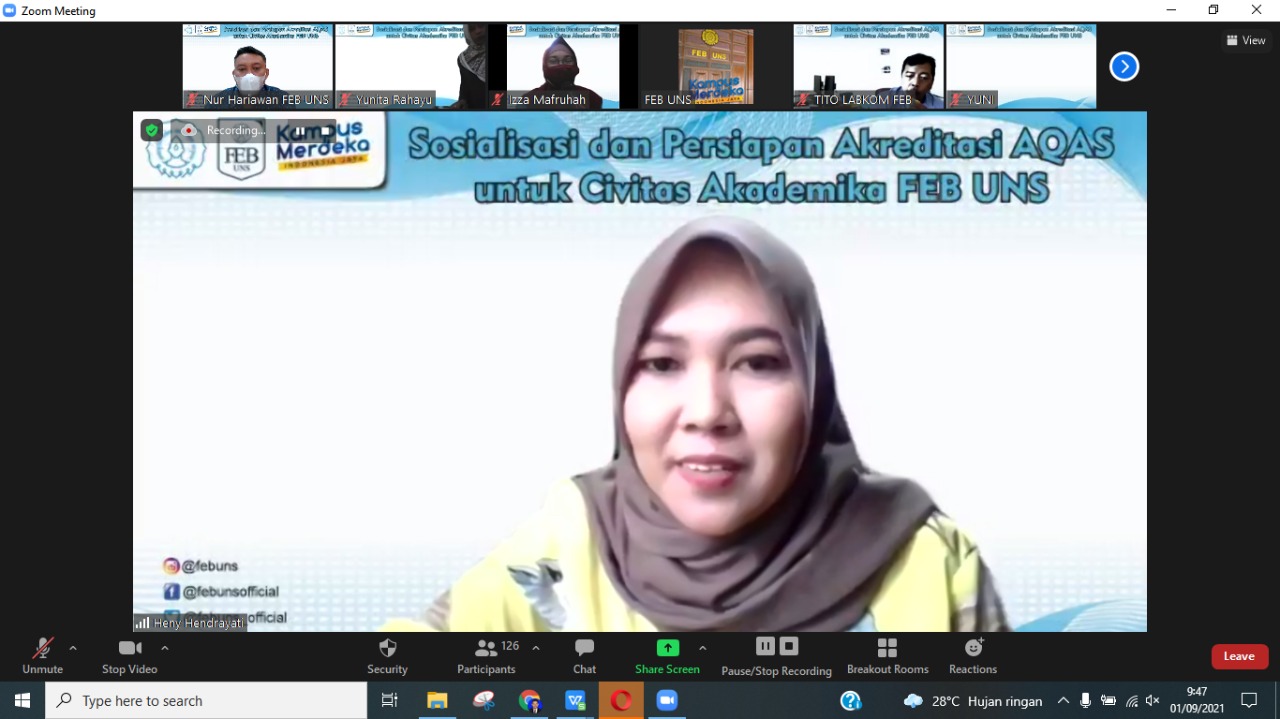
    Three study programs in the Faculty of Economics and Business (FEB) Universitas Sebelas Maret (UNS), the Accounting, Management, and Development Economics Study Program, are applying for the Agency for Quality Assurance by Accreditation of Study Programs (AQAS) International Accreditation this 2021. The study programs’ AQAS Self Evaluation Report (SER) was submitted in early August 2021 along with two other study programs in UNS. If the desk evaluation review returned a favorable result, the study programs would undergo a virtual site assessment in early November. In this regard, FEB UNS organized a hybrid AQAS Accreditation Dissemination and Preparation for the faculty members on Wednesday, September 1, 2021.
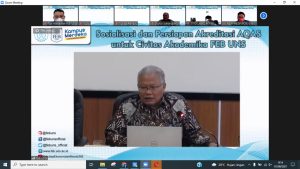
    The event, which was attended by all faculty members, academic support staff, and student organizations representatives, invited two speakers, Dr. Heni Hendrayati, SIP, MM., from the Indonesian Universitas Pendidikan Indonesia Bandung, and Irwan Trinugroho, SE, M.Sc. Ph.D., the Director of Partnership, Development, and Internationalization UNS, who is also a Lecturer at FEB UNS.

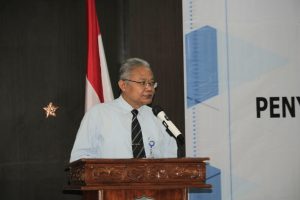
    The Dean of FEB UNS, Prof. Drs. Djoko Suhardjanto, M.Com Hons, Ph.D., Ak., in his speech, states that AQAS is one of the international accreditation institutions recognized by the Directorate General of Higher Education (Dikti). The accreditation was established in 2002 and is headquartered in Cologne, North Rhine-Westphalia, Germany.

    “Since UNS was determined as a State University with Legal Entity (PTNBH) starting of October 6, 2019, we have been given the mandate to be the top 500 global universities. This is an arduous assignment and has become our collective responsibility; therefore, an international accreditation is very much needed,” he said.

    Furthermore, the Ministry set a target for the Universitas Sebelas Maret to have 15 out of its 167 study programs accredited internationally. It is clear that for the FEB UNS, the target is to get all of its study programs accredited internationally.

    In fact, before UNS was designated as PTNBH, the study programs at FEB had been accredited and certified internationally. The Bachelor in Management and Development Economics Study Program has received AUN QA certification, while the Bachelor in Accounting Study Program received EPAS certification. As for the postgraduate study programs, the Masters in Accounting, Masters in Management, Masters in Accounting, and Doctoral Programs in Economics, have been certified by ABEST 21. However, all those previous accreditation institutions are currently not recognized by DIKTI. Hence, the Faculty need a slight amendment to find a recognized international accreditation agency.
    At the end of his remarks, the Dean wishes that the two speakers will enlighten the Faculty members on the focal point of AQAS Accreditation to assist the study programs at FEB UNS in earning the international certification. According to BAN-PT criteria, if a study program has received international accreditation, it will automatically be granted superior status. Hopefully, by the end of this year, all undergraduate study programs will be internationally accredited.

    The two invited speakers for the session explained in detail the preparation process, the site visit, and the description AQAS accreditation assessment. The invited speakers also explained the strategies needed to ensure the assessment process went smoothly.

    Dr. Irwan emphasized that the most crucial aspect of the assessment is the preparation of lecturers, students, and any other stakeholders invited to the interview session. The study program task force must discuss and communicate all assessment material and criteria to the invited stakeholder to establish a similar understanding according to the study program’s SER. Furthermore, the study programs must prepare and arrange all potential documents in a virtual drive to facilitate the ease of access. Additionally, the assessed study programs must follow the approved schedule and focus on the assessment process. (Humas FEB)
  • The Morning Briefing of UNS: Three Focal Points According to the Dean of FEB UNS

    The Morning Briefing of UNS: Three Focal Points According to the Dean of FEB UNS

    As one of the universities that nurtured from the Pancasila values and devoted all of its capabilities to the greater community welfare, Universitas Sebelas Maret plays an active role in learning activities that involve all stakeholders in the Merdeka Belajar Kampus Merdeka Program (MBKM).

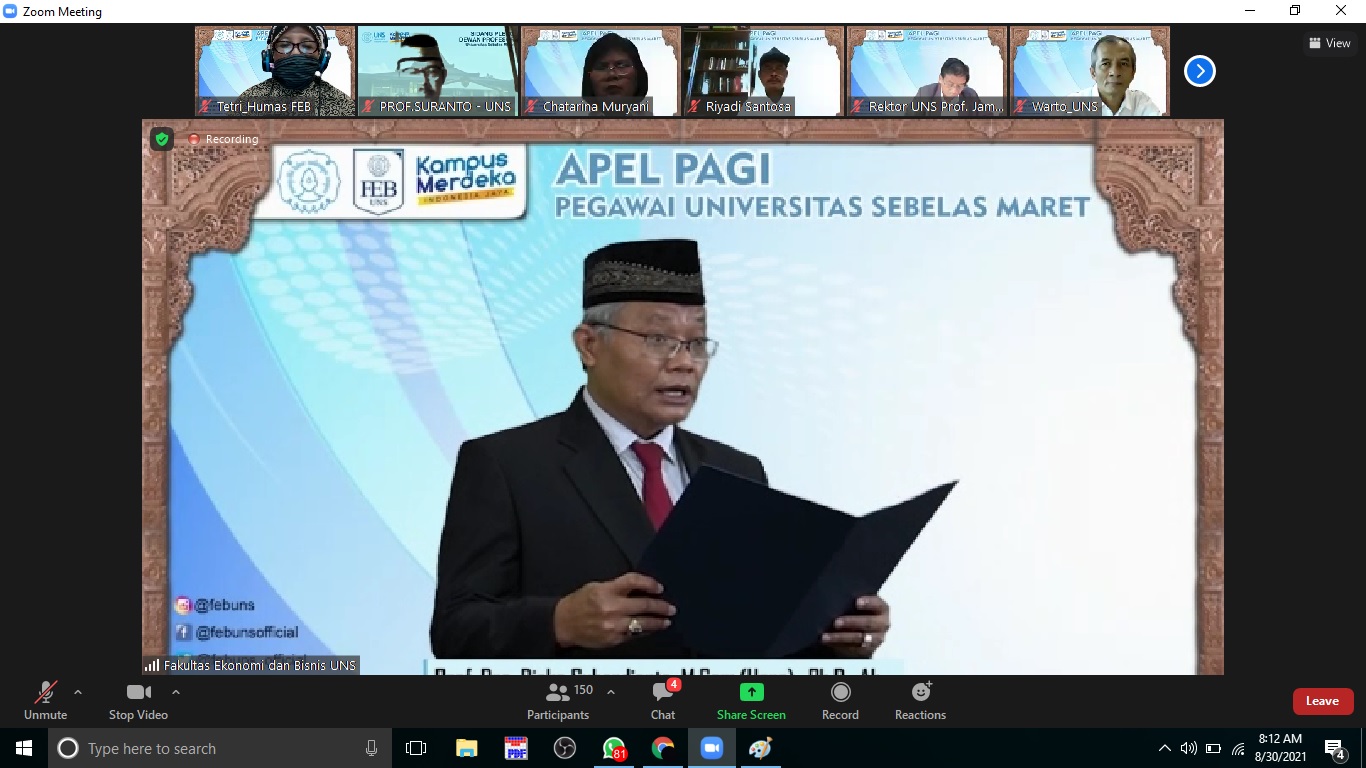
    In this MBKM program, UNS must shape the noble and virtuous character of the nation’s young generation and assist students in developing their abilities. This assistance should cover both the hard skills and soft skills through the eight types of MBKM activities. Doing so will ensure that UNS will not become an ivory tower in the education sector but also plays an active role in the community by devoting its energy through scientific contribution and charitable knowledge. This statement was delivered by the Dean of the Faculty of Economics and Business, Prof. Drs. Djoko Suhardjanto, M.Com (Hons), Ph.D., Ak., in the virtual Morning Briefing attended by all UNS academic members, Monday, August 30, 2021.

    Further, he explains that evaluation and budget implementation for the second half of the semester aims to improve education quality both in human resource development, teaching and learning facilities, including international-class laboratories, and various supporting facilities to encourage superior accreditation at both national and international levels.
    In terms of the achievement of the second semester in 2021 Key Performance Indicators (KPI), Prof. Djoko states that UNS has made various efforts to achieve the target KPI in the previous semester. All UNS academic members, including the faculty members in collaboration with lecturers, students, and academic support staff, are working hard to achieve the KPI target and even exceed it and continue to strengthen UNS position in the first cluster of Indonesia’s universities ranking. However, all these strenuous efforts must be implemented continuously to achieve UNS’ ultimate objective as a world-class university, both at the Asian University Ranking and the World University Ranking.

    These three main points were conveyed by Prof. Djoko Suhardjanto in the Morning Briefing welcoming the last week of August. Many are expected that UNS will be more successful both in the national and international spheres.

    The Morning Briefing is a routine held by UNS on Mondays, where the party responsible for the briefing is selected from, in turn, from the 16 Work Units at UNS. As of August 30, 2021, FEB is fully responsible for the Morning Briefing implementation.

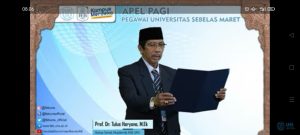
    Other than Prof. Djoko, other officers who served in the Morning Briefing are the Head of the Management Study Program, Dr. Atmaji, who led the tribute to Country Flag and National Anthem. Meanwhile, the Moment of Silence was led by the FEB UNS Dean, Prof. Djoko Suhardjanto, followed by the Recitation of the Pancasila Manuscript by the Chair of the Faculty Senate, Prof. Tulus Haryono, Recitation of the Preamble to the 1945 Constitution by the Vice Dean for Academics, Research, and Student Affairs, Prof. Izza Mafruhah, Recitation of the Panca Prasetya Korps Pegawai RI by the Vice Dean for Human Resources, Finance, and Logistics Affairs, Dr. Djuminah, Prayer by the Vice Dean for Planning, Partnership, Business, and Information Affairs, Dr. Mugi Harsono, and lastly the Master of Ceremony was conducted by the FEB UNS Public Relations Staff, Tetri Wahyu Aryanti. (Humas FEB)

  • MESP Study Program Providing Intensive Supervision for 11 Students’ Thesis Proposals Securing Dikti Funding

    MESP Study Program Providing Intensive Supervision for 11 Students’ Thesis Proposals Securing Dikti Funding

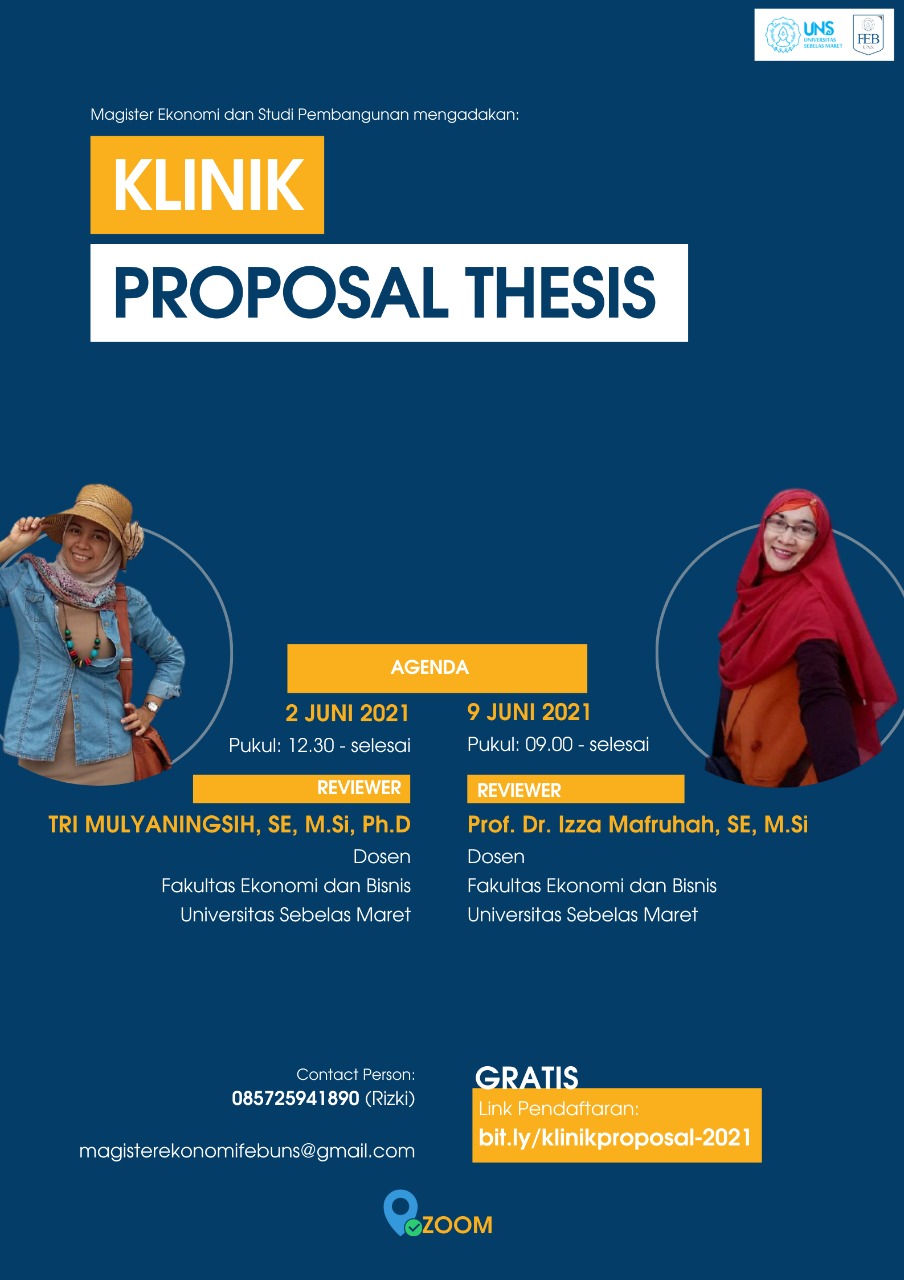
    Students from the Master’s Program in Economics and Development Studies (MESP), Faculty of Economics and Business (FEB), Universitas Sebelas Maret (UNS), participated in a Thesis Proposal Clinic for over two days, hosted on June 2 and 9, 2021.

    This event hosted by MESP is a follow-up action to the announcement from the Institute for Research and Community Service (LPPM), Universitas Sebelas Maret (UNS), regarding the thesis proposals eligible for Dikti funding.

    Students whose proposals were submitted will receive intensive mentoring from two advisors, lecturers of Research Methodology courses: Prof. Dr. Izza Mafruhah, SE., M.Si., and Tri Mulyaningsih, SE., M.Si., PhD.

    Dr. Evi Gravitiani, M.Si., Head of the MESP Program, stated that to support the initial 11 proposals, in the third quarter, the program will invite editors and collaborate with Sinta 2 journals and Editors of Scopus cited Q3 journals. (FEB Public Relations)

  • Discussing Method in Economic Analysis and Academic Writing, MESP Webinar Invites Two Speakers from UKM

    Discussing Method in Economic Analysis and Academic Writing, MESP Webinar Invites Two Speakers from UKM

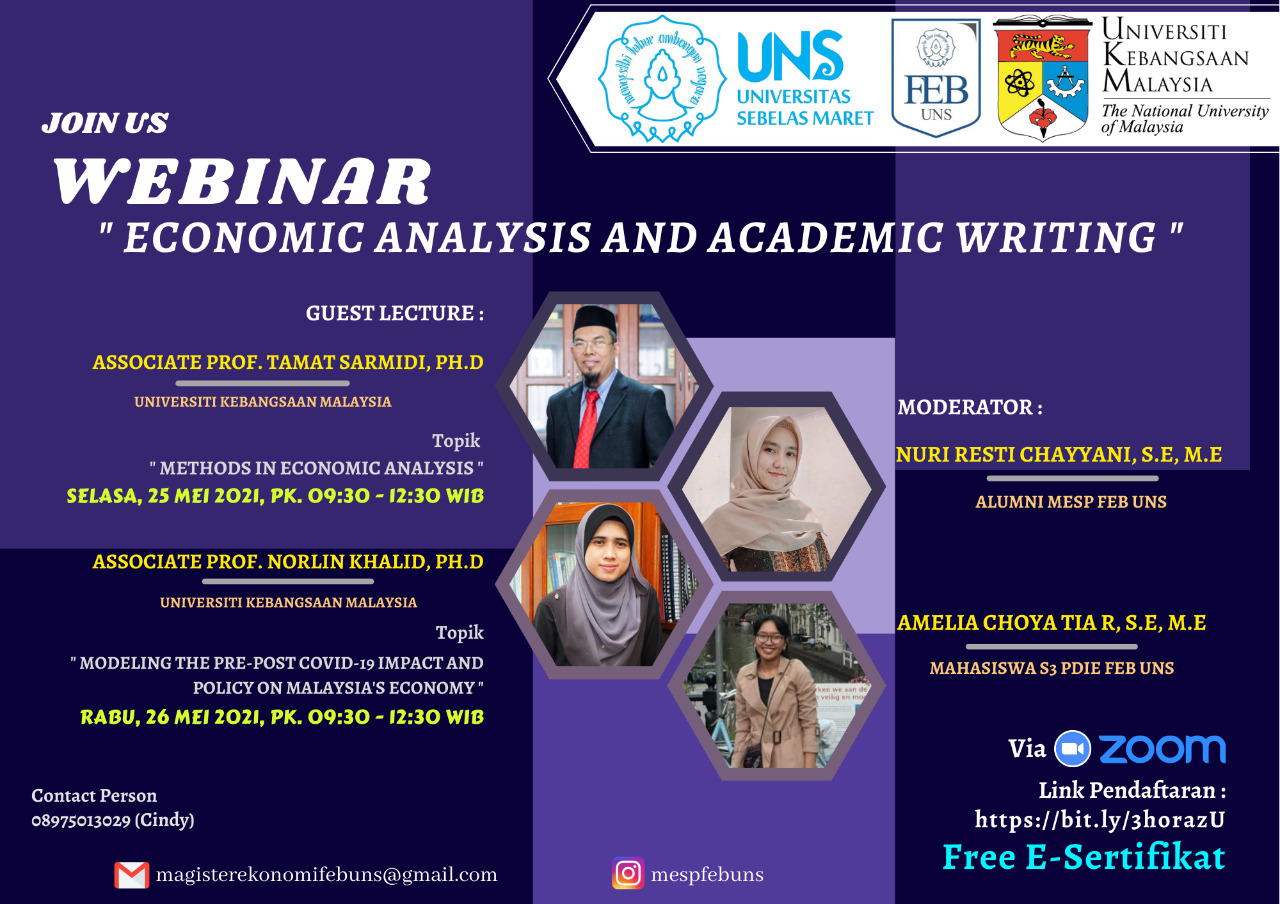
    The Master in Economics and Development Studies Program (MESP), Faculty of Economics and Business (FEB) Universitas Sebelas Maret (UNS) Surakarta held a webinar in ‘Method in Economic Analysis and Academic Writing,’ 25-26 May 2021.

    Two international speakers from Universiti Kebangsaan Malaysia (UKM) were invited to share some insight through the webinar, Assoc. Prof. Dr. Tamat Sarmidi (Deputy Dean of Research and Innovation, Faculty of Economics and Management, UKM) and Assoc. Prof. Dr. Norlin Khalid, the Cluster Head at the Center of Sustainable and Inclusive Development Studies UKM Malaysia.

    In her speech, the Vice Dean of Academic, Research and Student Affairs FEB UNS, Prof. Dr. Izza Mafruhah, SE, M.Si, representing the Dean of FEB UNS, conveyed the importance of this workshop because statistical analysis tools are always developing both for the qualitative and quantitative analysis.

    According to Prof. Izza, writing published articles has always been an obstacle for postgraduate students. This condition happens because students are often too focused on the process of writing the thesis, while the process of publishing a research article is quite time-consuming and is often forgotten. Learning from experts will greatly assist students in publishing articles.

    The speaker on the first day, Assoc. Prof. Tamat Sarmidi (Deputy Dean of Research and Innovation, Faculty of Economics and Management, UKM), explains about Principal Component Analysis (PCA). Dr. Tamat explains the basics of the principal component, how to determine the adequacy of data to carry out the explanatory factor analysis process, interpreting the results, and the principles of reliability analysis PCA in the STATA program. The discussion is followed with Propensity Score Matching and concluded with Quintile Regression.

    On the second day, Assoc. Prof. Dr. Norlin Khalid starts the discussion with the material related to academic writing and publication, followed by Recent Research in Covid-19. Dr. Norlin explained why article publication is important in educational institutions, partly because of the demands for the fulfillment of performance indicators, demands for academics’ contribution to their scientific development, and an attempt to develop networking between educational institutions.

    Some stages of the publication process must be passed by students who want to publish their articles in reputable international journals. These stages are writing a literature review, determining research objectives, determining the contribution of the articles written or research conducted, as well as the proofreading process by native speakers to ensure that the articles written meet the writing standard in English or other foreign languages.

    Articles that are ready to be published can first be presented in scientific forums such as seminars or conferences to get input and suggestions for article improvement. The last step that needs to be considered is the determination of the journal. This is the stage where the author should choose a journal publisher with similar scope to the topic of the article.

    Dr. Norlin added that authors should be able to collaborate with well-established authors or researchers in the field of study to increase the possibility of publication, “Invite prominent authors for collaboration,” she said.

    Further, she also explains in detail the strategy for students to prepare well-written articles by preparing an interesting abstract because the abstract is the first impression of an article to attract the reader’s attention.

    Reporter: Aulia
    Editor: Humas FEB

  • UNS Signs MoU with the Expertise Board of DPR RI

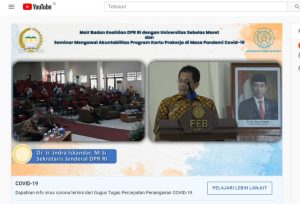
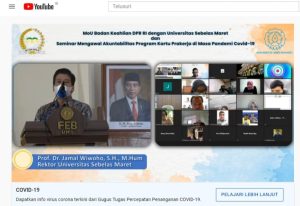
    Universitas Sebelas Maret (UNS) signed a Memorandum of Understanding (MoU) with the Expertise Board of the House of Representatives of the Republic of Indonesia (DPR RI), Thursday, May 27, 2021, in the Faculty of Economics and Business (FEB) UNS Hall. The ceremony was also broadcasted virtually.

    The MoU was signed directly by the Rector of UNS, Prof. Dr. Jamal Wiwoho, SH, M. Hum., and the Expertise Board of DPR RI, Dr. Inosentius Samsul, SH, M.Hum., witnessed by the Secretary-General of the DPR RI, Dr. Ir. Indra Iskandar, M.Si, and Vice-Rector for Planning, Partnership, Business, and Information Affairs UNS, Prof. Dr. rer. nat. Sajidan, M.Si.

    The scope of the MoU includes the implementation of education and training such as research, studies, scientific activities, seminars and workshops, human resource competencies improvement and development, integrated management assistance in improving academic quality, and experts mentoring or Journal Peer-Reviewer.

    Additionally, the cooperation will also cover data sharing or open access to research or libraries, preparation of Response to the Constitutional Court, implementation of expert support in the formation of laws, preparation of academic texts, budget functions, and supervisory functions, as well as internship programs for lecturers/students at the Expertise Board of the Secretariat General of the DPR RI, and other activities agreed upon by the parties.

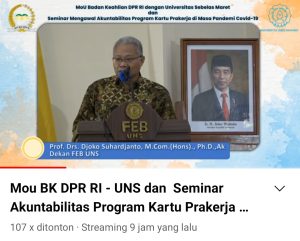
    After the MoU signatory ceremony, a seminar entitled “Guarding Accountability of the Pre-Employment Program during the Covid-19 Pandemic” was conducted, delivered by Rahmad Handoyo, S.Pi, MM, the Member of Commission IX DPR, Prof. Drs. Djoko Suhardjanto, M.Com. (Hons), Ph.D., Ak., the Dean of FEB UNS, Prof. Dr. Adi Sulistiyono, S.H. M.H., the Chairman of the UNS Academic Senate, Prof. Dr. Izza Mafruhah, SE, M.Si., Vice Dean for Academic, Research, and Student Affairs FEB UNS, and Dr. Atmaji MM, the Head of the Management Study Program FEB UNS.

    In his speech, the Secretary-General of DPR RI, Dr. Indra Iskandar, states that the Covid-19 pandemic had encouraged the government to carry out policies to reduce the significant impact of the pandemic on the community. One of the policies implemented is the Pre-Employment Program to reduce the soaring open unemployment, as one of the major impacts of the economic contraction during the pandemic.

    “In terms of evaluation, we have a record of supervision activities carried out by DPR RI members on the implementation of the Pre-Employment Program in 2020 and 2021. To strengthen the analysis on the Pre-Employment Program management, the Center for State Financial Accountability Study (PK AKN), Expertise Board of the DPR RI, views that the collaboration and seminars inviting speakers from DPR RI members and UNS academic members are necessary to ensure that the studies conducted can be applied to the society,” he explained.

    Dr. Indra also hopes that various inputs will provide significant benefits for PK AKN to create studies that will support the supervisory function of the DPR RI, especially in the supervision of state finances.

    UNS Chancellor, Prof. Jamal Wiwoho, thanked the Expertise Board of DPR RI for trusting UNS in this cooperation. He hopes that the ideas and discussions with the seminar speakers can be beneficial both at the national and international levels, contributing to the significant improvement of employment quality in Indonesia.
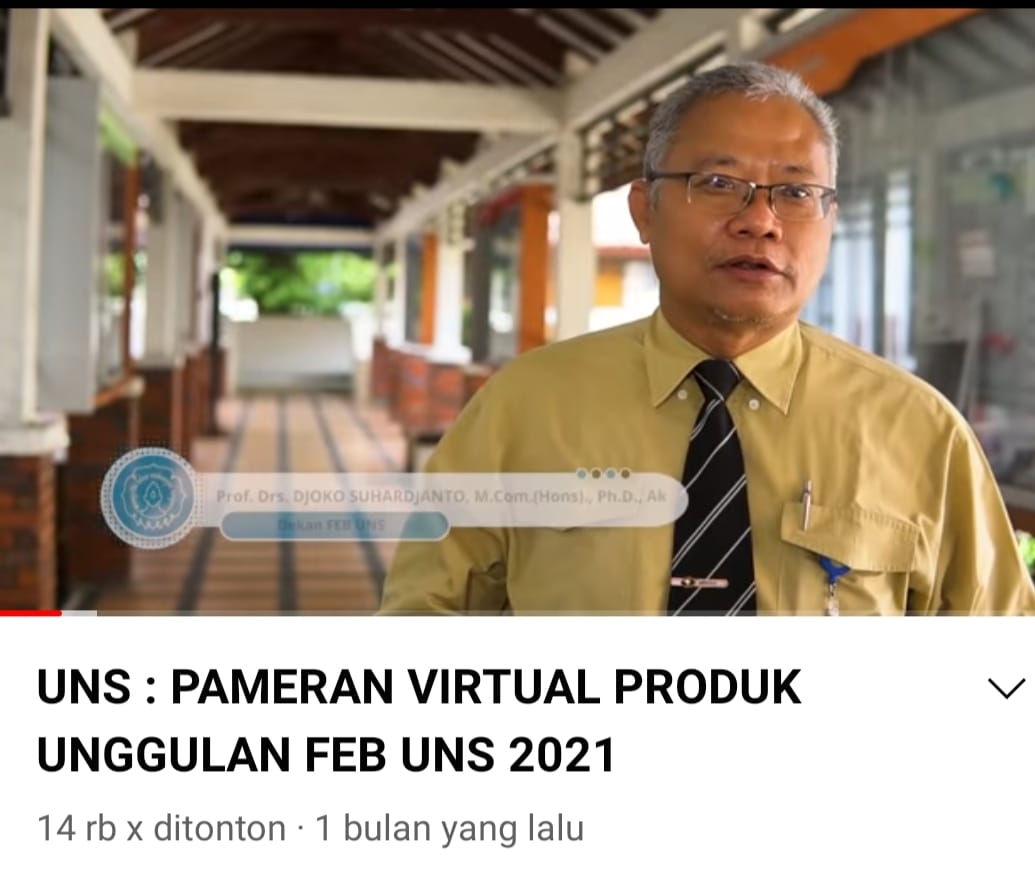
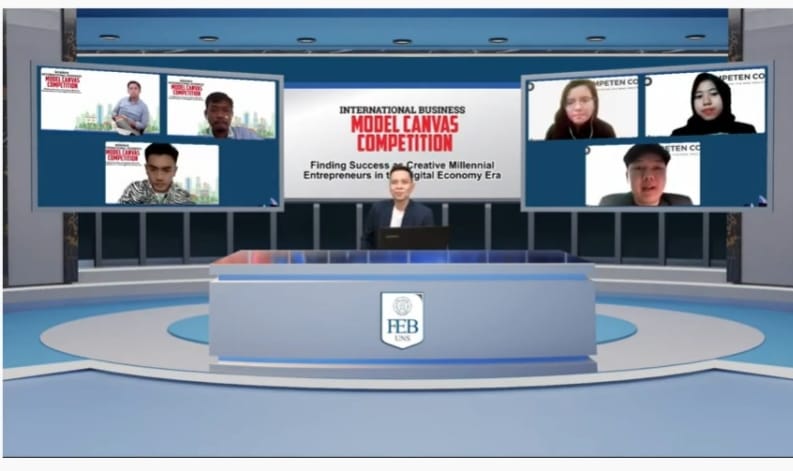

    Meanwhile, the Dean of FEB UNS. Prof. Drs. Djoko Suhardjanto, M.Com. (Hons), Ph.D., Ak., conveyed that FEB UNS institutionally is willing to support the role and function of the Expertise Board of DPR RI in creating a Professional Parliament to support the 3 (three) main functions of the DPR RI, namely Monitoring, Budgeting, and Legislation.

    One of the main functions of the DPR is to supervise the implementation of government programs. In the academic realm, this function is closely related to accountability. FEB UNS, supported by study programs and research groups, is ready to support supervisory functions and scientific studies for the Expertise Board of DPR RI, including providing in-depth reviews and studies on the accountability of the Pre-Employment Program. (Humas FEB)

  • FEB UNS Won First Place in Excellent Product Virtual Exhibition

    FEB UNS Won First Place in Excellent Product Virtual Exhibition

    The Faculty of Economics and Business (FEB) Universitas Sebelas Maret (UNS) succeeded winning the Virtual Exhibition in UNS 45th Anniversary. The result of the competition is announced virtually during the Awarding Ceremony Virtual Exhibition and Virtual Choir Festival, which coincided with the National Education Day on Sunday, May 2nd, 2021.

    In total there are 15 teams participating in the Virtual Exhibition, from the faculties, institutes, and units in UNS campus with their various featured products and innovations. The video participated in the competition must be original and never been participated in another competition.

    Other than the exhibition, FEB succeeded to win various other competitions for the celebration of UNS anniversary, among others are Healthy Canteen competition (3rd place) and Staff Storytelling Competition (2nd place). Both competitions were announced during the virtual shadow puppet performance on March 20th, 2021.

    The Dean of FEB UNS, Prof. Djoko Suhardjanto, M.Com. (Hons), Ph.D., Ak., appreciates the achievements accomplished by the FEB Team. “Congratulations to all the winners. Thank you for your participations as the academic members of the FEB UNS during the UNS Anniversary celebration. We must work together to achieve a stronger FEB UNS,” he states.

    Following these achievements there will be another announcement for other competitions on May 20th, 2021, for external competition in scientific activities, art and culture, as well as virtual exercise. (Humas-FEB)

  • The Top 10 Teams in International Business Canvas Competition Present Their Business Idea

    The Top 10 Teams in International Business Canvas Competition Present Their Business Idea

    The top 10 (ten) team passed the elimination stages of the International Business Canvas Competition, organized by the Faculty of Economics and Business (FEB) Universitas Sebelas Maret (UNS) Surakarta. The teams will present their business idea in front of the Board of Judges on Tuesday, April 27th, 2021. The top ten teams are Sentelala Team from Universitas Prasetiya Mulya, ‘Diceritain’ Team from Universitas Indonesia, CoC Unsoed from Universitas Jenderal Sudirman, Labs from Telkom University, CnW from Universitas Negeri Malang, Jetz! from Universitas Gadjah Mada, Team * from Universitas Padjadjaran, Team Deadline Susulan from Univeristas Sebelas Maret, PalePale Team from Institut Teknologi Bandung, and Castelo from Telkom University.

    Jetz! One of the Top Teams in International Business Canvas Competition

    The judges for the session are Catur Sugiarto, S.E., M.S.M. Ph.D., and Ariyanto Adhi Nugroho, SE, M.Ec,Dev, MAPPI., as academics judges from FEB UNS, and Kusdarmawan Aryo Brakoso, CEO Rown Division, Bull Syndicate, and Hallosolo Kitchen, as a judge from the business sector.

    The Dean of FEB UNS, Prof. Drs. Djoko Suhardjanto, M.Com, (Hons), Ph.D., Ak., states that the International Business Canvas Competition aims to nurture the entrepreneurship spirit. The competition that was organized as a part of the UNS 45th Anniversary celebration is expected to be a channel for the students in Indonesia and from abroad countries to deliver new business ideas. Furthermore, the event is expected to bring new entrepreneurs with excellent business ideas and supporting new business initiatives.

    The Competition is open from 22 February 2021, with a total of 51 participating teams from the best universities across Indonesia. Starting with registration, the participating teams must compete among themselves with their excellent business idea virtually on April 5th, 6th, and 9th, 2021.

    The best 10 teams selected must present their business idea on April 27th, 2021, to select the top 5 teams that will be announced on May 20th, 2021. (Humas FEB)

  • Menparekraf Encourages Millennials to be Entrepreneurs

    Menparekraf Encourages Millennials to be Entrepreneurs

    Currently, around 34 million Indonesians are dependent on the tourism sector and the creative economy. The government of Indonesia, through the Ministry of Tourism and Creative Economy, invites millennials to start a business, become entrepreneurs, and take opportunities to create jobs.

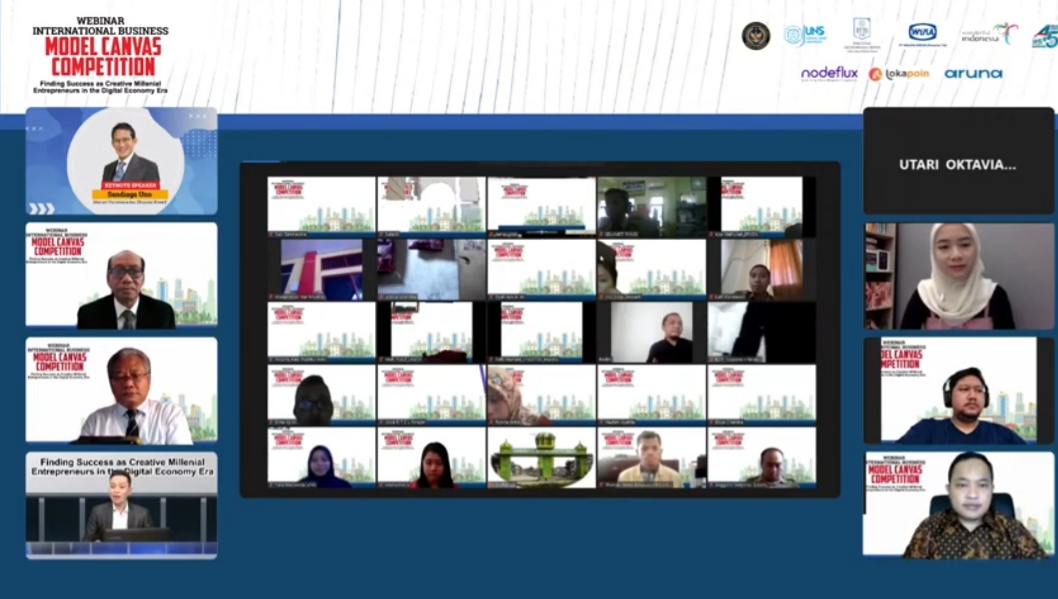
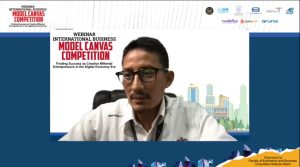
    Indonesia needs new entrepreneurs to stimulate SME’s recovery and development because tourism sectors and the creative economy are the spearheads of job creation. Currently, 97% of jobs are created by Micro, Small, and Medium Enterprises (MSMEs) and Start-ups businesses. This statement was mentioned by the Minister of Tourism and Creative Economy (Menparekraf), Sandiago Salahuddin Uno, as the Keynote Speaker in the International Business Model Canvas Competition Webinar, organized by the Faculty of Economics and Business, Universitas Sebelas Maret (UNS), Monday, April 26, 2021.
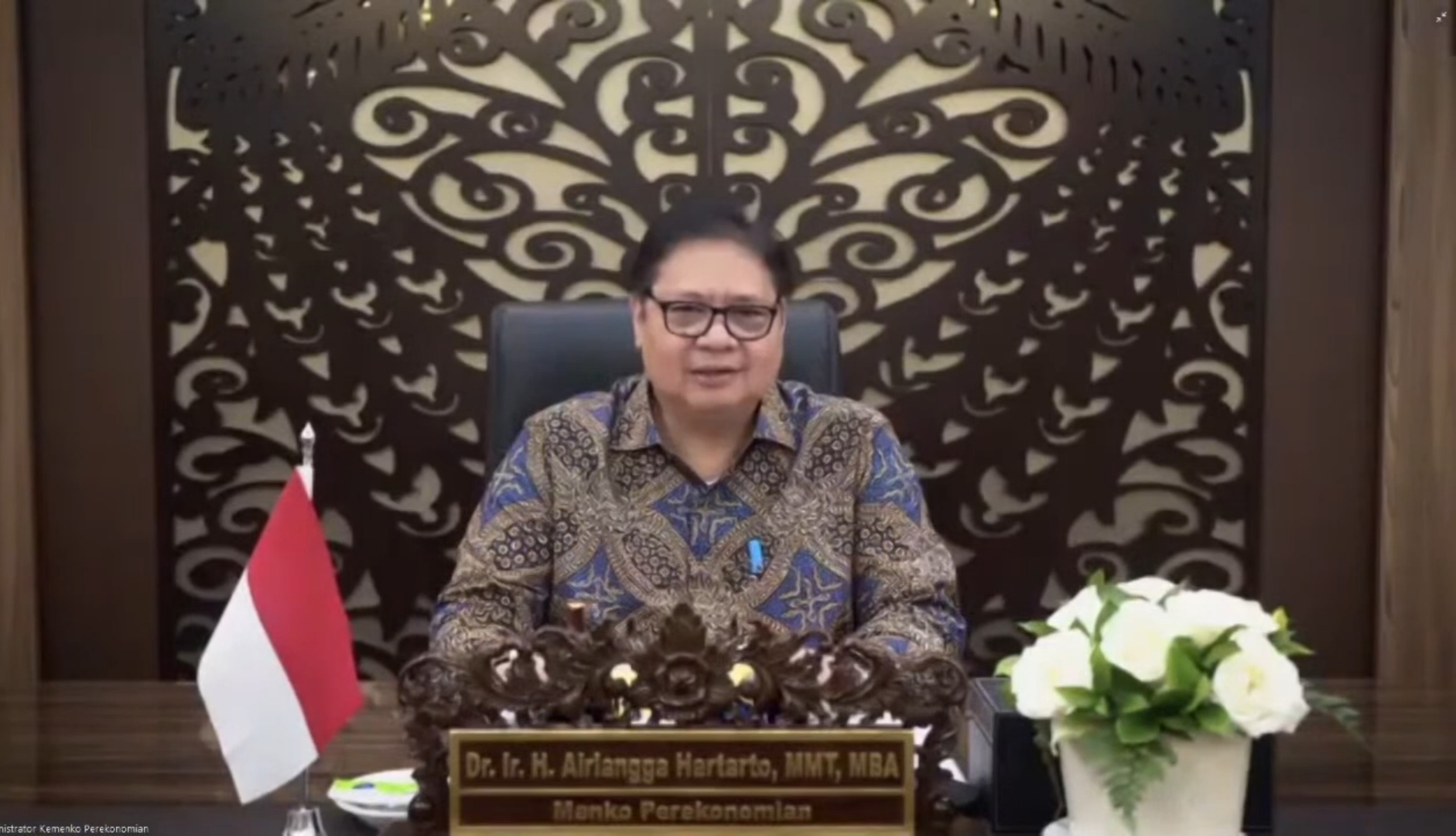
    During the pandemic, almost all creative economy sub-sectors are seeing a decline in their contribution to the Gross Domestic Product (GDP). There are only 2 (two) sub-sectors with a positive and steady GDP growth, namely mobile/computer application and game developers, as well as television and radio broadcasting. Including eSports, the economic values of these industries are more than IDR 16 trillion in total. These two sub-sectors relied on technology and digitalization in their application and targeted the technology-savvy consumers.

    “Normally, fashion, culinary, and crafts are the creative economy sub-sectors that contribute the most to the GDP. However, currently, those sectors experienced a significant decline, reaching up to 2.8% in fashion, 3.3% for crafts, and 3.89% for the culinary sector,” Sandiaga said.

    This situation happened because those subsectors have not optimally adapted to digitalization. E-commerce and other digital platforms, which support and facilitate MSME to improve their business, have not been optimally adopted by fashion, culinary, and craft businesses. Even though some MSMEs have initiated digital adoption, the implementation is still limited and needs further improvement.

    According to Sandiaga, in 2021 creative economy faced a challenge in the transformation of conventional MSMEs into digital-based businesses. Such condition is motivated by a change in global consumer behavior that prioritizes health, hygiene, and limited mobility.

    Development is crucial for digital businesses or any other businesses based on technology, big data, cloud computing, artificial intelligence, and the internet of things. This development will encourage creative economy actors to be more efficient and time-efficient in policies making based on real-time and accurate information because data science is getting more advanced each coming day.

    In front of more than 1,000 participants in the webinar ‘Finding Success as Creative Millennial Entrepreneurs in The Digital Economy Era,’ Sandiaga said that Indonesia currently has approximately 170.9 million young population (millennials and Generation Z) and is predicted to reach 187.6 million population in 2030. This demographic bonus is an opportunity but also a challenge, and if the current education does not equip the young generation with entrepreneurship, education, and leadership, they will become a burden in the future.

    These challenges must be solved through human resources development. The human resources in the creative economy sector must be established with an entrepreneurial, innovative, proactive, and risks taker millennial mindset. We must encourage innovation, adaptation, and collaboration with various stakeholders.

    “I hope that this International Business Model Canvas Competition can introduce new businesses and ideas from millennials, thus contributing to the Indonesian economic growth, supported by digital start-ups in various sectors,” Sandiaga concluded.

    The seminar, which was opened by the Vice-Rector for Academic and Student Affairs, Prof. Dr. Ir. Ahmad Yunus, MS and the Dean of FEB UNS, Prof. Drs. Djoko Suhardjanto, M.Com. Ph.D., Ak., invited four speakers, namely Utari Octavianty, the Co-Founder and General Director of Aruna, Keke Genio, the Co-Founder and CMO of Lokapoin Content Creator at Youtube, Meidy Fitranto, the Co-Founder and CEO of Nodeflux, and Agung Nur Probohudono, SE, M.Si. Ph.D., AK, CA, CFrA, as the Head of Accounting Study Program FEB UNS. (Humas FEB).

  • Coordinating Minister for Economic Affairs Encourages Academicians to Support UU Cipta Kerja

    Coordinating Minister for Economic Affairs Encourages Academicians to Support UU Cipta Kerja

    The ratification of the UU Cipta Kerja and its supporting law is a form of government’s commitment in realizing the structural reform. This become the effort to simplify, synchronize, and create more effective law from the many applicable regulations, which usually create investment problems.

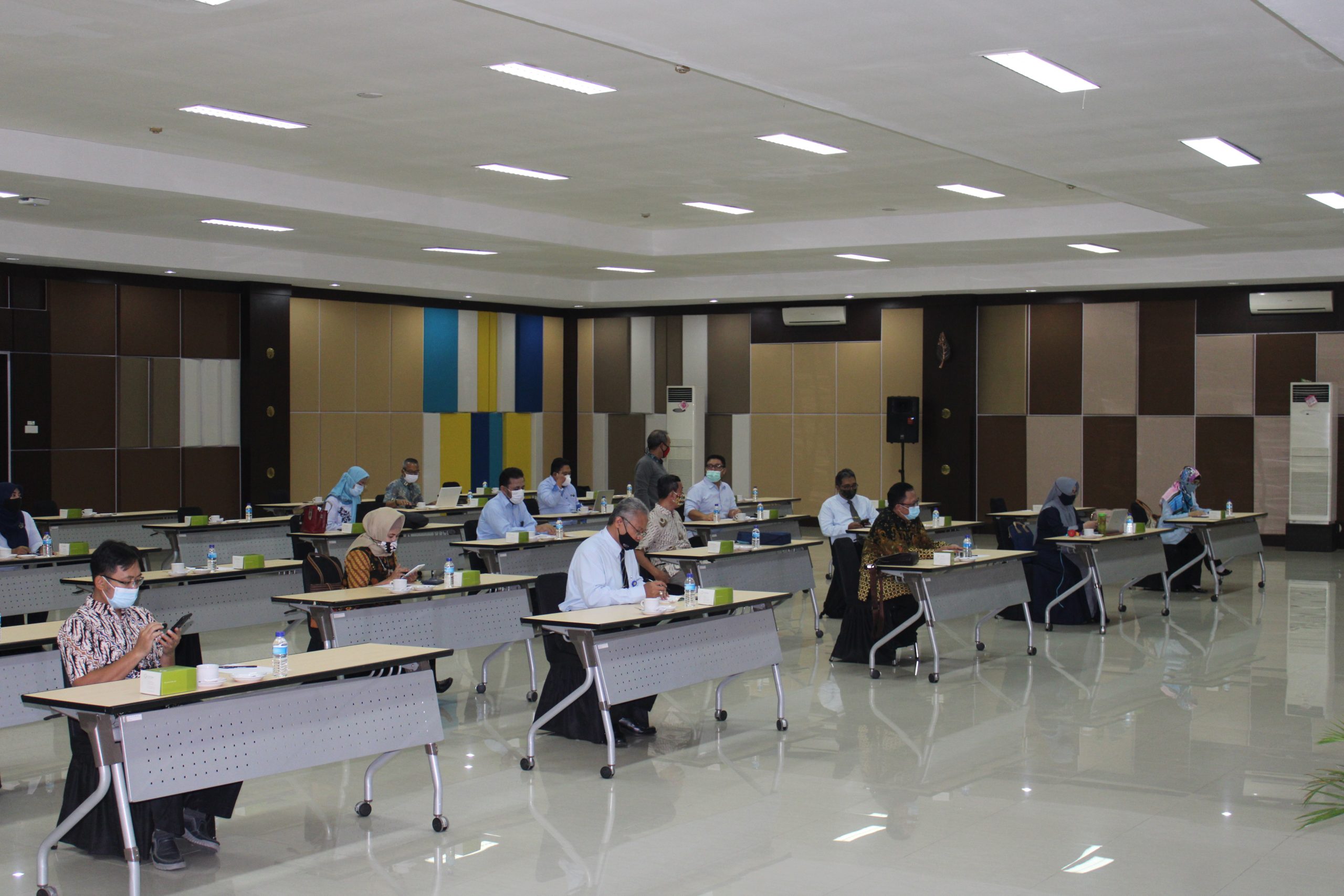
    This was delivered by the Coordinating Minister for Economic Affairs, Dr. (HC) Airlangga Hartarto, M.B.A., M.M.T., in the national seminar on Economic Transformation: Optimization of UU Cipta Kerja (Job Creation Law) as Key Strategy for Indonesia Investment Acceleration, organized by the Faculty of Economics and Business (FEB) Universitas Sebelas Maret (UNS) Surakarta, on Tuesday (30/3/2021). This event was held offline in Ruang Aula Seminar (Seminar Hall) FEB UNS and lived broadcasted on PC-PEN Information Center YouTube channel.

    The event’s keynote speaker was the Coordinating Minister for Economic Affairs, Dr. (HC) Airlangga Hartarto, M.B.A., M.M.T. The Rector of UNS, Prof. Dr. Jamal Wiwoho, opened the event led by Susiwijono, M.E., and other three speakers, I Ktut Hadi Priatna, S.H., LL.M., Prof. Izza Mafruhah, and Tulus Widajat, S.E., M.Si.

    In his remark, the Rector of UNS stated that the Covid-19 pandemic affects the health sector and economic sector alike. This disturbance can be observed from the increasing numbers of unemployment in Indonesia amid the pandemic. To solve this issue, the government needs to open job opportunities for the community. Inviting foreign investors to Indonesia is a means to achieve this objective. “The larger the number of investors entering (Indonesia), the more jobs will be available for the community,” Prof. Jamal said. Prof. Jamal also mentioned the role of MSME in post-Covid economic recovery and asked the government to support MSME in Indonesia to enter formal sectors, thus, facilitating the small business to achieve permit and bank loans.
    The Coordinating Minister for Economic Affairs, Dr. (HC) Airlangga Hartarto, M.B.A., M.M.T. stated that the Indonesian economy started to enter the recovery. “The signs of economic recovery are observable, reflected from PMI Manufacture above 50 or 50 plus 9 expansive level and investment realization and manufacture in 2020 was higher than previous years,” Dr. Airlangga said. He added that the proportion of consumption to saving continues to increase, and the Composite Stock Price Index (IHSG) and Foreign Exchange have returned to pre-pandemic level.

    Several international institutions, such as the World Bank, have predicted that economic growth in 2021 will reach 4.4% – 5.1% and in 2022 between 4.8% – 6.0%. This projection is in line with the government target in 4.5% – 5.3% level, supported by the mass vaccination program, national economic recovery program, and implementation of Law (UU) on Cipta Kerja (Job Creation) and Covid-19 handling. The government will take various efforts to reduce the pandemic impact, maintain health and economic condition to improve people’s trust, and increase consumption and investment in 2021.

    The government strategy in this matter is, first, acceleration in vaccination until 10.49 million dosages by 28 March 2021, with the first dosage for 7.25 million people and the second dosage for 3.2 million people. This program will be encouraged to achieve herd community in one year. Besides vaccination, the government applies the limitation for micro-community activities consistently to control the number of new Covid-19 infections by balancing social and economic aspects.

    The second strategy is the commitment to continue pouring funds for Covid-19 handling and national economic recovery in 2021 by allocating IDR 699.43 trillion funds, which increased from IDR 579.78 trillion last year (20%). As a form of commitment to structural reformation, the government has ratified UU Number 11 of 2020 that simplifies, synchronizes, and improves the effectiveness of large and complicated regulations that often hinder new businesses’ investment.

    UU Ciptaker grants business permits that initially licensing-based to risk-based. This reformation will create a more efficient and transparent government service. Dr. Airlangga said that all parties are open to capital investment, and it has protected MSME. The government also increase direct investment that forms sIndonesia’s investment authority. Concluding his material, Dr. Airlangga stated that the government needs collaboration from all stakeholders to implement the new regulation. He also congratulated UNS on the success of this national seminar.

  • FEB UNS Prepared Laboratory toward Revenue Generating

    FEB UNS Prepared Laboratory toward Revenue Generating

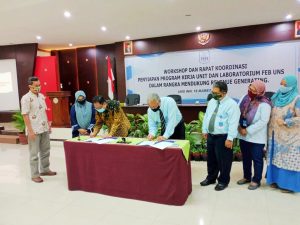
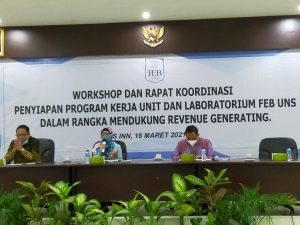
    The Faculty of Economics and Business (FEB) Universitas Sebelas Maret (UNS) Surakarta held a workshop on FEB UNS Laboratory Development toward Revenue Generating Efforts. The workshop was attended by the Board of Dean, Head of Programs, and the Chief of Unit and Laboratory FEB UNS. Ir. H. Utomo Putro, MM, Director of PT. Intan Pariwara and M. Wira Adibrata, Head of BEI Central Java II, were invited as speakers.

    The Dean of FEB UNS, Prof. Drs. Djoko Suhardjanto, M.Com (Hons), Ph.D, Ak, in his remark, mentioned that this event is FEB’s efforts to implement Kampus Merdeka Merdeka Belajar (KMMB) Program and to answer the demand of UNS new status as University with Legal Entity (PTNBH). “University need to form a partnership with the Business World, and Industrial World (DUDI) accelerate campus development,” Prof. Djoko mentioned Tuesday (16/3/2021) in UNS Inn. This effort can be applied by inviting practitioners as speakers, teaching, and training university students to be familiar with the workplace and ready to compete in the actual workplace.

    Prof. Djoko also mentioned that in UNS KMMB, many activities could be implemented in collaboration with DUDI to develop a link and match process. Students can take on-campus and off-campus activities through an industrial internship recognized in their credit semester (SKS).

    The event consists of a material presentation from the Director of PT. Intan Pariwara and the Head of BEI Central Java II, a discussion, and internal discussion on the Development of Laboratory with the Vice-Dean for Academic, Research, and Student Affairs FEB UNS, Prof. Dr. Izza Mafruhah, SE, M.Si and Vice-Dean for Planning, Partnership, Business, and Information Affairs FEB UNS, Dr. Mugi Harsono, SE, M.Si.

    In this event, FEB UNS and PT Intan Pariwara also signed a collaboration agreement which includes Management Trainee (MT) selection program from PT Intan Pariwara in which 54 FEB UNS alumni participated in the process.