FEB

Kategori: s3_pdie

  • PDIE FEB UNS Welcoming Visitation from Doctoral Program FBE Universitas Islam Indonesia

    PDIE FEB UNS Welcoming Visitation from Doctoral Program FBE Universitas Islam Indonesia

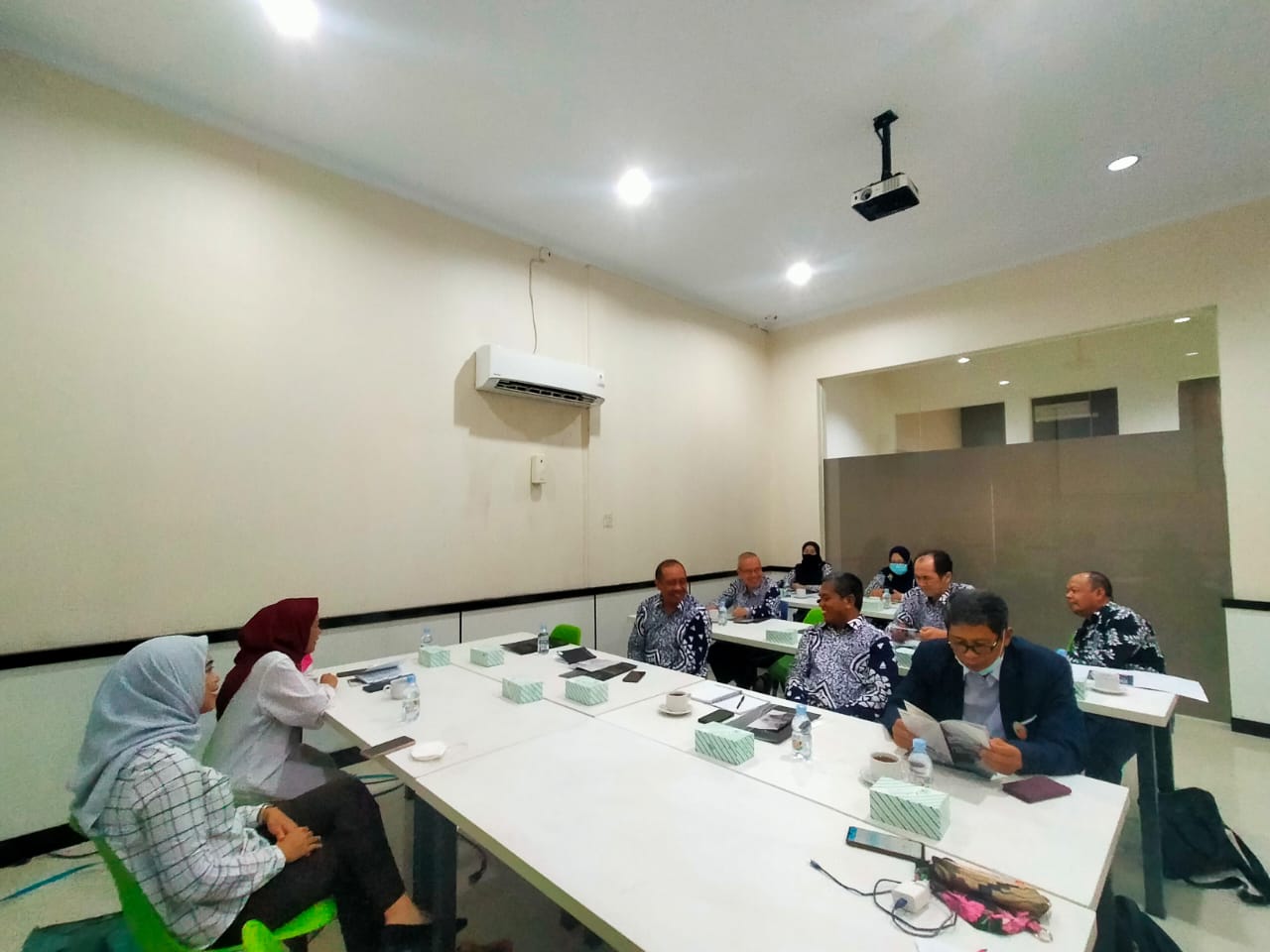
    The Doctoral Program in Economics (PDIE), Faculty of Economics and Business (FEB), Universitas Sebelas Maret (UNS) Surakarta, welcoming a visitation from the Economics Study Program for Doctoral Degree, Faculty of Business and Economics (FBE), Universitas Islam Indonesia (UII), at Assembly Room I, Bachtiar Effendi Building, FEB UNS, Monday, January 9th, 2022.

    The entourage was welcomed by the Head of PDIE FEB UNS, Prof. Dr. Rahmawati, M.Si., Ak., and the Head of Development Economics Study, Tri Mulyaningsih, S.E., M.Si., Ph.D.

    Prof. Rahmawati also thanked the Administrator of the Economics Study Program for Doctoral Degree FBE UII for visiting UNS to discuss Doctoral Program development.

    According to her, the main problem previously faced by PDIE UNS is related to students’ length of study. This problem is resolved through continuous monitoring and evaluation in the mid-semester and at the end of each semester.

    Tri Mulyaningsih added that the monitoring and evaluation process initiated by Prof. Rahma is expected to encourage students to report their progress to the study program, facilitating their study to get completed earlier. In a specific instance, for students who need specific assistance, the Head of the Study Program can send a recommendation letter to get assistance from the student’s workplace or employer.

    “In the second semester, students started their independent study, and now, this stage is more structured. Students can start composing a literature review according to their field expertise to find a research gap, this was specifically designed for students taking management and development economy focus study. In the third semester, there is a research project to familiarize the student with academic writing. While in the fourth semester, students started their research proposal, followed by proposal seminar and examination,” she explained.
    Further, PDIE also facilitates students with a study room on the third floor of the Bachtiar Effendi Building.

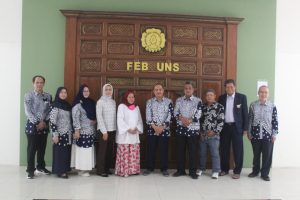
    The discussion went on for around two hours and concluded with an exchange of a token of appreciation and a group photo.
  • PDIE FEB UNS Organizes the 4th International Colloquium of Business and Economics in 2022

    PDIE FEB UNS Organizes the 4th International Colloquium of Business and Economics in 2022

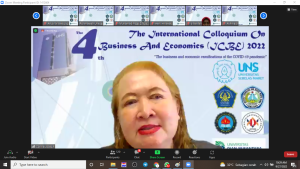
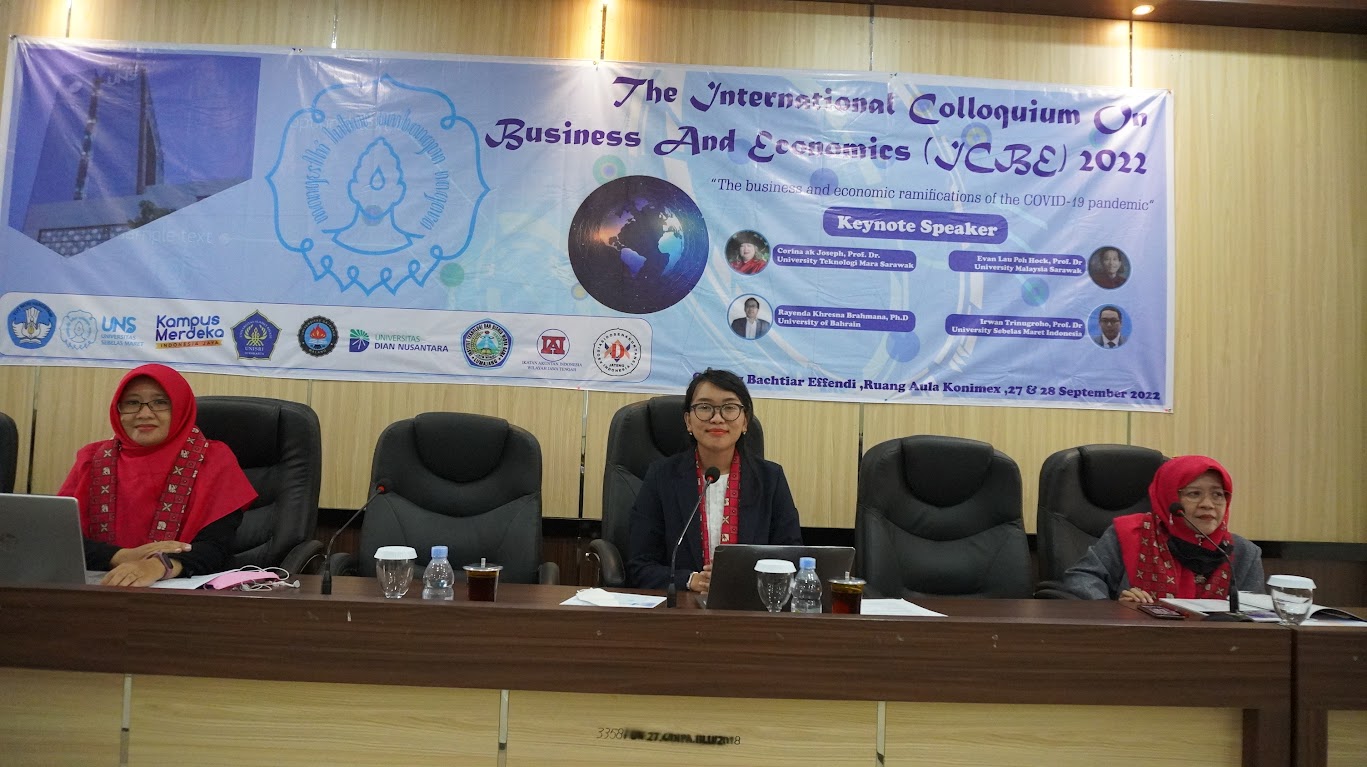
    Doctoral Program in Economics (PDIE), Faculty of Economics and Business (FEB), Universitas Sebelas Maret (UNS), hosted the 4th International Colloquium of Business and Economics (ICBE) under the theme “The Business and Economic Ramifications of the COVID-19 Pandemic” on 27–28 September 2022. The event was conducted in a hybrid format, taking place at the Konimex Hall of FEB UNS and via Zoom Meeting.

    Dean of FEB UNS, Prof. Djoko Suhardjanto

    The international colloquium was organized in collaboration with several partner institutions, namely Universitas Gajayana Malang, Widya Gama Lumajang Institute of Technology and Business, Universitas Dian Nusantara, Universitas Slamet Riyadi (UNISRI), and the Indonesian Accounting Lecturers Association (Asosiasi Dosen Akuntansi Indonesia/ADAI).

    4th ICBE 2022: On-site participants
    On-site participants of 4th ICBE

    In his opening remarks, the Dean of FEB UNS, Prof. Drs. Djoko Suhardjanto, M.Com., Hons., Ph.D., Ak., stated that the international colloquium represents one of the long-standing academic traditions of the Doctoral Program in Economics. He explained that its primary objective is to encourage doctoral students to disseminate their scholarly work within an international academic setting.

    “I hope this event will inspire the academic community of Universitas Sebelas Maret in Surakarta, particularly PDIE, to continue progressing and developing, while also supporting the implementation of the Merdeka Belajar Program and contributing to the development of high-quality human resources capable of leading Indonesia in the future,” he remarked.

    Prof. Djoko also expressed his appreciation to the keynote speakers, Prof. Dr. Corina ak Joseph (Universiti Teknologi MARA Sarawak), Prof. Dr. Evan Lau Poh Hock (Universiti Malaysia Sarawak), Rayenda Khresna Brahmana, Ph.D., (University of Bahrain), and Prof. Dr. Irwan Trinugroho (Universitas Sebelas Maret, Surakarta).

    Head of the PDIE Study Program, Prof. Dr. Rahmawati

    Meanwhile, the Head of the PDIE Study Program, Prof. Dr. Rahmawati, M.Si., Ak., conveyed her gratitude to all participants for their involvement in the 4th Doctoral Colloquium in Business and Economics, as well as to the speakers and discussants for their contributions to improving the overall quality of the colloquium. She noted that more than 300 participants were registered for the event, with 45 research papers presented.

    Prof. Evan Lau Poh Hock (right) during his presentation

    She further explained that the colloquium was designed to facilitate doctoral students and other scholars in disseminating their research findings. Reviewers provided critical assessments and constructive feedback on the papers presented during the sessions.

    Prof. Rahmawati also briefly introduced PDIE FEB UNS, noting that the program received an “Excellent” (A) accreditation status from the National Accreditation Board for Higher Education (BAN-PT) since 2015. In line with the long-term vision of UNS and FEB to become a world-class university, PDIE has developed a roadmap aimed at accelerating its international reputation, particularly through research outputs produced by its students.

    Prof. Dr. Corina ak Joseph

    On the first day of the colloquium, 45 presenters, distributed across nine parallel sessions, delivered their research papers. At the conclusion of the event on Wednesday, 28 September 2022, three best papers were scheduled to be announced based on the reviewers’ evaluations.

  • BAN-PT Assessors Conduct Stage 3 Virtual On-Site Assessment of the PDIE Program

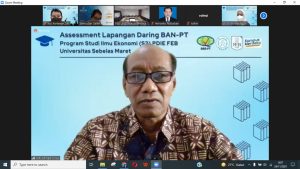
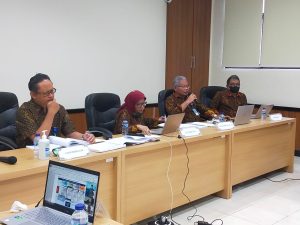
    The National Accreditation Board for Higher Education (BAN-PT) conducted the Stage 3 Monitoring of the Doctoral Program in Economics (Program Doktor Ilmu Ekonomi/PDIE), Faculty of Economics and Business (FEB), Universitas Sebelas Maret (UNS). The assessment was conducted virtually on Wednesday–Thursday, 24–25 November 2021. The assessors appointed for this assessment are Prof. Dr. Samsubar Saleh, M.Soc.Sec., from Universitas Gadjah Mada and Prof. Dr. Agus Suman, S.E., DEA, from Universitas Brawijaya.

    Representing the Rector of UNS at the opening session, the Vice Rector for Academic and Student Affairs of UNS, Prof. Ir. Ahmad Yunus, M.S., stated that UNS had marked one year since its transition from a Public Service Agency State University (PTN BLU) to a Legal Entity State University (PTN BH). He emphasized that UNS continues to strengthen educational quality, particularly in accreditation.
    “Up to this year, 15 study programs at UNS have undergone international accreditation visitation. Next year, we aim to increase this number to at least 20 study programs to meet the requirements of UNS as a PTN BH,” he stated.

    He further explained that study programs that have obtained “Excellent” accreditation from BAN-PT and have demonstrated consistent strong performance over at least two assessment cycles are proposed for international accreditation.

    Prof. Yunus also highlighted the significant role of the quality assurance institution at UNS, which conducts internal monitoring and evaluation each semester, along with internal audits at the end of the year. In addition, quality assurance oversight is carried out by BAN-PT and independent accreditation agencies.

    He expressed his expectation that the BAN-PT assessors would provide guidance and support during this Stage 3 Monitoring, particularly for the PDIE FEB UNS Taskforce Team.

    In his remarks, Prof. Samsubar explained that the monitoring process aimed to confirm the data previously submitted by the PDIE Taskforce Team to BAN-PT. He conveyed confidence that the team had made optimal efforts and emphasized that the assessment would focus solely on the submitted documents. He encouraged the team to use the two-day Stage 3 Monitoring to refine or supplement data, as long as it remained within the accreditation period.

    Supporting this suggestion, Prof. Agus expressed his confidence that the team had prepared the required documentation thoroughly. He noted that the monitoring session provided an opportunity to improve or add relevant data, provided it remained within the scope of the accreditation timeframe.

    The virtual on-site assessment began with confirmation of data from the Higher Education Self-Assessment Report (Laporan Kinerja Perguruan Tinggi/LKPT), followed by sessions with the accreditation team and internal quality assurance implementers.
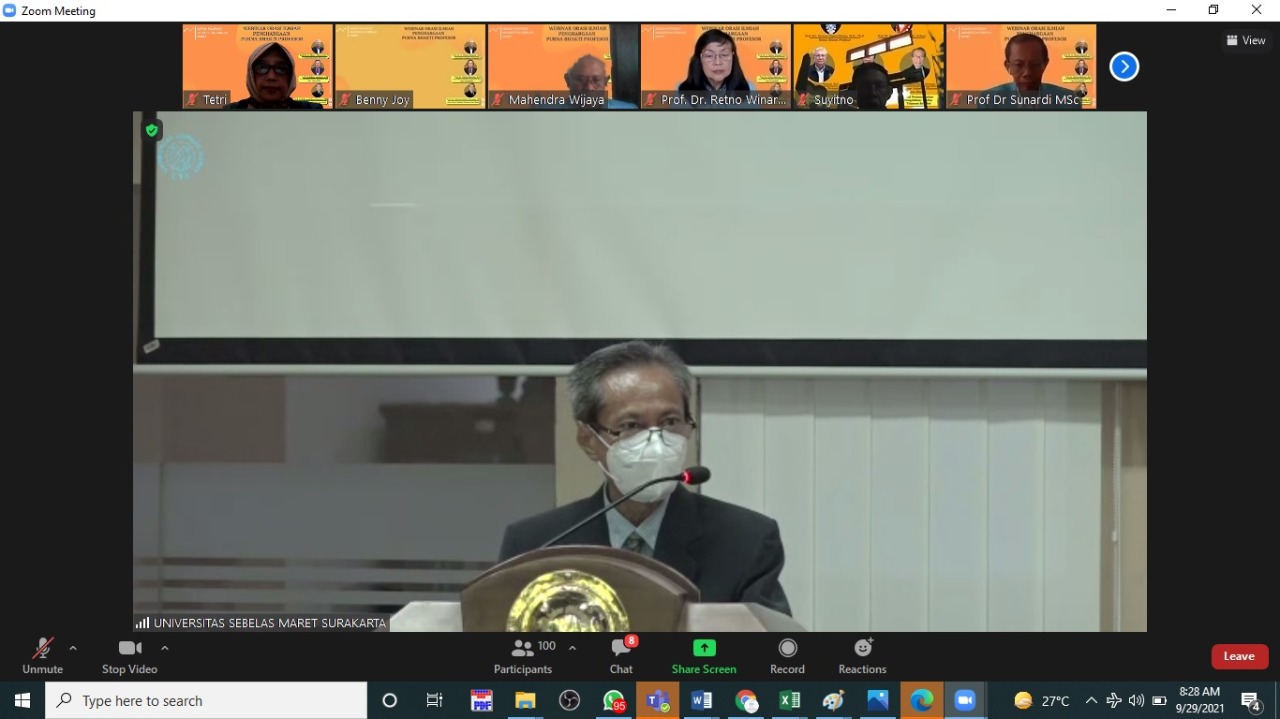
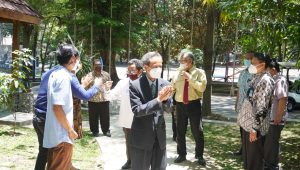
    On the second day, the agenda included independent work by the assessors to prepare the draft minutes and monitoring recommendations, followed by the delivery of feedback and the signing of the official report.

  • After 41 Years of Service, Prof. JJS Dedicates His Expertise in Macroeconomics and Development Economics

    After 41 Years of Service, Prof. JJS Dedicates His Expertise in Macroeconomics and Development Economics

    The Dean and all of the Faculty of Economics and Binis (FEB) Universitas Sebelas Maret (UNS) academic members expressed their highest gratitude and appreciation to Prof. Dr. Julius Jhonny Sarungu, MS or commonly known as Prof. JJS, for his contributions and devotion during his service at FEB UNS. “We hope Prof. JJS to stay healthy even after retirement, continues his craft, and stay happy with his beloved family.”

    Dean of FEB UNS Thanked Prof. JJS

    The statement was delivered by the Dean of FEB UNS, Prof. Drs. Djoko Suhardjanto., M.Com. (Hons), Ph.D. Ak. at the hybrid “Webinar of Scientific Oration Award for Professor Retirement.” The on-site event was held in FEB UNS Assembly Room IV, while the online event is available through Zoom Cloud Meeting, Wednesday, September 29, 2021.

    Prof. Djoko said that, since being appointed as a Civil Servant in 1980, Prof. JJS, has done extraordinary service for UNS for the last 41 years.

    “The special characteristic of him who was born in Makale, Tana Toraja, South Sulawesi, July 11, 1959, is his black jacket, and always having a cup coffee or warm tea with him during lecture. Prof. JJS is a disciplined, friendly, and patient lecturer. According to his students, this professor in black jackets always appreciates the opinions of students in teaching. His speech and improvisation while teaching help students to understand the teaching material easily. When supervising students’ final assignment, he patiently explains the theory and the flow of writing,” he explained.

    Prof. JJS is graduated from Universitas Kristen Satya Wacana Salatiga in the field of economic studies in 1977. He earned his Master’s Degree at the University of Indonesia in Population and Employment studies in 1991. He completed his Doctoral study in 2001, and receiving his Ph.D. in Economics studies from Universitas Airlangga Surabaya.

    Welcoming Prof. JJS at FEB UNS

    As one of the founding fathers of the Faculty of Economics, especially in the Development Economics Study Program, Prof. JJS has served as Secretary of the Department of Development Economics, Vice Director of Academic Affairs for the Master Program in Management, and Secretary II of the Doctoral Program in Economic Studies, UNS Postgraduate School.

    Prof. JJS is an inspiring person to his juniors. He has made numerous contributions to the development of science, dozens of textbooks and articles published in reputable international journals, accredited National Journals, and proceedings. His work demonstrates expertise in macroeconomics and development economics. He is also active in scientific organizations, including the Indonesian Bachelor of Economics Association and the Member of The Australian Development Studies Network (ANU), Australia. (Humas FEB).

  • The Chairman of OJK, Rector of UNS, and Dean of FEB UNS Inaugurated Al-Latief Mosque FEB UNS

    The Chairman of OJK, Rector of UNS, and Dean of FEB UNS Inaugurated Al-Latief Mosque FEB UNS

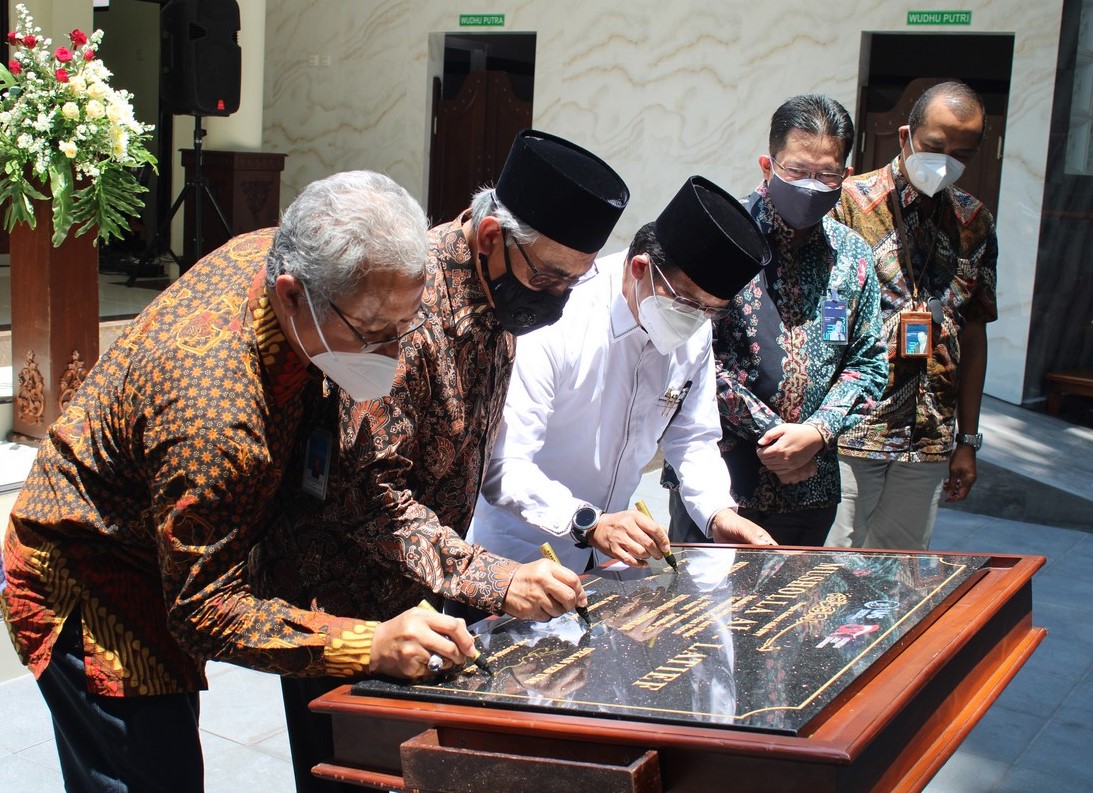
    The Chairman of the Board of Commissioners (DK) of the Financial Services Authority (OJK) of the Republic of Indonesia, Prof. Wimboh Santoso, the Rector of Universitas Sebelas Maret (UNS) Surakarta, Prof. Jamal Wiwoho, and the Dean of the Faculty of Economics and Business (FEB) UNS, Prof. Djoko Suhardjanto signed an inscription to mark the inauguration of Al-Latief Mosque FEB UNS, Friday (1/10/2021).

    The inauguration ceremony by Prof. Jamal, Prof. Wimboh, and Prof. Djoko (left to right)

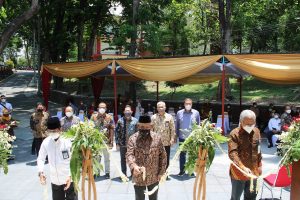
    During the inauguration of the new Mosque, Prof. Wimboh, Prof. Jamal, and Prof. Djoko also did the ribbon-cutting ceremony symbolizing the readiness Al-Latief Mosque as a special place of worship and other supporting activities to improve the quality of worship and also the community welfare.

    The Dean of FEB UNS, in his report, states that the Al-Latief Mosque was previously a prayer room (mushola). A critical renovation of the building is essential to provide a more comfortable prayer.

    The Dean also thanked Bank Mandiri, Bank BRI, Bank BNI, and OJK for providing assistance in the Al-Latief Mosque renovation. Thus, establishing a comfortable praying site for worshipers in carrying out prayer and other activities.

    “The design of our Mosque follows the philosophy of sharia, tarekat (order), hakikat (nature), and makrifat (knowledge). The pillars are ‘gilig (round in shape)’ as a symbol of ‘manembah kepada Gusti‘ (worshiping the God almighty),” he said.

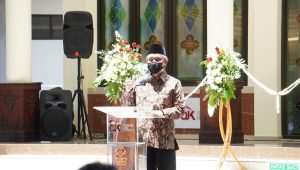
    Prof. Wimboh delivers inauguration speech

    The Dean has also appointed a young lecturer from FEB UNS, Ibrahim Fatwa Wijaya, Ph.D., as the Takmir (manager) of the Al-Latief Mosque to maintain the Mosque further. The new Takmir is expected to transform the Mosque into a center of excellence. Prof. Djoko also wishes for more religious activities in the Mosque such as Islamic economic studies and Islamic history for the greater benefit of the community and contribute to UNS achievement.

    Similarly, Prof. Wimboh emphasized that a mosque is not only a worship place but also a center for knowledge development, which can be beneficial to the community. There must be studies, innovations in the development of Shariah values.

    “Alhamdulillah, the Al-Latief Mosque, which was previously a mushola, is now better, more comfortable, and beneficial for both of FEB academic community and the general community. The Al-Latief Mosque can be a center of excellence. Not only for prayer, not only to worship but to establish synergy in raising innovation for sharia values,” said Prof. Wimboh.

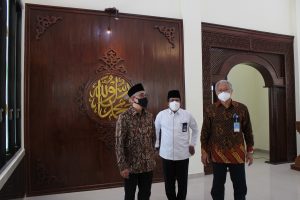
    Reviewing the Mosque architecture and facilities

    According to Prof. Wimboh, the significance of sharia and Islamic studies is mainly because the majority of the Indonesian population is Muslim. Therefore, increasing the percentage of community members who wish to enjoy Islamic banking products.

    “The potential for Sharia banking is still very small, with only 9 percent. Now, how can we increase that portion? Shariah products must be propagated. The community sharia assets must also be propagated. Mosque administrators should set in discussions regarding the innovations on how to develop the Mosque,” said Prof. Wimboh.

    After the inauguration, Prof. Wimboh, Prof. Jamal, and Prof. Djoko, alongside a number of invited guests, were reviewing the architecture and facilities at Al-Latief Feb UNS Mosque. (Humas FEB)

  • PDIE FEB UNS Hosted the Third Colloquium on Business Economics

    PDIE FEB UNS Hosted the Third Colloquium on Business Economics

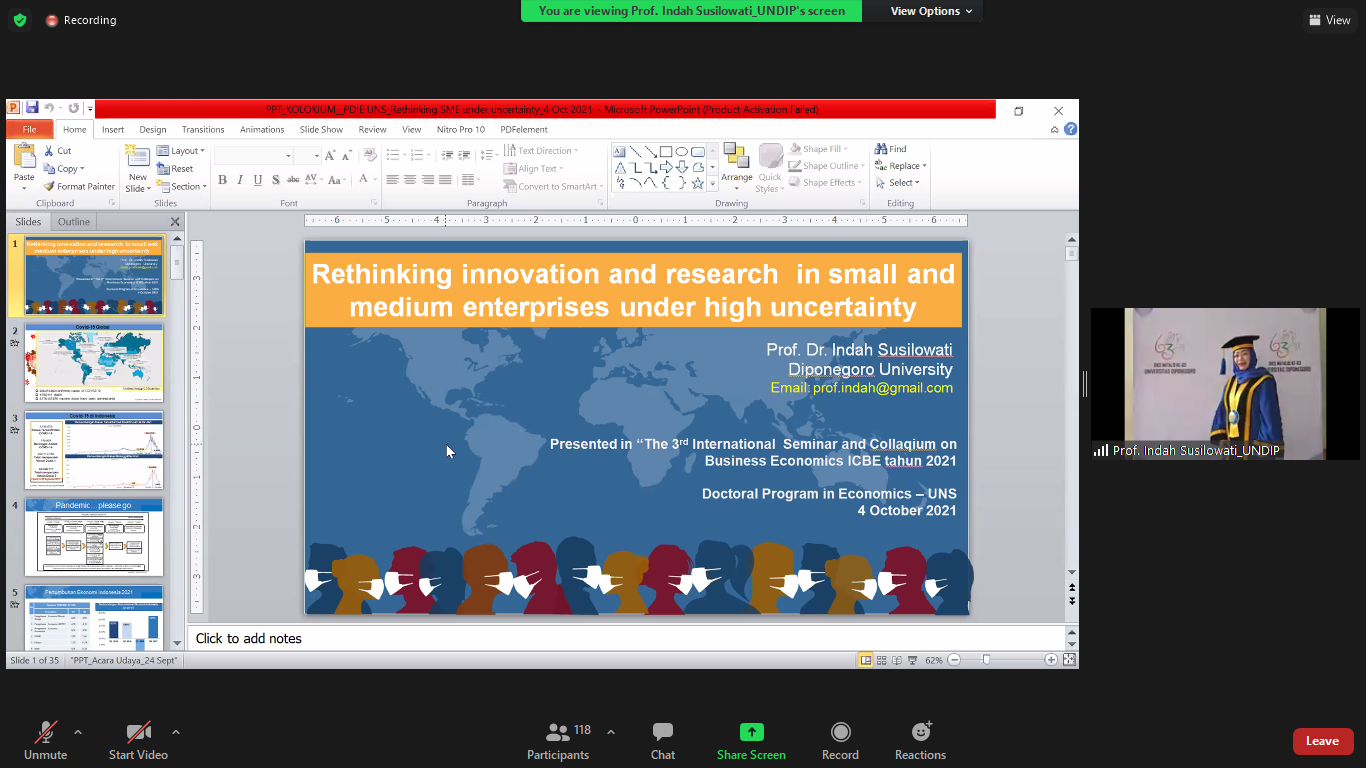
    The Doctoral Program in Economics (PDIE), Faculty of Economics and Business (FEB), Universitas Sebelas Maret (UNS), held the 3rd International Seminar and Colloquium on Business Economics (ICBE), taking on the theme of “Rethinking Innovation and Research in Small and Medium Enterprises Under High Uncertainty,” October 4-5, 2021. The international seminar and colloquium was held in collaboration with four partner universities, namely, Universitas Garut, STIE Widya Gama Lumajang, Universitas Tidar, and Universitas Slamet Riyadi (UNISRI).

    During the event attended by more than 100 participants and 43 presenters, The Director of PDIE FEB UNS, Prof. Rahmawati, expressed her gratitude to the partner universities for supporting the 3rd ICBE 2021. Prof. Rahma also wishes for the colloquium to help and facilitate PDIE students in their research article publication process, which becomes one of the graduation requirements. Furthermore, Prof. Rahma hopes that the colloquium can help and facilitate PDIE students in their research article publication process as one of the graduation requirements.
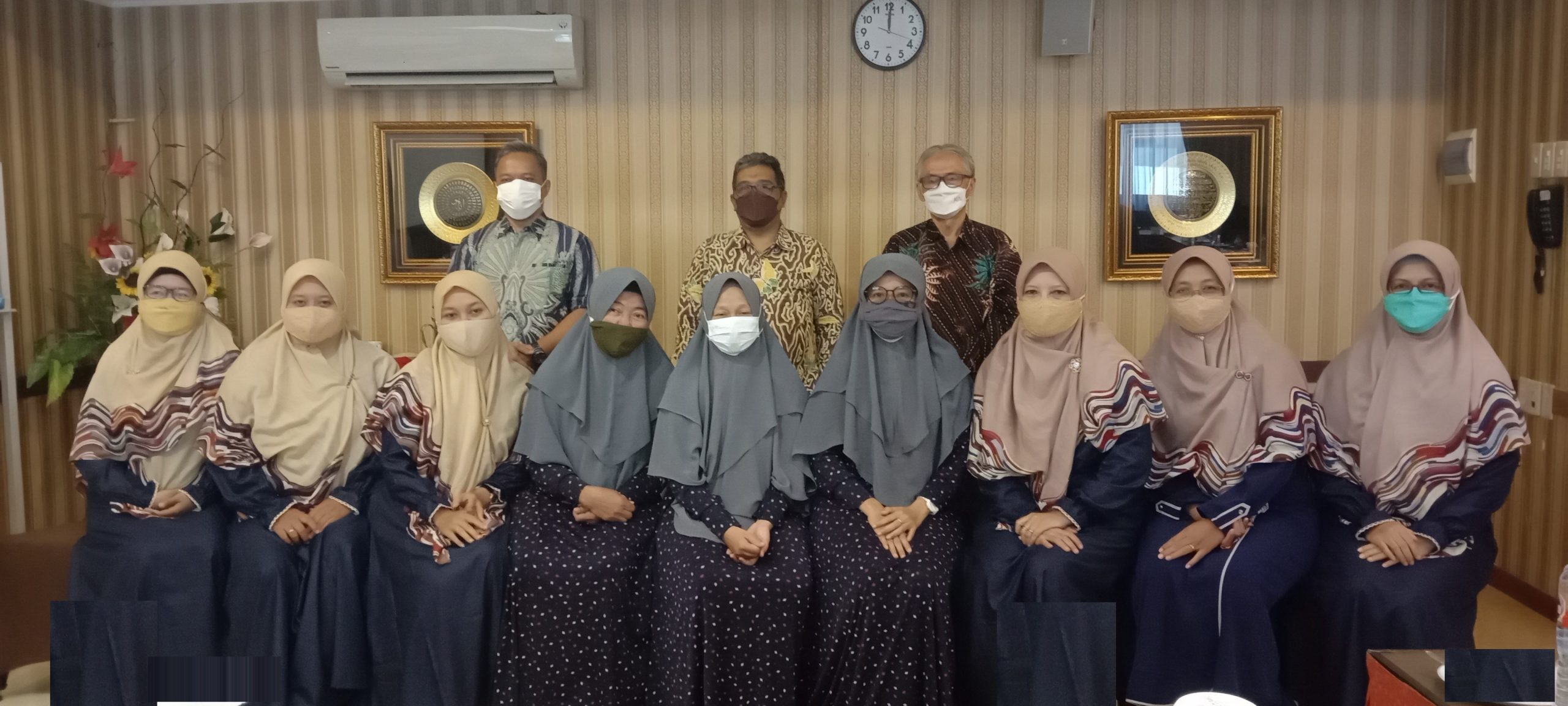
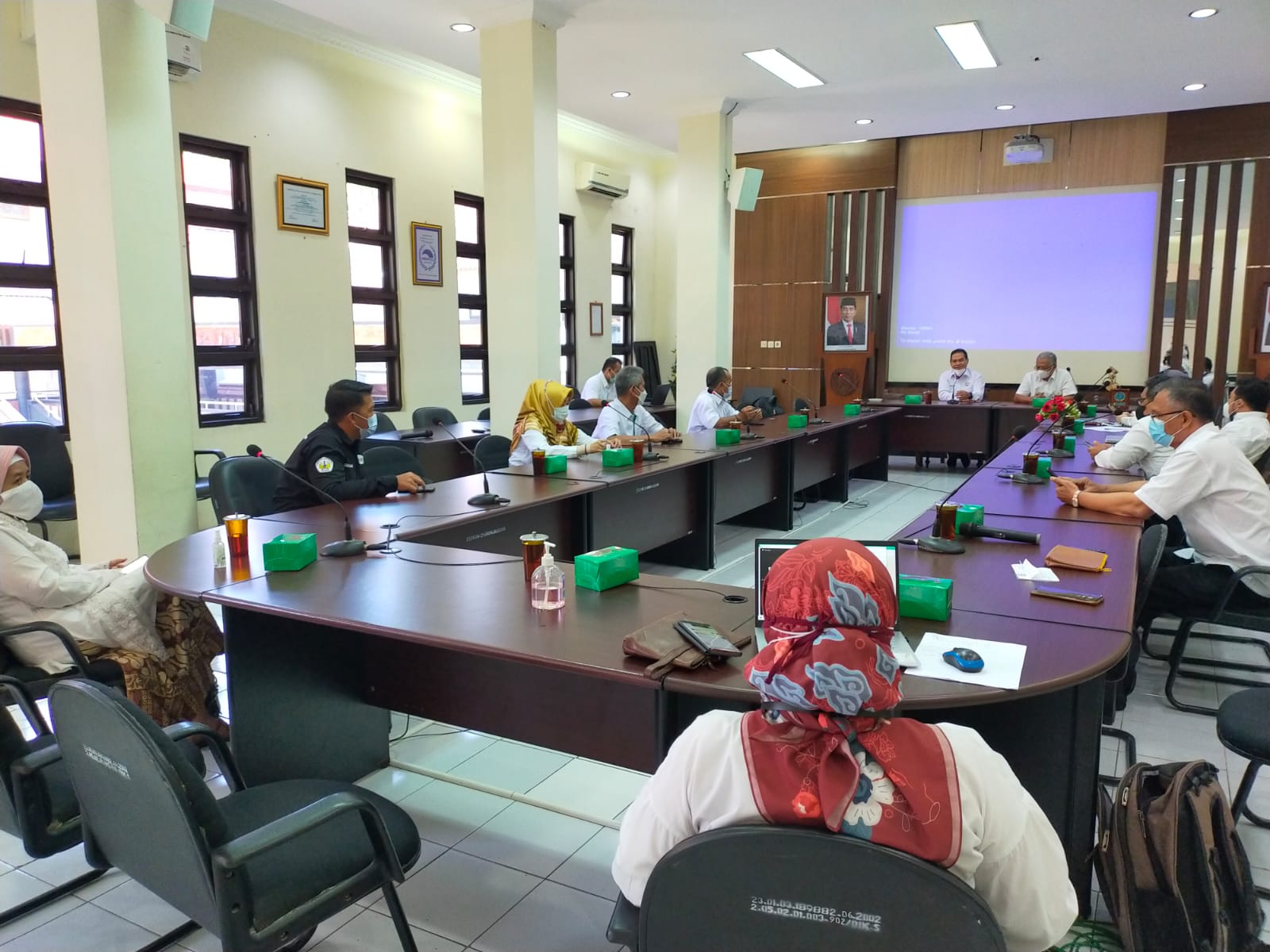
    Meanwhile, Prof. Izza Mafruhah, the FEB UNS Vice Dean for Academic, Research, and Student Affairs, representing the Dean of the Faculty of Economics and Business, thanked the four speakers for attending the international colloquium.

    “This event aims to improve the competency of the Doctoral program students to publish their research articles at national and international levels, as well as to improve the reputation of the PDIE UNS in the publication aspects,” said Prof. Izza.

    The ICBE 2021 consists of two sessions: the plenary session, where the participants will listen to the material presentation and keynote speech from speakers, and parallel sessions, where the presenter participants will present their submitted research articles that have gone through the selection process.

    This year ICBE 2021 invited four international speakers, namely, Prof. Indah Susilowati from Diponegoro University, Dr. Kwabena G. Boakye from Georgia Southern University, Prof. Budy Resosudarmo from the Australian National University, and Prof. Benny Tjahjono from Coventry University.

    On the first day of the colloquium, the participants join the plenary session with two speakers, Prof. Indah Susilowati and Dr. Kwabena G. Boakye. In her keynote speech, Prof. Indah delivered material entitled ‘Rethinking Innovation and Research in Small and Medium Enterprises under High Uncertainty.’

    Prof. Indah explained how the Covid-19 pandemic had affected economic conditions. For the MSME sector, there are several obstacles arise, such as decreased capital and customers, as well as a decrease in the goods’ price. However, Prof. Indah revealed that the Indonesian government has been quite proactive in economic recovery efforts.

    “With collaboration and cooperation, we will be able to deal with this pandemic. Economic recovery will certainly take time to be applied successfully,” said Prof. Indah.

    After the Keynote Speech, Dr. Kwabena G. Boakye presented material entitled ‘Small and Medium Enterprises from Crisis to Growth,’ where he states that the contribution of the MSME sector to economic conditions is quite significant.

    “In this case, the government can support the existence of MSMEs through financial training, encouraging research progress, and provide sector-specific assistance,” he explained.

    During the plenary session, participants were given the opportunity to submit questions interactively to the invited speaker. After the plenary session, participants are invited to join s specific parallel session according to their research interest.

    Reporter: Aulia

    Editor: Humas FEB

  • BPUF FEB UNS Provides Managerial Training for Sharia Cooperative Manager in Solo

    BPUF FEB UNS Provides Managerial Training for Sharia Cooperative Manager in Solo

    A number of the managers in Koperasi Simpan Pinjam dan Pembiayaan Syariah (Sharia Savings and Loans Cooperative-KSPPS) Solo participated in a managerial training organized by the Business Management Agency of the Faculty of Economics and Business (BPUF), Universitas Sebelas Maret (UNS), Saturday, September 25 at the Amrani Hotel Solo.

    The Head of BPUF FEB UNS, Dr. Ahmad Ikhwan Setiawan, SE, MT., in his statements, reveals that the training aims to introduce the significance of fintech implementation to support various cooperative business operations. According to him, fintech implementation in KSPPS Surakarta is still limited, and most of the daily operations activities are still carried out manually, which leads to limited market coverage. This condition is in contrast with the MSMEs spirit in Solo, which encourages online business. Therefore, such asymmetry needs to be addressed immediately to allow KSPPS Surakarta to have a significant role in business and economic growth in Solo.

    Additionally, KSPPS is also expected to synergize with the existing financial institutions to increase product innovation and funding. “Cooperatives need to conduct fintech technology assessments to observe various fintech initiatives that are suitable for cooperatives. Afterward, cooperatives need to internalize and socialize the fintech benefits to avoid employees’ resistance. Selecting the right fintech partners is also crucial to find the most capable and efficient financial technology. Periodical monitoring and evaluation on fintech application is carried out to understand its impact on the cooperatives’ performance,” he explained.

    Dr. Ikhwan added that there are many advantages of fintech implementation in KSPPS Surakarta. Cooperatives that adopt fintech are more capable of demonstrating an excellent service quality to achieve customers’ or members’ satisfaction. Fintech adoption in cooperatives can enhance its’ brand image as a trusted cooperative due to its capabilities to adopt technological advances.

    Fintech adoption can expand a cooperative’s market share, reaching out to more depositors and borrowers, expanding to various cities or even across various regions. Fintech allows communication between depositors and borrowers to be more timely, thus various lending and borrowing decisions can be executed quickly. (Humas FEB)

  • FE UNTAN Deanery Visit FEB UNS, Discussing MBKM

    FE UNTAN Deanery Visit FEB UNS, Discussing MBKM

    The Faculty of Economics and Business (FEB) UNS received a visit from the Deanery of the Faculty of Economics, Tanjungpura University (UNTAN) Pontianak, Monday 20 September 2021, in Meeting Room 1 FEB UNS. On this occasion, the representative of FEB UNS presented the faculty profile, the Merdeka Belajar Kampus Merdeka (MBKM) Policy, and its implementation in each study program.

    Dr. Haryono, WD 2 FE UNTAN presenting the FE UNTAN profile

    The entourage of FE UNTAN, consisting of Muz’an Sulaiman, SE., MM., as the Vice-Dean 1 FE UNTAN, Dr. Haryono, SE, Ak, CPA, Asean CPA, as the Deputy Dean 2 FE UNTAN, Dr. Restiatun, MSi, Secretary of the IE Doctoral Study Program FE UNTAN, Dr. Afrizal, MSi, the Head of the FE UNTAN Library, was welcomed by the Dean of FEB UNS, Prof. Djoko Suhardjanto, M.Com. (Hons) Ph.D., Ak., FEB UNS Vice Deans, the Heads of Undergraduate Study Programs, and the Head of Doctoral Programs in Economics FEB UNS. Following the welcome remark, Prof. Djoko Suhardjanto briefly explained the profile of FEB UNS.

    Prof. Djoko mentioned that all undergraduate and postgraduate study programs at FEB UNS have been accredited A from the National Accreditation Board for Higher Education (BAN-PT). International accreditation certifications have also been achieved, such as the EPAS, AUN QA, and ABEST21. Around November this year, the three undergraduate study programs in FEB UNS, the Accounting, Management, and Development Economics will be assessed by AQAS, an international accreditation agency recognized by the Directorate General of Higher Education (Dikti). This year also, FEB UNS has opened an international class.

    “Since 6 October 2020, UNS has obtained the status of a State University with Legal Entity (PTN-BH). In addition, UNS is included in the first cluster or the main cluster of the best universities (PT) in Indonesia. Because of the PTNBH status, there is the main requirement where 50% of the lecturers must have a doctoral degree, and FEB is slowly fulfilling this requirement,” he said.

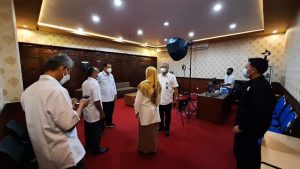
    Visiting the FEB UNS Studio

    Meanwhile, information regarding the MBKM Policy in FEB UNS was delivered by the Vice Dean of Academic Research and Student Affairs FEB UNS, Prof. Izza Mafruhah, SE, M.Si. The implementation at study program level was delivered by the Head of Accounting Study Program, Agung Nur Probohudono, SE, M.Sc., Ph.D., Ak., CA., the Head of Management Study Program, Dr. Atmaji, MM, and the Head of Development Economics Study Program, Bhimo Rizky Samudro, SE, M.Si., Ph.D.

    During the visit, the UNTAN Deanery also visited some of the FEB UNS facilities adapted to national and international accreditation standards, including classrooms, professor rooms, learning studio rooms, work stations, teleconferencing rooms, and others. (Humas FEB).

  • FEB UNS Held Achievement Motivation Training and Outbound for Academic Support Staff

    FEB UNS Held Achievement Motivation Training and Outbound for Academic Support Staff

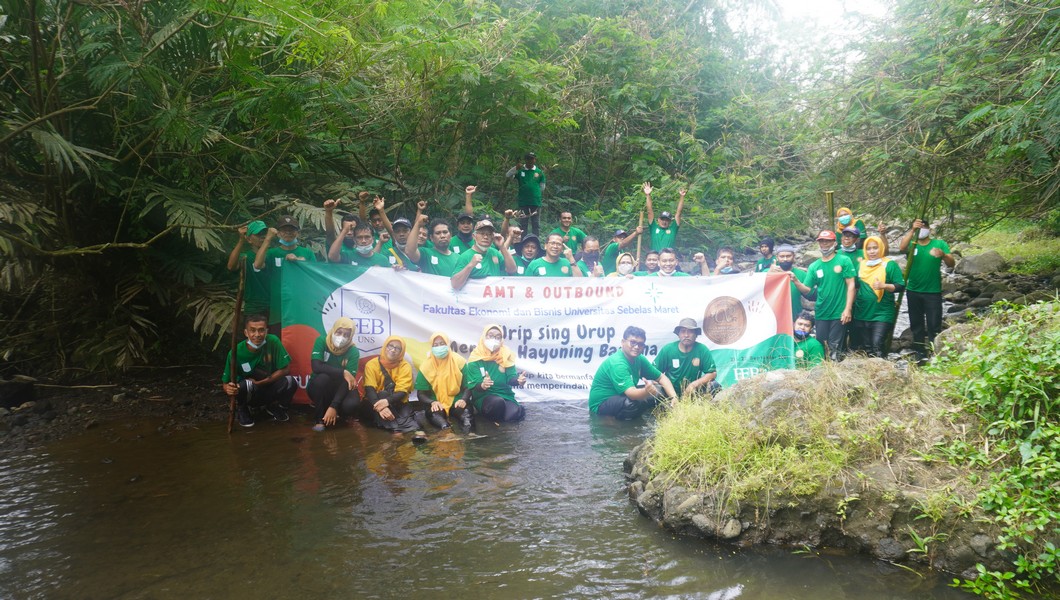
    The Faculty of Economics and Business (FEB) Universitas Sebelas Maret (UNS) held an Achievement Motivation Training (AMT) and Outbound on Saturday, September 11, 2021, in Tempel, Sleman, Yogyakarta. The first stage of training was attended by more than 40 FEB UNS academic support staff (tendik), the Deanery, and the Head of several Study Programs in FEB UNS.

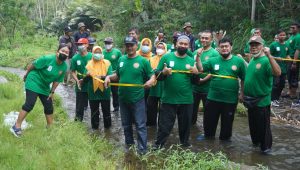
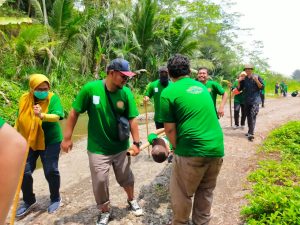
    Before the outbound start, Prof. Djoko Suhardjanto, M.Com., Hons., Ph.D., Ak., as the Dean of FEB UNS, reveals that this activity is not only for refreshment but also to provide motivation in strengthening the academic support staff teamwork in facing work challenges in FEB UNS. This year’s outbound was different from the previous year because participants will need to travel quite a distance around the foot of Mount Merapi and various obstacles, walking through Salak gardens, forest, and cruising along a riverbank.

    The Dean hopes that after the training, the academic support staff can always collaborate harmoniously and maintain cohesiveness to achieve common goals. “Let’s keep a calm and peaceful life, urip sing urup memayu hayuning Bawana. Life should provide benefits for others, provide happiness, safety, and prosperity for the environment,” Prof. Djoko stated.

    During the outbound, the academic support staff was divided into 3 (three) groups that must follow the directions provided by the travel guide. Each group must stay together and help each member in solving the challenges. Some of the rules that must be obeyed during the trip include not taking anything when entering the community’s plantation area, not throwing anything away, not killing any animals except in forced circumstances.

    During the trip, the staff must be extra careful while going up and down hills with slippery soil, traversing the Krasak River with a fairly swift and deep-water level, as well as steep waterfall cliffs. The FEB staff are also required to cut through the Sempadan Forest. At the end of the trip, a Gayam tree was planted on the Krasak riverbanks to preserve nature.

    After the outbound, FEB academic support staff took part in a gathering at the Pendhopo of Omah Noto Plankton to share and evaluate the outbound activities, which lasted for approximately 4 hours.
    Overall, all of FEB UNS support staff had a pleasant impression on the experience on the trip through the gardens, forests, rivers, and the games provided by the guide team. The staff also gave suggestions and input to the Omah Noto Plankton team, as the outbound organizing and leading team, for future improvements. (Humas FEB)

  • FEB UNS Holds Hybrid Lecture Simulation

    FEB UNS Holds Hybrid Lecture Simulation

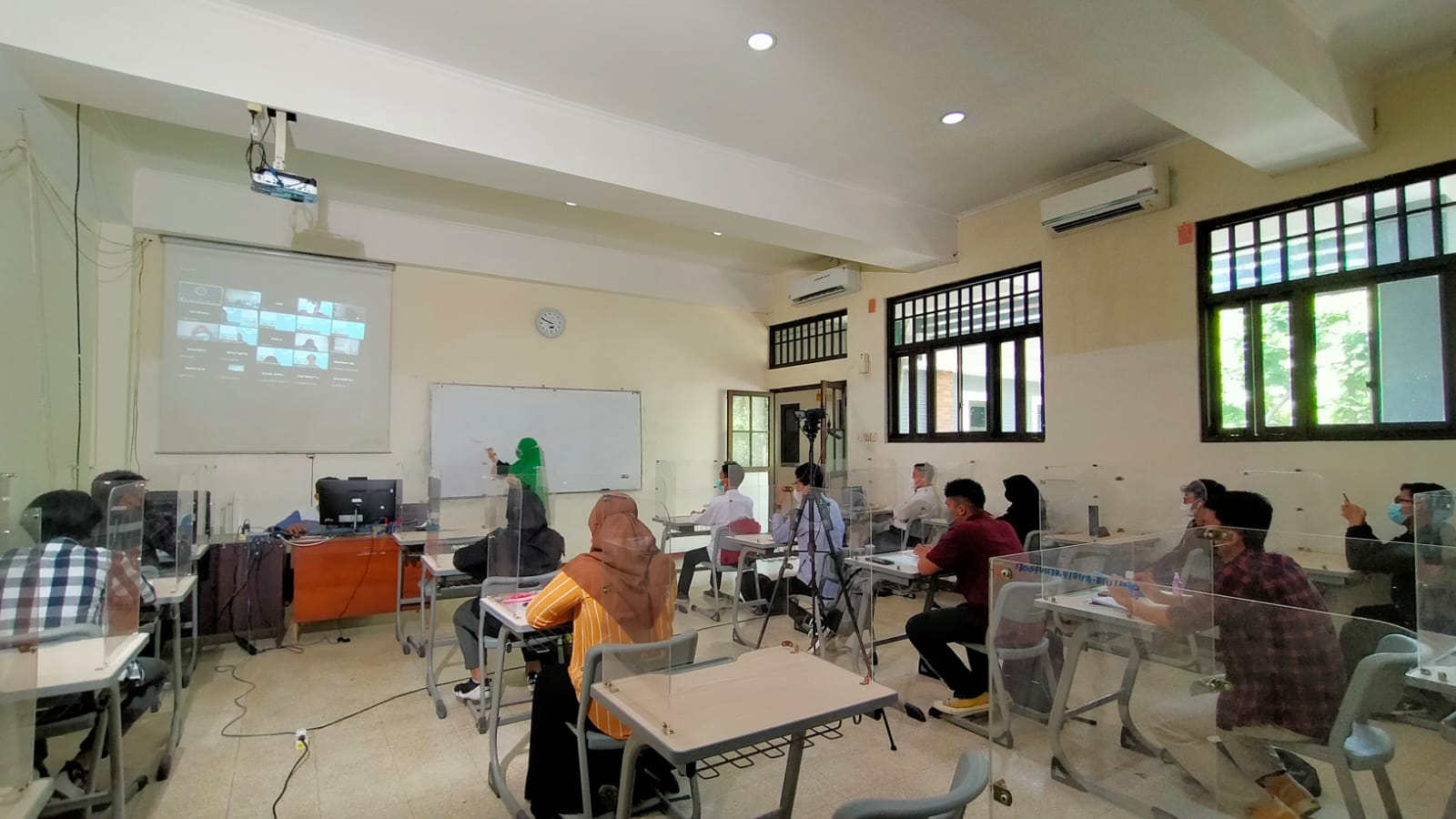
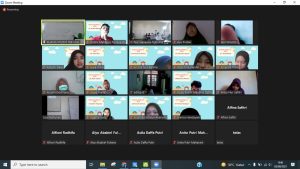
    A number of first semester students from the Management Study Program, Faculty of Economics and Business (FEB) Universitas Sebelas Maret (UNS) attended the Introduction to Macroeconomics lecture delivered by Prof. Dr. Izza Mafruhah, SE, M.Si., in Classroom 2.203 FEB UNS. At the same time, the rest of other students who enrolled to the course can follow the session through Zoom Cloud Meeting, Friday, September 3, 2021.

    This hybrid lecture, which combines two learning methods (online and direct learning), is an initial simulation carried out by FEB UNS to prepare Face-to-face Lectures (PTM) that will be implemented gradually by UNS. In the early stages, UNS will hold PTM for the first semester (class of 2021) students while prioritizing the residents of Solo Raya and vaccinated students to attend the PTM. Students are vibrant and enthusiastic about participating in the hybrid lecture simulation that will last for 2 hours.
    “Students attending the face-to-face lectures are currently only from the Great Solo region, such as from Wonogiri, Sukoharjo, Klaten, and also Surakarta. With this method, lecturers can explain the material in more detail, especially for topics that require calculation, since Zoom Cloud Meeting still has limitations,” said Prof. Izza reveals after her lecture.

    According to her, equipment and technical officers’ preparation to support the implementation of this hybrid lecture are crucial to facilitate students, both joining the face-to-face lecture and virtual lecture, in understanding the material and allowing them to join class discussions can smoothly. Prof. Izza hopes that the university will immediately provide vaccination facilities for the new students; thus, students can safely join the face-to-face lecture.

    Meanwhile, Andreansyah Saputra, a student of the Management Study Program, said that this method is implemented perfectly. Students can clearly understand the material presented by the lecturer.

    “We, as students, feel comfortable attending lectures while maintaining health protocols on campus and in class,” he said briefly. (Humas FEB)