FEB

Kategori: s3_pdie

  • ADAI and PDIE UNS Held Ngopi Gayeng Nasional

    ADAI and PDIE UNS Held Ngopi Gayeng Nasional

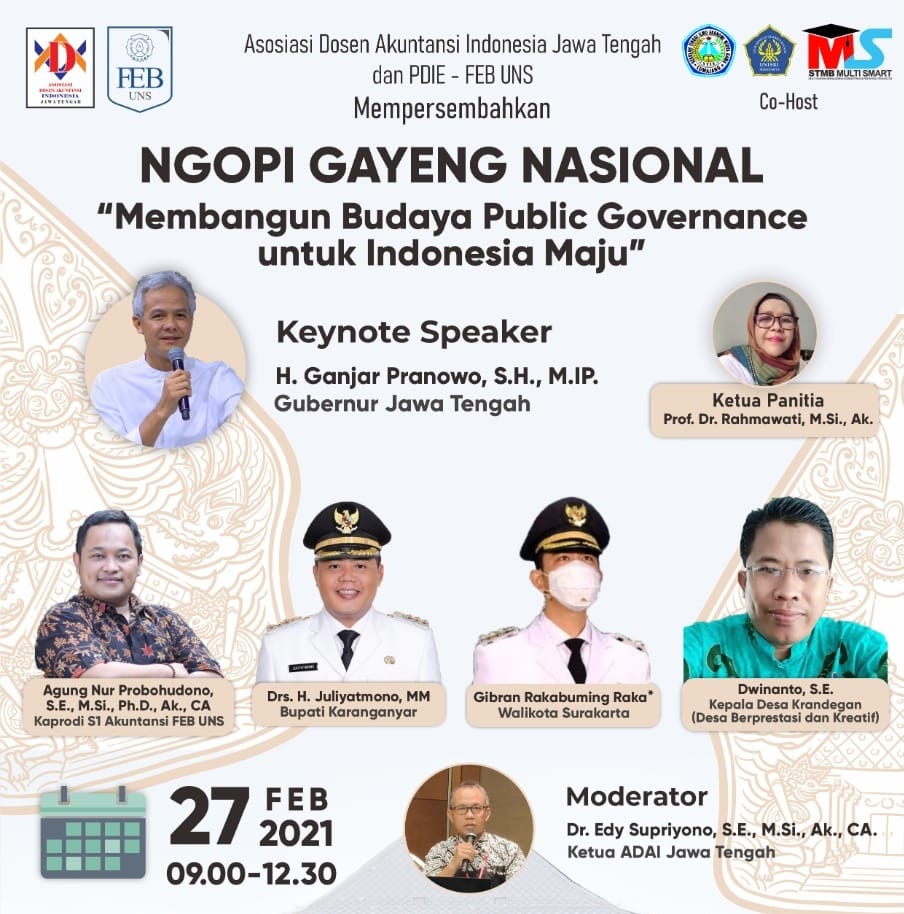
    The Association for Accounting Lecturer Indonesia (ADAI) and the Doctoral Program in Economics (PDIE) Faculty of Economics and Business (FEB) Universitas Sebelas Maret (UNS) Surakarta, held a webinar entitled ‘Ngopi Gayeng Indonesia in Establishing Public Governance Culture for the Advancement of Indonesia, Saturday, 27 February 2021.

    Prof. Dr. Rahmawati, M.Si., Ak., the Director of PDIE FEB UNS

    Prof. Dr. Rahmawati, M.Si., Ak., the Director of PDIE FEB UNS, who also serves as the advisor in ADAI expressed her gratitude to all parties that supported the collaboration between PDIE FEB UNS and ADAI.

    Prof. Rahmawati states that PDIE FEB UNS had organized various scientific events every month, inviting practitioners and also training. This event aims to maintain the interaction between the students and the community.

    “We are close to the public, especially in the business sector, economics, and small and medium enterprises. During this pandemic, we should motivate the public and small business owners,” she states.

    Representing the Dean of the FEB UNS, Prof. Dr. Izza Mafruhah, SE, M.Si, Vice-Dean for Academic, Research, and Student Affairs officially opened the discussion attended by more than 300 students.
    The Chair of ADAI, Dr. Edy Supriyono, S.E., M.Si., Ak., CA., delivering a report during ADAI webinar

    The four-panel speakers invited for the event are Agung Nur Probohudono, SE, M.Si, Ph.D., AK, CA., the Head of Accounting Study Program FEB UNS, Drs. H. Yuliatmono, MM., the Head of Karanganyar District, Gibran Rakabuming Raka, the Major of Surakarta city, and Dwinanto, SE, the Head of Krandegan Village. Keynote speaker was delivered by the Governor of Jawa Tengah, Ganjar Pranowo, SH, M.IP., represented by Taz Yasin Maimoen, the Deputy Governor of Jawa Tengah.

    The Chair of ADAI, Dr. Edy Supriyono, S.E., M.Si., Ak., CA., in his remarks reported that currently there are 242 members in ADAI Jawa Tengah, while nationally there are 12 provinces that officially registered as a member, where the initial members are from 10 provinces. The main focus of the ADAI is scientific discussion or webinar. In the future, there will be a community service program and various other activities.

    ADAI as an organization for Accounting Lecturer, both with accountant certification and without accountant certification, aims to build synergy in enhancing lecturers’ quality. At the national level, ADAI has many other activities such as sharia cooperation, community service, and journal publication. At the Provincial level, ADAI will collaborate to provide certification for accounting students. (Humas FEB)
  • FEB UNS Held RPS Workshop, Discussing Case Method-Based Learning

    FEB UNS Held RPS Workshop, Discussing Case Method-Based Learning

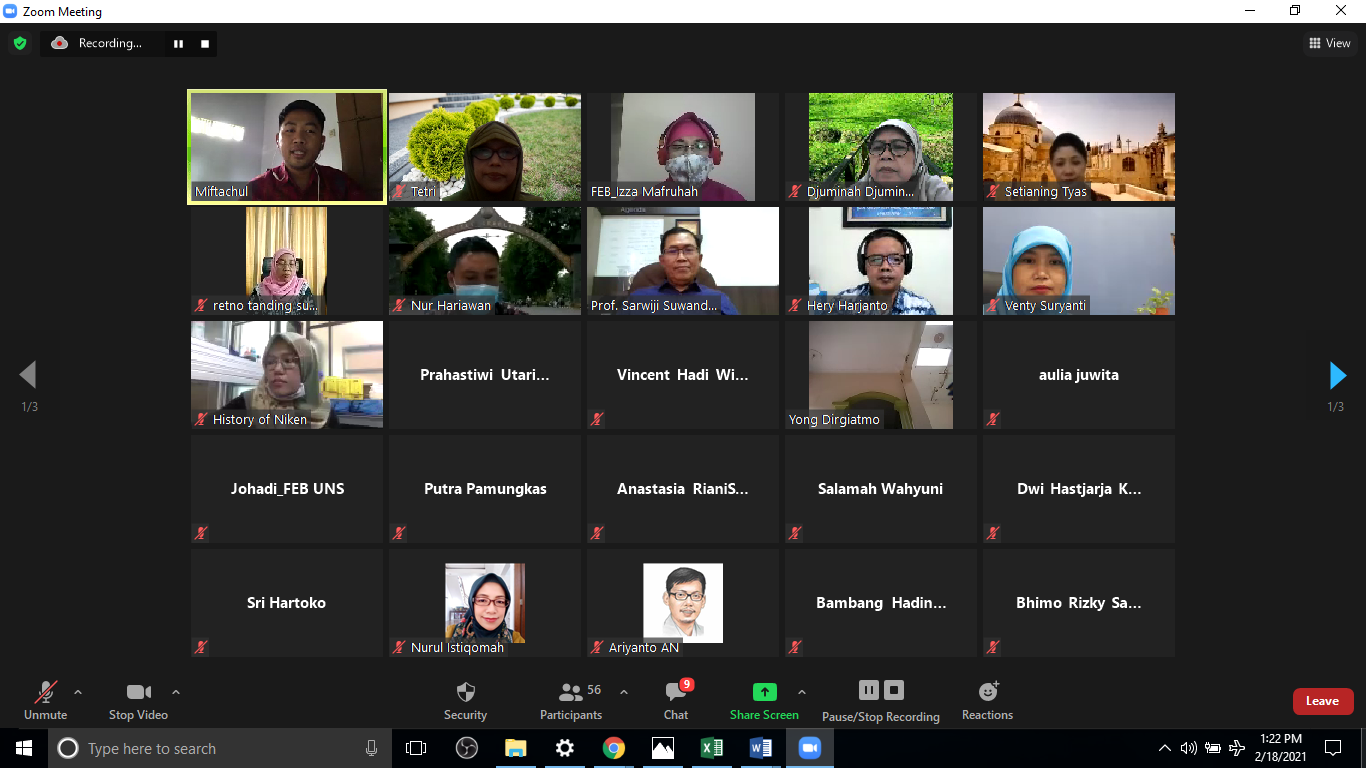
    Higher education must open new opportunities for students to develop their skills and actualizing their talent. This has become a great challenge for educators. Students must be facilitated to achieve great accomplishments and wasting their potential. Lecturers as an educator must reconstruct learning experience continuously. This was delivered by Prof. Dr. Sarwiji Suwandi, M.Pd., Chairman of the Institute of Educational Quality Assurance and Development (LPPMP) Universitas Sebelas Maret (UNS) Surakarta, when opening his material presented in the Worskhop of Case Method-Based Semester Course Plan (RPS) organized by the Faculty of Economics and Business (FEB) UNS, Thursday 18 February 2021.

    Prof. Sarwiji states that the learning paradigm has shifted. The learning process does not only require the students to learn but also the lecturers. Source of material become a crucial point. Lecturers must update their RPS periodically. The course plan must be adjusted if there is new literature or reference related to the current research.
    “Lecturer as a true learner prepare course plan read many references, and research result to be included in the course plan (RPS). With this we can be more assured that the learning outcomes will be better,” he explains.

    Further, Prof. Sarwiji explains the learning method that must be applied according to the 7th Main Performance Indicator (IKU), the percentage of Bachelor and Diploma program that use case method or team-based project as evaluation assessment. The case method is participative learning based on a discussion process to solve a case or problem. The implementation of this method will hone and improve students’ critical thinking in problem-solving, communication skills, collaboration, and creativity.

    “Implementing the case method, students should not be given an individual assignment, but a group assignment. This is because the problem in real life requires us to solve a problem collectively, using a different perspective, and various strategies proposed by team members,” he explains.

    In the case method, students took the main role in problem-solving, while the lecturer only acts as a facilitator, who observe the discussion, inquiring, and leading the discussion. Using this method, students will be involved actively to improve their creative and critical thinking. Moreover, the insight from the solved cases will give them a real-life problem-solving experience. This method can also train students to instill a positive social attitude and helping students to receive others’ opinions.

    The weakness of this method is the need for extensive preparation including tools, problems, and complex concepts, and sometimes there are no relevant cases to be discussed. (Humas FEB)

  • The Dean of FEB UNS Inaugurates BEM, DEMA, and Student Association Administrator

    The Dean of FEB UNS Inaugurates BEM, DEMA, and Student Association Administrator

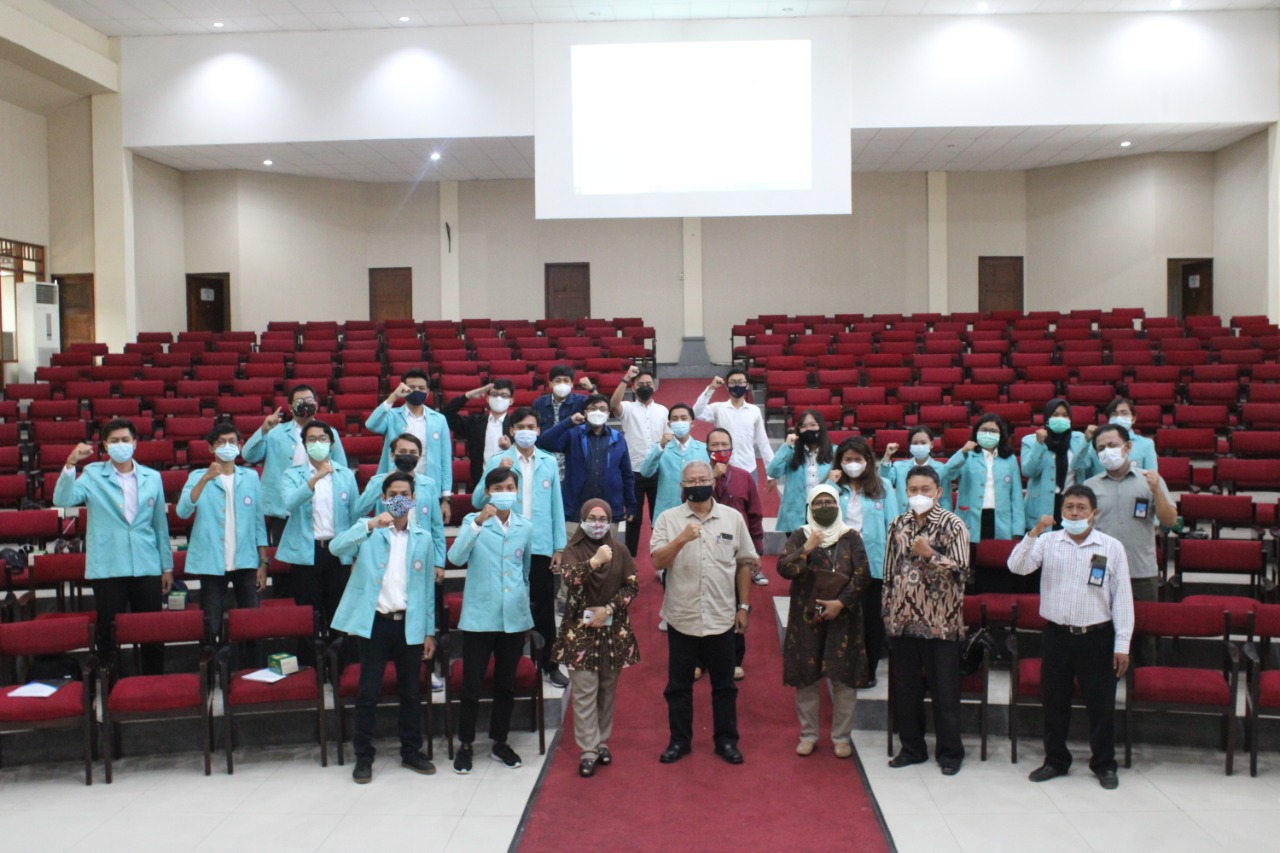
    The Dean of the Faculty of Economics and Business (FEB) Universitas Sebelas Maret (UNS) Surakarta, Prof. Drs. Djoko Suhardjanto, M.Com. (Hons), Ph.D., Ak. Inaugurates the administrator for the Student Executive Board (BEM), Student Supervisory Board (DEMA), and Student Organizations (ORMAWA) for 2021. The ceremony took place on Thursday, 25 February 2021 in FEB UNS Auditorium (Building 3).

    The ceremony was attended by the Vice-Dean, Head of Partnership Unit, and FEB UNS Administrative Leaders, where a signatory of Minutes of Management Handover also took place. The signatory was represented by the Chair of BEM and DEMA FEB UNS, which symbolizes the transfer of responsibility from the Administrator for the previous period (2020) to the new Administrator in 2021.

    The Dean of FEB UNS in his opening remarks congratulate the elected new administrator and thanking the previous administrator for their service and devotion. Prof. Djoko also requested that the previous leader will assist the new leader to accomplish even greater achievements. Further, regarding the shift of UNS status from a Public Service Agency (BLU) into a State University as Legal Entity (PTN BH), there are many adjustments, both in terms of organizational structure and working pattern, there must be a great leap. UNS is required to accomplish a target set by the government to enter the top 500 global universities.
    Prof. Djoko also encourages the students, especially the administrators for BEM, DEMA, and ORMAWA to actively engage, organize, and joining international events. The FEB UNS will assist the students to reach international achievements. “The designation of UNS as PTNBH, students’ activities both in academic and non-academic sector lead to international achievements. University, faculty, and study programs will support students’ activities. If there is any difficulty, we will solve it together. We must collaborate to reach the target,” he stressed while motivating the students.

    Concluding the event, the Dean delivers a message for the students that even though they are actively participating in the organization, they must maintain their academic achievement. (Humas FEB).

  • FEB UNS Organizes Workshop in Budgeting Submission and SPJ Preparation

    FEB UNS Organizes Workshop in Budgeting Submission and SPJ Preparation

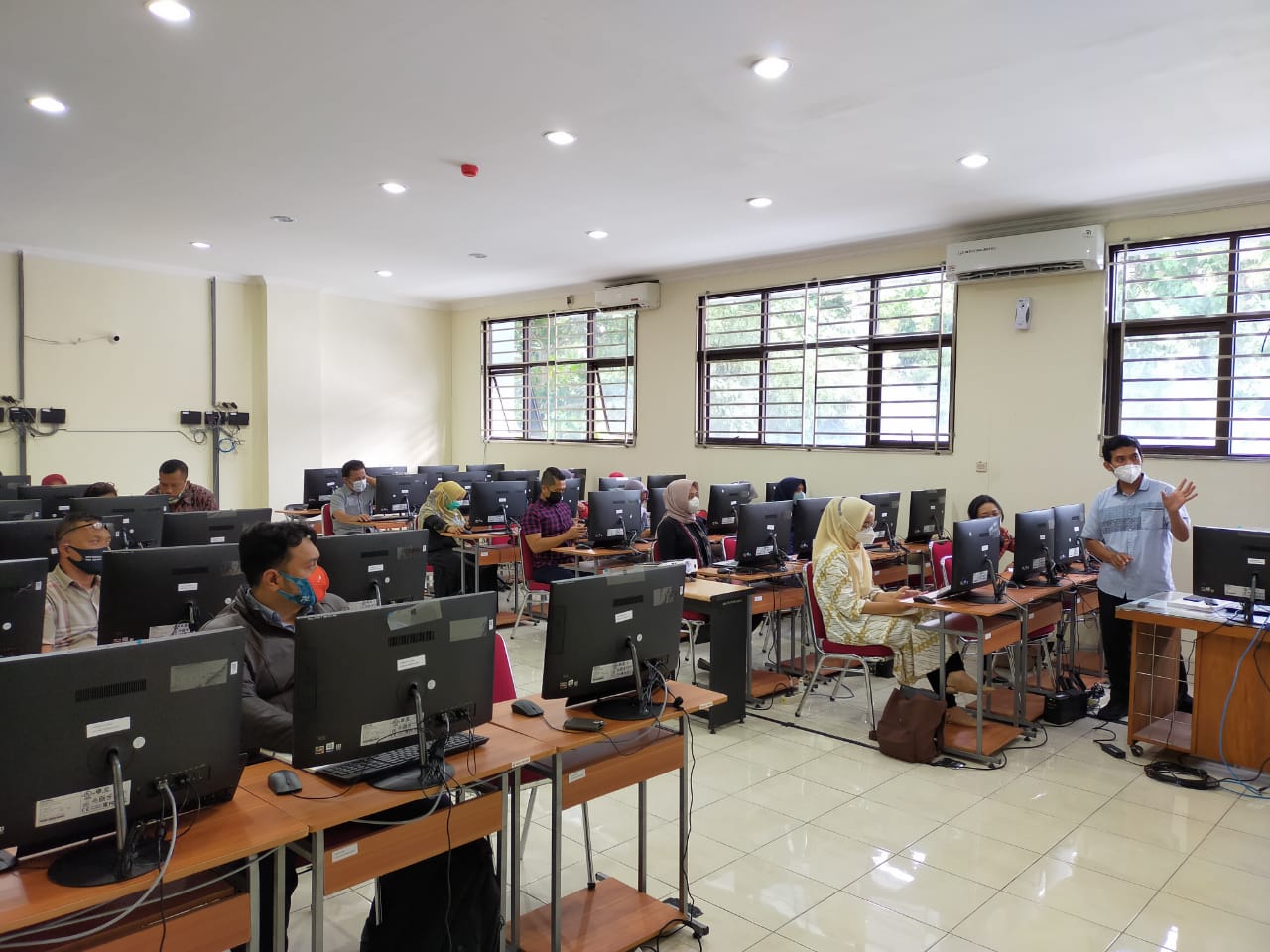
    The Faculty of Economics and Business (FEB) Universitas Sebelas Maret (UNS) Surakarta organizes a Workshop in Budgeting Submission and Accountability Report (SPJ) Preparation on Thursday (25/02/2021) in FEB UNS Computer Laboratory. The event was attended by 20 participants representing each study program in FEB UNS and Helpdesk administrator.

    The Coordinator of FEB UNS Administration Unit, Tunggul Ardhi, S.Si., in his remarks stated that the shift of UNS administration from Public Service Agency (BLU) into a State University as Legal Entity (PTN BH) need several adjustments in term of budget submission and SPJ preparation. The currently applicable guideline is the UNS Minimum Standard Cost (SBM).

    On this occasion, all technical staff will be introduced to the new guidelines, how to prepare SPJ, and the budget submission process. Through this training, it is expected that all technical staffs can adjust faster. Christiana Yulia, S.Pd., as the FEB UNS General Treasurer, and Gigih Fantriko, A.Md., from the FEB UNS Planning Unit, become the instructors for the workshop.

    Gigih Fantriko explains the general description of the service provided by FEB UNS Planning Affairs, such as uploading and supporting faculty data (KPI), the revision for budget submission, downloading faculty planning, and budget planning procedure. He also guides the participants on how the study program’s operator uses Budget Planning and Evaluation System (Sireva).

    Meanwhile, Christiana Yulia delivers the technical budgeting submission and SPJ preparation. Participants are expected to learn the new guidelines. In order to evaluate participants’ understanding, at the end of the session, Yulia delivers questions that need to be solved. The questions related to SPJ preparation, Payment Warrant (SPBY), payment receipt according to the rates used, and taxes according to the new regulations. (Humas FEB UNS)

  • Literature Review Webinar by PDIE UNS

    Literature Review Webinar by PDIE UNS

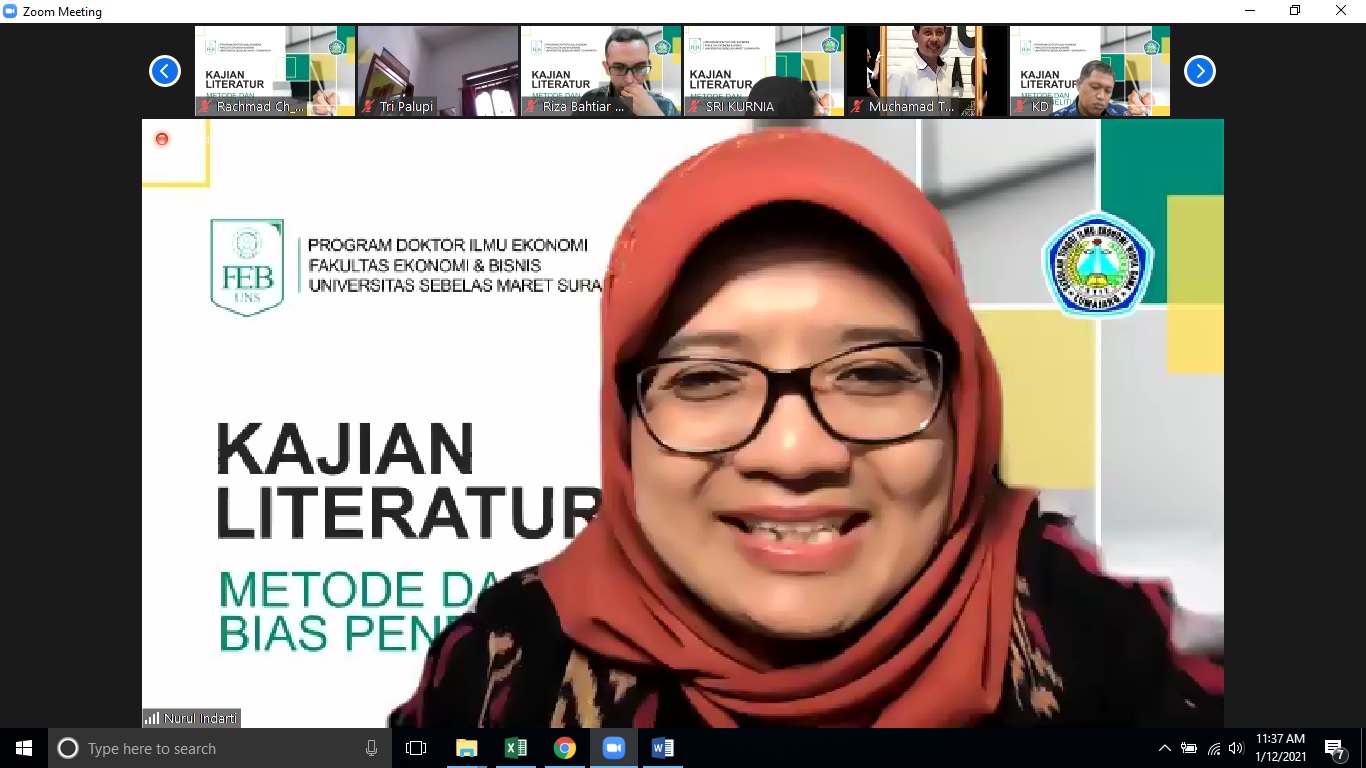
    The Doctoral Program in Economics (PDIE) Faculty of Economics and Business (FEB) Universitas Sebelas Maret (UNS) Surakarta held a webinar on ‘Literature Review: Research Method and Bias’ on Tuesday (12/1/20201) through the Zoom Cloud Meeting application.

    Inviting Prof. Nurul Indarti, Sivilekonom, Cand Merc., Ph.D. from FEB Universitas Gadjah Mada (UGM) Yogyakarta, the webinar was attended by 190 participants. Opening the event, the Head of PDIE, Prof. Rahmawati reveals that the webinar is compulsory for the students who currently taking the Research Methodology course and new student. However, the webinar is also open for public.

    Prof. Nurul opened her material with the definition of literature review as a summary of a research topic in a particular field that will support identifying specific research questions. “This stage emphasized how the researcher arrived at their research question,” Prof. Nurul explained.

    Head of PDIE FEB UNS, Prof. Rahmawati

    In her session, Prof. Nurul also explained the benefit and aims of the literature review. The literature review benefits are providing a specific and thorough background in understanding a topic and underlie the importance of the study. This stage also brings new research ideas and limits a topic and shows a specific topic to be studied.

    The literature review aims to differentiate between what has been done and what should be done. With the literature review, a researcher can identify the important and relevant variables for a research topic, synthesize ideas and essential findings from previous studies, and find new perspectives. The literature review also aims to rationalize the significance of issues to be studied to identify appropriate research methodology and technique implemented in previous research and places the current study in the context of novelty.

    Prof. Nurul also shared tips to choose a research topic. First, consider the novelty aspect, relevance, and personal. The novelty aspect can be achieved through the complexity of the phenomenon, the relationship among the research variables, the method employed, and the observation context. Third, relevance is presenting the level of the importance of the research topic, and lastly, personal.

    Prof. Nurul concluded the session with an explanation about bias. Bias could happen in the bibliometric literature study. It is vital to understand this bias and mitigate bias by identifying its causes and impacts. The mitigation of bias can be performed at the conceptual and technical level, and researchers should understand the fundamentals of in-depth literature study. (Humas)

  • PDIE FEB UNS Held Visiting Scholar Lecture with Prof. Meryem Duygun

    PDIE FEB UNS Held Visiting Scholar Lecture with Prof. Meryem Duygun

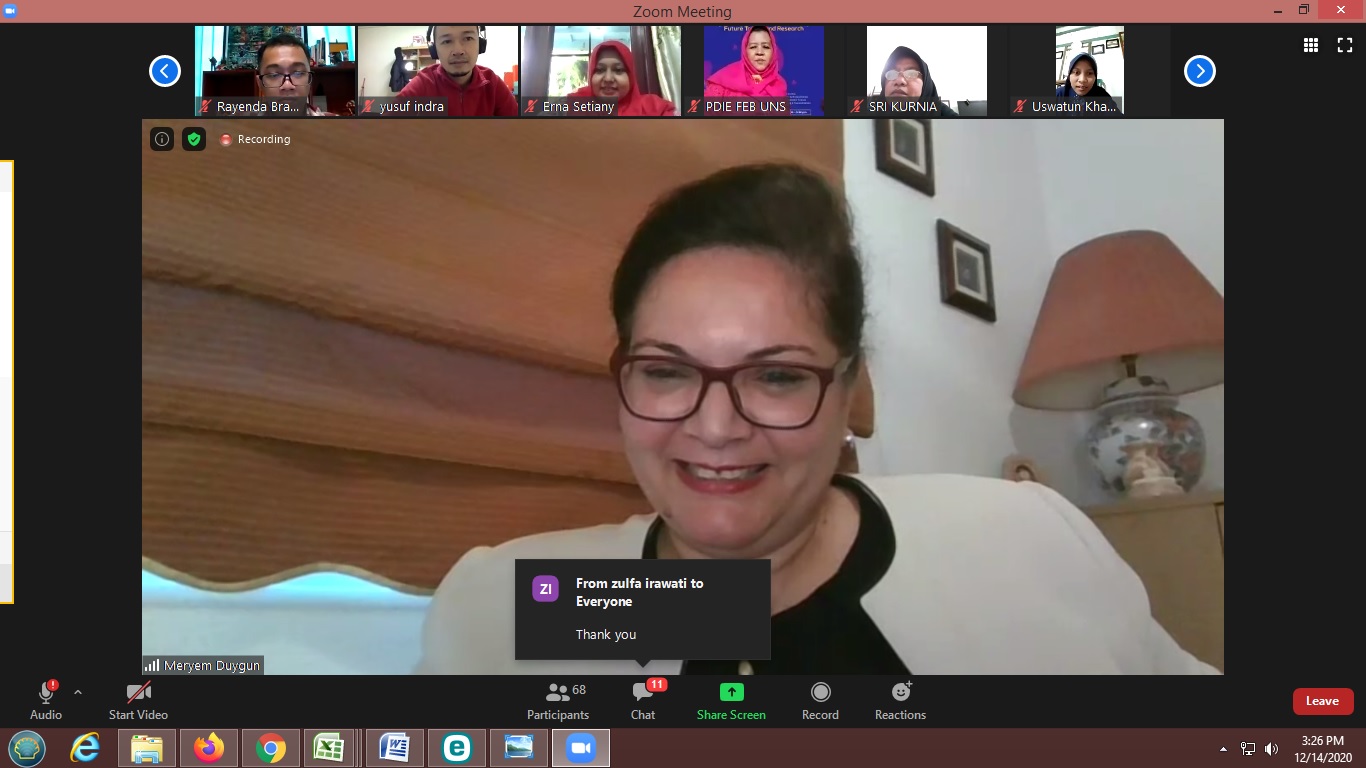
    The Doctoral Program in Economic (PDIE) Faculty of Economics and Business (FEB) Universitas Sebelas Maret (UNS) held Webinar Digitalizing Finance with Technology: Future Trends and Research, Monday (14/12/2020). The webinar that invited Prof. Meryem Duygun, Aviva Chair Risk in Insurance, Nottingham University Business School, UK, was held in collaboration with The Center for Science and Technology Pusat of Higher Education (PUI PT) Fintech and Banking.

    The event was opened by the Director of PDIE FEB UNS, Prof. Rahmawati, who delivered her gratitude to all parties who have contributed to managing the webinar and Prof. Meryem for the lecture. Prof. Rahma stated that technology development had encouraged innovations in finance that changes the financial industry landscape. These innovations are Peer-to-Peer (P2P) Lending, Digital payment, Crypto-currency, InsurTech, Robo Advisor, and many other innovations. Prof. Meryem Duygun, as the President of International Finance and Banking Society (IFABS) and editor of many reputable international journals, supports PDIE goals to prepare its students to select the dissertation topic.

    “We hope that this forum will be beneficial for all participants and thank you for participating in this lecture,” Prof. Rahmawati stated.

    Prof. Meryem opened her material with examples of current conditions in which insurance companies employ Artificial Intelligence (AI) to collect their customers’ personal data to provide good services. It is possible because customers have agreed that their insurance company can access the data stored in their electronic devices as a term to get lower insurance premium. Additionally, 75% of the executive in the insurance field believe that artificial intelligence will revolutionize the insurance industry.

    “Technology innovation has become the main driver of changes in the financial sector. This innovation is often known as FinTech,” Prof. Meryem explained.


    She added that the use of innovation in the insurance industry would improve efficiency and functionality. This innovation can come in various forms such as software, application, startup, product, and service. Therefore, InsurTech has highly specialized policies and uses databases derived from equipment connected to the internet, enabling them to determine dynamic insurance premiums.

    “The main area in the insurance field’s innovation is the intermediation and distribution model, sharing economy and insurance, robo-advisor and artificial intelligence (AI), and data aggregation and analytics. Some examples of Insurance Technology (InsurTech) companies are BIMA, Friendsurance, and InsPeer,” she added.

    Insurance level in Indonesia, according to Prof. Meryem, is low because of various factors such as low insurance literacy and distrust toward the financial institution. However, there are still opportunities for InsurTech to grow in Indonesia, considering Indonesia’s population size, growing middle class, and the development of the internet economy. She concluded the material with studies on P2P and InsurTech. The webinar was closed with a question and answer session between Prof. Meryem and more than 70 webinar participants. (Aulia/Humas)

  • PDIE FEB UNS Held The 2nd Doctoral Colloquium on Business and Economics

    PDIE FEB UNS Held The 2nd Doctoral Colloquium on Business and Economics

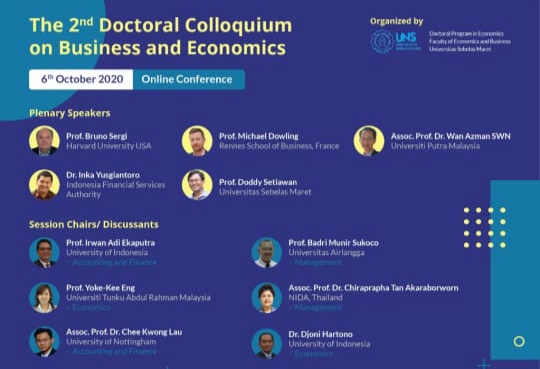
    The Doctoral Program in Economics (PDIE), Faculty of Economics and Business (FEB), Universitas Sebelas Maret (UNS) Surakarta, held the 2nd Doctoral Colloquium on Business and Economics on Tuesday (6/10/2020), virtually through Zoom Cloud Meeting. This event is supported by the Center for Fintech and Banking UNS (UNS Fintech Center).

    The event opened by the Dean of the FEB UNS, Prof. Djoko Suhardjanto, was attended by more than 150 participants, especially the students of the Doctoral program both from PDIE UNS and other universities. In his opening remarks, Prof. Djoko mentioned that the student of the Doctoral Program must disseminate their research at the scientific forum and publish the result of their dissertation in a reputable journal. “International journal publication is proof that the research by doctoral student contributes and recognized by the academic community,” Prof. Djoko explains.
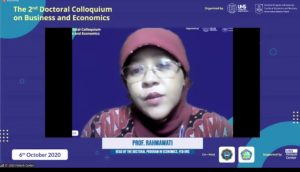
    Meanwhile, the Head of Doctoral in Economics Study Program, Prof. Rahmawati, delivers that this event aims to facilitate the students in the Doctoral program to present their dissertation research proposal or the preliminary result from their dissertation research, to get input and suggestions from discussants and fellow participants. The discussants invited in this colloquium are reputable scholars in economics, management, and accounting and finance from Indonesia and international universities, such as the University of Nottingham, NIDA Thailand, Universiti Tunku Abdul Rahman Malaysia, Universiti Malaysia Sarawak, Universitas Indonesia, Institut Teknologi Bandung, Universitas Gadjah Mada, Universitas Airlangga, Universitas Padjadjaran, BINUS University, as well as UNS.

    To provide perspective to the participants, related to the emerging research topics in economics and business, the colloquium also presents five speakers during the plenary session namely Prof. Bruno Sergi (Harvard University USA), Dr. Renatas Kizys (University of Southampton, UK), Dr. Wan Azman Saini Wan Ngah (Universiti Putra Malaysia), Dr. Inka Yusgiantoro (Otoritas Jasa Keuangan), and Prof. Doddy Setiawan (Universitas Sebelas Maret). (Humas)
  • The Doctoral Program in Economics Study (PDIE) FEB UNS Hosted an International Colloquium on Business and Economics

    The Doctoral Program in Economics Study (PDIE) FEB UNS Hosted an International Colloquium on Business and Economics

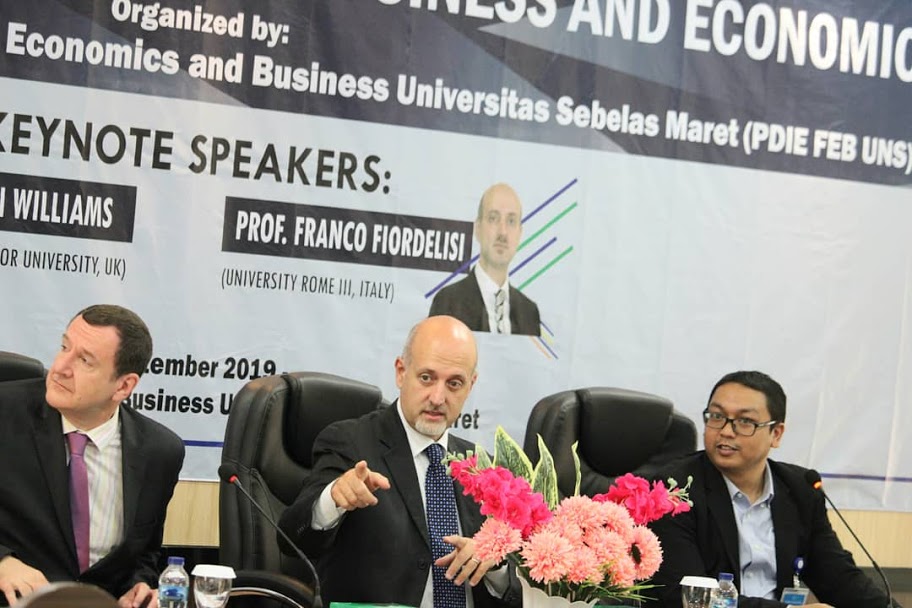
    Eighty seven (87) research articles are presented in the International Colloquium on Business and Economics hosted by the Doctoral Program in Economic Study (PDIE) the Faculty of Economics and Business, Universitas Sebelas Maret (FEB UNS), on Tuesday, September 24th, 2019. Professor Franco Fiordelisi from University of Rome III and Professor Jonathan Williams the Head of Bangor Business School present a keynote speech for the occasion.

    The colloquium aims to disseminate the doctoral students from the PDIE FEB UNS research. The best paper is awarded a best paper award after reviewed by the scientific board. The Director of PDIE Program FEB UNS, Prof. Dr. Rahmawati, M.Si, Ak, acknowledge to 11 (eleven) universities partner that has supported the event, namely Business and Economic Asia Pacific (BESIPA), Unversitas Bangun Nusantara Sukoharjo, Universitas Slamet Riyadi Surakarta, Universitas Pembangunan Nasional Veteran Yogyakarta, Universitas PGRI Yogyakarta, Universitas Islam Batik Surakarta, Universitas Gajayana Malang, Universitas Surakarta, Universitas Bhayangkara Jakarta, Universitas Gorontalo dan Universitas Darma Cendikia Surabaya.

  • The Doctor in Economics Study Program FEB UNS Conducts Curriculum Evaluation Workshop

    The Doctor in Economics Study Program FEB UNS Conducts Curriculum Evaluation Workshop

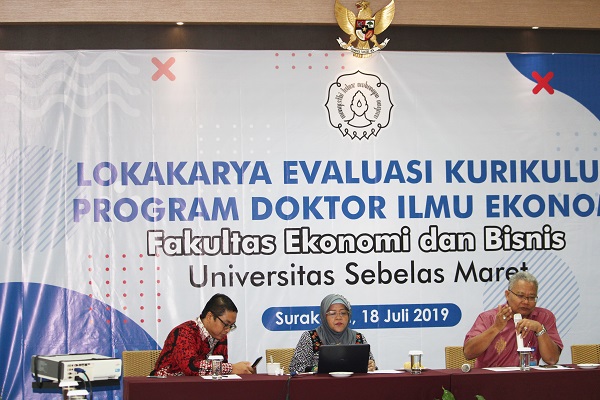
    The Study Program of Doctoral in Economics conducts a workshop on curriculum evaluation on Thursday July 18th, 2019 at UNS Inn. Prof. Dr. Rahmawati, M.Si., Ak, as the Head of Study Program states that the effort to evaluate the curriculum is an urgent necessity in order to prepare the program following the advancement of UNS to be a university as legal entity (PTNBH).

    “This evaluation is conducted to accelerate the students study process,” explains Prof. Rahmawati. Before the workshop is conducted several preliminary inputs are collected regarding structure changes that designed for 6 (six) semesters with total minimum 52 credits taken, which consist of compulsory courses, program specifics courses, and elective/interest specific course.

    The evaluation on the curriculum in the Program also benchmarking the curriculum applied in other universities both in Indonesia and overseas university.


  • Digital Competitiveness is Expected to Increase the Intention of E-commerce in MSME

    Digital Competitiveness is Expected to Increase the Intention of E-commerce in MSME

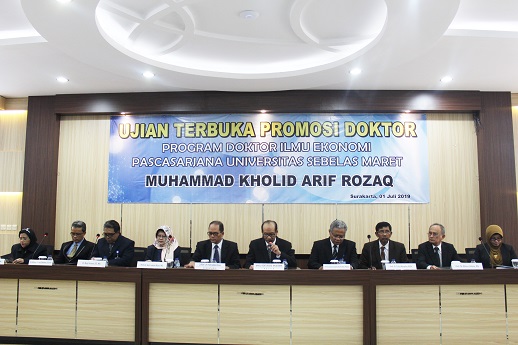
    Internet penetration is unavoidable and getting stronger in entering business field. The advancement of information technology encourages various innovations that can be applied in response to the destructive era. According to a survey in 2017, internet users from business sector in Indonesia amounted to approximately 143 million. This number is expected to increase in 2019, which mean 70 percent of Indonesia citizen has accessed the internet. Meanwhile, there are only 2.6 percent of MSMEs that adopt e-commerce. Therefore, a research that focused on the intention to adopt e-commerce in MSME is important. This background was presented by Muhammad Kholid Arif Rozaq in his Doctoral Promotion Exam on Monday, July 1st, 2019 in FEB UNS 4th Building Hall.

    In this occasion, Rozaq was presenting his Dissertation with a title Digital Competitiveness as an Effort to Improve the Intention to Adopt E-commerce in Micro Small and Medium Enterprises (MSMEs) in Yogyakarta special Region (DIY) is defended in front of 10 (ten) examiners, led by the Vice Rector of Academic Affairs, Prof. Dr. Ir. Ahmad Yunus, M.S.

    Kholid in his research develop a new model on the intention to adopt e-commerce that focused on the technological readiness. His research also develops a new basic theoretical model to fill the gap between technological readiness and e-commerce adoption. The research is expected to contribute to the development of technology adoption model with the introduction of a new variable namely Digital Competitiveness). Digital competitiveness is expected to improve the intention to adopt e-commerce in MSMEs.