FEB

Kategori: faculty

  • Toward Applied Bachelor: The Diploma in Accounting Study Program Conduct a Curriculum Workshop

    Toward Applied Bachelor: The Diploma in Accounting Study Program Conduct a Curriculum Workshop

    Vocational school is developed rapidly, this is driven by the publication of the Regulation of the Minister of Research, Technology, and Higher Education (Permenristekdikti) Number 54 of 2018 on the implementation of ‘Open Multi-Entry Multi-Exit (MEME)” vocational education systems with high flexibility. This enable the students to finish their study at Diploma level on 6th (sixth) semester, with no Drop-Out system.

    “All study program is encouraged to be an Applied Bachelor or Diploma 4, or if possible to the level of applied Master and Doctoral. To be able to achieve this, the curriculum of vocational school should be designed to cover 70% of practice and 30% of theory, which differs from the Bachelor program that more focused on theory,” explains Santoso Tri Hananto, the Director of Vocational School Universitas Sebelas Maret (UNS) during his opening remarks in Curriculum Workshop for Accounting and Taxation Diploma Study Program, Saturday 31st August, 2019.

    To support this learning system 50% the lecturer should come from industrial background. During internship course, the students are expected to work as if they are a real staff in the company and not only to fulfill their study obligation. Students are encouraged to take internship for approximately 5 (five) months. This aims to build a strong networking with industrial field.

    Further he explains that the composition for diploma program (3 years period) is 3-2-1, which mean students spent 3 (three) semesters for classroom lecture, the next 2 (two) semesters for internship, and the last 1 (one) semester for Final Project, which assessed by the university and industry member. Meanwhile for the 4 (four) years diploma program the composition is 4-3-1, where 4 (four) semesters for lecture, 3 (three) semesters for internship, and 1 (one) semester for Final Project.

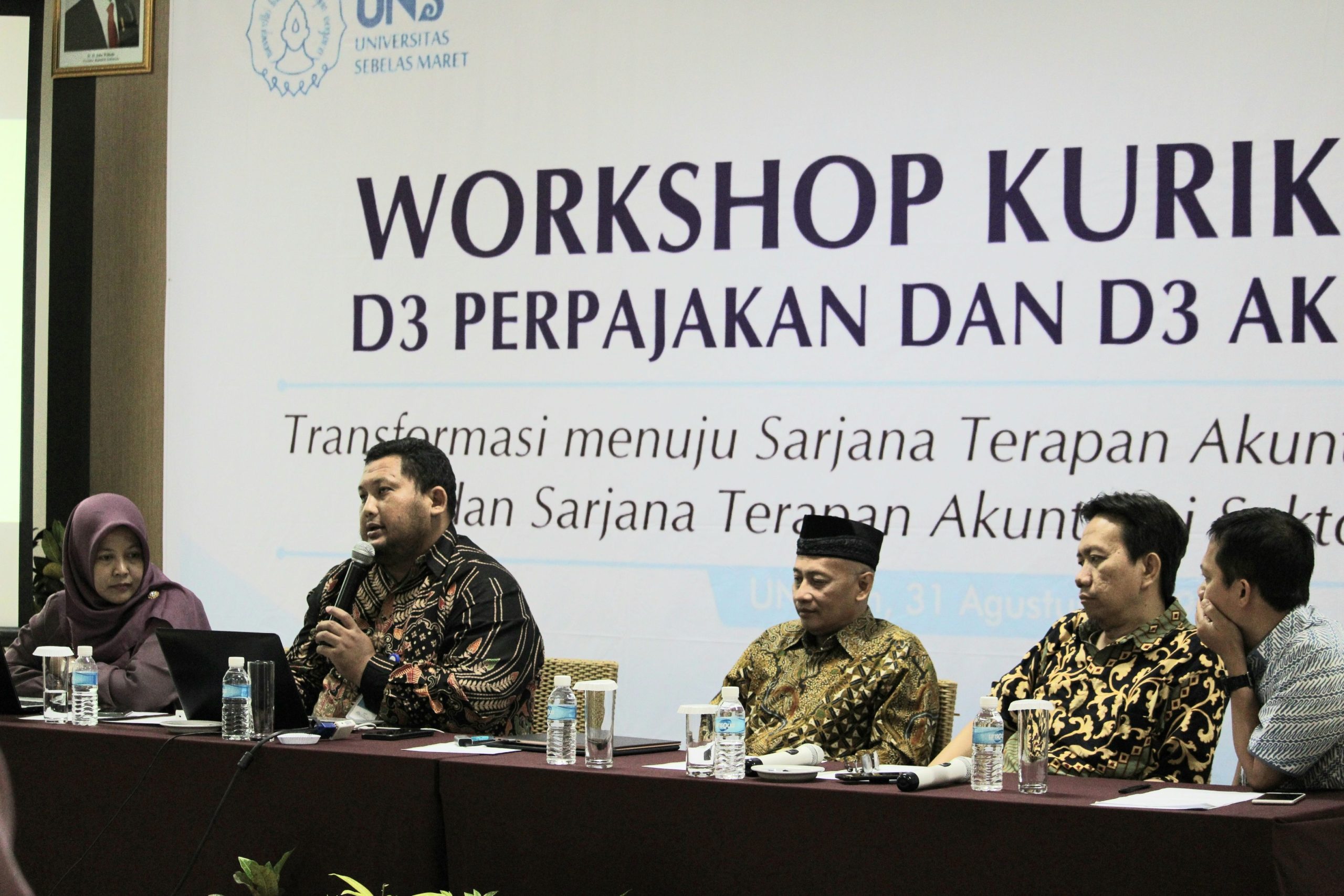
    Related with the curriculum for the vocational school, one of the speakers, Muh. Nurcholis who is a Tax Consultant, provides several inputs on the courses that should be taught to the students. Nurcholis also mentions that the students should be trained to have a competency to not only work according to the standard operation and procedure or a standard job, but also a skill to work on manage a series of different tasks as well as a skill on fast and accurate decision-making when problem arises.

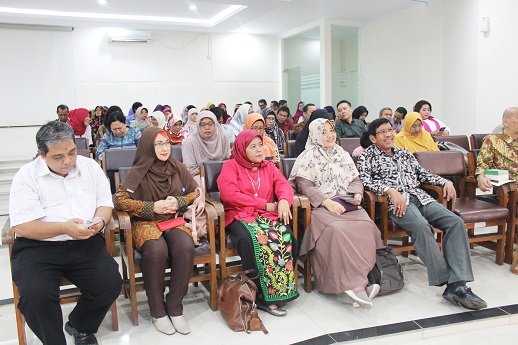
    Other speakers invited on the workshop are Eko Madyo Sutanto (Vice Director of PKU Muhammadiyah Solo Hospital) and Didi Rafii (Staff of Tax Office, Solo). The workshop is attended by students, alumni, lecturers, and practitioners from various field. Various inputs that was given by the participants will be considered for the management of the vocational program to improve the curriculum, especially for the Accounting and Taxation Diploma Study Program.
  • Pancasila Value Should be the Foundation of Community Behavior

    Pancasila Value Should be the Foundation of Community Behavior

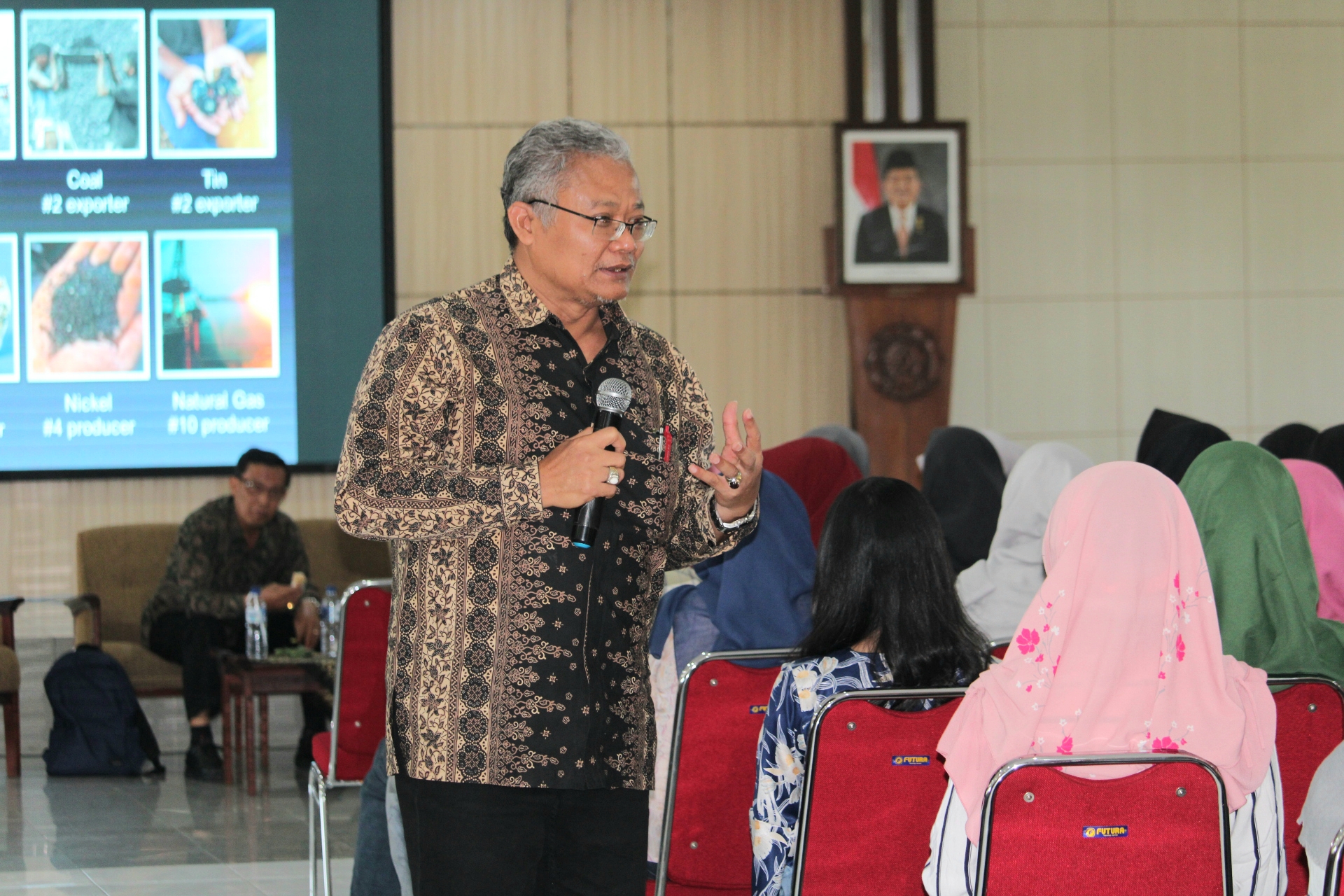
    Activities that can deepen students’ understanding on Pancasila value is important as they will be the future leader of the nation. The noble value of Pancasila such as the spirit of harmony life and mutual cooperation should be enforced as the foundation of national life, especially in the industrial 4.0 era. This was expressed by the Dean of the Faculty of Economics and Business (FEB) UNS in the Forum Aksi Pendekar Pancasila (Pancasila Character Education Action Forum) hosted by the Undergraduate in Accounting Study Program FEB UNS in collaboration with the Ministry of Communication and Information of the Republic of Indonesia (KEMENKOMINFO), on Friday August 30th 2019 in FEB UNS Hall.

    Similar statement was given by the Director of Information and Communication on Human Development and Culture of KEMENKOMINFO, Wiryatna, Ph.D. An active behaviour from the community to implement Pancasila value is important, this applies in various fields either social or economics, in order to creating a prosperous society. “The tagline brought by the President of the Republic of Indonesia, which is ‘Excellent Human Resource (HR) Advanced Indonesia’, can be interpreted under HR context as a qualified HR who possess Pancasila character and highly competent will lead to an advanced Indonesia in 2024,” he (Wiryatna) explains.

    On the same occasion, another speaker Sudarsana, PGD in Pop&Dev, states that HR development become the key factor to win global competition, which should receive full support from all the stakeholders. “Superior and qualified human resource should have a strong character, resilient, persevering, creative, innovative, honest, and dedicated,” he explains.

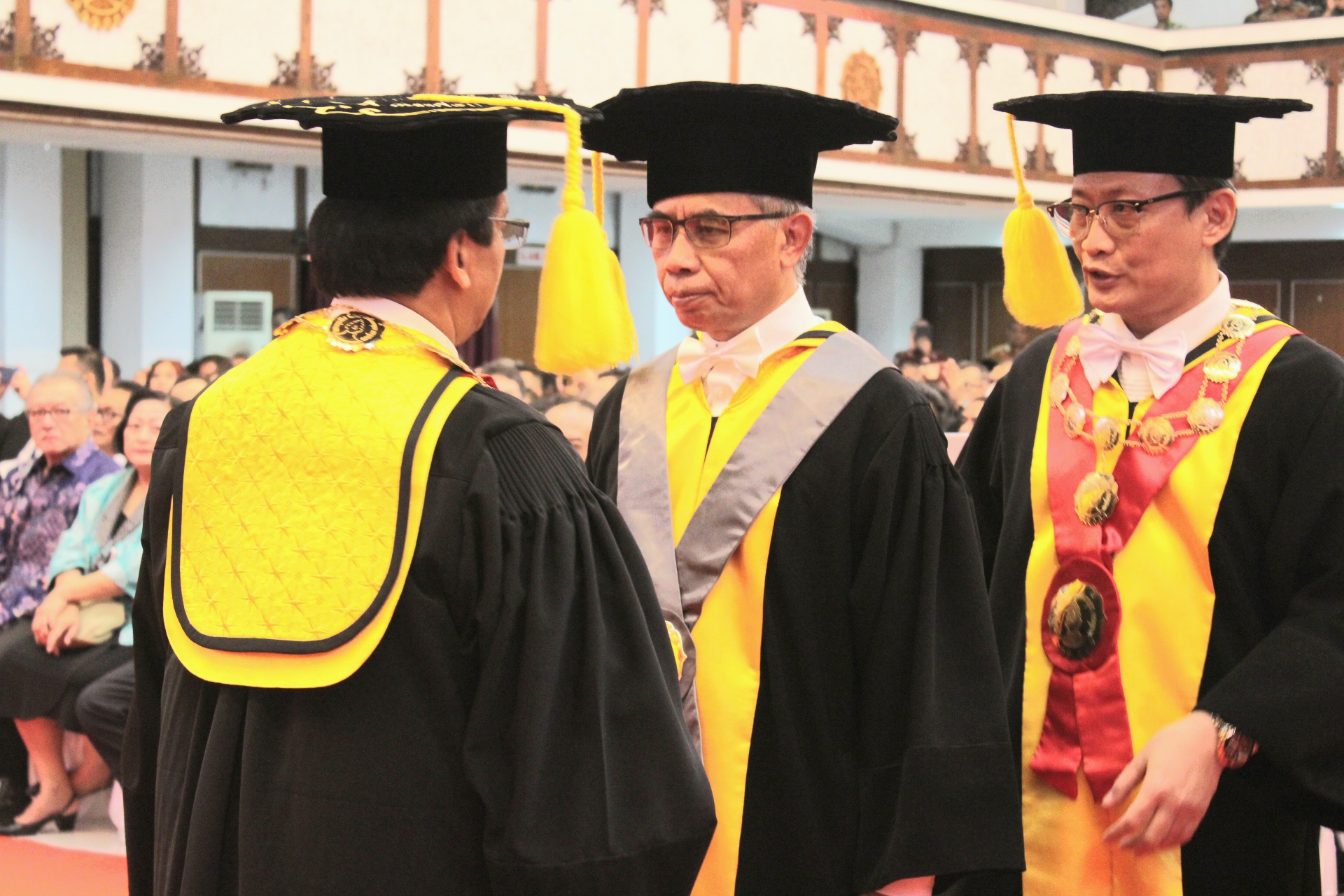
  • UNS Inaugurate Wimboh Santoso as a Professor in Risk Management

    UNS Inaugurate Wimboh Santoso as a Professor in Risk Management

    The Universitas Sebelas Maret (UNS) inaugurate Wimboh Santoso as a Professor of non-permanent lecturer in Risk Management for the Faculty of Economics and Business (FEB) UNS. The inauguration took place in GPH Haryo Mataram Hall in UNS, Monday, August 26th 2019.
    During the inauguration on the open Senate meeting that was attended by the Head of Ministries and/or Institution, Head of Local Government, and Head of financial service industries, Wimboh presented his inauguration speech entitled “Digital Revolution: New Paradigm in Finance and Economics. He mentions that digital culture creates a revolution in the community lifestyle and behavior in various aspect such as trading, transportation, education, and health care. The lifestyle in shopping has changed due to e-commerce. Most of the shopping center has changed into a meeting point, for various occasions. Various changes can also be found in education field such as e-learning and e-library. This can facilitate the teaching and learning process thus it can be conducted any where and any time. This will lead to cheaper education as it does not need great infrastructure to host an education service.
    Wimboh also states that digital revolution can be challenges to make innovation, improve economics competitiveness, and opening financial access to the community. “On the other side, there is a risk potential that can disrupt the economics and financial stability if the policymaker does not react to the change quickly,” Wimboh, who is one of FEB UNS alumni, who currently serves as the Chairman of the Board of Commissioner of Indonesia Financial Service Authority (OJK) for the period of 2017-2022 explains. Economics theory as well as regulatory and supervisory approach to the financial services industry will be irrelevant to be applied in current situation and a new approach that is more dynamic and contextual is needed.
    Prof. Dr. Jamal Wiwoho, SH, M.Hum, the Rector of Universitas Sebelas Maret (UNS) during the opening remarks mention that UNS that currently is classified into the first cluster of the best universities in Indonesia need Wimboh’s expertise. “Aside from his theoretical understanding, he (Wimboh) is also expert in the financial field as he has serves as the Chairman of the Board of Commissioner in OJK, this will adds the repertoire of publications in UNS”, Jamal explains.
    Prof. Wimboh expertise will help UNS in facing the industry 4.0 era, where a disruption in higher education management will likely happened.

  • The Implementation of Pancasila Values, Encourage the Development of Economics Quality and High-Quality Human Resource

    The Implementation of Pancasila Values, Encourage the Development of Economics Quality and High-Quality Human Resource


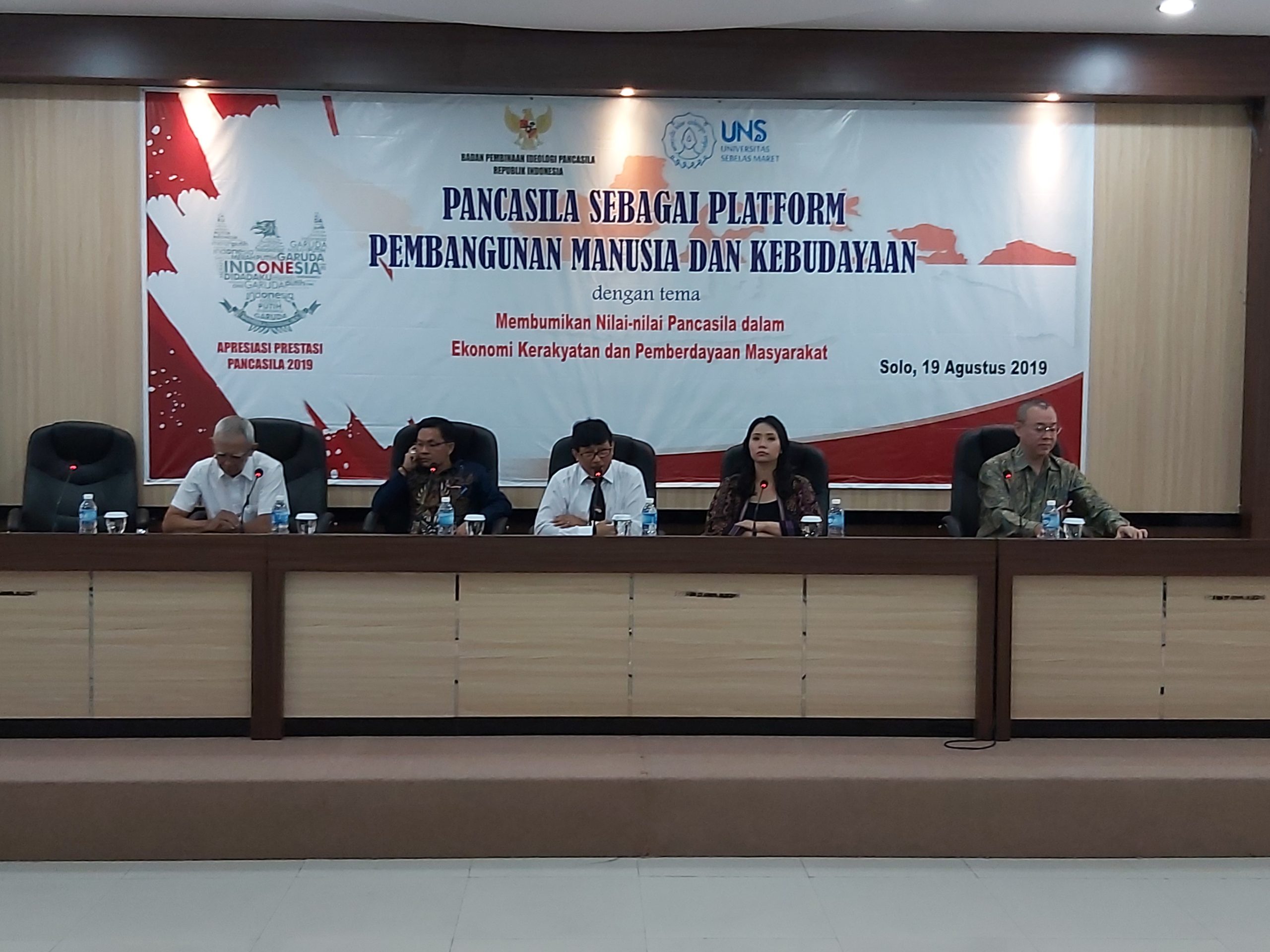
    Pancasila as the Ideology of Indonesia become a guard rail from the external radical effect. Within the economics context, Pancasila become the foundation for human resource development in order to enhance the nation’s competitiveness. Grass-root economics is expected to be the backbone for community welfare and through empowerment our community can be excel in facing the global challenges, especially in the Industrial Revolution 4.0. These was expressed by Prof. Djoko Suhardjanto, the Dean of FEB UNS, in his opening remarks for the Seminar on Pancasila as the Platform of Human Development and Culture in FEB UNS 4th Building Hall on Monday, August 19th 2019.

    In line with the opening remarks, Lia Kian, a Special Staff for the Director of Steering Board in the Pancasila Ideology Development Board (BPIP), who serves as one of the speakers in the seminar states that Pancasila as the Nation’s Ideology should be implemented in the daily activity, especially in the education field. “In the pursuit of economics quality and excellent human resource, there are 5 (five) platforms (morals) that we should master, namely religious, humanity, nationalism, populist, and justice,” explains Kian.

    On the other side, Bambang Saroso, one of academic member of FEB UNS also offers his point of view on the education field, especially on economics study that remains following western economics theories, which is less relevant to the Pancasila Economics. “BPIP is expected to provide coaching as well as monitoring for the implementation of the Pancasila Ideology, especially in term of economics,” he explains.
    This Seminar that conducted in FEB UNS took a theme of Bringing the Pancasila Values into Grass-Root Economics and Empowering the Communities, is attended by the academic members of FEB UNS and the new students for the upcoming semester. This event also invited famous figure who support Pancasila Ideology implementation such as Handaka Vijjananda (formation entrepreneur) and Livi Zheng (movie director).
    Seminar of Pancasila Value is held concurrently in 13 (thirteen) faculties in UNS as an effort to instilling the values of Pancasila, especially to the younger generation.

    (Humas FEB UNS)

  • The FEB International Relations Division Invites AIESEC Members in a Discussion

    The FEB International Relations Division Invites AIESEC Members in a Discussion

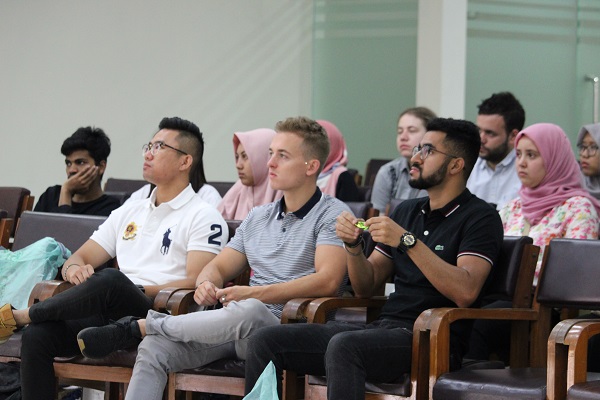
    Most of the Micro, Small, and Medium Enterprises (MSMEs) in Indonesia are comfortable in conducting their business and marketing traditionally and manually. These are significantly different from those in other countries that seeks for simplicity and practicality, where payments are usually made digitally (cashless), which is a rare occasion in Indonesia. This opinion was expressed by international students who are invited to a Discussion in Wednesday, July 24th, 2019 in FEB UNS Main Hall (3rd Building). Those opinion was given when Lintang Ayuninggar from International Relations Division questioning the students on the matter.

    Tastaftiyan, who also the member of Internationalization Team, asked the participant whether it is correct that employers, in the future, will not need diploma certificate but will require skill and competence more. Which mean that the interest in pursuing higher degree (university level) for the next 10 to 20 year will diminished, because they can learn anything online. In general, the participants responses are disagreeing with the statement. They argue that even though some companies do not require diploma certificate, but most vacancies require diploma certificate for/during administrative selection. They also argue that university does not only serve as a place to obtain diploma certificate but also a place for the students to get experiences.

    The discussion went smoothly with total 18 participants from various countries such as Canada, the US, China, Vietnam, Morocco, Poland, and France. Other topics covered, beside international curriculum and entrepreneurship, are the students exchange and double degree programs. All participants are the member of Association Internationale des Etudiants en Sciences Economiques et Commerciales (AIESEC), who visit Solo for the annual social project in the Summer Project 2019. This year AIESEC Summer Project covers 4 (four) social projects namely Entrevolution 9.0, Kids n Care 2.0, Eduvaganza 3.0, and Global Village. The project will take place starting on June 17th to August 24th, 2019.

    It is expected that the program will help the citizen to solve social problems especially in finding variation in business strategy.

  • Countering Radicalism through Cultural Approach

    Countering Radicalism through Cultural Approach


    Radicalism is an ideology, concept, though, or action that aims to change an established social order either toward negative or positive direction. This was expressed by Prof. Djoko Suhardjanto, the Dean of the Faculty of Economics and Business (FEB) UNS during his opening remarks in National Seminar in Countering Radicalism through Cultural Approach, Friday July 27th, 2019.

    In front of 300 (three hundred) participants, Prof. Djoko Suhardjanto, explains that to prevent a negative radicalism, we can use cultural approach. “Urip sing urup memayu hayuning bawono (translit. life should benefit others around us and must strive for salvation, happiness and welfare), as we live, we should benefit other, if we can implement this value, certainly we can prevent radicalism,” he explains. Courtesy as the noble value in Javanese culture should be applied in daily life, to have tepo-seliro (translit. feeling what others feel), grapyak (translit. friendly or hospitable), lembah manah (translit. modest or position oneself in the low and humble position), harmonious life, and ewuh pakewuh (translit. hesitation to refuse/to frankly speak about feeling, less assertive) can also counters for the radicalism.

    Similar message was expressed by Abdul Kharis Almasyhari, the Chairman of the 1st Commission in the Republic of Indonesia House of Representative (DPR), stating that most of the current issues can be solved through cultural approach. “In this developed technology era, we are required to find an alternative solution through the national culture. Electricity can be cut, if the operation of communication providers is disrupted cellular communication will be interrupted.

    However, all those can be solved using cultural approach, where we have kenthongan (a ‘slit-drum’ idiophone used as a signal instrument used by neighbourhood night watchmen) as a traditional security communication tool,” Almasyhari explains. Further, he mentions that the system on RT (lowest structure in village government) and RW (higher structure, which consist of several RTs) is implemented optimally through community meeting, personal approach, and mutual control mechanism among the citizen, most of the problems arise, including radicalism, can be solved.

    The seminar was conducted in the main FEB Hall (3rd Building), organized by FEB UNS in collaboration with the 1st Commission in the Republic of Indonesia House of Representative (DPR) and the Ministry of Communication and Information. For the night, FEB UNS also held a shadow puppet performance by Ki Warseno Slenk as the dhalang (puppeteer in Indonesian wayang performance), with the story of ‘Wisanggeni Lair’ (the birth of Wisanggeni).

    In the future, the Dean of FEB UNS mention that they will continue to schedule cultural events at FEB UNS during semester breaks. This event aims to maintain and preserve local culture while introduce them to the young generation. The event can also strengthen the connection among the alumni, students, and academic staff through a friendly event. This will be in line with the spirit of UNS as the Fortress of Pancasila to ward off the negative radicalism.

  • FEB UNS Research Group Gives a Training on E-Branding in Kepuhsari Tourism Village

    FEB UNS Research Group Gives a Training on E-Branding in Kepuhsari Tourism Village

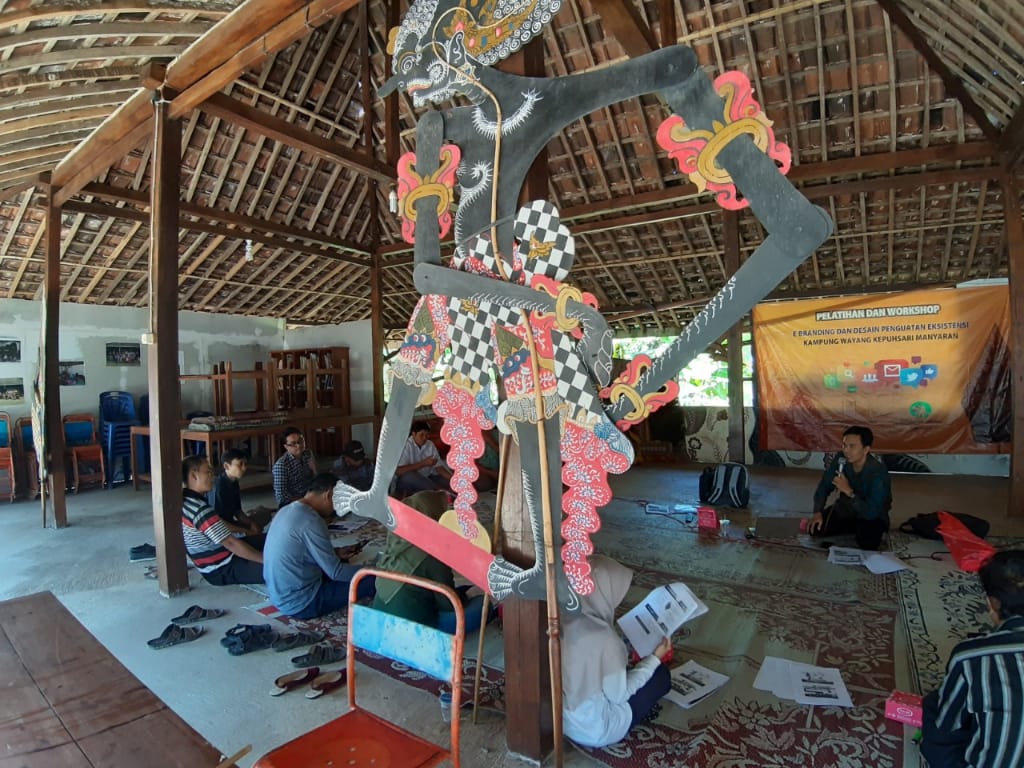
    The economics digital era 4.0 requires business actors to develop their business through a creative online marketing and e-branding. This was delivered by Prof. Yunastiti Purwaningsih, MP, as the Head of Industrial Economics Research Group FEB UNS to the participants of e-branding of shadow puppet products in Kepuhsari village on Sunday July 14th, 2019.

    The participants who are member of Tetuko Tourism Awareness Group (Kelompok Sadar Wisata-Pokdarwis) are the artisans of carving decoration art in Kepuhsari, Manyaran, Wonogiri. The participants are taught on the use of social media for promotion and e-branding. Johadi, M.Sc as one of the speaker explains that there are certain tricks that should be understood by online marketers in using social media.

    The second speakers Mulyadi, SE., M.Ec.Dev., who is also the Head of the Workshop, deliver the topic graphic video and Youtube. Online marketing and e-branding through social media (Facebook, Instagram, Twitter, and Youtube) is needed in this era.

  • The Doctor in Economics Study Program FEB UNS Conducts Curriculum Evaluation Workshop

    The Doctor in Economics Study Program FEB UNS Conducts Curriculum Evaluation Workshop

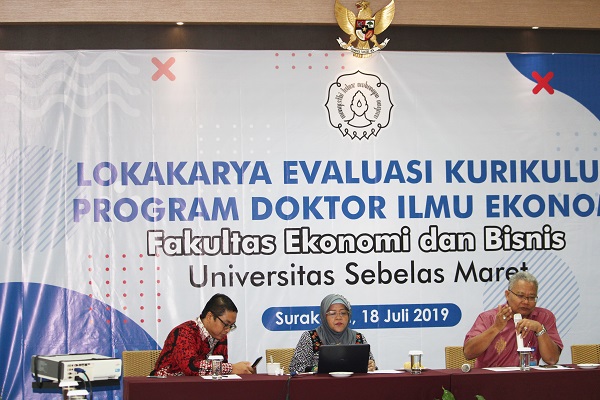
    The Study Program of Doctoral in Economics conducts a workshop on curriculum evaluation on Thursday July 18th, 2019 at UNS Inn. Prof. Dr. Rahmawati, M.Si., Ak, as the Head of Study Program states that the effort to evaluate the curriculum is an urgent necessity in order to prepare the program following the advancement of UNS to be a university as legal entity (PTNBH).

    “This evaluation is conducted to accelerate the students study process,” explains Prof. Rahmawati. Before the workshop is conducted several preliminary inputs are collected regarding structure changes that designed for 6 (six) semesters with total minimum 52 credits taken, which consist of compulsory courses, program specifics courses, and elective/interest specific course.

    The evaluation on the curriculum in the Program also benchmarking the curriculum applied in other universities both in Indonesia and overseas university.


  • Digital Competitiveness is Expected to Increase the Intention of E-commerce in MSME

    Digital Competitiveness is Expected to Increase the Intention of E-commerce in MSME

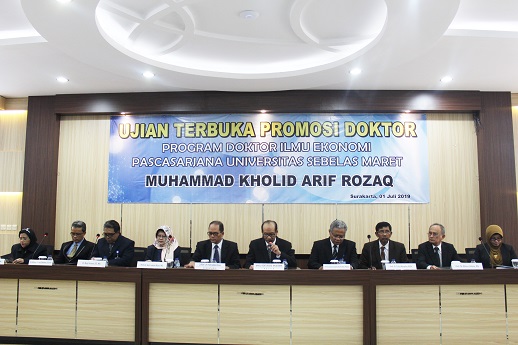
    Internet penetration is unavoidable and getting stronger in entering business field. The advancement of information technology encourages various innovations that can be applied in response to the destructive era. According to a survey in 2017, internet users from business sector in Indonesia amounted to approximately 143 million. This number is expected to increase in 2019, which mean 70 percent of Indonesia citizen has accessed the internet. Meanwhile, there are only 2.6 percent of MSMEs that adopt e-commerce. Therefore, a research that focused on the intention to adopt e-commerce in MSME is important. This background was presented by Muhammad Kholid Arif Rozaq in his Doctoral Promotion Exam on Monday, July 1st, 2019 in FEB UNS 4th Building Hall.

    In this occasion, Rozaq was presenting his Dissertation with a title Digital Competitiveness as an Effort to Improve the Intention to Adopt E-commerce in Micro Small and Medium Enterprises (MSMEs) in Yogyakarta special Region (DIY) is defended in front of 10 (ten) examiners, led by the Vice Rector of Academic Affairs, Prof. Dr. Ir. Ahmad Yunus, M.S.

    Kholid in his research develop a new model on the intention to adopt e-commerce that focused on the technological readiness. His research also develops a new basic theoretical model to fill the gap between technological readiness and e-commerce adoption. The research is expected to contribute to the development of technology adoption model with the introduction of a new variable namely Digital Competitiveness). Digital competitiveness is expected to improve the intention to adopt e-commerce in MSMEs.

  • The Dean of FEB UNS Encourage PhD Students to Finish Their Study

    The Dean of FEB UNS Encourage PhD Students to Finish Their Study

    The student of Doctor in Economics Program should have a high spirit to finish their study and encouraging their junior to do so, thus improving the general performance of the study program. This encouragement is expressed by the Dean of FEB UNS Prof. Drs. Djoko Suhardjanto, M.Com.(Hons).,Ph.D.,Ak., during the opening remarks in alumni and PhD students meeting on Thursday, June 27th 2019.

    “The faculty will build a workstation for the master and doctoral students to improve their study process and establishing better monitoring process, thus there is no reason for students to prolong their study time,” he explains further.

    At the end of his opening remarks, Prof. Djoko give a message to the audience to have a life that benefit others, and do not be a person who bring an unrest in the community. We should live in this world and strive for salvation, happiness, and prosperity.

    A similar message also given by the Head of Doctoral Program in Economics, Prof.Dr. Rahmawati, M.Si., Ak, who advised to the students to be more focused on their study and intensify their supervision activity to speed up their study.

    Further, Prof. Rahmawati, requesting support and prayer from all of the students and alumni, due to ABEST21 certification submission for the study program later on this year as well as for the national re-accreditation on the 2020. “Various effort has been taken to maintain the quality of education in the study program among other by providing understanding on the vision and mission of the study program, to the academic staff, faculty member, as well as the students,” she explains.

    Moreover, for the internationalization program, exchange program is available both for the lecturer and students. As for the 2020 (next year) there will be 2 (two) exchange students in PhD program.

    In the occasion, aside from the dawah (proselytizing) given by FEB UNS lecturer, Hasim, M.Ag, a souvenirs or momento was awarded to Prof. Dr. Tulus Haryono, M.Ek. as the previous Head of the PhD program of FEB UNS. As the previous Head of the study program, Prof. Tulus has given many contributions since the establishment of the program to 2019 where the program successfully earns an “A” accreditation. Prof. Tulus in his remarks, advise the students to keep focussed in finishing their study as well as having a planned target.

    Humas FEB UNS