FEB

Blog

  • Managing Tri Dharma for Higher Education in 4.0 Industrial Era

    Managing Tri Dharma for Higher Education in 4.0 Industrial Era

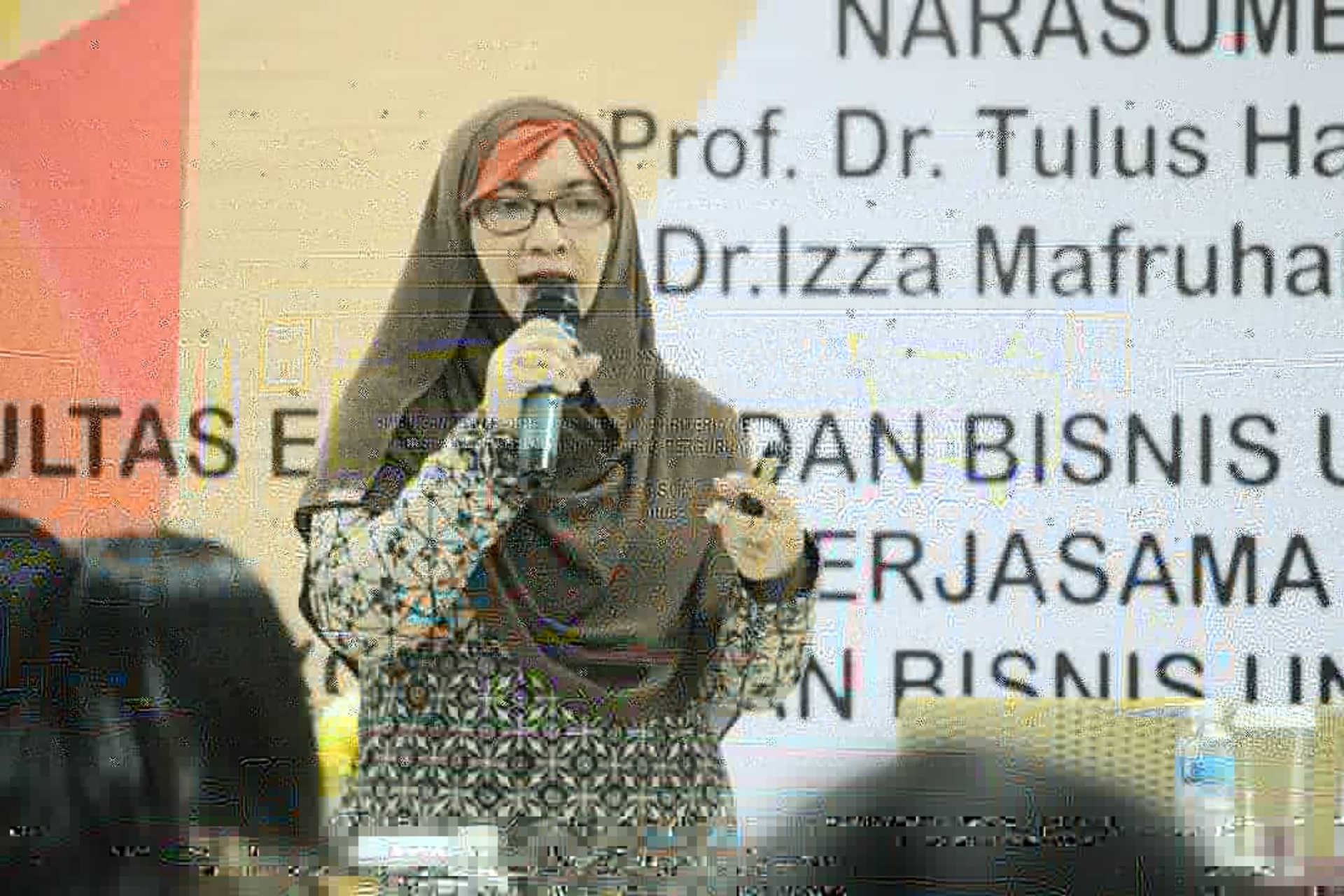
    The management for Tri Dharma activities in higher education covers teaching, research, and community service. These three aspects need to be maintained during the preparation of accreditation report. The Faculty of Economics and Business, Universitas Sebelas Maret (FEB UNS) and the Faculty of Economics and Business, Universitas Warmadewa (FEB UNWAR), establish a collaboration in these three areas, which facilitate further collaboration in teaching, research, and community service program. This was mentioned by the Vice Dean of Academic Affair of the FEB UNS, Dr. Izza Mafruhah, SE, M.Si, who serves as one of the speakers in Technical Assistance for the UNWAR staff with leadership position, on December 18, 2019.

    Further, Dr. Izza mentions that the collaboration between UNS and UNWAR has various advantages for both parties. Through energy, outcome, and human resource sharing, this collaboration can improve the Key Performance Indicator (KPI) for both parties. In term of teaching, UNS and UNWAR can collaborate in student inbound. “The inbound student can spent one week in Solo to learn about its culture, and the next week they go to Bali,” Dr. Izza said. This also applies for visiting professor.

    In community service program, the UNWAR can use the tourism or cultural potential that characterize Bali and establish a collaboration with other universities. For instance, Subak as a community organization that specialized in managing the irrigation system for paddy cultivation in Bali can be examined in contrast to the irrigation system in Java or other regions. This model can be applied for other regions.

    Publication of scientific articles by the Lecturer need to be improved to increase the percentage of Associate Professor and Professor in a university. A lecturer who continuously conducting research will deliver different teaching quality as they can bridge the theory and reality, giving appropriate example in line with the real condition, and providing updated information and data. Through research a lecturer can also publish a textbook.

    Dr. Izza also mention that university need to get prepared to face the challenge in 4.0 industry. “We should connect the curriculum and learning outcome to the industry 4.0, we also need to realize and adapting to the current era and understand our students,” Dr. Izza said.

    Teaching and learning process where the lecturer provides material and the students listen to their presentation is no longer favorable for the 4.0 era. In this era the students are facilitated with advanced IT system to find course material.

  • FEB UNS Signed a Memorandum of Understanding (MoU) with FEB UNWAR

    FEB UNS Signed a Memorandum of Understanding (MoU) with FEB UNWAR

    The Faculty of Economics and Business, Universitas Sebelas Maret (FEB UNS) establish a collaboration with the Faculty of Economics and Business, Universitas Warmadewa (FEB UNWAR). This collaboration was marked the signing of a MoU between the institution on Wednesday, December 18, 2019, in UNS Inn Solo.
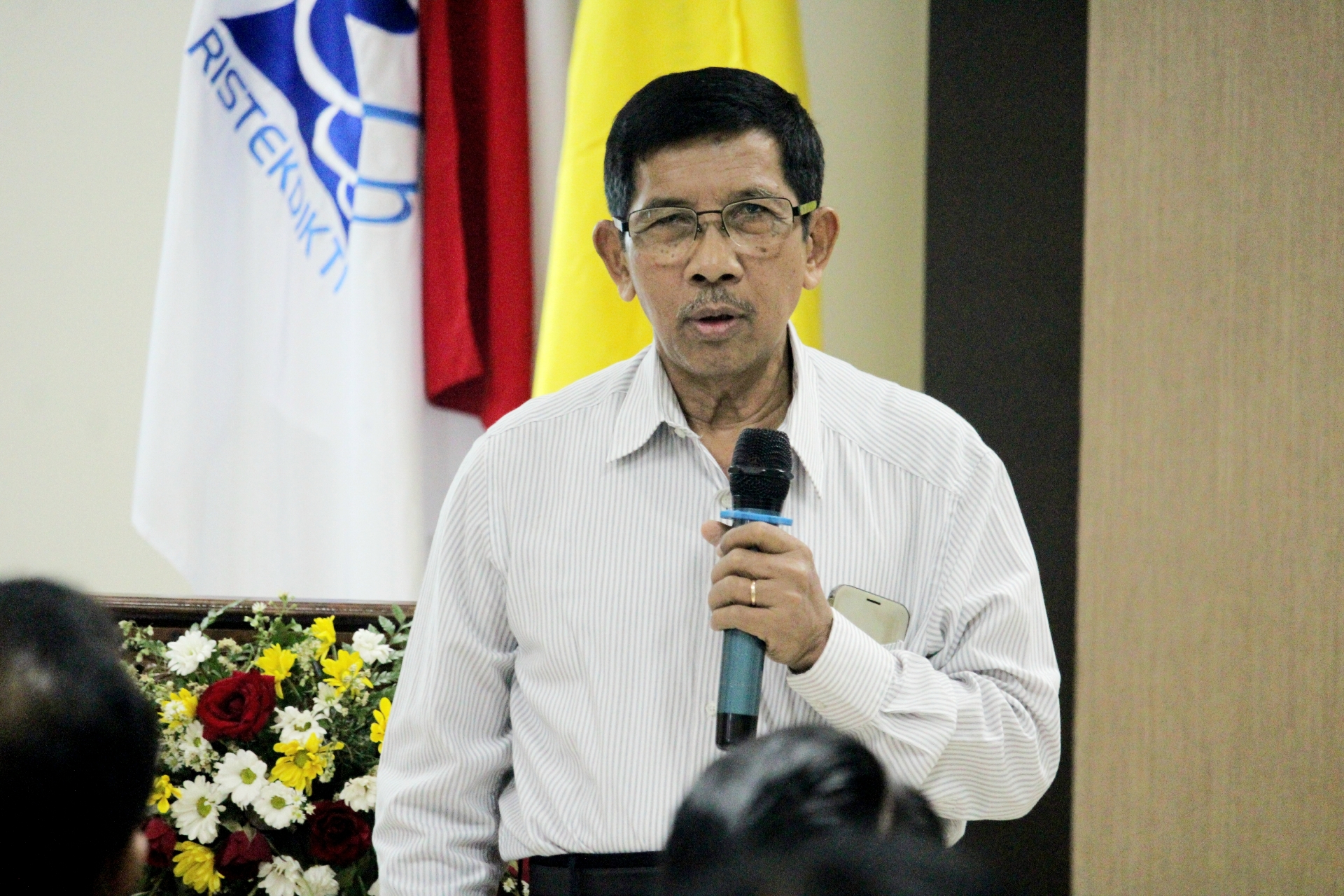
    The MoU was signed by the Dean of FEB UNS Prof. Djoko Suhardjanto and the Dean of FEB UNWAR Dr. I Made Sara, SE, MP, witnessed by the staff from both parties. This collaboration covers assistance on education and teaching (visiting professor and speaker), research coaching (assistance and research workshops and joint research), and publication of joint research article in international journals. This collaboration aims to improve the quality of education and teaching, research and community service, and improving lecturers’ competency in the FEB UNS and FEB UNWAR to compete at international level.

    The MoU signing is followed by a Technical Assistance, which presented by Prof. Tulus Haryono, M.Ek., and Dr. Izza Mafruhah, SE, M.Si. During the technical assistance, Prof. Tulus explained about the BAN-PT Accreditation using 9 Criteria toward International Accreditation, while Dr. Izza discuss about the management of the Tri Dharma of Higher Education based on Industry 4.0.

  • Preparing BAN-PT Accreditation with Criteria 9, Study Program Needs to Work Hard

    Preparing BAN-PT Accreditation with Criteria 9, Study Program Needs to Work Hard

    The National Accreditation Board for Higher Study (BAN-PT) establish an improvement for the Accreditation Instrument for Study Program (IAPS) 4.0, which oriented on the output and outcome of the teaching and learning activities. The quality assessment is more focused on the process, output, and outcome, while the previous instrument focused more on input. This will make a Study Program do harder work in order to prepare the accreditation using Criteria 9. The Criteria 9 covers: vision, mission, goals, and objective; human resource; finance and infrastructure; education; research; community service; output and Tri Dharma achievement.

    This was mentioned by Prof. Tulus Haryono, M.Ek., during a technical meeting with the Universitas Warmadewa Bali on Wednesday, December 18, 2019. The meeting was attended by approximately 50 staff of the Faculty of Economics and Business, Universitas Warmadewa (FEB UNWAR) with leadership role.

    Further, Prof. Tulus explained that there are two reports that should be submitted to the BAN-PT namely the Study Program Performance Report, which covers quantitative data, and Self Evaluation Report for Study Program that mainly covers qualitative information. The submission to the BAN-PT should be made at least 6 (six) months before the previous accreditation certificate is expired. Therefore, the preparation of the repots should take one year prior to the submission to BAN-PT, the Study Programs should get prepared because the preparation of the Accreditation Reports needs a high accuracy.

    “The Reports is prepared by the Head of Study Program assisted by an accreditation team. The Head of Study Program should be directly involved in the preparation of the Report and should completely understand its content, because they will get interviewed during the assessment, while the team member will provide assistance where needed,” Prof. Tulus explained. Further he also mentions that the Report should strictly follow the format provided by the BAN-PT. “No matter what the template is, we have to follow the format provided by the BAN-PT,” said the Professor who had served as BAN-PT assessor for more than 16 years.

    In term of collaboration report, the Study Programs need to report their collaboration with the industries, institutions, or other universities both with national and international universities. However, the collaborations that can be included in the report are not the ‘dormant’ collaboration, which mean only active collaboration can be included. For lecturer profile, the assessor will assess whether the lecturers are capable and possess the competency to teach on certain course, this apply for both permanent and non-permanent lecturer. The assessor will also consider the lecturer last education.

    “If all lecturers are assigned to course that are in line with their competency and skill, the program will earn 4 points. Based on the regulation from the BAN-PT if there are more than 7 lecturers who are assigned to a course that is not in line with their competency, then the program will be given 3 points,” he said.

    For the sake of accreditation process, Prof. Tulus reminds that a program should focus on permanent lecturers and limit the number of non-permanent lecturer. Beside presenting the important point related with accreditation using 9 criteria, Prof. Tulus also encourage the participants to always strive to earn academic position. “It is your rights as a lecturer. If you already have excellent work portfolio, then you can proceed for the position promotion, there will be no one will intervene the process. This is different with the structural position that can be interfered by other parties,” he explained.

    Further, Prof. Tulus also mention that a lecturer should broaden their knowledge through further study. “As a farmer who sharpen their equipment, lecturer also has to sharpen their knowledge to improve their teaching, thus further study is a must,” he explained.

  • P4M FEB UNS Disseminate New Regulations for Research Group

    P4M FEB UNS Disseminate New Regulations for Research Group

    The Center of Research and Community Service Development (P4M), in the Faculty of Economics and Business, Universitas Sebelas Maret (FEB UNS) organize a dissemination and management of Research Group (RG), on Tuesday, December 17, 2019. The Head of P4M FEB UNS, Dr. Doddy Setiawan presented the new regulation regarding the management of RG to the Head of Study Programs and the Chairman and Secretary of the RG.

    Different from the previous regulation, the new provision limits the number of RG members by minimum 5P4M FEB UNS dissemination session members and maximum 10 members including the Chairman and Secretary of the RG. Additionally, the RG should refer to the Study Program of the Chairman of the RG. Moreover, a lecturer can become a member of two different RG from two different Study Program. This aims to encourage collaboration across scientific disciplines.
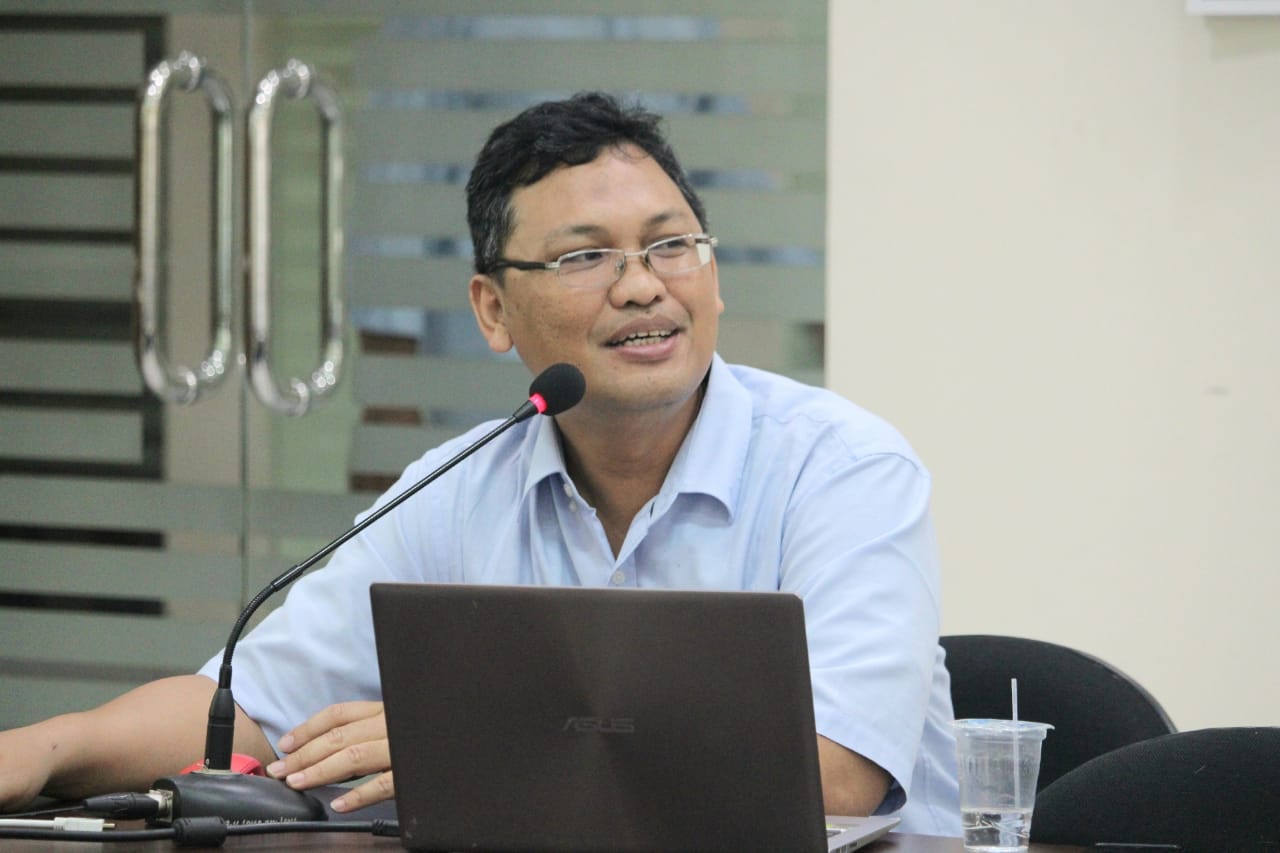
    “The main RG membership would be the lecturers’ home base study program and the second membership should be in other study program or faculties in UNS or a study center,” Dr. Doddy said.

    Another matter that should be considered is the requirements for choosing the Chairman of a RG, which the new provision regulate several stages. The Chairman can be a Professor who earned a competitive research or community service program at national or international level, or has a P index minimum of 2 or Scopus index of higher than/equal to 2 (for natural science) or higher than/equal to 1 for social science and law study. The Chairman can also a chosen from the faculty member with PhD degree with 2 requirements: has published research article in international journal/registered invention and has won/earned a research grant in competitive research or community service program at national or international level, or has a P index and Scopus index requirement similar to a Professor candidate.

    Further, the Chairman can also be chosen from the members with Master degree with Associate Professor qualification, by fulfilling all the 3 requirements provided for both candidate with Professor and Doctor degree. At the end of his presentation, the Head of P4M provide a period for submission by the latest Monday, December 23, 2019.

  • P4M Sosialisasikan Peraturan Baru Riset Grup

    P4M Sosialisasikan Peraturan Baru Riset Grup

    Pusat Pengembangan Penelitian dan Pengabdian Masyarakat (P4M) Fakultas Ekonomi dan Bisnis Universitas Sebelas Maret (FEB UNS) menyelenggarakan Sosialisasi dan Penataan Riset Grup (RG), Selasa, 17 Desember 2019.

    Dihadapan para Kaprodi, Ketua dan Sekretaris RG , Doddy Setiawan, SE.,MSi,. Ph.D, Ak, Ketua P4M menyampaikan beberapa peraturan-peraturan baru di RG.

    Berbeda dengan sebelumnya, di aturan yang baru, ada pembatasan kelompok RG , RG terdiri dari minimal 5 orang dan maksimal 10 orang, sudah termasuk ketua dan sekretaris.

    RG juga harus menginduk ke prodi, sesuai dengan homebase ketua riset grup yang telah ditunjuk.

    Lebih lanjut, Doddy, Ph.D mengatakan, dosen boleh menjadi anggota di dua RG namun tidak boleh dalam prodi yang sama. Hal ini bertujuan untuk meningkatkan aktivitas kolaborasi antar disiplin ilmu.

    “Keanggotaan di RG yang utama adalah di prodinya, dan keanggotaan RG yang kedua harus di prodi yang lain atau fakultas lain di UNS atau pusat studi, tidak boleh di luar UNS” jelasnya.

    Hal lain yang perlu diperhatikan adalah persyaratan bagi yang ditunjuk sebagai ketua RG, ada beberapa jenjang.

    Ketua RG adalah seorang profesor yang pernah memenangkan riset atau pengabdian kompetitif tingkat nasional/internasional atau memiliki P indeks minimal 2 atau >= 2 (sains) atau H indeks Scopus >= 1 (soshum).

    Berikutnya, ketua RG dipilih dari seorang doktor dengan 2 persyaratan, memiliki publikasi di jurnal internasional/ invensi terdaftar dan pernah memenangkan riset atau pengabdian kompetitif nasional/internasional atau memiliki P indeks minimal 2 atau H indeks scopus >=2 (sains) atau H indeks Scopus >= 1 (soshum).

    Atau Ketua RG dipilih dari dosen dengan kualifikasi S2 Lektor Kepala dengan 3 syarat, memiliki publikasi di jurnal internasional bereputasi/invensi terdaftar dan pernah memenangkan riset dan pengabdian kompetitif nasional/internasional dan P Indeks minimal 2 atau H indeks Scopus >=2 (sains) atau H indeks Scopus >= 1 (soshum).

    Diakhir sosialisasinya, Ketua P4M memberikan waktu kepada para dosen untuk menyerahkan daftar kelompok RGnya ke P4M paling lambat Senin tanggal 23 Desember 2019.

  • Silaturahmi, Kunci Utama Lecture Exchange

    Silaturahmi, Kunci Utama Lecture Exchange

    Kunci utama dari program internasionalisasi perguruan tinggi, lebih spesifiknya lecture exchange adalah dengan menjalin silaturahmi dengan pihak luar.

    Ketika dosen studi lanjut atau ada kesempatan untuk melakukan presentasi di luar negeri, dosen juga harus mampu memanfaatkan peluang tersebut dengan menjalin komunikasi, menjalin kerjasama, berdiskusi dengan para profesor yang berguna bagi pengembangan institusi.

    Pernyataan itu disampaikan Prof. Dr. Raditya Sukmana , Ketua Departemen Ekonomi Syariah UNAIR saat  Diskusi Interaktif, Lecture Exchange: Capaian Dosen vs Kebutuhan Institusi, Senin, 16 Desember 2019 di Fakultas Ekonomi dan Bisnis Universitas Sebelas Maret (FEB UNS).

    Dijelaskannya, di tempat kami, ada aplikasi bagi dosen untuk melakukan perjalanan ke luar negeri, harus ada kemanfaatan yang lebih. Apakah mengikuti konferensi internasional yang outputnya publikasi di scopus atau non scopus, ataupun aktifitas kerjasama lainnya dan harus memiliki poin lebih dari 6. Jika tidak, maka tidak diijinkan untuk ke luar negeri.

    Untuk program lecture exchange, Prof. Raditya menyampaikan, di UNAIR dilakukan dengan short term dengan waktu kurang dari 3 bulan (visiting lectures) dan long term lebih dari 3 bulan (adjunct profesor), inbound maupun outbound

    “Adjunct profesor, inbound, meskipun berbiaya mahal namun banyak keuntungan yang akan diperoleh. Dalam waktu yang cukup panjang, selain memberi materi untuk Program S1, S2,S3, juga membantu dalam riset mahasiswa dan dosen . Demikian juga membantu di penyusunan kurikulum dan program-program lainnya. Pengajar dari luar tersebut dapat dimasukkan dalam tim teaching yang di SK kan” jelasnya.

    Senada dengan Prof. Raditya, narasumber kedua, Yunieta Anny Nainggolan, Ph.D., Ketua Program Studi Magister dan Doktor Sains Manajemen SMB ITB mengatakan, lecture exchange adalah sebuah upaya dosen untuk mendapatkan exposure di lingkungan internasional.

    “Hal ini penting untuk mengembangkan kompetensi kita di Tri Dharma Perguruan Tinggi , dalam pembelajaran, riset maupun pengabdian ” katanya

    Dalam hal internasionalisasi, yang sangat penting adalah membangun hubungan dengan perguruan tinggi di dalam maupun luar negeri, perluas kerjasama.

    “Percuma KPI yang dibuat jika dosennya tidak memiliki pasion untuk kerjasama luar negri” jelasnya.

    Kegiatan yang diikuti dosen dan mahasiswa pascasarjana ini merupakan tindak lanjut dari serangkaian acara International Office (IO) FEB UNS.

    Dr. Izza Mafruhah, M.Si., Wakil Dekan Bidang Akademik FEB UNS dalam sambutannya mengatakan bahwa lecturer exchange merupakan salah satu dari beberapa indikator yang penting dalam rangka mewujudkan UNS sebagai World Class University.

    Sebelumnya, IO FEB telah melaksanakan beberapa aktifitas kegiatan lain yakni Inisiasi Kelas Internasional dan Student Exchange.

    Kegiatan – kegiatan ini dilakukan secara berkesinambungan. Di tahun 2020 mendatang tim IO FEB akan mengadakan pelatihan-pelatihan khusus bagi dosen-dosen muda untuk mempersiapkan lecture exchange.

  • Hospitality, the Main Key of Lecture Exchange

    Hospitality, the Main Key of Lecture Exchange

    The main key of the internationalization program in university, specifically lecture exchange, is the networking with international universities. During a lecturer study (Doctoral or Master) they have this opportunity to do a presentation in abroad institutions, establish a networking and communication, collaboration, and having a discussion with well-known professor that will helps the lecturers’ institution development. This was expressed by Prof. Dr. Raditya Sukmana, the Head of Sharia Economy Department from Universitas Airlangga (UNAIR), during an Interactive Discussion on Lecture Exchange: Lecturers’ Achievement vs Institution Needs, on Monday, December 16, 2019, in the Faculty of Economics and Business, Universitas Sebelas Maret (FEB UNS).

    Prof. Raditya mentions that, “in our institution, there is an application for the Lecturer to do international travel, there should be a value-added from the activity. For instances following an international conference that collaborates with scopus or non-scopus journal, or following other collaboration activities, all of these should have achieve more than 6 point. If the point is lower, then the faculty member will not allowed to do the travel.” In term of Lecture Exchange, he mentions that UNAIR implemented a short-term program with less than 3 months (visiting lectures) period and long-term period for adjunct professor (more than 3 months), this applies both for inbound and outbound program.

    “For Inbound Adjunct Professor, even though it is expensive, it will provide great advantage. For a quite long period, beside delivering course for undergraduate, master, and doctoral program, they can assist students or lecturers research. They can also help in establishing the curriculum and other programs. The Lecture exchange can be included in teaching team and other assignments,” he explains.

    In line with Prof. Raditya, the second speaker, Dr. Yunieta Anny Nainggolan who is the Head of Master and Doctor of Science in Management Program, Institut Teknolgi Bandung (ITB), mentions that Lecture Exchange is an effort for lecturers to gain international exposure. “This is important to improve our competency in Tri Dharma of Higher Education, in teaching, research, and community service,” she said.

    In internationalization, the key is to establish a network with national and international universities. “The Key Performance Indicator (KPI) will be useless if the faculty members do not have a passion to establish an international collaboration.”

    This discussion was attended by the faculty members and postgraduate students and is part of a series of event organized by the International Office (IO) of FEB UNS. Dr. Izza Mafruhah, M.Si., the Vice Dean of Academic Affairs, the FEB UNS, in her opening remarks said that Lecture Exchange is one of some indicators that is important in achieving the World Class University.

    Previously, the IO of FEB UNS had organized several activities such as International Class Initiative and Student Exchange. These activities are organized continuously. In 2020 the IO of FEB UNS will hold a special training for Junior lecturers to prepare for the lecture exchange.

  • FEB UNS Diskusi dengan FEB UNEJ

    FEB UNS Diskusi dengan FEB UNEJ

    Badan Akreditasi Nasional Perguruan Tinggi (BAN PT) sejak Maret 2019, sudah memberlakukan instrumen akreditasi program studi 4.0.

    Sebelumnya menggunakan akreditasi 3.0 dengan memakai standar 7. Sekarang tidak lagi standar tapi kriteria 9. Dulu lebih kepada input dan prosesnya kalau sekarang adalah proses dan hasil capaian atau luarannya.

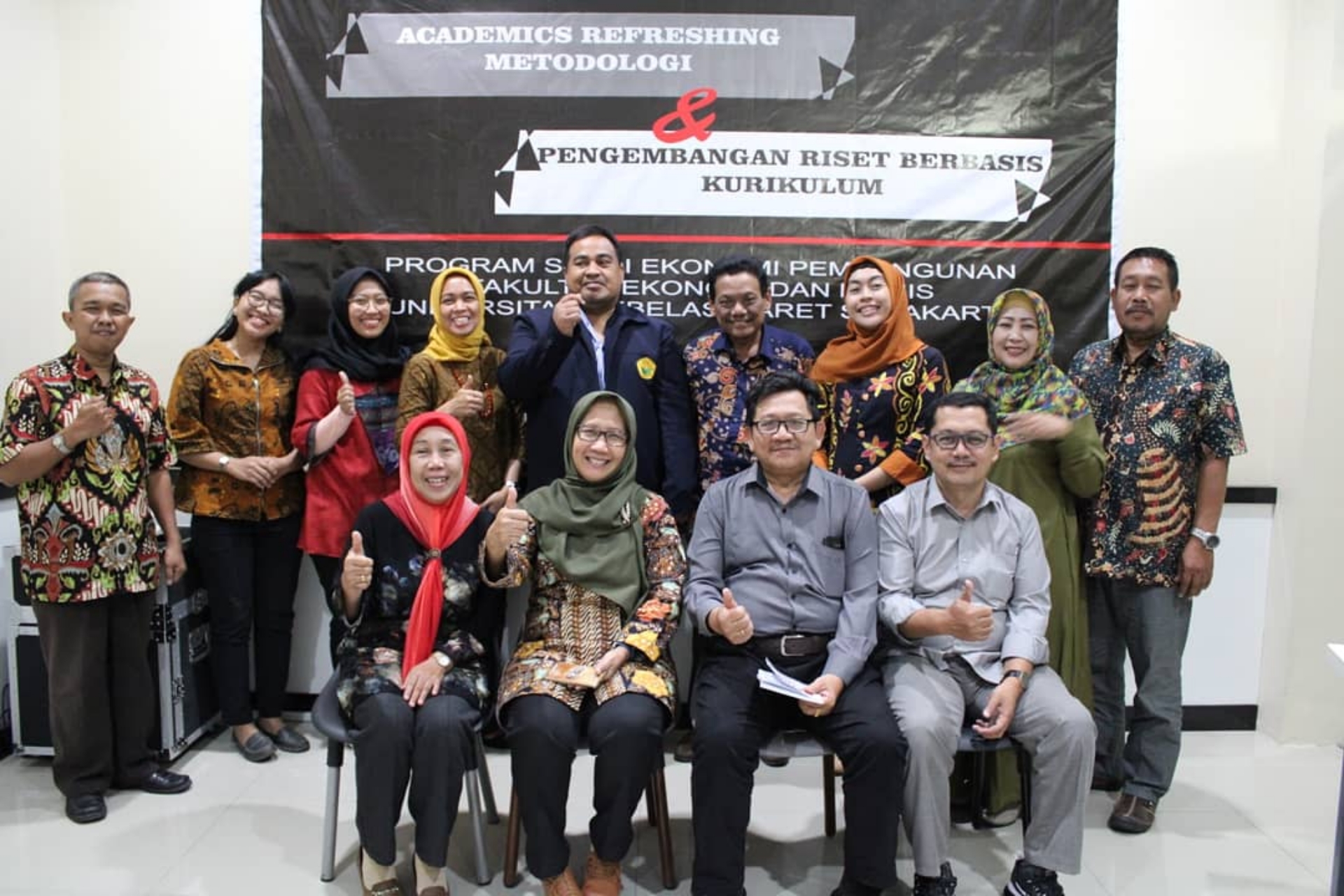
    Hal itu disampaikan Aisyah Tri Rahayu saat menjadi salah satu narasumber dalam Academics Refreshing Metodologi & Pengembangan Riset Berbasis Kurikulum, Jumat, 15 November 2019.

    Kita harus mempersiapkan Akreditasi dengan 9 kriteria. Banyak hal yang harus dirombak.


    “Misalnya, dalam proses pembelajaran , jika hanya dilakukan secara off line, dikelas, ternyata nilainya hanya 2 . Jika ditambah dengan yang online nilainya 3. utk mencapai nilai 4 harus ada dokumentasi proses belajar, di videokan dan diupload agar bisa diakses publik.

    Semakin banyak matakuliah yang memenuhi kriteria di atas maka nilainya semakin tinggi.

    Hasil riset juga harus digunakan utk proses pembelajaran. Apa yang kita ampu itu harus sesuai dengan riset yang kita lakukan.

    Termasuk melibatkan mahasiswa dalam penelitian, tidak hanya sekedar membantu tapi outputmya, dalam publikasi hasil riset ada nama mahasiswa.

    Dalam proses penyusunan kurikulum, sebelumnya kita harus merencanakan profil lulusan. Kita tidak bisa langsung menetapkan namun harus melihat apa yang diinginkan oleh pasar kerja. Sehingga dalam proses penyusunannya harus melibatkan pengguna.

    Termasuk tantangan kita mengadopsi 4.0. Di UNS ada 2 pilihan apakah kita akan menciptakan matakuliah baru terkait digital atau unsur digital dimasukkan ke dalam mata kuliah, dalam bentuk penyampaian matakuliah.

    Narasumber lain dalam forum yang seluruh pesertanya adalah dosen Fakultas Ekonomi Universitas Jember yakni Bhimo Rizky Samudro, SE, M.Si dan
    Tri Mulyaningsih,SE, M.Si.PhD

  • FEB UNS Jalin Kerjasama dengan FEB UBL

    FEB UNS Jalin Kerjasama dengan FEB UBL

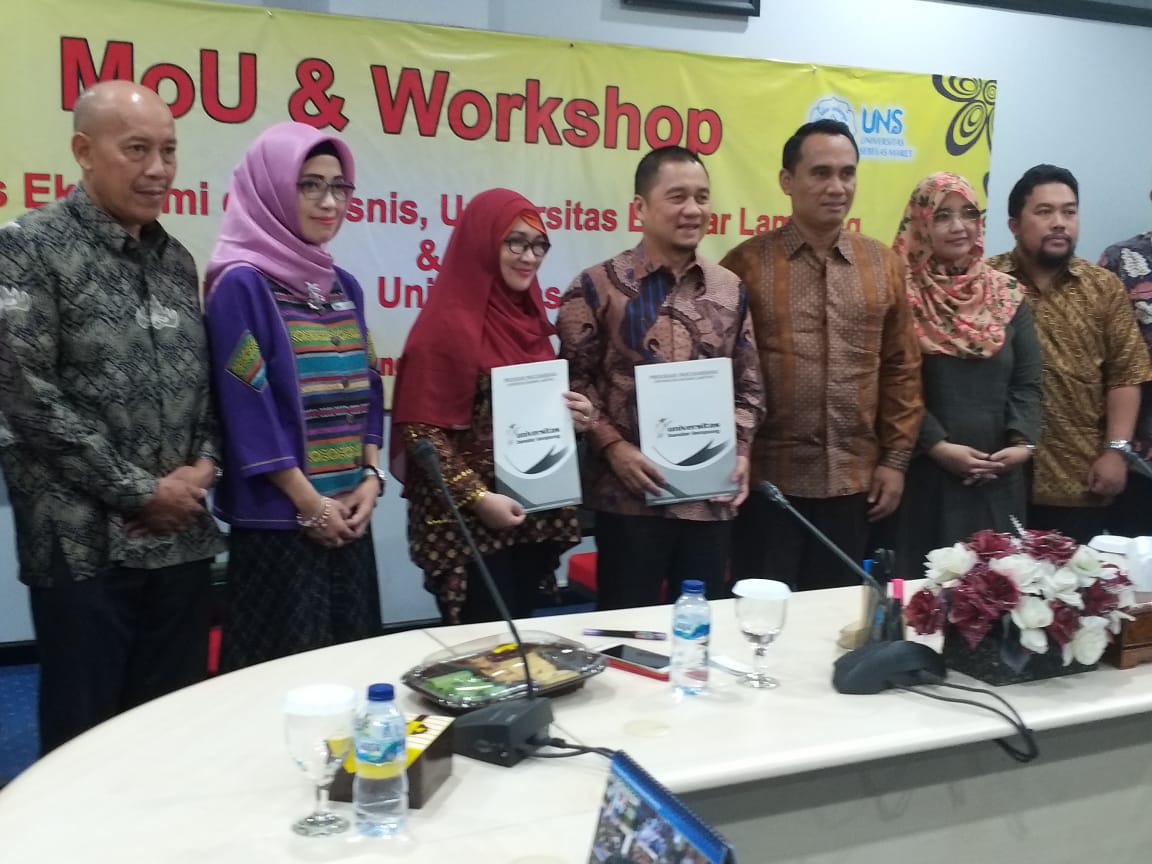
    Fakultas Ekonomi dan Bisnis Universitas Sebelas Maret (FEB UNS) Jalin Kerjasama dengan FEB Fakultas Ekonomi dan Bisnis Universitas Bandar Lampung (FEB UBL).

    Kerjasama ini ditandai dengan penandatanganan MOU dari kedua belah pihak yang berlangsung di FEB UBL, yang disaksikan oleh jajaran pimpinan, Jumat 13 Desember 2019.

    FEB UNS dan FEB UBL sepakat untuk mengadakan kerjasama dalam penyelenggaraan pembinaan pendidikan dan pengajaran (narasumber dan visiting professor),
    pembinaan penelitian (coaching / pendampingan dan workshop penelitian serta penelitian bersama) dan publikasi hasil penelitian bersama di jurnal internasional.

    Kerjasama yang akan dilaksanakan bertujuan untuk mempercepat peningkatan mutu pendidikan, penelitian dan publikasi hasil penelitian bersama di jurnal internasional khususnya bagi peningkatan kemampuan dosen.

  • FEB UNS Conduct a Discussion with FEB UNEJ

    FEB UNS Conduct a Discussion with FEB UNEJ

    The National Accreditation Board for Higher Education (BAN PT) since March 2019 has implements study program accreditation instrument 4.0. Previously, the accreditation was held using the 3.0 instrument with 7 standards. However, this was changed to 9 accreditation criteria, with the main difference in the accreditation focus, which previously on the input and process and the current one focused on the process and output. This matter was addressed by Dr. Siti Aisyah Tri Rahayu as the speaker in Academic Refreshing Methodology & Curriculum-Based Research Development, Friday, November 15, 2019.

    “We need to prepare accreditation with 9 criteria, there are many things that should be improved. For instance, in teaching and learning process, if it is conducted offline (in class) we only earn 2 point, and if we implement online course the point is 3. In order to achieve 4 point, there should be a documentation of teaching and learning process, the video of the process, and is published, thus it is accessible by the public,” she explained. With more courses that meet the criteria, the point achieved will be greater.

    Additionally, research result should also be implemented or discussed during learning process. This includes involving the students in research project, not only assisting but also involving them during the process.

    During the curriculum establishment, the faculty should planned its graduate profile. This cannot directly established as the faculty needs to predict the market demand. Therefore, the curriculum establishment process should involve stakeholders. Another challenge for UNS is to adopt the digital 4.0 subject. This can be achieved through two methods, first to establish new course related with digital industry and second is to be included in the existing course element.

    Beside Dr. Siti Aisyah, there are two other speakers in this forum, Dr. Bhimo Rizky Samudro and Dr. Tri Mulyaningsih. This forum is attended by the faculty members of the Faculty of Economics, Universitas Jember.