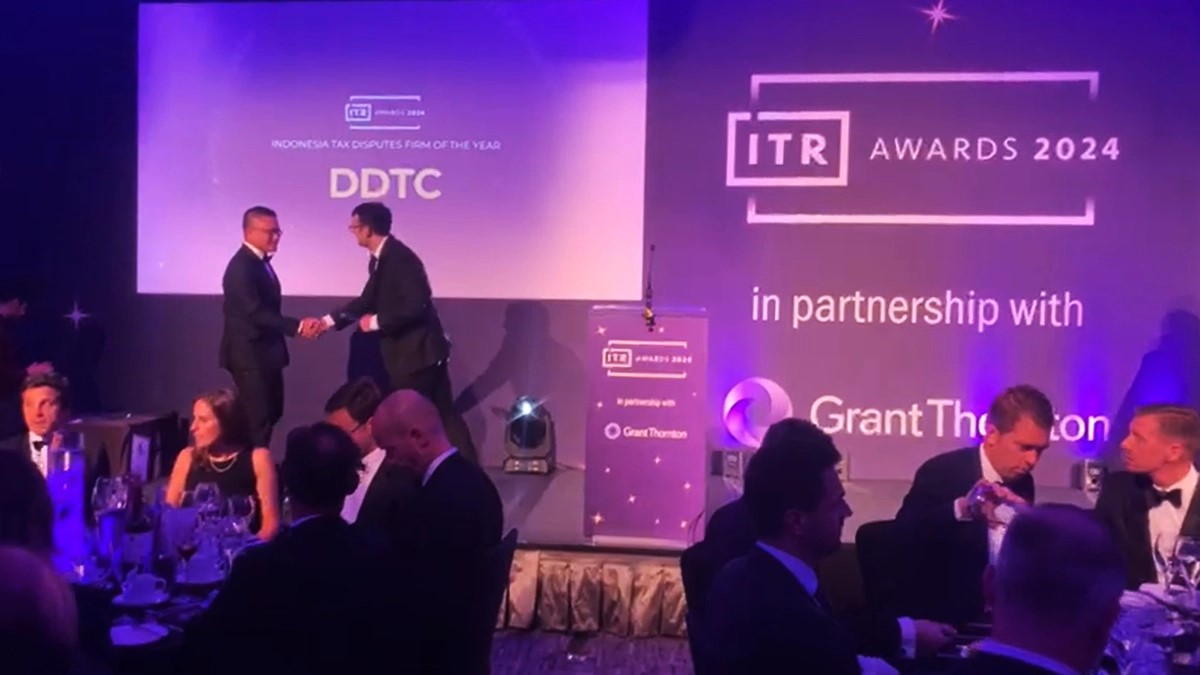
The strategic partner of the Faculty of Economics and Business (FEB), Universitas Sebelas Maret (UNS), Danny Darussalam Tax Center (DDTC) was awarded 2 (two) titles in a tax awards at the ITR Asia-Pacific (APAC) Tax Awards 2024. The award was given by International Tax Review (ITR), an international institution based in London, UK. The first title is awarded as the Regional Awards group’s Pro Bono Firm of the Year (Asia-Pacific). Meanwhile, the second title awarded to the firm is the Jurisdiction Awards group’s Tax Dispute Firm of the Year (Indonesia).
Based on a written statement from DDTC, DDTC Consulting Managing Partner, David Hamzah Damian, representing the Founder of DDTC Darussalam and Danny Septriadi, received both awards directly at the 2024 ITR APAC Tax Awards peak night at the Leonardo Royal Hotel Tower Bridge London, UK, Wednesday, September 18, 2024.
 The editor of ITR at Legal Benchmarking Group, Thomas Baker, said the victory over the Tax Dispute Firm of the Year was seen from the company’s success rate in resolving tax disputes in various sectors with an innovative approach. “The assessment or research process conducted by the ITR has been going on for a long time and involves many parties,” Baker said.
Then, the Editor of ITR at Legal Benchmarking Group, Sam Sholli, states that the victory over the Pro bono Firm of the Year was seen from the company’s commitment in maximizing the role of the profession in the field of taxation for the public at large. “By contributing to an ideal taxation system and eliminating information asymmetry in the taxation community,” Sholli said.
The founder of DDTC, Darussalam, said that this award is an international recognition of the consistency of DDTC in following the vision, mission, and values of the company for 17 years. DDTC’s vision, mission, and values are the result of a balanced mix of commercial and non-commercial aspects.
Moreover, Darussalam continued that all company activities depart from the reality of the tax literacy society, low compliance and tax awareness, a limited number of tax bases, and not many of tax experts. As a result, most of the earnings for professional services will be back to the community and stakeholders in the tax sector, especially in Indonesia. The two awards are evidence that the commercial and non-commercial aspects actually strengthen each other.
“We believe a cycle that does not stop at the mere commercial aspect will actually create a better tax ecosystem because the tax consulting profession is noble or honorable (officium nobile). This award will spur DDTC to remain consistent on this path,” he said.
The concept of officium nobile, he continued, departs from the assumption that in essence a profession is not only oriented for profit, but also how to give or dedicate its expertise for tax purposes.
DDTC Founder, Danny Septriadi, said that all external parties of DDTC are clients. Therefore, DDTC has a professional responsibility to the tax community. Various products, services, or activities are always focused on fulfilling these responsibilities. “Hopefully, this award can spur DDTC professionals to continue to contribute to the coloring of the Indonesian taxation world,” said Danny.
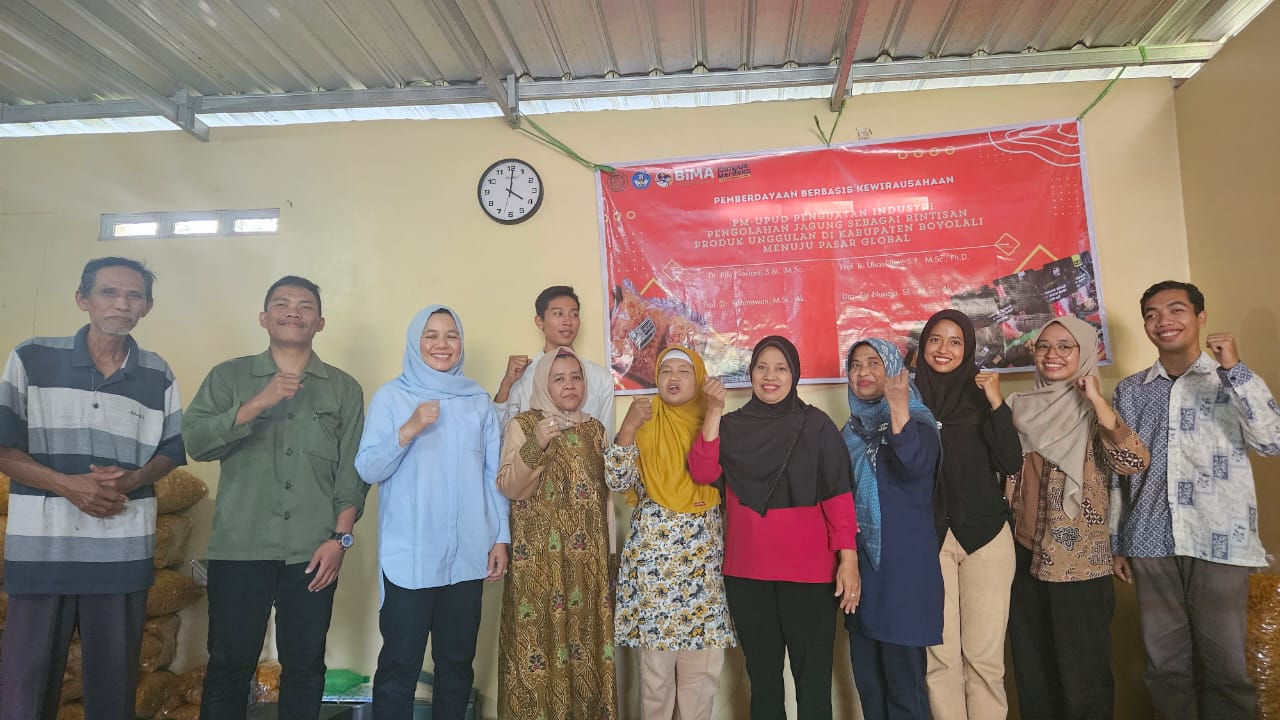
 The team is assisting two local MSMEs engaged in corn processing in Boyolali: “Snack Kupu“ and “Keripik Jagung Bu Parni“. The support began in May 2024 and is ongoing.
 The primary focus of the community service for these two businesses is to enhance the marketing of Marning as a flagship product for Boyolali, using a triple helix method encouraging collaboration between universities, business owners, and the Regional Government of Boyolali to create competitive, sustainable, and high-quality MSMEs.
 This statement was made by Dr. Dwi Prasetyani, SE. M.Si., Director of the Directorate of Alumni and Student Entrepreneurship at UNS, during the opening remarks of the Sharing Session titled “Balancing Corporate, Business, and People Development.” The event was hosted by the Master of Management (MM) Program FEB UNS on Saturday, September 21, 2024, in the Konimex Hall, Bachtiar Effendi Building.
 Dr. Prasetyani further explained that scholarships provided by KAFEB have shown remarkable growth over the past two years. In its first year, the fund allocation stood at around IDR 24 million, which then increased significantly to IDR 184 million in the second year. These scholarships are awarded based on three criteria: financial need, academic achievement, and active involvement in campus activities.
 In addition to KAFEB scholarships, there is also the “Bakti Almamater” program, which provides support for students through mentorship, job placements in state-owned enterprises, and opportunities in the banking sector. KAFEB provides mentoring and assistance starting from application to interview stages. Additionally, Bakti Almamater KAFEB also offers financial support for students participating in achievement-oriented activities.
 Moreover, there is an additional fundraising initiative outside of KAFEB called “Gerbang Pitulungan,” donations specifically established by the alumni for student scholarships.
 Dr. Prasetyani expressed her sincere gratitude and appreciation for the efforts of FEB UNS and KAFEB. “KAFEB UNS is a source of pride for us all. FEB is the only faculty at UNS with a dedicated foundation and endowment fund. Nationally, very few faculties have such resources. FEB UNS serves as a benchmark within UNS, setting an example for other faculties. Thank you to our alumni, who have shown exceptional commitment and integrity in supporting the advancement of FEB and UNS,” she concluded.
 Meanwhile, the Dean of FEB UNS emphasized the importance of fostering a sense of belonging among alumni. Alumni who maintain a strong connection to their alma mater, and feel pride and respect for it, contribute to its enduring value.
 The Sharing Session featured three guest speakers from the 1989 alumni cohort: Heri Purnomo, Director of HR and General Affairs at PT Alumni; Eko Ariantoro, Chief Commissioner of PT. Elnusa; and Danang Andriyanto from Bank Mandiri. The event was moderated by Retno Tanding Suryandari, Ph.D., Head of the MM Program, and attended by undergraduate, master’s, and doctoral students, as well as the alumni from 1989 cohort. The session was engaging and featured many door prizes for active participants.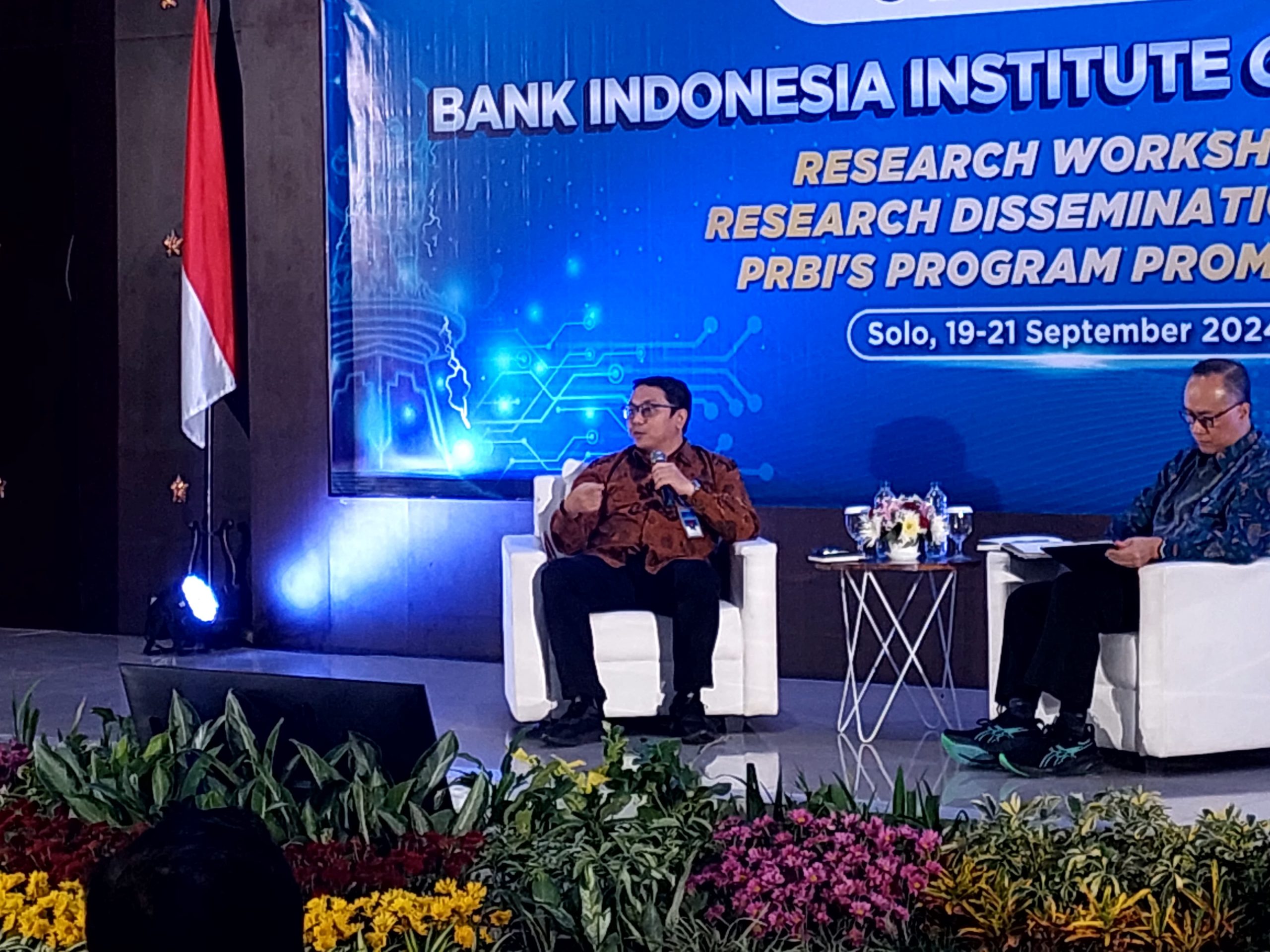
 On the first day, Thursday, September 19, 2024, the program began with a lecture delivered by Prof. Irwan Trinugroho, Vice-Rector for Planning, Collaboration, Internationalization, and Information Affairs UNS, with material entitled “Industrial Policy Directions and Downstreaming Strategies to Support Sustainable Growth in Indonesia.”
 Downstreaming, he emphasized, must deliver clear added value when transitioning from raw materials to processed goods. Without robust market analysis and cost-benefit evaluations, it may fail to provide economic advantages. Furthermore, successful downstreaming requires strong national policies, such as Indonesia’s export ban on nickel ore and progressive export tariffs on cocoa beans.
 On the second day, Friday, September 20, 2024, the program continued with lectures by Prof. Iwan Jaya Azis, Research Scholar at Bank Indonesia–Cornell University, discussing “Regional Productivity Development in Indonesia,” and Prof. Hermanto Siregar from Perbanas Institute, covering “The Readiness and Challenges of Indonesia’s Human Resources in Supporting Sustainable Economic Growth in the Digital Era.”
 With over 200 participants in attendance, the talk show was part of the broader activities of the 22nd ISEI Congress. The event invited two prominent speakers: Zuwin Adriano, Business Development Manager at Privy, and Roberto Akyuwen, author and Head of the Financial Services Authority (OJK) for Jabodetabek and Banten Province.
 The Dean of FEB UNS extended his gratitude and appreciation for the talk show, emphasizing its relevance to academics and students. “This topic is highly beneficial, especially for us in academia and our students. It is essential for them to develop their knowledge, particularly those in the Digital Business program, one of FEB’s highly sought-after majors. I hope the students pay close attention to today’s topic, Cybersecurity in Banking, as it is incredibly important,” he stated.
 In his opening remarks, Eko B Supriyanto, Chairman of Infobank Media Group, highlighted the remarkable contribution of The Cybersecurity in Banking Book by Roberto Akyuwen. “In a country like Indonesia, where financial, digital, and cybercrime literacy remains low, this book by Mr. Roberto stands out with over 600 pages of rich content. It integrates theories, regulations, real-world practices, and research findings. Such comprehensive resources are rare, making this book an extraordinary contribution,” he remarked.
 As the book’s editor, Eko noted its engaging content and emphasized its central theme: strategies to mitigate cybercrime risks in the banking sector.
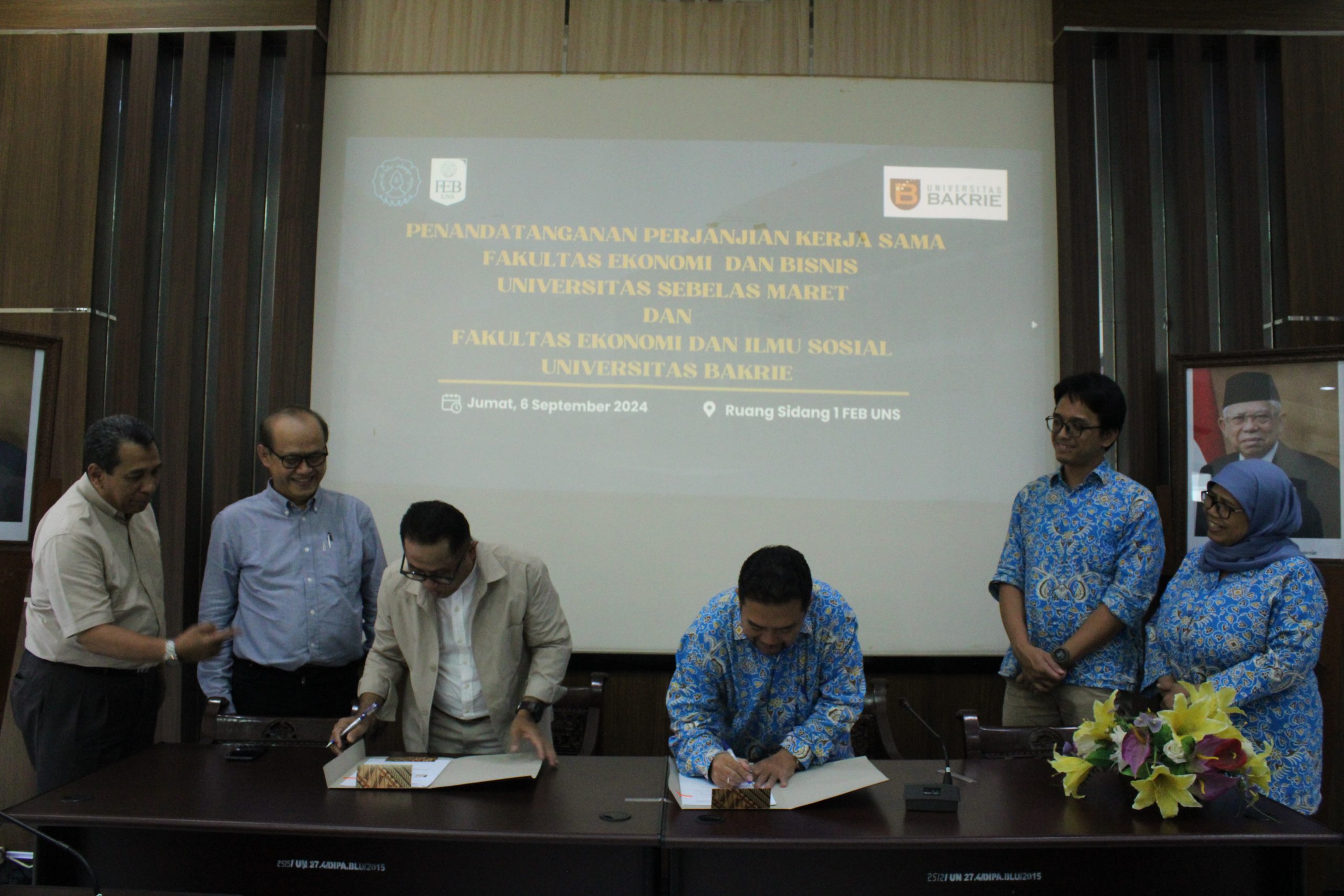
 This cooperation agreement, which focuses on the Implementation of Tri Dharma of Higher Education, was signed by Prof. Dr. Dudi Rudianto, S.E., M.Sc., Ph.D., Dean of FEIS UBakrie, and Bhimo Rizky Samudro, S.E., M.Si., Ph.D., Dean of FEB UNS.
 The scope of the agreement includes cooperation in research development, seminars, guest lectures, student exchange programs, and student internships.
 The Dean of FEB UNS warmly welcomed the FEIS UBakrie delegation, expressing the faculty’s enthusiasm for partnerships across education, research, and community engagement. He emphasized that such collaborations offer valuable insights and benefits to both institutions involved.
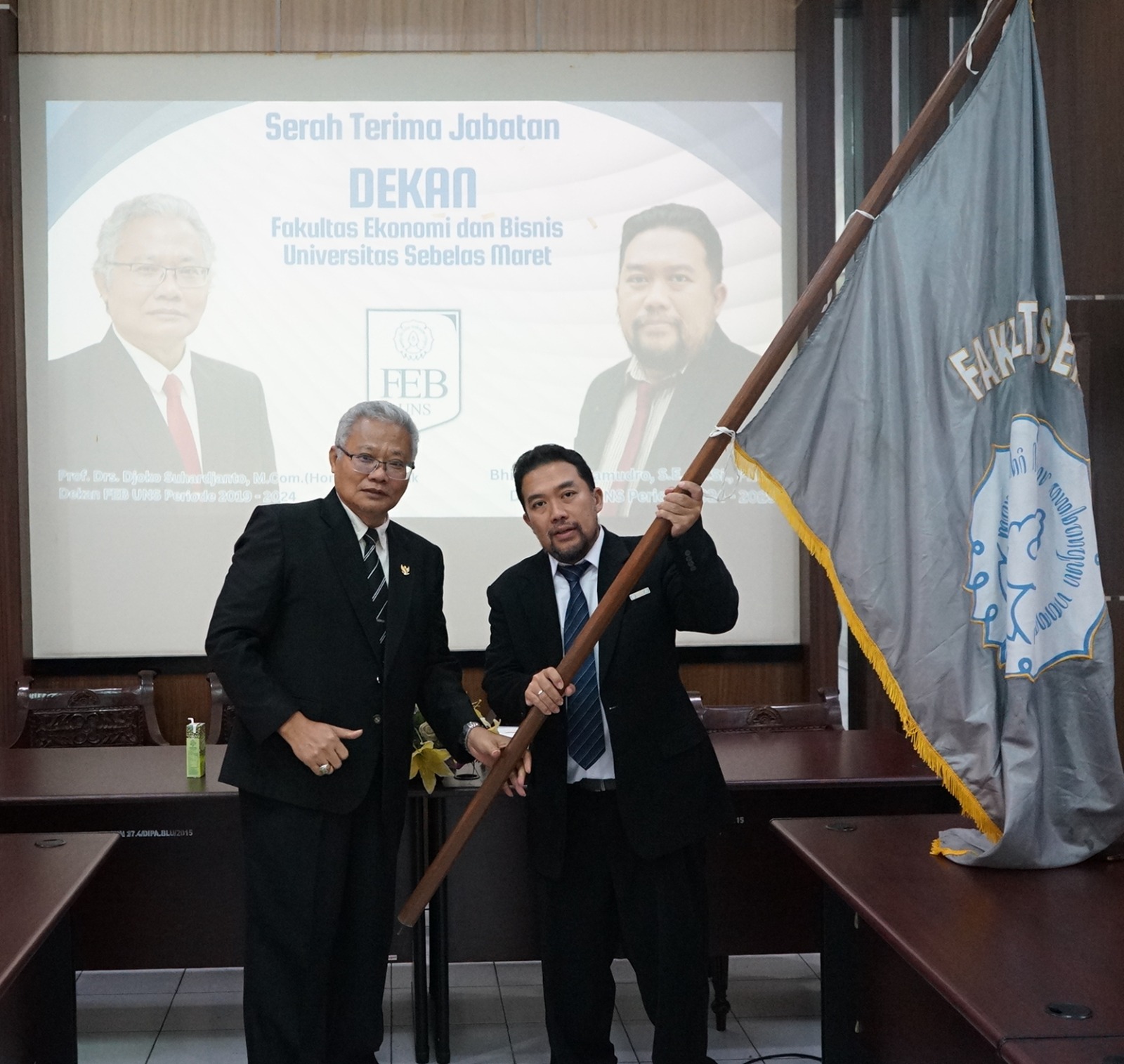
 The event, attended by all FEB UNS leadership, included the reading and signing of the handover document and the submission of the final report from the previous Dean’s term for 2019-2024.
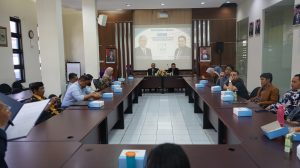 Excitement filled the air as the Academic Support Staff warmly welcomed the new Dean in the lobby of the Soeharno TS Building following the inauguration.
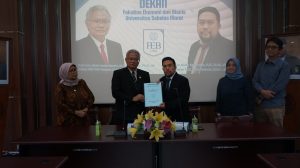 “Our undergraduate, master’s, and doctoral programs have all achieved top-tier accreditation, with the exception of the Digital Business program, which is currently in the accreditation process. Regarding international accreditation, we were previously accredited by AQAS, which is no longer recognized. I encourage Mr. Bhimo to pursue AACSB accreditation, the international standard recognized by the Ministry of Education, which requires everyone’s support,” he explained.
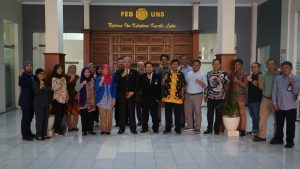


 Speakers included Tri Mulyaningsih, Ph.D., and Dr. Nuryakin, who discussed academic writing techniques; Dr. Mulyanto and Dr. Roderikus Agus Trihatmoko, who focused on popular science writing; Suwarmin, MM., who covered Managerial Challenges; and Vika Laretha Dyahsasanti, S.E., who presented on Digital Literacy.
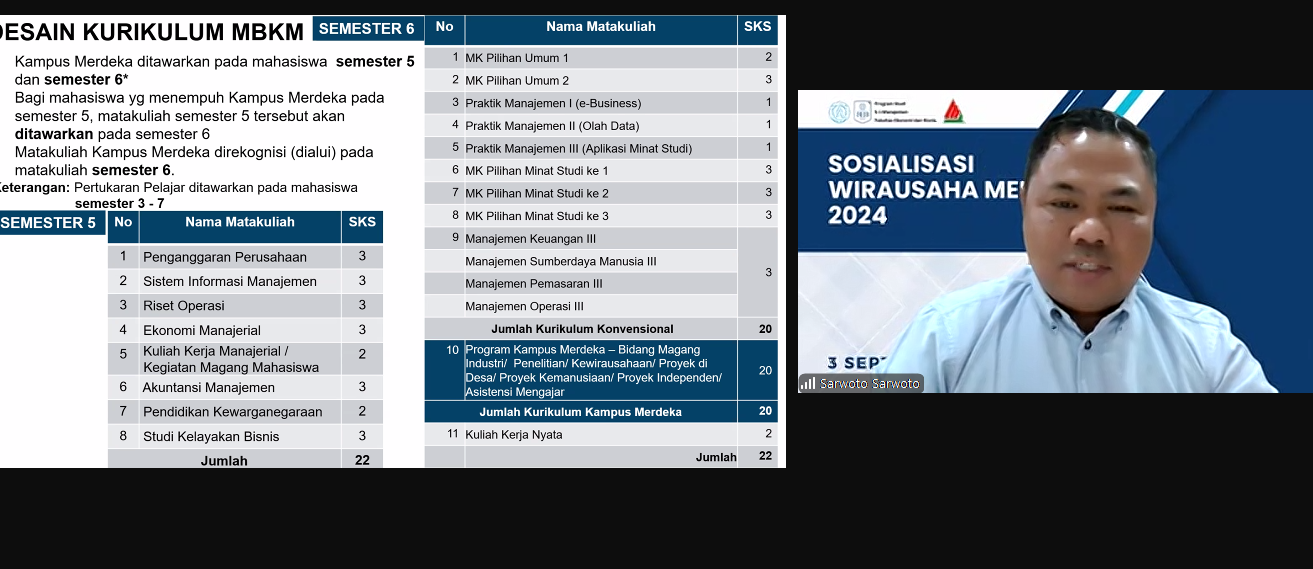
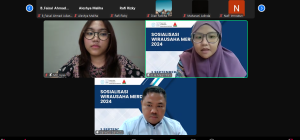 Launched by the Indonesian Ministry of Education, Culture, Research, and Technology (Kemendikbudristek), MBKM Wirausaha enables students to gain practical experience outside their academic courses through hands-on entrepreneurship activities.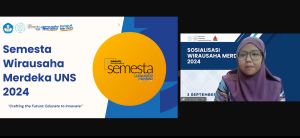
 Moreover, students have a unique chance to present their startup products or services to potential investors, business partners, and prospective customers.