FEB

Kategori: faculty

  • Strengthening Preparedness through Fire Mitigation Training and Disaster Response Simulation

    Strengthening Preparedness through Fire Mitigation Training and Disaster Response Simulation

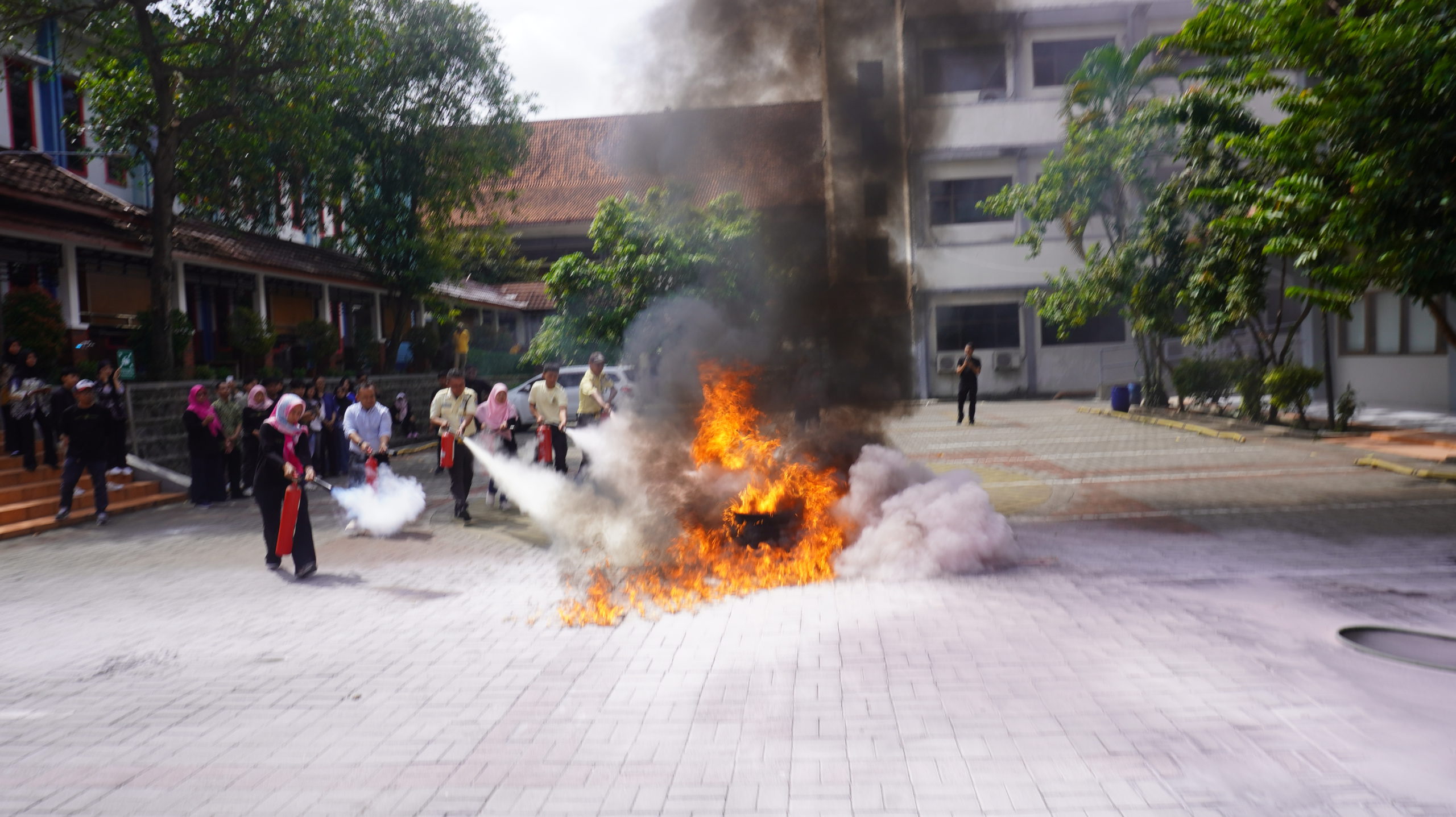
    Faculty of Economics and Business (FEB), Universitas Sebelas Maret (UNS), conducted a Training and Simulation for Fire Mitigation and Disaster Response on Wednesday, 31 December 2025, at the courtyard of the Bachtiar Effendi Building, FEB UNS. The activity was attended by the FEB UNS academic community, including Academic Support Staff and students.

    Mitigation refers to measures taken to reduce or control risks and adverse impacts arising from hazardous events, including fires. In the context of fire incidents and accidents, mitigation includes preventive and response actions such as the provision of safe evacuation routes, installation of smoke detection devices, training in the use of fire extinguishers (APAR), and understanding emergency procedures.

    The Vice Dean for Non-Academic Affairs FEB UNS, Sutaryo, S.E., M.Si., Ph.D., Ak., CA., CRA., CRP., ACPA., stated that the activity formed part of the fulfilment of Occupational Health and Safety (K3) documentation, as well as a concrete application of risk management within the FEB UNS environment.

    “This training and simulation serve as a preventive measure in anticipating potential disasters. While we do not expect such events to occur, we aim to ensure that FEB UNS is prepared in terms of human resources as well as supporting facilities and infrastructure,” he explained.

    He also expressed appreciation for the strong participation and support of all attendees. According to him, creating a safe and disaster-responsive faculty environment is a shared responsibility of the entire academic community.

    During the training, participants received instruction on fire prevention, basic fire suppression techniques, proper use of fire extinguishers, and emergency actions needed in the event of a fire. Instructors also explained methods of isolating fire from oxygen, including traditional techniques using burlap sacks, towels, or non-synthetic fabrics.

    “If a small fire occurs, take a burlap sack, towel, or cloth nearby, soak it with water, and cover the fire. Pay attention to wind direction and position yourself opposite the fire. Once you move forward, do not hesitate or step back, as the fire may follow the movement of the cloth,” an instructor explained during the practical session.

    Participants were also provided with guidance on handling household gas leaks, including avoiding switching electrical devices on or off to prevent sparks, opening doors and windows to allow air circulation, and removing the regulator before moving the gas cylinder outdoors until conditions are safe.

    The instructor emphasized that maintaining calmness is the most critical response during a fire incident. “Fire accidents often escalate due to panic. The key is to remain calm, immediately contact the fire department, ensure personal and collective safety, and carry out initial fire suppression if possible using the techniques learned,” he stated.

    Through this activity, FEB UNS aims to improve literacy, awareness, and a risk-conscious culture within the faculty, while strengthening the preparedness of the academic community in responding to emergency situations in support of a safe and sustainable campus environment. The activity supports the achievement of the Sustainable Development Goals (SDGs), particularly SDG 3 (Good Health and Well-Being) and SDG 11 (Sustainable Cities and Communities), through enhanced safety measures and disaster preparedness within the campus environment.
  • FEB UNS Receives Visit from Saxion University to Discuss Double Degree Program Collaboration

    FEB UNS Receives Visit from Saxion University to Discuss Double Degree Program Collaboration

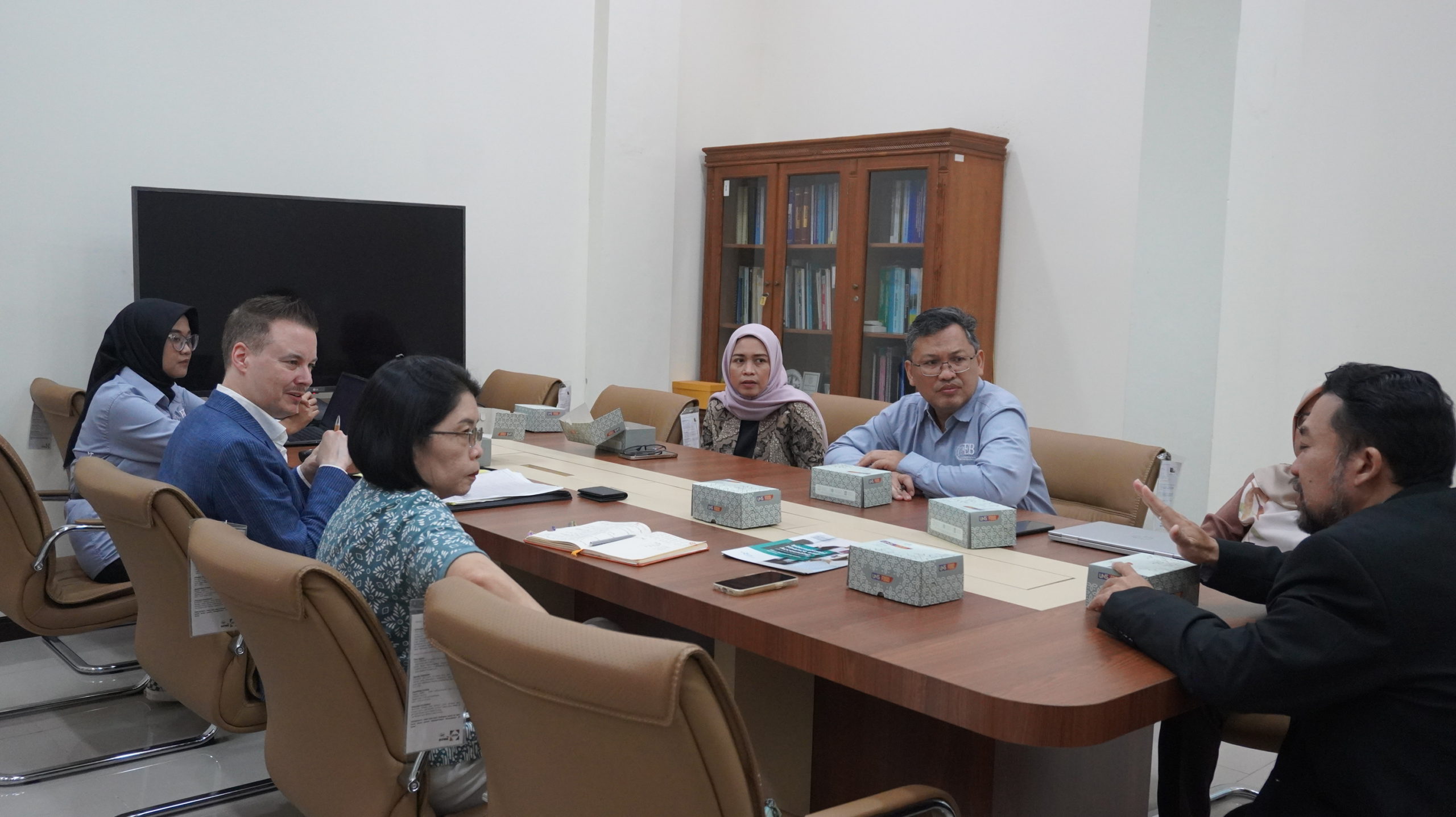
    Faculty of Economics and Business (FEB), Universitas Sebelas Maret (UNS), welcomed a visit from Dr. Dennis Vossen, Program Director of International Finance and Accounting at Saxion University of Applied Sciences, Netherlands, on Wednesday, 24 December 2025. The visit marked an initial step in exploring international collaboration between the two institutions, particularly in aligning curricula for the development of a double degree program in Accounting and Management.

    During the session, both parties explores opportunities for academic collaboration with a focus on curriculum equivalence, learning schemes, and implementation mechanisms for double degree and student exchange programs. The FGD concluded with a shared agreement that FEB UNS expressed its readiness and commitment to establish cooperation with Saxion University through double degree and student exchange initiatives.

    Through this collaboration, FEB UNS reaffirmed its commitment to expanding global academic networks and promoting international student mobility. This partnership is expected to provide international exposure for students while strengthening the global standing of FEB UNS, and to support the achievement of the Sustainable Development Goals (SDGs), particularly SDG 4 (Quality Education) and SDG 17 (Partnerships for the Goals).

  • FEB UNS Academic Senate Holds Plenary Meeting for Strategic Plan Finalization and Evaluation of Teaching and Learning Processes

    FEB UNS Academic Senate Holds Plenary Meeting for Strategic Plan Finalization and Evaluation of Teaching and Learning Processes

    The Faculty Academic Senate at Faculty of Economics and Business (FEB), Universitas Sebelas Maret (UNS), held a plenary meeting on Thursday, 11 December 2025, at UNS Inn Solo. The meeting served as a strategic forum to discuss several key agendas, including the finalization of the Faculty Strategic Plan, evaluation of teaching and learning processes, explanation for the Standard Operating Procedures (SOPs) for reporting and prevention of academic integrity violations, the closure of the Professional Accounting Education Program (PPAK), and the implementation of the new curriculum for the Doctoral Program in Economics (PDIE).

    Chair of FEB UNS Academic SenateIn her opening remarks, the Chair of the FEB UNS Academic Senate, Prof. Dr. Hunik Sri Runing Sawitri, M.Si., stated that the meeting marked an important moment to align perspectives while completing the strategic plan agenda throughout 2025. Furthermore, Prof. Hunik emphasized that this plenary meeting is a part of the series of discussions on the FEB UNS medium-term strategic program for the 2025–2029 term. It is expected that all inputs and suggestion from the discussions’ session will lead to the finalization stage, thus, allowing the Strategic Plan to be implemented in an effective and sustainable manner.

    “After this finalization process is completed, our responsibilities for this year can be considered completed. Therefore, this meeting also serves as the final Faculty Academic Senate meeting in 2025,” she stated.

    On this occasion, the Chair of the Academic Senate also conveyed that although attendance was not fully optimal, the meeting proceeded with a firm commitment to produce the best possible decisions and recommendations for the future development of FEB UNS.

    Through this forum, the FEB UNS Academic Senate reaffirmed its role to safeguard the academic quality and to be a key policy advisor for the faculty, particularly in ensuring curriculum relevance, the quality of teaching and learning processes, and the continuity of academic governance that remains responsive to developments in higher education.

    This activity aligns with the Sustainable Development Goals (SDGs), particularly SDG 4 (Quality Education) through the strengthening of curricula and the quality of learning processes, as well as SDG 16 (Peace, Justice, and Strong Institutions) through the enhancement of transparent, accountable, and sustainable academic governance.
  • Management Study Program Presents Industry Expert in Strategic Management Guest Lecture

    Management Study Program Presents Industry Expert in Strategic Management Guest Lecture

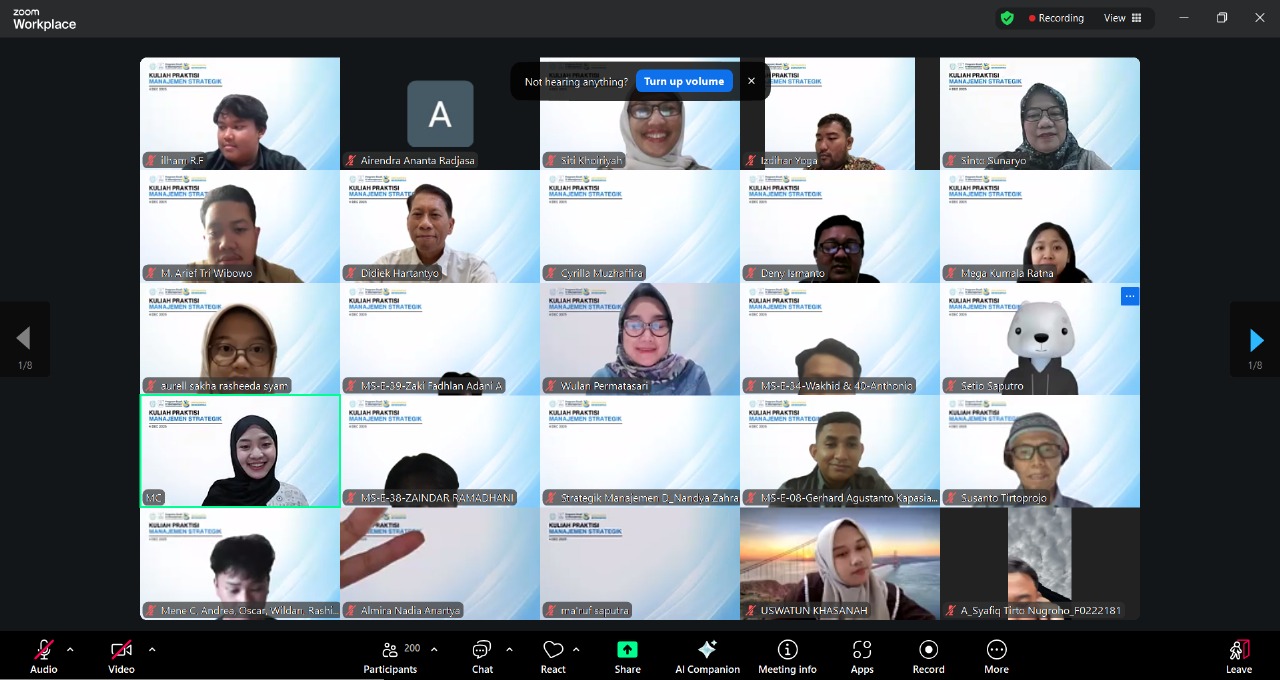
    Management Study Program, Faculty of Economics and Business (FEB), Universitas Sebelas Maret (UNS), organized a Guest Practitioner Lecture for the Strategic Management course entitled “Strategy Evaluation: Measuring Performance and Conducting Strategic Revision” on Thursday, 4 December 2025. This occasion featured Dr. Didiek Hartantyo, M.B.A., a strategic management practitioner who shared empirical experience related to Dynamic Strategic Evaluation and its implementation at PT Kereta Api Indonesia (Persero).

    In his presentation, Dr. Didiek emphasized that recently, organizations operate within a hyper-dynamic environment, characterized by rapid change and uncertainty arising from political and geopolitical conditions, global and domestic economic factors, disasters, and shifts in customer behavior. These conditions require companies to conduct strategy evaluation that is no longer static and periodic, but dynamic, continuous, and adaptive. To address these challenges, six approaches were presented.

    First, Dynamic Strategic Evaluation, which refers to strategy evaluation conducted continuously and in real time, rather than relying solely on annual cycles. Second, Data-Driven Strategic Review emphasizes the use of big data, data analytics, and artificial intelligence as the basis for decision-making, enabling strategy evaluation to be more accurate and predictive. The third approach is Adaptive Permanent Evaluation, which assesses organizational capabilities through sensing, seizing, and transforming capabilities to ensure the organization can detect change, capture opportunities, and adapt structurally. Fourth, Strategic Ambidexterity Evaluation refers to an organization’s ability to maintain operational efficiency and stability while simultaneously pursuing innovation and transformation amid policy dynamics and global economic conditions.

    Furthermore, ESG-Integrated Strategic Evaluation positions environmental, social, and governance aspects as core components of strategy evaluation to ensure sustainability and stakeholder trust. Finally, Scenario-Based Strategy Evaluation (SBSE) is applied to assess organizational readiness in facing various future possibilities, particularly under conditions of extreme uncertainty such as during a pandemic.

    In the implementation session, PT Kereta Api Indonesia (Persero) was presented as a concrete example of the application of these six approaches from 2016 to 2025. The transformation began with strengthening organizational foundations and revising the Corporate Work Plan and Budget (RKAP) during 2016–2017, followed by the achievement of an AAA rating from Pefindo in 2017. KAI also issued bonds in 2017 and 2019 as a form of transparency and cost-efficient financing, while gaining public trust through its involvement in financing the Jabodebek LRT project.

    During the COVID-19 pandemic period (2020–2021), KAI implemented crisis management through service adaptation, reinforcement of health protocols, and operational efficiency. Although the company experienced losses for two consecutive years, it successfully recovered and recorded a profit of IDR 444 billion in 2022. Entering the 2020–2025 period, KAI continued to develop dynamic strategic evolution through continuous strategy evaluation to maintain performance, safety, efficiency, and service quality.

    This practitioner lecture reaffirmed that dynamic, adaptive, and data-based strategy evaluation is a key requirement for the sustainability of modern organizations. The six strategic evaluation frameworks presented were not only academically relevant but also demonstrably applicable in national corporate practice.

    This lecture support SDG 8 (Decent Work and Economic Growth) through the strengthening of corporate performance and sustainability, SDG 9 (Industry, Innovation, and Infrastructure) through strategic transformation and innovation in the transportation sector, as well as SDG 12 (Responsible Consumption and Production) and SDG 16 (Strong and Accountable Institutions) through the integration of ESG principles and transparent governance.

  • Management Study Program at FEB UNS Presents Bio Farma Group VP to Discuss Marketing Ethics and Consumer Protection

    Management Study Program at FEB UNS Presents Bio Farma Group VP to Discuss Marketing Ethics and Consumer Protection

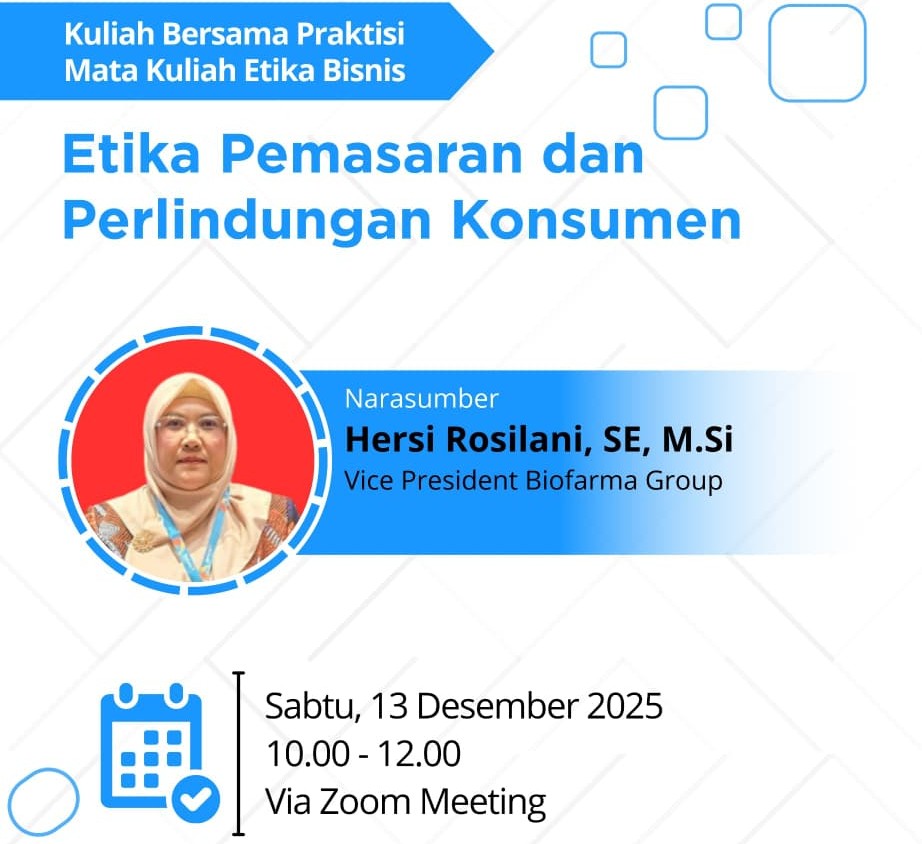
    Management Study Program, Faculty of Economics and Business (FEB), Universitas Sebelas Maret (UNS), organized a Guest Practitioner Lecture for the Business Ethics course entitled “Marketing Ethics and Consumer Protection” on Saturday, 13 December 2025. The activity, conducted virtually via Zoom Meeting, was attended by students of the Management Study Program as part of efforts to enhance practice-based learning, and featured Hersi Rosilani, S.E., M.Si., Vice President of Bio Farma Group, as the invited speaker.

    In her presentation, the speaker delivered practical insights into the application of marketing ethics in the pharmaceutical industry, highlighting honesty, transparency of information, regulatory compliance, and corporate responsibility in protecting consumers. Hersi Rosilani explained that the pharmaceutical industry carries a strong social function; therefore, marketing strategies should not be oriented solely toward profit but must also prioritize patient safety and public interest.

    The promotion of pharmaceutical products is required to be conducted responsibly, based on scientific evidence, non-misleading, and in accordance with regulations established by the National Agency of Drug and Food Control (BPOM) and the Indonesian Pharmaceutical Code of Ethics. In addition, mechanisms for consumer protection in the pharmaceutical sector were discussed, including consumers’ rights to safety, quality, and accurate information as stipulated in Law Number 8 of 1999 on Consumer Protection.

    The speaker also illustrated the supervisory role of BPOM in ensuring drug safety through registration processes, distribution monitoring, and product recalls when violations of quality, safety, or labelling standards are identified.

    Through this lecture, students are expected to gain a more comprehensive understanding of ethical business practices, particularly in the context of marketing and consumer protection within strategic industries such as pharmaceuticals. This Practitioner Lecture also served as a platform to enhance contextual learning by presenting real-world practices from industry. The implementation of the activity aligns with efforts to achieve the Sustainable Development Goals (SDGs), particularly SDG 4 (Quality Education) through the enhancement of practice-based learning, SDG 3 (Good Health and Well-Being) through attention to safety and consumer protection in the pharmaceutical sector, and SDG 12 (Responsible Consumption and Production) through the application of responsible business and marketing ethics.
  • FEB UNS Organizes Pre Job Training Batch 3 to Prepare Students for Future Careers

    FEB UNS Organizes Pre Job Training Batch 3 to Prepare Students for Future Careers

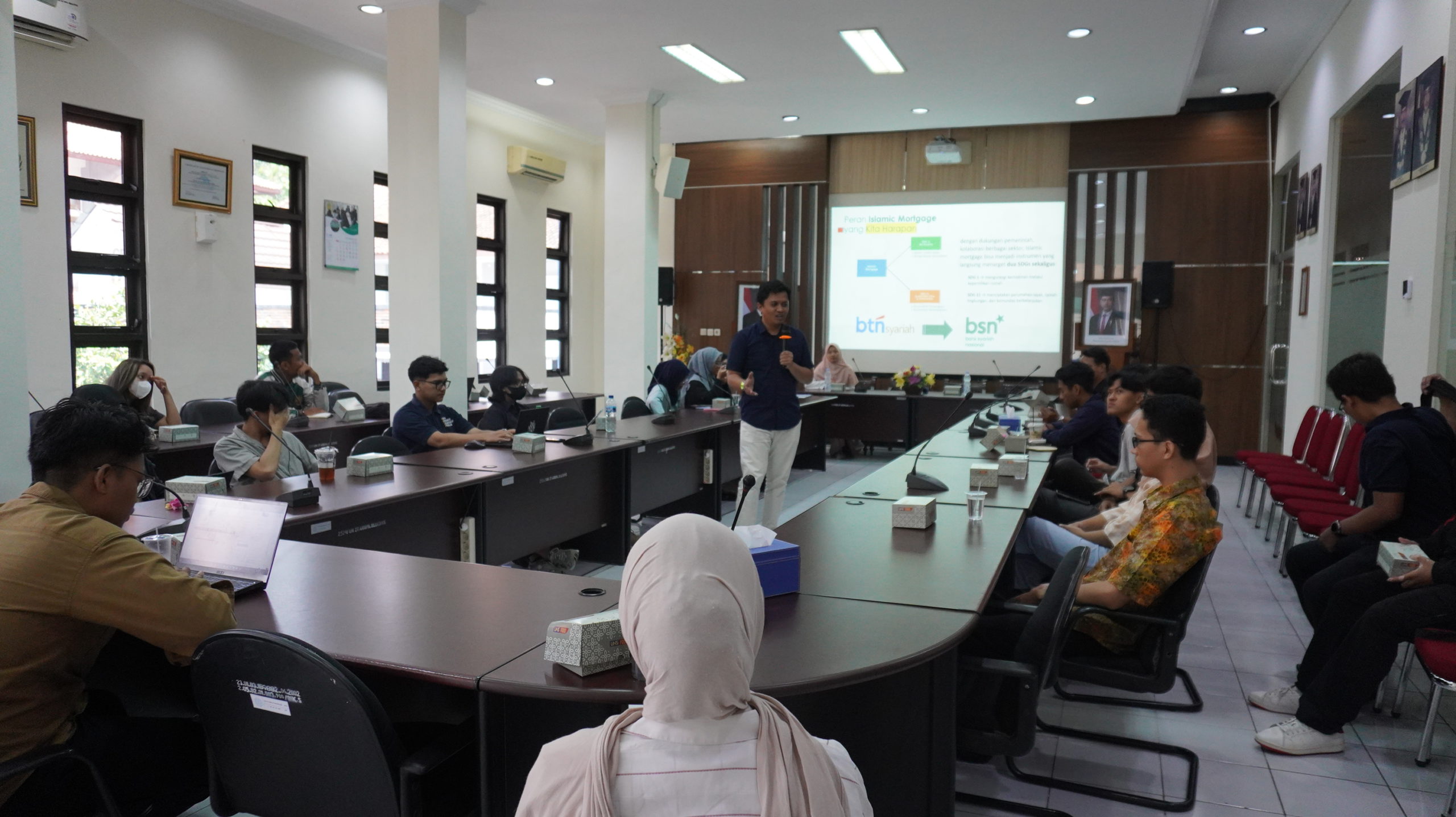
    Faculty of Economics and Business (FEB), Universitas Sebelas Maret (UNS), once again organized Pre Job Training (PJT) Batch 3 as part of its efforts to prepare students for the transition from university life to the professional world. The activity was held on Saturday, 6 December 2025, at Meeting Room 1, Building 1, FEB UNS, and was attended by FEB UNS students, particularly seventh-semester students who had not participated in previous PJT batches. Carrying the theme “Aligning Competencies with Current and Future Career Trends,” the program featured Syaiful Amri, M.M., Sub Branch Head of KCPS BTN Klaten, as the speaker.Syaiful Amri at FEB UNS PJT

    In his presentation, Syaiful Amri emphasized the importance of mental readiness, work ethic, and competency development so that graduates are not only prepared to enter the workforce but are also able to sustain and grow amid increasingly dynamic changes in the world of work. During the session, the speaker also outlined key labor market challenges in Indonesia, including the high number of job seekers, the mismatch between graduates and industry needs (vertical mismatch), and the substantial proportion of workers earning below-standard wages. In response to these conditions, students were encouraged to develop a growth mindset, a sense of responsibility (ownership), as well as the ability to build professional networks and portfolios at an early stage.

    In addition to discussing career readiness, Syaiful Amri introduced the role of PT Bank Tabungan Negara (Persero) Tbk., particularly through housing finance services and the development of sharia-based products, as an illustration of the banking sector’s contribution to public welfare. He emphasized that the professional world requires graduates who are not only academically capable but also possess strong character, integrity, and a commitment to meaningful contribution.

    Through Pre Job Training Batch 3, FEB UNS expects students to gain a clearer understanding of career direction, readiness to navigate recruitment processes, and awareness that competencies, attitudes, and work values constitute essential capital for entering the professional sphere.

    This activity aligns with the achievement of the Sustainable Development Goals (SDGs), particularly SDG 4 (Quality Education) through the enhancement of graduate readiness, and SDG 8 (Decent Work and Economic Growth) by encouraging competent, competitive young generations who are prepared to contribute to sustainable economic development.
  • FEB UNS Practitioner Lecture: Safeguarding Project Success through Project Integrated Monitoring & Controlling

    FEB UNS Practitioner Lecture: Safeguarding Project Success through Project Integrated Monitoring & Controlling

    Management Study Program and the Master of Management Program, Faculty of Economics and Business (FEB), Universitas Sebelas Maret (UNS), organized a practitioner lecture themed “Safeguarding Project Success through Project Integrated Monitoring & Controlling” on Saturday, 6 December 2025, at the Suhardi Hall, FEB UNS. This activity formed part of the Operations Specialization Course and featured a professional practitioner to enrich students’ understanding of contemporary project management practices.

    The speaker for this session was Edi Marwanto, Vice President of Business Development at PT National Energy Solutions, who has more than 20 years of experience in construction projects within the oil, gas, and petrochemical sectors. In his presentation, Edi Marwanto emphasized that projects do not merely produce unique deliverables, but also drive change and create value for organizations.

    He explained that project failure is often caused by weak control processes, unmanaged changes, and inadequate monitoring of project performance. Data from The Standish Group indicate that large-budget projects face significant failure risks if they are not properly controlled.

    The lecture then outlined core concepts in Project Management, including the Project Management Framework, Integrated Monitoring and Controlling, the role of the Project Management Office (PMO), and key recommendations for achieving project success.

    The speaker described the comprehensive project life cycle, beginning with initiating, planning, executing, monitoring and controlling, and concluding with closing. Each phase plays a critical role in ensuring that projects proceed in line with established plans.

    The main section of the lecture highlighted the importance of Project Integrated Monitoring & Controlling, which encompasses scope control to prevent scope creep, project schedule control through baseline monitoring, cost control using CPI and CV indicators, quality control to ensure outputs meet specifications, as well as the management of risks, communication, resources, and stakeholders.

    Edi introduced the application of Earned Value Management (EVM) as a highly effective method for assessing actual project performance and forecasting final project outcomes. The case studies presented demonstrated how EVM enables early identification of deviations, allowing project teams to design appropriate action plans.

    The speaker emphasized the significance of a Project Management Office (PMO) as the center of organizational project governance. The PMO ensures strategic alignment, manages project business processes, develops human resource competencies, and facilitates knowledge transfer, enabling organizations to better manage the complexity of modern projects.

    In closing, Edi Marwanto presented several key recommendations, including the adoption of global project management standards, stronger risk and change management practices, character-based leadership that includes emotional intelligence, and the application of the talent triangle for project managers, comprising technical, leadership, and strategic-business skills.

    This practitioner lecture supports the achievement of SDG 4 (Quality Education) through the enhancement of student competencies in project management. In addition, the emphasis on monitoring and controlling practices, project governance, and efficient resource utilization contributes to SDG 9 (Industry, Innovation, and Infrastructure) and SDG 16 (Peace, Justice, and Strong Institutions) through transparent, effective, and sustainable project management practices.

  • Management Study Program FEB UNS Holds Practitioner Lecture on KAI Services Digital Transformation

    Management Study Program FEB UNS Holds Practitioner Lecture on KAI Services Digital Transformation

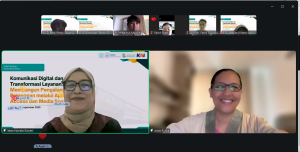
    Management Study Program, Faculty of Economics and Business, Universitas Sebelas Maret (FEB UNS), organized a Business Communication Practitioner Lecture in collaboration with PT Kereta Api Indonesia (Persero) as an industry partner on Saturday, 29 November 2025. This activity formed part of the Management Study Program’s efforts to enhance the connection between academic theory and professional practice. The practitioner lecture, entitled “Digital Communication and Service Transformation: Building Customer Experience through the KAI Access Application and Social Media,” featured Erni Sylviane Purba, Vice President of Public Relations at PT KAI, as the keynote speaker.

    Practitioner lecture with PT KAIThe session was conducted virtually and attended by students of the Management Study Program. It was moderated by Dr. Intan Novela Qurrotul Aini, S.E., M.Si., a lecturer at FEB UNS. During the session, the speaker outlined her career journey, which began in the fields of technology and social media before she joined KAI in 2013 as Manager of CRM and Digital Media. During this period, KAI began implementing social media listening integrated with operational systems, enabling the company to distinguish authentic customer feedback from public opinion and comments generated by non-customer accounts.

    The speaker emphasized that social media has become a critical channel for identifying service-related issues. “Every criticism and appreciation must be analyzed. We utilize a 24-hour command center connected to the contact center and CCTV analytics across all stations,” she explained.

    She further elaborates that this system enables KAI to detect potential service crises, including the handling of harassment cases in station areas. “Do not expect perpetrators of sexual violence to be able to board trains, particularly in the Jabodetabek area. Our system monitors passenger movement to ensure collective safety,” she stated firmly.

    KAI also employs social media listening to accurately identify passenger needs. Feedback concerning the comfort of economy-class trains, toilet facilities, and requests for supporting travel amenities has resulted in tangible service improvements. “From simple comments about seat backrests to requests for separate male and female toilets, all are addressed through innovation,” she explained.

    Even investment strategies, such as the provision of water stations, are determined based on customer feedback as part of efforts to reduce plastic waste while improving passenger comfort. In one semester of 2025, KAI recorded more than six million mentions related to railway services; however, after analysis, only 1.58 million were identified as genuine customer feedback. “This is where filtering becomes essential. We must satisfy customers, not merely follow the dynamics of online discourse,” she added.

    The speaker also described the management of viral issues, such as the so-called “Tumbler” case. According to her, KAI chose to release clarification at night after observing high levels of discussion during the day. She clarified that temporary removal from duty does not constitute dismissal, but rather serves as a protection mechanism for employees during the clarification process. In addition, she reported that KAI has recovered more than 12,000 lost passenger items valued at over IDR 12 billion, demonstrating the company’s integrity in safeguarding customer property.

    KAI currently serves more than 400 million passengers annually, with projections reaching 500 million passengers by the end of 2025. These figures indicate the substantial economic impact of railway services on society. “Railways do not merely transport people; they drive economic activity. Hotels, culinary businesses, and other sectors move in parallel,” she noted.

    At the global level, KAI is preparing to offer International Operation and Management Services, including opportunities to operate in Abu Dhabi and other countries. Digitalization, electrification, and long-term strategic development constitute the main focus areas for future growth.

    Concluding the session, the speaker expressed her appreciation for the opportunity to participate at UNS as part of public education efforts. Several KAI communication case studies have become references for undergraduate and postgraduate students. “KAI seeks to demonstrate transparency and readiness to contribute to Indonesia’s economic transformation and global engagement,” she stated.

    This public lecture further enhanced collaboration between KAI and the academic community in developing studies on communication, digital transformation, and data-driven public services. This occasion aligns with the achievement of the Sustainable Development Goals (SDGs), particularly SDG 4 (Quality Education) through practice-based industry learning, SDG 9 (Industry, Innovation, and Infrastructure) through the presentation of digital transformation and service innovation in the transportation sector, and SDG 11 (Sustainable Cities and Communities) through the development of safe, inclusive, and sustainable public transportation systems.

  • MESP Study Program FEB UNS Curriculum Reviews: Strengthening Data-Based Learning and Development Challenges

    MESP Study Program FEB UNS Curriculum Reviews: Strengthening Data-Based Learning and Development Challenges

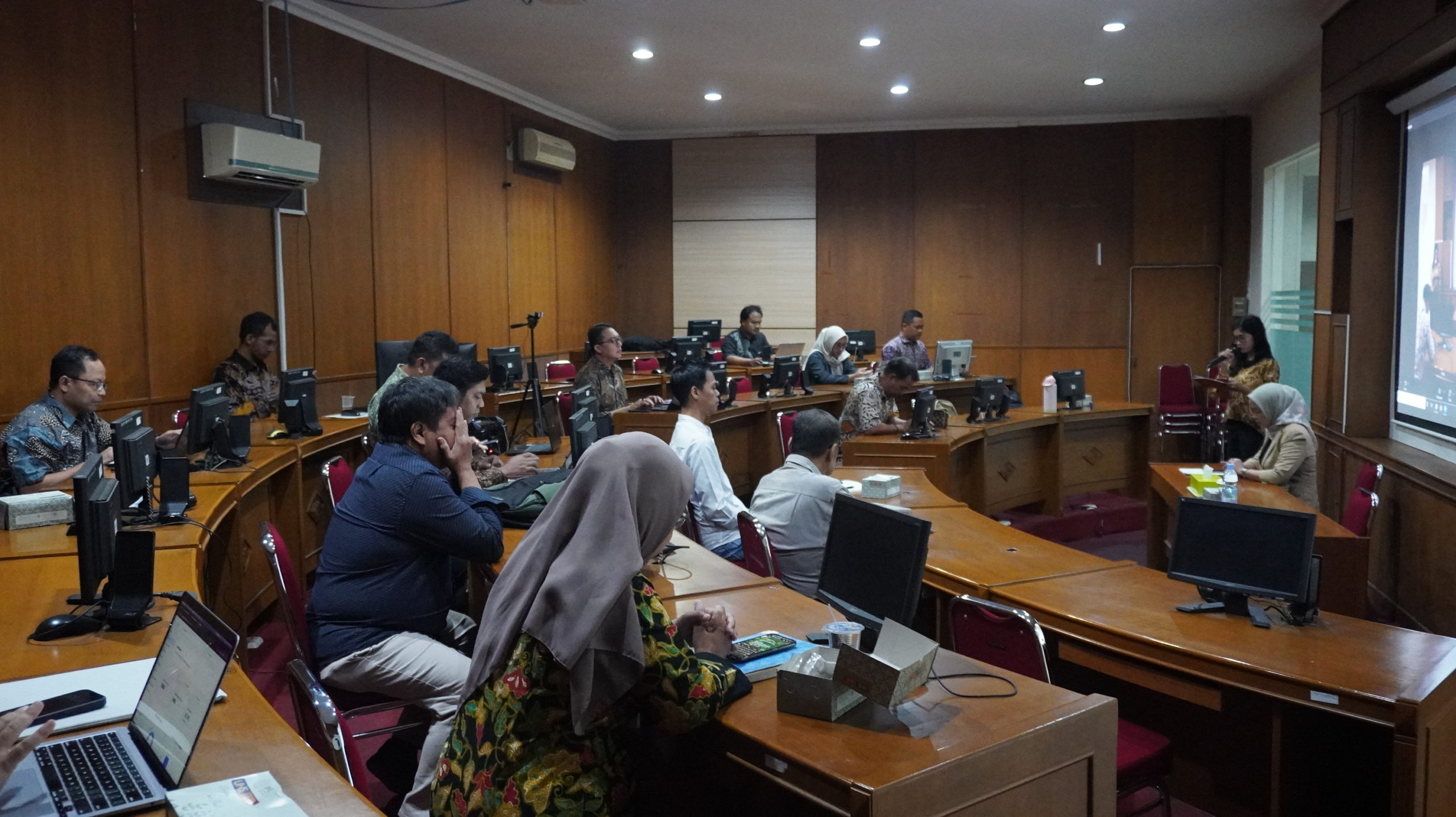
    Master of Economics and Development Studies (MESP) Study Program, Faculty of Economics and Business (FEB), Universitas Sebelas Maret (UNS), organized a Curriculum Review activity on Thursday, 4 December 2025, at the Teleconference Room of the Bachtiar Effendi Building, FEB UNS. This occasion shows MESP Study Program’s continuous effort to ensure that the curriculum remains aligned with academic developments, labor market needs, and national as well as regional development challenges.

    The Head of the MESP Study Program FEB UNS, Prof. Dr. Suryanto, S.E., M.Si., emphasized that curriculum review constitutes a strategic step to improve the quality of learning at the master’s level. The MESP curriculum is directed to be not only theoretically sound but also applied and data-oriented, enabling graduates to contribute effectively to the formulation and evaluation of development policies.

    The activity featured Mulyo Widodo from Statistics Indonesia (Badan Pusat Statistik/BPS) as a resource person, who presented the linkage between MESP courses and strategic statistical indicators. In his presentation, he explained that courses such as Intermediate Microeconomics and Macroeconomics, Econometrics, Development Economics, Regional Economics, as well as Natural Resource and Environmental Economics play an essential role in equipping students with analytical skills to address issues of inflation, Gross Regional Domestic Product (GRDP), poverty, inequality, unemployment, the Human Development Index (HDI), and sustainable development indicators.

    Another resource person, Amirullah Setya Hardi, delivered a presentation on the Recognition of Prior Learning (RPL) for the MESP Study Program FEB UNS. He explained that RPL provides recognition for learning outcomes obtained through formal, non-formal, and informal education, as well as professional experience. In accordance with the Regulation of the Ministry of Higher Education, Science, and Technology (Permendiktisaintek) Number 39 of 2025, MESP students may apply for recognition of up to 21 credits from a total study load of 56 credits.

    The discussion proceeded in an interactive manner, addressing the advancement of graduate learning outcomes, the distinctive features of the MESP FEB UNS curriculum, and the refinement of strategic issues such as sustainable development, institutions, human resources, and the use of technology and statistical data. The forum also highlighted the importance of an adaptive curriculum for both fresh graduates and professionals.

    Through this activity, the MESP Study Program FEB UNS expects to continue producing competent, critical, and highly competitive master’s graduates who can support national and regional development. This curriculum review activity also supports the achievement of the Sustainable Development Goals (SDGs), particularly SDG 4 (Quality Education), SDG 8 (Decent Work and Economic Growth), and SDG 10 (Reduced Inequalities) through the advancement of economics education and data-based policy development.

  • Collaboration of FEB UNS and Wageningen University & Research Presents: Impact Evaluation Workshop, Using Evidence in Policy Making

    Collaboration of FEB UNS and Wageningen University & Research Presents: Impact Evaluation Workshop, Using Evidence in Policy Making

    Faculty of Economics and Business (FEB), Universitas Sebelas Maret (UNS), in collaboration with Wageningen University & Research, organized the Using Evidence in Policy Making: Impact Evaluation Workshop on Tuesday, 2 December 2025, at UNS Tower. The activity featured Associate Professor Robert Sparrow from Wageningen University & Research as the main resource person. The workshop was attended by FEB UNS lecturers, postgraduate students from the Doctoral Program in Economics (PDIE), as well as undergraduate students with an interest in policy evaluation and social program impact analysis.

    Prof. Tri Mulyaningsih in the Impact Evaluation WorkshopThe event was opened by the Vice Dean for Academic and Research Affairs FEB UNS, Prof. Tri Mulyaningsih, S.E., M.Si., Ph.D., who expressed appreciation for the presence of Assoc. Prof. Robert Sparrow at FEB UNS. In her remarks, Prof. Tri emphasized that the workshop provided a valuable opportunity for the academic community to deepen their understanding of impact evaluation, particularly in supporting the formulation of public policies grounded in scientific evidence.

    Previously, Assoc. Prof. Robert Sparrow had also contributed as a resource person in the Intensive Workshop on Applied Macroeconomics for Global Health. In the main session, Assoc. Prof. Robert Sparrow presented the fundamental concepts of impact evaluation, its objectives, and various methods commonly used to assess the impact of social policies. He explained that impact evaluation focuses on analyzing the causal effects of policies designed to address social problems or improve public welfare.

    Several evaluation methods were introduced, including quasi-experiments, propensity score matching, instrumental variables, and difference-in-difference. In this workshop, Robert placed particular emphasis on the application of difference-in-difference and propensity score matching, which are frequently used in public policy research.

    The workshop proceeded in an interactive manner through case study discussions, where participants were invited to analyze potential challenges in the evaluation design of social projects and to compare the application of two different impact evaluation methods.

    Robert highlighted that the primary challenge in impact evaluation lies in identifying a credible control group. According to him, the presence of an appropriate comparison group is an essential prerequisite before conducting a scientific impact evaluation. “The main challenge in impact evaluation is related to the identification of a control group. The first question you need to answer before conducting an impact evaluation is whether you have a credible control group,” Robert explained.

    Through this activity, FEB UNS expects to enhance the capacity of academics and students in understanding and applying evidence-based policy evaluation, thereby contributing to the formulation of more effective public policies with measurable impact.

    This activity supports the achievement of the Sustainable Development Goals (SDGs), particularly SDG 4 (Quality Education) through the advancement of academic and research capacity, as well as SDG 16 (Peace, Justice, and Strong Institutions) by promoting public policies grounded in evidence and scientific evaluation.