FEB

Kategori: faculty

  • FEB UNS Held Achievement Motivation Training and Outbound for Academic Support Staff

    FEB UNS Held Achievement Motivation Training and Outbound for Academic Support Staff

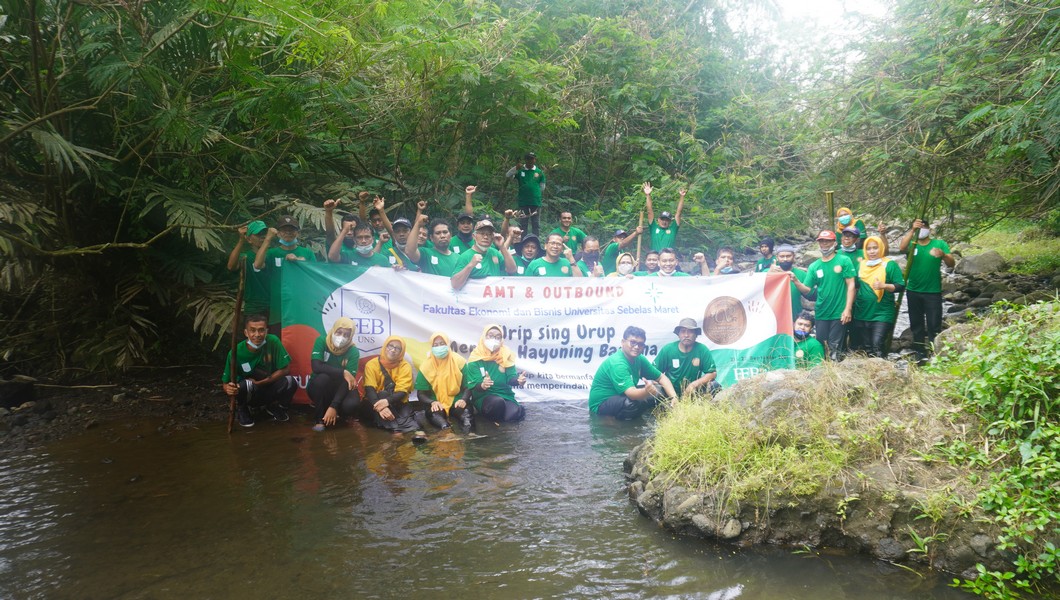
    The Faculty of Economics and Business (FEB) Universitas Sebelas Maret (UNS) held an Achievement Motivation Training (AMT) and Outbound on Saturday, September 11, 2021, in Tempel, Sleman, Yogyakarta. The first stage of training was attended by more than 40 FEB UNS academic support staff (tendik), the Deanery, and the Head of several Study Programs in FEB UNS.
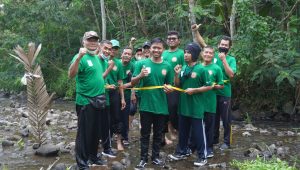
    Before the outbound start, Prof. Djoko Suhardjanto, M.Com., Hons., Ph.D., Ak., as the Dean of FEB UNS, reveals that this activity is not only for refreshment but also to provide motivation in strengthening the academic support staff teamwork in facing work challenges in FEB UNS. This year’s outbound was different from the previous year because participants will need to travel quite a distance around the foot of Mount Merapi and various obstacles, walking through Salak gardens, forest, and cruising along a riverbank.

    The Dean hopes that after the training, the academic support staff can always collaborate harmoniously and maintain cohesiveness to achieve common goals. “Let’s keep a calm and peaceful life, urip sing urup memayu hayuning Bawana. Life should provide benefits for others, provide happiness, safety, and prosperity for the environment,” Prof. Djoko stated.
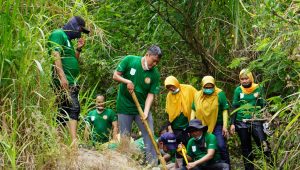
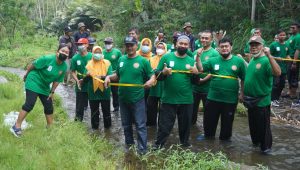
    During the outbound, the academic support staff was divided into 3 (three) groups that must follow the directions provided by the travel guide. Each group must stay together and help each member in solving the challenges. Some of the rules that must be obeyed during the trip include not taking anything when entering the community’s plantation area, not throwing anything away, not killing any animals except in forced circumstances.

    During the trip, the staff must be extra careful while going up and down hills with slippery soil, traversing the Krasak River with a fairly swift and deep-water level, as well as steep waterfall cliffs. The FEB staff are also required to cut through the Sempadan Forest. At the end of the trip, a Gayam tree was planted on the Krasak riverbanks to preserve nature.
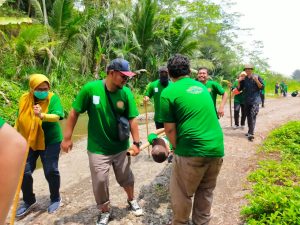
    After the outbound, FEB academic support staff took part in a gathering at the Pendhopo of Omah Noto Plankton to share and evaluate the outbound activities, which lasted for approximately 4 hours.

    Overall, all of FEB UNS support staff had a pleasant impression on the experience on the trip through the gardens, forests, rivers, and the games provided by the guide team. The staff also gave suggestions and input to the Omah Noto Plankton team, as the outbound organizing and leading team, for future improvements. (Humas FEB)
  • FEB UNS Holds Hybrid Lecture Simulation

    FEB UNS Holds Hybrid Lecture Simulation

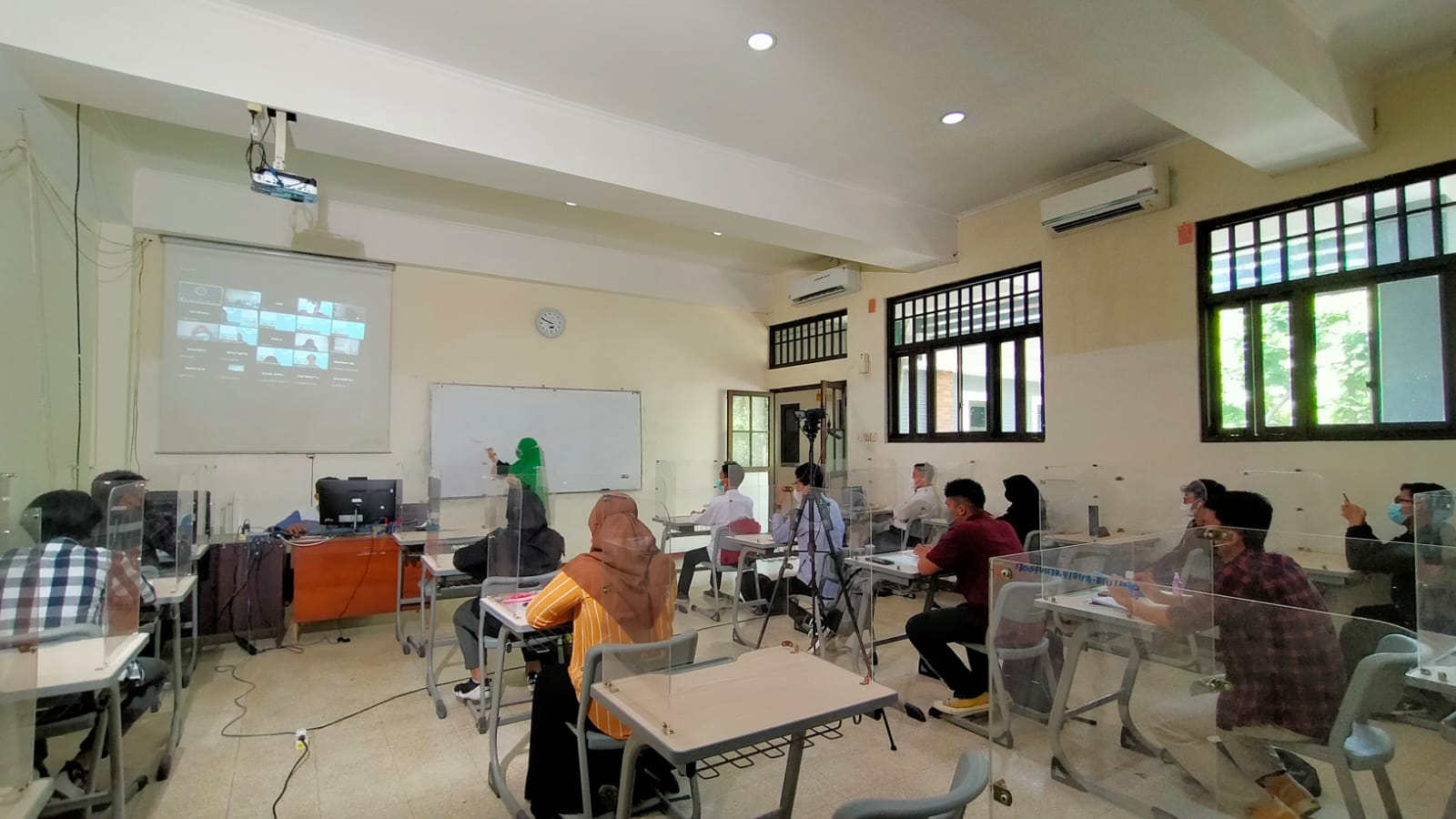
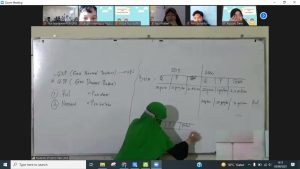
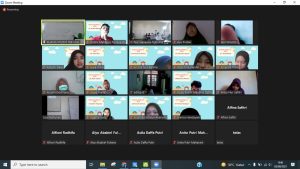
    A number of first semester students from the Management Study Program, Faculty of Economics and Business (FEB) Universitas Sebelas Maret (UNS) attended the Introduction to Macroeconomics lecture delivered by Prof. Dr. Izza Mafruhah, SE, M.Si., in Classroom 2.203 FEB UNS. At the same time, the rest of other students who enrolled to the course can follow the session through Zoom Cloud Meeting, Friday, September 3, 2021.

    This hybrid lecture, which combines two learning methods (online and direct learning), is an initial simulation carried out by FEB UNS to prepare Face-to-face Lectures (PTM) that will be implemented gradually by UNS. In the early stages, UNS will hold PTM for the first semester (class of 2021) students while prioritizing the residents of Solo Raya and vaccinated students to attend the PTM. Students are vibrant and enthusiastic about participating in the hybrid lecture simulation that will last for 2 hours.
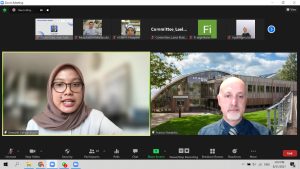
    “Students attending the face-to-face lectures are currently only from the Great Solo region, such as from Wonogiri, Sukoharjo, Klaten, and also Surakarta. With this method, lecturers can explain the material in more detail, especially for topics that require calculation, since Zoom Cloud Meeting still has limitations,” said Prof. Izza reveals after her lecture.

    According to her, equipment and technical officers’ preparation to support the implementation of this hybrid lecture are crucial to facilitate students, both joining the face-to-face lecture and virtual lecture, in understanding the material and allowing them to join class discussions can smoothly. Prof. Izza hopes that the university will immediately provide vaccination facilities for the new students; thus, students can safely join the face-to-face lecture.

    Meanwhile, Andreansyah Saputra, a student of the Management Study Program, said that this method is implemented perfectly. Students can clearly understand the material presented by the lecturer.

    “We, as students, feel comfortable attending lectures while maintaining health protocols on campus and in class,” he said briefly. (Humas FEB)

  • FEB UNS Management Study Program Invites Prof. Franco Fiordelisi in Workshop Recent Issues in Finance

    FEB UNS Management Study Program Invites Prof. Franco Fiordelisi in Workshop Recent Issues in Finance

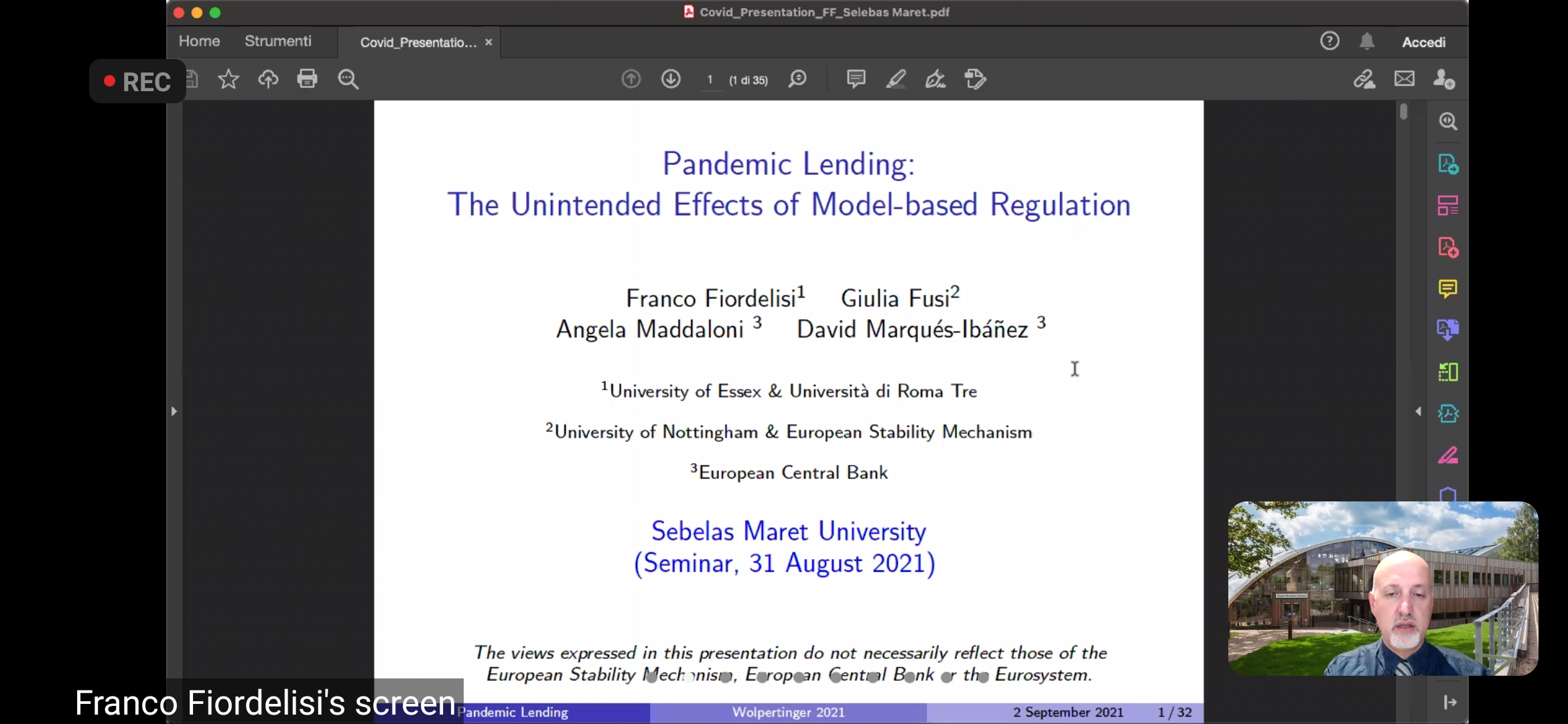
    The Bachelor in Management Study Program, Faculty of Economics and Business (FEB), Universitas Sebelas Maret (UNS) Surakarta invited Prof. Franco Fiordelisi to a workshop entitled “Recent Issues in Finance,” Tuesday (31/08/2021). The workshop is a part of the series of activities in the 2021 Program Kompetisi Kampus Merdeka (PKKM).
    Prof. Fiordelisi is a professor in finance and banking from the University of Rome III, Italy, and the University of Essex, UK. Prof. Fiordelisi also serves as President of the Financial Intermediation Network of European Studies (FINEST). Currently, Prof. Fiordelisi is an associate editor of the Journal of Financial Stability, European Journal of Finance, and Economic Modeling. In this workshop, Prof. Fiordelisi presented his article entitled Pandemic Lending: The Unintended Effects of Model-based Regulation.

    Prof. Fiordelisi and Moderator Dewanti Cahyaningsih

    In his research, Prof. Fioerdelisi tries to answer several questions related to the influence of model-based regulation in the ‘credit crunch’ during the Covid-19 pandemic. The research results show that IRB banks reduce the amount of funding more than SA banks.
    “The current crisis is different from the global financial crisis in 2008, which originated from the banking sector. The current pandemic crisis starts with consumers,” said Prof. Fiordelisi.
    Further, Prof. Fiordelisi revealed that based on the research result, credit reductions occurred in creditors affected by the pandemic. In general, there are several points of advice proposed by Prof. Fiordelisi related to research results among others are indication that the IRB model hinders lending during the crisis period where creditors are in dire need of financial assistance and that IRB banks channel less credit to the same creditors during the Covid-19 pandemic crisis.
    The interactive workshop was led by Dewanti Cahyaningsih, M.Rech., an alumna of the Management Study Program FEB UNS, and concluded with a group photo session.
    Reporter: Aulia
    Editor: Humas FEB

  • FEB UNS Hosted AQAS Accreditation Dissemination and Preparation

    FEB UNS Hosted AQAS Accreditation Dissemination and Preparation

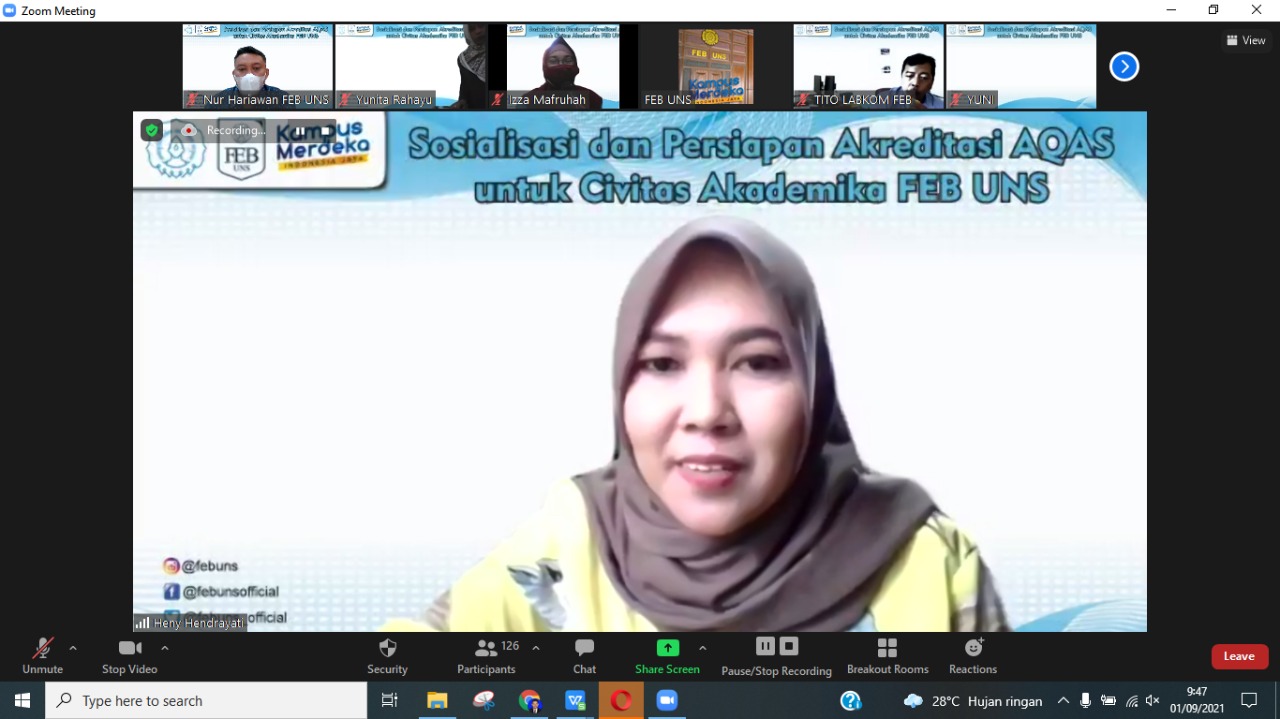
    Three study programs in the Faculty of Economics and Business (FEB) Universitas Sebelas Maret (UNS), the Accounting, Management, and Development Economics Study Program, are applying for the Agency for Quality Assurance by Accreditation of Study Programs (AQAS) International Accreditation this 2021. The study programs’ AQAS Self Evaluation Report (SER) was submitted in early August 2021 along with two other study programs in UNS. If the desk evaluation review returned a favorable result, the study programs would undergo a virtual site assessment in early November. In this regard, FEB UNS organized a hybrid AQAS Accreditation Dissemination and Preparation for the faculty members on Wednesday, September 1, 2021.

    The event, which was attended by all faculty members, academic support staff, and student organizations representatives, invited two speakers, Dr. Heni Hendrayati, SIP, MM., from the Indonesian Universitas Pendidikan Indonesia Bandung, and Irwan Trinugroho, SE, M.Sc. Ph.D., the Director of Partnership, Development, and Internationalization UNS, who is also a Lecturer at FEB UNS.

    The Dean of FEB UNS, Prof. Drs. Djoko Suhardjanto, M.Com Hons, Ph.D., Ak., in his speech, states that AQAS is one of the international accreditation institutions recognized by the Directorate General of Higher Education (Dikti). The accreditation was established in 2002 and is headquartered in Cologne, North Rhine-Westphalia, Germany.

    “Since UNS was determined as a State University with Legal Entity (PTNBH) starting of October 6, 2019, we have been given the mandate to be the top 500 global universities. This is an arduous assignment and has become our collective responsibility; therefore, an international accreditation is very much needed,” he said.

    Furthermore, the Ministry set a target for the Universitas Sebelas Maret to have 15 out of its 167 study programs accredited internationally. It is clear that for the FEB UNS, the target is to get all of its study programs accredited internationally.

    In fact, before UNS was designated as PTNBH, the study programs at FEB had been accredited and certified internationally. The Bachelor in Management and Development Economics Study Program has received AUN QA certification, while the Bachelor in Accounting Study Program received EPAS certification. As for the postgraduate study programs, the Masters in Accounting, Masters in Management, Masters in Accounting, and Doctoral Programs in Economics, have been certified by ABEST 21. However, all those previous accreditation institutions are currently not recognized by DIKTI. Hence, the Faculty need a slight amendment to find a recognized international accreditation agency.

    At the end of his remarks, the Dean wishes that the two speakers will enlighten the Faculty members on the focal point of AQAS Accreditation to assist the study programs at FEB UNS in earning the international certification. According to BAN-PT criteria, if a study program has received international accreditation, it will automatically be granted superior status. Hopefully, by the end of this year, all undergraduate study programs will be internationally accredited.
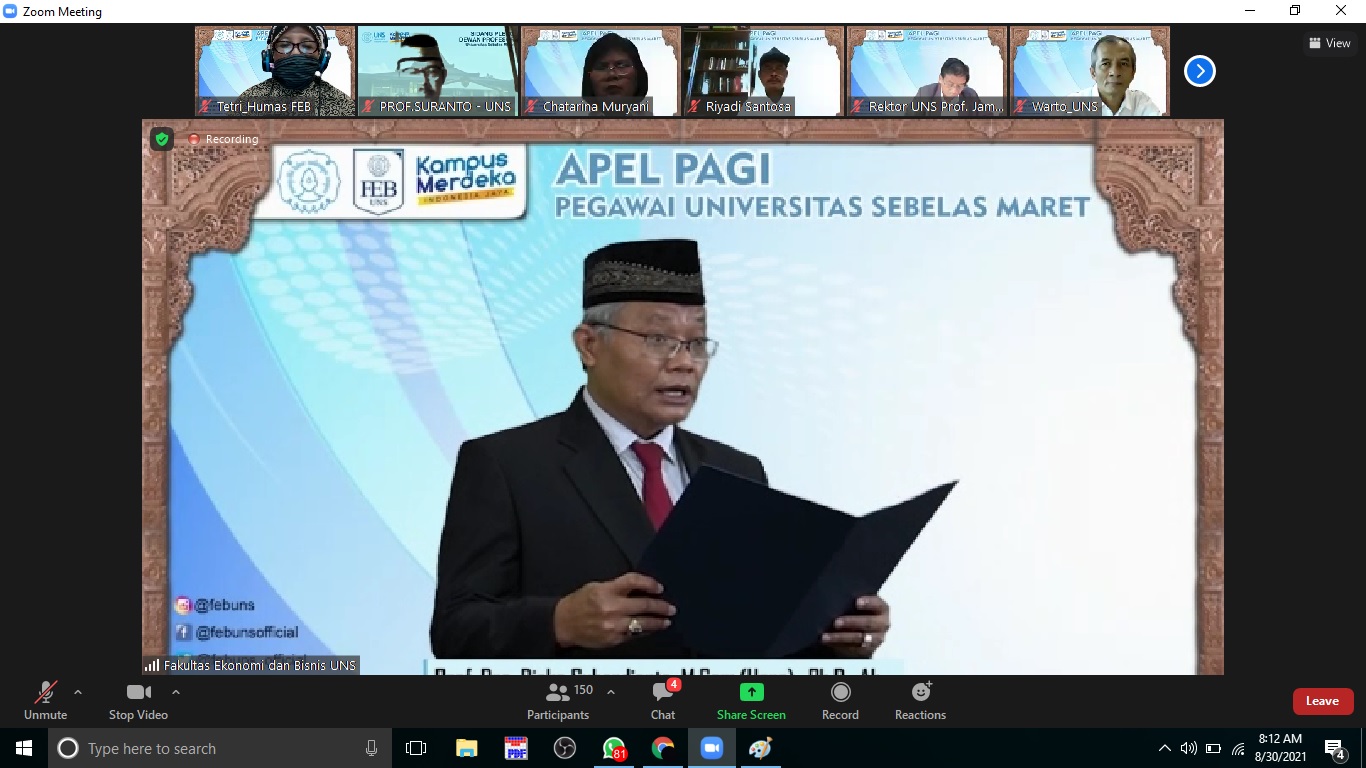
    The two invited speakers for the session explained in detail the preparation process, the site visit, and the description AQAS accreditation assessment. The invited speakers also explained the strategies needed to ensure the assessment process went smoothly.

    Dr. Irwan emphasized that the most crucial aspect of the assessment is the preparation of lecturers, students, and any other stakeholders invited to the interview session. The study program task force must discuss and communicate all assessment material and criteria to the invited stakeholder to establish a similar understanding according to the study program’s SER. Furthermore, the study programs must prepare and arrange all potential documents in a virtual drive to facilitate the ease of access. Additionally, the assessed study programs must follow the approved schedule and focus on the assessment process. (Humas FEB)

  • The Morning Briefing of UNS: Three Focal Points According to the Dean of FEB UNS

    The Morning Briefing of UNS: Three Focal Points According to the Dean of FEB UNS

    As one of the universities that nurtured from the Pancasila values and devoted all of its capabilities to the greater community welfare, Universitas Sebelas Maret plays an active role in learning activities that involve all stakeholders in the Merdeka Belajar Kampus Merdeka Program (MBKM).

    In this MBKM program, UNS must shape the noble and virtuous character of the nation’s young generation and assist students in developing their abilities. This assistance should cover both the hard skills and soft skills through the eight types of MBKM activities. Doing so will ensure that UNS will not become an ivory tower in the education sector but also plays an active role in the community by devoting its energy through scientific contribution and charitable knowledge. This statement was delivered by the Dean of the Faculty of Economics and Business, Prof. Drs. Djoko Suhardjanto, M.Com (Hons), Ph.D., Ak., in the virtual Morning Briefing attended by all UNS academic members, Monday, August 30, 2021.

    Further, he explains that evaluation and budget implementation for the second half of the semester aims to improve education quality both in human resource development, teaching and learning facilities, including international-class laboratories, and various supporting facilities to encourage superior accreditation at both national and international levels.
    In terms of the achievement of the second semester in 2021 Key Performance Indicators (KPI), Prof. Djoko states that UNS has made various efforts to achieve the target KPI in the previous semester. All UNS academic members, including the faculty members in collaboration with lecturers, students, and academic support staff, are working hard to achieve the KPI target and even exceed it and continue to strengthen UNS position in the first cluster of Indonesia’s universities ranking. However, all these strenuous efforts must be implemented continuously to achieve UNS’ ultimate objective as a world-class university, both at the Asian University Ranking and the World University Ranking.

    These three main points were conveyed by Prof. Djoko Suhardjanto in the Morning Briefing welcoming the last week of August. Many are expected that UNS will be more successful both in the national and international spheres.

    The Morning Briefing is a routine held by UNS on Mondays, where the party responsible for the briefing is selected from, in turn, from the 16 Work Units at UNS. As of August 30, 2021, FEB is fully responsible for the Morning Briefing implementation.

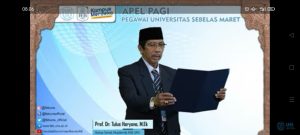
    Other than Prof. Djoko, other officers who served in the Morning Briefing are the Head of the Management Study Program, Dr. Atmaji, who led the tribute to Country Flag and National Anthem. Meanwhile, the Moment of Silence was led by the FEB UNS Dean, Prof. Djoko Suhardjanto, followed by the Recitation of the Pancasila Manuscript by the Chair of the Faculty Senate, Prof. Tulus Haryono, Recitation of the Preamble to the 1945 Constitution by the Vice Dean for Academics, Research, and Student Affairs, Prof. Izza Mafruhah, Recitation of the Panca Prasetya Korps Pegawai RI by the Vice Dean for Human Resources, Finance, and Logistics Affairs, Dr. Djuminah, Prayer by the Vice Dean for Planning, Partnership, Business, and Information Affairs, Dr. Mugi Harsono, and lastly the Master of Ceremony was conducted by the FEB UNS Public Relations Staff, Tetri Wahyu Aryanti. (Humas FEB)

  • Entrepreneurship is Powerful in the Academic and Non-Academic Activities

    Entrepreneurship is Powerful in the Academic and Non-Academic Activities

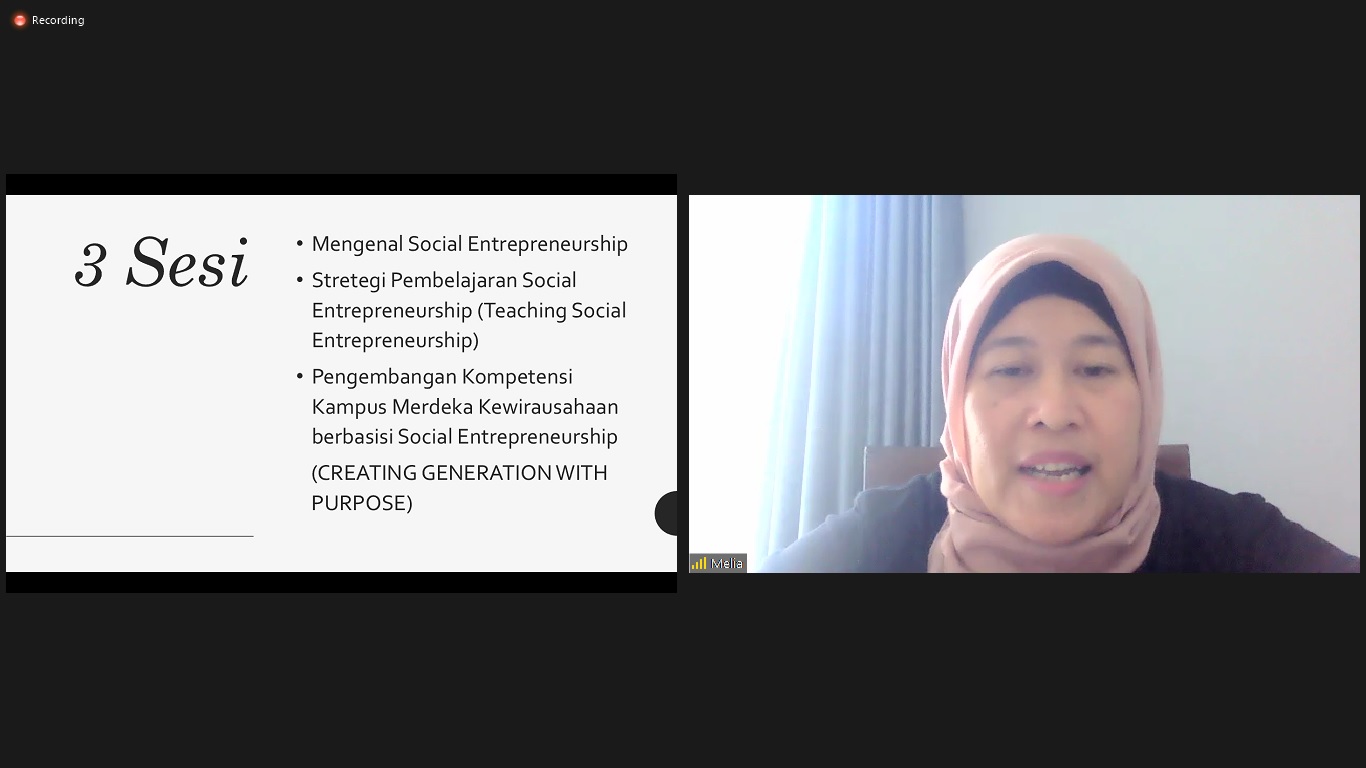
    The Management Study Program, Faculty of Economics and Business (FEB) Universitas Sebelas Maret (UNS) held a Technical Assistance for the Kampus Merdeka-Entrepreneurship Program: Social Entrepreneurship, Tuesday, August 3, 2021. The activity that was attended by lecturers and students from various study programs invites Melia Famiola, STP, MT, Ph.D., a lecturer from the School of Business and Management ITB.

    At the beginning of her presentation, Melia, Ph.D., introduced more details about social entrepreneurs and shared the involved parties’ experiences in this sector. According to her, the issue of social entrepreneurship was initiated with movements carried out by several people. People who choose to be social entrepreneurs must be smart, as it is not easy for them to see the gaps in their social activities in order to create transformation leading to an economic turnaround for the community.

    “This is the reason why the current entrepreneurship has become quite powerful in the academic and extracurricular activities. Even the long-established businesses are required to contribute to the achievement of the SDGs, whether in reducing poverty, hunger, addressing health, tackling environmental problems and various other problems around us,” he explained.

    Furthermore, according to Portales, there are four essential elements of a social entrepreneur. In a social entrepreneur, there must be a social mission within a systemic change. In order for the social mission to create systemic change, it must be explored along with social and economic activities. The end goal is how to create a positive impact.
    Social entrepreneurship attributes include social motivation, economic intelligence, courage, and quick and alternative thinking. A social entrepreneur is a person who has a social mission, empathy, and particular social interests. Social impact will not happen just by doing charity or charitable activities, but it must be creating transformation on how people can change toward a positive direction as expected. Additionally, what social entrepreneurs have is economic intelligence, the ability to find business opportunities.

    Two other characters possessed by social entrepreneurs are bravery, a person who dares to make difficult decisions. A social entrepreneur must be more courageous than those involved in certain businesses because sometimes the social value proposed through their opinion has no economic value, more leaning to charity in nature. However, a social entrepreneur must dare to take the risk and must be creative in looking for economic strategies, have more guts, and be stronger than an ordinary entrepreneur. The second attribute is quick-witted to find alternative ideas. This attribute refers to the condition when a person is dealing with the community, dealing with a lot of people’s behavior, that requires them to adapt to find a strategy on how to make changes.

    Further, Dr. Melia said that there are three things required to develop the Kampus Merdeka-Entrepreneurship program in social-based entrepreneurship: mindset transformation, educational ecosystem support in entrepreneurship development, and the new role of the campus as a hope.

    Furthermore, the entrepreneurship education ecosystem is built based on three roles, stimulation, support, and sustainability. Stimulation includes entrepreneurship education, motivational training, assistance and guidance in selecting products, project reports preparation, product and process development, entrepreneurial forums creation, and skills recognition.

    Supporting includes funding assistance, provision of working space, guidance, legal assistance, and provision of other public facilities. Sustainability can be provided in the form of modernization assistance, additional financing for capacity utilization, product orders, quality testing and services improvement, as well as public facilities based on needs. (Humas FEB)

  • Humanitarian Project Trains Students to Have Social Sensitivity

    Humanitarian Project Trains Students to Have Social Sensitivity

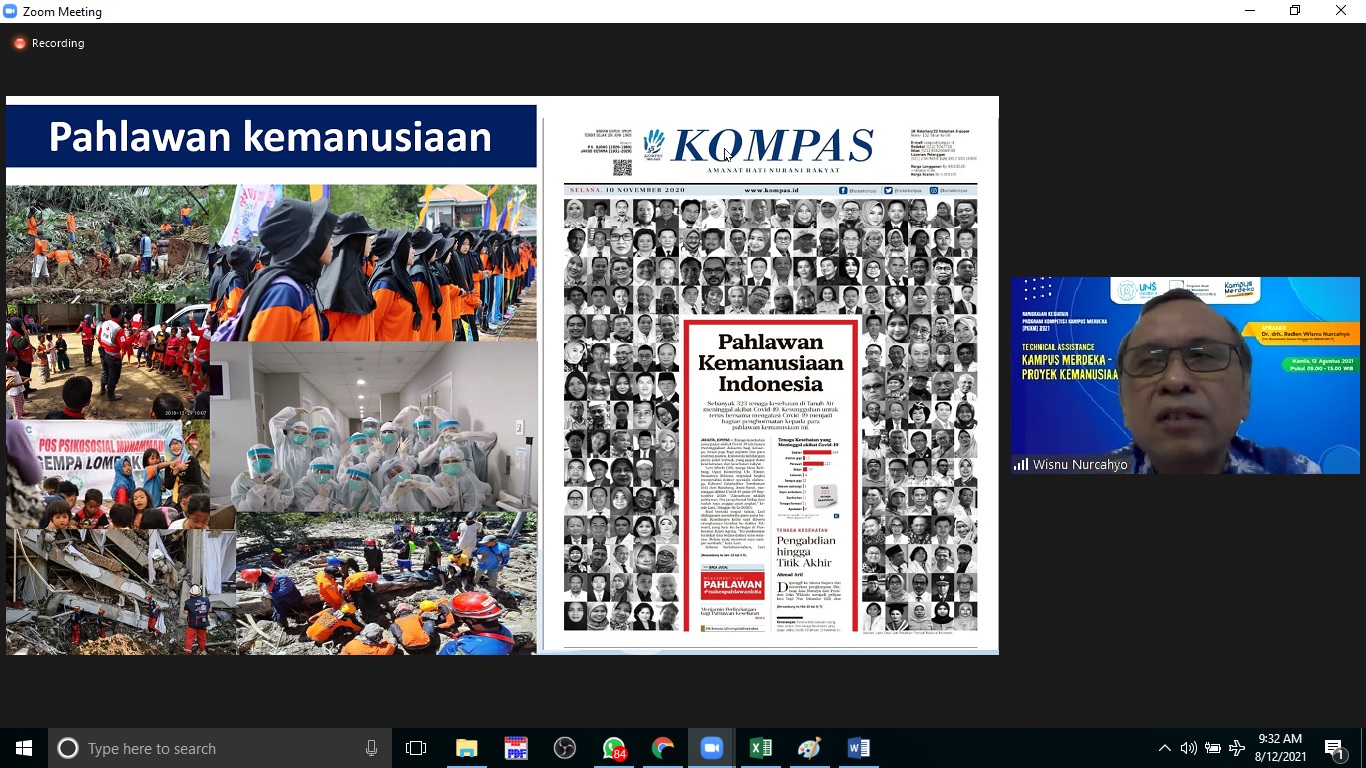
    The Humanitarian Project is a part of the Kampus Merdeka program. Students with a young spirit, scientific competencies, and interests can become the “foot soldiers” in humanitarian and other development projects both in Indonesia and abroad. A humanitarian project aims to prepare excellent students who uphold humanity in carrying out their duties based on religion, morals, and ethics. The project also trains students to have social sensitivity to investigate and explore existing problems at the same time providing solutions according to their respective interests and expertise.

    This message was conveyed by Dr. drh. Raden Wisnu Nurcahyo, member of the Dissemination Lecture Team for MBKM Dikti Program, in the Technical Assistance Program for the Kampus Merdeka-Humanity Project organized by the Management Study Program, Faculty of Economics and Business (FEB) Universitas Sebelas Maret (UNS), Thursday, August 12, 2021.

    Furthermore, he explains that for the implementation of the program, the study programs or faculties can establish agreements with partners in the form of a Memorandum of Understanding (MoU/SPK). This collaboration can be established with domestic institutions such as with the Regional Government, PMI, BPBD, BNPB, sub-districts, religious organizations, and others, or foreign institutions such as UNESCO, UNICEF, WHO, UNOCHA, UNHCR, and so on.

    In order for the program to run well, program ambassadors are needed, namely lecturers from each study program who are responsible for providing assistance, supervision, assessment, and evaluation of humanitarian project activities carried out by students. Lecturers together with partner institutions compile a logbook form.

    In the next stage, study programs need to make technical guidelines for learning activities through humanitarian projects. It is necessary to form a strong task force to support the implementation, final evaluations, and equalization of student humanitarian project activities into relevant subjects. “Lecturers can help in identifying activities, finding program partners, assisting students until the final evaluation, equalizing humanitarian activities into relevant courses according to the faculty Semester Credit, and encourage sustainability of the program,” Wisnu said.
    All activities must be reported by the study program to the Faculty, then the Faculty to the University MBKM task force. Finally, the university should report the results of learning activities to the Directorate General of Higher Education through the Higher Education Database.

    For curriculum equalization in humanitarian projects, there are several methods available, including free forms, which are formulated in hard skills, problem-solving methods according to graduate learning outcomes, technical adjustments formulation, and synthesizing capabilities. Students’ soft skills achievement includes communication skills, cooperation, leadership, hard work, and creativity. Equalization can also create a structured form, structured according to the curriculum taken by students. Credits are stated in the form of equivalent courses. Actually, the easiest method to do this is to combine free form and structure form.

    Students can collect data when participating in a humanitarian project for their thesis, for example, preparing a budget and cost plan for a humanitarian project, managing logistics, networking with partners, and many others. In the event, which was attended mostly by lecturers, Dr. Wisnu also explained about scientific research grant schemes, including lecturers’ independent research grants, entrepreneurship research, rural research, and humanitarian activities grants.

    Humanitarian activity grants aim to produce designs or models related to humanitarian activities management that are useful in disaster relief handling, producing beneficial science and technology, equipment or policies according to the type of disaster. This grant is also useful in combining each lecturer’s expertise in research activities to learning programs in a humanitarian project and disseminating the humanitarian research results.

    The focus of scientific research for humanitarian activities includes scientific research on Covid 19 prevention, scientific research on technology and geological disaster management, scientific research on technology and hydrometeorological disaster management, scientific research on technology and disaster management of land/forest fires, scientific research on technology and environmental management, and scientific research on disaster-related policy or governance. (Humas FEB)

  • Management Study Program FEB UNS Invites Dr. Alexander Bauer in Technical Assistance: Project-Based Learning Method

    Management Study Program FEB UNS Invites Dr. Alexander Bauer in Technical Assistance: Project-Based Learning Method

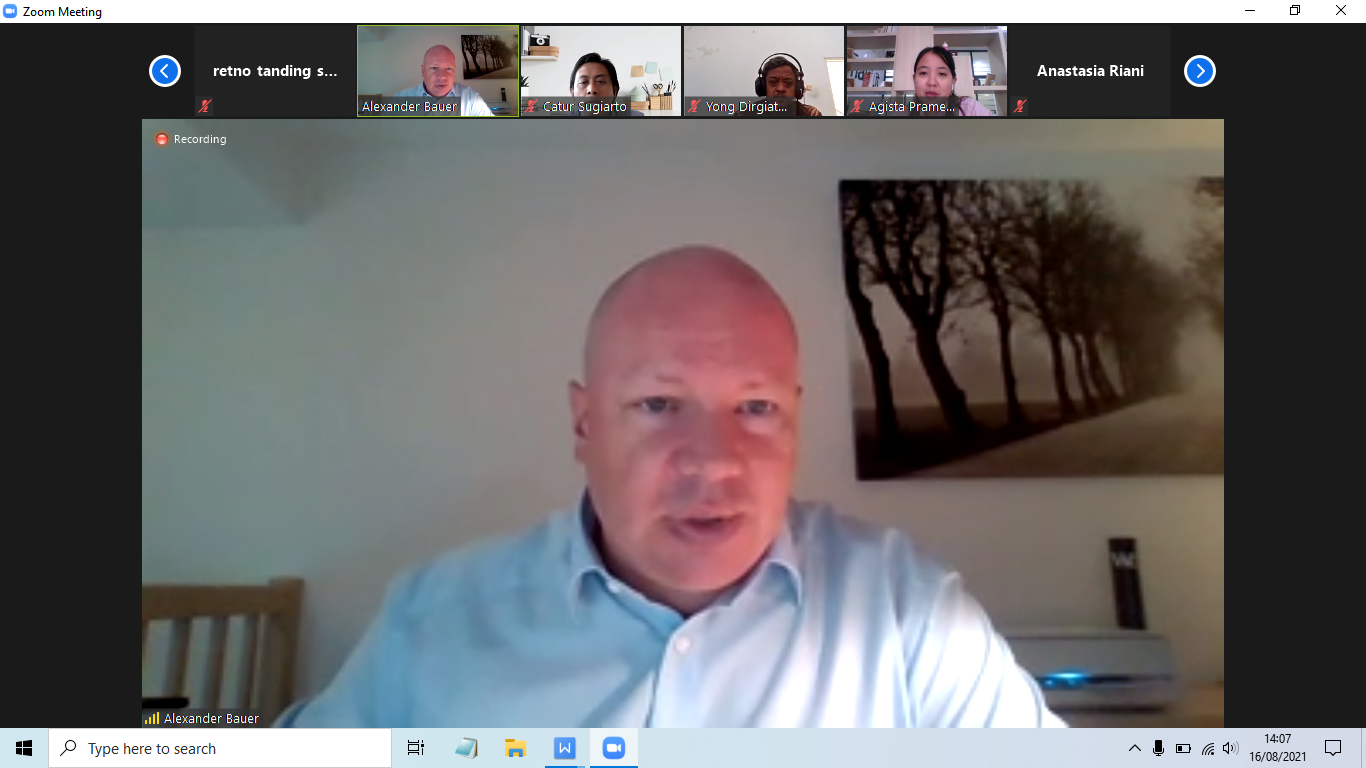
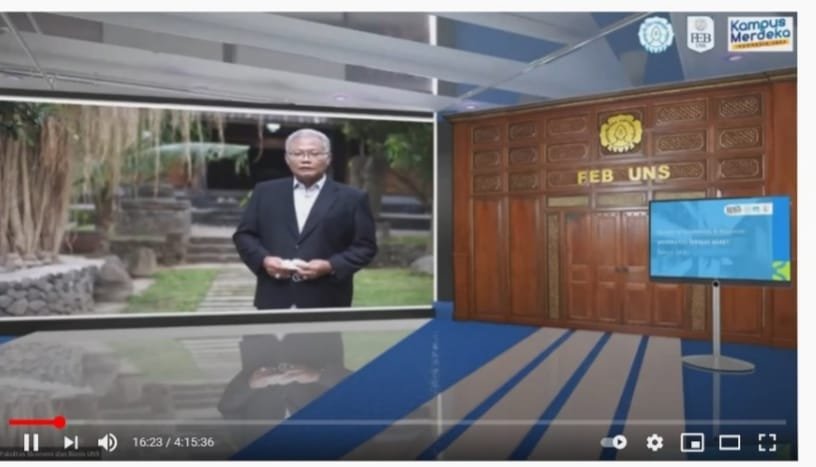
    The Management Study Program, Faculty of Economics and Business, Universitas Sebelas Maret (FEB UNS) Surakarta invited another international academician in a series of activities for the 2021 Program Kompetisi Kampus Merdeka (PKKM), Monday (16/8/2021). The event, which was attended by FEB UNS faculty members, invited Dr. Alexander Christian Bauer from the Wittenborg University of Applied Science.

    Starting the presentation of the material, Dr. Bauer explained the definition of Project-Based Learning (PBL), the forms of PBL implementation in the teaching and learning process at universities, and examples of PBL that he has applied. In general, Dr. Bauer explained that PBL is a form of learning method in which students are encouraged to identify problems that occur in the real world and find solutions to these problems.

    Through this method, students are required to conduct in-depth research to be able to answer complex questions and collaborate in teams to solve problems and find solutions.
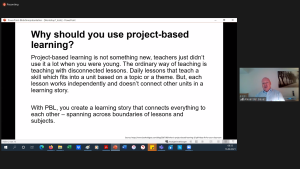
    The PBL method no longer relies on lectures delivered by lecturers but encourages students to think critically through stories or problems related to the theories that students learn. In addition, the advantages of PBL include providing opportunities for students to use technology in the process of completing projects, introducing lifelong learning techniques to students, introducing students to problems that occur in the real world, developing skills, creativity, and imagination of students, and motivate students to be more involved in the active learning process.

    “Student projects help them (the students) to review the lecture material they have received and prepare them for the next material,” said Dr. Bauer.

    The material is followed by examples of project-based learning applied by Dr. Bauer, which can generally be divided into two criteria. An integrated project (implemented within the course) and an external project which does not include in a course. Each project implemented begins with the delivery of general project information related to business conditions and problems that arise, followed by project research questions, where the level of difficulty is adapted to the semester. To answer these questions, students must conduct research on the problems that occur.

    Students are divided into small groups that include several special roles such as team leader, research department, secretary, and finance department. The team that has been formed then carries out a series of projects assisted by the lecturers of related subjects to provide suggestions and input. At the end of the session, the student team is required to make a final report and present their work.

    The event, which was attended by more than 30 participants, went interactively with a question and answer session between the lecturers of the Management Study Program FEB UNS and Dr. Bauer.

    Reporter: Aulia
    Editor: Humas FEB

  • Welcoming New Students, Dean of FEB Invites Students to Accomplish Achievements at National and International Levels

    Welcoming New Students, Dean of FEB Invites Students to Accomplish Achievements at National and International Levels

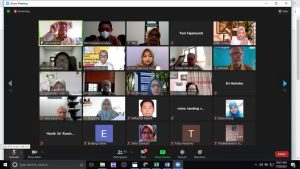
    More than 700 new students from the Undergraduate Study Programs in the Faculty of Economics and Business, Universitas Sebelas Maret (FEB UNS), participated in the Virtual New Student Introduction to Campus Life (PKKMB) on Monday, August 16, 2021. The Dean of FEB UNS, Prof. Drs. Djoko Suhardjanto, M.Com. (Hons). Ph.D., Ak., welcomed new students and symbolically handed students’ Semester Course Plan to three student representatives from each study program, Widya Zhafira from Accounting Study Program, Devina Alfa Levia Rizky Alharis from Management Study Program, and Perdana Gilang Yudha Firmansyah from Development Economics Study Program.

    “The Deanery of FEB UNS congratulate the new students. We are thrilled and proud because all of you have joined our Faculty as new students. Once again, congratulations, you have become the faculty members of FEB UNS. Please stay enthusiastic in your study, strengthen your capacity in the FEB UNS Candradimuka crater (t/n: Candradimuka represents an ancient stringent training ground for great champions in old Javanese manuscript), a cultivating place to nurture your competencies to achieve success,” said the Dean encouragingly.
    All study programs at FEB UNS, both the Undergraduate and Postgraduate Study Programs, have been accredited ‘A’ by the National Accreditation Board for Higher Education (BAN-PT). Various international accreditation certifications are also achieved by the study programs such as EPAS, AUN QA, and ABEST21. Starting on October 6, 2020, UNS obtained the status as a State University with Legal Entity (PTN-BH). In addition, UNS is included in the first cluster or the main cluster of the best universities in Indonesia.

    Further, the Dean also advised that while studying in FEB UNS, new students must maintain good interaction with all existing educational components on the campus and alumni who are often visiting FEB UNS. Numerous alumni of FEB UNS are successful figures occupying important positions both in governmental and private sectors. The notable alumni, among others, are Prof. Wimboh Santoso, who currently serves as Chairman of the Board of Commissioners of the Indonesian Financial Services Authority (OJK), Doni P Joewono, the current Deputy Governor of Bank Indonesia, Didik Hartantyo, President Director of PT KAI, and several other successful alumni in the private sector including Harijanto, and Nur Harjanto.

    At the end of his remarks, the Dean hopes that students would be able to accomplish numerous achievements, both at the national and international levels, while still promoting the nation’s noble cultural values and upholding the life principle of ‘urip sing urup memayu hayuning bawana’ (life should provide benefits for others as well as for the universe).

    The PKKMB activity that lasted from morning until late afternoon was also filled with explanations from the FEB UNS Vice Deans, Laboratory Administrator, Supporting Units, Academic Support Staff, and the lecturers from each study program. Several successful alumni are invited to deliver a motivational speech to the new students, such as Doni Primanto Joewono, SE, M.Si, Ubaidi Socheh Hamidi, SE, MM., Endang Kurniawan, SE, Ak., and Dr. Nur Harjanto, MM.

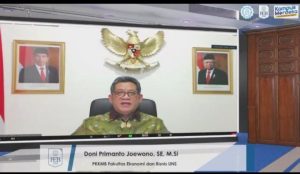
    The Deputy Governor of Bank Indonesia, Doni P. Joewono, in his speech, conveyed four important things to guide students to be successful in pursuing studies and careers, namely, being grateful, finding role models, having passion, and being adaptive. The success achieved by the students is due to Allah’s and parents’ blessing. Gratitude must always be expressed for the opportunity to be enrolled on this campus because currently, the achievements of FEB UNS are growing rapidly. All study programs at FEB have been accredited A and obtained international certification.

    Furthermore, it was conveyed that students must also have a role model to encourage them in achieving future success in their studies and career. “Role models provide motivation and encouragement in learning. Having a role model allows us to explore ourselves, we have a dream, knowing our future goals, whether to continue our studies or to be an economist or to be an entrepreneur, who will be our example,” Mr. Doni said enthusiastically.

    Students must also have passion, must have an interest. Passion will encourage students to find role models and be active in organizational activities to enrich and expand students’ knowledge and experience. Fourth, students must be adaptive. Successful people are adaptive people, not just smart and intelligent people. How many people are having mediocre academic achievements but are successful at work because they are highly adaptive to their job environment. (Humas FEB)

  • Undergraduate Management Program Introduces Exciting Topic of Creative Thinking Learning

    Undergraduate Management Program Introduces Exciting Topic of Creative Thinking Learning

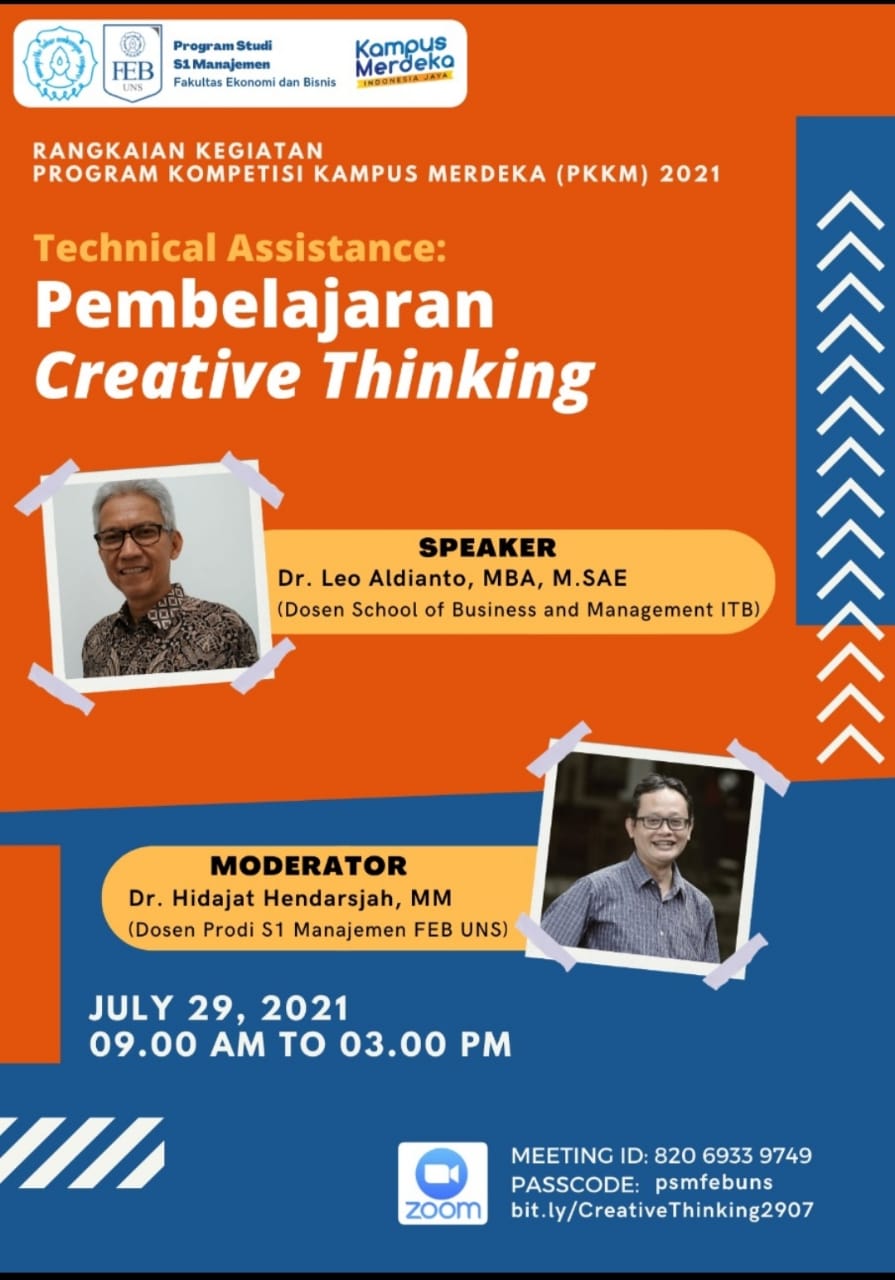
    The Technical Assistance for Creative Thinking Learning became an engaging topic in the recent agenda hosted by the Undergraduate Management Program, Faculty of Economics and Business (FEB), Universitas Sebelas Maret (UNS), on Thursday, July 29, 2021. The event, attended by faculty members and students from various programs, featured Dr. Leo Aldianto, MBA., M.SAE., a lecturer from the School of Business and Management, ITB.

    Summarizing insights from various experts, Dr. Leo stated that creativity is the process of creating something new, unique, and useful. Meanwhile, creative thinking is the ability to think in new, original, and conscious ways, departing from habitual routines, and different approaches, deviating from the ordinary, and abandoning conventional ideas.

    “What may affect and crucial in fostering creative thinking is how one typically works, behaves, and acts. Additionally, the creative process begins with preparation, generating ideas, and selecting prioritized ideas for implementation. Ultimately, there must be a tangible outcome, whether a physical product, concept, or idea. Most importantly, the environment must be designed to facilitate creativity,” explained Dr. Leo.

    Teachers should encourage students to generate new ideas, expand upon them, be flexible, provide detailed suggestions, and diversify their approaches.

    Examples of courses integrating creative thinking include Creativity & Innovation, Start-up Creation (a series of courses), Design Thinking, and Introduction to Business. Fundamental courses can also incorporate creative thinking. Essentially, in all course aspects, students should be encouraged to apply creative thinking, enhancing their skills and applying them directly to problem-based and project-based learning.

    “In basic courses like Human Resource Management, Finance, and Accounting, the main focus remains on introducing creative thinking. Students must think of alternative ways and apply them. As they are still learning, they can utilize resources such as articles, magazines, books, papers, or the internet to explore various company issues,” Dr. Leo emphasized.

    “The direct application in problem-based learning starts from identifying local issues to those faced by companies. Recently, we invited two companies to present their challenges. Seventy-two students were divided into 8 (eight) groups, each tackling problems from Company A and Company B. By the evaluation stage, the companies themselves assessed the students’ work,” he added.

    The process of creative problem-solving involves several steps: identifying the problem, gathering facts and opinions, rephrasing the problem, brainstorming possible solutions, evaluating them, implementing the chosen solution, and assessing the results. (Humas FEB)