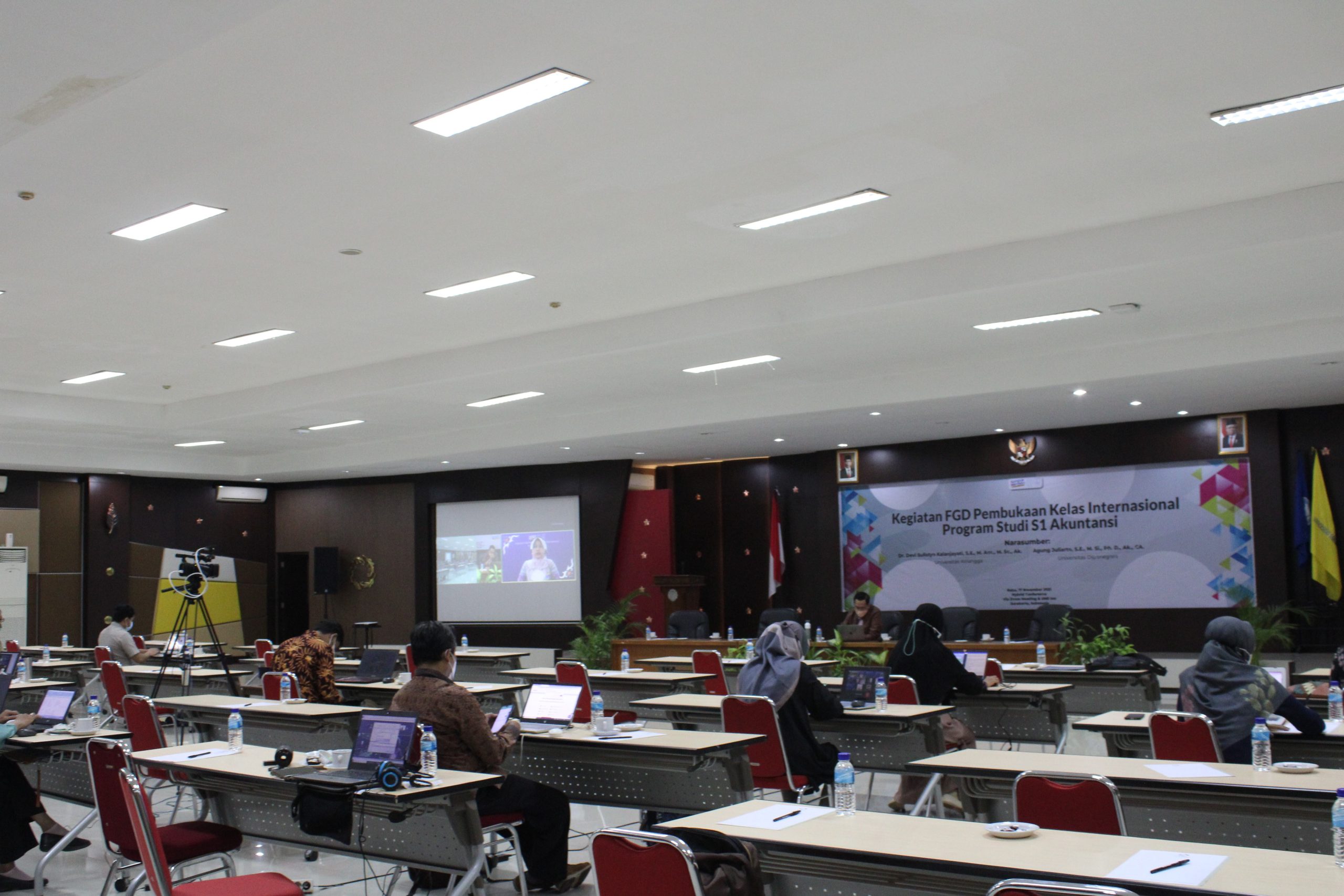
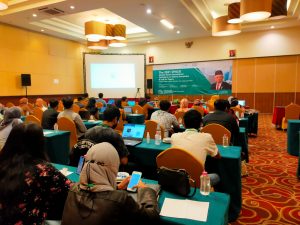
Accounting Study Program, Faculty of Economics and Business (FEB), Universitas Sebelas Maret (UNS), organized a Focus Group Discussion (FGD) on International Class Development. The FGD was conducted on Wednesday, November 17, 2021, in a Hybrid format, at UNS Inn and via Zoom meeting. The event was attended by academic staff from FEB UNS, representing the Accounting, Management, and Development Economics Study Programs.
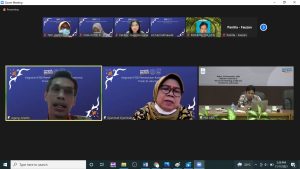
Two discussants were invited to the discussion namely Dr. Devi Sulistyo Kalanjati, SE, M.Acc, M.Sc, Ak from UNAIR, and Agung Julianto, SE., M.Si, Ph.D., Ak., CA from UNDIP. The activity was divided into two sessions, led by Taufiq Arifin, S.E., M.Sc., Ph.D., Ak., and Dr. Wahyu Widarjo, S.E., M.Si, as moderator. Both are lecturers from the Accounting Study Program.
Dr. Djuminah, M.Si., Ak., the Vice Dean of Human Resources, Finance, and Logistics FEB UNS, delivered a speech on behalf of the Dean of FEB UNS. She stated that the FGD was an interesting occasion, both for the academic support staff and the faculty members involved in international classes.
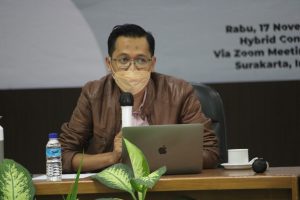
Dr. Djuminah also expressed her gratitude to the guest speakers and the organizing committee for managing and supporting the FGD. Hopefully, the event would bring abundant benefits, fostering extensive knowledge and experience-sharing in managing international classes.
Meanwhile, Taufiq Arifin, S.E., M.Sc., Ph.D., Ak, in his welcoming remark representing the Head of the Accounting Study Program, conveyed that this agenda was part of the university’s endeavor to be a reputable world-class university. This strategic program is then mandated to the study programs to fulfill its commitment as part of UNS.
“International classes are part of the university’s strategy to prepare competitive students at the national and international levels. This program also provides students with extensive exposure, including a curriculum that aligns with international standards, focusing on a wide range of skills such as critical thinking, problem-solving, communication, collaboration, and many more,” he said.
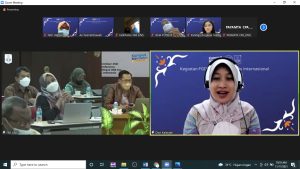
The International Class, organized by the Accounting and Development Economics Study Program FEB UNS, provided an opportunity for students to enrich their academic experiences. Hopefully, students would take part in the double degree program, where they could study for four semesters at UNS and four semesters at Curtin University. “This is an extraordinary opportunity for the first batch of students in the international class make to the best use of it,” he emphasized.
The FGD was expected to improve the continuous efforts made by FEB UNS, including future strategies related to the international class program.
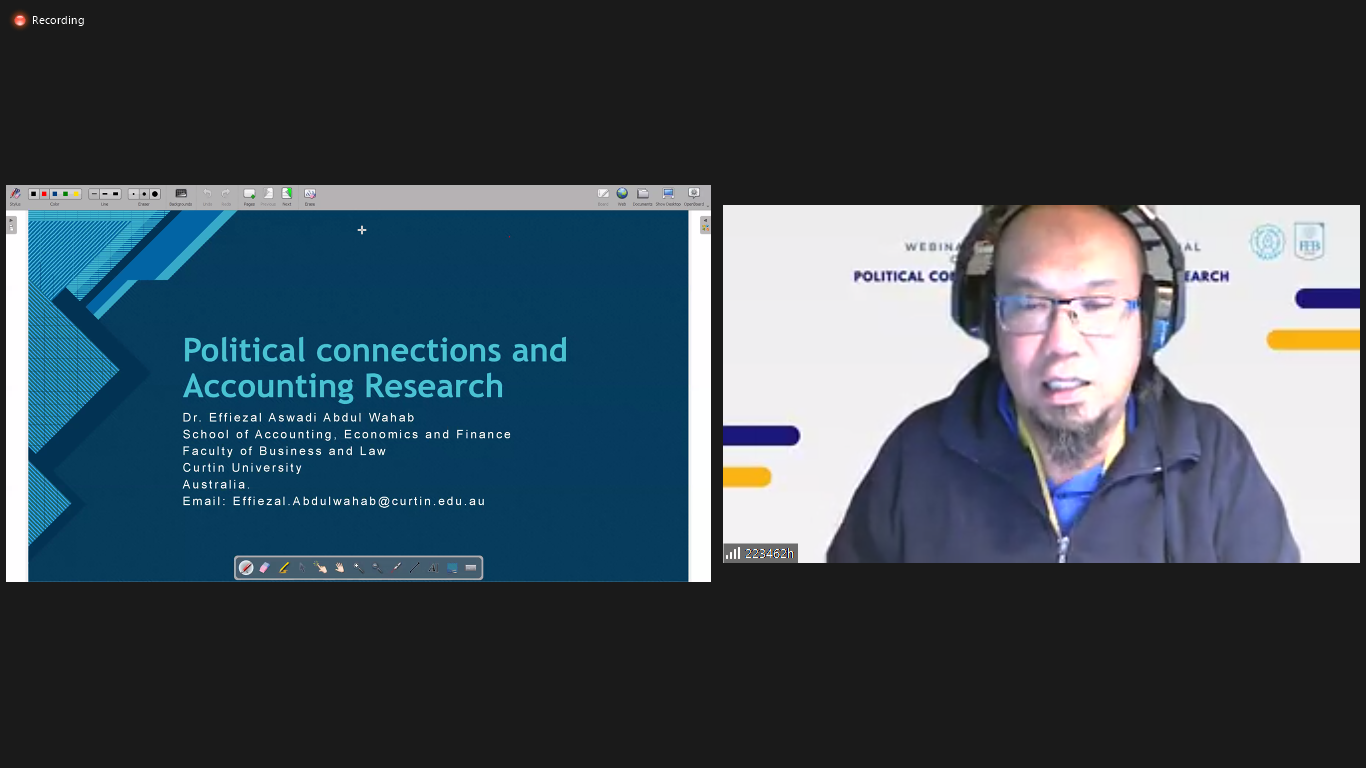
 Prof. Dr. Izza Mafruhah, SE, M.Si, the Vice Dean for Academic, Research, and Student Affairs FEB UNS, in her welcoming speech, said that the topic is an excellent choice to establish a well-rounded academic mentality as a researcher, while the topic of political connection is interesting and can open up wide opportunities, especially for researchers in the accounting field.
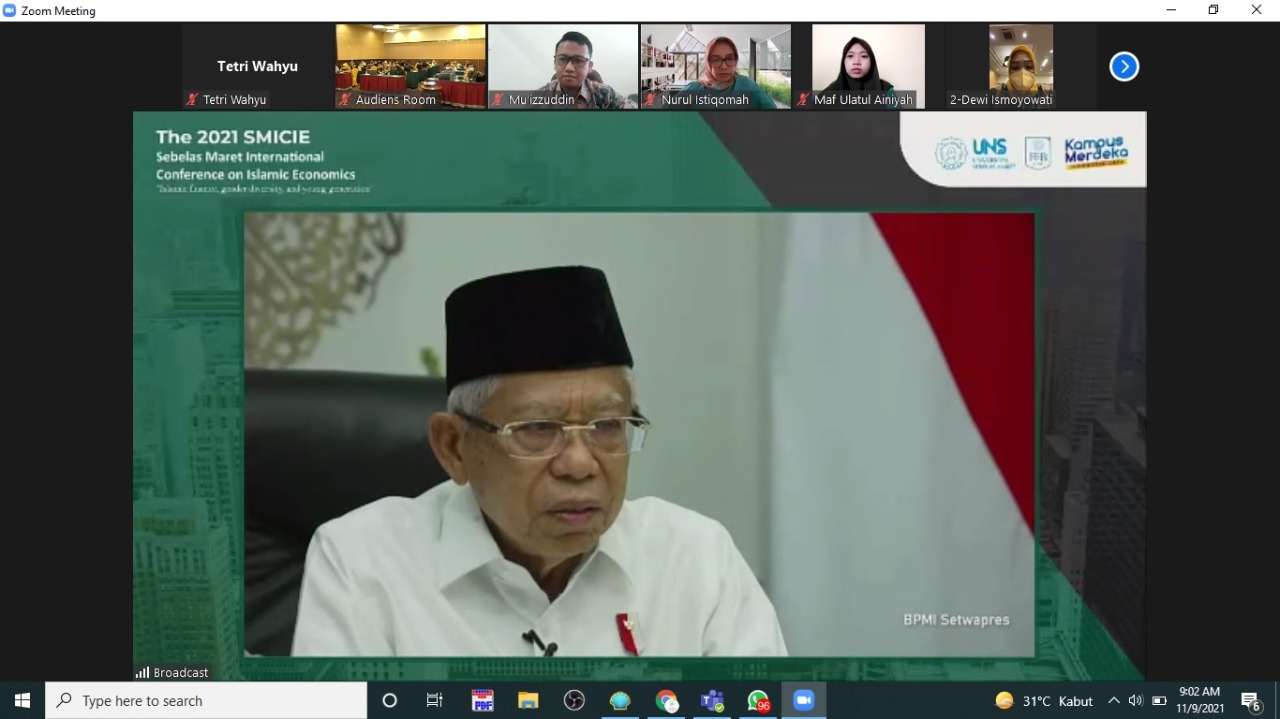
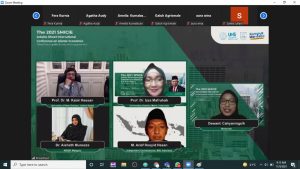
 “I hope for UNS, as one of the best universities in Indonesia, to take a role in shaping a young generation who excels in the field of Islamic economics and finance in order to accelerate the growth of Indonesia’s Islamic economy and finance,” said KH Ma’ruf Amin, Tuesday (9/11). /2021).
 The Vice President of the Republic of Indonesia also expressed his appreciation to UNS academics members for organizing the 2021 SMICIE. He hopes that this conference can produce innovative formulations for the development of Islamic economics and finance.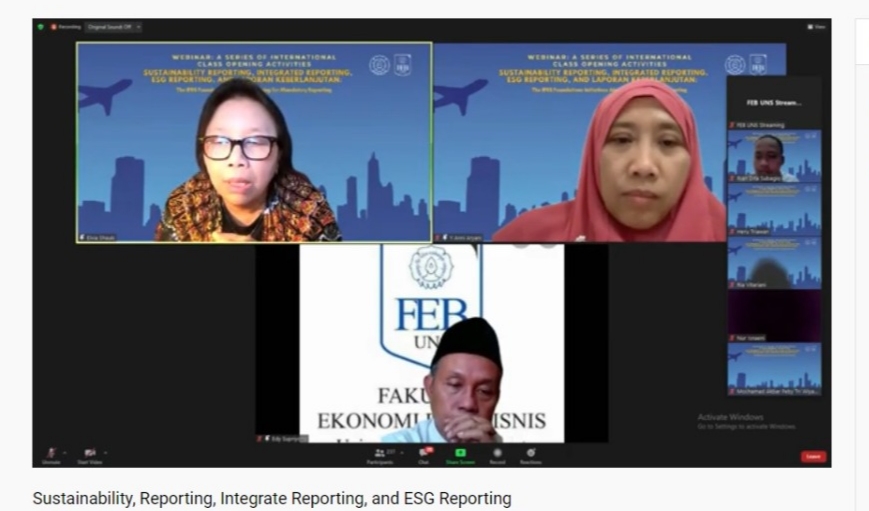
 Starting her presentation, Dr. Elvia stated that sustainability reporting is important because there is a possibility that sustainability disclosure will become a mandatory report to be disclosed by the company when the students graduate. Further, she mentioned that the presentation aims to understand whether the harmonization of the sustainability report, which includes the framework, will take place soon.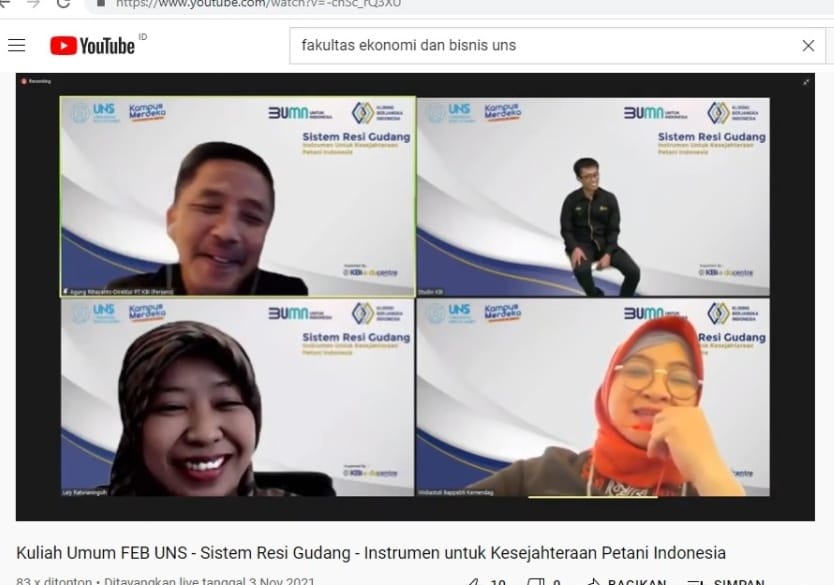
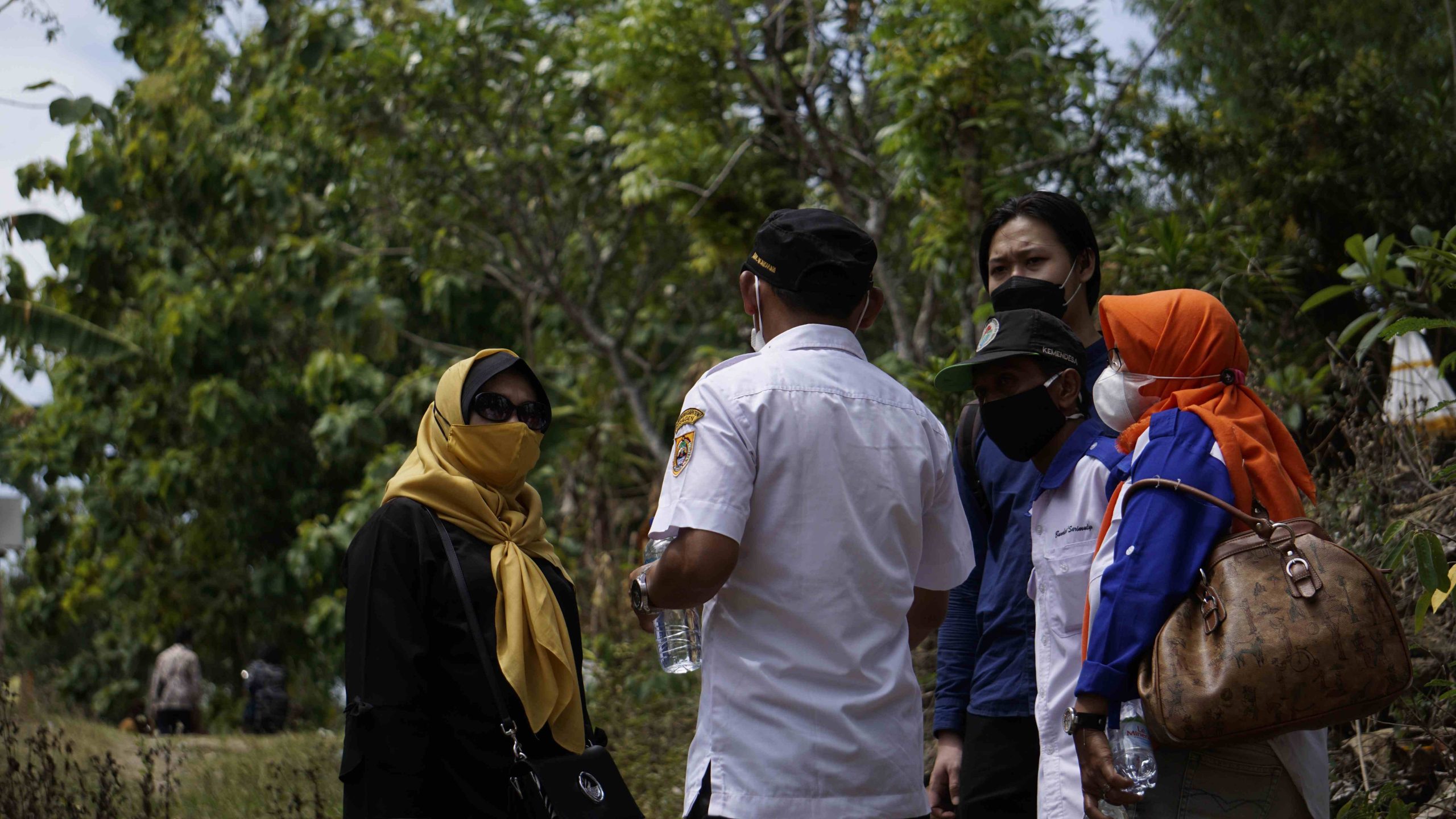
 Prof. Izza said that WKO is one of the reservoirs in Central Java, which extended through three Regencies, namely Grobogan, Sragen, and Boyolali Regency. Currently, the Sragen WKO has very good and extraordinary potential, especially in terms of ecology, which can be developed and combined with education, but so far, it has not been developed and yet to be managed properly. “The development of a tourism area has five main aspects: what to see, what to do, what to buy, what to arrive, and what to stay. These five aspects are indicators that will help the development of the WKO tourist area, especially in the Sragen Regency,” she explains through a release received by feb.uns.ac.id.
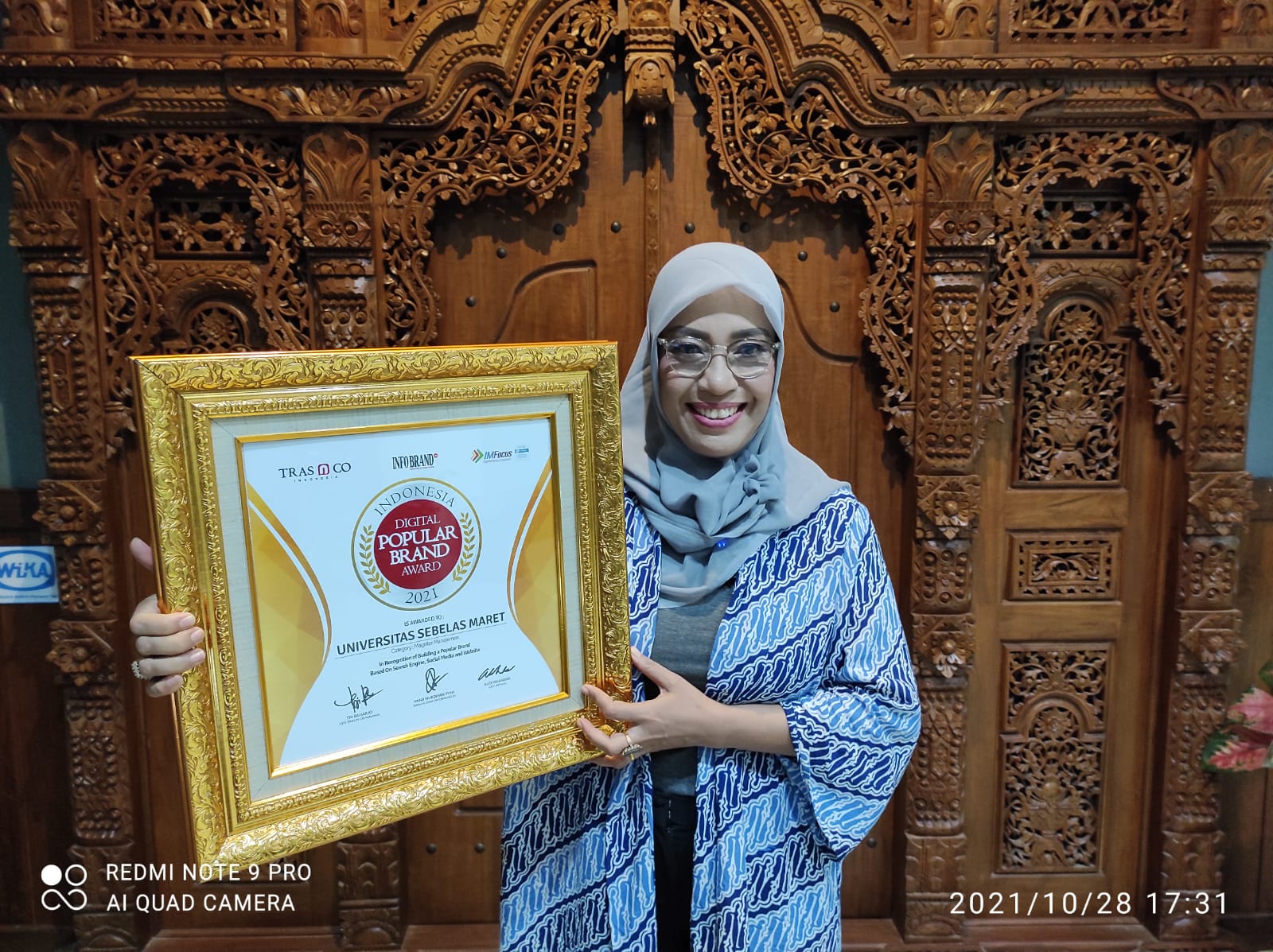
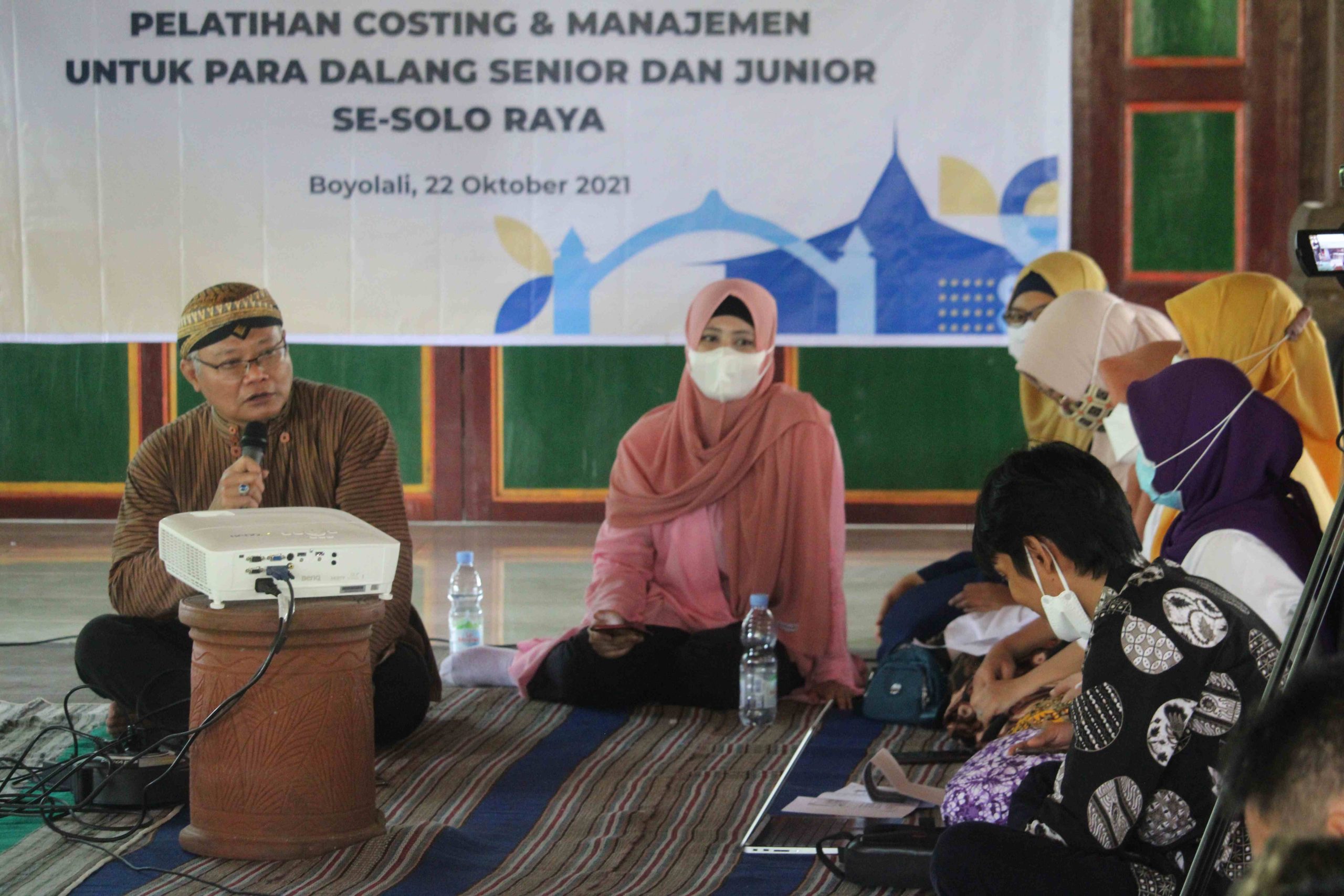
 Further, he said that in order to survive the pandemic, not a few of the Dalang and the entire performance crew, who had been relying on these traditional performing arts for a living, had to find other professions. They are forced to do jobs that are no longer appropriate to their fields of expertise. During this nearly two-year pandemic, many Dalangs were forced to sell their private collection (property) to survive.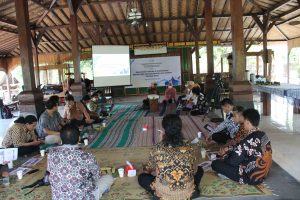
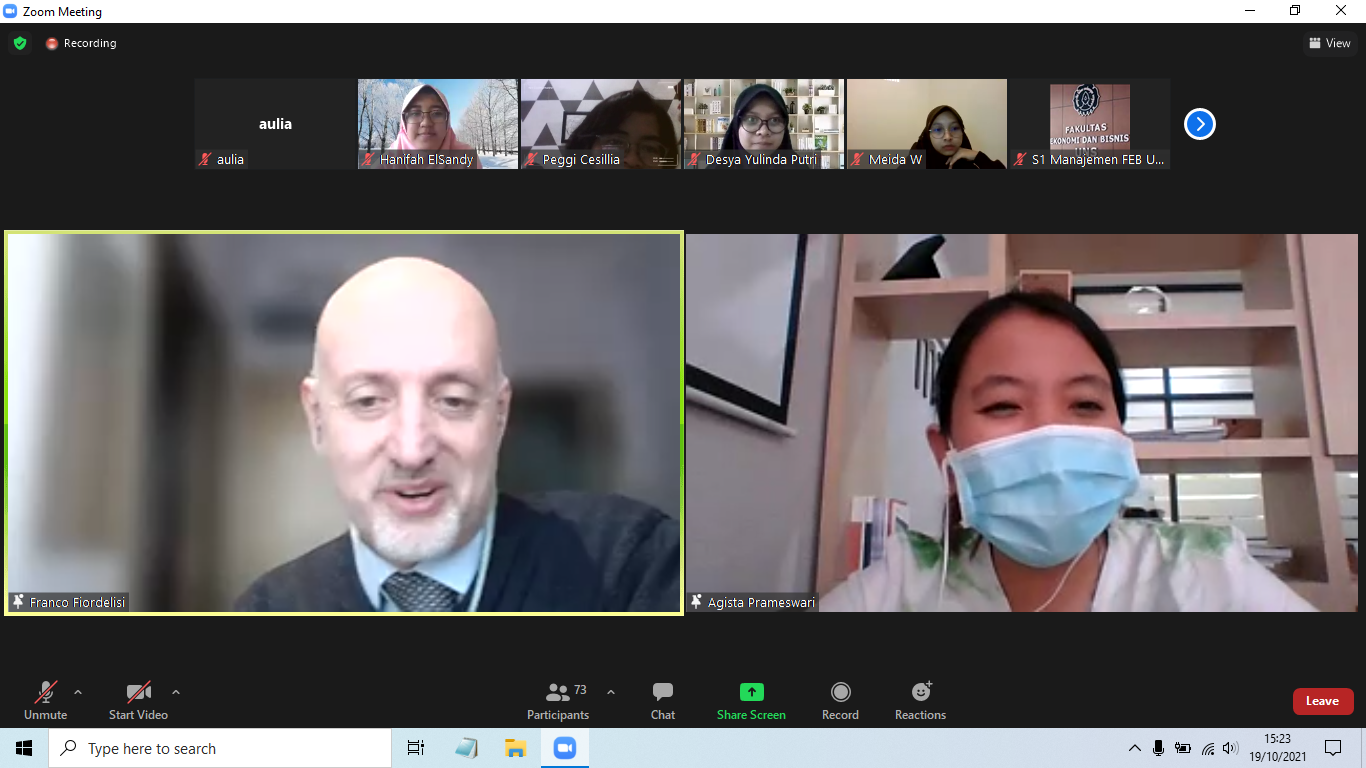
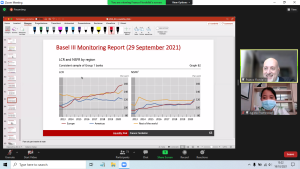
 Liquidity risk can occur under two types of circumstances, a result of specific events or due to systemic conditions. Specific events liquidity risk normally occur due to internal conditions of the bank or a specific event happened, for example, debtors that fail to settle periodic installments, which then disrupts the bank’s liquidity level. This condition, according to Prof. Fiordelisi, requires more attention from bank managers.