FEB

Kategori: faculty

  • Institutional and Human Resource Research Group at FEB UNS Supports Establishment of Tourism SOE in Magetan Regency

    Institutional and Human Resource Research Group at FEB UNS Supports Establishment of Tourism SOE in Magetan Regency

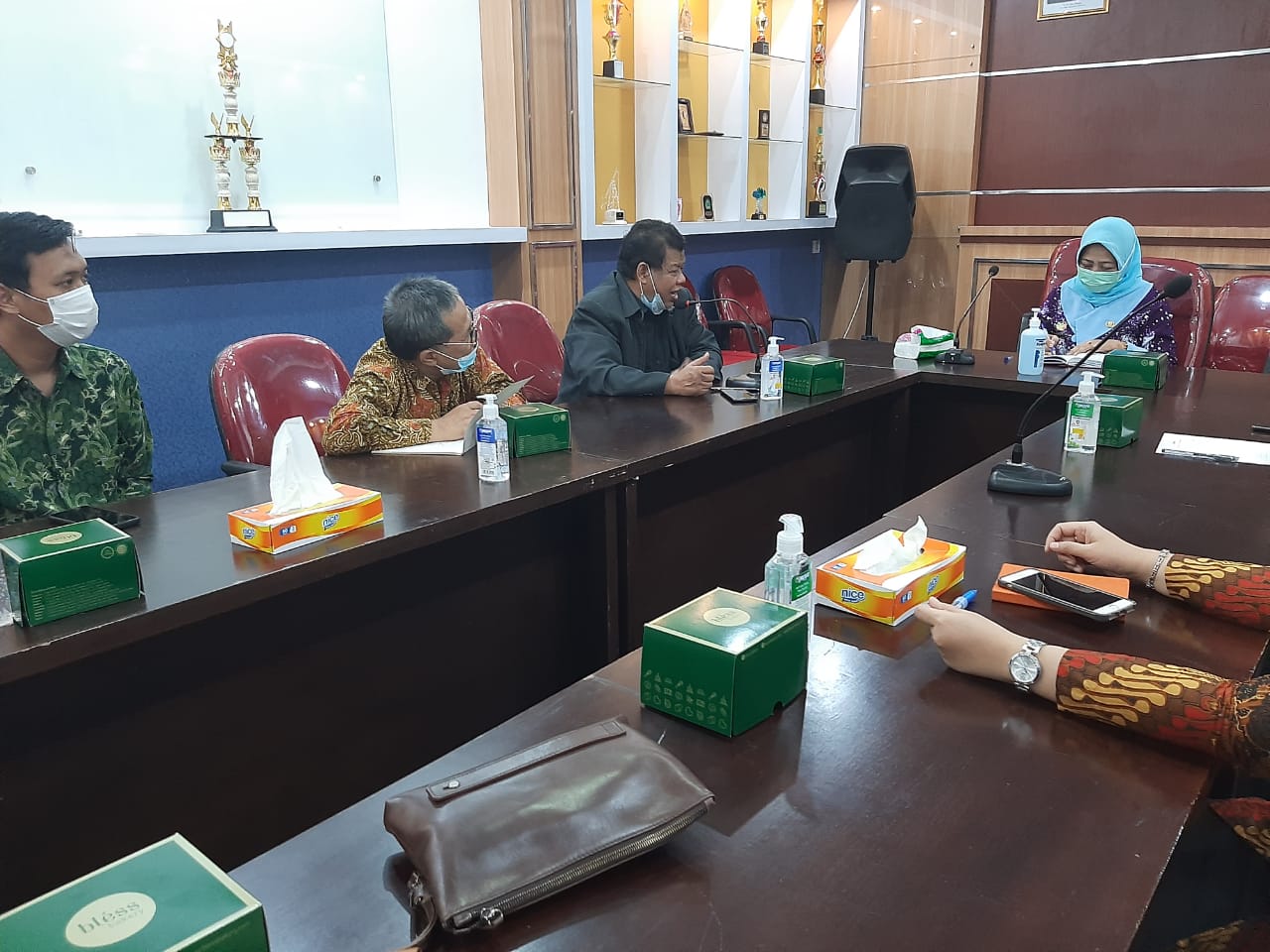
    The Institutional and Human Resource Research Group at the Faculty of Economics and Business (FEB), Universitas Sebelas Maret (UNS), conducted a Community Service (PKM) initiative to support the establishment of a Tourism State-Owned Enterprise (SOE) in Magetan Regency, held on Friday, June 25, 2021, at the Regional Development Planning Agency (Bappeda), Magetan Regency.

    Led by Vita Kartika Sari, S.E., M.Sc., a lecturer at the Faculty of Economics and Business, FEB UNS, the team was accompanied by several members including Dr. Dwi Prasetyani, S.E., M.Si., Aulia Hapsari Juwita, S.E., M.E., Sumardi, S.E., M.Si., Dr. Guntur Riyanto, M.Si., Dr. Ahmad Daerobi, M.S., Dr. Vinc Hadi Wiyono WS, M.A., and Ana Shohibul Manshur Al Ahmad, S.E., M.Sc.
    During the PKM, the Research Group conducted a Focus Group Discussion (FGD) focusing on investment opportunities, mapping investment packages, and implementation strategies. The second part of the discussion centered around the necessity of establishing a Tourism SOE to manage the tourism sector in Magetan. “The objective of this PKM initiative is to develop Magetan into a small city with significant tourism potential,” explained Vita Kartika Sari, S.E., M.Sc.

    She noted that the event proceeded smoothly and garnered enthusiastic participation from the Magetan Regency Investment and One-Stop Service Agency, as they discussed with members of the Institutional and HR Research Group, gaining valuable insights and constructive input.

    The Institutional and HR Research Group explained that SOEs are business entities established by local governments, predominantly or entirely owned by the local government, and serve as crucial tools for local governments in managing tourism.
    Despite challenges posed by the COVID-19 pandemic during its implementation, the event proceeded smoothly with stringent health protocols. “Suboptimal tourism management can lead to reduced Locally Own-Source Revenue (PAD), and thus, we aim to provide assistance in addressing this issue,” she added.

    Through this PKM activity providing support for the establishment of an SOE in Magetan Regency, hopefully, the potential for tourism management in the area will be improved, consequently boosting local revenue.

    Concluding the event, the Research Group expressed gratitude to all participants for their involvement in the PKM initiative. Hopefully, the Magetan Regency’s Investment and One-Stop Service Agency will implement Good Corporate Governance (GCG) principles to enhance the SOE’s performance in fulfilling its role as a provider of community needs and serves as an economic driver, particularly in advancing Magetan’s tourism sector.

    Source: Institutional and Human Resource Research Group, FEB UNS
    Editor: Humas FEB UNS
  • Development Economics Study Program Invites US Political Science Expert in Webinar on State, Political Corruption, and Pandemic

    Development Economics Study Program Invites US Political Science Expert in Webinar on State, Political Corruption, and Pandemic

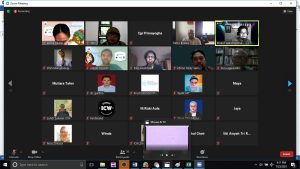
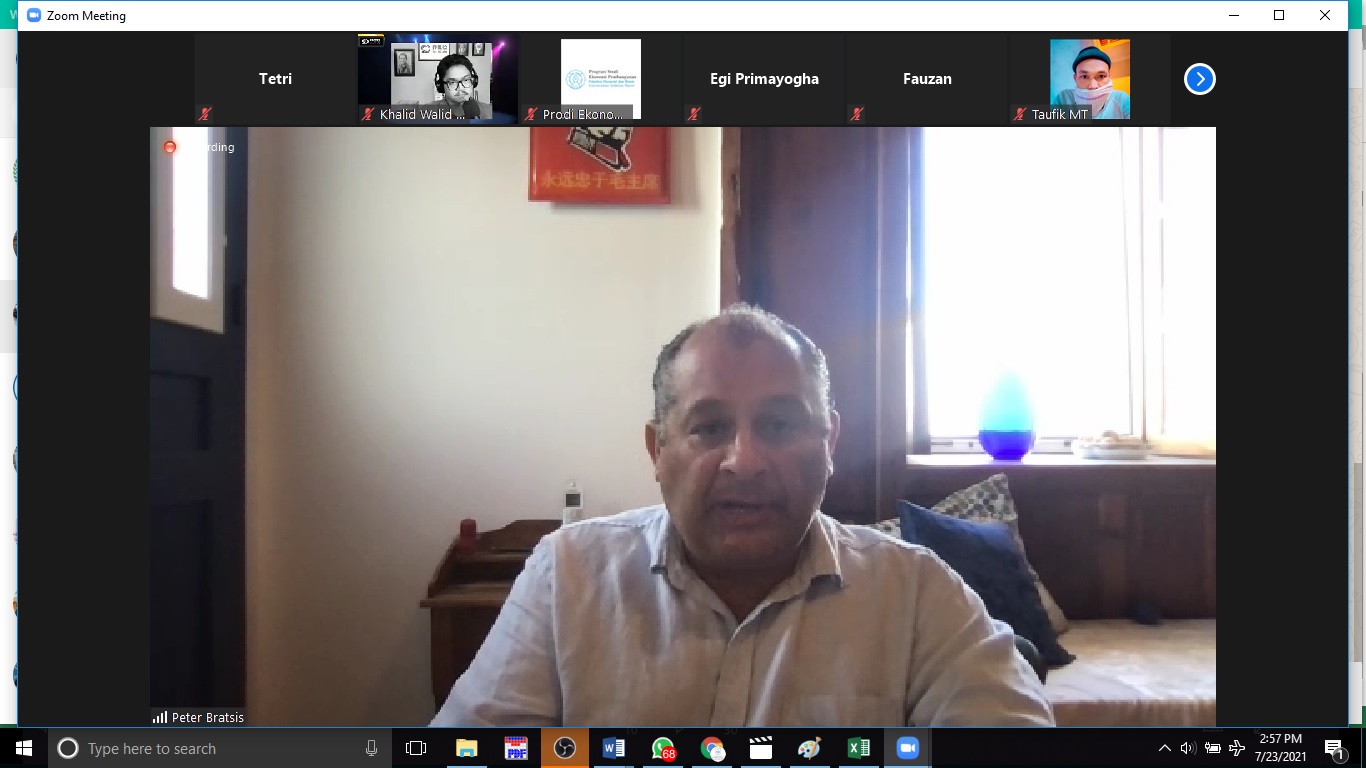
    The Development Economics Program (EP), Faculty of Economics and Business, Universitas Sebelas Maret (FEB UNS), Surakarta, hosted another international webinar entitled “State, Political Corruption, and Pandemic on Heterodox Perspective” featuring Dr. Peter Bratsis as the sole speaker on Friday, July 23, 2021.

    Dr. Bratsis is an Associate Professor in Political Science at the City University of New York, United States. The webinar was organized through collaboration between the EP Program at FEB UNS, the People’s Economy Research Group, Institutional Evolution, and Development Dynamics Studies, and the Prodes Institute.

    Dr. Bratsis opens his presentation by defining corruption, noting its evolving definition over time. Initially considered as something outside normal conditions and inherently bad, corruption has transformed into a situation marked by a lack of openness or transparency.
    “In reality, perceptions of corruption vary widely among countries. Sometimes corruption is perceived broadly, while in other countries it may be seen more narrowly,” explained Dr. Bratsis.

    Universally, corruption is associated with a lack of transparency and corrupt practices in the private sector. However, the actual manifestation of corruption can differ significantly across countries due to cultural effects and other factors.

    The webinar was conducted interactively, allowing participants to pose questions directly to the speaker during breaks in the presentation.

    Reporter: Aulia
    Editor: Humas FEB

  • Behavioral Accounting Research Group at FEB UNS Assisted KSM Tegal Duwur

    Behavioral Accounting Research Group at FEB UNS Assisted KSM Tegal Duwur

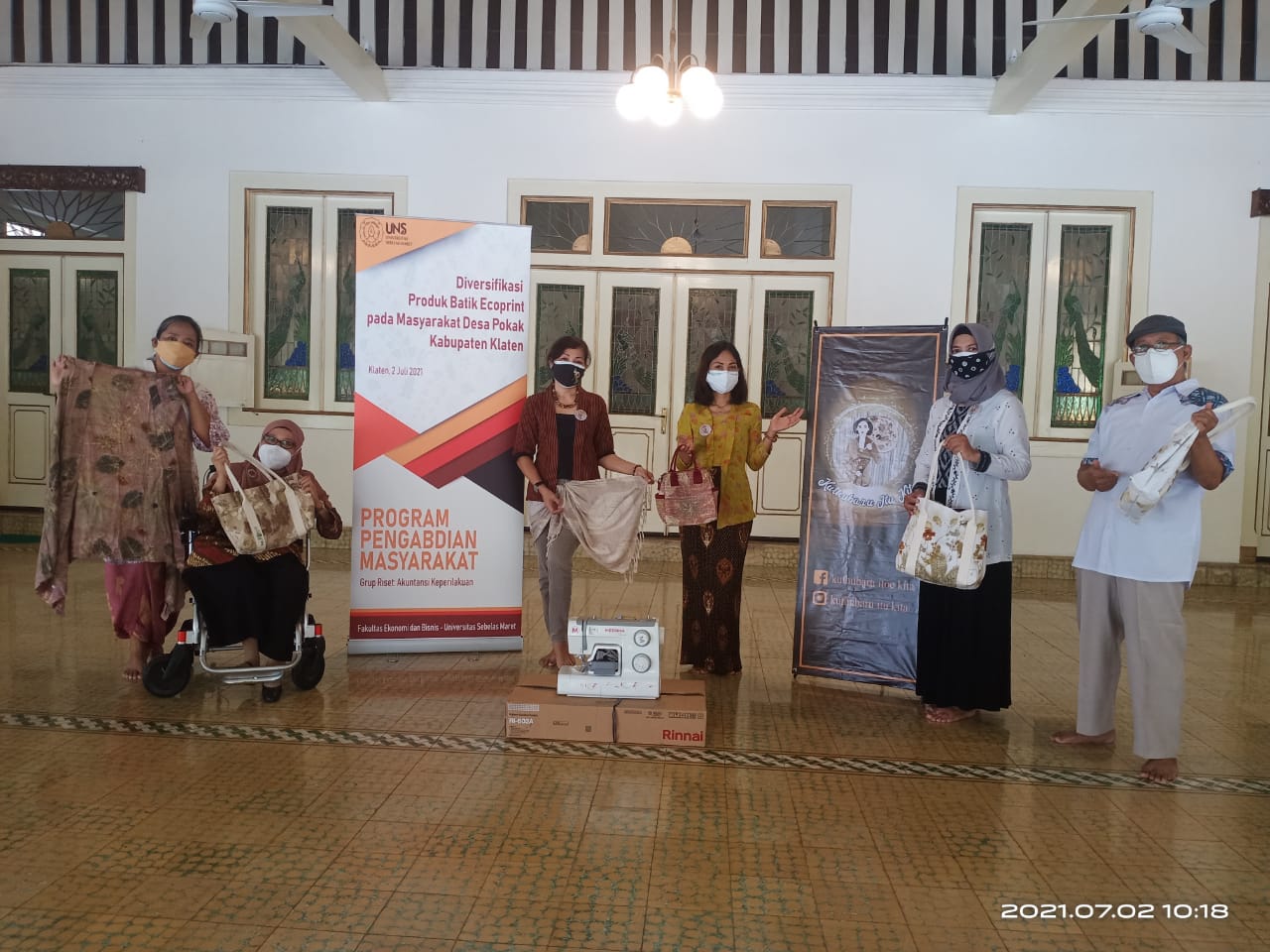
    The community service team from the Faculty of Economics and Business (FEB), Universitas Sebelas Maret (UNS), consisting of the members of the Behavioral Accounting Research Group (RG), provided assistance in the diversification of eco-printed batik products to the Community Self-Reliance Group (KSM) at Tegal Duwur in Pokak Village, Klaten Regency, on Friday, July 2, 2021.

    Led by Y. Anni Aryani, Ph.D., the team consisted of Prof. Doddy Setiawan, Dr. Payamta, Dr. Evi Gantyowati, Dian Perwitasari, M.Si., An Nurrahmawati, M.Si., Isna Putri Rahmawati, M.Sc., and Taufiq Arifin, Ph.D. The team provided equipment to support the needs of KSM Tegalduwur, including sewing machines and stoves. Additionally, the team supplied consumable materials, such as various types of fabric and canvas, as the media for creating eco-printed products.

    The team also assisted the KSM in marketing and financial administration. The KSM members were trained to record their equipment inventory and daily transactions.

    This community service activity, which lasted from March to November 2021, aims to assist KSM Tegal Duwur in product diversification innovation to compete with existing eco-printed products in the market.

    Previously, in 2020, the Behavioral Accounting RG provided assistance in this village by conducting training on eco-printed fabric production and supplying various equipment and materials for eco-print production.

    Ecoprint is a technique of imprinting patterns on media using natural materials. It is an easily applicable technique and the results can be used as raw materials for clothing or other craft items such as umbrellas, fans, book covers, and more.

  • International Class at UNS Attracts Considerable Interest

    International Class at UNS Attracts Considerable Interest

    The Undergraduate in Accounting Study Program and Development Economics Study Program, Faculty of Economics and Business (FEB), Universitas Sebelas Maret (UNS), recently introduced the International Class program. This program was introduced in collaboration with Curtin University. While, student enrollment took place from June 15 to July 2, 2021, and the new student admission announcement will be made on July 13, 2021.

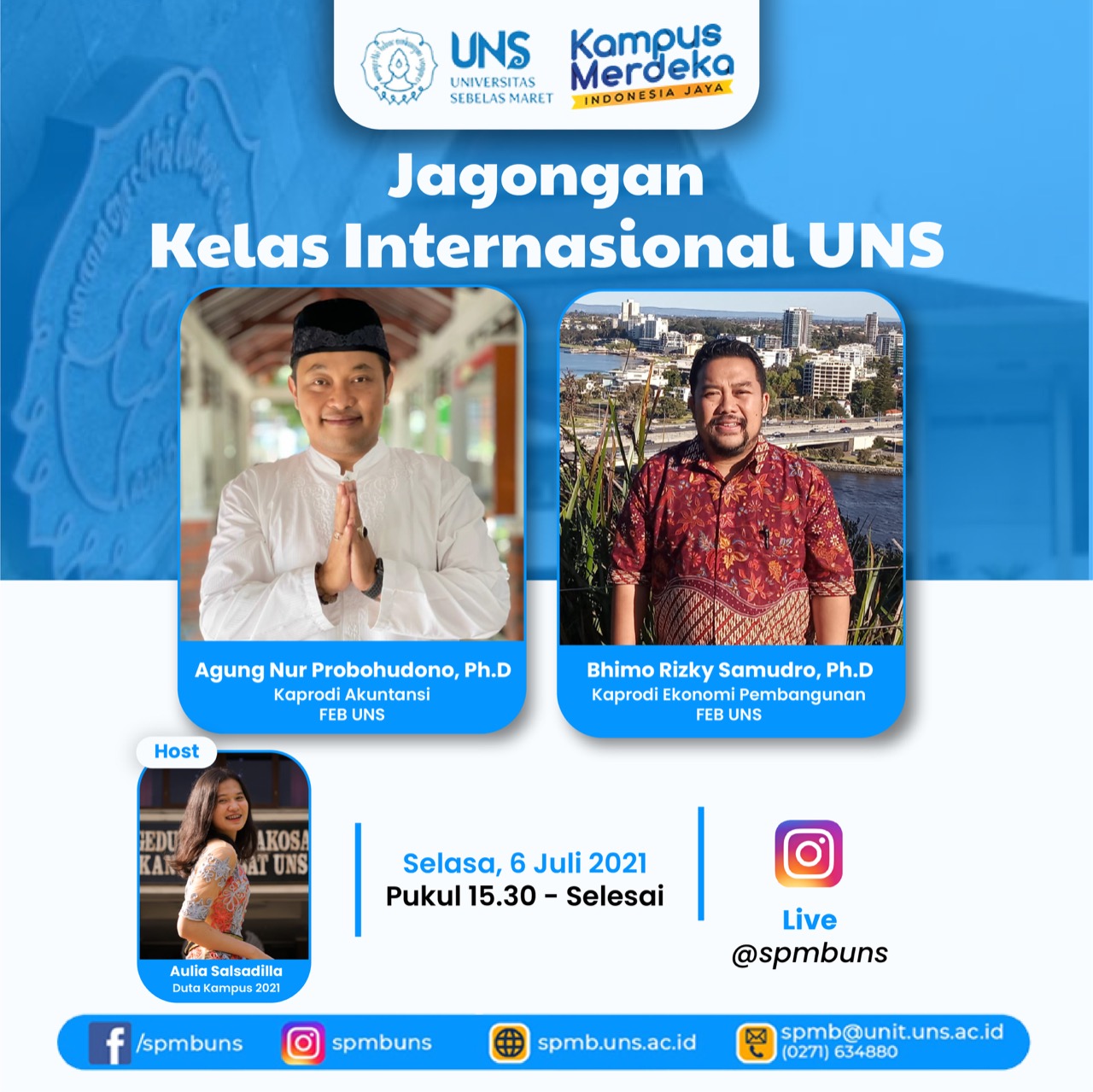
    On the “Jagongan Kelas Internasional UNS” on Tuesday, July 6, 2021, the Technical Implementational Unit (UPT) for New Student Admissions Selection (SPMB) UNS invited Agung Nur Probohudono, S.E., M.Si., Ph.D., Ak., CA., Head of the Accounting Study Program FEB UNS, and Bhimo Rizky Samudro, M.Si., Ph.D., Head of the Development Economics Study Program, to provide more details about the newly launched program.

    Dr. Agung Nur Probohudono explained that the International Class Program aims to produce graduates with strong personalities, creativity, high reasoning abilities, and the capacity to face the challenges of globalization. The curriculum is almost similar to the regular program, but the distinguishing factor is that the entire learning process is conducted in English. Students also have the opportunity to participate in student exchange programs, summer courses, double-degree programs, visiting professorships, and other international events. They will gain educational experiences abroad and international recognition.

    “While this class adopts an international approach, it does not mean it becomes exclusive. We will fortify the students from attitudes that do not reflect our national identity. We will instill local wisdom slogans such as ‘memayu hayuning bawana‘ and ‘urip hanguripi,’ thus students can implement these values during their studies,” he emphasized.

    He stated that the International Class received a considerable amount of applicants. However, this year, each program will only open one class for 25 students. Hopefully, in the coming years, they can open more than one class.

    Bhimo Rizky Samudro, Ph.D., added that several aspects are considered during the selection process for the International Class, including academic potential, English language proficiency, and the participants’ personalities through interview tests.

    “In the circulated information, we did not specify the minimum TOEFL or IELTS scores. We attempt to select candidates who are not only excel in English proficiency but also have a balanced academic performance and exhibit strong personalities. We expect to have a diverse and excellent cohort,” he explained.

    He further stated that in this first batch, they are committed to providing the best service and to continuously learn and improve the program. In the following year, they will reformat the registration process to be more flexible, allowing participants from abroad to join the International Class as well. Quality control is also paramount to ensure students and parents receive satisfactory service.

  • PDIE Webinar Discusses Mixed Method: Tips for Article Writing and Getting Published in Reputable Scientific Journals

    PDIE Webinar Discusses Mixed Method: Tips for Article Writing and Getting Published in Reputable Scientific Journals

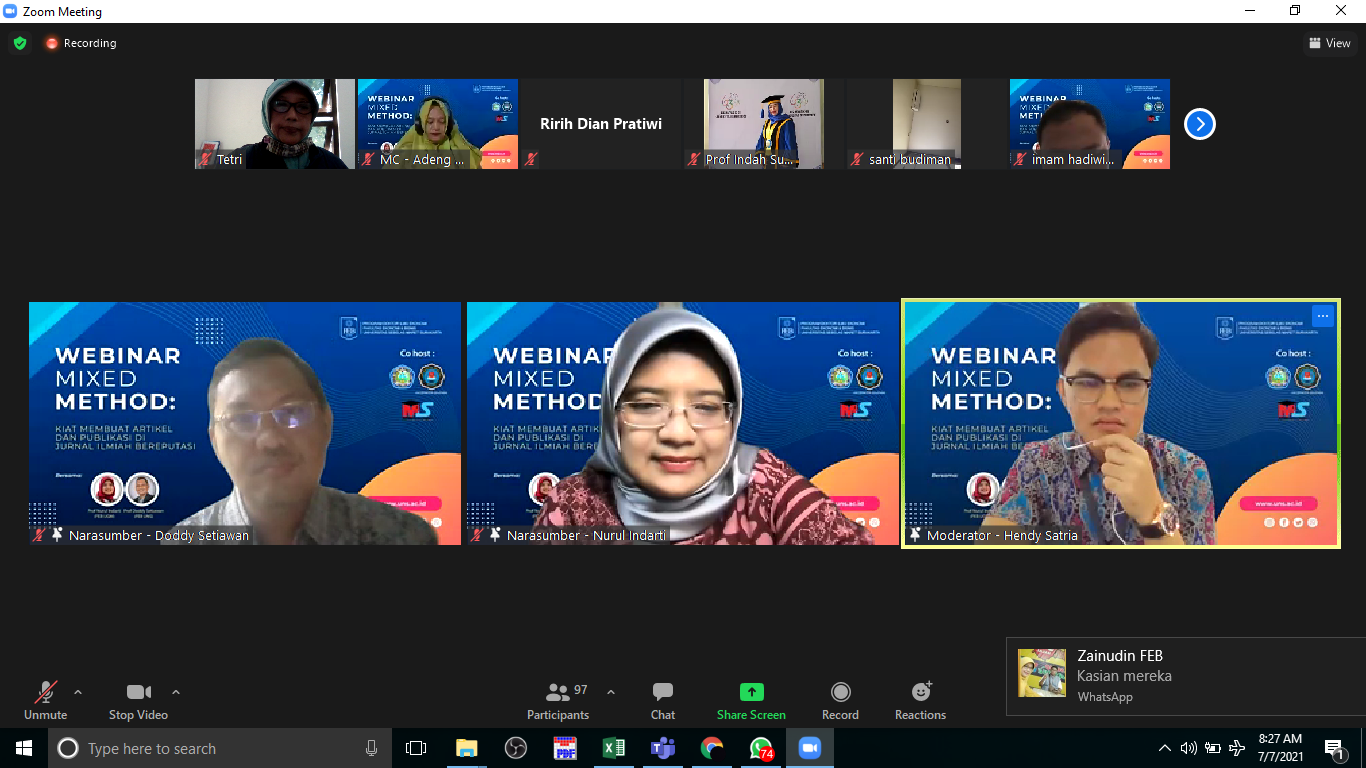
    The Doctoral Program in Economics (PDIE), Faculty of Economics and Business, Universitas Sebelas Maret (FEB UNS), organized a webinar titled “Mixed Method: Tips for Article Writing and Getting Published in Reputable Scientific Journals” featuring Prof. Nurul Indarti, Sivilokonom, Cand Merc., Ph.D., from Universitas Gadjah Mada, and Prof. Doddy Setiawan, S.E., M.Si., Ph.D., Ak., hosted on Wednesday, July 7, 2021.

    In her opening remarks, Prof. Dr. Rahmawati, M.Si., Ak., Head of the Doctoral Program in Economics (PDIE), Faculty of Economics and Business (FEB UNS), stated that PDIE holds monthly discussions on students’ dissertations. By inviting experts, students can learn tips for writing good articles and how to get published in reputable journals, considering that publication in reputable journals is a graduation requirement for Doctoral students in FEB UNS.

    “This activity is very beneficial for students, whether they are just starting, in the proposal stage, or approaching the eligibility examination. The scientific publication dynamic is rapidly evolving. During the manuscript submission, a journal might not be discontinued yet, but, right after our article gets published it could get discontinued after a few months, thus, students must be wise in selecting journals,” she concluded.

    In this webinar session, Prof. Doddy delivered material focusing on quantitative research, from finding research ideas to selecting the right journal. He emphasized that good research is completed research. The crucial thing is to have a preliminary result and a rough draft, this will enable further steps and improvements. Overthinking and hesitation can obstruct progress.
    He also discussed how to find research ideas. Researchers should explore fields they are interested in, such as finance, digital economics, or digital finance, as enjoying the research process is essential. “Don’t forget to conduct a thorough study on a topic. A comprehensive study will provide the foundation for creating an article that discusses the latest developments in a specific field. You can understand global research trends or examine research contexts in Indonesia,” he explained.

    Finding research ideas can also involve shortcuts, such as identifying limitations or suggestions for future studies in articles published in reputable journals. For example, by collecting articles from the past two years, observing trends, and organizing them into a separate folder. Regarding crafting a good article, researchers should examine published articles from reputable journals to understand their argumentation, structure, and thought process, and then apply those insights.

    Prof. Doddy also provided tips for publishing articles in reputable international journals, including avoiding journals blacklisted by the Ministry of Education and Culture, predatory journals, and hijacked journals.

    The second speaker, Prof. Nurul, focused more on Mixed Method Research, where data is collected and analyzed, findings are integrated, and conclusions are drawn using both qualitative and quantitative approaches. According to Prof. Nurul, Mixed Method research can be conducted in the form of literature reviews, which involve gathering extensive literature and employing techniques such as bibliometric or statistical methods, often using software like PoP software (publish or perish software). At the beginning of its stage, a literature review may take a more quantitative form, however, in later stages literature reviews will transform into qualitative as data is collected, coded, and interpreted.

    There are only two broad aspects needed in literature reviews, conceptual and technical. The conceptual tasks include selecting topics, formulating research questions, and defining keywords, while technical tasks involve searching for relevant articles, collecting, selecting, downloading, analyzing, and displaying data.

    According to Prof. Nurul, literature reviews contribute significantly to scientific development and increase citation potential, considering its novelty. Literature reviews provide a comprehensive overview, highlighting the importance of research and identifying future research ideas, particularly by identifying gaps. (Humas FEB)

  • MESP Study Program Providing Intensive Supervision for 11 Students’ Thesis Proposals Securing Dikti Funding

    MESP Study Program Providing Intensive Supervision for 11 Students’ Thesis Proposals Securing Dikti Funding

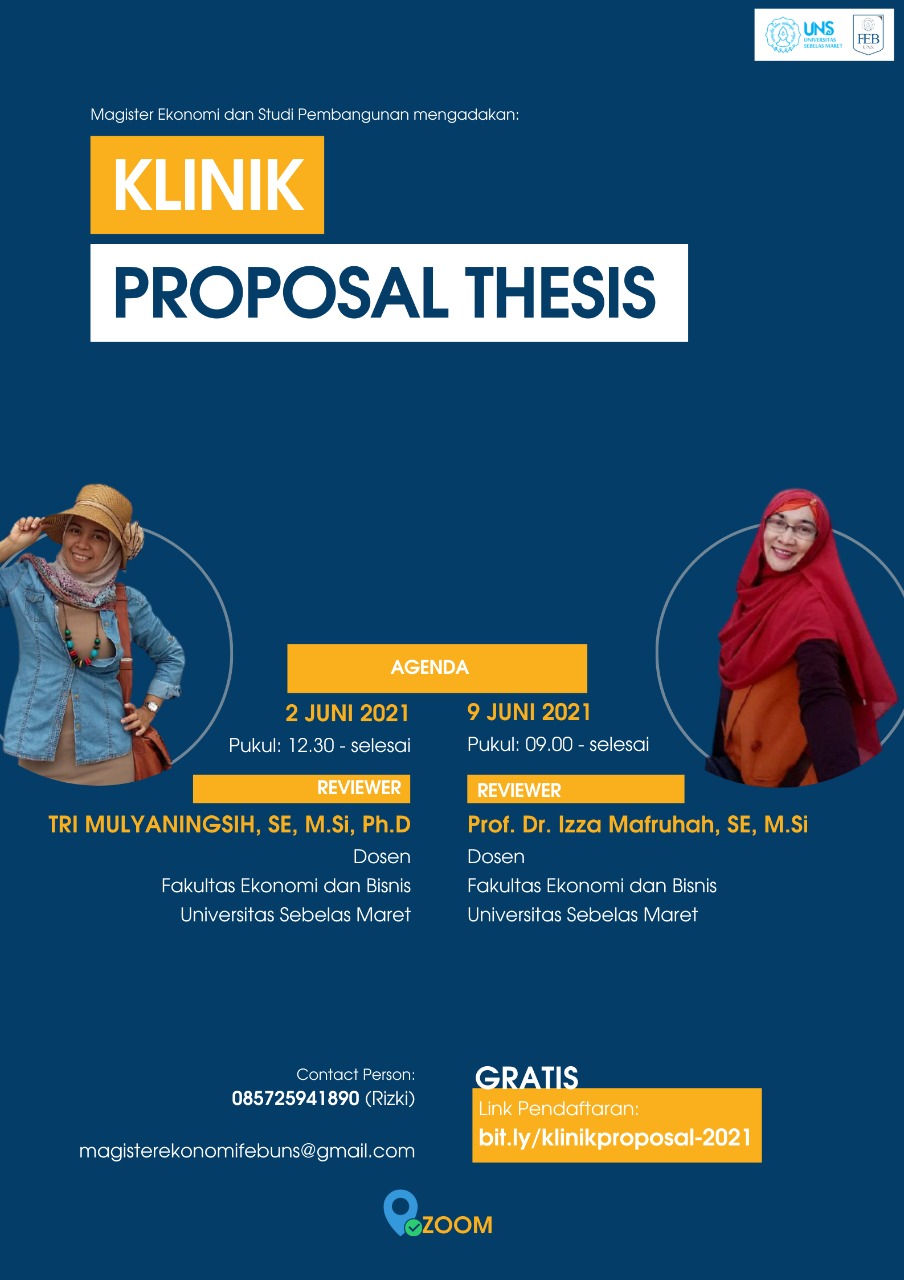
    Students from the Master’s Program in Economics and Development Studies (MESP), Faculty of Economics and Business (FEB), Universitas Sebelas Maret (UNS), participated in a Thesis Proposal Clinic for over two days, hosted on June 2 and 9, 2021.

    This event hosted by MESP is a follow-up action to the announcement from the Institute for Research and Community Service (LPPM), Universitas Sebelas Maret (UNS), regarding the thesis proposals eligible for Dikti funding.

    Students whose proposals were submitted will receive intensive mentoring from two advisors, lecturers of Research Methodology courses: Prof. Dr. Izza Mafruhah, SE., M.Si., and Tri Mulyaningsih, SE., M.Si., PhD.

    Dr. Evi Gravitiani, M.Si., Head of the MESP Program, stated that to support the initial 11 proposals, in the third quarter, the program will invite editors and collaborate with Sinta 2 journals and Editors of Scopus cited Q3 journals. (FEB Public Relations)

  • Accounting Study Program Welcomes Prof. Maurizio Massaro in Visiting Professor Agenda

    Accounting Study Program Welcomes Prof. Maurizio Massaro in Visiting Professor Agenda

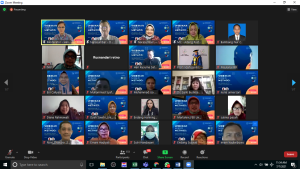
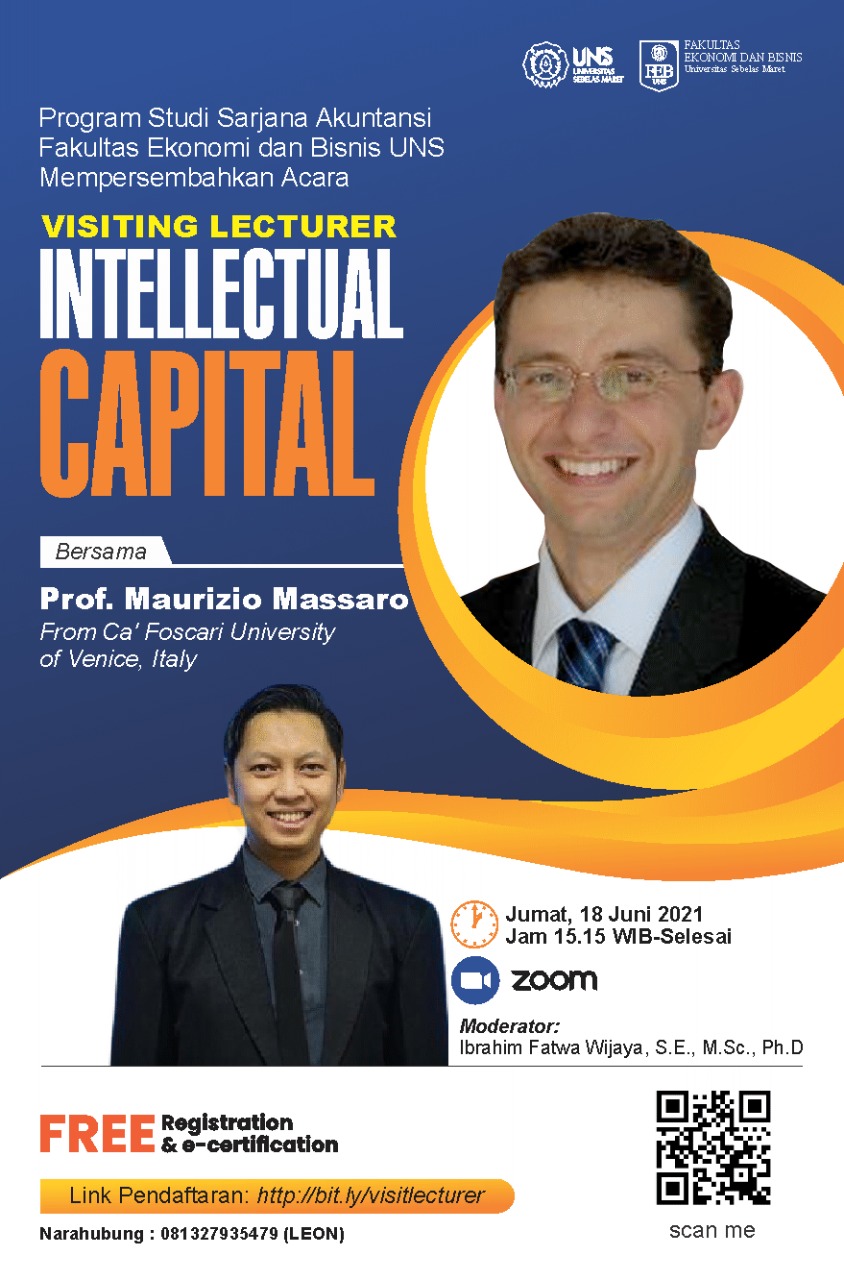
    The Accounting Study Program at the Faculty of Economics and Business, Universitas Sebelas Maret (FEB UNS) Surakarta, once again organized a Virtual Visiting Lecture on Friday (18/06/2021) through Zoom Cloud Meeting.

    In his welcome remark, Dr. Agung Nur Probohudono, Ph.D., the Head of the Accounting Study Program, expressed his hope that all attendees could learn a lot from Prof. Massaro, and the topics presented today would expand the students’ knowledge, especially in the field of accounting.

    The Visiting Lecturer is a regular agenda hosted by the Accounting Study Program at FEB UNS, which previously invited Prof. Hooi Che Wooy, Prof. Evan Lau, and Prof. Corina Yosef. The topic of Intellectual Capital presented on this occasion is important and interesting because students more often focus on accounting practices related to Tangible Assets. Hence, the material on Intangible Assets, which includes Intellectual Capital, will serve as valuable supplementary material for the students.

    The event continued with the material presentation by Prof. Massaro from the Ca’Foscari University of Venice. Opening the material presentation session, Prof. Massaro explained the five parts of the material that would be delivered virtually through Zoom and Youtube Livestreaming, namely, the introduction to the Knowledge Economy, the Definition of research in the field of Intellectual Capital, and the Stages of research in the field of Intellectual Capital.

    “Currently, many digital services are available for us to use for free. This can happen because the marginal cost required to produce digital products is close to zero, allowing companies to offer digital services such as Facebook, Instagram, and WhatsApp, for free,” explained Prof. Massaro. This condition is known as a free economy.

    The free economy has significant implications in the accounting sector. Since almost all internet applications offered are knowledge-based products, the knowledge economy challenges traditional accounting principles, which posit that the value of a good or product decreases after use. Knowledge, however, does not follow this law because when used, knowledge increases rather than diminishes.

    “This is very interesting to study because this condition has brought about significant and disruptive changes, altering companies’ business models,” said Prof. Massaro.

    The visiting professor’s event goes on with the stages of research in the field of intellectual capital, measurement methods, and ecosystem perspectives. The event was conducted interactively through the Wooclap application, allowing participants and speakers to engage actively.

    Reporter: Aulia

    Editor: Humas FEB

  • Discussing Method in Economic Analysis and Academic Writing, MESP Webinar Invites Two Speakers from UKM

    Discussing Method in Economic Analysis and Academic Writing, MESP Webinar Invites Two Speakers from UKM

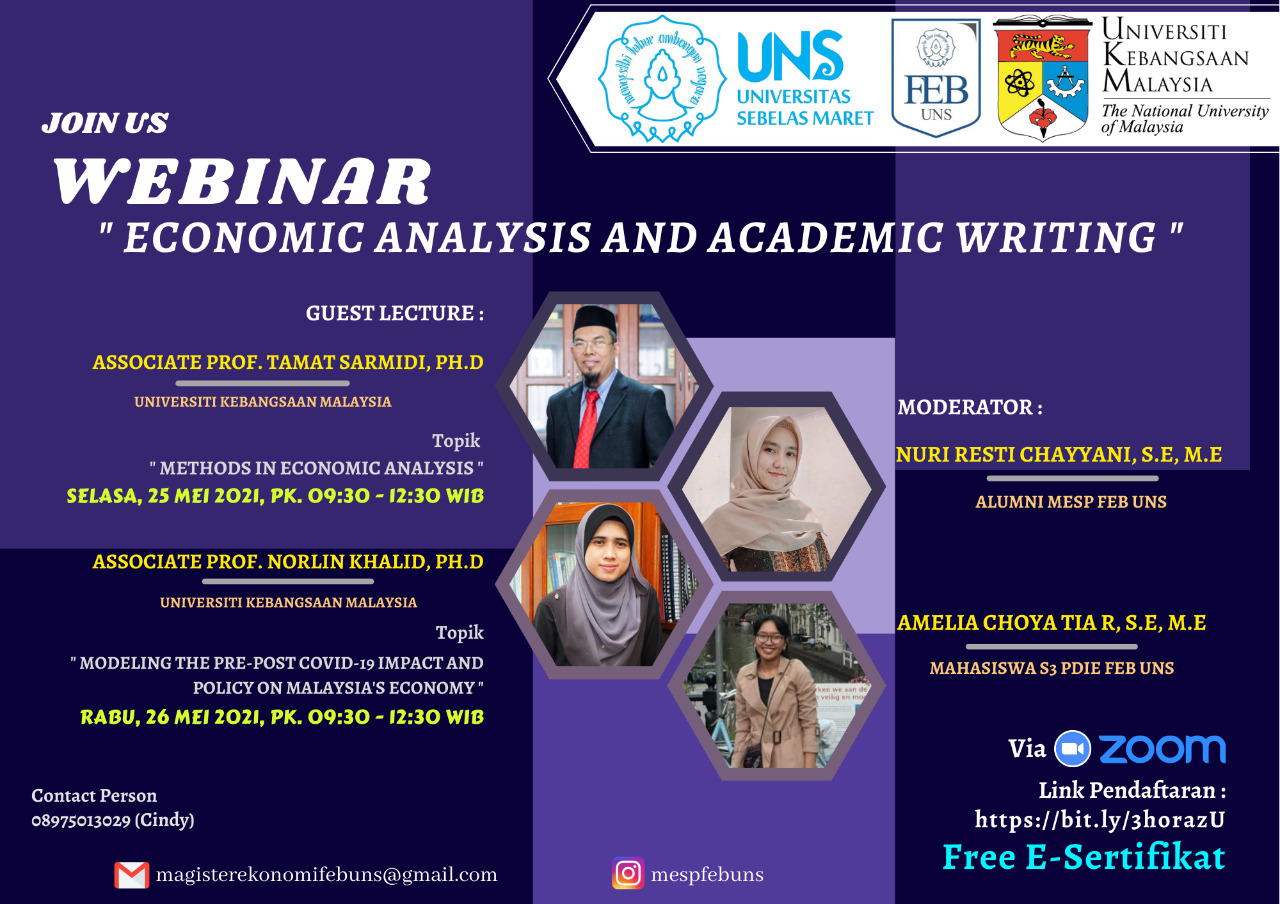
    The Master in Economics and Development Studies Program (MESP), Faculty of Economics and Business (FEB) Universitas Sebelas Maret (UNS) Surakarta held a webinar in ‘Method in Economic Analysis and Academic Writing,’ 25-26 May 2021.

    Two international speakers from Universiti Kebangsaan Malaysia (UKM) were invited to share some insight through the webinar, Assoc. Prof. Dr. Tamat Sarmidi (Deputy Dean of Research and Innovation, Faculty of Economics and Management, UKM) and Assoc. Prof. Dr. Norlin Khalid, the Cluster Head at the Center of Sustainable and Inclusive Development Studies UKM Malaysia.

    In her speech, the Vice Dean of Academic, Research and Student Affairs FEB UNS, Prof. Dr. Izza Mafruhah, SE, M.Si, representing the Dean of FEB UNS, conveyed the importance of this workshop because statistical analysis tools are always developing both for the qualitative and quantitative analysis.

    According to Prof. Izza, writing published articles has always been an obstacle for postgraduate students. This condition happens because students are often too focused on the process of writing the thesis, while the process of publishing a research article is quite time-consuming and is often forgotten. Learning from experts will greatly assist students in publishing articles.

    The speaker on the first day, Assoc. Prof. Tamat Sarmidi (Deputy Dean of Research and Innovation, Faculty of Economics and Management, UKM), explains about Principal Component Analysis (PCA). Dr. Tamat explains the basics of the principal component, how to determine the adequacy of data to carry out the explanatory factor analysis process, interpreting the results, and the principles of reliability analysis PCA in the STATA program. The discussion is followed with Propensity Score Matching and concluded with Quintile Regression.

    On the second day, Assoc. Prof. Dr. Norlin Khalid starts the discussion with the material related to academic writing and publication, followed by Recent Research in Covid-19. Dr. Norlin explained why article publication is important in educational institutions, partly because of the demands for the fulfillment of performance indicators, demands for academics’ contribution to their scientific development, and an attempt to develop networking between educational institutions.

    Some stages of the publication process must be passed by students who want to publish their articles in reputable international journals. These stages are writing a literature review, determining research objectives, determining the contribution of the articles written or research conducted, as well as the proofreading process by native speakers to ensure that the articles written meet the writing standard in English or other foreign languages.

    Articles that are ready to be published can first be presented in scientific forums such as seminars or conferences to get input and suggestions for article improvement. The last step that needs to be considered is the determination of the journal. This is the stage where the author should choose a journal publisher with similar scope to the topic of the article.

    Dr. Norlin added that authors should be able to collaborate with well-established authors or researchers in the field of study to increase the possibility of publication, “Invite prominent authors for collaboration,” she said.

    Further, she also explains in detail the strategy for students to prepare well-written articles by preparing an interesting abstract because the abstract is the first impression of an article to attract the reader’s attention.

    Reporter: Aulia
    Editor: Humas FEB

  • UNS Signs MoU with the Expertise Board of DPR RI

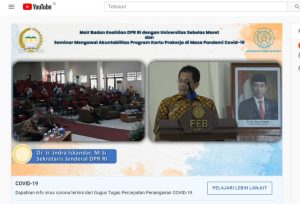
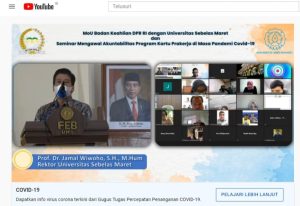
    Universitas Sebelas Maret (UNS) signed a Memorandum of Understanding (MoU) with the Expertise Board of the House of Representatives of the Republic of Indonesia (DPR RI), Thursday, May 27, 2021, in the Faculty of Economics and Business (FEB) UNS Hall. The ceremony was also broadcasted virtually.

    The MoU was signed directly by the Rector of UNS, Prof. Dr. Jamal Wiwoho, SH, M. Hum., and the Expertise Board of DPR RI, Dr. Inosentius Samsul, SH, M.Hum., witnessed by the Secretary-General of the DPR RI, Dr. Ir. Indra Iskandar, M.Si, and Vice-Rector for Planning, Partnership, Business, and Information Affairs UNS, Prof. Dr. rer. nat. Sajidan, M.Si.

    The scope of the MoU includes the implementation of education and training such as research, studies, scientific activities, seminars and workshops, human resource competencies improvement and development, integrated management assistance in improving academic quality, and experts mentoring or Journal Peer-Reviewer.

    Additionally, the cooperation will also cover data sharing or open access to research or libraries, preparation of Response to the Constitutional Court, implementation of expert support in the formation of laws, preparation of academic texts, budget functions, and supervisory functions, as well as internship programs for lecturers/students at the Expertise Board of the Secretariat General of the DPR RI, and other activities agreed upon by the parties.

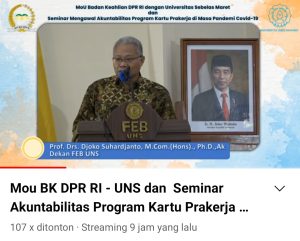
    After the MoU signatory ceremony, a seminar entitled “Guarding Accountability of the Pre-Employment Program during the Covid-19 Pandemic” was conducted, delivered by Rahmad Handoyo, S.Pi, MM, the Member of Commission IX DPR, Prof. Drs. Djoko Suhardjanto, M.Com. (Hons), Ph.D., Ak., the Dean of FEB UNS, Prof. Dr. Adi Sulistiyono, S.H. M.H., the Chairman of the UNS Academic Senate, Prof. Dr. Izza Mafruhah, SE, M.Si., Vice Dean for Academic, Research, and Student Affairs FEB UNS, and Dr. Atmaji MM, the Head of the Management Study Program FEB UNS.

    In his speech, the Secretary-General of DPR RI, Dr. Indra Iskandar, states that the Covid-19 pandemic had encouraged the government to carry out policies to reduce the significant impact of the pandemic on the community. One of the policies implemented is the Pre-Employment Program to reduce the soaring open unemployment, as one of the major impacts of the economic contraction during the pandemic.

    “In terms of evaluation, we have a record of supervision activities carried out by DPR RI members on the implementation of the Pre-Employment Program in 2020 and 2021. To strengthen the analysis on the Pre-Employment Program management, the Center for State Financial Accountability Study (PK AKN), Expertise Board of the DPR RI, views that the collaboration and seminars inviting speakers from DPR RI members and UNS academic members are necessary to ensure that the studies conducted can be applied to the society,” he explained.

    Dr. Indra also hopes that various inputs will provide significant benefits for PK AKN to create studies that will support the supervisory function of the DPR RI, especially in the supervision of state finances.

    UNS Chancellor, Prof. Jamal Wiwoho, thanked the Expertise Board of DPR RI for trusting UNS in this cooperation. He hopes that the ideas and discussions with the seminar speakers can be beneficial both at the national and international levels, contributing to the significant improvement of employment quality in Indonesia.

    Meanwhile, the Dean of FEB UNS. Prof. Drs. Djoko Suhardjanto, M.Com. (Hons), Ph.D., Ak., conveyed that FEB UNS institutionally is willing to support the role and function of the Expertise Board of DPR RI in creating a Professional Parliament to support the 3 (three) main functions of the DPR RI, namely Monitoring, Budgeting, and Legislation.

    One of the main functions of the DPR is to supervise the implementation of government programs. In the academic realm, this function is closely related to accountability. FEB UNS, supported by study programs and research groups, is ready to support supervisory functions and scientific studies for the Expertise Board of DPR RI, including providing in-depth reviews and studies on the accountability of the Pre-Employment Program. (Humas FEB)

  • Two FEB Students On The UNS Pilmapres 2021

    Two FEB Students On The UNS Pilmapres 2021

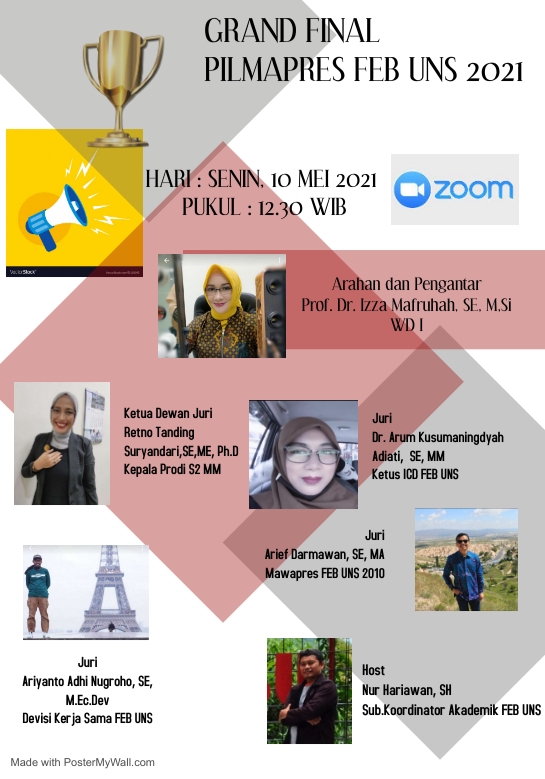
    Shoffan Mujahid, a student from the Development Economics Study Program, Faculty of Business (EP FEB), Universitas Sebelas Maret (UNS) is succeeded in being the Winner in FEB UNS Outstanding Student Selection. The Grand Final stage was conducted virtually on Monday, May 10th, 2021. Meanwhile, Dian Cita Putri, a student from Management Study Program FEB UNS, is determined as the second-place champion. Following this achievement, both Shoffan and Dian will compete as the representative of FEB UNS in the UNS 2021 Outstanding Student Selection (Pilmapres).

    Shoffan Mujahid and Dian Cita Putri

    The grand final stage invites four judges to assess students’ competency. The judges are Retno Tanding Suryandari, Ph.D., Dr. Arum Kusumaningdyah Adiati, Ariyanto Adhi Nugroho, M.Ec. Dev., and Arif Darmawan, M.A. Regarding the outcome, Dr. Retno, as the Chair of the Board of Judges, states that in general, the top five articles submitted to the Judges have unique ideas. The articles are mostly using the application or platform approach as the model of their article development. However, this uniqueness must be supported with an extensive literature review. “Your topic needs more detailed explanation and development to be an interesting scientific article. In terms of presentation, it was excellent, your PowerPoint slides are designed well, and your foreign language proficiency should be improved,” she explains.

    Concluding the event, the FEB UNS Vice-Dean for Academic, Research, and Student Affairs, Prof. Dr. Izza Mafruhah, SE, M.Si., appreciate the articles submitted and the presentation delivered by the top five participants. “Congratulations to Shoffan and Dian, who are selected as the representative of FEB UNS in the UNS Pilmapres. Pay attention to the judges’ suggestions to improve your article and presentation. For the three students in the top five, do not be discouraged. Use this experience to encourage yourself to learn more and get more involved in other students’ activities either inside the UNS campus and in the other campuses,” Dr. Izza suggested.

    FEB UNS Mawapres Grand Final 2021

    Right after Shoffan and Dian, the three other students, who also passed to the top five, get a score that is not far from the two winners. They are Raka Muhammad Iqbal from Accounting Study Program, Namira Fairuz Wibowo from Management Study Program, and Umu Ni’matun Nada Al Muhib from Management Study Program. The five students receive coaching prizes to encourage students to be more active in participating in the next competitions. (Humas FEB)