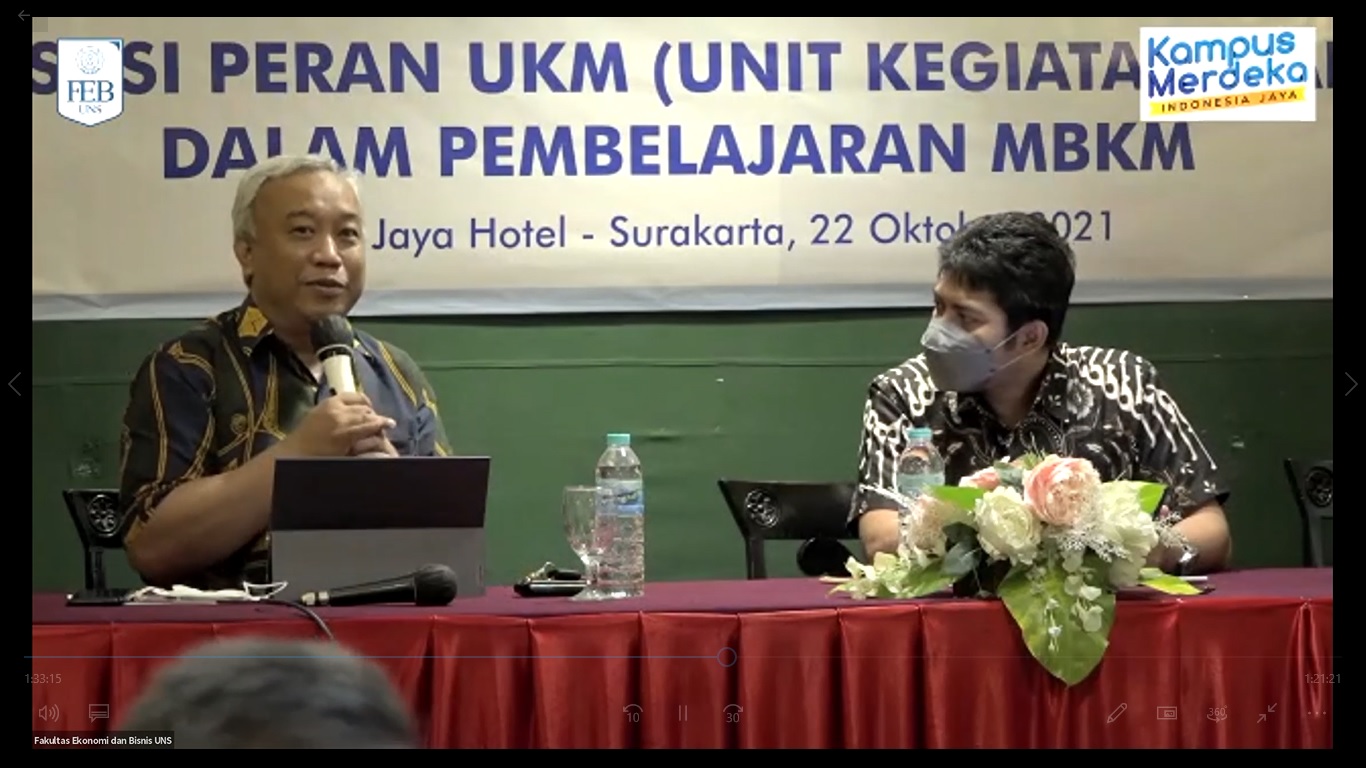
The Academic, Research, and Student Affairs (Akrima) Unit, Faculty of Economics and Business (FEB) Universitas Sebelas Maret (UNS) held a meeting entitled ‘University Key Performance Indicators (IKU) Achievement Strategy for the Student Affairs Sector through the Student Activity Units (UKM) Role Optimization in MBKM Learning,’ Friday, October 22, 2021, at Hotel Sahid Jaya, Solo.
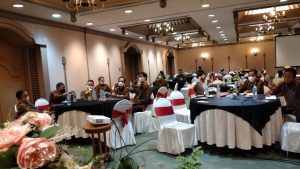 The activity was attended by the Administrators of Student Organizations (Ormawa), Student Activity Units (UKM), ORMAWA Supervisors, and the Academic Support Staff for Student Affairs. Two speakers were invited to the event, namely Susanto, S.Si., DEA., Director of Academic Reputation and Student Affairs UNS, and Dr. Alim Setiawan, S. STP, M.Si., Director of Student Development of IPB.
At the beginning of his presentation, Dr. Sutanto divides UNS students into two groups: the students who have not participated in Ormawa or UKM and students who have participated in ORMAWA or UKM. “Based on the data from SIPSmart and SIMKATMAWA, students with numerous achievements or championships victory, and those who are active in various students activities such as participating in conferences and other activities, are students who have active participation in ORMAWA or UKM organization. I strongly recommend that students join the existing ORMAWA or UKM or propose new student activity units. We will be ready to facilitate students’ needs,” he said.
Besides joining student associations and organizations, students can also explore their interests and create other innovations. “At UNS, there is still not many organization engaged in IT even though students love digital technology. You can establish an IT community and other communities, submit the proposal to us,” Dr. Sutanto said.
Furthermore, related to the MBKM Program, Dr. Sutanto categorized the program into 2 (two) clusters, namely the Reasoning and Interest-Based, whereas each cluster has its designated PIC. Reasoning cluster includes research, professional internships, student exchanges, teaching assistance, and Thematic Community Service Program. Meanwhile, Interests-based clusters include entrepreneurship, humanitarian projects, independent projects, and national defense.
Dr. Sutanto invites students to join one of the MBKM programs under the 9 (nine) categories provided by UNS, which includes national defense. “Thus, for the Merdeka Belajar program, which one is interesting for you? Do you want to participate in teaching assistance, a village development program, or something else? Mr. Nadiem is simple after you graduate, you cannot just rely on your learning experience in the study program to start a company or work properly. You need multi-disciplinary skills because the world has changed. So start walking there now, toward the nine “ponds” (read: programs) provided by UNS. Start from now, map your skills, your desire to be competent can be covered in this program, all of them,” he said.
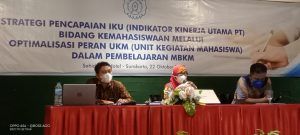
 Dr. Sutanto gave an example of how students can carry out MBKM activities, for instance, establishing the Indonesian Generation School, relocating flood-prone areas (a program by FEB UNS students), helping to eradicate malnutrition (UNS student community service in Brebes), assisting the establishment of irrigation system for the agricultural land community, pests eradication assistance, and many other beneficial activities for the community, which can also be recognized under the MBKM program.
Meanwhile, the second speaker, Dr. Alim Setiawan, S. STP, M.Si., the Director of Student Development of IPB University, explained curriculum innovation, the tips, and strategies for achieving IKU at the Bogor Agricultural University (IPB). (Humas FEB)
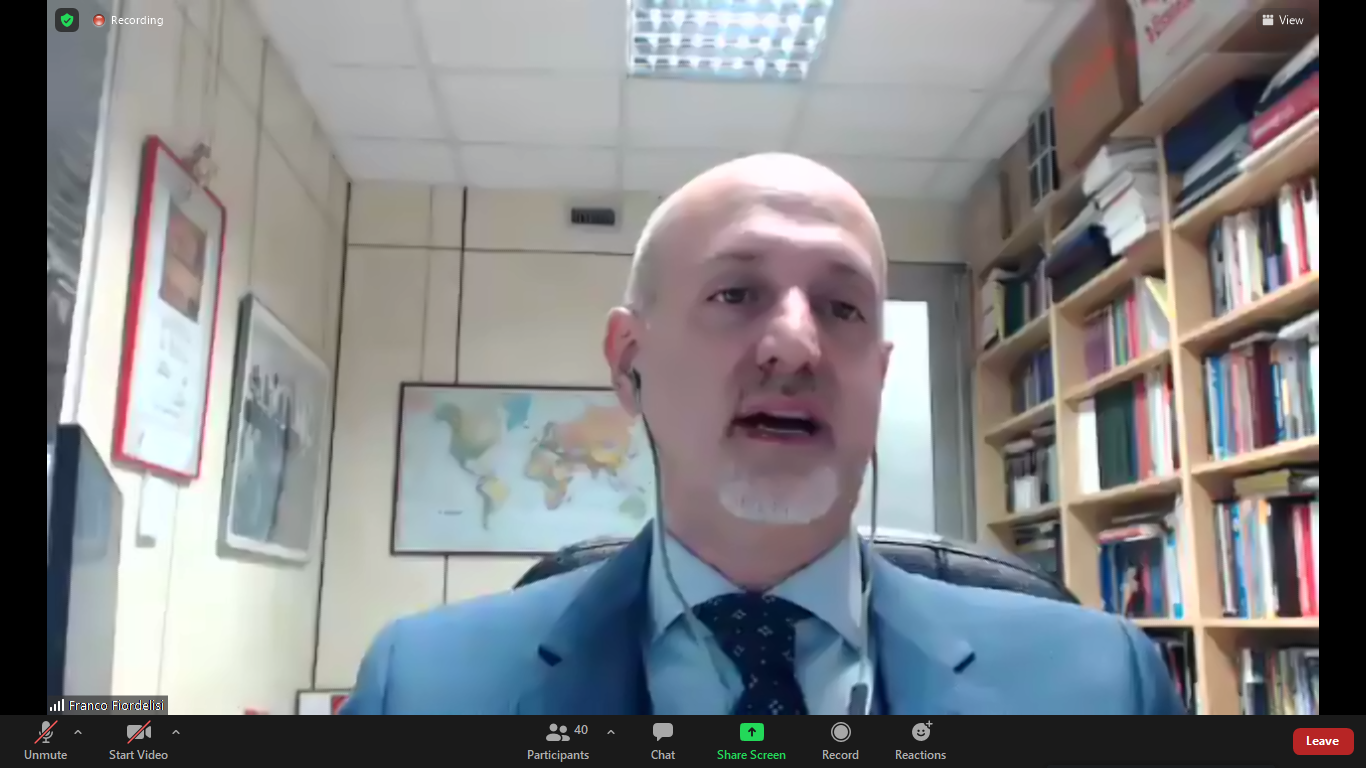
 At the virtual guest lecture conducted through the Zoom Cloud Meeting on Tuesday (12/10/2021), Prof. Fiordelisi delivered material on financial management, specifically in risk management. At the beginning of his material presentation, Prof. Fiordelisi explained the definition of risk management in the banking sector, which includes two types of risk, interest risk and credit risk. He further explains the difference between risk and uncertainty, which is often considered to have the same meaning. In this case, according to Prof. Fiordelisi, there is little difference between risk and uncertainty.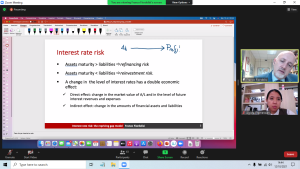
 Prof. Asri Laksmi Riani, M.Si., as the Chairman of the Entrepreneurship Laboratory (KWU Lab), in her report, states that the training is part of the training series organized by KWU Lab. “The Entrepreneurship training will last until mid-November 2021. The training began with the recruitment of Entrepreneurship trainers from FEB lecturers, which were selected from each study program. The recruitment is followed by Training of Trainer (TOT) that invites several speakers, preparation of modules, training implementation, preparation of business proposals, presentations, mentoring and evaluation,” said Prof. Asri.
 Meanwhile, Drs. Rohman Agus Pratomo, the Head of Academic and Student Affairs Bureau in UNS, appreciates the entrepreneurship training conducted by FEB UNS through a hybrid system. With this training, students are expected to compete at the university level as well as at the national level.
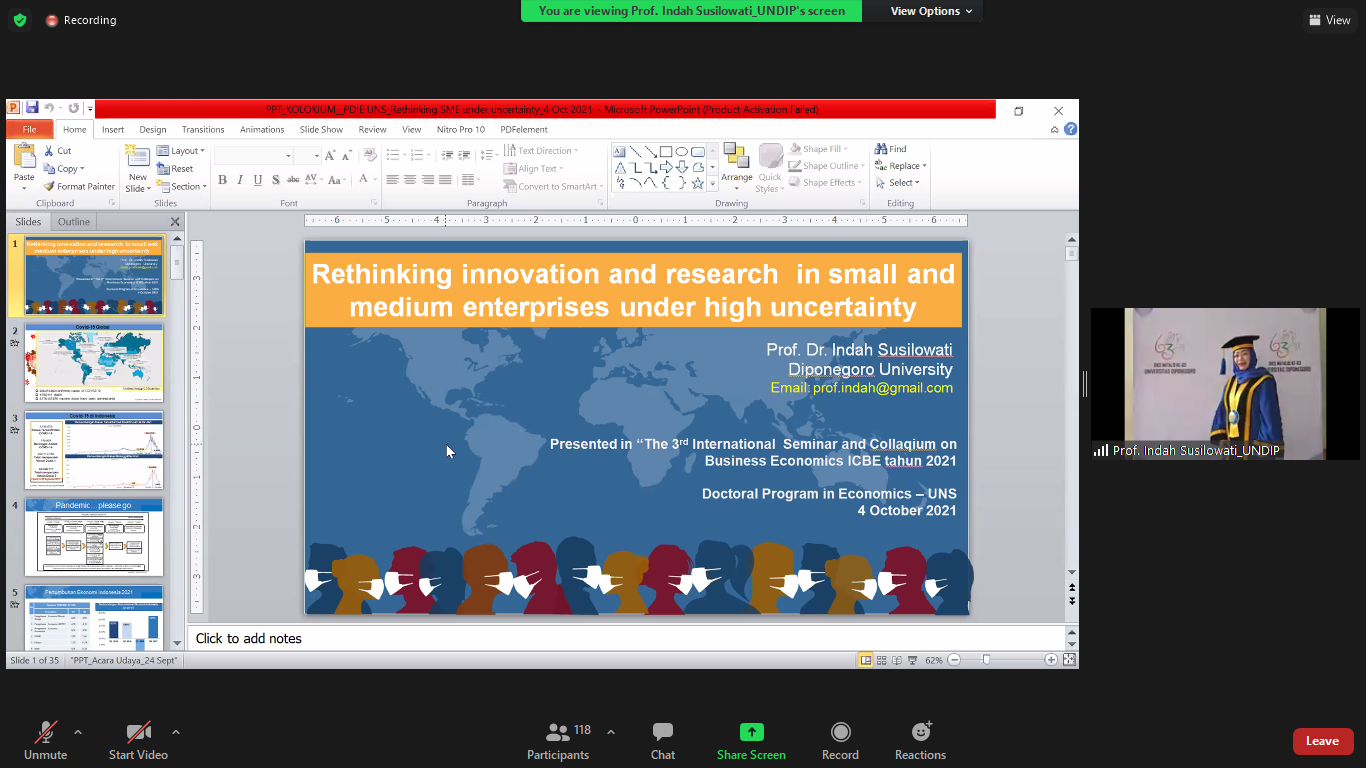
 During the event attended by more than 100 participants and 43 presenters, The Director of PDIE FEB UNS, Prof. Rahmawati, expressed her gratitude to the partner universities for supporting the 3rd ICBE 2021. Prof. Rahma also wishes for the colloquium to help and facilitate PDIE students in their research article publication process, which becomes one of the graduation requirements. Furthermore, Prof. Rahma hopes that the colloquium can help and facilitate PDIE students in their research article publication process as one of the graduation requirements.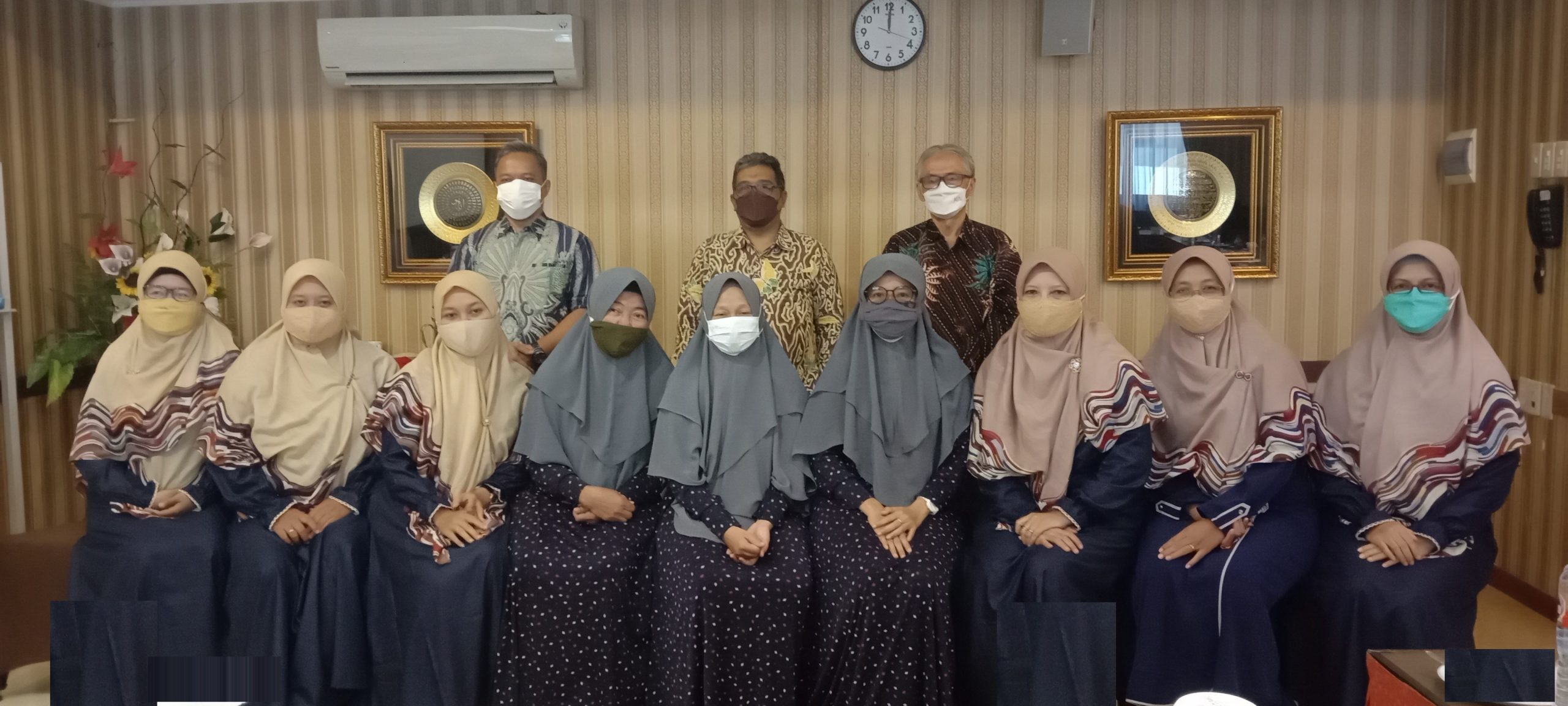
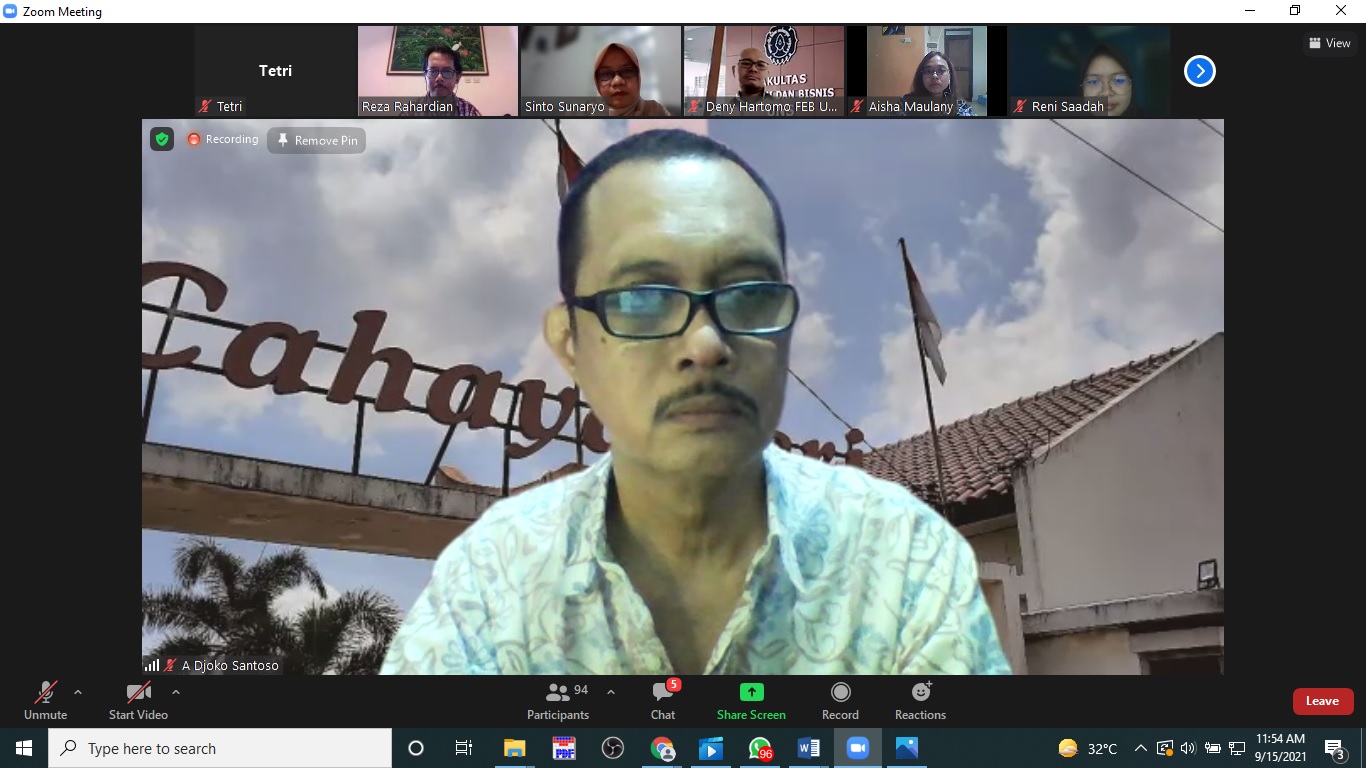
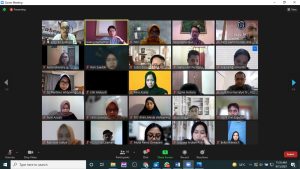 This statement was made by Djoko Santoso, a Property Business Practitioner in Solo Raya, in Guest Lecture on Managerial Simulation Practices for Property Business Prospects and Thematic Tourism Development organized by the Management Study Program, Faculty of Economics and Business (FEB) Universitas Sebelas Maret (UNS), Wednesday, 15 September 2021.
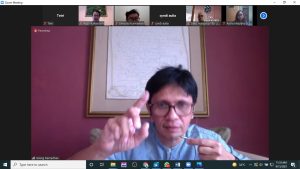 Meanwhile, the second speaker, Gilang Ramadhan, a musician and Mentor for the Tourism Development of the Ministry of Tourism and Creative Economy, told his experience while working in the tourism sector. According to him, creativity is needed to develop the tourism sector. In developing tourism, we must pay attention to the tourists’ interest in visiting tourism places. VVIP tourists want a place that is truly original. Considering this preference, we can choose an original tourism concept.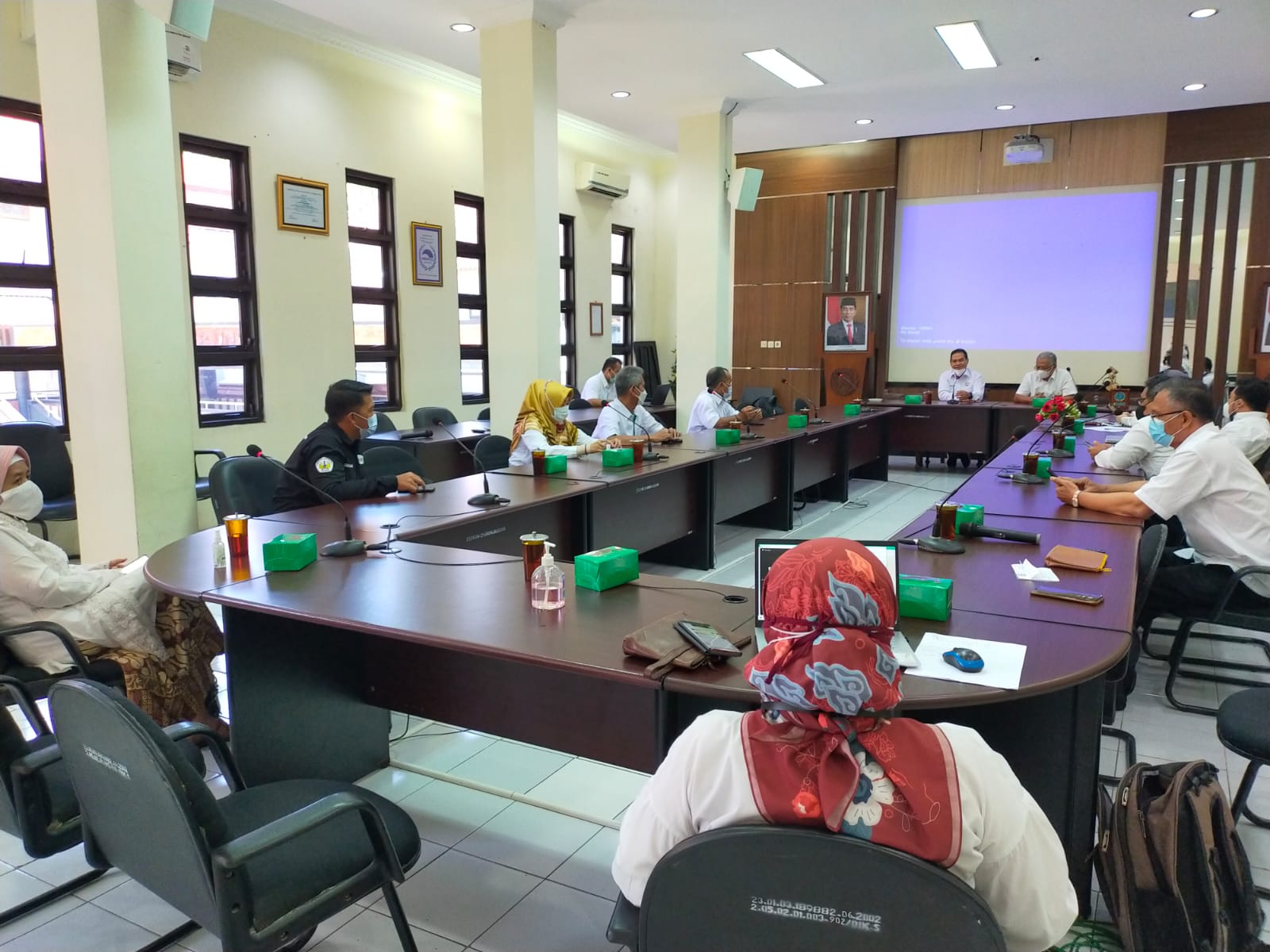
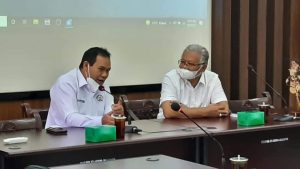
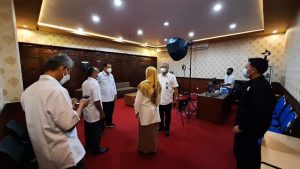
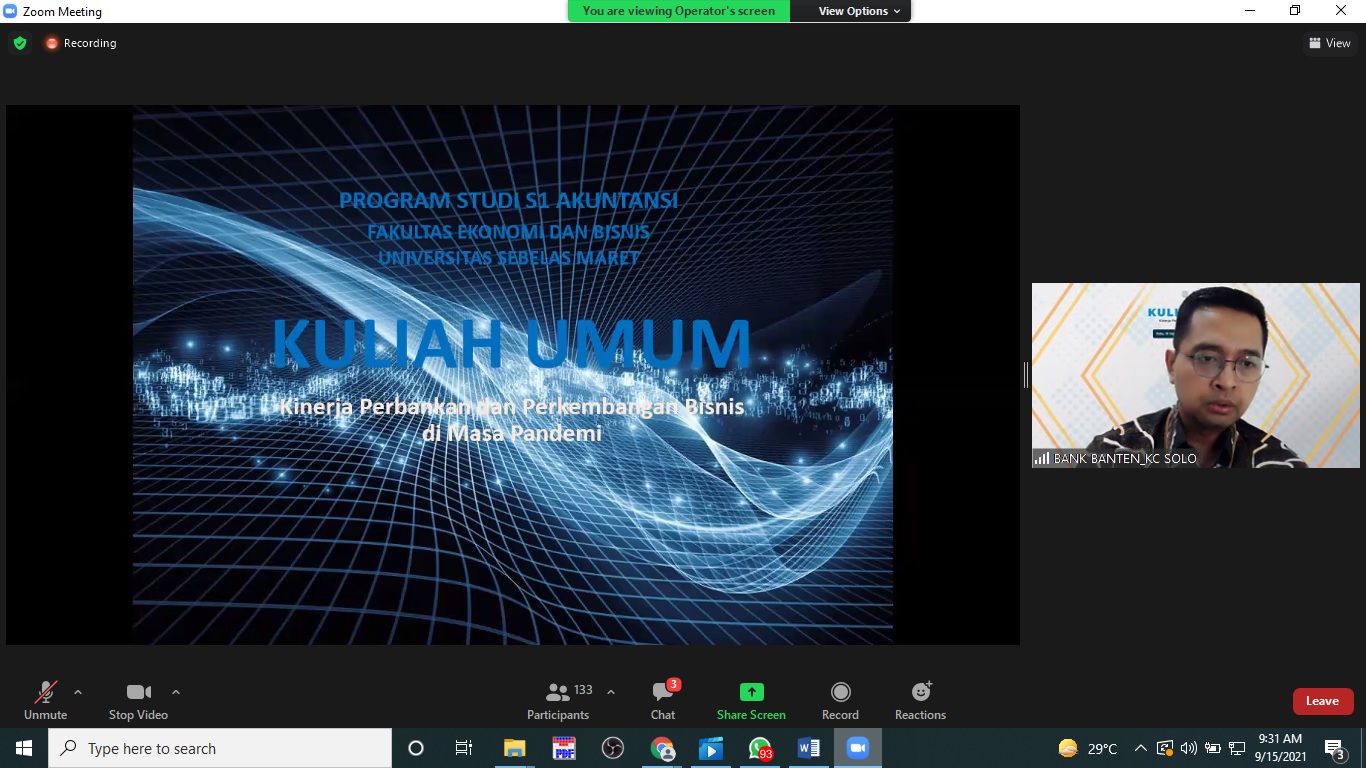
 This statement was conveyed by Lekso Mirmawan, the Head of the Bank Jateng Solo Branch, in a Public Lecture on Banks Performance and Business Development During the Pandemic, organized by the Accounting Study Program, Faculty of Economics and Business (FEB) Universitas Sebelas Maret (UNS), Wednesday, September 15, 2021. Furthermore, he said that the banking sector is one of the sectors required by the government to take part in the national economic recovery. Banks must make internal and external transformations to contribute to the community, customers, or bank debtors.
 During this pandemic, banks are also facing public distrust issues regarding the customers’ fund’s security. Until today, the banking sector seeks to provide education and information dissemination to convince customers that public funds deposited in banks are guaranteed by the Indonesia Deposit Insurance Corporation (LPS).