FEB

Kategori: faculty

  • Study Program Needs to Work Hard Preparing the BAN-PT Accreditation with 9 Criteria

    Study Program Needs to Work Hard Preparing the BAN-PT Accreditation with 9 Criteria

    The National Accreditation Board for Higher Study (BAN-PT) recently updated the requirements for the Accreditation Instrument for Study Program (IAPS) 4.0. The current standard focused more on the output and outcome of the teaching and learning activities. The quality assessment is more focused on the process, output, and outcome, while the previous instrument focused more on input. This will make a Study Program do harder work in order to prepare the accreditation using Criteria 9. The Criteria 9 covers: vision, mission, goals, and objective; human resource; finance and infrastructure; education; research; community service; output and the achievement of the Tri Dharma of Higher Education.

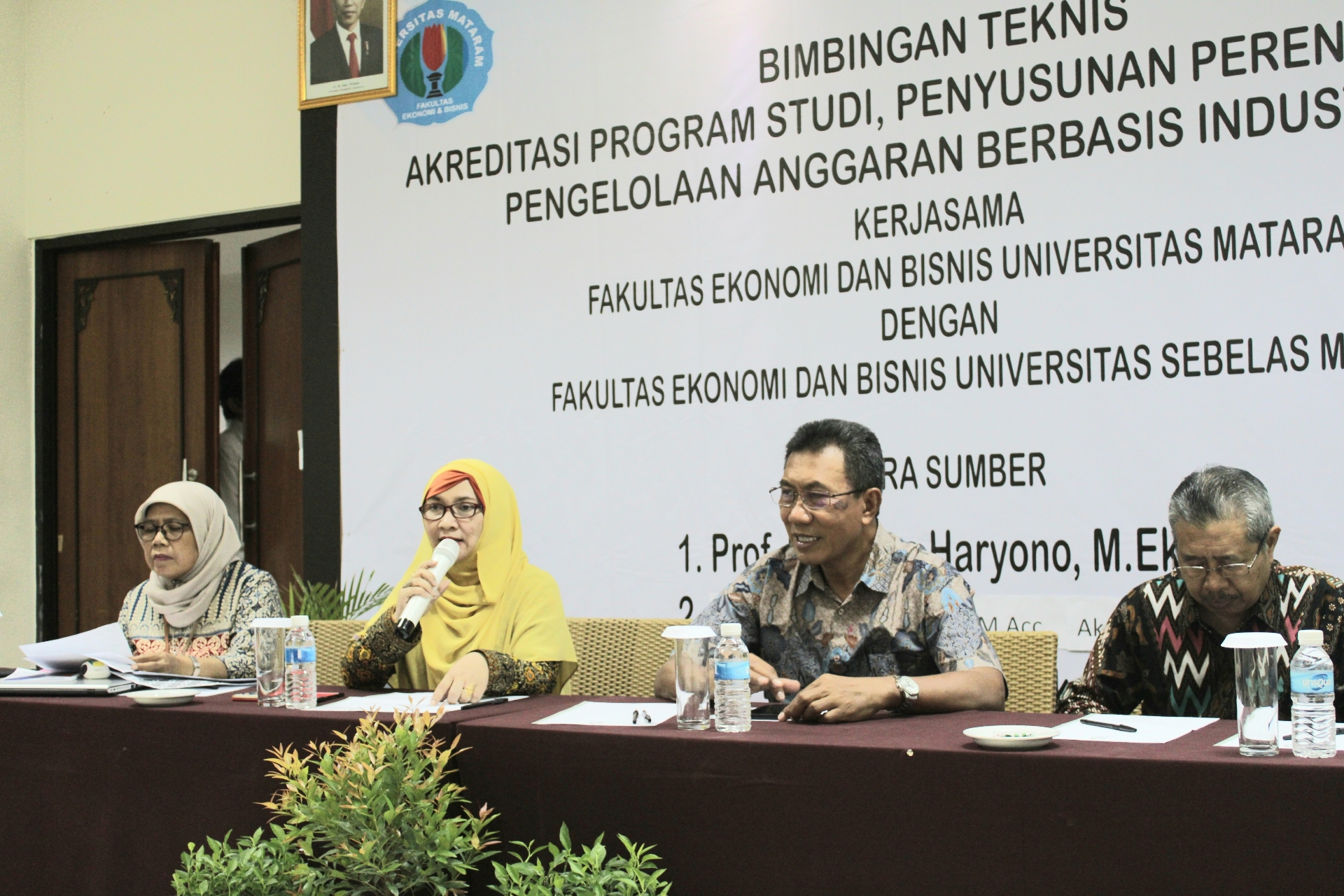
    This was mentioned by Prof. Tulus Haryono, M.Ek., during a technical meeting with the Universitas Mataram (UNRAM) on Friday, December 27, 2019. The meeting was attended by approximately 20 staff of the Faculty of Economics and Business, Universitas Mataram (FEB UNRAM) who hold leadership role.

    Further, Prof. Tulus explained that there are two reports that should be submitted to the BAN-PT namely the Study Program Performance Report, which covers quantitative data, and Self Evaluation Report for Study Program that mainly covers qualitative information. The submission to the BAN-PT should be made at least 6 (six) months before the previous accreditation certificate is expired. Therefore, the preparation of the reports should take one year prior to the submission to BAN-PT, the Study Programs should get prepared because the preparation of the Accreditation Reports needs a high accuracy.

    “The Reports is prepared by the Head of Study Program assisted by an accreditation team. The Head of Study Program should be directly involved in the preparation of the Report and should completely understand its content, because they will get interviewed during the assessment, while the team member will provide assistance where needed,” Prof. Tulus explained. Further he also mentions that the Report should strictly follow the format provided by the BAN-PT. “No matter what the template is, we have to follow the format provided by the BAN-PT,” said the Professor who had served as BAN-PT assessor for more than 16 years.

    In term of collaboration report, the Study Programs need to report their collaboration with the industries, institutions, or other universities both with national and international universities. However, the collaborations that can be included in the report are not the ‘dormant’ collaboration, which mean only active collaboration can be included. For lecturer profile, the assessor will assess whether the lecturers are capable and possess the competency to teach on certain course, this apply for both permanent and non-permanent lecturer. The assessor will also consider the lecturer last education.

    “If all lecturers are assigned to course that are in line with their competency and skill, the program will earn 4 points. Based on the regulation from the BAN-PT if there are more than 7 lecturers who are assigned to a course that is not in line with their competency, then the program will be given 3 points,” he said.

    For the sake of accreditation process, Prof. Tulus reminds that a program should focus on hiring permanent lecturers and limit the number of non-permanent lecturer. In his presentation, Prof. Tulus explains all the important point related with accreditation using 9 criteria and followed with discussion with the participants.
  • FEB UNS Establish a Collaboration with FEB UNRAM

    FEB UNS Establish a Collaboration with FEB UNRAM

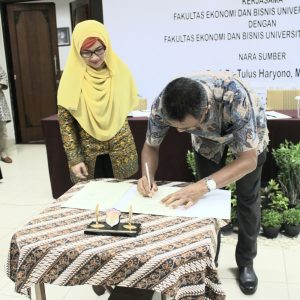
    FEB UNS tandatangani kerjasama dengan FEB UNRAMThe Faculty of Economics and Business, Universitas Sebelas Maret (FEB UNS) establish a collaboration with the Faculty of Economics and Business, Universitas Mataram (FEB UNRAM). This collaboration was marked with the signing of the Memorandum of Understanding (MoU) on Thursday, December 26th, 2019, in UNS Inn Solo. The MoU was signed by the FEB UNS Vice Dean of Academic Affairs, Dr. Izza Mafruhah, who was representing the Dean of FEB UNS, and the Dean of FEB UNRAM, Dr. Musaidy Yasin, MS, witnessed by the staff of both institutions.

    The collaboration between FEB UNS and FEB UNRAM will covers various activities in the coaching of education and teaching (visiting professor and speaker), research coaching (assistance and research workshops and joint research), and publication of joint research article in international journals. Following the introduction of FEB UNS faculty members and the presentation of FEB UNS profile, Dr. Izza, in her opening remarks mentioned that this collaboration aims to accelerate the improvement of education quality, research, and publication of joint research articles in international journal, especially to improve Faculty’s member competency to be able to compete at national and international level.

    In term of postgraduate education, the Doctoral Program in Economics of FEB UNS (PDIE) is welcoming the FEB UNRAM Faculty members who wish to take further study. A collaboration in research, community service is also possible. Further, Dr. Izza mentions that education as the main focus of a university is expected to deliver a high-quality education, which proved through accreditation, this cannot be separated from budgeting in an institution.

    FEB UNS lecturer, Santoso Tri Hananto

    “With a healthy budgeting, the education quality in a university will be improved,” she explains.

    After the MoU signing, a technical assistance was conducted with two speakers from FEB UNS, Drs. Santoso Tri Hananto, M.Acc.,Ak., who discuss about budgeting planning, and Dr. Djuminah, M.Si., Ak., presenting a material on budgeting. This technical assistance was attended by 20 Faculty staff of FEB UNRAM. Another session of this technical assistance will be conducted on December 27, 2019 with the main speaker Prof. Tulus Haryono, discussing about Accreditation with 9 Criteria.

  • Student Executive Board FEB UNS (BEM FEB) Invites the Deanery for Discussion

    Student Executive Board FEB UNS (BEM FEB) Invites the Deanery for Discussion

    Carrying the theme “Synergy to Deliver Aspiration” the Research and Data Unit of the Student Executive Board (BEM), the Faculty of Economics and Business, Universitas Sebelas Maret (FEB UNS), organizes a Faculty Hearings. This agenda was conducted on Thursday, December 19, 2019, in 2nd Assembly Room of FEB UNS. The event was attended by the Deanery of FEB UNS, Head of Administration Affairs, Head of Units in FEB, and FEB UNS Student Association members. This hearing aims to deliver the students’ aspiration to the Head of Faculty.

    BEM FEB and student association members during the hearingPrior to the hearing, the BEM FEB UNS has conducted a survey on the satisfaction of the service that covers academic, infrastructure, student affairs, and finance. The survey was conducted on November 21st to December 10th, 2019 using online questionnaire with total respondent of 231 FEB UNS students from all class and study programs using stratified random sampling.

    The main concerns of the survey covers the academic service, which includes lecturers’ performance, examination, infrastructure, which includes indoor and outdoor area as well as general facilities, student affairs, which includes student service, Tuition fee exemption, scholarship, student association, and competition policy, while finance aspect covers students’ activity fund disbursement and clarity on Standard Operation and Procedure (SOP). It is expected that this survey can serves as the basis of student perception data and used as consideration or even guidelines in improving service quality in FEB UNS. Based on the survey result, the BEM FEB UNS present the areas of improvement for the four aspects and the proposed suggestions.

    Dr. Izza Mafruhah, SE, M.Si, the Vice Dean of Academic Affairs FEB UNS, appreciate the initiative taken by the BEM FEB UNS during her opening remarks. The hearing is expected to be the means to improve lecturers’ performance, faculty staff, and the Deanery in managing the Faculty. “There are many stakeholders that monitor our performance. The Rectorate of UNS also assess our Faculty, especially in term of students’ achievements. There are some achievements that need to be optimized such as in Student Creativity Program (PKM), this will be our responsibility,” she said.

    Further, for the next year, the Deanery will be more focused in improving students’ achievements, not only in PKM but also through internationalization program. Moreover, for the next year budget, the Deanery has allocated funding for student outbound program, which available through competitive selection. The faculty will send the students for attending summer program, which usually take two or three weeks, which enable the students to understand the culture of the countries. Another program prepared is a competition in start-up business for students that aims to support students’ entrepreneurship.

    “If student have a creative idea it can be used to support their achievement and our faculty has establish a collaboration with a sponsor to support this program,” Dr. Izza said.

    Meanwhile, the survey result shows a favorable result Head of units and divisions in FEB UNSwith all suggestion on the Lecturers’ performances is presented during the hearing. This presentation is followed with a discussion where the participants asking several questions and providing suggestion in thesis supervisory system, structured exam, control on the lecturers’ quality, clarity on the information of scholarship, ease of access to use Faculty facility, clarity on finance, and improvement for sport infrastructure. One of the interesting suggestions from the students are the need to establish an organization as a means to transfer the knowledge from those who have rich experience both at national and international level to those who has no such experiences. This organization can also be the place for intensive coaching.
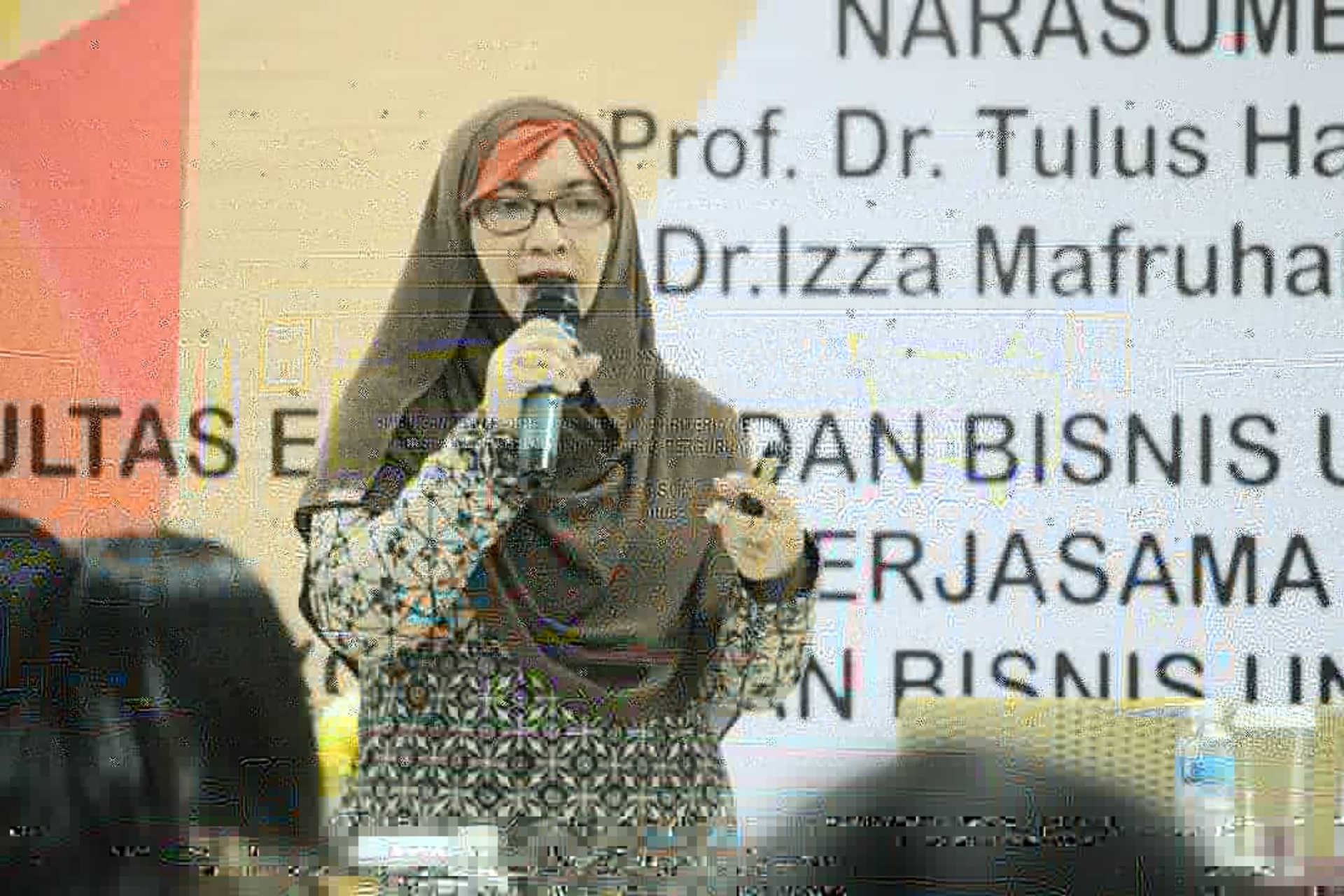
    Dr. Djuminah, the Vice Dean of General and Finance Affairs, Dr. Mugi Harsono, the Vice Dean of Student Affairs, and other Faculty staff provide necessary feedback to the students’ inquiries and suggestions. For further meeting between Faculty staff and the students a following hearing or discussion will be organized within a non-formal occasion.

  • Managing Tri Dharma for Higher Education in 4.0 Industrial Era

    Managing Tri Dharma for Higher Education in 4.0 Industrial Era

    The management for Tri Dharma activities in higher education covers teaching, research, and community service. These three aspects need to be maintained during the preparation of accreditation report. The Faculty of Economics and Business, Universitas Sebelas Maret (FEB UNS) and the Faculty of Economics and Business, Universitas Warmadewa (FEB UNWAR), establish a collaboration in these three areas, which facilitate further collaboration in teaching, research, and community service program. This was mentioned by the Vice Dean of Academic Affair of the FEB UNS, Dr. Izza Mafruhah, SE, M.Si, who serves as one of the speakers in Technical Assistance for the UNWAR staff with leadership position, on December 18, 2019.

    Further, Dr. Izza mentions that the collaboration between UNS and UNWAR has various advantages for both parties. Through energy, outcome, and human resource sharing, this collaboration can improve the Key Performance Indicator (KPI) for both parties. In term of teaching, UNS and UNWAR can collaborate in student inbound. “The inbound student can spent one week in Solo to learn about its culture, and the next week they go to Bali,” Dr. Izza said. This also applies for visiting professor.

    In community service program, the UNWAR can use the tourism or cultural potential that characterize Bali and establish a collaboration with other universities. For instance, Subak as a community organization that specialized in managing the irrigation system for paddy cultivation in Bali can be examined in contrast to the irrigation system in Java or other regions. This model can be applied for other regions.

    Publication of scientific articles by the Lecturer need to be improved to increase the percentage of Associate Professor and Professor in a university. A lecturer who continuously conducting research will deliver different teaching quality as they can bridge the theory and reality, giving appropriate example in line with the real condition, and providing updated information and data. Through research a lecturer can also publish a textbook.

    Dr. Izza also mention that university need to get prepared to face the challenge in 4.0 industry. “We should connect the curriculum and learning outcome to the industry 4.0, we also need to realize and adapting to the current era and understand our students,” Dr. Izza said.

    Teaching and learning process where the lecturer provides material and the students listen to their presentation is no longer favorable for the 4.0 era. In this era the students are facilitated with advanced IT system to find course material.

  • FEB UNS Signed a Memorandum of Understanding (MoU) with FEB UNWAR

    FEB UNS Signed a Memorandum of Understanding (MoU) with FEB UNWAR

    The Faculty of Economics and Business, Universitas Sebelas Maret (FEB UNS) establish a collaboration with the Faculty of Economics and Business, Universitas Warmadewa (FEB UNWAR). This collaboration was marked the signing of a MoU between the institution on Wednesday, December 18, 2019, in UNS Inn Solo.
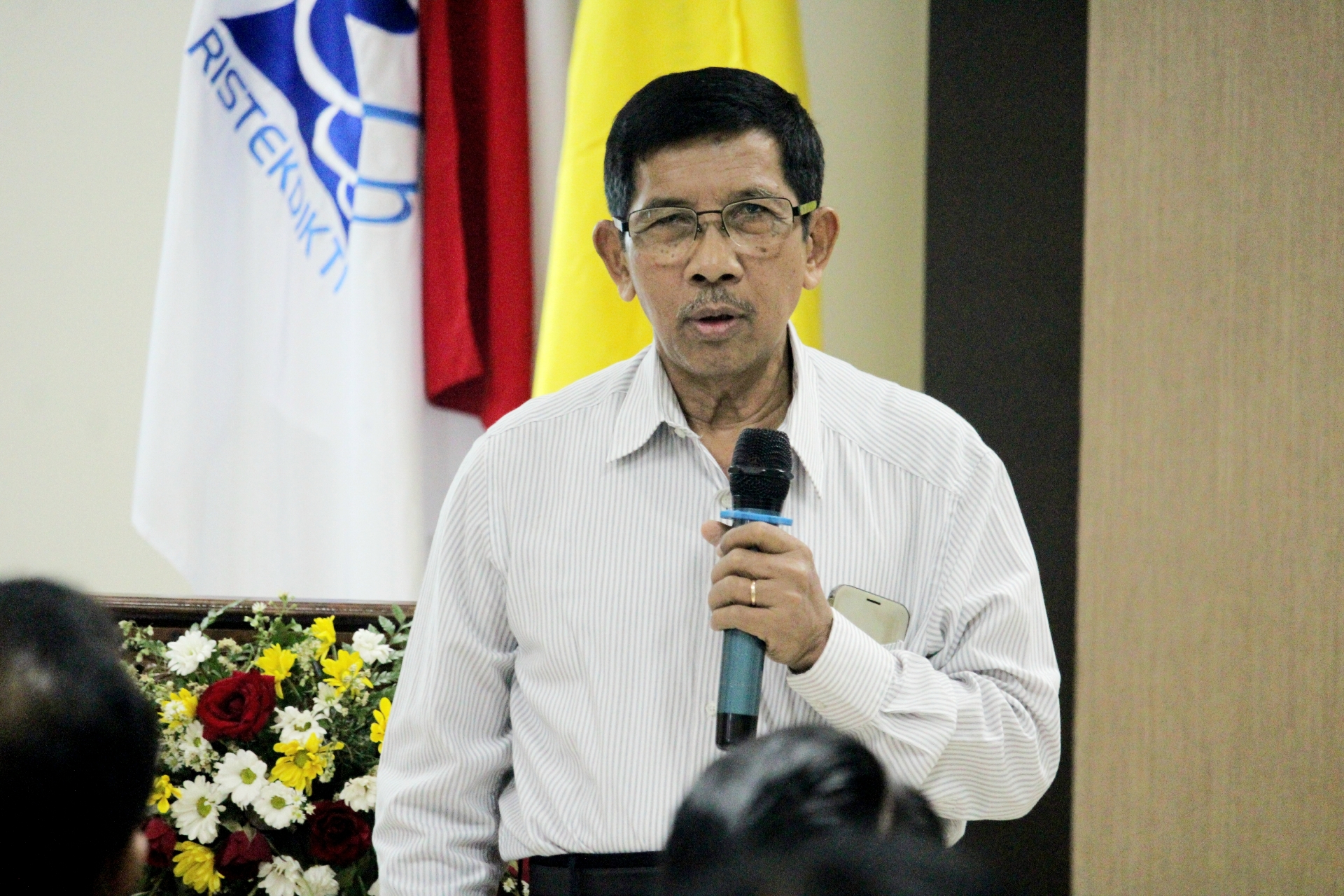
    The MoU was signed by the Dean of FEB UNS Prof. Djoko Suhardjanto and the Dean of FEB UNWAR Dr. I Made Sara, SE, MP, witnessed by the staff from both parties. This collaboration covers assistance on education and teaching (visiting professor and speaker), research coaching (assistance and research workshops and joint research), and publication of joint research article in international journals. This collaboration aims to improve the quality of education and teaching, research and community service, and improving lecturers’ competency in the FEB UNS and FEB UNWAR to compete at international level.

    The MoU signing is followed by a Technical Assistance, which presented by Prof. Tulus Haryono, M.Ek., and Dr. Izza Mafruhah, SE, M.Si. During the technical assistance, Prof. Tulus explained about the BAN-PT Accreditation using 9 Criteria toward International Accreditation, while Dr. Izza discuss about the management of the Tri Dharma of Higher Education based on Industry 4.0.

  • Preparing BAN-PT Accreditation with Criteria 9, Study Program Needs to Work Hard

    Preparing BAN-PT Accreditation with Criteria 9, Study Program Needs to Work Hard

    The National Accreditation Board for Higher Study (BAN-PT) establish an improvement for the Accreditation Instrument for Study Program (IAPS) 4.0, which oriented on the output and outcome of the teaching and learning activities. The quality assessment is more focused on the process, output, and outcome, while the previous instrument focused more on input. This will make a Study Program do harder work in order to prepare the accreditation using Criteria 9. The Criteria 9 covers: vision, mission, goals, and objective; human resource; finance and infrastructure; education; research; community service; output and Tri Dharma achievement.

    This was mentioned by Prof. Tulus Haryono, M.Ek., during a technical meeting with the Universitas Warmadewa Bali on Wednesday, December 18, 2019. The meeting was attended by approximately 50 staff of the Faculty of Economics and Business, Universitas Warmadewa (FEB UNWAR) with leadership role.

    Further, Prof. Tulus explained that there are two reports that should be submitted to the BAN-PT namely the Study Program Performance Report, which covers quantitative data, and Self Evaluation Report for Study Program that mainly covers qualitative information. The submission to the BAN-PT should be made at least 6 (six) months before the previous accreditation certificate is expired. Therefore, the preparation of the repots should take one year prior to the submission to BAN-PT, the Study Programs should get prepared because the preparation of the Accreditation Reports needs a high accuracy.

    “The Reports is prepared by the Head of Study Program assisted by an accreditation team. The Head of Study Program should be directly involved in the preparation of the Report and should completely understand its content, because they will get interviewed during the assessment, while the team member will provide assistance where needed,” Prof. Tulus explained. Further he also mentions that the Report should strictly follow the format provided by the BAN-PT. “No matter what the template is, we have to follow the format provided by the BAN-PT,” said the Professor who had served as BAN-PT assessor for more than 16 years.

    In term of collaboration report, the Study Programs need to report their collaboration with the industries, institutions, or other universities both with national and international universities. However, the collaborations that can be included in the report are not the ‘dormant’ collaboration, which mean only active collaboration can be included. For lecturer profile, the assessor will assess whether the lecturers are capable and possess the competency to teach on certain course, this apply for both permanent and non-permanent lecturer. The assessor will also consider the lecturer last education.

    “If all lecturers are assigned to course that are in line with their competency and skill, the program will earn 4 points. Based on the regulation from the BAN-PT if there are more than 7 lecturers who are assigned to a course that is not in line with their competency, then the program will be given 3 points,” he said.

    For the sake of accreditation process, Prof. Tulus reminds that a program should focus on permanent lecturers and limit the number of non-permanent lecturer. Beside presenting the important point related with accreditation using 9 criteria, Prof. Tulus also encourage the participants to always strive to earn academic position. “It is your rights as a lecturer. If you already have excellent work portfolio, then you can proceed for the position promotion, there will be no one will intervene the process. This is different with the structural position that can be interfered by other parties,” he explained.

    Further, Prof. Tulus also mention that a lecturer should broaden their knowledge through further study. “As a farmer who sharpen their equipment, lecturer also has to sharpen their knowledge to improve their teaching, thus further study is a must,” he explained.

  • P4M FEB UNS Disseminate New Regulations for Research Group

    P4M FEB UNS Disseminate New Regulations for Research Group

    The Center of Research and Community Service Development (P4M), in the Faculty of Economics and Business, Universitas Sebelas Maret (FEB UNS) organize a dissemination and management of Research Group (RG), on Tuesday, December 17, 2019. The Head of P4M FEB UNS, Dr. Doddy Setiawan presented the new regulation regarding the management of RG to the Head of Study Programs and the Chairman and Secretary of the RG.

    Different from the previous regulation, the new provision limits the number of RG members by minimum 5P4M FEB UNS dissemination session members and maximum 10 members including the Chairman and Secretary of the RG. Additionally, the RG should refer to the Study Program of the Chairman of the RG. Moreover, a lecturer can become a member of two different RG from two different Study Program. This aims to encourage collaboration across scientific disciplines.

    “The main RG membership would be the lecturers’ home base study program and the second membership should be in other study program or faculties in UNS or a study center,” Dr. Doddy said.

    Another matter that should be considered is the requirements for choosing the Chairman of a RG, which the new provision regulate several stages. The Chairman can be a Professor who earned a competitive research or community service program at national or international level, or has a P index minimum of 2 or Scopus index of higher than/equal to 2 (for natural science) or higher than/equal to 1 for social science and law study. The Chairman can also a chosen from the faculty member with PhD degree with 2 requirements: has published research article in international journal/registered invention and has won/earned a research grant in competitive research or community service program at national or international level, or has a P index and Scopus index requirement similar to a Professor candidate.

    Further, the Chairman can also be chosen from the members with Master degree with Associate Professor qualification, by fulfilling all the 3 requirements provided for both candidate with Professor and Doctor degree. At the end of his presentation, the Head of P4M provide a period for submission by the latest Monday, December 23, 2019.

  • Hospitality, the Main Key of Lecture Exchange

    Hospitality, the Main Key of Lecture Exchange

    The main key of the internationalization program in university, specifically lecture exchange, is the networking with international universities. During a lecturer study (Doctoral or Master) they have this opportunity to do a presentation in abroad institutions, establish a networking and communication, collaboration, and having a discussion with well-known professor that will helps the lecturers’ institution development. This was expressed by Prof. Dr. Raditya Sukmana, the Head of Sharia Economy Department from Universitas Airlangga (UNAIR), during an Interactive Discussion on Lecture Exchange: Lecturers’ Achievement vs Institution Needs, on Monday, December 16, 2019, in the Faculty of Economics and Business, Universitas Sebelas Maret (FEB UNS).

    Prof. Raditya mentions that, “in our institution, there is an application for the Lecturer to do international travel, there should be a value-added from the activity. For instances following an international conference that collaborates with scopus or non-scopus journal, or following other collaboration activities, all of these should have achieve more than 6 point. If the point is lower, then the faculty member will not allowed to do the travel.” In term of Lecture Exchange, he mentions that UNAIR implemented a short-term program with less than 3 months (visiting lectures) period and long-term period for adjunct professor (more than 3 months), this applies both for inbound and outbound program.

    “For Inbound Adjunct Professor, even though it is expensive, it will provide great advantage. For a quite long period, beside delivering course for undergraduate, master, and doctoral program, they can assist students or lecturers research. They can also help in establishing the curriculum and other programs. The Lecture exchange can be included in teaching team and other assignments,” he explains.

    In line with Prof. Raditya, the second speaker, Dr. Yunieta Anny Nainggolan who is the Head of Master and Doctor of Science in Management Program, Institut Teknolgi Bandung (ITB), mentions that Lecture Exchange is an effort for lecturers to gain international exposure. “This is important to improve our competency in Tri Dharma of Higher Education, in teaching, research, and community service,” she said.

    In internationalization, the key is to establish a network with national and international universities. “The Key Performance Indicator (KPI) will be useless if the faculty members do not have a passion to establish an international collaboration.”
    This discussion was attended by the faculty members and postgraduate students and is part of a series of event organized by the International Office (IO) of FEB UNS. Dr. Izza Mafruhah, M.Si., the Vice Dean of Academic Affairs, the FEB UNS, in her opening remarks said that Lecture Exchange is one of some indicators that is important in achieving the World Class University.

    Previously, the IO of FEB UNS had organized several activities such as International Class Initiative and Student Exchange. These activities are organized continuously. In 2020 the IO of FEB UNS will hold a special training for Junior lecturers to prepare for the lecture exchange.

  • FEB UNS Conduct a Discussion with FEB UNEJ

    FEB UNS Conduct a Discussion with FEB UNEJ

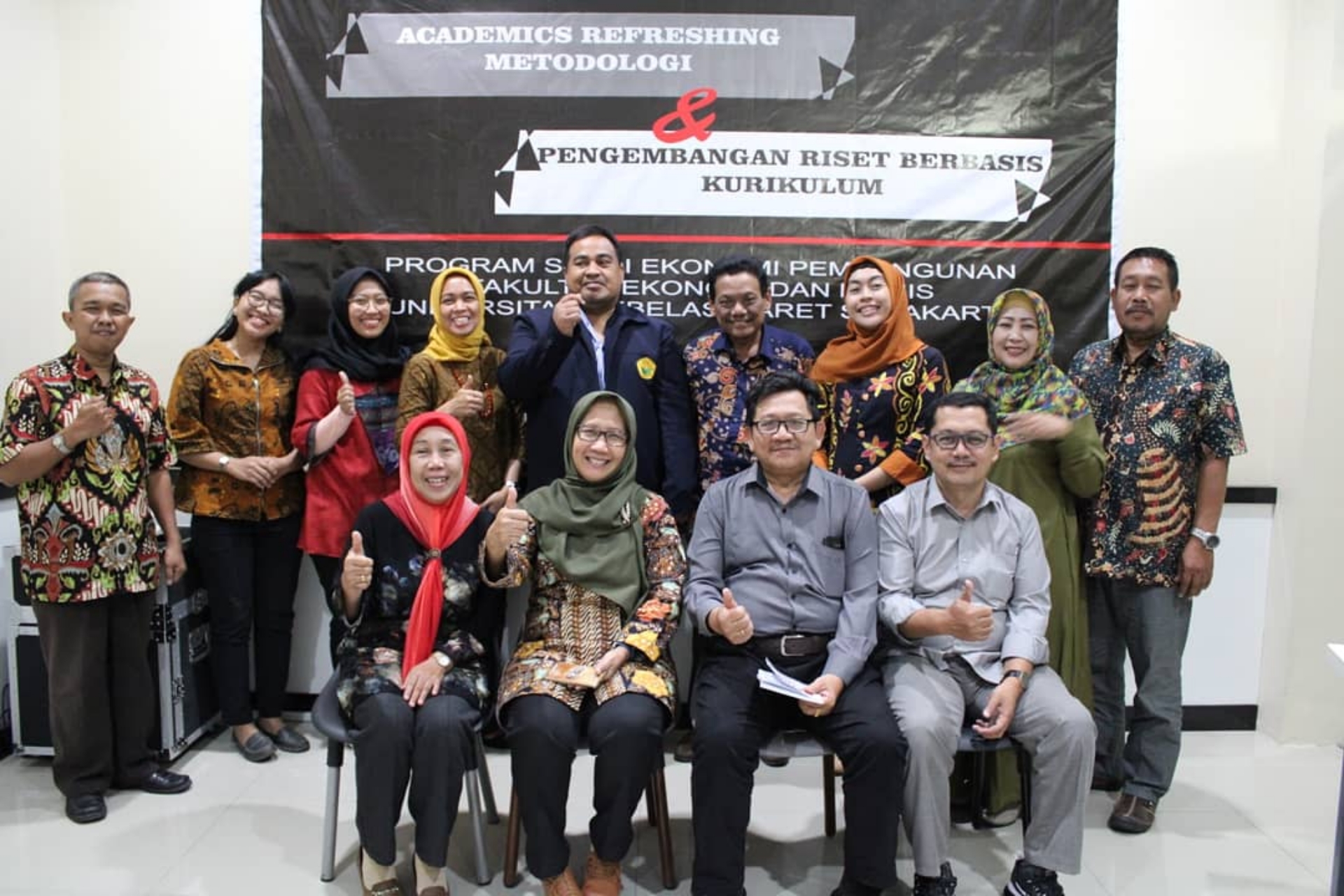
    The National Accreditation Board for Higher Education (BAN PT) since March 2019 has implements study program accreditation instrument 4.0. Previously, the accreditation was held using the 3.0 instrument with 7 standards. However, this was changed to 9 accreditation criteria, with the main difference in the accreditation focus, which previously on the input and process and the current one focused on the process and output. This matter was addressed by Dr. Siti Aisyah Tri Rahayu as the speaker in Academic Refreshing Methodology & Curriculum-Based Research Development, Friday, November 15, 2019.

    “We need to prepare accreditation with 9 criteria, there are many things that should be improved. For instance, in teaching and learning process, if it is conducted offline (in class) we only earn 2 point, and if we implement online course the point is 3. In order to achieve 4 point, there should be a documentation of teaching and learning process, the video of the process, and is published, thus it is accessible by the public,” she explained. With more courses that meet the criteria, the point achieved will be greater.
    Additionally, research result should also be implemented or discussed during learning process. This includes involving the students in research project, not only assisting but also involving them during the process.

    During the curriculum establishment, the faculty should planned its graduate profile. This cannot directly established as the faculty needs to predict the market demand. Therefore, the curriculum establishment process should involve stakeholders. Another challenge for UNS is to adopt the digital 4.0 subject. This can be achieved through two methods, first to establish new course related with digital industry and second is to be included in the existing course element.

    Beside Dr. Siti Aisyah, there are two other speakers in this forum, Dr. Bhimo Rizky Samudro and Dr. Tri Mulyaningsih. This forum is attended by the faculty members of the Faculty of Economics, Universitas Jember.

  • Passing the 2019 Global Talent Selection, Lucida Joins an Internship at Kasetsart University

    Passing the 2019 Global Talent Selection, Lucida Joins an Internship at Kasetsart University

    Together with three Universitas Sebelas Maret (UNS) staff, Lucida Rectavia, staff of FEB UNS receives an opportunity to join an internship in UNS partner university in Thailand for 10 days, on the end of October 2019. This opportunity is given after Lucida is chosen as one of the best University staff on UNS Global Talent Program in 2019, organized by the UNS International Office (IO).

    together with Mr. Tanapon Chaisan, Ph.D the Deputy Direktur of KURDI (middle) and other researchers

    Previously, a series of selection process was conducted to choose the best University staff such as workshop in English Language Skill for Workplace, Cross Cultural Understanding, and Global Mindset. This year is the second year of the UNS Global Talent by the IO UNS, which first conducted in 2018. In 2018 IO had successfully assign 4 University staff to Thailand and Taiwan. The UNS Global Talent is a skill improvement program for UNS staff to expand their network and communication skill at workplace.

    When we met Lucida, she mentions that she really wished to pass the selection process but also felt a little inferior when she knew that the participants of the program were those UNS staff with excellent skills in English, particularly those who worked in UNS Language Center. “Alhamdulillah, finally I can passed the selection, even though there are some worries. I consider this as a mandate for me, thus I will try my best to make the most of this opportunity, to maintain UNS reputation,” she said. For ten days, Lucida and Wuji Anggraini, UNS staff from the UNS Language Center, undergo their apprenticeship activity at Kasetsart University (KU), Bangkok, Thailand.

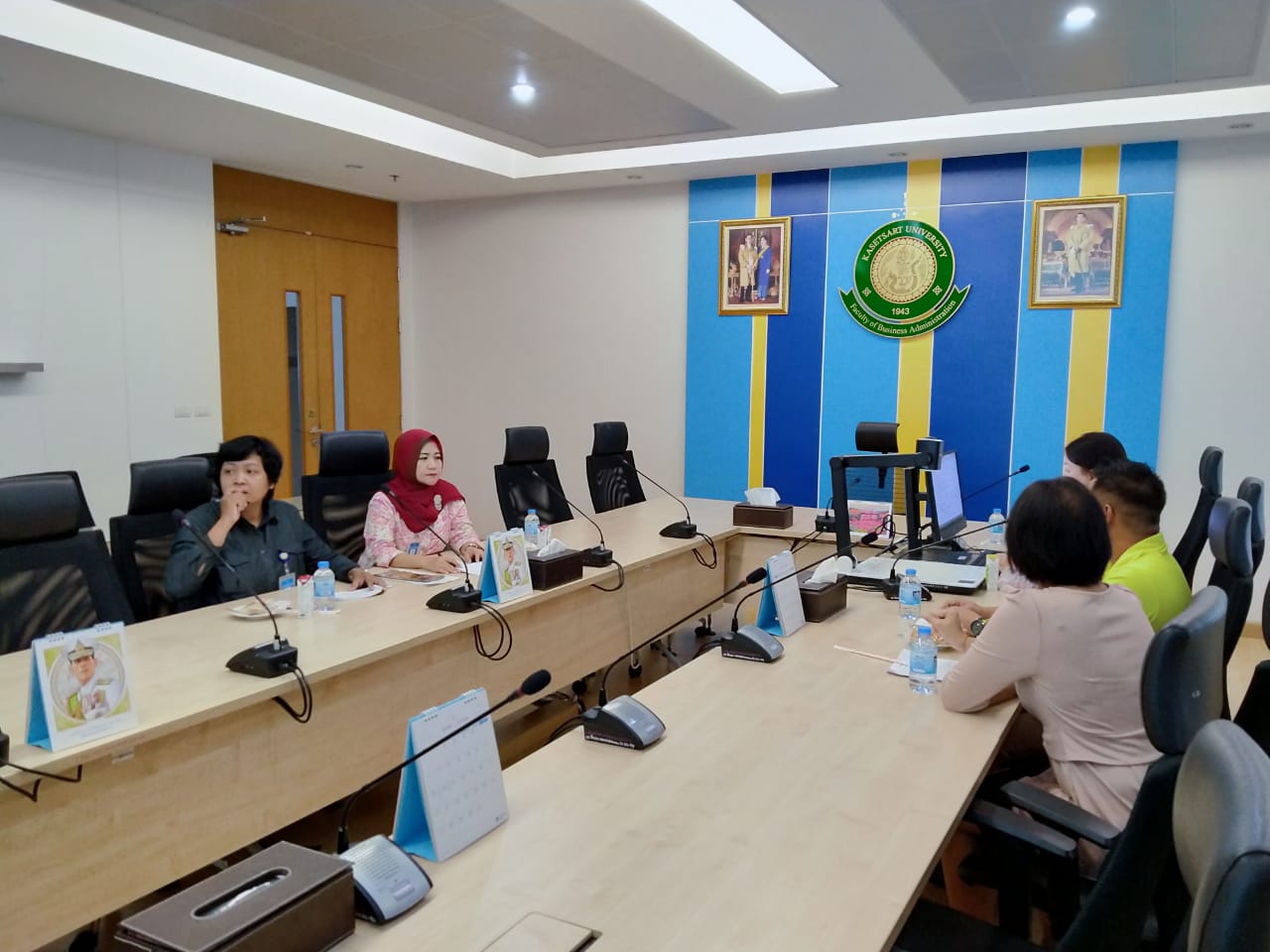
    On their first day of internship, they followed the orientation program that provided a general description of Kasetsart University. The orientation program was started with the introduction of officers, environment,  regulations, and Krissana International Dormitory facilities. Krissana International Dormitory is one of a dormitory building in KU Dormitory that specifically for foreign students studying or taking internships in KU. The next days, Lucida attended several activities in different places such as training in International Affairs Division (IAD), visit to KU Research and Development Institute (KURDI), Kasetsart University Language Center (KU Lang),

    Discussion with Assoc. Prof. Piwat Hitakorn, Ph.D Director of KU Language

    visited one of the faculty in KU, the Faculty of Business Administration, and on the last day, they visit the KU Library (KU Lib) located in KU Learning Center complex.

    Lucida enjoyed her internship program in Kasetsart University. The program enhanced her insight in internationalization activities at university level, improves her English communication competency and foster new ideas in institution administration management. Moreover, this program also improves their self-esteem and capability to adapt in foreign environment as minority, problem solving skill, and competency in solving various problem in internship environment, dormitory, and general public.

    Lucida says that she expects, forward, that other staff from the FEB UNS can get similar opportunity to join this program. Finally, Lucida mentions that institutionally, the Rector of UNS is invited to the 77th Anniversary of the Kasetsart University, on the February 2020.