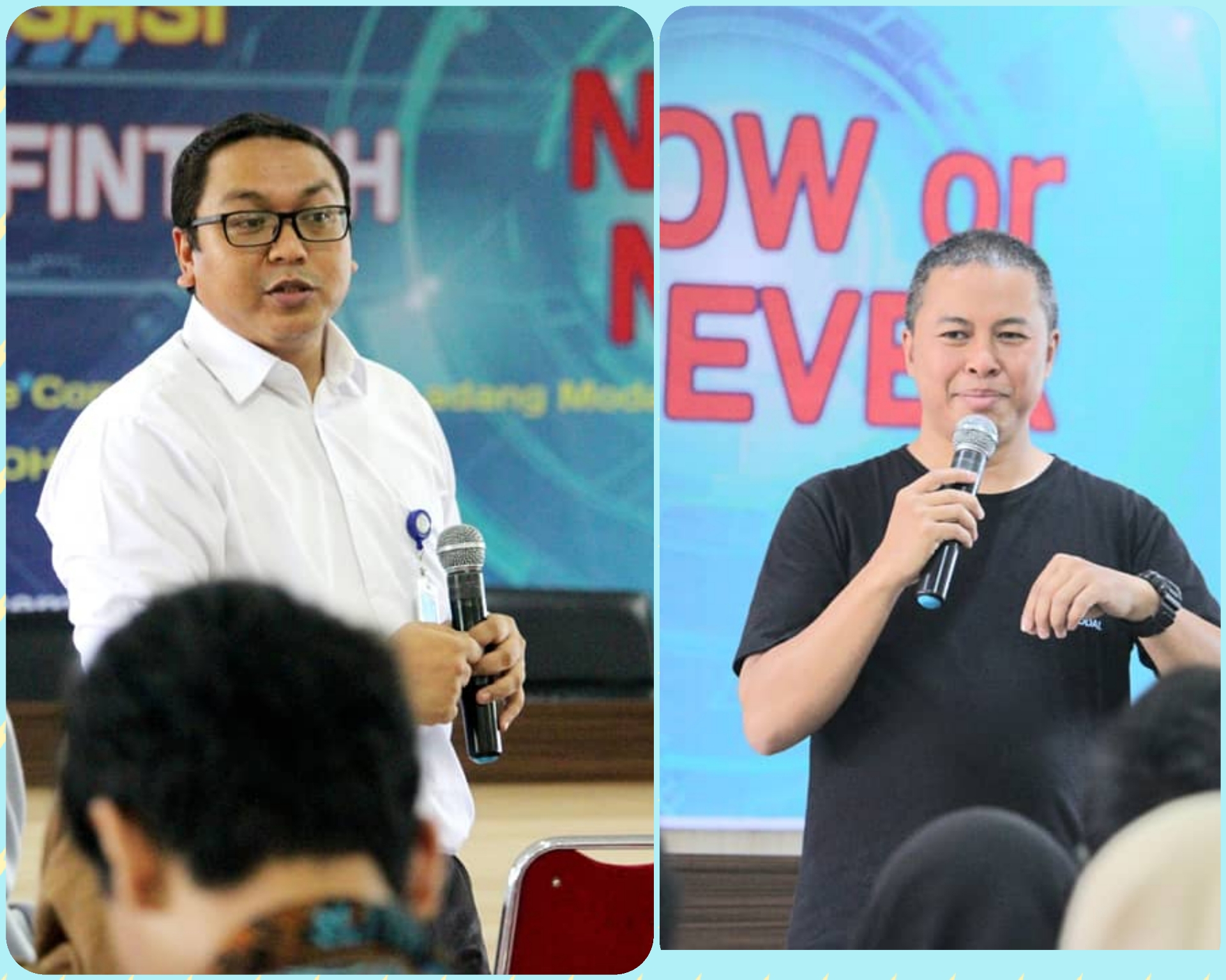
The financial technology business (Fintech) has grown rapidly in Indonesia, both for payment and lending service. This is shown with the distribution of 41 Trillion Rupiah credit for more than 5 million debtor that involves 480,000 creditors as of May 2019. This was mentioned by Dr. Irwan Trinugroho, the faculty member of the FEB UNS, during a Workshop on Fintech Business, Wednesday, December 11, 2019. He mentions that Fintech business that provide information technology-based innovation should empower the underprivileged community and reduce their vulnerability.
Even though, the Fintech business has a rapid growth, there are many people who has not understand about Fintech operation yet. This becomes the role of a university to educate the community and explain further about Fintech business to prevent them from illegal Fintech business. Students can also propose a proposal on the Student Creativity Program (PKM) to establish an applicative product that would be useful for the community to avoid the illegal financial service.
“Students can use the Student Community Service Program (Kuliah Kerja Nyata-KKN) as a media to improve community’s literacy on Fintech business,” Dr. Irwan says.
Further, Irwan advised to the participants who mostly are students,  to be careful when using a Fintech application. When downloading application, do not randomly press or choose “Allow” option, do not gives your contact number and giving permission to access storage. If users give permission on these two items, then, all contact in users’ phone will automatically recorded in the application owner’s server and will be used to ‘pressing’ the users when there is a delay in payment. This will defame the users.
The Fintech business that listed in the Financial Services Authority (OJK) is secure. The business owner of the application that want to get listed in OJK should provide a demonstration on their application and the application should not asking for accessing contact and storage. This was mentioned by Peter Febian, the Head of Corporate Communication of Ladang Modal, to the more than workshop 150 participants, while advise them to be selective in choosing online lending.
“Do not carelessly borrow money from Fintech, ensure the legality of a Fintech through OJK contact 157 or ojk.go.id,” Peter said. Fintech credit should not be used as a settlement for other debt, because this action will brought the borrowers to a bigger problem. Furthermore, the maximum amount of Fintech loans a borrower take should not bigger than 30% of their income.
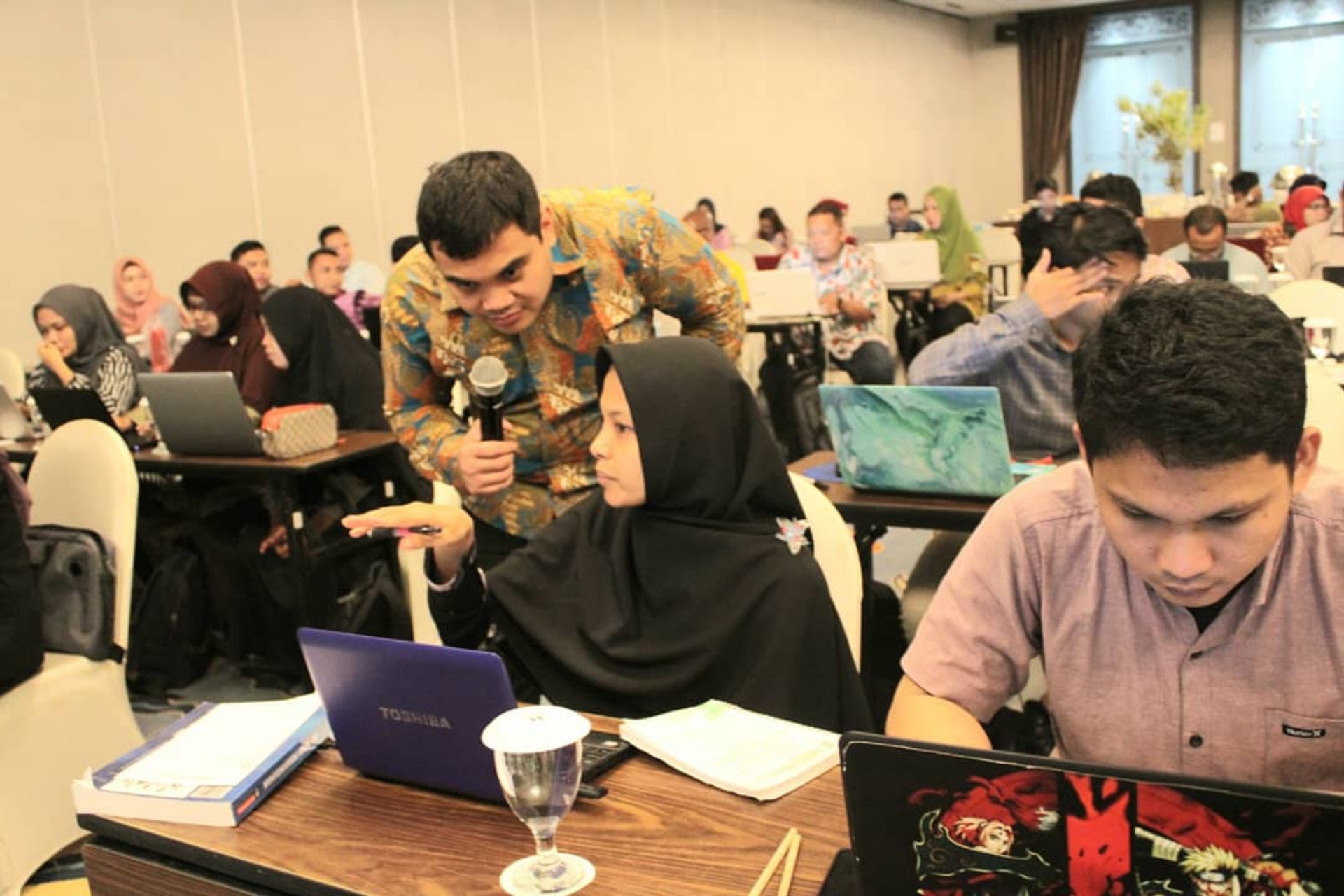

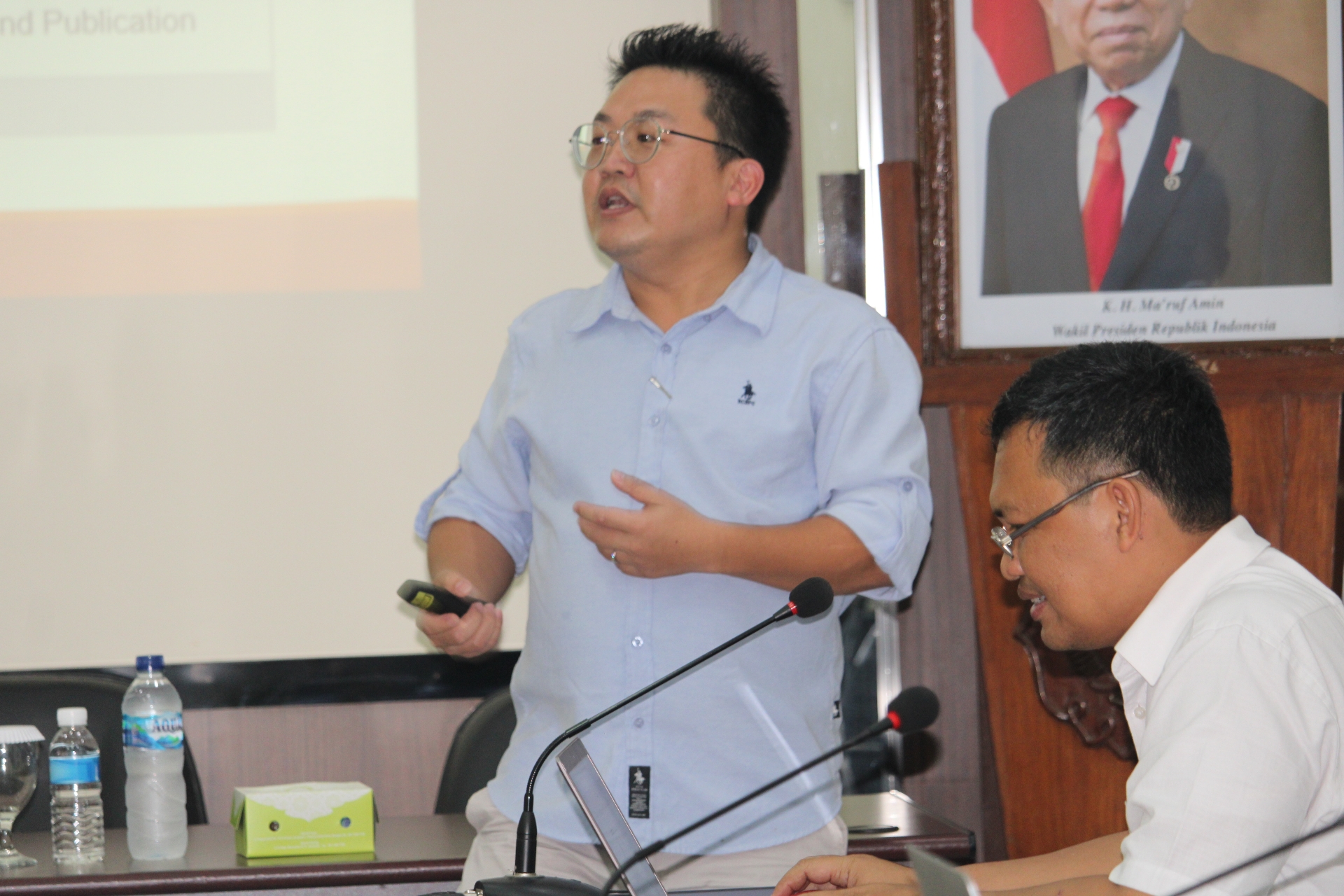
 Dr. Tang advises the participants, who are mostly the Postgraduate students in FEB UNS, to publish their article soon and do not need to wait until graduation. This aims to avoid another article with similar topics got published first. “Write different article, you can do this by using different perspective. For example, financial development or poverty, these topics have been discussed for many years and there are many researches on these topics. Can we do a research in this topic again? Of course,” he added. “It can be conducted by adding new findings, adding new variables, or discuss the topics using different point of view.”


 The SMEs need to understand that they need to change their approach in conducting business, in order to accommodate the intensity and differences between e-commerce transaction with direct (face to face) transaction. In front of the participant, mostly the students of Master in Economics and Environmental Studies and Doctor in Economics Study Program, Dr. Adi explains that in e-commerce implementation, the main point that should be understood by SMEs is the needs to transform their ‘way of thinking’. They need to understand the new era of marketing and promotion.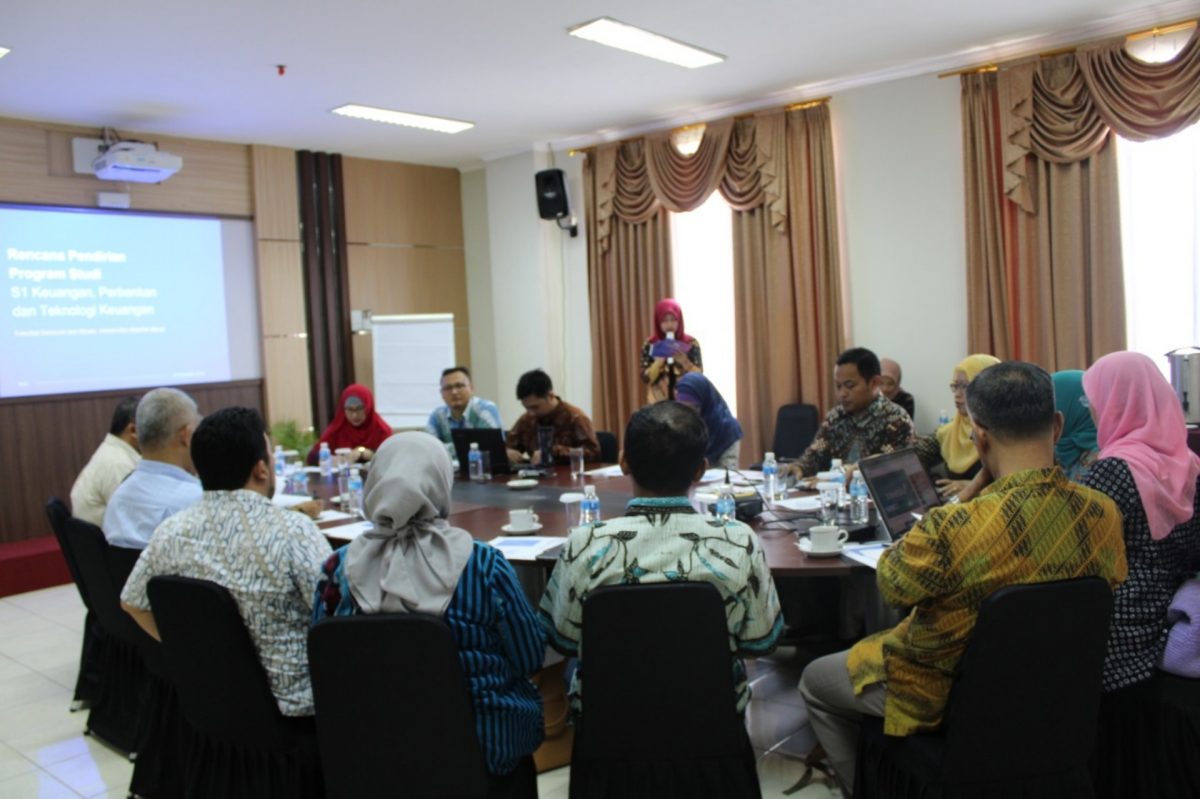
 the Vice Dean of Academic Affairs, the Faculty of Economics and Business, Universitas Sebelas Maret (FEB UNS), mentions that the discussion on the establishment of this Study Program has been initiated since June. “We expect that by the end of this semester, the proposal can be submitted to DIKTI, to obtain permission on the establishment, thus for the academic year of 2020/2021 we can open the admission for new student.” The proposed name for the new study program is ‘Undergraduate in Finance, Banking, and Financial Technology’. However, this will remain to be a subject of modification.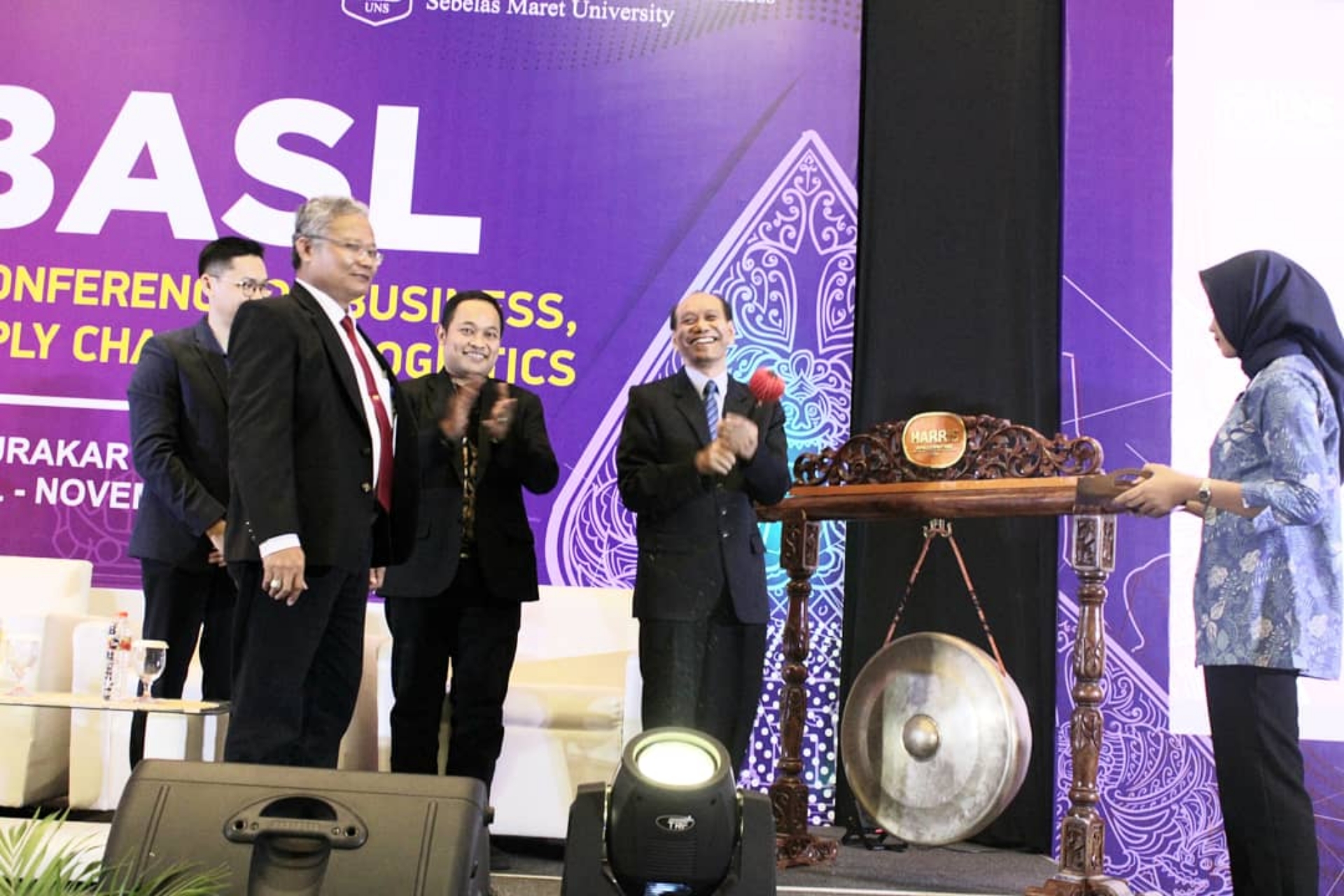
 Prof. Yunus delivers his appreciations to the Undergraduate in Accounting Study Program of the Faculty of Economics and Business, Universitas Sebelas Maret (FEB UNS) and all the speakers, for organizing a spectacular inaugural international week that consist of International Conference, Visiting Lecture, and International Student Visit. During his remarks, Prof. Yunus also expressing his gratitude to the Prof. Hooy Chee Wooi from the University Sains Malaysia as the Visiting Professor and providing an excellent course in Investment Theory and Portfolio to the FEB UNS students. He also appreciates the international students who participated in International Short Course Program. “We hope that their participation in this program will strengthen our relationship with our international partners.”
 covers various issues in accounting, business, logistic, and supply chain. The best article will be given the opportunity to publish in National Accredited Journal such as Jurnal Akuntansi dan Bisnis, Jurnal Keuangan dan Perbankan, Jurnal Akuntansi dan Auditing Indonesia, Jurnal Akuntansi Multiparadigma, and Jurnal Sains Bisnis. The best articles will also have the opportunity to get published in Scopus indexed journal such as Social Responsibility Journal (SRJ), Meditary Accountancy Research, Journal of Contemporary Accounting, International Journal of Economics and Management, and International Journal of Service Management Sustainability.