FEB

Kategori: s1_akt

  • Ethics, Networking, and Tolerance: Three Key Messages from the Dean of FEB UNS to New Students in 2025

    Ethics, Networking, and Tolerance: Three Key Messages from the Dean of FEB UNS to New Students in 2025

    The Introduction to Campus Life for New Students (PKKMB) at the Faculty of Economics and Business, Universitas Sebelas Maret (FEB UNS), was conducted from 19 to 21 August 2025. A series of activities, both at the university and faculty level, were organized to welcome the new cohort. The materials covered included National Insights and State Defense, Academic Ethics and Integrity, Graduate Character, and others.

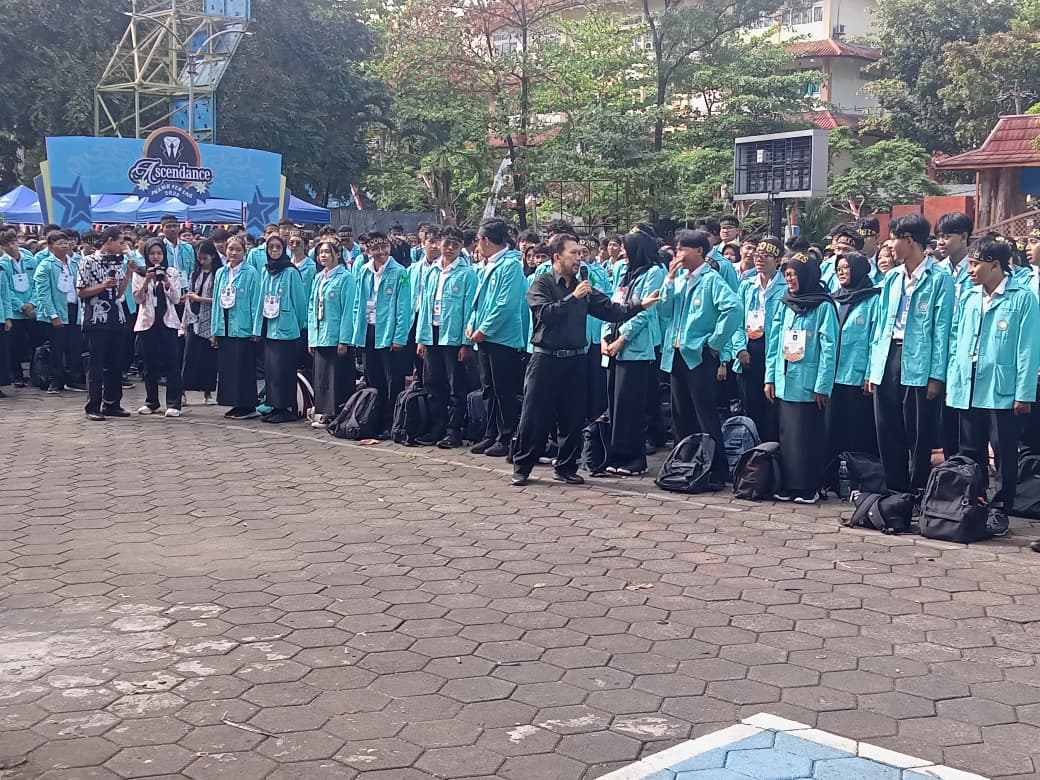
    The opening of PKKMB FEB UNS took place at Djarwanto PS Hall on Wednesday, 20 August 2025, attended by the Dean Office, Heads of Study Programs, Head of Administrative Office, Heads of Subdivision, and all new students.
    Dean of FEB UNS, Prof. Bhimo Rizky Samudro, S.E., M.Si., Ph.D., conveyed three key messages in his address: the importance of ethics, building networks, and developing tolerance during the study period on campus. “I would like to remind you, your presence here is not solely due to your own efforts, but also because of the role of God Almighty and the prayers of your parents, especially your mother. A mother’s prayer is vital in your life journey,” said Prof. Bhimo.

    He emphasized that students should never forget to honor their parents as a core foundation in pursuing education. In addition, he reminded them of the importance of respecting lecturers and all faculty staff. “As the young generation, ethics must be the primary foundation you hold firmly,” he stressed.

    The Dean also encouraged students to actively build networks by joining student organizations. “Do not just go back and forth between home and class. Join at least one student organization, thus, you can expand your networking and do not live in isolation,” he urged.

    Alongside ethics and networking, Prof. Bhimo highlighted the importance of tolerance and mutual respect. He explained that UNS provides five places of worship on campus as a tangible expression of its respect for diversity and pluralism. “Inclusivity and pluralism are hallmarks of UNS that we must uphold together,” he remarked.

    Following his speech, Prof. Bhimo introduced the Vice Deans, Heads of Study Programs, the Head of Administrative Office, and Heads of Subdivision of FEB UNS.

    The three key messages—ethics, networking, and tolerance—are aligned with the spirit of the Sustainable Development Goals (SDGs). Ethics supports SDG 4 (Quality Education) by instilling strong character values. Networking contributes to SDG 8 (Decent Work and Economic Growth) through the development of skills and career opportunities. Meanwhile, tolerance and respect for diversity reflect the values of SDG 10 (Reduced Inequalities) and SDG 16 (Peace, Justice, and Strong Institutions).
  • Accounting Study Program FEB UNS Collaborates with CESGS Universitas Airlangga to Hold Stata Training Class

    Accounting Study Program FEB UNS Collaborates with CESGS Universitas Airlangga to Hold Stata Training Class

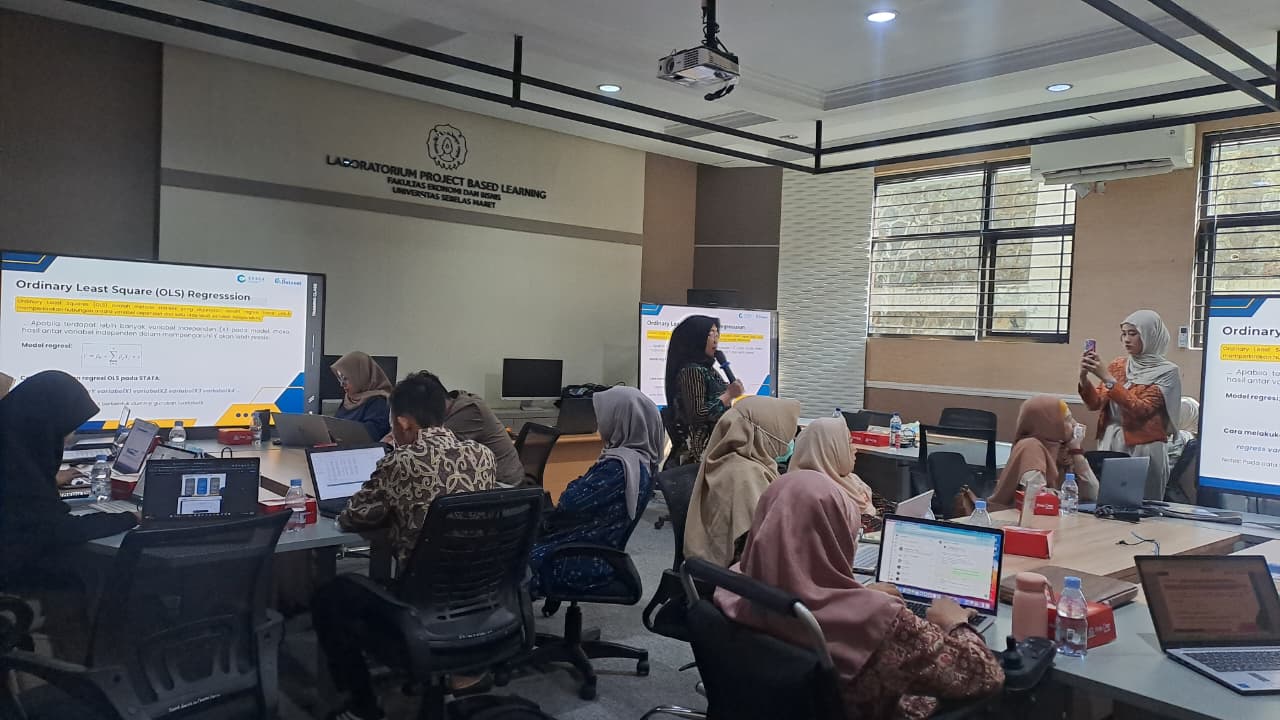
    The Accounting Study Program, Faculty of Economics and Business (FEB), Universitas Sebelas Maret (UNS) has established a strategic collaboration with the Center for Economic, Social, and Governance Studies (CESGS) Universitas Airlangga through the organization of a Stata Training Class. The event took place on 7–8 August 2025 at the Project-Based Learning Laboratory, FEB UNS.

    Designed specifically for lecturers of the Accounting Study Program FEB UNS, the training covered both beginner and intermediate topics, enabling participants who were new to Stata as well as those seeking to master advanced techniques to gain optimal benefits. The first day began with a session titled Using Stata Effectively: The Fundamentals, introducing the Stata interface, database management, and the use of do-files to facilitate the script-based command feature in data analysis.

    The materials were presented by Hamidah Dwi Nita, assisted by Meifaza Ainur Rosyidah and Cindi Nandita Dewi. Participants engaged in hands-on practice, from data cleaning and variable construction to applying descriptive and inferential statistical analyses. The session also discussed techniques for creating informative graphs and reproducible reports to enhance the quality of academic publications and ensure transparency in the analysis process.
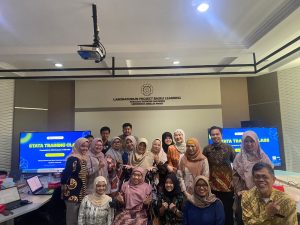
    On the second day, the focus shifted to Panel-Data Analysis Using Stata, covering concepts and applications of simple linear regression, multiple regression, and model selection between ordinary least squares, fixed effects, and random effects. Participants were also introduced to instrumental variable estimation to address endogeneity issues, as well as dynamic panel-data models that enable time-series cross-sectional analysis. Each technique was explored thoroughly, from selecting the appropriate Stata commands to interpreting outputs and verifying model assumptions.

    The Stata Training Class served not only as an educational program but also as a refresher for lecturers who had previously used Stata. Revisiting the fundamentals while learning advanced features helps maintain research quality and ensures skills remain up to date with current data analysis developments.

    Beyond knowledge transfer, the training provided an opportunity for lecturers from the Accounting Study Program FEB UNS to engage directly with CESGS UNAIR statistical experts. Discussions addressed real-world challenges in accounting research, strategies for managing big data, and ways to optimize Stata resources for publications in reputable national and international journals.

    Equipped with these skills, lecturers of the Accounting Study Program FEB UNS are expected to be more confident in designing quantitative research, improving teaching quality, and increasing productivity in producing data-driven academic publications.

    The Data Analysis-Stata Training Class shows the Study Program contribution in achieving SDG 4: Quality Education, by improving lecturers’ capability by mastering modern quantitative analysis technique, and SDG 9: Industry, Innovation, and Infrastructure. Particularly on goals no 9.5 promoting research and academic technology capacity at higher education.

  • Two Teams from Accounting Study Program FEB UNS Receive Awards at the SDG 13 Pitching Video Competition

    Two Teams from Accounting Study Program FEB UNS Receive Awards at the SDG 13 Pitching Video Competition

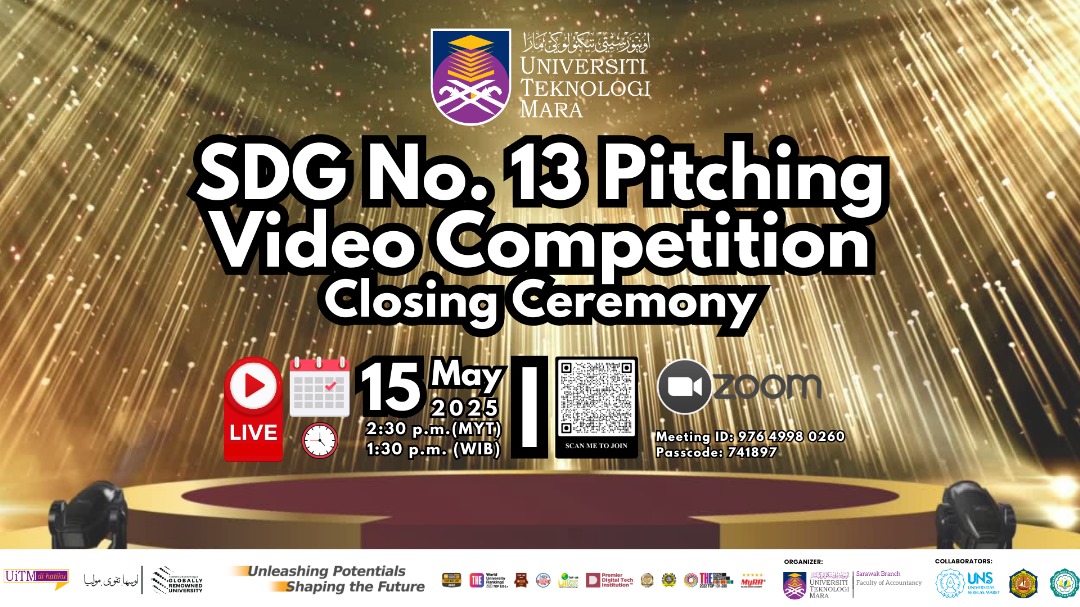
    The SDG No.13 Pitching Video Competition hosted virtually by UiTM MARA Malaysia on May 15, 2025, serves as a platform for students to act as agents of change by advocating for sustainability issues, particularly climate change. Participants were required to produce a three-minute video presenting their ideas on climate change in alignment with Sustainable Development Goal (SDG) No.13. The videos addressed the core issues, proposed solutions, and their potential environmental impacts. In this competition, two teams from the Accounting Study Program, Faculty of Economics and Business (FEB), Universitas Sebelas Maret (UNS), were awarded with two distinguished rewards.

    from left to right: Zhenix Priskadisa Suryani, Rizki Restu Fauzi, Eric Dwi Muhammad, and Thomas Tirta Yudistira

    The first team consisting of Rizki Restu Fauzi, Eric Dwi Muhammad, Thomas Tirta Yudistira, and Zhenix Priskadisa Suryani won third place. While, the second team—comprising Abdillah Adib Had Farhan, Alma Az-zahra, and Aisyah Risqi Wardani—was awarded Most Promising Video.

    Throughout the competition, both teams conducted simple research by collecting relevant data to support the ideas conveyed in their videos. Following the research, they then drafted scripts and sourced visual materials such as raw footage, infographics, and additional visuals. All editing, including the recording of voiceovers, was carried out to produce compelling and engaging videos.

    Thomas and his team presented a video titled “Save Our Earth or Save Our Life.” “Through this title, we wanted to emphasize that, what we needed to protect is not just the planet or our living space, but our very own lives. The consequences of climate change that we are contributing to, directly affect our own survival,” Thomas explained to the FEB UNS media team. Further, he mentioned that he video also demonstrated practical examples of sustainable student behaviors, such as using public transportation and reducing plastic usage—practices that have become increasingly rare among younger generations. The team conveyed a strong message: protecting the Earth is a shared responsibility, and it is important to avoid actions that pollute and degrade the purity of our living environment, which may already be critically damaged.

    from left to right: lma Az-zahra, Aisyah Risqi Wardani, and Abdillah Adib Had Farhan

    Meanwhile, Abdillah and his team presented the theme “Implementing SDG 13 through Food Waste Management on Campus,” which earned them the Most Promising Video award. “This idea came from our concern over the significant amount of food waste on campus, which, if not properly managed, could contribute to increased greenhouse gas emissions. We proposed a solution involving collaboration with campus canteens to offer more flexible and needs-based food portions, supported by digital systems, to reduce waste,” Abdillah explained.

    The team also suggested that the university increase awareness campaigns among students and the broader campus academic community regarding the importance of reducing food waste. They further proposed that leftover food could be repurposed into compost. Through their video, the team aimed to show that meaningful contributions to climate action do not require large-scale initiatives. As centers of education, universities can serve as role models for sustainable living by taking small but impactful steps.

  • Casual Conversation on International Class at FEB UNS

    Casual Conversation on International Class at FEB UNS

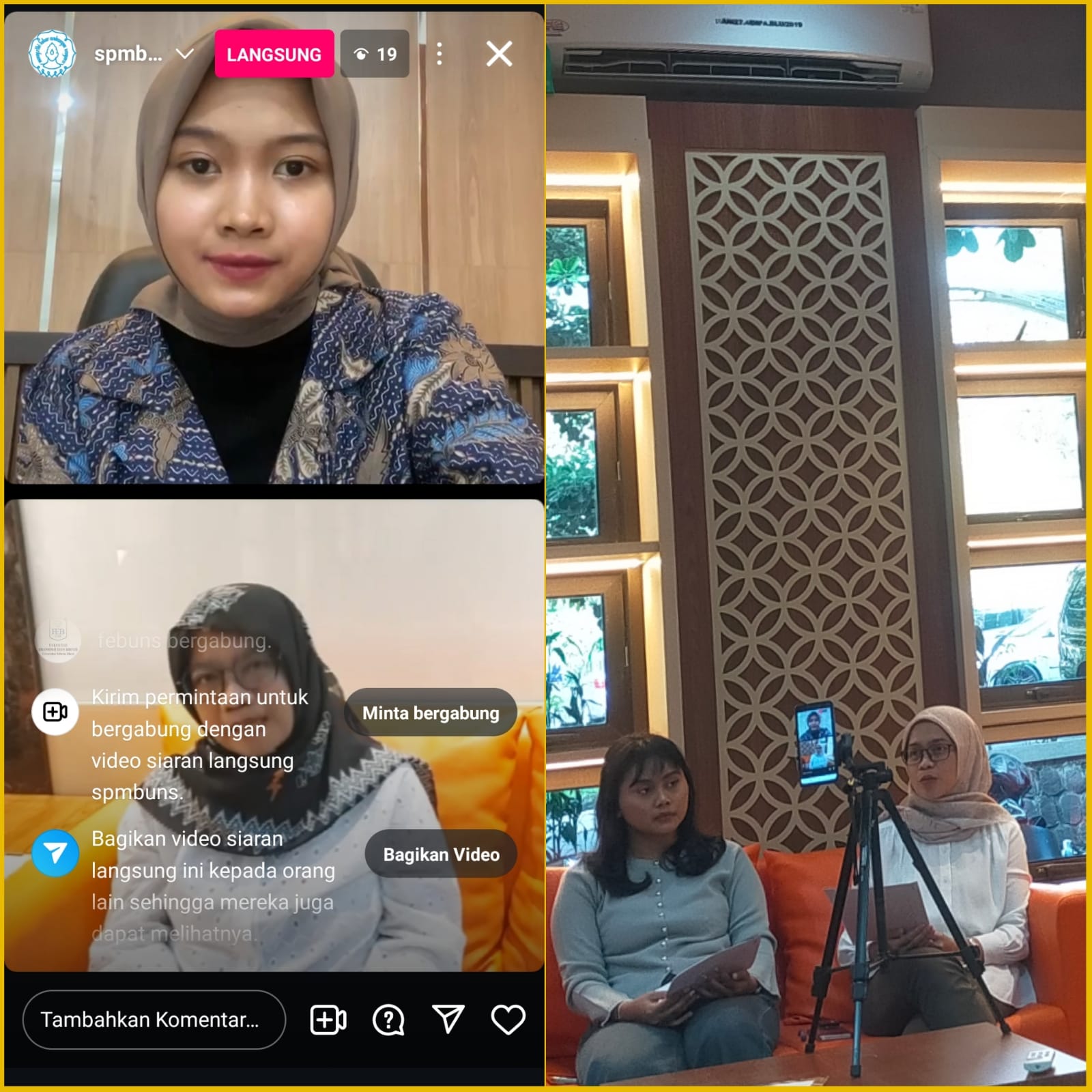
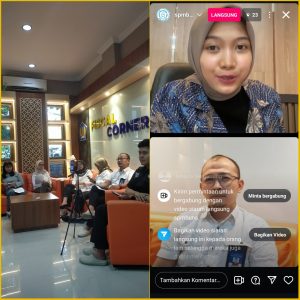
    UNS New Student Admission Selection Office (SPMB) in collaboration with the Faculty of Economics and Business (FEB), Universitas Sebelas Maret (UNS), hosted “Ngobrol Bareng (Casual Conversation)” through Instagram on Monday, 28 April 2025, to introduce the International Class program at FEB UNS.

    The session featured several speakers including the Vice Dean for Academic and Research Affairs, Prof. Tri Mulyaningsih, Ph.D.; Head of the Management Study Program, Dr. Sinto Sunaryo; Head of the Development Economics Study Program, Muhammad Yusuf Indra Purnama, Ph.D.; and a faculty representative from the Accounting Study Program, Nur Chayati, S.E., M.Sc. In addition, three international class students—Muhammad Haidar Ashif, Muhammad Hisyam Asadul Haq, and Nurul Yantika—shared their perspectives and experiences.
    Prof. Tri Mulyaningsih explained that the International Class Program is designed to produce graduates who are adaptive, competitive, and highly qualified, equipped to succeed both nationally and globally. This program is targeted at students who seek an internationally oriented learning experience.

    Students admitted to the International Class will have the opportunity to engage in various global academic programs, including Joint Degree Program, which allows students to study at both UNS and a partner university abroad; Short-Term Academic Programs such as summer or winter courses lasting 3–4 weeks; Digital Pathway Program, offering flexible online learning and certifications from international partner institutions.

    FEB UNS has established collaborations with various global universities and industries, including the University of Malaya, Universiti Putra Malaysia, National Chung Hsing University, Curtin University (Australia), Saxion University of Applied Sciences, and RUDN University (Russia).

    The discussion also highlighted the distinctions between regular and international class programs, particularly in terms of student mindset and skills. International class students tend to develop stronger soft skills such as adaptability, confidence, independence, and cross-cultural communication, shaped through their learning experiences abroad.
    Faculty representatives also shared the specific features of the international class within their respective study programs, as well as the career opportunities available to graduates. Meanwhile, the participating students reflected on their experiences and the international exposure they had gained through the program.

    Moderated by Nael Bara Laena, the 90-minute session provided attendees with a comprehensive overview of the program. Both in-person and online participants had the opportunity to interact directly with the speakers. The session aimed to enhance prospective students’ understanding and interest in joining the International Class at FEB UNS.

  • FEB UNS Faculty Members Welcome Three Newly Appointed Professors

    FEB UNS Faculty Members Welcome Three Newly Appointed Professors

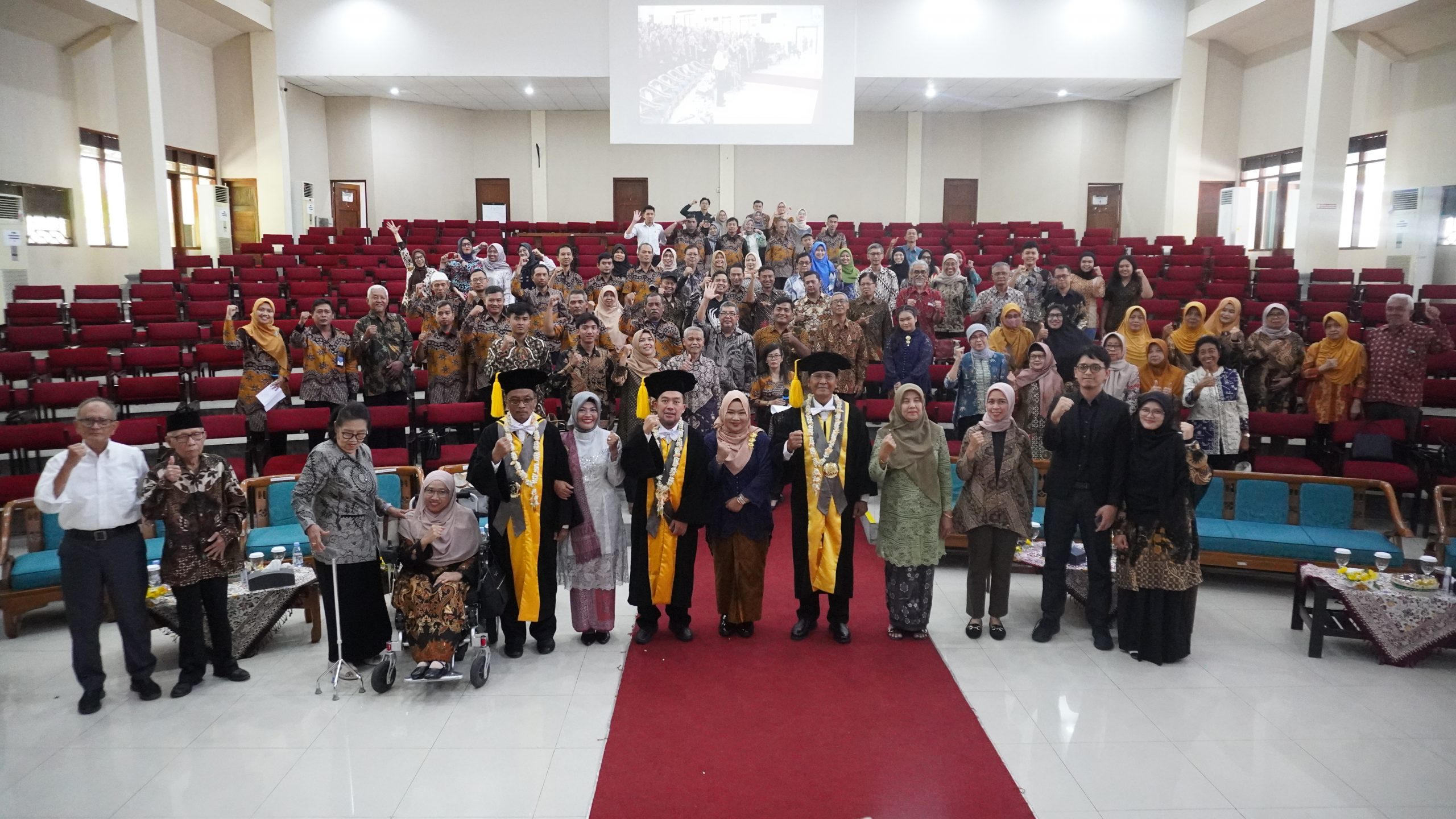
    The faculty members at the Faculty of Economics and Business (FEB), Universitas Sebelas Maret (UNS), proudly celebrated the inauguration of three newly appointed professors: Prof. Dr. Eko Arief Sudaryono, M.Si., Ak., CA., BKP.; Prof. Dr. Supriyono, M.Si.; and Prof. Bhimo Rizky Samudro, S.E., M.Si., Ph.D. The ceremony was held on February 12, 2025, at the Suhardi Auditorium Building FEB UNS, and was attended by lecturers, academic support staff, retired professor, members of the Dharma Wanita organization, and student organizations (Ormawa) in FEB UNS.

    Prof. Dr. Tulus Haryono, M.Ek., Chair of the Academic Senate of FEB UNS, expressed his gratitude that FEB welcome another three new professors. In his remarks, he noted that FEB currently has 26 active professors, including the three professors inaugurated on that day. Of this total, eight are in the Management Study Program, nine in Development Economics Study Program, and nine in Accounting Study Program.

    “To the younger generation, or early-career faculty members, I encourage you to pursue your academic careers and strive for the highest academic rank. It is your right as a lecturer and a source of pride—not only for yourself but also for the institution. I strongly advise the younger faculty to diligently work toward achieving professorship,” he said, offering words of encouragement.

    He also highlighted that a professorship is a lifelong designation for academics, unlike administrative positions such as Dean, which are held only during the term of service.

    Prof. Irwan Trinugroho, Vice Rector for Planning, Partnership, and Internationalization Affairs, also extended his congratulations to the newly appointed professors. He went on to commend the FEB Dean Office for its efforts in preparing the AACSB Eligibility Application, a strategic move in advancing the faculty’s global recognition.

    “We are looking forward to see substantial progress at UNS, particularly within FEB. I would like to express my appreciation to the FEB leadership for drafting the AACSB Eligibility Application. In 2025, we must accelerate our efforts, and the university has already allocated budgetary support for this initiative. Hopefully, within the next three to four years, we can achieve AACSB accreditation and make FEB as a globally recognized faculty,” he stated.

    Following the addresses by the three newly appointed professors, the event also featured a special segment where senior figures of FEB were invited to reflect on the history and development of the faculty. Speakers included Dra. GAA Susilowati C., SU.; Drs. Kasiman Tjilik Suwito, MM.; and Prof. Dr. Wisnu Untoro.

    Through these historical reflections, hopefully, FEB faculty members will draw inspiration from the challenges, achievements, and valuable lessons of the past leaders. These insights serve as a reminder of the faculty’s long and dynamic journey, and offer lessons to be embraced in facing future transformations.

  • Prof. Eko Arief Sudaryono Highlights the Ethical Dimensions of Tax Avoidance in Inaugural Address

    Prof. Dr. Eko Arief Sudaryono, M.Si., Ak., CA., BKP., was formally inaugurated as Professor of Taxation at the Faculty of Economics and Business (FEB), Universitas Sebelas Maret (UNS), during the Open Session of the UNS Academic Senate held on Monday, February 10, 2025, at the G.P.H. Haryo Mataram Auditorium. In his inaugural speech as the 24th Professor at FEB and the 333rd at UNS, Prof. Eko addressed a fundamental issue in Indonesia’s economic and social development—tax avoidance from an ethical perspective, entitled “Tax Avoidance and Ethics: Responding to Moral Challenges in Modern Tax Systems.

    According to Prof. Eko, taxation serves as the cornerstone of national development, providing support for essential sectors such as education, healthcare, and infrastructure. Without adequate tax revenue, achieving social welfare becomes significantly more difficult. Beyond its legal status as a civic duty, taxation is also a moral responsibility, one that upholds social justice and contributes to economic stability. “Rampant tax avoidance unfairly shifts the tax burden, perpetuates inequality, and undermines trust in the tax system. This is not merely a legal concern, but an ethical issue with far-reaching consequences for national unity and our collective future,” he emphasized.
    Tax avoidance presents a major challenge to governments worldwide, particularly in developing countries that heavily rely on tax revenue as a primary source of state income. In response, governments have continued to improve their tax systems through digital transformation, expansion of the tax base, and increased public awareness to build fiscal independence and promote economic growth. One of the primary ethical implications of tax avoidance is the reduction in government revenue that could otherwise be allocated to public services such as healthcare, education, and infrastructure. Stakeholders—especially shareholders—may support such practices due to their potential to enhance corporate profits and returns. However, from the perspective of the government and society at large, these actions represent a disregard for corporate social responsibility.
    In Indonesia, the phenomenon of tax avoidance continues to pose a significant challenge to state revenue. Both domestic and multinational corporations have exploited ‘tax havens’ to shift income or conceal profits. Other strategies include thin capitalization, whereby companies use loans from subsidiaries in tax haven jurisdictions to reduce their tax liabilities in Indonesia. Additionally, some companies employ complex corporate structures to transfer profits to lower-tax jurisdictions, resulting in significant losses to Indonesia’s potential tax revenue. The Indonesian government has taken decisive steps to address these challenges, notably through smarter tax policy reforms and the strengthening of oversight mechanisms. A major breakthrough in this effort is the implementation of the Automatic Exchange of Information (AEOI), which enables the automatic exchange of financial data between countries. This initiative significantly limits the possibility of cross-border tax avoidance, as Indonesian tax authorities can now access financial data of companies that previously operated beyond their reach.

    Prof. Eko further emphasized that tax avoidance is a multifaceted issue situated at the intersection of legal compliance and moral consideration. Both globally and domestically, tax avoidance raises critical questions about corporate social responsibility and fairness within the tax system. While legally, not all forms of tax avoidance are classified as violations, ethical concerns cannot be ignored.

    He concluded his address with several strategic recommendations to mitigate tax avoidance. First, instilling tax ethics should begin at an early stage. Second, comprehensive tax policy information is needed to close regulatory loopholes, supported by a modern cultural framework. Third, financial transparency should be promoted through country-by-country reporting to ensure that corporations contribute proportionally. Lastly, he advocated for stronger collaboration among the government, business sector, and civil society to build a fair and dignified tax system.

  • Islamic Economics and Finance Research Group of FEB UNS Delivers Material on How to Obtain Sharia Accounting Certification

    Islamic Economics and Finance Research Group of FEB UNS Delivers Material on How to Obtain Sharia Accounting Certification

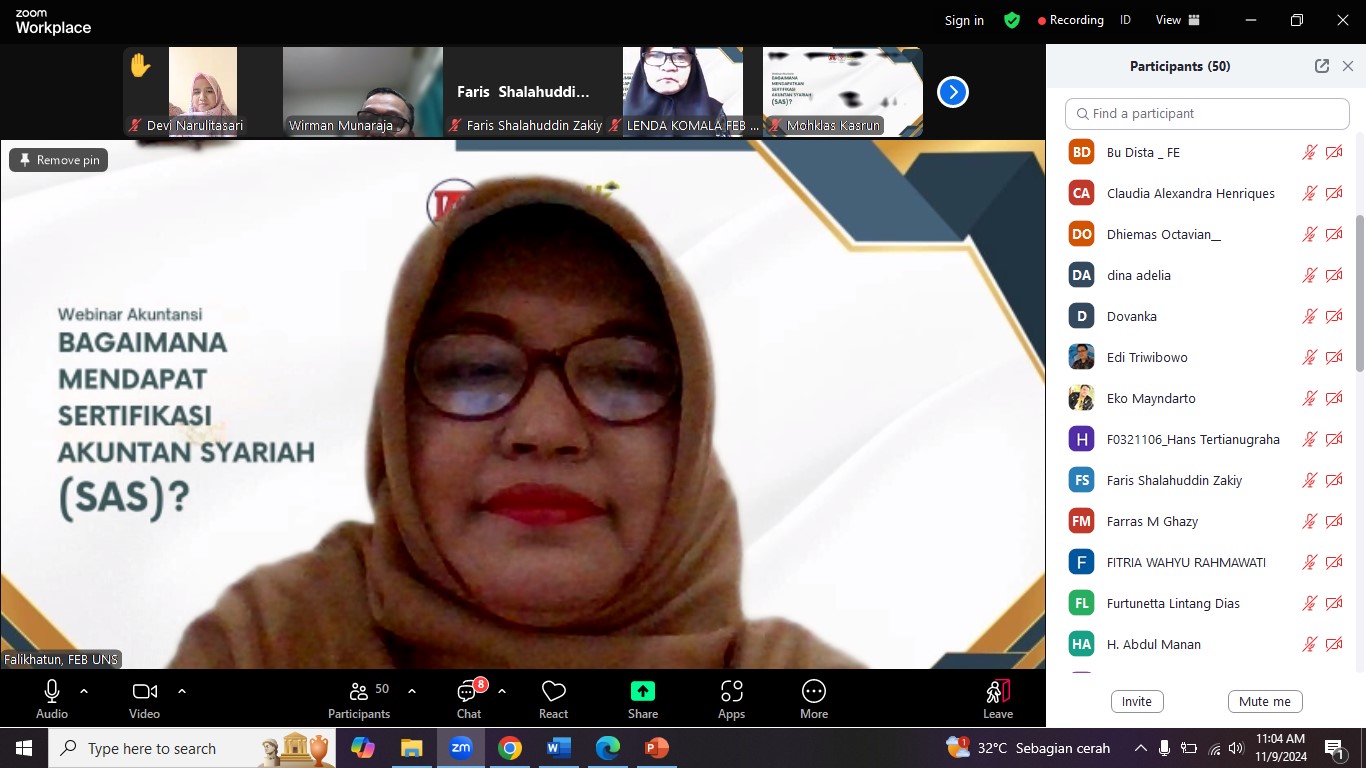
    The Islamic Economics and Finance Research Group (RG), Faculty of Economics and Business (FEB), Universitas Sebelas Maret (UNS), hosted an Accounting Webinar on Saturday, November 9, 2024, in collaboration with the Indonesian Institute of Accountants (IAI) Surakarta Branch and the Indonesian Association of Accounting Lecturers (ADAI) Central Java. The event was also supported by the Surakarta Regional Board of the Sharia Economic Society (MES), the Regional Executive Board of the Indonesian Association of Islamic Economists (IAEI) Central Java Province, and the Solo Raya Regional Board of the HMI Alumni Women’s Forum (PD Forhati).
    The webinar entitled “How to Obtain Sharia Accounting Certification (SAS)?” attracted a total of 69 attendees, consisting of lecturers and students from various universities across Indonesia. Dr. Falikhatun, M.Si., Ak., SAS., Chair of the Islamic Economics and Finance Research Group, served as the main speaker for the occasion.
    In her material presentation, Dr. Falikhatun emphasized the importance of Sharia Accounting Certification for accountants, especially for lecturers and students who intend to engage with the sharia-based industry, including both Islamic financial institutions and Islamic non-bank financial institutions (IKNB).
    “The purpose of SAS is to assess competency in sharia accounting, to serve as a quality benchmark for accountants seeking to understand sharia accounting, as a quality indicator for institutions looking to employ personnel with expertise in the field, and as a requirement for entry into certain professional roles in sharia accounting,” she explained.
    Dr. Falikhatun further noted that, since 2020, obtaining the SAS certification requires passing two examination levels: Basic and Professional. To qualify for the Basic level, candidates must hold at least an undergraduate (S1) or Diploma IV degree in any discipline, as long as they are able to complete the exam. After passing the Basic level, participants may proceed to the Professional level. Only upon successful completion of the Professional level can they obtain the SAS title.
    Accountants holding the SAS certification may pursue various career paths related to sharia accounting, such as Sharia Financial Analyst, Sharia Supervisory Board (SSB) member, Sharia Financial Planner, Sharia Auditor, and Lecturer. However, for positions on the SSB or Sharia Supervisory Board (Dewan Pengawas Syariah/DPS), an additional certification is required—specifically, DPS training and certification typically organized by the Indonesian Ulema Council (MUI) Institute.
    This initiative is intended to motivate lecturers and students, particularly those aiming to be involved in the sharia business sector. It is also expected to encourage deeper understanding and practical engagement with sharia accounting, thereby opening up promising career opportunities.
    In the long term, the program aspires to increase both competency and the number of lecturers and accountants who hold Sharia Accounting Certification, ultimately enhancing the strength and capacity of institutions served by sharia-accounting professionals.

  • FEB UNS Students Secure First Place in Essay Competition with a Focus on the Surakarta Empowerment Movement: A Gen Z Initiative with Darikita.Surakarta

    FEB UNS Students Secure First Place in Essay Competition with a Focus on the Surakarta Empowerment Movement: A Gen Z Initiative with Darikita.Surakarta

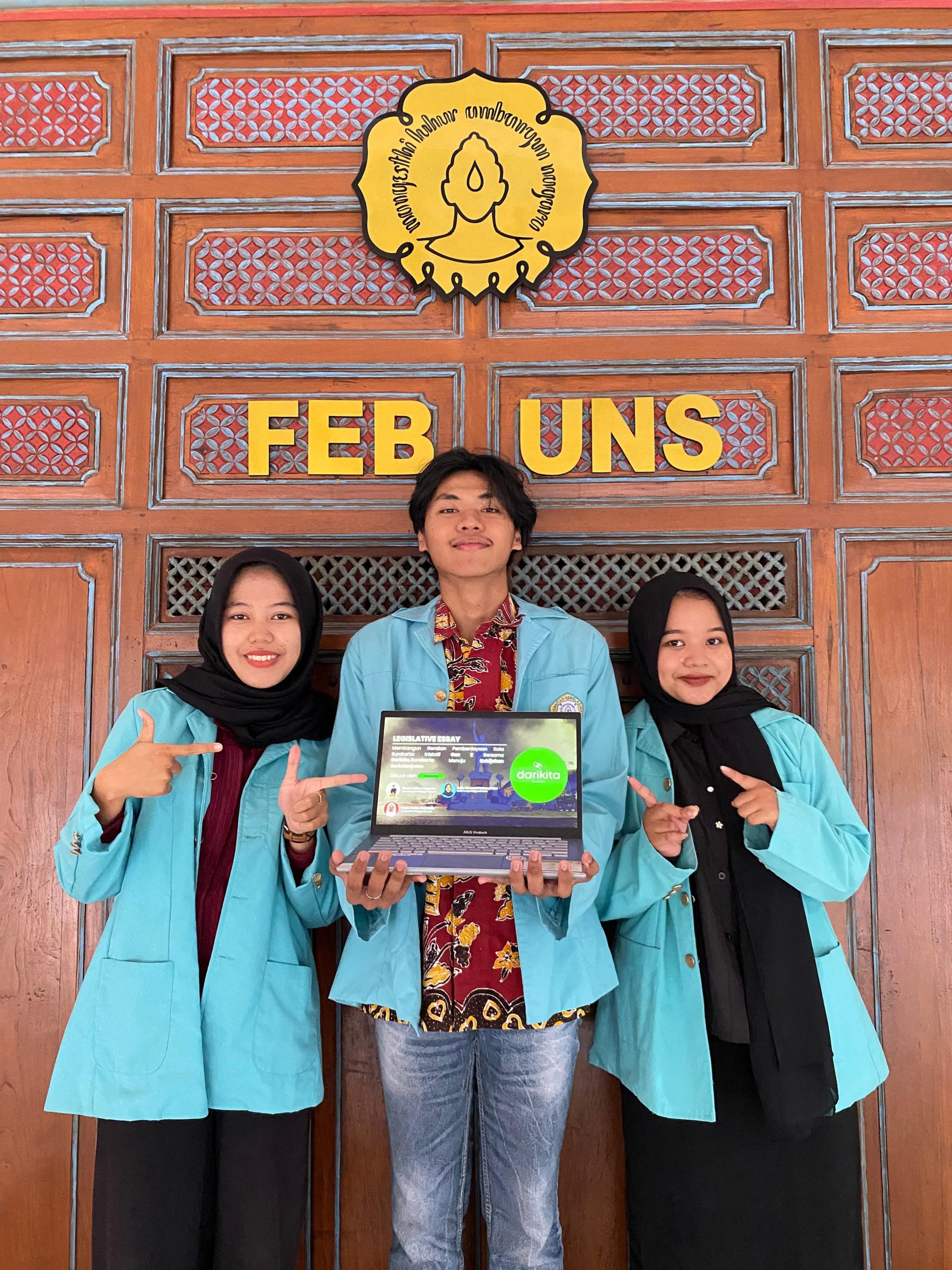
    A team of students from the Faculty of Economics and Business (FEB), Universitas Sebelas Maret (UNS), achieved first place in the Essay Competition organized by UPN “Veteran” Jakarta. The team’s essay, titled “The Surakarta Empowerment Movement: A Gen Z Initiative with Darikita.Surakarta Toward Sustainable Policy,” stood out among the finalists and led them to victory in the virtual competition.

    The FEB UNS team, led by Kenan Safara Nugroho from the Undergraduate Digital Business Program, included Oryza Sativa Heavenia from the same program and Aulia Herawati Rahma Putri from the Undergraduate Accounting Program as team members. Competing in the final round, they successfully outperformed nine other teams representing various leading institutions, including two teams from UPN “Veteran” Jakarta, two teams from Universitas Indonesia, and one team each from Universitas Airlangga, Universitas Jenderal Soedirman, Institut Pertanian Bogor, Universitas Brawijaya, and the STAN Polytechnic of State Finance.

    The competition, which took place on October 27, 2024, with winners announced on November 2, 2024, aimed to encourage young generations—particularly Gen Z—to be more aware and proactive regarding public issues. Under the theme “Proactive Participation of Gen Z in Public Policy Formation,” participants were challenged to express their ideas, critiques, and constructive arguments in essay form. This theme is highly relevant as it encourages students, as part of Gen Z, to take an active role in public policy discussions that are often perceived as distant from daily life.

    Aulia Herawati Rahma Putri explained that their team focused on how Gen Z can contribute to policy development through concrete actions. “Our team chose the theme because we believe that before formulating a policy, there must be a concrete action as precedence. That is why we highlighted Darikita.Surakarta, a movement that we integrated with empowerment policies already in place in Surakarta,” she stated in an interview with feb.uns.ac.id.

    The FEB UNS team was confident in their approach, as their idea was not merely theoretical but had already been implemented in real-world initiatives. Their hands-on experience in the field allowed them to gain deeper insights into the issues presented in the competition case study. In preparation for the competition, the team conducted in-depth research on public policy, focusing on topics relevant to Gen Z’s role in governance and community empowerment. They also engaged in small group discussions to refine their ideas before incorporating them into the essay. Additionally, they reviewed various literature sources and followed policy-related news in the media to strengthen their arguments and broaden their perspectives.

    “One of the most memorable moments was presenting in front of the judging panel. We were nervous at first, but once we managed to convey our ideas smoothly and received positive feedback from the judges, it felt truly rewarding. Alhamdulillah, we were able to bring pride to FEB UNS by winning first place,” Aulia expressed enthusiastically.

    Do not to hesitate to participate in any challenge, competitions like this provide opportunities to expand knowledge, develop new perspectives, and build connections with students from various universities. Take the opportunity and never be afraid to try!

  • The Passion of “One Goal One Spirit” in Five Main Events of ACTIVE 2024

    The Passion of “One Goal One Spirit” in Five Main Events of ACTIVE 2024

    Accounting in Versatility (ACTIVE) is a national event organized by the Accounting Student Association of the Faculty of Economics and Business (FEB), Universitas Sebelas Maret (UNS). This year, celebrating its 16th year, ACTIVE 2024 featured five main events at a national scale.

    Talkshow Nasional ACTIVE 2024With the dedication and efforts of more than 170 accounting students serving as organizing committee, ACTIVE 2024 went successfully under a central theme entitled “Synergy of Youth: Achieving Indonesia Emas 2045 with Economic Excellence.” The first event, the National Talkshow, was held on November 19, 2024, at the Ki Hadjar Dewantara Ballroom. Moderated by Titin Dwi Ariyanti, the discussion focused on “Success Highway: Navigating Career, Study, and Business Balance,” offering students with insights on their first steps after earning their undergraduate degree.

    The talk show featured inspiring speakers, including Tinno Susilo (Regional CEO of Bank Mandiri), Erwan Djoko Hermawan (Former Director of Asuransi Kredit Indonesia), Olivia Valentina (Consulting Business Analyst at Deloitte and Clash of Champions Participant), and Ibrahim Fatwa Wijaya (Lecturer at FEB UNS). More than 350 participants from various universities attended the event, actively engaging with the speakers through thought-provoking questions.

    Beyond the talk show, ACTIVE 2024 hosted two national-level competitions: ACCESS (Accounting Competition for College Students) and BMC (Business Model Canvas). Both competitions involved multiple virtual rounds. The competitions brought together students from diverse universities, including Universitas Indonesia, Universitas Gadjah Mada, Trisakti School of Management, Universitas Diponegoro, and many more, creating an intense and competitive atmosphere.

    Out of 45 participating teams in ACCESS and 120 submissions in BMC, only the top 14 teams in ACCESS and 9 teams in BMC advanced to the final round, representing some of the best talents from across Indonesia. The final rounds of ACCESS and BMC welcomed the finalist team at the FEB UNS on October 27, 2024, where BMC finalists presented their most innovative business ideas to a panel of judges, while the ACCESS finalists tackled case studies and delivered closing presentations on assigned topics.

    Providing participants with a deeper connection to local culture, ACTIVE 2024 also featured a Field Trip as a post-competition activity. Delegates explored Surakarta’s history and traditions through an engaging visit to the Museum of Kraton Kasunanan Hadiningrat. The journey continued with a culinary experience at Pasar Gede, where participants enjoyed local delicacies such as Es Dawet Telasih, dim sum, and Nasi Rames, while also experiencing the vibrant market atmosphere.

    In the evening, participants gathered at Pendhapa Balaikota to enjoy the evening lights and take part in a hands-on scented candle-making workshop, led by a small business from Boyolali. The night culminated in the Indonesia Cultural Gathering Night (ICGN), serving as the grand finale and award ceremony for the BMC and ACCESS competitions.

    The is evening wrapped with traditional dance and musical performances, along with cultural elements incorporated into the event’s decorations, reinforcing ACTIVE 2024’s commitment to showcasing Indonesia’s rich artistic heritage. The event officially concluded with the spirited chant of “One Goal One Spirit”, marking the successful completion of ACTIVE 2024.
    “I am proud and thankful to the organizing team for their dedication, as well as to the study program, faculty, and local government for their support. I hope ACTIVE 2024 leaves a positive impact and serves as a stepping stone for students in preparing for Indonesia Emas 2045, aligning with this year’s theme,” said Deus Salvator, Vice Chair of ACTIVE 2024.

    Hopefully, ACTIVE can maintain its tradition of creating a meaningful event that benefited the community.

  • FEB UNS Welcomed a Visit from SMA IT Nurul Fikri Depok

    FEB UNS Welcomed a Visit from SMA IT Nurul Fikri Depok

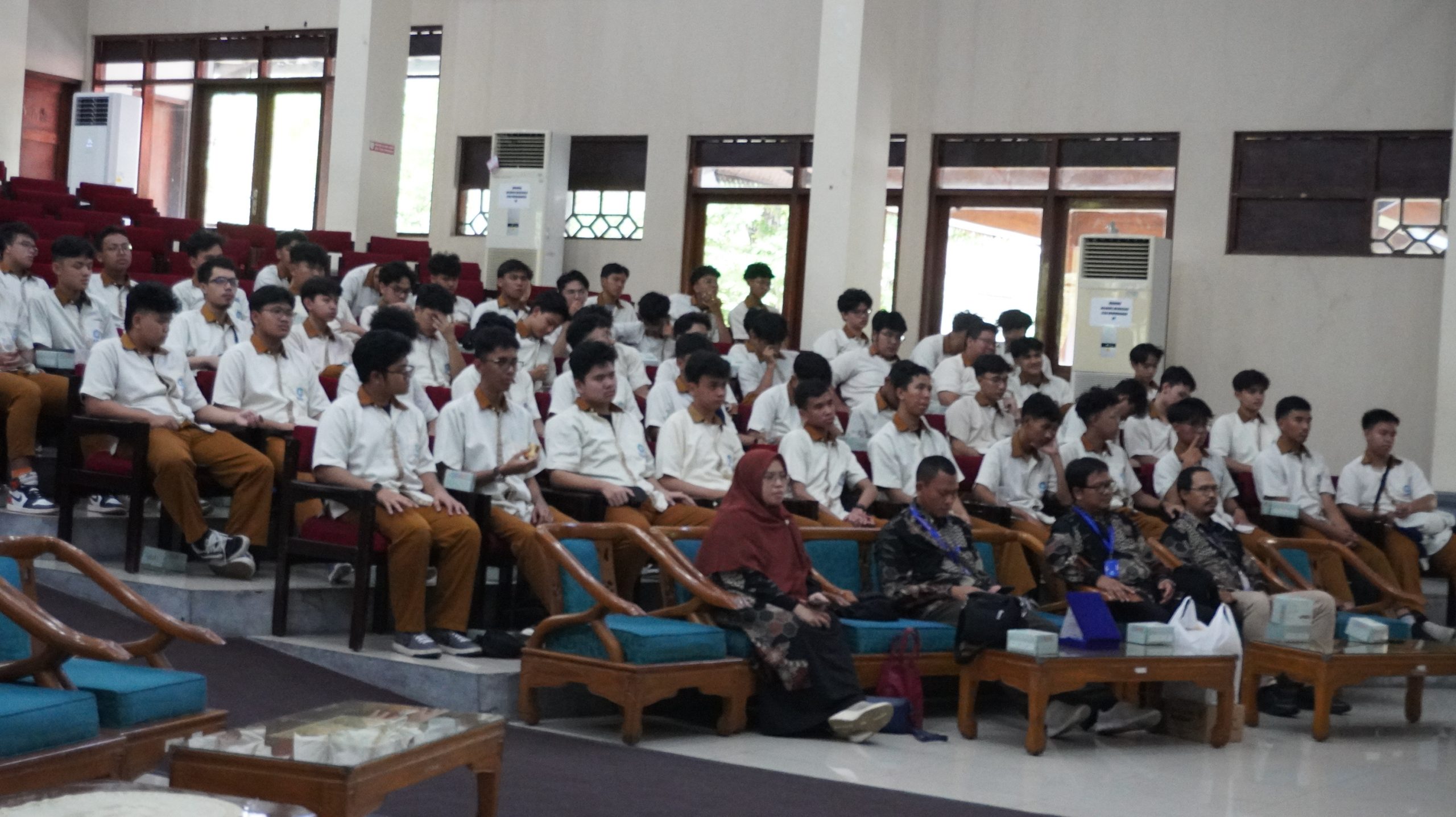
    The Faculty of Economics and Business (FEB), Universitas Sebelas Maret (UNS) welcomed a visit from SMA Islam Terpadu (IT) Nurul Fikri Depok on Wednesday, October 9, 2024. The visit involved hundreds of students accompanied by several teachers, who were welcomed by FEB UNS leadership ranks in the Suhardi Building Auditorium Hall.

    Aldy Fariz Achsanta, S.E., M.Rech., Ph.D., Head of the Digital Business Undergraduate Program at FEB UNS, provided an overview of the faculty. He highlighted the four undergraduate programs offered in FEB UNS, namely, Management Study Program, Development Economics, Accounting, and Digital Business. Detailed explanations of each program were delivered by the respective program heads in attendance.

    The visit aimed to provide students with valuable insights, helping them to better understand FEB UNS. This opportunity allowed the students to familiarize themselves with the faculty’s academic environment and the various study programs offered.

    In addition to an introduction to the Digital Business program by Aldy Fariz Achsanta, PhD., students also gained comprehensive information about the Management program from Dr. Sinto Sunaryo, S.E., M.Si., SHRM.CP., and the Economics and Development Studies program, presented by Muhammad Yusuf Indra Purnama, S.E., M.Rech., Ph.D.

    Dra. Euis Ernawati, Principal of SMA IT Nurul Fikri, expressed her gratitude to the FEB UNS leadership for their warm reception. “We are deeply grateful and delighted to visit FEB UNS as part of this year’s campus visit program. This visit is intended to provide our 12th-grade students—two classes from the social sciences study and one from the natural sciences study—with additional knowledge about FEB UNS,” she stated.

    The principal also requested FEB UNS to allow students to ask questions freely, ensuring they gain deeper insights. This knowledge will help prepare the students as they complete their educational data submissions (PDSS) at the end of 2024 and guide them in selecting study programs and universities for SNBT and independent admissions.