FEB

Kategori: s1_mnj

  • International Community Service, Management Study Program Introduces Libyan Cuisine

    International Community Service, Management Study Program Introduces Libyan Cuisine

    Over twenty members of the Mangkubumen PKK (Family Welfare Program) take part in an International Community Service hosted by the Management Study Program, Faculty of Economics and Business, Universitas Sebelas Maret (FEB UNS), on Tuesday, August 27, 2024, in Karanganyar. Three students of FEB UNS from Libya—Nadia Mustafa Sulayman Shenghir, Marwa Abdulgader Abdulsalam Ashaiban, and Ahlaam Jarullah Ibrahim Alshoushan, explained in detail on how to cook three Libyan cuisines namely the Mahlabia, Brack, Almubatana, and Rashtah Musqia.

    Mientansih, the Leader of Mangkubumen PKK, in her remark extended her gratitude to FEB UNS, for introducing the attendees to Libyan cuisine. “Through this Libyan cooking demonstration, I hope the participants will gain as much knowledge as possible. They will see the process and results, and hopefully replicate it or even start selling it. We also have a cooking kitchen in the PKK unit, so we hope to exchange knowledge with the speakers. Thank you to the UNS students for their assistance,” said the 81-year-old Mientansih.

    Dr. Dwi Prasetyani, S.E., M.Si., Interim Vice Dean for Academic Affairs, Research, and Student Affairs, thanked all participants for attending the agenda. Such community service activities are a routine endeavor for Management Study Program FEB, representing a collaboration between faculty members and students to benefit the community.

    She further noted that the event qualifies as international community service because it involved not only UNS team members but also international participants.

    “This activity focuses on the development of culinary MSMEs, with Libyan student speakers and participants from the PKK group. It empowers women who were previously unaware of foreign cuisines and now have the opportunity to learn and potentially start side businesses,” she explained.

    The community service involved students from undergraduate, master’s, and doctoral programs. The outcomes of the event will be disseminated through YouTube videos, printed media, the FEB UNS website, and publications in community service journals.

    Concluding the event, Dean of FEB UNS, Prof. Drs. Djoko Suhardjanto, M.Com.(Hons)., Ph.D., Ak., expressed gratitude to all attendees, including PKK members, leadership, FEB UNS lecturers, and students.

    “I hope this activity introduces Libyan cuisine and cooking methods to a wider audience, and that participants enjoy the dishes. If they align with our culture, they might be incorporated into our cuisine. Thank you, Middle Eastern food is truly delicious,” he concluded.
  • Guest Lecture Human Resource Management: Current Issues and Theoretical Development in HRM

    Guest Lecture Human Resource Management: Current Issues and Theoretical Development in HRM

    Human resources (HR) is a very important asset for organizations and companies. In line with the important role of human resources in an organization, human resource management (HRM) is a branch of knowledge that will keep developing along with the development of relationship dynamics in organizations and businesses.

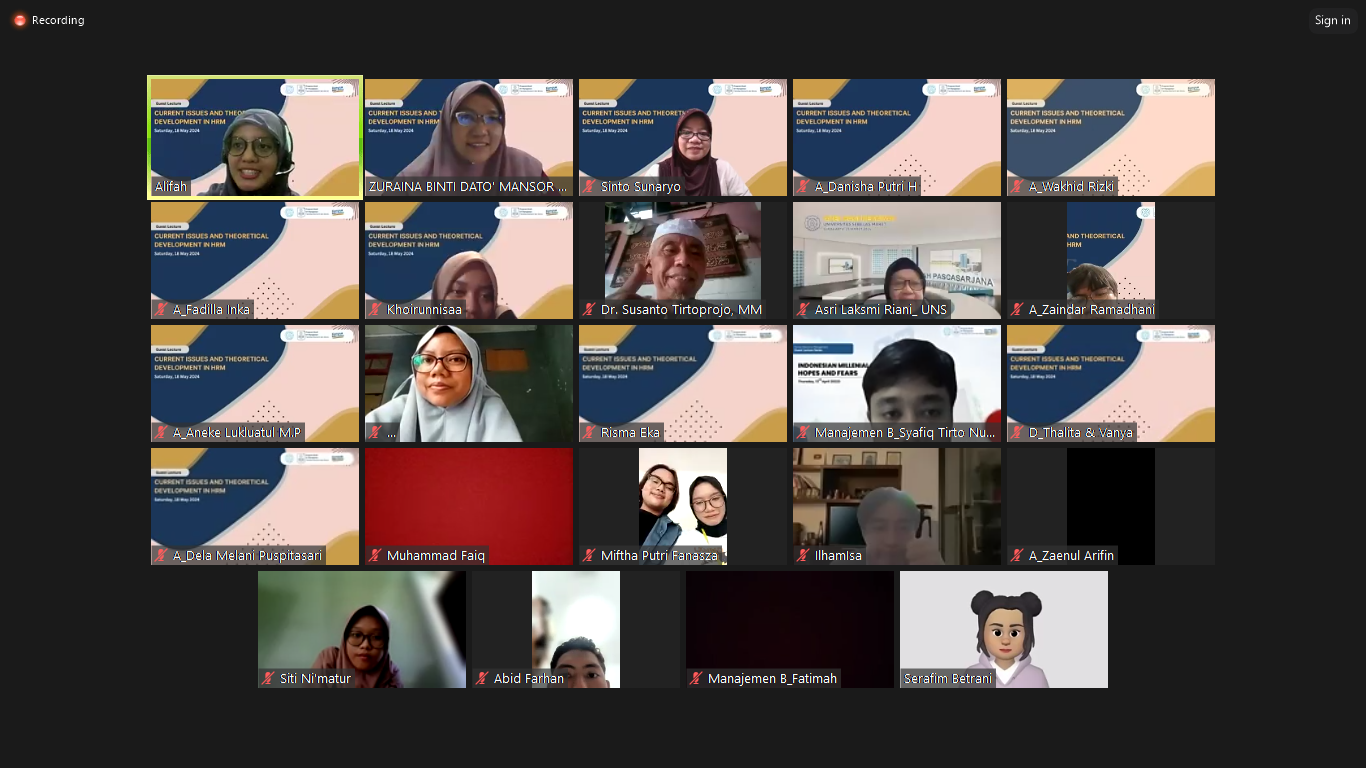
    The Bachelor in Management Study Program, Faculty of Economics and Business (FEB), Universitas Sebelas Maret (UNS) Surakarta, held a Guest Lecture on Human Resource Management II, with the topic Current Issues and Theoretical Development in HRM, on May 18, 2024. In this activity, the study program presented guest lecturers from Universiti Putra Malaysia, Assoc. Prof. Dr. Zuraina Dato’ Mansor.
    Dr. Zuraina states that discussions related to the development of HR management are important to allow organizations and companies to understand the demands of the current generation.

    “It is very important for companies and organizations to be able to manage their employees. Today’s topic is very important to discuss because requests or demands from employees can change along the generation, so companies or employers need to predict these changes,” she explained.

    In addition to discussing developments in the topic of HR management, Dr. Zuraina also explained the difference between traditional and contemporary HR management theories. According to her, both approaches are still relevant and important, because sometimes to deal with certain cases the company finds that the traditional approach is more suitable.

    Regarding the development of AI (Artificial Intelligence), Dr. Zuraina argues that AI should be a tool for employees, not the other way around. In this case, HR management will continue to develop and get updated according to the transformation happening. In Asia, for example, there are several topics that currently are often discussed in research such as employee commitment and leadership.

    “Then how to choose HR theory to do research? Students can choose a theory based on the goals to be achieved from the research. For example, if students research the topic of how to increase employee commitment, then they can use organizational theory or individual theory. Keep in mind that a theory may not be able to answer all the research objectives proposed by the researcher,” explained Dr. Zuraina related to HR theory.

    In front of more than 100 undergraduate students in attendance, Dr. Zuraina also answered various questions submitted directly or through the text messaging feature.

  • Guest Lecture of the Bachelor’s Degree Program in Management Discusses the Latest Trends and Issues in the Field of Organizational Behavior

    Guest Lecture of the Bachelor’s Degree Program in Management Discusses the Latest Trends and Issues in the Field of Organizational Behavior

    The Bachelor of Management Study Program, Faculty of Economics and Business (FEB), Universitas Sebelas Maret (UNS) held a Guest Lecture entitled ‘Trend and Current Issues in Organizational Behavior,’ on Tuesday, April 30, 2024. The guest lecture, which took place virtually through Zoom Cloud Meeting was attended by undergraduate and postgraduate students and lecturers at FEB UNS.

    The activity attended by more than 170 participants, was presented by guest lecturer Desiree van Dun from the University of Twente, Netherlands.
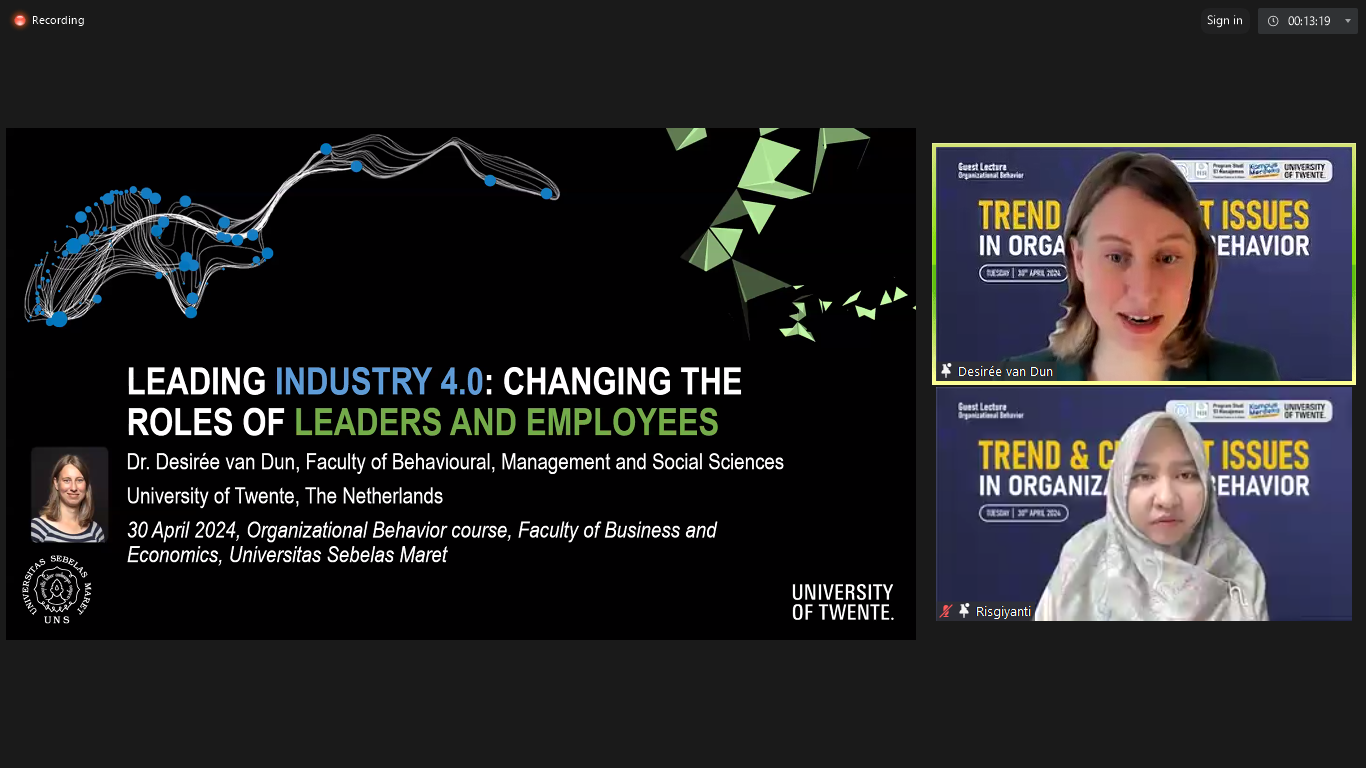
    Dr. Van Dun delivered the material entitled ‘Leading Industry 4.0: Changing the Roles of Leaders and Employees.

    She opened the session with an explanation that Industry 4.0 refers to the fourth industrial revolution which is characterized by the use of the Internet and the Internet of Things (IoT), where these changes have a significant impact on organizational behavior.

    “Some of the significant effects of this industrial revolution include the changing role of operators with the use of robots or drones as well as the role of artificial intelligence (AI) in highly specialized activities, such as cancer diagnosis,” explained Dr. van Dun.

    However, she added that although Industry 4.0 affects the role of employees in the organization, the success of implementing the latest technology also depends on the actors in the organization. In this case, there are three scenarios for the application of technology in the work environment, including a scheme where technology/robots are positioned in front of employees so that robots have a role to interact directly with customers.

    This scheme is often applied in the customer service process, where customers will interact with chatbots for general questions or problems, and if there are more complex problems the system will direct customers to directly interact with employees (humans).

    The second scheme is to put robots/systems side by side with employees, where technology will help employees when interacting with customers. The last scheme that can be applied is the placement of systems/programs behind employees, where programs/systems execute processes and tasks from the back office.
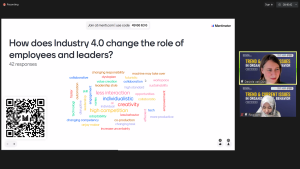
    Regarding the influence of technology on the role of leaders and employees, Dr. van Dun explained that with the help of technology, organizational members have more time to explore existing options and be creative.

    “The existence of Industry 4.0 requires higher creativity for both employees and leaders. Moreover, technology can also increase the level of individualism because employees work and interact with technology more often than other colleagues,” explained Dr. van Dun.

    Furthermore, Dr. van Dun also explained employee responses to changes related to the application of technology, which can be divided into four response groups.

    The four response groups are change disengagement, employees view changes negatively but do not actively resist changes; change resistance, employees who actively show or express resistance to changes; change acceptance, employees accept changes but do not actively show support, and the last is proactive change, employees actively show support and participation in changes. In this case, the leader needs to use a different approach for each group.

    “As leaders, we must give equal attention to groups that are proactive towards change, as well as listening to and addressing the concerns of groups that resist because they actually have a lot of input for leaders,” said Dr. van Dun.

    In the guest lecture that lasted more than two hours, participants were invited to interact directly through Mentimeter, where they could respond directly to several questions from the speaker. In addition, participants were also given the opportunity to submit questions directly to Dr. van Dun in a question-and-answer session.

  • Intercultural Communication in Business from European Expert Perspective, Bachelor of Management Study Program Presents Guest lecture Business Communication and Marketing

    Intercultural Communication in Business from European Expert Perspective, Bachelor of Management Study Program Presents Guest lecture Business Communication and Marketing

    The Bachelor of Management Study Program, Faculty of Economics and Business (FEB), Universitas Sebelas Maret (UNS), presented another guest lecture entitled Business Communication and Marketing: Communication in Global and Business Market.

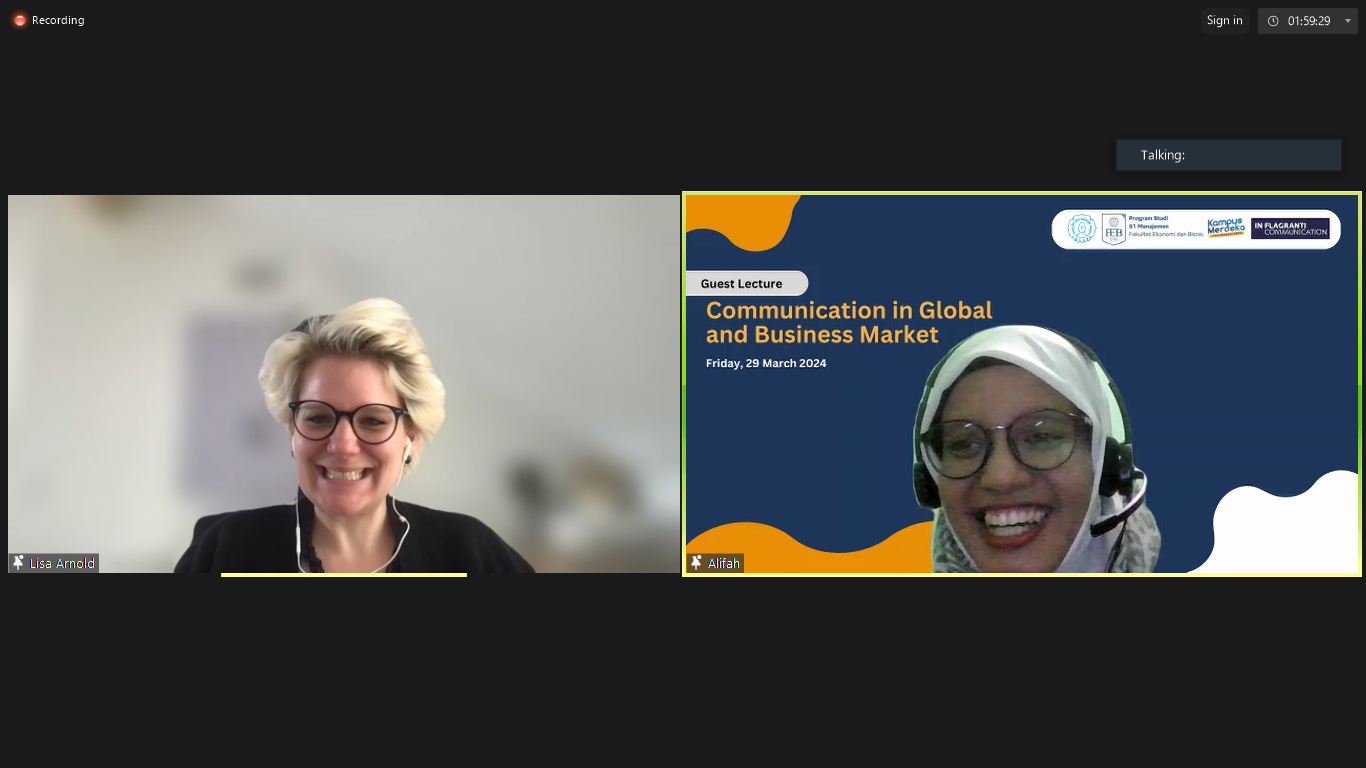
    In this guest lecture session, the Management Undergraduate Study Program presented Lisa Arnold, Head of Content, Copywriter/Concept Designer, and Deputy Head of Creation InFlagranti Communication, Switzerland, virtually through Zoom Cloud Meeting.
    In the agenda that took place virtually on Friday, March 29, 2024, Lisa Arnold, who is the co-founder of Arnold-Riser Consulting, delivered a material entitled ‘Multicultural communication in business and its application in marketing,’ to more than 90 participants. According to her, multicultural communication has an important role in marketing, thus, it is important for students to understand cultural differences, especially in business.

    “Communication errors often occur in marketing, not only due to differences in language, but also due to differences in culture, business ethics, and non-verbal communication,” she explained.

    Furthermore, Lisa explained the importance of ‘global language’ in business, where a business person needs to pay attention to communication standards in different cultures. In a business context, a company that can implement intercultural communication has various advantages such as the ability to develop market reach, where the company may sell and market its products to other regions despite having different cultures and product preferences.

    A business with good intercultural communication can also successfully build international partnerships, improve product image, and attract global talent from various cultures, therefore, increasing business success at the international level.

    Aside from presenting materials related to communication, Lisa also presents examples of international brands that have successfully applied diversity in company marketing media. Furthermore, in the question and answer session, Lisa gave some tips for communicating product information, especially for the European market.

    Regarding the question of the most effective means for students to learn cultural diversity, Lisa answered that traveling and cultural agendas such as ‘UNS Cultural Night’ can be an effective medium for students to get to know cultures from other countries through the international students who are studying at UNS.

  • More than 200 Students Participated in the MBKM Dissemination Held by the Undergraduate Management Study Program

    More than 200 Students Participated in the MBKM Dissemination Held by the Undergraduate Management Study Program

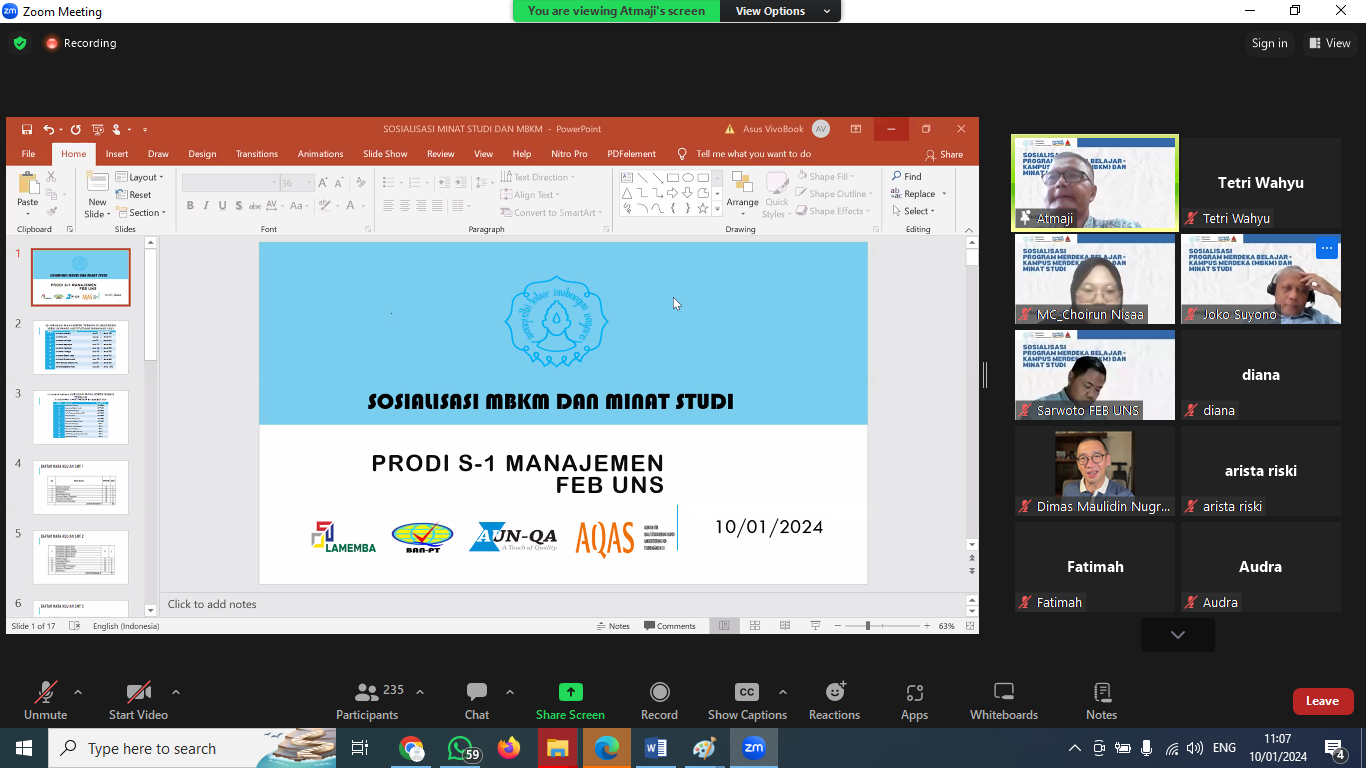
    The Management Study Program, Faculty of Economics and Business (FEB), Universitas Sebelas Maret (UNS), organized a Dissemination session for the Merdeka Belajar Kampus Merdeka (MBKM) Program for students, virtually, on Wednesday, January 10, 2024.

    The Study Program requires students of the Study Program in 2021 and 2022 to actively participate in the MBKM dissemination session. The study program also opens opportunities for students from different years if they want to join.
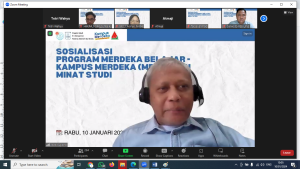
    The Interim (plt) Head of the Management Study Program, Dr. Atmaji, M.M., in his remarks, said that this dissemination is expected to provide detailed information and insight, either for the Coordinator of MBKM, lecturers, and especially for students in their 5th semester and further.

    According to him, this dissemination is very important because based on previous experience, with this dissemination, it turns out that many students of the Undergraduate in Management Study Program are interested in participating in MBKM.

    “We are proud because with you joining MBKM it means that you are courageous enough to take quite a big challenge, but on the other hand, with MBKM Program, I am sure you will have more experience. Alhamdulillah, based on previous experience, many students in the Undergraduate in Management Study Program were interested, there are around 50% of students participated in MBKM. Hopefully, there will also be many who are interested in various fields of MBKM,” he said motivating.
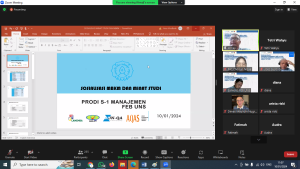
    The dissemination activity was divided into two sessions, namely the MBKM Material session delivered by Dr. Joko Suyono, S.E., M.Si., Coordinator of MBKM, and Study Interest Material by Dr. Atmaji, MM.

    Starting the presentation, Dr. Joko Suyono quoted the statement of Minister of Education and Culture, Nadiem Anwar Makarim, MBKM is giving freedom and autonomy to educational institutions, and independence from bureaucratization, lecturers are freed from convoluted bureaucratization and students are given the freedom to choose their fields of interest.
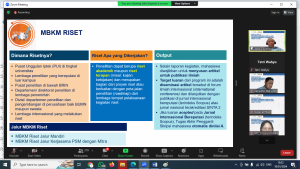
    As further explained, so far we know that there are 2 curriculum paths, the conventional curriculum has four study interests, namely the study of Marketing Management, Financial Management, Operations Management, and HR Management. For the most part, many activities are carried out on campus, although there will be many courses that bring the industrial world to campus.

    Then for the second track, students get the opportunity to study off-campus for one to two semesters, equivalent to 20 semester credits for one semester.
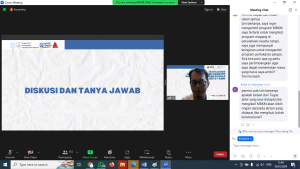
    “MBKM, the keyword is the freedom or autonomy of universities, faculties, and study programs. In this case, including lecturers and students, the keyword is to choose a preferred field. Therefore, the students are given the opportunity to study off-campus to choose certain areas to sharpen or even study other fields needed in the business world or the business world,” he explained.

    The Undergraduate in Management Study Program strives to implement the MBKM policy. MBKM in the Undergraduate in Management Study Program aims to improve graduates’ competency in an effort to strengthen links and matches with the business world and the industrial world.

    According to him, there is currently a gap between what the business world or the industrial world needs and what is learned on campus. To reduce the gap, several in-depth material options are offered related to certain areas beyond those taught by the study program.
    There are 8 areas of MBKM that students can choose from, namely Industrial Internships, Research, Entrepreneurship, Village Projects, Humanitarian Projects, Independent Projects, Teaching Assistance, and Student Exchange.

    To implement the MBKM Program, the Head of Management Study Program has appointed eight lecturers to help become the person in charge of each MBKM field with one lecturer as the MBKM Coordinator.

    In the next session, material regarding study interests is described in detail by Dr. Atmaji. All students were given the opportunity to discuss or ask questions related to the material that had been delivered by the two speakers.

  • Management Study Programs Guest Lecture Session for Introduces Business in Europe

    Management Study Programs Guest Lecture Session for Introduces Business in Europe

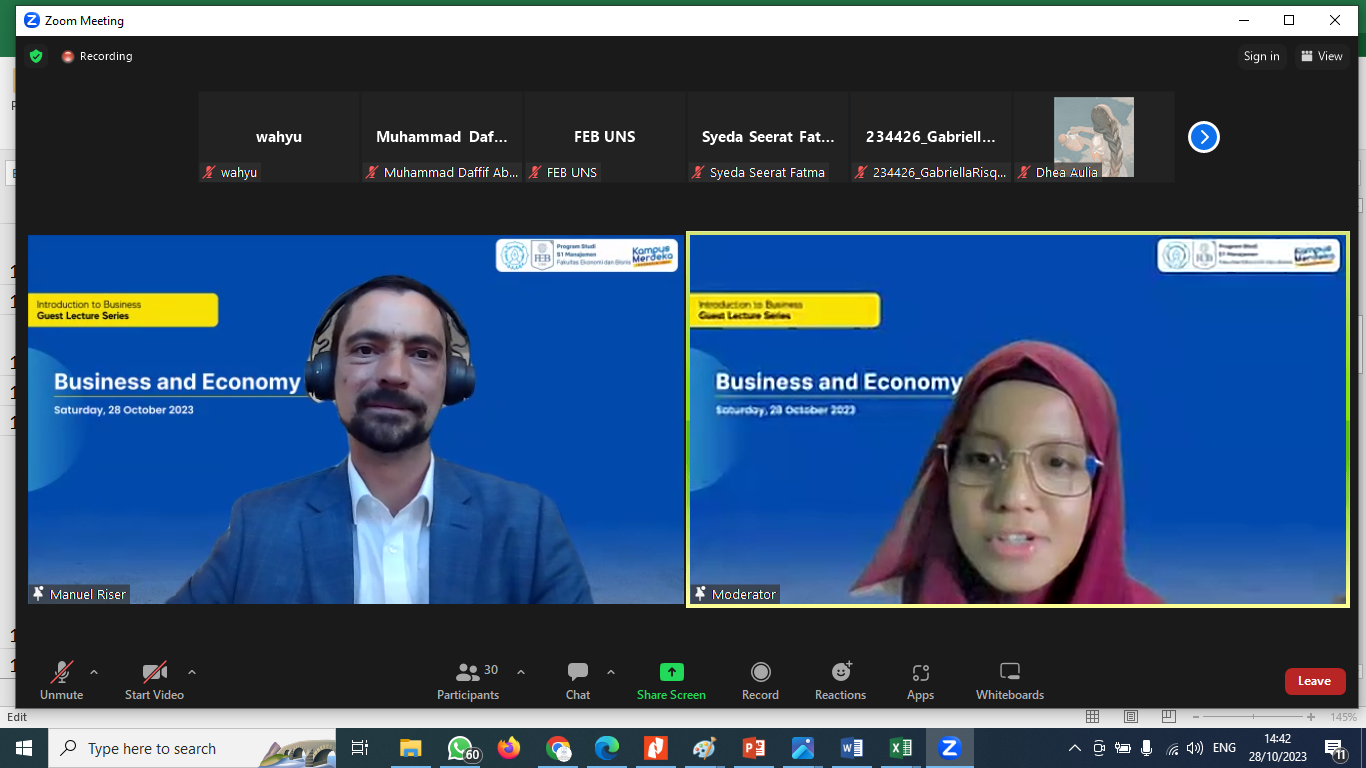
    The Undergraduate of Management Study Program, Faculty of Economics and Business (FEB), Universitas Sebelas Maret (UNS), presented another series of Guest Lectures in Introduction to Business, presenting practitioners from Arnold & Riser Consulting Switzerland. The guest lecture entitled Guest Lecture Series ‘Business and Economy in Europe’ was held virtually on Saturday 28 October 2023 through Zoom Cloud Meeting.

    Manuel Riser, co-founder of Arnold & Riser Consulting, delivered material related to business and economic conditions in Europe, especially in Switzerland, as well as steps and procedures for establishing businesses in Europe.

    “The first thing to consider when setting up a business in Europe is the selection of a company form (legal form). There are three forms of business, namely individual business, limited liability company, and public limited company,” explained Manuel.

    Furthermore, Manuel also explained the regulations that must be met by entrepreneurs who will establish a business, including sustainability aspects. According to him, sustainability-related topics are currently often discussed in Europe. However, a sustainable business does not only focus on environmental conditions but also needs to focus on social, environmental, and economic conditions.

    “In order for your business to survive, the business needs to generate profits and pay attention to the rate of return on investment. This aspect focuses on the balance between resource use and turnover, ideally, your business needs to generate profits without sacrificing the environment or social conditions,” he said.

    Attention from participants can be seen from the question and answer session between the speaker and the participants. Students seem interested in regulations applicable to digital business in Europe, small business funding, job prospects, and internships for students, including regulations for non-profit organizations.

  • The Management Study Program Discusses Financial Risk in Basic Financial Management Guest Lecture

    The Management Study Program Discusses Financial Risk in Basic Financial Management Guest Lecture

    Decisions on financial investment cannot be separated from the calculation of interest rates, risks, and inflation. However, in conducting financial management, there are many other aspects that need to be considered by students majoring in business and economics as potential investors and entrepreneurs.

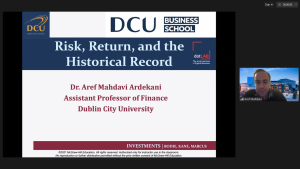
    Responding to this challenge, the Management Study Program, Faculty of Economics and Business (FEB), Universitas Sebelas Maret (UNS) presented a guest lecture entitled ‘Basic Financial Management,’ by inviting Dr. Aref Mahdavi Ardekani, from Dublin City University, Ireland as a guest lecturer.

    In the guest lecture, Dr. Arev presented a material entitled ‘Risk, Return and the Historical Record,’ which began with topics related to currency values and inflation rates.

    “In financial management, we learn that the value of the currency we have today will not be the same as the value of money in the future. For example, if we keep our money in the bank or lend our money for business activities, then in the future we can get a higher return than the current value of our money,” he explained.

    Furthermore, Dr. Arev presents an analogy that the interest rate applicable in a country is similar to the price of renting goods. When there are many items for rent, the price or cost of renting them will be lower, and vice versa. The same law applies to interest rates, “when the value of money available for borrowing is limited, the interest rate will be higher, and vice versa.”

    In this regard, there are generally four factors that affect interest rates, namely the supply of funds from customers’ savings/deposits, requests for funding from businesses, the level of demand for funds (financing) from the government, and inflation rate predictions.

    In addition to discussing inflation and interest rates, Dr. Arev also takes on the topic of risk levels and returns, which include sources of investment risk, risk calculation ratios, and returns, as well as the use of Sharpe ratios in assessing the performance of investment portfolios.

  • Management Study Program FEB UNS Hosted an Initial Meeting for Curriculum Development Workshop

    Management Study Program FEB UNS Hosted an Initial Meeting for Curriculum Development Workshop

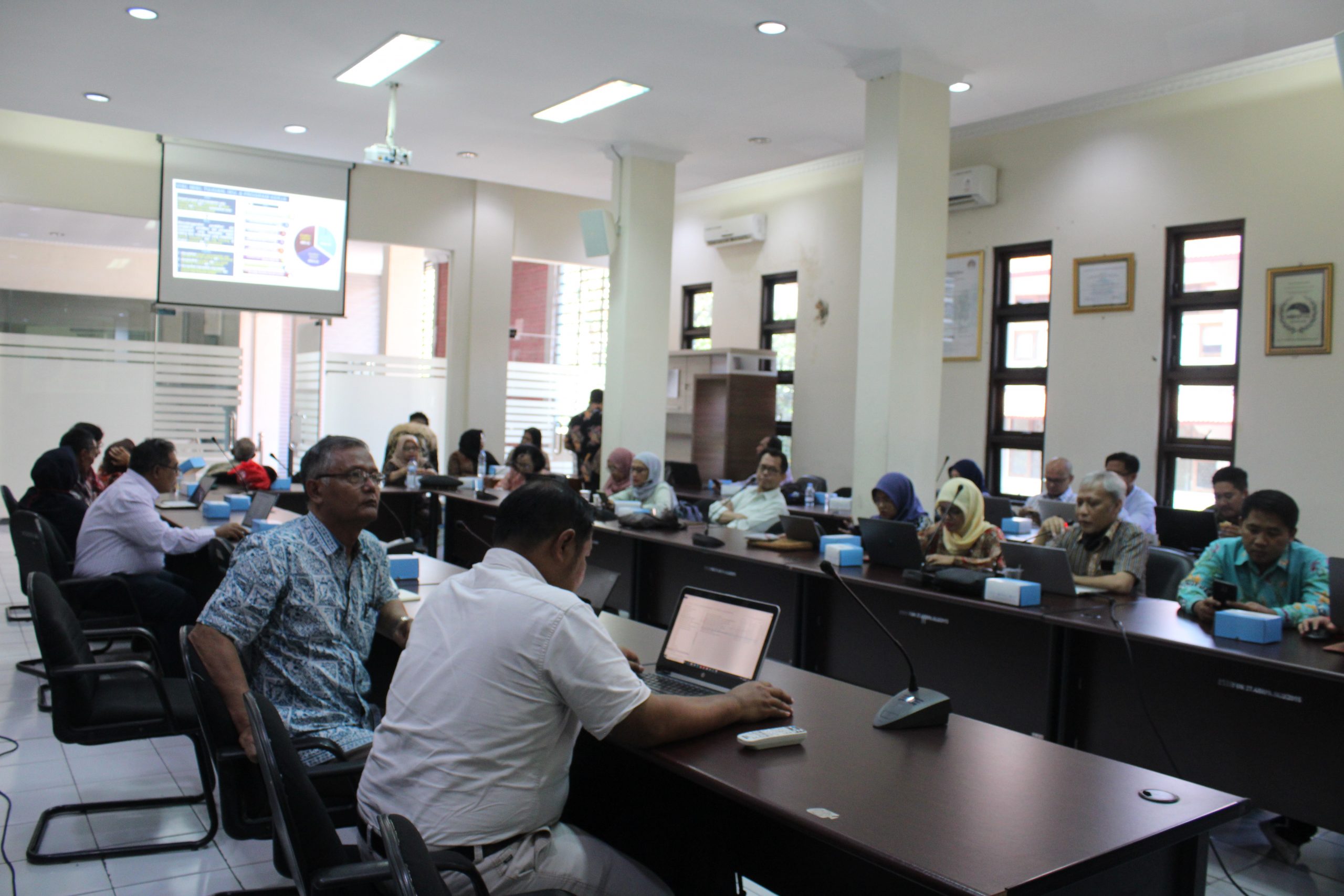
    The Management Study Program held an Initial Meeting for the Curriculum Development Workshop on Thursday, October 5, 2023. The meeting was conducted in the First Assembly Room at Soeharno TS Building, FEB UNS. The agenda, attended by Management Lecturers, is an initial activity and will be followed by Commission Meetings and Plenary Workshop Meetings. The Head of the Management Study Program, Dr. Atmaji, MM expressed his gratitude for the Study Program lecturers’ participation in the agenda.

    In his remarks, he stated that many students of the Management Study Program have participated in the Merdeka Belajar Kampus Merdeka Program (MBKM). He further expressed his joy and was very proud, considering that, even though MBKM is not the main learning objective of the study program, but by participating in MBKM students can gain additional competency, while also getting additional applicable knowledge.

    Additionally, according to him, MBKM is concluded with a final assignment as a substitute for an undergraduate thesis. Further analysis shows that there is a high variation in terms of the final report format prepared by the designated coordinator from several fields. The current workshop, hopefully, can synchronize the field coordinators’ perception, thus, establishing consistent report formats and contents.

    This workshop was also hosted in the year where the Study Program had fully received international accreditation and with full international accredited status, the Management Study Program at FEB UNS had received recognition of equivalence for LAMEMBA accreditation.

    “Alhamdulillah, we should not only feel the pride of this accreditation, let’s improve our quality based on this accreditation, where the assessment points reflect our performance, for instance by conducting the Workshop on Improving Graduate Competence Through Strengthening Practice Courses, Entrepreneurship and Final Assignments,” he explained.

    Meanwhile, Dr. Joko Suyono, S.E., M.Si., as the Chairman of the workshop committee revealed the mechanism of the Curriculum Development Workshop. The stages are divided into 3, pre-workshop, Commission Meeting, and Plenary Session. The commissions consisted of the General Practice Course Commission, Concentration Practice Course Commission, Entrepreneurship Course Commission, and Final Project as Thesis Substitute Commission.

    Some of the expected outputs from this workshop are the establishment of the Semester Learning Plans and task designs for both General and Concentration Practice courses, which include the Entrepreneurship courses, publication of the Modules for General and Concentration Practice including the Entrepreneurship courses (with ISBN), establishment of the Guidelines for final MBKM project (MBKM-TA) as Thesis Substitution, including MBKM-KMM and KKN synchronization.

  • Supporting the Development of MSMEs, HMJ Management Hosted ECOFAIR 2023

    Supporting the Development of MSMEs, HMJ Management Hosted ECOFAIR 2023

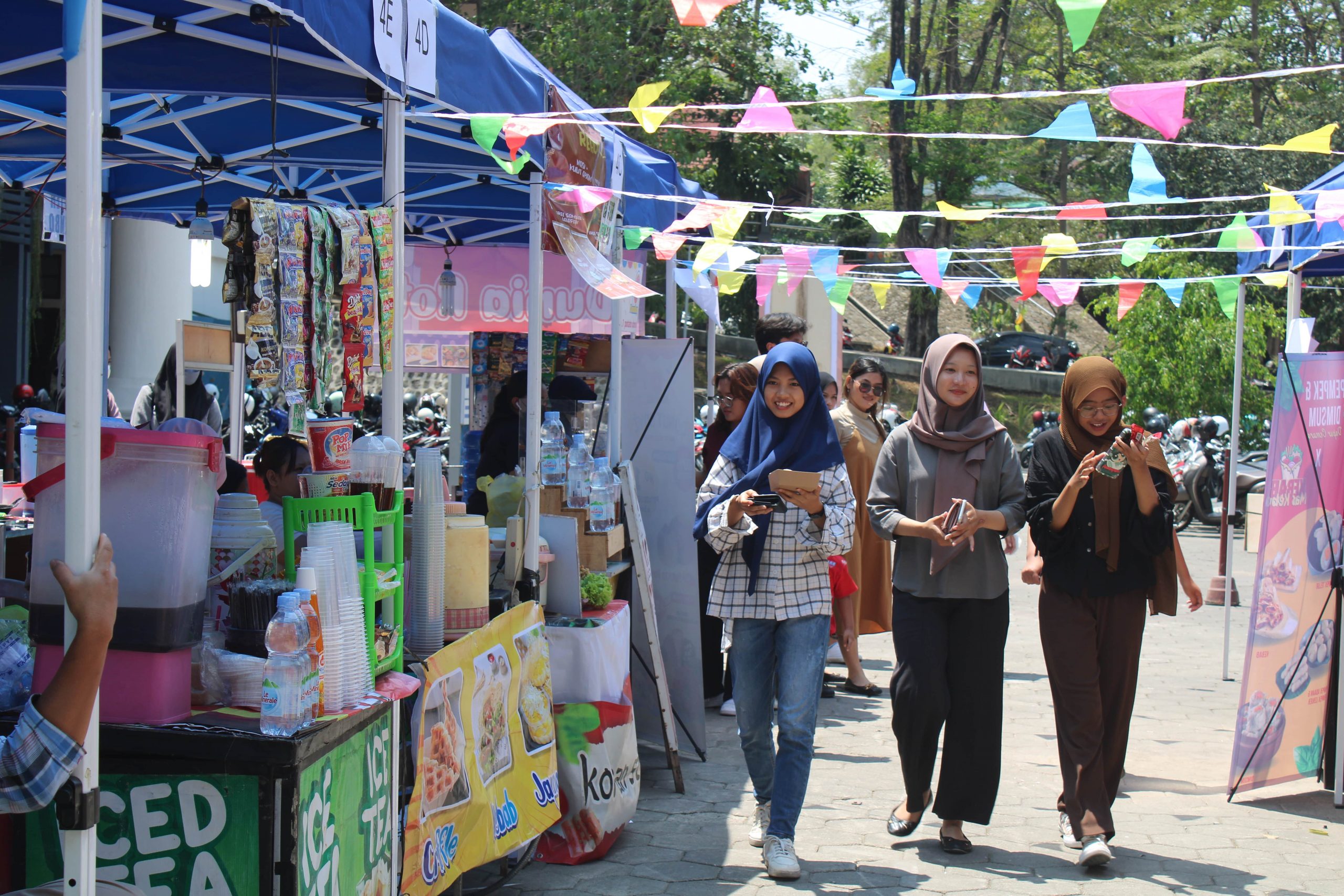
    The ECOFAIR 2023 is the opening ‘Gong’ for a series of Management Carnival held by the Management Study Program Student Association (HMJM), Faculty of Economics and Business (FEB), Universitas Sebelas Maret (UNS), 7-9 September 2023 in the Djarwanto PS Building.

    The activity with the theme “Let’s Collaborate with your business and make MSMEs a Game Changer Keep the spirit to find opportunities,” aims to support the development of Micro, Small, and Medium Enterprises (MSMEs) by providing collaboration, development, and empowerment media to MSME owners in the Solo and surrounding region.

    Plt. Head of the FEB UNS Management Study Program, Dr. Atmaji, MM., in his speech, expressed his appreciation to all the committee who have worked hard to organize ECOFAIR 2023.

    “Thank you to the entire committee, collaboration between students and MSMEs is an essential action. One of the foundations of our economy is MSMEs. MSMEs can survive anywhere at any time even during the pandemic, MSME become one of the economic buffers in Indonesia. Therefore, the current theme is a suitable theme for MSMEs,” he said.

    Furthermore, this activity can serve as a form of applied lecture. One of the efforts made by the study program is to prepare students following the graduate profiles, one of them is to become an entrepreneur. Of course, starting from micro small, and medium businesses, if managed properly, with good management and knowledge, the business will grow bigger.

    The Plt. (Acting Officer) of Vice Dean of Planning, Business and Information Cooperation, Tastaftiyan Risfandy, SE, M.Sc., Ph.D., also appreciated the 2023 ECOFAIR’s activities.

    He hopes that in the future, the student association at the study program level can start thinking on how ECOFAIR can be hosted in two schemes. The first is a face-to-face or on-the-spot event, and alternatively, for time efficiency, it can be hosted digitally or virtually because the current development of MSMEs all leads to digitalization.

    “We hope that activities like this can bring benefits to the committee, faculty, and MSMEs around UNS.”

    Furthermore, representing the Dean, Tastaftiyan, Ph.D., opened ECOFAIR 2023 with a ribbon-cutting ceremony witnessed by a number of invited guests and ECOFAIR visitors.

    The 2023 ECOFAIR is scheduled for three days was enlivened by e-sports competitions and fun games.

  • Crowned as 2nd place Winner in the National Islamic Economic Olympiad, FEB Student Team Develops Sharia Financial Services Cooperative Innovation

    Crowned as 2nd place Winner in the National Islamic Economic Olympiad, FEB Student Team Develops Sharia Financial Services Cooperative Innovation

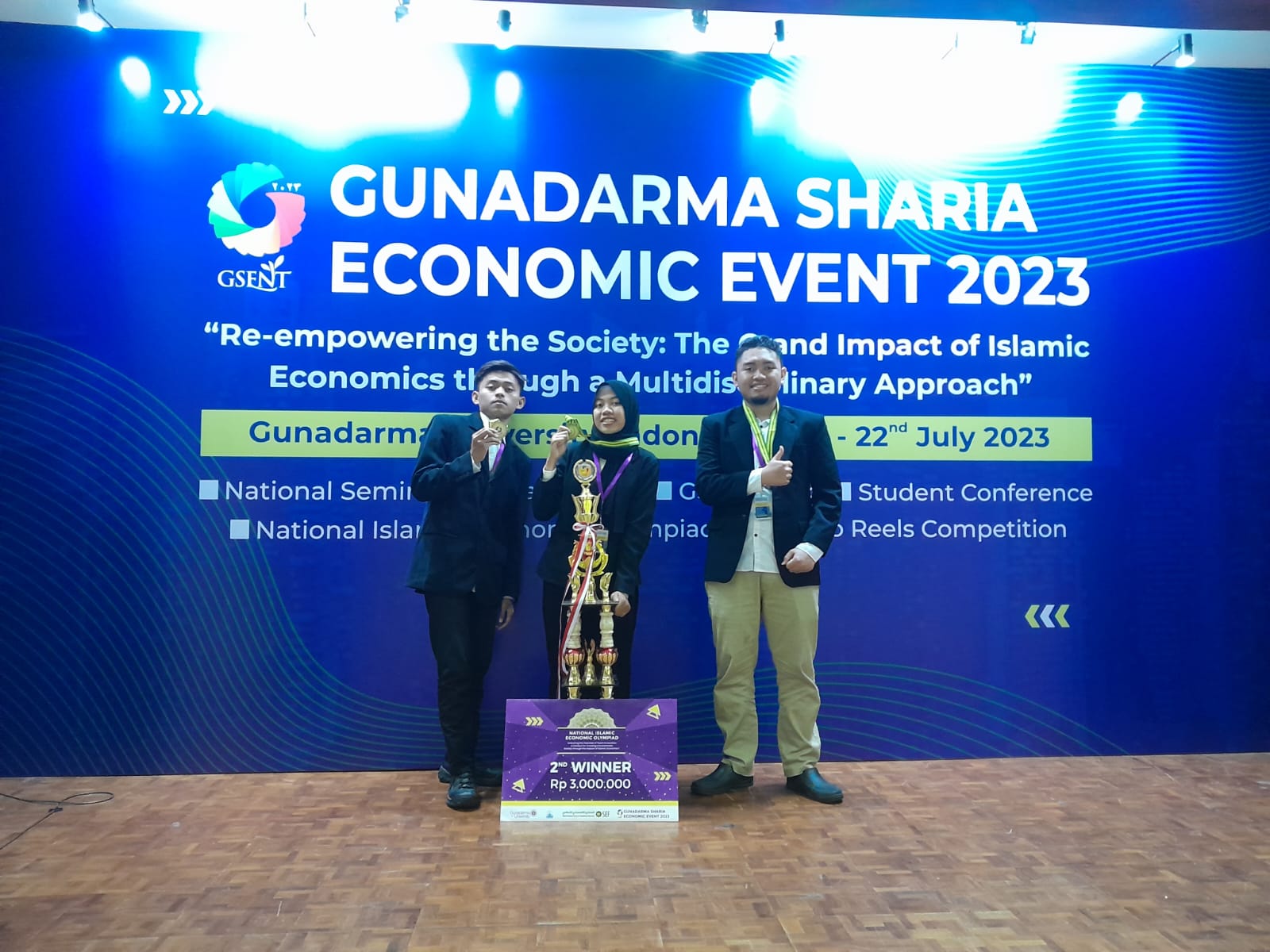
    A Team of the Faculty of Economics and Business (FEB) Universitas Sebelas Maret (UNS) students, won 2nd place in the National Islamic Economic Olympiad, held at Gunadarma University, 18-22 July 2023. The collaboration of three FEB students, Novita Anggun Pratiwi (S1 Management Study Program), Fathir Faiq Aqil Murtadlo (S1 Development Economics Study Program), and Fathir Fikro Al Ishlah (S1 Development Economics Study Program), led the three to achieve the victory.

    There are 50 teams from universities in Indonesia competing in the preliminary round, and 12 teams qualify for the semi-final round. Out of these teams, there are only 4 teams competing in the final round. Proposing an innovation entitled ‘Sharia Financial Services Cooperative Program Indonesia Berdaya Ukhuwah,’ derived from the three members’ idea, the team was able to attract the attention of the jury.

    The idea developed by Novita and her colleagues took a modification of the Grameen Bank that had been carried out in Bangladesh, initiated by Muhammad Yunus.

    “We are interested in highlighting the issue of poverty in Indonesia, which remains to this day. Grameen Bank is one of the concepts initiated by Muhammad Yunus in Bangladesh to alleviate poverty. Grameen Bank is only intended for women with the aim of minimizing poverty. This idea was modified by directing it to a group of peasant women in Karanganyar Regency,” explained Novita, the Leader of the FEB UNS Team in the National Islamic Economic Olympic.

    Previously, PPK Ormawa BEM FEB UNS organized a community service program at the Karanganyar Regency Farmers Women’s Group and focused on MSMEs. The idea proposed by Novita and the Team focused on a type of financing for women farmers of Karanganyar Regency, by adhering to the principles of sharia, with a system based on members’ trust. The main goal is to alleviate poverty in Karanganyar Regency.

    Later, this group of peasant women will form an association like the PKK. When the farmer group needs financing from KJKS (Sharia Financial Services Cooperative), they only need to fulfill the applicable prerequisites.

    This initiative proposed by the FEB Team, which is strengthened by presenting and supporting evidence, is considered by the jury as a good program idea and is expected to be implemented in the future.