FEB

Kategori: s1_mnj

  • Operations and Strategic Management RG in Collaboration with KADIN Surakarta Hosted MSME Assistance FGD

    Operations and Strategic Management RG in Collaboration with KADIN Surakarta Hosted MSME Assistance FGD

    Operations and Strategic Management Research Group (RG), Faculty of Economics and Business (FEB), Universitas Sebelas Maret (UNS) hosted a Focus Group Discussion (FGD) for MSME Assistance at Mangesthi Boutique Hotel Solo, Wednesday 26 July 2023. The event was attended by the Executive Director of KADIN Surakarta, MSME partners of KADIN, RG Team, and FEB UNS students.
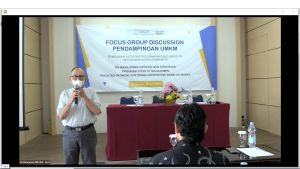
    Chairman of the Operations Management RG, Prof. Wisnu Untoro, MS., said that this FGD was the final series of MSMEs assistance in collaboration with KADIN Surakarta by involving internship students from FEB.

    Prof. Wisnu expressed his gratitude to KADIN Surakarta for collaborating with Operations Management RG FEB UNS, hoping that this kind of collaboration can go on sustainably. Based on this collaboration, students and MSMEs get many benefits.

    “We hope that after this internship, students can share the experience with their colleagues that this activity is useful and also students can be proud to contribute to certain MSMEs,” he said.
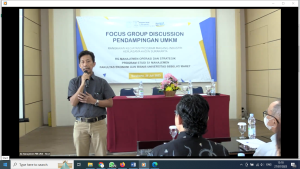
    Executive Director of KADIN Surakarta, M. David R. Wijaya, S.E., also welcomed Prof. Wisnu’s remarks on the sustainability of this collaboration.

    Synergy and collaboration between the business world, academics, and city governments, especially in the development of MSMEs and also developing human resources, thus better preparing them for the future to face global competition.

    “With this cooperation, there are many things that can be obtained from students. They can learn a lot about applied business activities through MSMEs. On the other hand, we hope that MSME can also be helped by the presence of internship students. Today’s era, generation Z understands more about the digital world, knows more about how online marketing, about marketplaces, social media, and so on,” he explained.
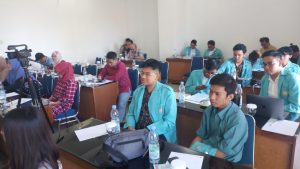
    It is said that this internship at KADIN is not solely to work at the KADIN office, but encourages how these students get knowledge from MSMEs, allowing them to experience applied business in the MSME sector. Students have received many theories, financial management, and other knowledge on campus, thus, they need to hone their skills by looking at business actors.

    Why choose MSMEs as a place for internship activity? According to him, MSMEs have a lot of knowledge, ranging from how they build their businesses, how to prepare their human resources, how to record the cash receipt and disbursement, how to manage their production, marketing the product to stay exist to this day and survive, all of these are often done by the business owner.

    After the opening remark, the next activity was the material presentation regarding community service from the RG team, by Drs. Yong Dirgiatmo, M.Sc., Ph.D., and Dr. Hidajat Hendarsjah, MM., who conveyed about the development of MSME products.

    The agenda went on with an FGD on the Internship Program for MSME Mentoring, which included the presentation of the internship implementation report and discussion. The agenda was concluded with the submission of the assessment form as well as the withdrawal of intern students.
  • Social Entrepreneurship, A New Step Toward Sustainable Business

    Social Entrepreneurship, A New Step Toward Sustainable Business

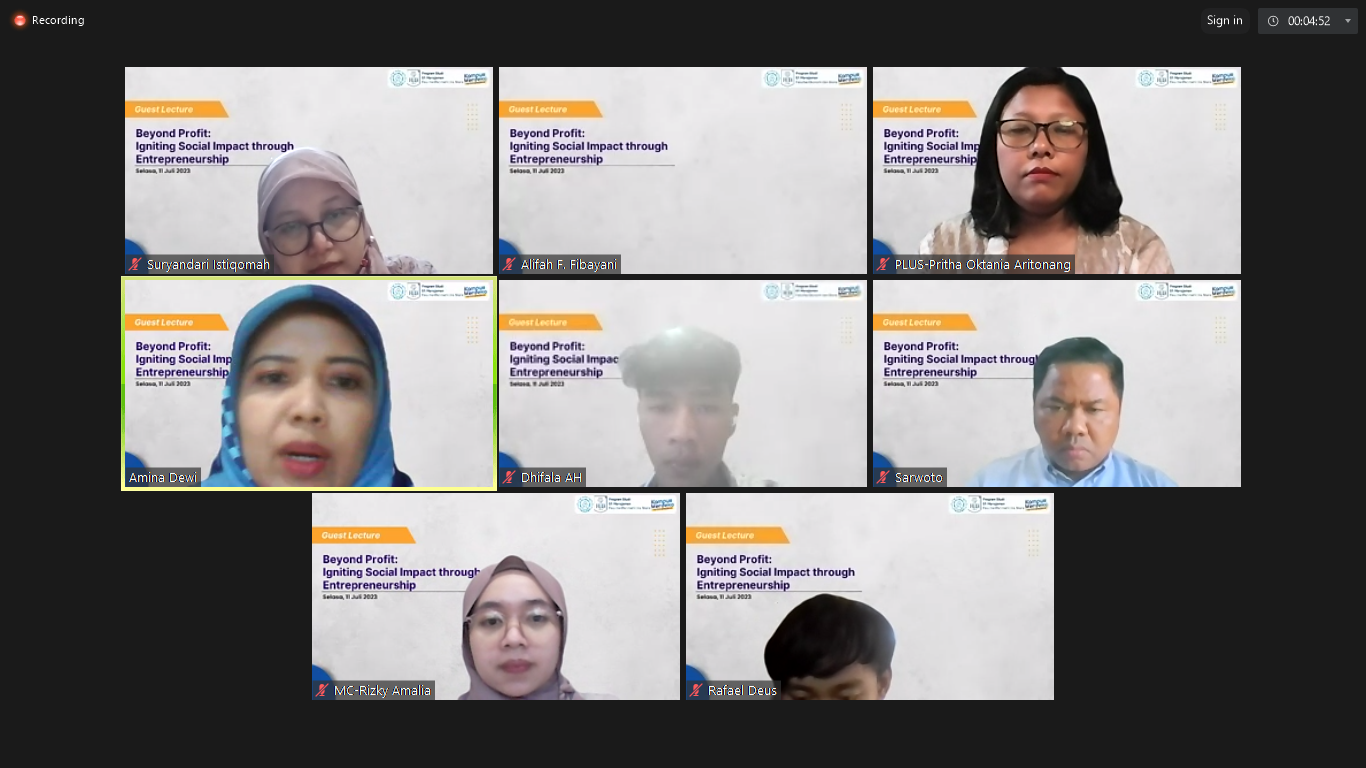
    Seeing the potential of achieving business growth beyond profit and including social impact through social entrepreneurship, the Bachelor in Management (S1) Study Program (MSP FEB UNS) hosted a Guest Lecture entitled “Beyond Profit: Igniting Social Impact Through Entrepreneurship.”

    Presenting Pritha O. Aritonang, Project Coordinator at the Platform Usaha Sosial (PLUS), the guest lecture session held on Tuesday (11/07/2023) was virtually attended by more than 100 participants consisting of students and lecturers of the Management Study Program, Faculty of Economics and Business (FEB), Universitas Sebelas Maret (UNS).

    Opening the guest lecture session, Dr. Atmaji, MM., Head of the Management Study Program, delivered an opening remark as well as officially started this guest lectures session. Through his speech, Dr. Atmaji expressed his gratitude and wishes, especially to Mrs. Pritha who has been willing to take her precious time for delivering some insights, at the same time hoping that the material will enlighten PSM FEB UNS students on the current condition of social entrepreneurship.
    “Currently, PSM always hosted face-to-face lecture sessions with guest lecturers. This aims to allow students to get knowledge from lecturers and practitioners or other academics who can provide a wider discourse for the material being studied. Thank you to all the participants, students and lecturers. I hope that students can follow the event carefully in order to reap the greatest benefits. Hopefully, this morning’s event can be held seamlessly and provide maximum benefits for students,” hoped Dr. Atmaji.

    Starting the presentation on Social Entrepreneurship (SE), Pritha said that there are fundamental differences between ordinary businesses, non-profit organizations or NGOs, and SE. “In non-profit organizations, there are no material benefits, while SE is focused between financial benefits and social impacts. The potential for social enterprises to be sustainable is greater than NGOs since it can generate its own income and not be dependent on grants,” Pritha explained.

    Social entrepreneurship itself can be defined as a movement that aims to make social change in the community, through responsible business practices that create a sustainable impact. Thus, the purpose of the said business is not only to generate profits but also to make a positive impact. According to her, the focus of SE triggers managers to grow the unique value to be offered to consumers. “Social enterprises can also focus on their own business income and are not dependent on grants. This is what makes social enterprises more sustainable,” she added.

    Sharing her experience as a part of the ecosystem, Pritha also explained three types of Social Entrepreneurship seen by its beneficiaries, including embedded models, integrated models, and separated models. In order to determine whether a business qualifies as a Social Enterprise, there are five steps that can be followed. The first step involves understanding the activities of the business. The second step requires identifying the consumers and target audience of the business. The third step involves recognizing any issues faced by the organization. The fourth step necessitates determining the sources of revenue for the business. The final step involves comprehending the objectives of any changes that the organization or business seeks to implement.

    In Indonesia, there is an increasing trend in the number of social businesses with the number of businesses established reaching almost more than 100 businesses in 2017. The majority of these businesses are engaged in the field of creative industries, followed by the agricultural and fisheries sectors, as well as education. However, according to data presented by Pritha, the distribution of social business is still centralized on Java. Where the majority of social entrepreneurs (47%) stated that the most frequent challenge faced was the lack of capital. In addition, they also stated that there are still difficulties in accessing funding sources and difficulties in improving managerial skills.
    During the guest lecture, several participants appeared eager to engage in direct discussions with the speakers. A few students even mentioned their attempts at establishing a social business and sought guidance and recommendations from Mrs. Pritha, the Project Coordinator on the Platform Bisnis Sosial.

  • Undergraduate Management Study Program Presents Head Analyst of Bank Indonesia in Guest Lecture on Digitization of MSMEs

    Undergraduate Management Study Program Presents Head Analyst of Bank Indonesia in Guest Lecture on Digitization of MSMEs

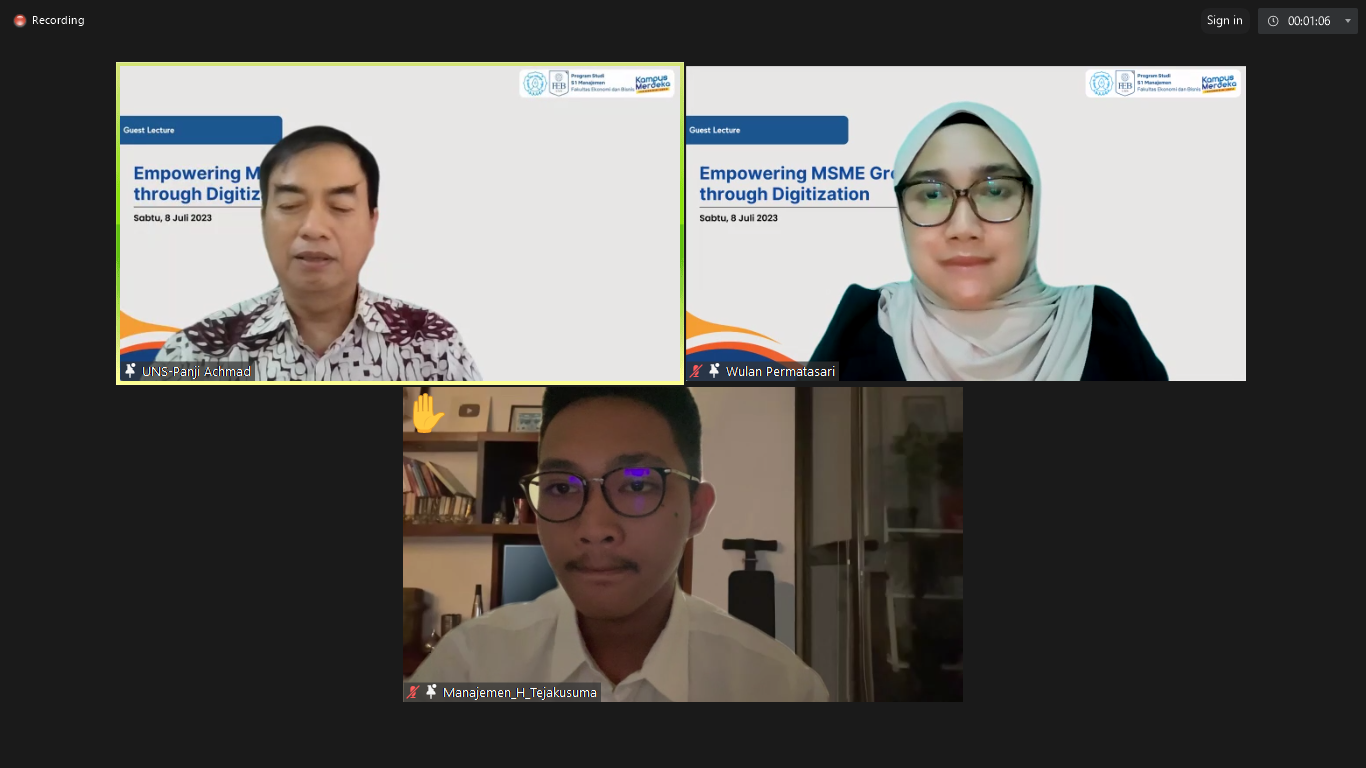
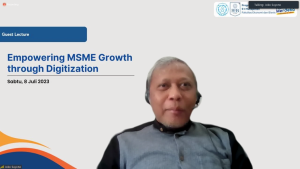
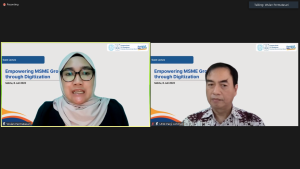
    The Management Study Program (MSP) hosted a Guest Lecture presenting an invited speaker from Bank Indonesia. The Guest Lecture entitled Empowering MSME Growth through Digitization was held virtually through Zoom Cloud Meeting on Saturday (07/08/2023). The guest lecture presents Dr. Panji Achmad, LL.M., Group Head/Director of the Legal Department of Bank Indonesia who discussed four important points in digitalization development in MSMEs.

    These points include the duties and authorities of the central bank after the enactment of Law No. 4 of 2023 concerning the Development and Strengthening of the Financial Sector (P2SK Law), the application of omnibus law of the financial system, Bank Indonesia and payment systems in Indonesia, and the development of MSMEs and digitalization in Central Java.

    The event, which lasted for approximately two hours, opened with Dr. Joko Suyono’s remarks. Through his remarks, he revealed that this guest lecture was attended by the majority of MSP students in the final semester who participated in the MBKM program. “We hope that today’s material can enrich students’ knowledge on how to manage MSMEs related to digitalization,” said Dr. Joko Suyono.

    In line with Dr. Joko, Dr. Panji stated that the objectives of the guest lecture are in line with BI duties related to the empowerment of MSMEs. Hence, creating a well-synchronized guest lecture theme. This is because currently Bank Indonesia is actively engaged in disseminating new regulations related to omnibus law or P2SK Law. “Digitization helps MSMEs during the Covid pandemic. Without digitalization, perhaps the effect of the pandemic will be more severe for MSMEs,” said Dr. Panji.
    In addition to serving as the central bank in Indonesia, the BI participates in the development of MSMEs, among others, through mentoring, financial literacy, and price stability. In this case, BI’s duties in the P2SK Law include issuing legal tender, formulating and implementing monetary policy, regulating and maintaining the seamless flow of the payment system, maintaining financial system stability through macroprudential regulation and supervision, and carrying out the function of “the lender of the last resort.”

    Regarding the development of the digital payment sector, he said that consumers need to consider the balance between the risks and the functionality of digital payment tools. This is related to the many security risks, inherent to the use of such digital systems. “Henceforth, all payment systems in Indonesia must be under the supervision of the central bank, there should be no ‘shadow banking’ (banks that do not comply/do not follow BI regulations). The payment system must be connected to the banking system. One of the technological advancements launched by BI is the use of a QR code, named the QR code Indonesian Standard. The implementation of QRIS is highly beneficial, especially during the Covid-19 pandemic,” he explained.

    In fact, this QRIS has developed into a cross-border QRIS, which now has been adopted in Thailand, Malaysia, and finally legalized in Singapore. In line with the development of the official payment system built by BI, according to data from the Ministry of Cooperatives and MSMEs, in 2022, there were 20.76 million MSME units that had implemented the digital ecosystem. Under this MSME development framework, BI provides MSME development programs and inclusive finance.

    “According to the digitization statistics in Central Java, the largest users of digital payment are Generation Z and millennials. In 2022, the number of SMEs that have entered the digital ecosystem increased 26.6% compared to 2021. Meanwhile, the Kemenkop target for 2024 is 30 million MSME units joining this digital ecosystem.”

    The enthusiasm of students for the material of the Indonesian financial system was seen during the question-and-answer session, where Dr. Panji said several times that the questions asked by students were very interesting and important.

    At the end of the question-and-answer session, Dr. Panji conveyed two important suggestions related to the usage of digital payment systems. “Use digital payments wisely. Be careful in carrying out digital transactions,” he stressed. Concluding the Guest lecture on this occasion, Dr. Wulan Permatasari, SE., MM., SHRM-CP., the moderator of the event expressed her gratitude to Dr. Panji for his comprehensive material.

    “Pak Panji discussed a lot about the development of MSMEs in Central Java and Indonesia. This is a very useful material because many students at FEB UNS do not understand the payment system in Indonesia. Hopefully, in the future, Mr. Panji will be able to share his knowledge and experience with FEB UNS students. Thank you to the participants and the MSP FEB UNS PKKM Task Force Team. Thank you, Mr. Panji, for your knowledge and sharing,” she said, ending the Guest Lecture session.

  • Innovative Leadership General Lecture: Towards a New KAI for Indonesia Attracts More Than 200 Participants

    Innovative Leadership General Lecture: Towards a New KAI for Indonesia Attracts More Than 200 Participants

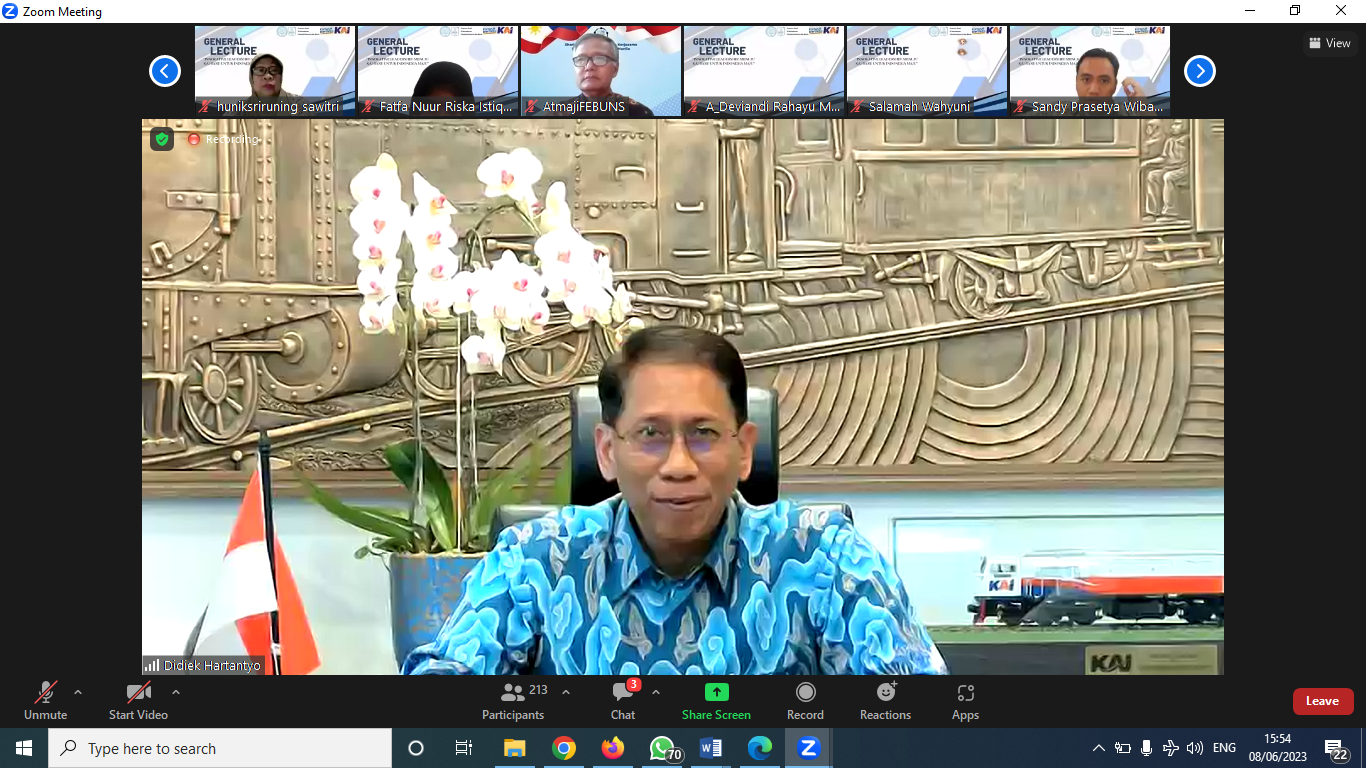
    The Management Study Program (MSP), Faculty of Economics and Business (FEB), Universitas Sebelas Maret (UNS) presents the Director of PT KAI, Didiek Hartantyo, in the General Lecture entitled Innovative Leadership: Towards a New KAI for Indonesia, Thursday, June 8, 2023. The online event was attended by more than 200 participants, mostly students.

    Innovative Leadership General LectureIn his material, Didiek quoted the statement of Deputy Minister of SOEs II, Kartika Wirjoatmodjo: “KAI became the executor for most difficult National Strategic Project in terms of risk and complexity level. Therefore, we need to master Functional Management Skills and Technical Sectoral Skills. However, within a transformation process, leadership skills are the key.”
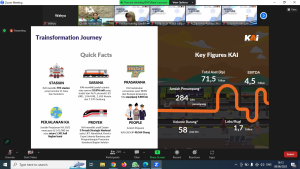
    Indeed, leadership plays an important role. Organizational behavior should be based on good corporate governance. Didiek explained PT KAI’s strategies for building enthusiasm to lead the transformations and creating extraordinary innovations. PT KAI builds organizational spirit based on the great leaders’ theory and effective individuals.

    “To achieve successful performance, great leaders have a mindset and behavior that is adaptable and flexible in responding to rapid changes in the environment. Positive attitude and high expectations are also very important,” he said.

    Further, he states that great leaders hold no meaning if they don’t have effective teams, effective individuals. “The vision and mission of great leaders is poured into the structure of an organization and also implemented into an effective organization, effective individuals. With great leaders and effective individuals and the processes and systems alignment, a winning culture spirit is established.”Innovative Leadership General Lecture Material

    With the spirit of a winning culture, the organization will be superior and capable to achieve sustainable performance. The organization can also build loyal customers and establish engaged employees. This foundation will help the organization build a distinctive contribution, a specific contribution.

    Following those patterns, PT KAI can transform continuously while conducting leading change and creating breakthrough innovation. Didiek, who is an alumnus of FEB UNS, also outlined various continuous innovations carried out by PT KAI. On this occasion, Didiek open up the opportunity for participants to discuss and provided vouchers as a gift from PT KAI for any participant who actively engaged in the discussion.

  • Dr. Sinto Sunaryo Invites Academic Members to Take on Local Cases for Case-Based Method Learning

    Dr. Sinto Sunaryo Invites Academic Members to Take on Local Cases for Case-Based Method Learning

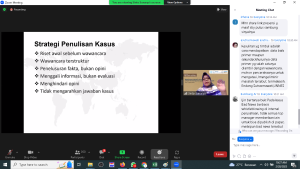
    How to start writing a case study for a case-based learning method? There are many sources of cases, there are cases published in international journals or even journals specialized in publishing cases, these cases can also be obtained from the Harvard Business School, and short cases are included in a textbook.

    The problem is most of the cases are developed according to international context or occur in other countries. There is only a limited number of academician taking on cases focused on the Indonesian context to be applied in case-based learning. In fact, there are innumerable Indonesian cases available for discussion and worth publishing, provided that the writing process follows the applicable standard.


    The current condition becomes a challenge for academicians to incorporate cases with local context in the learning process to allow students to understand cases emerging in their surrounding community.

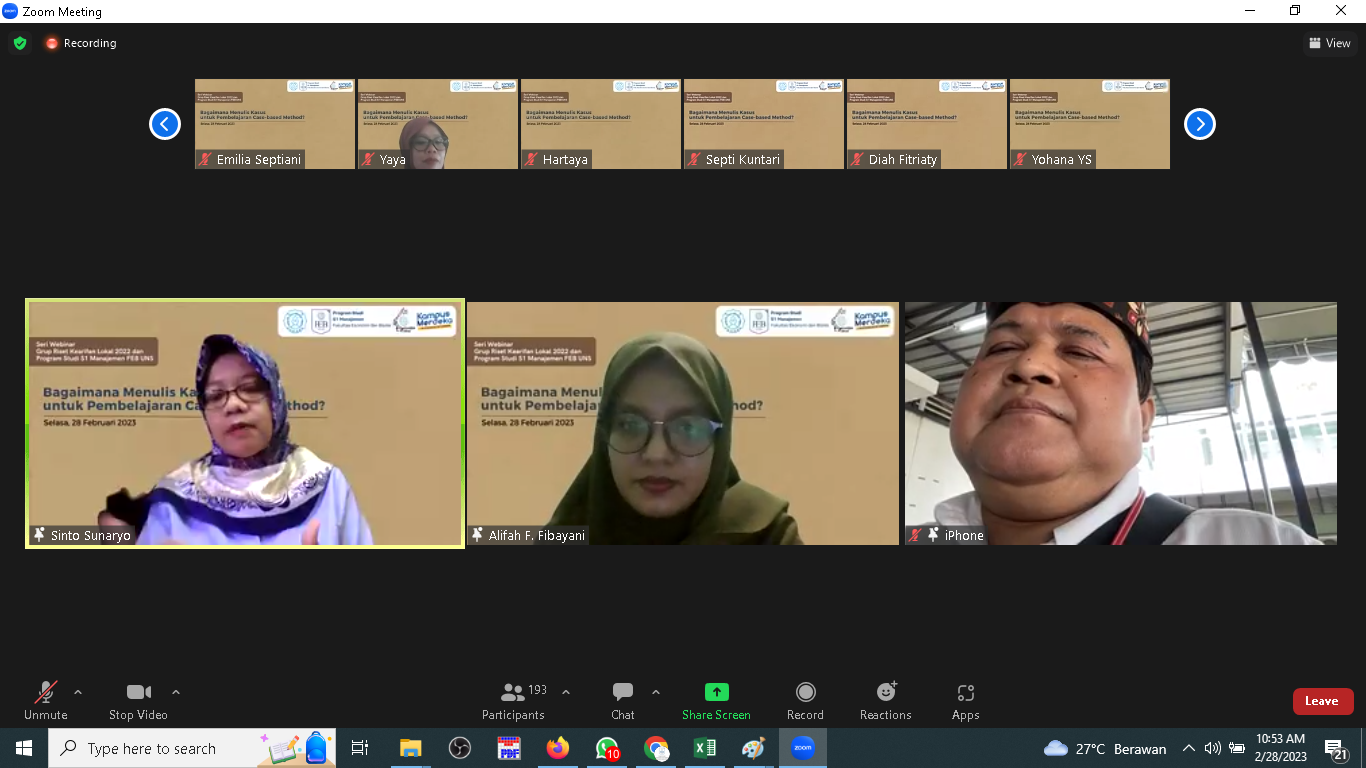
    This statement is delivered by Dr. Sinto Sunaryo, SE, MSi, SHRM-CP., a lecturer from FEB UNS, presenting her material in a webinar hosted by the Local Wisdom Research Group, Faculty of Economics and Business (FEB), Universitas Sebelas Maret (UNS), Tuesday, 28 February 2023.

    Further, Dr. Sinto explains why the case-based study is important.

    “Case-based studies are important, not only because this method has been used in renowed global business schools, but also not only because of the requirement of the Dikti to be part of the Key Performance Indicator (KPI), but because of the very nature of a case study itself, which is the Students will learn, and what we can teach to students through case-based studies,” she explained.

    According to her, the core of the case-based studies is to give students the opportunity to delve deeply into case-solving, learn, analyze, and make strategic decisions on real-world problems, in a real-life situation. The case written is based on a real-life, it represents a piece of the reality of the case object, should not be fictional in nature, and can be from either a for-profit organization, non-profit organization, or industry.

    Secondly, the case-based study offers students the opportunity to apply their knowledge and management in a classroom-based laboratory. The classroom should be a dedicated laboratory where students can learn, apply theory and concepts, and sharpen their skills under a minimum risk.

    “This piece of reality presented in the case was intended to represent the reality faced by the case object, but without the actual risk that the object bears. For instance, students don’t actually have to be involved in a company operation,” she explains.

    The third, case-based study offered students the opportunity to hone their competency in identifying, analyzing, and solving problems multiple times, under various settings, either in academic settings based on specific perspectives such as human resource, finance, or organizational background.

    Further, Dr. Sinto explains various sources of case study inspiration that can be found in various media such as magazines, newspapers, textbooks, students’ experiences, alumni, or even business partners.

    As for case writing, a case study must portray an actual situation and is related to managerial problems or address the managerial decision. The case must also relate to a theoretical concept or specific method.

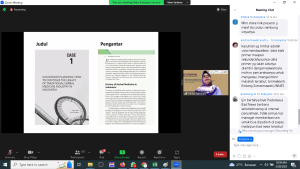
    At the end of the session, in front of 200 participants, Dr. Sinto provided an example of case-based study material authored by FEB UNS Management Lecturer Team entitled “A Casebook in Business Management: Indonesian Traditional Herbal Industry,” and published by Salemba Empat, one of the leading publisher in Indonesia. The book was published in English, which allows Indonesian cases to be discussed in the global teaching and learning process.

    Participants were highly interested in the topic discussed, proven by the discussion participation.


  • FEB UNS Encourages Students to Participate in IISMA

    FEB UNS Encourages Students to Participate in IISMA

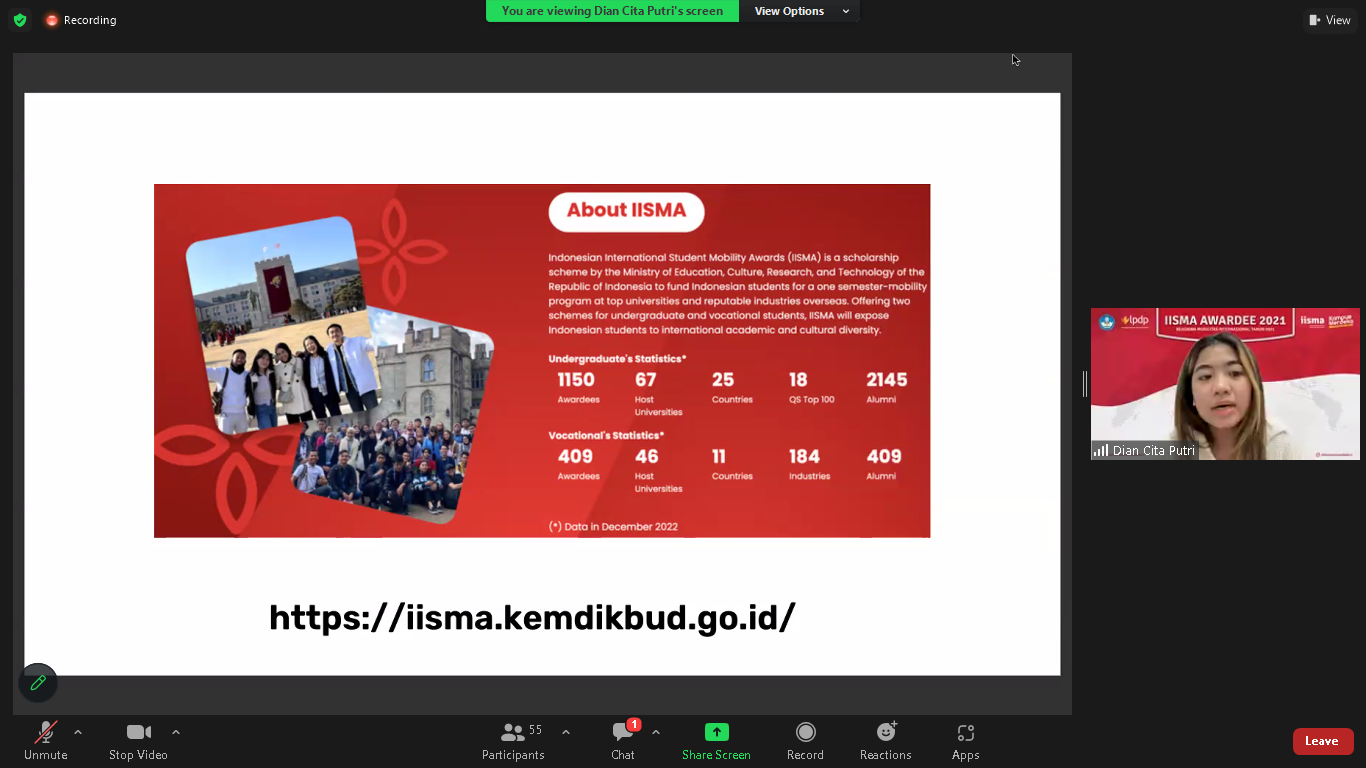
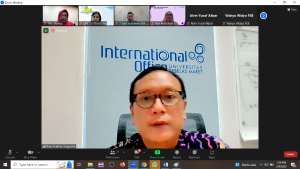
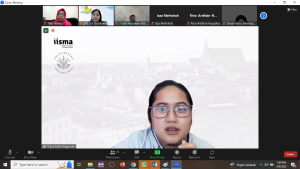
    Faculty of Economics and Business (FEB), Universitas Sebelas Maret (UNS) Surakarta, in collaboration with the UNS International Office (UPT KLI UNS) hosted IISMA (Indonesian International Student Mobility Awards) Dissemination on Thursday, 9 February 2023.

    IISMA is a scholarship scheme funded by the Republic of Indonesia Ministry of Education, Culture, Research, and Technology (Kemendikbudristek), for Indonesian students to participate in a one-semester mobility program in a prominent global university or industry. This scholarship is offered under two schemes for undergraduate degree and diploma degree students.

    In this program, selected students can spend a semester studying at an international university and develop intercultural communication and leadership skill. Aside from that, they will learn about the culture of the country, expand their international network, and carry out practical assignments to enhance their skill.

    The virtual dissemination was attended by FEB UNS students from four study programs, the Accounting Study Program, Management Study Program, Development Economics Study Program, and Digital Business Study Program.

    Prof. Dr. Izza Mafruhah, SE, M.Si., Vice-Dean for Academic, Research, and Student Affairs FEB UNS, appreciates the students for their interest in IISMA through her remarks.

    According to her, by participating in IISMA, students will get uncountable opportunities.

    “Students participating in IISMA will be the pride of everyone, not only the students themself, but also their campus and parents. IISMA provides students with exceptional learning and experiences. You can also get to improve your soft skills, which will increase your opportunity both when you’re entering the job market or continuing your studies,” she said.

    Meanwhile, Rino Ardhian Nugroho, S.Sos., M.T.I. Ph.D, the Head of UNS International Office (UPT KLI UNS), states that IISMA in 2023 will be the third IISMA delegation in UNS.

    Rino Ardhian Nugroho, Ph.D, disseminates IISMA Program

    In 2021, four FEB UNS students were successfully selected as IISMA delegation, they were Dian Cita Putri delegated to Universiti Kebangsaan Malaysia, Hanifah El Sandy delegated to University of Pisa Italy, Nabila Rania Dewi delegated to Hanyang University South Korea, and Anastasia Kiranahita Santikajati delegated to University of Szeged Hungaria. While in 2022, Chaya Edita Anggraeni was selected as a delegation to the University of Warsaw Poland.

    “IISMA is one of the Programs hosted by Dikti for higher education students, which has become quite a pride for the Minister of Education. In fact, this program has various positive aspects since it aims to improve students’ knowledge. Not only can students learn something new, but they can also learn how to compete with international students around the world. This opportunity offers the rare opportunity, one that you will not get under the national MBKM program, a chance to live abroad, IISMA is sure an exciting opportunity,” he revealed.

    Furthermore, students were given a scholarship for one semester. During their stay, the student shall take a full-time study and is not allowed to work.

    UNS International Office (UPT KLI UNS) will provide all necessary facilities and assistance to increase their opportunity to pass the selection process, such as in essay writing and other assistance.

    Marieti Debyora Gardiana, S.Si., Administrative Sub-Division Coordinator of the UNS International Office, explains in detail the IISMA Program. To prepare students in participating in IISMA, the UNS International Office has disseminated IISMA Program early on. The UNS International Office will train students in essay writing, English comprehension and proficiency, interview training, and sharing session with the former IISMA alumni.

    Chaya Edita, IISMA Alumni shares their success story

    Students applying for IISMA will also face an internal screening in UNS, which aims to ensure that those participating in the national-level selection have fulfilled the requirements.

    On this occasion, four IISMA alumni, Dian Cita, Nabila, Chaya Edita, and Hanifah, also shared their experiences in IISMA.

  • Management Study Program Welcoming Visit from HNU Germany

    The Management Study Program, Faculty of Economics and Business (FEB), Universitas Sebelas Maret (UNS) Surakarta, never ceased to enhance its international collaboration network. This time, the Study Program welcomed a visit from Neu-Ulm University of Applied Sciences (HNU) Germany, to build a collaboration in the student exchange program.

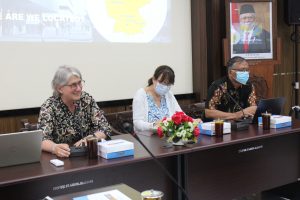
    The welcoming ceremony attended by the representative of HNU Germany, the Head of the Study Program, lecturers, and students of the Management Study Program, was conducted at First Assembly Room, Soeharno TS FEB UNS Building, on Thursday (02/06/2022).

    The Head of the Management Study Program, Dr. Atmaji, MM., expressed his gratitude to the HNU representative in Solo. After introducing FEB UNS and the Management Study Program through a short video profile, Dr. Atmaji hopes that the visit would allow the two institutions to gain a better understanding of the possibilities for partnership and other academic activities.

    Further, Dr. Sinto Sunaryo provided an explanation of the teaching and learning process applied in the Management Study Program. Dr. Sinto also explains the learning method applied in the Study Program, available supporting facilities, and the MBKM Program. “Hopefully, this collaboration can be useful for both institutions,” said Dr. Sinto.

    Two representatives of HNU Germany, Verena Seitz, the Head of the International Office of HNU, and Cornelia Häusler, Deputy Head of the International Office, introduce HNU to the participants. The introduction covers the university profile, directions, and available means of transportation to visit HNU, available programs, collaboration opportunities, lecturer profiles, and support provided by the HNU International Office for international students.

    The agenda goes on with an interactive questions-and-answers session with the students. Students shows their enthusiasm during the session, especially regarding the offered credit semester, supporting facilities, and students criteria required by HNU for the student exchange program. (Tetri & Alifah)

  • Local Wisdom Research Group Workshop, Cultural Capital in Economics Study: The Role of Culture in Indonesia’s Economy Development

    Local Wisdom Research Group Workshop, Cultural Capital in Economics Study: The Role of Culture in Indonesia’s Economy Development

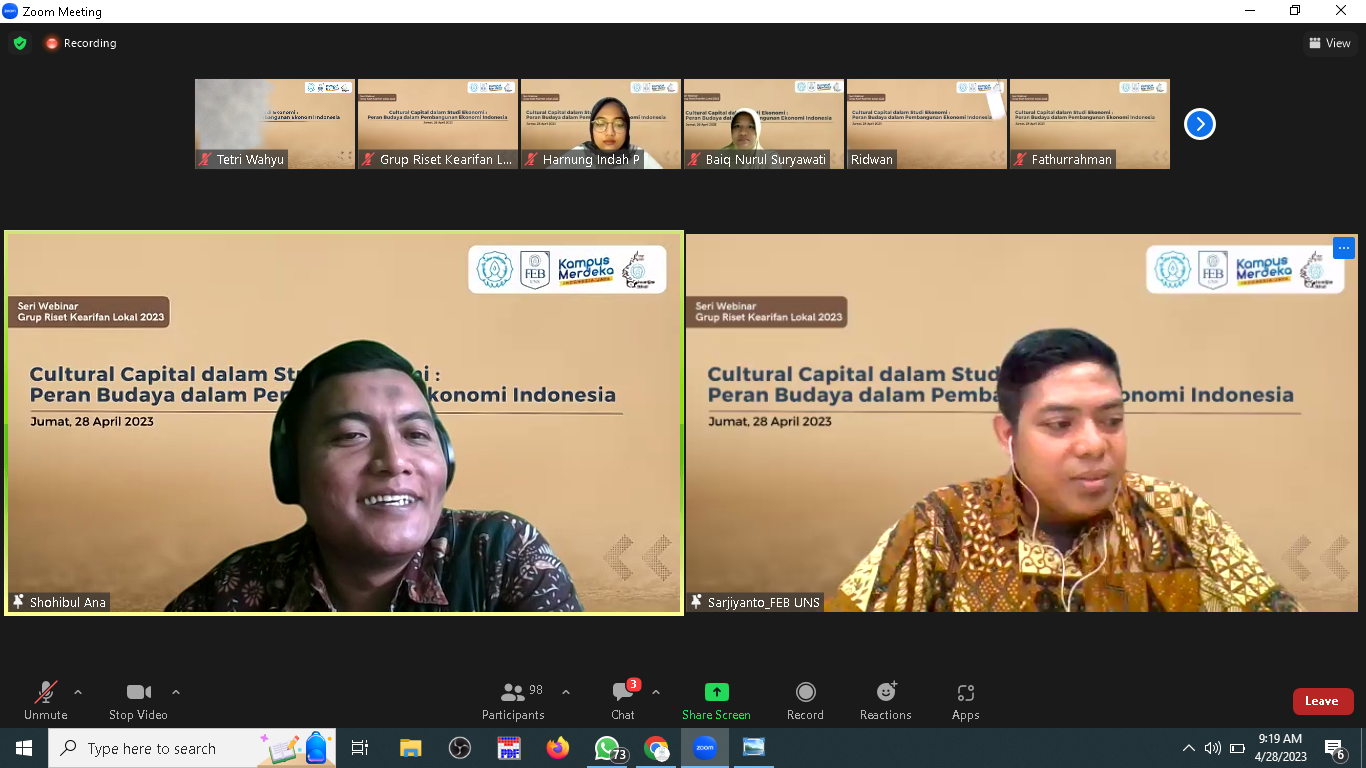
    “In our daily life, we have understood how biodiversity contributes to economic activity, meanwhile, there is limited study on the role of cultural diversity or cultural diversification in the economic sectors. Our Research Group (RG) sees culture as capital in development process, in this context is economic development.” This statement was delivered by Sarjiyanto S.E., MBA., Ph.D., FEB UNS lecturer, in a Workshop by Local Wisdom Research Group entitled ‘Cultural Capital in Economics Study: The Role of Culture in Indonesia Economy Development,’ Friday, 28 April 2023.

    Local Wisdom RG FEB UNSFurther, he explains that Indonesia as a country with rich cultural diversity can have a unique cultural capital in its development.
    “In fact, the International Culture and Development Commission states that economic development should also involve cultural aspects. A development that no longer considers the community and culture is a soulless development. Rapid economic development is part of community culture, as it should be,” he explains.

    Sajiyanto invites webinar participants to discuss how this cultural diversity becomes a spirit in economic activities and development, similar to biodiversity.

    The cultural economy according to the index determined by the Ministry of Education and Culture consists of several indicators such as the percentage of the population involved as performing arts supporters or performers, whose involvement in the cultural acts becomes their source of income. Based on recent data, some regions in Indonesia have had a very high cultural economy such as Yogyakarta Special Region (DIY) and Nusa Tenggara.

    In fact, the cultural economy has a significant contribution to the economic development of a region. This sector revolves around how residents get their source of income from cultural activity. This disparity becomes the role of academicians to discuss. Academicians need to determine whether this dimension should be a single measure as well as to establish better proxies in measuring cultural economy to be factually measured and predicted.

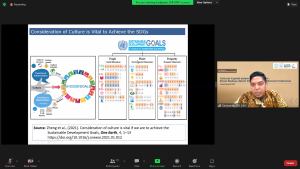
    Based on previous research, culture can contribute to the sustainable development goals (SDGs) accomplishment. Culture is found to have a mediating role in 17 SDGs’ role accomplishment, where 70% represent the SDGs target and 25% represent cultural values.

    In development economics study, there is still room for measurement mechanisms and modeling, especially for novel development.

    This occasion opens up the discussion on how cultural capital can be included in the development of economic models or research. The academic community shall provide supporting data and conduct research to prove that cultural capital can have a significant contribution to economic development, especially in Indonesia.

  • Universitas Muhammadiyah Malang FEB Comparative Visit to FEB UNS

    Universitas Muhammadiyah Malang FEB Comparative Visit to FEB UNS

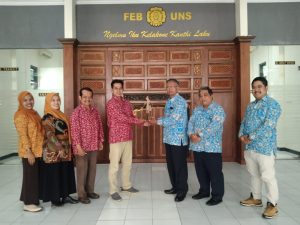
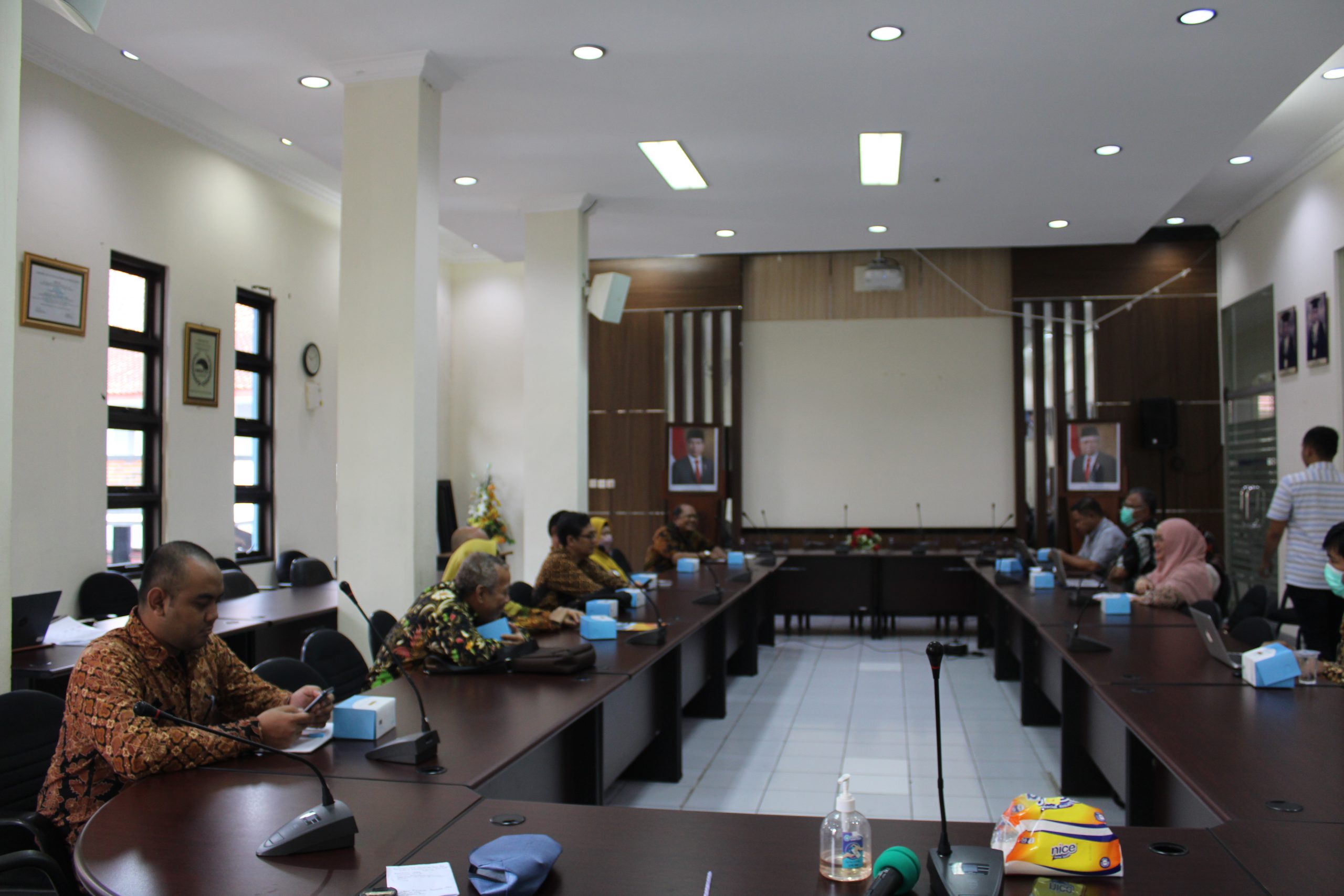
    Faculty of Economics and Business (FEB), Universitas Sebelas Maret (UNS) received a visit from the Head of FEB Universitas Muhammadiyah Malang, Monday 20 March 2023 in Assembly Room 1 of Soeharno TS Building FEB UNS. The team led by Dr. Marsudi, MM., Head of the Management Study Program, FEB Universitas Muhammadiyah Malang was welcomed by a number of FEB UNS leaders and lecturers.

    The Vice Dean of Planning, Business Partnership, and Information FEB UNS, Dr. Mugi Harsono, SE, M.Sc., representing the Dean of FEB UNS, welcomed the visit of the leadership ranks from the FEB Universitas Muhammadiyah Malang.
    After introducing the leaders and lecturers of FEB UNS who are attending the session, Dr. Mugi Harsono presented a short profile of FEB UNS. Initially Universitas Sebelas Maret was named Universitas Negeri Surakarta Sebelas Maret, which was officially established on March 11, 1976.

    In its development, in 1982 the name and abbreviation of Universitas Negeri Surakarta Sebelas Maret Surakarta (UNS Sebelas Maret), was determined to be Universitas Sebelas Maret, which is abbreviated as UNS. This name and abbreviation transformation was approved through the Presidential Decree of the Republic of Indonesia No. 55 of 1982.

    Furthermore, as mentioned by Dr. Mugi, the Bachelor in Management Study Program has an incessant Merdeka Belajar Kampus Merdeka (MBKM) program implementation and has received an MBKM grant. The Management Study Program provides many opportunities for students to take part in MBKM Program and the types of MBKM offered in the study program are more exhaustive. This excellent management leads to commendable student achievement, both at the faculty, university, and study program levels.

    Dr. Mugi gave the leadership of FEB Universitas Muhammadiyah Malang the opportunity to discuss further with the Head of the Management Study Program, Dr. Atmaji MM., along with the Taskforce Team. The discussion, which lasted approximately 2 hours, went seamlessly. Hopefully, this visit will provide many benefits, both for FEB University of Muhammadiyah Malang and for FEB UNS.

  • Improving Management Study Program Academic Activity, FEB UMS Conducted Comparative Study Visit to FEB UNS

    Improving Management Study Program Academic Activity, FEB UMS Conducted Comparative Study Visit to FEB UNS

    The Management Study Program of the Faculty of Economics and Business (FEB), Universitas Sebelas Maret (UNS) received a Visit from the Team of Management Study Program, Universitas Muhammadiyah Surakarta (UMS), Thursday, February 9, 2023, in Assembly Room 1 of the Soeharno TS Building.

    The delegation was welcomed by the Vice-Dean of Academic Research and Academic FEB UNS, Prof. Dr. Izza Mafruhah, SE, M.Si., Head of Management Study Program, Dr. Atmaji, MM., and several Lecturers of the Re-accreditation Task Force Team of the Management Study Program, Dr. Sinto Sunaryo, S.E., M.Si., Sarwoto, S.E., M.Sc., and Miftachul Ma ‘Arif, S.E.I., M.M.

    Prof. Izza Mafruhah welcomed the FEB UMS Management Study Program Team and thanked them for their visit to FEB UNS. Furthermore, three undergraduate study programs in FEB UNS, Management, Accounting, and Development Economics Study Program have been accredited ‘A’ (Excellent) by the National Accreditation Board for Higher Education (BAN-PT).

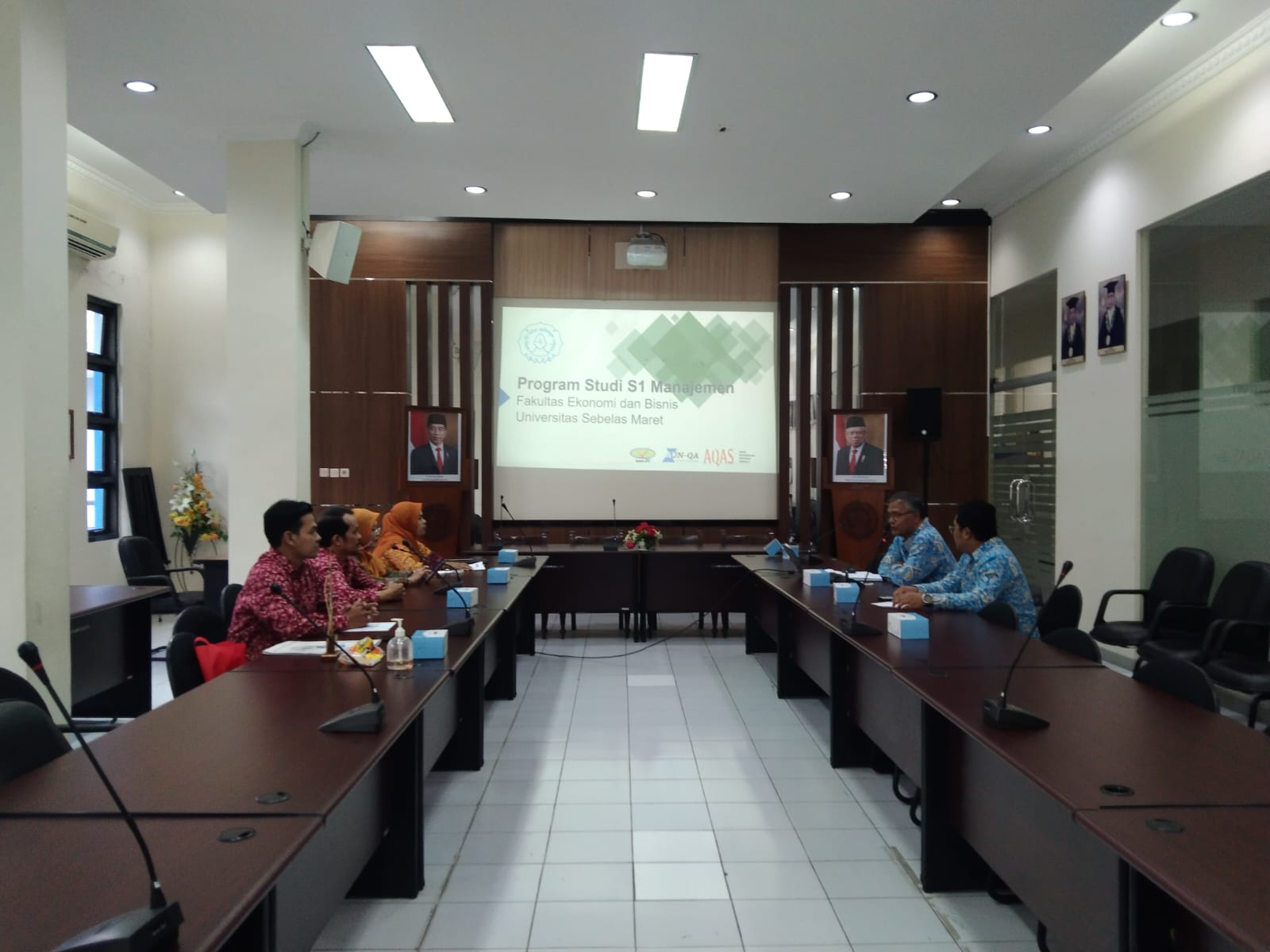
    In addition, the study programs have also been accredited by the Asean University Network-Quality Assurance (AUN-QA) and the International Agency for Quality Assurance (AQAS) with conditional status. Upon this status, the three Undergraduate Study Programs have sent supporting and revised documents for several required aspects to the AQAS. Hopefully, AQAS can immediately process all amendments, thus, an accreditation certificate with unconditional status can be issued.

    Meanwhile, Imronudin, S.E., M.Si, Ph.D., Vice Dean III of FEB UMS said that his visit to FEB UNS aims to improve the quality of learning at the FEB UMS Management Study Program, both for the regular and international classes. “We from the Management Study Program Team to conduct a benchmarking study to FEB UNS Management Study Program, related to the regular and international classes, international accreditation, and also international class management. Because we see UNS is one step ahead of us,” he explained.

    At the beginning of the opening remarks, Dr. Atmaji said that his duty as the Head of the Management Study Program was greatly helped by the Task Force Team, both for the preparation of the re-accreditation process, Merdeka Belajar Kampus Merdeka (MBKM) Program implementation, and international classes.

    Dr. Atmaji also explained the outline of curriculum preparation in the Management Study Program FEB UNS and the implementation of teaching and learning activities. The preparation of the curriculum, was conducted in 2020, however, there are still adjustments in its implementation.

    “Regarding the curriculum, the Management Study Program has implemented the MBKM curriculum. This curriculum, accommodates students who do not participate and those who take the MBKM Program, and Alhamdulillah, last semester, there were 70 undergraduate Management Study Program students who participated in MBKM activities, the most participation within UNS,” he said.

    In terms of recognizing the equivalency of the 20-semester credits for students who take part in MKBM, the Management Study Program faces no difficulty. The Study Program also has a system that can monitor the daily activities of students who participated in the MBKM Program.

    It is said that the curriculum that has been prepared, other than applied in the regular classes, is also used for international classes, it’s just that in international classes the learning process uses English. Meanwhile, to improve the quality of learning, the quota for each regular class was reduced from 40 students to 30 students. In addition, the curriculum accommodates students’ interests in finance, human resources, marketing, and operations.

    When taking MBKM, students must previously submit proposals, which will be assessed by the task force team for their feasibility and recognition. Recognition or equivalency of the 20-semester credit resulting from the MBKM program is based on the student’s study interest in the MBKM. Students who have completed the MBKM Program, are directed to write the final project which corresponds to their study interests.

    “For example, for students who take MBKM internships in finance, we will recognize 20-semester credits with courses in finance, this also applies to other interests taken by students,” he explained.
    Furthermore, in the discussion session, Dr. Sinto and Sarwoto, M.Sc., added an explanation related to the international class and also the MBKM Program that has been carried out by the Management Study Program.