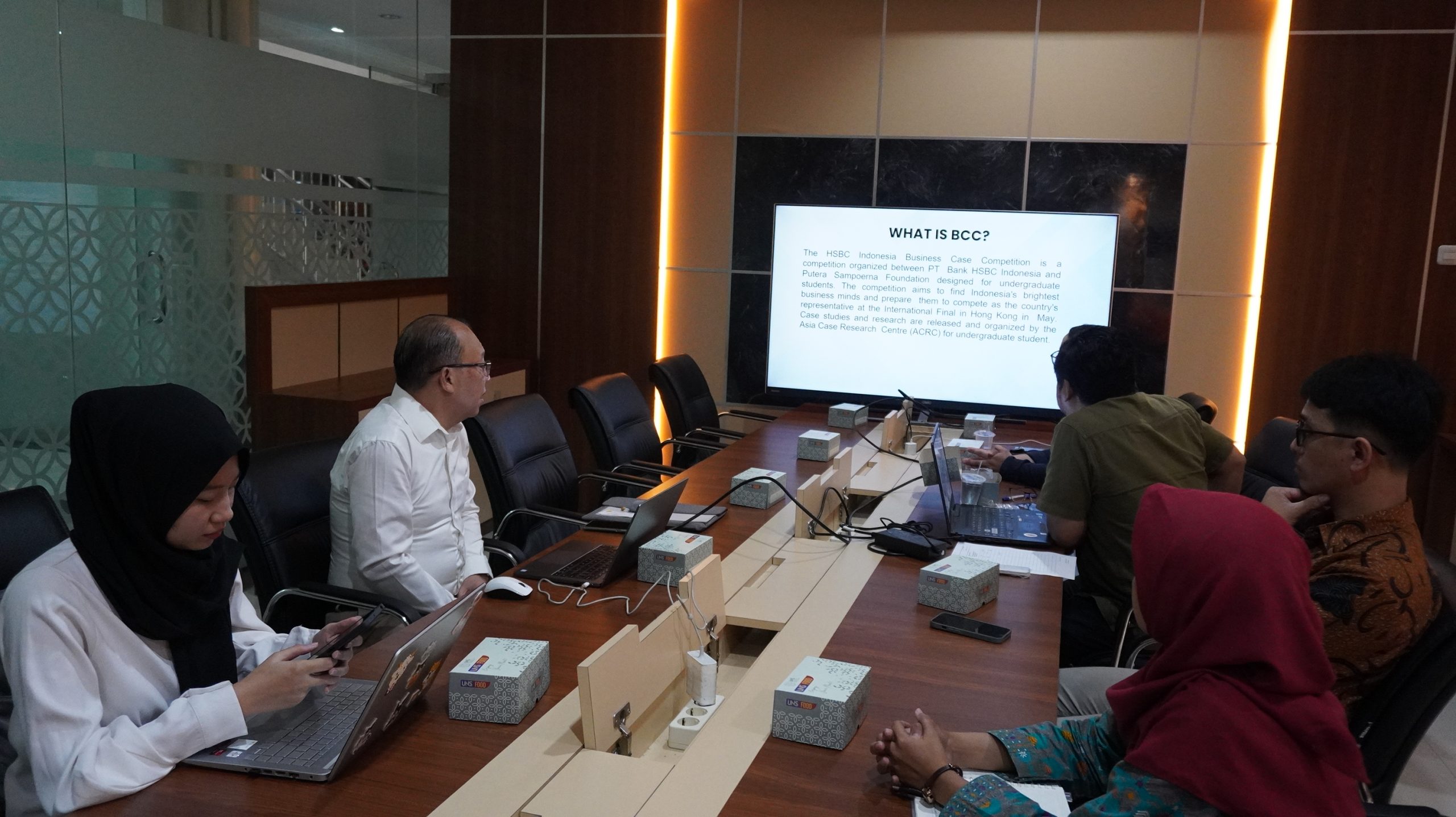
Fakultas Ekonomi dan Bisnis (FEB) Universitas Sebelas Maret (UNS) menerima kunjungan dari PT Bank HSBC Indonesia dan Putera Sampoerna Foundation dalam rangka Sosialisasi Program HSBC Indonesia Business Case Competition (BCC) 2025, Kamis 16 Januari 2025 di Ruang Fiscal Corner FEB UNS.
Di kunjungan ini, Tastaftiyan Risfandy, S.E., M.Sc., Ph.D, Wakil Dekan Bidang Kemahasiswaan dan Alumni FEB UNS menyampaikan bahwa pembelajaran berbasis case ini sangat penting bagi mahasiswa,
“Salah satu Key Performance Indicator (KPI) yang menjadi tugas kami di bidang 3 adalah mahasiswa berprestasi. Harapannya dari hasil diskusi ini mendapatkan insight. Keinginan yang kuat dari mahasiswa untuk berkompetisi masih perlu diasah” ungkapnya.
Ari Warokka, Ph.D., dari Universitas Negeri Jakarta, perwakilan PT Bank HSBC Indonesia memaparkan detil terkait program HSBC Indonesia BCC 2025.
HSBC Indonesia BCC merupakan kompetisi yang diikuti oleh mahasiswa, bersaing untuk memecahkan studi kasus bisnis yang kompleks. Kompetisi ini diselenggarakan oleh Bank HSBC Indonesia dengan Putera Sampoerna Foundation.

Kompetisi bisnis ini diperuntukkan bagi mahasiswa S-1 dari perguruan tinggi terkemuka di Indonesia. Ada 24 universitas di Indonesia yang diundang untuk berpartisipasi dalam HSBC Project, termasuk UNS.
Tujuan utama dari Business Case Competition adalah untuk menemukan bakat bisnis terbaik di Indonesia dan mempersiapkan mereka untuk bersaing di tingkat internasional.
Selain itu, kompetisi ini bertujuan untuk memberikan kesempatan kepada tim untuk memperbaiki presentasi mereka berdasarkan umpan balik dan memastikan hanya tim yang paling kompeten yang maju ke tahap berikutnya.
Lomba ini memberikan pengalaman praktis kepada mahasiswa dalam menerapkan pengetahuan bisnis dalam situasi nyata, meningkatkan keterampilan analisis, pemecahan masalah, kepemimpinan, dan presentasi, serta memperluas jaringan professional.
Dalam lomba ini, setiap universitas akan mengirimkan 2 tim, masing-masing terdiri dari 4 mahasiswa aktif dari fakultas bisnis atau ekonomi. Seleksi akan dilakukan secara online (melalui Zoom Meeting).
Berikut materi program HSBC Indonesia Business Case Competition 2025: [HSBC-Indonesia-BCC-2025.pdf”]
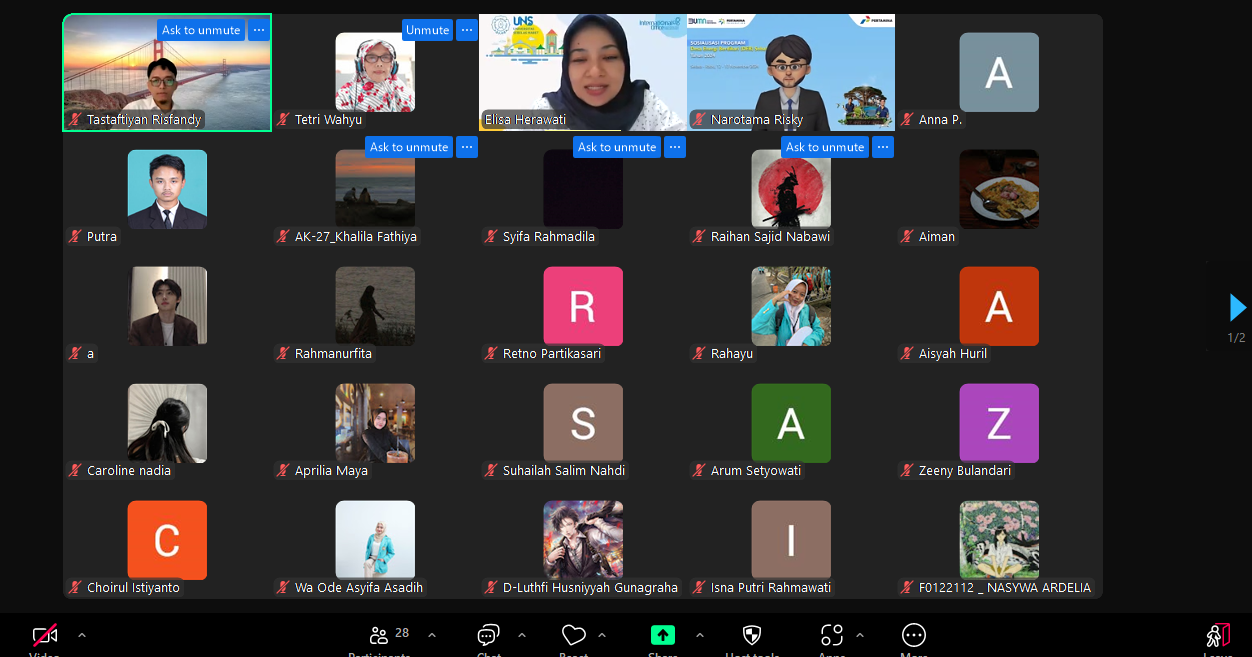
 In his opening remarks, Tastaftiyan Risfandy, S.E., M.Sc., Ph.D., Vice Dean for Student and Alumni Affairs of FEB UNS, emphasized that the event aimed to encourage and facilitate students’ active participation in the UNS Global Challenge.
 “We have provided some guidelines and recommendations to the Heads of Study Programs (Kaprodi) and, to students—particularly those in their fourth semester and above—to take part in this program. Participation is not mandatory, but we truly appreciate it when students show an intention to join. In general, from what I see, this activity is quite accessible,” he explained.
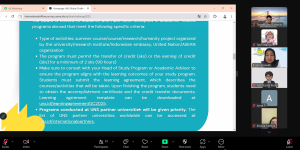 To provide students with better insight in selecting host institutions abroad and in preparing activity plans and other requirements, FEB invited the Head of the International Services Subdirectorate to explain the details of the program and the expectations of the International Office.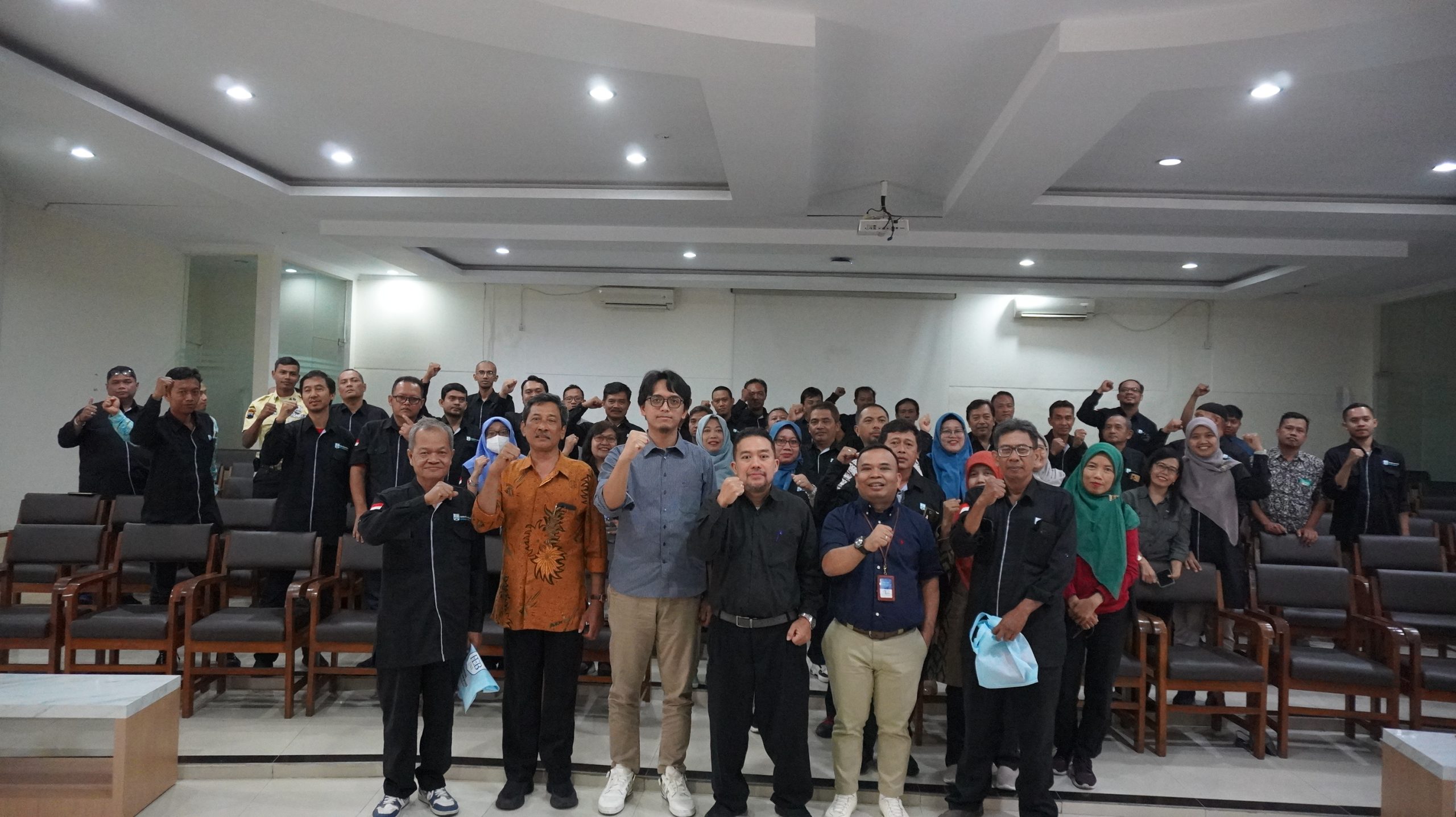
 Perspectives alignment also nurtures stronger relationships among individuals or groups by fostering mutual understanding and reducing conflict. Thus, shared perspectives promote more effective communication, improved cooperation, and optimal goal attainment. In light of this, the Dean’s Office hosted a gathering with the Academic Support Staff in the Faculty of Economics and Business (FEB), Universitas Sebelas Maret (UNS), on Wednesday, January 8, 2025, at the Konimex Hall, Bachtiar Effendi Building, FEB UNS.

 “The four of us, in the Dean’s office, each bring different styles due to our varied backgrounds. The Dean has shared his approach. What must be emphasized, however, is that we and our colleagues must exercise appropriate judgment—knowing our place, our timing, and the context. Even with good intentions, if actions are taken at the wrong time or without the right context, they may lead to problems,” he explained.
 The Vice Dean for Non-Academic Affairs also addressed the recent internal rotation of several academic support staff within FEB. He clarified that these changes were not based on personal preferences but rather on institutional needs and competencies, aimed at enhancing the faculty’s performance. He further stressed the importance of regeneration, thus, the faculty does not become overly reliant on specific individuals for certain competencies.
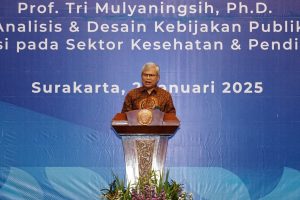
 Additional remarks were delivered by Prof. Tri Mulyaningsih, S.E., M.Si., Ph.D., Vice Dean for Academic and Research Affairs, and Tastaftiyan Risfandy, S.E., M.Sc., Ph.D., Vice Dean for Student and Alumni Affairs of FEB UNS.
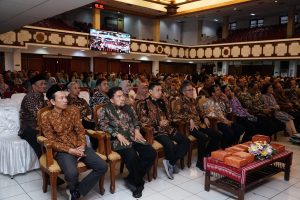
 As part of the event, the Dean’s Office also held a farewell ceremony for three retiring academic support staff members: Adi Nugroho, S.IP., Darsono, and Sundoro. The Dean’s Office expressed their gratitude to the retirees for their years of dedication and service at FEB UNS until their retirement.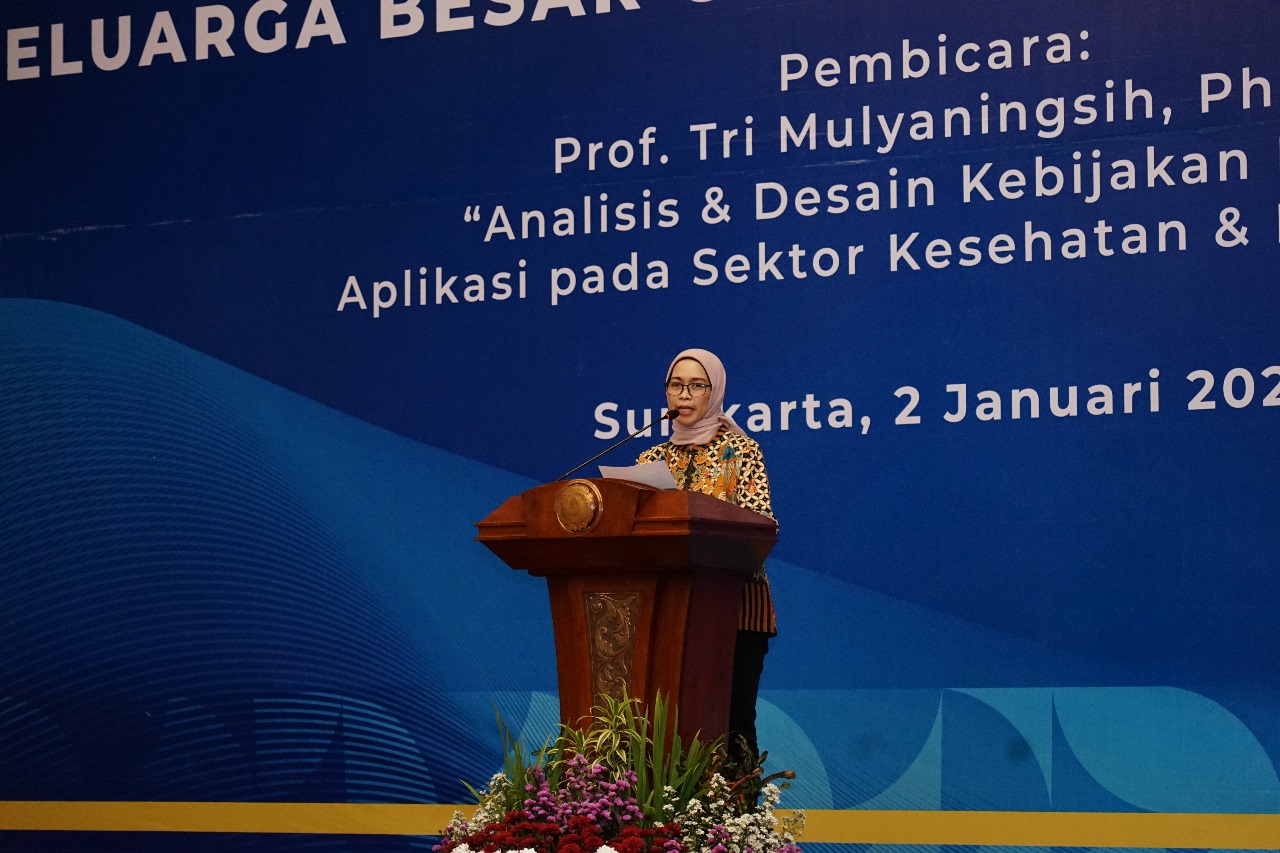
 Disparities in access to higher education in Indonesia are also a major development issue. According to UNESCO (2012), 35% of individuals from wealthier groups have access to universities, compared to only 5% from the poorest groups. Less than 10% of Indonesia’s workforce has attained higher education, significantly lagging behind neighboring countries such as Malaysia (23.4%) and Singapore (50%). Wage disparities (a skills premium of 3.32) indicate greater rewards for educated workers, which widens the economic gap. Additionally, malnutrition reduces the potential productivity of the workforce by 2–3% of GDP and contributes to increased fiscal burdens due to related health issues (e.g., stunting, anemia, diabetes). Economic estimates from the Global Nutrition Report indicate losses of up to USD 3.5 trillion annually.
 Prof. Tri went on to outline three designs of public policy. The first is a progressive policy design, focusing on both individuals and their environments. This approach includes behavior-based interventions (nudges) aimed at changing habits while maintaining freedom of choice. School-based policies are also encouraged, such as providing healthy meals, promoting healthy lifestyles, and introducing nutrition education at an early age.
 The third is an effective policy approach for vulnerable groups, particularly targeting adolescent girls. Nutrition during adolescence has significant effects on reproductive development and the quality of future generations. Programs providing free nutritious meals, sanitation, and other services aim to improve the nutritional status of school-aged adolescents.
 In concluding her presentation, the Professor—who currently serves as Vice Dean for Academic and Research Affairs at FEB UNS—summarized the key points as follows: development must support economic growth while improving public access to capacity-building opportunities; however, non-inclusive development leads to a range of issues; these issues can be addressed through public policy; yet, many policies are ineffective or result in inefficient public spending. Policy interventions should target both individuals and their environments—both physical and non-physical (such as schools and households). The behavioral economics approach using nudges is helpful in designing policies that influence public behavior while preserving individual choice.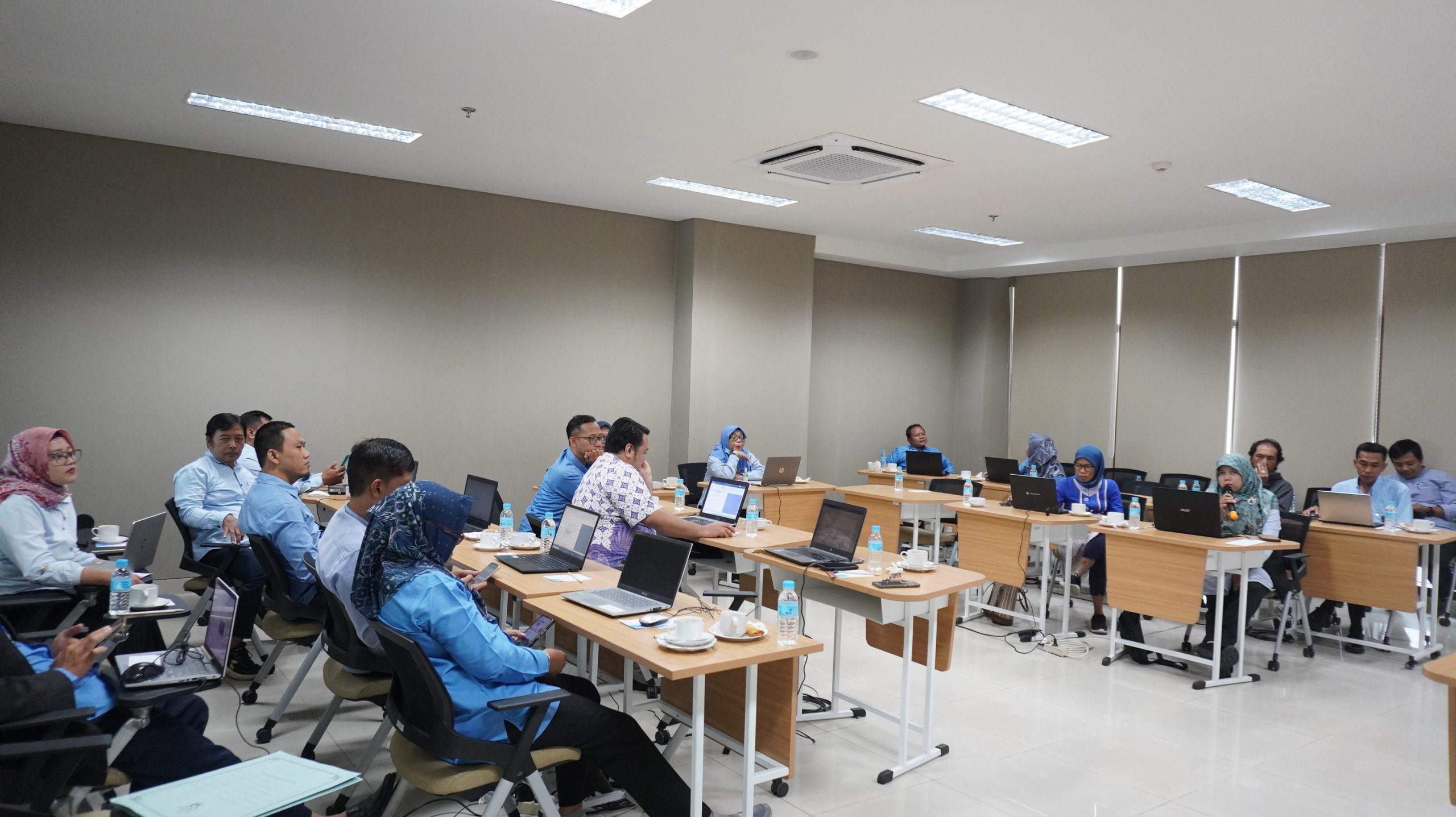


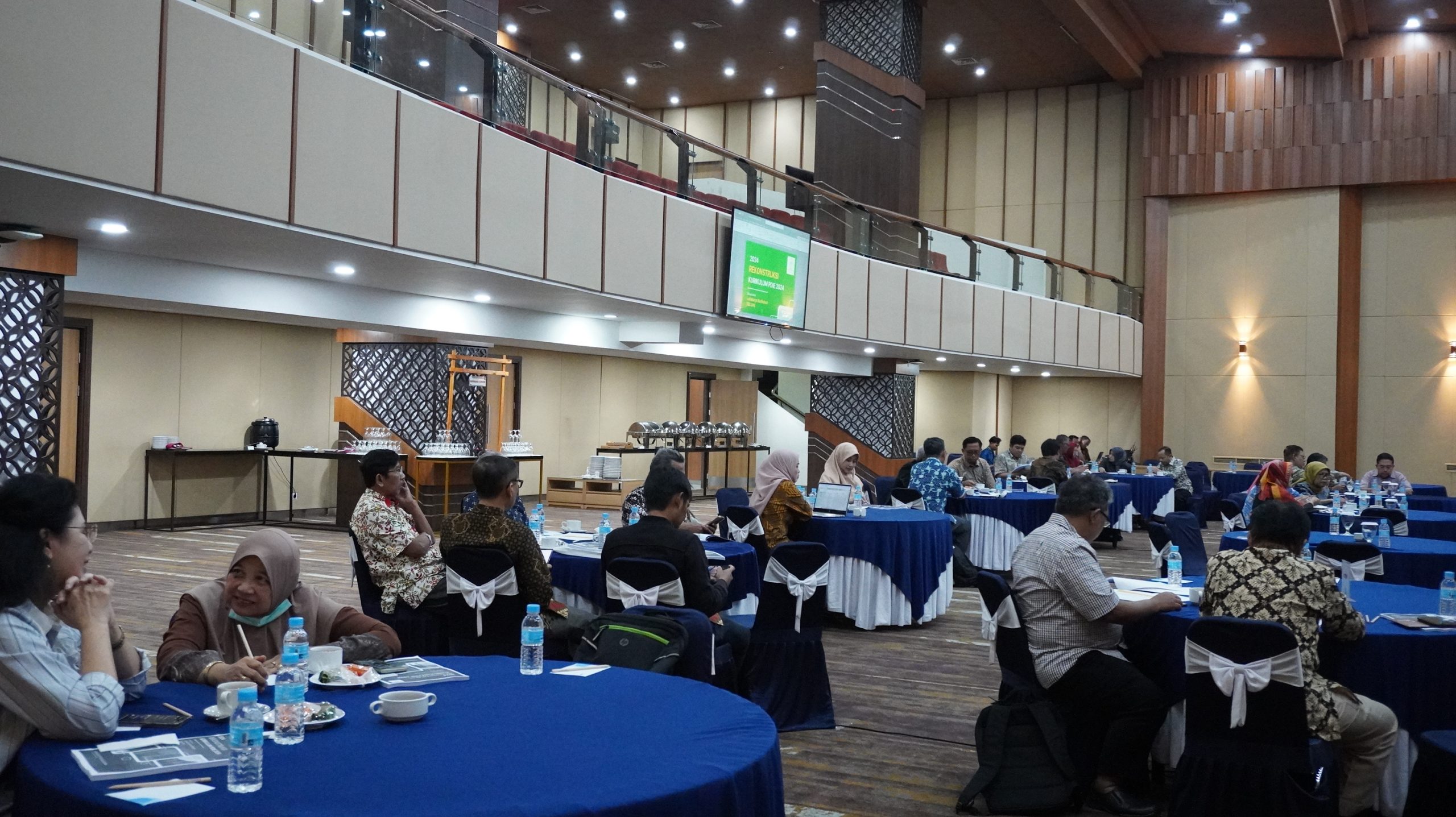
 In his opening remarks, Dr. Samudro expressed his appreciation to the program coordinators and teaching faculty for their commitment to participating in the curriculum development process. He emphasized the importance of this initiative in aligning academic programs with recent regulatory changes and improving academic management processes.
 Prior to this workshop, a preparatory session was held involving the program managers of the Master’s and Doctoral programs. The session focused on discussing key points from two regulatory documents: the Ministerial Regulation of the Ministry of Education, Culture, Research, and Technology (Permendikbudristek) No. 53 of 2023 on Quality Assurance in Higher Education, and UNS Rector’s Regulation No. 22 of 2024 concerning the management and implementation of Master’s and Doctoral programs at the university.
 Several critical issues were addressed during the workshop discussions. These included adjustments in the number of credit units (SKS) to align with the updated curriculum structure, reassignment of faculty members who have recently completed their studies, and improvements in academic management—particularly in the administration of examinations.
 “One major change involves the adjustment of credit loads. Under the new guidelines, the Master’s program requires 54 to 60 credit units, while the Doctoral program must comprise a minimum of 60 credits,” Prof. Mulyaningsih explained.
 The updated curriculum will apply to new students admitted in 2025 (starting February intake), while current students will continue under the existing curriculum. A transitional mechanism will be implemented to ensure that the process runs smoothly, particularly for students nearing the end of their programs.
 Regarding publication requirements, the standards remain unchanged: Master’s students are required to publish in SINTA-3 or higher-ranked national journals or international journals, while Doctoral students must publish in Scopus-indexed international journals as a prerequisite for thesis defense.
 Prof. Mulyaningsih views Permendikbudristek No. 53/2023 as a valuable opportunity for academic programs to comprehensively review and update their curricula. “This is a timely moment for programs and the faculty to revitalize the curriculum to ensure that it remains responsive and aligned with the demands of the evolving academic and professional landscape,” she concluded.