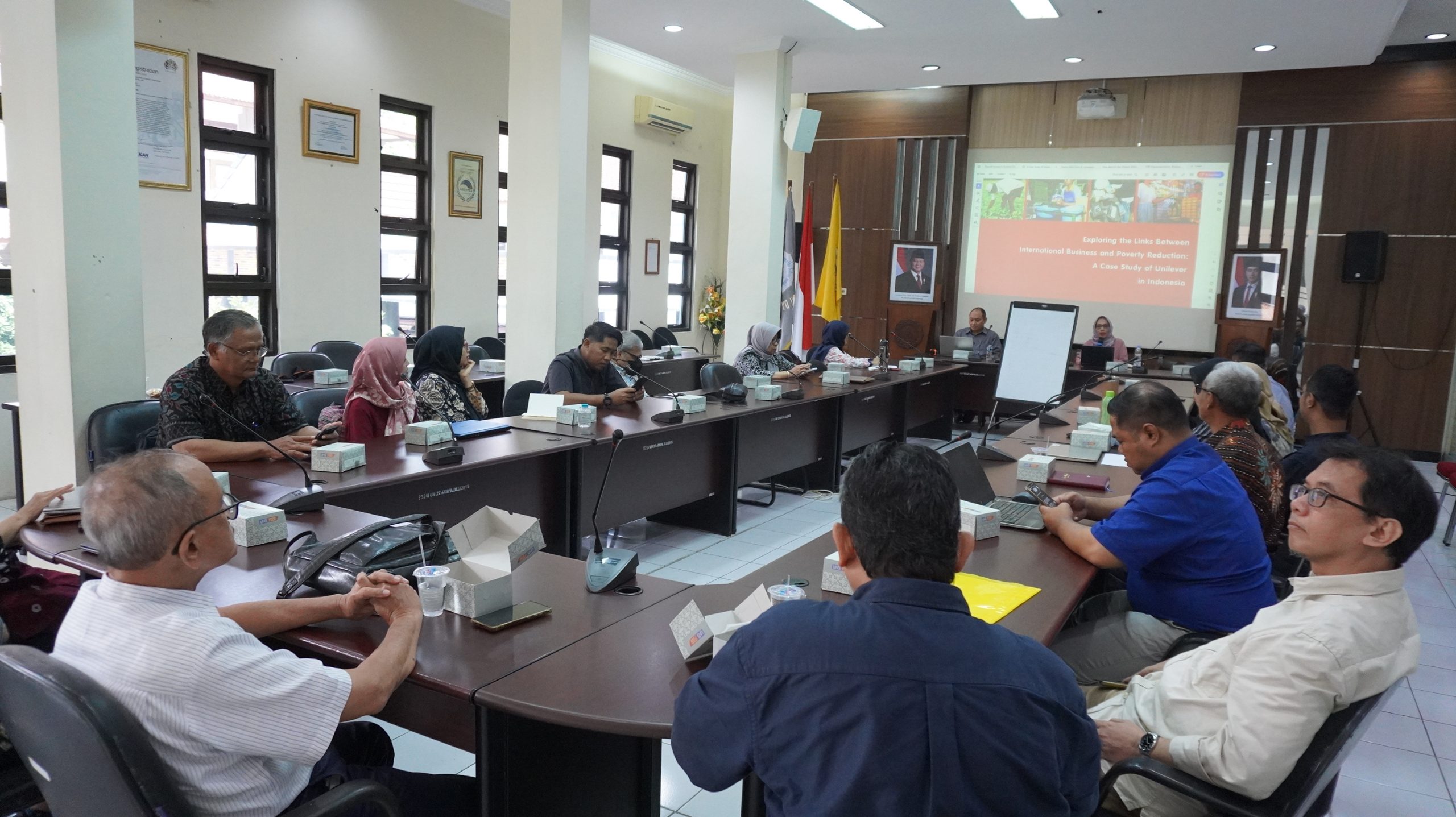
The Undergraduate Management Program of the Faculty of Economics and Business (FEB), Universitas Sebelas Maret (UNS), held a workshop “Applied Research Approach in Management” on Wednesday, December 4, 2024, at Meeting Room I, Soeharno TS Building, FEB UNS. The event, attended by faculty members of the Management Study Program, invited Prof. Drs. B.M. Purwanto, M.B.A., Ph.D., as the guest speaker.
In her opening remarks, Dr. Sinto Sunaryo, S.E., M.Si., SHRM.CP., expressed her gratitude to Prof. B.M. Purwanto for being willing to share his insights on applied research.
“Thank you to Prof. B.M. Purwanto for taking the time to be with us at FEB UNS. We will be engaging in a joint discussion on one of the research approaches—applied research—which we hope to further develop within the Management Program,” she stated.
She went on to explain that thus far, most research conducted by the Management faculty has primarily been pure research. Therefore, learning from a different approach will enrich the variety of methodologies used in faculty research.
Applied research, she continued, will add value not only to the research produced by lecturers but also to that carried out by students. “In addition to pure research, we can also utilize applied research—especially as our students, particularly those taking part in the Merdeka Belajar Kampus Merdeka (MBKM) program, have begun to show interest in using this approach,” she explained.
The workshop aimed to provide a deeper understanding of how to initiate and develop alternative research approaches, with applied research being one of them. The discussion extended beyond the individual research agenda of faculty members and aligned with the faculty’s broader direction toward international accreditation under AACSB.
“The research approaches we adopt are among the key elements considered by AACSB. Prof. B.M.’s presence will be maximized to enrich our knowledge and readiness in pursuing AACSB accreditation,” she added.
This workshop marks the beginning of a series of future discussions between the Management Program and Prof. B.M., which will explore applied research approaches in greater depth. The session was moderated by Siti Khoiriyah, S.E., M.Si., who guided both the speaker’s presentation and the ensuing discussion.
Blog
-
Management Undergraduate Program Holds Applied Research Workshop
-
Digital Business Students from FEB UNS Train Disability Community to Create Content
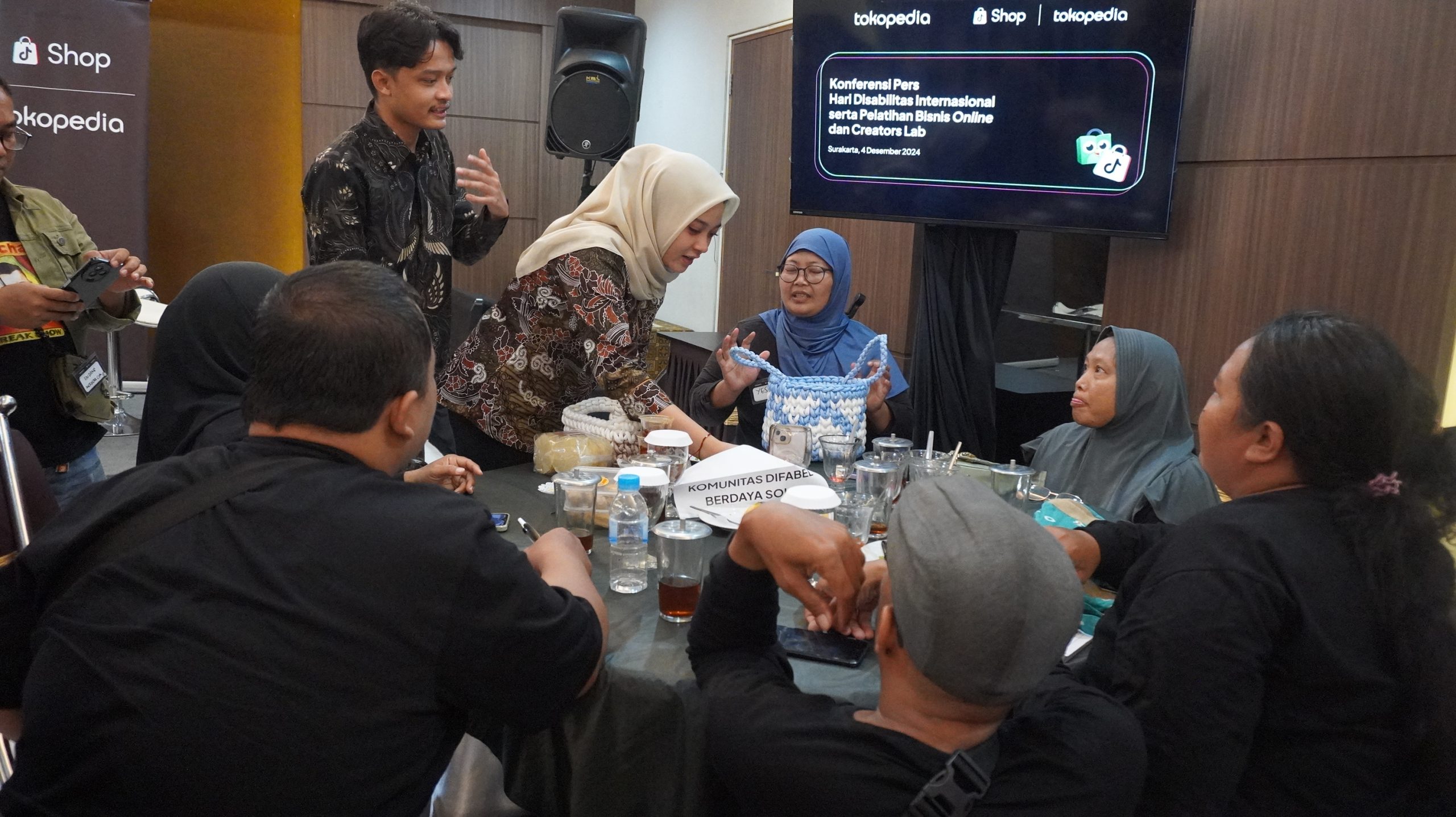
Seven students from the Digital Business Study Program, Faculty of Economics and Business (FEB), Universitas Sebelas Maret (UNS), provided hands-on assistance in digital content creation as a means of promoting products produced by micro, small, and medium enterprises (MSMEs) run by members of the Difabel Berdaya Solo community. This practical session, guided directly by students, was held after participants received a series of materials presented by representatives from Tokopedia.
 The seven students were divided among five MSME groups and delivered training sessions focused on creating short, engaging videos designed to attract consumer interest. Several recommendations and tips were provided during the session for producing short-form video content to boost purchase intent.
 First, participants were advised that the most critical time to grab a viewer’s attention is within the first 0-2 seconds by showcasing the product and adding a compelling phrase such as, “This stylish shirt for only 50K?” During the next 3-10 second, the video should highlight product details and demonstrate real-life usage. Each shot should emphasize a different unique selling point. In the final 10–15 seconds, it is advised to include a clear call-to-action (CTA), followed by a closing reminder of the product’s strengths. On-screen text are also encouraged to make the content more informative.
 The MSME participants responded enthusiastically to the student-led training, showcasing a variety of products, including shirts, bags made from colorful stove wicks, snacks, and more.
This activity was organized by Tokopedia and ShopTokopedia in collaboration with the Berdaya Solo Community and FEB UNS, as part of the National Disability Day commemoration, which falls on December 3, 2024.
 Established in 2020, the Difabel Berdaya Solo Community serves as a platform for individuals with disabilities to engage in creative and entrepreneurial activities. It currently has hundreds of members across the Greater Solo area, many of whom run their own MSMEs.
The community leader, Sri Hartatik, mentioned that past training sessions have typically been temporary and periodical. A platform for continuous learning has yet to be established, resulting in limited knowledge retention among participants. She expressed hope for more sustainable mentoring and ongoing support in the future. -

FEB UNS Welcomes FE UNTIDAR for Benchmarking Visit on Service Optimization
Faculty of Economics and Business (FEB), Universitas Sebelas Maret (UNS), received a benchmarking visit from the Faculty of Economics, Universitas Tidar (UNTIDAR), Magelang, on Friday, 6 December 2024. The delegation was welcomed in Meeting Room 1, Soeharno TS Building, FEB UNS.

In his opening remarks, Sutaryo, S.E., M.Si., PhD., Ak., CA., Vice Dean for Non-Academic Affairs at FEB UNS, extended his gratitude and a warm welcome to the visitors from UNTIDAR.
“We appreciate your visit to FEB UNS. We are pleased to welcome you and to share any insights or experiences we have. Let this be a discussion — a space to give and receive. If there is something valuable from FE UNTIDAR, we are more than open to adopting it. This visit is not about who is ahead, but rather a partnership built on equality,” he said.

Sutaryo then outlined the general profile of the academic support staff at FEB UNS. The faculty currently employs 46 staff members, both civil servants and non-civil servants, as well as 10 outsourced personnel, totaling 56 staff.
Organizationally, FEB UNS is supported by a Head of General Administration and two sub-divisions: Academic Affairs and Non-Academic Affairs. The academic sub-division oversees teaching activities, student permits, and related affairs. The non-academic sub-division covers human resources, infrastructure, partnerships, finance, and information services.

He also noted that the current FEB UNS leadership team, newly inaugurated three months prior, has been tasked with advancing international accreditation efforts — specifically the AACSB. In this process, he emphasized, the role of support staff is no less important than that of faculty members and students. “Going forward, we plan to enhance staff capacity across all areas — from academics and finance to infrastructure, personnel, collaboration, and IT services,” he added, while also introducing several staff members who were present.

Representing the visiting delegation, Ari Nurul Fatimah, S.E., M.Acc., Vice Dean for Non-Academic Affairs at FE UNTIDAR, expressed her appreciation for the warm reception extended by FEB UNS. “This visit is an opportunity to exchange ideas, particularly concerning support staff services, competencies, and administrative systems. We are eager to learn more about the skills and capabilities developed by the staff at FEB UNS. Ultimately, we want to ensure that the services we provide meet the expectations of our primary stakeholders — our students,” she explained.
 The discussion session was led by Arif Farida Tri Rejeki, S.Pd., M.Si., Head of General Administration at FEB UNS, and proceeded in a constructive and collegial atmosphere. Throughout the session, support staff members from both faculties engaged in open dialogue, sharing best practices and insights from their respective roles and responsibilities.
 -
Visiting OJK, FEB UNS Students Encouraged to Become Financial Literacy Agents
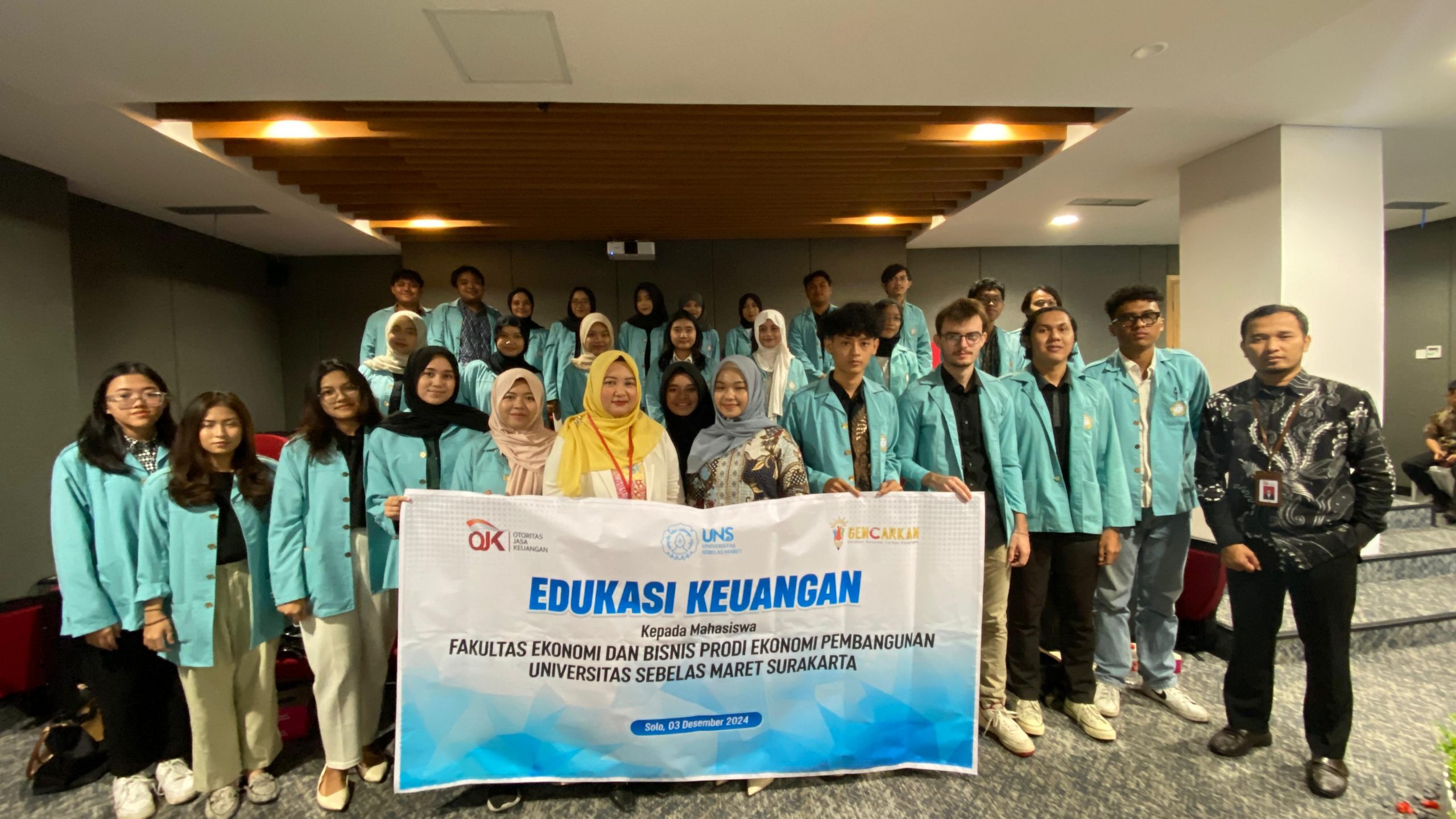
Thirty undergraduate students from the Development Economics Study Program (DESP), Faculty of Economics and Business (FEB), Universitas Sebelas Maret (UNS) conducted a field observation visit as part of their “Banking and Financial Institutions” course. The visit took place on Tuesday, December 3, 2024, at the Financial Services Authority (OJK) Office in Solo.
 Ayya Agmulia Asmarani Islam, S.E., M.E., the course instructor for “Banking and Financial Institutions,” expressed her appreciation on behalf of the Head of the Development Economics Program, Muhammad Yusuf Indra Purnama, S.E., M.Rech., Ph.D. She extended sincere thanks to OJK Solo for warmly welcoming the students of FEB.
She noted that this visit was not only an academic activity but also a practical step in bridging the gap between classroom theory and real-world practice. The goal is to help students better understand how financial sector supervision contributes to and supports economic growth in Indonesia. Additionally, the session provided essential education about legal and illegal investments to help students avoid fraudulent or illegal schemes.
 “Today, we are visiting the OJK Solo office to gain insights and education for our students. I encourage you all to actively participate during this financial literacy session. If you have any questions for the experts from OJK—such as how to avoid illegal investments or what it takes to build a career at OJK—this is the right time to ask. I hope all of you gain valuable insights from today’s experience,” she emphasized.
 Susan Diah Kusumaningrun, Head of the Subdivision of Banking Supervision at OJK, welcomed the students and expressed hope that they would gain a deeper understanding of OJK and financial literacy in general. She cited data from the 2024 National Survey on Financial Literacy and Inclusion (SNLIK), which shows that Indonesia’s financial literacy index has reached 65.43%, nearly on par with its financial inclusion index of 75.02%. For comparison, in 2022 the financial literacy rate was at 49.68% while inclusion stood at 85.10%.
“Previously, our financial literacy was around 40%, and now it has reached about 65%, whereas financial inclusion, which used to be at 85%, has decreased to around 75%. These figures show a shift. This year, we see promising progress in literacy—people are becoming more educated,” she noted.
 This is an achievement to be proud of. The educational efforts are evidently having an impact on the public. She expressed hope that the students, having received this education, would become extensions of OJK—spreading financial literacy in their communities.
Susan also advised students to be cautious when using digital financial services. She warned them about the rising danger of online gambling, which has already claimed many victims. According to her, gambling does not lead to wealth; instead, it leads to loss. “It might seem like you win at first, but in the end, you’ll lose even more,” she reminded the students.
 “One of our hopes from this visit is that you become more aware when encountering investment offers, whether online or offline. You need to critically assess whether the offer make sense. Nothing in life is instant—it takes effort. Learn about the product, check who regulates it, look at the results, and verify whether it’s legitimate. Search online to see if it’s ever been associated with fraud,” she advised.
During the visit, students also received further education on digital finance and internship opportunities at OJK, delivered by several speakers from the institution. -
Prodi S1 Manajemen Adakan Workshop Applied Research
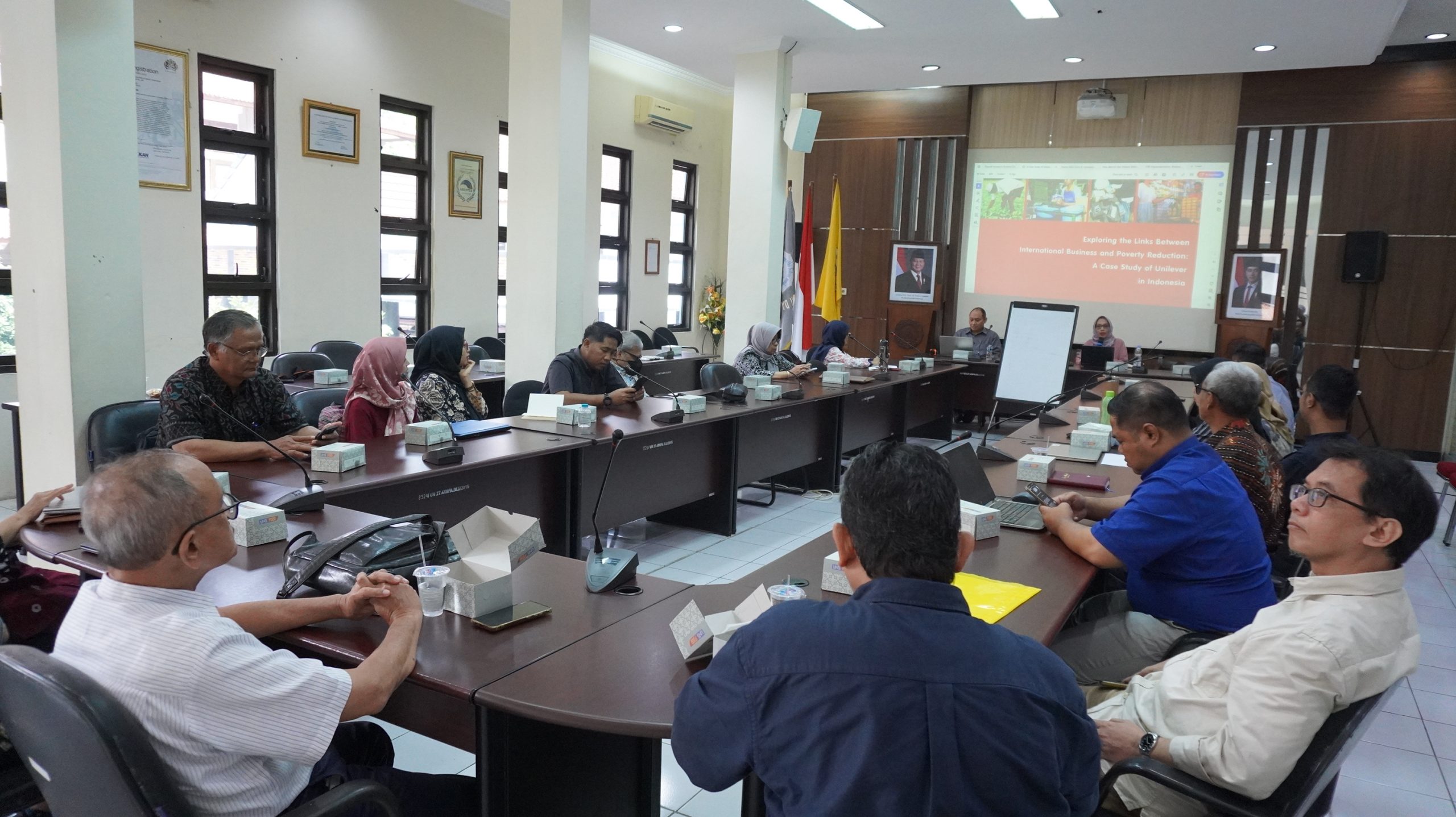
Program Studi S-1 Manajemen Fakultas Ekonomi dan Bisnis (FEB) Universitas Sebelas Maret (UNS) adakan Workshop Pendekatan Applied Research dalam Manajemen, Rabu, 4 Desember 2024 di Ruang Sidang I Gedung Soeharno TS FEB UNS.
Kegiatan yang diikuti oleh Dosen Prodi Manajemen menghadirkan narasumber Prof. Drs. B.M. Purwanto, M.B.A., Ph.D.
Dr. Sinto Sunaryo, S.E., M.Si.,SHRM.CP dalam sambutannya menyampaikan terima kasih kepada Prof. B.M. Purwanto yang telah berkenan hadir untuk sharing terkait pendekatan applied research.
“Terima kasih kepada Prof. B.M yang telah meluangkan waktu untuk hadir di FEB UNS, kita akan bersama-sama diskusi mengenai salah satu pendekatan riset, applied research yang juga kita inginkan untuk dapat dikembangkan di Prodi Manajemen” ungkapnya.
Lebih lanjut dikatakan, selama ini, riset yang dilakukan oleh Dosen Manajemen sebagian besar adalah adalah pure research, sehingga sharing dari pendekatan yang berbeda akan semakin memberi warna pada pendekatan riset yang dilakukan dosen.
Applied research juga akan memberi warna, bukan hanya pada riset yang dilakukan oleh dosen tetapi juga dilakukan oleh mahasiswa.
“Disamping pure research, kita bisa juga menggunakan applied research dan terlebih lagi mahasiswa kita sudah mulai tertarik untuk menggunakan applied research terutama mahasiswa-mahasiswa FEB yang mengambil MBKM” tuturnya.
Harapannya, semoga diskusi ini bisa memberikan pendalaman, bagaimana kita bisa mulai dan mengembangkan pendekatan penelitian lain, salah satunya adalah applied research.
Diskusi ini, bukan hanya pada konteks penelitian yang dilakukan sebagai dosen, tapi juga apa arah yang sedang dituju fakultas dalam rangka eligibility menuju akreditasi internasional AACSB.
“Pendekatan-pendekatan riset yang dilakukan menjadi salah sau poin yang dipertimbangkan dalam AACSB. Kehadiran Prof. B.M akan dioptimalkan untuk pengembangan wawasan dan kesiapan kita untuk menuju AACSB “ paparnya,
Ini adalah kegiatan awal, ke depan Prodi Manajemen bersama Prof BM akan lanjut diskusi yang lebih dalam terkait pendekatan penelitian.
Di kegiatan itu, Siti Khoiriyah, S.E., M.Si memandu jalannya sesi paparan narasumber dan juga diskusi.
-
Mahasiswa Bisnis Digital FEB UNS Latih Komunitas Difabel Buat Konten
7 Mahasiswa S-1 Bisnis Digital Fakultas Ekonomi dan Bisnis (FEB) Universitas Sebelas Maret (UNS) membantu Usaha Mikro Kecil dan Menengah (UMKM) difabel yang tergabung Komunitas Difabel Berdaya Solo membuat konten digital untuk memasarkan produk yang telah mereka buat.
Praktik langsung yang dipandu oleh mahasiswa digelar setelah para UMKM menerima beberapa materi yang disampaikan narasumber Tokopedia.
Ke 7 mahasiswa dibagi dalam 5 kelompok meja UMKM dan memberikan pelatihan untuk membuat video pendek yang semenarik mungkin untuk menarik pembeli.
Beberapa rekomendasi short video untuk mendorong pembelian yakni pada 0-2 detik pertama, tampilkan produk dan tulis frasa menarik untuk menarik perhatian, misalnya “baju sekece ini hanya 50 ribu?”. 3-10 detik berikutnya, tunjukkan detil dan penggunaan produk secara langsung dalam video. Setiap pengambilan gambar harus menampilkan keunggulan produk yang berbeda.
10-15 menit selanjutnya bagikan call-to-action (CTA) yang jelas untuk penonton, akhiri video dengan pengingat tentang keunggulan produk dan selalu gunakan teks untuk membuat video lebih informatif.
Para UMKM sangat antusias mengikuti pelatihan yang dipandu para mahasiswa, ada yang menawarkan kemeja, tas yang terbuat dari sumbu kompor dengan aneka warna, snack (camilan) dan lain sebagainya.
Kegiatan ini diselenggarakan oleh Tokopedia dan Shoptokopedia bekerja sama dengan Komunitas Berdaya Solo dan FEB UNS dalam rangka memperingati Hari Disabilitas Nasional, yang jatuh pada 3 Desember 2024.
Komunitas Difabel Berdaya Solo yang telah berdiri sejak 2020 merupakan wadah bagi penyandang disabilitas untuk berkarya dan berbisnis. Ratusan anggota tersebar di wilayah Soloraya dan telah memiliki UMKM.
Ketua komunitas, Sri Hartatik menyampaikan bahwa selama ini pelatihan yang diadakan bersifat sementara dan bergilir. Belum ada media yang memfasilitasi belajar secara berkelanjutan sehingga pemahaman mereka terbatas. Ia berharap ada pendampingan yang berkelanjutan.
-
FEB UNS Menerima Kunjungan FE UNTIDAR, Benchmarking Optimalisasi Layanan
Fakultas Ekonomi dan Bisnis (FEB) Universitas Sebelas Maret (UNS) menerima kunjungan Fakultas Ekonomi Universitas Tidar (UNTIDAR) Magelang, Jumat 6 Desember 2024 di Ruang Sidang 1 Gedung Soeharno TS
Sutaryo, S.E., M.Si., Ph.D., Ak., CA, Wakil Dekan Bidang Non Akademik FEB UNS mengucapkan terima kasih dan selamat datang kepada rombongan dari FEB UNTIDAR.
“Terima kasih atas kunjungan ke FEB UNS, kami menerima dengan senang hati, monggo kiranya informasi apa yang bisa kami berikan dan pengalaman yang kami punya. Silahkan disharingkan, ini prosesnya berdikusi ya, saling memberi dan menerima informasi, jika ada baiknya dari FE UNTIDAR bisa juga akan kami gunakan. Kunjungan ini bukan dalam arti kami lebih maju, tapi prinsipnya kesetaraan’’ jelasnya.
Lebih lanjut, Sutaryo, Ph.D menjelaskan secara umum Tenaga Kependidikan (Tendik) di FEB UNS.
FEB UNS memiliki 46 Tendik berstatus Pegawai Negeri Sipil (PNS) dan Non PNS serta 10 Tenaga Outsourcing, sehingga total 56 pegawai.
Dalam struktur organisasi FEB UNS dibantu oleh Kepala Bagian Tata Usaha (Kabag TU) dan Kepala Subbagian Akademik dan Non Akademik. Akademik terkait dengan perkuliahan dan perizinan dan lain-lain, Non Akademik meliputi semua bidang di luar akademik, yakni kepegawaian, sumber daya manusia, sarana prasarana, kerja sama, keuangan, dan informasi.
Sutaryo, Ph.D juga mengatakan, Dekanat yang baru 3 bulan dilantik, salah satu tugas pokoknya adalah terkait pencapaian akreditasi internasional AACSB.
Di akreditasi ini, selain dosen, mahasiswa, tendik pun tidak kalah pentingnya.
“Kedepannya, kami merencanakan peningkatan kompetensi untuk tendik, baik terkait perkuliahan, keuangan, sarana prasarana, kepegawaian, kerja sama maupun informasi” ungkapnya.
Lebih lanjut Ia juga memperkenalkan Tendik yang hadir dalam penerimaan kunjungan tersebut.
Sementara itu, Ari Nurul Fatimah, SE., M.Acc, Wakil Dekan Non Akademik FE UNTIDAR mengucapkan terima kasih kepada FEB UNS yang telah memberikan sambutan hangat dalam rangka benchmarking dari FE UNTIDAR.
“Kunjungan ini dalam rangka sharing beberapa hal terkait tendik, khususnya pelayanan, kompetensi, sistem yang digunakan oleh layanan fakultas. Lebih lanjut untuk mengetahui keterampilan dan kompetensi apa saja yang sudah dimiliki oleh Tendik FEB UNS, demikian juga saling berbagi informasi layanan yang optimal karena mahasiswa adalah konsumen utama” paparnya.
Sesi diskusi yang dipimpin oleh Arif Farida Tri Rejeki, S.Pd., M.Si, Kabag TU FEB UNS berjalan dengan lancar. Beberapa Tendik saling berbagi informasi dan pengalaman dalam menjalankan tugasnya.
-
Kunjungi OJK, Mahasiswa FEB UNS Diharapkan Jadi Agen Literasi Keuangan
30 Mahasiswa Program Studi S-1 Ekonomi Pembangunan (EP) Fakultas Ekonomi dan Bisnis (FEB) Universitas Sebelas Maret (UNS) mengadakan Observasi Lapangan pada Mata Kuliah Bank dan Lembaga Keuangan, Selasa 3 Desember 2024 di Kantor Otoritas Jasa Keuangan (OJK) Solo.
Ayya Agmulia Asmarani Islam, S.E., M.E., Dosen Pengampu Mata Kuliah Bank dan Lembaga Keuangan, mewakili Kepala Program Studi S-1 EP Dr. Muhammad Yusuf Indra Purnama menyampaikan terima kasih dan memberikan apresiasi yang sebesar-besarnya kepada OJK Solo yang telah menerima kunjungan mahasiswa FEB.
Dikatakan, kunjungan ini bukan sekedar kegiatan akademik tapi juga merupakan langkah nyata dalam menjembatani teori yang dipelajari di kelas.
Harapannya, mahasiswa lebih mengetahui bagaimana pengawasan sektor keuangan mendukung dan berperan dalam meningkatkan pertumbuhan ekonomi di Indonesia. Dan juga mahasiswa akan mendapatkan edukasi tentang investasi yang legal dan ilegal agar tidak terjerat investasi yang “bodong” atau judol.
“Hari ini, kita melakukan kunjungan ke kantor OJK Solo untuk mendapatkan edukasi bagi mahasiswa FEB. Dan saya mengajak mahasiswa untuk berpartisipasi aktif di saat kegiatan edukasi keuangan ini. Jika ada yang ingin ditanyakan kepada narasumber, manfaatkan waktu sebaik-baiknya mumpung ada pakarnya dari OJK Solo, bagaimana cara menghindari investasi ilegal, atau bagaimana jika ingin berkarir di OJK Solo, saya berharap Temen-Temen mendapatkan banyak hal yang baik di hari ini” ungkapnya.
Susan Diah Kusumaningrun, Kepala Sub Bagian Pengawasan Perbankan OJK dalam sambutannya berharap di acara ini, para mahasiswa mendapatkan pengetahuan lebih tentang OJK dan juga mendapatkan edukasi keuangan.
Lebih lanjut dijelaskan, hasil Survei Nasional Literasi dan Inklusi Keuangan (SNLIK) tahun 2024, indeks literasi keuangan masyarakat Indonesia 65,43 persen, sudah hampir sama dengan indeks inklusi keuangan sebesar 75,02 persen. Sebelumnya, tahun 2022 literasi keuangan masyarakat Indonesia sebesar 49,68 persen dan indeks inklusinya 85,10%.
“Tingkat literasi keuangan dulu 40-an persen sekarang sudah 65-an persen, sedangkan inklusi keuangan sebelumnya 85-an persen malah sekarang turun menjadi 75-an persen. Dari hasil survei tersebut, tandanya ada gap. Tahun ini literasinya sudah bagus, masyarakat sudah mulai teredukasi” katanya kemudian.
Ini merupakan capaian yang kita banggakan, edukasi yang kita lakukan ada dampaknya bagi masyarakat. Harapannya, para mahasiswa yang telah teredukasi seperti melalui kunjungan ini akan menjadi kepanjangan tangan OJK. Para mahasiswa juga bisa memberikan edukasi langsung ke masyarakat.
Lebih lanjut, Susan berpesan kepada mahasiswa agar berhati-hati dalam menggunakan digitalisasi keuangan. Ia juga berpesan agar mahasiswa menjauh dari judi online yang saat ini sedang marak karena korbannya sudah cukup banyak.
Menurutnya, judi tidak akan membuat kaya, bahkan akan membuat miskin, awalnya mungkin akan diberikan kemenangan dulu tapi kemudian akan kehilangan yang lebih banyak.
“Di kunjungan ini, salah satu harapan kami, kalian lebih aware lagi jika mendapatkan penawaran investasi online maupun offline, harus bisa membedakan, logis atau tidak, di dunia ini nggak ada yang instan, perlu usaha, kalian harus pelajari dulu produknya, diawasi siapa, hasilnya apa, benar nggak, cek di pencarian pernah nggak ada penipuan terhadap investasi ini” nasihatnya.
Di kunjungan ini, mahasiswa juga mendapatkan edukasi keuangan digital dan proses magang di OJK oleh beberapa narasumber OJK.
-
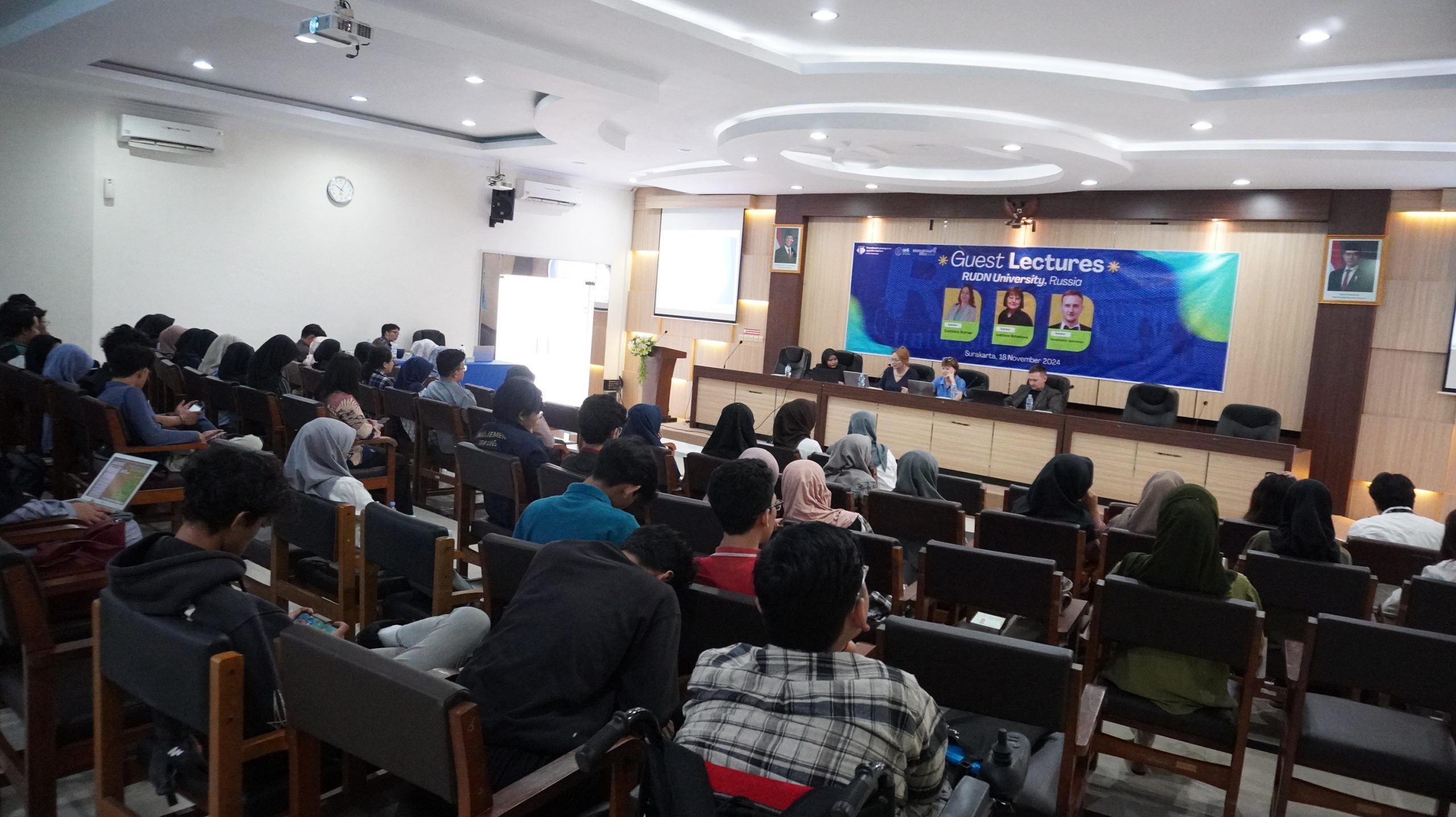
Guest Lecture Welcomes Three Speakers from RUDN University, Russia
Discussions around sustainability, inequality, and the role of the digital economy have become increasingly relevant in light of the rapid pace of digitalization and technological transformation. This dynamic shift raises critical questions about how technological advancements can support the sustainable use of resources.
To explore these topics further, the Faculty of Economics and Business (FEB), Universitas Sebelas Maret (UNS) held another Guest Lecture session, featuring three speakers from RUDN University, Russia. The event took place on Monday, November 18, 2024, at the Konimex Hall, FEB UNS.
 The three invited speakers were Prof. Svetlana Ratner from RUDN University; Assoc. Prof. Svetlana Balashova, Head of the Department of Economic and Mathematical Modelling at RUDN University and Executive Director of the International Center for Emerging Markets Research (ICEMR); and Assoc. Prof. Konstantin Gomonov, also representing RUDN University.
Prof. Svetlana Ratner opened the session with a presentation titled “ESG Investments for a Sustainable Future: Financial Instruments for Green Projects.” She introduced ESG as a method of selecting portfolio assets based on environmental, social, and governance criteria. Her talk also delved into the historical development of ESG and the barriers that currently hinder its growth.
 Following her, Assoc. Prof. Svetlana Balashova presented “Inequality and Digitalization.” Her session focused on three key topics: methods of measuring inequality, the definition of opportunity inequality, and the impact of digital transformation on inequality. She emphasized that access to information and communication technology, along with the development of digital skills within communities, has become a growing concern in many modern societies. However, reducing digital inequality requires more than just expanding ICT infrastructure; improving quality of life also depends on enhancing digital literacy and technical proficiency.
Assoc. Prof. Konstantin Gomonov then delivered a presentation titled “Analysis of the Level of Development of the Circular Economy (Using the Example of the European Union Countries).” According to him, the circular economy aims to align economic activities with ecological sustainability. In his research, he noted that circular economy performance is frequently assessed using tools such as Data Envelopment Analysis (DEA) and the Object-Oriented Approach. -
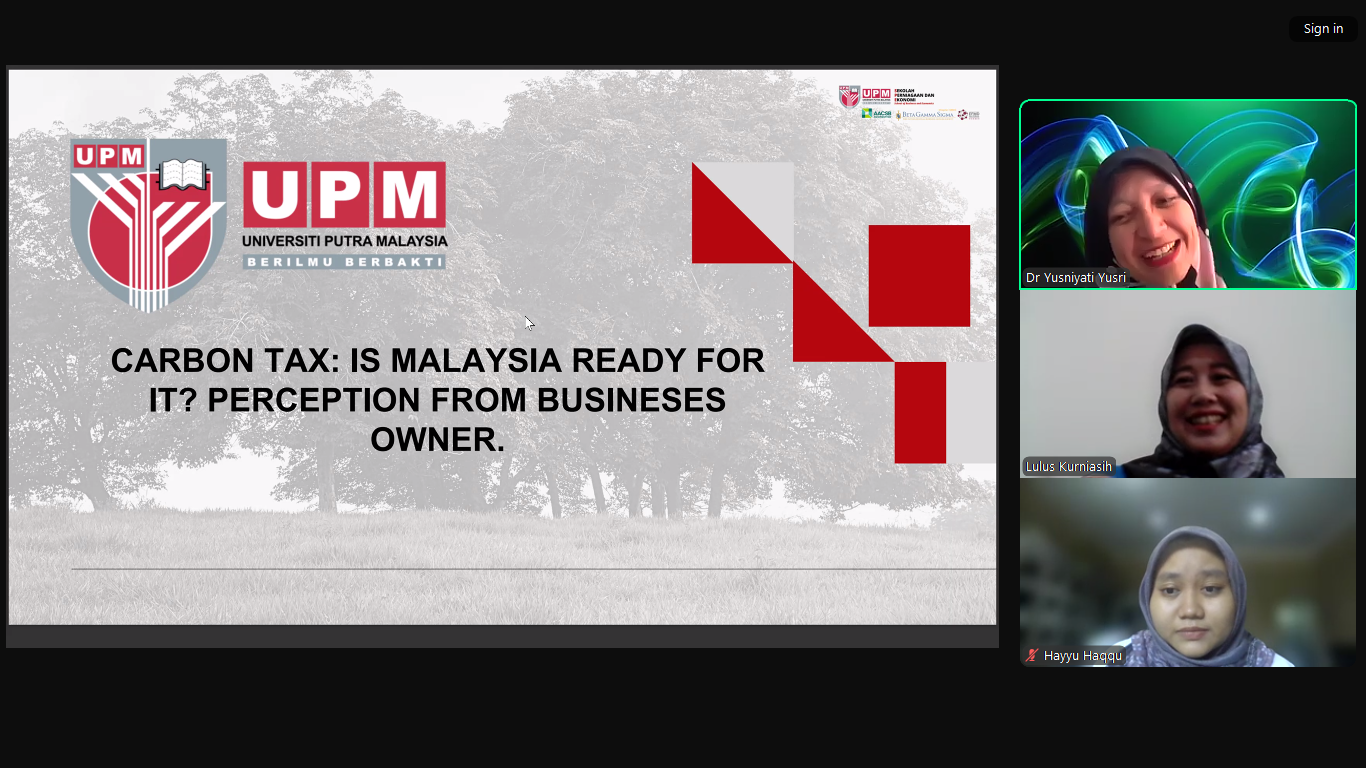
Master of Accounting FEB UNS Discusses Carbon Tax in the Journal of Accounting, Governance, and Organization Working Paper Forum
The carbon tax is one policy option that can be adopted by a country to reduce carbon emissions. This tax functions similarly to other taxes applied to specific products or activities, with calculations based on the level of contribution to carbon emissions produced by business or manufacturing activities.
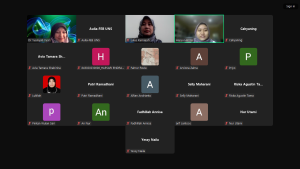
 This topic was discussed by Dr. Yusniyati Yusri during the Journal of Accounting, Governance, and Organization Working Paper Forum, held online on Friday, December 6, 2024. On this occasion, Dr. Yusniyati presented research titled “Carbon Tax: Is Malaysia Ready for It? Perception from Business Owner”, which explored the readiness of business owners in Malaysia ahead of the implementation of a carbon tax in the country.
“Carbon tax is related to a country’s carbon emissions. It is imposed to regulate emissions, with the cost paid by emitters—typically manufacturing companies or business owners. The amount is determined by each country,” explained Dr. Yus.
 However, she added that a deeper understanding of the carbon tax is essential, especially for business actors who will become the primary subjects of the policy. The key question then becomes: is a country truly ready to implement a carbon tax? This question formed the basis for Dr. Yusniyati’s quantitative descriptive research, conducted as a faculty member at Universiti Putra Malaysia.
In her study, Dr. Yus used a questionnaire distributed to business owners in the Petaling Jaya area of Malaysia. The findings showed that around 50% of respondents expressed concern about environmental issues. “About 50% of respondents believe the government is responsible and should take an active role in reducing environmental impacts, while 32% believe that households or individuals should be the ones taking responsibility,” she explained.
 Furthermore, the study found that 55% of respondents were already aware of the carbon tax, but only around 44% had a clear understanding of what it involves. In terms of carbon tax implementation in developing countries, 50% of respondents acknowledged its existence, but only 25% stated that they understood its effectiveness, while the rest either lacked confidence or had no knowledge about how effective the policy might be.
These findings reflect business owners’ level of acceptance toward carbon tax implementation, where the majority of respondents agreed that business actors should support the government’s policy plans.
At the end of the session, Dr. Yus expressed her gratitude to the organizing committee. “Thank you to the committee for inviting me to this working paper event. I hope this research will be valuable for the learning process in Indonesia,” she said.Reflecting on Dr. Yus’s hopes, Dr. Lulus Kurniasih, Head of the Master of Accounting (MAKSI) Study Program, also shared her thoughts during the opening remarks. “Thank you to Dr. Yusniati and Prof. Agung Nur Probohudono. Today’s working paper session aims to provide insights into how to write academic articles and to explore current trends in tax research. The carbon tax topic is still very new, making it a promising subject for discussion and research with high novelty,” said Dr. Lulus.