FEB

Blog

  • Guest Lecture Hadirkan Tiga Pembicara RUDN University Russia

    Guest Lecture Hadirkan Tiga Pembicara RUDN University Russia

    Pembahasan terkait keberlanjutan, kesenjangan, serta peran ekonomi digital saat ini menjadi topik diskusi yang menarik mengingat cepatnya proses digitalisasi dan transformasi teknologi.

    Kondisi transformasi yang sangat dinamis ini kemudian menumbuhkan pertanyaan kritis terkait peran dari kemajuan teknologi dalam menunjang penggunaan sumberdaya berkelanjutan.

    Fakultas Ekonomi dan Bisnis (FEB) Universitas Sebelas Maret (UNS) kembali menyajikan sebuah agenda Kuliah Tamu untuk membahas topik tersebut.

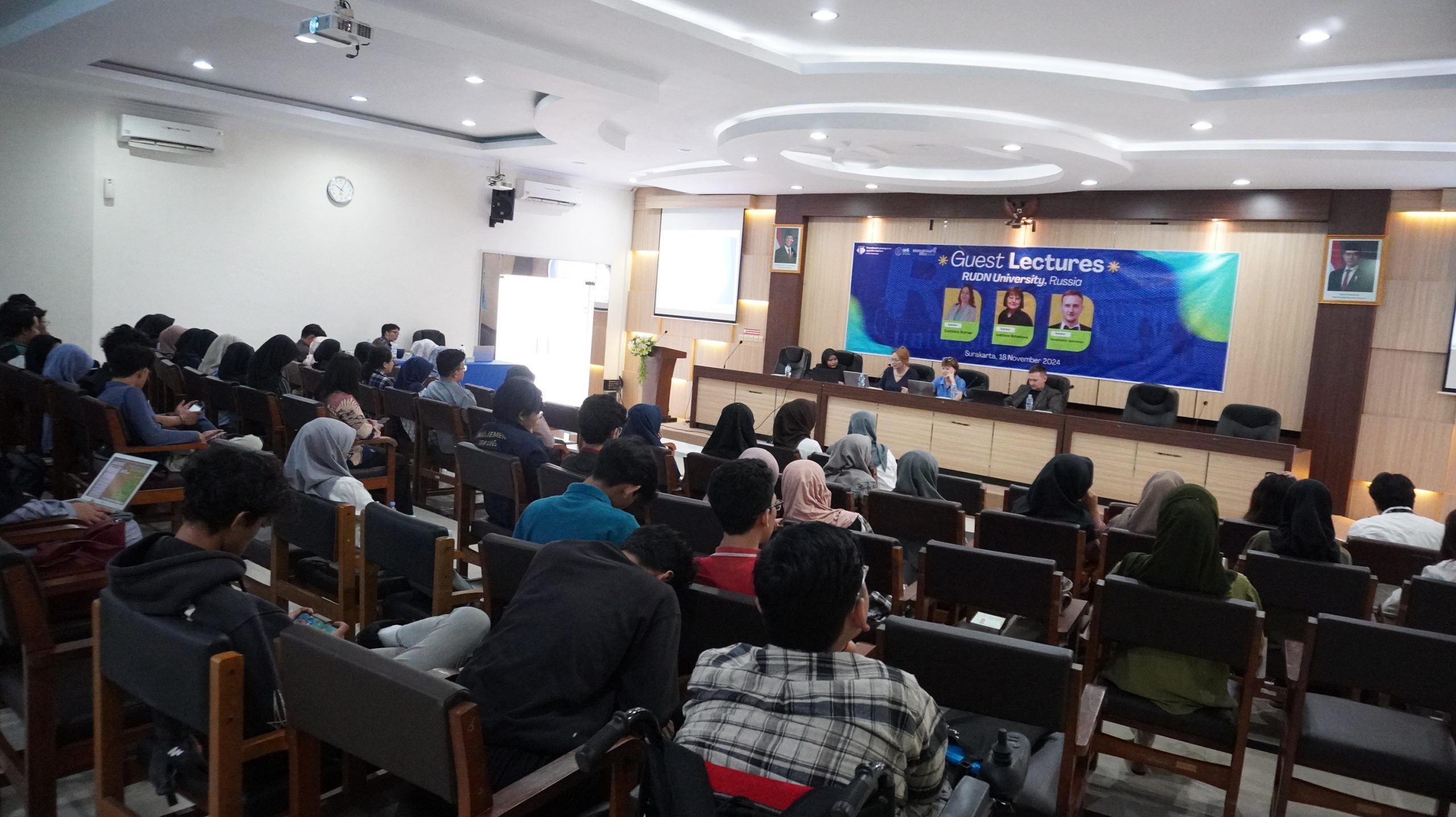
    Menghadirkan tiga narasumber dari RUDN University Russia, gelaran Kuliah Tamu tersebut dilaksanakan pada hari Senin 18 November 2024, di Aula Konimex FEB UNS.

    Ketiga pembicara yang hadir sebagai narasumber pada agenda tersebut adalah Prof. Svetlana Ratner dari RUDN University Russia, Assoc. Prof. Svetlana Balashova, Head of Economic and Mathematical Modelling Department RUDN University Russia sekaligus Executive Director dari International Center for Emerging Markets Research (ICEMR), dan Assoc. Professor. Konstantin Gomonov yang juga hadir dari RUDN University.

    Dalam paparan-nya, Prof. Svetlana Ratner menyampaikan materi berjudul “ESG investments for sustainable future: financial instruments for green projects.”

    Mengawali materinya, Prof. Svetlana menjelaskan bahwa ESG adalah cara untuk memilih aset portofolio sesuai dengan kriteria environment (lingkungan), social (sosial), dan governance (tata kelola). Lebih lanjut, beliau menjelaskan terkait sejarah perkembangan ESG hingga aspek yang menghambat perkembangan ESG.

    Svetlana Balashova dengan tajuk materi “Inequality and Digitalization.” Dalam paparannya terdapat tiga topik utama yang dibahas antara lain cara mengukur inequality (kesenjangan), definisi dari kesenjangan kesempatan, dan bagaimana transformasi digital mempengaruhi kesenjangan. Menurut beliau, ketersediaan akses terhadap teknologi informasi dan komunikasi serta pengembangan keterampilan digital di kalangan masyarakat telah menjadi fokus perhatian di banyak negara di dunia modern. Meskipun begitu, untuk mengurangi kesenjangan digital tidaklah cukup hanya dengan mengembangkan infrastruktur TIK saja, tetapi untuk meningkatkan kualitas hidup perlu meningkatkan tingkat literasi digital dan kecakapan TIK.

    Konstantin Gomonov menjelaskan tentang “Analysis of the level of development of the circular economy (using the example of the European Union countries).” Menurutnya ekonomi sirkuler (circular economy) memiliki tujuan untuk menyelaraskan kegiatan ekonomi dengan keberlanjutan ekologi. Sementara dalam risetnya, ekonomi sirkuler seringkali dianalisa menggunakan Data Envelopment Analysis (DEA) dan Object-Oriented Approach.
  • Magister Akuntansi  FEB UNS Bahas Carbon Tax dalam Journal of Accounting, Governance and Organization Working Paper Forum

    Magister Akuntansi  FEB UNS Bahas Carbon Tax dalam Journal of Accounting, Governance and Organization Working Paper Forum

    Carbon tax atau pajak karbon menjadi salah satu kebijakan yang dapat diambil oleh sebuah negara dalam menurunkan emisi gas karbon. Pajak ini pada dasarnya serupa dengan pajak lain yang dikenakan ataupun dibebankan atas produk atau kegiatan tertentu, dimana perhitungannya didasarkan pada besarnya kontribusi pada emisi gas karbon yang berasal dari kegiatan bisnis atau industri manufaktur.

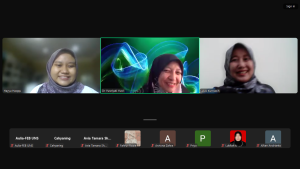
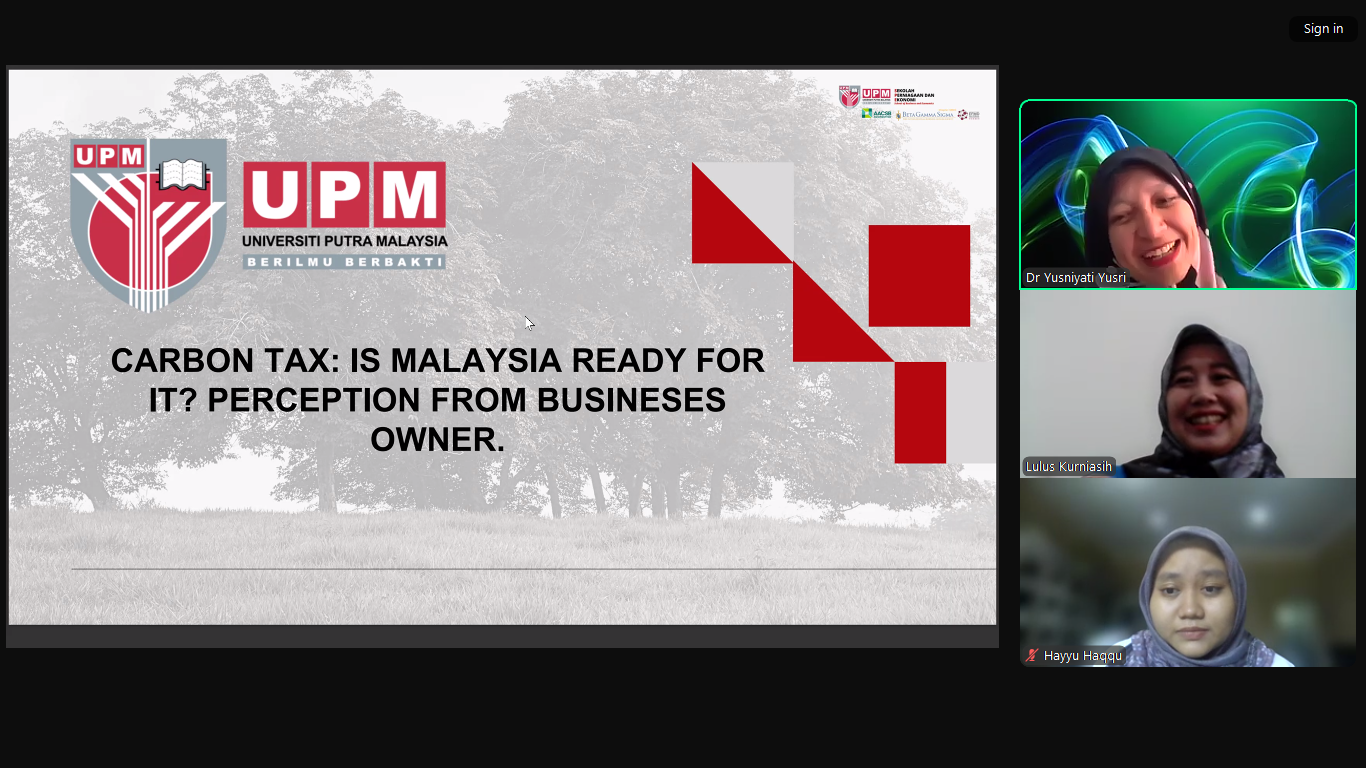
    Keterangan tersebut disampaikan oleh Dr. Yusniyati Yusri dalam gelaran Journal of Accounting, Governance and Organization Working Paper Forum yang diselenggarakan secara daring pada Jum’at 6 Desember 2024.

    Pada kesempatan tersebut, Dr. Yusniati Yusri menyampaikan hasil riset berjudul “Carbon Tax: Is Malaysia Ready for it? Perception from Business Owner” yang membahas terkait kesiapan pemilik bisnis di Malaysia menjelang penerapan pajak karbon di negara tersebut.

    “Pajak karbon berkaitan dengan emisi gas karbon di sebuah negara, pajak ini ditetapkan untuk mengatur emisi karbon, dimana biaya yang dikenakan dibayarkan oleh emitter (perusahaan manufaktur ataupun pemilik bisnis) yang besarannya ditetapkan oleh tiap-tiap negara,” jelas Dr. Yus.

    Meskipun begitu pengetahuan mendalam terkait pajak karbon perlu dimiliki oleh warga negara khususnya pelaku usaha yang kemudian akan menjadi objek dari pajak karbon. Pertanyaan yang perlu dijawab kemudian adalah apakah sebuah negara siap untuk menerapkan pajak karbon?

    Pertanyaan tersebut kemudian menjadi latar belakang dari riset deskriptif kuantitatif yang disampaikan oleh dosen dari University Putra Malaysia tersebut.

    Dalam risetnya, Dr. Yus menggunakan instrumen kuesioner yang ditujukan kepada pemilik bisnis di area Petailing Jaya Malaysia. Hasilnya menunjukkan bahwa sekitar 50% dari responden menyatakan bahwa mereka merasa khawatir akan isu lingkungan.

    “Sekitar 50% responden berpendapat bahwa pemerintah adalah pihak yang berkewajiban dan harus berperan aktif untuk mengurangi dampak lingkungan, sementara 32% berpendapat bahwa rumah tangga/individu adalah pihak yang bertanggungjawab untuk mengurangi dampak lingkungan,” jelas Dr. Yus.

    Lebih lanjut, hasil dari riset menunjukkan bahwa 55% responden sudah mengetahui tentang pajak karbon namun hanya sekitar 44% responden yang menyadari terkait pajak karbon. Dalam hal penerapan pajak karbon di negara berkembang 50% responden telah menyadari fakta tersebut, namun hanya 25% responden yang menyatakan bahwa mereka mengetahui efektivitas penerapan pajak karbon, dan sisanya menyatakan tidak yakin akan efektivitas penerapan pajak karbon ataupun tidak mengetahui.

    Ini menunjukkan apakah mereka (responden) akan menerima penerapan pajak karbon atau tidak, dimana mayoritas responden menyatakan bahwa pelaku bisnis harus mendukung rencana program pemerintah,” ungkap Dr. Yus.

    Di akhir sesi acara Dr. Yus menyampaikan ungkapan terima kasih kepada komite pelaksana acara.

    “Terima kasih kepada panitia yang telah mengundang saya dalam acara working paper ini, saya berharap agar hasil riset ini dapat bermanfaat bagi proses belajar di Indonesia,” ujar Dr. Yus.

    Senada dengan harapan Dr. Yus, Dr. Lulus Kurniasih selaku Kepala Program Studi Magister Akuntansi (MAKSI) juga menyampaikan harapannya di pidato pembukaan.

    “Terima kasih kepada Dr. Yusniati dan juga Prof. Agung Nur Probohudono, agenda working paper pada hari ini bertujuan untuk mendapatkan wawasan terkait bagaimana menulis artikel ilmiah serta untuk mengetahui tren terkini di bidang riset perpajakan. Topik ini (pajak karbon) masih sangat baru sehingga bisa menjadi bahan diskusi dan riset yang menarik serta memiliki tingkat kebaharuan yang tinggi,” ungkap Dr. Lulus.

  • FEB UNS Digital Business Student Team Wins Second Place in the 2024 National Business Plan Competition

    FEB UNS Digital Business Student Team Wins Second Place in the 2024 National Business Plan Competition

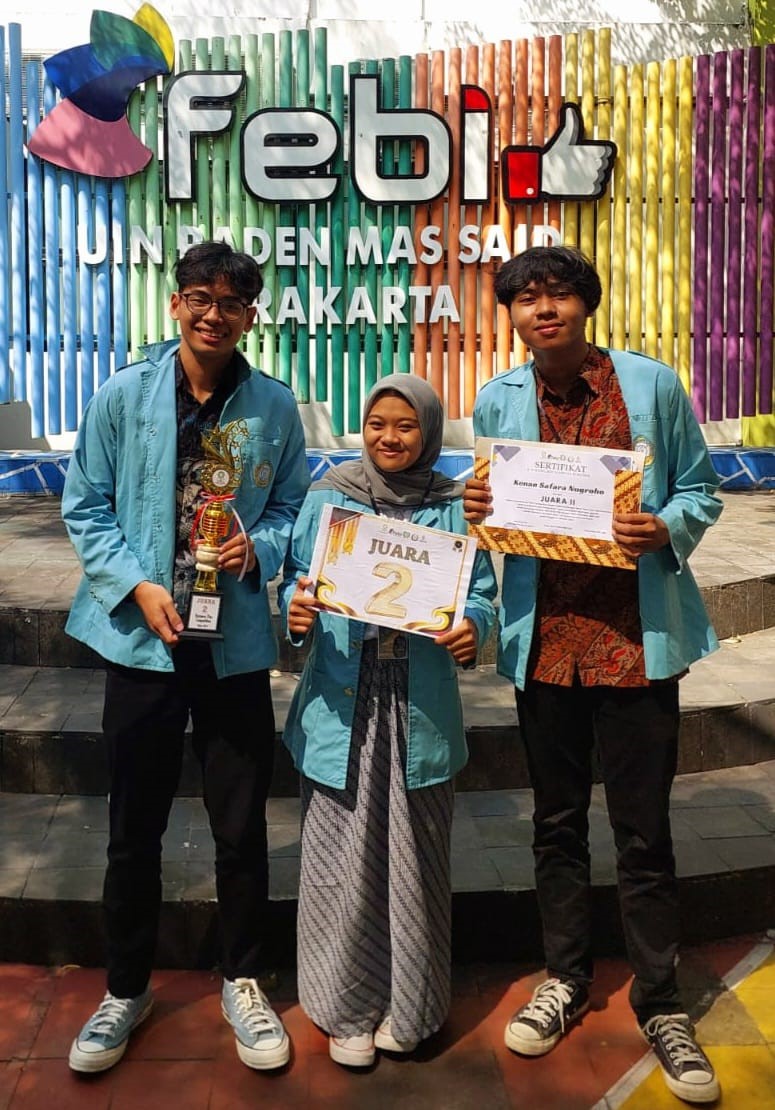
    A student team from the Faculty of Economics and Business (FEB), Universitas Sebelas Maret (UNS), secured Second Place in the 2024 National Business Plan Competition organized by the Sharia Business Management Study Program Student Association, UIN Raden Mas Said Surakarta, on 7 October 2024. In the final round, Laurensius Erlangga Putra Aksami, Aisyah Huril ‘Ain Saajida, and Kenan Safara Nugroho competed against six other teams to present their business ideas.

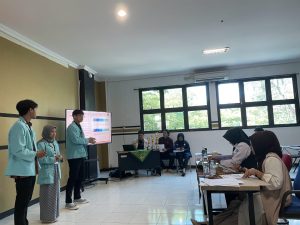
    The competition process involved several stages, beginning with the submission and selection of business plan proposals that were required to present innovative and relevant ideas. Teams that passed the proposal stage advanced to the final round, which consisted of pitching sessions before a panel of judges. Throughout these stages, the FEB UNS team, led by Erlangga, gained substantial experience in developing and presenting a well-structured business plan.
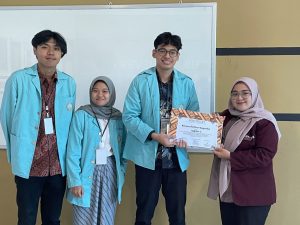
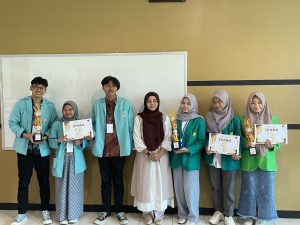
    Speaking to feb.uns.ac.id, Erlangga stated that the team’s motivation for participating is to explore new opportunities, develop personal potential, and assess their capabilities through competition. The team also aims to step beyond their comfort zone and gain meaningful experience that would broaden their academic and practical perspectives.

    “As a team competing in a business plan competition, we began our preparation by identifying existing issues, particularly in Surakarta. One key issue we identified was the limited access of many traditional artisans to broader markets. Based on this analysis, we designed a business idea that addresses this challenge while meeting the competition requirements,” he explained.

    According to Erlangga, the final round was the most memorable experience. Engaging with strong competitors and exchanging knowledge provided valuable insights, while feedback from the judges offered new perspectives to support the team’s continued development.

    He also emphasized the intensity of the preparation process, which involved research, proposal development, and pitching before the judges. Despite the demanding process, the experience was considered highly rewarding due to the learning outcomes, networking opportunities, and constructive feedback received.

    Erlangga encouraged fellow FEB students to actively participate in various competitions. Through such experiences, students can strengthen critical thinking skills, gain new insights, and expand knowledge beyond the classroom.

  • Tim Mahasiswa Bisnis Digital FEB UNS Juara 2 National Business Plan Competition 2024

    Tim Mahasiswa Bisnis Digital FEB UNS Juara 2 National Business Plan Competition 2024

    Tim Mahasiswa Fakultas Ekonomi dan Bisnis (FEB) Universitas Sebelas Maret (UNS) berhasil meraih Juara 2 National Business Plan Competition 2024 yang diselenggarakan oleh Himpunan Mahasiswa Program Studi Manajemen Bisnis Syariah UIN Raden Mas Said Surakarta, 7 Oktober 2024.

    Di final, Laurensius Erlangga Putra Aksami, Aisyah Huril ‘Ain Saajida, dan Kenan Safara Nugroho bersaing melawan 6 tim lainnya untuk mempresentasikan ide bisnis.

    Tahapan National Business Plan Competition 2024 diikuti oleh tim mulai dari seleksi proposal business plan, tim harus mengajukan ide bisnis yang inovatif dan relevan. Setelah lolos seleksi proposal, lanjut ke tahap final, yaitu pitching di depan dewan juri.

    Semua tahapan lomba mengajarkan banyak hal kepada tim dari FEB UNS yang diketuai oleh Erlangga tentang bagaimana membangun dan mempresentasikan rencana bisnis yang solid.

    Kepada feb.uns.ac.id, Erlangga menyampaian bahwa tujuan mengikuti lomba ini adalah untuk mencoba hal baru, mengembangkan potensi diri, dan mengukur kemampuan melalui kompetisi. Selain itu, juga ingin menantang diri untuk keluar dari zona nyaman dan mendapatkan pengalaman berharga yang tentunya dapat meningkatkan wawasan kami.

     “Sebagai tim yang berkompetisi dalam lomba business plan, kami memulai persiapan dengan mengidentifikasi permasalahan yang ada, khususnya di Surakarta. Salah satu permasalahan yang kami temukan adalah masih banyaknya pengrajin kesenian yang kesulitan mendapatkan akses ke pasar yang lebih luas. Berdasarkan analisis tersebut, kami merancang ide bisnis yang relevan untuk menjawab tantangan ini sekaligus memenuhi kebutuhan perlombaan” ungkapnya.

    Menurutnya, momen final adalah pengalaman yang paling berkesan. Bertemu dengan para pesaing yang hebat dan berbagi ilmu bersama mereka menjadi pengalaman yang sangat berharga. Selain itu, insight yang diberikan oleh para juri memberikan tim banyak pelajaran baru dan sudut pandang yang lebih luas untuk terus berkembang.

    “Ikut lomba National Business Plan Competition 2024 itu seru banget, tapi capek juga! Proses persiapannya nggak gampang, mulai dari riset, nyusun proposal, sampai pitch di depan juri, semua butuh waktu dan tenaga ekstra. Tapi, semua usaha itu terbayar banget karena bisa belajar banyak, ketemu tim-tim keren, dan dapetin feedback yang bikin kami lebih paham cara ngembangin ide bisnis. Walaupun capek, pengalaman ini bikin kami lebih semangat buat terus maju” paparnya penuh semangat.

    Erlangga memberikan pesan kepada teman-teman FEB, jangan pernah ragu untuk mengikuti berbagai ajang perlombaan. Melalui pengalaman ini, kalian akan melatih daya kritis, mendapatkan wawasan baru, dan memperluas ilmu, khususnya di luar lingkup perkuliahan. Ayo, beranikan diri untuk mencoba!

  • Exploring Academic and Research Collaboration: RUDN University Delegation Visits FEB UNS

    Exploring Academic and Research Collaboration: RUDN University Delegation Visits FEB UNS

    The Faculty of Economics and Business, Universitas Sebelas Maret (FEB UNS), welcomed a delegation from RUDN University, Russia, on Monday, November 18, 2024, in Meeting Room 1, Soeharno TS Building. The three-member delegation, consisting of Konstantin Gomonov, Svetlana Ratner, and Svetlana Balashova, is welcomed by the leadership of FEB UNS.
    Prof. Tri Mulyaningsih, S.E., M.Si., Ph.D., Vice Dean for Academic and Research Affairs, expressed gratitude to the RUDN delegation for their visit, considering the distance and travel time from Russia to Indonesia. She introduced the academic programs offered at FEB UNS, which include four undergraduate (S1) study programs. She then focused on potential collaboration in academic and research activities, particularly joint programs such as online teaching, academic partnerships, and double-degree opportunities.
    “It would be highly beneficial if FEB UNS and RUDN could collaborate in developing new courses that are currently not available at UNS, especially in the area of quantitative analysis, which is one of RUDN’s strengths,” she stated. Regarding research collaboration, Prof. Tri Mulyaningsih also introduced several research topics that hold potential for joint research between the two institutions.
    Meanwhile, Konstantin Gomonov, representing the RUDN delegation, provided an overview of RUDN University during the meeting. “At RUDN, we have more than 2,000 alumni and a wide range of faculties, including the Faculty of Economics. Additionally, we offer various academic programs such as Higher Schools, academies, and institutes. We also provide opportunities for FEB UNS students to apply for international student research grants,” he explained.
    Among the most popular programs among international students in 2023 were General Medicine as the top choice, followed by Economics and Management in third and fourth place, respectively. “Our university also offers training programs in multiple languages in collaboration with professional communities and startup companies. We provide 72 study programs with four language options as the medium of instruction: English, Spanish, French, and Mandarin,” he added.
    RUDN University has a strong research culture, supported by more than 200 laboratories and 40 research centers that encourage multidisciplinary research. Additionally, various cross-cultural student associations and organizations are available to support international students from 160 countries.
    “In terms of rankings, our university is currently ranked 316 in the QS University World Ranking and holds the third position in Russia. We have strong rankings in Mathematics and Econometrics, making our university open to international collaboration,” he concluded.

    In this special occasion, Svetlana Ratner expressed appreciation for the invitation, explaining that the purpose of their visit was to follow up on previous discussions regarding collaboration. “This is our third visit, and we were highly impressed with our initial visit, which encouraged us to continue discussions on collaboration between the two universities. On this occasion, we will focus more on the Faculty of Economics at RUDN, particularly the Department of Economic and Mathematical Modeling,” she stated.
    She further introduced several programs under the Department of Economic and Mathematical Modeling, including an undergraduate program specializing in ‘Project Analysis’ and ‘Modeling in Economics,’ as well as two master’s programs.
    Additionally, she outlined several double-degree collaboration programs involving RUDN’s international partner universities. In addition to academic programs, discussions also covered recent research conducted by the RUDN delegation and opportunities for collaborative research involving FEB UNS faculty members and students.

  • Tindaklanjuti Diskusi Kolaborasi Akademik dan Riset, 3 Delegasi RUDN University Berkunjung ke FEB UNS

    Tindaklanjuti Diskusi Kolaborasi Akademik dan Riset, 3 Delegasi RUDN University Berkunjung ke FEB UNS

    Fakultas Ekonomi dan Bisnis Universitas Sebelas Maret (UNS) menerima kunjungan  delegasi dari RUDN University, Rusia, Senin 18 November 2024 di Ruang Sidang 1 Gedung Soeharno TS.

    Ketiga delegasi RUDN University yakni Konstantin Gomonov, Svetlana Ratner dan Svetlana Balashova diterima oleh pimpinan FEB UNS.

    Prof. Tri Mulyaningsih, S.E., M.Si., Ph.D., Wakil Dekan Bidang Akademik dan Penelitian mengucapkan terima kasih kepada delegasi RUDN yang telah hadir. Mengingat jauhnya jarak dan waktu yang harus ditempuh dari Rusia ke Indonesia.

    Prof. Tri Mulyaningsih juga memperkenalkan program studi yang ada di FEB UNS yang terdiri dari 4 (empat) program studi (prodi) sarjana (S1).

    Lebih lanjut beliau Prof. Tri Mulyaningsih berfokus pada pembahasan terkait kolaborasi di bidang akademik dan riset, khususnya terkait potensi joint-program seperti online teaching, kolaborasi akademik, maupun double-degree.

    “Akan sangat baik jika kemudian FEB UNS dan RUDN dapat bekerjasama dalam pembuatan mata kuliah baru yang saat ini belum ditawarkan di UNS, khususnya terkait analisis kuantatif yang merupakan keunggulan dari RUDN” ungkapnya.

    Dalam hal riset, Prof. Tri Mulyaningsih juga memperkenalkan beberapa topik riset yang berpotensi untuk kolaborasi.

    Sementara itu Konstantin Gomonov menjelaskan tentang profil RUDN University.

    “Kami memiliki lebih dari 2000 alumni, dengan banyak Fakultas yang tersedia seperti Fakultas Ekonomi. Selain itu kami juga memiliki program lain seperti Higher school, akademi, dan institut. Kami juga menyediakan kesempatan bagi mahasiswa FEB UNS nantinya untuk bisa mendapatkan beasiswa (research grants) untuk mahasiswa internasional,” jelasnya.

    Beberapa program yang populer di kalangan mahasiswa internasional di tahun 2023 antara lain General Medicine sebagai program paling populer dan Ekonomi serta Manajemen di posisi ketiga dan keempat secara berurutan.

    “Universitas kami juga menyediakan training yang disampaikan dalam berbagai bahasa yang bekerja sama dengan komunitas profesional dan perusahaan start-ups. Serta 72 program studi yang tersedia dengan 4 (empat) bahasa pengantar, Bahasa Inggris, Bahasa Spanyol, Bahasa Perancis, dan Mandarin,” ungkapnya.

    RUDN juga memiliki budaya riset yang baik dengan dukungan lebih dari 200 laboratorium dan 40 pusat studi yang mendorong riset multidisiplin. Tersedia pula berbagai asosiasi/organisasi mahasiswa antar budaya sebagai bentuk dukungan yang diberikan kepada mahasiswa internasional yang berasal dari 160 negara.

    “Dalam hal peringkat, universitas kami saat ini berada di peringkat 316 QS University World Ranking, peringkat ke-3 di Rusia, sehingga kami memiliki posisi peringkat yang baik di bidang Matematika dan Ekonometrika. Dengan begitu universitas kami terbuka untuk kolaborasi internasional,” tutupnya.

    Di kesempatan yang sama, Svetlana Ratner mengucapkan terima kasih atas undangan yang diberikan. Ia menjelaskan bahwa kedatangan delegasi RUDN Rusia kali ini adalah untuk menindaklanjuti diskusi kolaborasi yang telah diinisiasi di dua kunjungan sebelumnya.

    “Ini adalah kunjungan ketiga kami dan kami merasa terkesan dengan kunjungan pertama kami sehingga kami mencoba untuk melanjutkan diskusi terkait kolaborasi antara kedua universitas. Pada kesempatan ini kami akan lebih fokus ke Fakultas Ekonomi RUDN, khususnya di Departemen Ekonomi dan Pemodelan Matematika (Department of Economic and Mathematical Modelling),” jelasnya.

    Ia juga memperkenalkan beberapa program studi di Department of Economic and Mathematical Modelling yaitu program sarjana yang berfokus pada studi terkait ‘Project Analysis’ dan ‘Modeling in Economics.’ Selain itu juga terdapat dua program Magister (S2).

    Lebih lanjut Ia menyampaikan beberapa program kerja sama double degree yang dilaksanakan dengan kolaborasi dari universitas partner internasional RUDN. Selain terkait program pendidikan dibahas pula riset terkini dari delegasi RUDN yang hadir serta kesempatan riset kolaborasi baik untuk dosen dan mahasiswa FEB UNS.

  • Digital Business Study Program Public Lecture: Selling Products While Building Personal Branding

    Digital Business Study Program Public Lecture: Selling Products While Building Personal Branding

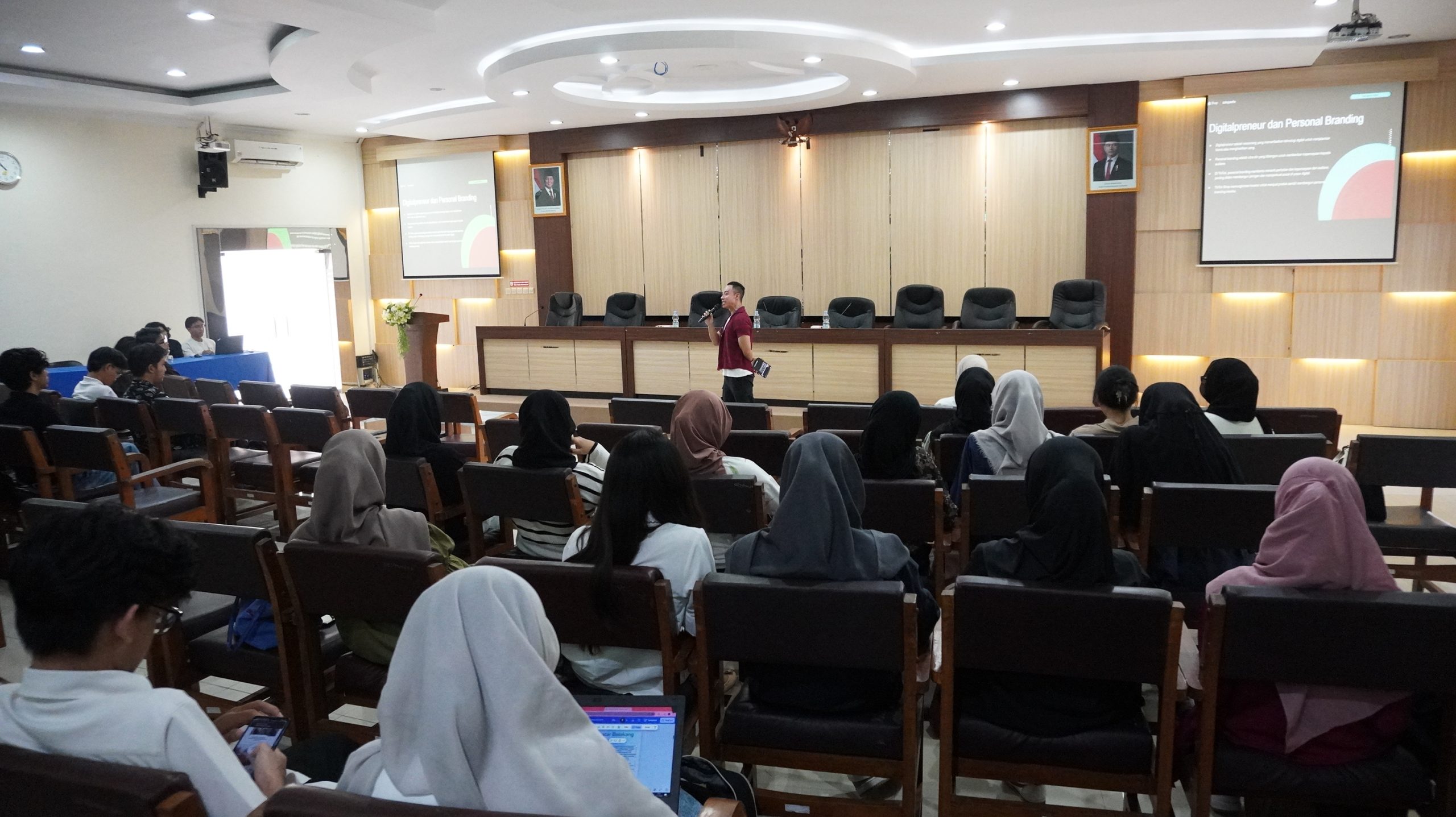
    The Digital Business Study Program, Faculty of Economics and Business (FEB), Universitas Sebelas Maret (UNS), conducted a General Lecture featuring representatives from TikTok, on Monday, November 11, 2024, at the Konimex Hall, Bachtiar Effendi Building, FEB UNS. The event invited guest speakers Septian Anggita Sari and Adhytia Aprisada from TikTok Shop.

    Ayya Agmulia Asmarani Islam, S.E., M.E., lecturer of the Digital Business Study Program, expressed appreciation to the speakers for sharing insights on how to create effective content, especially through the TikTok platform. She highlighted that TikTok allows users and creators to advertise and sell products directly. Students were encouraged to actively engage in the session, ask questions, and participate in discussions, particularly as several Digital Business students already utilize the platform.

    Opening the session, Adhytia provided a brief overview of ByteDance, a global technology company founded in 2012 by Zhang Yiming in China. The company’s mission is to develop AI-based technology that connects and inspires people worldwide. ByteDance is widely known as the parent company of TikTok, a globally popular short-video platform. TikTok Shop is a feature within the app that enables users to buy and sell products directly, without leaving the platform.

    Septian emphasized that TikTok opens opportunities for users and creators to become digital entrepreneurs through direct engagement with their audience. “TikTok allows creators to sell products while building their personal brand. So, how do we build a personal brand? First, by understanding who you are, setting clear goals, maintaining consistency, and creating content that aligns with your identity,” she explained.

    When building a personal brand, it is important to clearly define your identity—what kind of persona you want to project. For instance, someone who enjoys reviewing gadgets should consistently produce content in that area and avoid switching to unrelated topics like sports, as it would disrupt the clarity of their personal branding. The key is to create content that reflects who you are.

    Further, the two speakers explained that TikTok is a powerful platform because of its three essential elements: community, entertainment, and commerce. Community serves as the strong foundation of TikTok. The platform encourages interaction through comments, likes, and sharing videos, creating an active social ecosystem where users can collaborate, exchange ideas, and connect globally.

    While Entertainment remains the most visible element on TikTok, with the platform centered around providing engaging and easily consumable short-form video content, commerce is becoming an increasingly significant component. TikTok now functions not only as an entertainment and social platform but also as a marketing and sales channel for brands and content creators. During the session, the speakers invited participants to share their experiences in content creation on TikTok. They also shared practical strategies on how to use the platform for business development.
  • FEB Students Attend Public Lecture on Entrepreneurship in the Industry 4.0 Era

    FEB Students Attend Public Lecture on Entrepreneurship in the Industry 4.0 Era

    In the 4.0 Industry era, rapid technological advancements have transformed various aspects of life, including entrepreneurship. Digitalization, automation, artificial intelligence, and data-driven technologies have significantly changed how businesses operate.
    In this context, it is essential for aspiring entrepreneurs to understand how technology can be used to create innovative and sustainable business opportunities.

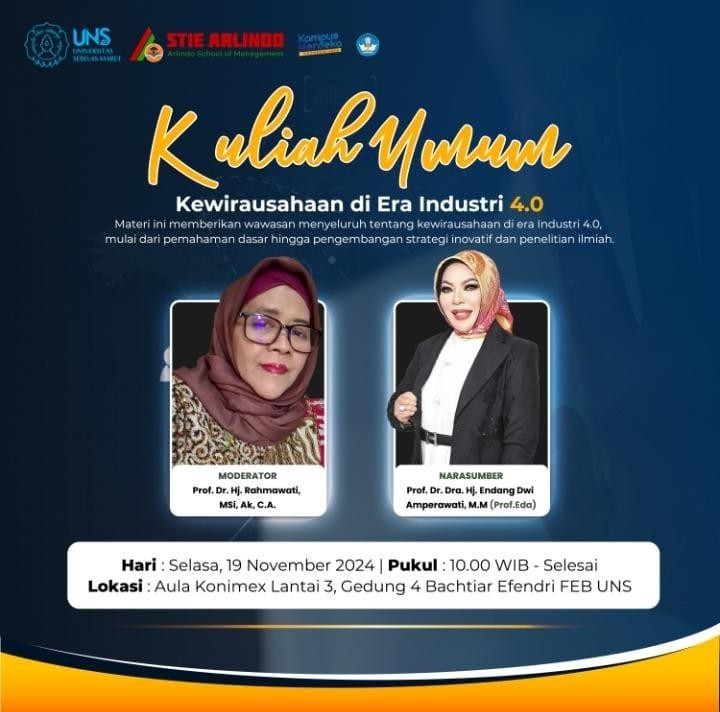
    To address this need, the Doctoral Program in Economics (PDIE), Faculty of Economics and Business (FEB), Universitas Sebelas Maret (UNS), held a Public Lecture on Tuesday, November 19, 2024, at the Konimex Hall, Bachtiar Effendi Building, FEB UNS. The session featured Prof. Dr. Dra. Endang Dwi Amperawati, M.M. as the keynote speaker and was moderated by Prof. Dr. Rahmawati, M.Si., Ak.

    The event was designed to equip students with deeper insights into entrepreneurship in the Industry 4.0 era and how to prepare for success in an increasingly digital and interconnected business landscape. The lecture covered a range of topics related to entrepreneurship and technological development.

    Prof. Endang presented key concepts and trends in entrepreneurship, including its definition and evolution in response to digital transformation. She also discussed how technology and innovation are reshaping business models, focusing on areas such as artificial intelligence, the Internet of Things (IoT), big data, and blockchain.

    She further highlighted emerging business opportunities driven by technological advances, particularly in sectors such as e-commerce, fintech, and tech-based startups. The session also explored strategies for digital business, including digital marketing, platform-based business models, and digital resource management. Concluding the session Prof. Endang emphasized the essential skills entrepreneurs need in the digital age, such as data analysis, creativity, and adaptability. Following the presentation, participants were invited to engage in a discussion session related to the lecture’s theme.

  • Company Visit Program by APM BEM FEB UNS Enhances Digital Financial Literacy

    Company Visit Program by APM BEM FEB UNS Enhances Digital Financial Literacy

    The Young Leadership Academy (APM)—a leadership development program under the Student Executive Board (BEM) of the Faculty of Economics and Business (FEB), Universitas Sebelas Maret (UNS)—is designed to cultivate future leaders who can contribute meaningfully within student organizations, academic settings, society, and the professional world.

    The program draws from the participants’ internship experiences in BEM FEB UNS. APM consists of several key components: Grand Opening, Major Class Sessions, a Project Phase, and a Company Visit. One of the latest APM activities was the Company Visit, held on November 19, 2024, at the Financial Services Authority (OJK) Solo Office.

    The visit was attended by all APM internship participants, the organizing committee, BEM FEB UNS 2024 President and Vice President Surya Azhar and Faiq Aqil Murtadlo, as well as Tastaftiyan Risfandy, S.E., M.Sc., Ph.D., Vice Dean for Student Affairs and Alumni of FEB UNS, who also accompanied the group.

    The visit aimed to instill leadership and innovation in the digital era, improve participants’ understanding of digital finance, and build awareness about the importance of financial regulation. During the event, participants joined an interactive seminar on Digital Finance, delivered by Aji Bagus Wardhana and Fauzan Widodo from OJK Solo. The speakers emphasized the need to remain cautious of financial crimes occurring in digital spaces.

    According to Fahrunisa Oktaningrum, coordinator of APM BEM FEB UNS, the seminar expanded participants’ perspectives on OJK’s role in supervising the financial sector in the digital age.

    “Through the theme of Digital Finance, this company visit helped participants gain insights into financial innovation, consumer protection regulations, and the importance of financial literacy in navigating technological challenges.

    It also inspires them to become adaptive and visionary young leaders who can advance financial inclusion in Indonesia. The interactive discussions with experts from OJK enriched their understanding of how financial institutions contribute to a sustainable digital economy,” she explained.

    This initiative provided a meaningful experience for building leadership competencies grounded in a solid understanding of the modern financial sector
  • FEB UNS Academic Senate Conducts Institutional Performance Evaluation and Develops 2025 Work Plan

    FEB UNS Academic Senate Conducts Institutional Performance Evaluation and Develops 2025 Work Plan

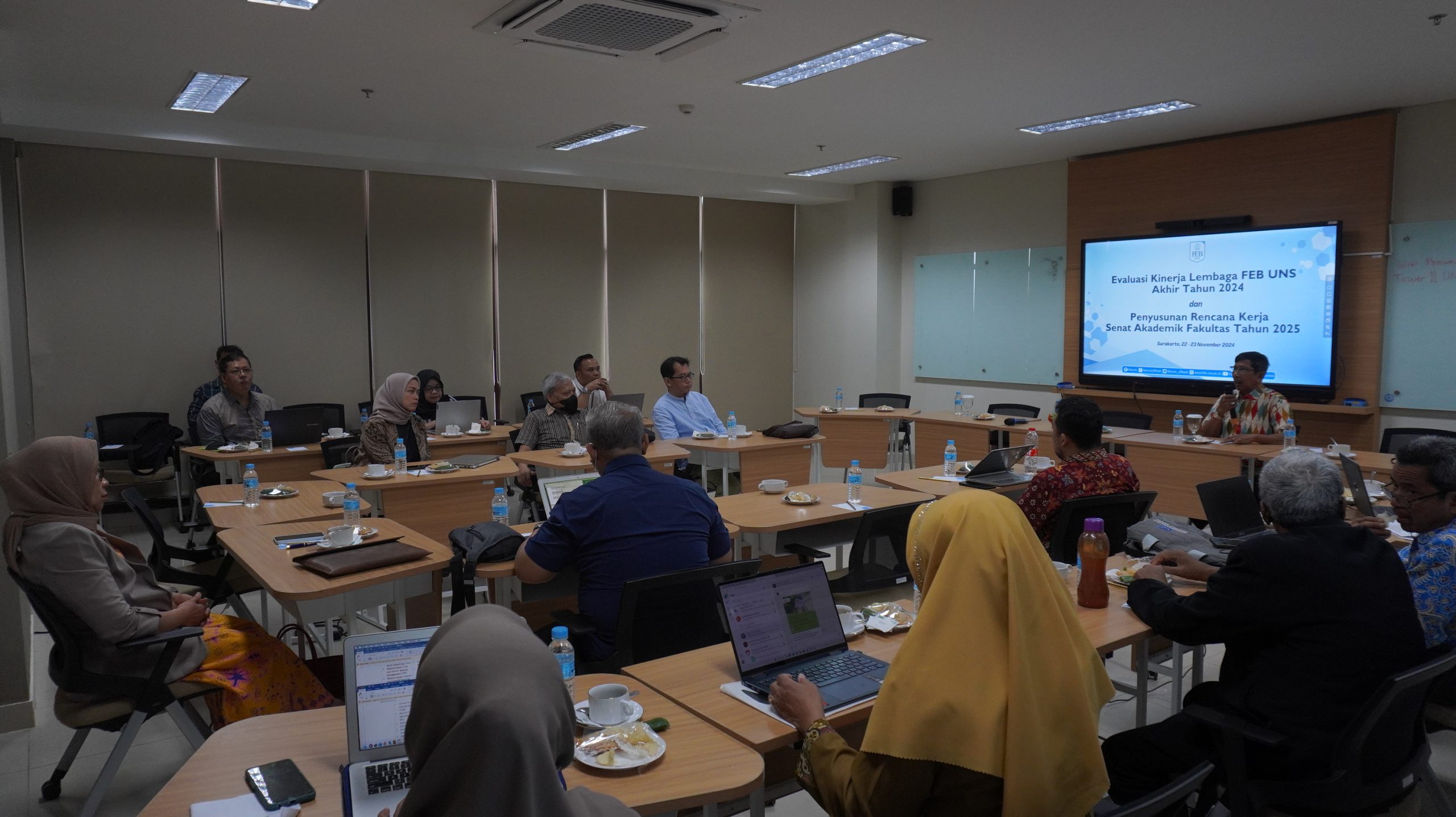
    The Academic Senate of the Faculty of Economics and Business (FEB), Universitas Sebelas Maret (UNS) held an Institutional Performance Evaluation for 2024 and a Work Plan Development Meeting for 2025 at the UNS Tower Ki Hadjar Dewantoro Building.

    In his opening remarks, Prof. Dr. Tulus Haryono, M.Ek., Chair of the FEB Academic Senate, emphasized that one of the key responsibilities of the Academic Senate is to review reports from the faculty and its supporting units. This process provides a comprehensive overview of institutional management. He further stated that the Senate’s role is to offer recommendations to drive FEB UNS toward continuous improvement.

    The two-day event, held on November 22-23, 2024, was attended by 29 members of the Academic Senate.

    The agenda for the first day featured presentations from the Faculty Leadership, the Head of the Quality Assurance Unit (UPM), and the Center for Research and Community Engagement (P4M), moderated by Dr. Joko Suyono, S.E., M.Si. This was followed by presentations from the Heads of Undergraduate Study Programs (S-1), moderated by Dr. Mulyanto, M.E.

    The session concluded with discussions and performance evaluations by the Senate.

    On the second day, presentations continued with the Heads of Master’s (S-2) and Doctoral (S-3) Study Programs, moderated by Dr. Sri Hartoko, MBA., Ak., CACP. This was followed by discussions on the 2025 work plans of the Senate’s commissions and a presentation of the outcomes by each Commission Chair, moderated by Dila Maghrifani, S.E., B.Sc., M.Sc., Ph.D. The session concluded with further discussions and evaluations.

    During the meeting, Prof. Tulus also introduced new interim members for the Senate’s commissions.

    Prof. Doddy Setiawan, S.E., M.Si., Ak., Ph.D., was appointed as Chair of Commission A, which focuses on academic and research affairs. Prof. Dr. Yunastiti Purwaningsih, M.P., was assigned to lead Commission B, which oversees non-academic matters. Prof. Dr. Budi Haryanto, M.M., took on the role of Chair for Commission C, responsible for student affairs and alumni engagement. Meanwhile, Prof. Dr. Hunik Sri Runing Sawitri, M.Si., was designated as Chair of Commission D, which handles matters related to professors and senior scholars.
    At the closing session, Prof. Tulus stressed the importance of translating the commissions’ final recommendations into actionable steps by the faculty leadership and Study Programs.

    “It is the responsibility of the faculty and Study Program leadership to implement the resolutions from Commissions A, B, C, and D. These outcomes will be compiled into an integrated work plan for the Academic Senate, which will serve as today’s official document. This will also be submitted to the faculty to develop a structured timeline for execution,” he concluded.