FEB

Blog

  • Social Entrepreneurship, A New Step Toward Sustainable Business

    Social Entrepreneurship, A New Step Toward Sustainable Business

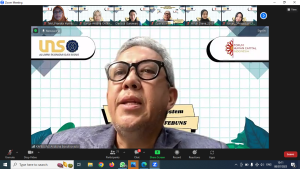
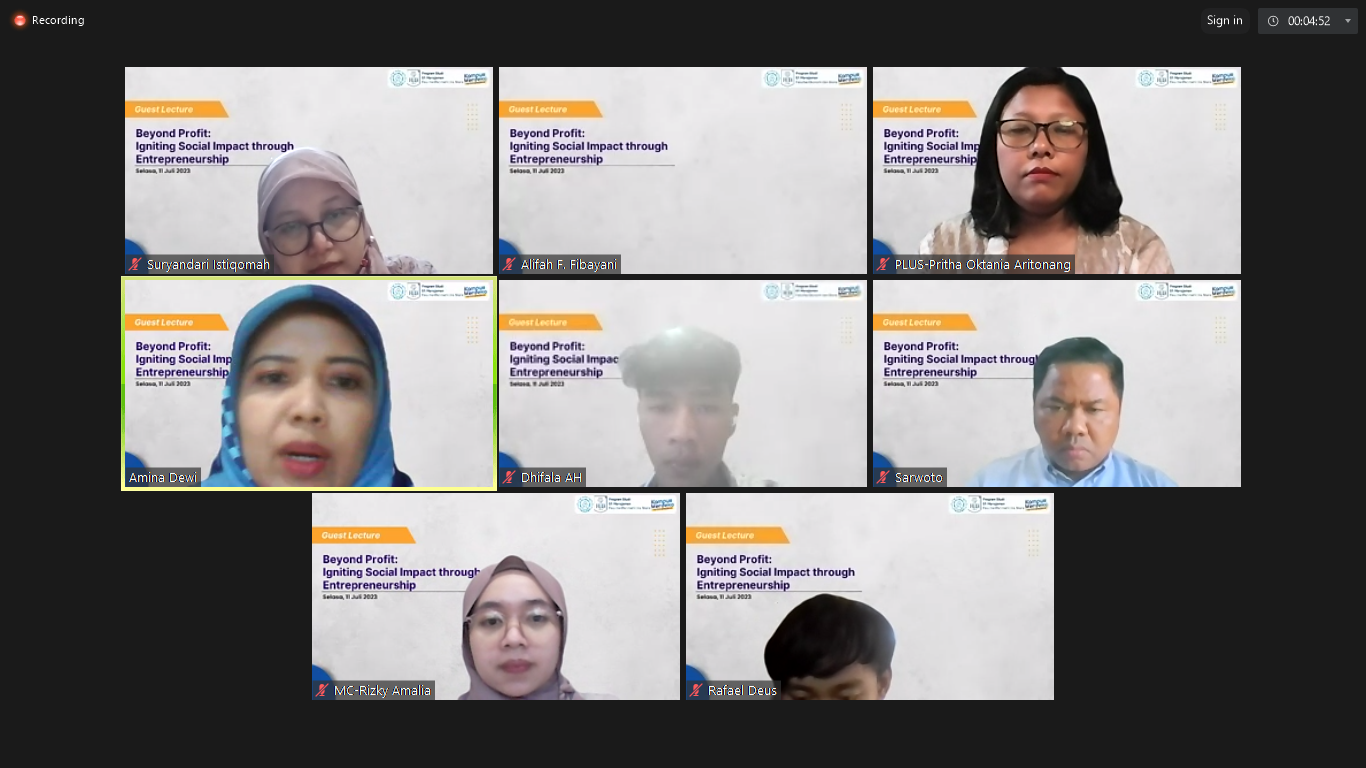
    Seeing the potential of achieving business growth beyond profit and including social impact through social entrepreneurship, the Bachelor in Management (S1) Study Program (MSP FEB UNS) hosted a Guest Lecture entitled “Beyond Profit: Igniting Social Impact Through Entrepreneurship.”

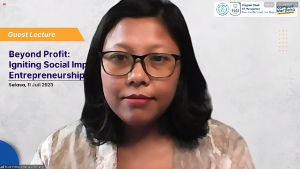
    Presenting Pritha O. Aritonang, Project Coordinator at the Platform Usaha Sosial (PLUS), the guest lecture session held on Tuesday (11/07/2023) was virtually attended by more than 100 participants consisting of students and lecturers of the Management Study Program, Faculty of Economics and Business (FEB), Universitas Sebelas Maret (UNS).

    Opening the guest lecture session, Dr. Atmaji, MM., Head of the Management Study Program, delivered an opening remark as well as officially started this guest lectures session. Through his speech, Dr. Atmaji expressed his gratitude and wishes, especially to Mrs. Pritha who has been willing to take her precious time for delivering some insights, at the same time hoping that the material will enlighten PSM FEB UNS students on the current condition of social entrepreneurship.

    “Currently, PSM always hosted face-to-face lecture sessions with guest lecturers. This aims to allow students to get knowledge from lecturers and practitioners or other academics who can provide a wider discourse for the material being studied. Thank you to all the participants, students and lecturers. I hope that students can follow the event carefully in order to reap the greatest benefits. Hopefully, this morning’s event can be held seamlessly and provide maximum benefits for students,” hoped Dr. Atmaji.

    Starting the presentation on Social Entrepreneurship (SE), Pritha said that there are fundamental differences between ordinary businesses, non-profit organizations or NGOs, and SE. “In non-profit organizations, there are no material benefits, while SE is focused between financial benefits and social impacts. The potential for social enterprises to be sustainable is greater than NGOs since it can generate its own income and not be dependent on grants,” Pritha explained.
    Social entrepreneurship itself can be defined as a movement that aims to make social change in the community, through responsible business practices that create a sustainable impact. Thus, the purpose of the said business is not only to generate profits but also to make a positive impact. According to her, the focus of SE triggers managers to grow the unique value to be offered to consumers. “Social enterprises can also focus on their own business income and are not dependent on grants. This is what makes social enterprises more sustainable,” she added.

    Sharing her experience as a part of the ecosystem, Pritha also explained three types of Social Entrepreneurship seen by its beneficiaries, including embedded models, integrated models, and separated models. In order to determine whether a business qualifies as a Social Enterprise, there are five steps that can be followed. The first step involves understanding the activities of the business. The second step requires identifying the consumers and target audience of the business. The third step involves recognizing any issues faced by the organization. The fourth step necessitates determining the sources of revenue for the business. The final step involves comprehending the objectives of any changes that the organization or business seeks to implement.
    In Indonesia, there is an increasing trend in the number of social businesses with the number of businesses established reaching almost more than 100 businesses in 2017. The majority of these businesses are engaged in the field of creative industries, followed by the agricultural and fisheries sectors, as well as education. However, according to data presented by Pritha, the distribution of social business is still centralized on Java. Where the majority of social entrepreneurs (47%) stated that the most frequent challenge faced was the lack of capital. In addition, they also stated that there are still difficulties in accessing funding sources and difficulties in improving managerial skills.

    During the guest lecture, several participants appeared eager to engage in direct discussions with the speakers. A few students even mentioned their attempts at establishing a social business and sought guidance and recommendations from Mrs. Pritha, the Project Coordinator on the Platform Bisnis Sosial.
  • Kalender Akademik Universitas Sebelas Maret Tahun Akademik 2023-2024

    Kalender Akademik Universitas Sebelas Maret Tahun Akademik 2023-2024 bisa dilihat pada link berikut:  [Kalender Akademik 2023-2024]

  • Visiting FEB UNS, Head of BPS RI Monitor and Evaluate Study Assignment of the APBN BPS Student at MM FEB UNS

    Visiting FEB UNS, Head of BPS RI Monitor and Evaluate Study Assignment of the APBN BPS Student at MM FEB UNS

    The Faculty of Economics and Business (FEB), Universitas Sebelas Maret (UNS), welcomed a visitation from the Head of the Center for Education and Training (Pusdiklat) of the Central Bureau of Statistics (BPS) RI, Suntono, SE, M.Si., and the team on Friday, July 17, 2023.

    The team from BPS was welcomed by the Dean of FEB UNS, Prof. Dr. Djoko Suhardjanto, M.Com., (Hons). PhD., Ak., FEB UNS Deputy Deans, Head of Master of Management (MM) Study Program FEB UNS, and all students delegated in BPS Study Assignment at MM Study Program, at Assembly Room 1 Soeharno Building FEB UNS.
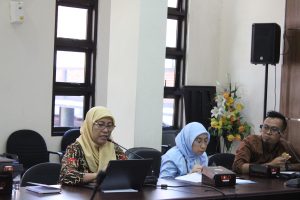
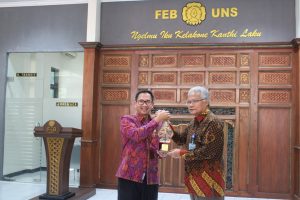
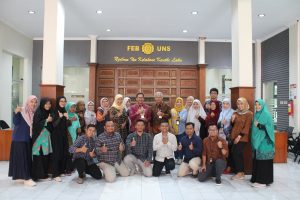
    This visit has a primary objective of monitoring and evaluating the progress of the BPS APBN Student’s study assignments within the Master of Management Study Program FEB UNS.

    After delivering a warm welcome speech and introducing the esteemed figures holding the positions of FEB UNS Dean and Head of the MM Study Program, Prof. Djoko has graciously offered a glimpse into the MM student graduation requirements.

    As a graduation requirement, MM students need to write research articles and have them published in international journals or accredited national journals, with at least Sinta 2. Prof. Djoko also encouraged students to complete their studies within 4 semesters.

    Prof. Djoko also thanked Mr. Suntono and the team who had delegated BPS staff to go on Study Assignments at the MM Study Program FEB UNS and hoped to continue this excellent partnership between FEB UNS and BPS.

    Regarding the partnership between the two institutions, Suntono remarked that BPS Leaders hold a positive view of UNS, highlighting the institution’s commendable and cooperative efforts during the initial year of their partnership with Pusdiklat BPS. This promising start ensures the collaboration with UNS to continue in a sustainable manner.

    On this occasion, the Head of the MM Study Program, Retno Tanding Suryandari, S.E., M.E., Ph.D., reported the students’ development under the BPS Study Assignment at the MM Study Program in detail.
    She also reported that to support a seamless study for the MM students, the study program has organized various activities including Scientific Writing Workshop, Analysis Tool Workshop, NCAB Conference, Business Seminar, Macroeconomic Training and Fiscal Policy, and including an upcoming agenda entitled ‘leadership workshop.’

    After the session, Suntono and the BPS team had an internal discussion with the 18 students regarding their study assignments.

  • Establishing Research Collaboration, FEB UNS Welcomed a Visit from UNJ Digital Business Study Program

    Establishing Research Collaboration, FEB UNS Welcomed a Visit from UNJ Digital Business Study Program

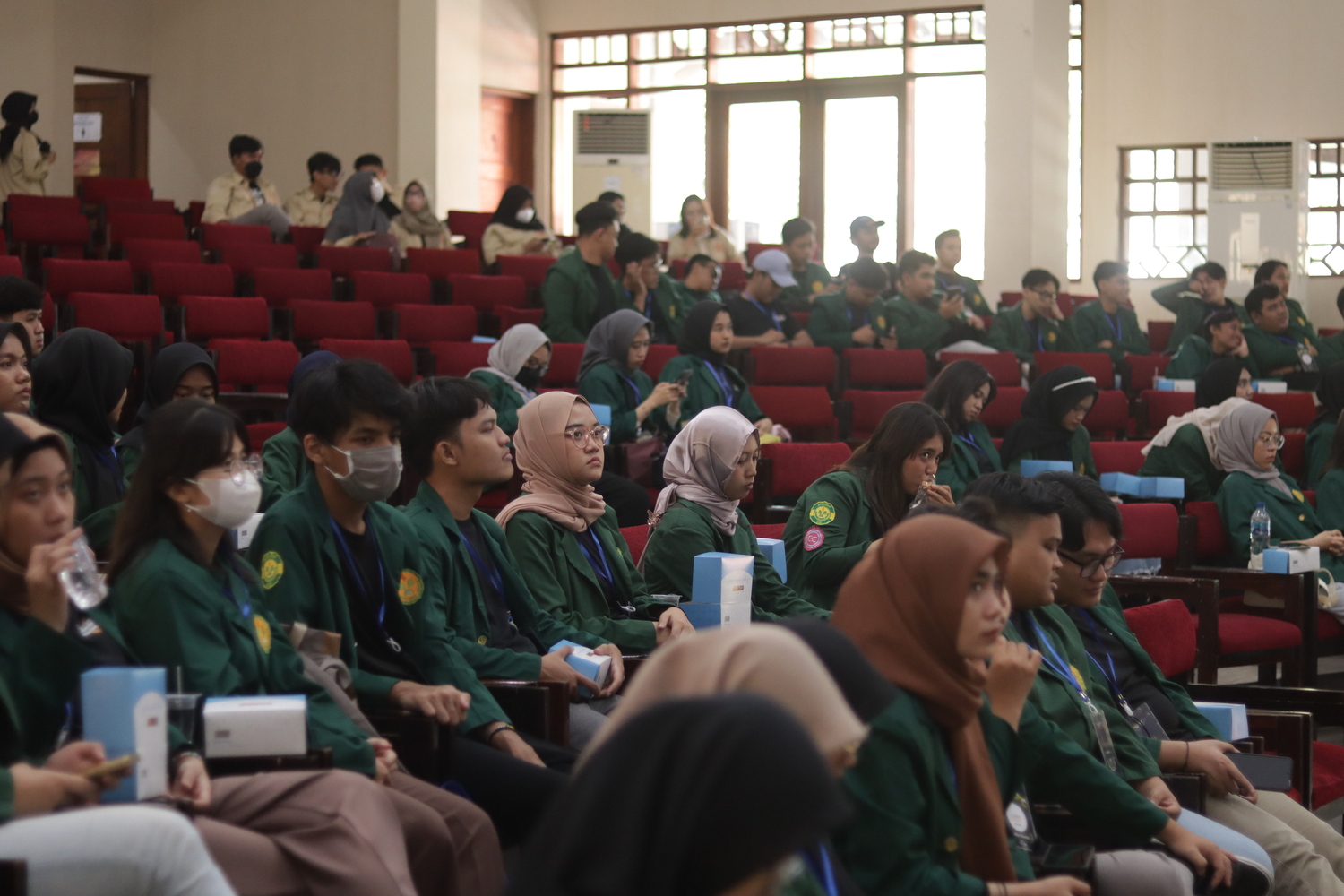
    The Faculty of Economics and Business (FEB) Universitas Sebelas Maret (UNS) cordially received a delegation comprising the Head of the Study Program and 79 undergraduate students from the Digital Business Study Program of the Faculty of Economics, Universitas Negeri Jakarta (UNJ). The visit took place on Thursday, July 13, 2023, was warmly welcomed by FEB UNS and took place at the Hall of the Suhardi Building FEB UNS.

    The entourage from the Undergraduate (S1) Program in Digital Business UNJ was welcomed by Vice Dean of Business and Information Cooperation Planning, Tastaftiyan Risfandy, Ph.D., Head of Study Program, Putra Pamungkas Ph.D., and also Lecturer of the Bachelor (S1) of Digital Business FEB UNS.
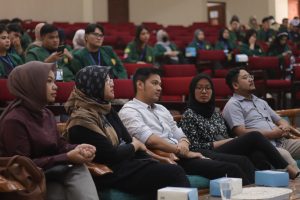
    In his speech, Tastaftiyan Risfandy, Ph.D., welcomed the Head of UNJ Digital Business Study Program entourage to UNS Solo, Dr. Osly Usman, M.Bus., along with the students. “We would like to welcome the Head of the UNJ Digital Business Study Program, Mr. Osly, and all students. It’s an honor for us, this is the 2nd time UNJ visited UNS. Previously, Mr. Osly had given many directions to the FEB UNS Digital Business Study Program as a newly established study program.”

    Furthermore, it is said that both Study Programs from UNJ and UNS will establish many collaborations, one of which is a research partnership. In line with Tastaftiyan Ph.D., Dr. Osly also confirmed that the Study Programs will conduct research and international community service collaboration that will involve students. Moreover, Field Work Courses (KKL) are expected to enhance the enthusiasm of UNJ Digital Business Study Program students to be independent.

    “Through various off-campus visits, we encourage our students to learn more and not to become ‘home-court aces,’ to be academicians who can dedicate their learned knowledge to the community. Students are free to explore anything, the great opportunity is available here at UNS. Students are free to inquire about UNS’ strengths, the previous and ongoing projects, and available courses in the fifth semester for student exchange. By engaging in this exploration, later they can confidently select UNS as the preferred destination for their exchange program,” he explained.
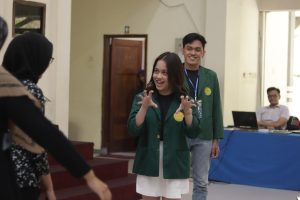
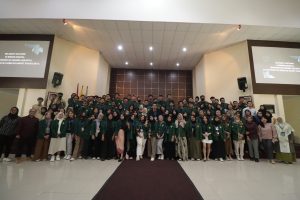
    Meanwhile, the Head of BG FEB UNS Study Program, Putra Pamungkas, S.E., M.Rech., Ph.D., confirmed that the collaboration established between the UNS Digital Business Study Program and UNJ has a common goal. This is to elevate the recognition of the Digital Business Study Program within the community and enhance its appeal, thereby fostering increased demand for the program.

    “We are equipping students with digital expertise nurturing future-ready talents for the industry’s advancement. The students were lucky enough to be the pioneers and equipped with digital science from the beginning, positioning them as sought-after recruits for the industry, fully prepared to embrace the challenges of the digital era.”

    He added that UNJ and UNS are set on many research collaborations, student activities, visits, and student exchanges. “Especially for those who have visited UNS and are interested in the UNS campus, we are ready to open student exchange for 1 to 2 semesters. We, at UNS, our specialization is finance. However, it does not eliminate the possibility that there will be a new focus in business and marketing. In Digital Business FEB UNS, we offer 3 concentrations study: finance, digital marketing, and digital governance.”

    Thanks to a well-coordinated effort made by the Student Association Department (HMJ) of the Digital Business Study Program FEB UNS, UNJ students can have the opportunity to see the infrastructure facilities in FEB UNS.

  • Social Entrepreneurship, Langkah Baru dalam Bisnis Berkelanjutan

    Social Entrepreneurship, Langkah Baru dalam Bisnis Berkelanjutan

    Melihat potensi kewirausahaan yang tidak hanya berfokus pada laba yang diwujudkan dalam kegiatan kewirausahaan sosial, atau sering dikenal sebagai Social Entrepreneurship, Program Studi (Prodi) S1 Manajemen Fakultas Ekonomi dan Bisnis (FEB) Universitas Sebelas Maret (UNS) menggelar Guest Lecture dengan tema Beyond Profit: Igniting Social Impact Through Entrepreneurship.

    Menghadirkan Pritha O. Aritonang, Project Coordinator di Platform Usaha Sosial (PLUS), sesi kuliah tamu yang terselenggara pada hari Selasa (11/07/2023) tersebut dihadiri oleh lebih 100 peserta yang terdiri dari mahasiswa dan dosen Prodi S1 Manajemen FEB UNS secara virtual.

    Dr. Atmaji, MM., Kaprodi S1 Manajemen menyampaikan sambutan sekaligus membuka jalannya kuliah tamu.

    Melalui sambutannya, Dr. Atmaji menyampaikan terima kasih dan harapannya, khususnya kepada Ibu Pritha yang telah bersedia meluangkan waktu untuk menyampaikan materinya semoga dapat memberikan pencerahan terkait bagaimana social entrepreneurship yang ada pada saat ini kepada mahasiswa Prodi S1 Manajemen FEB UNS.

    “Saat ini Prodi S1 Manajemen selalu mengadakan beberapa sesi tatap muka dengan dosen tamu, ini bertujuan agar selain mahasiswa mendapatkan ilmu dari dosen, mereka juga mendapatkan pengetahuan dari praktisi atau para akademisi lain yang dapat memberikan wacana yang lebih luas untuk materi yang sedang dipelajari. Terima kasih pada semua peserta, mahasiswa dan dosen. Saya berharap semoga mahasiswa dapat mengikuti acara secara seksama agar dapat memetik manfaat yang sebesar-besarnya. Mudah-mudahan acara pada pagi ini dapat terselenggara dengan baik dan memberikan manfaat yang sebesar-besarnya bagi mahasiswa,” harap Dr. Atmaji.

    Mengawali paparan mengenai Usaha Sosial (Social Entrepreneurship-SE), Pritha menyampaikan bahwa terdapat perbedaan mendasar antara usaha biasa, organisasi nirlaba ataupun NGO, dan SE.

    “Pada organisasi nirlaba tidak terdapat keuntungan material/laba, sementara SE berada diantara keuntungan finansial dan dampak sosial. Potensi usaha sosial untuk dapat bertahan (sustainable) adalah lebih besar dari NGO,” jelas Pritha.

    Kewirausahaan sosial sendiri dapat didefinisikan sebagai gerakan yang bertujuan untuk membuat perubahan sosial di lingkungan masyarakat, melalui praktik bisnis yang bertanggungjawab sehingga menciptakan dampak yang berkelanjutan (sustainable). Sehingga tujuan dari bisnis tersebut tidak hanya menghasilkan keuntungan tapi juga untuk memberikan dampak positif.

    Menurutnya, fokus dari SE memicu pengelola untuk menumbuhkan nilai unik yang dapat ditawarkan pada konsumen.

    “Usaha sosial juga bisa berfokus pada hasil usaha sendiri dan tidak tergantung pada hibah. Inilah yang membuat usaha sosial bisa lebih sustainable,” tambahnya.

    Berbagi pengalamannya selama bergabung dalam ekosistem tersebut, Pritha juga menjelaskan tiga-tipe dari Kewirausahaan Sosial dilihat dari penerima manfaat (beneficiaries) antara lain embedded model, integrated model, dan separated model.

    Dalam hal ini, terdapat 5 (lima) langkah yang dapat digunakan untuk mengidentifikasi apakah sebuah bisnis merupakan sebuah Usaha Sosial.


    Langkah pertama adalah dengan mengetahui kegiatan bisnis, kemudian perlu juga diketahui siapakah konsumen maupun target dari bisnis tersebut, selanjutnya identifikasi apakah permasalahan yang dirasakan oleh organisasi tersebut, setelah itu perlu diketahui bagaimanakah cara bisnis tersebut mendapatkan income atau pemasukan, dan yang terakhir adalah pentingnya tujuan perubahan yang ingin diciptakan oleh organisasi atau bisnis tersebut.

    Di Indonesia sendiri terdapat tren peningkatan jumlah bisnis sosial dengan jumlah usaha yang didirikan mencapai hampir lebih dari 100 usaha di tahun 2017. Mayoritas usaha tersebut bergerak di bidang industri kreatif, diikuti oleh sektor pertanian dan perikanan, serta pendidikan. Meskipun begitu, menurut data yang disampaikan oleh Pritha, persebaran lokasi usaha sosial ini masih terpusat di pulau Jawa. Dimana mayoritas wirausahawan sosial (47%) menyatakan bahwa tantangan yang paling sering dihadapi adalah keterbatasan modal. Selain itu mereka juga menyatakan bahwa masih kesulitan dalam mengakses sumber pendanaan dan kesulitan dalam meningkatkan keterampilan manajerial.

    Beberapa peserta tampak antusias dalam berdiskusi secara langsung bersama pembicara yang hadir dalam kuliah tamu kali ini. Bahkan beberapa mahasiswa menyatakan bahwa mereka telah mencoba untuk membangun bisnis sosial dan meminta saran dan rekomendasi dari Ibu Pritha selaku Project Coordinator di Platform Usaha Sosial.

  • Kunjungi FEB UNS, Kepala BPS Lakukan Monitoring dan Evaluasi Tugas Belajar Mahasiswa APBN BPS Program Studi Magister Manajemen FEB UNS

    Kunjungi FEB UNS, Kepala BPS Lakukan Monitoring dan Evaluasi Tugas Belajar Mahasiswa APBN BPS Program Studi Magister Manajemen FEB UNS

    Fakultas Ekonomi dan Bisnis (FEB) Universitas Sebelas Maret (UNS) menerima kunjungan Kepala Pusat Pendidikan dan Pelatihan (Pusdiklat) Badan Pusat Statistik (BPS), Suntono, SE, M.Si dan tim pada Jumat 17 Juli 2023.

    Tim dari BPS disambut oleh Dekan FEB UNS, Prof. Dr. Djoko Suhardjanto, M.Com., Hons. PhD. Ak, para Wakil Dekan, Kepala Program Studi (Kaprodi) Magister Manajemen (MM) FEB UNS dan seluruh mahasiswa Tugas Belajar BPS Prodi MM di Ruang Sidang 1 Gedung Soeharno FEB UNS.

    Kunjungan tersebut dalam rangka monitoring dan evaluasi tugas belajar mahasiswa APBN BPS Program Studi Magister Manajemen FEB UNS.

    Usai menyampaikan ucapan selamat datang serta memperkenalkan jajaran Dekanat dan Kaprodi MM, Prof. Djoko dalam sambutannya menyampaikan sekilas tentang prosedur kelulusan mahasiswa MM.

    Sebagai syarat kelulusan, mahasiswa MM harus menyusun artikel yang dipublikasikan di jurnal internasional atau jurnal nasional terakreditasi minimal Sinta 2.

    Prof. Djoko menyemangati mahasiswa agar dalam waktu 4 semester bisa menyelesaikan studinya.

    Prof. Djoko juga mengucapkan terima kasih kepada Bapak Suntono dan tim yang telah mengirimkan staf di BPS untuk tugas belajar pada Prodi MM FEB UNS dan berharap kerja sama antara FEB UNS dan BPS dapat berlanjut.

    Terkait kerja sama, Suntono mengatakan Pimpinan BPS menilai UNS dinilai baik dan kooperatif pada tahun pertama penyelenggaraan kerja sama dengan Pusdiklat BPS. Dengan hal tersebut maka kerja sama dengan UNS dapat dilanjutkan.

    Di kegiatan itu, Kaprodi MM, Retno Tanding Suryandari, S.E., M.E.,Ph.D melaporkan dengan detil perkembangan mahasiswa Tugas Belajar BPS di Prodi MM.

    Disampaikan juga, untuk mendukung kelancaran studi mahasiswa MM, prodi telah menyelenggarakan berbagai kegiatan diantaranya Workshop Penulisan Karya Ilmiah, Workshop Alat Analisis, Konferensi NCAB, Seminar Bisnis, Pelatihan Ekonomi Makro dan Kebijakan Fiskal serta yang akan dilaksanakan adalah workshop kepemimpinan.

    Usai acara, ditempat yang sama, Suntono dan tim dari BPS berdiskusi secara internal dengan ke 18  mahasiswa tugas belajar.

  • FEB UNS Menerima Kunjungan Kuliah Kerja Lapangan Prodi S1 Bisnis Digital UNJ, Jalin Kerja Sama Penelitian

    FEB UNS Menerima Kunjungan Kuliah Kerja Lapangan Prodi S1 Bisnis Digital UNJ, Jalin Kerja Sama Penelitian

    Fakultas Ekonomi dan Bisnis (FEB) Universitas Sebelas Maret (UNS) menerima kunjungan Kepala Program Studi dan 79 mahasiswa S1 Bisnis Digital Fakultas Ekonomi Universitas Negeri Jakarta (UNJ), Kamis, 13 Juli 2023 di Aula Gedung Suhardi FEB UNS.

    Rombongan dari S1 Bisnis Digital UNJ disambut  Wakil Dekan Perencanaan Kerjasama Bisnis dan Informasi, Tastaftiyan Risfandy, Ph.D., Kaprodi, Putra Pamungkas Ph.D dan juga Dosen Pengampu S1 Bisnis Digital FEB UNS

    Dalam sambutannya,  Tastaftiyan Risfandy, Ph.D menyampaikan ucapan selamat datang di UNS Solo kepada Kaprodi Bisdig UNJ, Dr. Osly Usman, M.Bus beserta para mahasiswa.

    “Kami ucapkan selamat datang Kaprodi Bisdig UNJ, Bapak Osly dan juga seluruh mahasiswa. Kami merasa terhormat, ini adalah kali ke 2 UNJ ke UNS. Sebelumnya Bapak Osly pernah memberikan banyak arahan kepada Prodi Bisnis Digital FEB sebagai prodi yang baru saja berdiri.” sambutnya.

    Lebih lanjut dikatakan Bisdig UNJ dan UNS akan menjalin banyak kerja sama, salah satunya adalah kerja sama penelitian.

    Senada dengan Tastaftiyan, Ph.D, Dr. Osly juga menegaskan bahwa Bisdig UNS dan UNS akan  melakukan kerja sama penelitian dan pengabdian internasional yang akan melibatkan mahasiswa

    Kuliah Kerja Lapangan (KKL) diharapkan bisa membangkitkan semangat mahasiswa S1 Bisdig UNJ untuk mandiri.

    “Para mahasiswa kami ajak keluar kampus, ke semua tempat agar dapat belajar, tidak menjadi ‘jago kandang’, bisa membaktikan ilmu yang telah didapat untuk masyarakat. Silahkan mahasiswa bisa mengeksplor semuanya, kesempatan ada di UNS. Bisa bertanya apa saja keungulan UNS, proyek-proyek apa yang sudah dikerjakan, mata kuliah apa saja yang ditawarkan semester 5 untuk memungkinkan adanya pertukaran mahasiswa. Sehingga saat pertukaran nanti bisa mantap memilih UNS” jelasnya.

    Sementara itu Kaprodi BG FEB UNS, Putra Pamungkas, S.E., M.Rech.,Ph.D. menguatkan bahwa apa yang di jalin antara Prodi Bisnis Digital UNJ dan UNS memiliki tujuan bersama semoga BG semakin dikenal dimasyarakat, semakin diminati.

    “Kita siapkan talent-talent digital untuk perkembangan industri ke depan. Temen-temen cukup beruntung jadi salah satu pionir, mahasiswa muda yang dibekali ilmu digital dari awal, setelahnya bisa ditangkap oleh industri karena sudah siap untuk menghadapi era digital’’ tegasnya.

    Dikatakan, UNJ dan UNS akan banyak sekali mengadakan kerjasama-kerjasama riset, kegiatan kemahasiswaan, kunjungan dan pertukaran pelajar.

    “Terutama bagi yang sudah visit di UNS yang tertarik dengan kampus UNS, kami siap membuka student exchange 1 sampai 2 semester. Karena di UNS spesialisasi kami adalah keuangan atau finance, tidak menutup kemungkinan ada yang bisnis dan juga marketing.

    Di BG FEB ada 3 konsentrasi: keuangan, digital marketing, dan tata kelola digital.

    Dalam kegiatan kunjungan itu, dipandu oleh Himpunan Mahasiswa Jurusan (HMJ) Prodi BG FEB, mahasiswa UNJ juga berkesempatan melihat sarana prasarana yang ada di FEB UNS.


  • Inviting Two Speakers, KAFEB UNS Shares Tips and Tricks to Pass Interview and FGD Stages at BUMN Recruitment Process

    Inviting Two Speakers, KAFEB UNS Shares Tips and Tricks to Pass Interview and FGD Stages at BUMN Recruitment Process

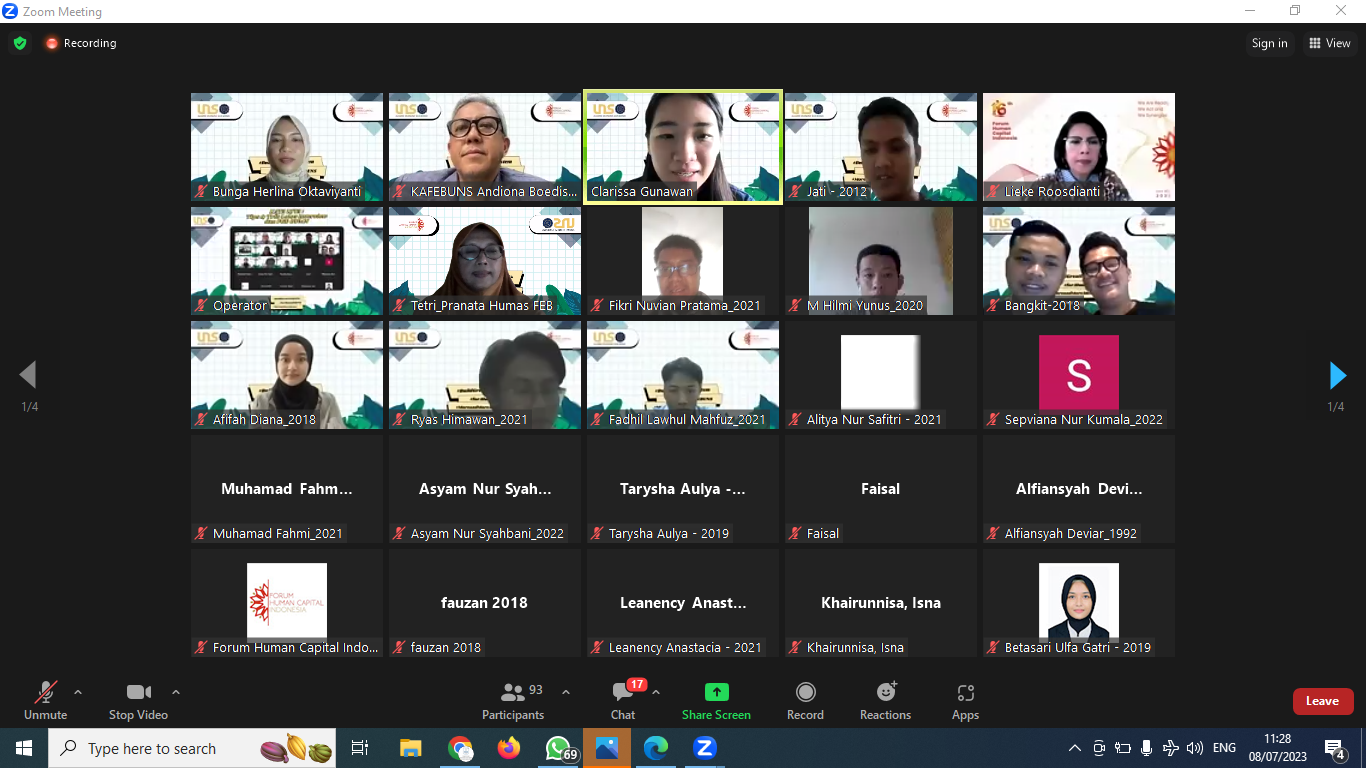
    The Alumni Association of the Faculty of Economics and Business (KAFEB), Universitas Sebelas Maret (UNS) hosted ‘KATA KITA: Tips and Tricks to Pass BUMN Interview and FGD,’ Saturday, July 8, 2023. The event attended by 100 participants presented two speakers, Lieke Roosdianti Pangkey, Executive Director of Human Capital Indonesia Forum (FHCI), and Bunga Herlina Oktaviyanti, VP Wholesale Banking BRI, alumni of FEB UNS Class of 2001.

    Andiona Boedisoejoto commonly called Mas Oni, the co Head of Cash Product and Regulatory Project, Bank UOB Indonesia who also serves as the Chairman for Daily Operational KAFEB UNS, said this event was intended for students and alumni.
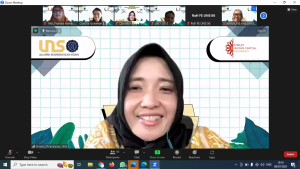
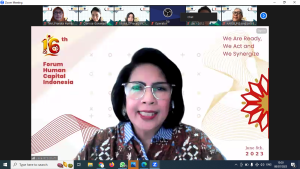
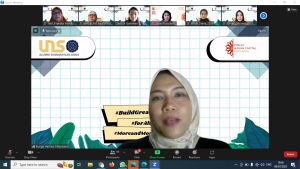
    “In this forum, we will discuss what is FHCI, what assistance can be provided by FHCI, and of course provide input to alumni and students. FHCI has an important role in carrying out the recruitment process and several other activities for SOEs in Indonesia. On this occasion, we will discuss the Tips and Tricks to Pass the Interview and FGD stages at the Indonesian SOE recruitment process. What are the stages and how are the recruitment processes carried out? We will hear directly from FHCI, from Mrs. Lieke and Ms. Bunga,” explained Mas Oni.

    He further revealed that a similar event will be a continuous agenda by KAFEB UNS, being the current event as the opening event. In the future, KAFEB UNS will be a key point for mutual development.

    Dr. Dwi Prasetyani, SE, M.Sc., Vice Dean of Academic, Research, and Student Affairs FEB UNS is very grateful to KAFEB UNS for facilitating this event and also to the two speakers who allocated their time to attend the event. “As stated by Mas Oni, the current agenda is part of a series of future activities, hosted by KAFEB UNS. Discussing how our students can be recruited or for students to be graduates with expected competency. Our task is to prepare students to be individuals who are ready to take part in the community with all the competencies they have. Today is the beginning, an enjoyable and warm first meeting, and in the future, we can collaborate better,” she said.

    Further, it was revealed that FEB and KAFEB UNS will host more events and activities that benefit students, such as internship recruitment and certification, which will be conducted in the near future. According to their profile, graduates can be divided into three categories, the first is those who go on professional career, the second is entrepreneurship, and the third is those who pursue further study.

    Graduates who pursue careers as lecturers and researchers are only composed of 10%, while the rest (90%) fall under professional workers and entrepreneurs. According to the survey, there is a considerable number of graduates pursuing careers as SOE employees. As there are considerable FEB students who are interested in pursuing a career, especially in SOEs, therefore, this activity is suitable and in line with the purpose of the study program and faculty.

    FHCI, Tips and Tricks to Pass SOE Recruitment Selection

    In his presentation, Lieke explained in detail about FHCI. FHCI is a forum for human capital consultants focusing on the SOE, especially the Directors of Human Capital or Human Resources (HR). FHCI is a hub to advance or improve SOEs’ human resources, both those who will work in SOEs and those who are already working in SOEs. FHCI programs include internships, assisting in providing supplies or recruiting employees from SOEs, commonly known as BUMN Joint Recruitment (RBB).

    In FHCI, SOEs or SOE entities opened job vacancies allowing fresh graduate job seekers to apply for the FHCI program, namely BUMN Joint Recruitment (RBB). The recent ongoing recruitment program is the 2023 RBB and it is currently at the beginning of the second online test for English proficiency test.

    In front of the 100 virtual participants, Lieke shares tips to pass the SOE selection process, such as applicants must really master the profile of the company they are applying to. Although the applicant has included his Curriculum Vitae (CV), in the interview process, the applicant must be ready to verbally explain what is listed on the submitted CV. In the interview process, applicants can explain the excellence and competency they have without worrying about being considered arrogant.

    Another important thing in the interview is that applicants do not need to tell negative aspects of other applicants, and do not need to tell a lot of their personal weaknesses, which will actually lower their value. The weaknesses that can be conveyed are aspects or requirements that cannot be met but are not related to the position in the company they were applied for.

    Similar to Lieke, Bunga highlighted how an applicant should convey his/her strengths and weaknesses. Applicants do not need to worry if they are considered arrogant if an accomplishment is indeed their commendable achievement. If applicants want to convey their weaknesses, they can do so in a way that also conveys the solution to the shortcomings.

    “It’s precisely those advantages that the examiner will explore further, how you work in a team, how to overcome conflict if working with a team. How do you contribute to the team as a member, or when you’re a team leader? It doesn’t matter if you want to tell me your shortcomings but tell me how you plan to overcome those shortcomings. Such as maybe you are shy and tend to not dare to speak up a lot, thus, you can convey this but you need to also explain the effort you make. For example taking public speaking training classes, especially now there are also many free webinars. This will be the point,” she explained.

    On the other hand, in terms of internships, Lieke suggested the participants start taking internships at SOEs at first. “During your participation in an internship, if you can work well, I will not consider whether you graduate from a certain university, etc. If you can work, I will recruit, no matter where you graduated from,” she said encouragingly.

    KAFEB is very open, Lieke advises students to take this good opportunity to establish good communication and network with the association members, and always participate in training or activities held by KAFEB UNS.

  • Creative Economy Research Group Provides Training in Information Technology-Based Business Managerial Skills for the Managers of BUMDes and MSMEs in Sumberbening Village

    Creative Economy Research Group Provides Training in Information Technology-Based Business Managerial Skills for the Managers of BUMDes and MSMEs in Sumberbening Village

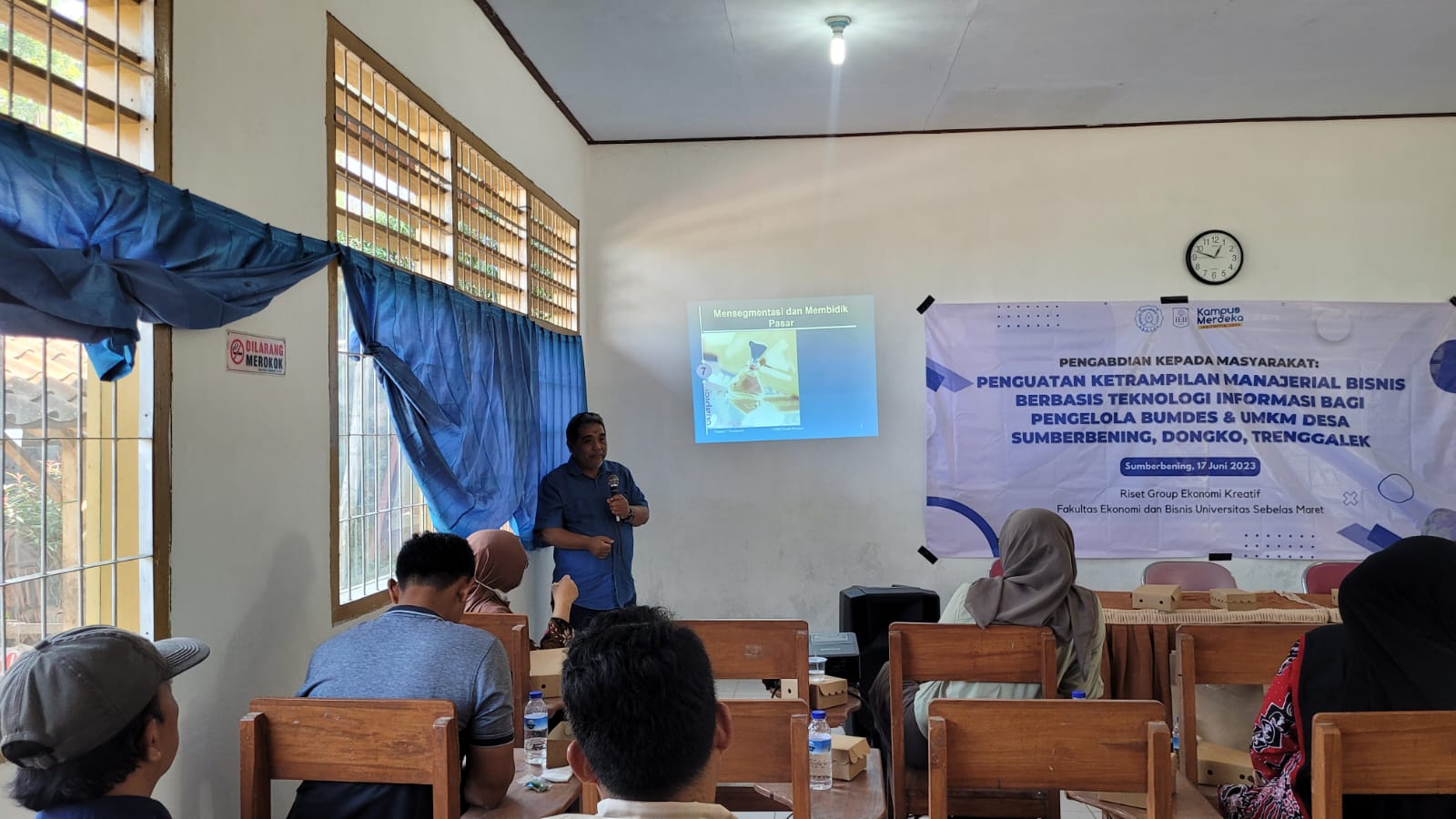
    The Creative Economy Research Group, Faculty of Economics and Business (FEB), Universitas Sebelas Maret (UNS) hosted a community service in Sumberbening Village, Trenggalek, on Saturday, June 17, 2023. Sumberbening Village is one of the villages in Dongko District, Trenggalek Municipality, where the majority of the population are farmers, PE goat cattle farmers, and a small number of MSMEs.

    Sumberbening Village is one of 37 rural tourism sites in Trenggalek Regency. This rural tourism is managed by Pokdarwis “Sengunglung,” in collaboration with the Village Government and also Village Owned-Enterprise (BUMDes) Sumberbening.
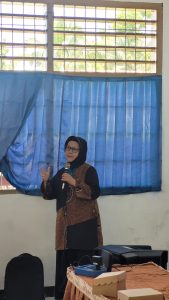
    With the existing potential of the village, be it the potential of natural resources, human resources, cultural or artificial, the Pokdarwis try to explore and develop this potential as an established culture within the community while providing community-based economic value.

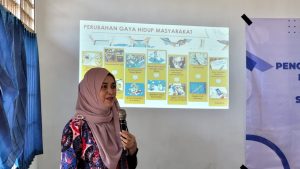
    The Head of Community Service Program, Dr. Mugi Harsono, S.E., M.Sc., along with the team, Prof. Dr. Hunik Sri Runing Sawitri, M.Sc., Prof. Dr. Asri Laksmi Riani, M.S., Dr. Intan Novela Qurrotul Aini, S.E., M.Sc., and Suryandari Istiqomah, SE., M.Sc., provide assistance and training to managers of BUMDES and MSMEs in Sumberbening Village.

    Community service that took place at the Sumberbening Village Hall focused on the topic of Strengthening Information Technology-Based Business Managerial Skills for BUMDES and MSME Managers at Sumberbening Village, Dongko, Trenggalek.

    The Creative Economy Research Group provides several training and assistance materials to the managers of BUMDES and MSMEs in Sumberbening, including work motivation and the basics of starting a business, which includes entrepreneurial mindset and mapping opportunities, determining segments, targets and positioning.

    Participants were also trained on how to implement MSME digital marketing strategies which include getting to know digital media, effective and efficient digital marketing strategies, and getting to know about Digital Marketplace. The last material on MSME digital marketing practices includes CANVA flyer design and simple photography as well as promotions through WhatsApp, Facebook, Instagram, and Shopee.

    Previously, on November 14, 2022, a Partnership Agreement was signed between FEB UNS, Sumberbening Village Government, and involving the STKIP Trenggalek. FEB UNS received a mandate to monitor the management system of several BUMDes’ business units, which will be realized in early 2023.

    From the initial meeting, the program members and the BUMDes organizing committee as well as the Head of Sumberbening Village, have agreed that the problem they face is the lack of motivation of the BUMDes administrative staff because their profession has not guaranteed a decent life, the lack of business unit management knowledge and skills, and the lack of knowledge about using information technology to support daily business work.

    After receiving training from the FEB UNS Research Group, the BUMDes manager feels that the material is helpful in helping them develop the business unit. They also acquire knowledge about product marketing and also knowledge on how to manage the business digitally

  • Angkat Tema Tips dan Trik Lolos Interview dan FGD BUMN, KAFEB Undang Dua Narasumber

    Angkat Tema Tips dan Trik Lolos Interview dan FGD BUMN, KAFEB Undang Dua Narasumber

    Keluarga Alumni Fakultas Ekonomi dan Bisnis (KAFEB) Universitas Sebelas Maret (UNS) menggelar  KATA KITA, Tips dan Trik Lolos Interview dan FGD BUMN, Sabtu 8 Juli 2023.

    Kegiatan yang diikuti 100 peserta itu menghadirkan dua pembicara, Lieke Roosdianti Pangkey,  Executive Director Forum Human Capital Indonesia (FHCI) dan Bunga Herlina Oktaviyanti, VP Wholesale Banking BRI, almuni Angkatan 2001

    Andiona Boedisoejoto atau yang biasa disapa Mas Oni, co Head Cash Product and Regulatory Project Bank UOB Indonesia yang juga sebagai Ketua Harian KAFEB mengatakan acara ini memang ditujukan mahasiswa dan alumni.

    “Di forum ini kita akan berdiskusi mengenai apa itu FHCI, apa yang bisa dibantu dari FHCI yang tentunya memberikan masukan kepada alumni dan mahasiswa. FHCI mempunyai peran penting untuk melakukan rekrutmen dan beberapa aktifitas untuk BUMN se-Indonesia. Tema kita kali ini Tips dan Trik Lolos Interview dan FGD BUMN. Apa dan bagaimana sih proses-prosesnya yang akan kita dengarkan langsung dari FHCI, dari Bu Lieke dan  Mbak Bunga” jelas Mas Oni.

    Dikatakannya, kegiatan seperti ini akan menjadi agenda rutin, ini adalah event pertama dan akan ada kegiatan lanjutan. Ke depan KAFEB akan menjadi key point untuk kemajuan bersama.

    Dr. Dwi Prasetyani, SE, M.Si., Wakil Dekan Akademik, Riset dan Kemahasiswaan FEB UNS  sangat berterima kasih kepada KAFEB yang telah memfasilitasi acara ini dan juga kepada kedua narasumber yang meluangkan waktunya untuk hadir.

    “Seperti yang disampaikan oleh Mas Oni, ini adalah satu dari serangkaian kegiatan yang akan kita lakukan ke depan. Bagaimana supaya mahasiswa kami bisa diterima atau bisa menjadi lulusan yang sesuai dengan apa yang diharapkan. Tugas kami adalah mengantarkan mahasiswa menjadi individu yang akan siap diterima di masyarakat dengan segala kompetensi yang mereka miliki. Hari ini menjadi awalan, pertemuan pertama yang menyenangkan, hangat dan kedepannya kita bisa bekerja sama dengan lebih baik lagi” ungkapnya.

    Disampaikan, FEB dan KAFEB akan berbuat hal-hal lebih berdampak pada mahasiswa, akan melakukan beberapa kegiatan seperti rekrutmen magang dan sertifikasi yang akan kita lakukan dalam waktu dekat.

    Lebih lanjut dikatakan, profiling lulusan terbagi atas tiga, pertama adalah bekerja, kedua berwirausaha dan yang ketiga melanjutkan ke jenjang studi yang lebih tinggi.

    Yang menjadi dosen dan peneliti hanya 10%-nya, 90%-nya terbagi di  profiling lulusan yang bekerja dan berwirausaha. Menurut survei, menjadi pegawai BUMN ternyata memiliki jumlah yang cukup banyak.

    Dikatakan, peminat mahasiswa FEB untuk bekerja terutama di BUMN itu ternyata besar artinya kegiatan ini sudah sangat tepat sekali dan pas sekali dengan apa yang menjadi tujuan kampus.

    FHCI,  Tips dan Trik Lolos BUMN

    Dalam paparannya, Lieke  menjelaskan detil tentang FHCI. FHCI adalah forum berkumpulnya para pemerhati human capital yang berada di BUMN khususnya para Direktur Human Capital atau Sumber Daya Manusia (SDM). FHCI semacam hub untuk memajukan atau meningkatkan SDM di BUMN, baik yang akan menjadi insan BUMN maupun yang sudah berada di BUMN.

    Program-program FHCI antara lain mengenai magang, membantu mensuplai atau merekrut karyawan-karyawan dari BUMN, yang biasa dikenal dengan sebutan Rekrutmen Bersama BUMN (RBB).

    Di FHCI, BUMN atau entitas BUMN itu memberikan lowongan kerja sehingga para mahasiswa atau lulusan pencari kerja bisa melamar pada program FHCI yaitu Rekrutmen Bersama BUMN (RBB). Saat ini yang sedang berlangsung adalah RBB 2023 dan pada tahap untuk memasuki online tes kedua atau untuk bahasa Inggris.

    Kepada 100 peserta daring, Lieke menyampaikan tips agar lolos di BUMN diantaranya  adalah pelamar harus benar-benar menguasai profil dari perusahaan yang dilamarnya.

    Meskipun pelamar sudah mencantumkan Curriculum Vitae (CV) nya, namun dalam proses wawancara, pelamar harus siap secara verbal menjelaskan yang tercantum di CV.

    Dalam proses wawancara, pelamar bisa menjelaskan kelebihan-kelebihan yang dimiliki tanpa khawatir dianggap sombong.

    Hal-hal yang penting lain dalam wawancara adalah pelamar tidak perlu menceritakan hal-hal yang negatif tentang orang lain, tidak perlu menceritakan banyak kelemahan yang dimiliki yang justru akan menurunkan nilai. Kelemahan yang bisa disampaikan adalah hal-hal yang tidak bisa dipenuhi tapi tidak terkait dengan jabatan atau posisi di perusahaan yang akan dilamar.

    Senada dengan Lieke, Bunga menggarisbawahi tentang bagaimana seorang pelamar menceritakan kelebihan dan kekurangannya.

    Pelamar tidak perlu khawatir jika dianggap sombong kalau memang itu adalah achievement-nya. Dan jika ingin menyampaikan kekurangannya dengan cara menyampaikan juga solusi dari kekurangan itu.

    “Justru kelebihan-kelebihan itu yang pengen digali lebih jauh oleh penguji, bagaimana cara bekerja Anda dalam tim, bagaimana mengatasi konflik, jika bekerja dengan tim. Bagaimana Anda sebagai anggota tim berkontribusi, seperti apa kalau sebagai tim leader. Tidak masalah jika ingin cerita kekurangannya tapi ceritakan bagaimana Anda mengatasi kekurangan itu. Jadi saat ini mungkin Anda orangnya pemalu, tidak berani banyak ngomong, tapi katakan juga usaha yang  Anda lakukan misalnya ikut kelas training public speaking, apalagi sekarang juga banyak webinar yang gratis, itu akan bisa jadi poin” jelasnya.

    Disisi lain, dalam hal magang,  Lieke menyarankan kepada peserta untuk bisa mulai mengikuti magang terlebih dahulu di BUMN.

    “Saat magang dan Anda bisa bekerja dengan baik, saya tidak melihat lulusan mana dan sebagainya, kalau bisa bekerja, saya akan rekrut, enggak lihat lagi nih lulusannya dari mana” ungkapnya menyemangati.

    KAFEB sangat terbuka, Lieke menyarankan mahasiswa agar mengambil kesempatan baik ini  untuk menjalin hubungan dengan KAFEB, selalu mengikuti pelatihan-pelatihan atau kegiatan-kegiatan yang digelar KAFEB.