Celebrating the 49th Anniversary of Universitas Sebelas Maret (UNS) and National Education Day, Universitas Sebelas Maret hosted the 2025 Academic Excellence Awards Night on Friday, May 2, 2025. The event took place at the G.P.H. Haryo Mataram UNS Auditorium and was broadcasted on the UNS YouTube channel. This event served as a form of appreciation for lecturers, academic support staff, students, and all distinguished members of the UNS community who have brought pride to the university.
 During the awards ceremony, the Faculty of Economics and Business (FEB) UNS faculty members proudly celebrated a number of achievements. Among them were Prof. Irwan Trinugroho, S.E., M.Sc., Ph.D., awarded for having the highest Scopus h-index in the field of social sciences and humanities; Prof. Doddy Setiawan, S.E., M.Si., Ph.D., Ak., recognized for having the highest Scopus citation count in the same field; and Putra Pamungkas, S.E., M.Rech., Ph.D., honored as the third-best researcher in international publications.
Additionally, FEB UNS earned recognition for its ranking in the QS World University Rankings by Subject, placing in the 301–350 band for both Economics and Econometrics and Accounting and Finance. Furthermore, the Jurnal Akuntansi dan Bisnis (JAB) is acknowledged as the national journal at UNS with the highest impact factor.
 Awards were also presented to the FEB UNS lecturers who recently graduated from their Doctoral study: Arum Setyowati, S.E., M.Sc., Ph.D.; Yogi Pasca Pratama, S.E., M.E., Ph.D.; Muh Yusuf Indra Purnama, S.E., M.Rech., Ph.D.; Danur Condro Guritno, S.E., M.E., Ph.D.; and Dr. Arief Rahman Hakim, S.E., M.Ec.Dev., Ph.D.
Dean of FEB UNS, Prof. Bhimo Rizky Samudro, S.E., M.Si., Ph.D., expressed gratitude for the honors, both on an individual and institutional level. He emphasized that these awards should be seen not only as accolades but also as responsibilities that must be reflected in daily practices, particularly in providing services to students—by both academic support staff and lecturers in their Tridharma activities (teaching, research, and community service).
 “We are thankful for the recognition FEB has received—placed in the QS subject rankings for Economics and Econometrics and Accounting and Finance subject. However, what matters more is the responsibility that comes with it, especially our duty to serve the public. This presents a challenge—how we translate our daily responsibilities into quality service for students. For lecturers, this includes the impact of their teaching and research. We must also reflect on our commitment to the Integrity Zone: are we truly implementing the existing Standard Operating Procedures (SOPs), particularly in areas such as financial accountability? These are the more pressing concerns,” he explained.
 During the session, artisans receive direct guidance from UNS experts on the use and maintenance of the tools involved. “By using the drying machine, our production—especially at the drying stage—becomes faster, more consistent, and no longer dependent on sunlight,” says Samuji, one of the participating batik artisans.


 In his remarks, UNS Secretary, Prof. Dr. Agus Riwanto, S.H., S.Ag., M.Ag., M.H., stated that with the Signing of the Integrity Pact and the Implementation of Risk Management, it is hoped that by this year UNS will already have formal Risk Management Procedures in place—both at the faculty level and across central administrative units, bodies, and university institutions. The aim is to eventually establish university-wide Risk Management Procedures.
 He further explained that Risk Management is closely linked with the Integrity Zone. The ultimate goals of both Risk Management and the Integrity Zone are to ensure high-quality public services within the university, with its constituents being the students and all associated stakeholders.
 “That is why the Minister of Education is currently promoting the idea that Good Corporate Governance should also be reflected as Good University Governance. We cannot claim strong performance indicators while having poor governance structures. In fact, the function of Risk Management and the Integrity Zone is to organize and improve governance—not just for accreditation or rankings. For example, if bureaucracy remains complex, signatures take too long, or graduation processing is lengthy—those are the kinds of inefficiencies we aim to eliminate. The goal is to ensure excellent performance indicators, rankings, and governance,” he explained.
 He added that UNS will also initiate certification for all administrative personnel within the university. The hope is that anyone holding a leadership position at UNS will be certified in Risk Management, ensuring that their leadership qualifications are not in question—because they understand whom they serve and how to make strategic decisions.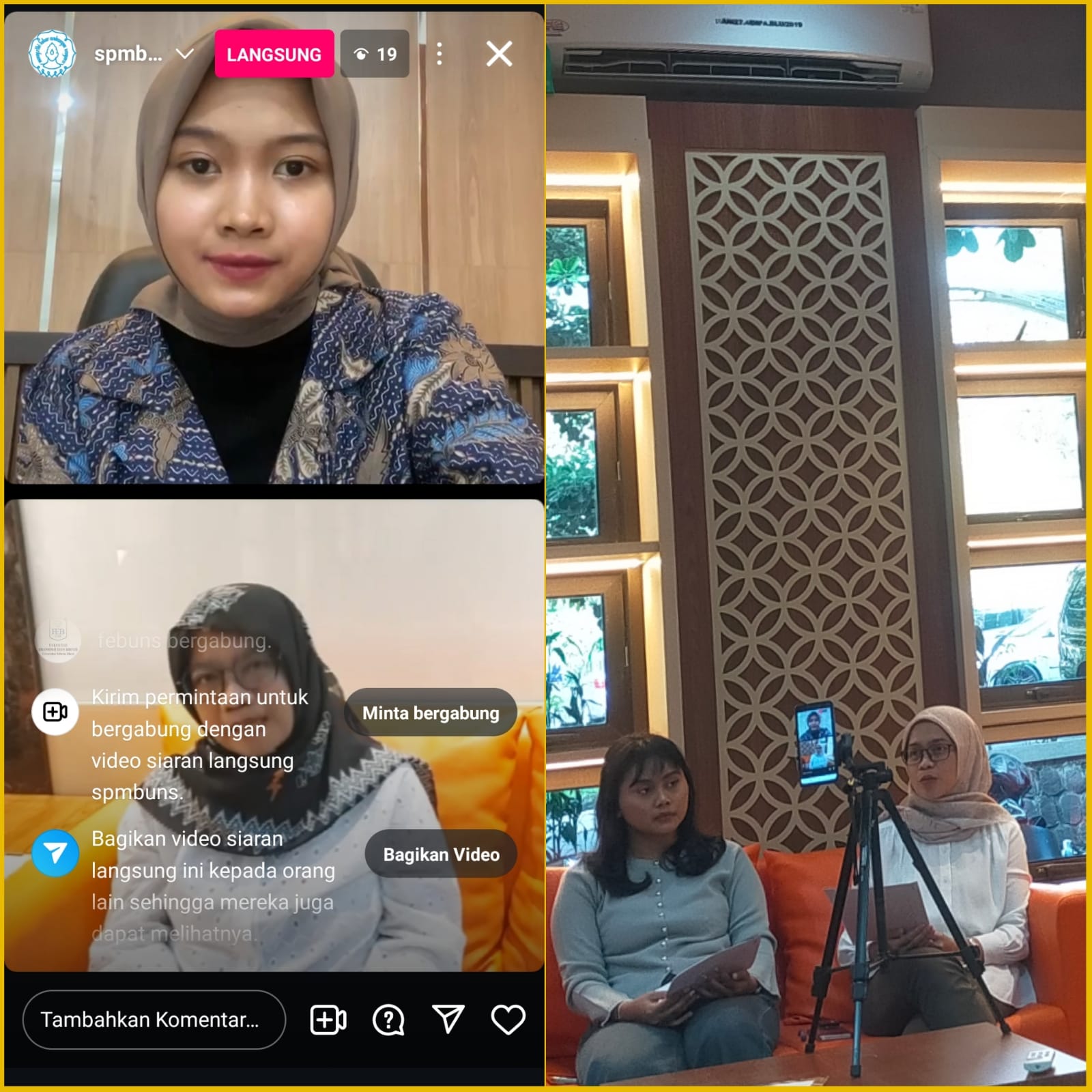
 The session featured several speakers including the Vice Dean for Academic and Research Affairs, Prof. Tri Mulyaningsih, Ph.D.; Head of the Management Study Program, Dr. Sinto Sunaryo; Head of the Development Economics Study Program, Muhammad Yusuf Indra Purnama, Ph.D.; and a faculty representative from the Accounting Study Program, Nur Chayati, S.E., M.Sc. In addition, three international class students—Muhammad Haidar Ashif, Muhammad Hisyam Asadul Haq, and Nurul Yantika—shared their perspectives and experiences.
 The discussion also highlighted the distinctions between regular and international class programs, particularly in terms of student mindset and skills. International class students tend to develop stronger soft skills such as adaptability, confidence, independence, and cross-cultural communication, shaped through their learning experiences abroad.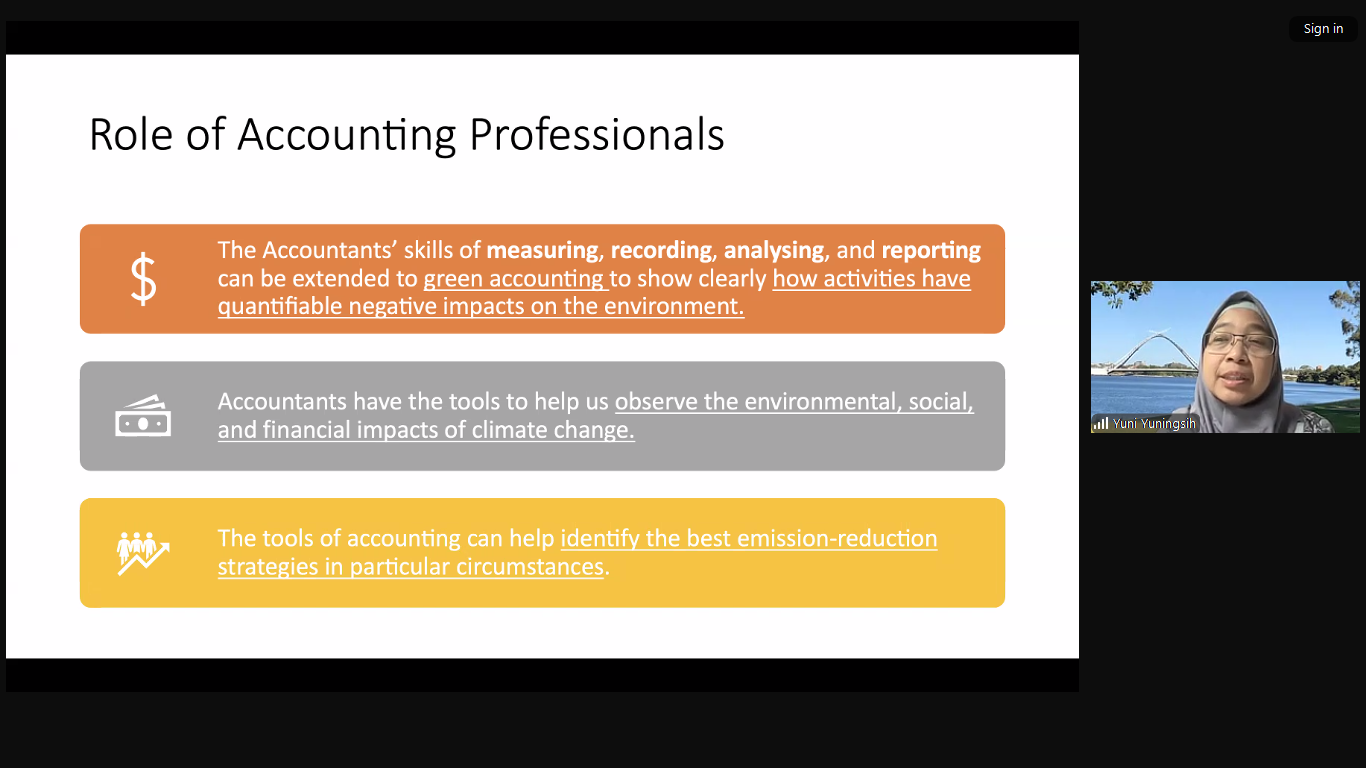
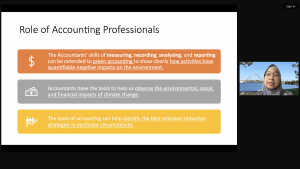
 She further encouraged students to consider the contribution of their research, particularly in supporting the role of professional accountants and advancing the accounting discipline. She stressed that impactful research—especially in areas such as sustainability—often requires multidisciplinary collaboration to achieve meaningful academic, policy, and practical contributions.
 The webinar discussed effective strategies for preparing high-quality scientific articles and understanding publication standards in reputable journals, covering writing structure, content development, and navigating the review process.
 “We hope Dr. Widya will cover not only the substance of impactful research but also how to present it in an engaging manner. Good packaging alone is not enough without strong content, and vice versa—substantial research will struggle to be published if not presented attractively,” she noted.
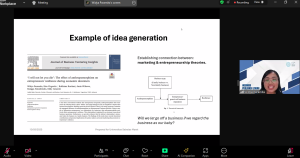 She shared that the Journal of Indonesian Economy and Business has a high rejection rate of around 90%, primarily due to insufficiently defined topics despite their relevance. Papers accepted in reputable journals, she added, generally meet several criteria: theoretical contribution, methodological rigor, managerial and practical relevance, strong empirical support, clarity and coherence, ethical standards and transparency, alignment with journal scope, engagement with recent literature, and a strong review and revision process.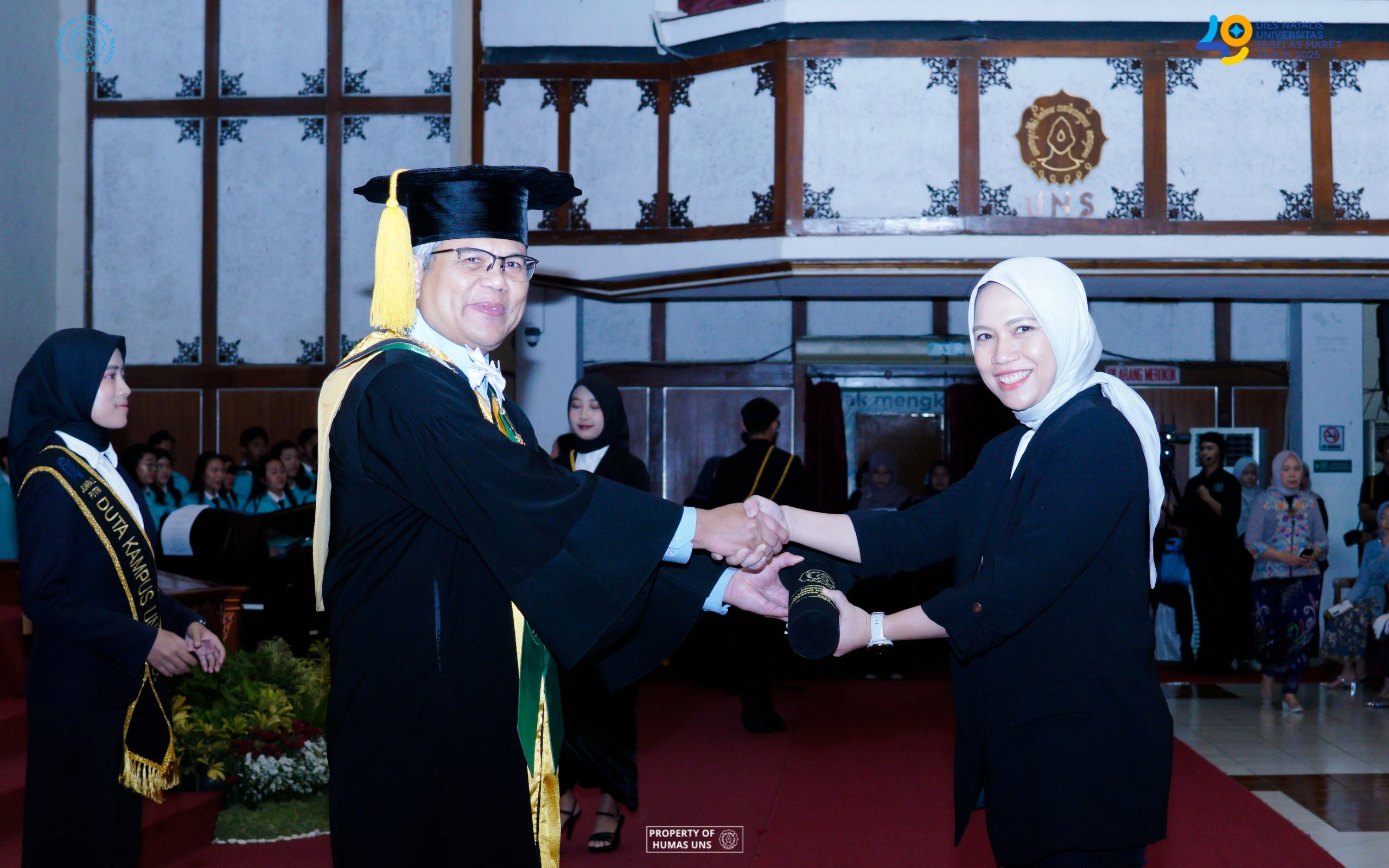
 Bunga believes that success should not be measured solely by outcomes, but also by the process, collaboration, and impact generated. In every role she assumes, she aims to deliver relevant solutions, empower her team, and create value for both the organisation and the wider community. “For me, a career is about lifelong learning, collaboration, and making meaningful contributions—not only to the organisation but also to the people around me, especially to the alma mater that helped shape who I am today,” she added.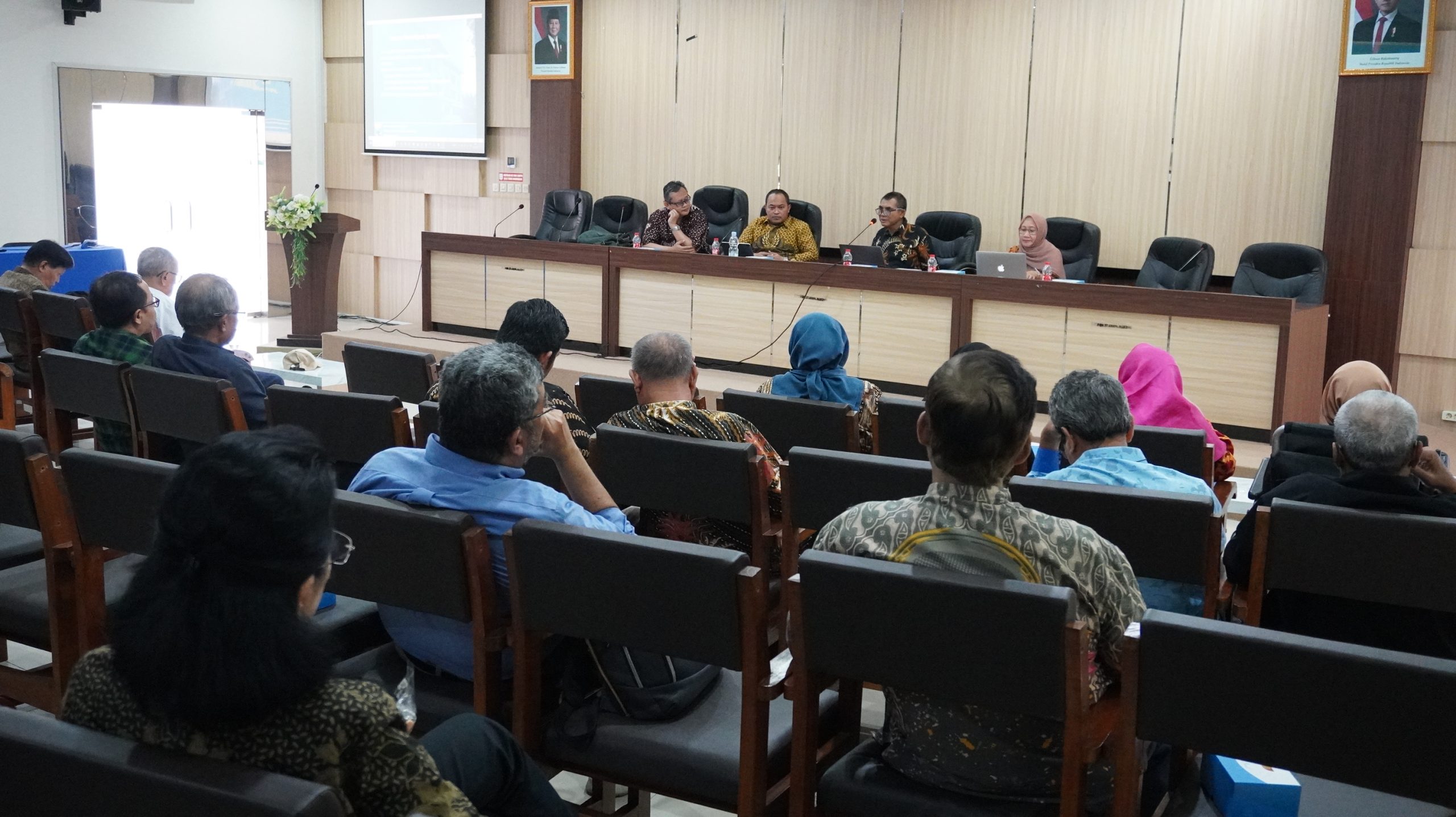
 Prof. Agung Nur Probohudono, S.E., M.Si., Ph.D., Ak., CA., CFrA., Head of PDIE, stated in his opening remarks that the event was organised in response to Rector’s Regulation No. 22 of 2024 on the Management and Implementation of Master’s and Doctoral Programs.
 Prof. Sarwanto elaborated on the implementation of an Outcome-Based Education (OBE) curriculum model at UNS. OBE is an educational approach that emphasises the learning outcomes students must achieve upon completing a course. The approach ensures graduates are equipped with skills relevant to current industry and societal needs.
 He also stated that each curriculum document must include a matrix linking each course with the CPLs, enabling proper distribution and ensuring that all CPLs are comprehensively addressed across courses.
 Prof. Sarwanto also introduced new features in the Academic Information System (Siakad), where once a lecturer finalises their RPS, they simply need to click submit. The system will then forward the RPS to all instructors involved in the course, including the course coordinator. If adjustments are needed, the RPS will be returned to the drafter until it is approved by the Head of Study Program—making the process more streamlined.
 On the first day of the visit, the assessors were welcomed by representatives from the Institute of Educational Quality Development and Assurance (LPPMP) UNS, FEB UNS Dean Office, and the Head of the MAKSI Study Program. The team then proceeded to FEB for the field assessment.
 Prof. Aulia stated that the purpose of the assessment was to confirm the contents of the Self-Evaluation Document (DED) and the Study Program Performance Report (DKPS) that had been submitted by the accreditation team to LAMEMBA.
 “We have received a substantial amount of information from the DED, DKPS, and other sources such as the website. This visit is primarily to confirm what has been presented. Essentially, field assessments are a routine part of our quality assurance process—specifically, external quality assurance. From what we observed in the DED, internal quality assurance is already functioning well,” he explained.
 The first day of the assessment included confirmation sessions with the Management Unit of the Study Program (UPPS), Internal Quality Assurance team, a review of supporting documents, and meetings with faculty members, alumni, external stakeholders, and students.
 On the second day, the assessors visited several facilities at UNS and FEB, including the University Library, UNS Fintech Center, UNS International Office, P4M Room, FEB International Office, Fiscal Corner, Professors’ Room, various laboratory rooms, and MAKSI classrooms.
 The visit concluded with the assessors’ independent work session, followed by the presentation of their recommendations and the signing of the official visitation report.
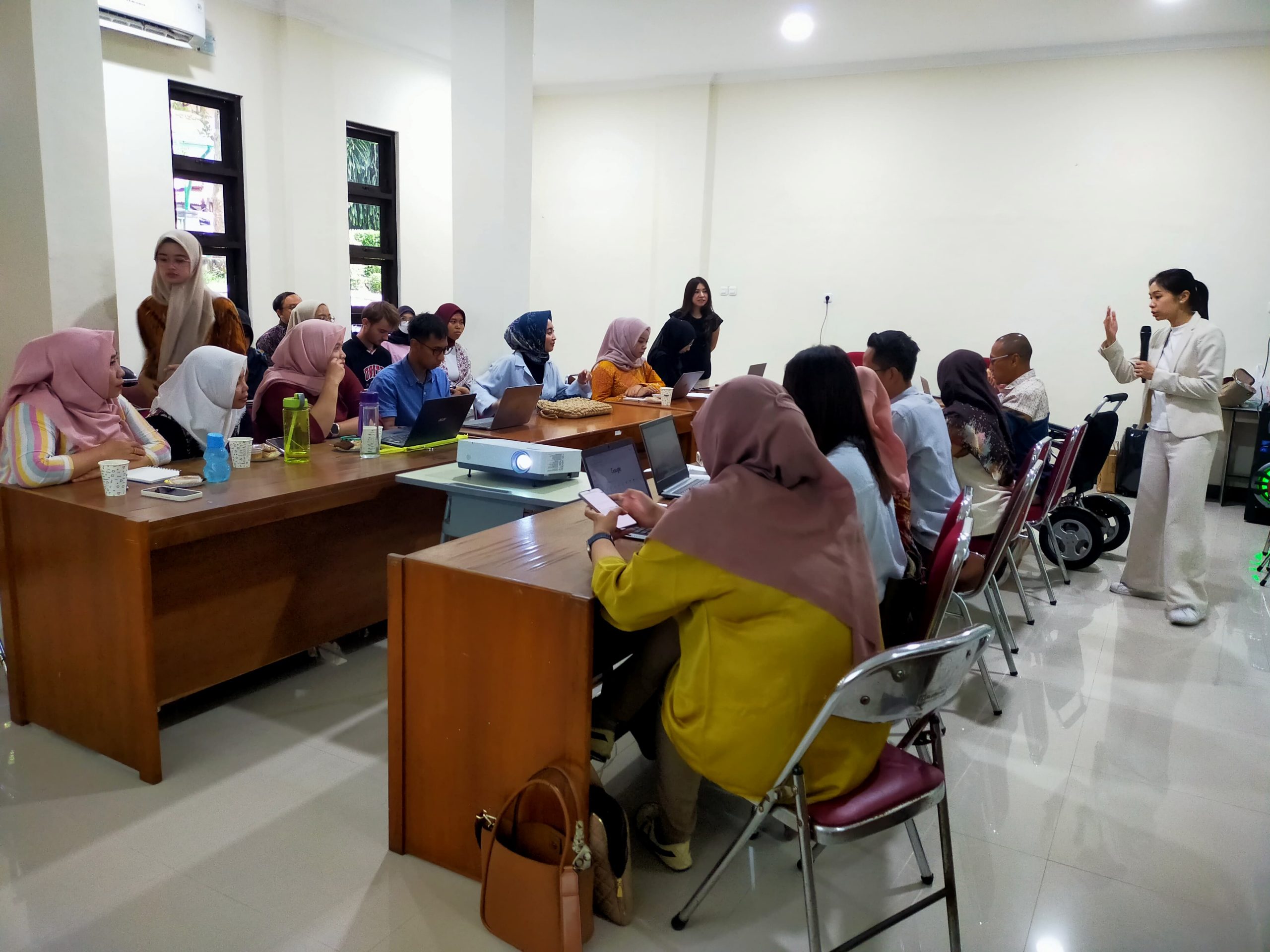

 Refinitiv LSEG focuses on providing in-depth information, analytics, and tools used by investors, banks, financial institutions, and global market professionals. Through this training, participants were introduced to the use of Refinitiv Workspace, a platform designed to access a wide range of financial and non-financial data.