
Faculty of Economics and Business (FEB), Universitas Sebelas Maret (UNS), received a benchmarking visit from the Faculty of Economics, Universitas Tidar (UNTIDAR), Magelang, on Friday, 6 December 2024. The delegation was welcomed in Meeting Room 1, Soeharno TS Building, FEB UNS.
In his opening remarks, Sutaryo, S.E., M.Si., PhD., Ak., CA., Vice Dean for Non-Academic Affairs at FEB UNS, extended his gratitude and a warm welcome to the visitors from UNTIDAR.
“We appreciate your visit to FEB UNS. We are pleased to welcome you and to share any insights or experiences we have. Let this be a discussion — a space to give and receive. If there is something valuable from FE UNTIDAR, we are more than open to adopting it. This visit is not about who is ahead, but rather a partnership built on equality,” he said.
Sutaryo then outlined the general profile of the academic support staff at FEB UNS. The faculty currently employs 46 staff members, both civil servants and non-civil servants, as well as 10 outsourced personnel, totaling 56 staff.
Organizationally, FEB UNS is supported by a Head of General Administration and two sub-divisions: Academic Affairs and Non-Academic Affairs. The academic sub-division oversees teaching activities, student permits, and related affairs. The non-academic sub-division covers human resources, infrastructure, partnerships, finance, and information services.
He also noted that the current FEB UNS leadership team, newly inaugurated three months prior, has been tasked with advancing international accreditation efforts — specifically the AACSB. In this process, he emphasized, the role of support staff is no less important than that of faculty members and students. “Going forward, we plan to enhance staff capacity across all areas — from academics and finance to infrastructure, personnel, collaboration, and IT services,” he added, while also introducing several staff members who were present.
Representing the visiting delegation, Ari Nurul Fatimah, S.E., M.Acc., Vice Dean for Non-Academic Affairs at FE UNTIDAR, expressed her appreciation for the warm reception extended by FEB UNS. “This visit is an opportunity to exchange ideas, particularly concerning support staff services, competencies, and administrative systems. We are eager to learn more about the skills and capabilities developed by the staff at FEB UNS. Ultimately, we want to ensure that the services we provide meet the expectations of our primary stakeholders — our students,” she explained.
 The discussion session was led by Arif Farida Tri Rejeki, S.Pd., M.Si., Head of General Administration at FEB UNS, and proceeded in a constructive and collegial atmosphere. Throughout the session, support staff members from both faculties engaged in open dialogue, sharing best practices and insights from their respective roles and responsibilities.
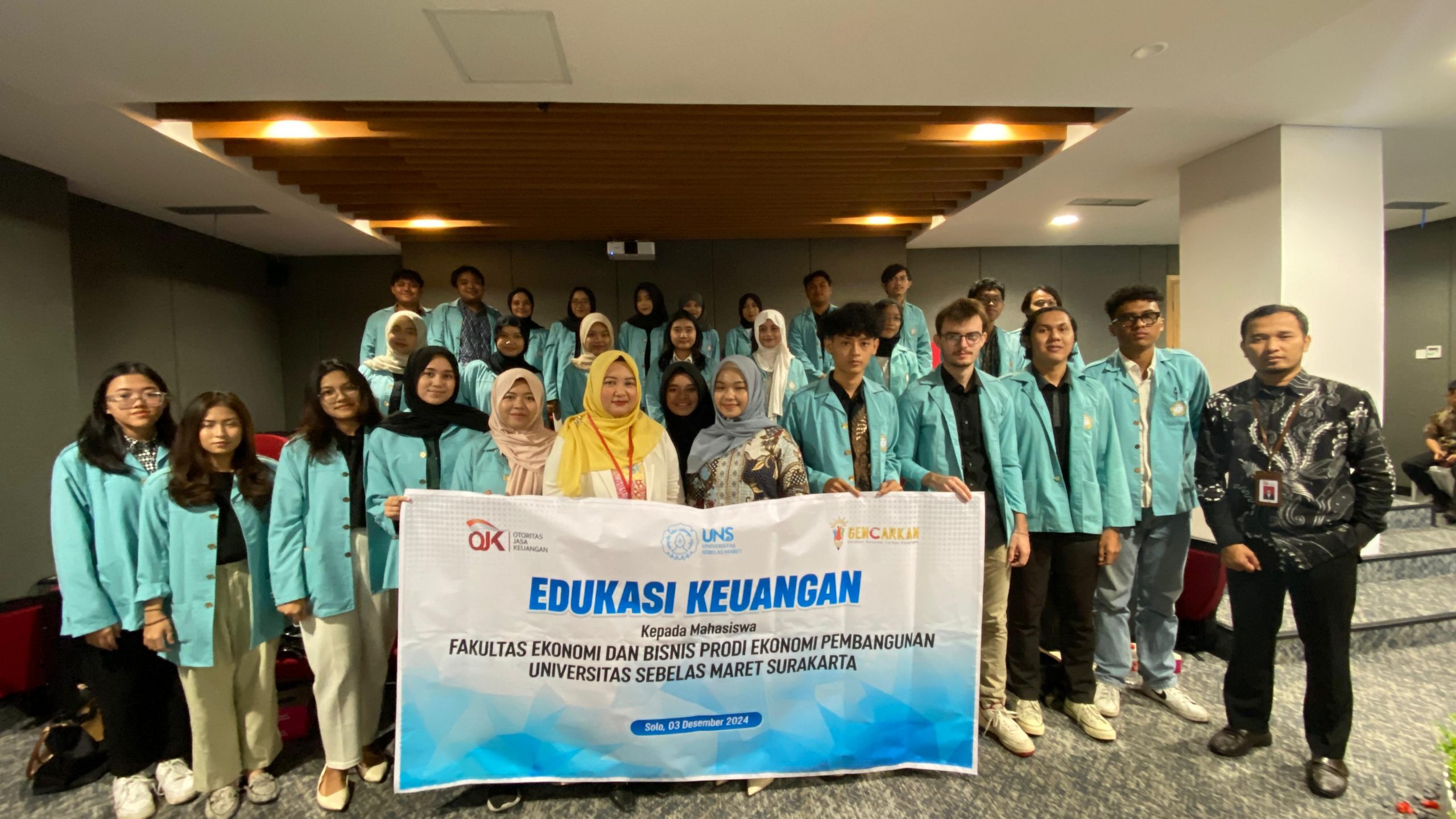
 Ayya Agmulia Asmarani Islam, S.E., M.E., the course instructor for “Banking and Financial Institutions,” expressed her appreciation on behalf of the Head of the Development Economics Program, Muhammad Yusuf Indra Purnama, S.E., M.Rech., Ph.D. She extended sincere thanks to OJK Solo for warmly welcoming the students of FEB.
 “Today, we are visiting the OJK Solo office to gain insights and education for our students. I encourage you all to actively participate during this financial literacy session. If you have any questions for the experts from OJK—such as how to avoid illegal investments or what it takes to build a career at OJK—this is the right time to ask. I hope all of you gain valuable insights from today’s experience,” she emphasized.
 Susan Diah Kusumaningrun, Head of the Subdivision of Banking Supervision at OJK, welcomed the students and expressed hope that they would gain a deeper understanding of OJK and financial literacy in general. She cited data from the 2024 National Survey on Financial Literacy and Inclusion (SNLIK), which shows that Indonesia’s financial literacy index has reached 65.43%, nearly on par with its financial inclusion index of 75.02%. For comparison, in 2022 the financial literacy rate was at 49.68% while inclusion stood at 85.10%.
 This is an achievement to be proud of. The educational efforts are evidently having an impact on the public. She expressed hope that the students, having received this education, would become extensions of OJK—spreading financial literacy in their communities.
 “One of our hopes from this visit is that you become more aware when encountering investment offers, whether online or offline. You need to critically assess whether the offer make sense. Nothing in life is instant—it takes effort. Learn about the product, check who regulates it, look at the results, and verify whether it’s legitimate. Search online to see if it’s ever been associated with fraud,” she advised.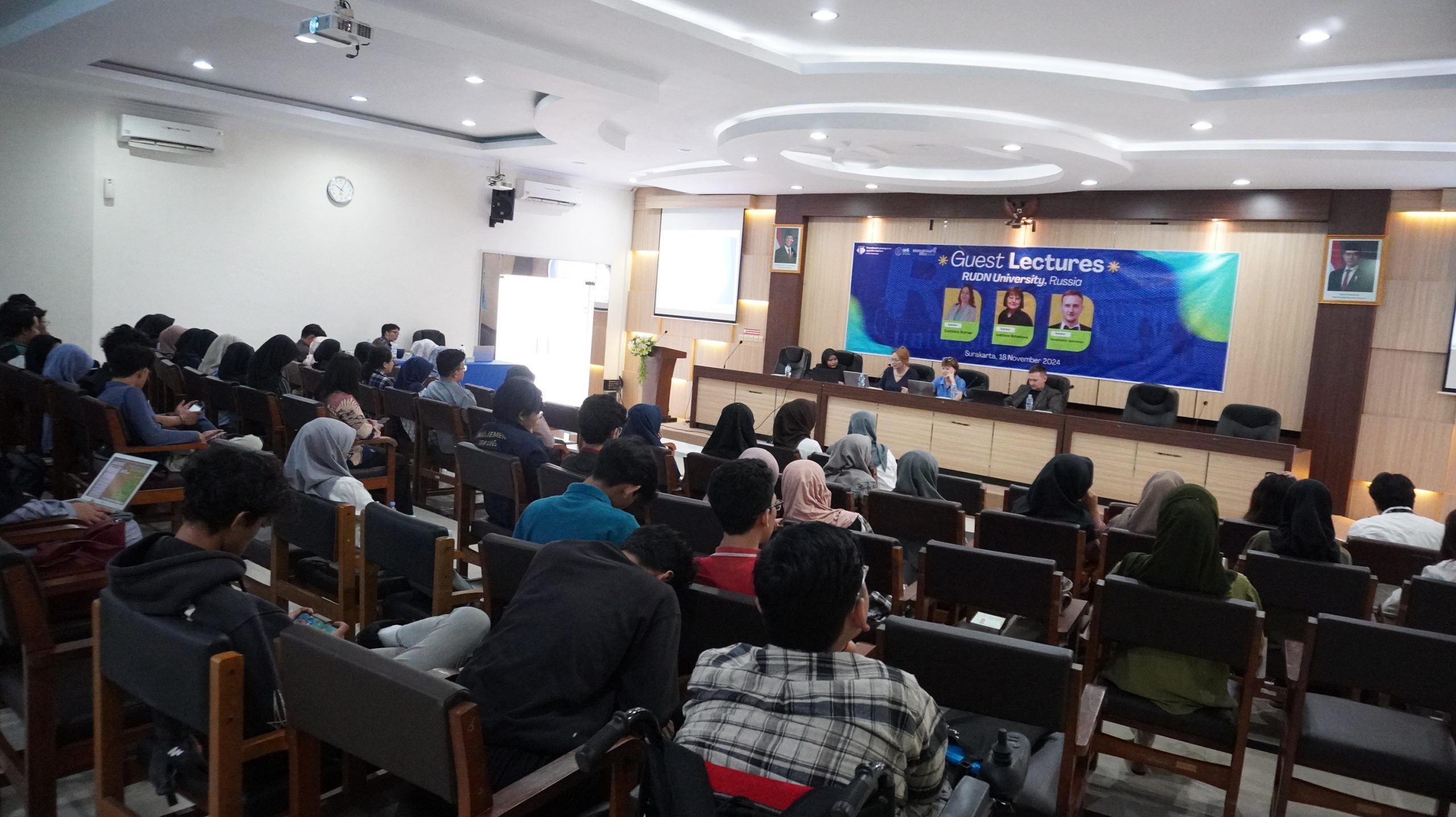
 The three invited speakers were Prof. Svetlana Ratner from RUDN University; Assoc. Prof. Svetlana Balashova, Head of the Department of Economic and Mathematical Modelling at RUDN University and Executive Director of the International Center for Emerging Markets Research (ICEMR); and Assoc. Prof. Konstantin Gomonov, also representing RUDN University.
 Following her, Assoc. Prof. Svetlana Balashova presented “Inequality and Digitalization.” Her session focused on three key topics: methods of measuring inequality, the definition of opportunity inequality, and the impact of digital transformation on inequality. She emphasized that access to information and communication technology, along with the development of digital skills within communities, has become a growing concern in many modern societies. However, reducing digital inequality requires more than just expanding ICT infrastructure; improving quality of life also depends on enhancing digital literacy and technical proficiency.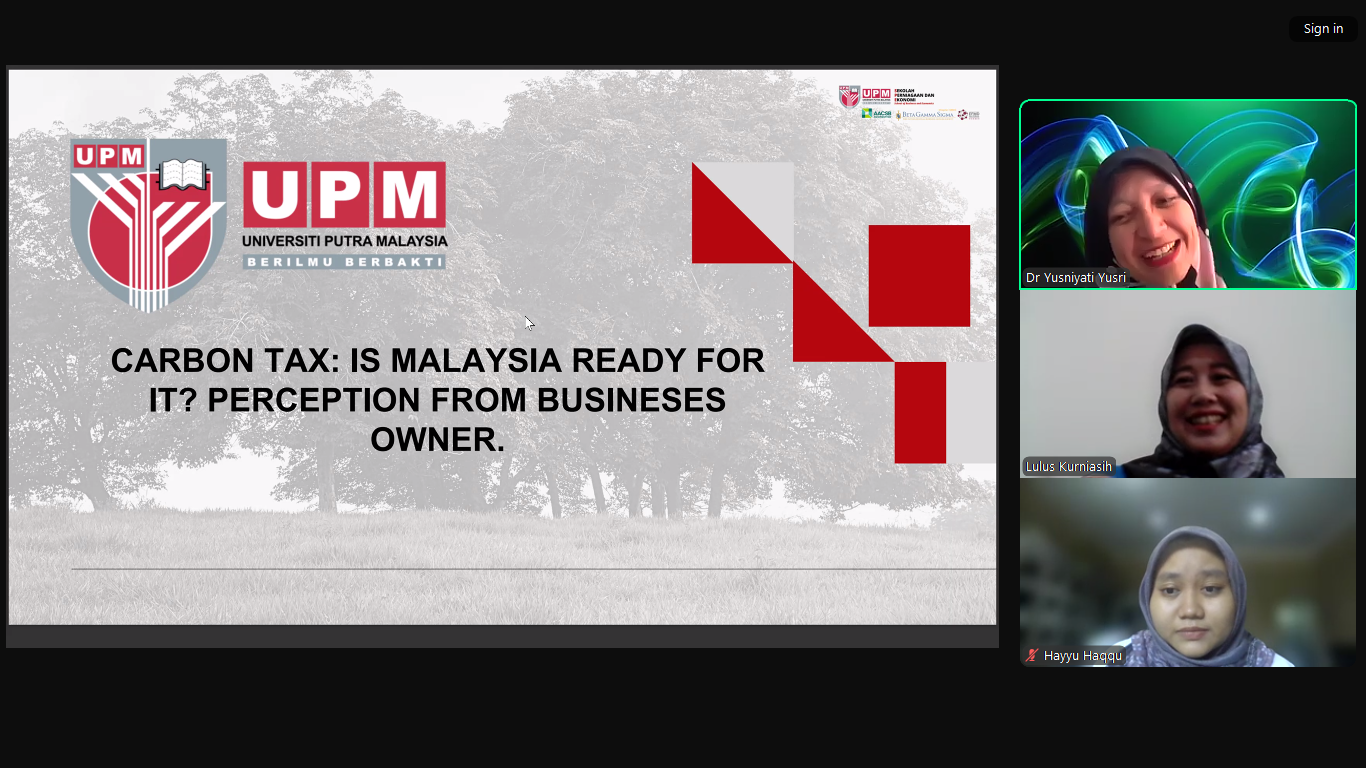
 This topic was discussed by Dr. Yusniyati Yusri during the Journal of Accounting, Governance, and Organization Working Paper Forum, held online on Friday, December 6, 2024. On this occasion, Dr. Yusniyati presented research titled “Carbon Tax: Is Malaysia Ready for It? Perception from Business Owner”, which explored the readiness of business owners in Malaysia ahead of the implementation of a carbon tax in the country.
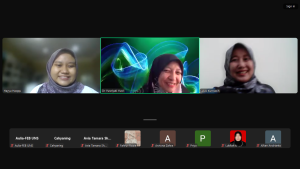 However, she added that a deeper understanding of the carbon tax is essential, especially for business actors who will become the primary subjects of the policy. The key question then becomes: is a country truly ready to implement a carbon tax? This question formed the basis for Dr. Yusniyati’s quantitative descriptive research, conducted as a faculty member at Universiti Putra Malaysia.
 Furthermore, the study found that 55% of respondents were already aware of the carbon tax, but only around 44% had a clear understanding of what it involves. In terms of carbon tax implementation in developing countries, 50% of respondents acknowledged its existence, but only 25% stated that they understood its effectiveness, while the rest either lacked confidence or had no knowledge about how effective the policy might be.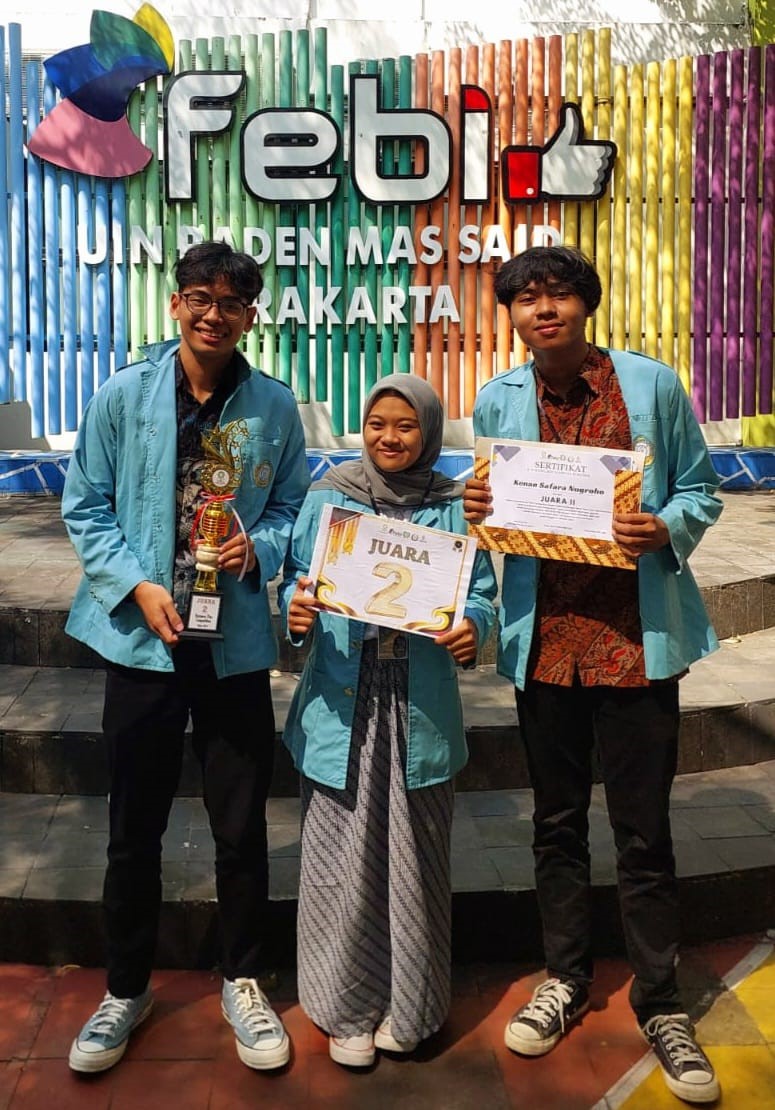
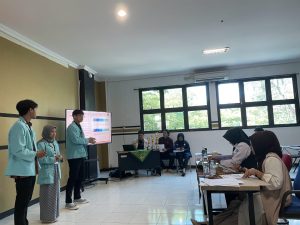 The competition process involved several stages, beginning with the submission and selection of business plan proposals that were required to present innovative and relevant ideas. Teams that passed the proposal stage advanced to the final round, which consisted of pitching sessions before a panel of judges. Throughout these stages, the FEB UNS team, led by Erlangga, gained substantial experience in developing and presenting a well-structured business plan.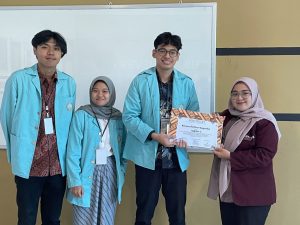
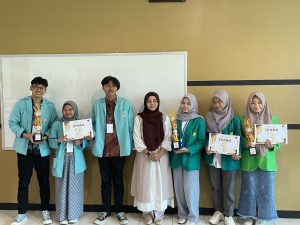 He also emphasized the intensity of the preparation process, which involved research, proposal development, and pitching before the judges. Despite the demanding process, the experience was considered highly rewarding due to the learning outcomes, networking opportunities, and constructive feedback received.
 Prof. Tri Mulyaningsih, S.E., M.Si., Ph.D., Vice Dean for Academic and Research Affairs, expressed gratitude to the RUDN delegation for their visit, considering the distance and travel time from Russia to Indonesia. She introduced the academic programs offered at FEB UNS, which include four undergraduate (S1) study programs. She then focused on potential collaboration in academic and research activities, particularly joint programs such as online teaching, academic partnerships, and double-degree opportunities.
 Meanwhile, Konstantin Gomonov, representing the RUDN delegation, provided an overview of RUDN University during the meeting. “At RUDN, we have more than 2,000 alumni and a wide range of faculties, including the Faculty of Economics. Additionally, we offer various academic programs such as Higher Schools, academies, and institutes. We also provide opportunities for FEB UNS students to apply for international student research grants,” he explained.
 “In terms of rankings, our university is currently ranked 316 in the QS University World Ranking and holds the third position in Russia. We have strong rankings in Mathematics and Econometrics, making our university open to international collaboration,” he concluded.
 She further introduced several programs under the Department of Economic and Mathematical Modeling, including an undergraduate program specializing in ‘Project Analysis’ and ‘Modeling in Economics,’ as well as two master’s programs.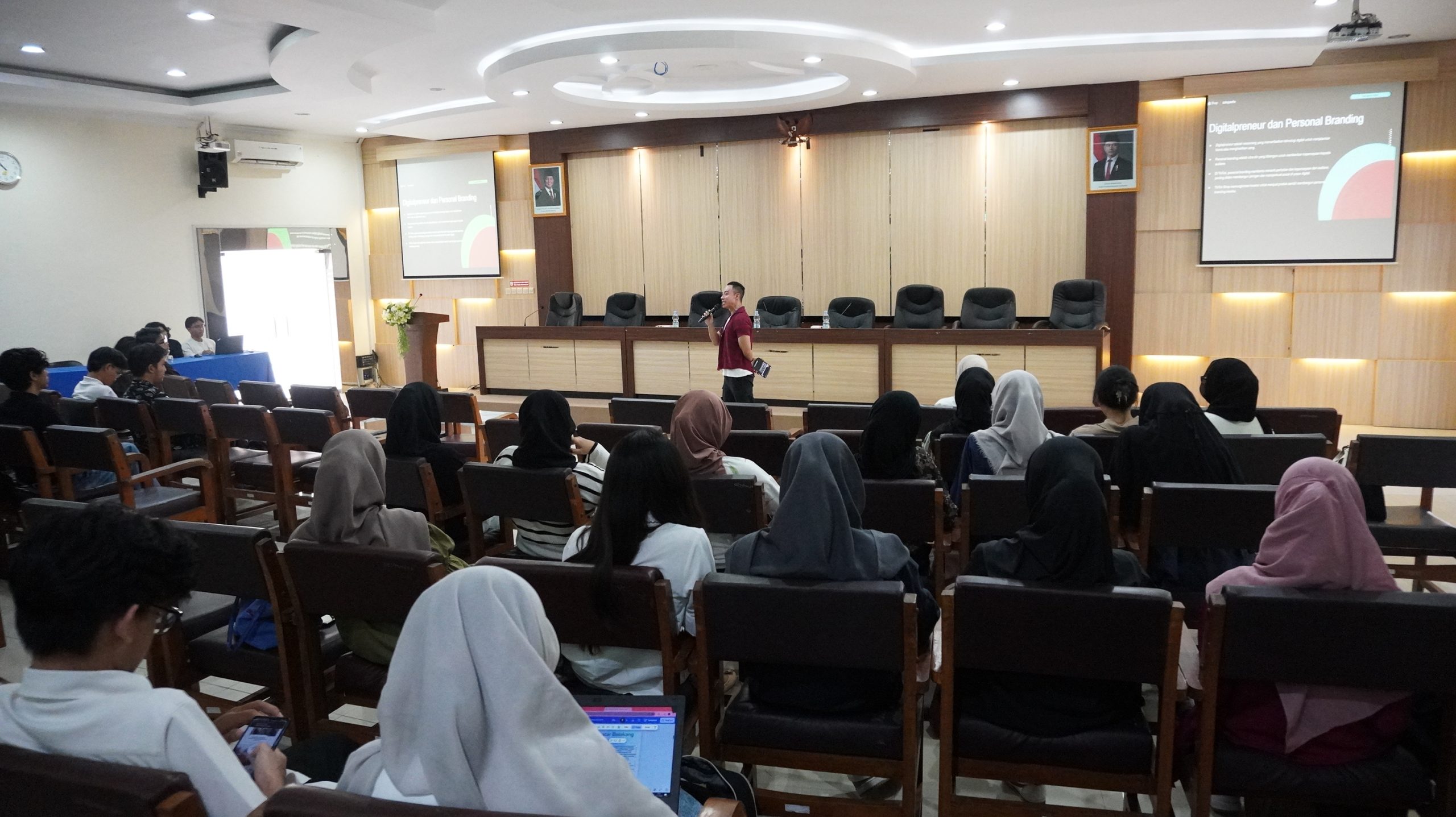


 Further, the two speakers explained that TikTok is a powerful platform because of its three essential elements: community, entertainment, and commerce. Community serves as the strong foundation of TikTok. The platform encourages interaction through comments, likes, and sharing videos, creating an active social ecosystem where users can collaborate, exchange ideas, and connect globally.
 While Entertainment remains the most visible element on TikTok, with the platform centered around providing engaging and easily consumable short-form video content, commerce is becoming an increasingly significant component. TikTok now functions not only as an entertainment and social platform but also as a marketing and sales channel for brands and content creators. During the session, the speakers invited participants to share their experiences in content creation on TikTok. They also shared practical strategies on how to use the platform for business development.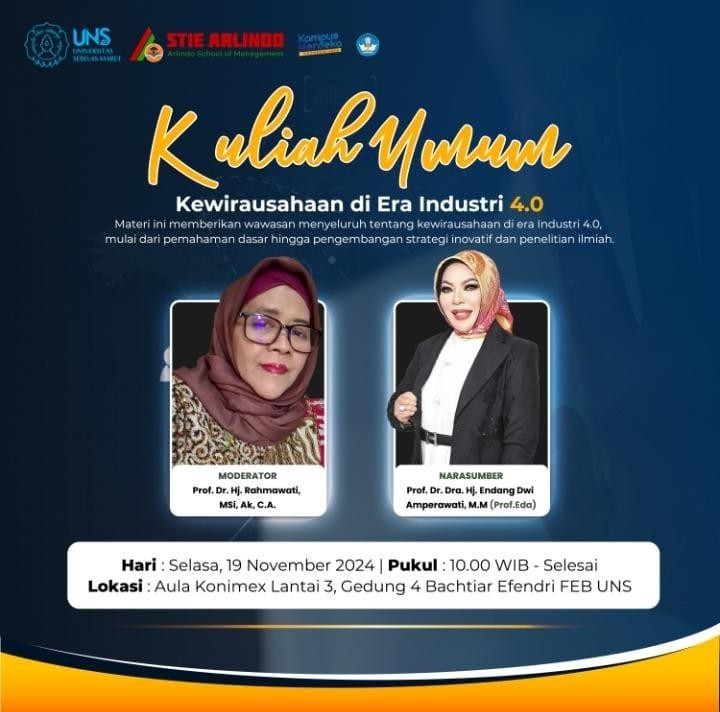
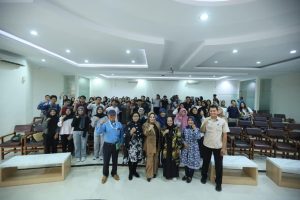

 The program draws from the participants’ internship experiences in BEM FEB UNS. APM consists of several key components: Grand Opening, Major Class Sessions, a Project Phase, and a Company Visit. One of the latest APM activities was the Company Visit, held on November 19, 2024, at the Financial Services Authority (OJK) Solo Office.
 The visit was attended by all APM internship participants, the organizing committee, BEM FEB UNS 2024 President and Vice President Surya Azhar and Faiq Aqil Murtadlo, as well as Tastaftiyan Risfandy, S.E., M.Sc., Ph.D., Vice Dean for Student Affairs and Alumni of FEB UNS, who also accompanied the group.
 It also inspires them to become adaptive and visionary young leaders who can advance financial inclusion in Indonesia. The interactive discussions with experts from OJK enriched their understanding of how financial institutions contribute to a sustainable digital economy,” she explained.
 This initiative provided a meaningful experience for building leadership competencies grounded in a solid understanding of the modern financial sector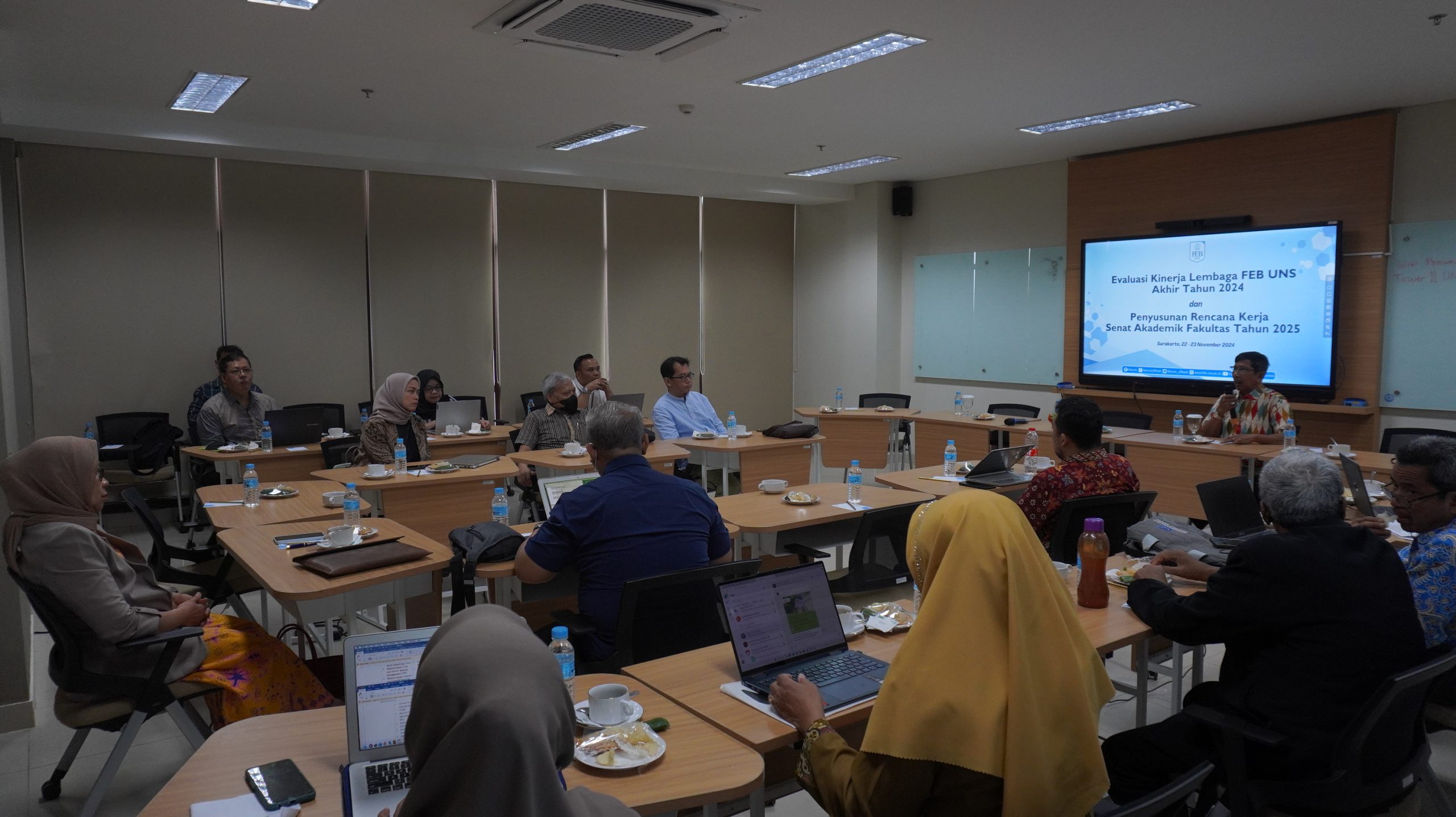
 In his opening remarks, Prof. Dr. Tulus Haryono, M.Ek., Chair of the FEB Academic Senate, emphasized that one of the key responsibilities of the Academic Senate is to review reports from the faculty and its supporting units. This process provides a comprehensive overview of institutional management. He further stated that the Senate’s role is to offer recommendations to drive FEB UNS toward continuous improvement.
 The session concluded with discussions and performance evaluations by the Senate.

 Prof. Doddy Setiawan, S.E., M.Si., Ak., Ph.D., was appointed as Chair of Commission A, which focuses on academic and research affairs. Prof. Dr. Yunastiti Purwaningsih, M.P., was assigned to lead Commission B, which oversees non-academic matters. Prof. Dr. Budi Haryanto, M.M., took on the role of Chair for Commission C, responsible for student affairs and alumni engagement. Meanwhile, Prof. Dr. Hunik Sri Runing Sawitri, M.Si., was designated as Chair of Commission D, which handles matters related to professors and senior scholars.
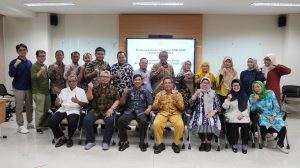 At the closing session, Prof. Tulus stressed the importance of translating the commissions’ final recommendations into actionable steps by the faculty leadership and Study Programs.