Central Java is one of Indonesia’s major tobacco-producing provinces, alongside East Java, West Nusa Tenggara, West Java, and Aceh. Key tobacco-producing regions in Central Java include Temanggung, Rembang, Magelang, Boyolali, Wonosobo, and Grobogan. According to Central Java Governor Regulation No. 38 of 2021 (Cigarette Excise 2022), the province received IDR 879.96 billion in tobacco excise allocations. This figure increased to IDR 1.2 trillion in 2023 under Regulation No. 38 of 2022 (Cigarette Excise 2023)—an increase of over IDR 327 billion in just one year.
These figures were presented by Malik Cahyadin, S.E., M.Si., Ph.D., a lecturer from the Faculty of Economics and Business (FEB), Universitas Sebelas Maret (UNS), during a discussion forum titled “The Impact of National Regulatory Controversies on the Tobacco Ecosystem in Central Java,” held on Thursday, November 14, 2024, at Kulonuwun Kopi, Solo. Dr. Malik, who teaches in the Development Economics Program, also explained how non-tariff regulations—such as plain cigarette packaging—affect both producer and consumer surplus in the tobacco industry.
“When non-tariff regulations like packaging standardization are enforced, they reduce the producer surplus through a loss in brand valuation. This acts as a disincentive for businesses,” he noted. “At the same time, consumer surplus—linked to product trust and pride, which can be monetarily valued—also tends to decrease.”
He further warned that plain packaging could lead to a rise in black market and illegal cigarette products, as branding no longer creates consumer attachment, even if cigarette prices remain elastic. In addition to lost consumer and producer surplus, such regulations may cause a drop in excise and tax revenues, job losses, and disruptions to the packaging industry’s supply chain. Without an increase in tobacco exports, these ripple effects could also dampen farmer enthusiasm to continue tobacco cultivation.
Dr. Malik argued that the tightening of tobacco industry regulations could hinder Central Java’s economic growth. The region’s economy relies heavily on three sectors: agriculture (including plantations and fisheries), manufacturing, and services. “If agricultural innovation—apart from tobacco—remains limited, then the sector’s total value is likely to decline due to tighter tobacco industry regulations,” he explained.
He added that the domestic tobacco supply chain would also shrink, resulting in lower excise and tax revenues and eroding the industry’s motivation to compete, particularly as branding—once a core marketing tool—is stripped away.
Large-scale investments in the tobacco sector may also become less attractive. Furthermore, if regulatory tightening, especially concerning packaging design, is not matched by improvements in global supply chain integration, the market share of Indonesia’s (and Central Java’s) tobacco industry could decline. Collectively, these impacts could significantly impair Central Java’s ability to achieve high economic growth targets—such as surpassing the 7% threshold.
In response to these challenges, Dr. Malik proposed several solutions. From a regulatory perspective, he emphasized the need for oversight and evaluation of the economic and social impacts of Government Regulation No. 28 of 2024, which implements Law No. 17 of 2023 on Health, particularly in tobacco-producing areas.
He also recommended that derivative regulations aimed at tightening the tobacco industry undergo public consultation and impact evaluation. “If the negative economic effects of a regulation outweigh the intended benefits, the regulation should be reconsidered, postponed, or revoked,” he said.
Additionally, tobacco farmers and their associations should receive excise revenue incentives to improve the quality of their crops, helping them meet both domestic and international market demands.
Dr. Malik also urged the tobacco industry to pivot more strongly toward global markets as a substitute for a shrinking domestic market. He called for greater collaboration between the industry, tobacco associations, and the government to curb illegal cigarette production and mitigate the negative effects of tighter regulations.
Kategori: faculty
-
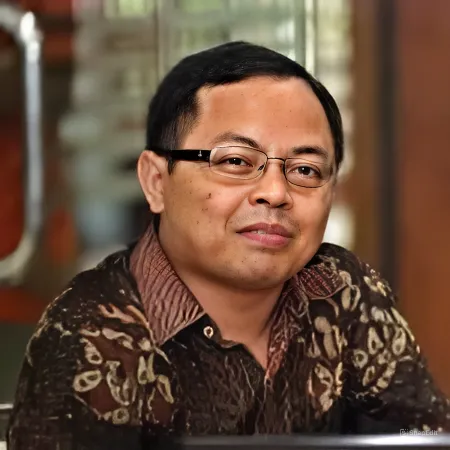
UNS Lecturer: Tightening Tobacco Industry Regulations May Hampers Central Java’s Economic Growth
-

18 Students from SMA Muhammadiyah Program Khusus Kota Barat Participate in ‘Sit-in University’ Program at FEB UNS
Eighteen 9th Grade students from the SMA Muhammadiyah Special Program (Program Khusus/PK) Kota Barat Surakarta took part in the ‘Sit-in University’ program at the Faculty of Economics and Business (FEB), Universitas Sebelas Maret (UNS). The program lasted for two weeks, beginning on Monday, November 11, 2024. The opening and handover session was held in Meeting Room 1, Soeharno TS Building, and attended by the FEB UNS leadership, Study Program Heads, teachers, and participating students.
 Tastaftiyan Risfandy, S.E., M.Sc., PhD., Vice Dean for Student Affairs and Alumni of FEB UNS, expressed appreciation to the accompanying teachers and students for joining the program, particularly in the S-1 Study Programs of Accounting, Management, and Digital Business.
“We sincerely thank the teachers and students from SMA Muhammadiyah PK Kota Barat for joining this experience at FEB UNS. It’s a valuable opportunity for students to experience university life and be inspired for the future,” he said.

Tastaftiyan also provided a brief overview of student admissions and program competitiveness at UNS. He encouraged the students to consider the level of competitiveness of each Study Program, which can be accessed via spmb.uns.ac.id, as a reference in planning their university path. He added that starting next year, the Sit-in University program will be open to the public, and related announcements will be shared through official channels. “God willing, next year this program will be publicly available. Please stay updated through FEB’s Instagram account,” he concluded.
 Following the Vice Dean’s remarks, the heads of the participating Study Programs provided an introduction to each program at FEB UNS. Meanwhile, Siyami Koestimawati, the supervising teacher from SMA Muhammadiyah PK Kota Barat, expressed gratitude for the opportunity given to her students. “We are very thankful to FEB UNS for allowing our students to learn and explore what FEB is like. The students joined the program voluntarily, and we truly appreciate the guidance provided,” she stated.
 In addition to attending lectures, the 18 students were assigned to keep daily journals and observe student associations relevant to their chosen Study Programs. She added that since its first cohort, SMA Muhammadiyah PK has consistently participated in the ‘Sit-in University’ program each year, with FEB UNS being a constant destination due to high interest from students.
“Alhamdulillah, some of the students who joined this program in previous years were later admitted to FEB. That brings us great joy. We hope that students participating this year will also enroll in FEB and be accepted into the programs they aspire to in the next two years,” she concluded.
-
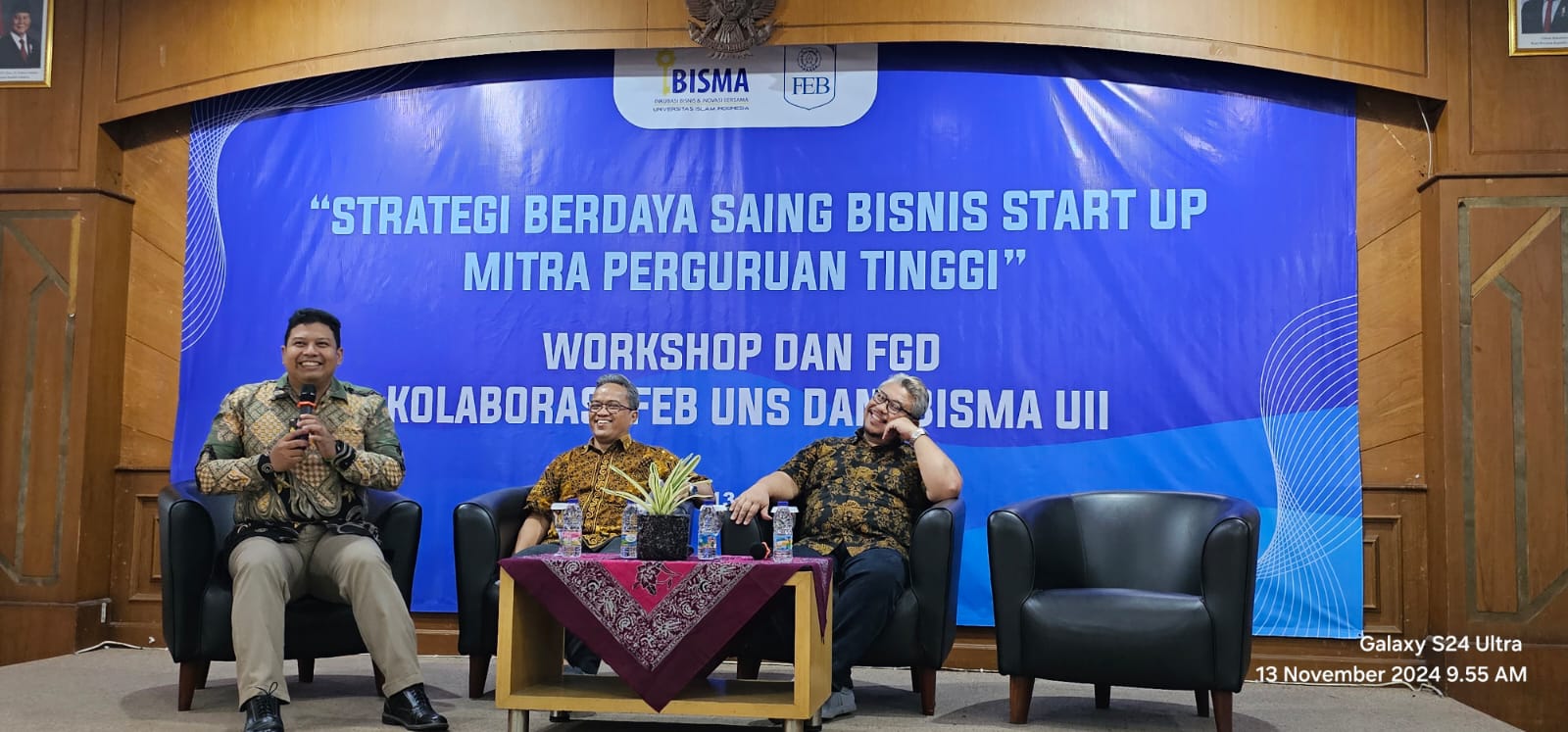
Accelerating University-Guided Startup Businesses: A Collaboration Between the Behavioral Marketing Research Group of FEB UNS and IBISMA UII
Student-led startups play a strategic role in driving national economic growth. The increasing number of university-initiated businesses fosters the emergence of young entrepreneurs equipped with knowledge of business theory and applied technology. These entrepreneurs are expected to develop businesses with competitive advantages and adaptability, enabling them to continuously innovate and thrive in dynamic market conditions.
In response to this, the Behavioral Marketing Research Group (RG Pemasaran Keperilakuan) FEB UNS, in collaboration with the Business Incubation and Innovation Center (IBISMA) of Universitas Islam Indonesia (UII), organized a workshop and focus group discussion (FGD) on November 13, 2024. The event aimed to identify key success factors for student-led startups and provide recommendations to relevant stakeholders to enhance business development.
 According to Dr. Ahmad Ikhwan Setiawan, S.E., M.T., Chair of the Behavioral Marketing Research Group, the low success rate of startups presents a significant challenge. He emphasized that only business models with specific characteristics can sustain themselves in an increasingly competitive environment. Meanwhile, Prof. Dr. Budhi Haryanto, M.M., highlighted in his presentation that scaling up a startup requires technological excellence, strong competencies, and well-structured organizational capabilities.
From the perspective of business incubation, Bagus Panuntun, S.E., MBA., an IBISMA expert, explained that the integration of student startups into the broader business ecosystem is a key determinant of their success. He introduced the penta-helix framework, which underscores the collaboration among entrepreneurs, universities, government, communities, and media in fostering a supportive startup environment.
The workshop, held at UII, was attended by 25 IBISMA-supported startups. Participants collectively agreed to establish further collaborative initiatives aimed at enhancing student startups at UNS through research and community engagement programs.
-
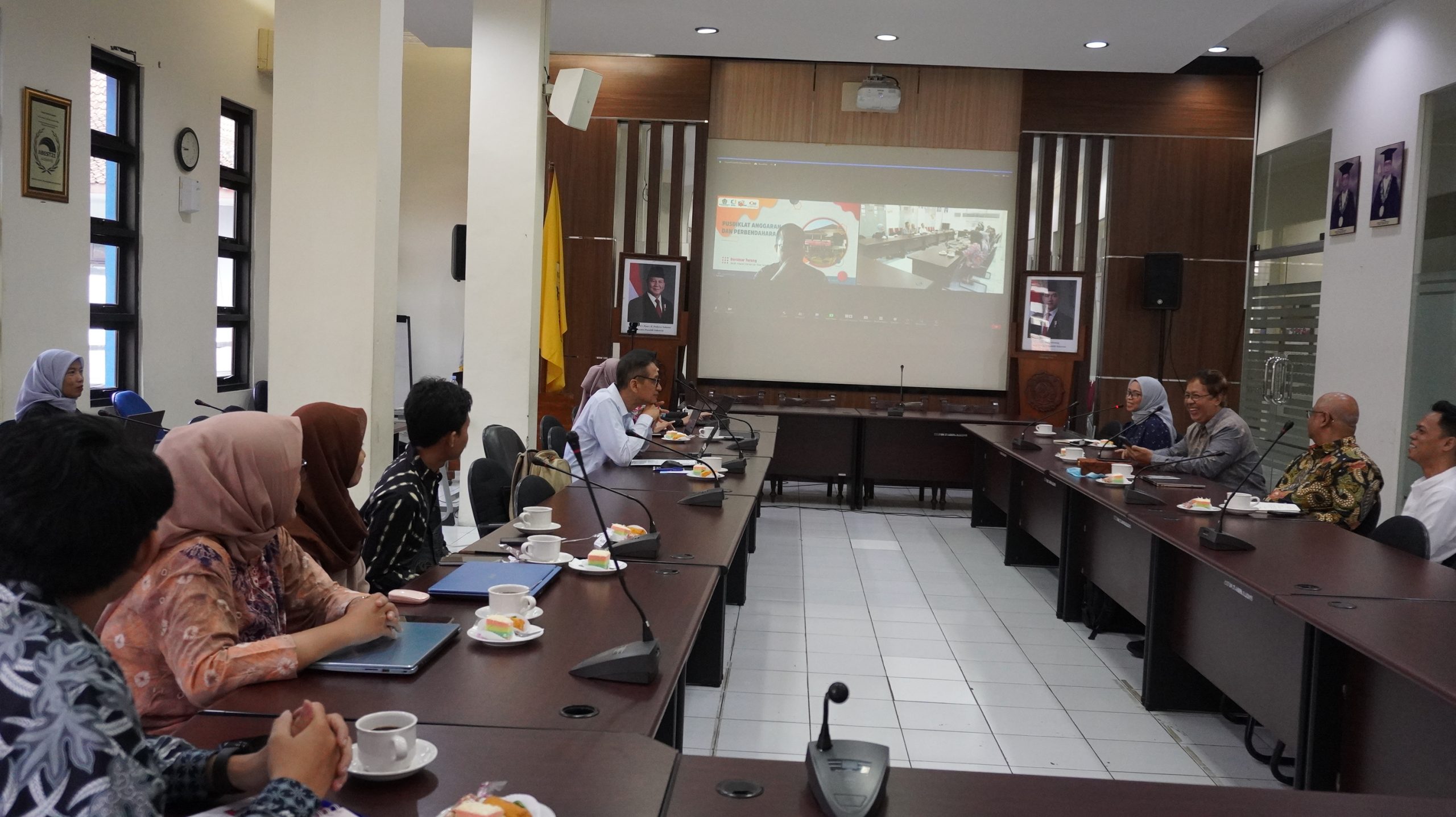
Fiscal Corner FEB UNS Hosted Workshop on Enriching Semester Learning Plans through Integration with the Ministry of Finance Learning Center
Fiscal Corner of the Faculty of Economics and Business (FEB), Universitas Sebelas Maret (UNS), hosted a Workshop on Semester Learning Plans (RPS) Enrichment through Integration with the Ministry of Finance Learning Center (Kemenkeu Learning Center/KLC) on Wednesday, November 13, 2024, in Meeting Room 1, Soeharno TS Building, FEB UNS.
The workshop featured Puji Agus, SST., Ak., M.Ak., CA., from the Center for Education and Training in Budgeting and Treasury, Ministry of Finance, who delivered a presentation on Public Sector Accounting and Government Accounting. The session followed with a moderated discussion led by Dr. Jaka Winarna, M.Si., Ak., a lecturer at FEB UNS.
In the afternoon session, Risky Sulistyanto, S.E., M.M., from the Ministry of Finance’s General Bureau, presented material on the courses Development Planning and Budgeting (PPP) and Regional Financial Analysis (AKD). This session was moderated by Dr. Mulyanto, M.E.
In her opening remarks, Prof. Tri Mulyaningsih, S.E., M.Si., Ph.D., Vice Dean for Academic and Research Affairs at FEB UNS, expressed her appreciation to the Fiscal Corner team, chaired by Dr. Mulyanto, M.E. She emphasized that this workshop aims to ensure that teaching materials at FEB remain up to date and aligned with current developments in the financial sector, particularly those under the authority of the Ministry of Finance.
On this occasion, Prof. Tri expressed her belief that there is much to learn from the Ministry of Finance, which will help enhance the quality of learning materials at FEB. She also noted that the initiative seeks to introduce varied teaching methods to avoid monotonous approaches.
“The aim of this initiative is to diversify teaching methods. Traditionally, learning has been conducted in a classical format, where lecturers explain and students passively listen. Sometimes, the material delivered is no longer relevant. Today’s students learn differently. I believe that we can gain valuable knowledge from Mr. Puji and Mr. Risky so that we can enrich our teaching approaches. We want UNS to move beyond conventional methods toward more collaborative and participatory models,” she explained.
The university has also adopted Key Performance Indicators (IKU) that encourage project-based and case-based learning, with a strong emphasis on collaboration and participation in the classroom. The ultimate goal of this two-day event is for FEB UNS to develop RPS documents that integrate FEB’s existing curriculum with content provided by the Ministry of Finance Learning Center (KLC).
Meanwhile, Dr. Mulyanto, M.E., Chair of Fiscal Corner FEB UNS, reported the progress of ongoing collaboration between FEB UNS and the Ministry of Finance. Fiscal Corner FEB UNS is organizing a series of initiatives divided into two main activities. The first activity involves Focus Group Discussions (FGDs) for drafting RPS documents integrated with KLC content. These FGDs are planned to take place in three sessions. The first session was held on Wednesday, October 30, 2024, followed by the second on Tuesday, November 19, 2024, and the final session is scheduled for Tuesday, December 3, 2024.
The second activity is the RPS Enrichment Workshop for the Accounting Study Program, focusing on Public Sector Accounting and Government Accounting, and for the Undergraduate Development Economics Program, focusing on Regional Financial Analysis (AKD) and Development Planning and Budgeting (PPP).
“There is a significant amount of material in the KLC that we can adopt and disseminate. We will continue to coordinate with the Ministry of Finance to determine effective ways of transferring knowledge,” he stated.
Dr. Mulyanto further emphasized that the expected output from the RPS Enrichment Workshop for the Accounting and Development Economics Study Programs is a set of integrated RPS documents that can be implemented starting next semester. He also outlined Fiscal Corner’s future direction in collaboration with the Ministry of Finance.
First, there are strategic plans to build a finance-related database and secure access rights from the Ministry for the purpose of academic research, including undergraduate theses, master’s theses, and dissertations.
 Second, as already outlined, is the development of integrated RPS content. Currently, four prototype courses are being developed: Regional Financial Analysis and Development Planning and Budgeting for the Development Economics Study Program, and Government Accounting and Public Accounting for the Accounting Study Program. In the future, similar efforts will be extended to the Management and Digital Business Programs.
Third, there will be activities such as Kemenkeu Goes to Campus, seminars, and workshops on specific themes, including events held in conjunction with UNS’s anniversary or other Ministry of Finance programs such as State Budget Simulations and research collaborations.
 “We hope for the support of all colleagues so that together we can advance FEB by expanding external partnerships. This activity is only the beginning and not the end—there will be continuous improvements and positive developments, with benefits that extend to many parties,” he concluded.
The workshop was attended by lecturers involved in the Fiscal Corner team representing undergraduate study programs at FEB. The following day, further activities were scheduled, including a discussion at Fiscal Corner FEB UNS regarding the dynamics of program and activity planning within the Ministry of Finance, followed by Kemenkeu Corpu Goes to Campus (a guest lecture for the Development Planning and Budgeting course) held in the Soedarah Soepono Auditorium, FEB. The program concluded with a discussion between Ministry of Finance representatives and the FEB Dean’s Office concerning the coordination and harmonization of public financial management materials. -
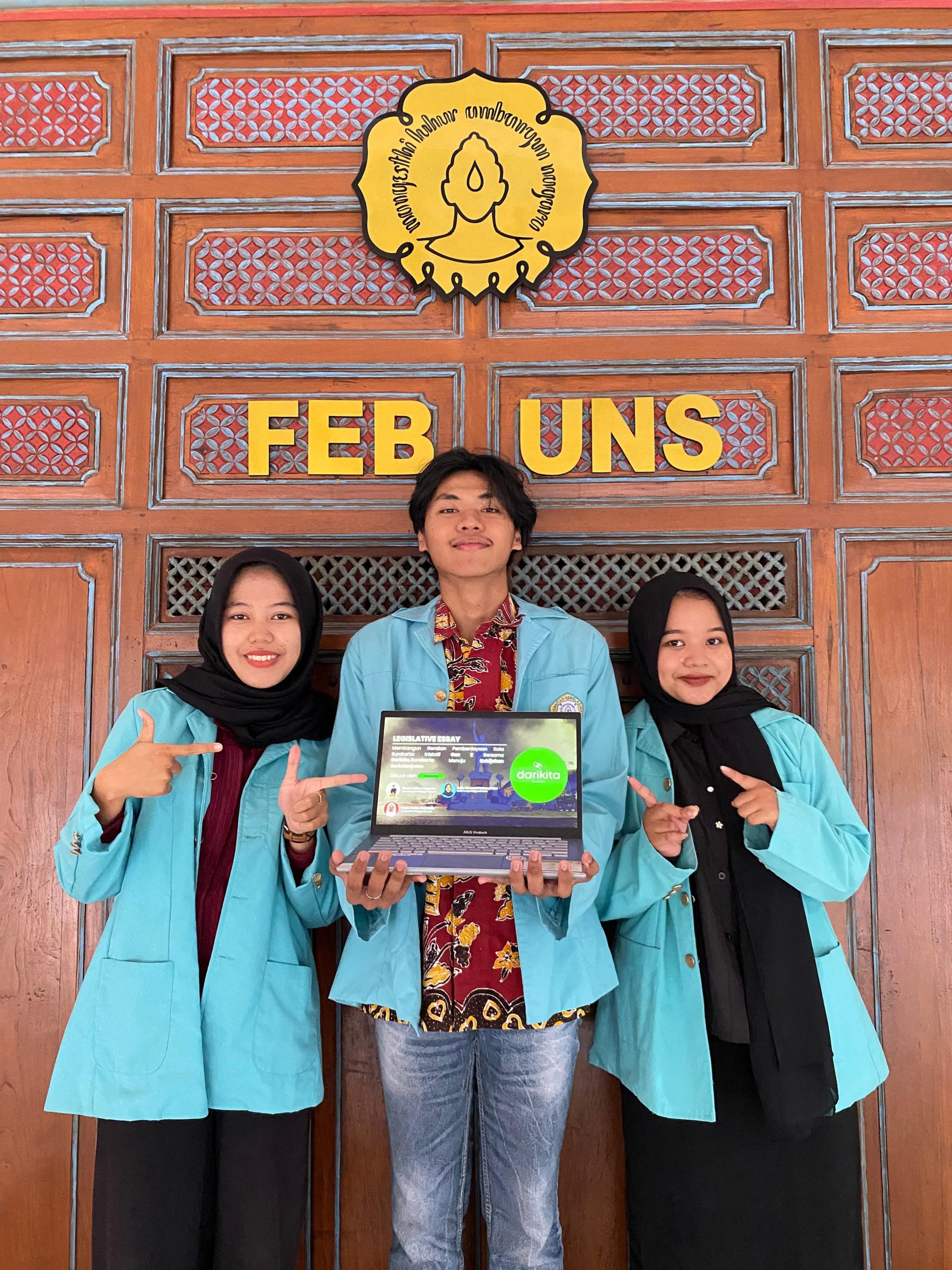
FEB UNS Students Secure First Place in Essay Competition with a Focus on the Surakarta Empowerment Movement: A Gen Z Initiative with Darikita.Surakarta
A team of students from the Faculty of Economics and Business (FEB), Universitas Sebelas Maret (UNS), achieved first place in the Essay Competition organized by UPN “Veteran” Jakarta. The team’s essay, titled “The Surakarta Empowerment Movement: A Gen Z Initiative with Darikita.Surakarta Toward Sustainable Policy,” stood out among the finalists and led them to victory in the virtual competition.
The FEB UNS team, led by Kenan Safara Nugroho from the Undergraduate Digital Business Program, included Oryza Sativa Heavenia from the same program and Aulia Herawati Rahma Putri from the Undergraduate Accounting Program as team members. Competing in the final round, they successfully outperformed nine other teams representing various leading institutions, including two teams from UPN “Veteran” Jakarta, two teams from Universitas Indonesia, and one team each from Universitas Airlangga, Universitas Jenderal Soedirman, Institut Pertanian Bogor, Universitas Brawijaya, and the STAN Polytechnic of State Finance.
 The competition, which took place on October 27, 2024, with winners announced on November 2, 2024, aimed to encourage young generations—particularly Gen Z—to be more aware and proactive regarding public issues. Under the theme “Proactive Participation of Gen Z in Public Policy Formation,” participants were challenged to express their ideas, critiques, and constructive arguments in essay form. This theme is highly relevant as it encourages students, as part of Gen Z, to take an active role in public policy discussions that are often perceived as distant from daily life.
Aulia Herawati Rahma Putri explained that their team focused on how Gen Z can contribute to policy development through concrete actions. “Our team chose the theme because we believe that before formulating a policy, there must be a concrete action as precedence. That is why we highlighted Darikita.Surakarta, a movement that we integrated with empowerment policies already in place in Surakarta,” she stated in an interview with feb.uns.ac.id.
The FEB UNS team was confident in their approach, as their idea was not merely theoretical but had already been implemented in real-world initiatives. Their hands-on experience in the field allowed them to gain deeper insights into the issues presented in the competition case study. In preparation for the competition, the team conducted in-depth research on public policy, focusing on topics relevant to Gen Z’s role in governance and community empowerment. They also engaged in small group discussions to refine their ideas before incorporating them into the essay. Additionally, they reviewed various literature sources and followed policy-related news in the media to strengthen their arguments and broaden their perspectives.
“One of the most memorable moments was presenting in front of the judging panel. We were nervous at first, but once we managed to convey our ideas smoothly and received positive feedback from the judges, it felt truly rewarding. Alhamdulillah, we were able to bring pride to FEB UNS by winning first place,” Aulia expressed enthusiastically.
Do not to hesitate to participate in any challenge, competitions like this provide opportunities to expand knowledge, develop new perspectives, and build connections with students from various universities. Take the opportunity and never be afraid to try!
-
Participating in a National Business Competition, FEB UNS Management Students Secure Third Place
Three students from the Faculty of Economics and Business, Universitas Sebelas Maret (FEB UNS), secured 3rd place at the Sebelas Maret Business Case Competition (SMBCC) 2024. In total, 140 teams from across Indonesia participated in this annual competition. Heavani Rahmawati, Niken Mar’atus Sholeha, and Justitio Yodha Wistara from the Management Study Program FEB UNS successfully advanced to the final round, competing against nine other finalist teams from top universities, including Universitas Indonesia, Universitas Gadjah Mada, Institut Teknologi Bandung, and UPN Veteran Jakarta, before finally accomplishing the feat.
 Speaking to feb.uns.ac.id, Heavani, the team leader, reveals that their motivation for joining the Business Case competition was to gain experience in solving real-world business problems and applying theoretical knowledge from their coursework to practical scenarios. Regarding preparation, the team received intensive guidance from faculty members, mentors, and their senior peers who had extensive experience in business case and business plan competitions. They dedicated extra time beyond their class schedules to refine their materials and presentations. During practice sessions, the team focused not only on the content but also on strengthening their mental resilience to ensure they were ready for any situation. Although they sacrificed a lot of time, they believed every moment of preparation would be worthwhile.
 “We divided tasks within the team according to our respective expertise, such as finance, analysis, marketing, and design. During brainstorming sessions, we sometimes had differing opinions, but this actually improved our solutions by providing constructive feedback and alternative ideas. We usually discussed via Zoom or Google Meet due to our tight schedules of classes and extracurricular activities. However, we also made time for in-person brainstorming and group presentations,” she shared.
She noted that SMBCC provided participants with valuable experiences, including the opportunity to interact with professionals from various companies, such as Sari Roti and Gojek, during the Private Q&A sessions and open discussions. Participants also gained profound insights into how businesses operate. “On the awarding day, when the name ‘Born to Win Team’ (BTW Team) was announced as the third-place winner for Best Presentation, we were so excited. All our efforts, time, and hard work had finally paid off. To our fellow FEB students, chase your dreams and never give up. We believe each one of you has incredible potential. Turn challenges into opportunities that push us to learn and grow,” she emphasized.
 The Sebelas Maret Business Case Competition (SMBCC) 2024 is a national-level business competition that challenges teams of undergraduate and diploma students from across Indonesia to solve business cases from corporate partners, PT Nippon Indosari Corpindo and PT Goto Gojek Tokopedia Tbk, focusing on the integration of technology in the digital economy.
The competition consisted of three stages: the Preliminary Round featuring a case from Sari Roti, and the Semifinal and Final Rounds, with PT Goto Gojek Tokopedia Tbk., which took place from October 10–12, 2024, in an on-site in person session at FEB UNS. The SMBCC 2024 theme “Sustaining Innovative Business in Information Technology on Digital Marketing,” leading to a task for the FEB UNS team with finding solutions for business cases from Sari Roti and PT Goto Gojek related to sustainable digital marketing.
-
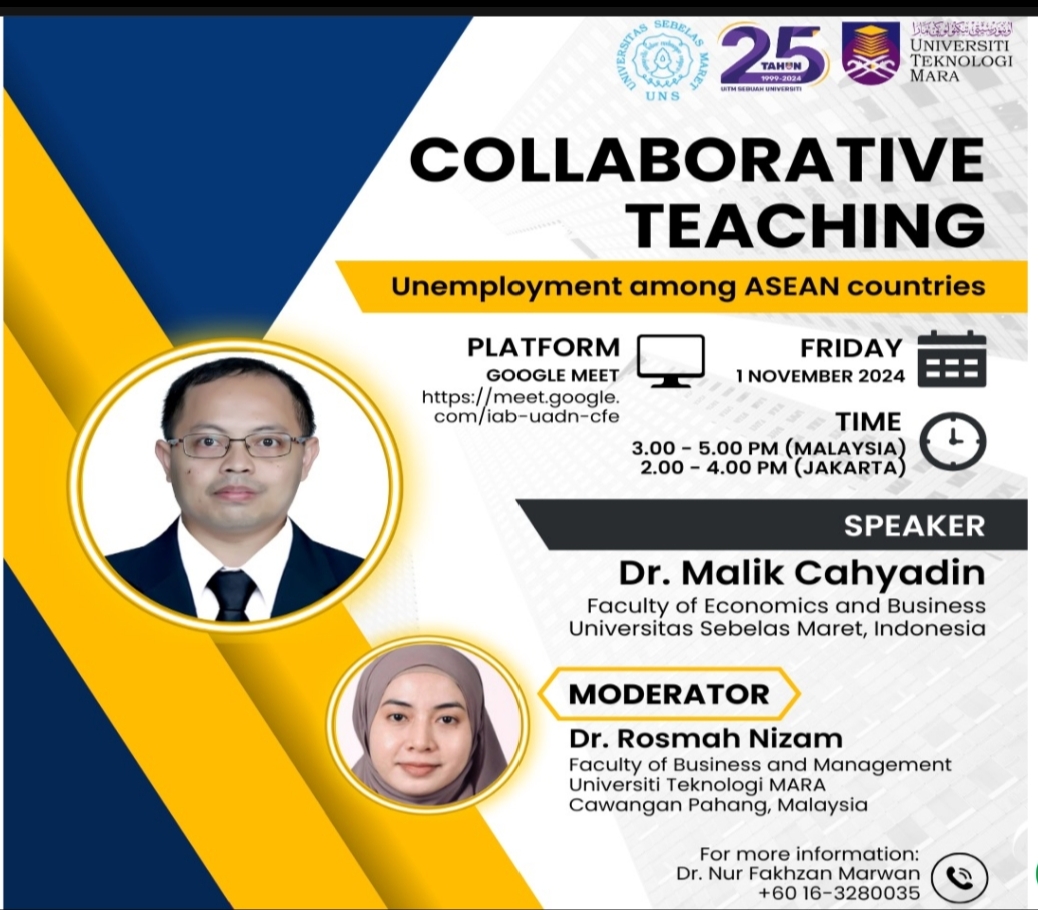
Webinar on Collaborative Teaching: FEB UNS Lecturer Discuss Unemployment among ASEAN Countries
Faculty of Economics and Business (FEB), Universitas Sebelas Maret (UNS), in collaboration with Universiti Teknologi MARA, held a webinar entitled Collaborative Teaching: Unemployment among ASEAN Countries on Friday, November 1, 2024, conducted in Google Meet. On this special occasion, Dr. Malik Cahyadin, a lecturer at FEB UNS, was invited as the keynote speaker, and Dr. Rosmah Nizam from the Faculty of Business and Management, Universiti Teknologi MARA Pahang, Malaysia, served as the moderator.
Opening the session, Dr. Rosmah Nizam introduced Dr. Malik and setting the stage for the session. “Today, we will listen to a presentation by Dr. Malik for approximately two hours, followed by a discussion and Q&A session,” said Dr. Rosmah.
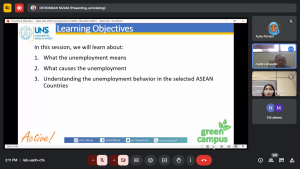 In his presentation, Dr. Malik provided a comprehensive analysis of the concept of unemployment, emphasizing its multifaceted nature and the underlying causes. He explained that unemployment is not merely the absence of work, but a complex socio-economic phenomenon influenced by various factors such as economic fluctuations, technological advancements, and structural shifts in the labor market.
Dr. Malik further categorized the workforce into four distinct groups: individuals who are employed, those who are not employed but actively seeking work, the labor force—comprising both employed and unemployed individuals available for work, and the final group, those outside the labor force, including individuals who are neither working nor seeking employment.
The webinar, which was attended by more than 300 students from both UNS and Universiti Teknologi MARA Malaysia, also included a discussion on policy alternatives to address unemployment.
“The government can implement workforce training programs, such as those already in place in Indonesia, and establish agencies that provide job vacancy information to job seekers. This will help match employees with suitable positions,” Dr. Malik explained.
He further elaborated on the labor market conditions, specifically focusing on unemployment across five ASEAN countries: Indonesia, Malaysia, Thailand, Vietnam, and the Philippines.
-

The Passion of “One Goal One Spirit” in Five Main Events of ACTIVE 2024
Accounting in Versatility (ACTIVE) is a national event organized by the Accounting Student Association of the Faculty of Economics and Business (FEB), Universitas Sebelas Maret (UNS). This year, celebrating its 16th year, ACTIVE 2024 featured five main events at a national scale.
 With the dedication and efforts of more than 170 accounting students serving as organizing committee, ACTIVE 2024 went successfully under a central theme entitled “Synergy of Youth: Achieving Indonesia Emas 2045 with Economic Excellence.” The first event, the National Talkshow, was held on November 19, 2024, at the Ki Hadjar Dewantara Ballroom. Moderated by Titin Dwi Ariyanti, the discussion focused on “Success Highway: Navigating Career, Study, and Business Balance,” offering students with insights on their first steps after earning their undergraduate degree.
The talk show featured inspiring speakers, including Tinno Susilo (Regional CEO of Bank Mandiri), Erwan Djoko Hermawan (Former Director of Asuransi Kredit Indonesia), Olivia Valentina (Consulting Business Analyst at Deloitte and Clash of Champions Participant), and Ibrahim Fatwa Wijaya (Lecturer at FEB UNS). More than 350 participants from various universities attended the event, actively engaging with the speakers through thought-provoking questions.
 Beyond the talk show, ACTIVE 2024 hosted two national-level competitions: ACCESS (Accounting Competition for College Students) and BMC (Business Model Canvas). Both competitions involved multiple virtual rounds. The competitions brought together students from diverse universities, including Universitas Indonesia, Universitas Gadjah Mada, Trisakti School of Management, Universitas Diponegoro, and many more, creating an intense and competitive atmosphere.
Out of 45 participating teams in ACCESS and 120 submissions in BMC, only the top 14 teams in ACCESS and 9 teams in BMC advanced to the final round, representing some of the best talents from across Indonesia. The final rounds of ACCESS and BMC welcomed the finalist team at the FEB UNS on October 27, 2024, where BMC finalists presented their most innovative business ideas to a panel of judges, while the ACCESS finalists tackled case studies and delivered closing presentations on assigned topics.
 Providing participants with a deeper connection to local culture, ACTIVE 2024 also featured a Field Trip as a post-competition activity. Delegates explored Surakarta’s history and traditions through an engaging visit to the Museum of Kraton Kasunanan Hadiningrat. The journey continued with a culinary experience at Pasar Gede, where participants enjoyed local delicacies such as Es Dawet Telasih, dim sum, and Nasi Rames, while also experiencing the vibrant market atmosphere.
In the evening, participants gathered at Pendhapa Balaikota to enjoy the evening lights and take part in a hands-on scented candle-making workshop, led by a small business from Boyolali. The night culminated in the Indonesia Cultural Gathering Night (ICGN), serving as the grand finale and award ceremony for the BMC and ACCESS competitions.
 The is evening wrapped with traditional dance and musical performances, along with cultural elements incorporated into the event’s decorations, reinforcing ACTIVE 2024’s commitment to showcasing Indonesia’s rich artistic heritage. The event officially concluded with the spirited chant of “One Goal One Spirit”, marking the successful completion of ACTIVE 2024.
“I am proud and thankful to the organizing team for their dedication, as well as to the study program, faculty, and local government for their support. I hope ACTIVE 2024 leaves a positive impact and serves as a stepping stone for students in preparing for Indonesia Emas 2045, aligning with this year’s theme,” said Deus Salvator, Vice Chair of ACTIVE 2024.
Hopefully, ACTIVE can maintain its tradition of creating a meaningful event that benefited the community.
-
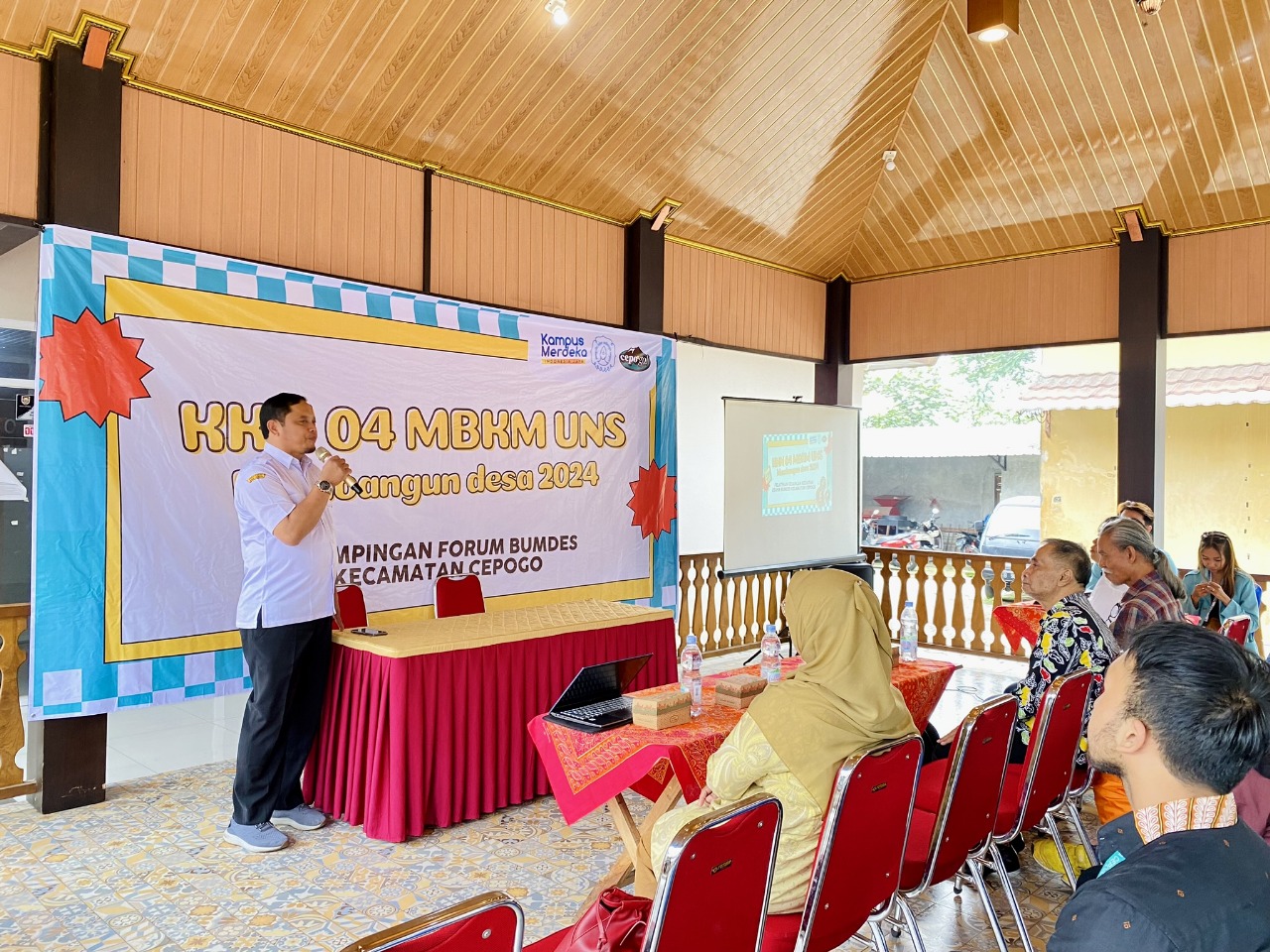
Institutional and Human Resources Research Group (RG) FEB UNS Collaborates with Community Service Students to Support BUMDes in Cepogo District
The Institutional and Human Resources (SDM) Research Group (RG) of the Faculty of Economics and Business (FEB), in collaboration with Thematic Community Service Program (KKN) students from Universitas Sebelas Maret (UNS), conducted a community engagement initiative in Cepogo District, Boyolali Regency, in January 2024.

The community service team, led by Dr. Dwi Prasetyani, S.E., M.Si., included esteemed members such as Dr. Vinc Hadi Wiyono WS, M.A., Dr. Akhmad Daerobi, M.S., Dr. Guntur Riyanto, M.Si., Vita Kartika Sari, S.E., M.Sc., Aulia Hapsari Juwita, S.E., M.E., and Ratna Malisa Indriawati, S.E., M.E., focused on mentoring Village-Owned Enterprises (BUMDes) in Cepogo District.
Through this initiative, the team aimed to address challenges faced by BUMDes in Cepogo and enhance their capacity and effectiveness via a series of well-designed work programs. One notable program involved supporting the BUMDes Forum in Cepogo District, with a particular emphasis on raising awareness about digital marketing. This initiative sought to make BUMDes operations more informative and widely recognized by the public. The program was based on findings from prior surveys assessing the condition of BUMDes in Cepogo.
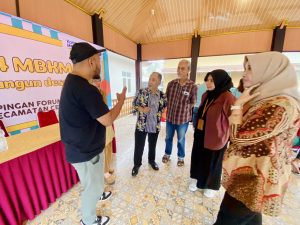
Cepogo District comprises 15 villages, each with its own BUMDes. However, only a few, such as BUMDes Tumang, BUMDes Paras, BUMDes Gedangan, and BUMDes Bakulan, remain active.
One major challenge identified in less active BUMDes was the lack of clear organizational structures. Unstructured governance within several BUMDes has hindered the successful implementation of many planned work programs. Thus, the mentoring efforts focused on providing training in digital marketing to help BUMDes become more dynamic and better known within the broader community.
The community’s enthusiasm for this initiative is expected to have a positive impact on the future development of BUMDes. Participants recognized the importance of synergy between government and village development programs to achieve optimal outcomes.

The digital marketing training aimed to provide BUMDes members with a deeper understanding of digital marketing concepts, including their influence on public perception and interaction through digital platforms.
By leveraging digital marketing elements, each BUMDes can establish a strong identity and values that resonate with the community. Enhanced use of social media platforms can enable BUMDes to build and expand active online communities. This fosters spaces for discussions, feedback, and collaboration between BUMDes and local residents, paving the way for sustainable growth and engagement.
-
FEB UNS Welcomes a Visit from FEB Universitas Dharma AUB
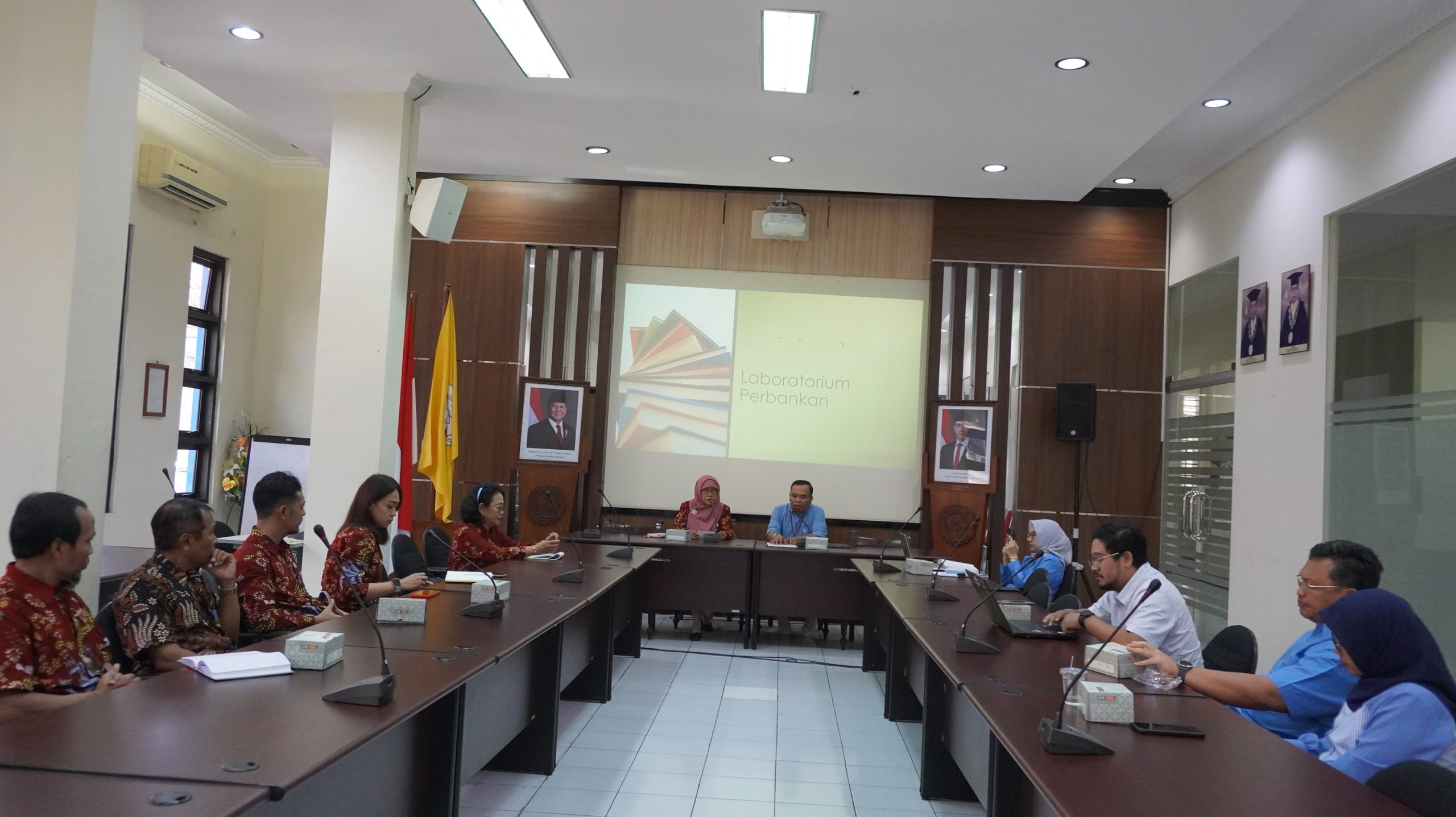
Faculty of Economics and Business (FEB), Universitas Sebelas Maret (UNS) welcomed the delegation from the Faculty of Economics and Business at Universitas Dharma (UNDHA) AUB Surakarta on Tuesday, October 29, 2024. The meeting took place in Meeting Room 1 of the Soeharno TS Building at FEB UNS. The visiting delegation, which included the Dean, Head of the Collaboration Unit, Head of the Business and Entrepreneurship Laboratory Unit, Head of the Accounting Study Program, and faculty members, was warmly received by FEB UNS leadership.
 Dr. Sutaryo, S.E., M.Si., Ph.D., Ak., CA., Vice Dean for Non-Academic Affairs at FEB UNS, extended a warm welcome and expressed gratitude for the visit. He emphasized the importance of discussing potential areas of collaboration and took the opportunity to introduce the FEB UNS leadership team present at the meeting.
 Dr. Sutaryo also highlighted the various laboratories available at FEB UNS to support learning. These include the Banking Laboratory, Project-Based Learning (PBL) Laboratory, Entrepreneurship Laboratory, Financial Technology (Fintech) Laboratory, Logistics and Export-Import Laboratory, Data and Analytics Laboratory, Investment Gallery, and Computer Laboratory.
 During the visit, Dr. Lilis Silistuani, S.E., M.Si., Ak., CA., Dean of FEB UNDHA AUB, expressed her appreciation for the warm reception. After introducing her team, she explained that the primary purpose of the visit was to exchange insights on the management of the Banking Simulation Laboratory.
“Our objective in visiting FEB UNS is to gain insights into the management of the Banking Simulation Laboratory. We hope to learn more about how FEB UNS operates its laboratories so that we can enhance our facilities at FEB UNDHA AUB. Additionally, we hope this visit will lead to further collaboration, particularly in areas such as book development, which can be followed up with Mrs. Sinto,” she stated.

The discussion was led by Tastaftiyan Risfandy, S.E., M.Sc., Ph.D., Vice Dean for Student Affairs and Alumni. Before the discussion began, Dr. Nurul Istiqomah, S.E., M.Si., Head of the Banking Laboratory at FEB UNS, provided an overview of the laboratory’s operations and facilities.