FEB

Kategori: faculty

  • FEB UNS Students Participated in the Dissemination of Academic Senate Rules on Student Code of Conduct

    The dissemination of the Code of Ethics is the second activity held by the Faculty of Economics and Business (FEB), Universitas Sebelas Maret (UNS) to disseminate the UNS Academic Senate Regulation (PSA) to the FEB UNS academic community, especially students.
    Previously, dissemination on the Prevention and Handling of Sexual Violence (PPKS) had been carried out. In the future, there will be another dissemination on PSA on scientific autonomy and academic tribune.

    The statement was conveyed by the Vice Dean of Academic Research and Student Affairs FEB UNS, Prof. Dr. Izza Mafruhah, SE M.Si., when delivering a remark at the Academic Senate Dissemination on Student Code of Conduct on Thursday, April 6, 2023 at the Konimex Hall of Bachtiar Effendi Building and Zoom Cloud Meeting.

    “In PSA, mostly or even almost all activities have been regulated, therefore, we need to take a stance on how we react, how to determine punishment and also reward when there are cases or problems related to violations or fulfillment of the code of ethics. These aspects need to be understood by students,” she said.

    Prof. Izza hopes that when students carry out teaching and learning activities, both curricular and non-curricular, they will always be in a straight line, a line that is in accordance with the guidelines and rules applicable at UNS.

    According to her, so far there have been several complaints from lecturers regarding student ethics, possibly due to the influence of online learning for the past 2 years. With this enlightenment activity, there are no more students who violate the norms that exist on campus.

    Dr. Sunny at the beginning of her material presentation in front of the Head of the Study Program, Ormawa (students organization) manager, and students representative attending the hybrid agenda, said that Academic Senate Regulation 17 of 2021 is not a prohibition, but what should be done, thus, each action will not be detrimental to others even though it is actually our right.

    “One thing we need to understand together is that at the higher education level, all academic members, both employee lecturers, and students, are expected to be able to instill and build a value system in the campus environment,” she explained.

    According to her, each campus has its own code of ethics that must be fulfilled and implemented and must not be violated by the Academic community. Every university has a code of ethics that is not necessarily the same.

    “Why should we follow this code of ethics? The code of ethics has been formulated in such a way as to allow the teaching and learning process, the process of character formation, to run in accordance with expectations. Because we believe this code of ethics is not issued solely because it is important to have a code of ethics, but there is a purpose. The learning objectives of character building are in accordance with what is the vision and mission of UNS,” she explained.

    Dr. Sunny summarizes the elaboration of the code of ethics into four points, the first is the ethics of integrity, loyalty, and courtesy and decency, which were combined into one material. The second is lecture ethics, the preparation of scientific works and examinations. The third is the ethics for building relationships with the academic environment, with lecturers, students, education staff, and relationships with the community. And the fourth is the ethics for student activities.
  • FEB UNS Invited Prof. Tamat from Universiti Kebangsaan Malaysia in the Special Workshop on Academic Writing and Publication Discussing Research Publication

    FEB UNS Invited Prof. Tamat from Universiti Kebangsaan Malaysia in the Special Workshop on Academic Writing and Publication Discussing Research Publication

    Research publications are one indicator of academic reputation for faculty and universities within the QS international rankings. In order to support the publication process carried out by students, the Faculty of Economics and Business (FEB), Universitas Sebelas Maret (UNS), in collaboration with Universiti Kebangsaan Malaysia (UKM) hosted a hybrid workshop entitled ‘Special Workshop on Academic Writing and Publication,’ at Konimex Hall, Bachtiar Effendi Building 3rd Floor, FEB UNS, and Zoom Cloud Meeting, Wednesday, April, 5th, 2023.

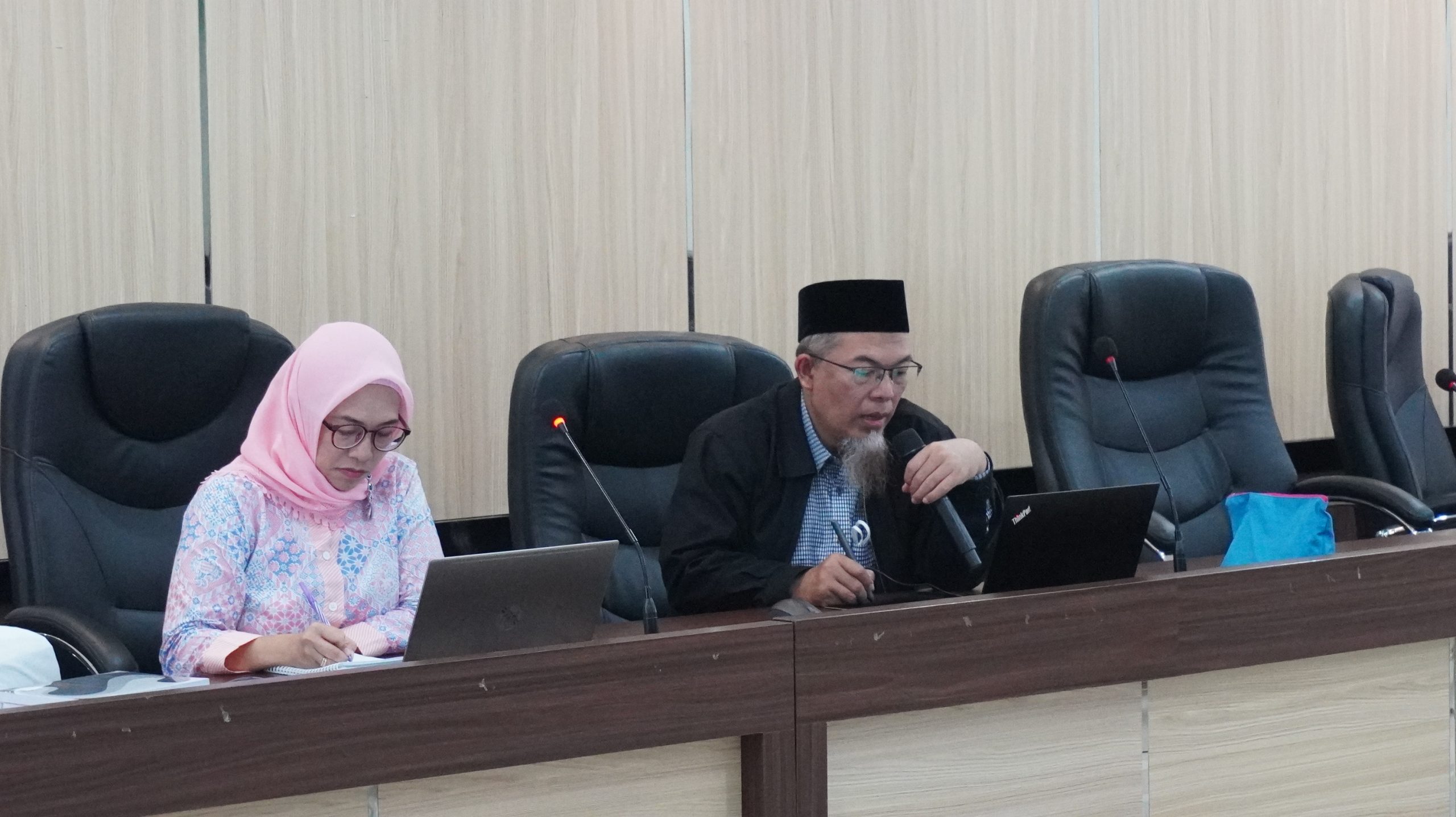
    The workshop invited Prof. Dr. Tamat Sarmidi from the Faculty of Economics and Management UKM, Malaysia, as the main speaker.

    Led by Dr. Nurul Istiqomah, S.E., M.Si., as a moderator, the workshop was attended by FEB UNS lecturers and students from Bachelor (S1), Graduate (S2), and Doctoral (S3) levels at FEB UNS.

    The workshop was opened by the Vice Dean of Academic, Research, and Student Affairs FEB UNS, Prof. Dr. Izza Mafruhah, S.E., M.Si., who also delivered a speech representing the Dean of FEB UNS.

    “I would like to thank Prof. Tamat who is willing to visit UNS. Prof. Tamat has often visited UNS to the point that we feel like he is our own father. For this workshop we will focus on academic writing, although there will also be material related to econometrics,” said Prof. Izza in her opening remark.

    In addition to delivering material related to econometrics and academic writing, this workshop will also include a presentation of selected research articles from PDIE program students to then get suggestions and inputs from Prof. Tamat. “The binary model has enormous potential in economic research, especially in the decision-making process in projects and policy making,” explained Prof. Tamat, opening material exposure.

    Further, Prof. Tamat delivers econometric material consisting of two topics, namely the interpretation of regression coefficients and regression with limited dependent variables. “Often students are not precise in interpreting the coefficient of regression results. Students are often confused in determining the appropriate interpretation for the regression coefficient, especially for variables with different measurement units,” he said.

    In addition to delivering the material, in between the material presentation, Prof. Tamat asked quiz questions to participants who attended the workshop in person or virtually. For each participant who successfully answered Prof. Tamat, an exclusive book prize, is available.

    In the following session, four FEB UNS PDIE students presented their research articles and engaged in an intensive discussion with Prof. Tamat Sarmidi.

  • UPM FEB UNS Discuss a Follow-up on AMI Result

    UPM FEB UNS Discuss a Follow-up on AMI Result

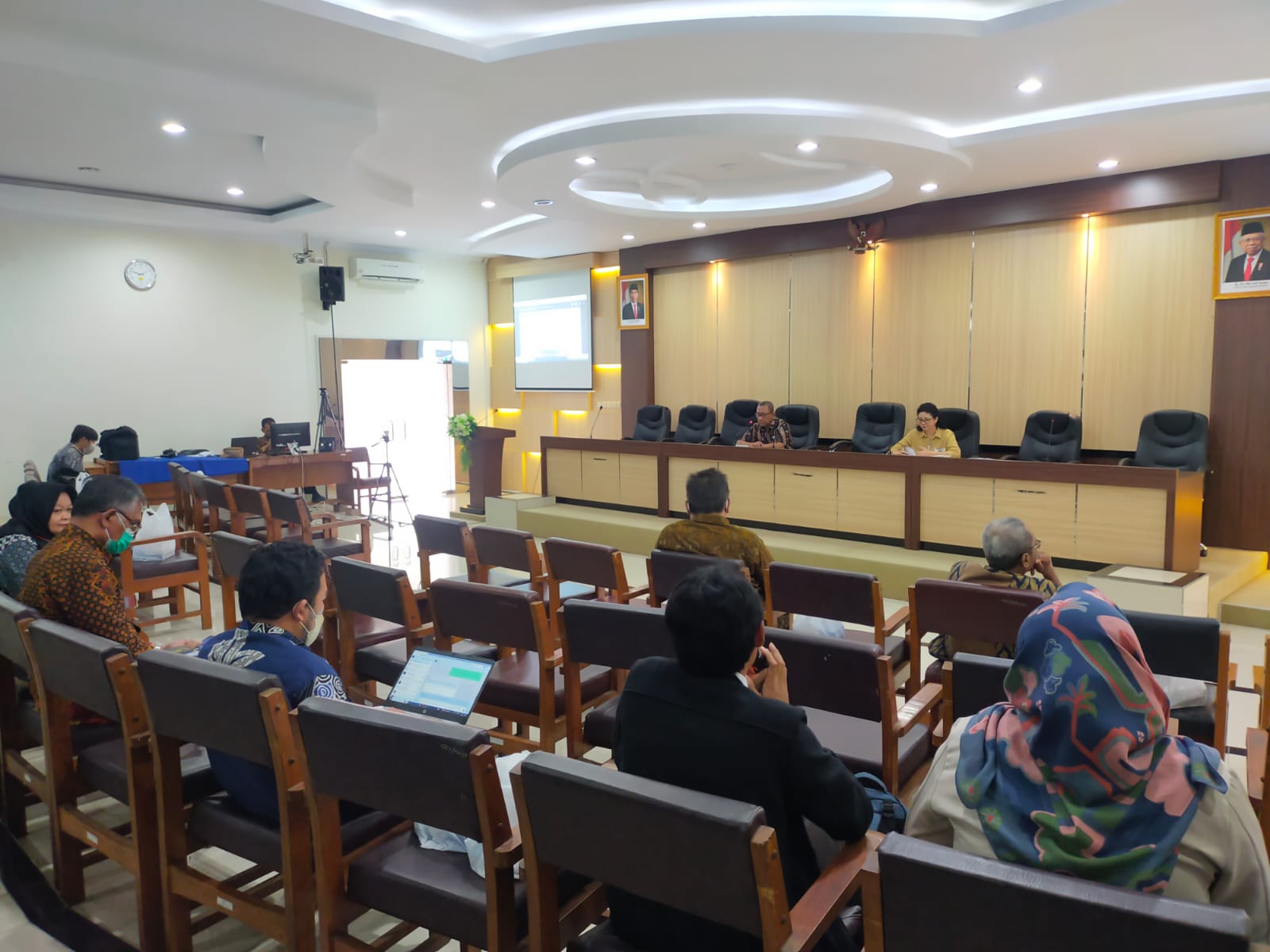
    The Quality Assurance Unit (UPM) of the Faculty of Economics and Business (FEB), Universitas Sebelas Maret (UNS) Surakarta held a Follow-up Monitoring for the 2022 Internal Quality Audit (AMI) Decision, on Thursday, March 30, 2023.

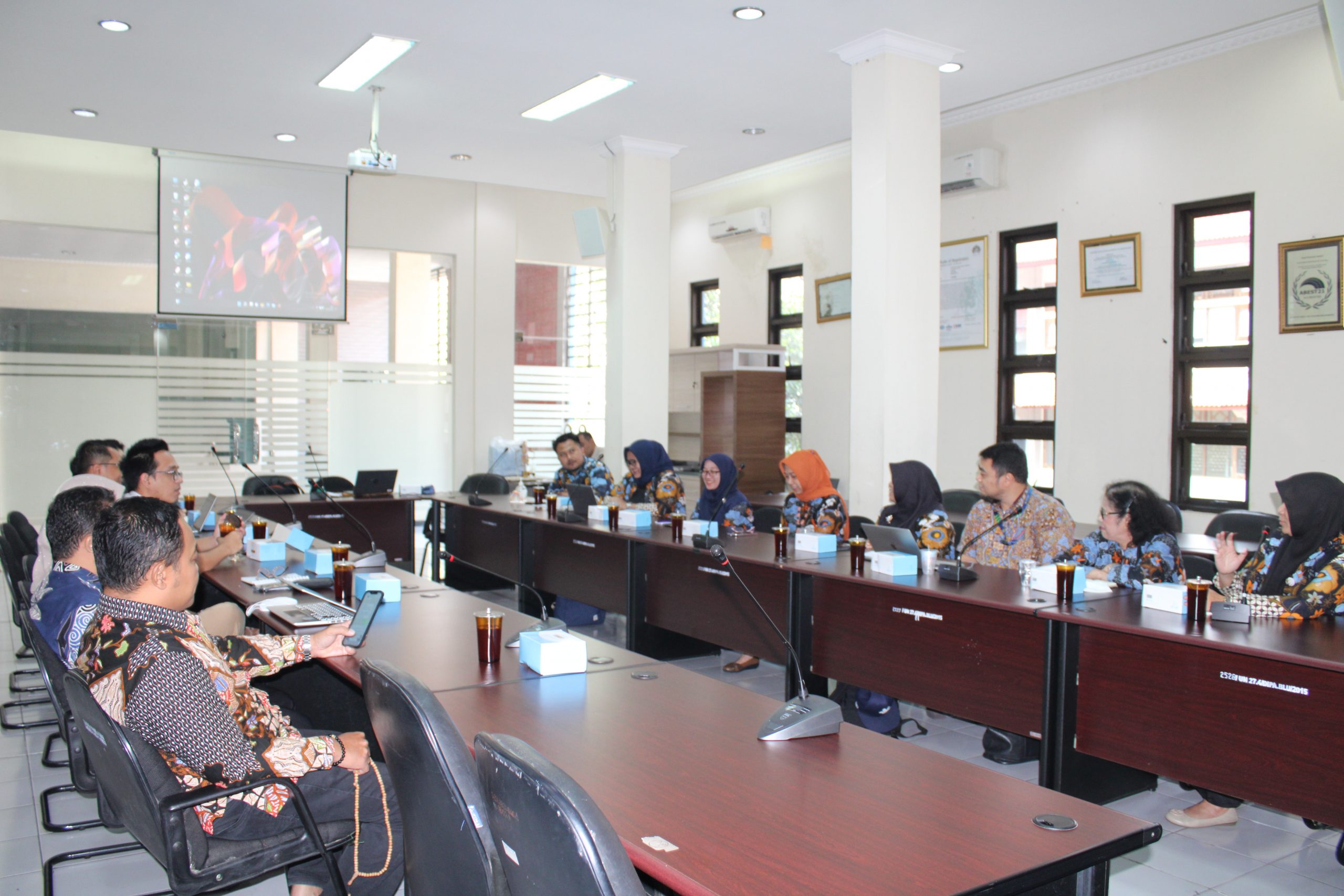
    The event which was held in a hybrid manner at the Konimex Hall of Bachtiar Effendi Building and Zoom Meeting was attended by the Head of the Study Program, Field Coordinator for Monitoring and Evaluation (MONEV), Field Coordinator for Internal Quality Assurance System (Koorbid SPMI), External Quality Assurance System (SPME) and Quality Control Group (GKM).

    The Field Coordinator for SPME, Dr. Setianingtyas Honggowati, MM, Ak., in her remarks representing the Chairman of UPM FEB UNS, expressed her gratitude to the participants who had attended the session both at Konimex Hall and Zoom Cloud Meeting. It is said that the UPM  of FEB UNS was given the task of monitoring the learning process in FEB UNS and the current  meeting aims to plan for a follow-up for AMI Result in 2022.
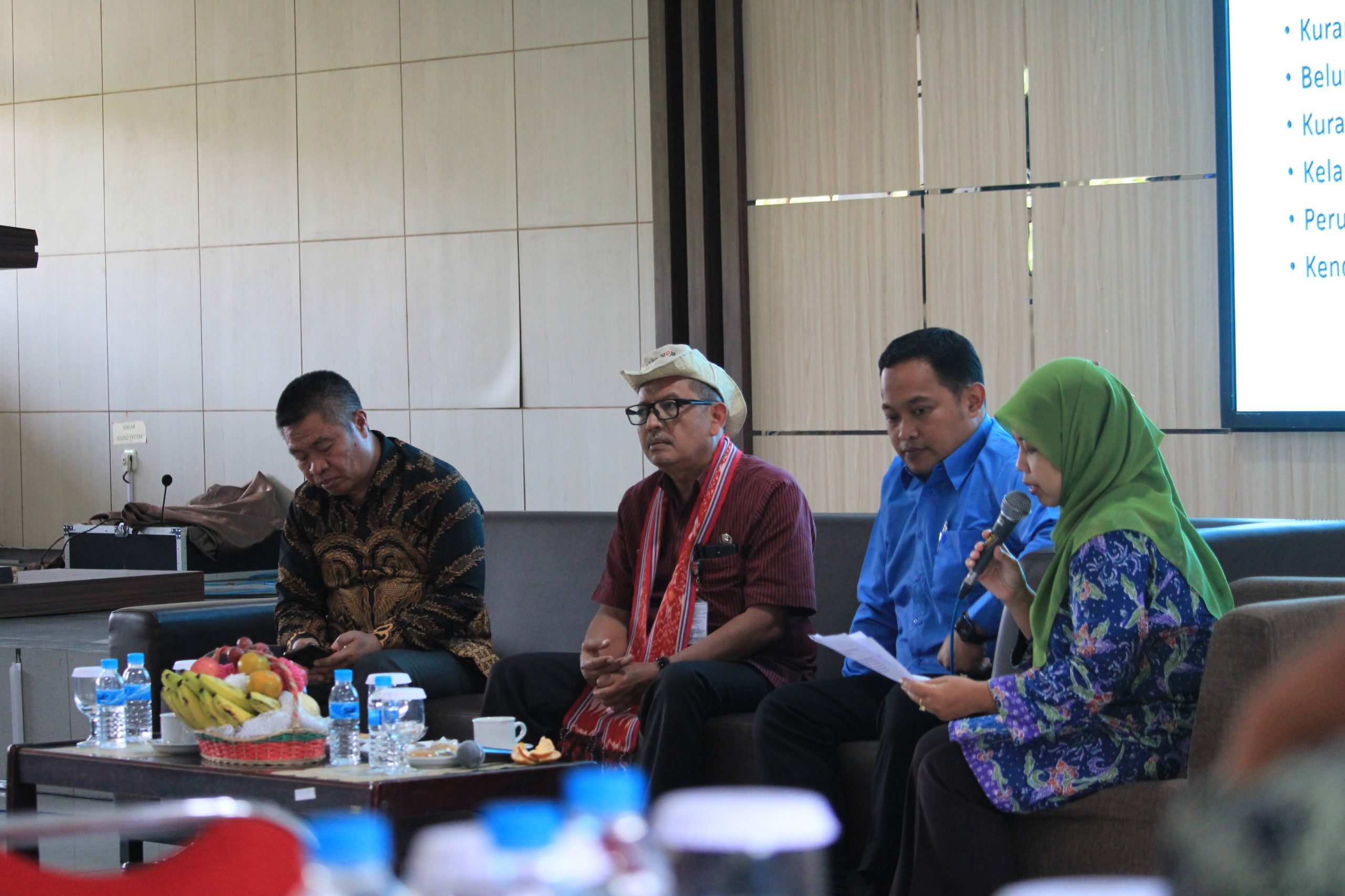
    “This AMI follow-up activity is very important because it is related to the accreditation process. When accrediting, we are always inquired about Internal Audit (AMI), what are the results, and also asked to show the evidence. This meeting is to remind you and as motivation, especially for the Head of Study Program, to fulfill or improve the existing AMI results,” she said.

    Furthermore, Dr. Sri Hartoko, MBA., Ak., Field Coordinator for Monev explained the results of the Level 1 AMI decision for the Study Program in FEB, which then receiving direct responses from the Heads of Study Programs attending the meeting.

  • Discussing the Acceleration of the Tourism Industry and Creative Economy Development in Central Java, BPU FEB UNS Holds FGD

    Discussing the Acceleration of the Tourism Industry and Creative Economy Development in Central Java, BPU FEB UNS Holds FGD

    The rapid development of the creative industry and the tourism sector has its own appeal to encourage regional economic growth. The development of the creative economy in Indonesia is currently focused on 16 sub-sectors, in accordance with Presidential Regulation Number 6 of 2015 concerning the Creative Economy Agency, namely culinary, architecture, product design, interior design, graphic design, film, animation and video, music, fashion, performing arts, games and applications, crafts, radio and television, fine arts, advertising, photography, and publishing.

    Seeing the condition and uniqueness of each region opens a vast opportunity to develop this creative industry and tourism economic sector as a potential “niche market” commonly called Niche Market Destination. The function of the market niche itself is to classify the economic sector, in this discussion is the creative industry and tourism. For example, Surakarta City is well-known for its culture and batik production industry. This aspect is known as the market niche of each region, which has its own characteristics as a potential economic resource for the region.

    In response to this situation, the Business Management Agency (BPU) of the Faculty of Economics and Business (FEB), Universitas Sebelas Maret (UNS) held a Focus Group Discussion (FGD) Business Gathering with Regulators and Industry, Tuesday, March 21, 2023, at the Soedarah Soepono Building Hall FEB UNS.

    The FGD entitled “Acceleration of Tourism Industry and Creative Economy Development in Central Java” presented three speakers, Purwanto, SH., M.Par, Plt. (Acting Officer) Head of the Central Java Youth, Sports, and Tourism Office; Parmin Sastro Wijono, Vice Chairman of the Indonesian Tourism Industry Association (GIPI); Prof. Agung Nur Probohudono, SE, M.Si., Ph.D., Ak., CA., FEB UNS Academician.

    Purwanto, SH., M.Par., in his presentation conveyed the priorities of regional development in Central Java in 2023, namely through increasing community-based eco-socio-tourism and the environment through improving tourism destination facilities, increasing tourism promotion, increasing accessibility, and optimizing the role of private and community in the tourism industry.

    The support programs and activities carried out by the government include the construction of a Toll Road for the Solo-Jogja track, Bawen-Jogja track, Ahmad Yani Airport, and Adi Sumarmo track, improving roads and trans-Jateng transportation, intermodal intelligent platforms for train stations and terminals.

    In terms of attractions, the government has hosted various events such as Sports Tourism Tour De Borobudur, the Borobudur Marathon, World Wayang Way, Supermoon Festival, Music, Socio-Cultural Events, Edutainment Tourism, performances in 20 tourist villages, and many others. The local government has also coordinated the arrangement of the area, the management of homestays, the arrangement of parking areas and traders (Pasar Kujon), and the construction of the grand mosque.

    Purwanto further explained the potential of the creative economy in Central Java. The leading sub-sectors of the creative economy in Central Java are Fashion (40.40%), Culinary (30.01%), and Crafts (15.00%). Meanwhile, the highest growth was in the Television and Radio, Film, Animation, Video, Performing Arts, and Visual Communication Design sub-sectors.

    Meanwhile, Prof. Agung Nur Probohudono said that the development of the tourism sector is very important because it can create jobs, increase income, and encourage local governments to build and maintain infrastructure so that the quality of life of the local community also increases. Central Java has 1,130 tourist attractions with 418 natural attractions, 175 cultural tourism, 365 artificial tourism, 76 special interest tourism, and 96 other tourist attractions.
    “Good governance is needed, thus, all tourist attractions in Central Java can grow and be sustainable. Good governance includes 5 principles of Good Corporate Governance, namely transparency, fairness, independence, and accountability,” he said.

    Furthermore, universities hold an important and strategic role in developing and advancing the tourism sector and creative economy growth, especially in enhancing human resources contribution through learning, research, and community service activities. Meanwhile, the Vice Chairman of the Indonesian Tourism Industry Association explained the key factors for the success of the tourism industry including product, customer care, location, environment, realistic cost, and strategic marketing.

    This agenda also marks a partnership signatory ceremony between FEB UNS and Lawu Park. The partnership was signed by the Vice Dean of Planning, Business Partnership, and Information FEB UNS, Dr. Mugi Harsono, SE, MSi., and Parmin Sastro Wijono from Lawu Park.

  • FEB UNS Successfully Hosted International Seminar 2023: A Lecture on Circular Economy, Small and Medium-Sized Enterprise and Islam

    FEB UNS Successfully Hosted International Seminar 2023: A Lecture on Circular Economy, Small and Medium-Sized Enterprise and Islam

    Faculty of Economics and Business (FEB) Universitas Sebelas Maret (UNS) Surakarta, presented five international academics in the International Seminar 2023: A Lecture on Circular Economy, Small and Medium-Sized Enterprise and Islam.

    The agenda organized as part of the 47th UNS Anniversary celebration, was conducted virtually on Tuesday (03/21/2023). The agenda supported by the UNS Innovation Hub and LinkUp! was attended by more than 250 participants consisting of lecturers, students, and general participants.

    Opening the seminar, Prof. Djoko Suhardjanto, the Dean of FEB UNS, expressed his gratitude to all speakers who have been willing to attend and deliver materials at the FEB UNS 2023 International Seminar. “I am thrilled because the current occasion can present an opportunity for us to learn from each other regarding ideas and best practices in the circular economy and Islam. I hope the participants can be actively involved in today’s discussion,” said Prof. Djoko. Prof. Djoko also hopes that today’s agenda will result in meaningful collaboration.

    The first keynote speaker who delivered the material at this seminar was Prof. Khaleed Soufani from the University of Cambridge, UK, presenting topics related to the relationship between sustainability, circular economy, impact investing, and Islam. According to him, the current world conditions are filled with disruptions in the field of technology, social, and the environment.
    “We are currently in the position of over-consumption, over-producing, and over-trading, these three conditions cause large amounts of waste and negatively affect environmental conditions,” explained Prof. Khaleed.

    The second keynote speaker who attended the event virtually was from Syarif Hidayatullah State Islamic University, namely Prof. Abdul Mu’ti. In his presentation, Prof. Mu’ti revealed that Islam is a complete religion that teaches and regulates many things in human life.

    “The Islamic economy teaches us the importance of material property as part of the wealth and prosperity of Muslims. The protection of wealth remains part of Islamic teachings, although Islam also prohibits the accumulation of wealth in one person or small group, which then ignores the problems that arise in society,” explained Prof. Mu’ti.

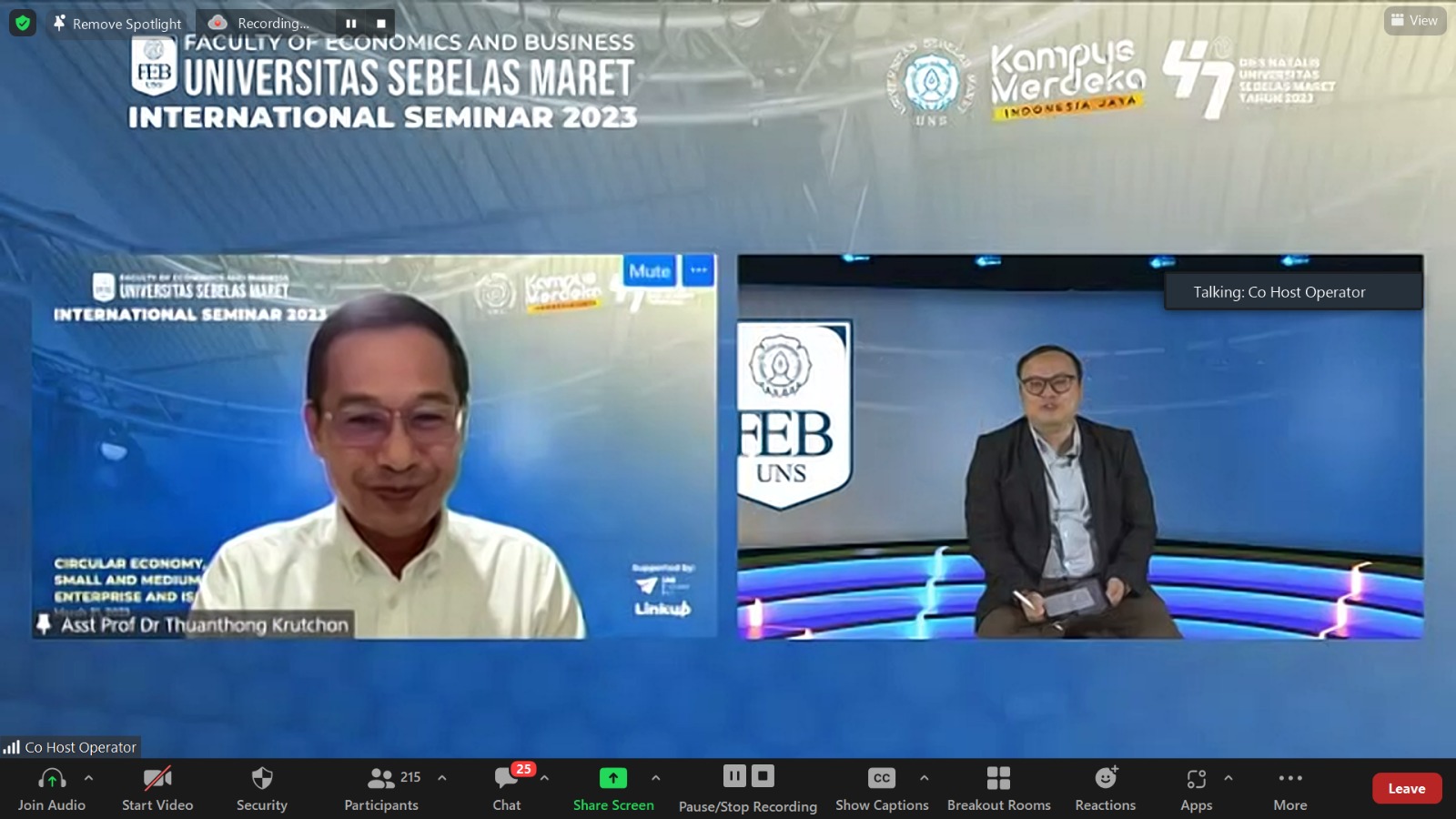
    In the second session of the seminar, three academics delivered different materials in sequence in a plenary session led by Dr. Putra Pamungkas from FEB UNS. The three speakers invited for this session were Assoc. Prof. Dr. Thuanthong Krutchon from Thaksin University Thailand, Dr. Rudi Natamiharja from the University of Lampung, and Dr. Tastaftiyan Risfandy from FEB UNS.

    For about thirty minutes, Assoc. Prof. Dr. Thuanthong shared his experience in implementing circular economy in Thailand, covering three aspects namely Bioeconomy, Circular Economy, and Green Economy (BCG). The implementation of BCG is also connected to national development targets.

    Following material from Dr. Thuanthong, Dr. Rudi explained the topic related to legal protection for MSMEs in Indonesia. In his presentation entitled ‘Indonesian Legal Guarantee on the Welfare of MSMEs,’ Dr. Rudi discussed in detail the regulations that form the basis of legal protection for MSMEs both at the international, national, and legal protection for MSME rights in carrying out economic activities in Indonesia.

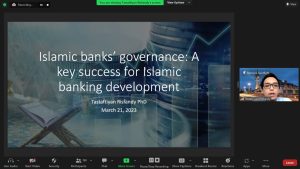
    The last speaker, Dr. Tastafiyan presented the material entitled “Islamic Banks’ Governance: A key success for Islamic banking development.”

    Starting the presentation, Dr. Tastaftiyan stated that, “Islamic banks were formed to reduce the distance between the poor and the rich. Moreover, Islamic banks also serves the role to provide credit for MSMEs. In terms of the development of Islamic banks, there are many aspects that need to be improved,” said Dr. Tastafiyan.
    In this presentation, Dr. Tastaftiyan also shared the results of his research entitled ‘Excess remuneration, governance, and risk-taking in Islamic banks,’ in collaboration with Prof. M. Kabir Hassan. He revealed that the motivation for the study is due to the high level of remuneration for company executives.

    “The implication of the results of this research is that good monitoring activities carried out by the Board of Directors and the Sharia Board can reduce risk-taking incentives, which then encourage the progress of Islamic banks. For this reason, policymakers need to establish a good remuneration scheme, especially for BoD and SSB members.”

    The seminar, which lasted about three hours, went seamlessly. Participants are very enthusiastic about following the course of the seminar proven by the active discussion between participants with all the speakers

  • Universitas Muhammadiyah Malang FEB Comparative Visit to FEB UNS

    Universitas Muhammadiyah Malang FEB Comparative Visit to FEB UNS

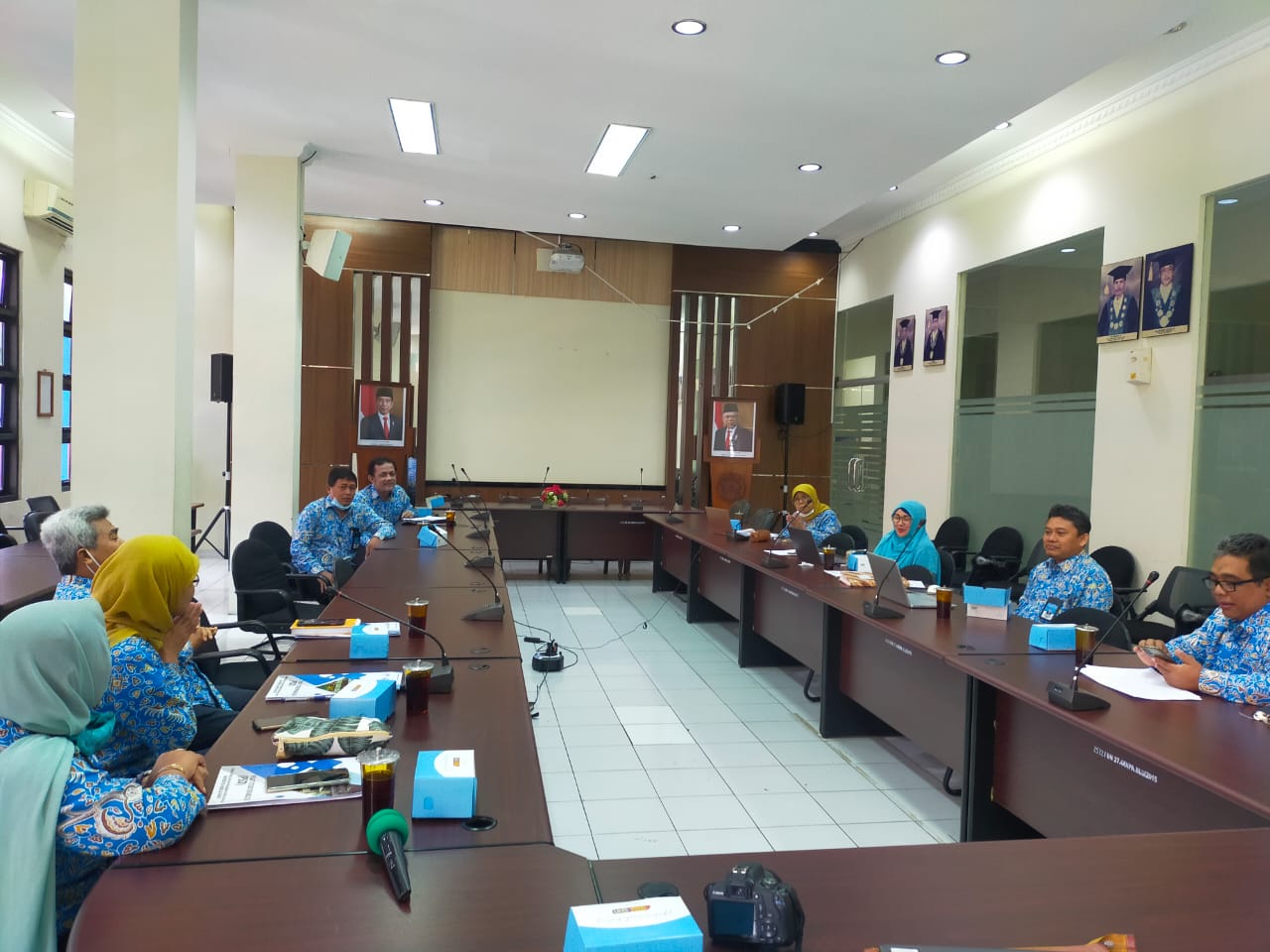
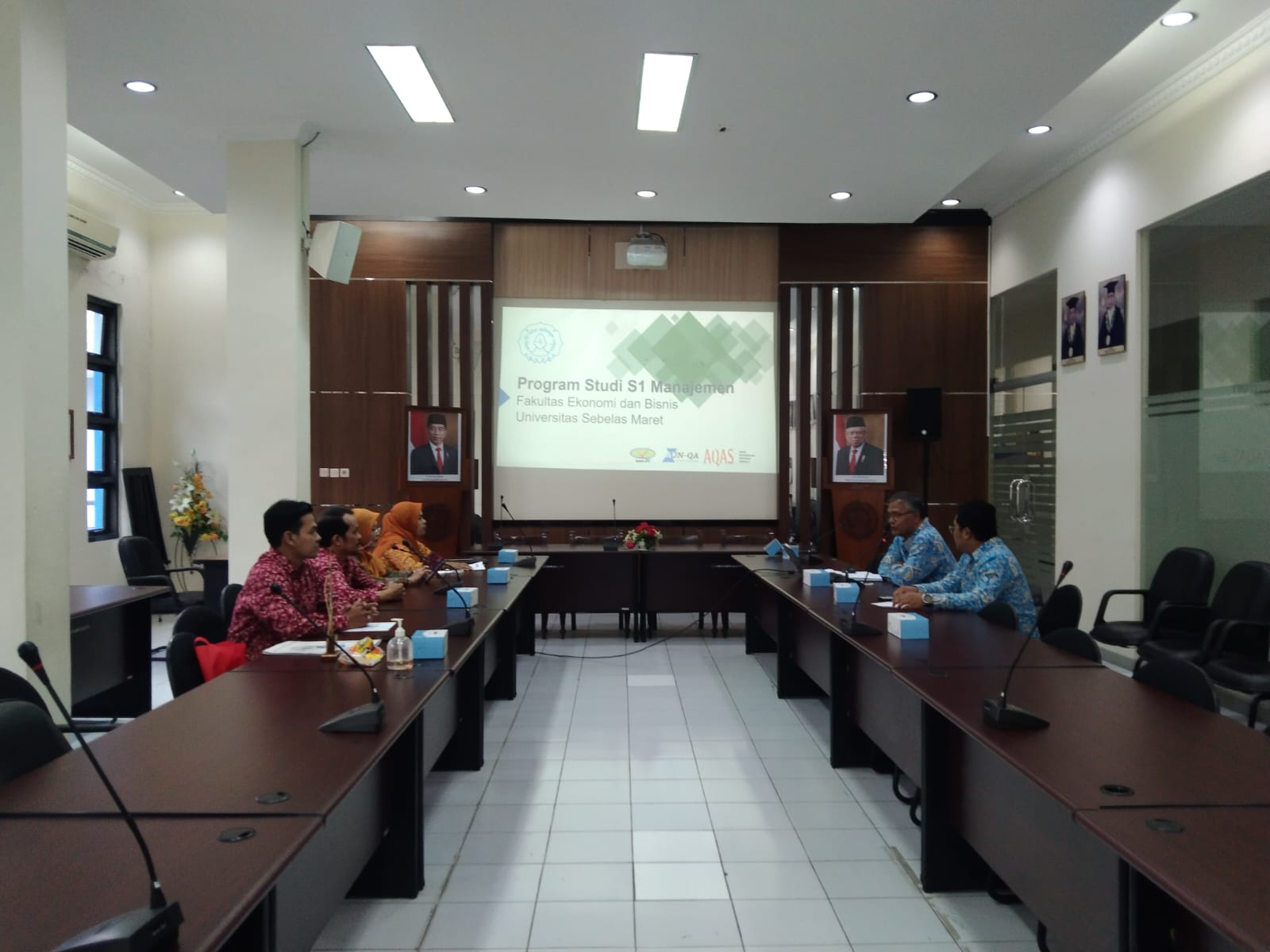
    Faculty of Economics and Business (FEB), Universitas Sebelas Maret (UNS) received a visit from the Head of FEB Universitas Muhammadiyah Malang, Monday 20 March 2023 in Assembly Room 1 of Soeharno TS Building FEB UNS. The team led by Dr. Marsudi, MM., Head of the Management Study Program, FEB Universitas Muhammadiyah Malang was welcomed by a number of FEB UNS leaders and lecturers.

    The Vice Dean of Planning, Business Partnership, and Information FEB UNS, Dr. Mugi Harsono, SE, M.Sc., representing the Dean of FEB UNS, welcomed the visit of the leadership ranks from the FEB Universitas Muhammadiyah Malang.
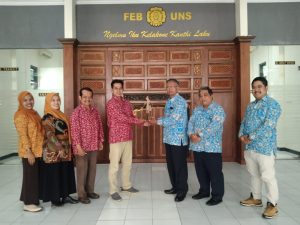
    After introducing the leaders and lecturers of FEB UNS who are attending the session, Dr. Mugi Harsono presented a short profile of FEB UNS. Initially Universitas Sebelas Maret was named Universitas Negeri Surakarta Sebelas Maret, which was officially established on March 11, 1976.

    In its development, in 1982 the name and abbreviation of Universitas Negeri Surakarta Sebelas Maret Surakarta (UNS Sebelas Maret), was determined to be Universitas Sebelas Maret, which is abbreviated as UNS. This name and abbreviation transformation was approved through the Presidential Decree of the Republic of Indonesia No. 55 of 1982.

    Furthermore, as mentioned by Dr. Mugi, the Bachelor in Management Study Program has an incessant Merdeka Belajar Kampus Merdeka (MBKM) program implementation and has received an MBKM grant. The Management Study Program provides many opportunities for students to take part in MBKM Program and the types of MBKM offered in the study program are more exhaustive. This excellent management leads to commendable student achievement, both at the faculty, university, and study program levels.

    Dr. Mugi gave the leadership of FEB Universitas Muhammadiyah Malang the opportunity to discuss further with the Head of the Management Study Program, Dr. Atmaji MM., along with the Taskforce Team. The discussion, which lasted approximately 2 hours, went seamlessly. Hopefully, this visit will provide many benefits, both for FEB University of Muhammadiyah Malang and for FEB UNS.

  • Hosting an FGD on Agile Performance Management to Achieve Optimum Return, BPU FEB UNS Presented Three Speakers

    Hosting an FGD on Agile Performance Management to Achieve Optimum Return, BPU FEB UNS Presented Three Speakers

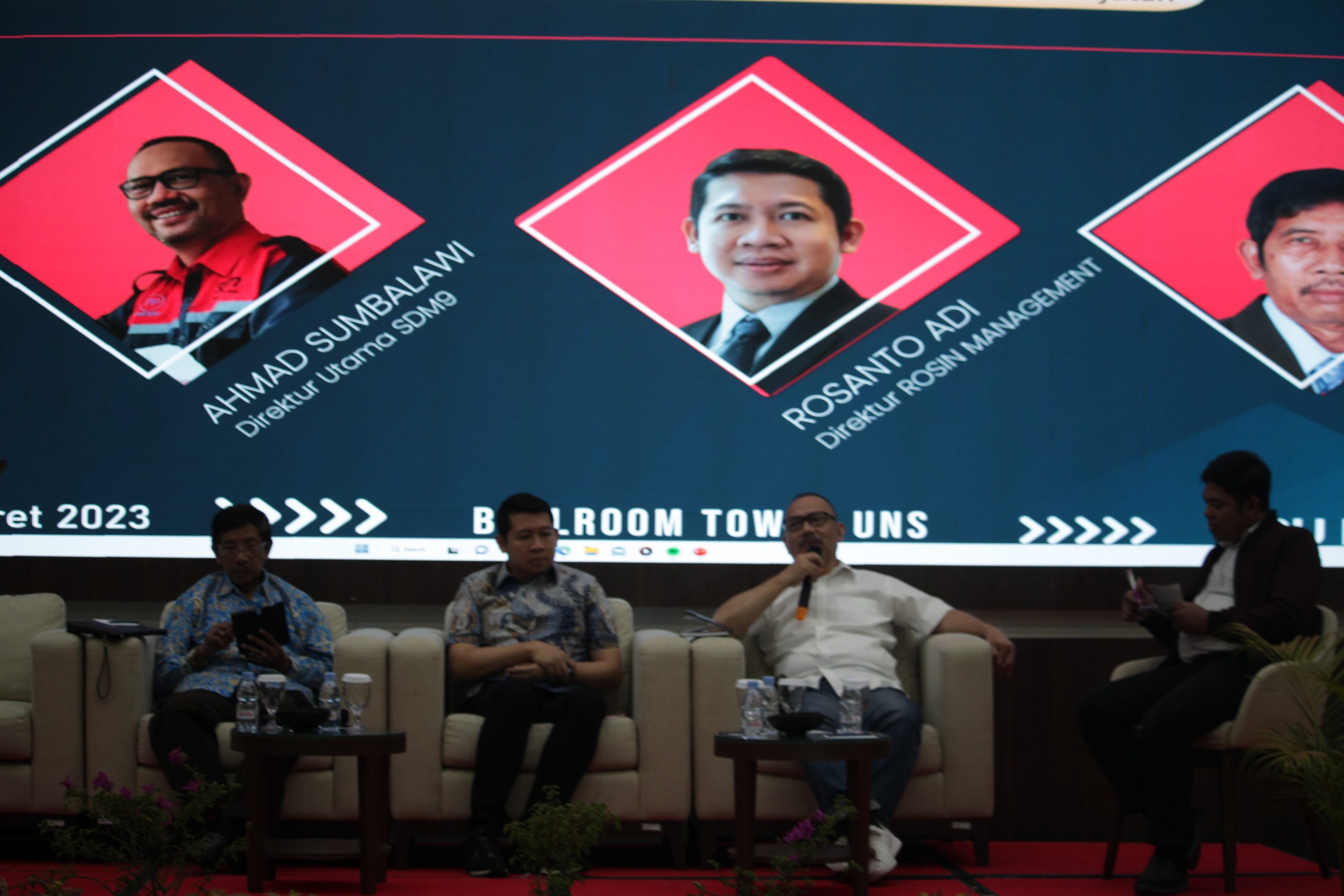
    The Business Management Agency (BPU) of the Faculty of Economics and Business (FEB), Universitas Sebelas Maret (UNS), held a Focus Group Discussion (FGD) – Business Gathering with Regulators and Industry entitled “Agile Performance Management to Achieve Optimum Return,” Monday, March 20, 2023, at the Ki Hajar Dewantara Building Ballroom (UNS Tower).

    In the FGD, BPU presented three speakers, Ahmad Sumbalawi (Director of Human Resources 9) with material on Industrial Job Opportunities and Preparing Human Resources that Support the Company’s Sustainable Competitive Advantage; Rosanto Adi (Director of Rosalia) with material on Implementation of Higher Education Partner Internship System that Adds Value to Industrial Productivity; and Prof. Dr. Tulus Haryono M.Ek., (FEB UNS Lecturer) with the material of Higher Education Strategy to Improve the Quality of MBKM Program (Merdeka Belajar and Kampus Merdeka) in Supporting the Synergy in Human Resources Quality Growth.
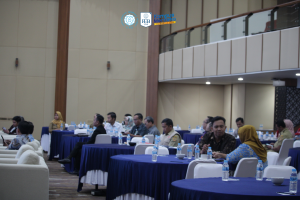
    The Vice Dean of Planning, Business Partnership, and Information FEB UNS, Dr. Mugi Harsono, SE, M.Sc., in his speech, said that since information technology is unstoppable and changes can occur at any time, the approach implemented in the education sector must also be adjusted.

    “Agile performance management is one of the solutions for companies that are in a turbulent situation to get optimal results. Proof of agile process is the presence of a comparison process between owner, management, and employee, where all of the stakeholders can make decisions, because maybe in every line, whether employees, management, or owner have information or experiences that are used to formulate company strategies. It is on this basis that we sit together in this FGD to get experiences from speakers, Mr. Ahmad Sumbalawi and Mr. Rosanto Adi and philosophically strengthened by Prof. Tulus,” he explained.

    Furthermore, it is impossible to solve problems alone in the face of these conditions, there needs to be a mutual awareness to hold hands or collaborate between academics, business, and government, requiring a close hand-to-hand struggle to reach agreements. Before the discussion session started, the event was marked by the signing of a partnership between FEB and various agencies invited to the agenda. The goal is to take and give to each other. This partnership will lead to Merdeka Belajar Kampus Merdeka (MBKM).
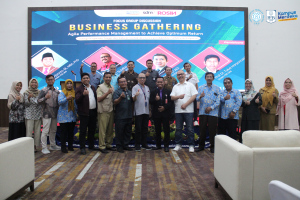
    In MBKM, there was a revolution in the learning process, students had the opportunity to understand the real world. Students may be allowed to take courses for 3 or 4 semesters outside their study program, for one full semester they may take an internship program at the company of their selection, or to serve in the community, thus, students can gain hands-on experience when they graduate. On the other hand, MBKM also provides opportunities for practitioners to become lecturers on campus.

    At the end of his remarks, Dr. Mugi hoped that this FGD activity would provide many benefits, thus, Universities will not become ivory towers whose buildings are towering but do not take root downwards or on the contrary, the government needs academic studies, thus, the policies made can have a philosophy, as well as from business experts, academics need experience and conceptual additions.

    The FGD led by Sarjiyanto, SE, MBA, Ph.D., FEB UNS academics, went interactively with responses and questions from discussion participants who consisted of partner agencies for the students’ internship programs.

  • MESP Study Program Hosted Workshop on Econometrics and Academic Writing

    MESP Study Program Hosted Workshop on Econometrics and Academic Writing

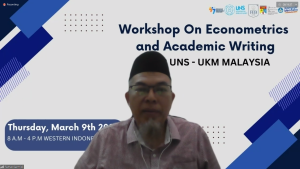
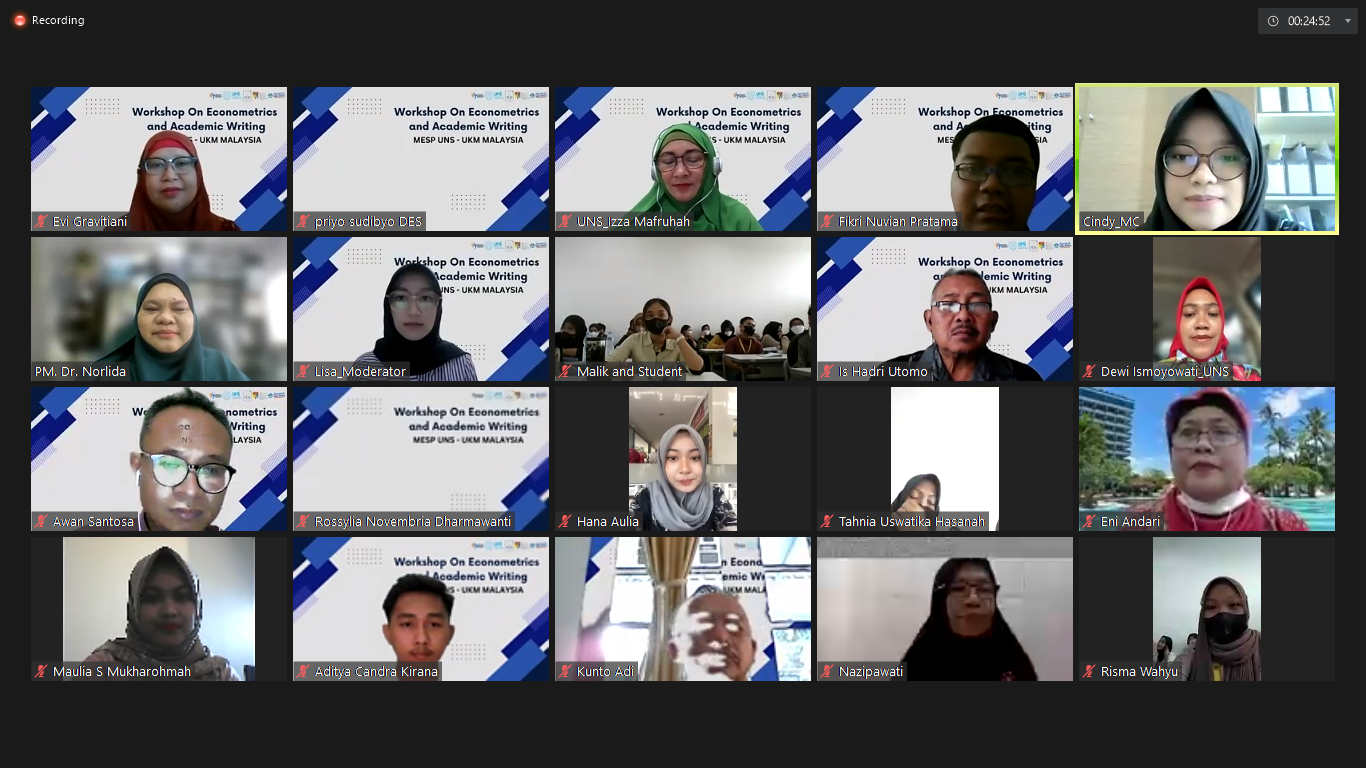
    Master of Economics and Development Studies Program (MESP), Faculty of Economics and Business (FEB), Universitas Sebelas Maret (UNS) hosted a virtual Workshop on Econometrics and Academic Writing, on Thursday, March 9, 2023.

    The workshop attended by students from the undergraduate, graduate, and postgraduate programs of FEB UNS, invited Prof. Dr. Tamat Sarmidi and Assoc. Prof. Dr. Norlida Hanim Mohd Salleh from the Universiti Kebangsaan Malaysia.

    Prof. Izza Mafruhah, the Vice Dean of Academic, Research, and Student Affairs FEB UNS

    Opening the workshop, Prof. Dr. Izza Mafruhah, S.E, M.Sc., Vice Dean of Academic, Research, and Student Affairs FEB UNS expressed her gratitude to Prof. Tamat and Prof. Norlida for their willingness to attend the virtual event and shared their knowledge with FEB UNS students.

    “Thanks to Dr. Evi Gravitiani and also all the students who have taken the time and are willing to attend today’s workshop. The workshop was hosted as part of the 47th UNS Anniversary Celebration. We need quantitative and qualitative training to help students in the preparation of the thesis,” explained Prof. Izza in her opening remark.

    Prof. Dr. Tamat Sarmidi.

    Further, Prof. Izza also revealed that previously MESP had carried out several other statistical training such as a data mining workshop using Orange in February 2023. While in this workshop, the two speakers will discuss online surveys and limited dependent variables.

    “Hopefully, today’s event will give us some useful knowledge. If the student has a question to ask, they can ask it immediately. Thank you to the Professors who have been willing to share knowledge with the participants. I wish you the best of luck with the workshop,” she said.

    The first speaker, Assoc. Prof. Norlida, explains the role of theory in academic writing. According to her, academic writing must follow specific grammar. Theory needs to be included in both the thesis and the scientific article to be published.

    Assoc. Prof. Dr. Norlida Hanim Mohd Salleh

    “One aspect of academic writing is the theoretical framework, this section explains or describes the theory that underlies the emergence of a problem, which then becomes the focus of research. How to determine the theory in research? Authors need to read a lot of literature. Especially for the Doctoral study (S3) level, it is necessary to find a research gap, which will be the benefit of research,” explained Prof. Assoc. Prof. Norlida.

    In the second session, Prof. Tamat Sarmidi delivered material on statistical analysis for the limited dependent variable (binary dependent variable). In his material, Prof. Sarmidi explains four statistical tests that can be used where the dependent variable used is a binary variable (dummy). The four tests are probit, logit, multinomial logit, and ordered probit model.

    At the end of the presentation, Prof. Tamat also demonstrates the procedures for using all four statistical tests using Stata.

  • UNS Inclusion Metric Assessor Visits FEB

    UNS Inclusion Metric Assessor Visits FEB

    The team of UNS Inclusion Metric consisted of Dr. Herry Widyastono, M.Pd., Dr. Tri Rejeki Andayani, S.Psi., M.Si., Dewi, and Sri Rejeki, S.Pd., M.Pd., conducted a site visit to the Faculty of Economics and Business (FEB), Universitas Sebelas Maret (UNS), Monday 6 March 2023.

    The Vice-Dean for Human Resources, Finance, and Logistics FEB UNS, Dr. Djuminah, delivered her remarks

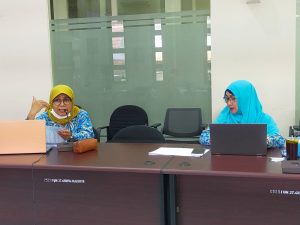
    The team was welcomed by the leadership ranks of FEB UNS in the First Assembly Room, Soeharno TS Building FEB UNS, to assess the UNS Inclusion Metric Self-Evaluation Report that was previously submitted by FEB UNS.

    Certain aspects to be confirmed from the report are learning standards, psychological support standards, infrastructure standards, and graduate standards for diffability students.

    UNS Inclusion Metric Assessor Team
    The UNS Inclusion Metric Assessor Team

    The UNS Inclusion Metric Challenge was initiated by the Center for Diffability Study (PSD), Institute for Research and Community Service (LPPM), as part of the 47th UNS Anniversary Celebration. This challenge is followed by Faculties in UNS.

    The Vice-Dean for Human Resources, Finance, and Logistics FEB UNS, Dr. Djuminah, welcomed the visit of the three UNS Inclusion Metric assessors warmly. It was reported that currently, FEB has had disability-friendly facilities for diffable communities such as a parking lot, ramp, and special restroom. However, there was still room for improvement.

    “We still have the power and passion to try our best in improving service, especially for the diffable community, renovation is on the way, we can check for it later,” she explains.

    The Vice-Dean for Academic, Research, and Student Affairs FEB UNS, Prof Izza Mafruhah added that this year the faculty leader has delegated three Sign Language Spokespersons to support the learning process for deaf and speech-impaired students. Moreover, the lecturers can provide the necessary support for the diffable student.

    Starting the opening remarks, Dr. Tri Rejeki Handayani thanked the FEB UNS leader and FEB UNS Inclusion Metric Team, for the warm welcome.

    assessment of UNS Inclusion Metric by Assessor Team

    “Together we are improving our campus to establish an inclusive campus, a campus that provides favorable facilities that are accessible by all UNS academic communities including the diffable students,” she explains.

    Further, this championship will be an annual event during the UNS Anniversary celebration.

    This site visit will be crucial to validate the data reported by the faculty. There may be additional data or information uncovered during the visit.

    disability facilities assessment for UNS Inclusion Metric

    Based on the data submitted to the PSD assessor, currently, there are three students with diffability in FEB UNS. The assessors need to validate the data and assess how much the faculty provide assistance for students with diffability and provide supporting infrastructure to make the academic community members more comfortable in carrying out learning activities in the campus environment.

    As for psychological support standards, the assessment indicators are the availability of higher education policy documents regarding the provision of psychological and social services, special counseling services and motivational enhancement training, scholarship, health service, and a special budget for assistance for students with diffabilities.

    assessment of FEB UNS disability facility by UNS Inclusion Metric assessors

    Meanwhile, for physical infrastructure, the assessment indicators are pedestrian availability all around the campus, guiding path for each faculty or room, signs and markings, as well as transportation facilities and special parking areas for persons with diffabilities.

    Moreover, the availability of ramps for the diffable community to go up to the 2nd floor in a 2-story building, lift for buildings with more than three floors with suitable dimensions, and space for a wheelchair. Braille label in every facility. Availability of special restrooms and seating for the diffable community in each and every faculty facility.

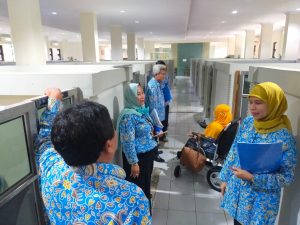
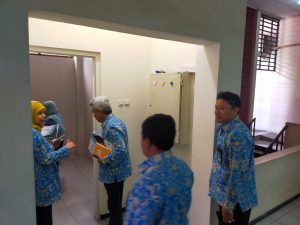
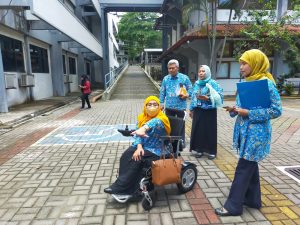
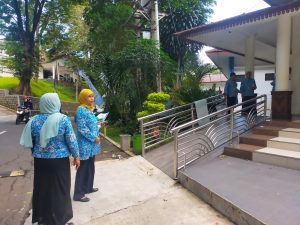
    After validating the data reported, the assessor team checked the infrastructure in FEB UNS directly, such as the ramp, special restroom, and diffable parking lot at Soeharno Building and Masjid Al-Latief.

  • FEB Universitas Pakuan Visits FEB UNS

    FEB Universitas Pakuan Visits FEB UNS

    Faculty of Economics and Business (FEB), Universitas Sebelas Maret (UNS) Surakarta, welcoming a benchmarking visit from the Head of FEB Universitas Pakuan, Wednesday, 22 February 2023, at First Assembly Room, Soeharno TS Building FEB UNS.

    The team led by Dr. Retno Martanti Endah Lestari, Vice-Dean for Academic and Student Affairs FEB Universitas Pakuan, was welcomed by the Deanery members of FEB UNS and several lecturers.

    Agung Nur Probohudono, Ph.D., the Head of the Accounting Study Program, representing the Leaders of FEB UNS, welcomed the Head of FEB Universitas Pakuan.

    After introducing the attending FEB UNS Heads and lecturers, Dr. Agung Nur Probohudono shares a brief profile of FEB UNS.

    Currently, FEB UNS has four undergraduate degree study programs: the Accounting Study Program, Management Study Program, Development Economics Study Program, and Digital Business Study Program. For the postgraduate degree, FEB UNS administers the Master in Management Study Program, the Master in Economics and Development Study Program, the Master in Accounting Study Program, and the Doctoral in Economics Study Program (PDIE) under accounting and management focus study. All study programs have been accredited with an ‘A’ predicate from the BAN-PT. Additionally, the three undergraduate programs in Accounting, Management, and Development Economics FEB UNS were granted international accreditation from AQAS in 2023, while both Accounting Study Program and Management Study Program will apply for accreditation from LAMEMBA.

    Further, he reveals that FEB UNS has numerous notable alumni. “We can consider FEB UNS young, established on 11 March 1976. FEB has numerous successful alumni, such as Prof. Wimboh Santoso, who was the Chairman of the Commissioner Board of OJK until 2022; Doni Primanto Joewono, the current Deputy Governor of Bank Indonesia; Didiek Hartantyo, the Director of Indonesia Railways Company (PT KAI), and many other alumni who were succeeded in the private sector such as Harijanto and Nur Harjanto,” he revealed.

    Meanwhile, Dr. Retno, in her remarks, states that their visit to FEB UNS aims to improve the higher education quality assurance program through quality policy and quality standards, its implementation and evaluation, which also include achievement affirmation of the vision and mission of FEB Universitas Pakuan.

    The topic discussed with FEB UNS through the visit, among others, are study program and faculty management, internationalization of FEB, laboratory management, and accreditation for the Digital Business Study Program.

    The discussion went smoothly and is expected to be beneficial for both FEB Universitas Pakuan and FEB UNS.