Management Study Program, Faculty of Economics and Business (FEB), Universitas Sebelas Maret (UNS), hosted a Guest Lecture Operation Research as part of the Visiting Professor Series under the Kompetisi Kampus Merdeka Program (PKKM) 2022. The agenda invited Prof. Daniel Chicksand from Birmingham Business School, UK, as the main speaker.
The guest lecture entitled ‘Guest Lecture Operation Research: Inventory Management’ was conducted on Thursday, December 1st, 2022, through the Zoom Cloud Meeting and was led by Dr. Yong Digiatmo as Moderator.
Opening the discussion, Prof. Chicksand reviewed the material delivered in the previous visiting professor session to start the discussion regarding production capacity. Inventory management aims to align companies’ production capacity to market demand. “Capacity can be defined as the quantity of product or service that can be provided by a company at a certain time. Therefore, inventory management can help to avoid unnecessary costs arising due to waste,” explained Prof. Chicksand.
In the first session, Prof. Chicksand explains the types of inventory and the advantage of inventory for a company. Meanwhile, in the second session, he explains more about inventory decisions, involving management decisions regarding the level of inventory, price, supplier, and purchasing period. The discussion also covers the Economic Order Quantity (EOQ) as well as other aspects that need to be considered in choosing suitable inventory technology.
The Bachelor of Management Study Program hosted another Guest Lecture as part of the Visiting Professor Series under the Kompetisi Kampus Merdeka Program (PKKM) 2022. The agenda as part of the visiting lecture series for Supply Chain Management is entitled ‘Guest Lecture: A Practical Approach to Supply Chain Management Risk,’ inviting Prof. Daniel Chicksand from Birmingham Business School, UK. The virtual event was conducted through the Zoom Cloud Meeting and led by Miftachul Ma’arif, SEI., MM, a lecturer of the Management Study Program FEB UNS, as the moderator of the discussion.
The guest lecture conducted on Wednesday, November 30th, 2022, was attended by more than 100 participants consisting of FEB UNS students and lecturers.
Opening the material presentation, Prof. Chicksand introduces the concept of risk to the attending participants. “Risk is a latent potential for gain or loss, where the potential will not materialize except a specific occurrence initiated the risk. Therefore, it can be concluded that risk will remain as potential if the causal event does not occur,” explains Prof. Chicksand.
Starting from this definition, Prof. Chicksand pointed out three criteria of risk, namely the existence of potential, the said risk is latent, and after it materializes, the effect can be measured quantitatively.
Related to the risk faced by a corporation, managers should identify the existing risk potential, understand the effect of each risk, and predict the probability of each risk. “Risk is natural and exists everywhere, even if their effect is small or low. Each manager also has their own preference for risk-taking activity. Therefore, the decision taken to handle certain types of risk may differ from one another,” reveals Prof. Chicksand.
Following the extensive introduction to risk, Prof. Chicksand further explains risk management in the supply chain sector. Regarding mitigation according to the type of risk and probability, Prof. Chicksand mentioned four options available, among others, reduce, avoid, retain, and transfer.
“When a risk has a huge effect and high probability, it is better for a manager to avoid the said risk by implementing various strategies. If the risk has a huge effect but has a low probability, managers can apply the transfer technique, to transfer the risk to other parties, such as insurance companies. Meanwhile, if a risk has a small effect, a manager can apply both retain or reduce method,” explains Prof. Chicksand.
The Visiting Professor Series under the Kompetisi Kampus Merdeka Program (PKKM) 2022, organized by the Management Study Program, Faculty of Economics and Business (FEB), Universitas Sebelas Maret (UNS) Surakarta, goes on. This time, the Study Program hosted a virtual Guest Lecture, ‘Marketing Research Methods and Marketing Analysis I,’ through the Zoom Cloud Meeting. The agenda was conducted on Thursday, November 24th, 2022, inviting Dr. Chandana Hewege from Swinburne Business School, Australia, to discuss a topic entitled ‘Marketing Research: Planning your undergraduate research project,’ which lasted for around two hours.
Starting the material presentation, Dr. Hewege shortly explains the definition of research as a form of systematic investigation, which involves a systematic process to uncover new facts, theories, or practices. Further, he explains that the reason for a corporation to invest in research and development is motivated by the significance of market data in determining the global market and decision-making process. “Good research will help a company to formulate accurate decisions and policy, which means a good decision is supported with qualified data and adequate research,” explains Dr. Hewege.
However, he also highlights the differences between market research and marketing research. According to him, even though the two types of research share an overlapping section, however, there is a fundamental difference where market research is only focused on market conditions. In contrast, marketing research covers all marketing activities and aspects. “Marketing research is broader than market research, where the coverage of marketing research includes all marketing activities and aspects. Many students think that their research is marketing research, yet, they are actually conducting market research since they only focused on market trends, market size, market target, and market segmentation,” he revealed.
Afterward, Dr. Hewege continued delivering more in-depth material related to the research approach. This approach must be considered by the students before conducting research or when preparing thesis research. Meanwhile, regarding global marketing research, Dr. Hewege specifies six research stages to be conducted by students, namely, formulating the research problem, developing the research design, determining the source of information, data collection, data analysis and interpretation, and lastly, research report.
“The main objective of the material I shared today is to provide a brief description and background for you to prepare your final bachelor thesis research. Hopefully, this material can be beneficial to support your research process,” said Dr. Hewege concluding the session.
Management Study Program, Faculty of Economics and Business (FEB), Universitas Sebelas Maret (UNS) Surakarta, hosted another Visiting Professor lecture as part of the Visiting Professor Series Kompetisi Kampus Merdeka Program (PKKM) 2022. In the agenda conducted on Thursday, November 17th, 2022, the Study Program invited Dr. Chandana Hewege from Swinburne Business School, Australia, through a Zoom Cloud Meeting.
This Workshop session discusses research article publication submission to a reputable international journal. Starting the material presentation, Dr. Hewege shared motivation with the participants. “When facing rejection in the scientific research article publication process, don’t give up. This failure is common in the publication process for a scientific research article, especially when we targeted to get published in a reputable journal,” said Dr. Hewege.
Research, according to Dr. Hewege, is an interesting activity, but of course, there are academic members who are less interested in conducting research activities. However, to develop an excellent academic career, an academician must be involved in a balanced activity. “On this occasion, the material I am about to share is based on my experiences on various processes of publications. Hopefully, the material and the discussion can be a motivation for all the participants,” hopes Dr. Hewege.
The material delivered in this event covers several points starting from the publication process, publication outlet selection, the importance of special issues journal, understanding journal editors, understanding good quality research articles, how to pass the desk review process, and tips on improving article quality. Regarding publication outlet selection, Dr. Hewege suggested that the author should be careful with predatory journals.
Concluding the material presentation, Dr. Hewege shares essential tips on the research article publication process. The event went on with a discussion with the workshop participants.
Students from the Faculty of Economics and Business (FEB), Universitas Sebelas Maret (UNS) Surakarta, successfully won second place in the National Accounting Competition (NAC) organized by Universitas Muria Kudus. The three students, Nur Pujiastuti, Sukma Mely Asmara, and Raditya Puspa Oksavin, were students of the Accounting Study Program FEB UNS.
The Team leader, Nur Pujiastuti, or Puji for short, states that the virtual competition was attended by 33 teams from 17 universities in 9 provinces across Indonesia. Their team successfully passed four strict competition stages.
Final Round in Impromptu Motion Debate
In the elimination stages, the team must solve 100 multiple-choice accounting quiz questions, while in the main round, they must solve individual multiple-choice questions, followed by relay essay questions. As for the semifinal round, the team is required to work on a case study and present their discussion conclusion under the topic of Inventory Audit.
On the final round on October 19th, 2022, the finalists competed in Impromptu Motion Debate entitled The Dead of Accounting, Dissipation of CSR Virtue and Transfer Pricing.
The three students were currently enrolled in their seventh semester and, since their fourth semester, had participated in numerous virtual competitions. However, most of their past endeavors stopped at the semifinal rounds. Fortuitously the NAC was conducted this semester, and the three took the opportunity to compete for the winning medal.
Group photo with the winner and NAC organizer
According to Puji, their motivation for participating in this championship is to give the best memento for FEB UNS.
“At the beginning, we were encouraged to take this opportunity with great expectation to win the medal for FEB UNS. Alhamdulillah, our wishes were finally accomplished. We don’t know whether we can compete at the future championship since next semester we must start focusing on our bachelor thesis research,” she revealed.
Another team member, Raditya, states that his team was optimistic about winning the competition. From the beginning, the team has set a target to win the challenge. In each competition stage, the three encourage and trust each other, and they are confident to pass each stage well.
Aside from their optimism, they always pray and trust in Allah’s provisions for all of their efforts.
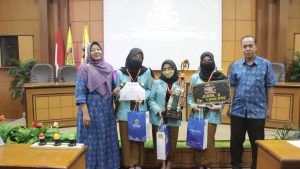
Group Photo with Leaders of Universitas Muara Kudus
For Sukma, participating in competitions such as NAC brings valuable experiences. To accomplish an achievement, indeed, is not easy and full of challenges, but according to her, they must stay tenacious.
Moreover, other than pursuing study at a higher education institution, students must develop their competency and carve various achievements through competition participation. Supporting facilities are provided by the faculty, and students can take advantage of these facilities the best they can.
“Our team had faced failures in previous championships, but through those failures, we found the motivation to evaluate our shortcomings and strive better in the next opportunities. While doing our best, it is not enough to only work hard, and we also need to pray. God will bless us according to our effort. God is blessing us not because of our status but because He is the Most Gracious and Merciful.
The Development Economics Study Program (DESP), Faculty of Economics and Business (FEB), Universitas Sebelas Maret (UNS) Surakarta, visited Universitas Indonesia Wednesday, 9 November 2022.
The visit led by the Head of the Development Economics Study Program FEB UNS, was conducted as Focus Group Discussion (FGD) between DESP FEB UNS and IUP UI. The agenda was conducted at Meeting Room of Main Administration Building 2nd Floor, Universitas Indonesia.
Dr. Isfandiarni, S.E., M.A., the Coordinator of IUP UI welcomed the Head of Development Economics Study Program FEB UNS, Bhimo Rizky Samudro, S.E., M.Si., Ph.D., and the team.
“Welcome to IUP UI. On this occasion, we will exchange experiences, we have our experiences in IUP UI, and also, there is knowledge brought by the UNS entourage to be shared and discussed. Hopefully, this discussion will lead to a collaboration between UI and UNS, especially DESP FEB UNS,” she said welcomed the FEB Team.
Further, Dr. Isfa explained the journey of IUP UI and the process they undergo to reach its current state. A strong commitment from UI leaders becomes one of the crucial keys to conducting a qualified international class.
The discussion moderated by the Head of Economics Department UI, Vid Adrison, S.E., M.A., Ph.D., goes amicably with interactive discussion. The agenda was concluded with a group picture taken as a token of appreciation.
Responding to the development of digital business and digital transformation, the Faculty of Accountancy, Universiti Teknologi MARA (UiTM), Sarawak, Malaysia, hosted an international webinar, inviting two faculty members of the Faculty of Economics and Business (FEB) UNS, Surakarta. The agenda entitled International Academic Webinar “Digital Transformation” was conducted on Friday, November 11th, 2022, and was opened with a remark from the Dean of FEB UNS, Prof. Drs. Djoko Suhardjanto, M.Com.(Hons)., Ph.D., Ak., and the Head of Accounting Study Program FEB UNS, Agung Nur Probohudono, S.E., M.Si., Ph.D., Ak., CA.
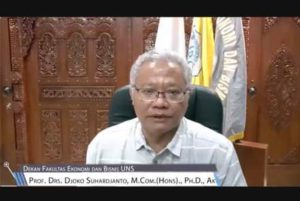
Dean of FEB UNS, Prof. Drs. Djoko Suhardjanto, M.Com.(Hons)., Ph.D., Ak., delivering welcome remarks
Inviting six speakers, the International Academic Webinar was conducted virtually through the Zoom Cloud Meeting. The six invited speakers are including two lecturers from FEB UNS, Dr. Taufiq Arifin (FEB UNS), and Dr. Putra Pamungkas (FEB UNS), as well as Yussri Sawani (UiTM Sarawak), Assoc. Prof. Dr. Mazurina Mohd Ali (UiTM Puncak Alam), Puan NJH. Imilia Ibrahim (UiTM Sarawak), Assoc. Prof. Dr. Natrah Saad (Universiti Utara Malaysia), .
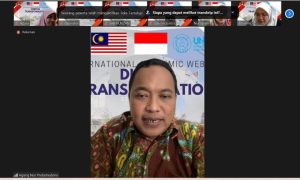
Head of Accounting Study Program FEB UNS, Agung Nur Probohudono, S.E., M.Si., Ph.D., Ak., CA., delivering opening remarks
The first speaker, Yussri Sawani, shared material regarding the implementation of Sustainable Development Goals in Higher Education Institutions, entitled Online SDG Reporting of Higher Education. “Hopefully, through this event, we can equip students with knowledge regarding SDG, thus, in the future, there will be the green generation with broad knowledge,” said Yussri in front of more than 100 webinar participants.
The second speaker, Assoc. Prof. Dr. Mazurina, delivered material entitled ‘Digital Transformation in Accounting,’ which detailed the current technology development that will support the accounting profession as well as the upcoming challenges. The shared material covers the effect of digital transformation on the accounting profession, opportunities, challenges, and future development.
Dr. Taufiq Arifin delivering material
The third material, entitled Digital Transformation: Sustaining Institutional Memory, was delivered by Puan NJH. Imilia Ibrahim, discusses how to maintain knowledge within an institution during this digital transformation era. “Digital transformation refers to the adoption of digital technology compared to the typical business process, which aims to develop a business process through digital technology. Moving on to the next material, Assoc. Prof. Dr. Natrah Saad, delivers material entitled Digital Transformation: The Effect on Teaching and Learning.
Dr. Taufiq Arifin (FEB UNS) continues the discussion as the fifth speaker for the event. In his material entitled ‘Digital Transformation to Accelerate SDGs Impact,’ Dr. Taufiq specified six perspectives in digital transformation that can accelerate SDGs’ implementation. These six perspectives are human capital, renewable energy, smart cities, smart industry, digital agriculture, and digital government.
“Previously, we know the Millennium Development Goals (MDGs), which were intended specifically for developing countries. However, now, the MDGs are replaced with SDGs that also target developed countries. Therefore, all countries are required to apply SDGs, which is crucial to transform the world to be more sustainable,” said Dr. Taufiq, opening his material presentation.
Dr. Putra Pamungkas sharing material on Digital Transformation and Climate Change
The last speaker, who also comes from FEB UNS, is Dr. Putra Pamungkas with a material entitled Sustainable Finance Digital Transformation and Climate Changes, covering SDGs and sustainable finance, as well as the role of digital transformation in green economy implementation by the MSMEs sector. In his material presentation, Dr. Putra also disseminates a research result involving 2,000 MSMEs in Indonesia. “Our research finds that during the pandemic, micro and small enterprises with huge sales and revenues have a higher opportunity to adopt more advanced digital technology. We also found that digital transformation in the micro and small enterprise has a positive and significant effect on green economy implementation,” explains Dr. Putra.
The Webinar, as part of the Malaysia-Indonesia Inbound and Outbound Program, was concluded with an interactive quiz session conducted through the quizizz platform.
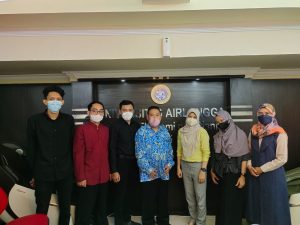
The Development Economics Study Program (DESP), Faculty of Economics and Business (FEB), Universitas Sebelas Maret (UNS) Surakarta, visited Universitas Airlangga Monday, 7 November 2022. This visit is part of the development program for the international class initiated by the Study Program in 2020.
The visit led by the Head of the Development Economics Study Program, Bhimo Rizky Samudro, S.E., M.Si., Ph.D., was welcomed by Dr. Devi Sulistyo Kalanjati, SE., M.Acc., M.Sc., Ak., the Coordinator for Undergraduate Program (IUP) UNAIR, alongside IUP UNAIR program managers. On this occasion, a Focus Group Discussion (FGD) between DESP FEB UNS and IUP UNAIR was conducted.
Dr. Devi welcomed the Head of Development Economics Study Program FEB UNS and the team. “Welcome to IUP UNAIR. On this occasion, we will exchange experiences, we have our experiences in IUP UNAIR, and also, there is knowledge brought by the UNS entourage to be shared and discussed. Hopefully, this discussion will lead to a collaboration between UNAIR and UNS, especially DESP FEB UNS,” she welcomed the FEB Team.
Further, Dr. Devi explained the journey of IUP UNAIR and the process they undergo to reach its current state. A strong commitment from UNAIR leaders becomes one of the crucial keys to conducting a qualified international class.
The discussion moderated by the Head of Development Economics Study Program UNAIR, Rumayya, S.E., M.Reg. Dev., Ph.D., goes amicably with interactive discussion. The agenda was concluded with a group picture taken as a token of appreciation.
The development of social media’s role and its impact in the marketing field has brought numerous transformations, challenges, and new opportunities for the industrial sector. This condition encourages the Management Study Program, Faculty of Economics and Business (FEB), Universitas Sebelas Maret (UNS) Surakarta, to discuss ‘Global and Digital Marketplaces in Social Media Landscape: Challenges and Opportunities for Firms’ in a recent Visiting Professor Lecture series as part of the Kompetisi Kampus Merdeka Program (PKKM) 2022. The virtual agenda on November 3rd, 2022, became the first part of the Guest Lecture Marketing Management and was attended by 100 participants through the Zoom Cloud Meeting.
Attending the event virtually as the main speaker was Dr. Chandana Hewege from Swinburne Business School, Australia. Dr. Hewege opened his material with the definition of a marketplace and the digital business condition after the Covid-19 pandemic. According to him, there is considerable development of the digital business that will stay relevant after the pandemic end, such as e-commerce. “There are considerable virtual or digital activities that will remain after the pandemic. Currently, the data accumulated in social media and other digital applications are huge, thus, it can be useful to predict the market condition,” explains Dr. Hewege.
Further, he explains that the biggest challenge faced by marketing experts recently is the need to manage both physical and virtual stores harmoniously. Therefore, both services and products offered virtually can be delivered and received by customers. This condition is in line with the consumer demand that is now more focused on experiences, which will encourage producers to transform their business from multichannel to omnichannel, where a company needs to integrate all available marketing channels. “Customers now are more powerful than before. Especially with the existence of social media as a global catalyst, companies need to build an online community and must be present in every online discussion to maintain product image. It is no longer enough to own social media account, but they must be involved in the ongoing discussion,” he explained.
Regarding this development, Dr. Hewege explains that currently, a firm’s value is not only measured from a monetary aspect but also from the social capital aspect. This concept refers to the condition where a firm attracts plenty of customers to buy or use the product offered by the firm. A simple example of social capital is a web page visited by countless people will have a higher value compared to a web page rarely visited by people. “You as a marketer can no longer only focus on growing customer groups. You need to establish a community, you will need authenticity in your communication approach with the community members or new customers. You also need to be aware of consumer activism, where experience or opinion shared by one consumer in social media can affect other consumers.”
The visiting lecture continues with an interactive question-and-answer session after the material is presented. “Thank you, I hope you can use this material to grow better in the future,” hopes Dr. Hewege concluding the discussion session.
Two of Universitas Sebelas Maret (UNS) professors have entered their retirement. Prof. Dr. Bambang Sutopo, M.Com., Ak., and Prof. Dra. Soeparmi, M.A., Ph.D., delivered their Council of Professor Retirement Tribute Speech on Tuesday, November 8th, 2022.
Prof. Bambang Sutopo handed service baton to Taufiq Arifin, SE, M.Sc., Ph.D., Ak
On this occasion, which was hosted in a hybrid manner at the Second UNS Assembly Room Dr. Prakosa Building and also available through Zoom Meeting and UNS Youtube Channel, Prof. Bambang Sutopo delivered his Tribute Speech entitled Accounting Research at the Faculty of Economics and Business, Universitas Sebelas Maret: Achievements, Challenges, and Opportunities. Meanwhile, Prof. Dra. Soeparmi, M.A., Ph.D., delivered a speech entitled Research-Based Learning at Higher Education Institutions.
After delivering their speech, the two professors handed their baton of service devotion in UNS to younger colleagues. Prof. Bambang Sutopo handed his service baton to Taufiq Arifin, SE, M.Sc., Ph.D., Ak., while Prof. Soeparmi handed hers to Mohtar Yunianto, S.Si., M.Si., as the younger colleagues at UNS.
Prof. Soeparmi handed service baton to Mohtar Yunianto, S.Si., M.Si
Prof. Drs. Suranto, M.Sc, Ph.D., as the Head of the UNS Council of Professor, in his remarks, convey his congratulation to Prof. Bambang Sutopo and Prof. Soeparmi as senior professors in UNS after dedicating their excellent service to UNS for years.
“UNS Council of Professor Retirement Tribute Speech is an academic culture developed for UNS academic members, showing that we have a professor who had dedicated their service for 70 years in UNS and that we will organize a special ceremony for their service,” he revealed.
Further, he states that there must be a special term for emeritus professors. Indeed, in one of the UNS regulations, Prof. Suranto specifically requested the Head of the Academic Senate to specify Professor Retirement not to be on the same term as normal retirement.
Prof. Dr. Ir. Ahmad Yunus, M.S., delivering Rector’s Remarks
If normal retirement is addressed to all academic support staff and lecturers, Professor retirement must be specifically addressed to the Council of Professors. According to him, this retirement is only addressed to professors entering their 70 years of service, a particular clause that was requested not to get amended.
In this term, all professors entering their retirement are requested to deliver their tribute speech and hand a baton of service to their junior.
Prof. Suranto, Head of UNS Council of Professors Delivering Remarks
“We visited and requested for the professor to deliver their speech, not in a ceremonial style, but a tribute speech to be more flexible. This allows whether they wish to recount their experiences during their service in UNS, and what’s special is the professors will show the way to the juniors, who will continue to expand their study,” he explains.
Rector of Universitas Sebelas Maret, in his remark delivered by Prof. Dr. Ir. Ahmad Yunus, M.S., Vice-Rector for Academic and Students Affairs UNS, revealed to all invited guests that retirement is often associated with unproductive or a period to rest to enjoy their retirement age.
However, according to the Rector of UNS, retirement is not the end of all activities and shall not become a terrifying period. If retirement is only interpreted as a time limit to stop any activity and only rest, never retire.
Invited guest of the UNS Council of Professor Retirement Tribute Speech
However, if retiring means stopping working on boring routines and starting working on an exciting assignment that makes you happy, joyful, and feel useful, then by all means, retire as soon as possible. There are many of us, for instance, people out there who started our new careers after entering retirement.
Further, it was said that older adults are not those with sickness or patients who need to reduce their activity and constantly rest. Human minds are similar to a muscle, they need exercises and stimulation to remain active and stay well-maintained.
The Rector of UNS also gives an example of how Prof. Bambang Sutopo and Prof. Soeparmi, even after entering their 70th years of service, can maintain their sharp and clear thought. Both are innovative, always active, independent, productive, and diligently carries out their duty as a lecturer, with various duties involving supervising students, conducting research, and examining students’ thesis for bachelor, postgraduate, doctoral, and professional degree.
Our minds actually work according to certain cycles. We need to admit that our habits for decades will need great effort to establish new comfortable habits after entering retirement.
However, the Rector of UNS believes that Prof. Bambang Sutopo and Prof. Soeparmi will not find significant challenges in adjusting to the new life cycle.
At the end of the remark, the Rector of UNS congratulates Prof. Bambang Sutopo and Prof. Soeparmi for entering retirement. Both professors have shown their dedication, loyalty, and commendable and extraordinary dedication to UNS development. As one of UNS’s commitment and appreciation to Prof. Bambang Sutopo and Prof. Soeparmi’s service and dedication, the Rector of UNS invites both professors to dedicate their knowledge as emeritus professors in FEB and FMIPA UNS.
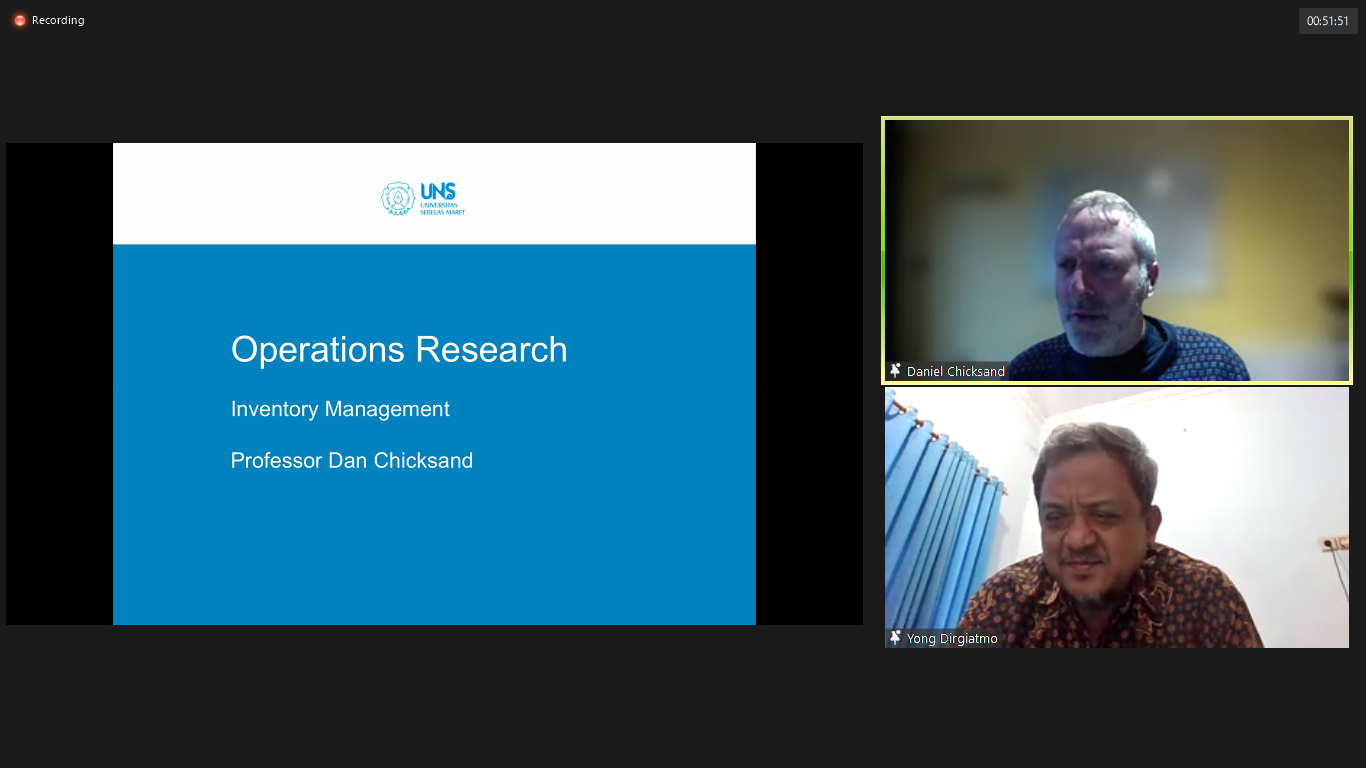
 The guest lecture entitled ‘Guest Lecture Operation Research: Inventory Management’ was conducted on Thursday, December 1st, 2022, through the Zoom Cloud Meeting and was led by Dr. Yong Digiatmo as Moderator.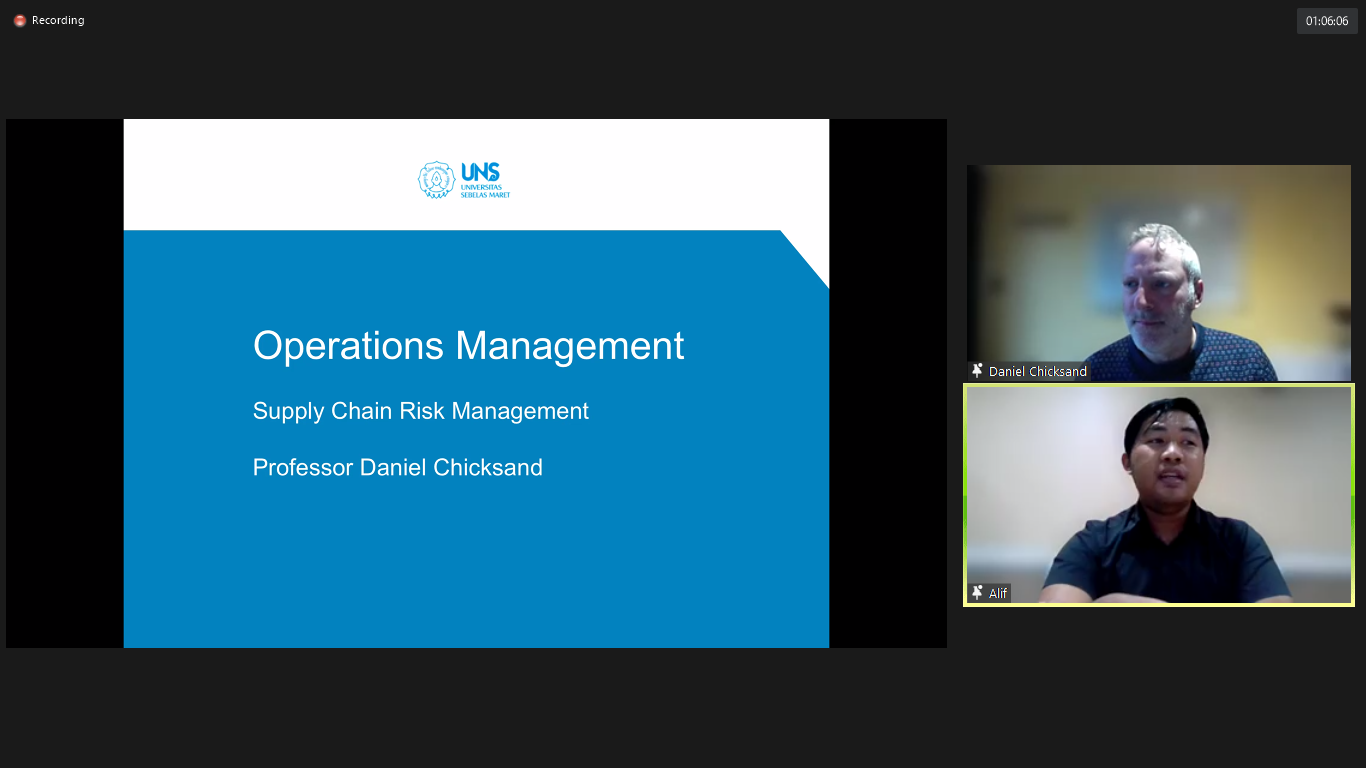
 The guest lecture conducted on Wednesday, November 30th, 2022, was attended by more than 100 participants consisting of FEB UNS students and lecturers.
 Following the extensive introduction to risk, Prof. Chicksand further explains risk management in the supply chain sector. Regarding mitigation according to the type of risk and probability, Prof. Chicksand mentioned four options available, among others, reduce, avoid, retain, and transfer.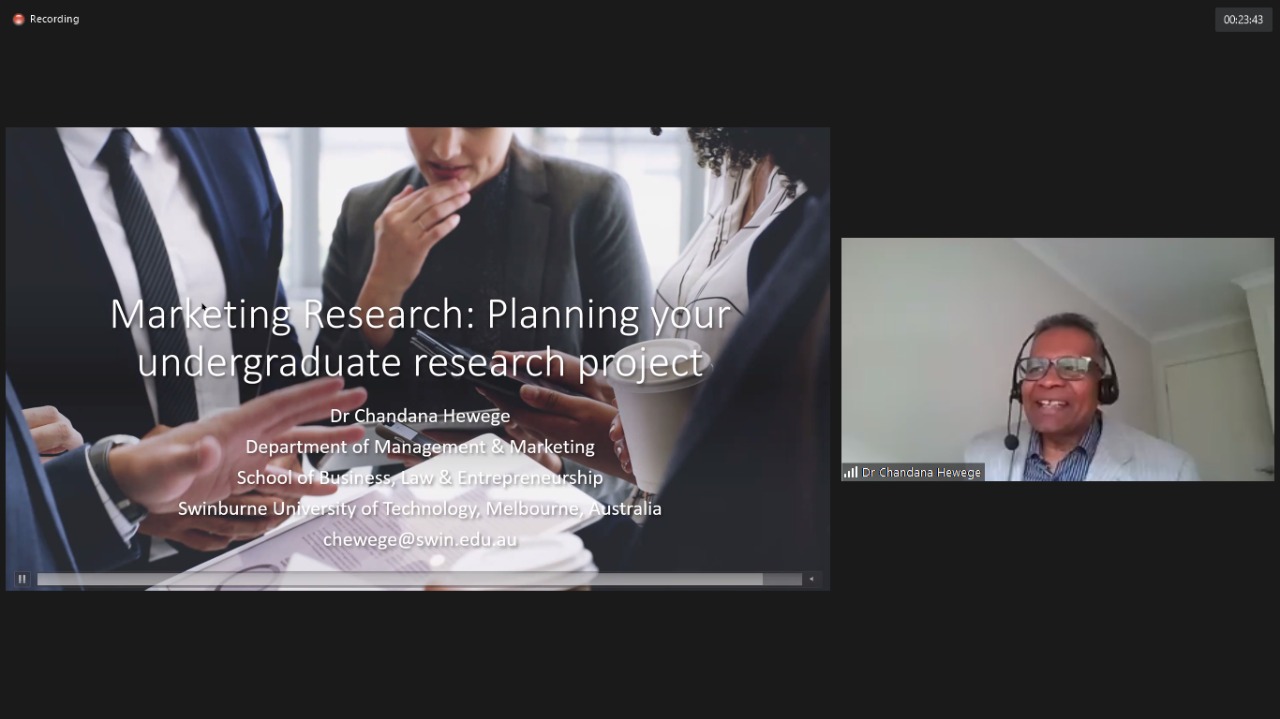
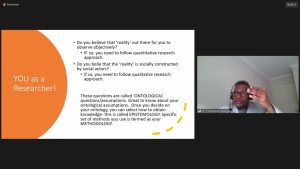 Starting the material presentation, Dr. Hewege shortly explains the definition of research as a form of systematic investigation, which involves a systematic process to uncover new facts, theories, or practices. Further, he explains that the reason for a corporation to invest in research and development is motivated by the significance of market data in determining the global market and decision-making process. “Good research will help a company to formulate accurate decisions and policy, which means a good decision is supported with qualified data and adequate research,” explains Dr. Hewege.
 Afterward, Dr. Hewege continued delivering more in-depth material related to the research approach. This approach must be considered by the students before conducting research or when preparing thesis research. Meanwhile, regarding global marketing research, Dr. Hewege specifies six research stages to be conducted by students, namely, formulating the research problem, developing the research design, determining the source of information, data collection, data analysis and interpretation, and lastly, research report.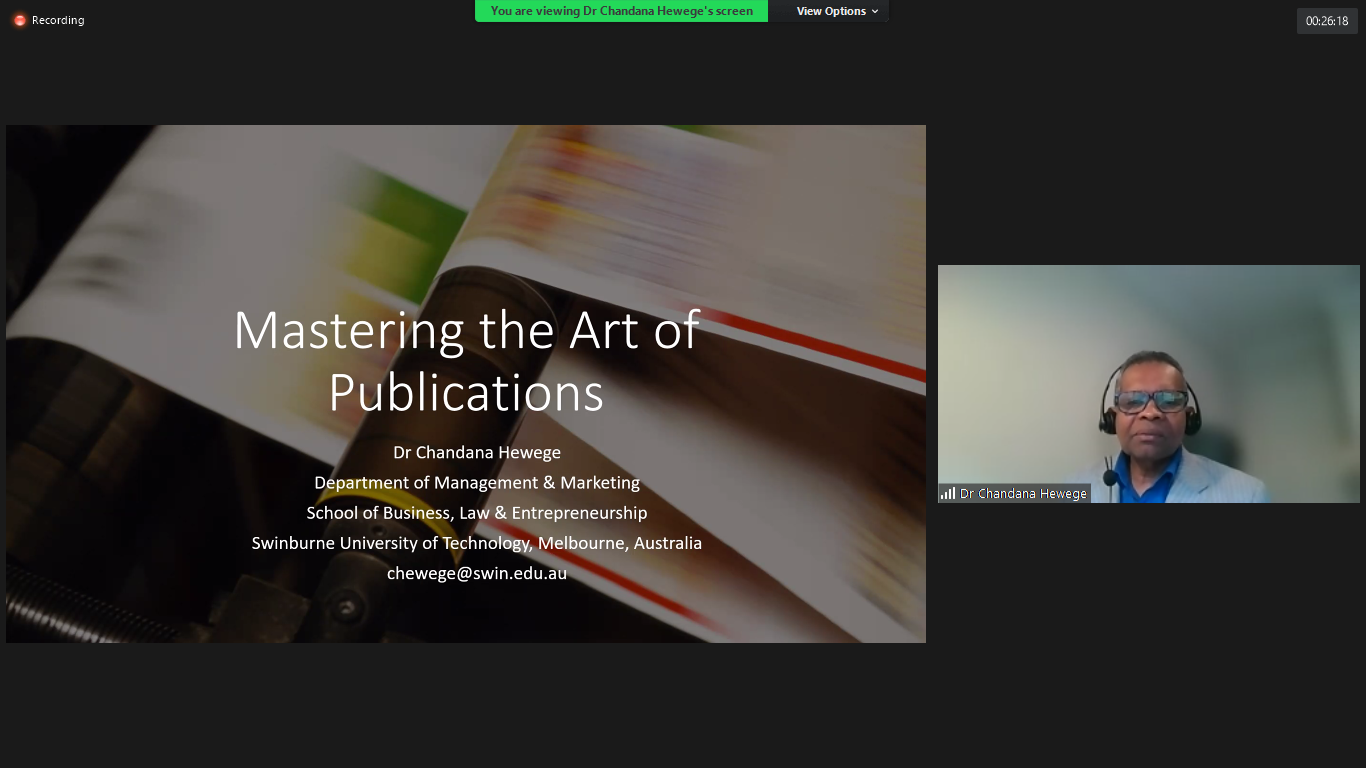
 Research, according to Dr. Hewege, is an interesting activity, but of course, there are academic members who are less interested in conducting research activities. However, to develop an excellent academic career, an academician must be involved in a balanced activity. “On this occasion, the material I am about to share is based on my experiences on various processes of publications. Hopefully, the material and the discussion can be a motivation for all the participants,” hopes Dr. Hewege.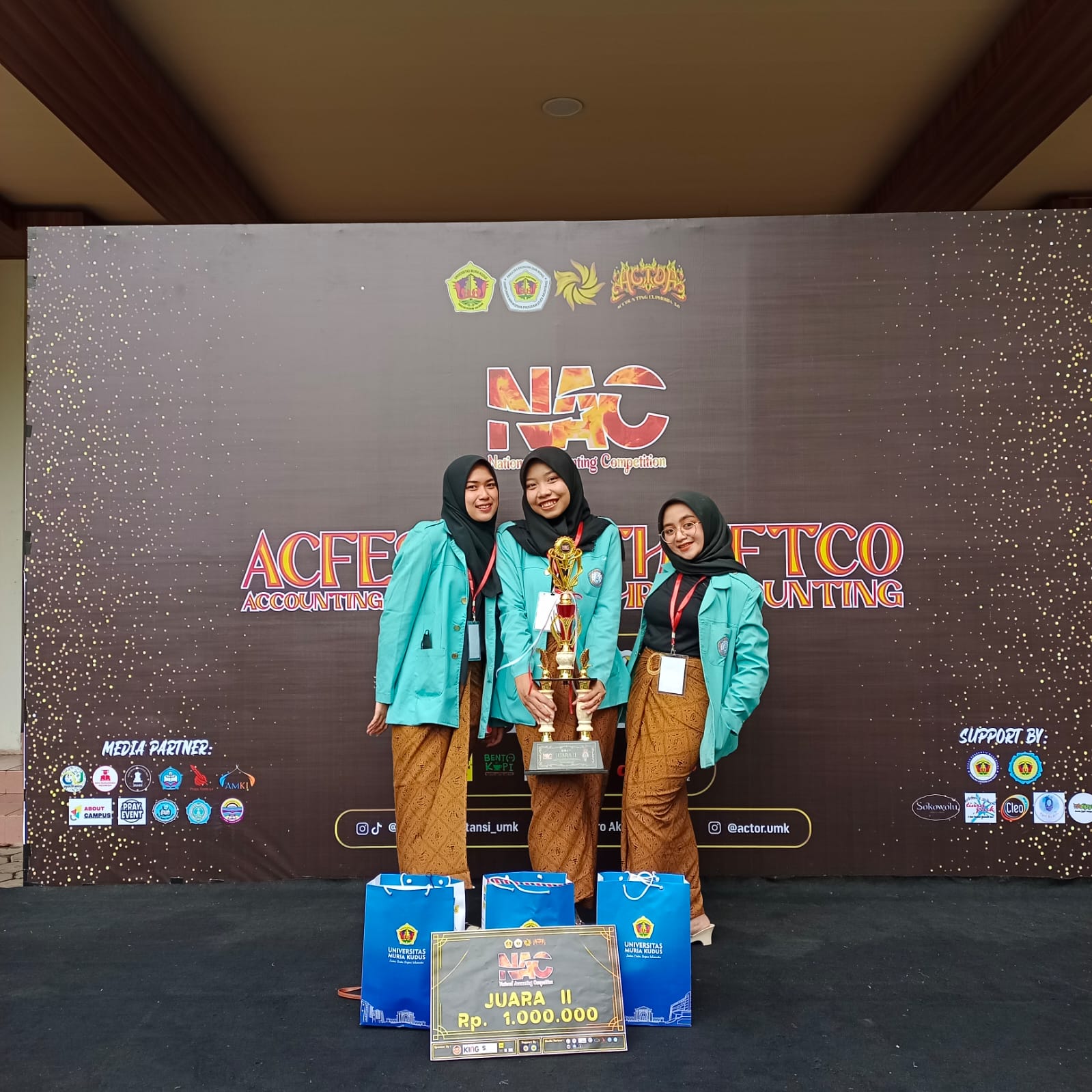

 The visit led by the Head of the Development Economics Study Program FEB UNS, was conducted as Focus Group Discussion (FGD) between DESP FEB UNS and IUP UI. The agenda was conducted at Meeting Room of Main Administration Building 2nd Floor, Universitas Indonesia.
 Further, Dr. Isfa explained the journey of IUP UI and the process they undergo to reach its current state. A strong commitment from UI leaders becomes one of the crucial keys to conducting a qualified international class.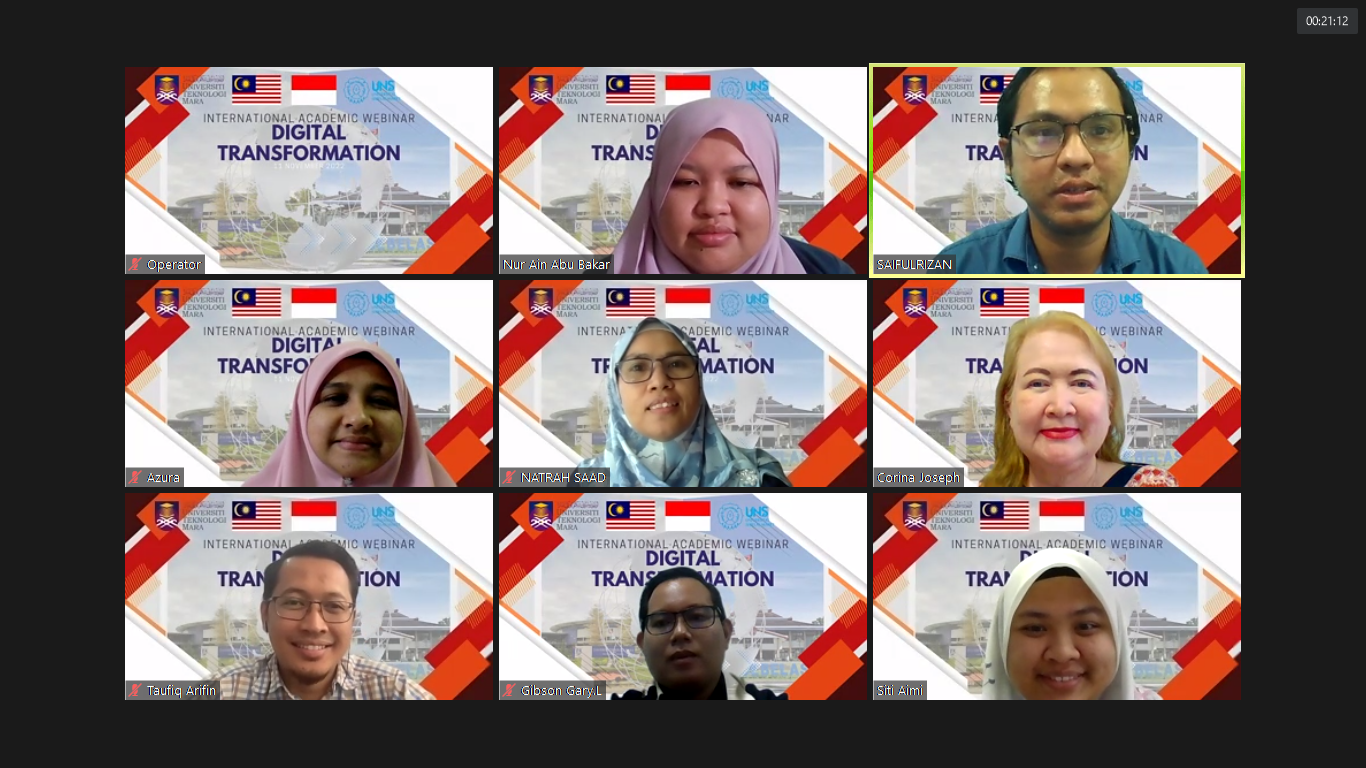


 The visit led by the Head of the Development Economics Study Program, Bhimo Rizky Samudro, S.E., M.Si., Ph.D., was welcomed by Dr. Devi Sulistyo Kalanjati, SE., M.Acc., M.Sc., Ak., the Coordinator for Undergraduate Program (IUP) UNAIR, alongside IUP UNAIR program managers. On this occasion, a Focus Group Discussion (FGD) between DESP FEB UNS and IUP UNAIR was conducted.
 Further, Dr. Devi explained the journey of IUP UNAIR and the process they undergo to reach its current state. A strong commitment from UNAIR leaders becomes one of the crucial keys to conducting a qualified international class.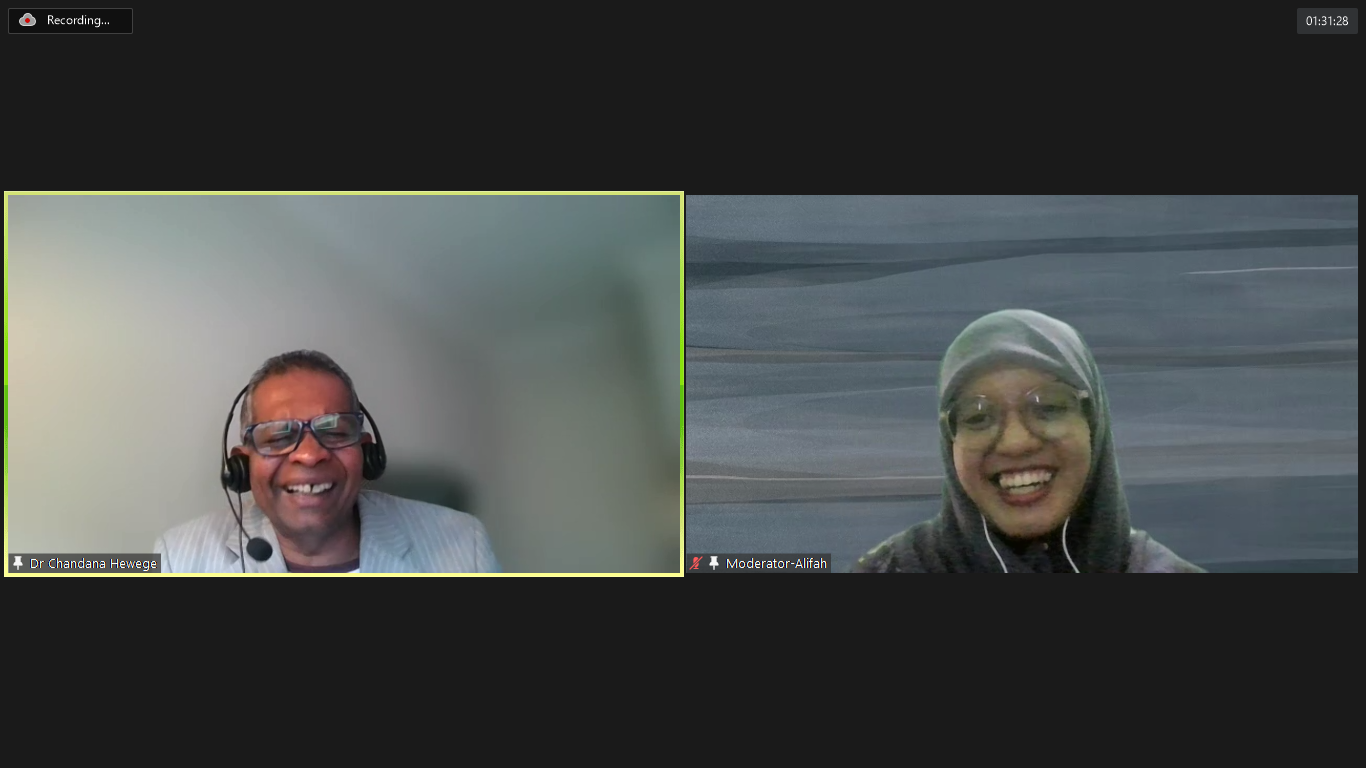
 Further, he explains that the biggest challenge faced by marketing experts recently is the need to manage both physical and virtual stores harmoniously. Therefore, both services and products offered virtually can be delivered and received by customers. This condition is in line with the consumer demand that is now more focused on experiences, which will encourage producers to transform their business from multichannel to omnichannel, where a company needs to integrate all available marketing channels. “Customers now are more powerful than before. Especially with the existence of social media as a global catalyst, companies need to build an online community and must be present in every online discussion to maintain product image. It is no longer enough to own social media account, but they must be involved in the ongoing discussion,” he explained.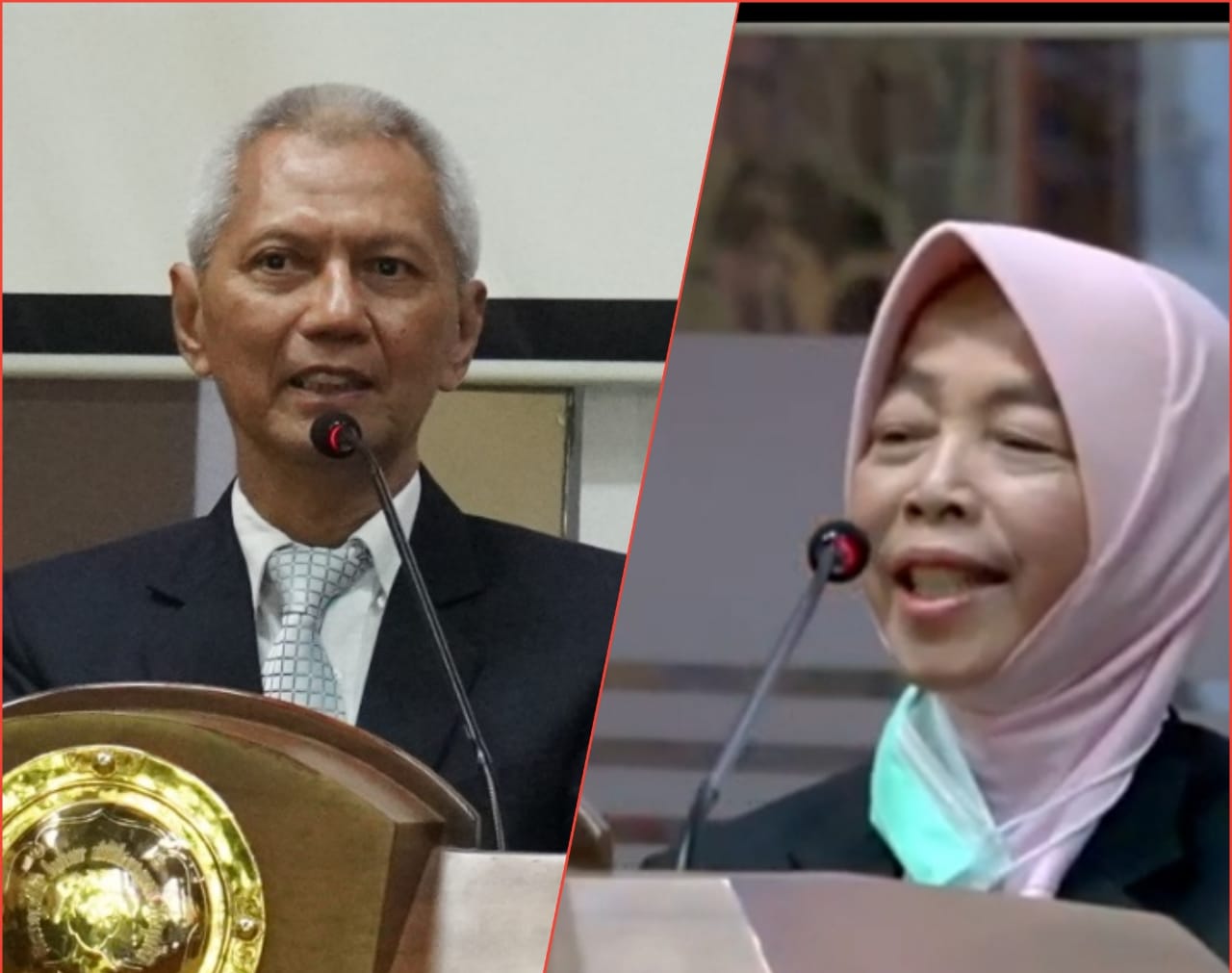



 At the end of the remark, the Rector of UNS congratulates Prof. Bambang Sutopo and Prof. Soeparmi for entering retirement. Both professors have shown their dedication, loyalty, and commendable and extraordinary dedication to UNS development. As one of UNS’s commitment and appreciation to Prof. Bambang Sutopo and Prof. Soeparmi’s service and dedication, the Rector of UNS invites both professors to dedicate their knowledge as emeritus professors in FEB and FMIPA UNS.