FEB

Kategori: faculty

  • FEB UNS Hosted Sex Education Seminar as Preventive Measure Against Sexual Abuse on Campus Environment

    FEB UNS Hosted Sex Education Seminar as Preventive Measure Against Sexual Abuse on Campus Environment

    The issue regarding sexual abuse recently gained public attention following recent cases on the matter happening in the community. As an effort to build a higher education environment free from sexual abuse, the Minister of Education, Culture, Research, and Technology (Mendikbudristek), Nadiem Makarim, issues Regulation of Ministry of Education, Culture, Research, and Technology (Permendikbudristek) Number 30 of 2021 regarding Prevention and Treatment on Sexual Violence (PPKS) on Higher Education Environment, applicable since 31 August 2021. Further, this Permendikbudristek will be disseminated to the public as part of the Fourteenth Episode of Merdeka Belajar: Kampus Merdeka dari Kekerasan Seksual (Sexual Violence-Free Campus).
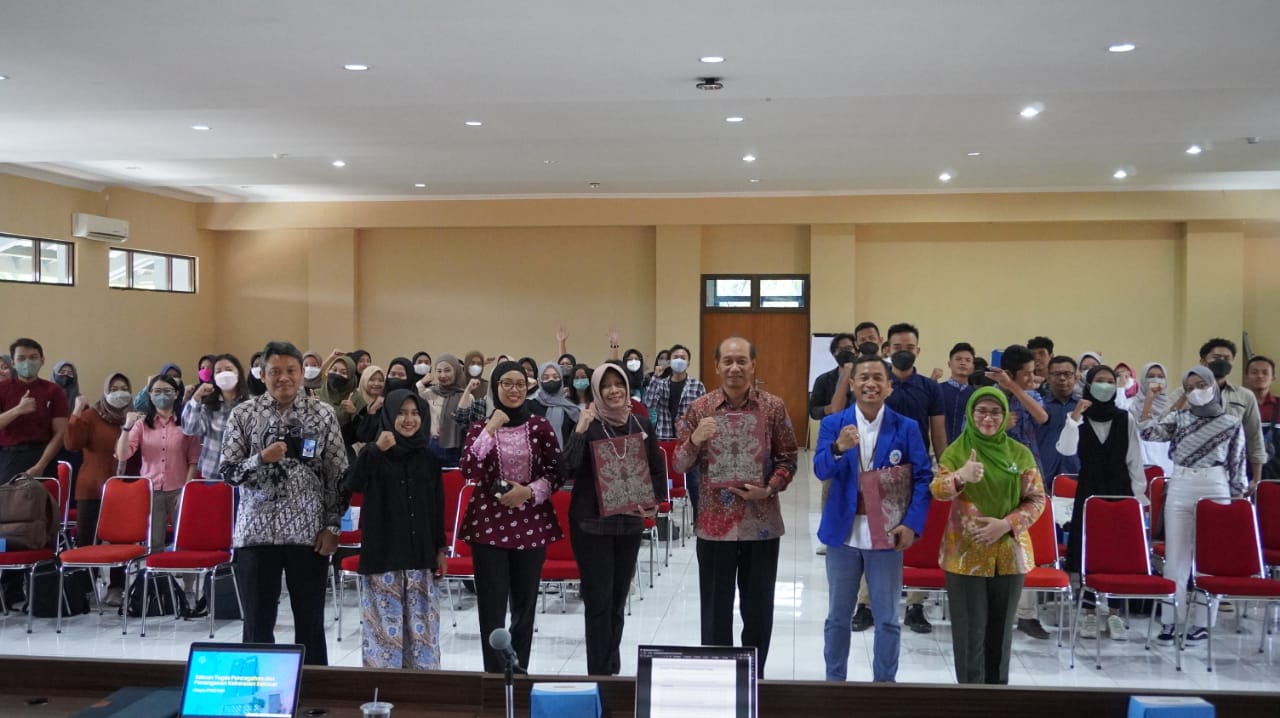
    In response to the Permendikbudristek, strategic measures have been made by the Rector of Universitas Sebelas Maret (UNS) and the Vice-Rector for Academic and Student Affairs UNS by establishing a Task Force for Sexual Violence Prevention and Treatment (Satgas PPKS). The PPKS Task Force was led by Prof. Ismi Dwi Astuti Nurhaeni, M.Si., with members consisting of lecturers, academic support staff, and students with experience in handling sexual violence cases. These statements were delivered by Prof. Izza Mafruhah, S.E., M.Si., the Vice-Dean for Academic, Research, and Student Affairs FEB UNS, in her remark during the seminar entitled ‘Sex Education as Prevention of Campus Sexual Violence,’ Thursday 3/11/2022, at Soedarah Soepono Building Hall FEB UNS.
    PPKS Task Force is tasked with dealing with many cases of sexual violence in the UNS environment, either conducted by the academic community, lecturers, academic support staff, and students or done by the external community toward UNS academic members.

    “Prevention and treatment of sexual violence not supposed to become the PPKS Task Force’s responsibility only, all academic members, including lecturers, academic support staff, and students, should be involved, especially in terms of prevention measures,” she revealed.

    In line with this statement, the FEB UNS Student Executive Board (BEM) took the first action to prevent any sexual violence in FEB UNS by conducting Sex Education Seminar inviting various figures with experience in dealing with sexual violence cases.
    Prof. Ismi affirms that sexual violence covers numerous actions, either verbal, physical, non-physical, and or actions involving information technology and communication.

    According to her, there are around 21 actions that fall under sexual harassment and violence, including forcing the victim to engage in sexual transactions or activities; Persuading, promising, offering something, or threatening the victim to make transactions (transactions are not limited to money transactions, but also include transactions for positions, credit scores, achievements, or other value-based transactions) or sexual activities that are not approved by the victim; Sending messages, jokes, pictures, photos, audio and/or videos with sexual nuances without the victim’s consent; Take, record and/or distribute photos and/or audio and/or visual recordings of victims with sexual nuances without the victim’s consent; Peeping or deliberately seeing victims who are carrying out activities privately and/or in private spaces and many more, the detailed list of these actions can be found in the seminar material.
    Prof. Ismi added that the establishment of the PPKS Task Force UNS is expected to encourage the prevention and treatment of sexual violence in the Universitas Sebelas Maret environment to be more organized and focused.
    “We invite our fellow UNS academic members to create a safe and comfortable learning space through proper prevention and treatment of sexual violence cases using the victim’s perspective. Be stronger to eliminate sexual violence!” she pleaded.

    Any sexual violence case can be reported directly to uns.id/LaporSatgasPPKS, Whatsapp 081327062341 or email: satgasppks@unit.uns.ac.id.

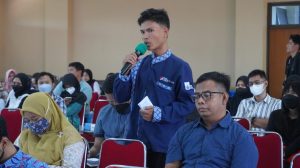
    The participants mostly consisted of students who were enthusiastic about the seminar. Other speakers invited to the event were Prof. Dr. Ir. Ahmad Yunus, M.S., who explained campus policy in prevention and treatments for sexual violence cases, and dr. R. Prihandjojo Andri Putranto, M.Si., explaining sex education.
  • Management Study Program Hosted Guest Lecture on Marketing Management with Dr. Chandana Hewege

    Management Study Program, Faculty of Economics and Business (FEB), Universitas Sebelas Maret (UNS) Surakarta, hosted another visiting lecture under the Visiting Professor Series, Kompetisi Kampus Merdeka Program (PKKM) 2022. On this occasion, the Study Program hosted the Guest Lecture Marketing Management entitled Emerging Trends in Global Consumer Behavior: Implications for Marketers. The event conducted on Thursday, October 27th, 2022, invited Dr. Chandana Hewege (Swinburne Business School, Australia) to share his knowledge through the Zoom Cloud Meeting.

    Invited speaker, Dr. Chandana Hewege

    At the opening of the discussion, Dr. Hewege explained the globalization of consumption. Regarding this aspect, he explains that consumer demand is formed through the consumption patterns from other countries, thus, consumers in a specific country may wish to try food products from other countries. Therefore, connected global consumers need a product to be globally available or manufactured globally.

    Further, Dr. Hewege also highlights the millennial consumers’ characteristics with their unique attributes. “This consumer group (millennials) is different. They do not want a product but instead demand experiences. They wish to be heard and interact with companies, under a belief that their generation has the right to a better future, they also demand social justice, care for the climate change issue, are highly sensitive, and have a distinct need for authenticity,” explains Dr. Hewege.

    Participants’ enthusiasm shows from the number of questions delivered by participants during the interactive question and answer session.

  • Inviting Prof. Clotilde Coron, Management Study Program Discuss Organizational Theory

    Inviting Prof. Clotilde Coron, Management Study Program Discuss Organizational Theory

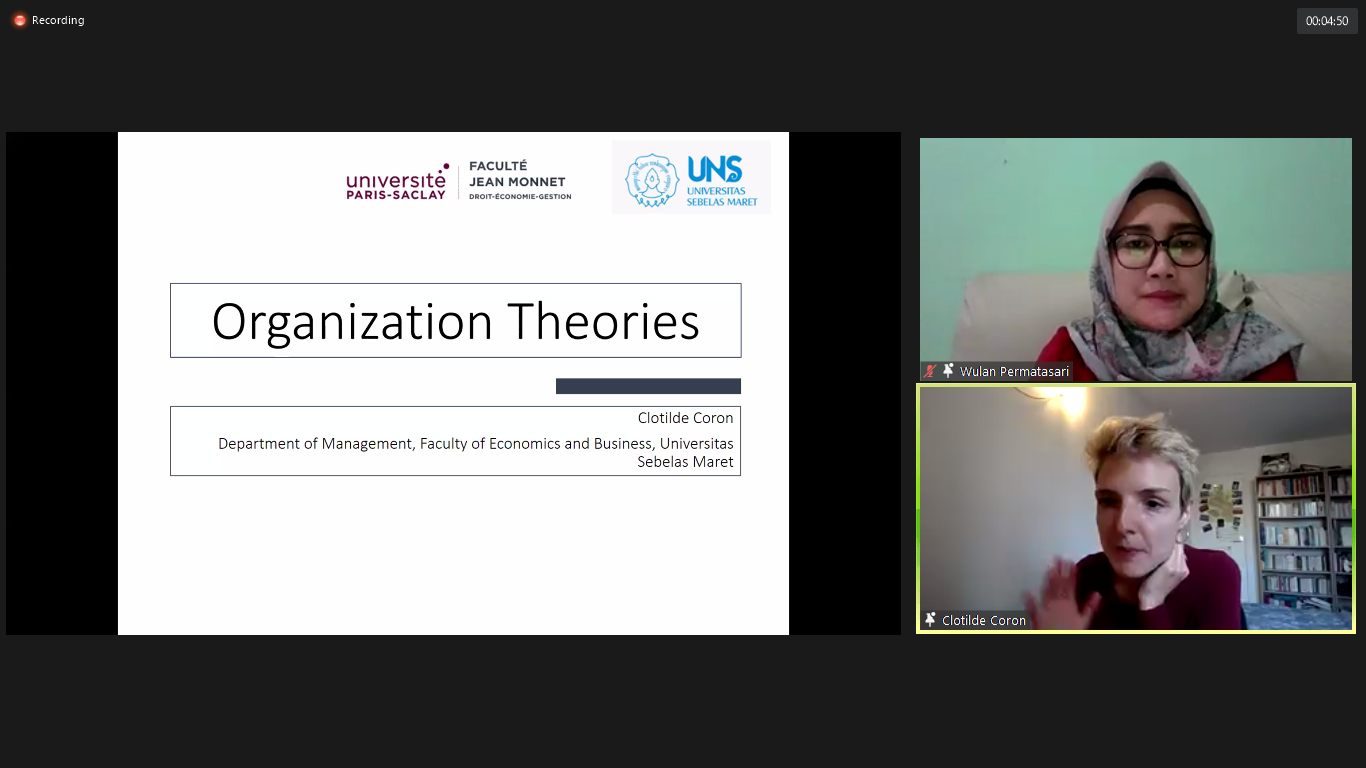
    The Visiting Professor Series of the Kompetisi Kampus Merdeka Program (PKKM) 2022, hosted by the Management Study Program, Faculty of Economics and Business (FEB), Universitas Sebelas Maret (UNS) Surakarta, goes on. In their recent agenda, the Management Study Program invited Prof. Clotilde Coron, from Sorbonne Business School, France, to a Guest Lecture Management: Organizational Theories and Flexibility Organizational Design. The event was conducted virtually through the Zoom Cloud Meeting and was attended by 270 participants.

    Guest Lecture Participants

    Starting the discussion of organizational theory, Prof. Coron explains the definition of organization and organizational theory. In general, she explained that an organization is a group of individuals with the objective of accomplishing a specified goal. However, in real life, there must be challenges faced by an organization to achieve its goal. These problems are usually related to the alignment between the individual and organization’s objective, distribution of duties, and control process. “Therefore, in an organization, it is crucial to ensure that all members have a similar objective to the organization’s goal. Hence, an organization must ensure that the collaborative objective within the organization can be internalized as members’ objective,” explains Prof. Coron.

    Prof. Clotilde Coron, from Sorbonne Business School, France

    Meanwhile, regarding organizational theory, Prof. Coron explained various commonly-used theories to understand an organization. Further, she explained the classical theories, human relations, contingency theories, and systemic theories. “Not all organizations have the same system. There is a specific characteristic in each organization, which is affected by internal factors such as technology, strategy, qualification level, organization’s age, and size. In this matter, a theory is focused on the function and objectives of an organization to improve its efficiency,” reveals Prof. Coron.

    After the material presentation, the event conducted on Thursday, October 27th, 2022, continues with a questions and answers session led by Dr. Wulan Permatasari, SE., MM., as Moderator. The participants’ enthusiasm, which was dominated by students, was proved by the number of questions delivered by participants.

  • FEB UNS Applied Microeconomics Research Group Discuss Randomized Control Trial for Social Science in an Inbound Scholar Webinar

    FEB UNS Applied Microeconomics Research Group Discuss Randomized Control Trial for Social Science in an Inbound Scholar Webinar

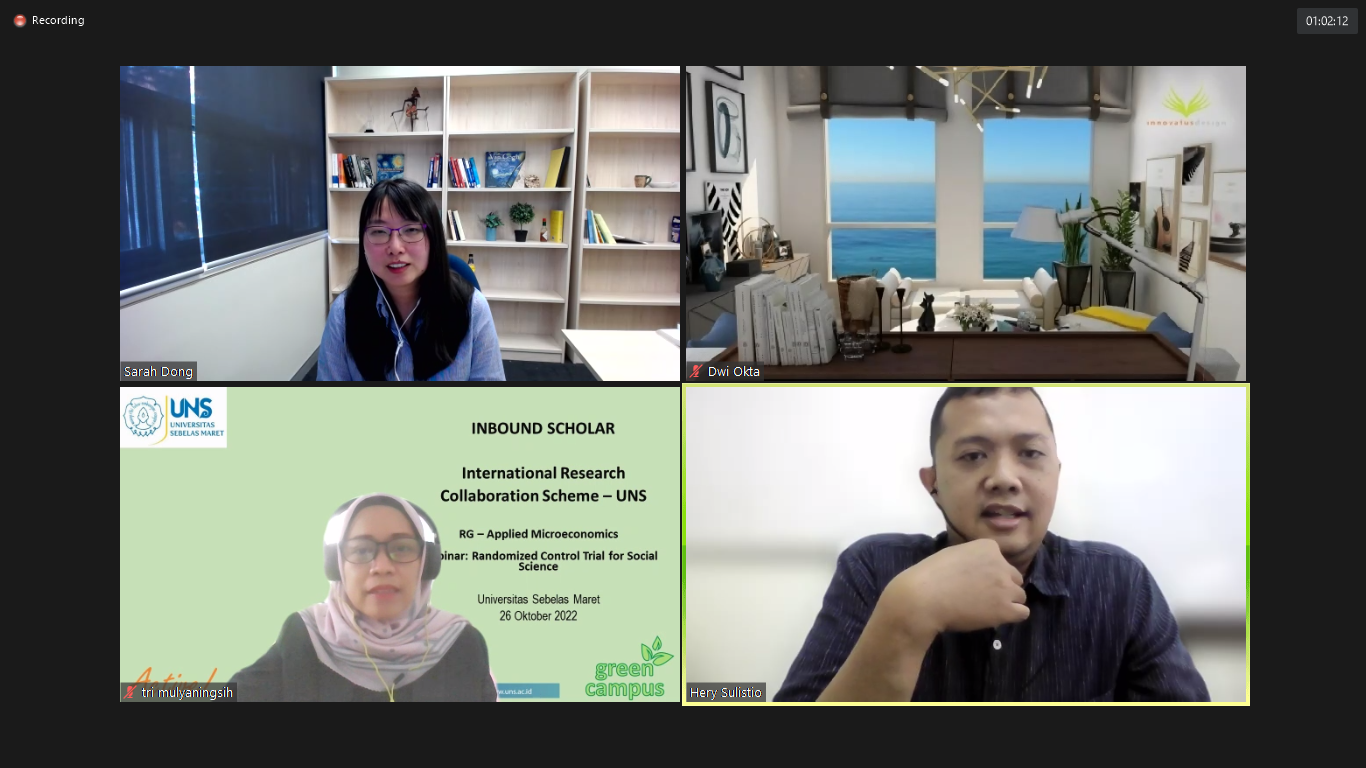
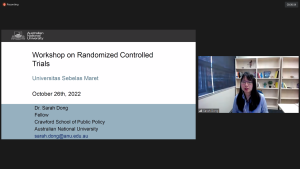
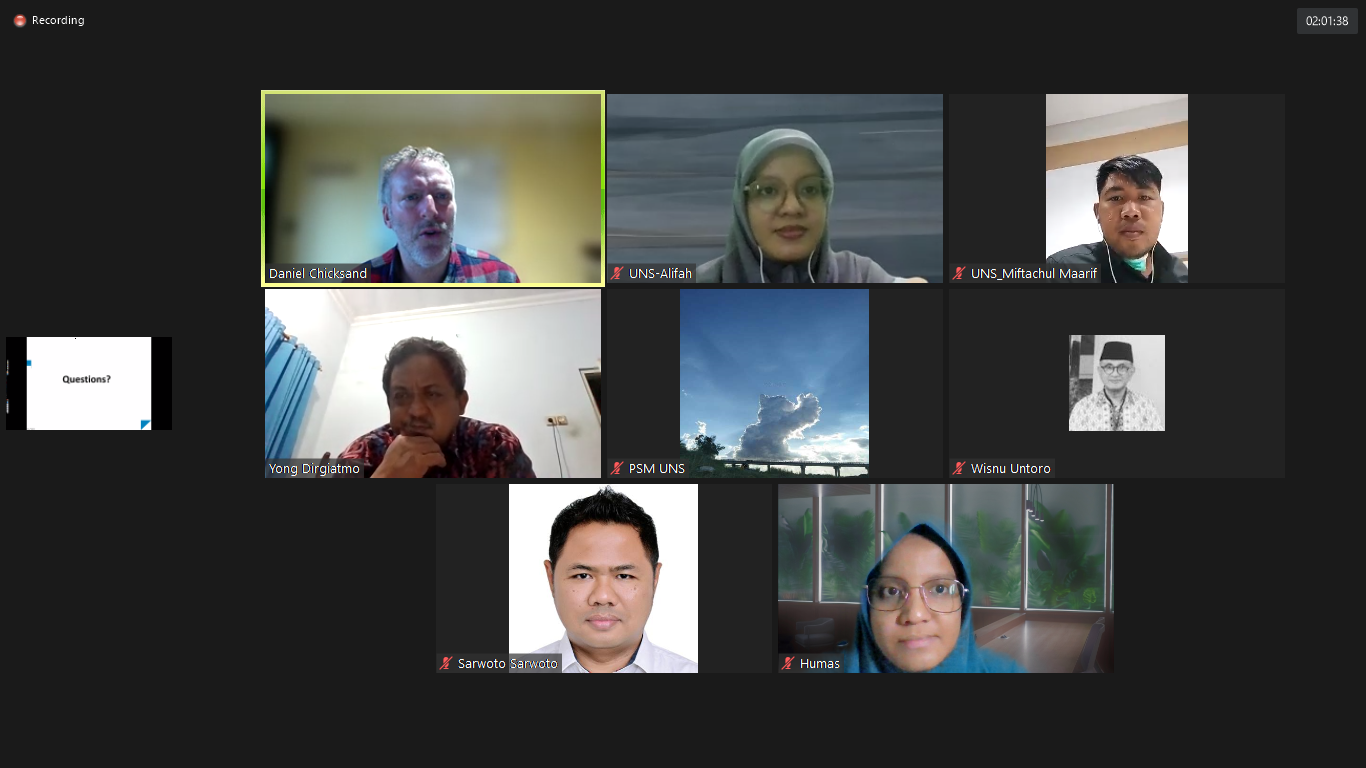
    The Applied Microeconomics Research Group, Development Economics Study Program, Faculty of Economics and Business (FEB), Universitas Sebelas Maret (UNS) Surakarta, hosted an Inbound Scholar guest lecture entitled Webinar: Randomized Control Trial for Social Science, with Dr. Sarah Dong from Crawford School of Public Policy, Australian National University (ANU). The webinar, as part of the series in the UNS International Research Grant Scheme, was conducted virtually through the Zoom Cloud Meeting on Wednesday, October 26th, 2022.

    Starting the material presentation, Dr. Sarah explained the implementation of the RCT technique, especially in a public policy context. Regarding this matter, she provided an example of the contra-factual effect. For instance, a research attempting to measure the effect and efficiency of a social assistance program under two different assumptions, where the effect of assistance for a specific recipient will be compared to the condition of the same subject when they do not receive assistance. “Under this context, OLS regression is not applicable to determine the causality effect of assistance provision or a policy implementation,” explains Dr. Sarah.
    Further, Dr. Sarah explained the process of RCT implementation that tend to require more intensive planning. Generally, she divided the planning process into three stages. The first stage of RCT implementation is determining the design for the randomization process, this stage includes sample size determination, randomization technique, and randomization validation test. The second stage is intervention, which refers to the categorization of research subjects into control groups. The last stage is result examination using statistical analysis to calculate the effect of applied treatment. “Randomization process can be challenging, especially if the process was conducted by an independent agent where the process can deviate from research objectives,” she added.

    After detailing the RCT application process, Dr. Sarah explains the example of research topics that can use the RCT technique and her previous research project using the RCT technique. Nearing the end of the agenda, Dr. Tri Mulyaningsih, as the Moderator of the discussion, delivered a brief summary of Dr. Sarah’s materials and started the interactive question-and-answer session. “Thank you for this opportunity, there are many questions from participants, you can contact me directly through the provided email address in case you have further inquiries on RCT technique,” concluded Dr. Sarah at the end of the webinar session.

  • Management Study Program Invited Prof. Chicksand in Workshop: How to Publish Operation Management Papers in Reputable Journals

    Management Study Program Invited Prof. Chicksand in Workshop: How to Publish Operation Management Papers in Reputable Journals

    Management Study Program, Faculty of Economics and Business (FEB), Universitas Sebelas Maret (UNS) Surakarta, invited Prof. Daniel Chicksand from Birmingham Business School (UK) in a Visiting Professor Agenda. The current agenda was part of the Kompetisi Kampus Merdeka Program (PKKM) 2022, conducted virtually on Thursday, October 20th, 2022.

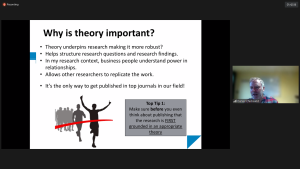
    The event went interactively with the attendance of the lecturers of operation management study from the Management Study Program and was led by Alifah Fibayani, MSc., as the Moderator. Opening the material presentation, Prof. Chicksand invited the participants to answer a question regarding the journal ranking system in Indonesia, whether Indonesia follows the Scopus and Scimago system or adopts a specific system in the country. Following the opening question, the Professor explains the first step to be prepared by a researcher before publishing their research articles. “Right now, getting published in a reputable international journal is getting harder. Before starting the publication process, it is better if you have a specific theme for you to follow, either to develop the existing research or to establish your expertise identity as a researcher,” reveals Prof. Chicksand.

    Further, Prof. Chicksand delivers another question for material discussion regarding the reason for getting published. In line with the participants’ answers, in this case, Prof. Chicksand states that one of the reasons for publication is to disseminate potential solutions to the problems in the community or business.

    The discussion is followed by the stages or aspects that need to be considered by the author in choosing a publication outlet. Two aspects that need to be considered in choosing the right outlet are the journal’s impact factor and ranking. Aside from journal selection, Prof. Chicksand also shares specific reasons for a publisher to reject a manuscript. “Sometimes the problem lies in how you formulate the research problem because sometimes authors like to understate the contribution of their research.

    Concluding the discussion, Prof. Chicksand delivers four top tips for a successful publication process. The first is to choose the right theory for the planned research. The second is to establish a continuous process from article preparation through collaboration. Third, the author and researcher need to establish resilience and flexibility, and lastly, a researcher needs to learn from their past mistake. “Sometimes we need to build a resilient and persistent stance, while at the same time, we need to quickly move on from a rejection,” reveals Prof. Chicksand.

    The agenda, which is filled with interactive discussion and experience sharing, will be followed-up with participants’ article review by Prof. Chicksand.

  • MSME in Polengan Village Participated in Digital Marketing, Branding, and Packaging Training

    MSME in Polengan Village Participated in Digital Marketing, Branding, and Packaging Training

    Technology transformation has motivated the industrial sector to improve their product and service. This improvement is applicable not only to big corporations but also to MSMEs, which must adapt to the current condition to survive in the highly competitive market. One of the transformations that can’t be avoided by business is the penetration of the internet, which has become a crucial part of daily human life.

    The existence of the internet has brought a substantial effect on the business sector, encouraging corporations and MSMEs to expand their business by taking advantage of the internet, especially e-commerce. The Polengan Village’s BUMDES and MSMEs have long realized this opportunity, but many of the MSMEs in the village are yet to know and understand how to adopt digital marketing.
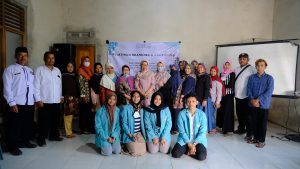
    Considering this problem, the Creative Economy Research Group’s Community Service Program Team, led by Prof. Dr. Asri Laksmi Riani, MS., along with its members Prof. Dr. Hunik Sri Runing Sawitri, S.E., M.Si., Suryandari Istiqomah, SE, MSc., Dra. Anastasia Riani Suprapti, M.Si., and Dr. Intan Novela Qurrotul Aini, S.E., M.Si., provided a Digital Marketing, Branding, and Packaging Training.

    In this training, the Community Service Team involves students in delivering training material to the MSMEs in Polengan Village. The training is divided into three sessions, starting with training in branding delivered by Brillian Raiszhul, who encourages MSMEs entrepreneurs to learn how to attract prospective customers through product photographs. The picture provided, indeed, must consider a favorable angle and color composition.

    The following session was packaging training, considering that after understanding how to attract customers’ attention through a picture, the MSMEs’ entrepreneur can enhance their packaging to add value to their product. This session is delivered by Salsabilla Indah, who shows the stages of designing beautiful and enticing packaging for prospective customers.
    The last session was concluded with digital marketing training, delivered by Afifah Hanindia, who invited the participants to register their MSMEs to several social media, such as Instagram and Facebook, as well as Shopee e-commerce that can allow them to distribute their product to more locations, thus increasing the income of Polengan Village residents.

    After the material dissemination, the agenda goes on with monitoring and assistance for the participants.

  • Creative Economy Research Group Hosted Product Innovation Training for BUMDES and MSMEs in Polengan Village

    Creative Economy Research Group Hosted Product Innovation Training for BUMDES and MSMEs in Polengan Village

    The Covid-19 pandemic has affected all sectors of our daily life, starting from health, education, and the economy, which brought challenges and alterations to various business levels. The effect of the pandemic hit the MSMEs sector hard, where its business was managed by individuals or households.

    To survive, the MSMEs sector must keep on innovating to deliver premium products and services to their customers. This problem brought concern to BUMDES and MSME in Polengan Village, Srumbung Sub-District, Magelang Municipality, which attempted to initiate an innovation to process material available in their surrounding environment.

    The wish of BUMDES and MSME in Polengan Village later received a response from a community service team from the Creative Economy Research Group, Faculty of Economics and Business (FEB) UNS, led by Prof. Dr. Asri Laksmi Riani, MS., in the form of a Vegetable Product Innovation Training.

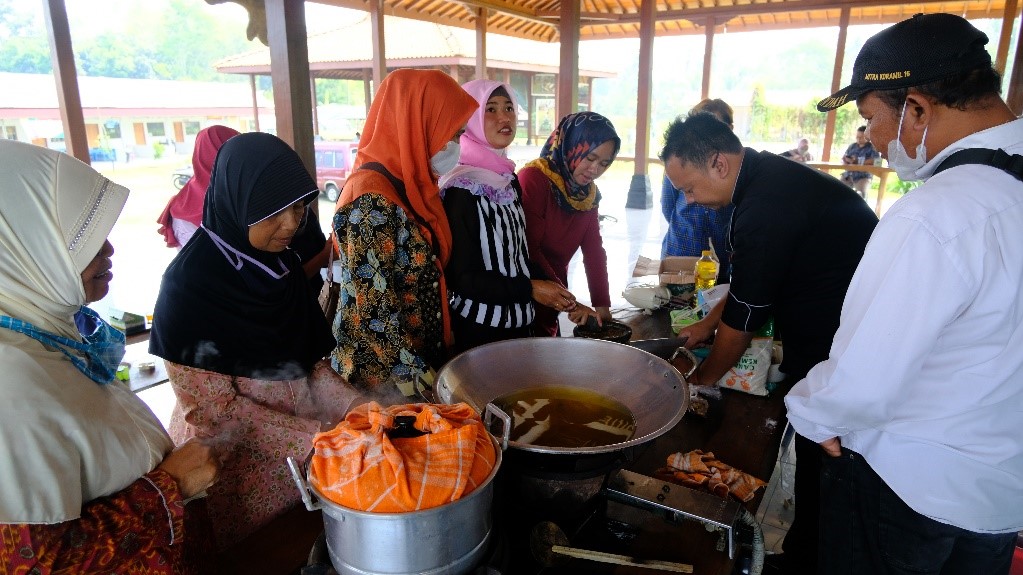
    This training was conducted on 20 July 2022 in collaboration with Mr. Bambang Tri Admojo, who demonstrated several dishes and cuisines using local vegetables in front of the BUMDES and MSMEs in Polengan.
    The demo shows how to cook three types of dishes, namely cassava leaf chips, crispy spinach, and tiwul sponge cake.

    During the training, the coach provided material and invited the participants to keeping-up with the cooking process. Participants are allowed to inquire many questions during the training.

    The participants’ enthusiasm and interest during the training are shown in their efforts to keep up with the cooking process.
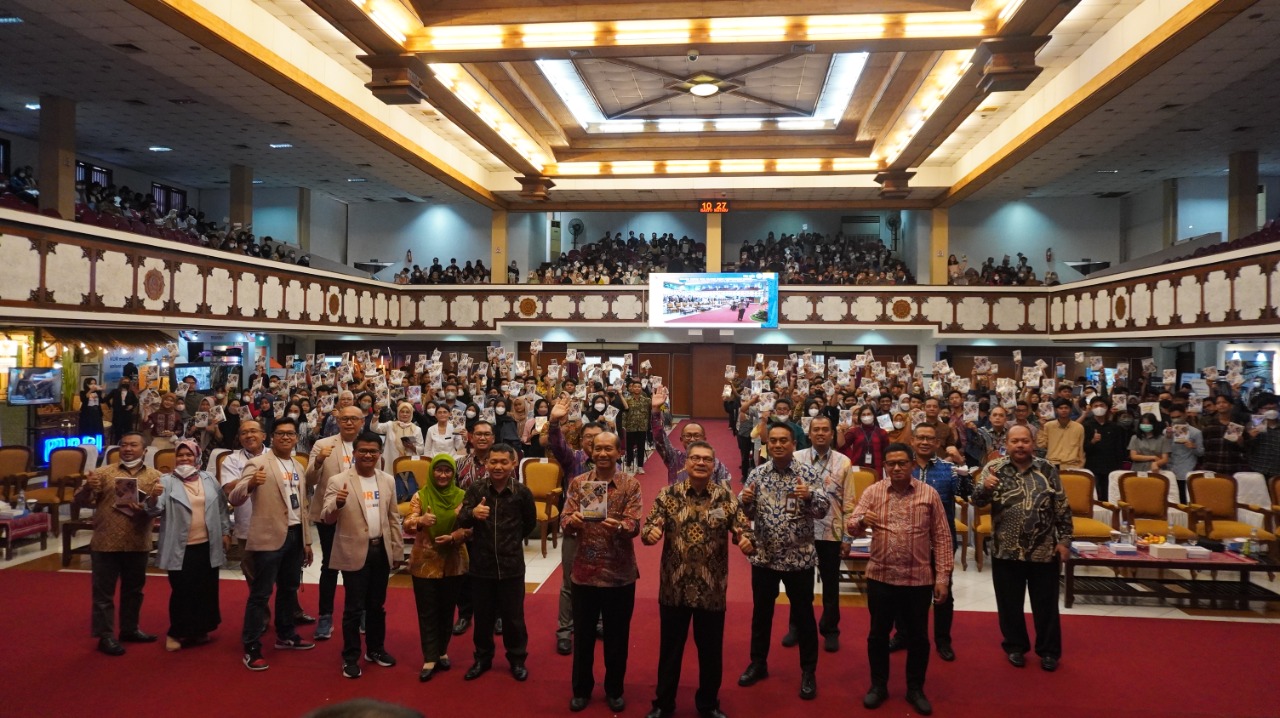
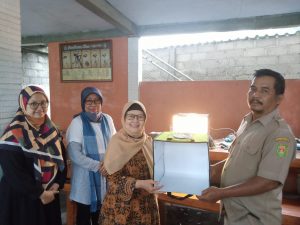
    Besides production innovation, this community service program also encourages Polengan Village BUMDES and MSMEs to participate in marketing innovation through the internet. Therefore, the community service team provided supporting equipment to aid online sales to the village apparatus on 10 October 2022.

  • Book Review Hosted in UNS, ‘MSME Financing’ by the Coordinating Minister for the Economy

    Book Review Hosted in UNS, ‘MSME Financing’ by the Coordinating Minister for the Economy

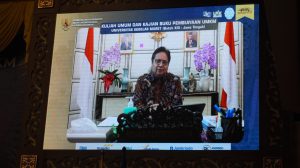
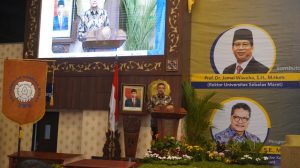
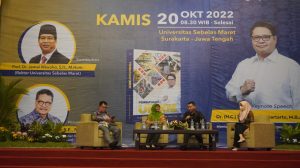
    The Coordinating Minister for the Economy, Republic of Indonesia, in collaboration with the Faculty of Economics and Business (FEB), Universitas Sebelas Maret (UNS), and Rajagrafindo Persada Publisher, hosted a General Lecture and ‘MSME Financing’ Book Review at Haryo Mataram Auditorium UNS, Thursday (20/10/2022).

    The Vice-Rector for Academic and Student Affairs UNS, Prof. Dr. Ir. Ahmad Yunus, M.S., in his remarks, conveyed his gratitude to the Coordinating Minister for Economy for establishing a partnership with UNS by organizing the General Lecture and Book Review.

    The Vice-Rector for Academic and Student Affairs UNS, Prof. Dr. Ir. Ahmad Yunus, M.S.

    Prof. Yunus reveals that the book written by the Coordinating Minister for Economy, Republic of Indonesia, Dr. (H.C.) Ir. Airlangga Hartarto, M.B.A., M.M.T., I.P.U., discuss five topics, including the role of MSMEs on the economy, MSME resilience to crises, MSME financing, sharia financing for MSME, and MSME financing during the COVID-19 pandemic.

    He also states that UNS, as one of the State Universities as Legal Entity (PTNBH), actively took a role in MSMEs development and empowerment. This active role is not limited to an embodiment of the Higher Education Tri Dharma but also implemented as a strategic action in empowering MSMEs through collaboration, partnership, and appreciation to MSMEs entrepreneurs, as well as providing assistance for student entrepreneurship activity.

    Participants Filled the General Lecture and Book Review Session at UNS Auditorium

    In his keynote speech, Dr. (H.C.) Ir. Airlangga Hartarto revealed that the current occasion was conducted to support MSME development and disseminate MSMEs’ funding channels to the wider community to support Indonesia’s sustainable economic development.

    The book, released on 11 November 2021, contains various information and experiences in MSMEs development. MSMEs become one of the development pillars of Indonesia’s economy during the pandemic, to the point of sustaining the pandemic crisis.

    “Consistent treatment on the Covid-19 cases has successfully improved community mobility, proven with the community’s confidence in resuming their economic activities. This condition also triggers MSMEs’ business activity improvement.

    Further, he explained that MSMEs are a crucial key for economic activities, with a 61% contribution to GDP and 97% of the national employment rate, while at the same time stimulating investment and export rates. Investment in MSME accounted for 60% of the total national investment and contributed to 16% of non-oil and gas export.

    In order to maintain the economic recovery momentum and MSMEs’ empowerment, the government initiate a development strategy along with increasing access to MSME funding.

    Dr. (H.C.) Ir. Airlangga Hartarto, Coordinating Minister for Economy

    The President of Indonesia has provided his instruction to increase bank lending allowance for MSMEs up to 30% by 2024 or equal to 1,800 trillion Rupiah, and Bank Indonesia has issued the Regulation of Bank Indonesia for this matter. The Kredit Usaha Rakyat (KUR-Community Business Lending) has been implemented by the government.

    The Coordinating Minister for the Economy hopes this book will improve academic members’ knowledge in determining policy and for the students to monitor and evaluate the policies implemented for the MSMEs. The book is also expected to strengthen the synergy and coordination in MSMEs’ empowerment to accelerate and take advantage of the economic recovery momentum.

    Dr. Iskandar Simorangkir, S.E., M.A., Deputy of Macroeconomics and Finance Coordination

    Meanwhile, during the opening of the book review discussion, Dr. Iskandar Simorangkir, S.E., M.A., Deputy of Macroeconomics and Finance Coordination, states that through the Regulation of ‘Cipta Kerja’ No 11 of 2020 and Government Regulation (PP) No 77 of 2020, regulate on how the government encourages MSMEs in Indonesia to improve their quality, through business permit registration. Until September 2022, there are 1.7 million micro business units receiving Business Identification Numbers (NIB) via single online submission (OSS).

    “MSMEs need support, first by encouraging them to meet the required quality, not only for national sales but also international sales, and second is by involving them in big corporation products to establish a mutual synergy. Therefore, it is expected that MSMEs can improve their quality and increase their income. If we can implement this, indeed, we will be a developed country,” he said.

    Discussant of Book Review and General Lecture

    Concluding his discussion, Dr. Iskandar Simorangkir invited the participants, consisting mostly of students, to create new jobs by establishing new businesses starting as MSMEs and not stopping as job seekers only.

    The General Lecture and Book Review, led by Devi Setyorini, a Junior Expert Policy Analyst at the Coordinating Ministry for Economy, as moderator, invited three speakers, namely Dr. Ferry Irawan, SE, ME., Assistant Deputy for Monetary and External Sector, Gede Edy Prasetya S.E., M.M., Assistant Deputy for Capital Markets and Financial Institutions, Coordinating Ministry for Economy, and Prof. Dr. Izza Mafruhah, S.E., M.Si., the Vice-Dean for Academic, Research, and Student Affairs FEB UNS. (Humas)

    The material in this event can be downloaded from the uns.id/umkmfebuns

  • Management Study Program Discuss Queuing Theory in Guest Lecture Operation Research

    Management Study Program Discuss Queuing Theory in Guest Lecture Operation Research

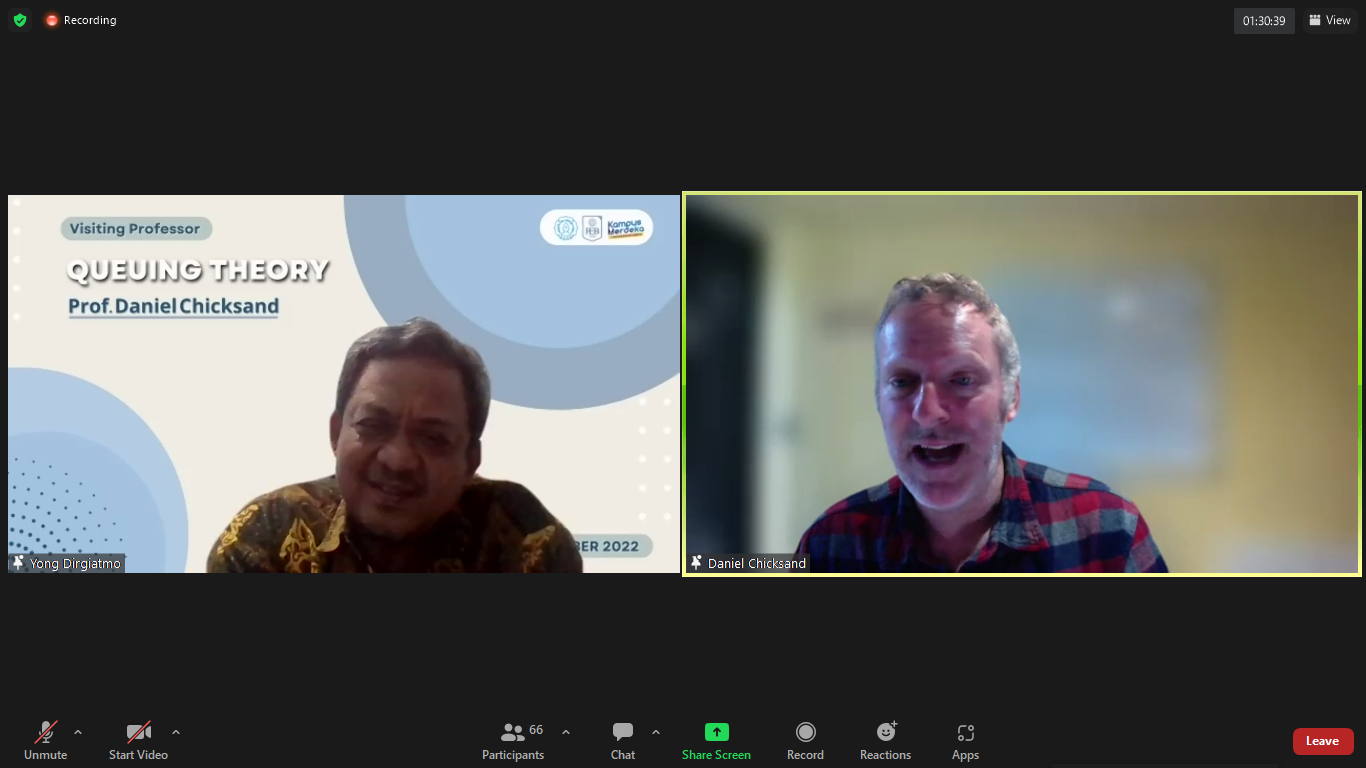
    Conducting the Visiting Professor series under the Kompetisi Kampus Merdeka Program (PKKM), Management Study Program, Faculty of Economics and Business (FEB), Universitas Sebelas Maret (UNS) Surakarta, invited Prof. Daniel Chicksand from Birmingham Business School, UK. The event conducted virtually on Thursday, October 6th, 2022, discusses Queuing Theory in Operation Management Research.

    Through the Zoom Cloud Meeting platform, the agenda was attended by 80 participants and was led by Dr. Yong Dirgiatmo, a lecturer of the Management Study Program, as Moderator. In this agenda, Prof. Chicksand delivered material entitled ‘Operation Research, Capacity Management, and Queuing Theory’ for about 75 minutes, divided into two sessions.
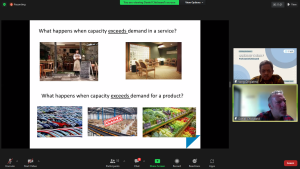
    Starting the presentation, Prof. Chicksand explained the definition of capacity management, which involves business capacity, market demand, and forecast. Meanwhile, a business needs capacity management because of the need to align production capacity to market demand. Production capacity that is lower than market demand will lead to production delay and loss of sales opportunity, on the contrary, when production capacity is too big, it will lead to higher costs.

    “You can manage long-term market demand by storing products. For instance, when inventory (low capacity) is not aligned with market demand, such as the Covid-19 case leading to long queues at a hospital and empty products in a supermarket. Meanwhile, when product inventory exceeds market demand, there will be many unsold products, leftover, or, in a restaurant setting, empty table,” said Prof. Chicksand.

    Further, Prof. Chicksand explains about the techniques available to measure market demand fluctuation, alternative production planning, and mixed planning. Meanwhile, regarding queuing theory, Prof. Chicksand states that ‘queue’ does not always bear a negative connotation because the absence of queue signs an over-capacity. “Queuing theory is usually applied in staff downsizing, schedule planning, and inventory planning to improve customer service,” he explains in the guest lecture as the continuation of the Supply Chain Management Guest Lecture.

  • Guest Lecture Human Resource Management: Diversity and Gender Equality

    Guest Lecture Human Resource Management: Diversity and Gender Equality

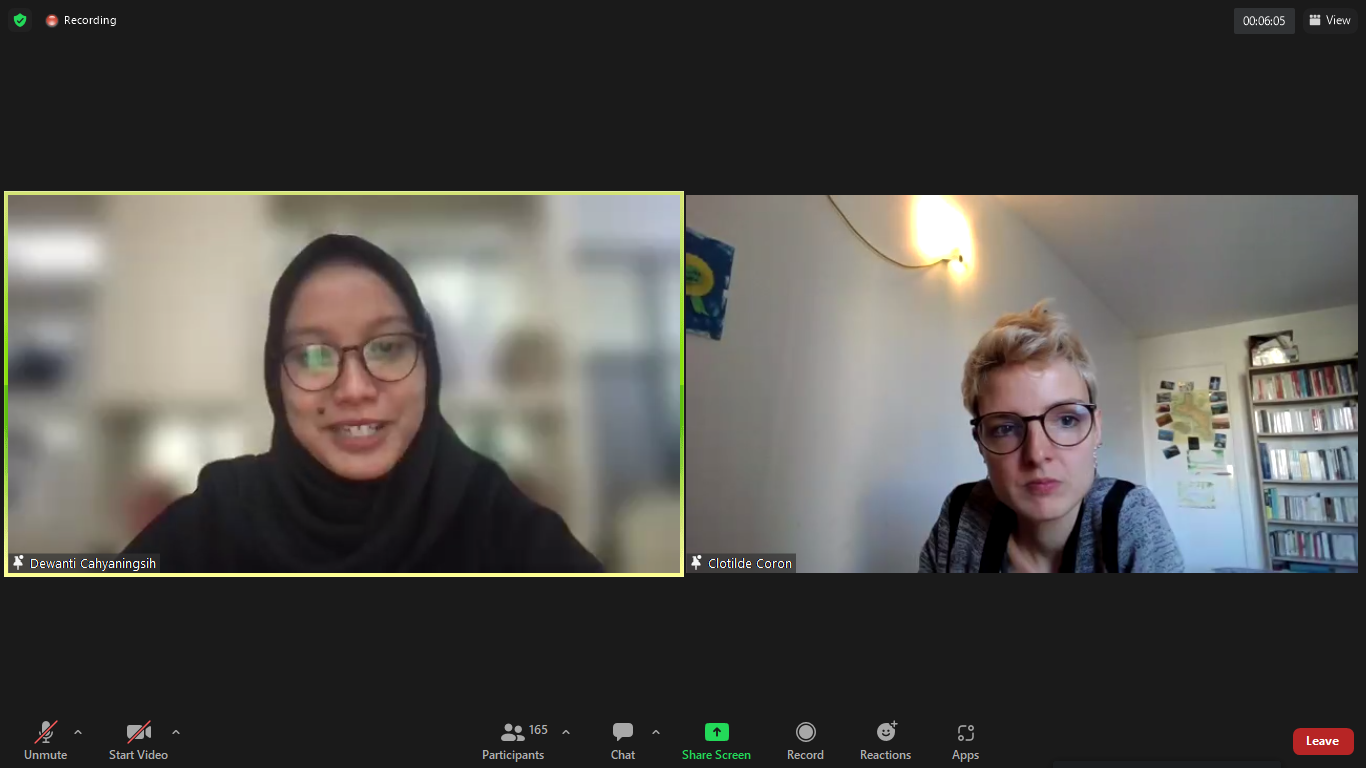
    The Management Study Program, Faculty of Economics and Business (FEB), Universitas Sebelas Maret (UNS) Surakarta, hosted another Guest Lecture as part of the Visiting Professor Series in Kompetisi Kampus Merdeka Program (PKKM) 2022, Thursday, October 6th, 2022. In this guest lecture series, the Study Program invited Associate Professor Clotilde Coron from Sorbonne Business School, France, to deliver material on Diversity and Gender Equality.

    MSP FEB UNS Guest Lecture
    Associate Profesor Clotilde Coron delivering lecture material

    Led by Dewanti Cahyaningsih SE, M.Rech., the guest lecture was attended by more than 230 participants through the Zoom Cloud Meeting platform. Starting the material dissemination, Assoc. Prof. Coron explains that the topic of diversity is starting to attract the industrial sectors’ attention. However, there are numerous different approaches to discussing diversity. “There are many different approaches in this topic discussion, this including the different significance of subjects and topics in each country, for instance, the USA with the black life’s matter (BLM) topic or France with sexual orientation. Therefore, it is important to consider your point of view on diversity and equality,” explains Prof. Coron.

    The current guest lecture with Prof. Coron will cover the definition of diversity and equality, gender equality, disability inclusion, and bias in human resource management, as well as methods available to reduce the bias. Regarding the definition of diversity, Prof. Coron invited students to choose the most appropriate words to describe diversity through the Wooclap platform.

    “Diversity in this matter refers to the condition of the workforce representing the natural condition of the population in a country. The idea of diversity aims to avoid discrimination because when a company does not discriminate against people, then the composition of the workforce in the company will represent the composition of the community,” said Prof. Coron.

    Material discussion continues with the difference between inclusion and equality, where inclusion is a crucial idea within diversity. Diversity with no inclusion will never lead to equality. “Because the objective of inclusion is to empower people through mutual respect and appreciation for personal condition as the inherent factor of diversity.”