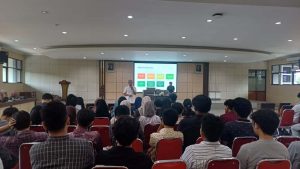
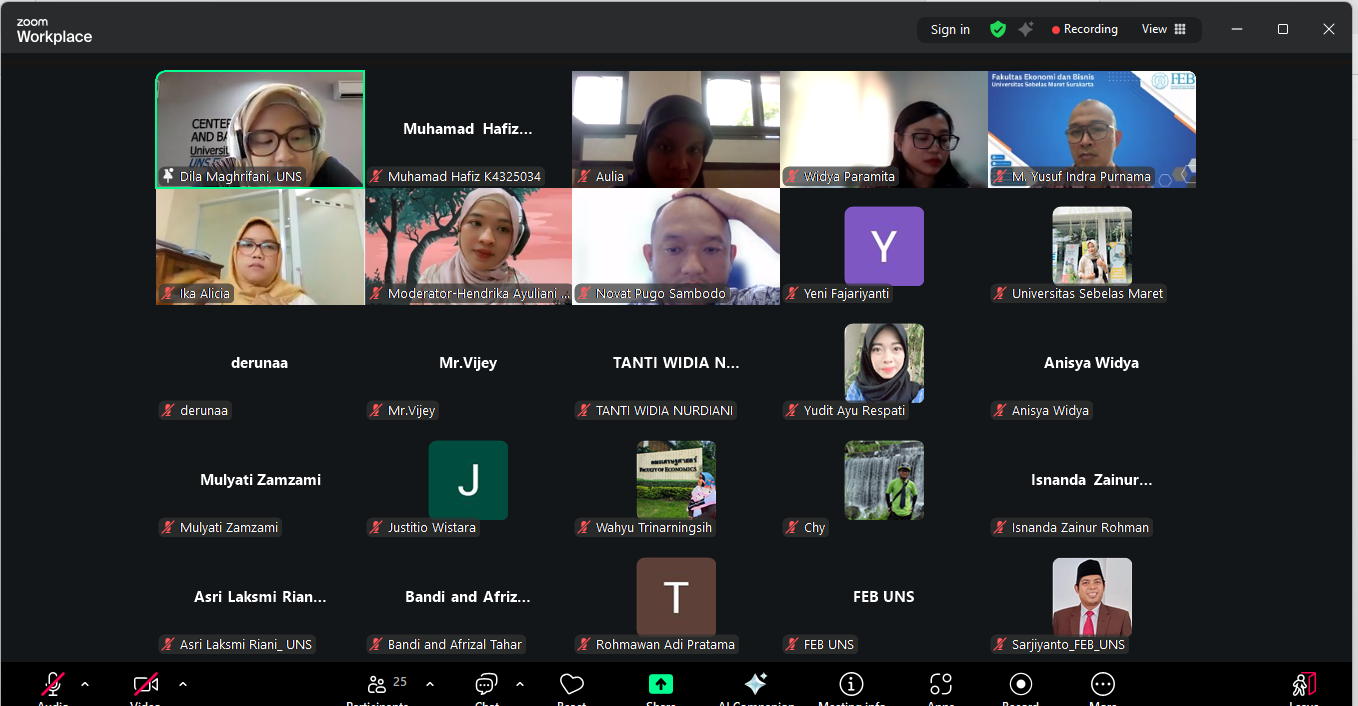
The Center for Research and Community Engagement Development (P4M), Faculty of Economics and Business (FEB), Universitas Sebelas Maret (UNS), organized “Coordination Meeting for the Implementation of the 2025 FEB UNS Competitive Grant.” The meeting was conducted virtually via Zoom on Tuesday, October 14, 2025, with the aim to strengthen collaboration among study programs, research groups, and supporting units within FEB UNS, as an effort to increase both the quantity and quality of research and community engagement grant proposals.
In her opening remarks, the Head of P4M FEB UNS, Dila Maghrifani, S.E., B.Sc., M.Sc., Ph.D., stated that the meeting served as a follow-up to the initiatives provided by the UNS Institute for Research and Community Service (LPPM UNS) and marked an important step in strengthening research synergy at the faculty level. “This activity is expected to become a platform for collaboration and communication, as well as to establish a synergy among the entire academic community of FEB UNS. Hopefully, the grant programs facilitated by LPPM can be beneficial and open more opportunities for stronger research and community engagement collaborations in the future,” said Dila.
She further explained that P4M would continue to play a facilitating role for lecturers and research groups in accessing various internal and external grant opportunities.
In his remarks, Prof. Tri Mulyaningsih, S.E., M.Si., Ph.D., Vice Dean for Academic and Research Affairs FEB UNS, emphasized that this coordination was a joint initiative between the Academic Affairs Division and P4M to encourage more active participation of lecturers in grant proposal submissions. “The goal of this activity is simple yet strategic—to increase the number of proposals submitted by FEB UNS faculty members. This year, UNS has received approximately IDR 13 billion in funding for the Equity Grant Scheme, which is a valuable opportunity we should make the most of together,” she stated.
Prof. Tri further explained that the Equity Grant offers significant potential because it is an internal UNS program, meaning the competition is limited within the UNS’s academic community. Therefore, the probability of success is higher than in national-level competitive schemes.
She also noted that several types of Equity Grants specifically target the fields of economics, business, and agriculture—areas that align closely with FEB’s research focus. “We aim to foster synergy among P4M, research groups, and study programs. Through this collaboration, we can direct flagship research to align with the strategic goals of the faculty and the university,” she explained.
Prof. Tri further highlighted that the Equity Grant will be implemented from January to June 2026, in line with the FEB UNS Strategic Plan (Renstra) 2025–2029. She highlighted that this grant serves not only as a funding opportunity but also as part of the faculty’s strategy to achieve its vision. “This activity is fully aligned with the FEB UNS Strategic Plan, which envisions the faculty as globally reputable and inclusive. ‘Global’ means having international competitiveness, while ‘inclusive’ means ensuring that all disciplines and groups progress together. This grant serves as one of the pathways to realize that vision,” she explained.
 In her presentation, Prof. Tri also elaborated on how grant implementation could support the faculty’s strategic objectives, including enhancing international reputation and integrating research with teaching. She gave examples of grant schemes that could fund collaborative teaching and international research initiatives, such as inviting visiting professors or postdoctoral fellows from reputable overseas universities.
“If we can invite visiting professors or postdoctoral researchers from abroad, they can contribute to the development of teaching materials, research methods, and academic quality assurance. UNS even provides dedicated grant support for such initiatives, including participation in international conferences,” she elaborated.
Additionally, Prof. Tri encouraged that each grant activity be directed toward strengthening the integration of education and research through the dissemination of international research outcomes and the development of research-based teaching materials.
She also highlighted the need for strengthening alumni career development programs and enhancing human resource capacity. “FEB must continue to produce high-quality human resources. This can be achieved through training, international collaboration, and sending staff for further studies abroad—all of which can be linked to ongoing grant programs,” she added.
The coordination activity concluded with a breakout room discussion divided into three fields—Economics, Management, and Accounting. In each session, participants discussed plans for implementing grants in their respective fields, identifying potential collaborative research and administrative support needs.
Through this coordination, P4M FEB UNS hopes that all lecturers and research groups can fully take part in the current competitive grant opportunities to strengthen academic networks, enhance research publications and community engagement, and contribute to the faculty’s overall performance achievements. “We wished that every grant to be not only funding-oriented but also to make a tangible contribution to accomplish FEB UNS’s vision as a globally reputable and socially impactful faculty,” concluded Prof. Tri.
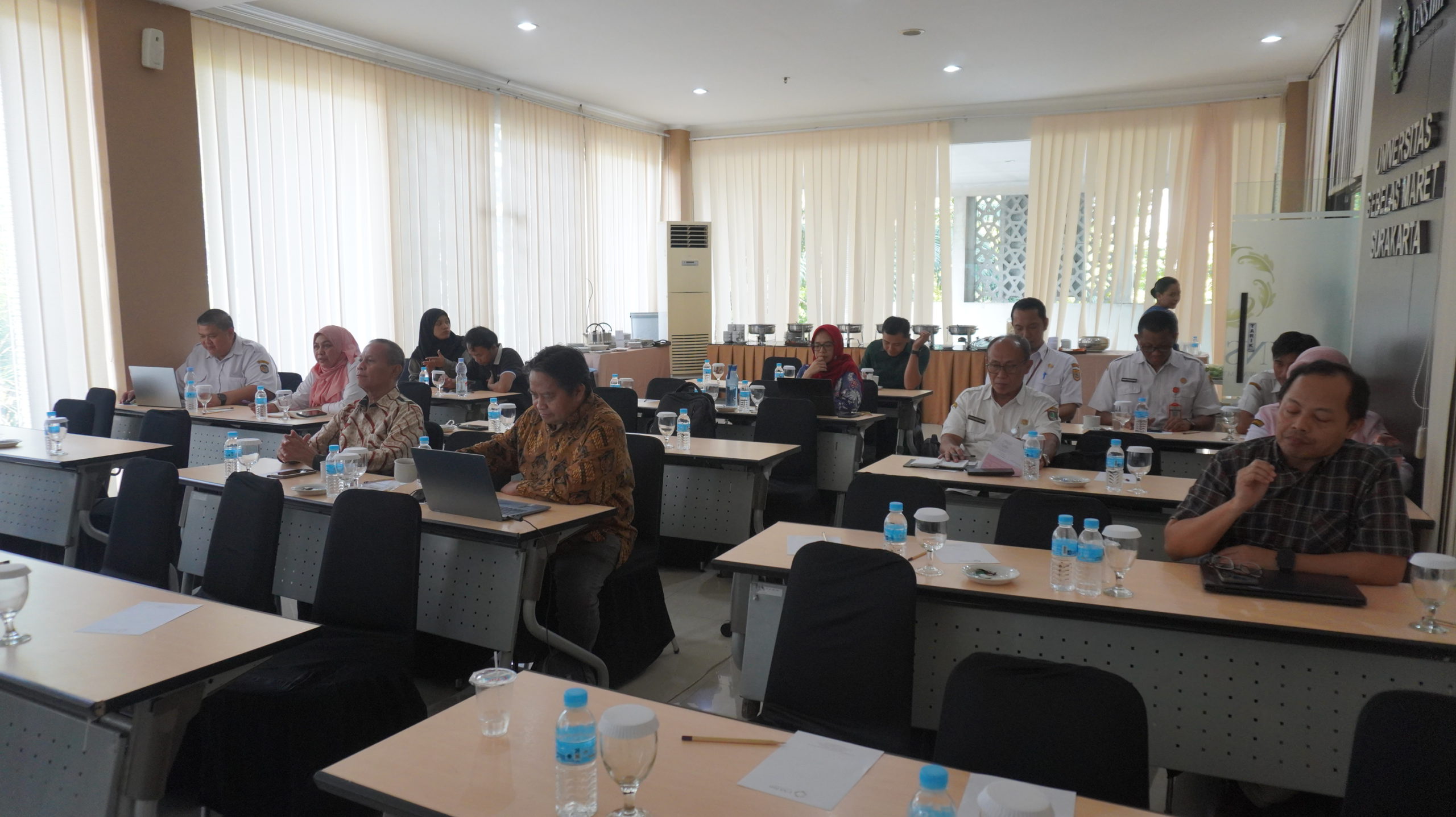
 The workshop opened with remarks from Johadi, S.E., M.Sc., Head of Cooperation at FEB UNS, who emphasized the importance of enhancing fiscal planning and public policy capacity amid regional financial constraints. “Hopefully, this workshop will bring new perspectives amid fiscal pressures. Our budget base will decline by about 19.9 percent in 2026 compared to 2025, which will have a major impact since intergovernmental transfers account for around 83 percent of our budget. Given this situation, research conducted by local governments in collaboration with BRIDA and Bappeda must propose policy recommendations that are effective, well-targeted, and outcome-oriented,” said Johadi.
 The event was attended by approximately 25 participants, including lecturers, researchers, and representatives from Bappeda and BRIDA across the Solo Raya region, including Surakarta, Sukoharjo, Karanganyar, Boyolali, Sragen, and Wonogiri. Discussions were active and productive, addressing various technical issues in data-based planning, budgeting, and policy evaluation.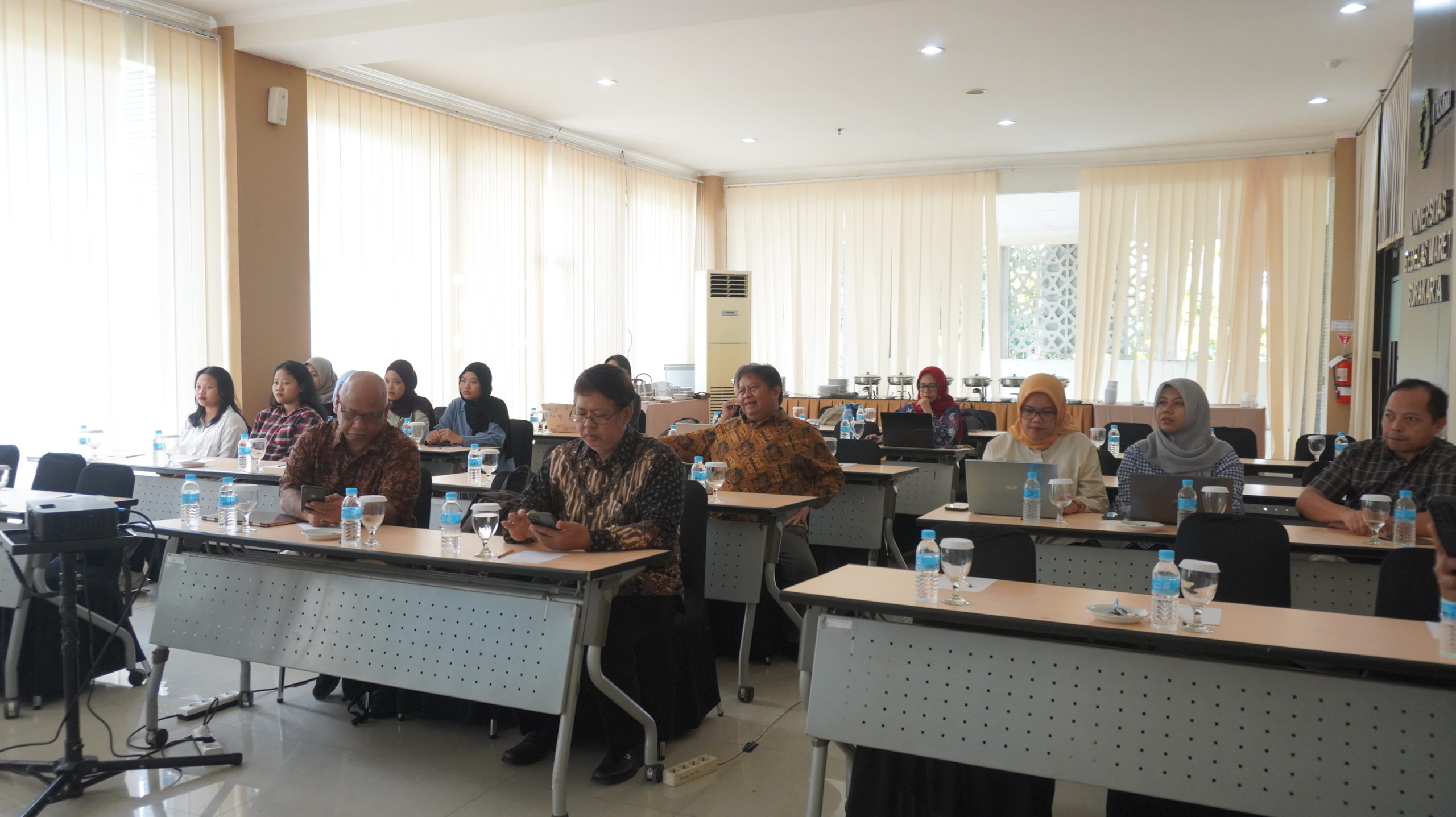
 The workshop opened with remarks from Prof. Bhimo Rizky Samudro, S.E., M.Si., Ph.D., Dean of FEB UNS, who emphasized the importance of developing adaptive and contextual curricula that respond to the dynamics of public policy. “One crucial point is how we develop an adaptive curriculum, where the learning process is directed toward case-based and project-based learning. This material is designed not only for postgraduate courses but also for undergraduate levels and is relevant to all study programs at FEB—Development Economics, Accounting, and Management,” stated Prof. Bhimo.
 The workshop continued with a presentation by Dr. Mulyanto, M.E., Head of Fiscal Corner FEB UNS, who introduced the draft of the Development Planning and Budgeting module.
 Further, Risky Sulistyanto, S.E., M.M., Head of the Finance Division of the Secretariat General of the Ministry of Finance, delivered a presentation on the practical implementation of development planning and budgeting across ministries and agencies. He shared insights on budget formulation, fiscal supervision, and financial policy innovations within the Ministry of Finance.
 Through this workshop, FEB UNS continues to strengthen its academic collaboration with the Ministry of Finance in developing a curriculum that is contextual, applicable, and oriented toward enhancing students’ competencies in public planning and budgeting.
 In his opening remarks, Sutaryo, S.E., M.Si., Ph.D., Ak., CA., CRA., CRP., ACPA, Vice Dean for Non-Academic Affairs of FEB UNS, emphasized the importance of commitment and responsibility among all staff members in providing the best service to the academic community and the public. He stated, “This type of training will be conducted continuously for at least four times a year, each with a different theme. There should be no reason to stop learning, whether one is approaching retirement or already senior, because we are all service providers who must deliver the best service, speak courteously, and behave properly. While we receive compensation, we must also demonstrate performance.”
 She explained, “Every expenditure on human resources is not merely a cost but an investment. When employee performance aligns with organizational objectives, efficiency, productivity, and public service quality will improve.”
 The second session was delivered by Heri Susilo, a happiness motivator and author of Happiness at Work, who presented material titled Living Happily, Living Meaningfully. Conducted in an interactive format through games, reflection, and team activities, the session created an engaging and meaningful training atmosphere.
 Heri emphasized that happy employees tend to be more productive, creative, and positively contribute to their work environment. He stated, “Good performance is born from happy employees. Workplace happiness is built on three pillars: meaning, engagement, and positive emotion. Happy employees will work with integrity, discipline, and a collaborative spirit.”
 The training program was conducted interactively through discussions, reflections, and experience-sharing among staff members. The event also served as an opportunity for academic support staff to strengthen their commitment to service excellence and to cultivate an adaptive work culture responsive to organizational change.
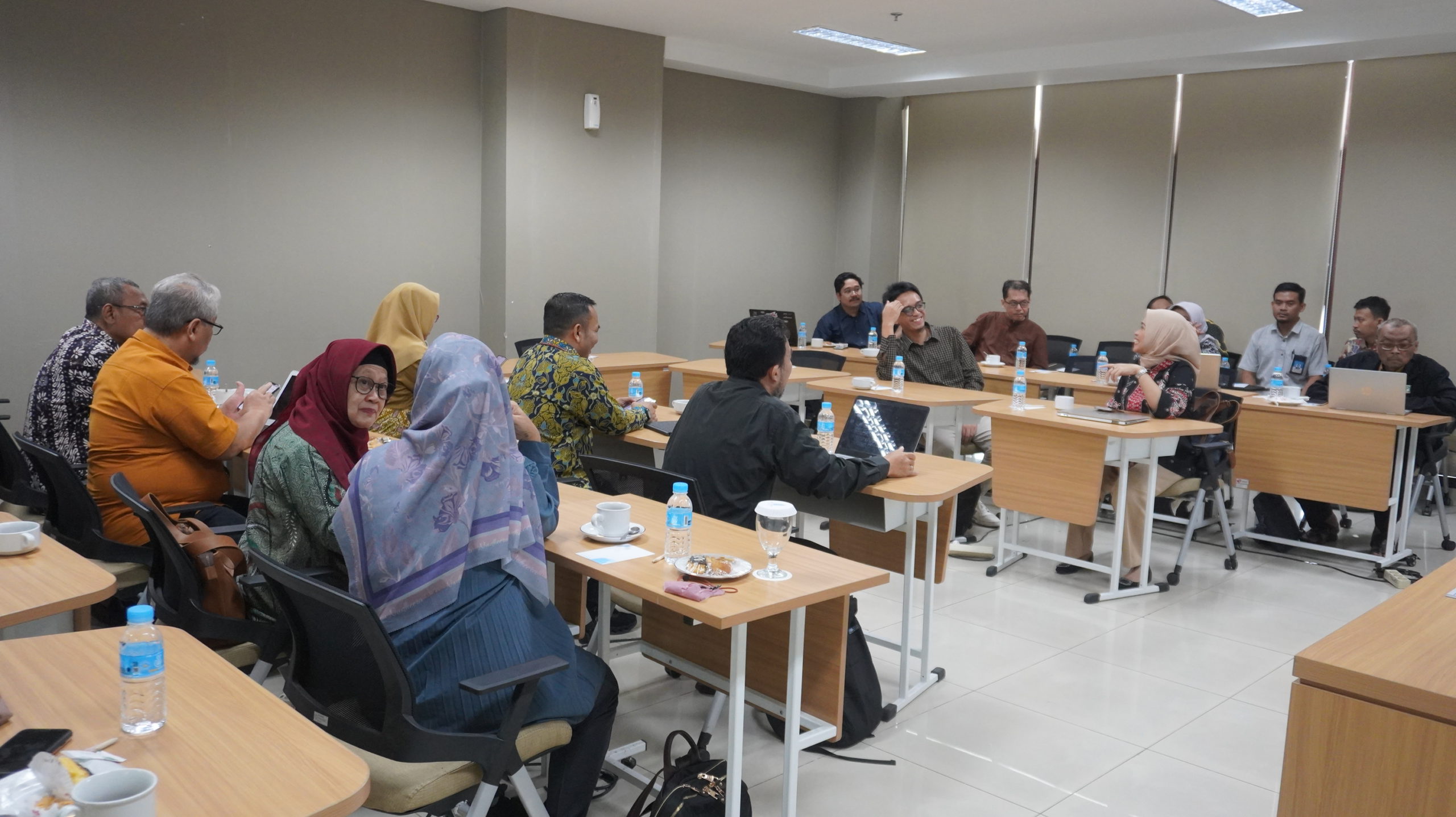
 In her opening remarks, Prof. Dr. Hunik Sri Runing Sawitri, M.Si., Chair of the FEB Academic Senate, explained that the plenary session is a follow-up to the Dean’s Office’s formal request for the Faculty Senate to review and approve the Strategic Plan, Organizational Structure, and the proposed new study program.
 “We have invited all members (of the Academic Senate) to review and provide input, therefore, the drafted documents can be further refined. Hopefully, the revisions will be minimal, and the results of today’s discussion can soon be finalized,” stated Prof. Hunik.
 “The Strategic Plan is essentially based on the 2024 achievements and baseline data, projected through 2029. Ideally, its formulation follows the performance agreement between the Dean and the Rector. However, as the said process is still underway, we continue to move forward to ensure that the faculty’s direction remains clear and measurable,” he explained.

 Following the discussions, the plenary session concluded with several agreements and recommendations to rectify the documents before their official ratification. This process reflects the commitment of the FEB UNS Academic Senate to implementing transparent, participatory, and data-driven governance in support of the faculty’s vision toward international recognition.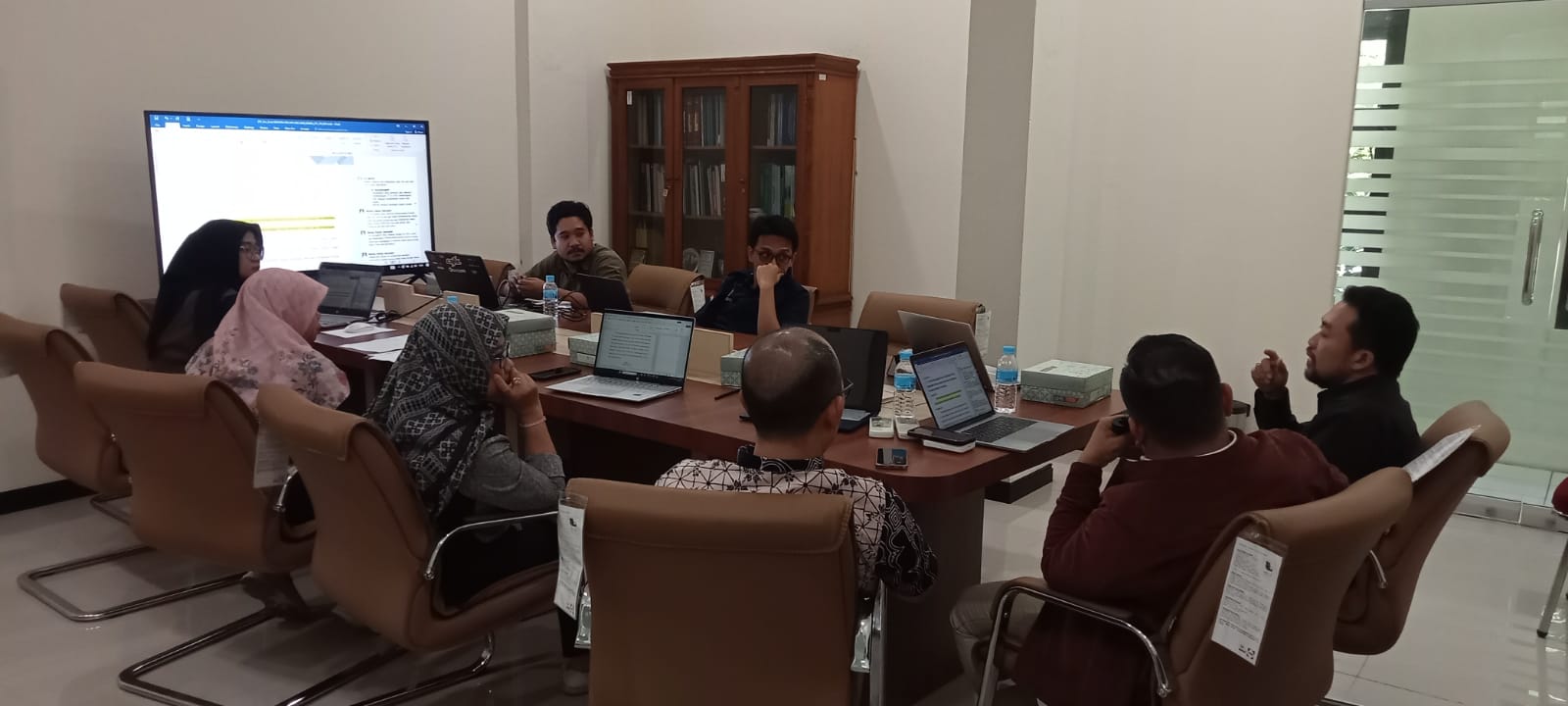

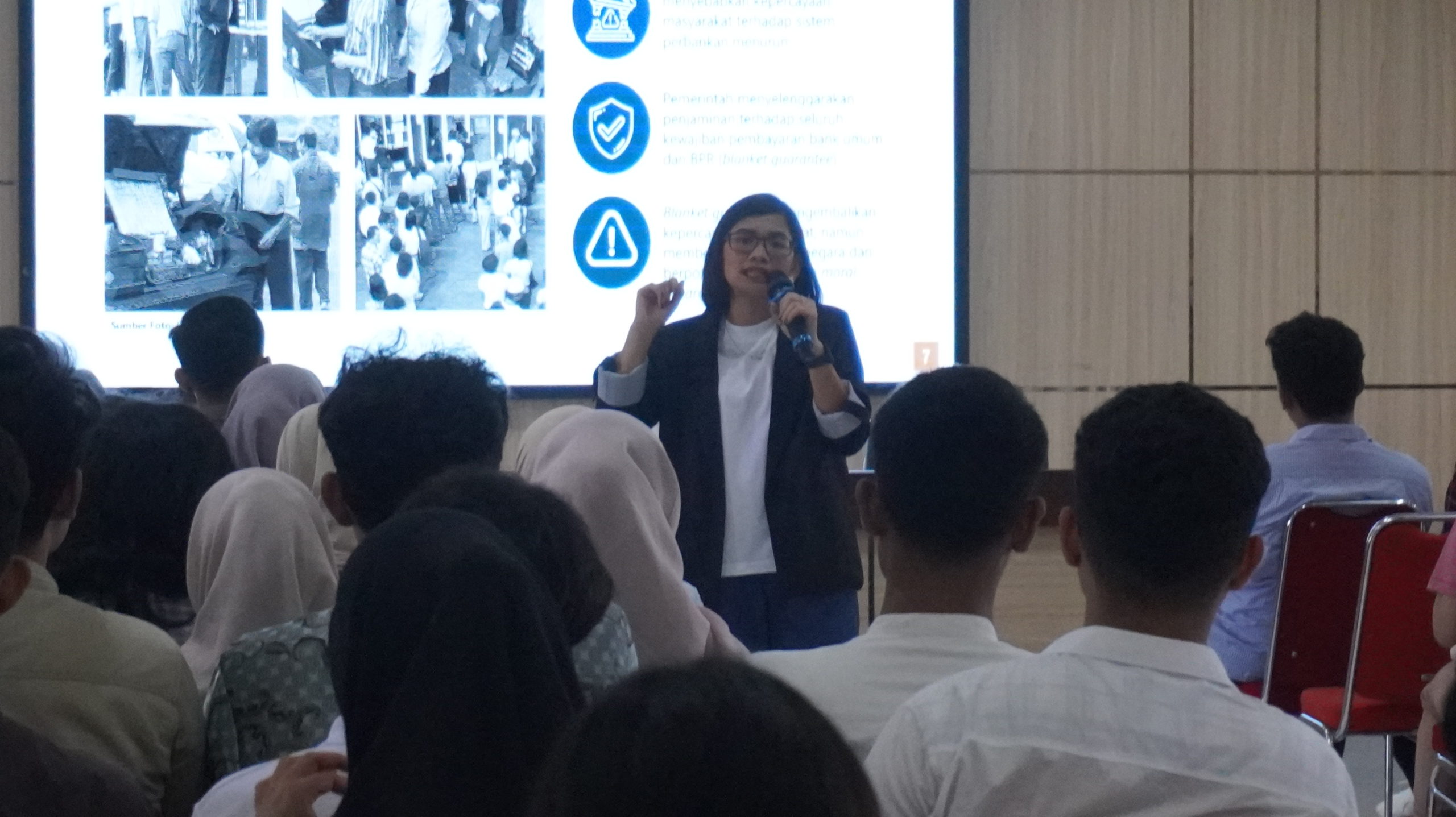
 Ferawaty outlined LPS’s key functions and mandates, which include guaranteeing customer deposits, resolving failed banks, guaranteeing insurance policies, maintaining financial system stability, and handling the settlement of insurance companies whose business licenses have been revoked. She also discussed regulatory developments that have expanded LPS’s role through several laws, including Law No. 24 of 2004 on LPS, Law No. 9 of 2016 on the Financial System Crisis Prevention and Resolution (PPKSK), and Law No. 4 of 2023 on the Financial Sector Development and Strengthening (P2SK). Over time, LPS’s mandate has grown beyond bank deposit insurance to include insurance policy guarantees, which will take effect in 2028.
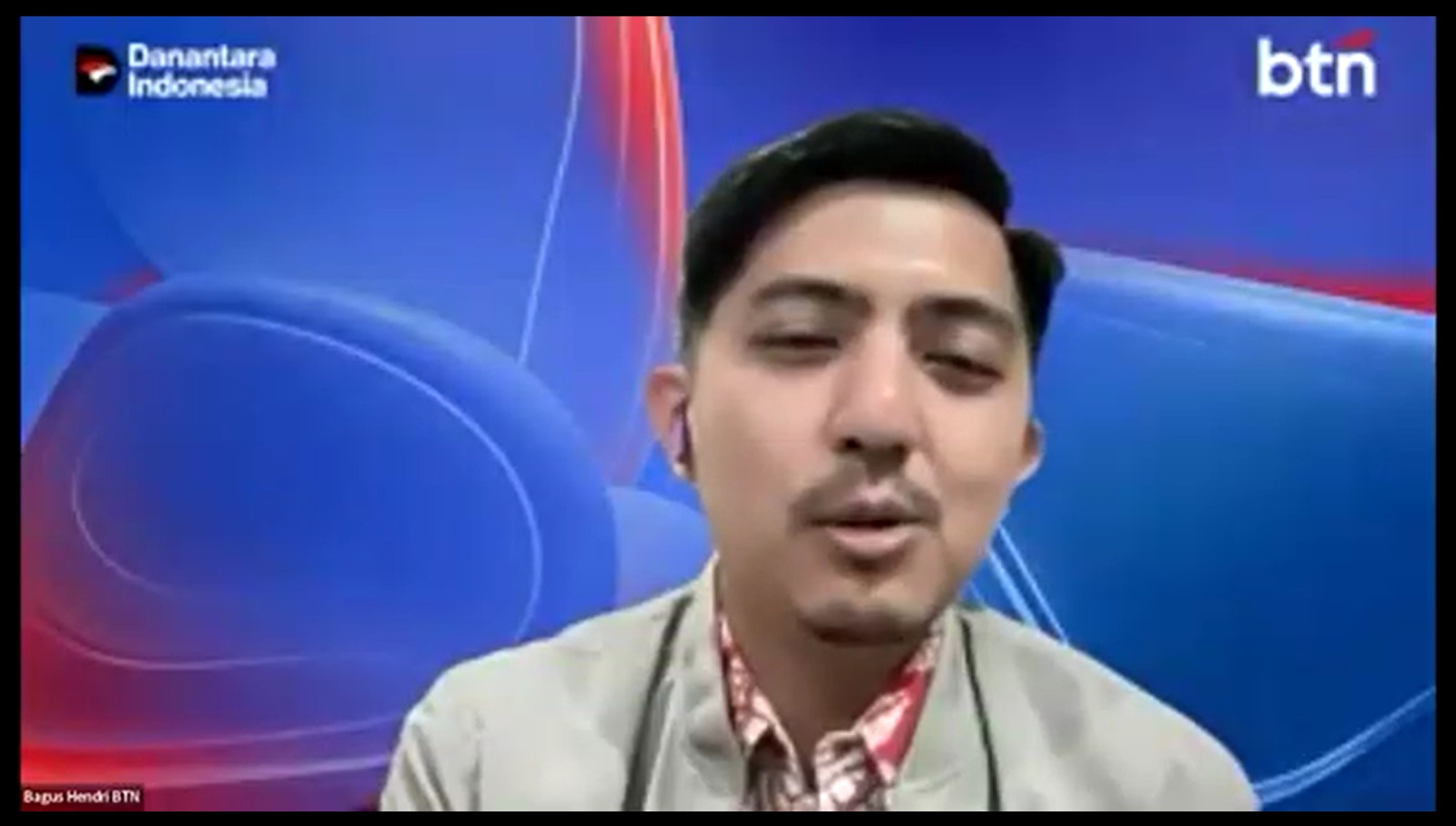
 Opening the event, Prof. Tri Mulyaningsih, S.E., M.Si., Ph.D., Vice Dean for Academic and Research Affairs, emphasized the urgency of strengthening financial literacy among students and rural communities. “This Lab Bina Desa initiative is expected not only to broaden students’ insights into the banking sector but also to empower rural communities to achieve greater prosperity through stronger economic activities,” she stated. She further noted that understanding business financing mechanisms would be valuable for students, both in pursuing careers in finance and in developing their own entrepreneurial ventures.
 “The government cannot carry out its duty alone. The private sector, especially MSMEs, plays a major role in supporting the national economy. Therefore, the banking sector is committed to expanding access to funding, providing guidelines, and strengthening financial literacy,” he said.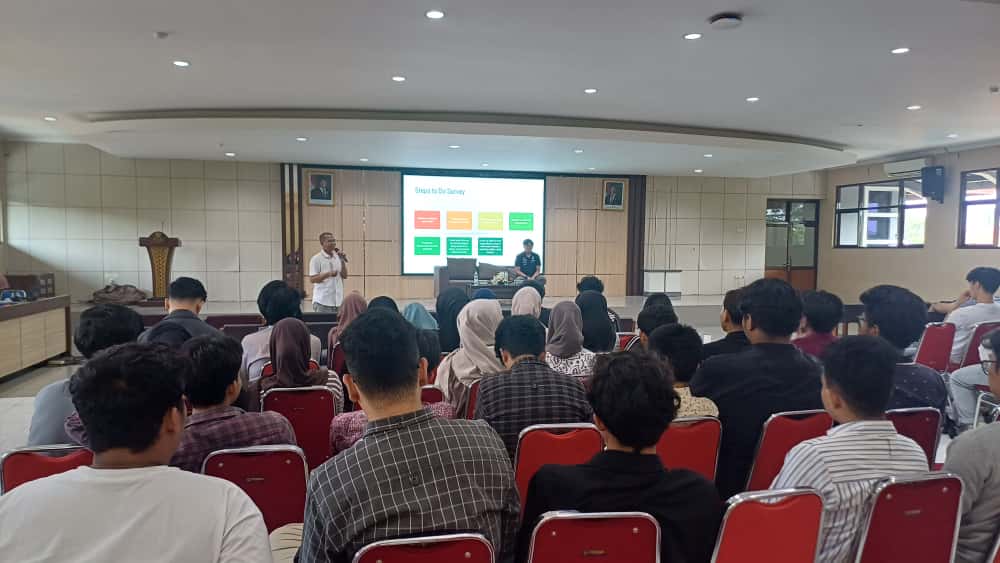
 In his material presentation, Dr. Zamroni provided a comprehensive overview of quantitative research methodology, covering survey techniques, questionnaire development, and field observation. He explained that surveys are essential tools for gathering both quantitative and qualitative data that are specific and relevant to research objectives. He further emphasized that well-designed questionnaires are crucial to ensure research validity and reliability.