FEB

Blog

  • Management Study Program Presents Industry Expert in Strategic Management Guest Lecture

    Management Study Program Presents Industry Expert in Strategic Management Guest Lecture

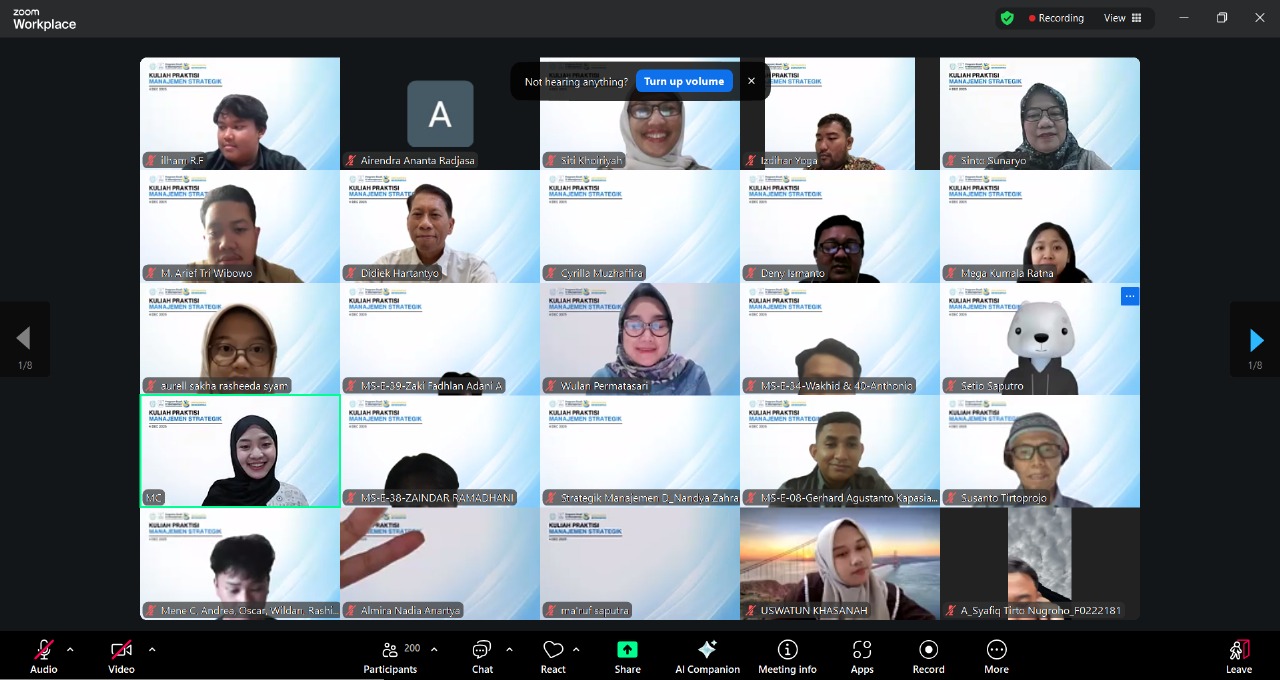
    Management Study Program, Faculty of Economics and Business (FEB), Universitas Sebelas Maret (UNS), organized a Guest Practitioner Lecture for the Strategic Management course entitled “Strategy Evaluation: Measuring Performance and Conducting Strategic Revision” on Thursday, 4 December 2025. This occasion featured Dr. Didiek Hartantyo, M.B.A., a strategic management practitioner who shared empirical experience related to Dynamic Strategic Evaluation and its implementation at PT Kereta Api Indonesia (Persero).

    In his presentation, Dr. Didiek emphasized that recently, organizations operate within a hyper-dynamic environment, characterized by rapid change and uncertainty arising from political and geopolitical conditions, global and domestic economic factors, disasters, and shifts in customer behavior. These conditions require companies to conduct strategy evaluation that is no longer static and periodic, but dynamic, continuous, and adaptive. To address these challenges, six approaches were presented.

    First, Dynamic Strategic Evaluation, which refers to strategy evaluation conducted continuously and in real time, rather than relying solely on annual cycles. Second, Data-Driven Strategic Review emphasizes the use of big data, data analytics, and artificial intelligence as the basis for decision-making, enabling strategy evaluation to be more accurate and predictive. The third approach is Adaptive Permanent Evaluation, which assesses organizational capabilities through sensing, seizing, and transforming capabilities to ensure the organization can detect change, capture opportunities, and adapt structurally. Fourth, Strategic Ambidexterity Evaluation refers to an organization’s ability to maintain operational efficiency and stability while simultaneously pursuing innovation and transformation amid policy dynamics and global economic conditions.

    Furthermore, ESG-Integrated Strategic Evaluation positions environmental, social, and governance aspects as core components of strategy evaluation to ensure sustainability and stakeholder trust. Finally, Scenario-Based Strategy Evaluation (SBSE) is applied to assess organizational readiness in facing various future possibilities, particularly under conditions of extreme uncertainty such as during a pandemic.

    In the implementation session, PT Kereta Api Indonesia (Persero) was presented as a concrete example of the application of these six approaches from 2016 to 2025. The transformation began with strengthening organizational foundations and revising the Corporate Work Plan and Budget (RKAP) during 2016–2017, followed by the achievement of an AAA rating from Pefindo in 2017. KAI also issued bonds in 2017 and 2019 as a form of transparency and cost-efficient financing, while gaining public trust through its involvement in financing the Jabodebek LRT project.

    During the COVID-19 pandemic period (2020–2021), KAI implemented crisis management through service adaptation, reinforcement of health protocols, and operational efficiency. Although the company experienced losses for two consecutive years, it successfully recovered and recorded a profit of IDR 444 billion in 2022. Entering the 2020–2025 period, KAI continued to develop dynamic strategic evolution through continuous strategy evaluation to maintain performance, safety, efficiency, and service quality.

    This practitioner lecture reaffirmed that dynamic, adaptive, and data-based strategy evaluation is a key requirement for the sustainability of modern organizations. The six strategic evaluation frameworks presented were not only academically relevant but also demonstrably applicable in national corporate practice.

    This lecture support SDG 8 (Decent Work and Economic Growth) through the strengthening of corporate performance and sustainability, SDG 9 (Industry, Innovation, and Infrastructure) through strategic transformation and innovation in the transportation sector, as well as SDG 12 (Responsible Consumption and Production) and SDG 16 (Strong and Accountable Institutions) through the integration of ESG principles and transparent governance.
  • Management Study Program at FEB UNS Presents Bio Farma Group VP to Discuss Marketing Ethics and Consumer Protection

    Management Study Program at FEB UNS Presents Bio Farma Group VP to Discuss Marketing Ethics and Consumer Protection

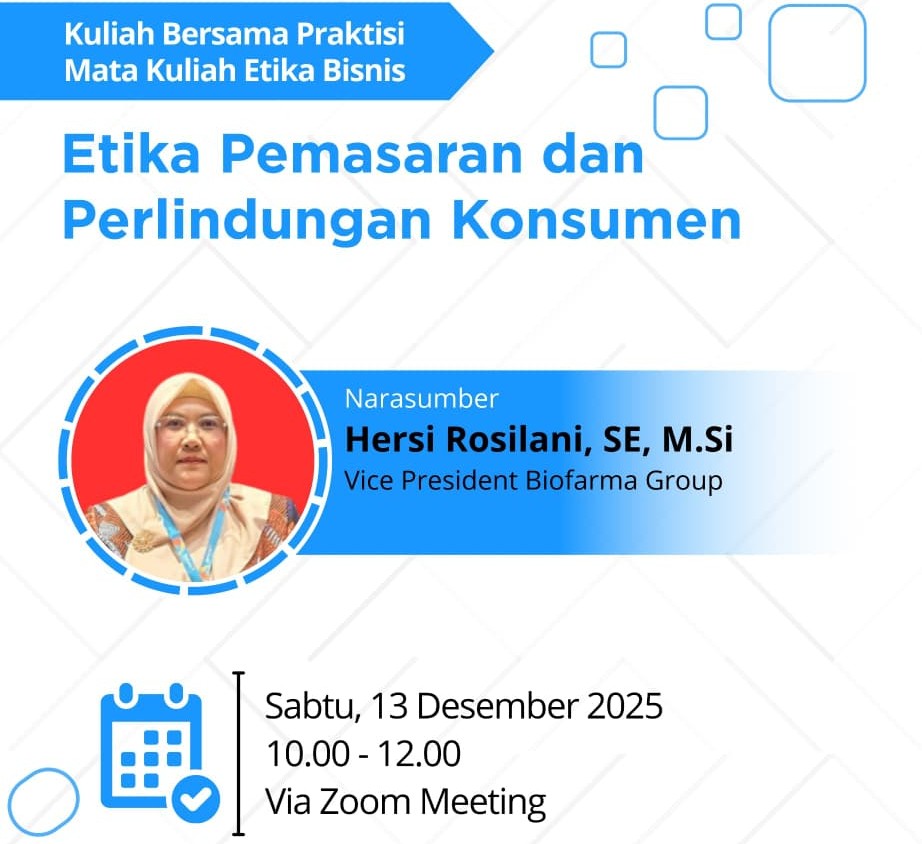
    Management Study Program, Faculty of Economics and Business (FEB), Universitas Sebelas Maret (UNS), organized a Guest Practitioner Lecture for the Business Ethics course entitled “Marketing Ethics and Consumer Protection” on Saturday, 13 December 2025. The activity, conducted virtually via Zoom Meeting, was attended by students of the Management Study Program as part of efforts to enhance practice-based learning, and featured Hersi Rosilani, S.E., M.Si., Vice President of Bio Farma Group, as the invited speaker.

    In her presentation, the speaker delivered practical insights into the application of marketing ethics in the pharmaceutical industry, highlighting honesty, transparency of information, regulatory compliance, and corporate responsibility in protecting consumers. Hersi Rosilani explained that the pharmaceutical industry carries a strong social function; therefore, marketing strategies should not be oriented solely toward profit but must also prioritize patient safety and public interest.

    The promotion of pharmaceutical products is required to be conducted responsibly, based on scientific evidence, non-misleading, and in accordance with regulations established by the National Agency of Drug and Food Control (BPOM) and the Indonesian Pharmaceutical Code of Ethics. In addition, mechanisms for consumer protection in the pharmaceutical sector were discussed, including consumers’ rights to safety, quality, and accurate information as stipulated in Law Number 8 of 1999 on Consumer Protection.

    The speaker also illustrated the supervisory role of BPOM in ensuring drug safety through registration processes, distribution monitoring, and product recalls when violations of quality, safety, or labelling standards are identified.

    Through this lecture, students are expected to gain a more comprehensive understanding of ethical business practices, particularly in the context of marketing and consumer protection within strategic industries such as pharmaceuticals. This Practitioner Lecture also served as a platform to enhance contextual learning by presenting real-world practices from industry. The implementation of the activity aligns with efforts to achieve the Sustainable Development Goals (SDGs), particularly SDG 4 (Quality Education) through the enhancement of practice-based learning, SDG 3 (Good Health and Well-Being) through attention to safety and consumer protection in the pharmaceutical sector, and SDG 12 (Responsible Consumption and Production) through the application of responsible business and marketing ethics.

  • FEB UNS Organizes Pre Job Training Batch 3 to Prepare Students for Future Careers

    FEB UNS Organizes Pre Job Training Batch 3 to Prepare Students for Future Careers

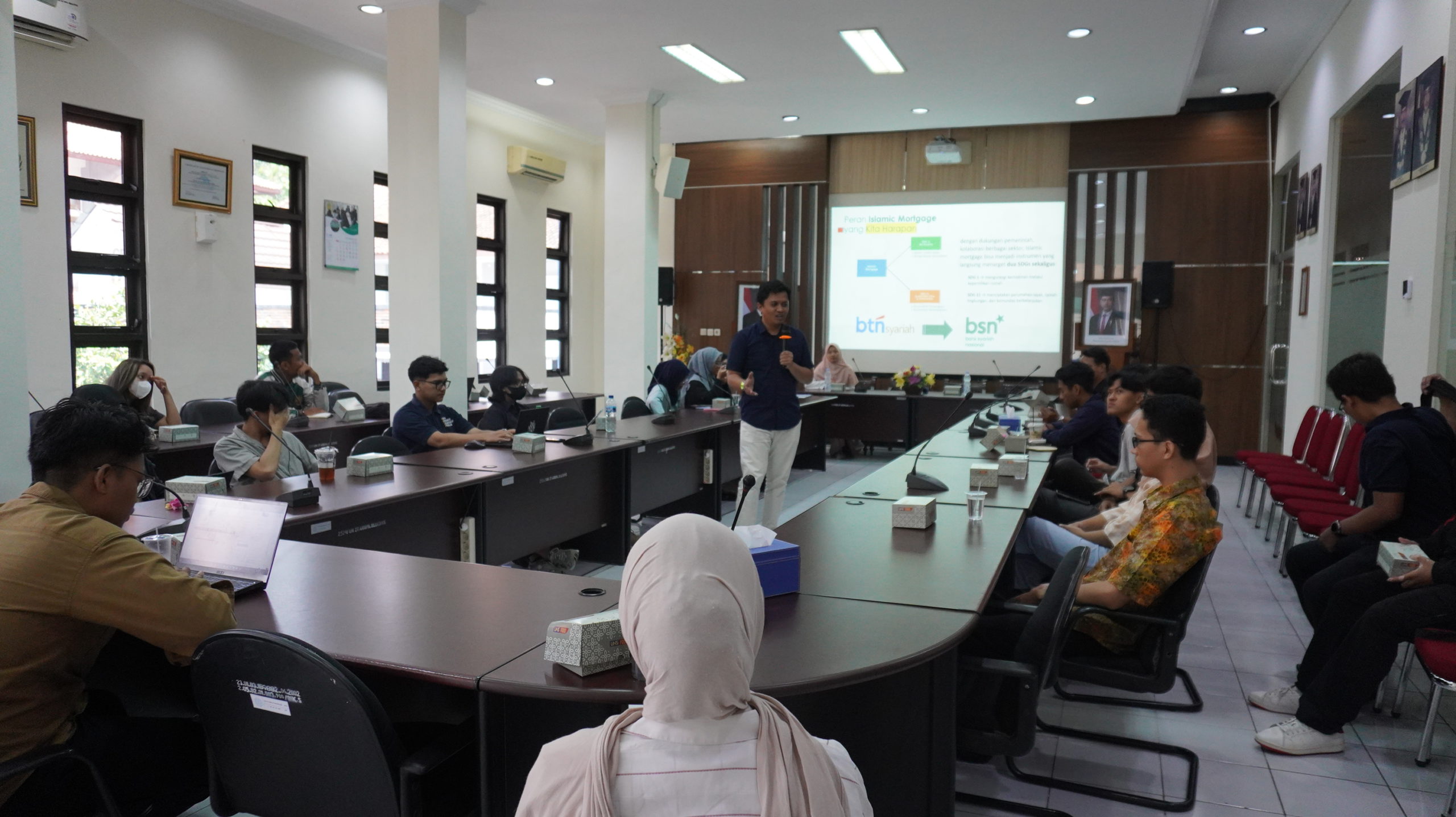
    Faculty of Economics and Business (FEB), Universitas Sebelas Maret (UNS), once again organized Pre Job Training (PJT) Batch 3 as part of its efforts to prepare students for the transition from university life to the professional world. The activity was held on Saturday, 6 December 2025, at Meeting Room 1, Building 1, FEB UNS, and was attended by FEB UNS students, particularly seventh-semester students who had not participated in previous PJT batches. Carrying the theme “Aligning Competencies with Current and Future Career Trends,” the program featured Syaiful Amri, M.M., Sub Branch Head of KCPS BTN Klaten, as the speaker.Syaiful Amri at FEB UNS PJT

    In his presentation, Syaiful Amri emphasized the importance of mental readiness, work ethic, and competency development so that graduates are not only prepared to enter the workforce but are also able to sustain and grow amid increasingly dynamic changes in the world of work. During the session, the speaker also outlined key labor market challenges in Indonesia, including the high number of job seekers, the mismatch between graduates and industry needs (vertical mismatch), and the substantial proportion of workers earning below-standard wages. In response to these conditions, students were encouraged to develop a growth mindset, a sense of responsibility (ownership), as well as the ability to build professional networks and portfolios at an early stage.

    In addition to discussing career readiness, Syaiful Amri introduced the role of PT Bank Tabungan Negara (Persero) Tbk., particularly through housing finance services and the development of sharia-based products, as an illustration of the banking sector’s contribution to public welfare. He emphasized that the professional world requires graduates who are not only academically capable but also possess strong character, integrity, and a commitment to meaningful contribution.

    Through Pre Job Training Batch 3, FEB UNS expects students to gain a clearer understanding of career direction, readiness to navigate recruitment processes, and awareness that competencies, attitudes, and work values constitute essential capital for entering the professional sphere.

    This activity aligns with the achievement of the Sustainable Development Goals (SDGs), particularly SDG 4 (Quality Education) through the enhancement of graduate readiness, and SDG 8 (Decent Work and Economic Growth) by encouraging competent, competitive young generations who are prepared to contribute to sustainable economic development.

  • Senat Akademik FEB UNS Gelar Pleno Finalisasi Renstra dan Evaluasi Proses Belajar Mengajar

    Senat Akademik FEB UNS Gelar Pleno Finalisasi Renstra dan Evaluasi Proses Belajar Mengajar

    Senat Akademik Fakultas Ekonomi dan Bisnis (FEB) Universitas Sebelas Maret (UNS) menyelenggarakan rapat pleno pada Kamis, 11 Desember 2025 di UNS Inn Solo.

    Kegiatan ini sebagai forum strategis untuk membahas sejumlah agenda penting, mulai dari finalisasi Rencana Strategis (Renstra), evaluasi proses pembelajaran, penjelasan SOP tentang pencegahan dan pelaporan pelanggaran integritas akademik, penutupan PPAK,  juga penerapan kurikulum baru Program Doktor Ilmu Ekonomi (PDIE).

    Dalam sambutannya, Ketua Senat Akademik Fakultas FEB UNS, Prof. Dr. Hunik Sri Runing Sawitri, M.Si., menyampaikan bahwa pertemuan ini menjadi momentum penting untuk menyatukan pandangan sekaligus menuntaskan agenda kerja yang telah direncanakan sepanjang tahun 2025.

    Lebih lanjut, Prof. Hunik menegaskan bahwa rapat pleno ini merupakan bagian dari rangkaian pembahasan program kerja jangka menengah FEB UNS untuk periode 2025–2029.

    Diharapkan, seluruh masukan dan diskusi yang berkembang dapat mengarah pada tahap finalisasi, sehingga rencana strategis yang disusun dapat dijalankan secara optimal dan berkelanjutan.

    “Setelah proses finalisasi ini selesai, maka tugas kita untuk tahun ini dapat dikatakan tuntas. Oleh karena itu, pertemuan ini juga menjadi rapat terakhir Senat Akademik Fakultas di tahun 2025,” ujarnya.

    Pada kesempatan tersebut, Ketua SAF juga menyampaikan meskipun jumlah kehadiran tidak sepenuhnya ideal, kegiatan tetap dilaksanakan dengan komitmen untuk menghasilkan keputusan dan rekomendasi terbaik bagi pengembangan FEB UNS ke depan.

    Melalui forum ini, Senat Akademik Fakultas FEB UNS menegaskan perannya sebagai penjaga mutu akademik dan pengarah kebijakan strategis fakultas, khususnya dalam memastikan relevansi kurikulum, kualitas proses belajar mengajar, serta kesinambungan tata kelola akademik yang adaptif terhadap dinamika pendidikan tinggi.

    Kegiatan ini selaras dengan Tujuan Pembangunan Berkelanjutan (SDGs), khususnya SDG 4 (Pendidikan Berkualitas) melalui penguatan kurikulum dan mutu proses pembelajaran, serta SDG 16 (Perdamaian, Keadilan, dan Kelembagaan yang Tangguh) melalui penguatan tata kelola akademik yang transparan, akuntabel, dan berkelanjutan.

  • FEB UNS Practitioner Lecture: Safeguarding Project Success through Project Integrated Monitoring & Controlling

    FEB UNS Practitioner Lecture: Safeguarding Project Success through Project Integrated Monitoring & Controlling

    Management Study Program and the Master of Management Program, Faculty of Economics and Business (FEB), Universitas Sebelas Maret (UNS), organized a practitioner lecture themed “Safeguarding Project Success through Project Integrated Monitoring & Controlling” on Saturday, 6 December 2025, at the Suhardi Hall, FEB UNS. This activity formed part of the Operations Specialization Course and featured a professional practitioner to enrich students’ understanding of contemporary project management practices.

    The speaker for this session was Edi Marwanto, Vice President of Business Development at PT National Energy Solutions, who has more than 20 years of experience in construction projects within the oil, gas, and petrochemical sectors. In his presentation, Edi Marwanto emphasized that projects do not merely produce unique deliverables, but also drive change and create value for organizations.

    He explained that project failure is often caused by weak control processes, unmanaged changes, and inadequate monitoring of project performance. Data from The Standish Group indicate that large-budget projects face significant failure risks if they are not properly controlled.

    The lecture then outlined core concepts in Project Management, including the Project Management Framework, Integrated Monitoring and Controlling, the role of the Project Management Office (PMO), and key recommendations for achieving project success.

    The speaker described the comprehensive project life cycle, beginning with initiating, planning, executing, monitoring and controlling, and concluding with closing. Each phase plays a critical role in ensuring that projects proceed in line with established plans.

    The main section of the lecture highlighted the importance of Project Integrated Monitoring & Controlling, which encompasses scope control to prevent scope creep, project schedule control through baseline monitoring, cost control using CPI and CV indicators, quality control to ensure outputs meet specifications, as well as the management of risks, communication, resources, and stakeholders.

    Edi introduced the application of Earned Value Management (EVM) as a highly effective method for assessing actual project performance and forecasting final project outcomes. The case studies presented demonstrated how EVM enables early identification of deviations, allowing project teams to design appropriate action plans.

    The speaker emphasized the significance of a Project Management Office (PMO) as the center of organizational project governance. The PMO ensures strategic alignment, manages project business processes, develops human resource competencies, and facilitates knowledge transfer, enabling organizations to better manage the complexity of modern projects.

    In closing, Edi Marwanto presented several key recommendations, including the adoption of global project management standards, stronger risk and change management practices, character-based leadership that includes emotional intelligence, and the application of the talent triangle for project managers, comprising technical, leadership, and strategic-business skills.
    This practitioner lecture supports the achievement of SDG 4 (Quality Education) through the enhancement of student competencies in project management. In addition, the emphasis on monitoring and controlling practices, project governance, and efficient resource utilization contributes to SDG 9 (Industry, Innovation, and Infrastructure) and SDG 16 (Peace, Justice, and Strong Institutions) through transparent, effective, and sustainable project management practices.

  • Prodi S1 Manajemen Hadirkan Praktisi di Kuliah Manajemen Strategik

    Prodi S1 Manajemen Hadirkan Praktisi di Kuliah Manajemen Strategik

    Program Studi S1 Manajemen, Fakultas Ekonomi dan Bisnis (FEB) Universitas Sebelas Maret (UNS) menyelenggarakan Kuliah Praktisi Mata Kuliah Manajemen Strategik dengan tema “Evaluasi Strategi: Mengukur Kinerja dan Melakukan Revisi Strategis”, Kamis 4 Desember 2025.

    Kegiatan ini menghadirkan Dr. Didiek Hartantyo, M.B.A., praktisi strategik yang membagikan pengalaman empiris terkait Dynamic Strategic Evaluation dan implementasinya di PT Kereta Api Indonesia (Persero).

    Dalam paparannya, narasumber menekankan bahwa organisasi saat ini beroperasi dalam hyper dynamic environment, ditandai oleh perubahan cepat dan ketidakpastian akibat faktor politik, geopolitik, ekonomi global–domestik, bencana, hingga perubahan perilaku pelanggan.

    Kondisi tersebut menuntut perusahaan melakukan evaluasi strategi yang tidak lagi bersifat statis dan periodik, melainkan dinamis, berkelanjutan, dan adaptif.

    Untuk menjawab tantangan tersebut, disampaikan enam pendekatan. Pertama, Dynamic Strategic Evaluation, yaitu evaluasi strategi yang dilakukan secara terus-menerus dan real-time, bukan hanya melalui siklus tahunan.

    Kedua, Data-Driven Strategic Review, yang menekankan pemanfaatan Big Data, data analytics, dan kecerdasan buatan sebagai dasar pengambilan keputusan agar evaluasi strategi bersifat akurat dan prediktif.

    Pendekatan ketiga adalah Adaptive Permanent Evaluation, yang menilai kapabilitas organisasi melalui sensing, seizing, dan transforming capability agar mampu mendeteksi perubahan, menangkap peluang, serta beradaptasi secara struktural.

    Keempat, Strategic Ambidexterity Evaluation, yaitu kemampuan organisasi menjaga efisiensi dan stabilitas operasional sekaligus melakukan inovasi dan transformasi di tengah dinamika kebijakan dan ekonomi global.

    Selanjutnya, ESG-Integrated Strategic Evaluation menempatkan aspek lingkungan, sosial, dan tata kelola sebagai bagian inti evaluasi strategi untuk menjamin keberlanjutan dan kepercayaan pemangku kepentingan.

    Terakhir, Scenario-Based Strategy Evaluation (SBSE) digunakan untuk menilai kesiapan organisasi menghadapi berbagai kemungkinan masa depan, terutama dalam situasi ketidakpastian ekstrem seperti pandemi.

    Dalam sesi implementasi, PT Kereta Api Indonesia (Persero) dipaparkan sebagai contoh nyata penerapan keenam pendekatan tersebut sejak 2016 hingga 2025. Transformasi diawali dengan penguatan fondasi dan revisi RKAP (2016–2017), dilanjutkan pencapaian peringkat AAA dari Pefindo pada 2017. KAI juga menerbitkan obligasi pada 2017 dan 2019 sebagai bentuk transparansi dan pembiayaan berbiaya efisien, serta memperoleh kepercayaan publik melalui pembiayaan proyek LRT Jabodebek.

    Pada masa pandemi COVID-19 (2020–2021), KAI menerapkan manajemen krisis melalui adaptasi layanan, penguatan protokol kesehatan, dan efisiensi operasional. Meski sempat mengalami kerugian selama dua tahun, perusahaan berhasil bangkit dan mencatatkan laba Rp 444 miliar pada 2022. Memasuki periode 2020–2025, KAI terus mengembangkan dynamic strategic evolution dengan evaluasi strategi yang bersifat kontinu guna menjaga kinerja, keselamatan, efisiensi, dan kualitas layanan.

    Kuliah praktisi ini menegaskan bahwa evaluasi strategi yang dinamis, adaptif, dan berbasis data menjadi kunci keberlanjutan organisasi modern. Enam kerangka evaluasi strategis yang disampaikan tidak hanya relevan secara akademik, tetapi juga terbukti aplikatif dalam praktik korporasi nasional.

    Materi kuliah ini mendukung SDG 8 (Pekerjaan Layak dan Pertumbuhan Ekonomi) melalui penguatan kinerja dan keberlanjutan perusahaan, SDG 9 (Industri, Inovasi, dan Infrastruktur) melalui transformasi dan inovasi strategis sektor transportasi, serta SDG 12 (Konsumsi dan Produksi yang Bertanggung Jawab) dan SDG 16 (Institusi yang Tangguh dan Akuntabel) melalui integrasi prinsip ESG dan tata kelola yang transparan.

  • Prodi S1 Manajemen FEB UNS Hadirkan Praktisi Bio Farma Bahas Etika Pemasaran dan Perlindungan Konsumen

    Prodi S1 Manajemen FEB UNS Hadirkan Praktisi Bio Farma Bahas Etika Pemasaran dan Perlindungan Konsumen

    Program Studi S1 Manajemen Fakultas Ekonomi dan Bisnis (FEB) Universitas Sebelas Maret (UNS) menyelenggarakan Kuliah Bersama Praktisi pada Mata Kuliah Etika Bisnis dengan tema “Etika Pemasaran dan Perlindungan Konsumen” Sabtu, 13 Desember 2025.

    Kegiatan yang dilaksanakan secara daring melalui Zoom Meeting ini diikuti oleh mahasiswa Program Studi S1 Manajemen sebagai bagian dari penguatan pembelajaran berbasis praktik.

    Kegiatan ini menghadirkan Hersi Rosilani, S.E., M.Si., Vice President Bio Farma Group, sebagai narasumber.

    Dalam paparannya, narasumber menyampaikan wawasan praktis mengenai penerapan etika pemasaran di industri farmasi yang menekankan kejujuran, transparansi informasi, kepatuhan regulasi, serta tanggung jawab perusahaan dalam melindungi konsumen.

    Hersi Rosilani menjelaskan bahwa industri farmasi memiliki fungsi sosial yang kuat, sehingga strategi pemasaran tidak semata berorientasi pada keuntungan, tetapi juga harus mengedepankan keselamatan pasien dan kepentingan masyarakat.

    Promosi produk farmasi wajib dilakukan secara bertanggung jawab, berbasis bukti ilmiah, tidak menyesatkan, serta sesuai dengan regulasi yang ditetapkan oleh Badan Pengawas Obat dan Makanan (BPOM) dan Kode Etik Farmasi Indonesia.

    Selain itu, dibahas pula mekanisme perlindungan konsumen di sektor farmasi, termasuk hak konsumen atas keamanan, mutu, dan informasi yang benar sebagaimana diatur dalam Undang-Undang Nomor 8 Tahun 1999 tentang Perlindungan Konsumen.

    Narasumber mencontohkan peran pengawasan BPOM dalam memastikan keamanan obat melalui registrasi, pengawasan distribusi, hingga penarikan produk apabila ditemukan pelanggaran standar mutu, keamanan, atau pelabelan.

    Melalui kuliah bersama praktisi ini, mahasiswa diharapkan memperoleh pemahaman yang lebih komprehensif mengenai praktik bisnis yang beretika, khususnya dalam konteks pemasaran dan perlindungan konsumen di industri strategis seperti farmasi.

    Kegiatan ini juga menjadi sarana penguatan pembelajaran kontekstual dengan menghadirkan praktik nyata dari dunia industri.

    Kegiatan Kuliah Bersama Praktisi ini sejalan dengan upaya pencapaian Sustainable Development Goals (SDGs), khususnya SDG 4 (Pendidikan Berkualitas) melalui penguatan pembelajaran berbasis praktik, SDG 3 (Kehidupan Sehat dan Sejahtera) melalui penekanan pada keselamatan dan perlindungan konsumen farmasi, serta SDG 12 (Konsumsi dan Produksi yang Bertanggung Jawab) melalui penerapan etika bisnis dan pemasaran yang bertanggung jawab.

  • FEB UNS Gelar Pre Job Training Batch 3, Siapkan Mahasiswa Hadapi Dunia Kerja dan Karier Masa Depan

    FEB UNS Gelar Pre Job Training Batch 3, Siapkan Mahasiswa Hadapi Dunia Kerja dan Karier Masa Depan

    Fakultas Ekonomi dan Bisnis (FEB) Universitas Sebelas Maret (UNS) kembali menyelenggarakan Pre Job Training (PJT) Batch 3 sebagai bagian dari upaya pembekalan mahasiswa menghadapi transisi dari dunia kampus ke dunia kerja.

    Kegiatan ini dilaksanakan pada Sabtu, 6 Desember 2025 di Ruang Sidang 1 Gedung 1 FEB UNS, dan diikuti oleh mahasiswa FEB UNS, khususnya mahasiswa semester 7 yang belum mengikuti PJT batch sebelumnya.

    Mengusung tema “Aligning Competencies with Current and Future Career Trends”, kegiatan ini menghadirkan Syaiful Amri, M.M., Sub Branch Head KCPS BTN Klaten, sebagai narasumber.

    Dalam paparannya, Syaiful Amri menekankan pentingnya kesiapan mental, etos kerja, dan penguatan kompetensi agar lulusan tidak hanya siap bekerja, tetapi juga mampu bertahan dan berkembang di tengah perubahan dunia kerja yang semakin dinamis.

    Dalam sesi tersebut, narasumber juga membagikan gambaran tantangan ketenagakerjaan di Indonesia, seperti tingginya jumlah pencari kerja, ketidaksesuaian antara lulusan dan kebutuhan industri (vertical mismatch), serta masih besarnya persentase pekerja dengan upah di bawah standar. Oleh karena itu, mahasiswa didorong untuk memiliki growth mindset, rasa tanggung jawab (ownership), serta kemampuan membangun jejaring dan portofolio sejak dini.

    Selain membahas kesiapan karier, Syaiful Amri turut memperkenalkan peran PT Bank Tabungan Negara (Persero) Tbk, khususnya melalui layanan pembiayaan perumahan dan pengembangan produk syariah, sebagai contoh kontribusi sektor perbankan dalam mendukung kesejahteraan masyarakat. Ia menegaskan bahwa dunia kerja membutuhkan lulusan yang tidak hanya kompeten secara akademik, tetapi juga memiliki karakter, integritas, dan orientasi kontribusi.

    Melalui Pre Job Training Batch 3 ini, FEB UNS berharap mahasiswa memiliki pemahaman yang lebih jelas mengenai arah karier, kesiapan menghadapi proses rekrutmen, serta kesadaran bahwa kompetensi, sikap, dan nilai kerja merupakan bekal utama dalam memasuki dunia profesional.

    Kegiatan ini sejalan dengan pencapaian Sustainable Development Goals (SDGs), khususnya SDG 4 (Pendidikan Berkualitas) melalui penguatan kesiapan lulusan, serta SDG 8 (Pekerjaan Layak dan Pertumbuhan Ekonomi) dengan mendorong generasi muda yang kompeten, berdaya saing, dan siap berkontribusi dalam pembangunan ekonomi berkelanjutan.

  • Kuliah Praktisi FEB UNS: Mengawal Kesuksesan Proyek melalui Project Integrated Monitoring & Controlling

    Kuliah Praktisi FEB UNS: Mengawal Kesuksesan Proyek melalui Project Integrated Monitoring & Controlling

    Program Studi S1 Manajemen dan S2 Magister Manajemen Fakultas Ekonomi dan Bisnis (FEB) Universitas Sebelas Maret (UNS) menyelenggarakan kuliah praktisi dengan tema Mengawal Kesuksesan Proyek melalui Project Integrated Monitoring & Controlling”, Sabtu, 6 Desember 2025 di Aula Gedung Suhardi FEB UNS.

    Kegiatan ini merupakan bagian dari Mata Kuliah Minat Operasi yang menghadirkan praktisi profesional untuk memperkaya wawasan mahasiswa terkait pengelolaan proyek modern.

    Narasumber pada kesempatan ini adalah Edi Marwanto, Vice President Business Development PT National Energy Solutions, yang memiliki pengalaman lebih dari 20 tahun dalam proyek konstruksi di sektor minyak, gas, dan petrokimia.

    Dalam pemaparannya, Edi Marwanto menekankan bahwa proyek tidak hanya menghasilkan deliverable unik, tetapi juga mendorong perubahan dan menciptakan nilai bagi organisasi.

    Ia menjelaskan bahwa kegagalan proyek sering diakibatkan oleh lemahnya proses pengendalian, perubahan yang tidak terkelola, serta rendahnya pemantauan kinerja proyek. Data The Standish Group menunjukkan proyek dengan anggaran besar memiliki risiko kegagalan yang signifikan jika tidak dikendalikan dengan baik.

    Materi kemudian menguraikan konsep-konsep inti dalam Project Management, antara lain: Framework Project Management, Monitoring & Controlling Terintegrasi, Peran Project Management Office (PMO) dan Rekomendasi untuk Kesuksesan Proyek.

    Narasumber memaparkan alur menyeluruh siklus proyek, mulai dari initiating, planning, executing, monitoring & controlling, hingga closing. Setiap fase memiliki peran penting dalam memastikan proyek berjalan sesuai rencana.

    Bagian utama kuliah menyoroti pentingnya Project Integrated Monitoring & Controlling, yaitu proses yang mencakup pengendalian ruang lingkup (scope) agar tidak terjadi scope creep, Pengendalian jadwal proyek melalui pemantauan baseline, engendalian biaya dengan indikator CPI dan CV, pengendalian kualitas agar hasil sesuai spesifikasi, serta pengelolaan risiko, komunikasi, sumber daya, dan stakeholder.

    Edi memperkenalkan penerapan metode Earned Value Management (EVM) sebagai alat yang sangat efektif dalam membaca kinerja aktual proyek serta memprediksi kondisi akhir proyek. Studi kasus yang dipaparkan menunjukkan bagaimana EVM membantu mengidentifikasi deviasi sejak dini sehingga tim proyek dapat merancang action plan yang tepat.

    Narasumber menegaskan pentingnya keberadaan PMO sebagai pusat tata kelola proyek organisasi. PMO berfungsi memastikan keselarasan strategi, mengelola proses bisnis proyek, mengembangkan kompetensi SDM, serta mentransfer pengetahuan sehingga organisasi lebih siap menghadapi kompleksitas proyek modern.

    Mengakhiri pemaparan, Edi Marwanto menyampaikan beberapa rekomendasi kunci: implementasi standar global manajemen proyek, penguatan manajemen risiko dan manajemen perubahan, kepemimpinan berkarakter, termasuk kecerdasan emosional serta penerapan talent triangle bagi project manager: technical, leadership, dan strategic-business skills

    Kuliah praktisi ini mendukung pencapaian SDG 4 (Quality Education) melalui peningkatan kompetensi mahasiswa di bidang manajemen proyek. Selain itu, penguatan praktik monitoring & controlling, tata kelola proyek, dan efisiensi penggunaan sumber daya turut mendukung SDG 9 (Industry, Innovation, and Infrastructure) dan SDG 16 (Peace, Justice, and Strong Institutions) melalui pengelolaan proyek yang transparan, efektif, dan berkelanjutan.

  • Management Study Program FEB UNS Holds Practitioner Lecture on KAI Services Digital Transformation

    Management Study Program FEB UNS Holds Practitioner Lecture on KAI Services Digital Transformation

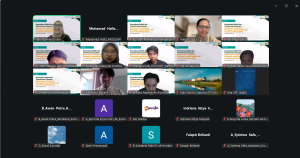
    Management Study Program, Faculty of Economics and Business, Universitas Sebelas Maret (FEB UNS), organized a Business Communication Practitioner Lecture in collaboration with PT Kereta Api Indonesia (Persero) as an industry partner on Saturday, 29 November 2025. This activity formed part of the Management Study Program’s efforts to enhance the connection between academic theory and professional practice. The practitioner lecture, entitled “Digital Communication and Service Transformation: Building Customer Experience through the KAI Access Application and Social Media,” featured Erni Sylviane Purba, Vice President of Public Relations at PT KAI, as the keynote speaker.

    Practitioner lecture with PT KAIThe session was conducted virtually and attended by students of the Management Study Program. It was moderated by Dr. Intan Novela Qurrotul Aini, S.E., M.Si., a lecturer at FEB UNS. During the session, the speaker outlined her career journey, which began in the fields of technology and social media before she joined KAI in 2013 as Manager of CRM and Digital Media. During this period, KAI began implementing social media listening integrated with operational systems, enabling the company to distinguish authentic customer feedback from public opinion and comments generated by non-customer accounts.
    The speaker emphasized that social media has become a critical channel for identifying service-related issues. “Every criticism and appreciation must be analyzed. We utilize a 24-hour command center connected to the contact center and CCTV analytics across all stations,” she explained.

    She further elaborates that this system enables KAI to detect potential service crises, including the handling of harassment cases in station areas. “Do not expect perpetrators of sexual violence to be able to board trains, particularly in the Jabodetabek area. Our system monitors passenger movement to ensure collective safety,” she stated firmly.

    KAI also employs social media listening to accurately identify passenger needs. Feedback concerning the comfort of economy-class trains, toilet facilities, and requests for supporting travel amenities has resulted in tangible service improvements. “From simple comments about seat backrests to requests for separate male and female toilets, all are addressed through innovation,” she explained.

    Even investment strategies, such as the provision of water stations, are determined based on customer feedback as part of efforts to reduce plastic waste while improving passenger comfort. In one semester of 2025, KAI recorded more than six million mentions related to railway services; however, after analysis, only 1.58 million were identified as genuine customer feedback. “This is where filtering becomes essential. We must satisfy customers, not merely follow the dynamics of online discourse,” she added.

    The speaker also described the management of viral issues, such as the so-called “Tumbler” case. According to her, KAI chose to release clarification at night after observing high levels of discussion during the day. She clarified that temporary removal from duty does not constitute dismissal, but rather serves as a protection mechanism for employees during the clarification process. In addition, she reported that KAI has recovered more than 12,000 lost passenger items valued at over IDR 12 billion, demonstrating the company’s integrity in safeguarding customer property.

    KAI currently serves more than 400 million passengers annually, with projections reaching 500 million passengers by the end of 2025. These figures indicate the substantial economic impact of railway services on society. “Railways do not merely transport people; they drive economic activity. Hotels, culinary businesses, and other sectors move in parallel,” she noted.

    At the global level, KAI is preparing to offer International Operation and Management Services, including opportunities to operate in Abu Dhabi and other countries. Digitalization, electrification, and long-term strategic development constitute the main focus areas for future growth.

    Concluding the session, the speaker expressed her appreciation for the opportunity to participate at UNS as part of public education efforts. Several KAI communication case studies have become references for undergraduate and postgraduate students. “KAI seeks to demonstrate transparency and readiness to contribute to Indonesia’s economic transformation and global engagement,” she stated.

    This public lecture further enhanced collaboration between KAI and the academic community in developing studies on communication, digital transformation, and data-driven public services. This occasion aligns with the achievement of the Sustainable Development Goals (SDGs), particularly SDG 4 (Quality Education) through practice-based industry learning, SDG 9 (Industry, Innovation, and Infrastructure) through the presentation of digital transformation and service innovation in the transportation sector, and SDG 11 (Sustainable Cities and Communities) through the development of safe, inclusive, and sustainable public transportation systems.