FEB

Blog

  • MESP Study Program FEB UNS Curriculum Reviews: Strengthening Data-Based Learning and Development Challenges

    MESP Study Program FEB UNS Curriculum Reviews: Strengthening Data-Based Learning and Development Challenges

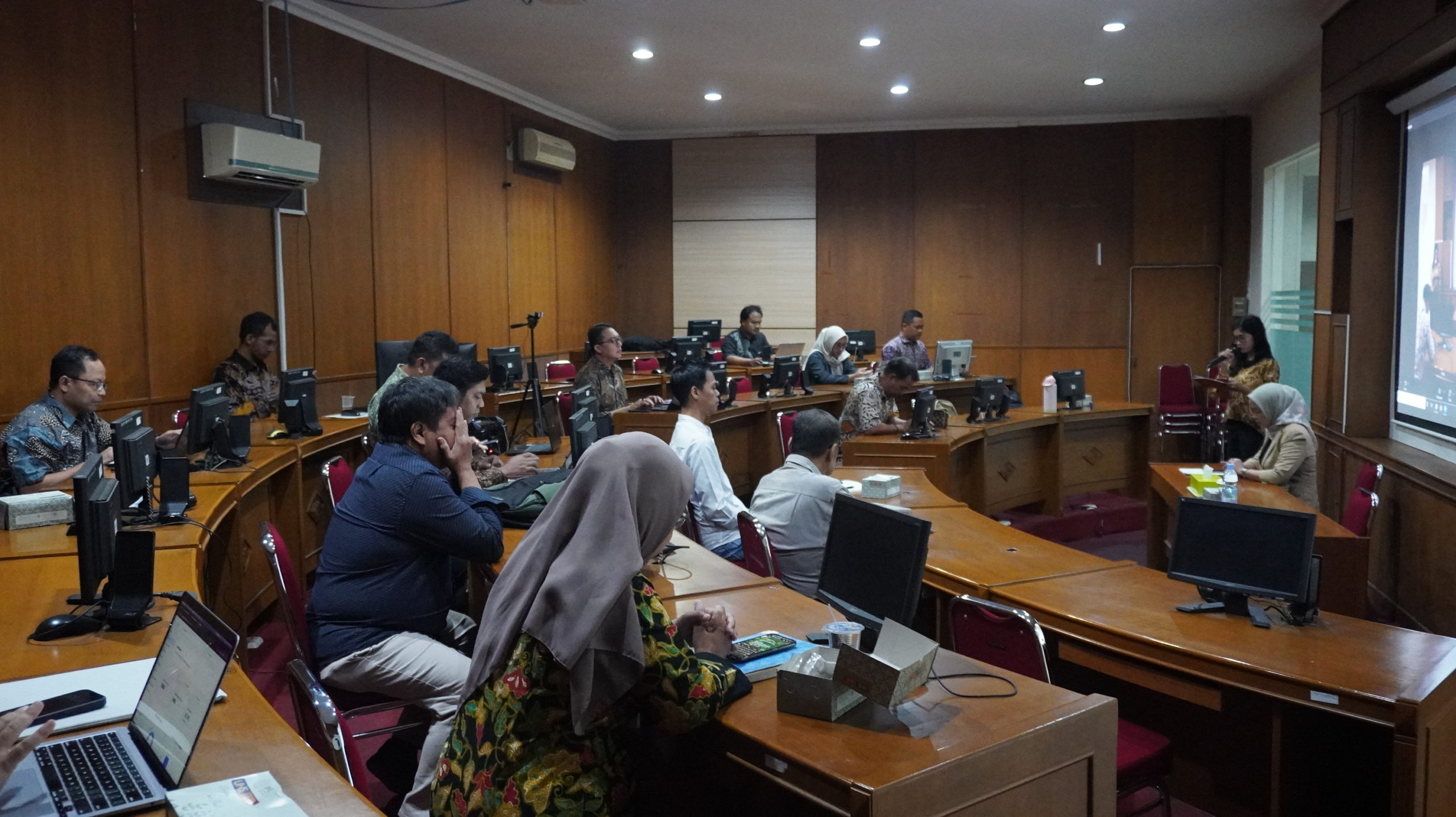
    Master of Economics and Development Studies (MESP) Study Program, Faculty of Economics and Business (FEB), Universitas Sebelas Maret (UNS), organized a Curriculum Review activity on Thursday, 4 December 2025, at the Teleconference Room of the Bachtiar Effendi Building, FEB UNS. This occasion shows MESP Study Program’s continuous effort to ensure that the curriculum remains aligned with academic developments, labor market needs, and national as well as regional development challenges.

    The Head of the MESP Study Program FEB UNS, Prof. Dr. Suryanto, S.E., M.Si., emphasized that curriculum review constitutes a strategic step to improve the quality of learning at the master’s level. The MESP curriculum is directed to be not only theoretically sound but also applied and data-oriented, enabling graduates to contribute effectively to the formulation and evaluation of development policies.

    The activity featured Mulyo Widodo from Statistics Indonesia (Badan Pusat Statistik/BPS) as a resource person, who presented the linkage between MESP courses and strategic statistical indicators. In his presentation, he explained that courses such as Intermediate Microeconomics and Macroeconomics, Econometrics, Development Economics, Regional Economics, as well as Natural Resource and Environmental Economics play an essential role in equipping students with analytical skills to address issues of inflation, Gross Regional Domestic Product (GRDP), poverty, inequality, unemployment, the Human Development Index (HDI), and sustainable development indicators.

    Another resource person, Amirullah Setya Hardi, delivered a presentation on the Recognition of Prior Learning (RPL) for the MESP Study Program FEB UNS. He explained that RPL provides recognition for learning outcomes obtained through formal, non-formal, and informal education, as well as professional experience. In accordance with the Regulation of the Ministry of Higher Education, Science, and Technology (Permendiktisaintek) Number 39 of 2025, MESP students may apply for recognition of up to 21 credits from a total study load of 56 credits.

    The discussion proceeded in an interactive manner, addressing the advancement of graduate learning outcomes, the distinctive features of the MESP FEB UNS curriculum, and the refinement of strategic issues such as sustainable development, institutions, human resources, and the use of technology and statistical data. The forum also highlighted the importance of an adaptive curriculum for both fresh graduates and professionals.

    Through this activity, the MESP Study Program FEB UNS expects to continue producing competent, critical, and highly competitive master’s graduates who can support national and regional development. This curriculum review activity also supports the achievement of the Sustainable Development Goals (SDGs), particularly SDG 4 (Quality Education), SDG 8 (Decent Work and Economic Growth), and SDG 10 (Reduced Inequalities) through the advancement of economics education and data-based policy development.

  • Collaboration of FEB UNS and Wageningen University & Research Presents: Impact Evaluation Workshop, Using Evidence in Policy Making

    Collaboration of FEB UNS and Wageningen University & Research Presents: Impact Evaluation Workshop, Using Evidence in Policy Making

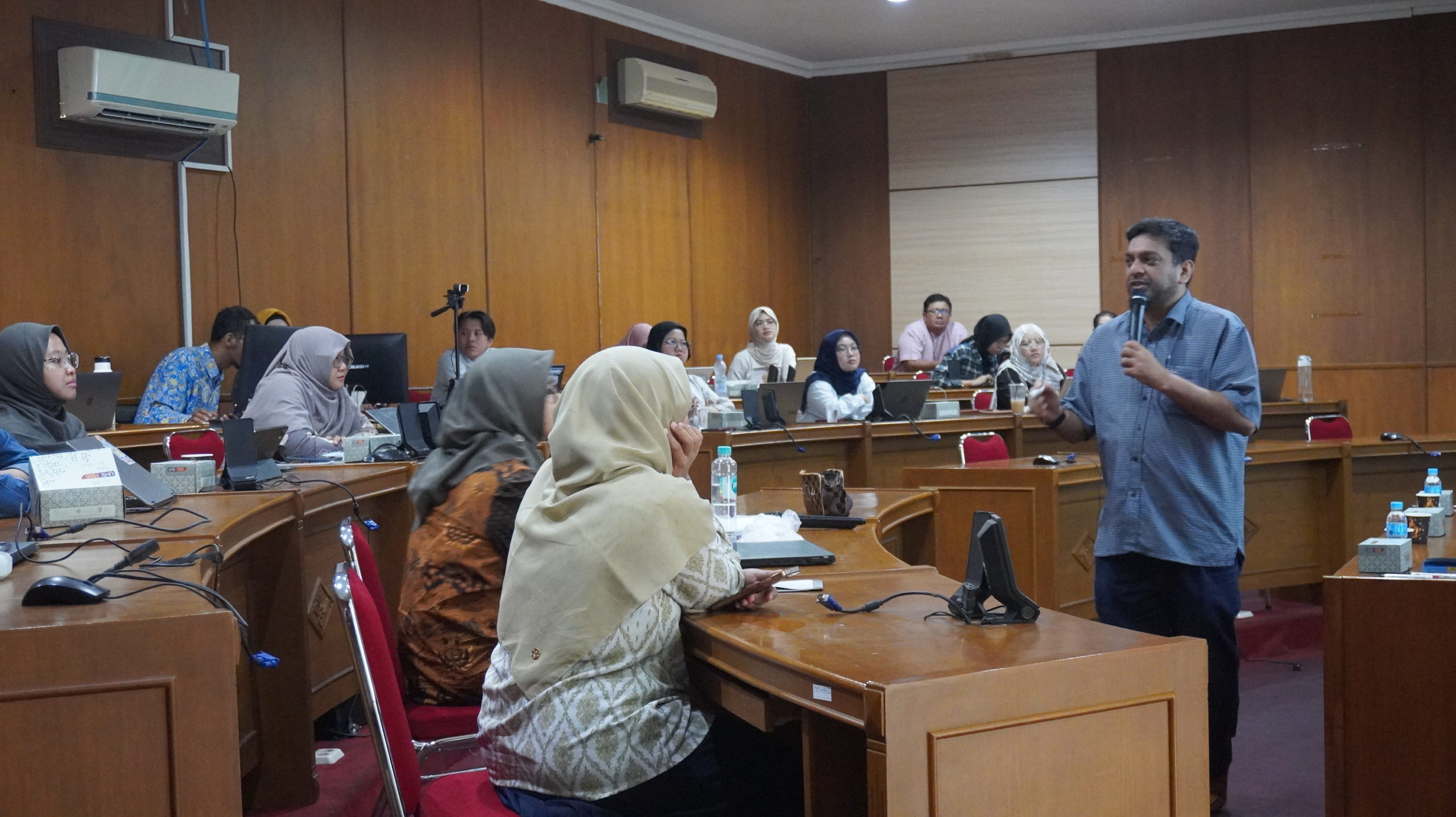
    Faculty of Economics and Business (FEB), Universitas Sebelas Maret (UNS), in collaboration with Wageningen University & Research, organized the Using Evidence in Policy Making: Impact Evaluation Workshop on Tuesday, 2 December 2025, at UNS Tower. The activity featured Associate Professor Robert Sparrow from Wageningen University & Research as the main resource person. The workshop was attended by FEB UNS lecturers, postgraduate students from the Doctoral Program in Economics (PDIE), as well as undergraduate students with an interest in policy evaluation and social program impact analysis.

    Prof. Tri Mulyaningsih in the Impact Evaluation WorkshopThe event was opened by the Vice Dean for Academic and Research Affairs FEB UNS, Prof. Tri Mulyaningsih, S.E., M.Si., Ph.D., who expressed appreciation for the presence of Assoc. Prof. Robert Sparrow at FEB UNS. In her remarks, Prof. Tri emphasized that the workshop provided a valuable opportunity for the academic community to deepen their understanding of impact evaluation, particularly in supporting the formulation of public policies grounded in scientific evidence.

    Previously, Assoc. Prof. Robert Sparrow had also contributed as a resource person in the Intensive Workshop on Applied Macroeconomics for Global Health. In the main session, Assoc. Prof. Robert Sparrow presented the fundamental concepts of impact evaluation, its objectives, and various methods commonly used to assess the impact of social policies. He explained that impact evaluation focuses on analyzing the causal effects of policies designed to address social problems or improve public welfare.

    Several evaluation methods were introduced, including quasi-experiments, propensity score matching, instrumental variables, and difference-in-difference. In this workshop, Robert placed particular emphasis on the application of difference-in-difference and propensity score matching, which are frequently used in public policy research.

    The workshop proceeded in an interactive manner through case study discussions, where participants were invited to analyze potential challenges in the evaluation design of social projects and to compare the application of two different impact evaluation methods.

    Robert highlighted that the primary challenge in impact evaluation lies in identifying a credible control group. According to him, the presence of an appropriate comparison group is an essential prerequisite before conducting a scientific impact evaluation. “The main challenge in impact evaluation is related to the identification of a control group. The first question you need to answer before conducting an impact evaluation is whether you have a credible control group,” Robert explained.

    Through this activity, FEB UNS expects to enhance the capacity of academics and students in understanding and applying evidence-based policy evaluation, thereby contributing to the formulation of more effective public policies with measurable impact.
    This activity supports the achievement of the Sustainable Development Goals (SDGs), particularly SDG 4 (Quality Education) through the advancement of academic and research capacity, as well as SDG 16 (Peace, Justice, and Strong Institutions) by promoting public policies grounded in evidence and scientific evaluation.

  • P4M FEB UNS Organizes Workshop on Creativity and Innovation in Business

    P4M FEB UNS Organizes Workshop on Creativity and Innovation in Business

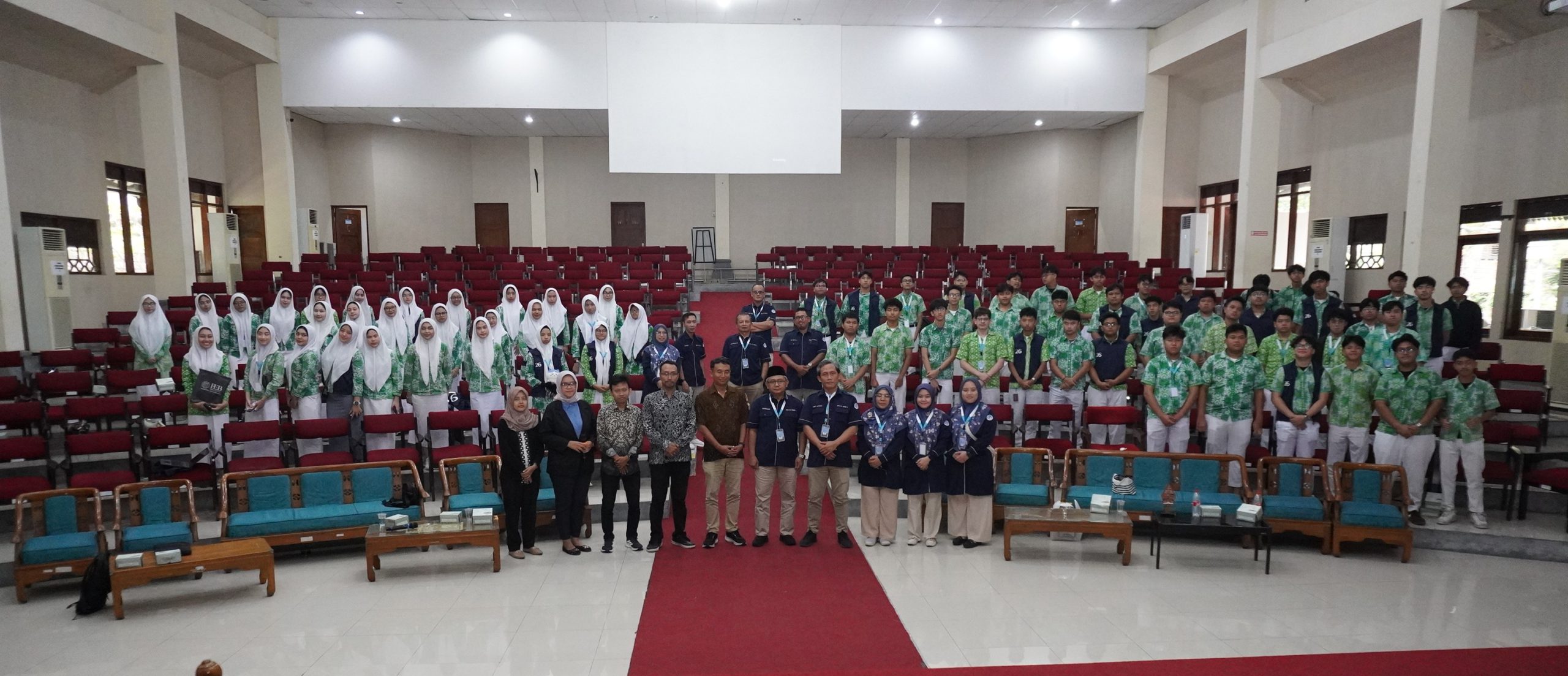
    The Center for Research and Community Engagement Development (P4M) of the Faculty of Economics and Business (FEB), Universitas Sebelas Maret (UNS), organized a workshop entitled Creativity and Innovation in Business on Thursday, 5 December 2025. The activity, held at the FEB UNS Teleconference Room, was attended by FEB UNS lecturers and students as part of efforts to strengthen academic and practical perspectives in the field of business innovation. The workshop featured Associate Professor Dr. Anuar Shah bin Bali Mahomed from the Faculty of Economics and Management, Universiti Putra Malaysia, as the main resource person.

    On this occasion, Dr. Anuar delivered a presentation highlighting the importance of creative thinking in driving business innovation amid rapid changes in the economic environment and technological development. He emphasized that there are two key aspects that determine the success of business innovation, namely technology and culture.

    According to him, current technological advancement has provided easier access and substantial benefits for both business actors and consumers. This condition has become one of the main factors causing traditional businesses to face increasing difficulty in competing with digital-based enterprises.

    In his presentation, Dr. Anuar discuss the development of e-hailing services such as Grab, Uber, and Gojek in Malaysia as an example. Based on empirical studies conducted, the emergence of e-hailing services has been shown to reduce the income of traditional taxi drivers. However, at the same time, these digital business applications proved its impact in reducing service costs borne by customers.

    “Let us observe the emergence of e-hailing applications. This technology aims to provide convenience for users while also reducing the cost of delivering services. A similar situation can be seen in the banking industry today, as more and more banks moved away from physical office, they no longer open branch offices, because all processes can be conducted through applications,” Dr. Anuar explained.

    Aside from discussing technological aspects, Dr. Anuar also examined the importance of cultural factors in business innovation. Referring to the cultural dimensions proposed by Hofstede, he emphasized that understanding the cultural context of a particular region is essential for business actors. Cultural differences influence consumer behavior and preferences, requiring business strategies to be aligned with local cultural characteristics.

    Concluding the workshop session, Dr. Anuar encouraged business actors and young generations who intend to enter the business sector to remain adaptive to change, particularly by understanding the consumption patterns of younger generations who will become the primary market in the future. “If businesses are unwilling to change and adjust to the preferences of younger generations, they will lose that market,” he stated.
    Through this activity, FEB UNS contributes to the achievement of the Sustainable Development Goals (SDGs), particularly SDG 8 (Decent Work and Economic Growth) through strengthening business innovation capacity, as well as SDG 9 (Industry, Innovation, and Infrastructure) through the development of creative thinking and technological adaptation in the business sector.

  • FEB UNS Welcomes Visit from Students of SMA Islam Al Azhar 3 Jakarta

    FEB UNS Welcomes Visit from Students of SMA Islam Al Azhar 3 Jakarta

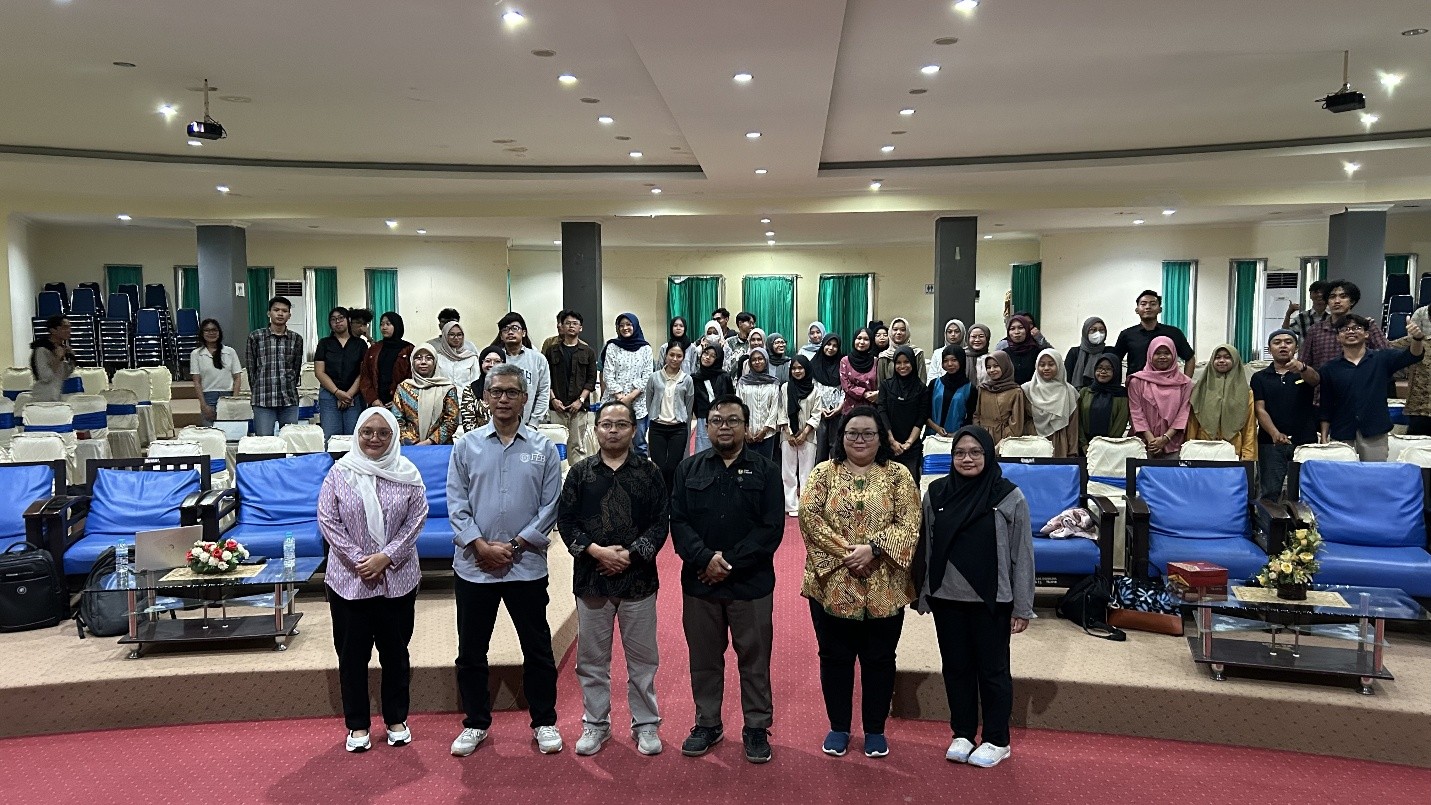
    Faculty of Economics and Business (FEB), Universitas Sebelas Maret (UNS), welcomed a visit from Grade XII students of SMA Islam Al Azhar 3 Jakarta at the Suhardi Building Auditorium, FEB UNS, on Thursday, 4 December 2025. This activity served as a forum for knowledge sharing for students who are preparing to enter higher education.

    In his welcoming remarks, Pram Suryanadi, S.E., M.Si., stated that choosing to pursue higher education in Solo offers a valuable opportunity to become more familiar with Javanese culture. Solo and Yogyakarta have long been recognized as centers of Javanese culture and as meeting points for talents from various regions across Indonesia. This diversity, according to him, forms an important foundation for young generations as future leaders who uphold the values of Bhinneka Tunggal Ika.

    He also emphasized that UNS is committed to deliver high-quality education. At present, Universitas Sebelas Maret (UNS) Surakarta continues to achieve notable accomplishments at both the national and global levels. Although FEB UNS was established in 1976 and is relatively younger compared to other major universities, Solo had long served as a center of intellectual activity well before that period. The city is known as a space where various intellectual movements emerged, including Sarekat Islam.

    Pram further described Solo as an ideal city for students, characterized by an affordable cost of living, a conducive academic environment, a “slow living” atmosphere that remains modern, and easy access to natural destinations such as Tawangmangu and coastal areas in Yogyakarta.

    “We invite you to take this opportunity as a room for learning and sharing inspiration,” he stated. He also quoted the Javanese proverb “Guru iku padang, murid iku laku,” emphasizing the importance of teachers’ guidance as a source of direction in the pursuit of knowledge and aspirations.

    Meanwhile, the Principal of SMA Islam Al Azhar 3 Jakarta, Syamsudin, M.Pd., expressed appreciation for the warm reception from FEB UNS. He highlighted that the visit was important for students to gain a broader perspective on higher education options beyond the Jakarta area and its surroundings. “Indonesia has many excellent universities, and one of them is UNS,” he remarked.

    Syamsudin also noted that the Management Study Program and the Business Study Program at FEB UNS are leading programs with strong reputations. He encouraged students to develop broad perspectives and strong determination in pursuing their aspirations. With extensive experience since 1976, FEB UNS is considered capable of providing strong academic guidance, particularly through its comprehensive range of study programs and international classes conducted in collaboration with various overseas institutions.

    The session continued with presentations on study program profiles delivered by Adnan Effendi, S.E., M.Sc., representing the Management Study Program, and Muhammad Alif Nur Irvan, S.Ak., M.Acc., CPA., representing the Accounting Study Program. The event proceeded interactively, including a prize-based game session designed to assess students’ understanding on the material related to the international class at FEB UNS. Participants’ enthusiasm was reflected in the large number of students actively responding and engaging in discussions.

    This visit is expected to broaden students’ understanding of the academic environment in higher education while strengthening their motivation in determining future study pathways. FEB UNS hopes that this activity will serve as a bridge for collaboration and inspiration for young generations preparing to enter university life.
    This occasion aligns with SDG 4 (Quality Education), particularly in promoting access to information on higher education, expanding students’ academic perspectives, and strengthening collaboration between secondary schools and higher education institutions to improve the quality of learning.

  • FEB UNS Research Team Discusses the Role of FinTech in Monetary and Fiscal Policy Responses

    FEB UNS Research Team Discusses the Role of FinTech in Monetary and Fiscal Policy Responses

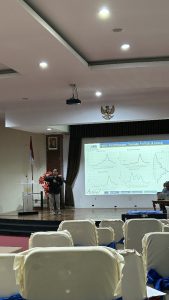
    Research team of Faculty of Economics and Business, Universitas Sebelas Maret (FEB UNS), conducts a public lecture entitled “FinTech and Monetary–Fiscal Policy Responses” as part of the dissemination of research findings. The activity takes place on Wednesday, 3 December 2025, at the Roedhiro Auditorium, Faculty of Economics and Business, Universitas Jenderal Soedirman (UNSOED), and is attended by more than 70 participants consisting of students from the Development Economics Study Program and academic staff.

    The public lecture is motivated by the rapid growth of financial technology (FinTech), which increasingly encourages younger generations to conduct financial transactions digitally. Alongside the rising use of FinTech services and the diversification of digital financial products, the FEB UNS research team highlights the importance of aligning monetary and fiscal policy responses with the dynamics of the digital financial system. This activity is supported by funding from the 2025 DIKTI Fundamental Research Grant.

    In his opening remarks, the Secretary of the Department of Development Economics, FEB UNSOED, Dr. Agus Arifin, expresses appreciation to the FEB UNS research team for organizing the public lecture. He highlights that the level of student literacy and academic engagement related to FinTech remains relatively behind the level of digital financial inclusion. This condition indicates that segments of society actively use digital financial services without adequate understanding.
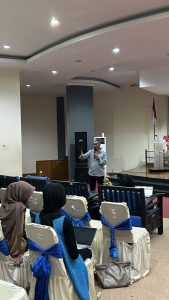
    During the main presentation session, Arif Rahman Hakim explains that various FinTech platforms are currently available for use by students and the broader public. However, users are advised to exercise caution by ensuring that FinTech providers are registered with and supervised by the Financial Services Authority (OJK).

    He also explains that FinTech loan repayment rates remain at a relatively favorable level, reflecting users’ compliance in meeting their repayment obligations. In addition, paylater transactions and the use of QRIS show a significant upward trend within the digital payment system.

    Furthermore, the FEB UNS research team emphasizes that monetary policy responses should be directed toward the formulation of a digital payment-based monetary policy framework. Such a framework can serve as guidance for interest rate and inflation control while ensuring systematic governance of the digital payment system that contributes to economic growth.

    From the fiscal policy perspective, improvement can be achieved through the development of digital-based state and regional revenue and expenditure systems, both at the level of the State Budget (APBN) and the Regional Budget (APBD), thereby increasing the transparency and accountability of government financial transactions.

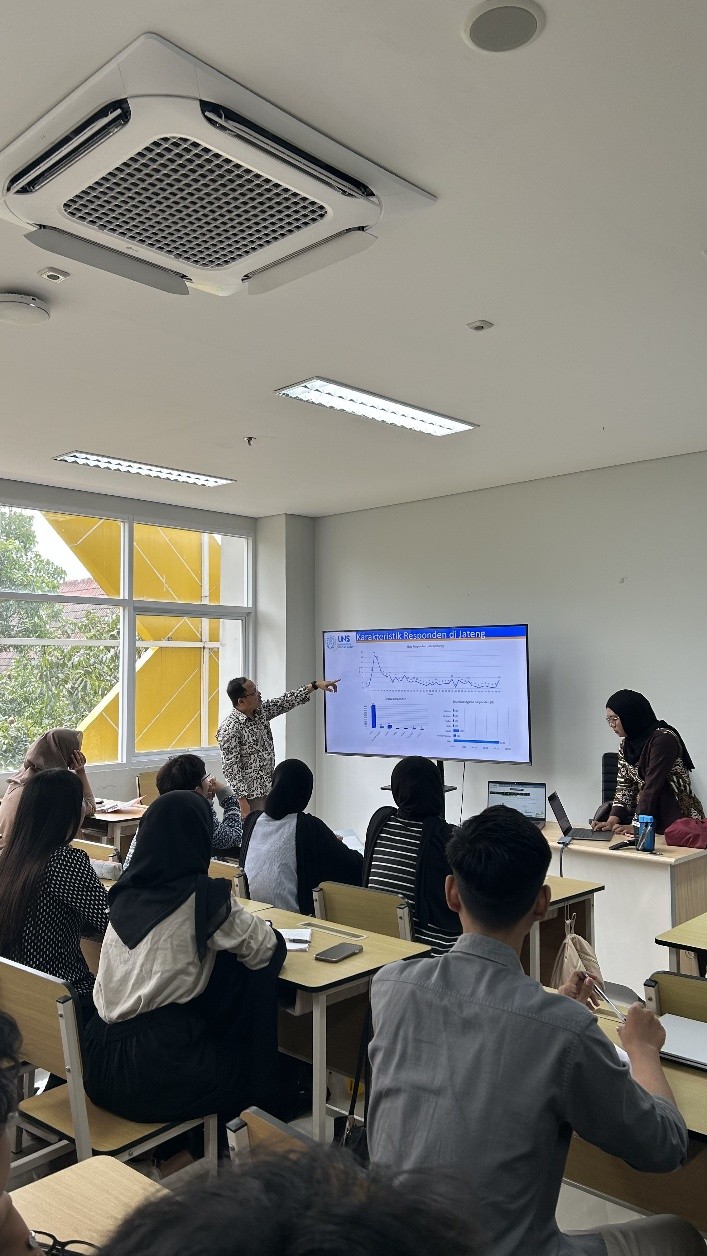
    Specifically, Malik Cahyadin presents the results of a FinTech user behavior survey conducted in the Special Region of Yogyakarta and Central Java Province from July to early August 2025. In the Special Region of Yogyakarta, the survey involves 351 FinTech users, predominantly female (61.54%), with education levels mainly at senior high school (50.71%) and undergraduate degree (34.47%), predominantly Muslim (93.16%), and largely within their thirties. Meanwhile, in Central Java Province, the number of respondents reaches 585 individuals, also predominantly female (61.03%), mostly Muslim (83.42%), with senior high school education (55.41%), and primarily within the 18–22 age range.

    The research findings indicate that key factors influencing FinTech transactions include technological adaptation and adoption capacity, perceived benefits of FinTech for personal needs and micro-enterprises, monthly expenditure levels, and user trust.

    Based on these findings, the FEB UNS research team recommends that the Financial Services Authority (OJK) continue to promote digital financial literacy among the public, while FinTech service providers are expected to improve business governance and customer data security systems.

    From a sustainable development perspective, this activity and its research outcomes contribute to the achievement of the Sustainable Development Goals (SDGs), particularly SDG 8 (Decent Work and Economic Growth) through inclusive financial system development, and SDG 9 (Industry, Innovation, and Infrastructure) through the development and application of technology within the financial sector.

  • FinTech Research Dissemination: FEB UNS Research Team Discusses National Financial System Stability

    FinTech Research Dissemination: FEB UNS Research Team Discusses National Financial System Stability

    Research team of Faculty of Economics and Business, Universitas Sebelas Maret (FEB UNS), organizes a public lecture entitled “FinTech and Financial System Stability” on Friday, 5 December 2025, at the Development Economics Study Program, Faculty of Economics, Universitas Negeri Semarang (UNNES). The activity is attended by more than 75 participants consisting of students and academic staff and is conducted in parallel sessions in Rooms 501 and 506 of the Faculty of Economics Building, UNNES.

    This public lecture is part of the dissemination of research findings by the FEB UNS research team concerning developments in financial technology (FinTech) and their implications for national financial system stability.

    In her presentation, Ayya Agmulia Asmarani Islam explains that the development of FinTech in Indonesia shows a notable increase, accompanied by the emergence of diverse digital financial service platforms. However, she notes that the contribution of FinTech lending transactions remains relatively limited when compared with the total volume of national banking credit transactions.

    She further explains that the presence of FinTech offers several benefits to the financial stability ecosystem, including improved efficiency and transparency in digital financial transactions, transaction risk diversification, and expanded financial inclusion.
    Nevertheless, FinTech also faces challenges, particularly related to data security vulnerabilities to cyber threats and digital financial governance practices that have not yet reached an optimal level. Therefore, FinTech development, according to the research team, should be positioned within a comprehensive framework of national financial system stability.

    In the subsequent session, Malik Cahyadin presents the results of a FinTech user survey conducted in the Special Region of Yogyakarta, Central Java Province, and East Java Province. The survey is carried out from July to early August 2025 with support from the 2025 DIKTI Regular Research Grant. The research respondents consist of employees and micro-enterprise owners who use paylater services and peer-to-peer (P2P) lending platforms. The number of respondents reaches 351 individuals in the Special Region of Yogyakarta, 585 individuals in Central Java, and 738 individuals in East Java.

    The survey results indicate varied respondent characteristics across provinces. In the Special Region of Yogyakarta, respondents are predominantly female (61.54%), Muslim (93.16%), with senior high school and undergraduate education backgrounds, and significant age groups in their thirties and fifties. In Central Java, respondents are also predominantly female (61.03%), mainly senior high school graduates (54.61%), predominantly Muslim (83.42%), and largely within the 18–22 age range. Meanwhile, respondents in East Java are predominantly female (65.45%), with education levels mainly at junior high school and undergraduate degree, predominantly Muslim (87.67%), and primarily within the 18–27 age range.

    The research identifies several factors that significantly drive FinTech transactions across the three provinces, including technological adaptation and adoption capacity, positive perceptions of the impact of digital financial transactions for users, and the level of public trust in FinTech services.

    Based on these findings, the FEB UNS research team recommends that financial authorities continue to promote financial literacy and inclusion, while FinTech service providers are expected to strengthen governance practices and the security of digital financial transactions.

    From a global contribution perspective, the activity and its research outcomes align with the Sustainable Development Goals (SDGs), particularly SDG 8 (Decent Work and Economic Growth) through the strengthening of an inclusive financial ecosystem, and SDG 9 (Industry, Innovation, and Infrastructure) through the use of technological innovation in the financial sector.

  • Prodi Manajemen FEB UNS Gelar Kuliah Praktisi Bahas Transformasi Digital Layanan KAI

    Prodi Manajemen FEB UNS Gelar Kuliah Praktisi Bahas Transformasi Digital Layanan KAI

    Program Studi S1 Manajemen Fakultas Ekonomi dan Bisnis (Universitas Sebelas Maret (FEB UNS) menggelar Kuliah Praktisi Komunikasi Bisnis dengan menghadirkan PT Kereta Api Indonesia (Persero) sebagai mitra industri, Sabtu 29/11/2025.

    Kegiatan ini merupakan bagian dari upaya Prodi Manajemen memperkuat keterkaitan antara teori akademik dan praktik dunia kerja.

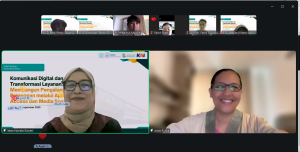
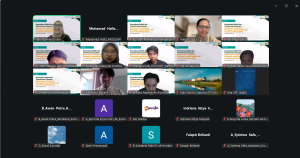
    Kuliah praktisi bertema Komunikasi Digital dan Transformasi Layanan: Membangun Pengalaman Pelanggan melalui Aplikasi KAI Access dan Media Sosial tersebut menghadirkan Erni Sylviane Purba, Vice President Public Relations PT KAI, sebagai narasumber.

    Acara yang dilaksanakan secara daring dan diikuti oleh mahasiswa Program Studi Manajemen dimoderatori oleh Dr. Intan Novela Qurrotul Aini, S.E., M.Si, Dosen FEB UNS.

    Dalam sesi tersebut, narasumber menjelaskan perjalanan kariernya yang berawal dari dunia teknologi, media sosial, hingga akhirnya bergabung dengan KAI pada 2013 sebagai Manajer CRM dan Digital Media.

    Di periode ini, KAI mulai mengimplementasikan social media listening yang terintegrasi dengan sistem operasional sehingga perusahaan dapat membedakan suara pelanggan asli, opini publik, hingga komentar dari akun non-pelanggan.

    Narasumber menekankan bahwa media sosial kini menjadi kanal penting dalam mendeteksi isu layanan. “Setiap kritik dan apresiasi harus dianalisis. Kami memanfaatkan command center 24 jam yang terhubung dengan contact center dan CCTV analytics di seluruh stasiun,” jelasnya.
    Sistem ini memungkinkan KAI mendeteksi potensi krisis layanan, termasuk penanganan kasus pelecehan di area stasiun.

    “Jangan harap pelaku kekerasan seksual bisa naik kereta, terutama di Jabodetabek. Sistem kami memantau pergerakan pelanggan demi keamanan bersama,” tegasnya.

    KAI juga memanfaatkan social media listening untuk membaca kebutuhan penumpang secara akurat. Kritik mengenai kenyamanan kereta ekonomi, fasilitas toilet, hingga permintaan sarana penunjang perjalanan telah melahirkan berbagai perbaikan nyata.

    “Dari komentar sederhana tentang sandaran kursi hingga permintaan toilet pria-wanita terpisah, semua kami respons melalui inovasi,” jelasnya. Bahkan strategi investasi seperti penyediaan water station diputuskan berdasarkan suara pelanggan—sebagai upaya mengurangi sampah plastik sekaligus meningkatkan kenyamanan.

    Dalam satu semester 2025, KAI mencatat lebih dari 6 juta mention terkait layanan kereta api, namun setelah dianalisis, hanya 1,58 juta yang benar-benar merupakan suara pelanggan.

    “Di sinilah pentingnya memilah. Kita harus memuaskan pelanggan, bukan sekadar mengikuti dinamika netizen,” tambahnya.

    Narasumber juga mencontohkan penanganan isu viral seperti kasus “Tumbler”. Menurutnya, KAI memilih merilis klarifikasi pada malam hari setelah melihat tingginya intensitas percakapan siang hari. Ia menegaskan bahwa status lepas dinas bukanlah pemecatan, melainkan prosedur perlindungan bagi pegawai saat proses klarifikasi berlangsung.

    Selain itu, ia memaparkan bahwa KAI telah menyelamatkan lebih dari 12.000 barang penumpang dengan nilai lebih dari Rp12 miliar, menunjukkan integritas perusahaan dalam menjaga barang pelanggan.

    KAI kini mengelola lebih dari 400 juta penumpang per tahun, dengan proyeksi mencapai 500 juta penumpang pada akhir 2025. Angka tersebut menunjukkan tingginya dampak ekonomi dari layanan kereta api bagi masyarakat.

    “Kereta api tidak hanya memindahkan orang, tetapi menggerakkan ekonomi. Ada hotel, kuliner, dan sektor lain yang bergerak bersamaan,” ungkapnya.

    Pada tingkat global, KAI tengah mempersiapkan diri untuk menawarkan International Operation & Management Service, termasuk peluang menjadi operator di Abu Dhabi dan negara lain. Digitalisasi, elektrifikasi, dan penguatan strategi jangka panjang menjadi fokus pengembangan ke depan.

    Dalam penutup, narasumber menyampaikan kebanggaannya dapat hadir di UNS sebagai bagian dari upaya edukasi publik. Berbagai studi kasus komunikasi KAI bahkan telah menjadi rujukan mahasiswa S1 dan S2.

    “KAI ingin menunjukkan transparansi dan kesiapan untuk menjadi bagian dari transformasi ekonomi Indonesia dan kontribusi global,” ujarnya.

    Kuliah umum ini sekaligus memperkuat kolaborasi antara KAI dan lingkungan akademik dalam mengembangkan kajian komunikasi, transformasi digital, dan pelayanan publik berbasis data.

    Kegiatan kuliah praktisi ini juga sejalan dengan pencapaian Sustainable Development Goals (SDGs), khususnya SDG 4 (Pendidikan Berkualitas) melalui penguatan pembelajaran berbasis praktik industri, SDG 9 (Industri, Inovasi, dan Infrastruktur) melalui pemaparan transformasi digital dan inovasi layanan transportasi, serta SDG 11 (Kota dan Permukiman Berkelanjutan) melalui pengembangan transportasi publik yang aman, inklusif, dan berkelanjutan.

  • Prodi MESP FEB UNS Review Kurikulum, Perkuat Pembelajaran Berbasis Data dan Tantangan Pembangunan

    Prodi MESP FEB UNS Review Kurikulum, Perkuat Pembelajaran Berbasis Data dan Tantangan Pembangunan

    Program Studi Magister Ekonomi dan Studi Pembangunan (MESP) Fakultas Ekonomi dan Bisnis (FEB) Universitas Sebelas Maret (UNS) menyelenggarakan kegiatan Review Kurikulum MESP, Kamis, 4 Desember 2025 di Ruang Telekonferen Gedung Bachtiar Effendi FEB UNS.

    Kegiatan ini dilaksanakan sebagai upaya berkelanjutan Prodi MESP dalam memastikan kurikulum tetap relevan dengan perkembangan keilmuan, kebutuhan dunia kerja, serta tantangan pembangunan nasional dan daerah.

    Ketua Program Studi MESP FEB UNS, Prof. Dr. Suryanto, S.E., M.Si menegaskan bahwa review kurikulum menjadi langkah strategis untuk memperkuat kualitas pembelajaran di jenjang magister.

    Kurikulum MESP diarahkan agar tidak hanya kuat secara teoritis, tetapi juga aplikatif dan berbasis data, sehingga lulusan mampu berkontribusi nyata dalam perumusan dan evaluasi kebijakan pembangunan.

    Kegiatan ini menghadirkan Mulyo Widodo dari Badan Pusat Statistik (BPS) sebagai narasumber yang memaparkan keterkaitan mata kuliah MESP dengan indikator statistik strategis.

    Dalam pemaparannya, dijelaskan bahwa mata kuliah seperti Ekonomi Mikro dan Makro Madya, Ekonometrika, Ekonomi Pembangunan, Ekonomi Regional, hingga Ekonomi SDA dan Lingkungan berperan penting dalam membekali mahasiswa kemampuan analisis terhadap isu inflasi, PDRB, kemiskinan, ketimpangan, pengangguran, IPM, serta indikator pembangunan berkelanjutan.

    Narasumber lainnya, Amirullah Setya Hardi, menyampaikan materi mengenai Rekognisi Pembelajaran Lampau (RPL) Program Studi MESP FEB UNS.

    Ia menjelaskan bahwa RPL memberikan pengakuan atas capaian pembelajaran yang diperoleh melalui pendidikan formal, nonformal, informal, maupun pengalaman kerja. Sesuai dengan Permendiktisaintek Nomor 39 Tahun 2025, mahasiswa MESP berpeluang mengajukan rekognisi hingga 21 SKS dari total 56 SKS beban studi.

    Diskusi berlangsung interaktif dengan membahas penguatan capaian pembelajaran lulusan, kekhasan kurikulum MESP FEB UNS, serta penajaman isu-isu strategis seperti pembangunan berkelanjutan, kelembagaan, sumber daya manusia, dan pemanfaatan teknologi serta data statistik. Forum ini juga menyoroti pentingnya kurikulum yang adaptif bagi mahasiswa fresh graduate maupun profesional.

    Melalui kegiatan ini, Prodi MESP FEB UNS berharap mampu terus menghasilkan lulusan magister yang kompeten, kritis, dan berdaya saing tinggi dalam mendukung pembangunan nasional dan daerah.

    Kegiatan review kurikulum ini sekaligus mendukung pencapaian Sustainable Development Goals (SDGs), khususnya SDG 4 (Pendidikan Berkualitas), SDG 8 (Pekerjaan Layak dan Pertumbuhan Ekonomi), dan SDG 10 (Berkurangnya Kesenjangan) melalui penguatan pendidikan ekonomi dan kebijakan berbasis data.

  • Kerja Sama FEB UNS dan Wageningen University & Research Gelar Using Evidence in Policy Making: Impact Evaluation Workshop 

    Kerja Sama FEB UNS dan Wageningen University & Research Gelar Using Evidence in Policy Making: Impact Evaluation Workshop 

    Fakultas Ekonomi dan Bisnis (FEB) Universitas Sebelas Maret (UNS) bekerja sama dengan Wageningen University & Research menyelenggarakan Using Evidence in Policy Making: Impact Evaluation Workshop  Selasa, 2 Desember 2025, di UNS Tower.

    Kegiatan ini menghadirkan Associate Professor Robert Sparrow dari Wageningen University & Research sebagai narasumber utama.

    Workshop diikuti oleh dosen FEB UNS, mahasiswa program pascasarjana (PDIE), serta mahasiswa program sarjana yang memiliki ketertarikan pada evaluasi kebijakan dan analisis dampak program sosial.

    Acara dibuka oleh Wakil Dekan Bidang Akademik dan Penelitian FEB UNS, Prof. Tri Mulyaningsih, S.E., M.Si., Ph.D., yang menyampaikan apresiasi atas kehadiran Assoc. Prof. Robert Sparrow di FEB UNS.

    Dalam sambutannya, Prof. Tri menegaskan bahwa kegiatan ini merupakan kesempatan berharga bagi sivitas akademika untuk memperdalam pemahaman mengenai impact evaluation, khususnya dalam mendukung perumusan kebijakan publik yang berbasis bukti ilmiah.

    Sebelumnya, Assoc. Prof. Robert juga telah berkontribusi sebagai narasumber dalam Intensive Workshop on Applied Macroeconomics for Global Health.

    Dalam sesi utama, Assoc. Prof. Robert Sparrow memaparkan konsep dasar impact evaluation, tujuan pelaksanaannya, serta berbagai metode yang umum digunakan untuk menilai dampak kebijakan sosial.

    Ia menjelaskan bahwa impact evaluation berfokus pada analisis efek kausal dari suatu kebijakan yang dirancang untuk menyelesaikan masalah sosial atau meningkatkan kesejahteraan masyarakat.

    Beberapa metode evaluasi yang diperkenalkan antara lain quasi-experiment, propensity score matching, instrumental variable, dan difference-in-difference. Pada workshop ini, Robert secara khusus menekankan penggunaan metode difference-in-difference dan propensity score matching yang kerap digunakan dalam penelitian kebijakan publik.

    Workshop berlangsung interaktif melalui pembahasan studi kasus, di mana peserta diajak menganalisis potensi permasalahan dalam desain evaluasi suatu proyek sosial serta membandingkan penggunaan dua metode evaluasi dampak yang berbeda.

    Robert menekankan bahwa tantangan utama dalam impact evaluation terletak pada penentuan control group yang kredibel. Menurutnya, keberadaan kelompok pembanding yang tepat menjadi prasyarat penting sebelum melakukan evaluasi dampak secara ilmiah.

    Melalui kegiatan ini, FEB UNS berharap dapat memperkuat kapasitas akademisi dan mahasiswa dalam memahami serta menerapkan evaluasi kebijakan berbasis bukti, sehingga mampu berkontribusi dalam perumusan kebijakan publik yang lebih efektif dan berdampak nyata.

    Kegiatan ini mendukung pencapaian Sustainable Development Goals (SDGs), khususnya SDG 4 (Pendidikan Berkualitas) melalui penguatan kapasitas akademik dan riset, serta SDG 16 (Perdamaian, Keadilan, dan Kelembagaan yang Tangguh) dengan mendorong kebijakan publik yang berbasis bukti dan evaluasi ilmiah.

  • P4M FEB UNS Selenggarakan Workshop Creativity and Innovation in Business

    P4M FEB UNS Selenggarakan Workshop Creativity and Innovation in Business

    Pusat Pengembangan, Penelitan dan Pengabdian pada Masyarakat (P4M) Fakultas Ekonomi dan Bisnis (FEB) Universitas Sebelas Maret (UNS) menyelenggarakan kegiatan Workshop “Creativity and Innovation in Business”, Kamis 5 Desember 2025.

    Kegiatan yang dilaksanakan di Ruang Teleconference FEB UNS diikuti oleh dosen serta mahasiswa FEB UNS sebagai bagian dari penguatan wawasan akademik dan praktis di bidang inovasi bisnis.

    Workshop menghadirkan Associate Professor Dr. Anuar Shah bin Bali Mahomed dari Faculty of Economics and Management, Universiti Putra Malaysia, sebagai narasumber utama.

    Dalam kesempatan tersebut, Dr. Anuar menyampaikan materi mengenai pentingnya creative thinking dalam mendorong inovasi bisnis di tengah perubahan lingkungan ekonomi dan perkembangan teknologi yang sangat pesat.

    Dr. Anuar menekankan bahwa terdapat dua aspek utama yang menentukan keberhasilan inovasi bisnis, yaitu teknologi dan budaya.

    Menurutnya, kemajuan teknologi saat ini telah memberikan kemudahan akses serta manfaat yang sangat besar bagi pelaku usaha maupun konsumen. Kondisi tersebut menjadi salah satu faktor utama yang menyebabkan bisnis tradisional semakin sulit berkompetisi dengan bisnis berbasis digital.

    Dalam pemaparannya, Dr. Anuar mengambil contoh perkembangan layanan e-hailing seperti Grab, Uber, dan Gojek di Malaysia.

    Berdasarkan hasil studi yang dilakukan, kemunculan layanan e-hailing terbukti menurunkan pendapatan pengemudi taksi tradisional. Namun, di sisi lain, aplikasi bisnis digital tersebut juga terbukti mampu menurunkan biaya layanan yang harus ditanggung oleh pelanggan.

    “Coba kita lihat lewat munculnya aplikasi e-hailing. Teknologi ini terbukti memberikan kemudahan bagi pengguna dan juga menurunkan biaya untuk menyediakan layanan tersebut. Sama halnya dengan kondisi industri perbankan saat ini, semakin banyak bank yang tidak lagi membuka kantor cabang karena seluruh proses telah dapat dilakukan melalui aplikasi,” jelas Dr. Anuar.

    Selain membahas aspek teknologi, Dr. Anuar juga mengulas pentingnya aspek budaya dalam inovasi bisnis. Dengan merujuk pada dimensi budaya yang dikemukakan oleh Hofstede, ia menegaskan bahwa pemahaman terhadap budaya di suatu wilayah menjadi hal krusial bagi pelaku bisnis. Perbedaan budaya akan memengaruhi perilaku dan preferensi konsumen, sehingga strategi bisnis perlu disesuaikan dengan karakteristik budaya setempat.

    Menutup sesi workshop, Dr. Anuar berpesan agar pelaku bisnis dan generasi muda yang akan terjun ke dunia usaha mampu beradaptasi dengan perubahan, khususnya dengan memahami pola konsumsi generasi muda yang akan menjadi pasar utama di masa depan. “Jika bisnis tidak mau berubah dan menyesuaikan diri dengan preferensi generasi muda, maka mereka akan kehilangan pasar tersebut,” ungkapnya.

    Melalui kegiatan ini, FEB UNS berkontribusi pada pencapaian Tujuan Pembangunan Berkelanjutan (SDGs), khususnya SDG 8 (Pekerjaan Layak dan Pertumbuhan Ekonomi) melalui penguatan kapasitas inovasi bisnis, serta SDG 9 (Industri, Inovasi, dan Infrastruktur) melalui pengembangan pemikiran kreatif dan adaptasi teknologi dalam dunia usaha.