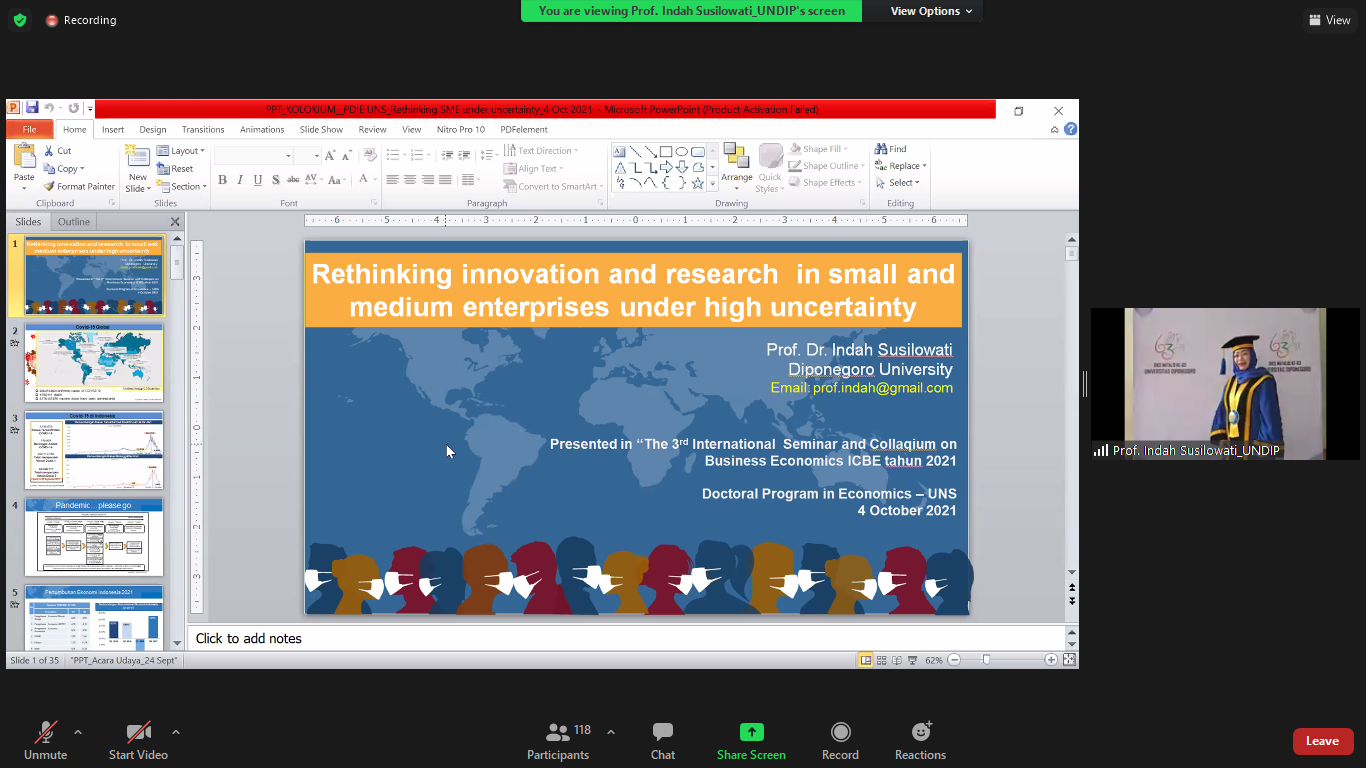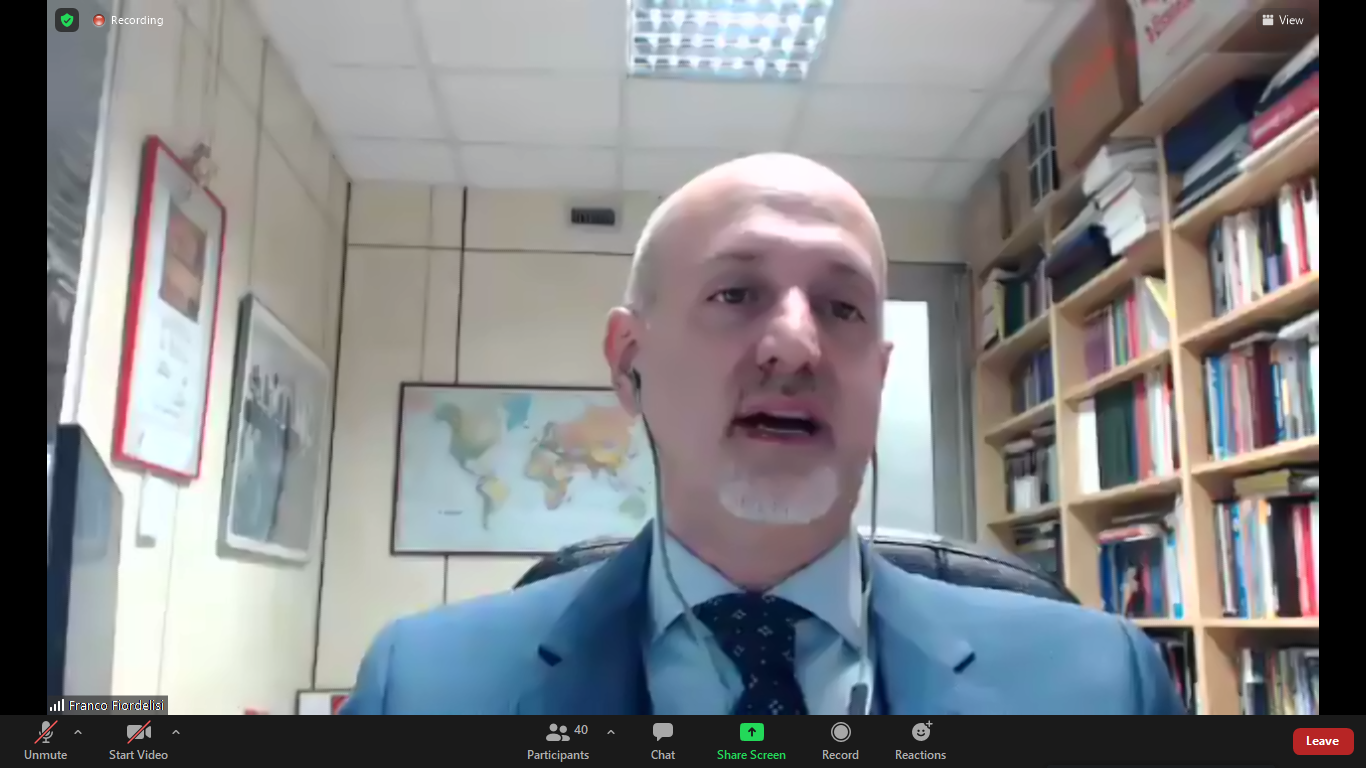
The Management Study Program, Faculty of Economics and Business (FEB) Universitas Sebelas Maret (UNS) Surakarta invited another well-known professor in a series of visiting lectures for the 2021 Program Kompetisi Kampus Merdeka (PKKM). This time around, the Management Study Program invited Prof. Franco Fiordelisi, a professor in finance and banking from the University of Rome III, Italy. Prof. Fiordelisi also serves as the President of the Financial Intermediation Network of European Studies (FINEST).
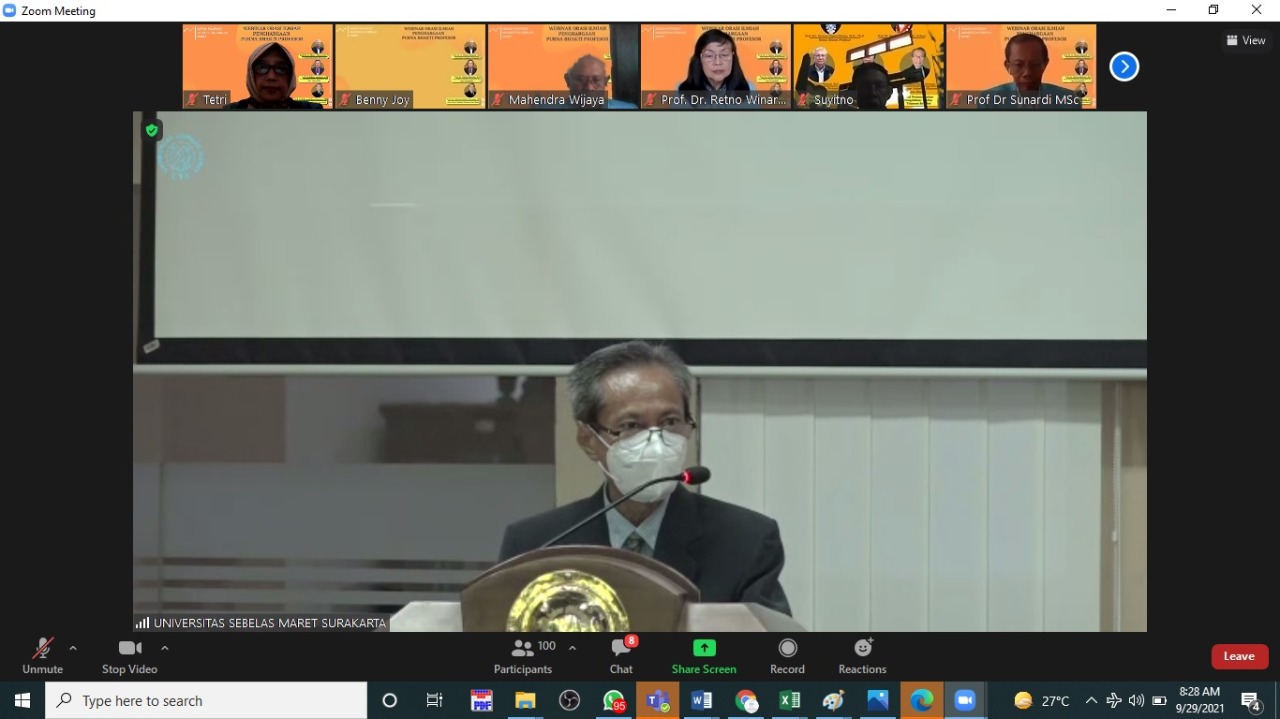
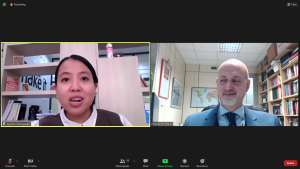 At the virtual guest lecture conducted through the Zoom Cloud Meeting on Tuesday (12/10/2021), Prof. Fiordelisi delivered material on financial management, specifically in risk management. At the beginning of his material presentation, Prof. Fiordelisi explained the definition of risk management in the banking sector, which includes two types of risk, interest risk and credit risk. He further explains the difference between risk and uncertainty, which is often considered to have the same meaning. In this case, according to Prof. Fiordelisi, there is little difference between risk and uncertainty.
“Risk is a future condition with a measurable probability of occurrence, while in uncertainty, this possibility is unlimited or incalculable,” said Prof. Fiordelisi.
After the brief explanation of risk and uncertainty, Prof. Fiordelisi explains the general definition of risk management as a logical process to reduce the possibility of loss. In between his presentation, Prof. Fiordelisi asked the participants about today’s biggest risks faced by the banking sector. The session provided an opportunity for students to interact directly with Prof. Fiordelisi.
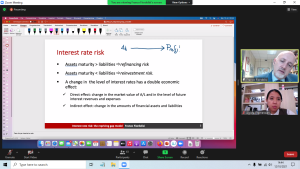
Afterward, Prof. Fiordelisi explains the stages/steps in risk management and interest rate risk. “Interest rate risk occurs due to a mismatch in value between assets (maturity) and profits,” explained Prof. Fiordelisi.
Regarding interest rate risk, there are two effects of interest rates changes, the first effect changes in the market value of assets/debt as a direct effect of interest rates fluctuation. The second is the changes in the number of financial assets/debt as an indirect effect of interest rate movements.
Reporter: Aulia
Editor: Humas FEB
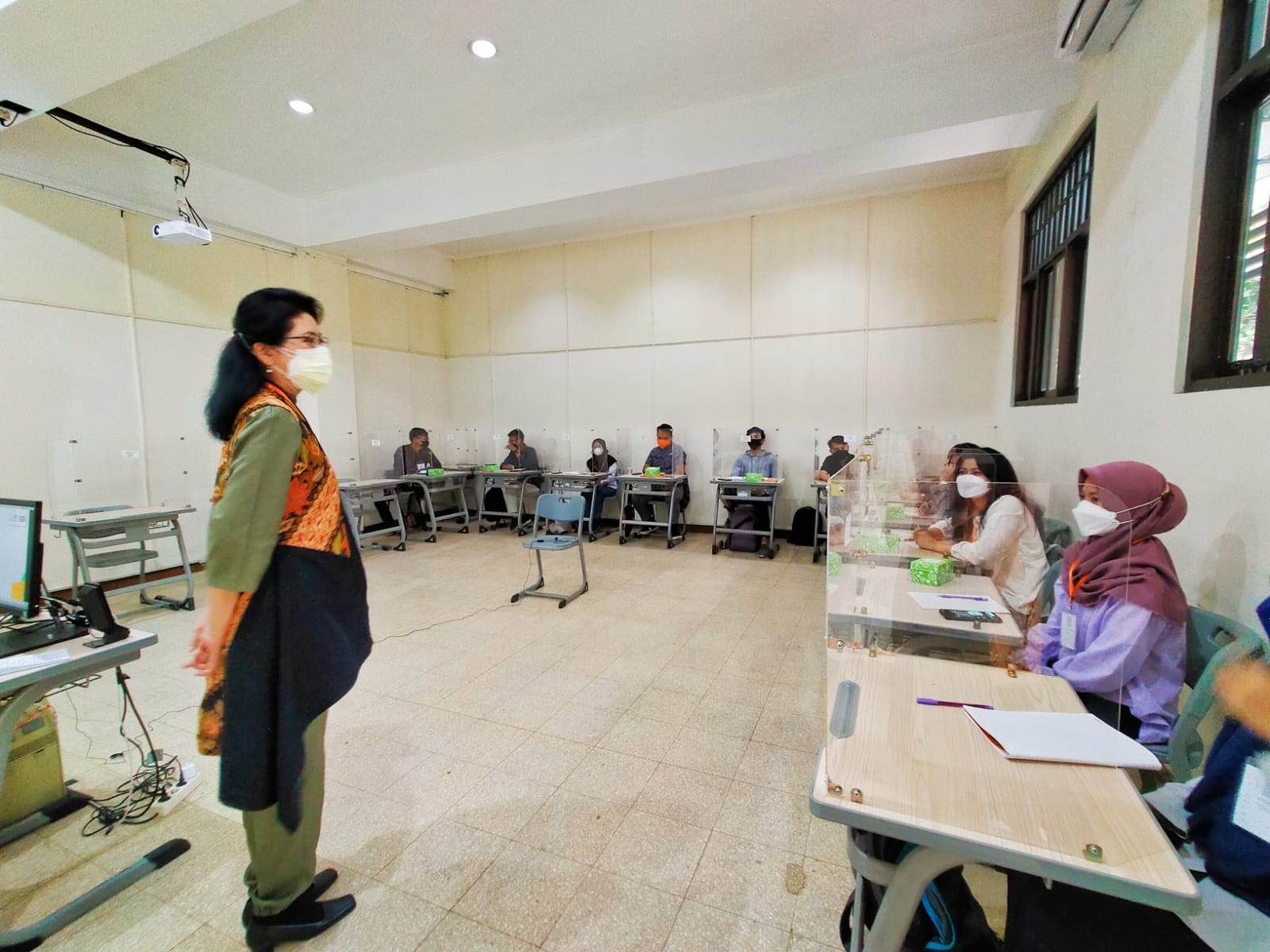
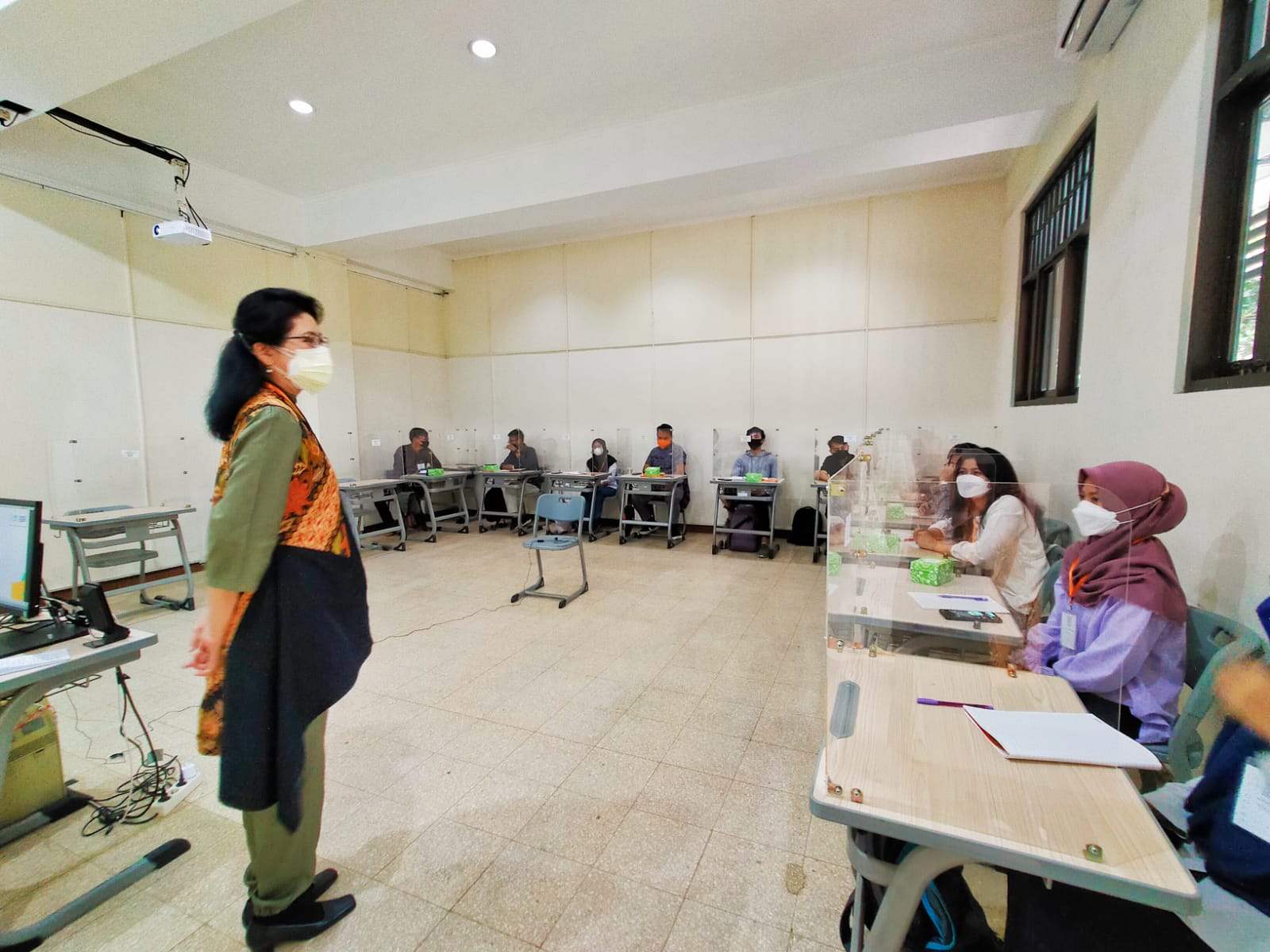
 Prof. Asri Laksmi Riani, M.Si., as the Chairman of the Entrepreneurship Laboratory (KWU Lab), in her report, states that the training is part of the training series organized by KWU Lab. “The Entrepreneurship training will last until mid-November 2021. The training began with the recruitment of Entrepreneurship trainers from FEB lecturers, which were selected from each study program. The recruitment is followed by Training of Trainer (TOT) that invites several speakers, preparation of modules, training implementation, preparation of business proposals, presentations, mentoring and evaluation,” said Prof. Asri.
 Meanwhile, Drs. Rohman Agus Pratomo, the Head of Academic and Student Affairs Bureau in UNS, appreciates the entrepreneurship training conducted by FEB UNS through a hybrid system. With this training, students are expected to compete at the university level as well as at the national level.