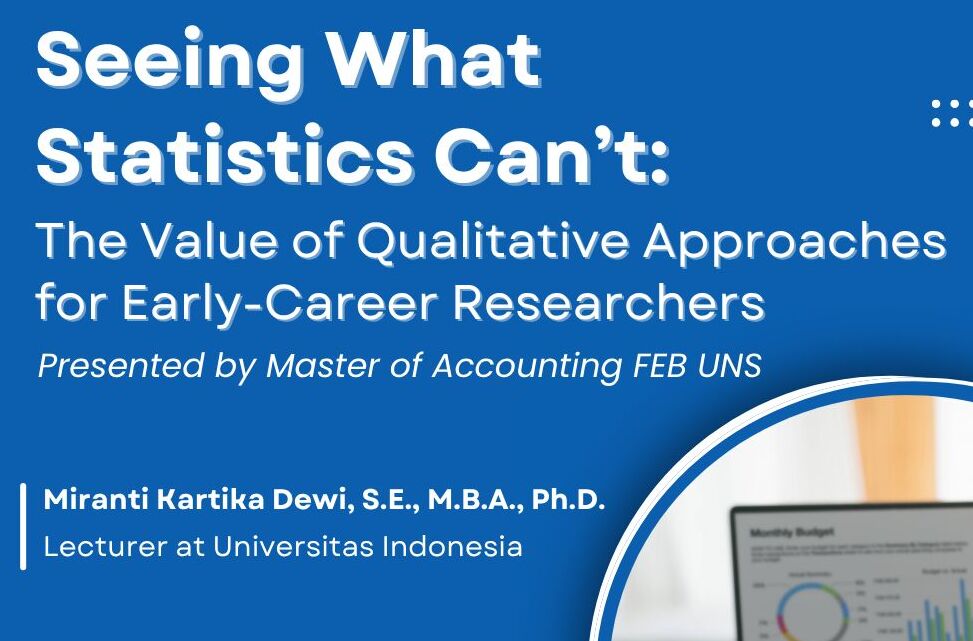
Program Studi Magister Akuntansi (MAKSI), Fakultas Ekonomi dan Bisnis (FEB) Universitas Sebelas Maret (UNS), kembali menghadirkan kegiatan akademik inspiratif melalui Guest Lecture bertajuk “Seeing What Statistics Can’t: The Value of Qualitative Approaches for Early-Career Researchers.”
Kegiatan yang digelar secara daring pada Rabu, 15 Oktober 2025 ini berfokus pada pentingnya pendekatan kualitatif dalam penelitian, terutama bagi peneliti muda dan mahasiswa pascasarjana yang tengah mendalami fenomena kompleks di bidang akuntansi, bisnis, maupun organisasi nirlaba.
Kuliah tamu ini menghadirkan Dr. Miranti Kartika Dewi, S.E., M.B.A., Ph.D., dosen dari Universitas Indonesia sekaligus peneliti yang dikenal atas kepakarannya dalam bidang penelitian kualitatif, akuntansi Islam, dan akuntabilitas organisasi nirlaba (NGO).
Dalam sesi yang berlangsung interaktif, Dr. Miranti membedah secara mendalam nilai dan keunggulan penelitian kualitatif dalam memahami konteks sosial di balik data angka statistik.
Dalam pemaparannya, Dr. Miranti menekankan bahwa pendekatan kualitatif memiliki keunggulan dalam menggali makna dan pengalaman manusia secara utuh, sesuatu yang sering kali tidak terjangkau oleh metode kuantitatif.
“Jika penelitian kuantitatif bertujuan untuk menggeneralisasi temuan (to generalize findings), maka penelitian kualitatif berfokus untuk memahami keunikan dari setiap kasus (to understand the uniqueness of the case),” jelasnya.
Ia juga mencontohkan penelitian yang pernah dilakukannya pada sebuah NGO kemanusiaan besar di Indonesia (ACT) dengan menggunakan metodologi kualitatif interpretatif. Studi tersebut melibatkan 46 wawancara semi-terstruktur, 5 focus group discussions, observasi, dan analisis dokumenter untuk menelusuri makna akuntabilitas dalam konteks organisasi nirlaba.
Melalui studi tersebut, ditemukan bahwa akuntabilitas NGO tidak hanya berhenti pada pelaporan keuangan, tetapi harus berorientasi pada kemandirian penerima manfaat (beneficiaries’ self-reliance), yang diibaratkan sebagai memberikan “alat pancing” bukan sekadar “ikan.”
Selain menyoroti teknik dan metodologi, Dr. Miranti juga menggarisbawahi perjalanan peneliti dalam memaknai data.
“Dari data kita memperoleh informasi, dari informasi lahir pengetahuan (knowledge), dan pada akhirnya menghasilkan kebijaksanaan (wisdom) yaitu kemampuan untuk melakukan hal yang benar (doing the right things),” ungkapnya.
Ia menambahkan bahwa meskipun penelitian kualitatif kerap mendapat kritik terkait validitas dan reliabilitas, justru pendekatan ini sangat krusial dalam memahami praktik akuntansi dalam konteks sosial dan organisasi yang dinamis.
Kegiatan kuliah tamu ini menjadi bagian dari upaya berkelanjutan Program Studi Magister Akuntansi FEB UNS dalam memperkuat kapasitas mahasiswa dan peneliti muda di bidang metodologi penelitian yang relevan dengan perkembangan ilmu akuntansi kontemporer.
Melalui kegiatan seperti ini, MAKSI FEB UNS berkomitmen untuk mendorong lahirnya peneliti yang tidak hanya berpikir analitis, tetapi juga reflektif dan kontekstual, sejalan dengan tujuan pendidikan tinggi yang mendukung pencapaian Sustainable Development Goals (SDGs), khususnya pada Tujuan 4: Pendidikan Berkualitas dan Tujuan 16: Kelembagaan yang Tangguh dan Inklusif.
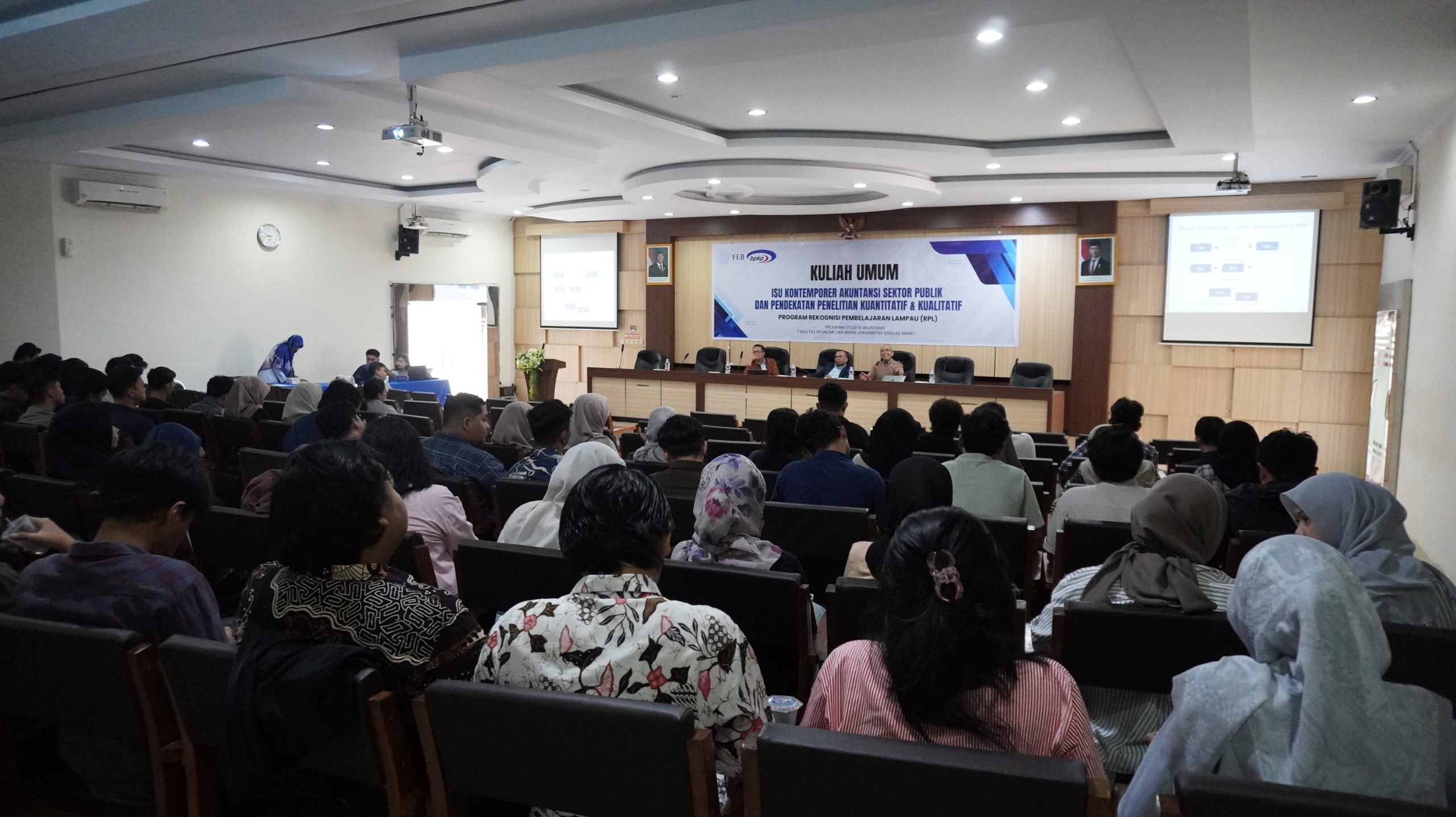
 In his opening remarks, Prof. Doddy Setiawan, S.E., M.Si., Ph.D., Ak., Head of the Accounting Study Program, emphasized the need for a platform to enhance students’ knowledge on research activity, particularly in public sector accounting. He further stated, “We hope you can understand that both qualitative and quantitative approaches are equally important. Each offers a different perspective, but together they provide a more complete picture. Hopefully, this activity will help students complete their studies on time and even publish reputable publications, such as those indexed in Sinta 2 or Scopus.”

 He further explained that research is not merely about collecting data but about engaging in critical and creative thinking to discover new insights. “Research is about seeing what everyone else sees, but thinking about what others do not,” he remarked.
 The second session was delivered by Taufiq Arifin, S.E., M.Sc., Ph.D., Ak., who presented material on “Generating Research Ideas.” In this occasion, he encouraged students to learn on how to produce high-impact research by identifying research gaps, observing contemporary issues, and utilizing diverse data sources, including text data such as public reports, speeches, and social media. He also highlighted that impactful research should not only focus on academic achievement but also contribute meaningfully to science and society.
 Through this general lecture, participants were introduced to modern research approaches, including textual analysis in public financial reports, qualitative data exploration through interviews and focus group discussions, and the integration of findings to address challenges in public sector governance.

 The event is attended by BKKBN officials, the Vice Rector for Planning, Cooperation, Internationalization, and Information, Prof. Irwan Trinugroho, S.E., M.Sc., Ph.D., along with students from various study programs.
 Dr. Bonivasius also highlights the critical role of students and youth in supporting BKKBN’s strategic programs, including the Foster Parents Movement to Prevent Stunting (GENTING)—family assistance and stunting prevention through education and monitoring; Taman Asuh Sayang Anak (TAMASYA)—parenting education and community-based daycare management; Indonesian Exemplary Fathers Movement (GATI)—premarital education and quality family development; and SIDAYA (Empowered Elderly)—elderly assistance and care training through an aged-care approach.


 In her opening remarks, Dr. Sinto Sunaryo, S.E., M.Si., SHRM.CP., Head of the Management Study Program, explains that the practitioner lecture serves as a regular academic agenda designed to bridge theoretical knowledge with professional practice. “Students are expected to gain direct insights from practitioners to understand how theories are applied in real-world contexts, particularly in the field of leadership,” she states.
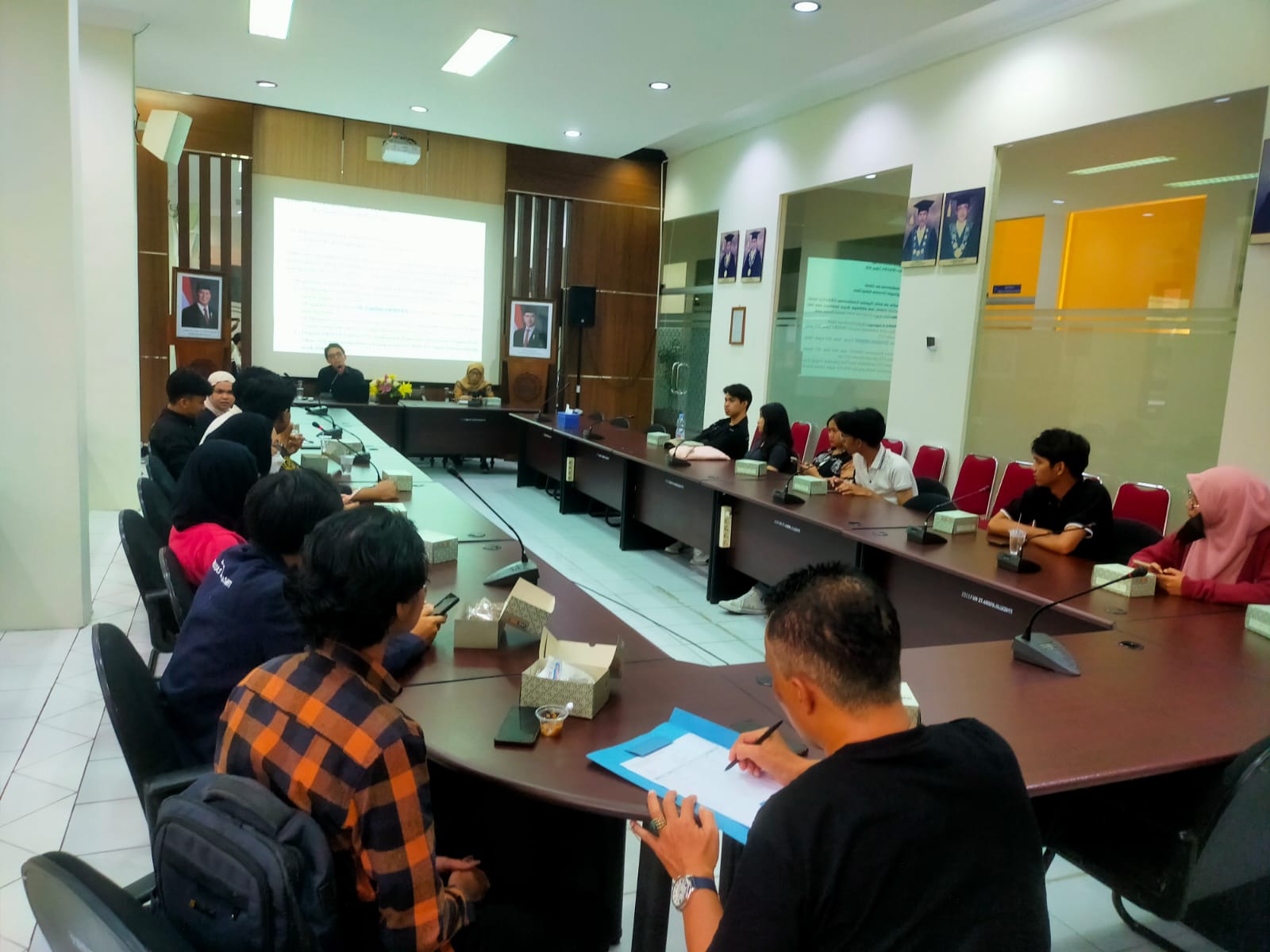
 Vice Dean for Student and Alumni Affairs, Tastaftiyan Risfandy, S.E., M.Sc., Ph.D., expressed appreciation for the successful implementation of various student activities throughout the year, including Management Carnival organized by HMJM (Management Study Program Student Association), ALCOFE by HMJEP (Development Economics Study Program Student Association), and ACTIVE by HMJA (Accounting Study Program Student Association), among others. “These (student annual) event have reached their peak, and I truly understand how much effort it took to make them happen. My highest appreciation goes to all of you,” said Tastaftiyan.
 The forum also discussed several strategic matters, including the mechanism for student surveys, reservation policy for room and/or facilities, and plans for UKM office renovation. Representatives from UKMs proposed that all Standard Operating Procedures (SOP) related to Ormawa operation and activities be made publicly accessible, and that any changes in regulations or Organizational Structure and Work Procedures (SOTK) are disseminated through joint forums to avoid miscommunication and ensure seamless coordination of student activities.