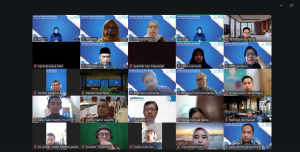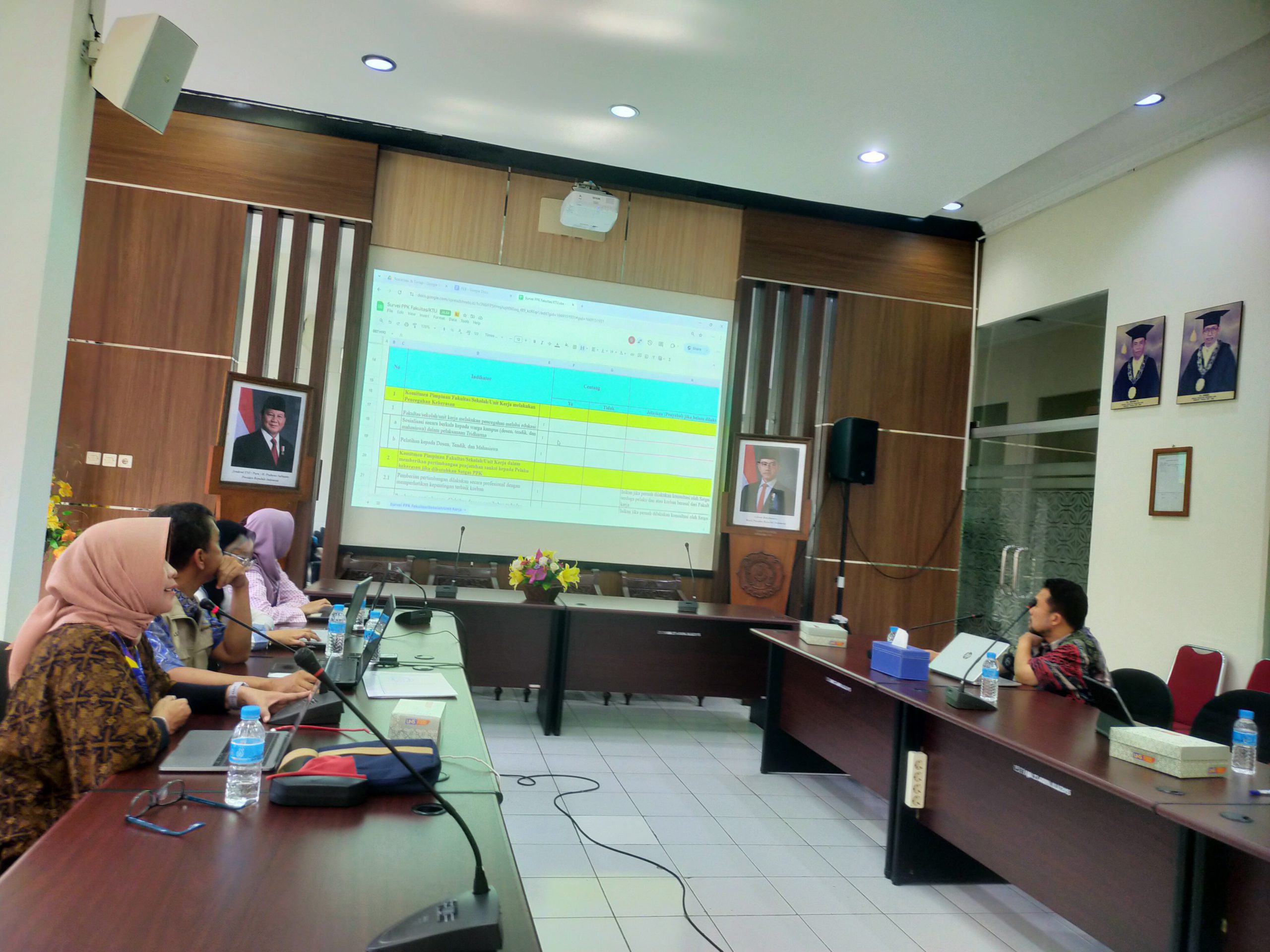
The Faculty of Economics and Business (FEB), Universitas Sebelas Maret (UNS), welcomed a visit from the UNS Prevention and Handling of Violence (PPK) Task Force on Thursday, 25 September 2025, at Meeting Room 1, Soeharno TS Building, FEB UNS. The visit was led by Prof. Dr. Ismi Dwi Astuti Nurhaeni, M.Si., Chair of the UNS PPK Task Force, and Sakroni, S.Kom., M.Pd., Secretary of the Task Force, along with the team. The agenda focused on the dissemination of UNS Rector’s Regulation Number 7 of 2025 on PPK and assistance in completing the 2025 UNS PPK Survey. The Task Force was received by the Dean Office, Heads of Sections and Subsections, and the Technical Team of FEB UNS.

In her presentation, Prof. Ismi emphasized the importance of Rector’s Regulation Number 7 of 2025 as the legal foundation for creating a safe, inclusive, and violence-free UNS. She stressed the need for shared understanding regarding definitions, forms, and prevention mechanisms. “The PPK Task Force serves as the front line to protect the university community and to create a healthy and productive learning environment,” she stated.
Meanwhile, Sakroni delivered a detailed presentation on the PPK Task Force. He explained the definition of violence, which includes physical, psychological, sexual violence, bullying, discrimination, intolerance, and exploitative policies. He also discussed several contributing factors to violence, such as patriarchal culture, unequal power relations, environmental influences, weak family supervision, as well as stereotypes and myths in society.

Based on Task Force data, from 2022 to August 2025 there were 70 reported cases of violence, consisting of 55 cases outside campus and 15 cases within campus. The most frequently reported types of violence were sexual, psychological, physical, and gender-based online violence (GBOV).
Sakroni further explained the reporting and case handling procedures, which can be carried out through the official channel uns.id/LaporSatgasPPK, email satgasppk@unit.uns.ac.id, WhatsApp, or directly at the Task Force Secretariat. Each report is handled within a maximum of 30 working days, with guaranteed protection and assistance for victims.

He also highlighted that victims and witnesses are entitled to psychological services, health services, legal advocacy, identity protection, and assurance of the continuity of their education or employment. Sanctions for perpetrators may include written warnings, special guidance, or permanent dismissal, depending on the severity of the violation.
The visit also included assistance in completing the 2025 UNS PPK Survey, which is mandatory for students, lecturers, academic support staff, and faculty units as part of efforts to map the actual conditions related to violence on campus.
Through this visit, FEB UNS reaffirmed its commitment to supporting the implementation of violence prevention policies within higher education institutions, while contributing to creating a safe, inclusive, and just campus environment in line with the Sustainable Development Goals (SDGs), particularly Goal 5 (Gender Equality) and Goal 16 (Peace, Justice and Strong Institutions).
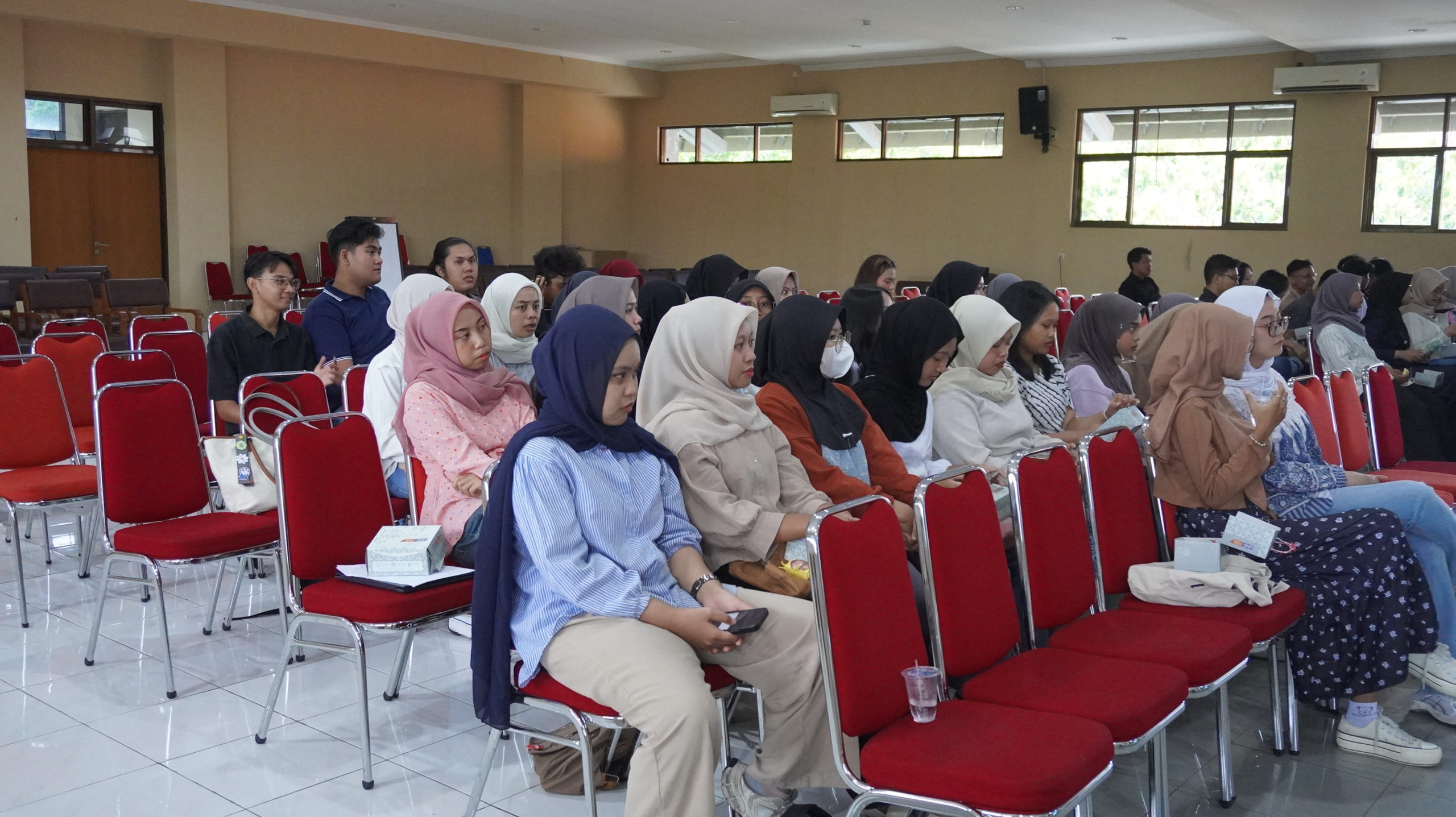

 “Development projects in Indonesia are currently directed toward empowering villages to create job opportunities and improve community welfare. Therefore, students need to develop skills related to village development so that they can contribute meaningfully after graduation,” she stated.
 In his presentation, Dr. Dwi Rudi Hartoyo outlined the direction of rural area development policies under the 2025–2029 National Medium-Term Development Plan (RPJMN). Future village development will emphasize economic, social, and ecological transformation based on local potential. The main strategies include providing basic services and infrastructure, strengthening human resource capacity and digital governance, transforming local economies through agriculture, tourism, and village-owned enterprises (BUMDes), and developing thematic areas that strengthen village–city linkages.
 Dr. Dwi Rudi further emphasized the significance of inter-village collaboration to increase efficiency, expand market access, and create new economic growth centers at the regency level. Through these efforts, village development can drive national economic growth while maintaining social and ecological resilience.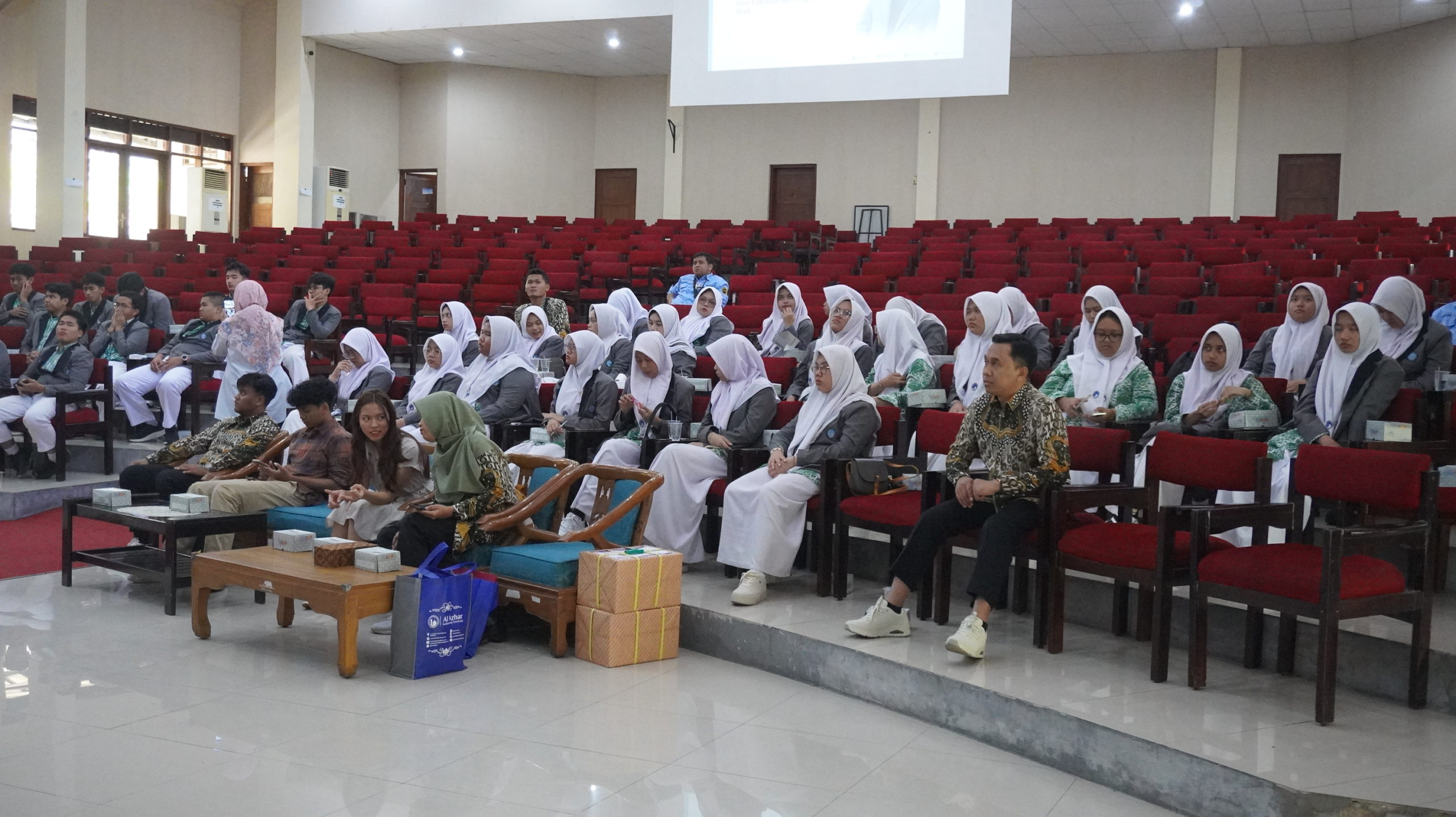
 In her remarks, Prof. Tri expressed her appreciation for the visit and emphasized the importance of introducing university life to high school students early on as preparation for their future educational paths. She also highlighted FEB UNS’s position as one of the leading faculties offering internationally recognized education. This is reflected in the achievement of international accreditation from AQAS, in addition to national accreditation from LAMEMBA, which has granted the Accounting, Management, and Development Economics Study Programs the “Excellent” rating, while the Digital Business Study Program received “Excellent” status—an impressive accomplishment considering the program was established only three years ago.
 “You don’t need to go abroad to get a quality education because FEB UNS is already competitive at the global level,” stated Prof. Tri.


 Prof. Tri added that the RPL program at FEB UNS, particularly in the Master of Accounting and Master of Economics and Development Studies (MESP) programs, is designed to optimize new student admissions. “Since 2024, there has been a decline in student numbers. Therefore, the faculty needs to open new opportunities to make the programs more effective. Hopefully, RPL combined with the fast-track program will attract more students and offer flexibility that meets the needs of the professional world,” she stated.
 Meanwhile, Lulus Kurniasih, Ph.D., explained that the RPL curriculum is structured to support students with relevant work experience so they can complete their studies more efficiently. “Out of the total 56 credits required to earn a Master of Accounting degree, a maximum of 21 credits can be recognized through RPL. Consequently, students only need to complete 35 credits, consisting of 9 credits of core courses and 26 credits of thesis,” she explained.
 The RPL assessment process involves portfolio evaluation by an assessment team, additional assessments such as interviews or examinations if needed, and final decisions by the RPL Committee. Learning will be conducted in a hybrid format, both offline and online, with flexible scheduling outside regular working hours.
 On this occasion, Dr. Budi Legowo provided guidance on the RPL mechanism to ensure that the curriculum design and assessment procedures align with UNS academic quality standards. His input serves as an important contribution to the preparation of the RPL draft at both the faculty and program levels. Through this drafting process, FEB UNS reaffirms its commitment to introducing academic innovations that respond to the evolving professional landscape while expanding access to higher education.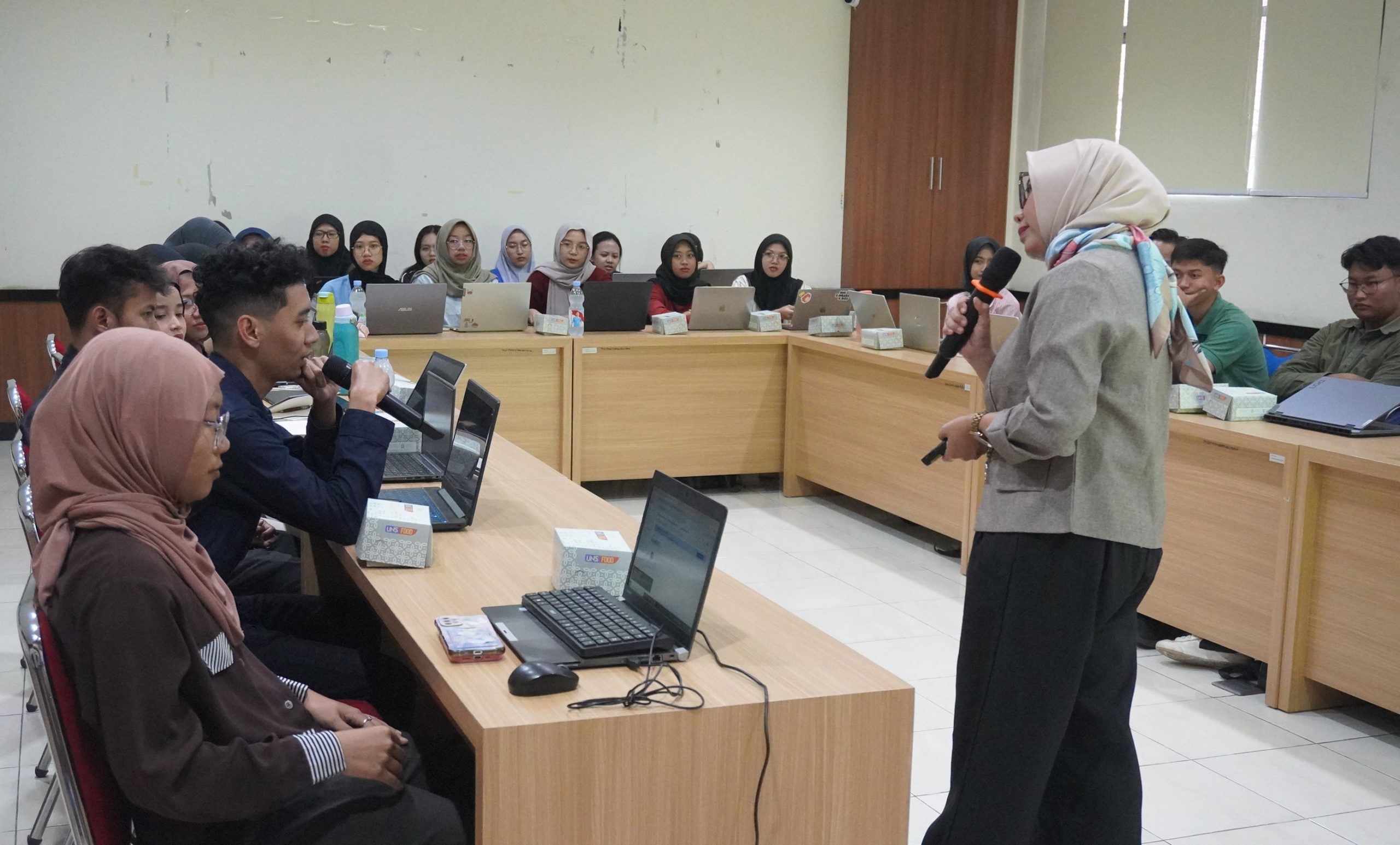
 Head of the Integrated Information Technology Laboratory, Mulyadi, S.E., M.Ec.Dev., emphasized in his remarks that this training serves as an important platform for students to gain a comprehensive understanding of the digital marketing landscape. “We provide students the opportunity to learn directly from practitioners. Our focus this time is on social media and digital advertising, which will be explored in depth by Ms. Zahra. The enthusiasm has been remarkable, with more than 50 registrants. The first session accommodates 30 participants, while the remaining participants will join the second session,” he explained.
 “I have tested these strategies with considerable investment—from creating advertisements and paying employees to dealing with hate speech and online comments. These experiences are part of the process that cannot be found in textbooks. That is why I want this session to go beyond explanations and include brainstorming and hands-on practice, both for personal branding and business purposes,” she explained.
 The session was conducted interactively, with participants actively engaging in discussions, asking questions, and participating in hands-on practice facilitated by the speaker. Their enthusiasm reflects the strong interest of FEB UNS students in deepening their digital marketing skills.