
Blog
-
FEB UNS Project-Based Learning Laboratory Holds Workshop on Developing Semester Learning Plan and Teaching Materials for English in Economics and Business
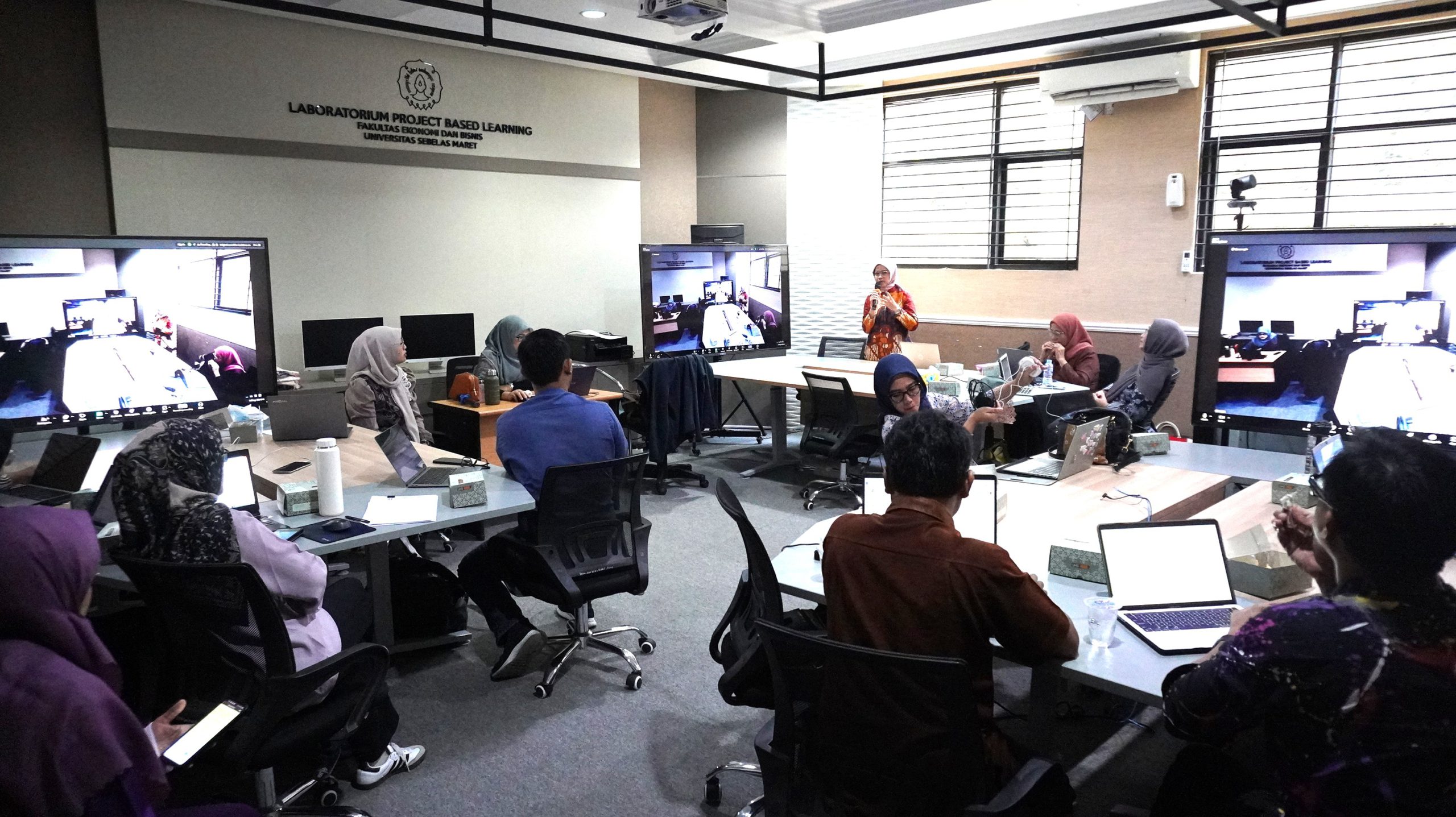
The Project-Based Learning (PBL) Laboratory, Faculty of Economics and Business (FEB), Universitas Sebelas Maret (UNS), organized a Workshop on Developing Semester Learning Plans (RPS) and English Teaching Materials in Economics and Business on Friday, 19 September 2025, at the PBL Laboratory, FEB UNS. The workshop, attended by lecturers representing various study programs within FEB UNS, featured Dr. B. Yuniar Diyanti, S.Pd., M.Hum., lecturer of the Department of English Education, Faculty of Languages, Arts, and Culture, Yogyakarta State University (UNY), as the main speaker.
The workshop aims to enhance lecturers’ understanding and skills in developing contextual syllabi and English teaching materials tailored to the learning needs in economics and business. The outcomes of this workshop are expected to enrich students’ learning experiences and improve the overall quality of teaching at FEB UNS.
In her remarks, Prof. Tri Mulyaningsih, S.E., M.Si., Ph.D., Vice Dean of Academic and Research Affairs at FEB UNS, emphasized that graduates’ English proficiency still needs to be strengthened. This conclusion is based on feedback from employers and stakeholders, highlighting the need for stronger English skills among graduates. “This is one of the main motivations behind holding this workshop,” she stated.

Prof. Tri also explained that at the faculty, English learning process solely relies on UPT P2B, to administers placement tests for new students. Test results are then converted into grades ranging from A to E, with students scoring below 60 provided one opportunity to attend a short training. As a result, many students settle for a grade of “C” and are less motivated to further improve their English skills. Aside from this provision, in accordance with Rector’s regulations, every study program is required to offer at least one English course designed specifically to fulfil its respective discipline needs. FEB thus needs to design an English for Economics and Business course that applies across all study programs. “It will be much easier if we have English learning modules that meet the needs of each study program,” Prof. Tri added.

Meanwhile, Siti Khoiriyah, S.E., M.Si., Head of the PBL Laboratory, underlined the importance of strengthening English teaching materials to support graduate learning outcomes (CPL). “English proficiency is crucial in supporting our students’ competencies. Therefore, the syllabi and teaching materials must be designed to align with the needs of each study program and the CPL that have been formulated,” she said.

She further noted that this activity is part of a series of initiatives by the PBL Laboratory to support the Tri Dharma of Higher Education. Previously, the PBL Laboratory held a workshop on developing case-based and project-based learning modules. In the fourth quarter of this year, it will continue with a mentoring program for developing these modules. As one of seven laboratories within FEB UNS, the PBL Laboratory is dedicated to advancing collaborative and applied learning innovations.
 The workshop, which spanning from morning until late afternoon, was highly interactive. Participants actively engaged in discussions, Q&A sessions, and hands-on practice in developing syllabi and teaching materials. Their enthusiasm and active involvement reflected a strong commitment to enhancing the quality of English teaching within the faculty.
This initiative also supports the achievement of the Sustainable Development Goals (SDGs), particularly SDG 4: Quality Education, by strengthening lecturers’ capacity to provide relevant, internationally-oriented teaching materials. In addition, it contributes to SDG 8: Decent Work and Economic Growth, by improving the quality of graduates in economics and business who are ready to compete in the global market.
-
Laboratorium Project Based Learning FEB UNS Gelar Workshop Penyusunan RPS dan Materi Ajar Bahasa Inggris Bidang Ekonomi dan Bisnis
Laboratorium Project Based Learning (PBL) Fakultas Ekonomi dan Bisnis (FEB) Universitas Sebelas Maret (UNS) menyelenggarakan Workshop Penyusunan Rencana Pembelajaran Semester (RPS) dan Materi Ajar Bahasa Inggris Bidang Ekonomi dan Bisnis, Jumat, 19 September 2025 di Laboratorium PBL FEB UNS.
Kegiatan yang diikuti oleh dosen perwakilan program studi di FEB UNS menghadirkan Dr. B. Yuniar Diyanti, S.Pd., M.Hum., staf pengajar Departemen Pendidikan Bahasa Inggris, Fakultas Bahasa, Seni, dan Budaya, Universitas Negeri Yogyakarta (UNY), sebagai narasumber utama.
Kegiatan ini bertujuan untuk meningkatkan pemahaman dan keterampilan dosen dalam menyusun RPS dan materi ajar Bahasa Inggris yang kontekstual dan sesuai dengan kebutuhan pembelajaran di bidang ekonomi dan bisnis. Diharapkan hasil dari workshop ini dapat memperkaya pengalaman belajar mahasiswa serta meningkatkan kualitas pembelajaran secara keseluruhan di FEB UNS.
Dalam sambutannya, Prof. Tri Mulyaningsih, S.E., M.Si., Ph.D., Wakil Dekan Akademik dan Penelitian FEB UNS, menyampaikan bahwa pihak fakultas menyadari kemampuan bahasa Inggris para alumni masih perlu didorong lagi. Hal ini berdasarkan masukan dari pengguna lulusan dan berbagai stakeholder yang menilai kemampuan bahasa Inggris lulusan perlu diperkuat.
“Inilah salah satu motivasi utama diadakannya kegiatan ini,” ujarnya.
Prof. Tri juga menjelaskan bahwa selama ini pengajaran bahasa Inggris di fakultas hanya bergantung pada UPT P2B dengan sistem tes bagi mahasiswa baru. Nilai ujian kemudian dikonversi menjadi nilai A-E, dan mahasiswa yang nilainya di bawah 60 hanya diberi kesempatan mengikuti satu kali pelatihan. Akibatnya, banyak mahasiswa yang merasa cukup dengan nilai “C” dan kurang termotivasi untuk meningkatkan kemampuan bahasa Inggrisnya.
Sesuai Peraturan Rektor, setiap program studi diwajibkan memiliki satu mata kuliah bahasa Inggris yang dirancang khusus sesuai kebutuhan program studi masing-masing.
Fakultas perlu merancang mata kuliah English for Economy and Business yang mencakup seluruh program studi di FEB.
“Lebih mudah jika kita punya modul pembelajaran bahasa Inggris yang sesuai kebutuhan prodi,” tambah Prof. Tri.
Sementara itu, Siti Khoiriyah, S.E., M.Si., Kepala Laboratorium PBL menekankan pentingnya penguatan materi ajar Bahasa Inggris dalam mendukung capaian pembelajaran lulusan (CPL).
“Bahasa Inggris sangat penting dalam mendukung kompetensi mahasiswa kita. Karena itu, RPS dan materi ajar perlu disusun sedemikian rupa agar sesuai dengan kebutuhan prodi dan CPL yang telah diformulasikan,” ujarnya.
Ia juga menyampaikan bahwa kegiatan ini merupakan bagian dari rangkaian kegiatan Lab PBL FEB UNS yang aktif mendukung Tri Dharma Perguruan Tinggi.
Sebelumnya, Lab PBL telah menyelenggarakan workshop penyusunan modul pembelajaran berbasis kasus dan proyek, dan pada triwulan keempat tahun ini, akan melanjutkan dengan program pendampingan penyusunan modul berbasis kasus dan proyek tersebut.
Sebagai salah satu dari tujuh laboratorium yang ada di FEB UNS, Lab PBL memiliki fokus untuk mengembangkan inovasi pembelajaran yang kolaboratif dan aplikatif.
Workshop yang berlangsung sejak pagi hingga sore hari tersebut berjalan dengan sangat dinamis. Para peserta aktif berpartisipasi dalam diskusi, tanya jawab, serta sesi praktik penyusunan RPS dan materi ajar.
Antusiasme dan keterlibatan peserta selama kegiatan menunjukkan komitmen yang tinggi untuk meningkatkan kualitas pembelajaran Bahasa Inggris di lingkungan fakultas.
Kegiatan ini turut mendukung pencapaian Tujuan Pembangunan Berkelanjutan (Sustainable Development Goals/SDGs), khususnya SDG 4: Pendidikan Berkualitas, dengan memperkuat kapasitas tenaga pengajar dalam menyediakan materi ajar yang relevan dan berkualitas internasional. Selain itu, kegiatan ini juga mendukung SDG 8: Pekerjaan Layak dan Pertumbuhan Ekonomi, melalui peningkatan kualitas lulusan di bidang ekonomi dan bisnis yang siap bersaing di pasar global.
-
FEB UNS Facilitates Students’ Skill Development Through Training and Certification of Competency
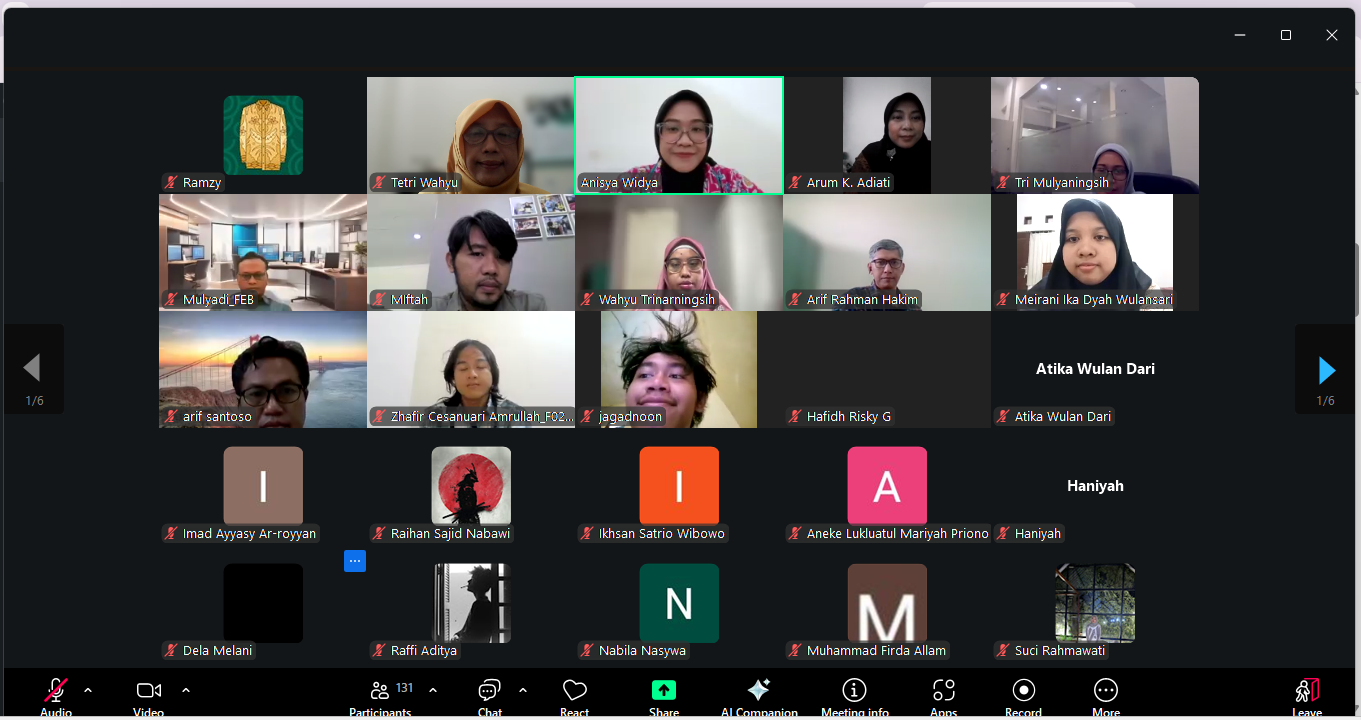
Faculty of Economics and Business, Universitas Sebelas Maret (FEB UNS), organized a Program Dissemination Session on Training and Certification of Competency offered by the various laboratories within FEB UNS. The session, held virtually via Zoom Meeting, was mandatory for all students of the 2022, 2023, and 2024 cohorts.
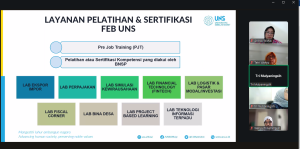 In her opening remarks, Vice Dean of Academic and Research Affairs FEB UNS, Prof. Tri Mulyaningsih, S.E., M.Si., Ph.D., cited several survey results and news reports highlighting the major challenges in Indonesia’s labor market. She noted that job growth in Indonesia remains focused on quantity rather than quality, leading many job seekers to face difficulties due to a mismatch between their skills and industry needs.
A survey by Bank Indonesia showed that the national labor market is weakening, with around 44 million young people struggling to secure employment because of this skills gap. This phenomenon underscores the urgent need for relevant and competitive competency enhancement.
 “We are striving to provide students with a wide range of extracurricular training programs that can strengthen their skills. Certification from these training programs is also a requirement to sit for the thesis examination. Students are required to join at least one, or more depending on their interests and the field they wish to explore further,” explained Prof. Tri.
 She further expressed hope that the dissemination would provide students with comprehensive information to increase both their participation and the quality of engagement in training and certification programs. Currently, nine active laboratories at FEB UNS offer training and certification recognized by the National Professional Certification Agency (BNSP). These include: the Export-Import Laboratory, the Taxation Laboratory, the Entrepreneurship Simulation Laboratory, the Financial Technology (Fintech) Laboratory, the Logistics and Capital Market/Investment Laboratory, the Project-Based Learning Laboratory, the Information Technology Laboratory, the Village Empowerment Laboratory, and the Fiscal Corner Laboratory.
Each laboratory provides certification programs that are mandatory for students before their final thesis examination. These certifications are valid for three years and nationally recognized by BNSP, giving students a valuable advantage in the labor market.
“We hope these training and certifications will not only serve as a formality but also provide students with practical skills that they can apply in building successful and meaningful careers,” Prof. Tri added.

Vice Dean of Student and Alumni Affairs FEB UNS, Dr. Tastaftiyan Risfandy, S.E., M.Sc., Ph.D., also emphasized that seventh-semester students are required to participate in Pre-Job Training (PJT) as part of the training program. He further highlighted the collaboration with Universitas Gadjah Mada (UGM) on the topic of Green Jobs Skills for Impact. Green jobs, he explained, are not only environmentally friendly but also socially, economically, and ecologically impactful, integrating employment, environmental quality, and sustainable economic growth.
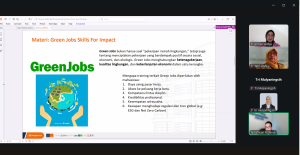
“Green Jobs training is essential for students to strengthen their competitiveness in the labor market, open new job opportunities, develop interdisciplinary competencies, build professional credibility, and even pursue entrepreneurship,” he stated.
The session proceeded with presentations from the heads of the nine FEB UNS laboratories, who detailed the training and certification programs available to students along with their schedules, enabling students to select the most suitable programs based on their interests and skill development needs.
The Training and Certification Program of FEB UNS laboratories is in line with the Sustainable Development Goals (SDGs), particularly Goal 4: Quality Education, which emphasizes access to quality education and skill development. In addition, with its focus on Green Jobs and village empowerment, the program also contributes to SDG 8: Decent Work and Economic Growth, and SDG 11: Sustainable Cities and Communities, by promoting inclusive and sustainable economic development.
-

UNS Community Partnership Program Supports the Transformation of Batik Manggar Blora SMEs into Competitive Creative Economy Actors
Universitas Sebelas Maret (UNS) Surakarta maintains to strengthens support in empower Small and Medium Enterprises (SMEs). This time, the UNS Community Partnership Program (PKM) collaborated with Batik Manggar SMEs in Blora Regency, Central Java, through an assistance program designed to improve overall business management.
Led by Dr. Sri Hartoko, MBA., Ak., CACP., the research group team consisted of Prof. Dr. Hunik Sri Runing Sawitri, M.Si., a lecturer at the Faculty of Economics and Business (FEB) UNS, and M. Rudianto, S.E., S.Sn., M.Sn., a lecturer at the Faculty of Fine Arts and Design UNS. The program also involved two FEB UNS students, Salma Nadia Putri and Tsabita Widya Waskito. More than just training, the program aims to drive the transformation of SMEs into sustainable businesses.
The initiative, entitled “Implementation of Accounting Systems and Enhancement of Marketable Product Quality to Create Business Sustainability for Batik Manggar SMEs,” featured Prof. Dr. Rahmawati, M.Si., Ak., and Prof. Dr. Dra. Hj. Endang Dwi Amperawati, MM., as speakers. The program focused on three main aspects: strengthening business accounting systems, fostering product innovation, and expanding marketing channels.
According to Dr. Hartoko, Batik Manggar’s market is currently limited to local consumers in Blora. Therefore, innovative measures are needed to enable its products to compete in broader markets. “To improve efficiency and quality, we introduced paper stamp techniques in motif-making, developed prototypes for new products, and introduced feeder equipment to accelerate the production process,” he explained.
Beyond production, the team also enhanced marketing strategies and brand identity. Initiatives included the production of a business profile video, the development of an official website, social media management, and the opening of e-commerce channels. These steps are intended to expand Batik Manggar’s reach to regional and even national markets.
The program also created new job opportunities by involving local communities in the production process, thus fostering an inclusive economic ecosystem. Equally important, the collaboration served as a platform for knowledge transfer from the university to business practitioners, particularly in management, finance, digital marketing, and human resource development. “Batik Manggar has great potential. With better governance and innovative products, we hope this SME can become a role model for regional creative economy development,” added Dr. Hartoko.
Funded by the Ministry of Higher Education, Science, and Technology (Kemdiktisaintek) in 2025, this program supports the achievement of the Sustainable Development Goals (SDGs), particularly Goal 1 (No Poverty) and Goal 9 (Industry, Innovation, and Infrastructure). It also contributes to the university’s Key Performance Indicators (IKU), namely student involvement in off-campus activities and the direct application of lecturers’ research results in society. With this comprehensive approach, UNS hopes Batik Manggar will advance further as a creative economy icon of Blora, capable of competing in national markets.
-
PKM UNS Dorong Transformasi UKM Batik Manggar Blora Jadi Pelaku Ekonomi Kreatif Berdaya Saing
Upaya pemberdayaan pelaku Usaha Kecil dan Menengah (UKM) terus diperkuat oleh Universitas Sebelas Maret (UNS) Surakarta. Kali ini, Grup Riset Program Pemberdayaan Kemitraan Masyarakat (PKM) UNS menggandeng UKM Batik Manggar di Kabupaten Blora, Jawa Tengah, dalam program pendampingan yang bertujuan meningkatkan tata kelola usaha secara menyeluruh.
Grup Riset dipimpin oleh Dr. Sri Hartoko, MBA., Ak., CACP., bersama Prof. Dr. Hunik Sri Runing Sawitri, M.Si., Dosen Fakultas Ekonomi dan Bisnis (FEB) UNS dan M. Rudianto, S.E., S.Sn., M.Sn., Dosen Fakultas Seni Rupa dan Desain UNS.
Di kegiatan ini juga melibatkan dua mahasiswa dari FEB UNS, Salma Nadia Putri dan Tsabita Widya Waskito. Program ini tidak hanya sekadar pelatihan, tetapi lebih jauh mengusung transformasi UKM menuju usaha berkelanjutan.
Kegiatan bertajuk “Penerapan Sistem Akuntansi dan Peningkatan Kualitas Produk Marketable untuk Menciptakan Keberlanjutan Usaha pada UKM Batik Manggar,” dengan narasumber Prof. Dr. Rahmawati, M.Si., Ak dan Prof. Dr. Dra. Hj. Endang Dwi Amperawati, MM.
Sasaran kegiatan meliputi tiga aspek utama: perbaikan sistem akuntansi usaha, inovasi produk batik, dan perluasan kanal pemasaran.
Menurut Dr. Hartoko, pasar Batik Manggar saat ini masih terfokus pada konsumen lokal di wilayah Blora. Karena itu, diperlukan langkah-langkah inovatif agar produknya bisa bersaing di pasar yang lebih luas.
“Untuk meningkatkan efisiensi dan kualitas, kami mengenalkan teknik paper stamp dalam pembuatan motif, mengembangkan prototipe produk baru, dan memperkenalkan alat feeder guna mempercepat proses produksi,” jelasnya.
Tak hanya berhenti di lini produksi, tim juga turut memperkuat aspek pemasaran dan identitas merek (branding). Beberapa inisiatif yang dilakukan antara lain: pembuatan video profil usaha, pengembangan website resmi, pengelolaan media sosial, hingga pembukaan kanal e-commerce. Hal ini bertujuan agar UKM Batik Manggar dapat menjangkau pasar regional bahkan nasional.
Program ini juga membuka peluang kerja baru dengan melibatkan masyarakat sekitar dalam proses produksi, menciptakan ekosistem ekonomi yang inklusif. Tak kalah penting, kolaborasi ini juga menjadi wadah transfer pengetahuan dari perguruan tinggi ke pelaku usaha, khususnya di bidang manajemen, keuangan, digital marketing, dan pengelolaan SDM.
“UKM Batik Manggar punya potensi besar. Dengan tata kelola yang lebih tertata dan produk yang inovatif, kami berharap UKM ini bisa menjadi role model pengembangan ekonomi kreatif daerah,” imbuh Dr. Hartoko.
Didanai oleh Kementerian Pendidikan Tinggi, Sains, dan Teknologi (Kemdiktisaintek) Tahun 2025, program ini mendukung pencapaian Sustainable Development Goals (SDGs), terutama dalam aspek pengurangan kemiskinan (Goal 1) serta pengembangan industri, inovasi, dan infrastruktur (Goal 9). Selain itu, kegiatan ini turut berkontribusi terhadap capaian Indikator Kinerja Utama (IKU) perguruan tinggi, yakni pelibatan mahasiswa dalam aktivitas di luar kampus dan penerapan hasil riset dosen secara langsung di masyarakat.
Dengan pendekatan yang komprehensif, UNS berharap Batik Manggar dapat melangkah lebih jauh sebagai ikon ekonomi kreatif Blora yang mampu bersaing di pasar nasional.
-
FEB UNS Fasilitasi Pengembangan Keterampilan Mahasiswa dengan Pelatihan dan Sertifikasi Kompetensi
Fakultas Ekonomi dan Bisnis (FEB) Universitas Sebelas Maret (UNS) menggelar Sosialisasi Program Pelatihan dan Sertifikasi yang ditawarkan oleh masing-masing laboratorium di lingkungan FEB UNS.
Kegiatan yang berlangsung secara daring melalui Zoom Meeting ini diwajibkan bagi seluruh mahasiswa Angkatan 2022, 2023, dan 2024, Rabu 17 September 2025.
Dalam paparan pembuka, Wakil Dekan Akademik dan Penelitian FEB UNS, Prof. Tri Mulyaningsih, S.E., M.Si., Ph.D. mengutip sejumlah hasil survei dan pemberitaan yang menyoroti tantangan besar di pasar tenaga kerja Indonesia. Pertumbuhan lapangan kerja di Indonesia masih didominasi oleh kuantitas tanpa diikuti peningkatan kualitas, sehingga banyak pencari kerja mengalami kesulitan mendapatkan pekerjaan karena kesenjangan keterampilan dengan kebutuhan industri.
Survei Bank Indonesia menunjukkan bahwa pasar tenaga kerja nasional melemah, dengan sekitar 44 juta pemuda yang mengalami kesulitan masuk ke dunia kerja akibat ketidaksesuaian keterampilan dengan tuntutan pasar. Fenomena ini menggarisbawahi perlunya peningkatan kompetensi yang relevan dan berdaya saing.
“Kami berupaya keras untuk memberikan beragam kegiatan pelatihan di luar proses belajar mengajar yang dapat memperkuat keterampilan mahasiswa. Hal ini sangat penting mengingat tantangan dunia kerja yang semakin kompetitif. Sertifikasi pelatihan juga sebagai syarat untuk mengikuti ujian skripsi, mahasiswa wajib mengikuti salah satu atau salah dua atau bahkan mengikut semua, tergantung pada ketertarikan teman-teman bidang apa yang Teman-Teman mahasiswa tertarik untuk mengeksplor lebih lanjut” ujar Prof. Tri.
Prof. Tri menyampaikan harapannya agar sosialisasi ini dapat memberikan informasi yang lengkap kepada mahasiswa, sehingga partisipasi mereka dalam berbagai kegiatan pelatihan dan sertifikasi semakin meningkat dan berkualitas.
Lebih lanjut, Prof. Tri menyampaikan, saat ini, terdapat sembilan laboratorium aktif di FEB UNS yang menawarkan berbagai pelatihan dan sertifikasi kompetensi yang diakui oleh Badan Nasional Sertifikasi Profesi (BNSP), antara lain: Laboratorium Ekspor Impor (Ketua: Arif Rahman Hakim, SE., M.Ec.Dev., Ph.D); Laboratorium Perpajakan (Ketua: Dr. Arum Kusumaningdyah Adiati, SE., MM); Laboratorium Simulasi Kewirausahaan (Ketua: Miftachul Ma’Arif, SEI., MM., LSS,Cp.); Laboratorium Financial Technology (Fintech) (Ketua: Wahyu Trinarningsih, SE., MM., MA); Laboratorium Logistik dan Pasar Modal atau Investasi (Ketua: Arif Lukman Santoso, SE., MM., M.Pro., Ak); Laboratorium Project Based Learning (Ketua: Siti Khoiriyah, SE., M.Si); Laboratorium Teknologi Informasi (Ketua: Mulyadi, SE., M.Ec.Dev); Laboratorium Bina Desa (Ketua: Yogi Pasca Pratama, SE., ME., Ph.D) serta Laboratorium Fiscal Corner (Ketua: Dr. Mulyanto, M.E).
Setiap laboratorium menyediakan pelatihan dan sertifikasi yang menjadi salah satu syarat wajib bagi mahasiswa dalam mengikuti ujian tugas akhir atau skripsi. Sertifikasi kompetensi ini berlaku selama tiga tahun dan diakui secara nasional oleh BNSP, sehingga diharapkan dapat meningkatkan nilai tambah dan daya saing mahasiswa di pasar kerja.
“Kami berharap pelatihan dan sertifikasi ini bukan hanya menjadi formalitas, tetapi benar-benar memberikan bekal keterampilan yang dapat digunakan mahasiswa dalam mencari dan mendapatkan pekerjaan yang berkualitas,” tutup Prof. Tri.
Mahasiswa dapat mengakses informasi lebih lengkap mengenai jadwal, jenis pelatihan, serta prosedur pendaftaran melalui website resmi FEB UNS.
Sementara itu, Wakil Dekan Kemahasiswaan dan Alumni FEB UNS, Tastaftiyan Risfandy, S.E., M.Sc., Ph.D., menyampaikan bahwa mahasiswa semester 7 diwajibkan mengikuti Pre Job Training (PJT) sebagai bagian dari program pelatihan.
Dalam kesempatan tersebut, Ia juga menginformasikan adanya kerja sama dengan Universitas Gadjah Mada (UGM) terkait materi Green Jobs Skills for Impact.
Green Jobs bukan sekadar pekerjaan yang ramah lingkungan, tetapi juga pekerjaan yang memberikan dampak positif secara sosial, ekonomi, dan ekologis. Konsep ini mengintegrasikan ketenagakerjaan, kualitas lingkungan, dan keberlanjutan ekonomi dalam satu kerangka.
“Pelatihan Green Jobs sangat penting bagi mahasiswa untuk meningkatkan daya saing di pasar kerja, membuka akses peluang kerja baru, mengembangkan kompetensi lintas disiplin, membangun kredibilitas profesional, serta memberi kesempatan berwirausaha,” ungkapnya.
Sesi berikutnya adalah paparan dari para kepala laboratorium FEB UNS. Pada sesi ini, masing-masing kepala laboratorium menjelaskan secara detail berbagai macam pelatihan dan sertifikasi yang ditawarkan kepada mahasiswa berikut dengan jadwal pelaksanaannya, sehingga mereka dapat memilih program yang paling sesuai dengan minat dan kebutuhan pengembangan keterampilan mereka.
Program Pelatihan dan Sertifikasi Laboratorium FEB UNS ini sejalan dengan tujuan Sustainable Development Goals (SDGs) nomor 4 yaitu Quality Education yang menekankan pentingnya pendidikan berkualitas dan peningkatan keterampilan bagi seluruh lapisan masyarakat. Selain itu, dengan penekanan pada pelatihan Green Jobs dan pemberdayaan desa, program ini turut mendukung SDGs nomor 8, Decent Work and Economic Growth, serta SDGs nomor 11, Sustainable Cities and Communities, melalui pengembangan ekonomi inklusif dan berkelanjutan.
-
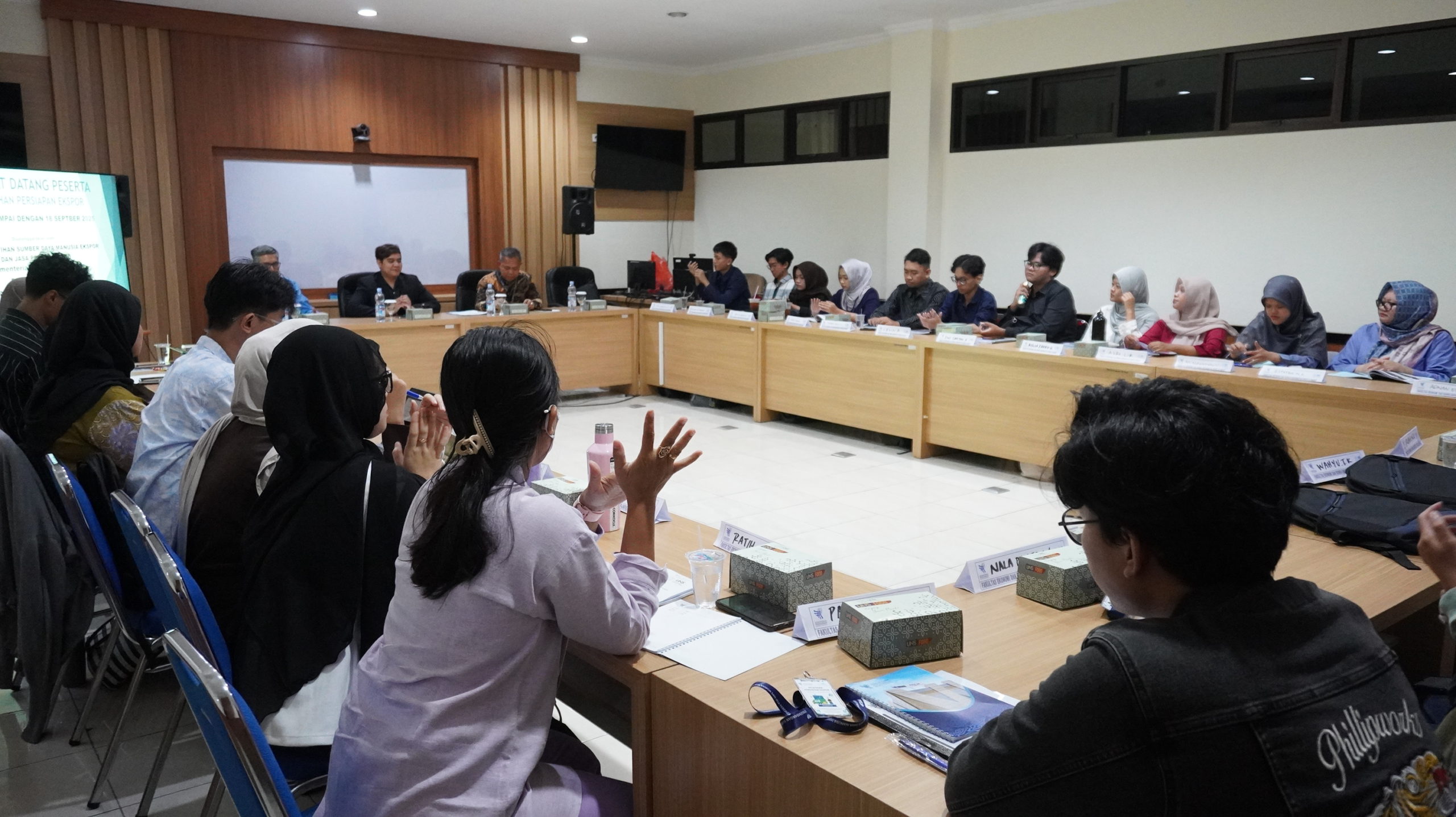
In Collaboration with PPEJP Ministry of Trade FEB UNS Export-Import Laboratory Organized Export Preparation Training
The Export-Import Laboratory, Faculty of Economics and Business, Universitas Sebelas Maret (FEB UNS), in collaboration with the Center for Human Resource Development on Export and Trade Services (PPEJP), Ministry of Trade Republic of Indonesia, organized a Training on Export Preparation at the Teleconference Laboratory, Soedarah Soepono Building.
 The training was conducted over three days, from September 16 to 18, 2025, and concluded with a certification exam on the fourth day, September 19, 2025. The certification exam is part of the export competency certification scheme, designed to ensure participants’ readiness to take part in the export sector professionally and according to standardized procedures.
 The program featured experienced speakers in international trade, including Fernandes, Eriklex D., and Lukman Nurjaman, to deliver key materials on export procedures, documentation, international payment mechanisms, and trade regulations.
Mulyana, representing PPEJP at the Ministry of Trade, emphasized the need for this training as preparation stage before taking the certification exam. He encouraged participants to be attentive and committed to the learning process.
 “We hope the participants can stay focused and understand the materials delivered by the instructors. Hopefully, all of them will pass the certification competency test and become successful and competent individuals capable of competing in the economic and business sector, particularly in advancing Indonesia’s export-import development,” he said.
 Meanwhile, Head of the Export-Import Laboratory FEB UNS, Dr. Arif Rahman Hakim, S.E., M.Ec.Dev., highlighted that collaboration between FEB UNS and PPEJP has been established since 2001. One of the significant accomplishment of the partnership was the establishment of the Export-Import Laboratory as a center for learning and competency development in international trade.
Dr. Arif further explained that the training was attended by 30 participants from various academic levels, including undergraduate, master’s, doctoral students, and lecturers. He highlights that this initiative reflects a concrete effort to develop a readily high-quality talent to contribute in strengthening national export performance.

This training also supports the achievement of the Sustainable Development Goals (SDGs), particularly SDG 4 (Quality Education), SDG 8 (Decent Work and Economic Growth), and SDG 17 (Partnerships for the Goals). Through this program, FEB UNS contributes to producing competent human resources capable of driving export growth and sustainable economic development.

