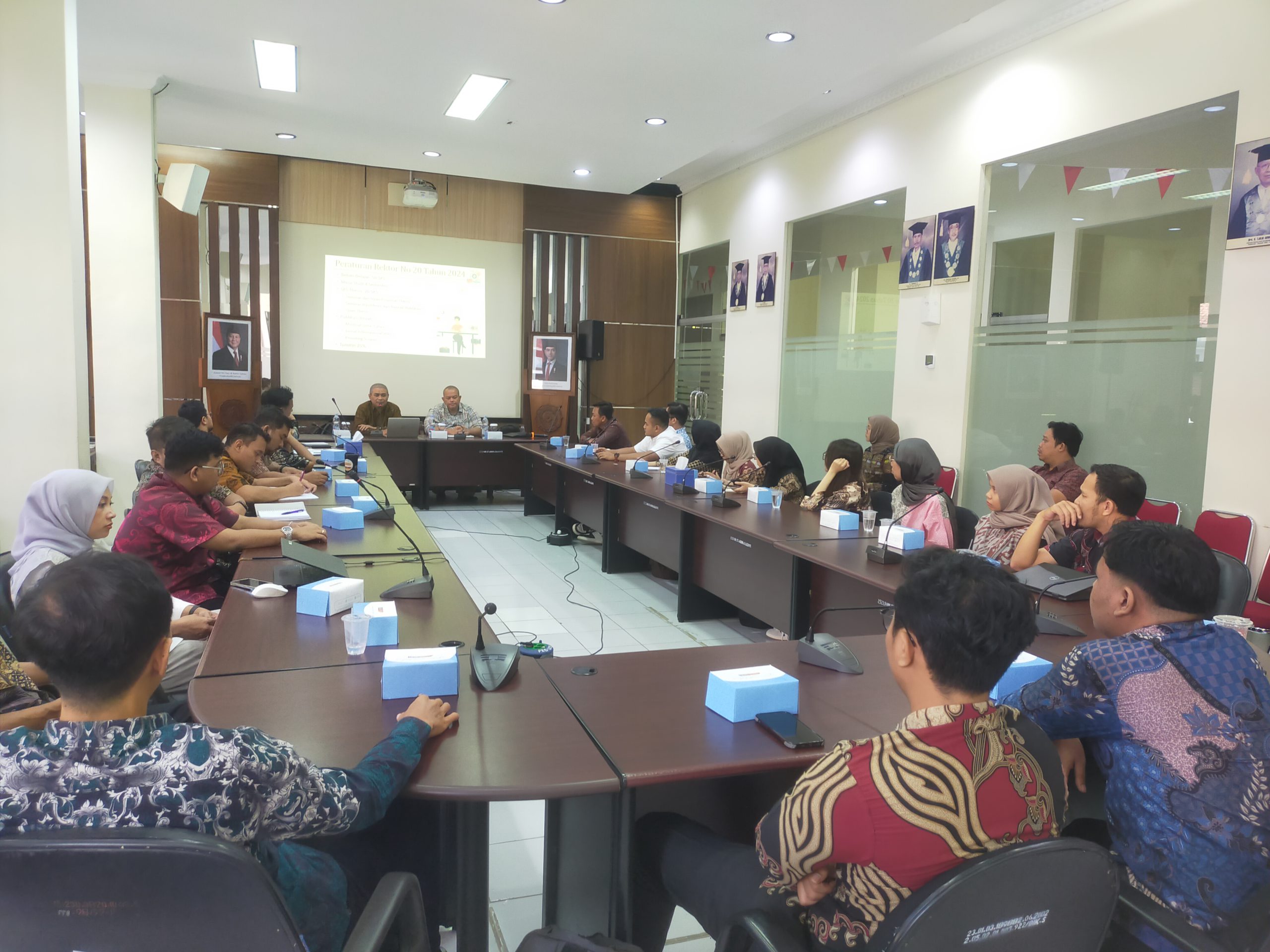
Program Studi Magister Manajemen (MM) Fakultas Ekonomi dan Bisnis (FEB) Universitas Sebelas Maret (UNS) menggelar Orientasi Mahasiswa Baru, Sabtu, 30 Agustus 2025 di Ruang Sidang 1 Gedung Soeharno TS FEB UNS.
Kegiatan yang diikuti oleh 36 Mahasiswa Baru MM itu menjadi wadah pengenalan kurikulum, sistem pembelajaran, dan arah akademik bagi mahasiswa baru MM.
Dalam kegiatan tersebut, Dr. Lilik Wahyudi, S.E., M.Si., Ketua Program Studi (Prodi) MM memaparkan implementasi Peraturan Rektor No. 20 Tahun 2024, yang menegaskan bahwa mahasiswa MM menempuh 56 SKS selama 4 semester, dengan bobot 26 SKS thesis. Selain ujian thesis, mahasiswa juga diwajibkan menghasilkan publikasi di jurnal bereputasi nasional maupun internasional dengan tingkat kemiripan maksimal 25 persen (Turnitin).
Salah satu strategi yang diusung Kaprodi MM adalah percepatan publikasi ilmiah. Mahasiswa sudah diarahkan sejak semester pertama melalui penulisan proposal individu. Di semester berikutnya, riset mulai dikembangkan menjadi laporan penelitian, lalu disusun menjadi naskah publikasi di semester ketiga, hingga dipresentasikan dalam seminar hasil riset pada semester keempat.

“Kami tidak ingin kalian berlama-lama di sini, targetkan maksimal 2 tahun selesai.” tegasnya.
Untuk mendukung hal tersebut, mahasiswa difasilitasi dengan platform digital EasyStudy MM UNS. Standar thesis bertingkat juga dikenalkan, mulai dari replikasi sederhana di jurnal Sinta hingga penelitian kompleks yang ditargetkan ke jurnal internasional Q1–Q2.
Kaprodi MM menegaskan, orientasi ini bukan hanya pengenalan awal, tetapi juga arahan strategis.

“Kami ingin mahasiswa MM sejak awal menyadari bahwa perjalanan studinya tidak berhenti pada penyusunan thesis. Kalian harus siap melahirkan karya ilmiah yang bisa dipublikasikan dan berdampak luas, baik di level nasional maupun internasional” ujarnya.
Dengan strategi penataan mata kuliah untuk mempercepat riset dan publikasi mahasiswa, Magister Manajemen UNS berkomitmen mencetak lulusan yang tidak hanya lulus tepat waktu, tetapi juga produktif dalam menghasilkan karya ilmiah yang diakui secara nasional maupun internasional.
Setelah penyampaian arahan strategis oleh Kaprodi MM, kegiatan dilanjutkan dengan pemaparan materi Strategi Lulus Tepat Waktu S-2 oleh Dr. I Made Bayu Dirgantara, S.E., M.M., dosen Universitas Diponegoro. Materi ini bertujuan memberikan panduan kepada mahasiswa baru dalam merancang strategi akademik yang efektif.
Berikutnya, penyampaian informasi akademik oleh Kepala Subbagian Akademik FEB UNS, Dyah Wasita Winahyu, S.E., yang menjelaskan berbagai ketentuan administratif dan akademik yang perlu dipahami mahasiswa selama masa studi.


Aktifitas ini sejalan dengan tujuan pembangunan berkelanjutan atau Sustainable Development Goals (SDGs), khususnya dalam meningkatkan kualitas pendidikan yang inklusif dan merata (SDG 4), serta mendorong inovasi dan riset yang dapat berkontribusi pada pembangunan ekonomi berkelanjutan (SDG 8). Dengan demikian, lulusan Magister Manajemen FEB UNS diharapkan mampu menjadi agen perubahan yang mendukung pembangunan yang berkelanjutan di tingkat nasional maupun global.

 Yani Maryudiasti, S.Sos., M.Si., Head of the UPT of UNS Archives, emphasized the objective of this activity as part of ongoing efforts to improve archival governance in line with accountability and efficiency principles. She noted that this initiative also aims to ensure effective and efficient archival management across UNS.
 In preparation for the event, the UPT of UNS Archives had previously distributed several documents to all work units, including FEB. These consisted of the 2025 internal archival supervision instrument, sample supporting documents for internal archival supervision, and the schedule for its implementation. Archivists at FEB independently completed the assessment forms and attached supporting evidence.
 Following the welcoming session and the explanation of the assessment results from the self-assessment forms, the UNS archival team conducted a direct inspection of several rooms managing both academic and non-academic records, as well as the archive administration space at FEB UNS.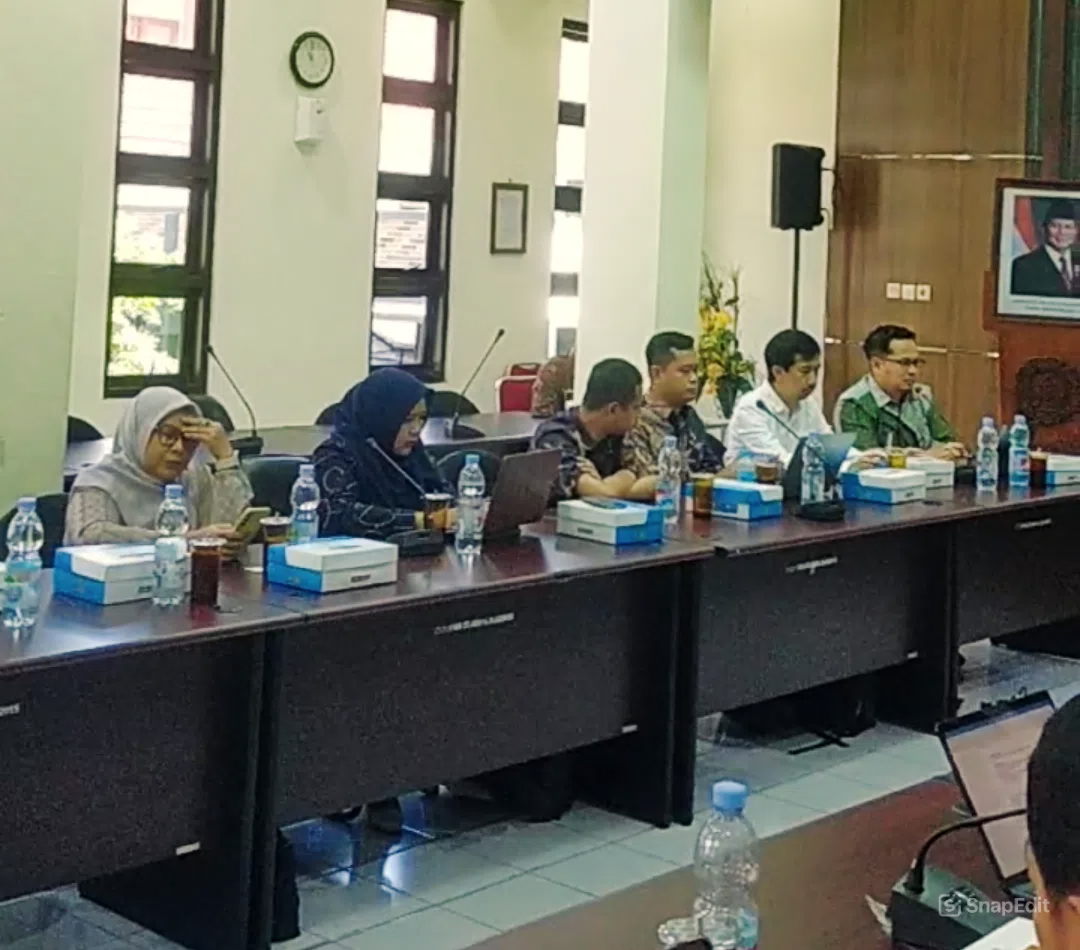
 In her welcoming remarks, Prof. Tri conveyed appreciation for the visit and presented the profile and achievements of the faculty, in academics, research, and community engagement activities. “In our efforts toward internationalization, we continue to strengthen collaboration, research, community engagement, and scientific publications. In term of university and faculty rankings, particularly in the fields of Economics, Econometrics, Accounting, and Management, we see an upward trend,” stated Prof. Tri.
 To support learning and research, the faculty is equipped with eight laboratories, which can be categorized as the data laboratories, business laboratories, and learning laboratories. These facilities are available not only for the students and lecturers but are also expected to provide services to external users. Additionally, serving as platforms for research development and international publications FEB UNS is a home for 20 interdisciplinary research groups, where the research ecosystem is further supported by regular forums, such as the monthly Working Paper Forum.
 Meanwhile, Dr. rer. pol. Ferry Prasetyia, S.E., M.App.Ec., Head of the Department of Economics FEB UB, expressed appreciation for the warm welcome extended by FEB UNS. “Thank you to Prof. Tri and all the faculty leaders for the hospitality. This visit follows FEB UNS’s visit to UB in 2023. We hope it will strengthen synergy and collaboration going forward,” said Dr. Ferry.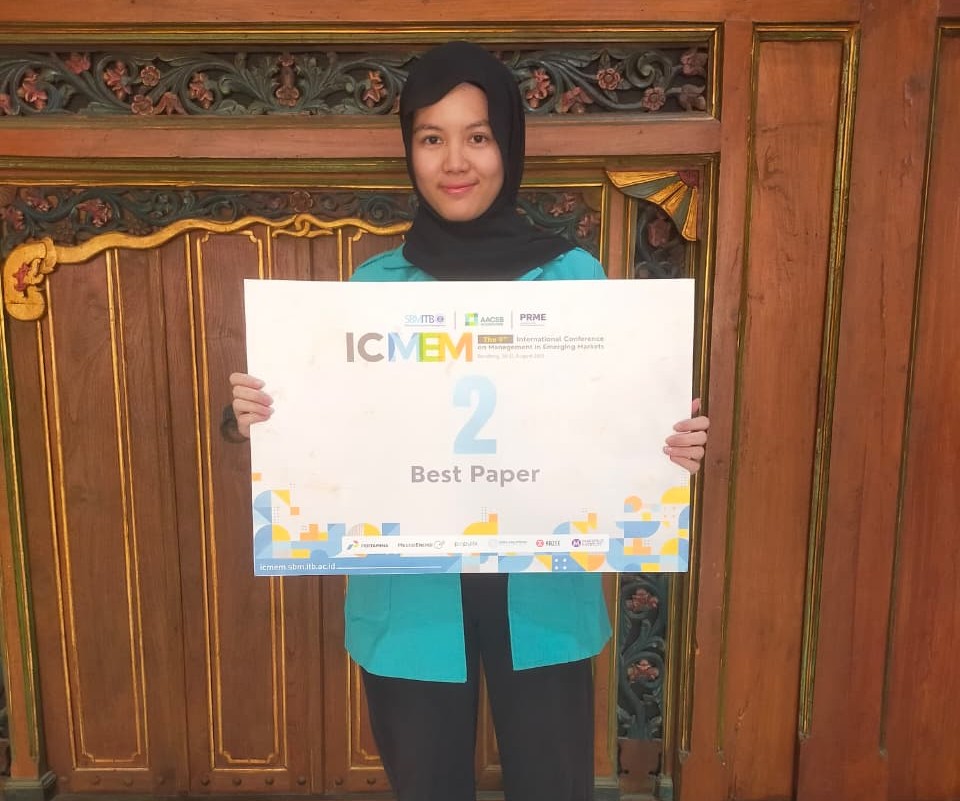
 Presenting an article entitled “Gender Diversity on Corporate Boards and ESG Controversies: A Sector-Sensitive Analysis of Women in Governance,” she highlights the relationship between gender diversity on corporate boards and Environmental, Social, and Governance (ESG) controversies in Indonesia. Drawing upon the Upper Echelons Theory and Resource-Based View (RBV), the research examined four sensitive sectors: energy (PT Pertamina), mining (PT Adaro Energy), agribusiness (PT Astra Agro Lestari), and banking (Bank Rakyat Indonesia).
 ICMEM 2025 served as an international forum bringing together academics, practitioners, and researchers from various countries to discuss business and management challenges in emerging markets. This accomplishment further strengthens UNS’s commitment to producing research that is relevant to global challenges, inclusive, and sustainable.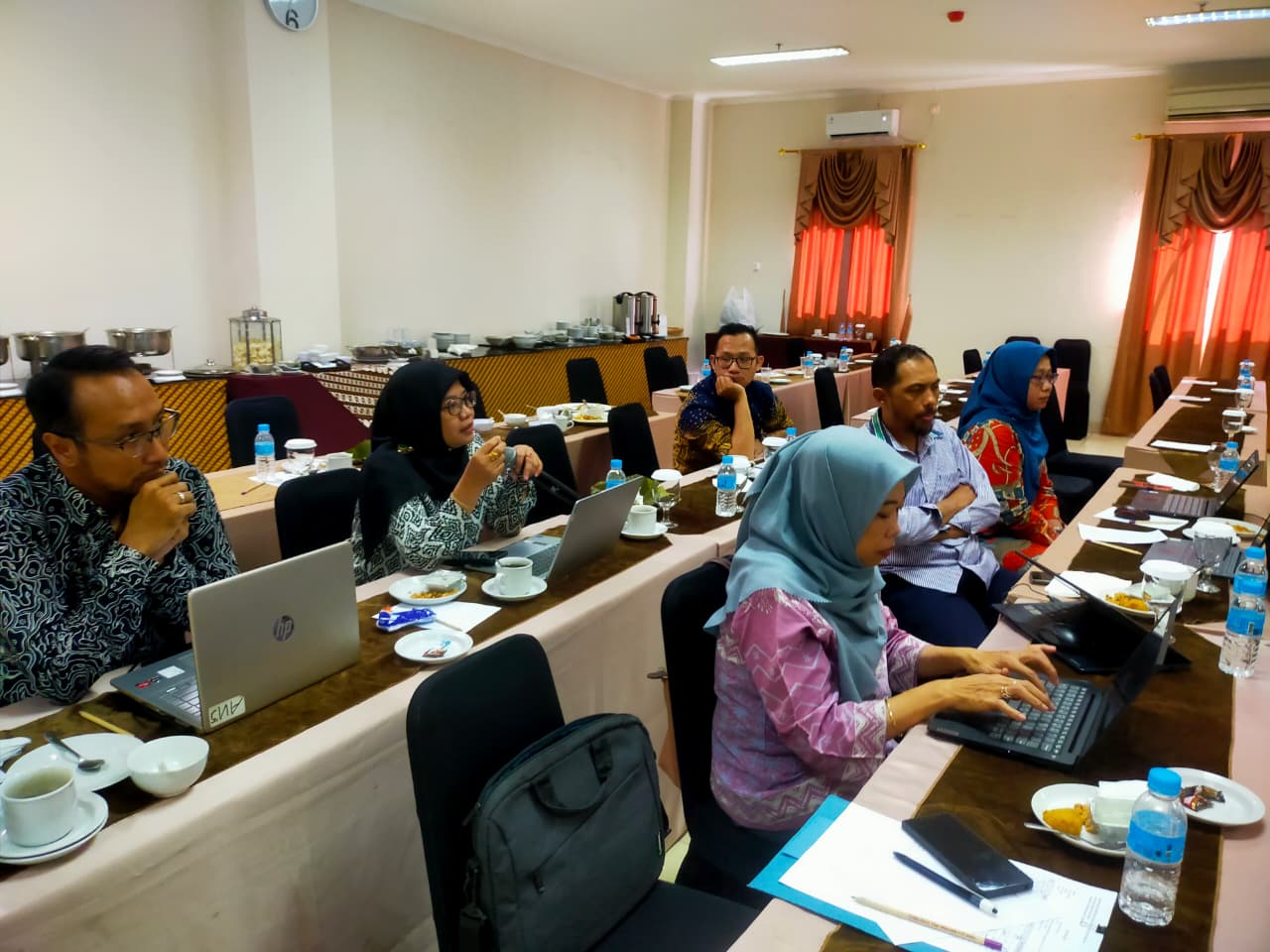

 This initiative is a joint-effort undertaken by the Academic Affairs Division (Division 1) and the Student and Alumni Affairs Division (Third Division). In its presentation, the Division highlighted the importance of structuring mandatory internships, which apply generally to all study programs and must be reported to each program. On the other hand, there are also independently managed internships by students within the MBKM framework, now known as Impactful Internships.
 It is important to understand that the current implementation of internships refers to Ministerial Regulation (Permendikbudristek) No. 63 of 2024 on the Implementation of Student Internships. FEB UNS, through Division 3, is committed to preparing and launching the Internship Handbook in the near future. One of the key discussions was the positioning and relationship between Mandatory Internships, MBKM Internships, and Impactful Internships within the curriculum structure and academic policies.
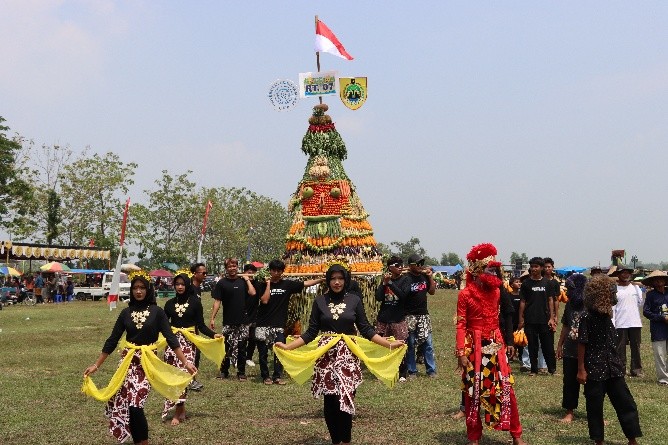

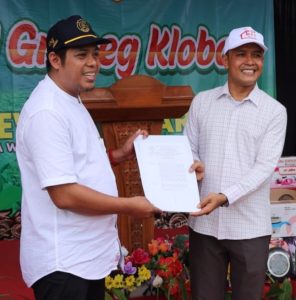
 On August 24, 2025, the second “Grebeg Klobot” was held, showcasing significant progress compared to the previous year. The number of gunungan (ornamental mountain-shaped offerings) increased from 13 to 17, with more diverse and creative designs.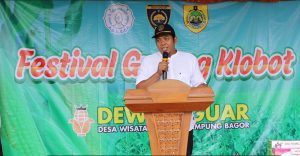


 Head of the Accounting Study Program at FEB UNS, Prof. Doddy Setiawan, S.E., M.Si., Ph.D., delivered a welcoming speech to all Accounting lecturers in attendance and expressed his gratitude to the two speakers for their willingness to share knowledge and experience. “We sincerely thank both speakers for dedicating their time to contribute to this forum. Hopefully, this activity will provide great benefits for all of us,” he stated.
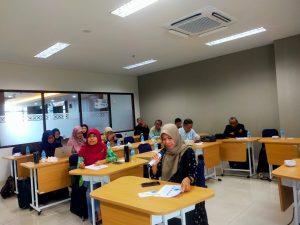 The discussion then continued with a presentation by Dr. Luluk Widyawati, who outlined that the curriculum review process involves three main stages: defining the Learning Outcomes (CPL), translating the CPL into courses and determining credit weight (SKS), and further detailing CPL and courses into structured learning processes for each session. “These three stages serve as the basis for evaluating the existing curriculum and for developing the Undergraduate Accounting curriculum at Universitas Indonesia,” said Dr. Luluk.